Tui, “Cookhouse Joe”

“Old-time.” The moniker itself seemingly contains eons of musical cross-pollination, generations of aural tradition, lifetimes of carefully and purposefully — and haphazardly and accidentally — passing down the skills, stories, community, and tunes that make up the musical form. A new crop of old-time pickers has been slowly but surely emerging from the tight-knit, often insular (but almost never outright forbidding) ranks of the genre, with a continuing focus on the decades that have come before, but through a new lens. One of reclamation and representation, of mining stories and songs, one of painstakingly undoing the erasure that has prevailed over the history of any/all non-white, non-colonial, non-Christian, non-normative musics in this country.

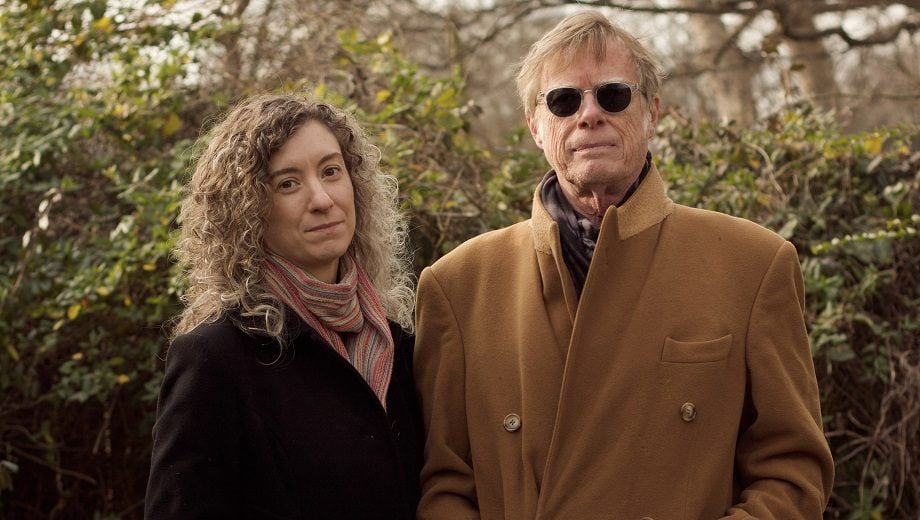
Tui (pronounced TOO-EE), an old-time duo that includes fiddler Libby Weitnauer and multi-instrumentalist Jake Blount, perfectly epitomizes this new generation, this fiddle + banjo changing of the guard. In title and song roster their upcoming release, Pretty Little Mister, subverts the usual narratives of old-time — whether by turning the staple “Pretty Little Miss” on its gendered ear or by meticulously crediting and tracing back each track’s origins, often to fiddlers and pickers of color and other otherwise underrepresented folks of bygone eras.

“Cookhouse Joe,” the final tune on the album, was originally learned from a late-in-life recording of Kentucky fiddler Estill Bingham. And it’s okay that you might not recognize that name — that you probably will not is almost the entire point of the record. Tui has already done the work for their listeners, putting in the time to make sure that the old-time they create, for years past and the ages to come, tells the whole story of how and by whom this beautiful artistic tradition came to be. And on Pretty Little Mister it’s not only beautiful, it’s so much more.

LISTEN: Giri and Uma Peters, “The Cuckoo”

Artist: Giri and Uma Peters
Hometown: Nashville, Tennessee
Song: “The Cuckoo”
Album: Origins
Release Date: May 31, 2019

In Their Words: “We first learned this song from Rhiannon Giddens. This song is an old English folk song from a long time ago. We had a chance to hear some earlier versions of the song when visiting the Rinzler Archives at the Smithsonian Center for Folklife and Cultural Heritage in 2017. It is so interesting to see how it has evolved. This is our interpretation of ‘The Cuckoo,’ which also happens to be our dog Zoey’s personal favorite song. Zoey has memorized the melody, and comes close to where we are playing with her tail wagging and howls along.” — Giri and Uma Peters


Photo credit: Sarah Hanson

The Show On The Road – Dom Flemons

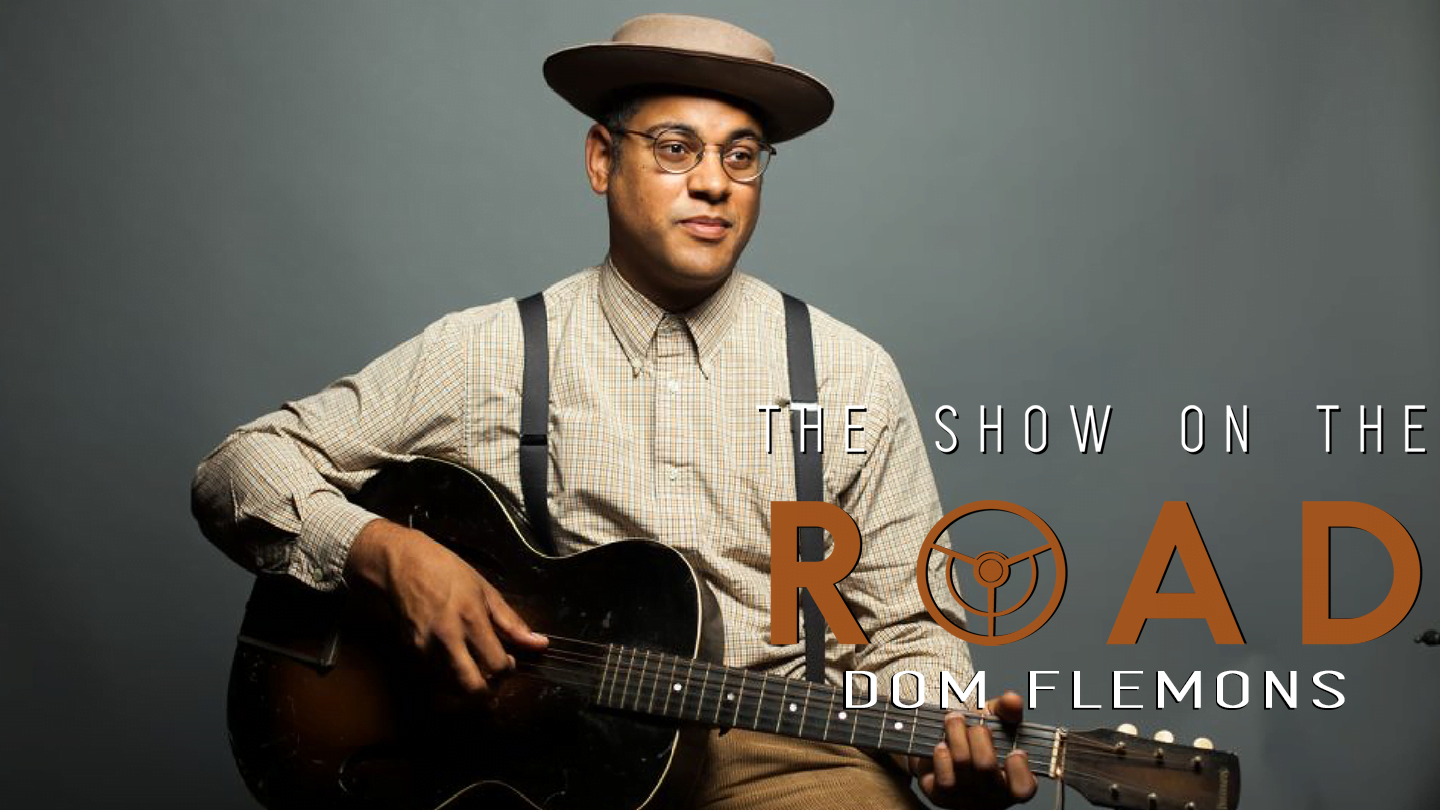
This week on the show,  Z’s two-part conversation with Dom Flemons, the Grammy award-winning American songster who has made it his mission to reclaim and rejuvenate the lost acoustic music of the past and bring it whistling brightly into the future.

LISTEN: APPLE PODCASTSMP3

Born in Phoenix, Arizona to parents of African American and Mexican heritage, the ever-curious young Dominique Flemons went from playing drums in his school band and busking on the streets of Flagstaff with his fingerpicked guitar and neck rack harmonica to taking a chance that would change his life completely. He scrounged enough money to make it to the Black Banjo gathering in North Carolina, where he would meet Rhiannon Giddens and Justin Robinson and begin a seven year run with their groundbreaking African American string band, The Carolina Chocolate Drops. They would go on win a Grammy for Best Traditional Folk Album, headline festivals and theaters around the world, open for Bob Dylan, play the Grand Ole Opry, and burst into the collective consciousness of young acoustic music hopefuls all around the world who were tired of the same stoic, hillbilly bluegrass and white-washed old-time songs played over and over around the festival campfire.

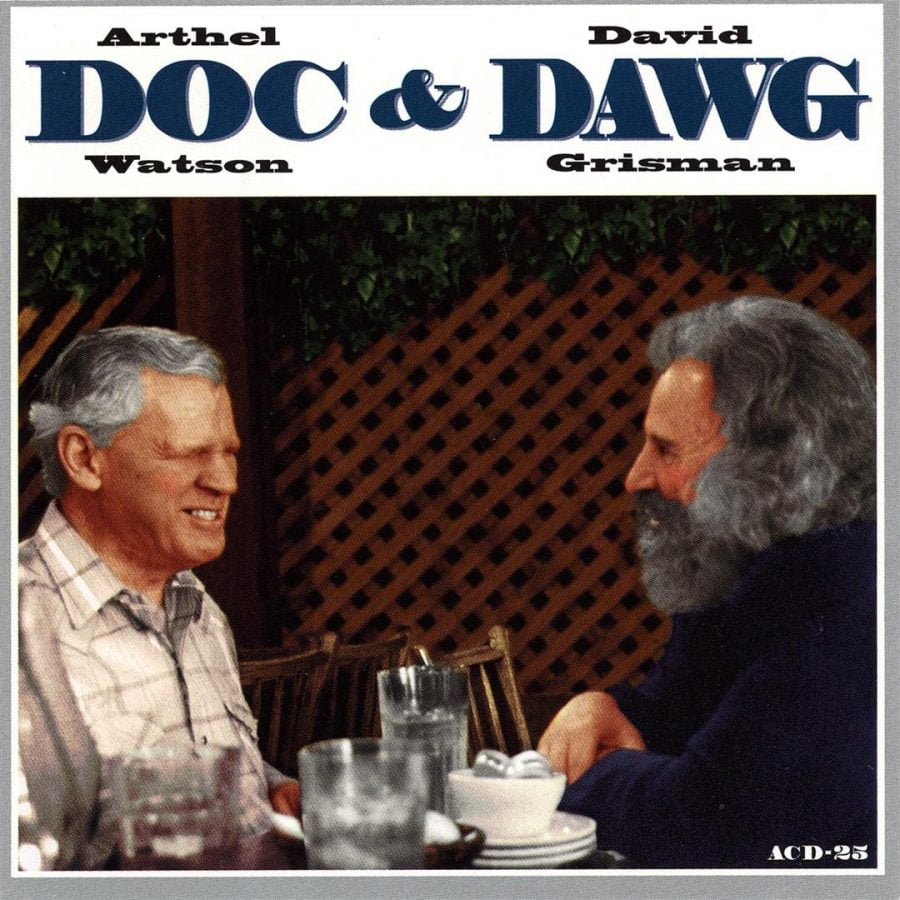
Doc Watson & David Grisman, “Watson Blues”

It’s fitting that this week, leading up to the 32nd year of MerleFest in Wilkesboro, North Carolina — a festival named after Doc Watson’s late son, Merle — that for Tunesday Tuesday we spend a few minutes with a song named after Doc himself. Bill Monroe wrote “Watson Blues” (or “Watson’s Blues,” as it’s also called), naming it after his friend and premier flatpicker, and the two performed it live and recorded it together on more than one occasion. This version with David “Dawg” Grisman, though, showcases the effortless way that Doc could keep up with and quietly, subtly innovate alongside musicians and artists who were much more famous for roaming further afield.

What’s additionally striking about this particular recording is how simple and focused the track is. Doc’s steady, unwavering hand pushes the song along at a perfectly breezy clip, matching the mellow, round, warm, huggable tones from his flattop. Meanwhile, Dawg plays the roll of Big Mon convincingly, peppering his signature, wacky, jazz-inflected phrases only rarely, choosing instead to let the tune stand on its own. Stuart Duncan’s plaintive twin fiddling is the icing on this tasty, minimal, “Watson Blues” cake.

If you’re headed to MerleFest this weekend, make sure this track is on your driving playlists to/from the festival — and be sure to check out our 2019 MerleFest preview for tips and tricks for the weekend. And, finally, make sure you stay tuned after the 3:52 runtime of “Watson Blues” passes — Doc, Dawg, and Jack Lawrence give us an incredibly tasty version of “Bye Bye Blues” to wrap up the album. It’s an acoustic pickin’ heroes encore.

David Grier, “Waiting on Daddy’s Money”

The initial A and B parts of virtuosic flatpicker David Grier’s “Waiting on Daddy’s Money” will strike your ear as timeless. It’s a subtly haunting and awry melody that conjures many of bluegrass and old-time’s iconic fiddle tunes. But, as soon as the first form is complete, Grier’s countless embellishments and reiterations of that melody demonstrate that this is no play-the-same-tune-for-half-an-hour-in-unison old-time revelry. Instead, this is an artistic study, a series of complicated opuses revisiting and revising the tune into a truly original, nearly inimitable six-string soliloquy.

What’s remarkable though, through that artistry — that ebbs and flows from simplistic, familiar staple licks to utterly singular, mind-boggling musical acrobatics — is that the tune, and Grier’s cyclical interpretations of it, are never at any point esoteric or inaccessible to the listener’s ear. Somewhat counterintuitively, it effortlessly holds onto that classic fiddle tune vibe. Grier himself refers to these interpretations as “mutations,” though that descriptor belies the decades upon decades of learned, practiced nuance and ease that make each reharmonization, key change, chord inversion, syncopated rhythm, and string sweep a boon to the song, rather than self-aggrandizing distractions.

Above all else, “Waiting on Daddy’s Money” — and the entire album, Ways of the World — demonstrates that Grier is an unimpeachably superlative guitarist with a one-of-a-kind musical voice that not only draws on his history growing up with bluegrass, but also consciously and magnificently blazes an impeccably fresh trail that no other picker has yet to even attempt to trod.


Photo credit: Scott Simontacchi

LISTEN: Paper Wings, “Woods and Fields”

Artist: Paper Wings
Hometown: Nashville, Tennessee/Berkeley, California
Song: “Woods and Fields”
Album: Clementine
Release Date: May 14th, 2019

In Their Words: “‘Woods and Fields’ is the first song on our upcoming album, Clementine, and is one of the first songs Emily and I wrote together. This track features our take on classic duet singing and draws from the roots and traditions of old-time music. As we slowly reveal new facets of our sound throughout the album, we preserve our essential interpretation of rural folk roots. Clementine is a collection of songs about love, longing, self-reflection, and finding sympathy in nature. ‘Woods and Fields’ represents this well, and is a snapshot of our collective voice.” — Wilhelmina Frankzerda of Paper Wings


Photo credit: Kallie Dawn Hagel

WATCH: Noah Fishman & Baron Collins-Hill, “Fine Times at Our House”

Artist: Noah Fishman & Baron Collins-Hill
Hometown: Belfast, Maine
Song: Fine Times At Our House
Album: Fine Times

In Their Words: “‘Fine Times at Our House’ is a classic old-time tune that’s been begging for a double mandolin rendition since the dawn of time. To get the tune off the ground, we play it as a jig, and then (spoiler alert) leap into a no-holds-barred, full-speed-ahead strumming fest, nearly smashing our matching A-style mandolins to smithereens. This tune is the title track of our debut duo album: Fine Times is a celebration of the strident versatility of the mandolin, and features six heartfelt originals and traditional tunes from two longtime friends.” — Noah Fishman & Baron Collins-Hill


Photo credit: Jamie Oshima
Video by Jamie Oshima, filmed in the art studio of Alan Fishman, mixed/mastered by Samuel Lundh


Small Town Therapy, “Cimarrón”

Fiddler Leif Karlstrom and mandolinist Adam Roszkiewicz — both veteran members of Bay Area pop-stringband Front Country — together in their duo form are called Small Town Therapy. Their latest single, “Cimarrón,” is their first studio follow-up to their 2014 debut self-titled album, which was produced by mandolin virtuoso Matt Flinner. “Cimarrón” reveals the pair charging back onto the scene with more new acoustic-inspired goodness with duet-precision that conjures other notable bluegrass-and-then-some twosomes like Darol Anger and Mike Marshall.

Though the title may evoke wild frontiers and raw, feral beauty, immediately listeners realize that Karlstrom and Roszkiewicz are neither untamed nor unpredictable in their execution of the tune. In fact, their impossibly tight, intertwined duet is almost perfectly antithetical to the wildness of the song’s moniker. The melody runs along like a raging river or a stampede of wild horses that while turbulent and fraught up close, are deft, intricate, deliberate choreographies when viewed at a distance.

The song never loses the frenetic, improvisational energy that we’ve come to recognize as a hallmark of these acoustic offshoots of bluegrass and old-time, yet Small Town Therapy are effortlessly in control. Their years spent in bands and on the road together are perhaps to blame — and thank — for this balance. In such a loose format, merely two voices bouncing off of and responding to one another, one might expect that freneticism to inevitably run off the rails, but it never does. And once again, like that coursing river or galloping herd, it sets its passengers down ever so gently at the end of their rollicking, musical journey.

LISTEN: Kieran Kane & Rayna Gellert, “Ain’t Got Jesus”

Artist: Kieran Kane & Rayna Gellert
Hometown: Kane – Queens, New York | Gellert – Elkhart, Indiana
Song: “Ain’t Got Jesus”
Album: When The Sun Goes Down
Release Date: March 20, 2019
Label: Dead Reckoning Records

In Their Words “This song began with Kieran noodling around on the octave mandolin. I loved the riff he was playing, so I picked up the guitar and started playing along. The seeds of the lyrics came from the world of old-time music — Leake County Revelers, Fiddlin’ John Carson, and others — but, in true ‘folk process’ fashion, we sewed them together with modern references. And, as so often happens when writing songs, the initial direction of the song fractured into multiple layers of meaning. We recently had someone at a show holler, ‘What is that song about?’ While it’s tempting to launch into an explanation of intent, it’s more fun to let people hear what they hear.” — Rayna Gellert


Photo credit: Lucas Kane

George Jackson, “Dorrigo”

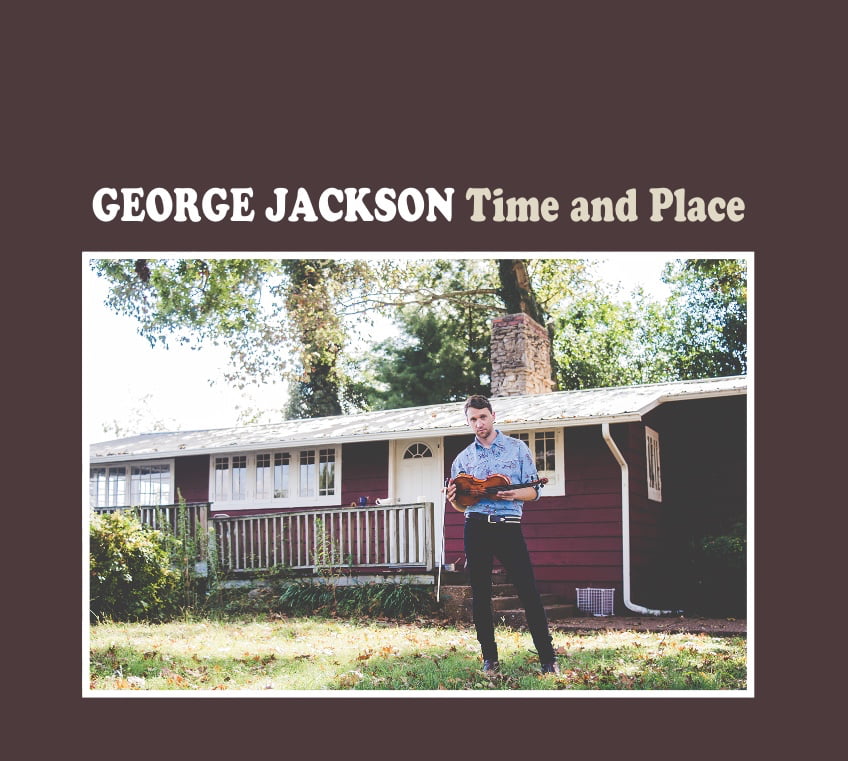
As a fiddler in Nashville, a town whose guitarist population is only rivaled by the sheer quantity of fiddles and bows, it takes a singular voice to stand out. Or, in George Jackson’s case, perhaps it takes a singular accent. The New Zealand native recently transplanted to Music City and has been carving a niche for himself in bluegrass, old-time, and their offshoots ever since. He currently tours with acclaimed bassist Missy Raines’ latest lineup, a minimalist-while-mighty acoustic trio, and he’s also been spotted collaborating with folks like Front Country and Rachel Baiman.

On his brand new album, Time and Place, Jackson steps into the role of frontman and bandleader, demonstrating that his voice — musically and otherwise — is so much more than just a charming, Oceanian accent. His fiddling is an intentional, pragmatic, and judicious combination of styles that range from Vassar Clements’ harebrained wit to Clifftop, West Virginia’s down-homiest old-time sawers. “Dorrigo,” a tune whose title tributes Australia, another former home to Jackson, perfectly demonstrates this old-meets-new, Northern Hemisphere meets Southern Hemisphere originality. The turns of phrase and melodic hooks register as familiar and timeless, before being unwound in surprising trajectories. Mandolin Orange’s Andrew Marlin, Charm City Junction’s Brad Kolodner, Mark Kilianski of Hoot and Holler, and Jackson’s longtime friend and collaborator Andrew Small fill out the band, demonstrating laser focus on old-time simplicity and bluegrass precision.

Perhaps thanks to his international roots, or his egalitarian approach to fiddle styles, Jackson’s “Dorrigo,” and by extension, Time and Place, simply do not bother trifling with authenticity signalling or genre designation. They simply elevate his singular voice.