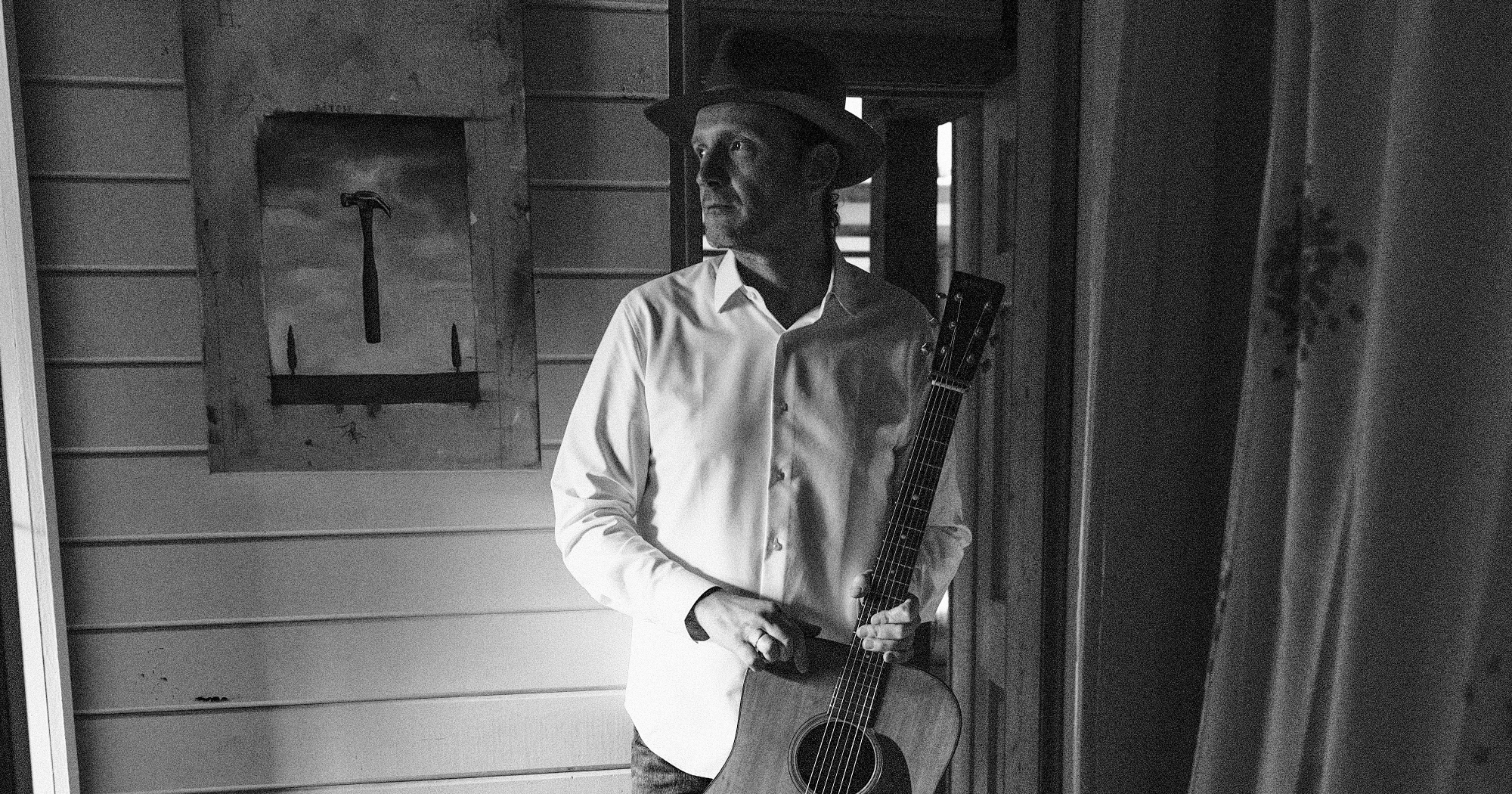
The Mythology and Alchemy of Thomm Jutz

Thomm Jutz has worked with a wide cast of characters since moving to Nashville in the early 2000s – John Prine, Nanci Griffith, Todd Snider, Billy Strings, and the SteelDrivers’ Tammy Rogers. But on his latest record, Ring-A-Bellin’, he strived to capture each song with the smallest musical unit possible.

The result of the 18-track album, released April 3, is a distinctly timeless vibe that feels just as much rooted to the present day as it does the mid-1900s or Civil War era, due to its recurring themes of history, mythology, and working with your hands. From self improvement (“Sharpen Your Knife”) to using natural disaster as a metaphor for perseverance (“Holy Mother Mountain”), the mastery that comes with time (“The Hammer And The Anvil”) and becoming more grounded in yourself (“Settle Me Down”), the GRAMMY-nominated transplant from Germany waxes philosophical and takes listeners back to a period long before we walked the Earth.

According to Jutz, the approach – recording with only a small group of people all in the same room not wearing headphones – is his way of replicating the process for how musicians would’ve recorded a century ago.

“This is how I want to make music right now,” he declares. “I don’t want to make a layered record – not because there’s anything wrong with that, it’s just not what I’m feeling at the moment. It’s like saying I don’t want to use red in my paintings right now, because I’ve used enough of it already.”

During a lengthy conversation with BGS at his Belmont office on Music Row, Jutz spoke about his concept of home, how psychology and mythology informed Ring-A-Bellin’, and a companion book that takes listeners even further into the world of his 18 new songs.

You’re releasing this album with a companion book. Tell me a little about what’s inside and why you decided to adopt this approach?

Thomm Jutz: It’s more and more important to create some kind of parallel narrative to the music nowadays. Vinyl has seen a resurgence over the last couple years, but it is not practical for me to take on my one trip to Europe every year. Because of that, I wanted to create something that was still a larger format, fun to hold, and had all the liner notes present without being something so small it’s hard to read.

I’ve also always enjoyed writing and reading – especially during my last 10 years as an instructor at Belmont – so I wanted to articulate some of those thoughts as they relate to the songs on this record in a longer form. When I got to working on it I quickly realized I was in over my head with the graphic design aspect of it, so I consulted my friend Gina Meredith. I just told her what I wanted artwork for and commissioned various folks to create pieces for each song. But rather than tell them what to make, I just sent them the music and had them use the songs as their creative prompts. Because of that I don’t always see the linear connection between the songs and the graphics that were made, but that’s also my favorite part.

A lot of my thoughts on this record revolve around analytic and Jungian psychology, alchemy and things like that, which are difficult to talk about in a tiny CD booklet, so I wanted to do something that allowed for a more longform format.

Overall, this record has a timeless feel – it could be (and is) from 2026, but if I didn’t know any better I wouldn’t second guess if someone told me it was from the mid-1900s or Civil War era as well, especially songs like “Sharpen Your Knife” and “The Hammer And The Anvil.” What are your thoughts on the vibe you were able to conjure up here?

I’m a traditionalist at heart, so everything I do is always trying to bring something new to the way I perceive what came before us, whether that’s lyrically, thematically, or in the recording process – which in this case was mostly all done live. I just think there tends to be more mystery with that music. There’s new music that does that too, but it’s easier for me to find that in old music because the cultural context can be studied since it’s not as close to my own lived experience. No matter how much I listen to or read about Charley Patton, I’ll never understand what he fully experienced because I was never there.

Regarding the songs you mentioned, both talk about people working with their hands, but they’re also metaphors for working on yourself – like you are the hammer, you are the anvil, you are the iron that’s being forged. Those mantras are rooted in human thought and analytical psychology, which is something I’ve dealt with and thought about a lot over the last 15 years. Particularly in terms of how mythology and history go together, and how understood the former is.

On one hand, some people think a myth is a lie and others say a myth is a fact, but both are wrong. A myth is a metaphor and must be understood as one. These songs are an effort to create a mythological framework that is a mirror image of my development as a person and artist. If you ever want to develop as an artist, you must develop as a person first.

With so much of this record wrapped up in concepts like history, psychology, and mythology, what’s the timeline for bringing the 18 songs on it to life?

These songs came from a period of about three years, but when I started I wasn’t setting out to make a record – I just wanted to experiment with a couple things. I had a few songs that I co-wrote with my friend Adam Wright that I wanted to test out with only me singing and playing and Mark Fain on bass. And it worked out really well. As I got fascinated with that process I began looking through my catalog and noticed that the songs which spoke to me the most were all ones that formed a narrative arc.

However, it’s not an autobiographical record that says, “I was born here,” “I did this,” and “This is how it made me feel.” But more so, one that explores spiritual development. I’m not interested in autobiographical songwriting. I find it very claustrophobic how you have to spell everything out to the listener. When you do that you’re shutting them out with nothing to do, which has me opting for a more open approach. A song is only ever truly finished when the listener interprets it for themselves, not with what the person who wrote it intended.

One of the songs on Ring-A-Bellin’ that is tied to more recent events is “Holy Mother Mountain,” which was inspired by the fallout of Hurricane Helene, specifically in Western North Carolina. But it’s also a metaphor for overcoming adversity. Care to explain?

That song is a good example of how writing with someone else – in this case Mando Saenz – can profoundly shape an idea. I remember Helene happening and having this line “Holy Mother Mountain” appear to me out of nowhere. From then on I couldn’t stop thinking about it, so I brought it to a writing session with him and said I didn’t know what to do with it. Then the co-writing dance ensued, with him taking the lead, followed by me for a bit, until it started becoming much clearer that there was no way to move forward without it being about Hurricane Helene somehow.

While it was inspired by that, the song is also about overcoming adversity and understanding that it’s going to happen again. Just because you live through Helene doesn’t mean there’s not another storm coming right behind it. If that storm showed us anything, it’s that perceived climate safety in Appalachia is not true. Also, “mother” and “mountain” are not just a nice alliteration, but there’s also a feminine quality about a mountain. An inverted mountain is a valley – or a place you can seek refuge in – and if you go on top of a mountain, you might find yourself closer to some kind of spiritual awareness.

The song is much more a collection of images that relate to the archetypal images of mother and mountain. Maybe even the word “holy” in the title has something to do with the fact of how little modernity treats nature with respect. Maybe that’s what we need to do – not bring offerings, but bring out attention to it instead of riding around and abusing it like crazy.

On “Too Many Walls” you sing about the idea of home. Given that you moved to the states 25 years ago from Germany, what is “home” to you?

Home and time are two of the biggest themes we write about, and it’s longing that connects the two – longing for home, longing to belong somewhere, longing to live in a different period of time, longing to get over something. Over the last couple years, I’ve also started thinking more about how strange a thing it is to build a house, because you’re just enclosing space that’s been there all along. You’re building and calling it something that wasn’t there before, but the land was always there. It’s a strange construct, and at the same time we need shelter.

From an early age I didn’t feel at home where I was because I longed for a place where music was part of the everyday lived experience. But in Germany after 1945 that was completely out of the picture, because the Nazi regime had completely and absurdly abused any sense of folklore. Since I was longing for an environment where people played music, I went to Ireland for the first time with my wife when I was 18 since it was much closer than coming [to the United States], which we couldn’t afford at the time. I was amazed by the music coming out of the pubs there – it felt so natural, like it was rising out of the Earth.

That fascination carried over into my love of American roots music. In that sense, “home” is where I feel connected to a place through music since that’s my main way of expressing myself. Additionally, southwestern Appalachia and the Black Forest that I’m from in Germany can look astonishingly similar sometimes, so when I go back to visit my parents I occasionally feel like I’m navigating the mountains around Johnson City, [Tennessee]. When I’m in Johnson City I sometimes imagine I’m back in Germany. But Appalachia has more importance to me now because it’s where I live and long to be. If it weren’t for all the writing I do in Nashville and my work at Belmont, I’d be in Appalachia fulltime, because it just speaks to me. When I haven’t been in a while I can start feeling something deep inside me – it’s not a heaviness, but a feeling of “I just really wanna fucking go.” [Laughs]

What has bringing this record to life taught you about yourself?

It’s taught me that I know nothing about graphic design and should always let someone else handle that instead. [Laughs]

In all seriousness, it has taught me that while I don’t consider myself a great singer, I can still enjoy the way I deliver a song if I do it correctly. It’s also taught me that while I have great deficiencies as a guitar player, I do enjoy the way I play guitar and this record, where I’m keenly aware of everything wrong with my playing. Even Tony Rice said that about his playing.

It’s not a sense of having completed my journey as a guitar player, but quite the opposite. It’s more like I’m aware of what’s missing. It’s also taught me that staying on the path of creating and writing a lot. You have to be in it for the long game in today’s environment and be doing it for the right reasons or you’ll run yourself ragged. I already understood that a little bit, but now I understand it even better. Maybe that’s what it’s all about – gaining a little awareness and moving on.


Photo Credit: Don VanCleave
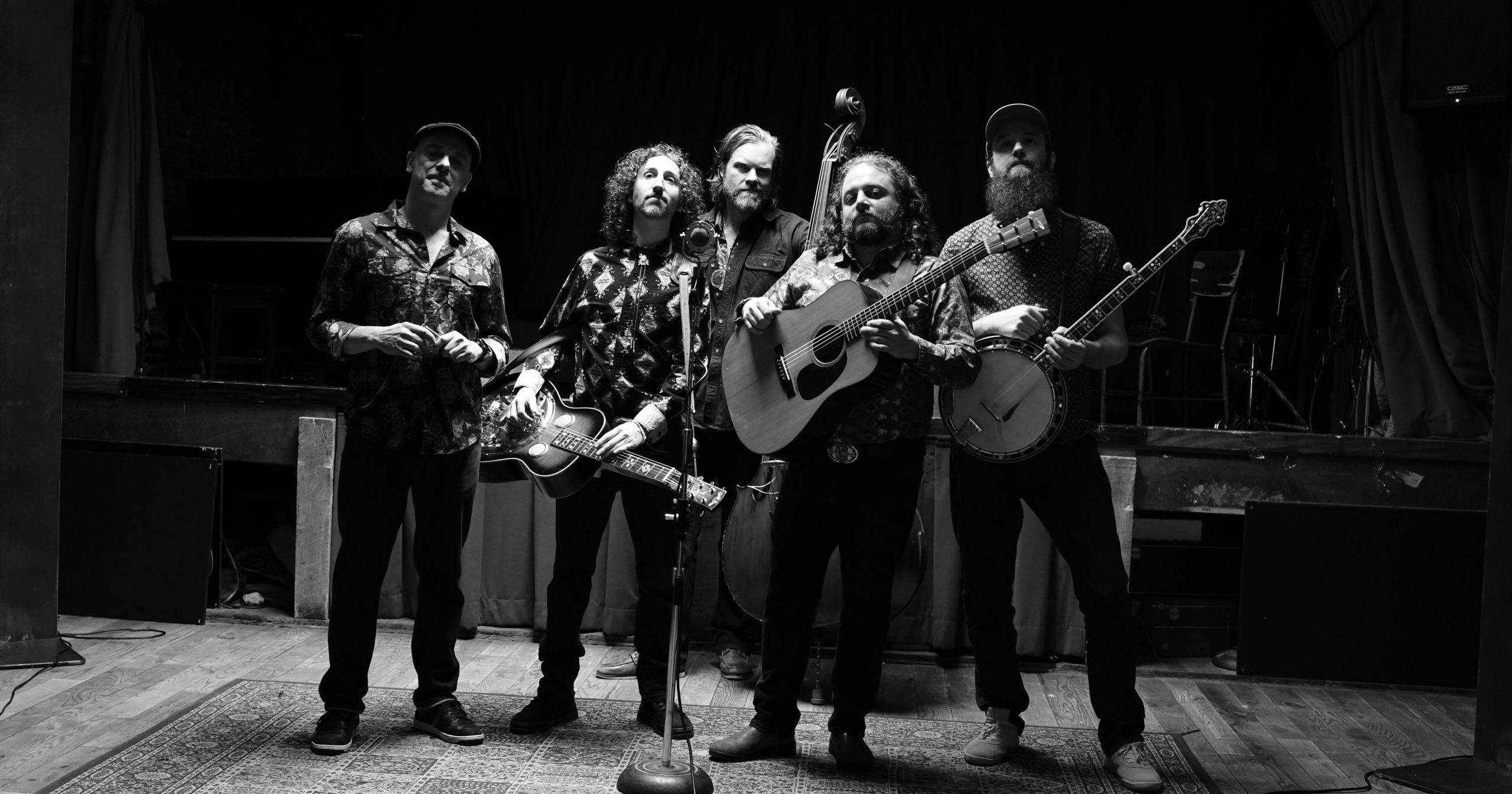
BGS 5+5: Cole Quest and the City Pickers

Artist: Cole Quest and the City Pickers
Hometown:
Brooklyn, New York
Latest Album:
Homegrown
Personal Nicknames (or rejected band names): CQCP, incorrectly called: Cole West and The City Slickers. Holding out for Cold Cuts and The City Pickles.

(Editor’s Note: Answers provided by Cole Quest.)

What’s your favorite memory from being on stage?

One of my favorite memories was from our inaugural tour to Germany in 2023. It was a 20+ day adventure and for many in the band it was their first time traveling internationally. I was beyond excited – and equally nervous – leading up to and during the trip, running through the millions of things that could go wrong along the way.

But as we traveled, we were met with packed venues, heartfelt appreciation, and as close to “fandom” as we’ve ever experienced. It was unforgettable.

We closed the tour with four days in the small German town of Rudolstadt, which had swelled to 90,000 visitors and over 20 stages for the Rudolstadt World Music Festival. We played several sets and gave a handful of radio interviews, each appearance building momentum as more fans and followers came out to support us. Our final performance was the big one. Right before we walked on, I gathered the band into a circle and shared a heartfelt moment to thank them for everything that led to us being there. With tear-filled eyes, I stepped on stage just as the emcee finished our introduction to a billowing applause and a spontaneous rendition of “Happy Birthday.” It was my birthday – and I couldn’t have imagined a better way to celebrate it.

What other art forms – literature, film, dance, painting, etc. – inform your music?

I often find it hard to tell where others’ art ends and mine begins. We’re all products of our surroundings and, in my case, those surroundings have always been steeped in art.

My parents had a modern dance company for many years. My grandmother was a founding member of the Martha Graham Dance Company. My grandfather was Woody Guthrie. My great-grandmother, Eliza Greenblatt, was a Yiddish poet. My late aunt Ann Cooper was a painter. The list goes on – and that’s just on my mother’s side.

In our house, many hours were spent discussing what creative expression looks like and the different forms it can take. Having these conversations growing up really pushed my creative boundaries and ways of thinking. I often attribute sounds to colors (chromesthesia) and wonder if that came from these open discussions. I believe all of the art forms influence everything about my life all the time, including my music.

How often do you hide behind a character in a song or use “you” when it’s actually “me”?

I find I actually do the opposite – and quite often. I find myself writing about “me,” putting myself in someone else’s shoes. I find I often use songwriting as an excuse to shift my own perspective – not necessarily to a “better” perspective – but more as exercise to deeper understand things from different angles. For example, “Plane Wreck At Los Gatos” or “Jolly Banker.”

I’m heavily influenced by my grandfather in that way. Growing up, it’s something I’ve always noticed about many of his writings and grew up understanding that to be the norm. It made sense to me, to use songwriting as a tool for greater understanding and gaining a broader perspective.

Since food and music go so well together, what is your dream pairing of a meal and a musician?

I’m not much of a food connoisseur, but I am a fan of good company and good conversation over a slice of cheesecake or a latke. My dream meal would be showing up to downtown Brooklyn’s famous cheesecake establishment, Junior’s, for a late night slice with Stevie Wonder.

To set the scene, Junior’s is basically a classic NYC diner including bright Broadway-style lighting outside, brown and orange vinyl booths, and your food order comes with the best-in-town complimentary beets, coleslaw, and pickles. The main difference is its exceptional desserts and historic presence. Because its location is a central hub of Brooklyn, it’s a true “mosaic of Brooklyn” according to the third-generation owner. The late-night crowd often includes folks coming in after seeing a concert nearby, locals looking to put a few back, families who missed “dinner time,” or the seasoned regulars appreciating a delicious milkshake.

I can’t think of a better spot to sit down and pick Stevie’s brain about all of his songwriting, his lyrical prowess, his thoughts on love, social issues, and anything part of the human experience.

If you didn’t work in music, what would you do instead?

I’ve spent many hours of my life as a computer programmer – and still do – but deep down, I’ve always wanted to drive what I call “the big square.” I want to drive big vehicles: coach buses, school buses, 18-wheelers, and RVs. It’s not that I crave the long hours behind the wheel, which is why I’ve never made it a profession; part of me wants to just spin the big steering wheel and navigate these oversized boxes in narrow and small spaces. I have no idea why.

Between other jobs, I’ve thought about getting my commercial license, but it just hasn’t happened yet. For now, I live vicariously through the 18 Wheeler: American Pro Trucker arcade game.


Photo Credit: Benton Brown

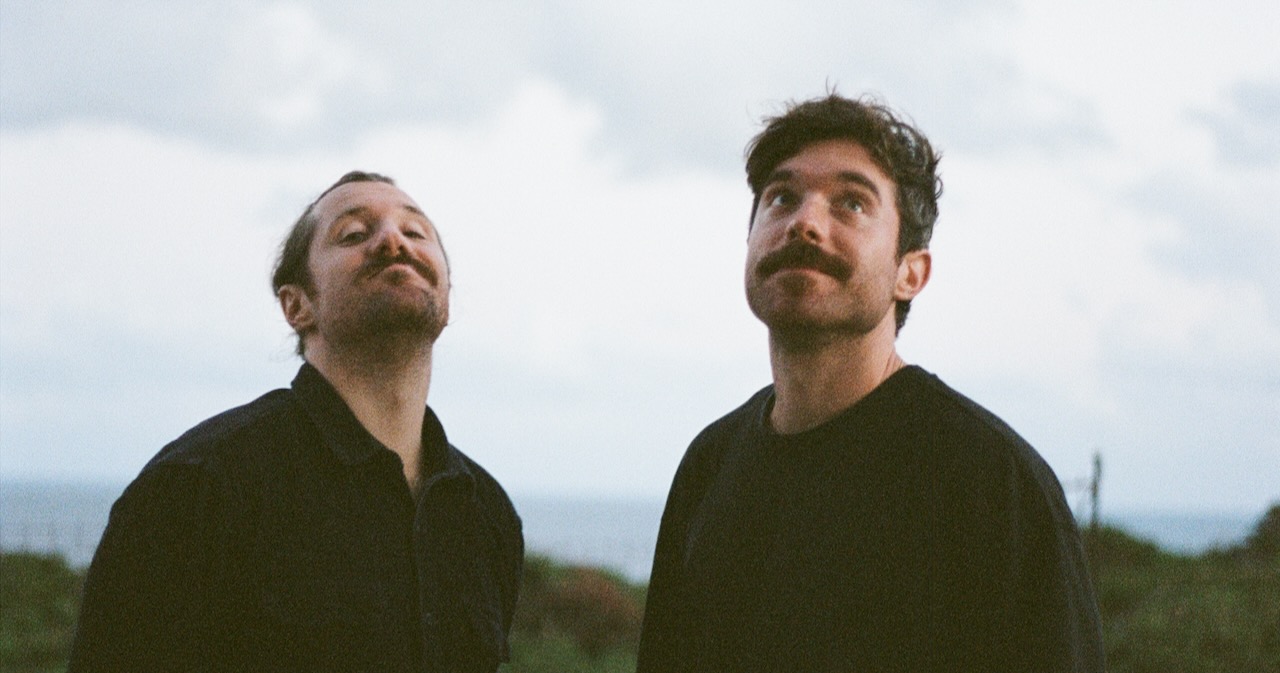
BGS 5+5: Amistat

Artist: Amistat
Hometown: Rosenheim, Bavaria, Germany
Latest Album: What We Are EP (releasing March 21)

Which artist has influenced you the most – and how?

The godfather of indie-folk, Ben Howard! When we first started out as Amistat playing and writing music back in 2012, his album Every Kingdom had just come out. It was the first time ever that we had heard a sound like his. His lyrics, melodies, especially the style of guitar tuning, and the way he used his guitar as a percussive element, captured us and had us mesmerized. It’s to this date the most inspiring piece of music we’ve ever come across and we listen to it on repeat, still.

What rituals do you have, either in the studio or before a show?

The last hour before going on stage is holy to us and very important for us to get in the zone. We meditate for about half an hour (individually), then Josef runs through his vocal warm up routine (15 minutes). We brush our teeth (most important!) and just before going on stage we have this ritual that the entire team meets backstage for a toast – it’s actually reciting an old Irish poem. Every day someone else gets to take the lead on it:

“There are good ships and wood ships, ships that sail the sea, but the best ships are friendships and may they always be.”

What’s the most difficult creative transformation you’ve ever undertaken?

We started out as buskers on the streets of Melbourne. We did that full time for about 7 years. After that time we felt like nothing is really changing and that in order to grow we needed to change something again. We moved to Brighton, England, and wanted to try busking there. After about three weeks and 24/7 of rain we decided to move to Berlin. There we had to kind of rethink the whole busking thing and came up with the idea of putting on small house shows in people’s living rooms. That’s what we did and lived of for about two years. Then COVID hit and everything kind of stopped. During that time we honed down on the social media content and it all grew from there.

What’s one question you wish interviewers would stop asking you?

“What’s it like being twins?”

If you didn’t work in music, what would you do instead?

Jan would be a golf professional, Josef would be soccer professional.


Photo Credit: Anja Kaufmann

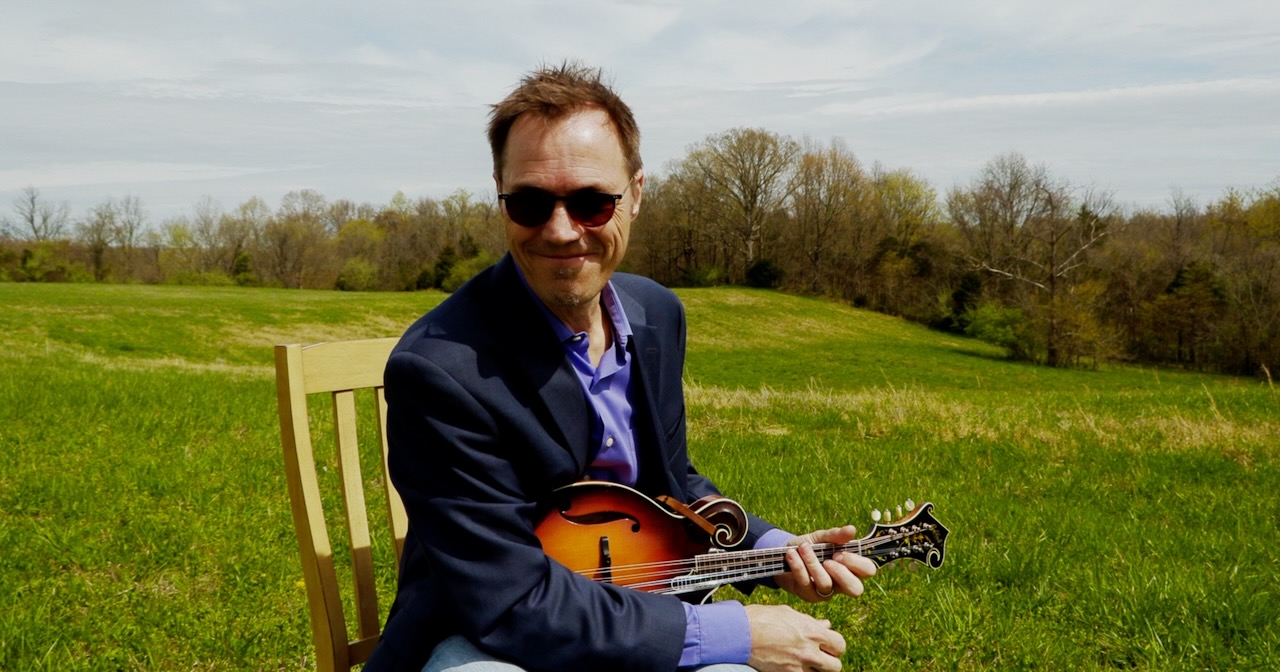
BGS 5+5: Mark Stoffel

Artist: Mark Stoffel
Hometown: Murphysboro, Illinois
Latest Album: True Tones
Personal Nicknames (or rejected band names): Dr. Pretzel and recently The Mandolinator

What was the first moment that you knew you wanted to be a musician?

Before I picked up the mandolin, I played the piano, inspired by my mom who was an accomplished classical player. When I was around ten years of age, my parents switched piano teachers and the new one taught me something completely new: blues, boogie, and ragtime. I did appreciate the classical stuff, but the boogie stuff got me really excited. Not too long after that I performed in school – I kicked it off with a fast boogie-woogie piece, then I played a solo on harmonica (probably not the greatest!) while continuing the piano rhythm with my left hand. The audience went nuts and I that’s the first time I felt that my calling was to be a musician!

What has been the best advice you’ve received in your career so far?

Much later in my career I was given a book by Nate Lee, amazing fiddler and mandolinist. The book is entitled Effortless Mastery, penned by a jazz pianist named Kenny Werner. I started reading and from the get-go I was mesmerized. It’s all about embracing yourself – your ideas, your expression, your every musical moment. Do not ever worry about what other people might think of your playing and don’t always compare yourself with others. I’ll never be a Chris Thile, because only Chris Thile can be Chris Thile. I am Mark Stoffel. It’s as easy as that. Kenny Werner writes it in a way that totally spoke to me and it really – to this day – helps me every day. When I compose I no longer dismiss any ideas, when I practice, perform or record, I try to be myself and stay true to it. That was the best advice I received in my career so far.

Genre is dead (long live genre!), but how would you describe the genres and styles your music inhabits?

We’re all just a product what we’ve been exposed to. I grew up listening to lots of classical music. Then my dad, in the ’70s, got into rock, soul, and disco music and he bought tons of records and spun them all the time. Then I got bluegrass, first the more contemporary stuff – which at the time was Tony Rice, New Grass Revival, the Seldom Scene – then I gradually worked myself backwards in time to gain an appreciation for first generation bluegrass.

I think all of that is what informed what I do today. Genres are worthless to me. There are only two categories: Good music and bad music. As long as it has good drive, good melody, compelling lyrics, and a soul, it’s good. I love AC/DC as much as Flatt & Scruggs.

If you didn’t work in music, what would you do instead?

I’d be a baker and make original Bavarian pretzels for my fellow Americans.

What would a perfect day as an artist and creator look like to you?

Get up in the morning, have a cup of coffee, grab my mandolin, and play whatever comes to my mind, most likely come up with some new riff or melody. That will set the tone for everything else that happens that day, and all will be good.


Photo Credit: Mary Stoffel

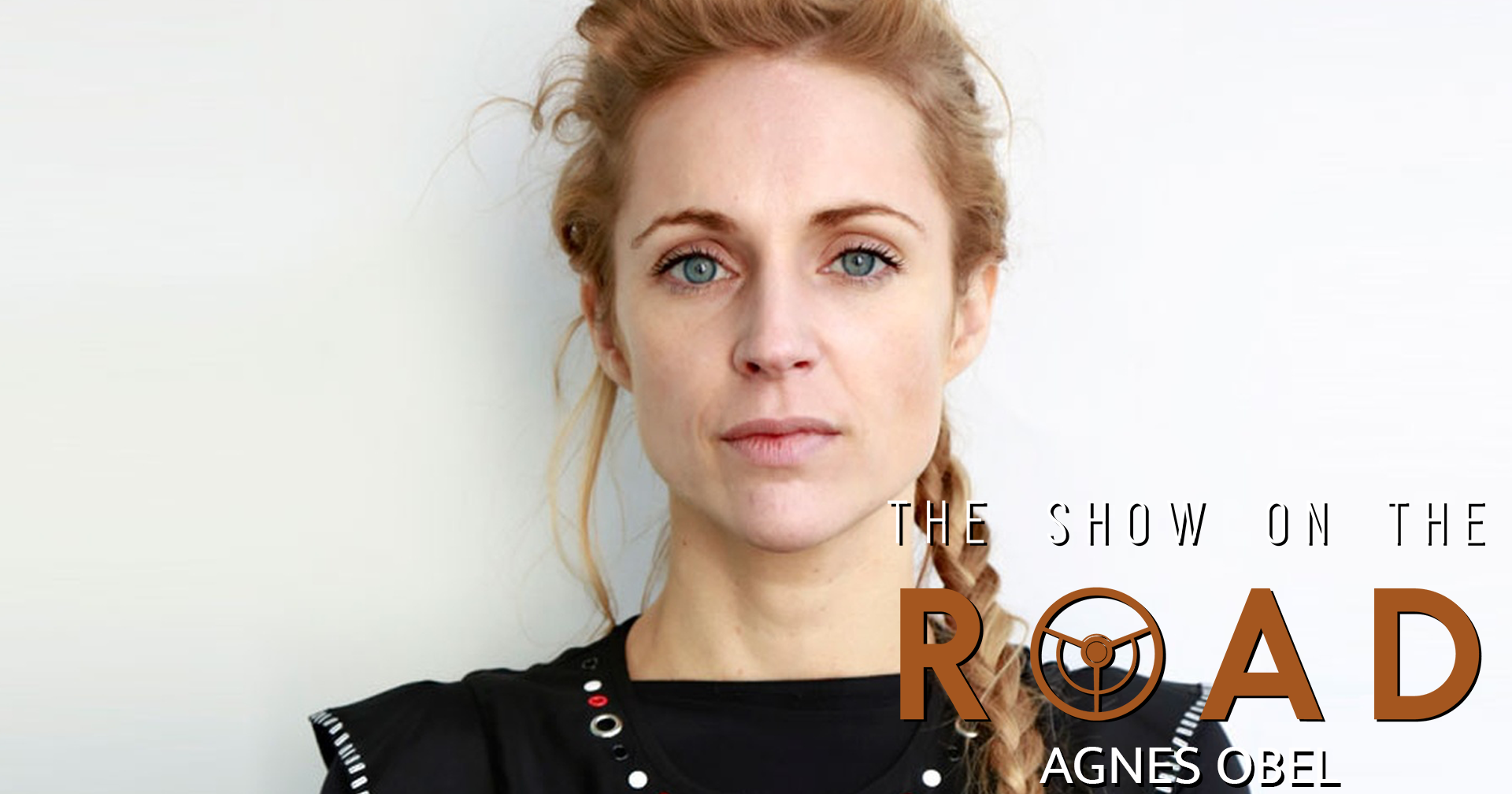
The Show On The Road – Agnes Obel

This week, The Show On The Road features a conversation with renowned Danish pianist, experimental composer, and atmospheric-folk songstress Agnes Obel

LISTEN: APPLE PODCASTSMP3

Recorded high above Hollywood in the famed Capitol records building (Obel was recently signed to Blue Note Records), host Z. Lupetin takes an intimate tour of Obel’s newest work Myopia, which shows the pianist and composer at her most personal and aurally fearless.

Born in Copenhagen and based in Berlin, Obel’s albums warrant repeat listening, as it’s often hard to know exactly what instruments are playing at any given time. At times the darting, looping piano and quicksilver string work seem like a chamber orchestra, or maybe the songs on Myopia are secretly the technicolor backdrop and emotive score to a film that only she sees.

It’s been nearly a decade since her transcendent DIY debut album, Philharmonics, put her into many people’s minds (she may not be very well known yet in the States, but she is a gold-record selling, underground star in many parts of Europe). This past spring, Obel was set to play the expansive Greek Theater in Los Angeles before COVID-19 forced her to stay in Berlin — which, for an artist that creates hushed, often lyricless songs you probably can’t dance to, is an impressive leap.


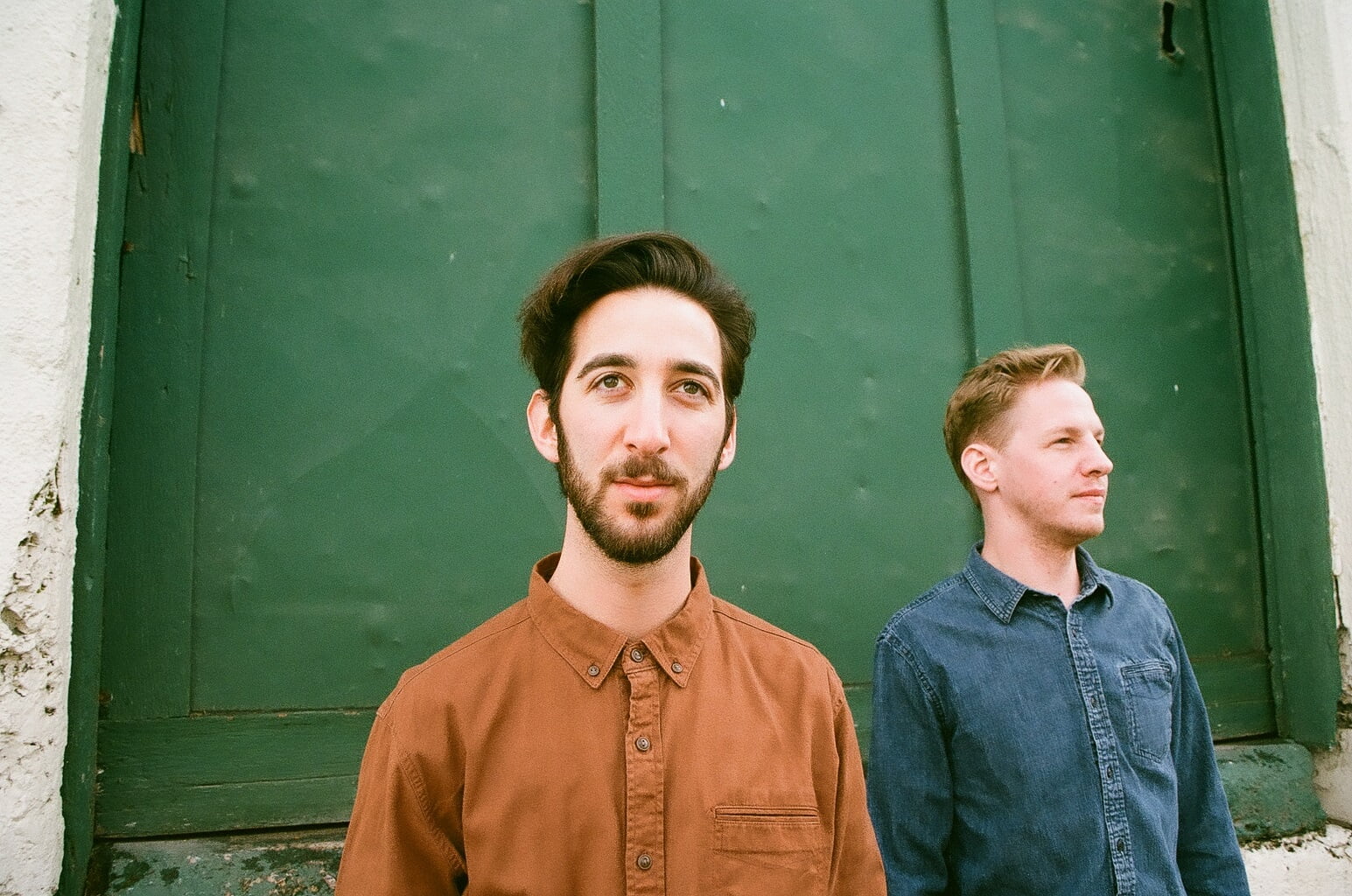
BGS 5+5: Skin & Bones

Artist: Skin & Bones
Hometown: Moorpark, California; Greensboro, North Carolina
Latest Album: Shadowboxing
Personal Nickname: Sweet mesquite Pete and the Carolina Heat

(Answers from singer/guitarist Taylor Borsuk)

What was the first moment you knew that you wanted to be a musician?

I was living with my girlfriend in Dresden, Germany, in winter. I was 19 years old and was addicted to writing songs. I hardly knew anyone there and couldn’t really speak much of the language. The isolation I experienced was really profound. It provided me with a very rare opportunity to consider what I wanted out of life. I made the decision then to put all my efforts into songs.

How often do you hide behind a character in a song or use “you” when it’s actually “me”?

I tend to do this in most of my songs; however I don’t consider it hiding. I write about my own personal experiences and others around me, but at the same time I want the listener to be able to relate to the songs and stories in their own unique way. I’ve used “you” instead of “me” in an attempt to bridge that gap in the hopes that the song feels as if it could be about anyone. In all honesty, what the songs means to me doesn’t matter that much. I’m more interested in what it means to someone else.

What’s your favorite memory from being on stage?

We were performing at The Deer Lodge in Ojai, California. I guess word had gotten around about our music and when we arrived the place was packed. People were singing along to the songs and it was one of those first ‘wow’ moments we experienced as a band. Great fun and we made a lot of new friends.

Which artist has influenced you the most … and how?

This is such a toughie. I pull from a myriad of influences, but I think the artist that has had the biggest impact on me is Jackson Browne. As a child his music was always playing in my home and subconsciously it laid the foundation for my appreciation of songwriting. His work is timeless. It will be just as relevant in a hundred years from now as it was when he first wrote it. When I heard that he wrote the song “These Days” at age 16 it set the bar for me.

What is your dream pairing of a meal and a musician?

Mexican food paired with the Mariachi radio station in a hole in the wall restaurant and I am a happy camper. Bring on the horns.


Photo courtesy of Skin & Bones