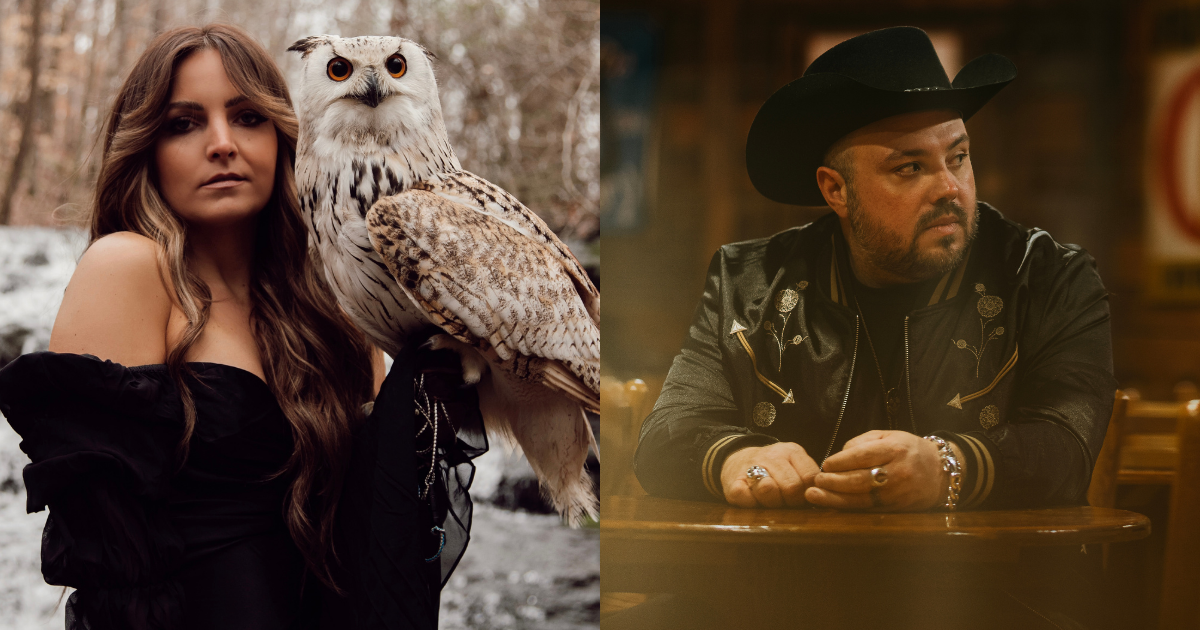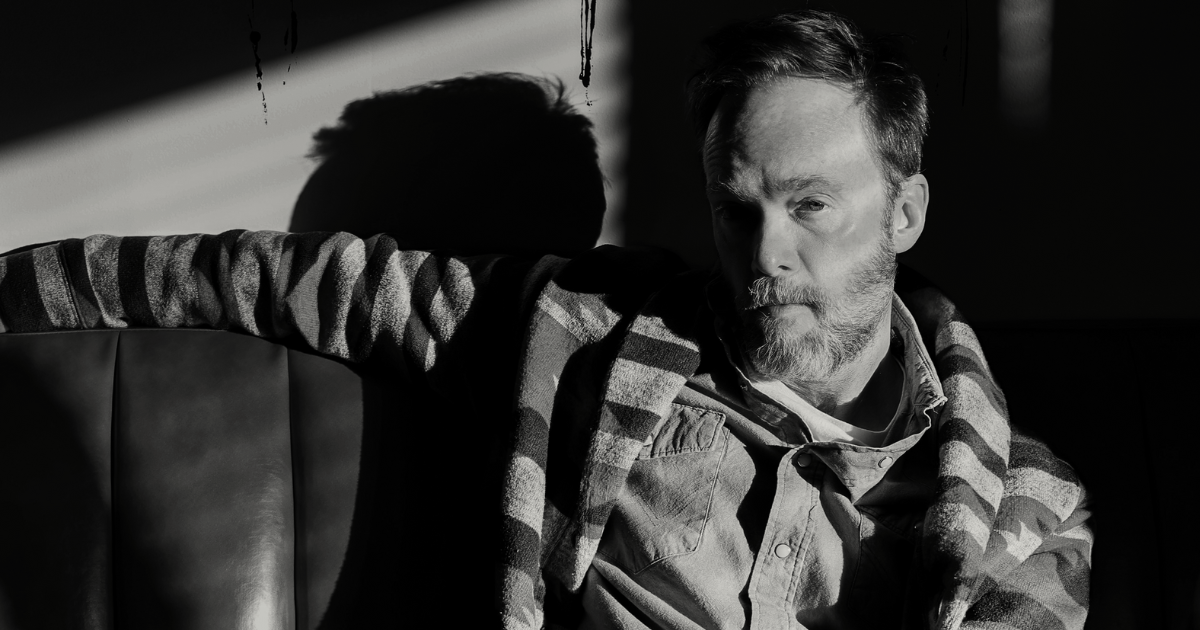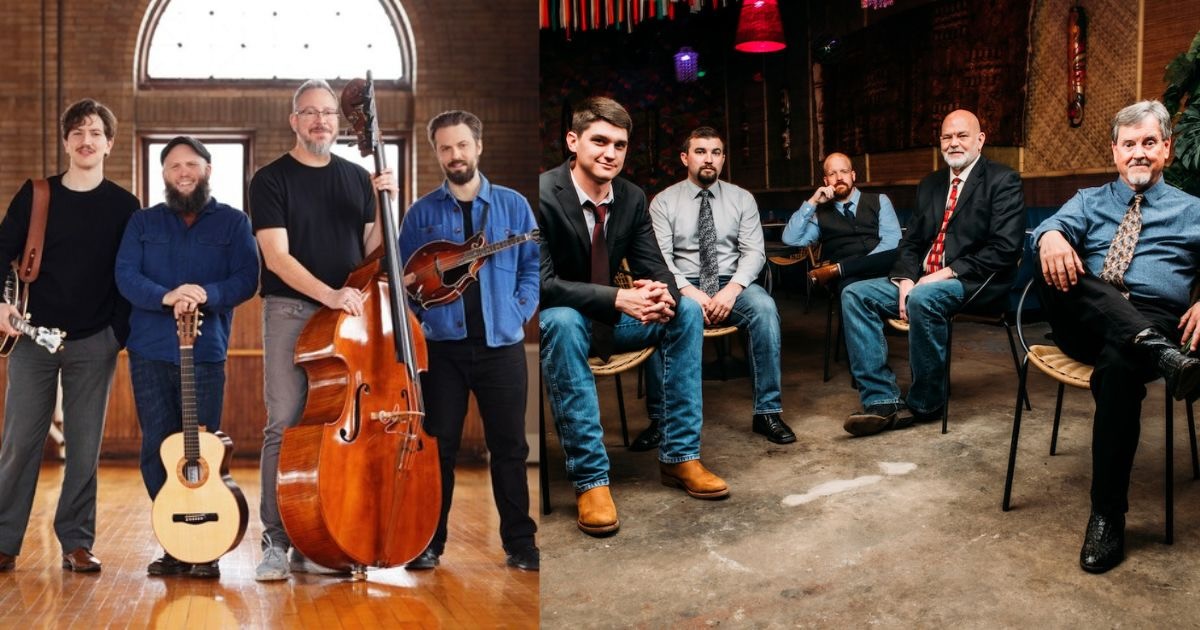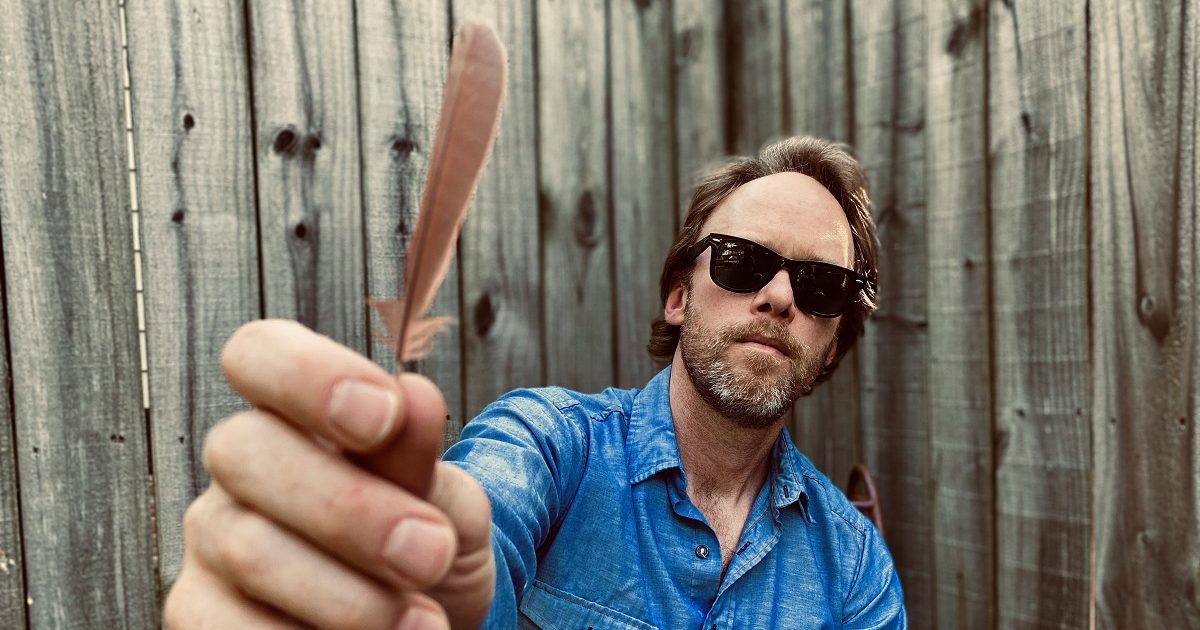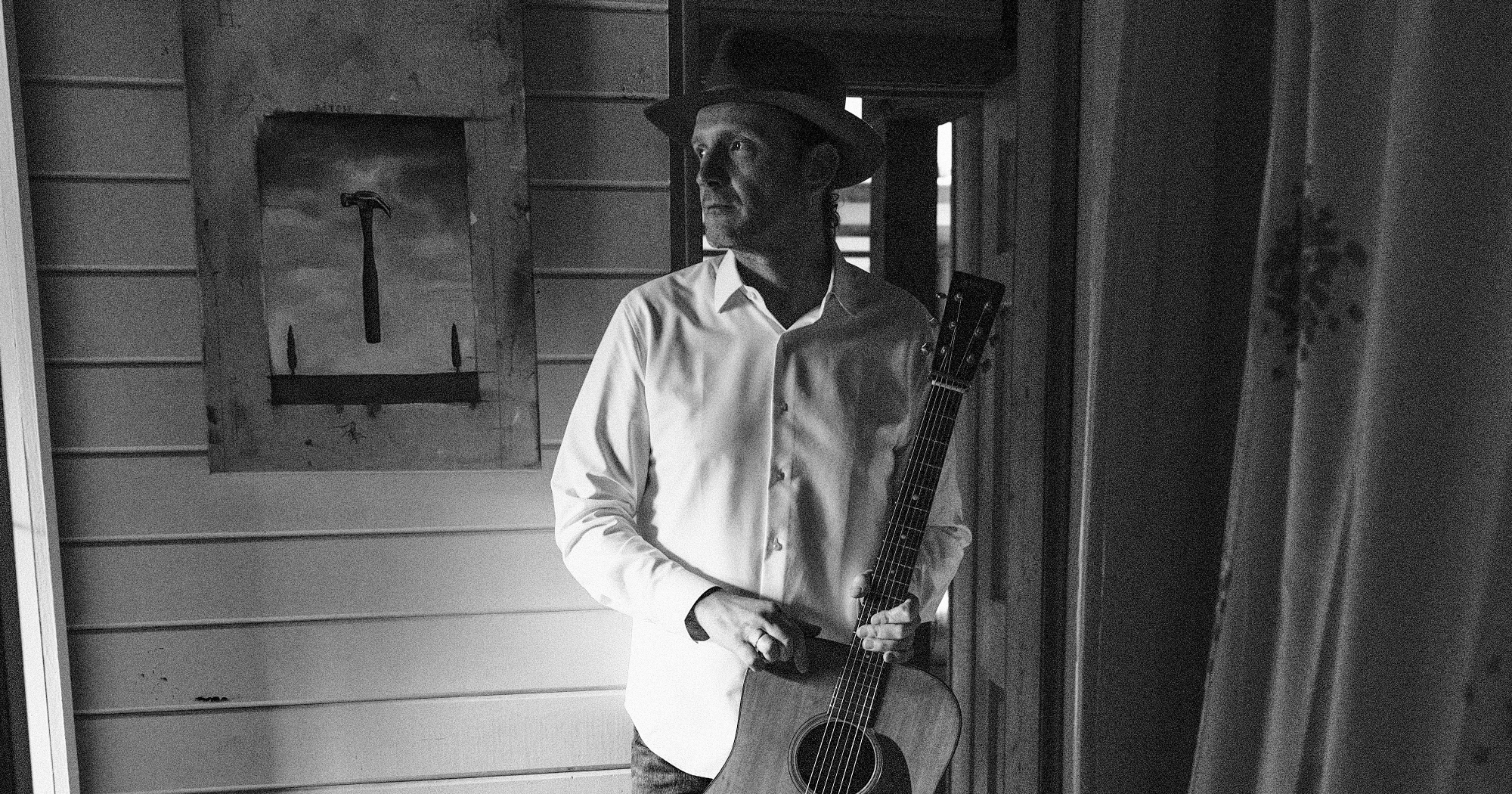
The Mythology and Alchemy of Thomm Jutz

Thomm Jutz has worked with a wide cast of characters since moving to Nashville in the early 2000s – John Prine, Nanci Griffith, Todd Snider, Billy Strings, and the SteelDrivers’ Tammy Rogers. But on his latest record, Ring-A-Bellin’, he strived to capture each song with the smallest musical unit possible.

The result of the 18-track album, released April 3, is a distinctly timeless vibe that feels just as much rooted to the present day as it does the mid-1900s or Civil War era, due to its recurring themes of history, mythology, and working with your hands. From self improvement (“Sharpen Your Knife”) to using natural disaster as a metaphor for perseverance (“Holy Mother Mountain”), the mastery that comes with time (“The Hammer And The Anvil”) and becoming more grounded in yourself (“Settle Me Down”), the GRAMMY-nominated transplant from Germany waxes philosophical and takes listeners back to a period long before we walked the Earth.

According to Jutz, the approach – recording with only a small group of people all in the same room not wearing headphones – is his way of replicating the process for how musicians would’ve recorded a century ago.

“This is how I want to make music right now,” he declares. “I don’t want to make a layered record – not because there’s anything wrong with that, it’s just not what I’m feeling at the moment. It’s like saying I don’t want to use red in my paintings right now, because I’ve used enough of it already.”

During a lengthy conversation with BGS at his Belmont office on Music Row, Jutz spoke about his concept of home, how psychology and mythology informed Ring-A-Bellin’, and a companion book that takes listeners even further into the world of his 18 new songs.

You’re releasing this album with a companion book. Tell me a little about what’s inside and why you decided to adopt this approach?

Thomm Jutz: It’s more and more important to create some kind of parallel narrative to the music nowadays. Vinyl has seen a resurgence over the last couple years, but it is not practical for me to take on my one trip to Europe every year. Because of that, I wanted to create something that was still a larger format, fun to hold, and had all the liner notes present without being something so small it’s hard to read.

I’ve also always enjoyed writing and reading – especially during my last 10 years as an instructor at Belmont – so I wanted to articulate some of those thoughts as they relate to the songs on this record in a longer form. When I got to working on it I quickly realized I was in over my head with the graphic design aspect of it, so I consulted my friend Gina Meredith. I just told her what I wanted artwork for and commissioned various folks to create pieces for each song. But rather than tell them what to make, I just sent them the music and had them use the songs as their creative prompts. Because of that I don’t always see the linear connection between the songs and the graphics that were made, but that’s also my favorite part.

A lot of my thoughts on this record revolve around analytic and Jungian psychology, alchemy and things like that, which are difficult to talk about in a tiny CD booklet, so I wanted to do something that allowed for a more longform format.

Overall, this record has a timeless feel – it could be (and is) from 2026, but if I didn’t know any better I wouldn’t second guess if someone told me it was from the mid-1900s or Civil War era as well, especially songs like “Sharpen Your Knife” and “The Hammer And The Anvil.” What are your thoughts on the vibe you were able to conjure up here?

I’m a traditionalist at heart, so everything I do is always trying to bring something new to the way I perceive what came before us, whether that’s lyrically, thematically, or in the recording process – which in this case was mostly all done live. I just think there tends to be more mystery with that music. There’s new music that does that too, but it’s easier for me to find that in old music because the cultural context can be studied since it’s not as close to my own lived experience. No matter how much I listen to or read about Charley Patton, I’ll never understand what he fully experienced because I was never there.

Regarding the songs you mentioned, both talk about people working with their hands, but they’re also metaphors for working on yourself – like you are the hammer, you are the anvil, you are the iron that’s being forged. Those mantras are rooted in human thought and analytical psychology, which is something I’ve dealt with and thought about a lot over the last 15 years. Particularly in terms of how mythology and history go together, and how understood the former is.

On one hand, some people think a myth is a lie and others say a myth is a fact, but both are wrong. A myth is a metaphor and must be understood as one. These songs are an effort to create a mythological framework that is a mirror image of my development as a person and artist. If you ever want to develop as an artist, you must develop as a person first.

With so much of this record wrapped up in concepts like history, psychology, and mythology, what’s the timeline for bringing the 18 songs on it to life?

These songs came from a period of about three years, but when I started I wasn’t setting out to make a record – I just wanted to experiment with a couple things. I had a few songs that I co-wrote with my friend Adam Wright that I wanted to test out with only me singing and playing and Mark Fain on bass. And it worked out really well. As I got fascinated with that process I began looking through my catalog and noticed that the songs which spoke to me the most were all ones that formed a narrative arc.

However, it’s not an autobiographical record that says, “I was born here,” “I did this,” and “This is how it made me feel.” But more so, one that explores spiritual development. I’m not interested in autobiographical songwriting. I find it very claustrophobic how you have to spell everything out to the listener. When you do that you’re shutting them out with nothing to do, which has me opting for a more open approach. A song is only ever truly finished when the listener interprets it for themselves, not with what the person who wrote it intended.

One of the songs on Ring-A-Bellin’ that is tied to more recent events is “Holy Mother Mountain,” which was inspired by the fallout of Hurricane Helene, specifically in Western North Carolina. But it’s also a metaphor for overcoming adversity. Care to explain?

That song is a good example of how writing with someone else – in this case Mando Saenz – can profoundly shape an idea. I remember Helene happening and having this line “Holy Mother Mountain” appear to me out of nowhere. From then on I couldn’t stop thinking about it, so I brought it to a writing session with him and said I didn’t know what to do with it. Then the co-writing dance ensued, with him taking the lead, followed by me for a bit, until it started becoming much clearer that there was no way to move forward without it being about Hurricane Helene somehow.

While it was inspired by that, the song is also about overcoming adversity and understanding that it’s going to happen again. Just because you live through Helene doesn’t mean there’s not another storm coming right behind it. If that storm showed us anything, it’s that perceived climate safety in Appalachia is not true. Also, “mother” and “mountain” are not just a nice alliteration, but there’s also a feminine quality about a mountain. An inverted mountain is a valley – or a place you can seek refuge in – and if you go on top of a mountain, you might find yourself closer to some kind of spiritual awareness.

The song is much more a collection of images that relate to the archetypal images of mother and mountain. Maybe even the word “holy” in the title has something to do with the fact of how little modernity treats nature with respect. Maybe that’s what we need to do – not bring offerings, but bring out attention to it instead of riding around and abusing it like crazy.

On “Too Many Walls” you sing about the idea of home. Given that you moved to the states 25 years ago from Germany, what is “home” to you?

Home and time are two of the biggest themes we write about, and it’s longing that connects the two – longing for home, longing to belong somewhere, longing to live in a different period of time, longing to get over something. Over the last couple years, I’ve also started thinking more about how strange a thing it is to build a house, because you’re just enclosing space that’s been there all along. You’re building and calling it something that wasn’t there before, but the land was always there. It’s a strange construct, and at the same time we need shelter.

From an early age I didn’t feel at home where I was because I longed for a place where music was part of the everyday lived experience. But in Germany after 1945 that was completely out of the picture, because the Nazi regime had completely and absurdly abused any sense of folklore. Since I was longing for an environment where people played music, I went to Ireland for the first time with my wife when I was 18 since it was much closer than coming [to the United States], which we couldn’t afford at the time. I was amazed by the music coming out of the pubs there – it felt so natural, like it was rising out of the Earth.

That fascination carried over into my love of American roots music. In that sense, “home” is where I feel connected to a place through music since that’s my main way of expressing myself. Additionally, southwestern Appalachia and the Black Forest that I’m from in Germany can look astonishingly similar sometimes, so when I go back to visit my parents I occasionally feel like I’m navigating the mountains around Johnson City, [Tennessee]. When I’m in Johnson City I sometimes imagine I’m back in Germany. But Appalachia has more importance to me now because it’s where I live and long to be. If it weren’t for all the writing I do in Nashville and my work at Belmont, I’d be in Appalachia fulltime, because it just speaks to me. When I haven’t been in a while I can start feeling something deep inside me – it’s not a heaviness, but a feeling of “I just really wanna fucking go.” [Laughs]

What has bringing this record to life taught you about yourself?

It’s taught me that I know nothing about graphic design and should always let someone else handle that instead. [Laughs]

In all seriousness, it has taught me that while I don’t consider myself a great singer, I can still enjoy the way I deliver a song if I do it correctly. It’s also taught me that while I have great deficiencies as a guitar player, I do enjoy the way I play guitar and this record, where I’m keenly aware of everything wrong with my playing. Even Tony Rice said that about his playing.

It’s not a sense of having completed my journey as a guitar player, but quite the opposite. It’s more like I’m aware of what’s missing. It’s also taught me that staying on the path of creating and writing a lot. You have to be in it for the long game in today’s environment and be doing it for the right reasons or you’ll run yourself ragged. I already understood that a little bit, but now I understand it even better. Maybe that’s what it’s all about – gaining a little awareness and moving on.


Photo Credit: Don VanCleave

Brit Taylor’s Roots Are Planted in the Land Of The Forgotten

After writing with Dan Auerbach for her 2021 debut, Real Me, and with Sturgill Simpson on 2023’s Kentucky Blue, Brit Taylor instead looked in-house to bring her latest effort, Land Of The Forgotten, to life.

Cue up her husband, Adam Chaffins. Taylor not only co-wrote seven of the album’s 11 songs with Chaffins, but asked him to produce the record, as well – his second straight after doing the same for Kentucky Bluegrassed (2024) as well. Together the two homed in on tunes rich in working class and Appalachian themes that push back and occasionally lean into narratives about the region and its people.

From the hillbilly manifestations of “Broke No More” to throwing all your ex’s possessions out on the curb (“All For Sale”), to the resilience of mountain folk (“Land Of The Forgotten”) and infidelity with the bottle (“Warning You Whiskey”), Taylor shows that Appalachia is much more than just a footnote or only worth mentioning when things go sideways.

“It puts a lighthearted spin on some of the tougher things about life,” says Taylor. “Not to make light of difficult times, but to remind us two things can exist at one time. And, [remind us] not to forget to take a look at the bright side too, and to not take it all so seriously.

“There’s a lot of awful things happening in the world that we need to be aware of and need to do what we can to change, but dwelling on it and ignoring all the good things around us in the process doesn’t help anyone.”

On the eve of the album’s March 6 release, Taylor spoke with BGS about motherhood, outsider perceptions of Appalachia, black sheep, and more.

Leading up to Land Of The Forgotten’s release you mentioned achieving a sound with this project that you’ve been trying to attain since first moving to Nashville in 2007. What was it you captured and how were you able to do it?

Brit Taylor: Just that bluegrass influence on country, particularly the late ‘80s sound of The Judds, Ricky Skaggs, and Patty Loveless. When I go back and listen to those things I noticed they’re all very acoustic driven. At some point all of that became really unpopular – fiddle, steel, and mandolin all went out of style for a while. We had a lot of fiddle on the last record, but [we’re] incorporating those instruments more than ever before on this album, which gave it a very “back to my roots” feel.

Everything, down to how this record is mixed, turned out just the way I wanted it to. A lot of it’s because Adam grew up [just over an hour away] in Louisa, [Kentucky] – so we listened to the same radio stations and the same types of Appalachian country music. Us understanding each other so well musically is what made this all click.

I know that most of the album wasn’t written with bluegrass in mind, but I find it interesting that you say this album is more bluegrass-y than Kentucky Bluegrassed. Are there any key differences between the two?

Even those bluegrassed versions weren’t “actual” bluegrass songs, because they still had drums on them. We made that record to showcase bluegrass versions of those country songs. We weren’t really shooting for a country record with that one, but the goal with Land Of The Forgotten has very much been to make a country record, but one that’s heavily influenced by bluegrass instrumentation similar to anything from Patty Loveless to Lee Ann Womack when she sings “Does My Ring Burn Your Finger.” On those songs you could strip the drums out and they would feel right at home as bluegrass songs even though they all come from country-leaning records.

You just touched on Patty Loveless (Emory Gordy) and Lee Ann Womack (Frank Liddell), both of whom recorded frequently with their husbands as producers as well. Tell me about that connection, both with them and your husband Adam, and how each informed the project?

It started out with me just making a giant playlist of songs I love that were all over the map with no goal in mind. But as I started listening to it I began noticing a lot of similarities between the songs on it, whether they were from Willie Nelson, Ricky Skaggs, Dwight [Yoakam], Patty [Loveless], or Lee Ann Womack. Then I noticed that a lot of them were produced by Emory Gordy or Frank Liddell, whether it was Lee Ann Womack or the Pistol Annies.

From there, I went to Adam and told him, “These are the things that I love – I need you to be my Frank and Emory.” [Laughs] They’re two of my favorites, and just so happened to have worked with their wives, so it made so much sense for me to do the same. Adam knows me better than anybody else and hears me sing in a billion different places. He just knows me, just like [Emory and Frank] knew their wives and knew what they wanted and how to get it as well as pushing and encouraging them at the same time.

Another family tie to this record is that it’s released only a few months after the birth of your first child, Beulah. What was it like bringing this project to market while also going through that experience?

We cut the record last January, and at that point I was not pregnant yet. We’d been talking about wanting a kid for a really long time, and this record came out exactly the way I wanted it to. When we found out about the pregnancy I was like, “I need to be as fearless about the personal decisions in my life as I am about music, and stop letting the stigmas about what the industry thinks of women with kids dictate the way that I live my life.” Or else I’m going to run out of time to get the things done that I want. So we just decided to take a leap of faith and it’s all worked out, as it often does when you trust the universe, that it has your back, and that everything’s going to be okay.

It was so much fun starting out the year cutting that record and then going on tour with the Nitty Gritty Dirt Band and Adam was with me. It was while in St. Augustine, Florida, doing that when we found out we were pregnant. I started back with them on another leg of the tour in July and showed up with a big belly, and it was so fun! I did that entire tour with no shoes. Jeff Hanna was always cracking up because I was just barefoot and pregnant on tour. [Laughs] It’s been really empowering to know that you can have it all, you just have to be brave and stop listening to the limitations that other people would like to put on you all the time.

Of all your albums so far, Land Of The Forgotten has some of my favorite wordplay. A prime example is “Warning You Whiskey,” a drinking song disguised as a ballad about an unfaithful lover. How did the idea for that one come about?

I love when songs have a twist or they’re not quite what you think they are. I also love a good story, so when my husband and I sat down with Adam Wright and he started telling us about this idea for a song called “Warning You Whiskey,” that sounds like you’re talking about a woman at first. I loved it from the beginning. We worked out the music and got that first verse and chorus written so fast that it wrote itself.

When we got to the second verse, I remember sitting there looking at both of them saying, “Man, I really want to kick this whiskey bottle’s butt!” [Laughs] Then my husband blurted out, “I’ll grip my hand around your long, skinny neck” and I just lost it. I jumped out of my chair because I was laughing so hard. Then Adam Wright popped out a line, I did the next, and within five minutes we had the entire thing written.

It reminded me so much of something Loretta Lynn would write and makes me think of women in my family that I’ve observed growing up. My mamaw really fought hard in the beginning of her relationship with my papaw, with him drinking, and she stuck by his side. Sometimes all he needed was a butt whoopin’. She’d just stand by his side and helped him through everything.

In the past you also haven’t hesitated to write a catchy song about getting through the daily grind, like “Rich Little Girls.” This album has two: “Lately I’ve Been Thinkin’” and “Around and Around.” Is there anything beyond that ties the ones on this record together?

“Around and Around” is just about life in general. It’s funny because everybody expected us to tie a really pretty bow on it in the bridge, but we just didn’t, because sometimes that’s how life is – we just keep spinning and spinning. Sometimes we figure out how to get out of the rat race and sometimes we don’t. The song is an observation of this girl who is finally becoming self-aware enough of her circumstances to stand outside of them and decide if she wants to change them or not.

As for “Lately I’ve Been Thinkin’,” it’s definitely inspired by the music industry. We were actually writing a different song that’s going to be on Adam’s record, but in the middle of writing [we] began talking about one of the award shows taking place that week, how much we hated it and all of the butt-kissing that goes on at them. Then [my husband] said, “Lately I’ve been thinking, I don’t like much stuff” and Adam Wright started cracking up. It was so funny because it all just started from a conversation. By the end of it, we all were like, “Well, it’s really not that bad. We get to sit here and write songs. We actually have it pretty good.”

It seems like many of the songs on Land Of The Forgotten originated from spontaneous writing moments. Is that a regular occurrence for you?

Those are my favorite songs. When the three of us write, we never sit down and think we’re gonna write a song for a specific person today. We just write what’s in the room, what’s moving us, and what we’re feeling. That usually ends up being something out of conversation and is oftentimes funny, because the three of us have the same sense of humor and [same] kind of outlook on life. I know a lot of people can get a bad taste in their mouth about co-writing and how like “white-coat” it can be, but when you find your tribe and you find your people, it’s awesome. It’s so much fun.

Earlier you discussed how distinctly Appalachian this record is. In my opinion, one of the best embodiments of that is the title track, “Land Of The Forgotten.” Was there a specific moment or place that inspired it?

I don’t remember if I wrote the song around when the floods happened, but I remember writing the hook down when all the floods happened back in my native Knott County in 2022. I feel like that’s the only time that we’re remembered, when tragedy strikes, and then we’re just kind of forgotten again until somebody can make fun of us. A lot of people have negative perceptions of what they think Eastern Kentucky or what hillbilly is, but it’s nothing like what people think. It’s about resilience, and strength, and honor, and family, and beauty, and folklore. Appalachia is so beautiful and so misunderstood.

I’ll spend the rest of my life trying to write a song as good as Darrell Scott’s “You’ll Never Leave Harlan Alive.” I don’t know if I did that with this song by any means, but that’s always the goal when trying to write about home. I think that’s probably why I’ve never had a song about Appalachia. I’ve had a song about Kentucky in general, but it was more of a love story. I’ve tried to write it a million times, but I finally did one that I’m proud of, and that’s “Land Of The Forgotten.” When we put all these songs together, it quickly became a lot of stories about blue-collar life, surviving, and just how hard it is right now in this economy. Through that, “Land Of The Forgotten” became the theme of the record without even trying.

One of the album’s more lighthearted moments comes on “Crazy Leaf,” which sees you ruminating on that one black sheep we all have in our family. How did that one come to be?

When we sat down to write that – my husband, Jeremy Bussey and I – we started talking about all the crazy people we had in our families. It was Bussey who had the idea for the title, “Crazy Leaf,” which is a combination of these characters from our families into one song. But we didn’t want to pick on anybody too hard or put too much truth in there that you hurt somebody’s feelings.

My favorite thing was when I played it for my mom, and there’s that baptism line – “He got baptized for the fifth time, because the first four didn’t work” – where my mom said, “Your mammy used to say that if the water was too cold in the creek, the baptism wouldn’t take.” [Laughs] But in all honesty, it’s probably me – I’m the crazy leaf in my family.

From “Crazy Leaf” to motherhood and bringing this album to life with your husband as producer, Land Of The Forgotten has a whole lot to do with family. That won’t change anytime soon either with you and Adam going on a co-headlining tour together this spring. What are you most excited for about that?

I could not be more excited to be able to travel with Adam and for both of us to be able to do our own sets. We both work together a lot, but we’re still two individual artists as well, which I think confuses people sometimes. People will ask, “What’s your band name?” I’ll have to say, “No, I’m Brit Taylor and this is Adam Chaffins.” Maybe we’ll do a band thing eventually.

I’m also nervous because we’ll have the baby on the road for the first time, but that’ll also be really fun too. I can’t wait to show her pictures one day. I’ll be taking her on tour with me this summer out west with Nitty Gritty Dirt Band, too. She was in my belly through all those tours last year, so it’s gonna be so fun to have her on the road this time. My goal is to one day be touring bigger venues on a bus with my entire family there so we can travel the world together – that’s the dream.

What has the process of bringing Land Of The Forgotten to life taught you about yourself?

It’s a continuation of what everything keeps teaching me, which is that I just need to trust my gut and stop second-guessing things all the time. Adam has been a huge help with that. I feel like I can be hard on myself and always assume that somebody else knows better than me because they’ve got more experience. I don’t know if the creative process works that way. I think it only works when you’re true to yourself, and that’s something that isn’t always easy for me as a people pleaser and somebody that doubts herself a lot. So just learning to stand in my own truth and stand in my power and be confident in myself.


Photo Credit: Sammy Hearn

You Gotta Hear This: New Music From Brit Taylor, Trey Hensley, and More

Happy Friday! We have new music for you to enjoy and, as always, You Gotta Hear This.

To start us off, Chicago Farmer (singer-songwriter Cody Diekhoff), shares a nostalgic and stripped-down country song, “The Twenty Dollar Bill,” that pays tribute to his grandparents and the “family roots” that he takes with him wherever he goes. The track is from his brand new album, Homeaid, which is out today. Kentuckian country singer, songwriter, and artist Brit Taylor has a new album today as well, Land of the Forgotten. To celebrate, we’re sharing “Done Pretending,” a song from the project co-written by Taylor, Adam Wright, and Jon Decious that decries relationships that are all “take” and no “give.”

There’s plenty of excellent guitar picking included here, too. Bryan Sutton returns to the roundup, this time with blues guitarist Joe Bonamassa in tow. The pair duet on Bill Monroe’s “Blue Night,” acoustic and electric guitars in shred-tastic dialogue on the classic number. The track comes from Sutton’s upcoming duets album, From Roots to Branches. Then, bluegrass and Americana flatpicker Trey Hensley calls on his friend and fellow guitarist Molly Tuttle for his new single, “Going and Gone.” Hensley penned the song with Bobby Starnes and features the bluesy, breakneck picking for which he has become known.

To wrap up, we have a new music video featuring lush and groovin’ Americana from YARN, a genre blurring-and-blending outfit that has been performing and recording for more than 20 years. For a song considering existence, fate, and the rat race at large, “Might as Well Be King” has an exquisite, gritty vibe – an excellent harbinger for the group’s new album, Saturday Night Sermon, arriving in April.

Whether your tastes lean towards bluegrass, blues, country, or Americana – You Gotta Hear This!

Chicago Farmer, “The Twenty Dollar Bill”

Artist: Chicago Farmer
Hometown: Delavan, Illinois
Song: “The Twenty Dollar Bill”
Album: Homeaid
Release Date: March 6, 2026
Label: LoHi Records

In Their Words: “When I was in high school my grandma started giving me a $5 bill to keep in my shoe for emergencies. When I told her I was going to be a musician she upped it to a $10. When I told her I was moving to Chicago she said, ‘You’re going to need a $20.’

“My grandfather lived pretty much his whole life in the same farmhouse that he grew up in. He was a storyteller from a small town and sharp as a tack. Grandma was a city girl, she grew in Peoria, Illinois. The home of Richard Pryor. She rode the city bus and had street smarts. Together, there wasn’t much they didn’t know or couldn’t fix or remedy. Grandpa passed away a few years ago just shy of 102. Grandma will be 98 this summer. They’re farmers, they’re veterans, and they’re my family roots that I take with me wherever I go. In song and in my heart. This song is for them.” – Cody Diekhoff, Chicago Farmer


Trey Hensley, “Going and Gone” Featuring Molly Tuttle

Artist: Trey Hensley
Hometown: Jonesborough, Tennessee
Song: “Going and Gone” featuring Molly Tuttle
Album: Can’t Outrun The Blues
Release Date: March 6, 2026 (album)
Label: Pinecastle Records

In Their Words: “I wrote ‘Going and Gone’ with Bobby Starnes the same day that he and I wrote ‘Can’t Outrun the Blues.’ And I immediately loved both of those songs. It’s one of those story songs that just falls together and paints a picture without spelling out every detail. ‘Going and Gone’ was the first song we recorded for the project – and I was thrilled to get my friend and one of my favorite guitar players and singer-songwriters, Molly Tuttle, to join in on guitar and vocals. We had a blast getting to work together in the studio and I think that comes through in the final recording!” – Trey Hensley


Bryan Sutton, “Blue Night” with Joe Bonamassa

Artist: Bryan Sutton
Hometown: Nashville, Tennessee
Song: “Blue Night” with Joe Bonamassa
Album: From Roots to Branches
Release Date: March 6, 2026 (single)
Label: Mountain Home Music Company

In Their Words: “I couldn’t be more thrilled to have Joe Bonamassa on this duets project. I’ve been a fan of his for a long time. I wasn’t sure what he would play when we cut this song, because all of this was acoustic. I love that he played electric guitar. I love the fact that it’s a different kind of song for this record and being able to interpret an old Bill Monroe song like this was just really, really fun.” – Bryan Sutton

Track Credits:
Bryan Sutton – Acoustic guitar, vocal
Joe Bonamassa – Electric guitar


Brit Taylor, “Done Pretending”

Artist: Brit Taylor
Hometown: Hindman, Kentucky
Song: “Done Pretending”
Album: Land of the Forgotten
Release Date: March 6, 2026
Label: RidgeTone Records, distributed by Thirty Tigers

In Their Words: “I wrote this tune with Adam Wright and Jon Decious – two of the most clever humans I know.

“I don’t know if other women have ever felt this way, but I have been in more than a few relationships that were a whole lot of take and basically no give. Then I realized that once you’ve given all you can give and done all you can do, you reach a point where there’s nothing left. No sadness, no anger, no regret – you are just done. That’s where the character is at in this song. She’s basically emotionless about it. She’s just done and she’s at peace with it.” – Brit Taylor


YARN, “Might As Well Be King”

Artist: YARN
Hometown: New York City, New York
Song: “Might As Well Be King”
Album: Saturday Night Sermon
Release Date: March 6, 2026 (single); April 24, 2026 (album)
Label: 333 Entertainment

In Their Words: “Let the good times roll. We don’t know why we’re here or how any of this existence even works. Is it all fated? Is it all free will? So many folks in competition with each other fighting over some made up ‘green god,’ because they’re taught that is the way. But, it’s entirely up to us as individuals to define our own way. Nothing is law, there are no rules, this is whatever we make it. So the point of this song is nothing more than, don’t put too much stock in these ridiculous systems we’ve created. Have fun being human, embrace your human form and being able to do whatever you want with it; it doesn’t last long.” – Blake Christiana

Track Credits:
Blake Christiana – Lead vocals, guitar
Andy Thomas – Lead guitar, backing vocals
Rick Bugel – Bass
Robert Bonhomme – Drums
Damian Calcagne – Hammond B3


Photo Credit: Brit Taylor by Sammy Hearn; Trey Hensley by Cora Wagoner.

Is Adam Wright the Poet Laureate of Music Row?

Adam Wright is a songwriter’s songwriter. An artist’s songwriter. A poet whose medium is best set to music. And not just any music, but the absolute highest echelons of bluegrass and country – radio, real, outlaw, Americana, and everything in between and beside. He writes daily from an office nestled between Music Square East and Music Square West in Nashville – the fabled Music Row.

His songs have been cut by stars like Alan Jackson, Lee Ann Womack, Garth Brooks, Trisha Yearwood, Brandy Clark, and Robert Earl Keen. In bluegrass, bands like Balsam Range and Lonesome River Band have carried his originals high up the charts, and he’s co-written with many players in the genre, like Sierra Hull, for example. His songwriting and its distinct, intentional, and artistic voice has gained him award nominations from the GRAMMYs, the Americana Honors & Awards, and the IBMA Bluegrass Music Awards.

Since early February of this year, Wright has been leaving a trail of musical breadcrumbs online and on streaming platforms, teasing out his brand new album, Nature of Necessity, in four parts, which he calls “sides.” Along with singles peppering the release cycle throughout the following months, the prior three sides of the project finally convene with the fourth today, September 25, as a coalesced and cohesive project of 18 songs. The novel delivery mechanism for Nature of Necessity feels like an extension of the intentionality Wright brings to each of these literary, textural, and fantastic songs. They each stand alone, certainly, but together they sing.

These are not Music Row fodder, or craven attempts at radio hits, or tracks churned out day-in-and-day-out for volume and viral potential. These are passion projects. Ideas and stories that stuck in Wright’s creative craw and demanded much more deliberate treatments. It’s not as though songs written with the bottom line in mind can’t be this successful as works of art – they often are. It’s just that it’s immediately tangible to the listener that these works by Adam Wright aren’t just some of his best, they were clearly written and produced without a single thought towards saleability. Rather, Wright and his creative partners – especially producer Frank Liddell – gave each of these songs the artistic treatment they deserved on their own merits as stories and tableaus, vignettes and pantomimes.

If you remember when Bob Dylan was awarded the Nobel Prize in Literature in 2016, there was a whole lot of “discourse” on the internet as to the actual literary value of songs and lyrics. It’s a painfully on the nose, forest for the trees moment to even have to accept the premise of that debate in order to refute it. But with a writer like Adam Wright – ever so rare in country and roots music and becoming even more endangered still – it’s easy, direct, and demonstrable connecting the dots between literature and songwriting. Nature of Necessity being 18 compelling points on that trail. With this album, Wright should perhaps be offered a term as the poet laureate of Music Row. Let each of its four sides stand as a resumé.

I really love the sonics of the album, the production. I’m a bluegrass banjo player, so when I listen to records I want to hear the pick noise, I want to hear the room, I want to hear the distance between a singer’s lips and the microphone. I want it to sound like music and I want it to sound like a moment in time.

Granted, I listen to a lot of music that doesn’t check any of those boxes and I like it a lot for sure, but the first thing I noticed about this album was that it sounds not just live, but alive. Can you talk about that and can you talk about how you accomplished it? It feels like, having heard so much of Frank [Liddell’s] work as producer that he was probably a perfect partner to accomplish that production style, too.

Adam Wright: Yeah, he absolutely was. And we wanted the same thing. We wanted it to be live and to sound live. With all the flaws inherent in performance, like a full unedited, undoctored performance.

‘Cause I’m like you – I’m a pretty poor listener currently but I have, in my long life of listening, listened to an awful lot of music and studied a lot of it. I know when I’m listening to a song that was gridded and then a singer came in and sang very carefully and then they cut it up and got it right. Because I’ve made records like that, too.

You sound your best that way, you truly do. It is so flattering to have someone do that to you and then listen back and go, “Wow, I sound fantastic.” So what I’ve enjoyed, for some reason, [is] getting used to what I sound like, giving it my best effort on a play down all the way through, one whole take, and go, “That’s what I sound like.”

It’s like looking at yourself like in a hotel mirror. [They] are the worst mirrors in the world. Like you go in the bathroom in the hotel room and you look awful and can’t figure out why. Something about the lighting or the quality of the lighting or where they’re placed. Every time I’m in a hotel mirror, I’m just like, “What am I doing out in the world?”

It’s a little bit like that. You listen back to yourself, play this song, and you go, “Man… that is not perfect.” There are things I just really dislike about the way I sing certain things on this record, the way I played. I hear me failing the whole way through. ‘Cause we did track it live. Me and Matt Chamberlain and Glenn Worf tracked us a three-piece, me on acoustic and singing with bass and drums. The idea was just to keep all of that as it is, intact, which we did.

I told Glenn, I said, “You’re the lead instrument. No one’s coming to save us. If something has to happen, we just have to do it right now.” We recorded it with that philosophy. The meat of it is my playing and singing with Glenn and Matt and we didn’t fiddle with it. The caveat was, “Okay, we can add things, but this has to remain what it is.” Whatever we did has to be live as it happened.

We did it a bunch of times. We did every song like seven times. So if I didn’t get it, is it gonna get better? No. That’s how I sing that line, obviously. There was some freedom in that … I’ve just gotten to enjoy it.

These feel like songs for you and not songs to sell or to get cut or to pitch on Music Row. Like, they feel like songs that, as they came out of you, you may have been squirreling them away, caching them for yourself for the future. I wanted to see if that was true or if that resonated with you. To me, they’re poetic and they’re literary without being “pick me” or “try hard.” They’re really thoughtful. I love your lyricism because it’s not too esoteric. But, these traits aren’t exactly regarded as commercial. So how did this collection end up… collected?

That’s exactly how that went. And thank you for the kind words, too. I do write every day for a publisher. Usually that means co-writing. I co-write almost every day of the week. Whether I want to or not. I’m usually writing with younger artists that want a record deal or have a record deal and they have some ambitions about the commercial music industry – and for some reason they thought I could help them. [Laughs] As misguided as that is, that’s usually what our job is in that moment. I don’t think a lot about, “Hey kid, I got a hit for you.” My brain just doesn’t really work that way. I just try to write a really good song that I think is tailored towards that particular artist.

I do a lot of that, but I would never try to force one of these ideas like [that] are on this record on someone that is trying to do something like that. This is a different endeavor. I do categorize it differently. That co-writing with people for their records or for whatever they would like to do is almost like a day job. And these songs are my night job. So they are very different. It feels like a different writing brain altogether. The process of writing ’em is very different. It’s not two hours of looking at each other. Some took me weeks, just because I couldn’t unlock ’em, but I kept tinkering away. It’s a much different thing.

I want to find out the deepest realization of whatever the story was or the idea or the character that I decided the song was gonna be about. Just follow that rabbit through the woods as deep into it and as dark as it got, that’s what we were gonna do. It’s rewarding! It’s a lot of work and it takes a long time and I’m so busy at the moment. I don’t know if I could write some of those songs right now. If you told me to write a song that had a lot of Latin in it about watching the dawn, I’m not sure I could pull it off. [Laughs]

But you know how it is when you find these things. You get a hold of this little spark, you follow it, and then at some point it dims a little. Then you’re looking for another spark to light up. I’m currently between sparks – I’m writing every day, but I haven’t found a new thread that I just can’t wait to chase yet. But sometimes you get a little hint of it.

Let’s talk about some of the music. On “Dreamer and The Realist,” are you the dreamer? Are you the realist? Is it about you?

I never really decided if I contain enough pragmatism to be both a dreamer and a realist. Like in some ways I am. Like when my wife says, “Hey, we’re going to Disney World,” that’s what we’re doing. I would never decide to go to Disney World [on my own], because I don’t like fun. [Laughs] But once I know I’ve gotta go, then I can get pragmatic about it.

But aside from those types of things, I’m pie in the sky. If I could stare out a window 10 hours a day every day for the rest of my life and not starve to death, I would do it.

Thank you!

All I really want to do is walk around the world and roll around inside my own brain. That sounds fascinating to me forever, endlessly. And not because I have a fascinating brain, just because I think it’s fun to just go, “What if” and then, “What if” and then, “What if.”

I feel like this is a long way of trying to say, I feel like everyone is some combination of a dreamer and a realist. Or you couldn’t function. But certainly nobody’s all dreamer or all realist, I don’t think. I think we all compartmentalize our dreaming and our realism to certain areas of our life and hopefully we each find someone that compensates for, or augments, [ourselves] in ways. And that’s never perfect. There’s always like a dueling going on with all that stuff. But I love the push and pull of it; within myself and within a relationship. There’s music in all of that I’ll always find it very interesting. The song really is within the same person.

With “All the Texas,” which features Patty Griffin, one of the first things I thought when I heard it was of Lyle Lovett’s “That’s Right (You’re Not From Texas).” Plus, I was thinking about this moment in time with Texas and politics and the culture wars. Country music tends to feature this thinking like, “Everyone loves Texas and you should too!” “Don’t we all agree, Texas is great??” And then you look at what’s happening in Texas and you’re like, “Oh my gosh, Texas. What the hell?” I’ve had all the Texas…

Help us help you, please! Exactly.

Can you talk to me a little bit about that song? Because I have a feeling that there’s much more going on than just the way we’re all feeling about Texas these days.

It really was written before Texas got so Texas-y, recently. I don’t remember what year it was, but it was probably four or five years ago. Texas is always pretty Texas-y, but this was before it got super Texas-y. It was just about a night opening for Patty Griffin there at the Moody [Center] in Austin. It was just a whirlwind of a trip; flew in day of show, ran around Austin for half an afternoon, and then played a show.

She’s so supernatural. There’s just something like… sorcery around her. Anytime you’re around her, she doesn’t come off that way. She doesn’t walk around like talking wizard speak or anything; she’s just such a lovely, cute, normal, funny individual. But there’s still something that swirls around her that is just supernatural.

With all of that, I was like jotting things down, like the whole 24 hours that we were there. I just kept getting like little snatches of things and they all started to have this kind of mythical quality to ’em. Some of it’s literal, the Driskill and all of that stuff was true. But it turns into a sort of dream logic, mythical stuff – which is like watching [Patty] perform. It was an exercise in playing with almost like a journal entry of that experience and then distorting it with mythical language or symbolism.

I also love “Weeds” – and not just because Lee Ann [Womack] is on it. But also because I am obsessed with wildflowers, with native gardening, and habitat restoration. Something that struck me about that line, “Heaven is a meadow with no weeds” is perhaps heaven is a place where we finally understand that a “weed” is a social construct, right? A weed is a plant that we’ve decided is in a place where it shouldn’t be, but maybe we’re the ones where we shouldn’t be–

Yeah, that’s right.

Maybe we changed so much of the environment that we look out and we see a weed, but that plant has been here all along. And [the habitat is] probably supposed to be all weeds.

Exactly.

When I heard “Weeds” I also thought of Dolly’s song “Wildflowers” and the idea of, “What is the difference between a wildflower and a weed?” So, in my own mind, I heard that line as maybe you get to heaven and you realize all these weeds were wildflowers the whole time. Maybe I’m projecting. [Laughs]

I don’t know how the farmer’s perspective developed [on that song], I just don’t remember. And I’m not trying to put any sort of romanticism on it, it just didn’t come to me. I don’t remember what the jump was, but I remember why I started the song initially. I was at the library looking for something new to read and I came across this book, it was like a catalog of late-1800s farming equipment and the techniques and things. You could order out of these catalogs in like, 1870-whatever.

It also had articles about how to fix your wagon or what to do about this particular tractor part. How to deal with a stubborn mule or a pig that wouldn’t do what you wanted them to do. I thought it was fascinating, and the language of it – I love lingo so much. I love getting into some endeavor or line of work or character where there’s lots of language that I haven’t heard before. Like specialized language to a particular job or whatever. This book was full of it. I was just fascinated by all of it.

The whole thing about the last verse about the pig, all of that, it’s just outta the catalog. Those were all things [from the book]. Like, “Are you dealing with a hog who’s ill-formed? And unquiet in his mind? Here’s what you can do.” I found it all so interesting.

Then the middle verse about the tramp, to me he was dressed in soldiers’ clothes. I imagined he’d been shot and was laid over this farmer’s fence. It would have been just at the close of the Civil War era stuff. I wanted all of it to hang together, but with all of these strange things going on the overarching thing is this farmer going, “I can’t get rid of these weeds.” Why does he care? I don’t know. I just liked the guy [because] the thing that sort of kept him going was that his eternal reward might be a meadow without all of these weeds in it.

Your career has intersected with bluegrass and has been part of your career in so many ways. You’re a picker – which is one of the first things I noticed about this album, you guys tracking it live means we get to hear you pick the guitar. All these bluegrass folks have cut your songs, you’ve been nominated for an IBMA Award. What does the genre mean to you? And of course, the inseparable community that comes with it. How does that fit into the constellation of how you make music, songwrite, and be creative in general?

That’s interesting. I love the world of bluegrass. Maybe I’m just a little particular. Like, if you looked at all genres of music as slices of a pie, there’s really only a sliver that I really love. Out of any genre. Whether it be jazz or a big band or blues or bluegrass or classic country or rock, there’s really only a little bit of it that I really like and most of it, the rest of it I find I can leave alone. Not quite for me.

But I always said, good bluegrass might be the best music ever. Like, when it’s good and it’s right. I wish I had started trying to play that kind of music when I was younger. I got fascinated with it too late to physically do it at a level that I appreciate. I can distinguish the difference in the nuances of really great players, but I’m not able to do that. I don’t lose a lot of sleep over it, but I’ve probably got carpal tunnel trying to figure out Tony Rice licks a few times in my life. There’s so much of it that I really like and I love.

I’ve never really sat down to try to write bluegrass songs. I just write songs. Like you were talking about this interview going under the Good Country category, I’ve always sat somewhere in the mushy in-between of folk, singer-songwriter, bluegrass, and country. I’ve just always existed somewhere in the middle of all that stuff. Some of my favorite artists have done that, as well.

Some of my favorite bluegrass artists were folkier or bluesy-er. Del McCoury or Doc Watson. Tony Rice was such a genre evader. I always appreciated that about certain bluegrass artists. But writing-wise, I just always wrote songs. And because of the nature of what I’ve ingested, they lend themselves fairly well to more traditional bluegrass arrangements. They always play everything a lot faster than I think they’re going to. [Laughs]

Last night at the Bluebird [Cafe] I did my version of “Thunder and Lightning,” which is a moonshining song of mine that Lonesome River Band cut. I think I’m playing my version fast, like it feels fast to me. And then I hear them do it and it’s about twice as fast as I play mine. It sounds great when they do it, but if I try to play it that fast it sounds ridiculous.

I write some with Sierra Hull, she’s so much fun to write with. It’s funny, she hardly plays when we’re writing, which I had to get used to. ‘Cause the first time I wrote with her I was like, “Oh I can’t wait to just watch her play!” And I don’t even know if she touched the instrument a couple of times, just to check a chord. But I got to like her so much and enjoy writing with her that it didn’t matter. [Laughs] …

My dad was a piano player – and still is. His dad was a piano player, too. So I started on piano when I… I think I was like four. I was kinda tugging on their shirt going, “Hey, I wanna play piano!” And they’re like, “Yeah, okay. Sure.” But they did let me, I started, and I did like classical piano for years. Then I went to saxophone and then I heard a Chuck Berry record and I needed a guitar. Today. Right now. This afternoon.

I was talking to a friend of mine who is a bluegrasser, saying, “I just don’t know how you guys do it, the flatpicking. How are you doing this?” And he goes, “You remember when you were learning Rolling Stones songs on a Stratocaster when you were a teenager? Most of these guys were playing D28s with grown men at festivals then.” When they were that age, that’s what they were doing. Picking with grown men.

Who were having pissing contests with those children. [Laughs]

Yeah! Sorry kid, not today. [Laughs]


Photo Credit: Emily McMannis

You Gotta Hear This: New Music From EZRA, Lonesome River Band, and More

Okay, we say it every week, but really– You Gotta Hear This! Our weekly premiere and new music roundup includes bluegrass, the blues, Americana, indie, bebop influences, and so much more.

LA’s American Mile kick us off with a music video for “Waiting on a Sunday,” which is equal parts roots rock and alt country – into Tom Petty vibes? This one’s for you! The song was inspired by a mundane gas station encounter on a silent pandemic Sunday. Singer-songwriter Meir Levine also launches “I Wish It Was Over,” an indie rock-tinged Americana track with poppy textures that considers closure, moving on, and looking ahead.

Unfortunately, two of our string bands below have the blues this week! EZRA, a talented new acoustic quartet with bluegrass roots and a stacked roster of pickers, bring us a performance video for “Basically a Blues,” where they turn a typical 12-bar blues progression inside out and upside down with acrobatic, virtuosic picking. Plus, Lonesome River Band’s new single, “Blues,” is an Adam Wright-written song featuring Rod Riley on Telecaster. That track is from their upcoming project, Telegrass, and we’re receiving the message loud and clear.

Singer-songwriter Mac Cornish covers Danny O’Keefe’s “The Road” with a deliciously retro, twangy ’70s sound that’s appropriately melancholic and full of life, too. Elsewhere in our roundup, you’ll hear Julia Sanders, who’s also inhabiting grief, sadness, and nostalgia in a video for her new single, “Star Stickers,” during which her listeners will certainly be able to picture glow-in-the-dark decorations stuck haphazardly to their childhood ceilings.

Make sure to scroll all the way to the bottom, though, as you won’t want to miss “Foxology” from Tokyo’s Thompson the Fox, an exciting newgrass quartet with an uncommon lineup: banjo, bass, drums, and xylophone. It’s fantastic music, bebop and jazz influences leading to sonic surprises around every twist and turn of the original melody. When this one arrived in our inboxes, we were immediately charmed and entranced. You will be, too.

It’s all right here on BGS and, simply– You Gotta Hear This!

American Mile, “Waiting on a Sunday”

Artist: American Mile
Hometown: Los Angeles, California
Song: “Waiting on a Sunday”
Album: American Dream
Release Date: May 2, 2025 (single); June 6, 2025 (album)

In Their Words: “When I was writing ‘Waiting on a Sunday,’ I was on a couch in Vermont. It was silent and my thoughts were the only thing around. It was 2020, in the middle of the pandemic, and I walked to the gas station up the street, ’cause nothing was coming to me in that silence. There was a lady at the gas pump trying to wrestle her kids into the car and pump gas at the same time. I thought I recognized her from high school, so I helped her pump her gas while she dealt with her kids. She told me a little bit about her life and the struggles of being a single mom; she was heading to church that morning. It all kind of flooded into my mind at that point and I wrote most of the lyrics that day. I thought to myself, ‘We’re all in a way waiting for a Sunday,’ whatever that means to us.” – Eugene Rice


Mac Cornish, “The Road”

Artist: Mac Cornish
Hometown: Nashville, Tennessee
Song: “The Road”
Release Date: May 1, 2025

In Their Words: “‘The Road’ by Danny O’Keefe has been one of my favorite songs for years, because of Danny’s melancholic but beautiful lyrics about life on the road. Danny’s writing in general has always been important to me, but as time has passed and I’ve toured more, this song keeps resonating with me more. I started covering it with my backing band about a year ago and it quickly became a staple in our set and a favorite of our audiences. This past December we went into the studio and recorded the whole thing to tape, really trying to emulate the early ’70s sounds of this song, but also give our own spin on it. Our two acoustic guitars lay as the foundation for our version of the song. The bass and drums drive the song forward, but never distract from the delicate Travis picking. The pedal steel weeps through the whole song, emphasizing certain lyrics and complementing the vocal melody. I’m proud of my take on this ’70s classic and am excited to add my name to the list of artists who have covered this song.” – Mac Cornish

Track Credits:
Mac Cornish – Acoustic guitar, vocals
Bailey Warren – Acoustic guitar, backing vocals
Trevor Stellflug – Pedal steel
Jacob Miller – Bass
Hunter Maxson – Drums


EZRA, “Basically a Blues”

Artist: EZRA
Hometown: Oberlin, Ohio
Song: “Basically a Blues”
Album: Froggy’s Demise
Release Date: May 9, 2025
Label: Adhyâropa Records

In Their Words: “‘Basically a Blues’ takes the standard chords used in a 12-bar blues and flips them upside down. All the well-known bluesy harmonies become diminished when doing this, and I found the sound to be fairly intriguing. I especially love the solos and trades that Max [Allard] and Jake [Jolliff] take over this quirky tune and have to give major kudos to Craig [Butterfield] who burns constant 8th notes for the duration.” – Jesse Jones, guitar

Track Credits:
Jacob Jolliff – Mandolin
Max Allard – Banjo
Jesse Jones – Guitar, composer
Craig Butterfield – Double bass


Meir Levine, “I Wish It Was Over”

Artist: Meir Levine
Hometown: Upstate & Brooklyn, New York
Song: “I Wish It Was Over”
Album: Long & Lonely Highway
Release Date: June 6, 2025
Label: First City Artists

In Their Words: “‘I Wish It Was Over’ came in one of those exceedingly rare moments, where I woke up one morning and the song was already fully formed in my head. The song covers a pretty simple message I think, about the things that we can’t seem to let go of, that we seek out just to feel something – even if it’s bad or harmful to us.” – Meir Levine

Track Credits:
Meir Levine – Songwriter, vocals, guitars
Andrew Freedman – Producer, piano, keyboards
Will Graefe – Electric guitars, acoustic guitars
Jeremy McDonald – Bass
Mike Robinson – Pedal steel, guitars
Jordan Rose – Drums


Lonesome River Band, “Blues”

Artist: Lonesome River Band
Hometown: Floyd, Virginia
Song: “Blues”
Release Date: May 2, 2025
Label: Mountain Home Music Company

In Their Words: “We’ve all had the ‘Blues’ in our lives, but this Adam Wright song sees the ‘Blues’ in a whole different light. It’s a lighthearted break from the sad songs – one that we have a ton of fun with. Featuring our good friend Rod Riley on the Telecaster, it comes from our upcoming Telegrass project.” – Sammy Shelor

Track Credits:
Sammy Shelor – Banjo, harmony vocal
Jesse Smathers – Acoustic guitar, harmony vocal
Mike Hartgrove – Fiddle
Adam Miller – Mandolin, lead vocal
Kameron Keller – Upright bass
Rod Riley – Electric guitar


Julia Sanders, “Star Stickers”

Artist: Julia Sanders
Hometown: Asheville, North Carolina
Song: “Star Stickers”
Album: Dark Matter
Release Date: May 16, 2025

In Their Words: “Usually my songwriting process is the same. I start with a melody and then lyrics start to unfold as the idea of the song becomes more distilled. With this one, the chorus came lyrics, melody, and all, as I was laying in bed getting my daughter to sleep one night. I had been asking myself, ‘What am I avoiding writing about?’ and maybe more than any other theme, was my challenging and painful relationship with my own mother. My mother struggled with mental health her whole life and in her own pain, she hurt those around her. Just before I started working on this album, she was diagnosed with ALS. Her physical decline was very quick and heartbreaking. The grief was heavy, complicated, and messy. Lying in my daughter’s bed that night, watching the yellow-green glow of star stickers on the ceiling, I felt like I was time-traveling – to my own childhood bedroom, needing my mother to be different than she could be, then back to this room, trying hard to be a different kind of mother for my own children, and then to the future, where nothing is known except that none of this lasts.” – Julia Sanders

Track Credits:
Julia Sanders – Vocals, songwriter
John James Tourville – Guitar
Steve Earnest – Baritone guitar
Landon George – Bass
Bryce Alberghini – Drums

Video Credit: Ashlyn McKibben


Thompson the Fox, “Foxology”

Artist: Thompson the Fox
Hometown: Tokyo, Japan
Song: “Foxology”
Album: The Fox In Tiger’s Clothing, vol. 1: FOX
Release Date: May 3, 2025
Label: Prefab Records

In Their Words: “We’re a Tokyo-based instrumental quartet with a unique lineup – xylophone, banjo, bass, and drums. Each member comes from a different musical background: Rie Koyama (xylophone) from classical music, Tomohito Yoshijima (drums) from jazz, and Akihide Teshima (bass) and I (banjo) from bluegrass.

“Writing tunes for such an unconventional instrumentation always feels like an experiment. I’ve long had the idea that the rapid melodic lines and complex syncopation of bebop would suit the xylophone and banjo. So I wrote this tune with strong influences from Charlie Parker – which is why I named it ‘Foxology.’

“It was a lot of fun coming up with the A section melody that can be played in melodic style on the banjo, so is the B section featuring a double-stop chromatic scale played on the xylophone with four mallets. We hope you enjoy our new album!” – Takumi Kodera, banjo

Track Credits:
Rie Koyama – Xylophone
Takumi Kodera – Banjo, composer
Akihide Teshima – Bass
Tomohito Yoshijima – Drums


Photo Credit: EZRA by Tanya Rosen-Jones; Lonesome River Band by Sandlin Gaither.

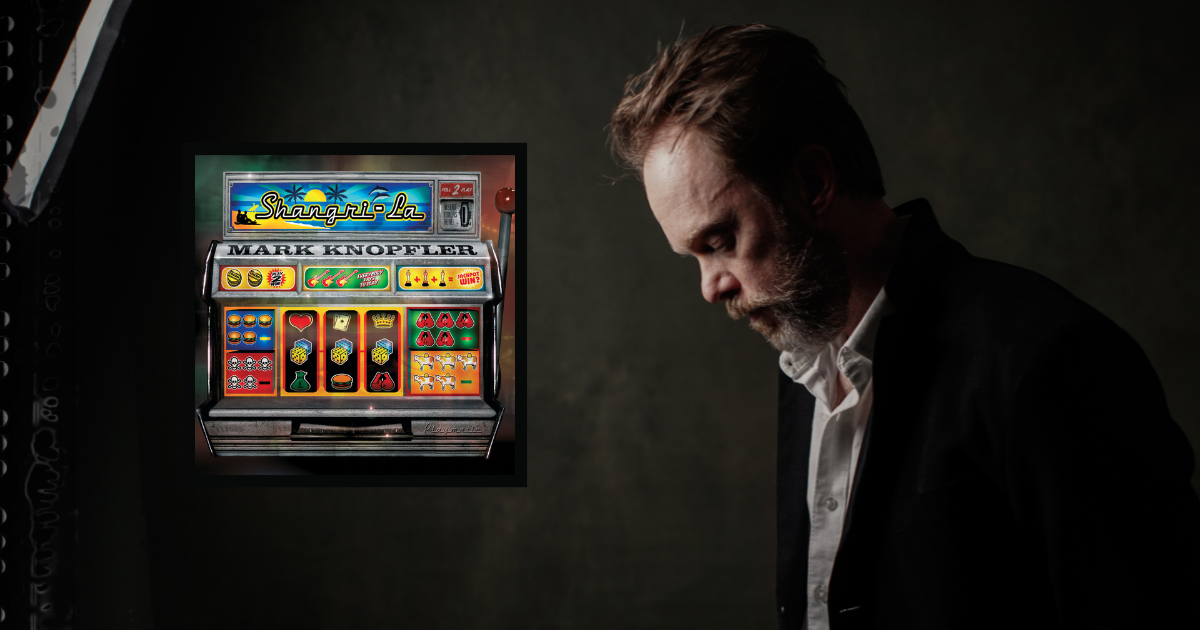
Mark Knopfler’s ‘Shangri-La’ Rearranged Adam Wright’s Artistic DNA

(Editor’s Note: No Skips is a brand new feature from BGS that asks artists, songwriters, musicians, and industry professionals what albums they regard as perfect, with every track a masterpiece – i.e., No Skips!

For the first edition of the column, songwriter-artist-musician Adam Wright highlights Mark Knopfler’s seminal album, Shangri-La, as we look ahead to Wright’s own upcoming project, Nature of Necessity, coming later this year.)

There are only a few times in your creative life when someone’s work hits you so hard it rearranges your artistic DNA. I could probably count those moments for me on one hand.

Shangri-La was a big one. It told me that you can write away from the outside understanding of things. That you can start from the inside of your own knowledge and continue inward. It also taught me that you can write about anything you find interesting. That being understood is not as important as whether or not you’ve put something down worthy of working out for whomever decides to try to understand it. And that there are so many things to write about that are not falling in and out of love. (People probably could have stopped writing love songs in 1950 and we still would have too many.)

The depth and perspective of the storytelling, the crafted excellence of the writing and the sublimely tasteful musicianship make it, to me, Knopfler’s masterpiece. He’s done this on all of his albums, they all include brilliant gems of songs, but Shangri-La is just perfection from top to bottom. – Adam Wright

“5:15 AM” (Track 1)

Like all of the songs on this album, “5:15 AM” is exquisitely written and recorded. It is the story of a coal miner on his way home from the night shift discovering a murder victim who turns out to be involved with organized crime. It is chock-full of lingo and references to specifics about gambling machines, nightclubs, and lots of mining terms. The way Mark weaves all of this language into lyricism and brings it back to the tragic lives of the coal miners at the end is exceptional and beautiful writing. The recording is gorgeous and still somehow earthy as dirt. Just a masterclass in songcraft.

“Boom, Like That” (Track 2)

“Boom, Like That” is about the rise of Ray Kroc from a milkshake salesman to a fast food emperor. Like “5:15 AM,” there are plenty of specific references in this one. “Going to San Bernardino, ring a ding ding. Milkshake mixes, that’s my thing now.” You’re in the middle of the beginning of a story right off the bat. I love songs from the character’s perspective and few writers do that as well as Knopfler.

The movie The Founder was filmed in my hometown of Newnan, Georgia. I noticed the town when I saw it, so I looked it up and read a bit about the filming. While the song was inspired by the book about Kroc, I’d read the movie was actually inspired by the song. Even if the song weren’t so well-written, the riff at the end of the chorus is enough to keep any guitar player happily busy for days.

“All That Matters” (Track 11)

Much of Shangri-La is written from the perspective of the characters in its songs. The title track and “All That Matters” seem to be more personal. “All That Matters” is just a sweet, simple song from a father to his children. Again, beautifully written and pretty as porcelain. It has some surprising chordal and melodic turns in the B section to juxtapose the nursery rhymey-ness of the verses. Just perfect. And a nice respite from the mostly cynical tone of much of the album.

“Stand Up Guy” (Track 12)

“Brew the coffee in a bucket/ Double straight man and banjo/ If you don’t got the snake oil/ Buster, you don’t got a show.”

Again, you’re right smack dab in the middle of someone’s story. This time it’s a musician in a group of traveling, Victorian-era pitchmen. They apparently have teamed up with “the Doctor” who peddles snake oil medicine to townspeople and does it well enough to keep them fed on beefsteak and whiskey. Just wonderfully interesting, both lyrically and musically.

If you wanted to become a very good songwriter (or musician or producer, for that matter), you could only study Shangri-La for years and get a very long way toward the goal. I’ve been mining this album for inspiration for twenty years. It always gives me something more.


Photo Credit: Jo Lopez

You Gotta Hear This: New Music From Darin & Brooke Aldridge, Adam Chaffins, and more

We’re excited to kick off October with a mighty New Music Friday and our first edition of You Gotta Hear This for the month.

You’ve simply gotta check out new music videos from folks like Darin & Brooke Aldridge (who pay tribute to Byron Berline with a track featuring Vince Gill), Buffalo Wabs & the Price Hill Hustle (who’ve brought us a charming animated music video), Claire Hawkins (who wrote her selection, “Oh Daisy,” while living in France), and Rachel McIntyre Smith teams up with Janelle Arthur to premiere her Honeysuckle Friend Sessions with a live cover of “Strawberry Wine.”

Plus, Darren Nicholson premieres his bluegrass track, “Windows Have Pains,” and singer-songwriter, vocalist, and bassist Adam Chaffins feels capable of anything on “Little Bit At A Time.” Our longtime friends Jamie Drake and Justin Wade Tam have teamed up on a brand new single as well, entitled “Free.”

To wrap up, don’t miss our final Yamaha Session in our latest series with the brand. It features Jack Schneider performing his original song, “Don’t Look Down.”

It’s all right here on BGS and You’ve Gotta Hear This!

Darin & Brooke Aldridge, “A Million Memories (A Song For Byron)”

Artist: Darin & Brooke Aldridge
Hometown: Cherryville, North Carolina
Song: “A Million Memories (A Song For Byron)”
Album: Talk of The Town
Release Date: October 4, 2024 (video)
Label: Billy Blue Records

In Their Words: “We’ve all had people in our lives who have believed in us, loved us, taught us, and guided us, hoping that we could see in ourselves what they have always seen. It isn’t just about teaching and shaping someone, it’s about helping them discover what they can do from within themselves. For us, it is one of our greatest joys to invest time and encouragement to those who come behind us. It is one way to pay forward the gifts given to us from our own heroes and mentors, to help bring out the best in younger people in the same ways someone did for us.

“We were reminded of these truths the first time we heard ‘A Million Memories (A Song for Byron).’ It was written by our friend Vince Gill in honor of fiddler extraordinaire Byron Berline, who was one of Vince’s closest mentors and dearest friends. Byron invited a young Vince to play banjo and guitar in his band, Byron Berline and Sundance, in the late ’70s, and took the clearly talented Gill under his wing. They remained close until Byron’s death in 2021.

“We’re incredibly honored to share the music video for ‘A Million Memories (A Song for Byron).’ As the song is extra special to us, for the meaning behind it and having the chance to sing it with a special mentor and friend. We will always treasure this opportunity to make ‘A Million Memories.’ We hope the video brings back cherished memories to those that watch the video and hear this incredible song.” – Darin & Brooke Aldridge

Track Credits:
Darin Aldridge – Vocal, mandolin, guitar
Vince Gill – Vocal
Brooke Aldridge – Vocal
Mark Fain – Acoustic Bass
Stuart Duncan – Fiddle
Brent Rader – Percussion, piano

Video Credit: Produced and directed by Jenny Gill.


Buffalo Wabs & the Price Hill Hustle, “Vagabond’s Lament”

Artist: Buffalo Wabs & The Price Hill Hustle
Hometown: Cincinnati, Ohio
Song: “Vagabond’s Lament”
Album: Buffalo Wabs & The Price Hill Hustle
Release Date: October 24, 2024

In Their Words: “‘Vagabond’s Lament’ is an homage to so many places we know so well. The personification of each location lets the song read as a lost-love song in a way, which is a fun take on the visuals the tune lays out for the audience. It’s also a fun one to play; upbeat rhythm and driving solos get the crowds moving.

“One thing this ‘Vagabond’s’ showcases for the group is our affinity for harmony. It’s a real throwback to the sounds I personally grew up with – rich, churchy voices, the breathy ritardando at the end of the tune followed by a four-part harmonic crescendo into the final phrase, and that driving stomp of a beat. This tune really wraps up so much of what we do into three and a half minutes.

“The song fits perfectly with the overall mood and atmosphere of the album; old-time influence with modern flair. It’s a toe-tapping number that could be a hundred years old if you heard it on AM radio, which fits our style nicely. It’s something that will appeal to folkies and bluegrassers alike.” – Casey Campbell, drummer, vocalist

Track Credits:
Produced and engineered by Alex Lusht at Mind Ignition Studios in Cincinnati, Ohio.
Mixed and mastered by Alex Lusht.
Bill Baldock – Bass, guitar, vocals, banjo
Scott Risner – Mandolin, vocals, banjo
Matt Wabnitz – Guitar, vocals
Casey Campbell – Drums, vocals

Video Credits: Animation by Evan Hand; Fiddle and final image by Alex Hand.


Adam Chaffins, “Little Bit At A Time”

Artist: Adam Chaffins
Hometown: Nashville, Tennessee via Louisa, Kentucky
Song: “Little Bit At A Time”
Release Date: October 4, 2024

In Their Words: “I started writing ‘Little Bit at A Time’ with Adam Wright in the fall of 2020, socially distanced on my front porch on a chilly, rain-drizzled day. The song was pretty much finished, but we both felt it was missing some more truth. The next summer, I went on a trip to the Colorado Rockies with some new friends, and, on a whim, we decided to hike a 14,000-foot mountain before the sun came up. I still remember the surreal feeling of standing on that peak after scrambling over boulders and hiking for hours to get to the top. The air was so thin above the treeline and the surroundings felt otherworldly. It was one of the most emotionally jarring events of my life. On the steep hike back down, I felt as if I were leaving a trail of lies behind me with each step. I had just totally surpassed any physical feat I ever thought I was ever capable of, making a monumental truth out of a lifetime of lies I had told myself. I felt capable of anything. In the fall of 2021, I got married and found the truth in love. I now have some new perspectives in life and, perhaps, the missing pieces to that song about delayed gratification.” – Adam Chaffins


Jamie Drake & Justin Wade Tam, “Free”

Artist: Jamie Drake & Justin Wade Tam
Hometown: Los Angeles, California (Jamie Drake); Nashville, Tennessee (Justin Wade Tam)
Song: “Free”
Album: So Many Melodies
Release Date: October 4, 2024
Label: Soundly Music

In Their Words: “‘Free’ was written over a Zoom session in 2021 as pandemic restrictions were beginning to lift. We talked about how this historical time had affected us — how the idea of ‘connection’ had taken on a whole new meaning and how we as humans had become more disconnected from ourselves and from nature in the process. For most, the need to stay connected to technology had become imperative as well as required; a reality that continues today. Maintaining a healthy relationship with our screens is an extremely difficult balancing act. ‘Free’ is a bit of a wake up call to remind us to take a break when we feel the call, to get back into nature and live in a more balanced way, connected to each other in the present moment instead of the narrative on our screen.” – Jamie Drake & Justin Wade Tam

Track Credits:
Written by Jamie Drake and Justin Wade Tam.
Justin Wade Tam – Vocal, acoustic guitar
Jamie Drake – Vocals, acoustic guitar
Juan Solorzano – Electric guitars
Ross McReynolds – Drums
Alec Newnam – Bass
Produced, engineered, and mixed by Jordan Lehning.
Mastered by Casey Wood.
Additional engineering by Reid Sorel.


Claire Hawkins, “Oh Daisy”

Artist: Claire Hawkins
Hometown: New York City, New York
Song: “Oh Daisy”
Release Date: October 4, 2024 (video)

In Their Words: “‘Oh Daisy’ was one of the first songs I wrote during my time as an artist-in-residence in France. That time abroad really inspired me to think about my own hometown and what it means to identify as a New Yorker. In writing ‘Oh Daisy,’ I thought back to my earliest memories of wanderlust as a child growing up in New York City. Children see the world through such a different lens and it was interesting to explore how much my worldview has evolved, thanks to the time I’ve gotten to spend with different cultures around the world. When it came time to shoot the music video, I really wanted to capture a certain light-hearted free-spiritedness, but balance it with a feeling of internal conflict. Working with Meg, I think we were able to reflect the challenge of the comforts of home fighting against the curiosity that pulls us away from what we know.” – Claire Hawkins

Track Credits:
Written and performed by Claire Hawkins.
Produced by Hana Elion.

Video Credit: Directed and edited by Meg Mann.


Rachel McIntyre Smith & Janelle Arthur, “Strawberry Wine” (Honeysuckle Friend Sessions)

Artist: Rachel McIntyre Smith & Janelle Arthur
Hometown: Oliver Springs, Tennessee (both Rachel and Janelle)
Song: “Strawberry Wine” (Deana Carter cover)
Release Date: October 5, 2024

In Their Words: “The Honeysuckle Friend Sessions are a companion video series to go along with my latest EP, Honeysuckle Friend. In this series, I invite my friends who are talented musicians to cover a song with me. I was over the moon when Janelle Arthur said that she would join me for this series! Having the opportunity to sing with Janelle was such a cool experience because we are both from the same hometown (Oliver Springs, TN) and I have admired her and her artistry since I was really young. I grew up watching her perform, voting for her on American Idol, and listening to all her music. Her voice is incredible, and so is she. I love ‘Strawberry Wine’ by Deana Carter, so I was very happy when Janelle suggested it. I especially love the incredible riff that Janelle so effortlessly sings at the end of the song!Rachel McIntyre Smith

Rachel is so talented and dedicated to her craft. I was excited to collaborate and finally get to sing with my hometown girl! Strawberry Wine is such a classic and just felt like the right song to sing for this series.Janelle Arthur

(Editor’s Note: Follow the Honeysuckle Friend Sessions series on Rachel McIntyre Smith’s YouTube Channel.)

Track Credits:
Written by Matraca Berg and Gary Harrison.

Video Credit: Filmed and edited by Rachel McIntyre Smith.


Darren Nicholson, “Windows Have Pains”

Artist: Darren Nicholson
Hometown: Haywood County, North Carolina
Song: “Windows Have Pains”
Release Date: October 4, 2024
Label: Mountain Home Music Company

In Their Words: “What can I say? I love sad songs. I have since I was a small child. In an odd way, sad songs bring me comfort and happiness. I’m drawn to things that evoke emotion. When I first heard these words as a kid, I loved them. I never forgot how the hook and spirit of the song impacted me as a listener. The song was originally written by Wes Buchanan and all these years later, Mark Bumgarner and myself got down and dirty and wrote an additional verse to complete the song for us. I love this one. If you like ole timey music and enjoy your hurtin’ – this one’s for you.” – Darren Nicholson

Track Credits:
Darren Nicholson – Mandolin, octave mandolin, lead vocal, harmony vocal
Tony Creasman – Drums
Kristin Scott Benson – Banjo
Zach Smith – Upright Bass
Deanie Richardson – Fiddle
David Johnson – Acoustic guitar, Dobro
Jennifer Nicholson – Harmony vocal


Yamaha Sessions: Jack Schneider, “Don’t Look Down”

Our latest series of Yamaha Sessions concludes with a final performance from guitarist, songwriter, and producer Jack Schneider. (Watch the full series of videos, which include performances by Trey Hensley as well, here.)

For his second Yamaha Session, Schneider picks up his Yamaha FS9 R acoustic guitar to perform “Don’t Look Down,” an original song from his 2022 album, Best Be On My Way. While the studio version features Schneider’s longtime friend, Liv Greene, the track certainly shines solo in this context, as well.

Gentle fingerstyle picking gives way to tender vocals, text painting a long-suffering image with an ultimately hopeful tinge. It’s a song about keeping your chin up, literally and figuratively. Written during the turmoil of the pandemic, the message in the lyrics is certainly not one of toxic positivity, making the moral within them even more resonant. It’s easy to tell Schneider is not just speaking to his listeners, but also to himself.

More here.


Photo Credit: Darin & Brooke Aldridge by Kim Brantley; Adam Chaffins by Natia Cinco.

LISTEN: Balsam Range, “What the Years Do”

Artist: Balsam Range
Hometown: Haywood County, North Carolina
Song: “What the Years Do”
Release Date: March 24, 2023
Label: Mountain Home Music Company

In Their Words: “I have been a fan of this Adam and Shannon Wright song for many years. I have been waiting for the right time to record and release it, and that time feels like now! It is exciting to be back in the studio recording and releasing new Balsam Range music. Starting our 16th year with such an extremely talented and incredible group of guys, I am so excited to continue growing our musical legacy and setting new goals for our musical journey. ‘What the Years Do’ is such a meaningful, lyrical song and it fits into where we are as a band, as friends and individuals. It reminds us that life has a way of changing our focus, our needs, our desires and with each year, we grow as individuals. We will all experience different chapters of life and each of those will mold us and shape us to become our best. It’s pretty amazing how the heart grows!” — Buddy Melton, Balsam Range

Crossroads Label Group · What The Years Do – Balsam Range

Photo credit: Courtesy of Balsam Range

LISTEN: Lonesome River Band, “Love Songs”

Artist: Lonesome River Band
Hometown: Floyd, Virginia
Song: “Love Songs”
Release Date: February 19, 2021
Label: Mountain Home Music Company

In Their Words: “‘Love Songs’ is another great song written by our friend Adam Wright. It tells the story of a songwriter who has had bad experiences with love and can’t find ways to be positive about it. The lyrics depict the songwriter’s frustration: ‘They say write in what you know / And all I really know is the losin’ and the leavin and the left.’ Adam puts a comedic twist to selling sad songs, and Brandon Rickman, our guitarist and vocalist, portrays it in his unique way.” — Sammy Shelor, Lonesome River Band


Photo credit: Anthony Ladd

LISTEN: Adam Wright, “Darlene”

Artist: Adam Wright
Hometown: Newnan, Georgia
Song: “Darlene”
Album: I Win
Release Date: October 9, 2020
Label: De Casa

In Their Words: I don’t really remember how this song started. Most of my character songs come from something I see or hear and then develop in the notebook later. My grandfather was a mechanic and I guess I have a bit of an affinity for them. I have several songs where the character works on cars. I just like this guy’s attitude. He badly needs this girl to make him feel better. He’s just had it with everything. I can relate. ” — Adam Wright


Photo credit: Shannon Wright