The Mythology and Alchemy of Thomm Jutz

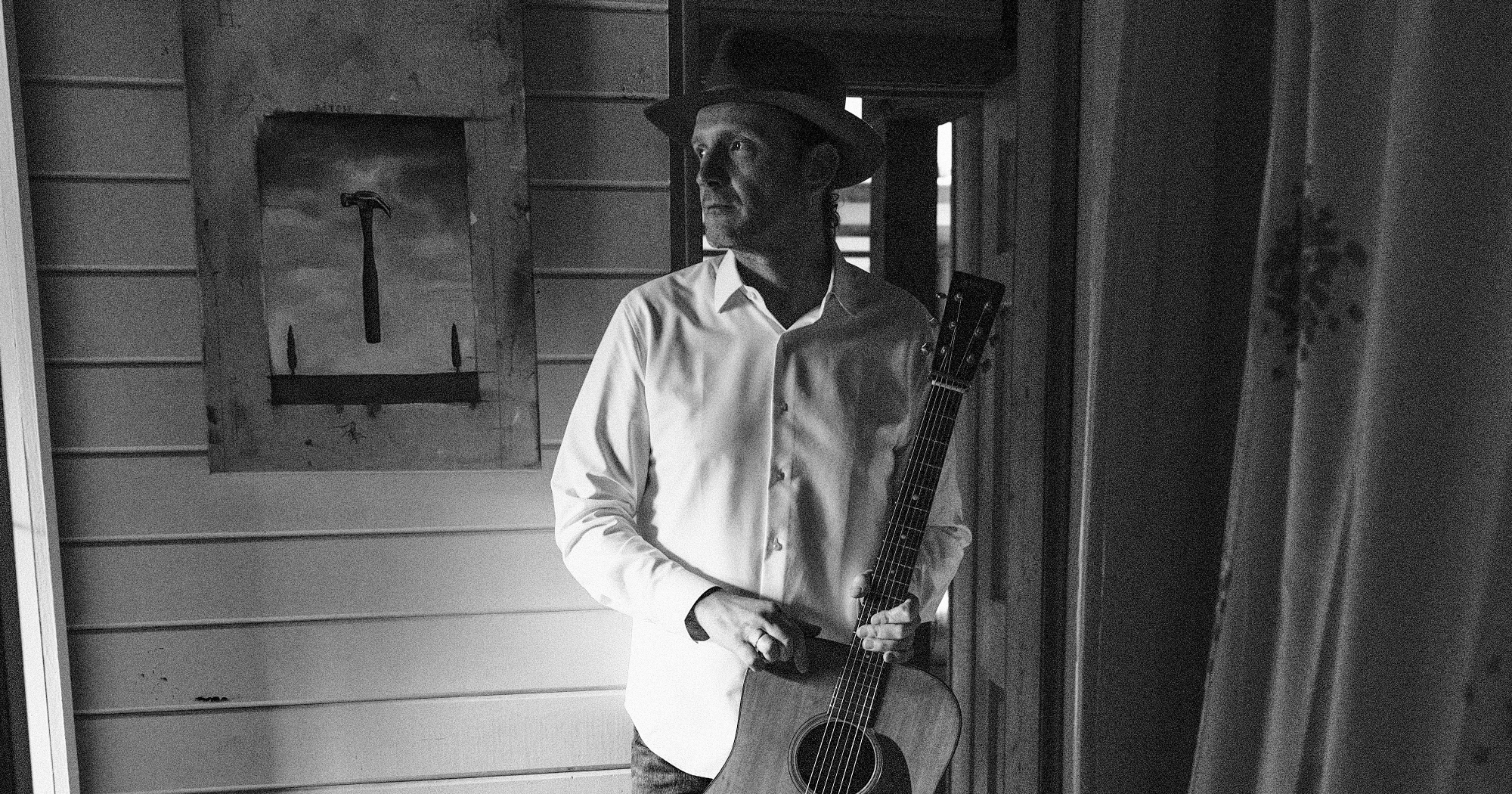
Thomm Jutz has worked with a wide cast of characters since moving to Nashville in the early 2000s – John Prine, Nanci Griffith, Todd Snider, Billy Strings, and the SteelDrivers’ Tammy Rogers. But on his latest record, Ring-A-Bellin’, he strived to capture each song with the smallest musical unit possible.

The result of the 18-track album, released April 3, is a distinctly timeless vibe that feels just as much rooted to the present day as it does the mid-1900s or Civil War era, due to its recurring themes of history, mythology, and working with your hands. From self improvement (“Sharpen Your Knife”) to using natural disaster as a metaphor for perseverance (“Holy Mother Mountain”), the mastery that comes with time (“The Hammer And The Anvil”) and becoming more grounded in yourself (“Settle Me Down”), the GRAMMY-nominated transplant from Germany waxes philosophical and takes listeners back to a period long before we walked the Earth.

According to Jutz, the approach – recording with only a small group of people all in the same room not wearing headphones – is his way of replicating the process for how musicians would’ve recorded a century ago.

“This is how I want to make music right now,” he declares. “I don’t want to make a layered record – not because there’s anything wrong with that, it’s just not what I’m feeling at the moment. It’s like saying I don’t want to use red in my paintings right now, because I’ve used enough of it already.”

During a lengthy conversation with BGS at his Belmont office on Music Row, Jutz spoke about his concept of home, how psychology and mythology informed Ring-A-Bellin’, and a companion book that takes listeners even further into the world of his 18 new songs.

You’re releasing this album with a companion book. Tell me a little about what’s inside and why you decided to adopt this approach?

Thomm Jutz: It’s more and more important to create some kind of parallel narrative to the music nowadays. Vinyl has seen a resurgence over the last couple years, but it is not practical for me to take on my one trip to Europe every year. Because of that, I wanted to create something that was still a larger format, fun to hold, and had all the liner notes present without being something so small it’s hard to read.

I’ve also always enjoyed writing and reading – especially during my last 10 years as an instructor at Belmont – so I wanted to articulate some of those thoughts as they relate to the songs on this record in a longer form. When I got to working on it I quickly realized I was in over my head with the graphic design aspect of it, so I consulted my friend Gina Meredith. I just told her what I wanted artwork for and commissioned various folks to create pieces for each song. But rather than tell them what to make, I just sent them the music and had them use the songs as their creative prompts. Because of that I don’t always see the linear connection between the songs and the graphics that were made, but that’s also my favorite part.

A lot of my thoughts on this record revolve around analytic and Jungian psychology, alchemy and things like that, which are difficult to talk about in a tiny CD booklet, so I wanted to do something that allowed for a more longform format.

Overall, this record has a timeless feel – it could be (and is) from 2026, but if I didn’t know any better I wouldn’t second guess if someone told me it was from the mid-1900s or Civil War era as well, especially songs like “Sharpen Your Knife” and “The Hammer And The Anvil.” What are your thoughts on the vibe you were able to conjure up here?

I’m a traditionalist at heart, so everything I do is always trying to bring something new to the way I perceive what came before us, whether that’s lyrically, thematically, or in the recording process – which in this case was mostly all done live. I just think there tends to be more mystery with that music. There’s new music that does that too, but it’s easier for me to find that in old music because the cultural context can be studied since it’s not as close to my own lived experience. No matter how much I listen to or read about Charley Patton, I’ll never understand what he fully experienced because I was never there.

Regarding the songs you mentioned, both talk about people working with their hands, but they’re also metaphors for working on yourself – like you are the hammer, you are the anvil, you are the iron that’s being forged. Those mantras are rooted in human thought and analytical psychology, which is something I’ve dealt with and thought about a lot over the last 15 years. Particularly in terms of how mythology and history go together, and how understood the former is.

On one hand, some people think a myth is a lie and others say a myth is a fact, but both are wrong. A myth is a metaphor and must be understood as one. These songs are an effort to create a mythological framework that is a mirror image of my development as a person and artist. If you ever want to develop as an artist, you must develop as a person first.

With so much of this record wrapped up in concepts like history, psychology, and mythology, what’s the timeline for bringing the 18 songs on it to life?

These songs came from a period of about three years, but when I started I wasn’t setting out to make a record – I just wanted to experiment with a couple things. I had a few songs that I co-wrote with my friend Adam Wright that I wanted to test out with only me singing and playing and Mark Fain on bass. And it worked out really well. As I got fascinated with that process I began looking through my catalog and noticed that the songs which spoke to me the most were all ones that formed a narrative arc.

However, it’s not an autobiographical record that says, “I was born here,” “I did this,” and “This is how it made me feel.” But more so, one that explores spiritual development. I’m not interested in autobiographical songwriting. I find it very claustrophobic how you have to spell everything out to the listener. When you do that you’re shutting them out with nothing to do, which has me opting for a more open approach. A song is only ever truly finished when the listener interprets it for themselves, not with what the person who wrote it intended.

One of the songs on Ring-A-Bellin’ that is tied to more recent events is “Holy Mother Mountain,” which was inspired by the fallout of Hurricane Helene, specifically in Western North Carolina. But it’s also a metaphor for overcoming adversity. Care to explain?

That song is a good example of how writing with someone else – in this case Mando Saenz – can profoundly shape an idea. I remember Helene happening and having this line “Holy Mother Mountain” appear to me out of nowhere. From then on I couldn’t stop thinking about it, so I brought it to a writing session with him and said I didn’t know what to do with it. Then the co-writing dance ensued, with him taking the lead, followed by me for a bit, until it started becoming much clearer that there was no way to move forward without it being about Hurricane Helene somehow.

While it was inspired by that, the song is also about overcoming adversity and understanding that it’s going to happen again. Just because you live through Helene doesn’t mean there’s not another storm coming right behind it. If that storm showed us anything, it’s that perceived climate safety in Appalachia is not true. Also, “mother” and “mountain” are not just a nice alliteration, but there’s also a feminine quality about a mountain. An inverted mountain is a valley – or a place you can seek refuge in – and if you go on top of a mountain, you might find yourself closer to some kind of spiritual awareness.

The song is much more a collection of images that relate to the archetypal images of mother and mountain. Maybe even the word “holy” in the title has something to do with the fact of how little modernity treats nature with respect. Maybe that’s what we need to do – not bring offerings, but bring out attention to it instead of riding around and abusing it like crazy.

On “Too Many Walls” you sing about the idea of home. Given that you moved to the states 25 years ago from Germany, what is “home” to you?

Home and time are two of the biggest themes we write about, and it’s longing that connects the two – longing for home, longing to belong somewhere, longing to live in a different period of time, longing to get over something. Over the last couple years, I’ve also started thinking more about how strange a thing it is to build a house, because you’re just enclosing space that’s been there all along. You’re building and calling it something that wasn’t there before, but the land was always there. It’s a strange construct, and at the same time we need shelter.

From an early age I didn’t feel at home where I was because I longed for a place where music was part of the everyday lived experience. But in Germany after 1945 that was completely out of the picture, because the Nazi regime had completely and absurdly abused any sense of folklore. Since I was longing for an environment where people played music, I went to Ireland for the first time with my wife when I was 18 since it was much closer than coming [to the United States], which we couldn’t afford at the time. I was amazed by the music coming out of the pubs there – it felt so natural, like it was rising out of the Earth.

That fascination carried over into my love of American roots music. In that sense, “home” is where I feel connected to a place through music since that’s my main way of expressing myself. Additionally, southwestern Appalachia and the Black Forest that I’m from in Germany can look astonishingly similar sometimes, so when I go back to visit my parents I occasionally feel like I’m navigating the mountains around Johnson City, [Tennessee]. When I’m in Johnson City I sometimes imagine I’m back in Germany. But Appalachia has more importance to me now because it’s where I live and long to be. If it weren’t for all the writing I do in Nashville and my work at Belmont, I’d be in Appalachia fulltime, because it just speaks to me. When I haven’t been in a while I can start feeling something deep inside me – it’s not a heaviness, but a feeling of “I just really wanna fucking go.” [Laughs]

What has bringing this record to life taught you about yourself?

It’s taught me that I know nothing about graphic design and should always let someone else handle that instead. [Laughs]

In all seriousness, it has taught me that while I don’t consider myself a great singer, I can still enjoy the way I deliver a song if I do it correctly. It’s also taught me that while I have great deficiencies as a guitar player, I do enjoy the way I play guitar and this record, where I’m keenly aware of everything wrong with my playing. Even Tony Rice said that about his playing.

It’s not a sense of having completed my journey as a guitar player, but quite the opposite. It’s more like I’m aware of what’s missing. It’s also taught me that staying on the path of creating and writing a lot. You have to be in it for the long game in today’s environment and be doing it for the right reasons or you’ll run yourself ragged. I already understood that a little bit, but now I understand it even better. Maybe that’s what it’s all about – gaining a little awareness and moving on.


Photo Credit: Don VanCleave
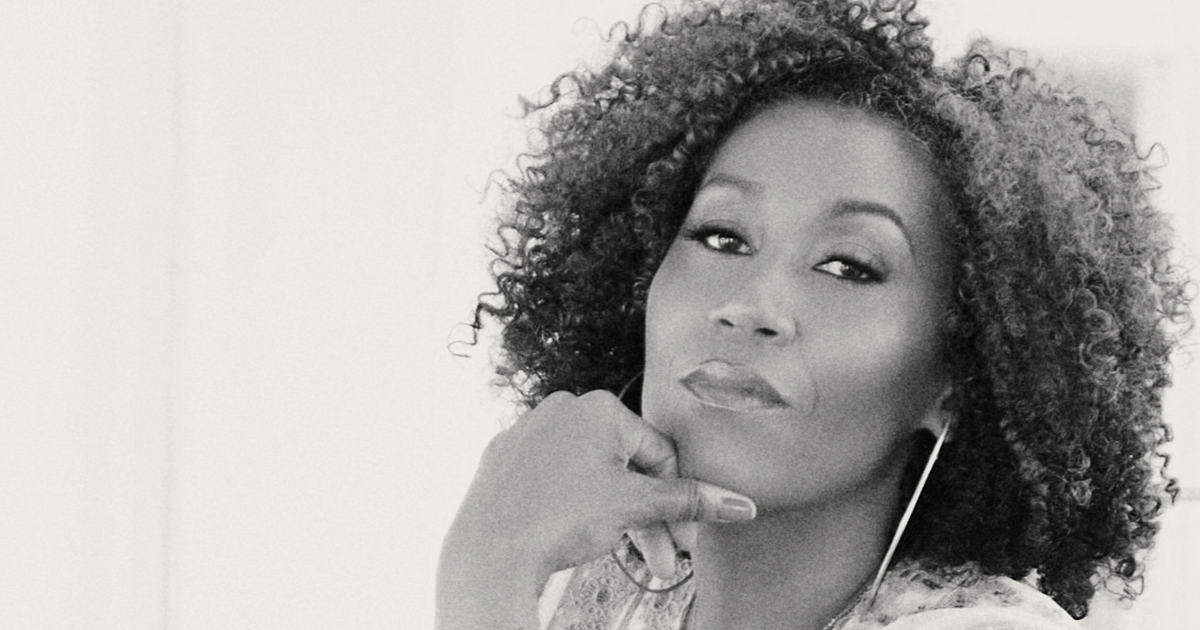
The Many Perspectives of Rissi Palmer

Rissi Palmer is putting her lifelong love of country music into Perspectives, her first project in six years. With three tracks produced by Shannon Sanders and a fourth by Dan Knobler, the new EP places Palmer back in the artist spotlight after a period of time focused on personal and professional evolution.

Palmer also hosts an Apple Music country radio show, Color Me Country, which spotlights original music from artists of color. But there’s even more to the story. She’s collaborated on a children’s book titled Color Me Country: A Celebration of Black Women Who Shaped Country Music and she’s also wrapped a memorable tour called The Trailblazing Women of Country, where she performed some of the best-loved songs from Patsy Cline, Loretta Lynn, and Dolly Parton. Off the stage, she’s devoted more time to her two daughters following her divorce, while still ramping up to the release of Perspectives.

Though she’s based in Durham, North Carolina, Palmer caught up with Good Country in Belfast, Northern Ireland, during the Your Roots Are Showing conference. At the event’s opening night concert, she sang “Old Black Southern Woman,” a heartfelt ballad that touches on the loss of her mother when Palmer was just seven years old. Perspectives also offers a cover of the SteelDrivers’ “Can You Run?” as well as an original song titled “Good For Me” (about diving back into the dating pool) and a rendition of a Loretta Lynn classic, “Somebody Somewhere.”

“All these things came together, and Shannon so graciously decided to be a part of this with me,” Palmer recalls. “He said, ‘Well, two of these songs sound very bluegrassy. What if we just did the whole project like that?’ I was like, ‘That’s kind of dope,’ because I hadn’t done anything like that. And again, perspectives. Two Black musicians, making this very bluegrassy, but still very soulful, project. And I decided midway through that we’re going to call it Perspectives.”

What was on your mind as “Old Black Southern Woman” was taking shape?

Rissi Palmer: I wrote that with Kyshona, and that was our first time writing together. Kyshona has a way of getting straight to the heart of whatever it is that you’re talking about. I had the idea for the chorus, the “ooh-ooooh” thing, in my head, and I hadn’t really started writing anything. So, we sat down and we started talking. When you go to her house, she’s got all these really cool plants from her mom and her grandma. We talked about that, and I wanted to write something that paid homage to my mother but also acknowledged all the other women that came in and helped raise me.

It’s a universal thing, too. Everybody thinks of getting older as really bad, and I don’t know what I thought my 40s were going to be like, when I was in my 20s. I honestly don’t know, but I don’t feel old! [Laughs] I think I thought 40 was going to feel different, but 40 actually feels just like a creakier 25! And I see the blessing in it. I feel really lucky to be here, because I outlived [my mother] and I have babies now. I just wanted to write something that says it’s OK to get old. It’s actually really cool to be able to get old and to see the fruits of your work.

I think the title kind of throws people off because they’re like, “Oh, this is a song about some Black people.” But it’s actually about getting to be old, seeing the blessing and good in that, and making the most of it.

When you sing that song now, it gives you a chance to talk about your mom and share her memory. Is that extra special for you?

Yeah. It was hard, I’ll be honest. The first few times that I sang it were really hard and I would cry. I’m starting not to cry when I sing it. Especially when we get to the lyric, “Every curse my family claimed ends with me.” That’s always where it got hard. You don’t realize how hard it is to overcome and not repeat mistakes.

Was it a dream for you as a kid to become a singer?

I’ve always known. I don’t know how, but I’ve always known that this is what I wanted to do. In that way, I’m very lucky. It was never, “Maybe I should be…” I would say that I was gonna do other stuff, just to make my parents happy, because I figured that they were probably really scared about me wanting to be a singer. So, I was like, “I’ll be a lawyer.” They’ve got a lawyer. My brother is a lawyer, so they got one. So, we’re good. [Laughs]

Now I did not always want to be a country singer. I wanted to be a singer and I wanted to write songs. I knew the kind of songs that I wanted to do, but I didn’t call it that. That didn’t become clear to me until I met my first managers, and then that was when I realized, “Yeah, I guess that is what I want to do.”

Is bluegrass an influence for you?

I like bluegrass! I’m a Rhonda Vincent fan and I’ve always been an Alison Krauss fan. And on Jon Randall’s first record he has this really cool song with Vince Gill called “My Life.” That’s one of my favorite records, by the way. It’s called Walking Among the Living.

I’ve always been a fan. I’ve always listened. I’ve always had those things on my playlist. I just never thought of myself as that, because there’s a very distinct vocal style. There’s a very distinct cadence in which they’re singing. A lot of the people on the show last night [at Your Roots Are Showing] were just brilliant bluegrass singers, and I never thought of myself that way because I can’t do that. Like, that’s not what I do. I didn’t really think of it as something that I could do. I used to write stuff like that all the time and I tried to give it to other people. But it was Shannon – Shannon was the push. Shannon was like, “Let’s do this.”

What was the Trailblazing Women of Country tour like?

It’s one of my favorite things that I’ve ever done. It was an all-female band and it was myself and Kristina Train, who’s a brilliant singer, as the two leads. We split the show in half, usually there was an intermission between Kristina and me, and we sang two songs together. You know how it is to be a fan, but you don’t necessarily know everything by a person? Patsy, I knew. For Patsy, I didn’t even have to study, because I knew all those songs. Most of my Dolly stuff I knew, but there’s a lot of words in “Coat of Many Colors”! And then Loretta, I’ll be perfectly honest, I had not gone super deep into Loretta’s catalog, so that was fun. That was the one that I needed the most work.

And I loved it! We did mostly theaters. I played in places I never went before. I went to Alaska. We did Wyoming – and you haven’t lived until you’ve driven across Wyoming! It’s just space! It’s wild! With the audiences, it was really funny how they varied. Sometimes we would make jokes, and sometimes people would say things to me. Like, someone asked me once, “Where’s your blonde wig?” when we got to the Dolly part. And I was just like, “Did you ask Kristina that?” They didn’t say anything, and I was like, “Girl, why would I cover up my fabulous hair?” and everybody started laughing.

You know, we got some weird comments. There were some people that (gasps) when I walked out. And afterwards, people would say really kind things. I never had anything rude said to me. But I did notice the [look of surprise] at first. It was good for me. It reminded me about why I love country music. I think I needed that, because you spend so much time, like with Color Me Country, talking about what’s wrong with the industry and talking about ways that we’ve been slighted or ignored. Then you lose sight of why you even started this in the first place, and that was why. It’s because of those songs. It’s because of those women. It’s because of the connection that the audience had with that music.

I can’t tell you how many people came up and told me stories. I met one woman who actually saw Patsy Cline performing on the bed of a truck when she was a kid. And I was just like, “That’s the most amazing thing I’ve ever heard before.” That’s country music.

You’ve got a lot of things coming up. Where would you like this new music to take you?

That’s a great question. I put so much into other facets of my career for the last few years. I put a lot into my children, because of our changing family situation, and just wanting to be there for them. At the same time, I was wanting to experience the career wave that I was having and trying to balance that. So, my own music took a backseat. I started feeling like, “I think people forget that I sing.” And really what I’m saying is, “I think I forgot that I sing,”

I was still doing shows, and still doing things in between, but it was like, “I don’t want everybody to forget why I’m here.” Really I’m saying, “I don’t want to forget why I’m here.” The Trailblazing Women of Country really cemented that for me, especially the “country” part. I’ve been experimenting and trying different things – and there is a project that comes later – but I wanted to do this. I felt like this was a really important statement to make, like, “This is why she talks so much shit.” [Laughs] Because this is where I started and this is what I do.


Photo Credit: Dire Image

See the Nominees for the 2026 GRAMMY Awards

The nominees for the 2026 GRAMMY Awards have been announced by the Recording Academy, looking ahead to “Music’s Biggest Night” on Sunday, February 1, 2026 at the Crypto.com Arena in Los Angeles, California. The primetime show will be broadcast live on CBS and will stream live and on demand on Paramount+.

Legends, icons, familiar names, and first-time nominees can all be found across the 95 GRAMMY categories that have been unveiled. In the Country & American Roots Music field, standouts include Tyler Childers (4 nominations), Lainey Wilson (3 nominations), Sierra Hull (4 nominations, including Best Instrumental Composition), Jesse Welles (4 nominations), and I’m With Her (3 nominations). Alison Krauss & Union Station, who released their first album in 14 years, Arcadia, earlier this year, have been nominated twice for 2026, bringing Krauss’ total number of nominations across her career to 46. Krauss is one of the most-nominated and most-awarded artists in GRAMMY history.

Unsurprisingly, one of those nominations for Krauss & Union Station finds Arcadia in the running for Best Bluegrass Album. The LP will compete with Carter & Cleveland by Jason Carter & Michael Cleveland, A Tip Toe High Wire by Sierra Hull, Outrun by the SteelDriversand Highway Prayers by Billy Strings for the Best Bluegrass Album gramophone. (This year, Best Bluegrass Album is Strings’ sole nomination.)

In country, for the first time Best Country Album has been split into two constituent categories, Best Contemporary Country Album and Best Traditional Country Album. Kelsea Ballerini, Tyler Childers, Eric Church, Jelly Roll, and Miranda Lambert will vie for Best Contemporary Country Album this year, while Charley Crockett, Margo Price, and Zach Top find themselves nominated for Best Traditional Country Album – with father-and-son Willie and Lukas Nelson nominated as well, pitted against each other for the very first time.

Outside of the Country & American Roots Music field, roots musicians are represented far and wide. Béla Fleck, Edmar Castañeda, and Antonio Sánchez’s BEATrio self-titled record is nominated for Best Contemporary Instrumental Album. Dan Auerbach is up for Producer of the Year (Non-Classical). Elton John and Brandi Carlile are nominated for Best Traditional Pop Vocal Album and Best Song Written For Visual Media. Plus, Sinners, the phenomenal and horrifying Ryan Coogler film steeped in various roots music traditions, has racked up five nominations across categories and fields.

It’s certainly an exciting roster of nominees for the 2026 GRAMMY Awards! Below, find the complete list of nominations from the Country & American Roots Music field, plus select categories featuring roots musicians, artists, and projects from across the various other GRAMMY fields and categories.

The 68th Annual GRAMMY Awards will take place on Sunday, February 1, 2026.

Country & American Roots Music

Best Country Solo Performance

“Nose On The Grindstone” – Tyler Childers
“Good News” – Shaboozey
“Bad As I Used To Be” – Chris Stapleton
“I Never Lie” – Zach Top
“Somewhere Over Laredo” – Lainey Wilson

Best Country Duo/Group Performance

“A Song To Sing” – Miranda Lambert, Chris Stapleton
“Trailblazer” – Reba McEntire, Miranda Lambert, Lainey Wilson
“Love Me Like You Used To Do” – Margo Price, Tyler Childers
“Amen” – Shaboozey, Jelly Roll
“Honky Tonk Hall Of Fame” – George Strait, Chris Stapleton

Best Country Song

“Bitin’ List” – Tyler Childers, songwriter. (Tyler Childers)
“Good News” –  Michael Ross Pollack, Sam Elliot Roman, Jacob Torrey, songwriters. (Shaboozey)
“I Never Lie” – Carson Chamberlain, Tim Nichols, Zach Top, songwriters. (Zach Top)
“Somewhere Over Laredo” – Andy Albert, Trannie Anderson, Dallas Wilson, Lainey Wilson, songwriters. (Lainey Wilson)
“A Song To Sing” – Jenee Fleenor, Jesse Frasure, Miranda Lambert, Chris Stapleton, songwriters. (Miranda Lambert, Chris Stapleton)

Best Traditional Country Album

Dollar A Day – Charley Crockett
American Romance – Lukas Nelson
Oh What A Beautiful World – Willie Nelson
Hard Headed Woman – Margo Price
Ain’t In It For My Health – Zach Top

Best Contemporary Country Album

Patterns – Kelsea Ballerini
Snipe Hunter – Tyler Childers
Evangeline Vs. The Machine – Eric Church
Beautifully Broken – Jelly Roll
Postcards From Texas – Miranda Lambert

Best American Roots Performance

“LONELY AVENUE” – Jon Batiste, Featuring Randy Newman
“Ancient Light” – I’m With Her
“Crimson And Clay” – Jason Isbell
“Richmond On The James” – Alison Krauss & Union Station
“Beautiful Strangers” – Mavis Staples

Best Americana Performance

“Boom” – Sierra Hull
“Poison In My Well” – Maggie Rose, Grace Potter
“Godspeed” – Mavis Staples
“That’s Gonna Leave A Mark” – Molly Tuttle
“Horses” – Jesse Welles

Best American Roots Song

“Ancient Light” – Sarah Jarosz, Aoife O’Donovan, Sara Watkins, songwriters. (I’m With Her)
“BIG MONEY” – Jon Batiste, Mike Elizondo, Steve McEwan, songwriters. (Jon Batiste)
“Foxes In The Snow” – Jason Isbell, songwriter. (Jason Isbell)
“Middle” – Jesse Welles, songwriter. (Jesse Welles)
“Spitfire” – Sierra Hull, songwriter. (Sierra Hull)

Best Americana Album

BIG MONEY – Jon Batiste
Bloom – Larkin Poe
Last Leaf On The Tree – Willie Nelson
So Long Little Miss Sunshine – Molly Tuttle
Middle – Jesse Welles

Best Bluegrass Album

Carter & Cleveland – Michael Cleveland & Jason Carter
A Tip Toe High Wire – Sierra Hull
Arcadia – Alison Krauss & Union Station
Outrun – The SteelDrivers
Highway Prayers – Billy Strings

Best Traditional Blues Album

Ain’t Done With The Blues – Buddy Guy
Room On The Porch – Taj Mahal & Keb’ Mo’
One Hour Mama: The Blues Of Victoria Spivey – Maria Muldaur
Look Out Highway – Charlie Musselwhite
Young Fashioned Ways – Kenny Wayne Shepherd & Bobby Rush

Best Contemporary Blues Album

Breakthrough – Joe Bonamassa
Paper Doll – Samantha Fish
A Tribute To LJK – Eric Gales
Preacher Kids – Robert Randolph
Family – Southern Avenue

Best Folk Album

What Did The Blackbird Say To The Crow – Rhiannon Giddens & Justin Robinson
Crown Of Roses – Patty Griffin
Wild And Clear And Blue – I’m With Her
Foxes In The Snow – Jason Isbell
Under The Powerlines (April 24 – September 24) – Jesse Welles

Best Regional Roots Music Album

Live At Vaughan’s – Corey Henry & The Treme Funktet
For Fat Man – Preservation Brass & Preservation Hall Jazz Band
Church Of New Orleans – Kyle Roussel
Second Line Sunday – Trombone Shorty And New Breed Brass Band
A Tribute To The King Of Zydeco – Various Artists

General Field

Producer of the Year (Non-Classical)

Dan Auerbach
Cirkut
Dijon
Blake Mills
Sounwave

Jazz, Traditional Pop, Contemporary Instrumental & Musical Theater

Best Jazz Performance

“Noble Rise” – Lakecia Benjamin, Featuring Immanuel Wilkins & Mark Whitfield
“Windows – Live” – Chick Corea, Christian McBride & Brian Blade
“Peace Of Mind / Dreams Come True” – Samara Joy
“Four” – Michael Mayo
“All Stars Lead To You – Live” –  Nicole Zuraitis, Dan Pugach, Tom Scott, Idan Morim, Keyon Harrold & Rachel Eckroth

Best Jazz Instrumental Album

Trilogy 3 (Live) – Chick Corea, Christian McBride & Brian Blade
Southern Nights – Sullivan Fortner, Featuring Peter Washington & Marcus Gilmore
Belonging – Branford Marsalis Quartet
Spirit Fall – John Patitucci, Featuring Chris Potter & Brian Blade
Fasten Up – Yellowjackets

Best Alternative Jazz Album

honey from a winter stone – Ambrose Akinmusire
Keys To The City Volume One – Robert Glasper
Ride into the Sun – Brad Mehldau
LIVE-ACTION – Nate Smith
Blues Blood – Immanuel Wilkins

Best Traditional Pop Vocal Album

Wintersongs – Laila Biali
The Gift Of Love – Jennifer Hudson
Who Believes In Angels? – Elton John & Brandi Carlile
Harlequin – Lady Gaga
A Matter Of Time – Laufey
The Secret Of Life: Partners, Volume 2 – Barbra Streisand

Best Contemporary Instrumental Album

Brightside – ARKAI
Ones & Twos – Gerald Clayton
BEATrio – Béla Fleck, Edmar Castañeda, Antonio Sánchez
Just Us – Bob James & Dave Koz
Shayan – Charu Suri

Gospel & Contemporary Christian Music

Best Roots Gospel Album

I Will Not Be Moved (Live) – The Brooklyn Tabernacle Choir
Then Came The Morning – Gaither Vocal Band
Praise & Worship: More Than A Hollow Hallelujah – The Isaacs
Good Answers – Karen Peck & New River
Back To My Roots – Candi Staton

Latin, Global, Reggae & New Age, Ambient, or Chant

Best Música Mexicana Album (Including Tejano)

MALA MÍA – Fuerza Regida, Grupo Frontera
Y Lo Que Viene – Grupo Frontera
Sin Rodeos – Paola Jara
Palabra De To’s (Seca) – Carín León
Bobby Pulido & Friends Una Tuya Y Una Mía – Por La Puerta Grande (En Vivo) – Bobby Pulido

Best Global Music Performance

“EoO” – Bad Bunny
“Cantando en el Camino” – Ciro Hurtado
“JERUSALEMA” – Angélique Kidjo
“Inmigrante Y Que?” – Yeisy Rojas
“Shrini’s Dream (Live)” – Shakti
“Daybreak” – Anoushka Shankar, Featuring Alam Khan, Sarathy Korwar

Children’s, Comedy, Audio Books, Visual Media & Music Video/Film

Best Song Written For Visual Media

“As Alive As You Need Me To Be” [From TRON: Ares] – Trent Reznor & Atticus Ross, songwriters. (Nine Inch Nails)
“Golden” [From KPop Demon Hunters] – EJAE & Mark Sonnenblick, songwriters. (HUNTR/X: EJAE, Audrey Nuna, REI AMI)
“I Lied to You” [From Sinners] – Ludwig Göransson & Raphael Saadiq, songwriters. (Miles Caton)
“Never Too Late” [From Elton John: Never Too Late] – Brandi Carlile, Elton John, Bernie Taupin & Andrew Watt, songwriters. (Elton John, Brandi Carlile)
“Pale, Pale Moon” [From Sinners] – Ludwig Göransson & Brittany Howard, songwriters. (Jayme Lawson)
“Sinners” [From Sinners] – Leonard Denisenko, Rodarius Green, Travis Harrington, Tarkan Kozluklu, Kyris Mingo & Darius
Povilinus, songwriters. (Rod Wave)

Production, Engineering, Composition & Arrangement

Best Instrumental Composition

“First Snow” – Remy Le Boeuf, composer. (Nordkraft Big Band, Remy Le Boeuf & Danielle Wertz)
“Live Life This Day: Movement I” – Miho Hazama, composer. (Miho Hazama, Danish Radio Big Band & Danish National Symphony Orchestra)
“Lord, That’s A Long Way” – Sierra Hull, composer. (Sierra Hull)
“Opening” – Zain Effendi, composer. (Zain Effendi)
“Train To Emerald City” – John Powell & Stephen Schwartz, composers (John Powell & Stephen Schwartz)
“Why You Here / Before The Sun Went Down” – Ludwig Göransson, composer. (Ludwig Göransson, Featuring Miles Caton)


Photo Credit: Tyler Childers by Sam Waxman; Sierra Hull courtesy of the artist. 

BGS 5+5: Remedy Tree

Artist: Remedy Tree
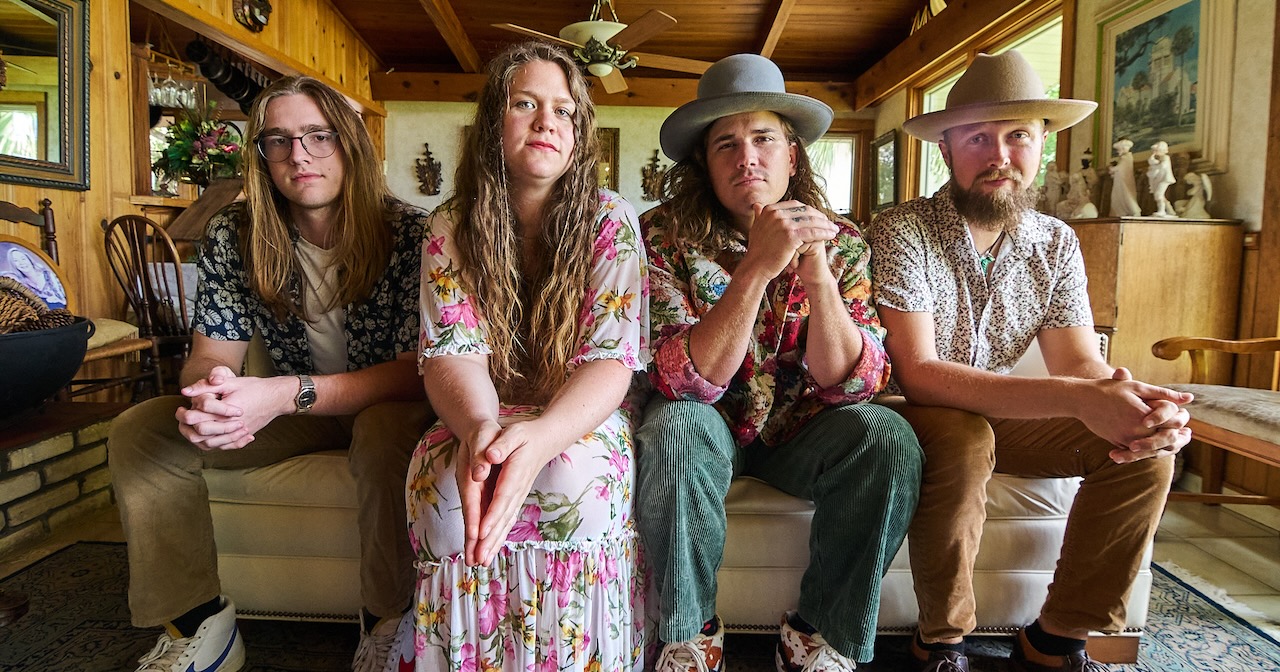
Hometown: Umatilla, Florida
Latest Album: Beyond What I Can See (releasing September 12, 2025)
Personal Nicknames: Abigail – Abi; Gabriel – Gabi;  Nathan – NayNay; Isaac – Dehydrated And Decaffeinated.

(Editor’s Note: Answers provided by Gabriel Acevedo)

What’s your favorite memory from being on stage?

2024 EMS Spring Bluegrass Fest in Brooksville, Florida, with Chris Henry and Steve Leonard. We got to open for the SteelDrivers and worked tirelessly to put on our best show and production together with props, a late night pre-show, etc. Watching it come to fruition with the perfect vibe and watching everyone dance was very inspiring.

What rituals do you have, either in the studio or before a show?

I used to not have any and it started to affect the show, coming up feeling unprepared and frantic. Nowadays I try to have about half an hour before shows to slow myself down. Laying on my back on the ground, doing vocal warmups. Also ashwagandha gummies. We all kind of just hang out and relax and try to be as chill as possible.

What’s the most difficult creative transformation you’ve ever undertaken?

Becoming a bluegrass band recognized in the industry as such. Funny enough, this upcoming album exemplifies the most difficult creative challenge: Creating a proper bluegrass album while staying true to our flavors and background. Remedy Tree was born within the old-time and folk world. Bluegrass has a formula that must be learned and perfected and that’s one reason why it’s so beautiful. Being on a bluegrass label having recorded much of the album live feels amazing. It’s been so surreal.

What’s one question you wish interviewers would stop asking you?

“So where does your band name come from?” This is unfair, I know, but it’s the most frequently asked question and I never have a good answer for them. The name came from me brainstorming names for hours and using a series of random word generators. I didn’t even like it at first, and then it stuck!

What is a genre, album, artist, musician, or song that you adore that would surprise people?

Being Puerto Rican, I think Latin elements will enter our music sometime, subtly. I don’t know when, but that’s a part of me that is bound to show itself at some point.


Photo Credit: Tucker Joenz

The SteelDrivers Celebrate 20 Years, Usher in New Chapter With ‘Outrun’

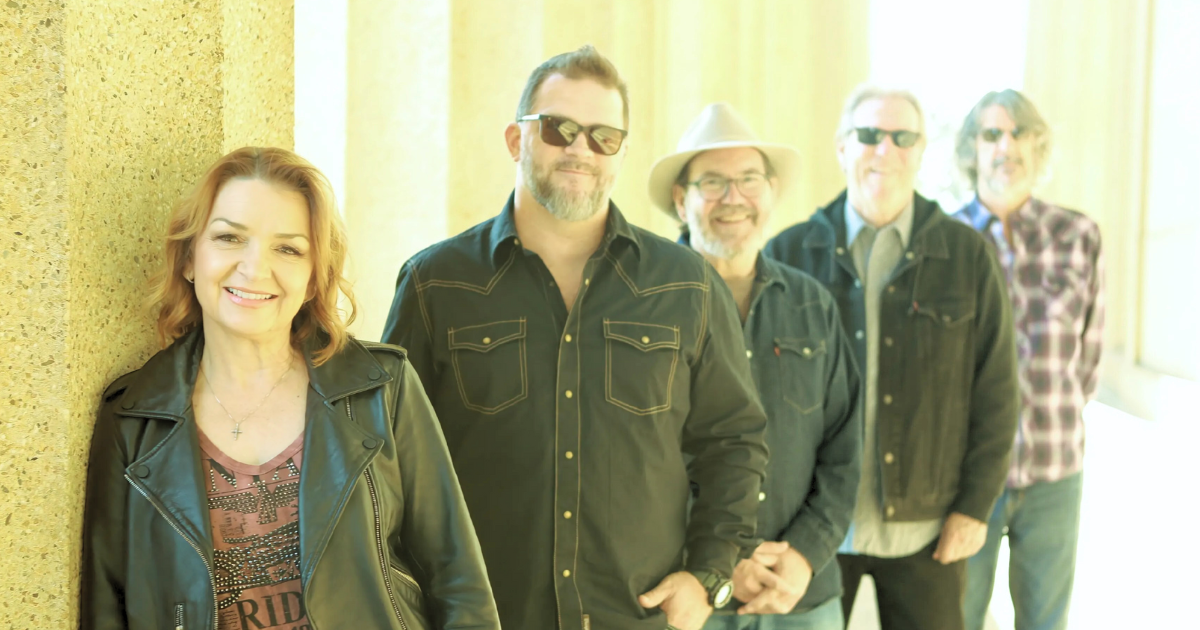
With four lead vocalists, seven studio albums, one GRAMMY Award to their name, and countless fans won over, The SteelDrivers have been one of this century’s most consistent and trailblazing bluegrass bands. That longevity can be credited to three things – the strength of their catalog of all-original songs, their collective precision picking, and the family atmosphere the band has cultivated together since forming in 2005.

Despite not joining forces until then, banjoist Richard Bailey says he’s known bandmates Tammy Rogers (fiddle) and Brent Truitt (mandolin from 2012 to present) since they were teenagers. His first run in with Mike Fleming (bass) and Mike Henderson (mandolin 2007 to 2011) came not long after during a college ski trip, with the group remaining close ever since. In the early 2000s Bailey relocated to Nashville from Memphis and reconnected with Henderson, regularly joining him at the Station Inn during Sunday night bluegrass jams and setting the foundation for what would eventually become The SteelDrivers. Then one day Henderson rang him up and was glowing about a young kid he’d just started writing with named Chris Stapleton who was wanting to play a little bluegrass.

“We eventually got together at his house and nobody knew Chris except for Henderson,” Bailey tells BGS. “We rehearsed a few bluegrass standards and then Chris began singing and Tammy, Mike, and I all looked at each other and went, ‘damn!’ I remember asking if the song he sang was an old Stanley Brothers tune and he said that it was actually one that he wrote.”

By that point, Henderson and Stapleton had already been penning songs together for a few years, with one of their most notable co-writes to that point being “Higher Than The Wall” from Patty Loveless on 2003’s On Your Way Home – a full seven years before The SteelDrivers eventually cut it on 2010’s Reckless. With their songwriting prowess already well established, the band opted to lean all the way in, keeping to the pattern of only recording songs crafted by them. Early on that mostly consisted of songs from Stapleton and Henderson, but has extended to all of the band in the years that followed, with Rogers writing the entirety of 2020’s Bad For You and the band’s newest member, Matt Dame, contributing songs for the first time ever on the group’s latest effort, Outrun.

“Starting with our very first record we determined that we were only going to play original music and we’ve never wavered from that,” explains Rogers. “It’s always been when you come to see The SteelDrivers that you’re not going to hear an updated version of ‘Little Cabin Home On The Hill’ or a modern country song done bluegrass style. There’s nothing wrong with any of that, but the whole point of the band originally was two songwriters coming together – Chris Stapleton and Mike Henderson – and everything else grew around that.”

That persistence of sticking with original material doesn’t only extend to The SteelDrivers recorded catalog, though. As Rogers points out, you’ll also be hard-pressed to hear any covers during the band’s live show. Per Bailey, the only such instance came during their televised Grand Ole Opry debut in 2008 when Charlie Daniels joined them on stage for a sing along to Flatt & Scruggs’ “I’m Gonna Sleep With One Eye Open.”

However, the band has regularly employed and worked with writers outside the group to craft songs centered around what Fleming describes as “uneasy listening music where bad things happen to good people.” This includes the likes of the venerable Verlon Thompson (“Booze And Cigarettes”), George Strait, Martina McBride, and Pam Tillis collaborator Leslie Satcher (“Outrun,” “Bad For You”); and German-born Thomm Jutz (“I Choose You,” “Cut You Down”), with whom Rogers has written over 140 songs (and counting).

“We’re fortunate to have always had wonderful songwriters in the band no matter who the membership was,” clarifies Fleming. “As it’s morphed through different CDs and personnel the strength of the songwriting has never wavered. Our goal has always been to serve the song, no matter who is singing it.”

Regardless of who’s been writing – or singing the songs for that matter – the band’s impeccable storytelling and bluesy grit has never faltered, even when lineup changes shook the band to its core. The first of those came in 2010 when Stapleton left to begin pursuing his solo career – a move that has resulted in him becoming not just one of the most well known country singers, but one of the most renowned vocalists of any genre globally. Henderson followed a year later, with Gary Nichols and Truitt stepping in to fill each of their shoes, respectively.

“I would’ve loved it had Stapleton never left the band – I mean who doesn’t want to be in a band with Chris Stapleton?” Rogers continues, “But when he left we had to make the decision of do we keep going or do we stop, because it wasn’t going to continue the same way that it had before. It wasn’t even a choice to me, though – I wanted to keep playing. To me that was better than no SteelDrivers at all.”

With two of their founding members gone, the band set out to prove they could still create bluegrass bangers and it didn’t take long for their efforts to pay off. Five years into their new look lineup The SteelDrivers won their first GRAMMY Award, taking home the honor for Best Bluegrass Album with The Muscle Shoals Recordings at the Academy’s 58th annual gathering in 2015. According to Rogers, the GRAMMY completely changed the band’s trajectory and continues to have a positive impact over a decade later.

“There’s been a lot of discussion in recent years about the validity of the GRAMMYs, but for us the recognition from the Academy has been a game changer,” states Rogers. “There’s a huge difference between being GRAMMY-nominated and a GRAMMY winner. For us, we were suddenly validated and were able to play bigger shows and venues that wouldn’t have considered or booked us prior to winning.”

In addition to validating their decision to keep pushing on, the band’s success post-Stapleton has also proven that they excel at finding new vocalists with their own distinct styles and vibrant storytelling to fill the void. First it was the funky, bluesy, and soulful sensibilities of Nichols. After him came the rock ‘n’ roll energy and piercing holler of Kelvin Damrell – who Rogers described as “the highest pitched singer of anyone we’ve had in the band.” He’s the only Kentuckian other than Stapleton to ever be in the band and sang lead for over three years – including on 2020’s Bad For You – prior to stepping aside in the summer of 2021.

It was then that the band recruited Matt Dame, solidifying the lineup they still have today. While each of the four singers have their own sounds, Rogers says there’s also plenty of characteristics that tie each of their eras together. “We figured out early on that it’s not about finding someone who sounds like Chris, but finding someone with a soulful, gravely, raspy and bluesy quality and letting them put their own spin on things,” says Rogers. “Aside from looking for those attributes we’ve never asked anyone to sing a certain way. Even though they sound similar, within two seconds of listening to a song I can tell whether it’s Kelvin, Chris, Gary, or Matt singing. They’re all distinct in my mind.”

Arguably even more impressive than the band’s success and consistency in sound through its different chapters has been their knack for continuing to make cutting edge bluegrass music with singers not steeped in bluegrass history with voices that generally “don’t fit” the traditional blueprint. From Stapleton on, the band has gravitated toward gritty blues and southern rock more than anything else. They’re comfortable at the confluence of electric and acoustic sounds, with one foot firmly planted in the past and the other stirring up dust and turning heads as it propels string band music into a completely new dimension.

“Chris Stapleton was not a bluegrass singer,” insists Fleming. “He was more of a blues singer, but the arrangements were always with bluegrass instruments. As a result, our propensity was to go toward playing bluegrass, but we never shied away from a song we thought we might not be able to play. For instance, ‘Midnight Train To Memphis’ from our first album was a bluesy rock ‘n’ roll number that Richard Bailey messed around on with on banjo one day. We have these bluegrass instruments, but we’re not confined to exclusively playing that way as long as we’re serving the song.”

Much like they’ve always served the song, The SteelDrivers’ fans have served them well in return, sticking by their side and continuing to buy tickets and albums through the years as the group has weathered changes in their lineup and sound. It’s led to an unprecedented run of success that Rogers jokingly compared to another bluegrass great.

“It’s almost the Ralph Stanley model,” she jokes. “After Carter [Stanley] passed away he had Larry Sparks, Roy Lee Centers, and Keith Whitley join him. It was a great line of singers that followed, all of whom embodied that Carter Stanley sound. We’ve also had several incredible vocalists with their own styles come through the band that we’ve been able to have success with by honing in on a singular sound together.”

The latest person the band brought in to hone in on that sound, Matt Dame, is a longtime Nashville songwriter and session player who joined in 2021 after a referral by friend and esteemed writer Gary Baker (John Michael Montgomery, Alabama, Lonestar). A couple rehearsals followed and by the end of July he was out on the road playing his first shows with the group. Having worked behind the scenes in the music industry for nearly as long as The SteelDrivers had been around, the move to performing in front of large crowds night in and night out was a big adjustment for Dame, but one he quickly found himself falling in love with.

“You do anything for 15 or 20 years and it becomes your comfort zone,” admits Dame. “I really enjoyed the session world, but it’s a lot different. Now I get a realtime reaction to what I do – there’s no stopping to go live again because you were flat. What I’ve loved most from our shows is the crowd singing the songs back to us, which can really carry you along.”

“There’s never a spot where you lose the audience or feel the need to kick into ‘Wagon Wheel’ to get everyone singing again, because the body of original work is so strong. It stands tall on its own,” he continues. “That speaks more to the power of the song than of any one vocalist, which says a lot because the band has had some incredible singers through the years. I’m just hanging on and trying to put my own spin on things.

“We’re all different, but one way we’re all the same is we all can deliver the songs in our own way that’s very believable. It sounds like somebody’s really living what they’re singing, not just going through the motions.” Even having been on the outside looking in for so long, Dame says that it’s hard to ignore the formidable nature of The SteelDrivers’ songwriting catalog, one that he’s thrilled to finally be a part of on Outrun – the band’s first project on the famed Sun Records (and also the label’s first bluegrass album). The record is his second with the band following 2023’s gospel project, Tougher Than Nails, that saw him only singing and playing guitar. Now, on his second go-round, he integrates himself even further, helping to write the songs “On My Way,” “Emma Lee,” and “Rosanna.”

“It was a really cool feather in my hat to be able to write some songs for this album and getting to do it on Sun Records is like the icing on the cake,” he exclaims. “I’m a huge Elvis fan and growing up in Arkansas listened to Johnny Cash all the time, so my eyes lit up when I heard we’d be their first bluegrass album ever.”

In addition to featuring the co-writes from Dame, Outrun also sees the band paying tribute to Henderson, who died unexpectedly from a pulmonary embolism in September 2023 – mere weeks after the release of Tougher Than Nails – with cuts of his songs “Prisoner’s Tears” and “Painted And Poison.” Although he hadn’t played with The SteelDrivers since 2011, his loss shook the band, which Rogers calls him the architect of, along with the entire bluegrass and country worlds.

“We knew we wanted to honor him in some way, which is what kickstarted talks for this new record and led to our shortest cycle between records yet,” confides Rogers. “In addition to recording two of his songs on it we’re also planning to have a slideshow commemorating him and 20 years of the band on some of our tour dates later this year.”

It’s tough enough to survive as a band for two decades when everything is going right, so it speaks volumes for The SteelDrivers making it as long as they have with all the obstacles that have gotten in their way. At the same time, the group’s unrivaled level of talent – both on their respective instruments and with their insatiable songwriting – have more than cemented their place in the bluegrass and American roots music zeitgeist for generations to come. For Dame, it’s a legacy that’s equally intimidating and exciting to be a part of.

“Professionally I’ve grown, because I’m doing something that’s new to me, but also because I’m doing it surrounded by a band where everybody does their parts with excellence,” he reflects. “If you don’t carry your weight it’s really going to be noticeable, which has pushed me to be better with everything that I bring to the group.”


Photo Credit: Glenn Rose

You Gotta Hear This: New Music from the HercuLeons, the SteelDrivers, and More

Are you ready for some excellent new music? This week, You Gotta Hear This includes a heaping handful of stellar new tracks and a new music video, too.

Husband-and-wife duo Oh Jeremiah share an intimate performance video for “Rust,” a song about aging, maturing, and the rapid clip of time that features French horn by Corin Dubie. In a similar sonic space, the Couldn’t Be Happiers’ “Brown Mountain Lights” is a co-written eerie original about the mysterious lights that linger around Brown Mountain in North Carolina. You’ll also find a new track from singer-songwriter Olive Klug. “Train of Thought” is folky, bluegrassy, old-timey, and more, and is Klug’s favorite song from their upcoming album, Lost Dog. (You’ll quickly find out why, when you listen.)

Mandolinist Ashby Frank has a new single, “The Bug,” a traditional-meets-jammy rendition of a Mark Knopfler song that, like Frank, you may recognize from Mary Chapin Carpenter’s discography. It’s hilarious, rollicking, and so much fun. Frank’s longtime friend and brand new labelmate Vickie Vaughn unveils her debut single with Mountain Home Music, “Leavin’,” her rendition of a Bruce Robison song with a stacked roster of musicians and singers.

We have a couple legendary bluegrass lineups represented herein, as well! The SteelDrivers, purveyors of “uneasy listening” and bluesy bluegrass for decades now, announce their brand new album, Outrun – their first with Sun Records – by sharing the title track for the upcoming project, a Tammy Rogers and Leslie Satcher co-write. And the cherry on top of it all is the HercuLeons (that is, the duo of veteran multi-hyphenate roots musicians John Cowan and Andrea Zonn) giving us a sneak peak at their new album, John Cowan & Andrea Zonn Are The HercuLeons, with a rare full album stream on their momentous release day.

It’s all below, so get scrolling and enjoy listening. You Gotta Hear This!

Couldn’t Be Happiers, “Brown Mountain Lights”

Artist: Couldn’t Be Happiers
Hometown: Currently Winston-Salem, North Carolina
Song: “Brown Mountain Lights”
Album: Couple(t)s
Release Date: March 20, 2025 (single); June 13, 2025 (album)

In Their Words: “So many different explanations exist for the faint flickering lights that sometimes appear floating around the atmosphere of Brown Mountain in North Carolina. One theory is that the lights are lanterns from the ghosts of miners who died in their quest for gold and jewels in those hills. Maybe so, but we think the heart of every good ghost story, usually, is a love story.” – Couldn’t Be Happiers

Track Credits:
Jordan Crosby Lee – Vocals, acoustic guitars
Jodi Hildebran – Vocals
Doug Davis – Mandolin, high-strung acoustic guitar, melodica, Omnichord, Hammond organ, bass, percussion


Ashby Frank, “The Bug” 

Artist: Ashby Frank
Hometown: Nashville, Tennessee
Song: “The Bug”
Release Date: March 21, 2025
Label: Mountain Home Music Company

In Their Words: “I grew up listening to the great country music of the ’90s and first heard this song when it was recorded by one of my favorite singer-songwriters, the great Mary Chapin Carpenter. I wasn’t aware that it was a cover until several years later when I heard the original recording by Dire Straits and discovered that it was written by Mark Knopfler. That band had such a deep groove on that original cut that I really got into and I immediately started thinking about how a bluegrass arrangement might work. I brought the song up in the studio when we started recording my new album and we bounced it around until we came up with a groovy traditional-meets-jam band version that I’m super proud of. Seth Taylor (guitar) and Matt Menefee (banjo) added some wicked solos and my friend and labelmate Jaelee Roberts added some killer harmonies. I even threw in a couple of yodels, which is a career first for me. I can’t wait for everyone to hear it!” – Ashby Frank

Track Credits:
Ashby Frank – Mandolin, vocals
Seth Taylor – Acoustic guitar
Travis Anderson – Bass
Matt Menefee – Banjo
Tony Creasman – Drums
Jaelee Roberts – Harmony vocals


The HercuLeons, John Cowan & Andrea Zonn Are The HercuLeons

Artist: The HercuLeons
Hometown: Nashville, Tennessee
Album: John Cowan & Andrea Zonn Are The HercuLeons
Release Date: March 21, 2025
Label: True Lonesome

In Their Words: “For me, the making of this record was not about career, revenue streams, or anything else. I had been singing with, around, and listening to Andrea Zonn for 20 years. Like most of us, we were stranded during the pandemic. This record was truly born out of our combined desire to once and for all record our voices singing together.” – John Cowan

“Like John, I was only too happy to make an entire record with one of my favorite singers, musicians, and humans. With the help of our dear friend [producer] Wendy Waldman, we began exploring ideas, crafting a sound, and pursuing a collection of songs that spoke to our creative and spiritual centers. We’re so thrilled to be sending out into the world, at long last.” – Andrea Zonn


Olive Klug, “Train of Thought”

Artist: Olive Klug
Hometown: Portland, Oregon
Song: “Train of Thought”
Album: Lost Dog
Release Date: April 25, 2025
Label: Signature Sounds

In Their Words: “This is actually my favorite song on the album. Written in Sisters, Oregon, during a songwriting workshop that I led about writing a song inspired by the style of your favorite artist, ‘Train of Thought’ is my take on Paul Simon’s wordy magical chaos. Breaking out of my usual literal storytelling lyrical style and breaking into the world of abstract metaphors, I let the listener into what it’s like to be neurodivergent and how I’ve recently embraced this internal chaos instead of trying so hard to control and repress it.

“With lyrics like ‘and they try to button up my suit and tie in an attempt to hold me back but I’m this strange old conductor wearing pearls and a backwards baseball cap,’ I highlight how my nontraditional gender presentation is intrinsically linked to this neurodivergence and desire to resist societal pressures.” – Olive Klug


Oh Jeremiah, “Rust”

Artist: Oh Jeremiah
Hometown: Nashville, Tennessee
Song: “Rust”
Album: Jones County Ghosts
Release Date: March 21, 2025 (single); June 13, 2025 (album)
Label: Baldwin County Public Records

In Their Words: “I don’t know how it happens, one day you’re a kid getting your first kiss in sixth grade on the peewee football field and the next you’re in your mid-thirties. When Erin and I sat down to write ‘Rust,’ we wanted to capture the feeling of time running in a full sprint. Your only hope, it feels like, is to hang on to those things that keep you feeling young at heart. ” – Jeremiah Stricklin

“Most people think, because we’re married, that we write all the songs together, but this is actually the first co-write we’ve ever done.” – Erin Stricklin

Video Credits: Shot by Tim Sutherland. French Horn by Corin Dubie. 

The SteelDrivers, “Outrun”

Artist: The SteelDrivers
Hometown: Nashville, Tennessee
Song: “Outrun”
Album: Outrun
Release Date: March 21, 2025 (single); May 23, 2025 (album)
Label: Sun Records

In Their Words: “Leslie Satcher is a longtime SteelDriver co-writer with me. I happened to run into her the weekend before we were scheduled to go into the studio and told her we didn’t have any Leslie songs on the upcoming record. She made the time to get together and ‘Outrun’ was written in about an hour and a half! It was the last song we recorded. It is another song that really showcases that ‘SteelDriver Sound.'” – Tammy Rogers


Vickie Vaughn, “Leavin'”

Artist: Vickie Vaughn
Hometown: Nashville, Tennessee
Song: “Leavin'”
Release Date: March 21, 2025
Label: Mountain Home Music Company

In Their Words: “‘Leavin” is a song that Kimber Ludiker showed me when she was playing fiddle with its writer, Bruce Robison. I immediately fell in love with the stream of consciousness style of writing and the emotion present in the song. I’m a pretty emotional gal myself, so singing this and getting to record it felt cathartic. It is definitely a heartstring tugger.” – Vickie Vaughn

Track Credits:
Vickie Vaughn – Upright Bass, lead vocal
Colby Kilby – Guitar
Casey Campbell – Mandolin
Wes Corbett – Banjo
Dave Racine – Drums
Deanie Richardson – Fiddle
Lillie Mae Rische – Harmony vocal
Frank Rische – Harmony vocal


Photo Credit: The HercuLeons courtesy of the artist; the SteelDrivers by Glenn Rose.

The Remarkable Rootsiness of the 2024 CMA Awards Nominations

(Editor’s Note: Sign up on Substack to receive even more Good Country content direct to your email inbox!)

The headline takeaways from this year’s CMA Awards nominations may be the inclusion (and exclusion) of pop superstars, with understandable interest in what that says about today’s country format. But the 2024 field features plenty of roots and bluegrass influence, too. Regular BGS and Good Country readers might even be surprised at the confluence of the modern mainstream and its traditional tributaries.

We want to highlight that dynamic as well. Country has always been a big tent, but is it now becoming more receptive to its roots?

Let’s start with the superstars. These days, many can claim a rootsy kind of rebelliousness, and chief among those is Chris Stapleton. With his long history – in bluegrass, in Southern rock, in classic country songwriting, and with a train load of CMA trophies – Stapleton vies once again for what would be his first Entertainer of the Year award – after a record-setting eight nominations. Yet he still sings with the fiery Appalachian soul he debuted at the front of The SteelDrivers.

Others earning top billing this year include Zach Bryan and Lainey Wilson – and both have a reputation for gritty, creative realism. Some of the hottest new names country has to offer, Bryan has been selling out stadiums with his confessional alt-country and Wilson’s bluesy Louisiana swagger earned her last year’s Entertainer of the Year title. Those are not the only established artists holding true to the cause, though.

Kacey Musgraves continues to show salt-of-the-earth songcraft is not mutually exclusive to shimmering pop decadence. And while Ashley McBryde has perfected the art of making arenas feel like a massive, county-line roadhouse, Cody Johnson proves the appetite for hardcore Texas twang did not die with King George’s (semi) abdication. All have become perennial fixtures in the format’s upper echelons.

Likewise, this year’s nominees offer excitement for the future, awash with fresh talent. Shaboozey turned heads with the Number One ear worm, “A Bar Song (Tipsy),” but dig beyond the single and his catalog marks an elusive missing link between the hard-times inspirations of both hip-hop and country. Artists like Zach Top – who also came up through bluegrass – accept no substitute for twangy telecasters and shuffling, two-step beats. And while The War and Treaty continue their mission to bring soul and gospel back into the heart of country, The Red Clay Strays find a home for their blend of heady roots rock and commanding, fire-and-brimstone vocals.

Even the behind-the-scenes nominees highlight this rootsy resurgence, with the Musician of the Year category dominated by keepers of the instrumental flame. Fiddle phenom Jenee Fleenor goes head to head with steel-guitar legend Paul Franklin and the multi-talented guitarist/Americana artist Charlie Worsham – while the other two, guitarists Tom Bukovac and Rob McNelley, are certainly no slouches when it comes to six-string scholarship.

In fact, the commonalities between this year’s CMA Awards nominees and the artists covered by BGS and GC are so striking, we wonder what you think. Take a look at the full list of nominees below, and let us know.

THE 58TH ANNUAL CMA AWARDS – FINAL NOMINEES (by ballot category order):

ENTERTAINER OF THE YEAR

Luke Combs
Jelly Roll
Chris Stapleton
Morgan Wallen
Lainey Wilson

SINGLE OF THE YEAR
Award goes to Artist(s), Producer(s) and Mix Engineer(s)

“A Bar Song (Tipsy)” – Shaboozey
Producers: Sean Cook, Nevin Sastry
Mix Engineer: Raul Lopez

“Dirt Cheap” – Cody Johnson
Producer: Trent Willmon
Mix Engineer: Jack Clarke

“I Had Some Help” – Post Malone (Feat. Morgan Wallen)
Producers: Louis Bell, Charlie Handsome, Hoskins
Mix Engineer: Ryan Gore

“Watermelon Moonshine” – Lainey Wilson
Producer: Jay Joyce
Mix Engineers: Jason Hall, Jay Joyce

“White Horse” – Chris Stapleton
Producers: Dave Cobb, Chris Stapleton, Morgane Stapleton
Mix Engineer: Vance Powell

ALBUM OF THE YEAR
Award goes to Artist, Producer(s) and Mix Engineer(s)

Deeper Well – Kacey Musgraves
Producers: Ian Fitchuk, Kacey Musgraves, Daniel Tashian
Mix Engineers: Shawn Everett, Konrad Snyder

Fathers & Sons – Luke Combs
Producers: Luke Combs, Chip Matthews, Jonathan Singleton
Mix Engineer: Chip Matthews

Higher – Chris Stapleton
Producers: Dave Cobb, Chris Stapleton, Morgane Stapleton
Mix Engineer: Vance Powell

Leather – Cody Johnson
Producer: Trent Willmon
Mix Engineer: Jack Clarke

Whitsitt Chapel – Jelly Roll
Producers: Andrew Baylis, Brock Berryhill, Zach Crowell, Jesse Frasure, David Garcia, Kevin “Thrasher” Gruft, Austin Nivarel, David Ray Stevens
Mix Engineers: Jeff Braun, Jim Cooley

SONG OF THE YEAR
Award goes to Songwriter(s)

“Burn It Down”
Songwriters: Hillary Lindsey, Parker McCollum, Lori McKenna, Liz Rose

“Dirt Cheap”
Songwriter: Josh Phillips

“I Had Some Help”
Songwriters: Louis Bell, Ashley Gorley, Charlie Handsome, Hoskins, Austin Post, Ernest Keith Smith, Morgan Wallen, Chandler Paul Walters

“The Painter”
Songwriters: Benjy Davis, Kat Higgins, Ryan Larkins

“White Horse”
Songwriters: Chris Stapleton, Dan Wilson

FEMALE VOCALIST OF THE YEAR

Kelsea Ballerini
Ashley McBryde
Megan Moroney
Kacey Musgraves
Lainey Wilson

MALE VOCALIST OF THE YEAR

Luke Combs
Jelly Roll
Cody Johnson
Chris Stapleton
Morgan Wallen

VOCAL GROUP OF THE YEAR

Lady A
Little Big Town
Old Dominion
The Red Clay Strays
Zac Brown Band

VOCAL DUO OF THE YEAR

Brooks & Dunn
Brothers Osborne
Dan + Shay
Maddie & Tae
The War And Treaty

MUSICAL EVENT OF THE YEAR
Award goes to Artists and Producer(s)

“Cowboys Cry Too” – Kelsea Ballerini (with Noah Kahan)
Producers: Kelsea Ballerini, Alysa Vanderheym

“I Had Some Help” – Post Malone (Feat. Morgan Wallen)
Producers: Louis Bell, Charlie Handsome, Hoskins

“I Remember Everything” – Zach Bryan (ft. Kacey Musgraves)
Producer: Zach Bryan

“Man Made A Bar” – Morgan Wallen (feat. Eric Church)
Producer: Joey Moi

“you look like you love me” – Ella Langley (feat. Riley Green)
Producer: Will Bundy

MUSICIAN OF THE YEAR

Tom Bukovac – Guitar
Jenee Fleenor – Fiddle
Paul Franklin – Steel Guitar
Rob McNelley – Guitar
Charlie Worsham – Guitar

MUSIC VIDEO OF THE YEAR
Award goes to Artist(s) and Director(s)

“Dirt Cheap” – Cody Johnson
Director: Dustin Haney

“I Had Some Help” – Post Malone (Feat. Morgan Wallen)
Director: Chris Villa

“I’m Not Pretty” – Megan Moroney
Directors: Jeff Johnson, Megan Moroney

“The Painter” – Cody Johnson
Director: Dustin Haney

“Wildflowers and Wild Horses” – Lainey Wilson
Director: Patrick Tracy

NEW ARTIST OF THE YEAR

Megan Moroney
Shaboozey
Nate Smith
Mitchell Tenpenny
Zach Top
Bailey Zimmerman


Sign up on Substack to receive even more Good Country content direct to your email inbox!

Watch Chris Stapleton Perform on ‘Saturday Night Live’

Last week’s episode of Saturday Night Live hosted by Ryan Gosling included musical guest Chris Stapleton, who returned to the show for his third appearance. He masterfully performed two tracks, including the multi-Grammy winning “White Horse” (Best Country Song, Best Country Solo Performance) featuring his band and his wife, Morgane, accompanying.

On a show known for making or breaking many a musical guest and in a setting ripe for sound issues and technical hurdles, Stapleton and his ensemble shined, choosing a music-centered, less-is-more approach to their performances and arrangements. Anchored by Stapleton’s gritty and grounded guitar playing, “White Horse” sounded just as good live as it does on Higher, which he released in November 2023.

The real showstopper, though, was Stapleton’s second number, “Mountains of My Mind,” which found the former SteelDrivers lead singer alone on the fabled Studio 8H stage – just a singer-songwriter, his guitar, and his lyrics. Live television can feel especially exposed and vulnerable for artists like Stapleton, but he and “Mountains of My Mind” felt right at home in the setting.

A five time nominee at this year’s 59th Annual ACM Awards, Stapleton also showcased his acting chops while stepping into a hilarious sketch with Gosling and SNL cast members Ego Nwodim, Chloe Fineman, and Chloe Troast. The satirical music video, “Get That Boy Back,” delightfully skewers country tropes around heartbreak, betrayal, and comeuppance. This ain’t your mama’s “Before He Cheats,” that’s for sure!

All in all, Chris Stapleton once again showcased his particular brand of Good Country to the variety show’s vast audience – and did all of us who “knew him when” proud, yet again.


Photo Credit: Mary Ellen Matthews

Today’s Bluegrass Gospel Is All About Good News

While playing music in a bar, Tammy Rogers of The SteelDrivers learned a lesson that would guide her life choices. After Rogers graduated from college, she was happily earning her living as a musician. But she wondered if it was enough.

“I felt like it was all about me, rather than what I could give back and put into the world.” She had considered teaching or studying music therapy, thinking that, “Maybe I needed to be actively doing something to help.”

Here’s where the bar band comes in.

“I remember this like it was yesterday. I sang a gospel song.” Rogers said. “And after the set, a couple came up to me and said, ‘Thank you so much for singing that song. It meant so much to us.’ And it was like a light bulb came on – answering the question, ‘What should I be doing with my life?’”

For Rogers, the interaction with that couple in the bar was God giving her the message that she was doing what she was meant to do.

“The music that you write, the music that you play can touch people and help them, whether it’s in happiness or sorrow.”

Bluegrass musicians often incorporate old and new gospel songs into their performances. Whether it’s the melodies, the spine-tingling harmonies, the familiarity, or the content, gospel music has an enduring appeal to the full spectrum of bluegrass fans, regardless of culture or religion.

Last year, The SteelDrivers, as well as the young band High Fidelity, produced gospel albums – Tougher Than Nails and Music In My Soul, respectively – and Chris Jones released a gospel track, “Step Out in the Sunshine.” For them, the music is personal. They all come from a place of faith and sincere connection to the good news of the gospel, as well as loving the music itself.

In the rural communities where bluegrass began, life often centered around church, as a place of prayer, music, and friendship. Eventually, Southern gospel music also took on a life independent of worship.

Wayne Erbsen wrote in his charming book, Rural Roots of Bluegrass, “By the 1850s, songwriters were composing new gospel songs to appeal to the thousands who flocked to the rapidly growing number of shape-note singing conventions throughout the south.”

These lucrative gatherings – possibly more entertainment than spiritual – continued well into the 20th century. Erbsen told BGS that people would bring the books they already owned, but when they arrived, “they had to buy more books” to learn the new songs. The publishers hired excellent performers to attend the conventions and inspire the singers.

Erbsen wrote, “The songs and styles that were part of this shape-note singing convention tradition eventually merged with bluegrass instrumental and vocal styles to create a new genre now known as bluegrass gospel.”

Bill Monroe, like others of his generation, was exposed to religious-themed music. While performing with brother Charlie, Monroe’s first hit record was “What Would You Give in Exchange for Your Soul?” And just as he learned the blues from Black fiddler Arnold Shultz, he was “fascinated by the music of the Black churches,” Chris Jones said. That’s where Monroe learned “Walking in Jerusalem,” popular today for its rich harmonies.

High Fidelity – Jeremy Stephens, Corrina Rose Logston Stephens, Kurt Stephenson, Daniel Amick, and Vickie Vaughn – is steeped in traditional bluegrass. Corrina’s parents got hooked on Reno & Smiley and the Stanley Brothers looking through department store record bins – and Corrina has stayed close to the traditional fold ever since. “It feels like it’s in my blood,” she said.

Jeremy learned to sing harmony from his grandfather. After he picked up the fiddle, a school bus driver made him a cassette tape of classic bluegrass. “And that tape was transformative to me,” he shared.

All of High Fidelity’s music is infused with the harmonies, instrumentation, and themes of early bluegrass performers. The friends who make up High Fidelity (the name comes from the words often on labels of early bluegrass records) came together as a band to compete in the SPBGMA band contest. They never imagined they would take first place. So, “It was this overwhelming gift that we won,” Corinna said. “It almost felt like divine intervention.”

“And everyone in High Fidelity is spiritual,” she continues. “We’re all Christian folks. We all identify with the songs that we’re singing.” So, from the earliest days, she said, they felt a gospel album was in their future, to “honor the Lord and thank him for giving us this gift.”

During a long period of illness that Corinna later learned was caused by toxic mold in their home (they since have moved out, and she feels a lot better), she received another gift from God, she said. She woke in the early hours of the morning with a song in her head that was so compelling, she had to get out of bed to record it. “And almost all of the verses just came out, bypassing my conscious brain.”

That song is “The Mighty Name of Jesus.” It is a centerpiece of, and the only original on, their recording, Music In My Soul. Corinna said, “We wanted [the project] to feel like a quintessential High Fidelity record, very bluegrassy.”

She wanted to emulate another early hero, Carl Story. When listening to Story, she said, “It wouldn’t even register that I was listening to a gospel record. It was just such good bluegrass… I wanted Carl Story’s vibes.”

Their recording successfully and joyously channels the spirit and musicality of the earliest bluegrass stars. High Fidelity worked hard to find little-known gospel songs from a variety of sources, performing them with the same enthusiastic vigor that they bring to their secular music. Listeners will recognize classic banjo introductions and harmony variations that have been passed through generations since bluegrass hit the radio.

And just as Music in the Soul is undoubtedly High Fidelity, nobody but The SteelDrivers could have created Tougher Than Nails. It is gritty, bluesy and achingly human.

Rogers said that for years, The SteelDrivers’ most requested song has been “Where Rainbows Never Die,” from the 2010 recording Reckless.

“We’ve gotten so many emails, messages, people come up to us at shows, telling us how they’ve played the song at their dad’s funeral or for grandpa or whomever and how much it’s meant to them.

“It doesn’t say the word God. It doesn’t say the word Jesus. It doesn’t even use the term heaven. But it is a gospel song, a spiritual song. It’s about passing on to the next life. To me, it is such a powerful, beautiful way of sharing,” Rogers said.

In the same way, she said, a SteelDrivers’ gospel collection wouldn’t be “preaching at people or using even the language they’re familiar with. But if the message is the same, why not?”

On Tougher Than Nails, expect the same gutsy, no-holds-barred, gorgeous vocals that we love from The SteelDrivers. Their original gospel songs are as much about the dangers, choices, and blessings of humanity as their songs about liquor, guns, guitars, and heartache.

They ask us to think about Mary Magdalene, and how she balanced love for the man with love for the divine. They wonder if Judas’ heart broke as he fulfilled his destiny of betrayal. And they celebrate the victory of love over the cruelty of crucifixion.

Even “Amazing Grace” is uniquely SteelDrivers – starting with a primitive drone that weaves into the blues-driven rhythms we associate with Black Baptist church choirs.

Chris Jones is one of the most enduring and admired singers in modern bluegrass. He also is a SiriusXM radio host and writer, and a respected commentator on all things bluegrass.

Jones recently recorded “Step Out In the Sunshine.” Jones learned the song from listening to Ralph Stanley on Jones’ “all-time favorite gospel album.” It’s a song of hope and joy.

“I think the feeling and sincerity of gospel music touches all different kinds of people. It has a broad appeal, whether you’re a believer or not,” Jones said.

He noted that many bluegrass fans relate to melodies and arrangements and often overlook the lyrics. He referred to a listener who loved the song, “Julie Ann,” because it was so happy. (It’s up-tempo, but sung by a man begging his wife not to leave him.)
But lyrics do matter to the musicians who sing them.

Jones echoed a sentiment reflected in the gospel choices of High Fidelity and The SteelDrivers. A religious commitment “makes you a little more selective of what you’re willing to sing. Is this a message I really want to send to people?” Jones chooses gospel songs that are welcoming and inclusive.

High Fidelity’s Jeremy Stephens said they avoided lyrics that sounded like condemnation, the ones that say, “You’re bad because you do this and you’re bad because you do that.” He said Music In My Soul “is our hearts talking to your hearts… the Lord said, ‘Come to me as you are.’ There’s so much peace and love and acceptance in him.”

Award-winning singer and guitar player Greg Blake currently performs with his own band as well as with Special Consensus. Blake had a ministry for 30 years before becoming a full-time musician. He said he has learned a lot over the years about judgement, love, and being open-hearted. And his insights inform his choice of spiritually-oriented songs.

“When I was younger, and probably more zealous and less informed, I felt like I needed to be ‘right.’ But as I got older and looked at the teachings of Jesus, I saw that his message was more about right relationships,” rather than proper dogma or theology.

So today, Blake says, “I like to bring into gospel even songs that may not have a strong Christian element, but are just good, positive songs… that leave one with a sense of hope and love and care for one another. I think that’s the message that people of the world need to hear today.”


Photo Credit: Photo of the SteelDrivers courtesy of the artist; photo of High Fidelity by Amy Richmond.

Tammy Rogers & Thomm Jutz Keep It Simple on ‘Surely Will Be Singing’ Debut

Oftentimes keeping things simple yields the most profound results. Such is the case for accomplished fiddler Tammy Rogers of The SteelDrivers and well-traveled guitarist Thomm Jutz, the reigning IBMA Songwriter of the Year. Surely Will Be Singing, a new compilation of their co-writes, marks their first album together.

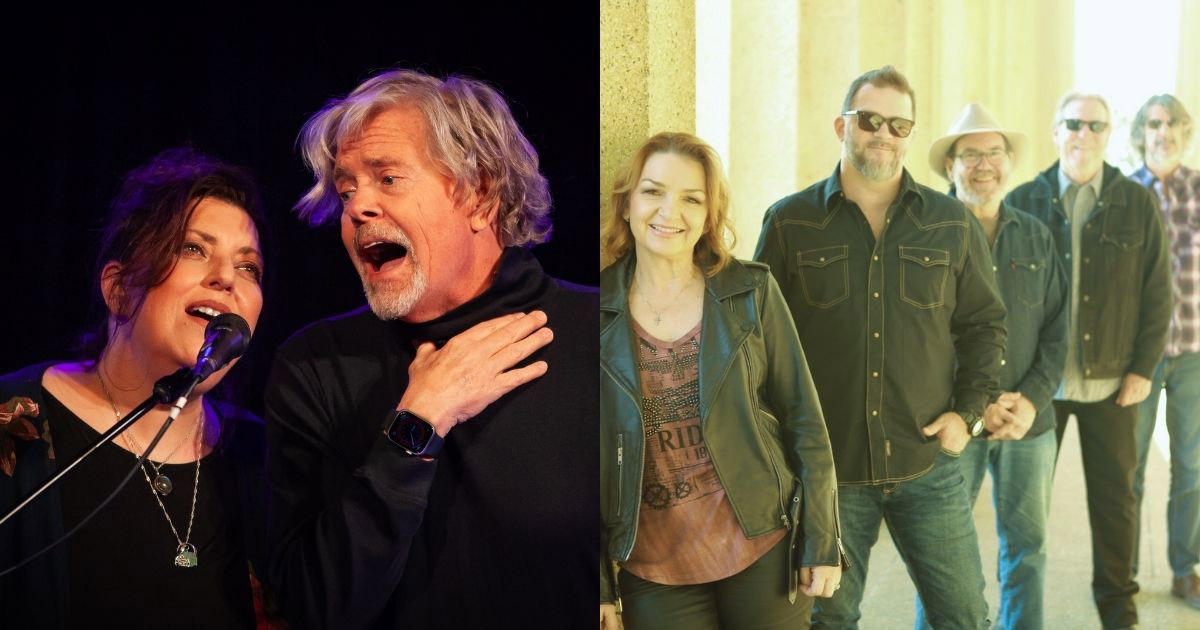
Having known of each other through bluegrass and roots music circles for years, the two finally met at a SESAC music industry dinner and awards show in 2016. Although neither won any awards that night, Rogers and Jutz were seated together, leading to the beginning of a long and fruitful friendship. After exchanging phone numbers on their way out of the gala while waiting in the valet line, the two met up at Rogers’ home the following week for their first songwriting session. Coming from that meet-up was “Old Railroads,” a song Jutz recorded for his 2017 album Crazy If You Let It as well as Eric Brace & Last Train Home’s Daytime Highs & Overnight Lows. Since then, Rogers and Jutz haven’t slowed down, writing on average one song per week for an cumulative total of over 140 songs and counting.

BGS: Considering you’ve written over 140 songs together, how’d you go about dwindling those down to the 12 that made it on the album?

Tammy Rogers: It’s a really hard process because we write so much together and love all the songs. They’re all like children to us. That being said, we don’t usually set out with the mindset of writing for Del McCoury or Tim McGraw. We just sit down and write whatever we’re feeling that day. Oftentimes a book, show, current events or just a random conversation will spark an idea. When we started talking about doing this record, the idea of keeping it simple kept coming up. Part of that was because when we began recording, we were still in serious lockdown mode. We knew we wouldn’t be able to get together in a big studio with our friends to record something really grand, so the simplicity was born out of necessity. The songs we chose lend themselves well to simple production.

Thomm Jutz: We also searched our catalogs for songs that would work well as duets. We’re also both big fans of the Carter Family, the Monroe Brothers, the Blue Sky Boys and other early country music. We didn’t necessarily want to make a full-band record. We wanted to have some bands on it, but at this point in my life with my own work I’m really intrigued by just whittling it down to duo and trio stuff with as much simplicity as possible.

Earlier y’all mentioned getting song inspiration from everything from current events to books and even television. Do you try to tie a lot of those themes back into your own lives with your songwriting or do you prefer going the fictional route? Or is it a bit of both?

Rogers: I don’t even know that I could even quantify how that would split because Thomm is the kind of writer who always has his antennas up. Whether he’s reading a book, watching a documentary or just letting his mind wander in conversation, I think he’s always listening for a phrase or thought that could turn into a song. I’m the same way. Just the other day I said something to a friend and immediately thought, “Hey, that’s a song!” I texted it to Thomm and he was on board. It’ll probably be the next song we work on. When you’re a writer and you’re really in the flow of it, anything can inspire. And if something catches your ear, whether it’s a fleshed-out story or a phrase that could be a title, you run with it. I do that all the time without thinking of a backstory. A phrase will pop into my head or I’ll say something and someone will follow up with something else and an idea snowballs from there.

Jutz: It’s important to pay attention. I think that’s the whole job description of a songwriter, or at least 90 percent of it. It’s also important to take good notes, whether it be a verse, one line, a title or just a general idea. I write all that stuff down, but like Tammy, I don’t try to overthink things. It’s important to keep an open mind because if you bring that into a co-writing session someone may interpret something completely different than you. But Tammy and I mostly write off of titles or general ideas. One of the nice things with bluegrass is that there’s a sort of vocabulary that goes with it. There are rules of what you say and how you say things that help us to focus on that structure when we’re writing. It’s like figure skating. You have to do certain poses or jumps to express yourself within the given parameters. That’s something I’ve always been intrigued about with bluegrass and American roots music. There’s a sense of structure already there and you have to try to do right by that.

Tammy, a moment ago you mentioned Thomm always having his antennas up. Going off that, what is it you each appreciate most about one another as songwriters and artists?

Tammy: One of the things I love most about writing with Thomm is that I’m from the Appalachian Mountains of East Tennessee and even though he’s from Germany, he’s studied my part of the world and is familiar with the culture. If I tell him we should try coming at something with a Carter Family approach or the Monroe and Stanley Brothers he knows exactly what I mean. That makes the process so fun and easy. I don’t think we’ve ever argued about a song and the direction it should go. It really allows us to get inside of a song and go to that place.

Jutz: I think what we both appreciate about each other is that we both take the work very seriously without taking ourselves too seriously. That’s not something that either of us came up with, but rather something that William Faulkner said when asked about writing for movies out in California. I think that mindset is a good recipe for a successful collaboration. In regards to Tammy, she’s just so musical. Not to say that other songwriters aren’t, but Tammy and I approach songwriting as instrumentalists. With that comes a different skill set that allows us to communicate differently than with people who work primarily as songwriters only. It’s very different writing with someone who’s a good instrumentalist, which Tammy obviously is.

That’s the second thing I find unique about our writing relationship, it just comes easy. We get along well and we’re close to the same age but have completely different life experiences. Tammy has children and I don’t, for example. Our lives are very similar and very different at the same time, which makes for a great exchange of ideas.

Speaking of the songwriting process, I love the song “Speakeasy Blues” and the Prohibition Era vibes it radiates. Can you tell me about the song’s story and how you pieced it together for the album?

Jutz: It doesn’t really tell the story of a book, but Tammy and I both had just read a book by North Carolina author Terry Roberts called The Holy Ghost Speakeasy and Revival. It’s a really cool story about the prohibition era and a preacher who had his own train and would recruit misfits to join his crew, preaching to them and selling them liquor. It’s a wild story. One day we were talking about it and I remember Tammy saying that “Speakeasy Blues” sounded like a good song idea, and we ran with it.

Rogers: That song is a great example of how Thomm and I write. We share a lot of books and always share stories we enjoy with one another. It’s fun making music with literary sources because not everyone who hears the song has read the book, which leaves some nuances of the song up to interpretation. On that song in particular, after framing it into the Prohibition Era, we sought to make sure it had a fast tempo and driving beat similar to a train because in the book that’s how they traveled. There’s stuff like that that’s almost subliminal that you may not catch as a listener but that we were aware of when constructing it. Those little easter eggs are fun.

Jutz: Another interesting side to that song is that the book’s author, Terry Roberts, wrote the liner notes for our record. After sending it over and asking him to write for us he said he first listened to it while in London and upon hearing the first line of “Speakeasy Blues” said, “That’s Jedediah. That’s the preacher from my book!”

Rogers: I just started reading another book of his called A Short Time to Stay Here. I really like the title, so maybe one day it’ll become a song, too.


Photo Credit: Anthony Scarlati