Another New Chapter Begins for 49 Winchester

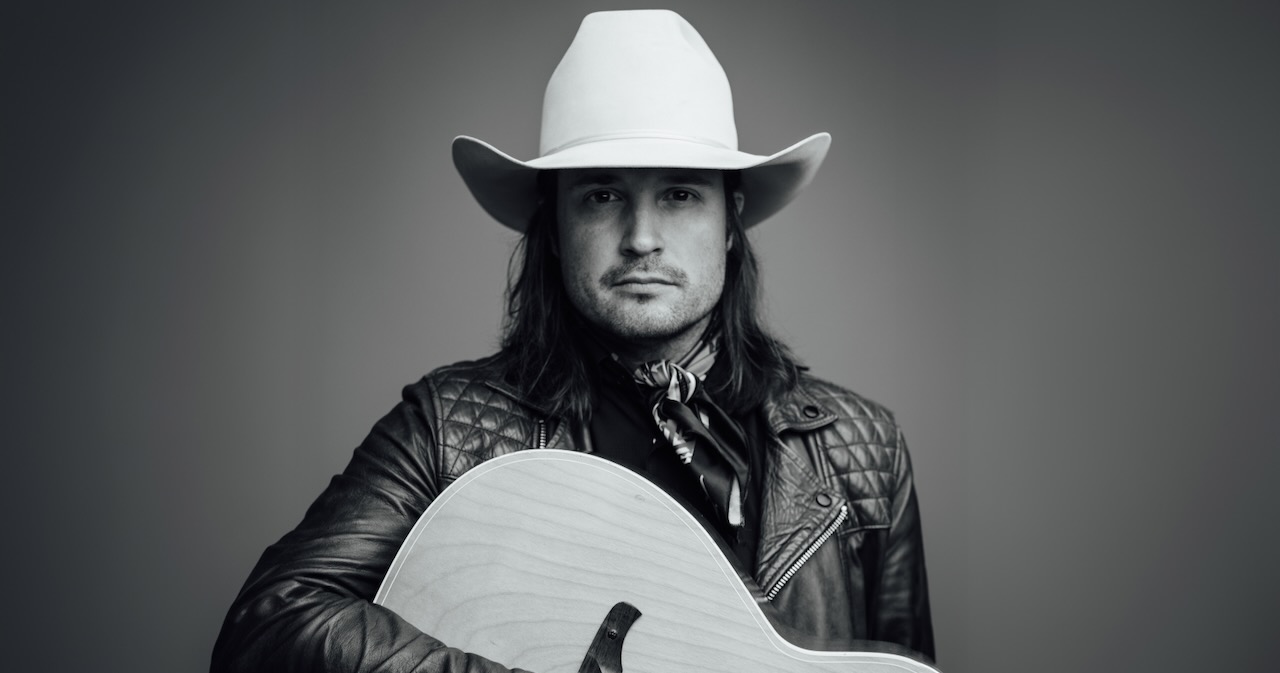
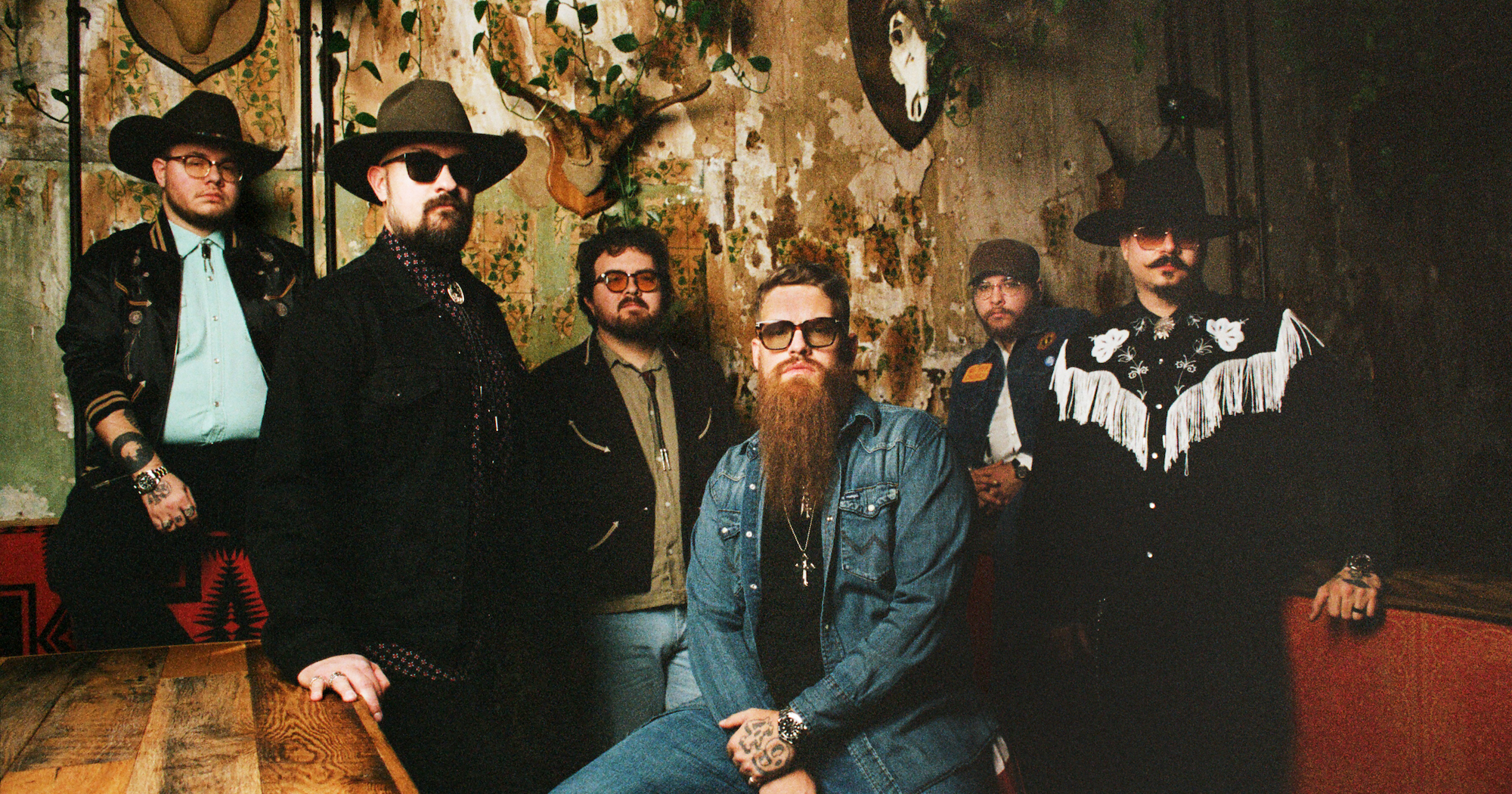
One of the most heartwarming stories in roots music over the past decade has been the emergence of 49 Winchester. The group of high school friends-turned-roommates – then bandmates – emerged from the hollers of Southwest Virginia to become an ACM Award-nominated group and a future household name, off the back of songs like “Hays, Kansas” and “Russell County Line.”

Now, on their new album Change Of Plans, they’re ready to take big next steps, enlisting help from someone who’s frequented that kind of territory to do it. Released on May 15, the group – Isaac Gibson (vocals), Bus Shelton (lead guitar), Chase Chafin (bass), Noah Patrick (pedal steel), Tim Hall (keys), and Justin Louthian (drums) – teamed up with Dave Cobb for the project. It’s their most expansive to date, as it navigates everything from honky-tonk (“Bringin’ Home the Bacon”) to Southern rock (“Pardon Me”) and 2000s alternative (“Heavy Chevy”).

The album is not only the band’s first with Cobb, it’s also their maiden venture with Cobb’s imprint, Lucille Records. (It’s being released in partnership with MCA, where Cobb was named Chief Creative Officer in 2025, and New West Records, 49 Winchester’s label home since 2022’s Fortune Favors The Bold.) Isaac Gibson knew that Lucille would be a good home for the band because he was confident that Cobb would grant them creative freedom. Which he did.

“I don’t think there’s anybody else in the world that has quite the same brain as him,” remarks Gibson. “He’s hyper-efficient and unbelievably tasteful with what he does. Because of that, there was a lot less overthinking than usual. It was very instinctual, like catching lightning in a bottle.

“We also tracked it live for the first time, which is always something we wanted to do. The best way to experience 49 Winchester has always been at a live show, so we wanted to capture some of that energy while also utilizing some of the tools only available in a studio. The result is a version of the band on steroids,” Gibson continues, laughing.

Ahead of the album’s release, Gibson spoke with BGS about the studio time with Dave Cobb, paying homage to Ozzy Osbourne, the band’s trilogy of law-breaking songs, and more.

Tell me about the decision to record the album in only eight days – was that a “Dave” thing?

Isaac Gibson: Previous records have taken a whole lot longer for us. There’s some really great records that have been labored over and over, and other ones that were like pulling a rabbit out of a hat. It was cool to have a different experience this time around where we just focused on doing the thing that got us here in the first place, which is playing and singing and saying things that resonate with us and make us feel good.

But doing things so quickly wasn’t a conscious decision either. It was just the first block of studio time we had available when we weren’t touring and happened to get things done fast. There was a lot of cohesive idea sharing, which was one of the most beautiful things about the entire experience.

One of the most intriguing moments to me came with the inclusion of “Changes,” a Black Sabbath cover that marks the first such tune to ever appear on one of the band’s studio albums. Why was this record and moment the right time to make it happen?

Ozzy’s death is definitely what lit the spark. I remember first throwing the idea for it out to the guys while we were eating lunch in a fellowship hall next to the church in Savannah where we were recording with Dave. We’d been tossing around ideas for dream 49 covers in a group chat for years, so when we decided to actually include one on the record, “Changes” was the first mentioned. We immediately went to record it, not even waiting to finish our lunch. [Laughs]

Once we started tracking it we wanted to grab hold of the raw emotion of it and send it home. It wasn’t even rehearsed – we talked about arrangements and song structure, then cut it. It was a really cool way to pay homage to not only Ozzy but also Charles Bradley, who died in 2017 and performed an awesome soulful version of the song that our version leans toward.

Would you say that “Changes” – both sonically and lyrically with the line “I’m going through changes” – is reflective of the band’s evolution present on this album?

That’s why we chose the title we chose, which is taken from a line in the song “Bluebird.” We’ve all grown so much since starting this band and seen a lot of change in our lives, but through it all 49 has remained steady. But right now has been a distinct season of change for us. We all started this band as kids just out of high school, and now we’re all grown up. This record is just as much about a new chapter for the band as it is new chapters for us individually. We’re all trying to be the best we can be every day, which is what a lot of this record is about.

Regarding “Bluebird,” is it a song about having a plan or vision for how you want a scenario to play out, only for something entirely different to happen instead?

You’re spot-on, and it’s something I’ve recently lived through, too. It sounds cliché, but I always want to write songs as honestly as I possibly can. I think the best thing you can do as a songwriter is give people a little bit deeper glimpse into your life than is sometimes comfortable for you. That’s also an example of what “Slowly” was for me, too. It’s me thinking I’ve got it all figured out, only to have circumstances change that make you rethink everything you thought you knew.

Whereas “Bluebird” focuses on plans not materializing as you’d hoped, it seems “Slowly” focuses more on personal growth and the process of trying – and sometimes failing – to get better?

That one’s not very abstract at all – it’s very direct. When you’re writing about your life sometimes you’ve got to commit to write about it all – the good, the bad and the ugly. Getting better and showing myself more grace through the ups and downs is something I’ve improved on a lot over the years, but I still have more to learn.

With that in mind, the writing on Change Of Plans feels in many ways like your most personal yet. What was the catalyst for that?

It was just a natural order of things. When you’ve only ever relied on your own experiences and feelings for songwriting, you have to find more ways to connect with folks as time goes on so you can get that little bit extra out. You can only write about love, breakups, and drinking so many times before it gets stale and you start wondering what you have left in the tank creatively. This record proved that we’re still able to dig in and continue to do things our own way while staying creatively fresh. As I write more I find myself getting more and more in tune with what I want to say, and this record is the culmination of that.

Jumping back to “Bluebird” and “Slowly,” there also seems to be a bit of yearning for a person on those songs as well. Which is also the case on “Oh, Savannah,” too, albeit with a more positive tone. Are there any other connections between them?

“Slowly” and “Oh, Savannah” were actually written on the same day. “Slowly” was a song I almost had finished before bringing to a [writing session] I had with Jessie Jo Dillon and Chris Tompkins to flesh out. After that we started working on something completely new, which wound up being “Oh, Savannah.” Jessie Jo knew we were making our record in Savannah, Georgia, and said she’d always wanted to write a song about the city, but painting the picture as if it were a girl instead.

As opposed to being something introspective or very personal to me, that one became more of a story song in the vein of “Damn Darlin’” that contains references to very Savannah-y things like the sand dunes and the Cherokee rose. It’s one of these places that aesthetically inspires creativity. There’s a vibe and age to it that I love being around, which made for some cool moments both with this song and the record in general.

Similar to the connection you just made between “Oh, Savannah” and “Damn Darlin’,” I can’t help but notice the ties between “Bringing Home the Bacon” and another track from Fortune Favors The Bold, “Hillbilly Daydream” – only the former is about running marijuana and not moonshine. Tell me about it.

That’s right! It’s part of a trilogy [with “Long Hard Life” from 2020’s III] of hard times and illicit substances being used as a way out of them. We wanted a real honky-tonker on the record and that song was one I’d sat on for about eight years. I had it finished at one point but couldn’t remember anything beyond the first verse, so we brought Aaron Raitiere in to help knock out the rest. He was the perfect guy for that particular song because he leans so hard into that humorous storyteller role like a modern-day John Prine. There’s always a nugget of something to crack a smile or chuckle about in his writing, and this song is no exception.

Are there any other songs on this record like “Bringin’ Home the Bacon” where the origins stem back years?

The first verse of “Heavy Chevy” was also something I sat on since before [recording 2024’s Leavin’ This Holler]. But those were the only two on this record that had been in the tank already without the chance to grow up yet. [Laughs] Songs are like that sometimes – they don’t come to fruition until you least expect it. Most of the songs I’m really proud of have happened very quickly and write themselves in an hour or two. But other times they don’t, and if you keep something of value for long enough then it’ll eventually turn into something else. Getting to breathe new life into something that was dormant and underground for a bit is super cool.

The band has been growing into bigger and bigger venues and straying farther and farther from Southwest Virginia with each passing year and album. Considering this, how has your perception of home changed since the band’s inception?

It’s difficult to say because our home is so linked to who we are. At the end of the day, you can take the boy out of the holler, but you can’t take the holler out of the boy. We’ve gotten to travel the world now and play music for people who don’t even speak our language, which is incredible. Doing that has actually made me appreciate where I come from even more. As I’ve gotten out and seen more, it’s also made me realize just how rare and difficult it is for us to do what we’ve done coming from where we did. In the early days we were still proud to be where we’re from, but we didn’t understand what it meant to be somebody paving the way for others and doing something no other band in Southwest Virginia had done until now.

What has the process of bringing Change Of Plans to life taught you about yourself?

Making this record got me to fall in love with all this again. We’ve worked really hard the past decade, which is good because there were a lot of cool opportunities coming our way, but a doldrum had set in on me that I was able to finally shake off working on this record. It really reignited my spark for the whole thing. My love for the live performance has always been there, but the act of touring can be so grueling. However, I now feel like I have so much left in the tank that I still want to say. This music is going to be our legacy long after we’re gone, so it’s important to stick to it and keep the pedal to the floor.


Photo Credit: Daniel Prakopcyk
Charley Crockett, Gillian Welch & David Rawlings, Waxahatchee Among Americana Nominees

The Americana Music Association has announced the nominees for its 24th annual Americana Honors & Awards. This year’s nominations were revealed by Brandi Carlile, Kashus Culpepper, S.G. Goodman, Jim Lauderdale, Kacey Musgraves and Molly Tuttle in a social media announcement.

The winners will be announced during the Americana Honors & Awards on Wednesday, Sept. 10, 2025, at the historic Ryman Auditorium in Nashville. The celebrated program is the hallmark event of AMERICANAFEST, which returns for its 25th year on Sept. 9-13, 2025.

A full list of categories and nominees for the Americana Music Association’s 24th annual Americana Honors & Awards is below the video player.

ALBUM OF THE YEAR:

Lonesome Drifter, Charley Crockett; Produced by Charley Crockett & Shooter Jennings

Foxes in the Snow, Jason Isbell; Produced by Jason Isbell & Gena Johnson

Manning Fireworks, MJ Lenderman; Produced by Alex Farrar & MJ Lenderman

South of Here, Nathaniel Rateliff & The Night Sweats; Produced by Brad Cook

Woodland, Gillian Welch & David Rawlings; Produced by David Rawlings

ARTIST OF THE YEAR:

Charley Crockett

Sierra Ferrell

Joy Oladokun

Billy Strings

Waxahatchee

DUO/GROUP OF THE YEAR:

Julien Baker & TORRES

Dawes

Larkin Poe

The Mavericks

Gillian Welch & David Rawlings

EMERGING ACT OF THE YEAR:

Noeline Hofmann

MJ Lenderman

Medium Build

Maggie Rose

Jesse Welles

INSTRUMENTALIST OF THE YEAR:

Fred Eltringham

Alex Hargreaves

Megan Jane

Kaitlyn Raitz

Seth Taylor

SONG OF THE YEAR:

“Johnny Moonshine,” Maggie Antone; Written by Maggie Antone, Natalie Hemby & Aaron Raitiere

“Ancient Light,” I’m With Her; Written by Sarah Jarosz, Aoife O’Donovan & Sara Watkins

“Wristwatch,” MJ Lenderman; Written by MJ Lenderman

“Sunshine Getaway,” JD McPherson; Written by Page Burkum, JD McPherson & Jack Torrey

“Heartless,” Nathaniel Rateliff & The Night Sweats; Written by Nathaniel Rateliff


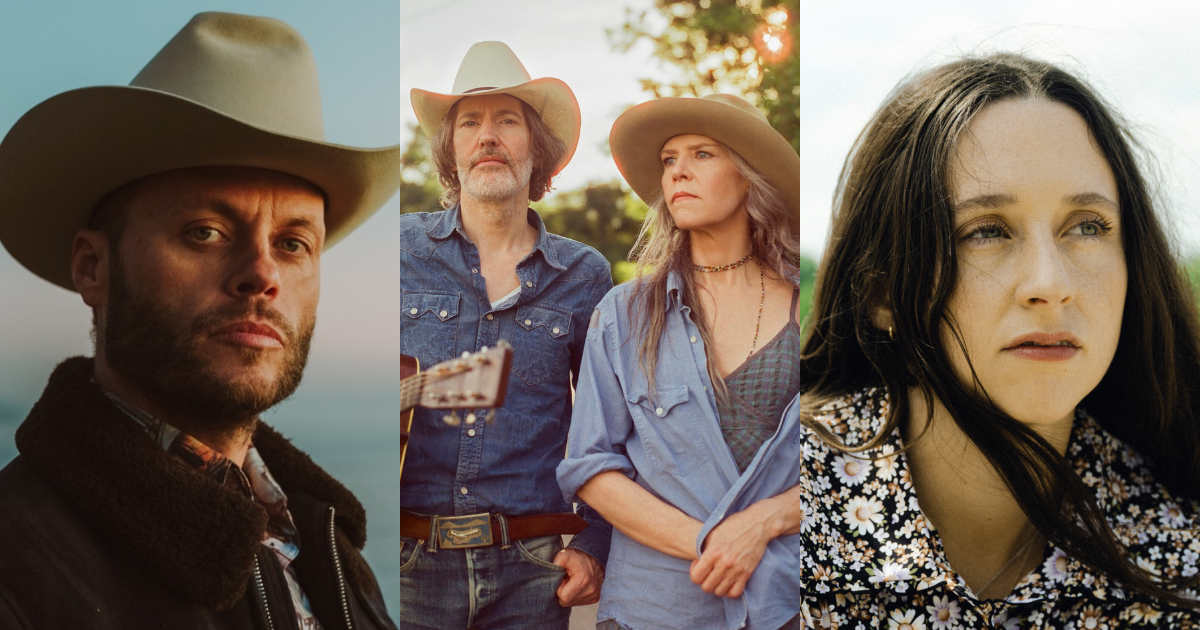
Photo Credits: Charley Crockett courtesy of the artist; Gillian Welch & David Rawlings by Alysse Gafkjen; Waxahatchee by Molly Matalon

LISTEN: Ross Cooper, “Love Like The Old Days”

Artist: Ross Cooper
Hometown: Nashville, Tennessee
Song: “Love Like The Old Days”
Album: Lightning Heart
Release Date: September 29, 2023

In Their Own Words: “Aaron Raitiere and I were both on the same flight coming back to Nashville and sat together, opened up our journals, and wrote this song in a couple of hours. We’d been struggling to get a date on the books to write, so that plane ride was kind of a ‘stars-aligning moment.’ I wanted to write a song about my wife and the type of relationship that our folks have. The type of marriage worth writing about. This song fell out. I knew it was going to be a special song from the moment we finished it. And the cherry on top of all of it was I got my wife, O’Neal (who swears up and down that she ‘can’t sing’), to sing harmony on the track, and she sounds beautiful. Now it’s all full circle, and we have a song we get to share together. Some songs are easy to write… like they were waiting to get written. ‘Love Like The Old Days’ feels like that song for me.” – Ross Cooper


Photo Credit: Sam Wiseman

BGS 5+5: Vince Herman

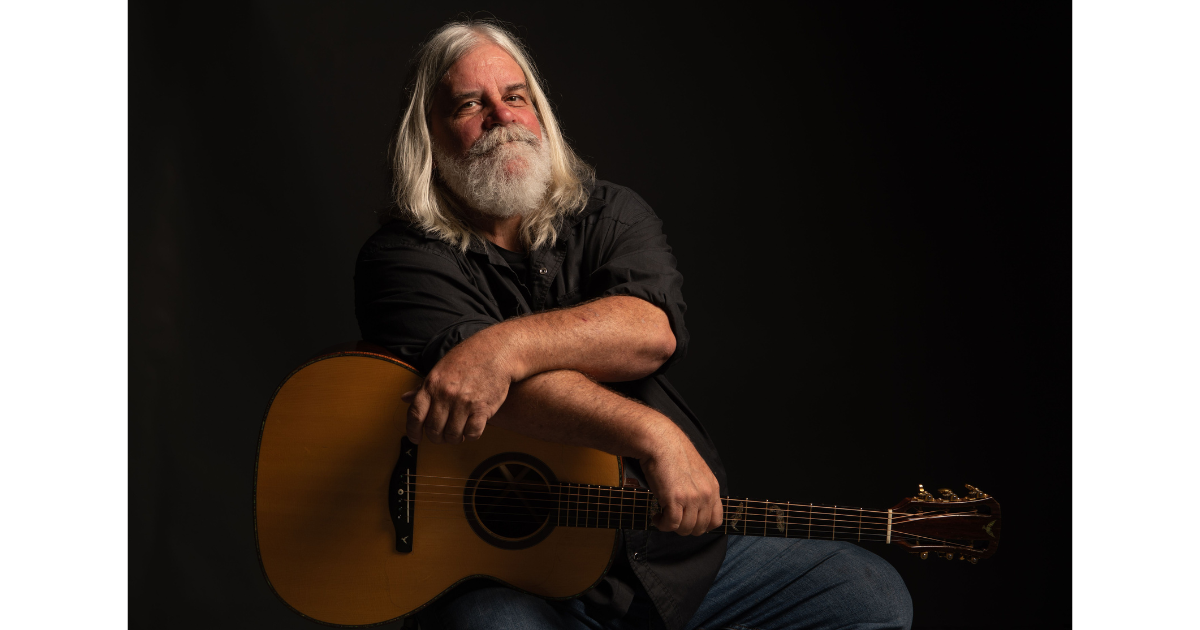
Artist: Vince Herman
Hometown: Madison, Tennessee
Latest Album: Enjoy the Ride

Which artist has influenced you the most … and how?

As far as big influences go, polka bands were my first taste of live music. Family weddings always had a polka band. Often Frank Granata’s band from Carnegie, Pennsylvania. As far as playing music myself, I’d have to say that seeing David Bromberg with his big band in 9th grade really set me on the path to developing a bluegrass obsession. They played several instruments each and really dug into traditional music in a lot of forms. I’m still musically ADD from that experience. The first time hearing Doc Watson also blew my mind.

What was the first moment that you knew you wanted to be a musician?

The first time I knew I wanted to be a musician is way too early to remember. I have a photo of myself at three-years-old playing a plywood guitar my brother made for me, dressed as a Beatle. Ten years later, I went to the Smoky City Folks Festival in Pittsburgh and saw 40 old time musicians playing a tune together under a tree in the park. The social aspect of music dawned on me there. I realized I could travel and meet people by playing music. Boom. I was all in.

If you had to write a mission statement for your career, what would it be?

My musical mission statement is centered around having a good time. Music brings people together usually as their best self. It’s my job to make them happy. They made the choice to spend time with me and the band. Dancing’s fun. Humor goes a long way and improvising about the here and now always seems to bring folks further into the moment we’re all sharing. Making the world go away for a bit is a good thing. On the other hand, artists have a responsibility to interpret the current cultural situation and that may involve politics. That doesn’t scare me. Some of the best moments of my career have been singing a song from my heart that makes you think of social justice issues.

What has been the best advice you’ve received in your career so far?

I’d say the best advice I’ve ever received is to be myself and know that expressing your real self is far more important than trying to play to some imagined level of perfection. Bruce Hampton really drove this home. He’d be on stage with monsters like Jimmy Herring or Otiel Burbridge yet his simple soulful notes would bring the house and his band to their knees. It’s about the intention. Why are you playing something rather than how!

Since food and music go so well together, what is your dream pairing of a meal and a musician?

My ideal meal/musician combo would be to be in South Louisiana making a big seafood gumbo while BeauSoleil played in a picnic shelter next to the water. Food and music that reflect a place and the culture it grows out of is my jam!


Photo Credit: Michael Weintrob

BGS 5+5: Aaron Raitiere

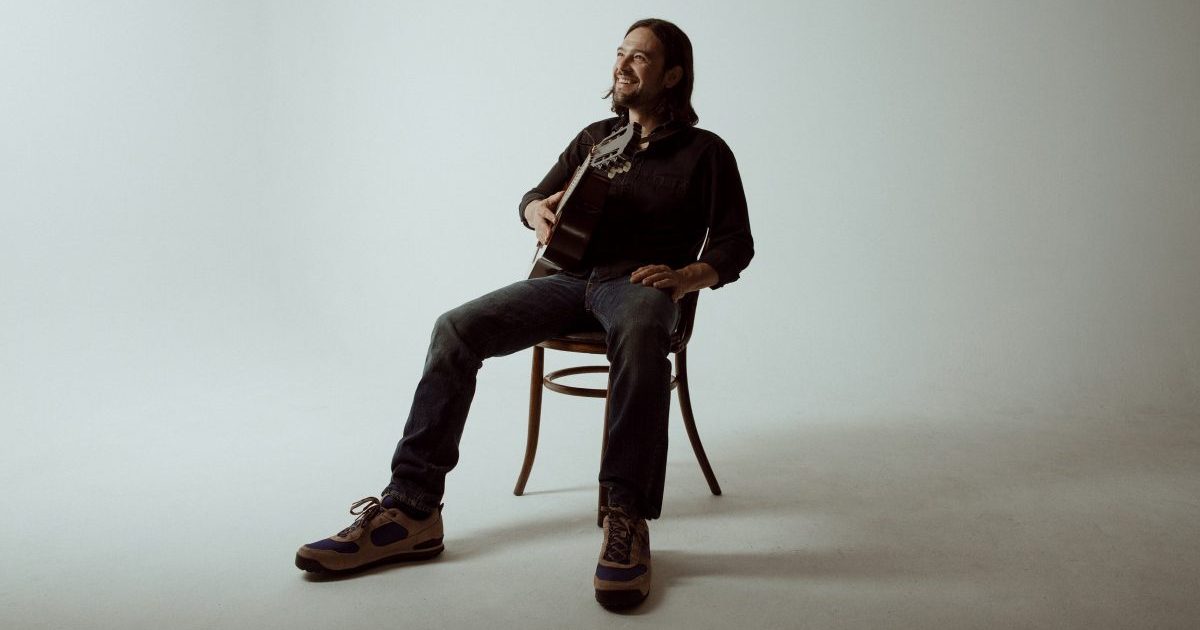
Artist: Aaron Raitiere
Hometown: Danville, Kentucky
Latest Album: Single Wide Dreamer
Personal Nicknames: Rat

What was the first moment that you knew you wanted to be a musician?

I was in high school and went to see a band called Leftover Salmon at the All Good Music Festival in Virginia. It was the first time I had ever seen grown people gettin’ wild in the mountains. A true mess of music, community, and insanity. Leftover took the stage and Vince Herman was dancing around with a big foam cheeseburger on his head. The band went into the traditional bluegrass song “Hot Corn, Cold Corn” and Vince grabbed a burlap sack full of corn and started throwing it at the crowd just yelling out “CORN!” — that was the moment I knew I wanted to be a musician. I couldn’t believe that guy was getting paid. What a job.

What has been the best advice you’ve received in your career so far?

The deals that take the longest to make are the deals that last the longest. And never write anything down on paper that you don’t want someone else to know.

If you had to write a mission statement for your career, what would it be?

My mom just retired from 40 years as a Case Manager in the ER in Central Kentucky. When I was tryin’ to figure out what I wanted to do she always said she didn’t care what I did as long as I helped people. I try to help people with my songs. I think my mission statement would be “Help People.”

Which elements of nature do you spend the most time with and how do those impact your work?

I’m a water baby. A lifetime swimmer. I prefer a river over a pond, lake, or an ocean. But most any water will do. I’ve got a spot I like to spend time at just north of Nashville. It’s quiet. Silence is golden, right?

How often do you hide behind a character in a song or use “you” when it’s actually “me”?

The best songs are found in the truth. When I’m writing, the You is always Me or some version of a Me. It’s someone I can relate to. Someone with similar opinions and feelings. Someone I can write down what they are saying. It’s hard to hide behind anything anymore. People aren’t stupid, and there are cameras everywhere.


Photo Credit: Alysse Gafkjen

With a New Album About His Turbulent Past, Waylon Payne Makes It Through

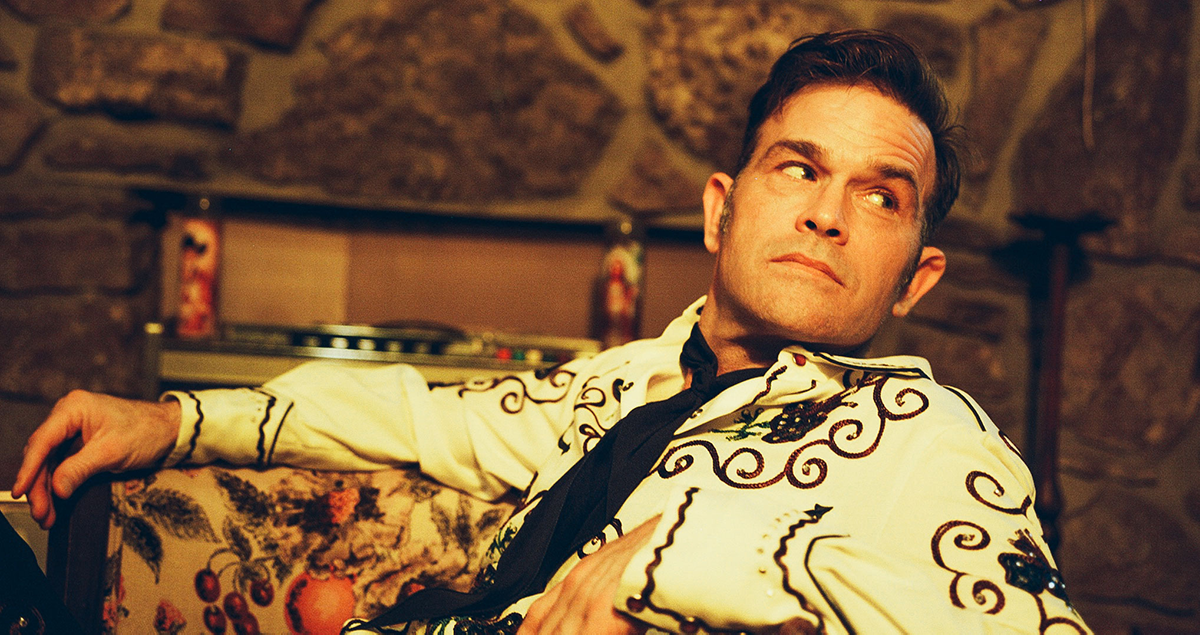
Roughly 20 years ago, Waylon Payne’s life had become enough of a mess that he’d been booted off tour by one of his closest friends. These days he’s in a much better spot, though many of the trials and tribulations of his 20s are woven throughout the narrative of his new album, Blue Eyes, The Harlot, The Queer, The Pusher and Me.

The 12-song collection emerged gradually on digital platforms three songs at a time, though now as a whole, it’s also available on vinyl, and it should fit neatly within his own album collection of Bobbie Gentry, Kris Kristofferson, Willie Nelson, and his late mother, Sammi Smith. His late father, Jody Payne, played guitar in Willie Nelson’s band for four decades.

With classic country music in his blood, Payne has had songs cut by songwriting partners like Miranda Lambert, Ashley Monroe, and Lee Ann Womack, yet Blue Eyes, The Harlot, The Queer, The Pusher and Me is uniquely his own story. “I’m extremely proud of it. Every song is mine, and every song is a story that I’m choosing to tell,” he says. “It’s been extremely freeing and extremely cool to know that I’ve made it out of a dire situation and that I lived to tell about it. That’s all I’m really trying to do, buddy, I’m trying to offer some hope and maybe a different viewpoint that people have heard before.”

BGS: What do you remember about the vibe in the studio while making this record?

Waylon Payne: It was a pretty interesting vibe. We cut it at Southern Ground, which used to be in its heyday the old Monument studio, which is where my mom cut “Help Me Make It Through the Night” and a bunch of her other hit songs. She did sessions when she was pregnant with me there, and I was a baby there, and I was a toddler there. It was pretty interesting to sit in the same spot that she stood and sing all of these songs and do this album. It was just lovely. It was something special and everybody knew it I think.

Did you keep a picture of her with you when you recorded the album?

I have her face on my left forearm so I can’t play the guitar without seeing her face.

How did you learn to play guitar? When did you pick it up?

Early 20s, maybe? My friend Shelby Lynne showed me a few chords, and once it bites you, once it gets its grips on you, you’re a slave to it — once it puts its power on you and gets around you. And that was it. I picked out some chords of my own and I pretty much taught myself everything else, or I’d ask somebody about a chord. I was around 23 or 24.

Is that when you started writing songs?

Yeah, that was around the same time, too. It all came along around the same time. I started learning some chords in Nashville but it was LA mostly that really brought it all home.

At what point did you realize that you enjoyed being on stage?

Probably about 2. [Laughs] Who wouldn’t enjoy that? Like I said, once it bites you, you’re bitten.

Was it the applause? The approval?

I think it was because when I was on stage, I was always with my mother. So, it was family. And that’s what I did it for, for the family.

Your parents are referenced in several songs, almost like characters in the songs. So, I’m curious when you’re singing “Sins of the Father,” is that about your father?

Oh yeah, exactly. I developed a drug problem and it was pretty much his fault. He showed me those drugs. When I got myself together and got myself sober, I had another buddy of mine named Edward Johnson come along that showed me what fathers and sons were really supposed to be like. It changed my life. That song’s about my father and my buddy Edward and his son Lake. Lake’s the one that counts it off in the beginning. Lake saved my life — he and his daddy did. They made me stand up to be a better man and they helped me get sober. I’m really proud of those boys.

There’s a line in “After the Storm” about your mother closing the door on you. And you sing that you have trust that it will open again. Is that emblematic of the experience of coming out to her?

Well, there were some deeper circumstances going on in the house than just me being gay. There was some sex abuse that had happened. It was just hard for the family to deal with. That was a brief period of our life, and that is totally a reference to that time period. [I’m saying,] I know that you’re my mother and I know that you’re the one that gave me life. You’re also the one that’s got to teach me the roughest lessons and that was a hard one, when she shut that door on me. But I knew that it wasn’t shut forever.

How old were you when that happened?

18 or 19.

Was there a moment when she reopened that door, when you felt like that relationship was back on track?

Yeah, about four, five, or six years later. We had a nice moment over Christmas and Shelby was responsible for bringing that relationship back together, too. She’s been like a sister to me for many, many years. I love her, love her deeply.

What year did you go to LA?

I probably ended up there in ’99 or 2000. I got fired out there. I was playing with Shelby [on tour promoting I Am Shelby Lynne] and maybe I was drinking and doing too many drugs. Being a dick, so she fired me. [Laughs] And I didn’t have any money to get home, so I stayed there and ended up making it — that’s basically all I can tell you about that.

When I moved to Nashville in the ‘90s, it seems like aspiring artists had a lot of places to play, and several stages were available to them for showcases and other performances. Were you able to take part in those kind of things during that time?

Man, when I came here in ’93 or ’94, Broadway [the city’s strip of downtown honky-tonks] was a godsend for me. Broadway and Printers Alley saved my life, because they introduced me to the greatest pickers I ever knew in my life. It gave me a place to sing six or seven nights a week. I would go to work at six o’clock at night, and by going to work, I mean we would show up down there and we’d start on one side of Broadway and we would sing on one side, go through Printers Alley, and then down the other side. That was how we got our chops in. We would go and find places to sing. We didn’t make any money, but that’s what I did. I learned how to do that stuff right in my hometown of Nashville, on Broadway.

How did you make ends meet if you weren’t making money in the bars?

Well, I was a prostitute back in the day for a while. I also drove hookers around. I was a construction worker, I was a short order cook, I’ve done a lot of things, pal.

There’s a different vibe in Nashville now than there was in the ‘90s — and of course, the ‘90s were different than the ‘70s, too. What do you like about the Nashville music community now?

What do I like about it?

Yeah, what makes it special, and why do you like to be part of it?

Well, I don’t know that I’m necessarily a huge part of it. I’ve got a group that I write with at Carnival — Lee Ann, Miranda, and Ashley, and those folks. I don’t know if I necessarily hang out with a lot of folks. If I’m part of the Nashville community now, then I’ll take that. That’s pretty freaking cool. That’s something I’ve never really heard with my name before, being part of the Nashville community.

I guess I think of you that way because I see your name as a co-writer on Ashley Monroe’s records. What is it about that writing relationship that makes it click?

Ashley, Miranda, and I started writing together four or five years ago on a regular basis, then Ashley and Aaron Raitiere and I write together a lot. We tend to write pretty good music together. If I write music with somebody and it clicks, and we get good songs, then that’s pretty much a good partnership and I’ll stick with that for a while.

You put this record out three songs at a time, but when I listened to it in its entirety, it struck me that there’s a theme of moving forward, and sometimes outright optimism, that comes through. Do you hear that too?

I mean, I always want to give people hope. That’s one of the biggest things about this record: Even though it’s about tragic situations, I still made it out.


Photo credit: Pooneh Ghana