Another New Chapter Begins for 49 Winchester

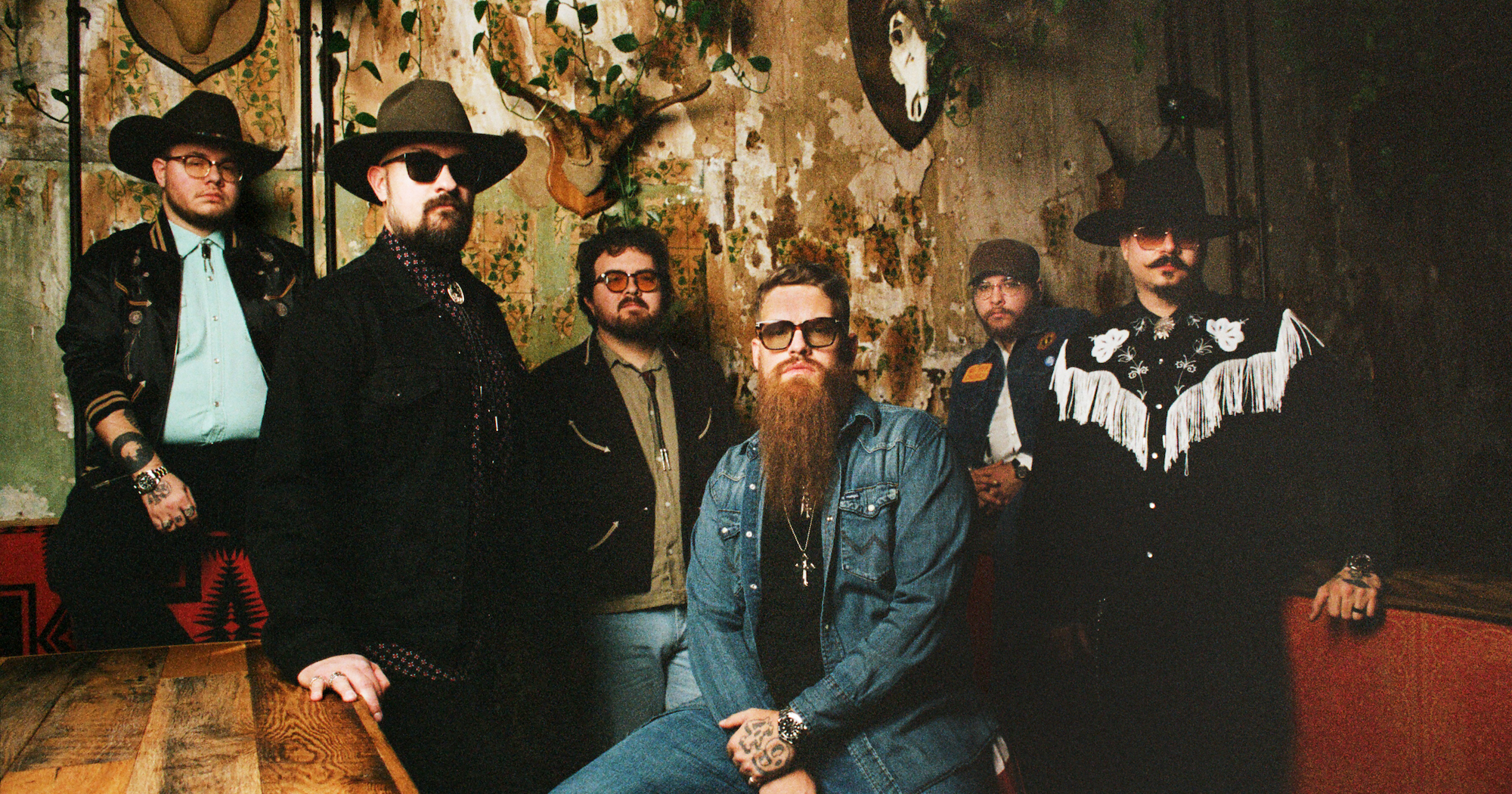
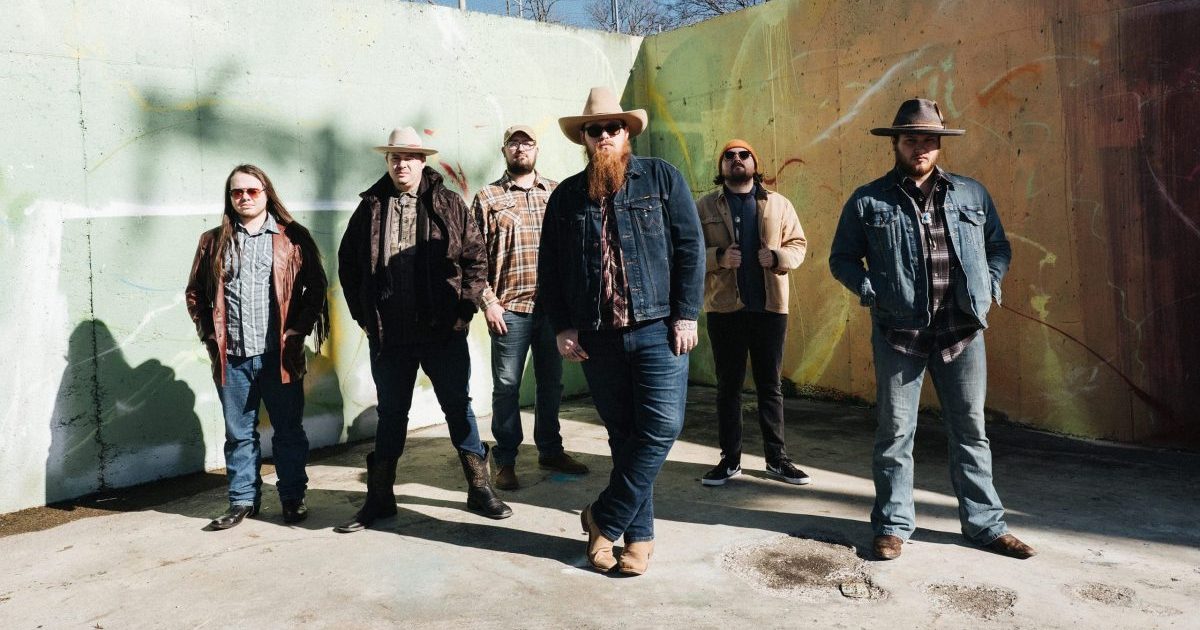
One of the most heartwarming stories in roots music over the past decade has been the emergence of 49 Winchester. The group of high school friends-turned-roommates – then bandmates – emerged from the hollers of Southwest Virginia to become an ACM Award-nominated group and a future household name, off the back of songs like “Hays, Kansas” and “Russell County Line.”

Now, on their new album Change Of Plans, they’re ready to take big next steps, enlisting help from someone who’s frequented that kind of territory to do it. Released on May 15, the group – Isaac Gibson (vocals), Bus Shelton (lead guitar), Chase Chafin (bass), Noah Patrick (pedal steel), Tim Hall (keys), and Justin Louthian (drums) – teamed up with Dave Cobb for the project. It’s their most expansive to date, as it navigates everything from honky-tonk (“Bringin’ Home the Bacon”) to Southern rock (“Pardon Me”) and 2000s alternative (“Heavy Chevy”).

The album is not only the band’s first with Cobb, it’s also their maiden venture with Cobb’s imprint, Lucille Records. (It’s being released in partnership with MCA, where Cobb was named Chief Creative Officer in 2025, and New West Records, 49 Winchester’s label home since 2022’s Fortune Favors The Bold.) Isaac Gibson knew that Lucille would be a good home for the band because he was confident that Cobb would grant them creative freedom. Which he did.

“I don’t think there’s anybody else in the world that has quite the same brain as him,” remarks Gibson. “He’s hyper-efficient and unbelievably tasteful with what he does. Because of that, there was a lot less overthinking than usual. It was very instinctual, like catching lightning in a bottle.

“We also tracked it live for the first time, which is always something we wanted to do. The best way to experience 49 Winchester has always been at a live show, so we wanted to capture some of that energy while also utilizing some of the tools only available in a studio. The result is a version of the band on steroids,” Gibson continues, laughing.

Ahead of the album’s release, Gibson spoke with BGS about the studio time with Dave Cobb, paying homage to Ozzy Osbourne, the band’s trilogy of law-breaking songs, and more.

Tell me about the decision to record the album in only eight days – was that a “Dave” thing?

Isaac Gibson: Previous records have taken a whole lot longer for us. There’s some really great records that have been labored over and over, and other ones that were like pulling a rabbit out of a hat. It was cool to have a different experience this time around where we just focused on doing the thing that got us here in the first place, which is playing and singing and saying things that resonate with us and make us feel good.

But doing things so quickly wasn’t a conscious decision either. It was just the first block of studio time we had available when we weren’t touring and happened to get things done fast. There was a lot of cohesive idea sharing, which was one of the most beautiful things about the entire experience.

One of the most intriguing moments to me came with the inclusion of “Changes,” a Black Sabbath cover that marks the first such tune to ever appear on one of the band’s studio albums. Why was this record and moment the right time to make it happen?

Ozzy’s death is definitely what lit the spark. I remember first throwing the idea for it out to the guys while we were eating lunch in a fellowship hall next to the church in Savannah where we were recording with Dave. We’d been tossing around ideas for dream 49 covers in a group chat for years, so when we decided to actually include one on the record, “Changes” was the first mentioned. We immediately went to record it, not even waiting to finish our lunch. [Laughs]

Once we started tracking it we wanted to grab hold of the raw emotion of it and send it home. It wasn’t even rehearsed – we talked about arrangements and song structure, then cut it. It was a really cool way to pay homage to not only Ozzy but also Charles Bradley, who died in 2017 and performed an awesome soulful version of the song that our version leans toward.

Would you say that “Changes” – both sonically and lyrically with the line “I’m going through changes” – is reflective of the band’s evolution present on this album?

That’s why we chose the title we chose, which is taken from a line in the song “Bluebird.” We’ve all grown so much since starting this band and seen a lot of change in our lives, but through it all 49 has remained steady. But right now has been a distinct season of change for us. We all started this band as kids just out of high school, and now we’re all grown up. This record is just as much about a new chapter for the band as it is new chapters for us individually. We’re all trying to be the best we can be every day, which is what a lot of this record is about.

Regarding “Bluebird,” is it a song about having a plan or vision for how you want a scenario to play out, only for something entirely different to happen instead?

You’re spot-on, and it’s something I’ve recently lived through, too. It sounds cliché, but I always want to write songs as honestly as I possibly can. I think the best thing you can do as a songwriter is give people a little bit deeper glimpse into your life than is sometimes comfortable for you. That’s also an example of what “Slowly” was for me, too. It’s me thinking I’ve got it all figured out, only to have circumstances change that make you rethink everything you thought you knew.

Whereas “Bluebird” focuses on plans not materializing as you’d hoped, it seems “Slowly” focuses more on personal growth and the process of trying – and sometimes failing – to get better?

That one’s not very abstract at all – it’s very direct. When you’re writing about your life sometimes you’ve got to commit to write about it all – the good, the bad and the ugly. Getting better and showing myself more grace through the ups and downs is something I’ve improved on a lot over the years, but I still have more to learn.

With that in mind, the writing on Change Of Plans feels in many ways like your most personal yet. What was the catalyst for that?

It was just a natural order of things. When you’ve only ever relied on your own experiences and feelings for songwriting, you have to find more ways to connect with folks as time goes on so you can get that little bit extra out. You can only write about love, breakups, and drinking so many times before it gets stale and you start wondering what you have left in the tank creatively. This record proved that we’re still able to dig in and continue to do things our own way while staying creatively fresh. As I write more I find myself getting more and more in tune with what I want to say, and this record is the culmination of that.

Jumping back to “Bluebird” and “Slowly,” there also seems to be a bit of yearning for a person on those songs as well. Which is also the case on “Oh, Savannah,” too, albeit with a more positive tone. Are there any other connections between them?

“Slowly” and “Oh, Savannah” were actually written on the same day. “Slowly” was a song I almost had finished before bringing to a [writing session] I had with Jessie Jo Dillon and Chris Tompkins to flesh out. After that we started working on something completely new, which wound up being “Oh, Savannah.” Jessie Jo knew we were making our record in Savannah, Georgia, and said she’d always wanted to write a song about the city, but painting the picture as if it were a girl instead.

As opposed to being something introspective or very personal to me, that one became more of a story song in the vein of “Damn Darlin’” that contains references to very Savannah-y things like the sand dunes and the Cherokee rose. It’s one of these places that aesthetically inspires creativity. There’s a vibe and age to it that I love being around, which made for some cool moments both with this song and the record in general.

Similar to the connection you just made between “Oh, Savannah” and “Damn Darlin’,” I can’t help but notice the ties between “Bringing Home the Bacon” and another track from Fortune Favors The Bold, “Hillbilly Daydream” – only the former is about running marijuana and not moonshine. Tell me about it.

That’s right! It’s part of a trilogy [with “Long Hard Life” from 2020’s III] of hard times and illicit substances being used as a way out of them. We wanted a real honky-tonker on the record and that song was one I’d sat on for about eight years. I had it finished at one point but couldn’t remember anything beyond the first verse, so we brought Aaron Raitiere in to help knock out the rest. He was the perfect guy for that particular song because he leans so hard into that humorous storyteller role like a modern-day John Prine. There’s always a nugget of something to crack a smile or chuckle about in his writing, and this song is no exception.

Are there any other songs on this record like “Bringin’ Home the Bacon” where the origins stem back years?

The first verse of “Heavy Chevy” was also something I sat on since before [recording 2024’s Leavin’ This Holler]. But those were the only two on this record that had been in the tank already without the chance to grow up yet. [Laughs] Songs are like that sometimes – they don’t come to fruition until you least expect it. Most of the songs I’m really proud of have happened very quickly and write themselves in an hour or two. But other times they don’t, and if you keep something of value for long enough then it’ll eventually turn into something else. Getting to breathe new life into something that was dormant and underground for a bit is super cool.

The band has been growing into bigger and bigger venues and straying farther and farther from Southwest Virginia with each passing year and album. Considering this, how has your perception of home changed since the band’s inception?

It’s difficult to say because our home is so linked to who we are. At the end of the day, you can take the boy out of the holler, but you can’t take the holler out of the boy. We’ve gotten to travel the world now and play music for people who don’t even speak our language, which is incredible. Doing that has actually made me appreciate where I come from even more. As I’ve gotten out and seen more, it’s also made me realize just how rare and difficult it is for us to do what we’ve done coming from where we did. In the early days we were still proud to be where we’re from, but we didn’t understand what it meant to be somebody paving the way for others and doing something no other band in Southwest Virginia had done until now.

What has the process of bringing Change Of Plans to life taught you about yourself?

Making this record got me to fall in love with all this again. We’ve worked really hard the past decade, which is good because there were a lot of cool opportunities coming our way, but a doldrum had set in on me that I was able to finally shake off working on this record. It really reignited my spark for the whole thing. My love for the live performance has always been there, but the act of touring can be so grueling. However, I now feel like I have so much left in the tank that I still want to say. This music is going to be our legacy long after we’re gone, so it’s important to stick to it and keep the pedal to the floor.


Photo Credit: Daniel Prakopcyk

A Force
To Be Reckoned With

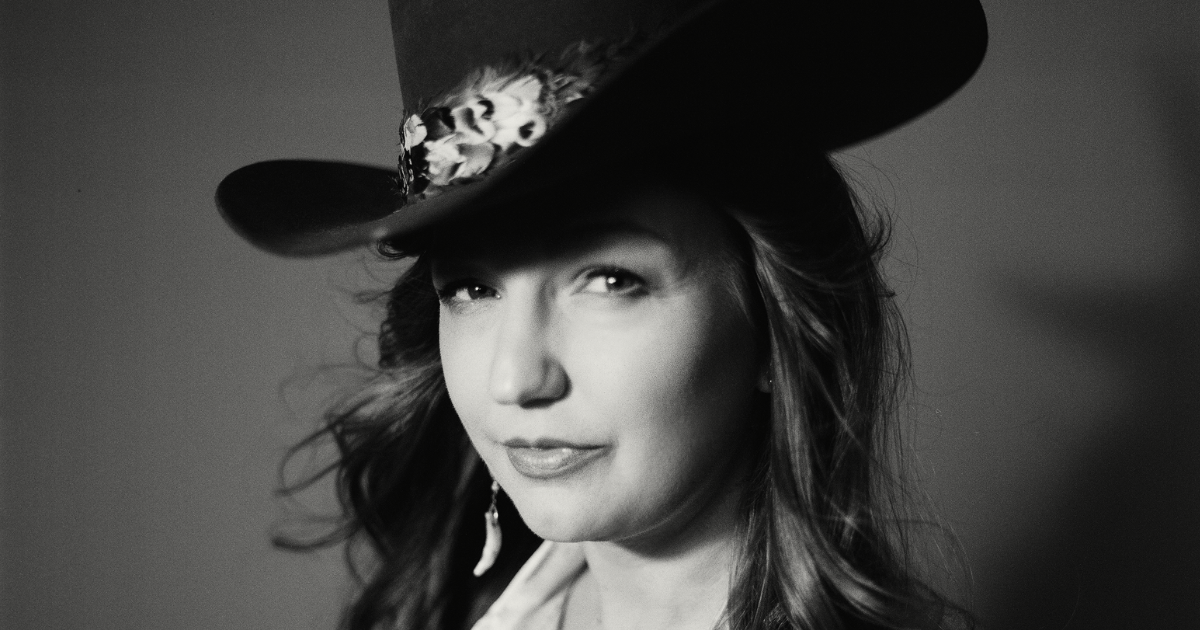
Ghosts are so much more than spooky or goofy animations; they represent lived histories, past selves, and the ever-unfolding work of becoming. With her latest album, Every Ghost, country singer-songwriter Kelsey Waldon gives grace to all the women she’s been along the way, entertaining their urgent lessons as she considers who she is today.

“There’s good ghosts and there’s bad ghosts. Some of them have unfinished business and maybe they feed off fear, or maybe they feed off your happiness. I certainly have them, I have a lot of ghosts,” Waldon says. “It’s those types of ghosts, but also the ghost of every version of yourself that you’ve been and just being proud of where you came from, where you’re going, and honestly, where you’re at; meet yourself there.”

On the album’s first track, “Ghost of Myself,” she lays out how she got here:

I had to get tough so I could get wise
I’ve been a thousand women in my own time
Been a thousand women and I’ve loved them all
I had to get low so I could walk tall

From the album’s first lush, ebullient guitar run, Every Ghost is thick with layers of twang, accompanied by driving fiddle and classic country sounds. Waldon’s velvety voice, which has always been self-assured, sings clear and powerful. She’s standing on her own two feet; this is the album she’s been working toward over the last decade of hard work and meticulous touring.

Modern pop country is rife with men behaving badly or selfishly while extolling the unholy virtue of big truck worship. But long before their unceremonious relegation to the role of disingenuous machines, good for little else than scoring sex and drinking cheap beer, truck songs (usually about big rigs, not pickups) made poetry out of the long haul and produced some of country music’s most interesting characters. Look no further than Red Simpson and C.W. McCall’s catalogues, Jerry Reed’s “East Bound and Down,” Red Sovine’s “Phantom 309,” the Willis Brothers’ “Gimme 40 Acres to Turn this Rig Around,” or Kay Adams’ “Little Pink Mack.”

“Comanche,” track 2 on the new album (named after the 1988 Jeep Comanche Waldon bought recently) joins that lineage. “The rumble of the engine feels like my soul smooth when it’s runnin’/ A little rough when it’s not movin’,” Waldon sings.

Get behind the wheel on the open road, relax, blast some music, sort out your thoughts – there’s nothing like it. “We’ve all got our own amends to make/ We’ve all got our own hearts to break/ That’s the way it is,” Waldon continues, letting go of someone no longer in her life.

Spending time with an old, well-crafted object is a privilege and a joy in a commodified quick-fix world, one which Waldon manifests throughout the album as she tackles lessons and ghosts from a life lived deeply and broadly. The specters of Every Ghost include lost loves, of course; demons and vice; and also loved ones who are no longer earthside.

“Tiger Lilies” was written for her grandmother, whose beloved lilies she now tends in her own garden. Gardening and growth figure heavily in Waldon’s lyrics and worldview (notably “Season’s Ending,” off No Regular Dog and her cover of Jean Ritchie’s “Keep Your Garden Clean” on There’s Always a Song). “I think it’s sexy to know how to feed yourself and grow things,” she says. “What’s more country than that?” Later, she dwells more broadly on what we inherit generationally on “My Kin.”

The ghosts of vice have a particular way of lingering. “Happy new year, I’m scared to death/ My ol’ demons, they give me no rest,” Waldon sings on “Lost in My Idlin’.” Waldon has been, as she puts it “booze sober” for four years, but for her, the allure of letting loose and getting drunk lingers: “Wishin’ I was fucked up in some honky tonk/ Where they let me play my music way up loud.” Beyond an ode to temptation – and in some ways to simpler times – it’s an acknowledgement of those who’ve slipped and the hard work of holding the line. (Not to confuse resisting vice with moral superiority, addiction is a disease.) “I loved getting tore up from the floor up, that’s in my blood,” Waldon says; but staying sober is what’s best for her.

“I don’t wish for pain/ And I don’t dream of war/ When will it all end?? What are we killin’ for?” Waldon demands on the chorus of the wrenching, mournful “Nursery Rhyme.” “I honestly wrote that song after seeing pictures of children being bombed,” she says. Pertinent and direct, Waldon’s premise is simple: please, be kind and decent to each other. “How can you climb when you ain’t got a dime? / Workin’ your life away till you die/ Can’t pay what you owe ‘em, not in this lifetime/ Darlin’, it’s a nursery rhyme,” she continues in the song, lamenting the dissolution of the “American Dream” and economic parity for average people. “I’m a very, very proud American, but I know that sometimes the ‘American Dream’ does feel like a nursery rhyme,” Waldon says.

In 2019, that ability to zero in on the human condition landed Waldon the first new artist slot in 15 years on Oh Boy Records, founded by John Prine, who was likewise rivetingly dialed in to suffering and joy. Waldon’s bona fides include a bevy of appearances with Prine before his death in 2020. Before this she’s released six albums – Every Ghost her seventh – including 2020’s They’ll Never Keep Us Down, a cover album of protest songs including Nina Simone’s “Mississippi Goddam” and Prine’s “Sam Stone.” More recently, she released 2022’s No Regular Dog and 2024’s There’s Always a Song, covering some of her greatest musical influences.

Waldon’s been named a Kentucky Colonel, too. The highest title of honor awarded by the governor of the state, it’s often given to artists who guard Kentucky’s cultural traditions and further their future. She’s toured with Vincent Neil Emerson and 49 Winchester, the latter of whom she will join at the Ryman later in the year. She’s also looking forward to a long list of headlining shows, including at Under the Big Sky and FloydFest.

“That’s the only place that I do feel true freedom, honestly, is in the studio and then on stage doing whatever the fuck I want to, singing my heart out,” Waldon says. “I want the show to be a force to be reckoned with.”

Myriad wonderful songs have been written about ramblin’, but they’re all about men, Waldon says. She ends the album with one of the few exceptions, Hazel Dickens’ “Ramblin’ Woman.” At its release in 1976, the song represented a bold manifesto for female independence. As an album closer for Waldon, it acts as a bookend with “Ghost of Myself.” Waldon started the album telling listeners where she’s been and concludes with where she’s going.

“Hazel’s just saying ‘I got shit to do,’” Waldon says. “Women can ramble, too. I feel like we’re more than a girlfriend, a wife, a mother, even – and all these things that are so beautiful. We know we stand on our own. And we don’t have to explain it to anybody.”


Photo Credit: Alysse Gafkjen

This Music Festival’s Goal Is Healing Appalachia, From the Inside Out (Part 1 of 2)

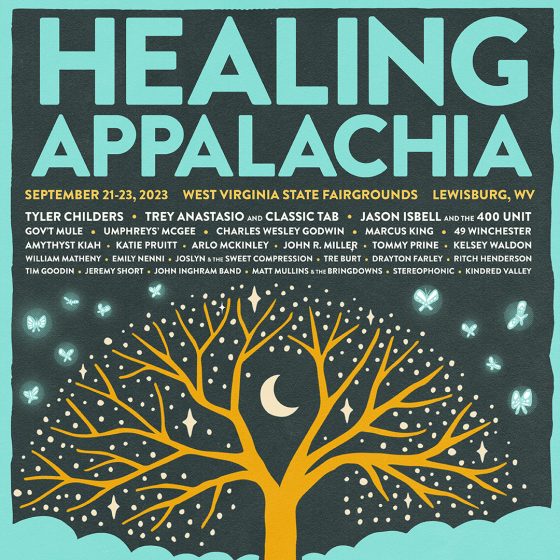
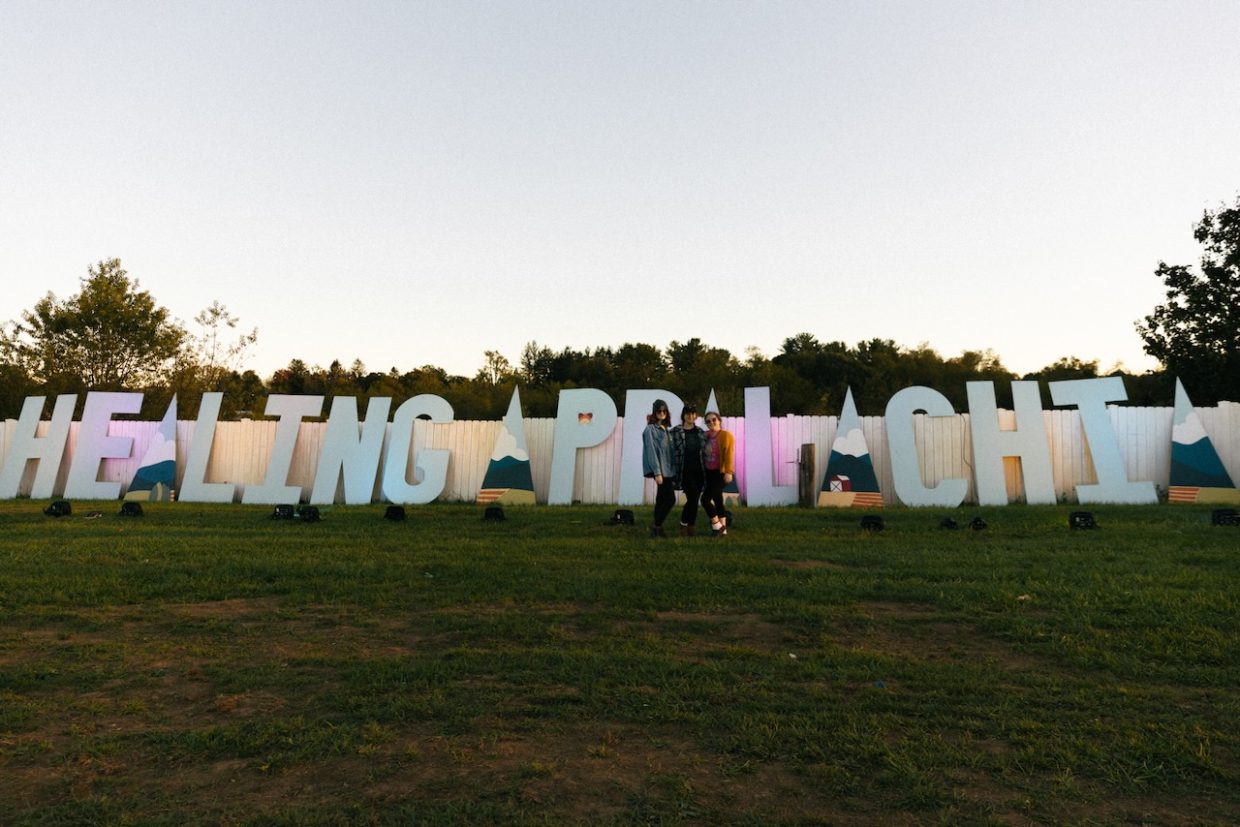
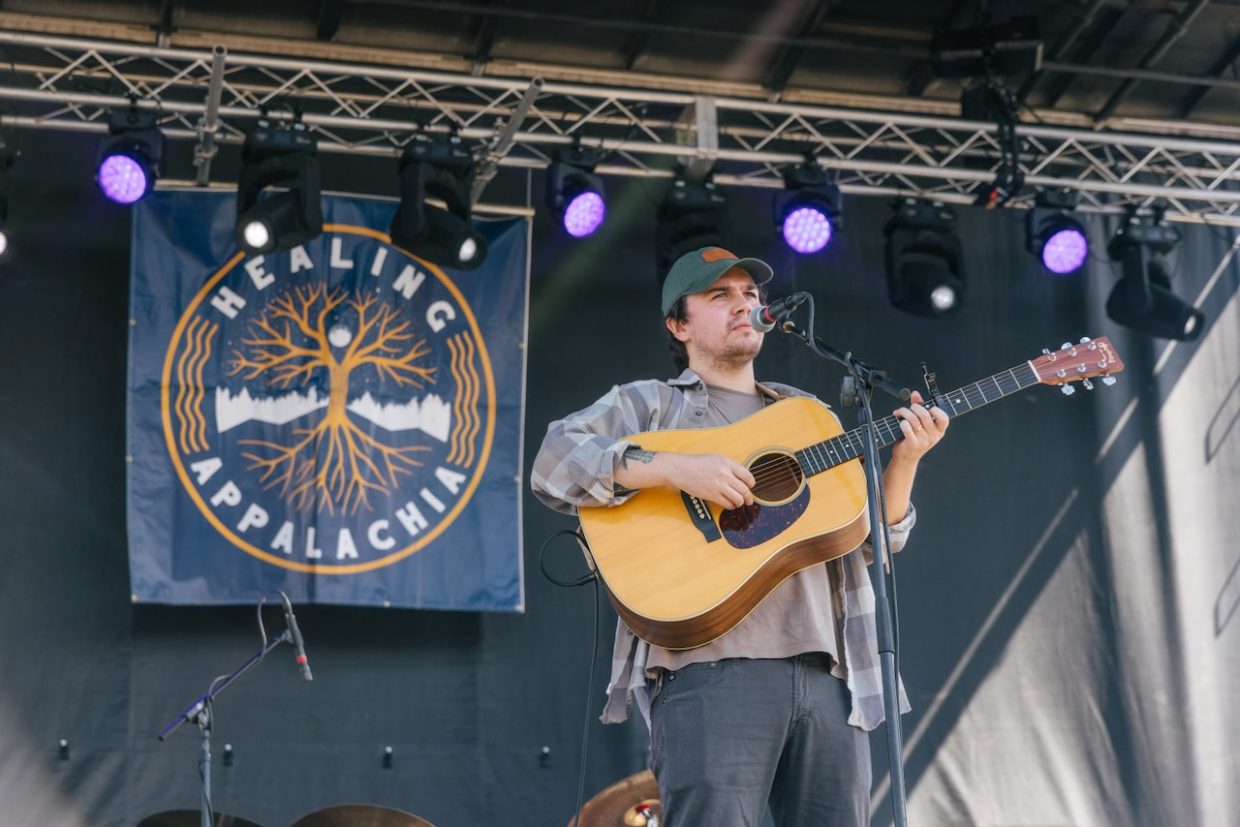
This weekend, September 21, 22, and 23, at the West Virginia State Fairgrounds in Lewisburg, West Virginia, ascendant, down home country star Tyler Childers and his cohort will gather for an event begun in 2018 called Healing Appalachia. The benefit festival, put on by West Virginia based non-profit Hope in the Hills, will include performances by some of the biggest and buzziest names in American roots music: Jason Isbell & the 400 Unit, Trey Anastasio Band, Marcus King, Umphrey’s McGee, Amythyst Kiah and many more.

Healing Appalachia is just one of many such community-led, collective efforts born from within the region in recent years that is working towards effecting positive change while offering local, ground-up solutions to big, systemic problems. Their social media and website put it elegantly and succinctly: Their vision is a prosperous Appalachia, free from addiction. The opioid crisis has hit Appalachia, especially West Virginia and Childers’ home state of Kentucky, incredibly hard. When 26 people overdosed on one day in Huntington, West Virginia, in 2016, the mission for Hope in the Hills and Healing Appalachia was born.

At the time, Childers and his hardscrabble team were still climbing the music-industry ladder, building connections and community that would eventually grow and blossom into the multi-day event Healing Appalachia has become today. Childers’ friend and manager, Ian Thornton – who founded WhizzbangBAM, the booking and management company that represents Childers – together with festival program director Charlie Hatcher, Hope in the Hills board president Dave Lavender, and others took that tragic day in Huntington and turned it into an accretion point, around which they gathered and took action. Now, the festival has a local, annual economic impact approaching $3 million while raising thousands of dollars to be distributed to local, on-the-ground organizations and non-profits that specialize in addiction programs, recovery, support and healing for this long-oppressed region of the world.

We spoke to Ian Thornton and Dave Lavender for a two-part interview preview of Healing Appalachia, that dives into the work of Hope in the Hills and explores this grassroots music event’s community-first mission, that hopes to heal these music-steeped, underestimated communities in Appalachia from the inside out. Read our conversation with Ian Thornton below, read our conversation with Dave Lavender here.

Unable to attend the festival this weekend? You can donate to support the cause here.

Could you tell me a little bit about the background, the impetus, or the inspiration when you all were putting your heads together to make an event called Healing Appalachia. What was that like?

Ian Thornton: I’m very close friends with a fellow named Charlie Hatcher, who’s actually the festival producer for the event. The idea came to him first – you know, he tells the story better than I do – but he was on a fishing trip and got a call that yet another one of his friends had passed away from an opioid overdose. You know, we’ve all lost countless friends who we grew up with, went to school with, and I guess you’d say this one was the straw that broke the camel’s back. Charlie just kind of wanted to do something about it. He reached out to me and we got our heads working.

We’re not a recovery organization ourselves, right? But what we’re good at is the music side of things, producing events, working with musicians, playing music, inspiring people, bringing people together. That’s kind of how it was born. I talked to Charlie, who is friends with Tyler [Childers], too, and obviously this is something Tyler is very passionate about.

Tyler is also from Appalachia and he’s lost friends and family members, himself. The idea kind of spawned from thinking, “What if we do essentially a Farm Aid type of event?” The thought process was to have Tyler be the face of it and have all the efforts go towards recovery and the battle against the opioid epidemic here in Appalachia.

What I love about a cause like this is that the music itself is generative and restorative, and isn’t just a tool to generate interest or awareness. How do music and the arts play a role in a mission like this, in healing Appalachia, where the music can do the work as well as spotlighting the work? Do you agree or disagree?

IT: I certainly agree, and I think music is one of those things that ties everyone together, right? On a base level.

This one I think is in particular, it’s special because substance use and music are pretty closely tied together. A lot of musicians suffer from [substance abuse], and it’s part of the lifestyle, right? It’s part of what you see as “the rock and roll lifestyle” or whatever you call it. They kind of go hand in hand. We’re all more aware of it now, too, and we all know folks who have taken things to the extreme, then they’ve had to kind of pull back and get sober after feeling like they lost their way. We wanna show that sobriety and rock and roll – or whatever you want to call it – can live together harmoniously, just as easy as the party side of things.

A very good friend of mine, who’s no longer with us, Tom Morgan, he battled with sobriety for a long time. He was one of the guys that taught me my first chords on a guitar, right? And it got to the point, for him, where he couldn’t even go to shows locally, because they’re always at bars, right? Venues and bars are so closely associated that it can be difficult for someone who is in recovery.

I think that’s why the music side of Healing Appalachia, using music to bring awareness to this epidemic, really goes hand-in-hand. Even some of our performers – Trey Anastasio is performing this year and I think he’s over 15 years sober, now. Obviously with Phish, which is, you know, the jam band, you would assume, drug culture and everything else is associated with that. But, Trey’s only gotten greater in what he’s done with his musicianship. And, you know, Tyler even comments too that his artistry has improved and he’s been able to focus more on it since becoming sober and quitting drinking.

What is the importance of community and mutual aid to this mission, and how important is it that you all are not just people coming in from the outside, that you all have a stake in this – regionally and locally. Do you think that building community as you’re doing this is just as important as doing the work as well?

IT: Yeah. And, you know, to be honest, I think that’s where it has to start. You can look at things on these big levels and you can just get overcome or overwhelmed with how large the changes you’re trying to make are. At that point you get discouraged and you’re not going to do it.

Living inside Appalachia, we have heard all of the stereotypes. That we’re, you know, “Shoeless, toothless, drug-addled, fat…” We’ve dealt with these things and we’ve dealt with the oppression of the coal industry, of big money, of big pharma. All of this built on the backs of Appalachians.

I’ve always been someone who believes that you have to start locally. You have to have something that’s attainable. Something you can put your hands on and something that’s meaningful – it’s more meaningful to us because we’re in the fucking thick of it, right? I mean, Huntington, West Virginia, was almost the nucleus of the opioid crisis, and that’s the city I was born and raised in. We watched [everything] happen, the day there were 26 overdoses in one day due to a bad batch of heroin coming in. If you create something locally and have local people that are invested, what that does is it will not only grow the mission in and of itself, to help people become more aware. But one of my ultimate goals was always for someone else to see what we’re doing and it inspires them to do something in their region. Sometimes that’s all people need. They just need to be pushed over the hump to get the inspiration.

Do you have an idea of the scale of the economic impact of the festival, not only for your mission, but also for the area in general?

Yeah, so I’m going to refer to my fact sheet here. [Laughs] We’ve estimated $2.4 million in local economy spending in southern West Virginia and the Lewisburg area. That’s like hotels, gas stations, shops, restaurants, everything. On top of that, we donate money directly, too, and we pull a lot of volunteers from the region.

Like, the local high school basketball team will come and clean up trash. We’ve given more than $50,000 to local youth organizations in Greenbrier County alone. I think we had over 30 states and 6 countries represented last year in concertgoers.
It does make the point for you: You can have all of the apparatus and all the infrastructure, but if you don’t have the community, how do you take those numbers and turn them into something that means something to the people who are on the ground there in West Virginia? And involving them, too, right? Everything from the car lots to catering to cooking burgers out back.

To date, we have donated over $400,000 to recovery wellness organizations. That goes to over two dozen different organizations. We’re not a recovery organization ourselves, right? We’re facilitators. What we’re trying to do is give people that want to do that side of the work the means to do it. We don’t have this crazy application process for grantees. You don’t have to have a degree in grant writing to come to us. Tell us what it is you’re doing, tell us what you need. It could be needle exchange programs or money going towards Jacob’s Ladder, which is an organization for children that were born addicted. We try to hit all sides of it that we can, relying on donations as well as funds raised from the concert itself.

What bands, acts, or artists are you particularly excited about this year when you look at the lineup? It’s a pretty stout lineup!

To be quite honest, I’m pretty excited about the whole thing! When this started it was a small, one day event. I think we only had around 7,500 people show up to it. Last year, we had 16,000+ plus.

I’m personally pretty excited about Trey Anastasio and Classic TAB. I’m such a Phish fan, obviously, and can’t believe we’re having Trey play right before Tyler. I’m just really stoked about that! Also excited for Gov’t Mule, Isbell, 49 Winchester, who are cruising right now. And then, you know, keeping some local folks involved, too, your Kelsey Waldon, Charles Wesley Godwin. And Mr. Tommy Prime, who is fantastic and obviously, his father was an inspiration to a lot of these folks.

It’s really special to see some of these folks actually coming to us now. At first, you know how it is, you have to go beg people, “Hey… I’m doing this charity thing… You want to go play for free? We’ll get you in the local paper…” The “exposure” gigs, right? And now the pitch writes itself! The work that’s been done speaks for itself and people get behind it.

It goes back to the tie with substance abuse and music. You know, they go hand in hand. … I drink, right? It’s nothing that I’m personally [abusing], thankfully. But substance abuse is a thing that can get out of hand in the music industry.

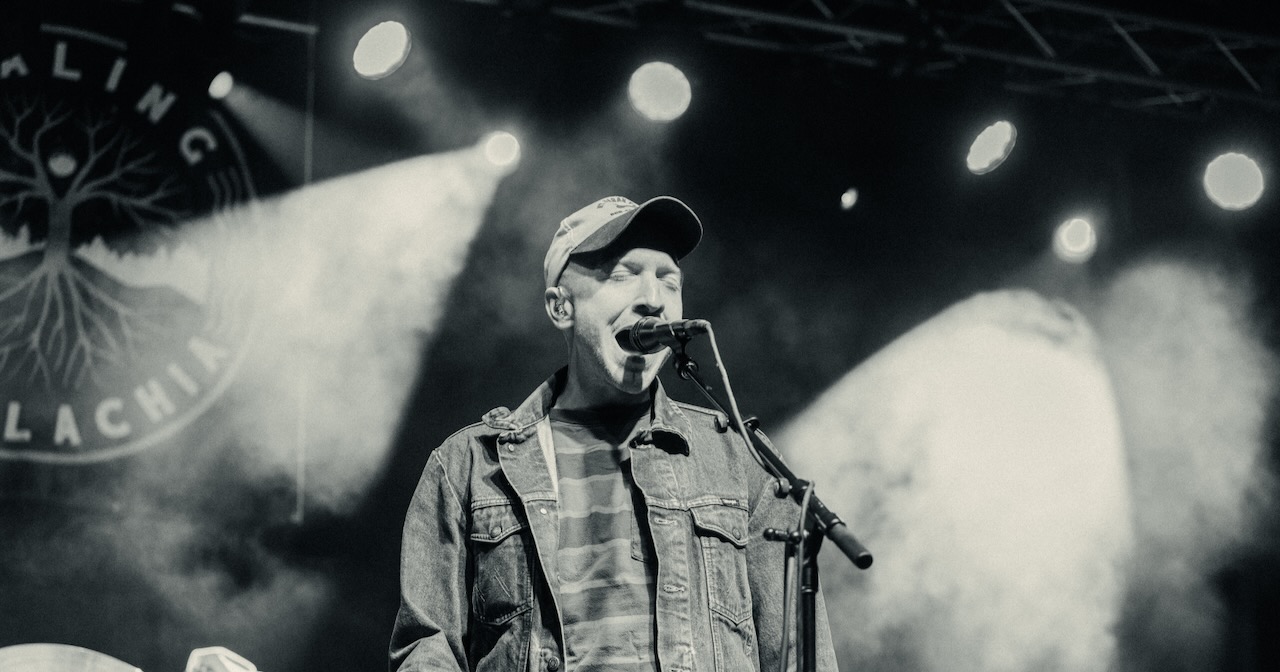
Tommy Prine performs at Healing Appalachia 2022.

Let’s close with two questions and they feel very big, but don’t be alarmed: What does a healed Appalachia look like to you, personally? And what’s one thing that you’d like people to know about Appalachia?

IT: I mean in healing Appalachia, we just have to make it so that folks don’t feel trapped or alone. And to let them know, if it’s a battle they’re going up against, they’re not the first one to do it, even if it’s not an easy battle. It’s not going to be a mound to climb, it’s a goddamn mountain, right? So, having the availability and the resources in place so that when someone is ready to take this on, whether it be the first time or the 10th time, that they don’t feel ashamed or guilty about it. That they feel loved and like a human being.

Question 2, I think wherever you come from, rural, urban, or whatever, it’s the stigmas, right? I want people to know how those stigmas make an impact. The stereotypes of, “They’re fat, uneducated. They live in hills and don’t wear shoes, right?” The whole reason I do what I do, with Whizzbang in particular, I only work with acts from our region. And I do that specifically. When I started getting into all this, even before Tyler, just seeing the music that’s created here. We are not just one thing, right? Nobody is just one thing. You cannot judge a whole people by the bit of the iceberg that floats on top.

The stuff on top that’s the most visual, but you can’t judge a whole people by that. Appalachia is the most beautiful place in the country. Granted, I’m biased. I grew up there.

(Editor’s Note: Read part two, our conversation with Hope in the Hills board president Dave Lavender, here.)


Photos by Hunter Way / Impact Media

2023 Americana Honors & Awards Nominations Announced

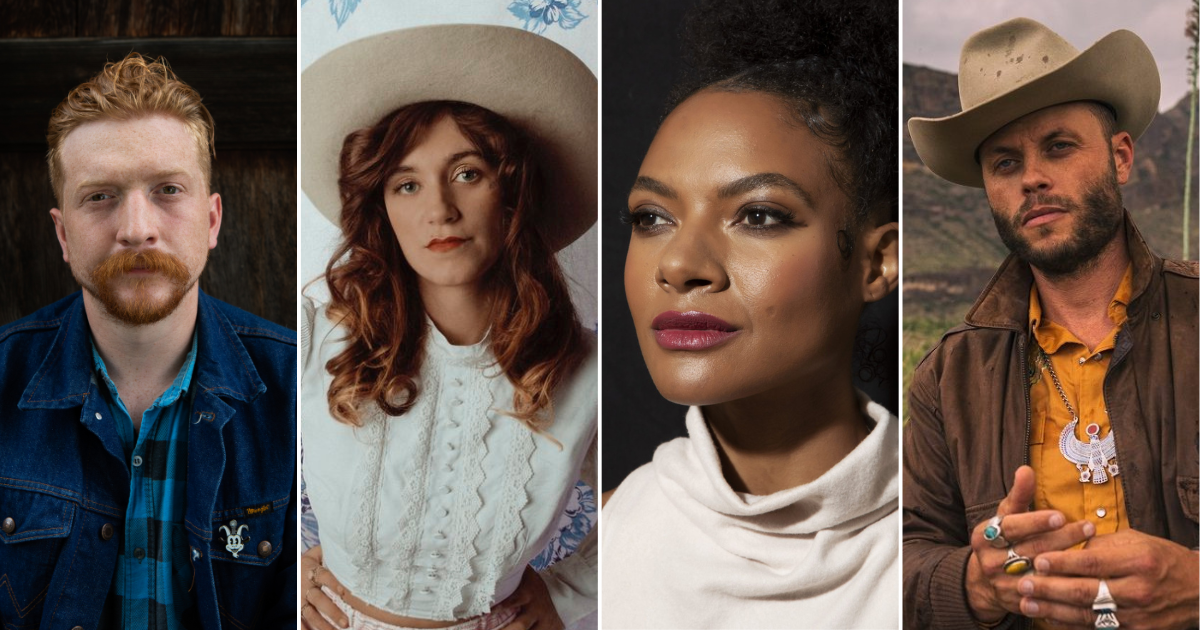
The Americana Music Association announced the nominees for its 22nd annual Americana Honors & Awards today at the National Museum of African American Music (NMAAM) in Nashville. This year’s nominations were revealed by host Gina Miller, Senior Vice President and General Manager of MNRK Music Group and member of the Americana Music Association’s Board of Directors. The event was streamed live to the Americana Music Association’s Facebook page and also featured performances from S.G. Goodman, The McCrary Sisters, and Margo Price.

A full list of categories and nominees for the Americana Music Association’s 22nd annual Americana Honors & Awards is below:

ALBUM OF THE YEAR:

Big Time, Angel Olsen; Produced by Angel Olsen and Jonathan Wilson

Can I Take My Hounds To Heaven?, Tyler Childers; Produced by Tyler Childers

El Bueno y el Malo, Hermanos Gutiérrez; Produced by Dan Auerbach

The Man from Waco, Charley Crockett; Produced by Bruce Robison

Strays, Margo Price; Produced by Margo Price and Jonathan Wilson


ARTIST OF THE YEAR:

Charley Crockett

Sierra Ferrell

Margo Price

Allison Russell

Billy Strings


DUO/GROUP OF THE YEAR:

49 Winchester

Caamp

Nickel Creek

Plains

The War and Treaty


EMERGING ACT OF THE YEAR:

Adeem the Artist

S.G. Goodman

William Prince

Thee Sacred Souls

Sunny War


INSTRUMENTALIST OF THE YEAR:

Isa Burke

Allison de Groot

Jeff Picker

SistaStrings – Chauntee and Monique Ross

Kyle Tuttle


SONG OF THE YEAR:

“Change of Heart,” Margo Price; Written by Jeremy Ivey, Margo Price

“I’m Just a Clown,” Charley Crockett; Written by Charley Crockett

“Just Like That,” Bonnie Raitt; Written by Bonnie Raitt

“Something in the Orange,” Zach Bryan; Written by Zach Bryan

“You’re Not Alone,” Allison Russell featuring Brandi Carlile; Written by Allison Russell


Photo of Tyler Childers: David McClister
Photo of Sierra Ferrell: Alysse Gafkjen
Photo of Allison Russell: Marc Baptiste
Photo of Charley Crockett: Bobby Cochran

AMERICANAFEST 2022 Preview: Check Out These Panels, Parties and Showcases

Even if you’re from Nashville or you’ve visited Music City many times, AMERICANAFEST always offers something new. This year, the annual event encompasses more than a dozen places to hear live music, as well as an impressive slate of industry panels and a near-endless list of parties. Where to begin? Although this story is by no means definitive, here are some promising highlights from the 2022 Americanafest daily schedule.

Tuesday, September 13

If you’re in town early, come say hello to BGS at Station Inn, where Jason Carter & Friends will take the stage. Doors at 8. Although it’s not open to the public, all conference and festival passholders are welcome. To pick up your pass, you’ll need to swing by City Winery or the Westin (the host hotel) earlier that day. An exploration of East Nashville might also be in order, with The Old Fashioned String Band Throwdown from 6-9 p.m. at Dee’s Country Cocktail Lounge.

Wednesday, September 14

A plethora of panels awaits conference registrants at the Westin, along with a couple of notable interview sessions. The Indigo Girls will be interviewed by NPR Music’s Ann Powers at 10 a.m. (They’ll be honored with a Lifetime Achievement recognition at the Americana Music Honors & Awards later that night too). Stick around for a conversation between Dom Flemons and Asleep at the Wheel’s Ray Benson, presented by WSM’s American Songster Radio. After that, Stax Records’ Al Bell and Deanie Parker will discuss the historic Wattstax festival in 1972.

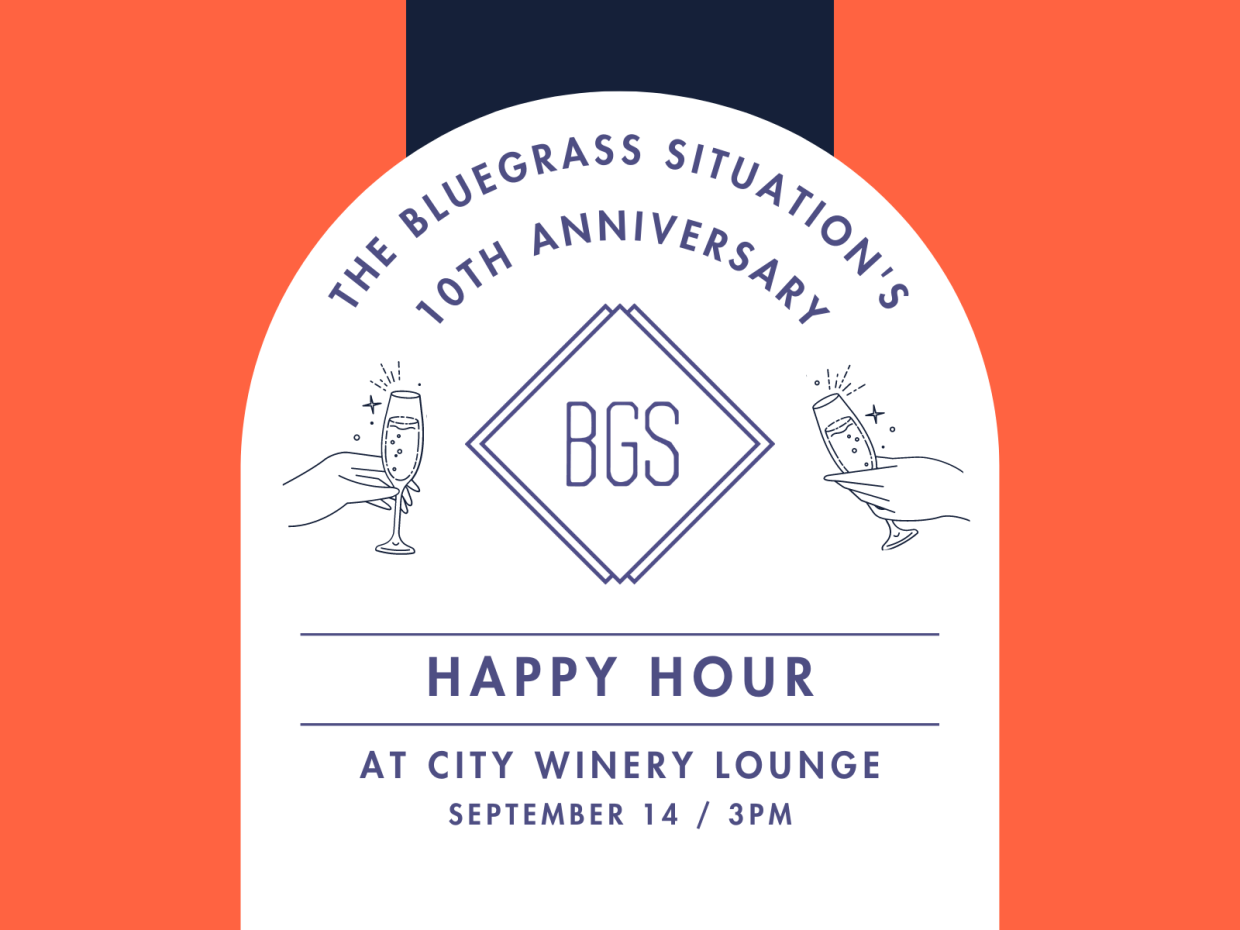
You can count on BGS for another party as we celebrate our 10-year anniversary with a happy hour at City Winery Lounge from 3 – 5 p.m. Conference and festival passholders welcome. Special performers include Kyshona, Rainbow Girls, and Willie Watson. And after the awards show, there’s an abundance of awesome shows to consider, including a rare solo set by Angel Olsen (our BGS Artist of the Month in August) at Riverside Revival, a set from Bill Monroe acolyte Mike Compton and a surprise headliner at Station Inn, and an acoustic showcase from members of North Mississippi Allstars at Analog at Hutton Hotel immediately followed by Texas great Joshua Ray Walker.

Thursday, September 15

One of the most intriguing panels on Thursday is titled The Narrators: How Jake Blount, Leyla McCalla and Kaia Kater Re-Mapped the Past, Present and Future With Concept Albums. As the Americanafest app points out, all three artists are students of musical and cultural traditions, as well as Black banjo players. The conversation takes place at noon with moderator Jewly Hight. Coincidentally, these three performers are showcasing at the exact same time later that night, so here’s your chance to catch them all at once.

Ishkōdé Records will celebrate Indigenous voices from Turtle Island at Dee’s Country Cocktail Lounge from 1-4 p.m., with performers such as Amanda Rheaume, Aysanabee, Digging Roots and Evan Redsky. If you’re lucky enough to get into the Bluebird Cafe for a 6 p.m. show, you can enjoy a songwriting round with Gabe Lee, Tristan Bushman and British artist Lauren Housley. A Tribute to Levon Helm with an all-star cast closes out the night at 3rd & Lindsley, following an evening of music with Arkansas roots.

Several of the most buzzed-about showcases of AMERICANAFEST will take place at the Basement East, with a strong lineup boasting Rissi Palmer, Molly Tuttle & Golden Highway, Trousdale, Bre Kennedy and Jade Bird. If you’re up for bluegrass, the City Winery Lounge lineup includes Tammy Rogers & Thomm Jutz alongside rising talent like the Tray Wellington Band and Troubadour Blue. If honky-tonk is more your style, stay up late for Jesse Daniel at 6th & Peabody, with original music that pays homage to the Bakersfield Sound without losing its contemporary appeal.

Friday, September 16

Diversity is a common theme on Friday’s daytime events, with panels like Booking With Intent: How Curating the Stage Impacts Industry Diversity and How Americana Music Is Embracing Minority Representation. Of particular note, British artist Lady Nade speaks on the influence of Black music in country and Americana in a panel titled You Can’t Be What You Can’t See: Why Representation Is Vital for the Americana Genre. Look for a conversation and performance at the Country Music Hall of Fame and Museum at noon with rising artists from the Black Opry Revue.

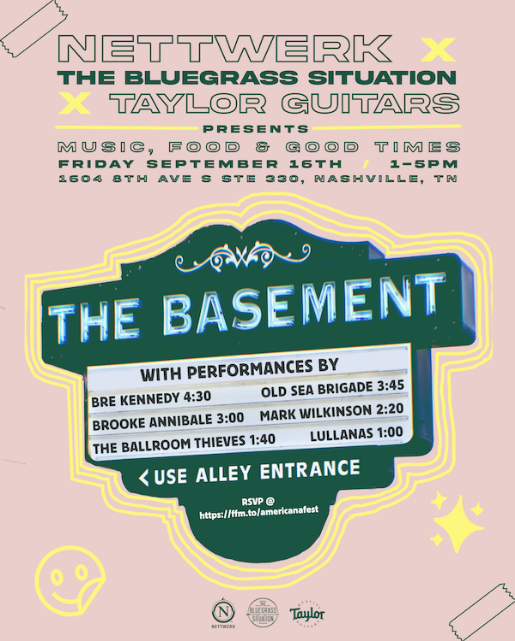
To list all the parties on Friday would take up this whole page. To socialize, you’ve got options ranging from songwriting rounds to label parties to multiple happy hours. (If you’re a craft beer drinker who loves to linger on the deck, it’s worth a visit to Tennessee Brew Works, where Hear Fort Worth is setting up shop.) As for BGS, you’ll find us at the Basement for a party presented with Nettwerk Records and Taylor Guitars. The public may RSVP through the invitation below.

This might be a good time to mention one of the festival’s new venues, The Well at Koinonia. This cozy coffee shop on Music Row played a crucial role in the development of contemporary Christian music, once lending its small stage to a then-unknown Amy Grant. For AMERICANAFEST, it’s providing a listening room environment for a number of quieter artists who still deserve to be heard, such as Nashville songwriter-producer Alex Wong, award-winning acoustic guitarist Christie Lenée, mesmerizing folk duo Ordinary Elephant, Australian troubadour Colin Lillie, and the accomplished Mexican-American musician Lisa Morales on Friday night. If you’re interested in early shows (starting at 6 p.m.), easy parking, and/or enjoying music in a non-alcoholic environment, make an effort to get refueled here.

Not far away lies one of Nashville’s musical landmarks, The Basement (a.k.a. “The Basement O.G.”), and if you’re in town to discover some overlooked voices, this might be an ideal spot to start. Drawing on blues and rock, Chicago musician Nathan Graham is making his AMERICANAFEST debut this year, followed by Southern slide guitarist-songwriter Michelle Malone, who’s touring behind new material like “Not Who I Used to Be.” At Exit/In at 9 p.m., Michigan Rattlers are among Americana music’s best storytellers, with a vibe that’s kind of brooding but still has some rock ‘n’ roll swagger. Hang around for 49 Winchester, a Virginia ensemble that’s been DIY for most of its career. However, 2022’s Fortune Favors the Bold is garnering some much-deserved attention. Listen closely for the Exit/In reference in standout track, “Damn Darlin’.”

For something more mellow, you can zoom over to City Winery for a late set by Milk Carton Kids. It wouldn’t even feel like AMERICANAFEST without seeing these guys. Earlier in the evening, longtime festival favorite Ruston Kelly will play alongside his dad, Tim Kelly, performing exquisite songs that they recorded together (with Ruston serving as producer). Gaby Moreno, Henry Wagons and Rainbow Girls are also on the well-rounded bill. Go ahead, order a bottle.

Saturday, September 17

By the time the weekend arrives, the panels have wrapped and the parties are well underway. You can peruse the Americanafest app for all the options, but first, settle in at City Winery for the Thirty Tigers Gospel Brunch from 11 a.m. to 1 p.m. (It’s on Saturday this year, rather than Sunday.) Artists appearing include Alisa Amador, Brent Cobb, Emily Scott Robinson, Stephanie Lambring, The Fairfield Four and The McCrary Sisters. Musicians Corner in Centennial Park also features free afternoon sets from Nashville mainstay Josh Rouse, Brooklyn’s own Bandits on the Run, Los Angeles songwriter Chris Pierce, Canadian banjo player Ryland Moranz, and more.

Over at The 5 Spot, Alabama bluesman Early James anchors a lineup with Theo Lawrence (a French songwriter-guitarist who opened dates for Robert Plant and Alison Krauss in Europe), Canadian musician Megan Nash, and new ATO Records signing Honey Harper. The night concludes with an 11 p.m. showcase titled Luke Schneider & Friends: A Pedal Steel Showcase. For something similarly atmospheric, consider a one-night-only event, Phosphorescent Performing Songs From the Full Moon Project, also at 11 p.m. at Brooklyn Bowl. He’s promising to play more songs than just the covers he’s chosen for this unique album, so you can bask in the afterglow of an incredible week of music.

For more information about these events and countless more, visit AMERICANAFEST.COM.


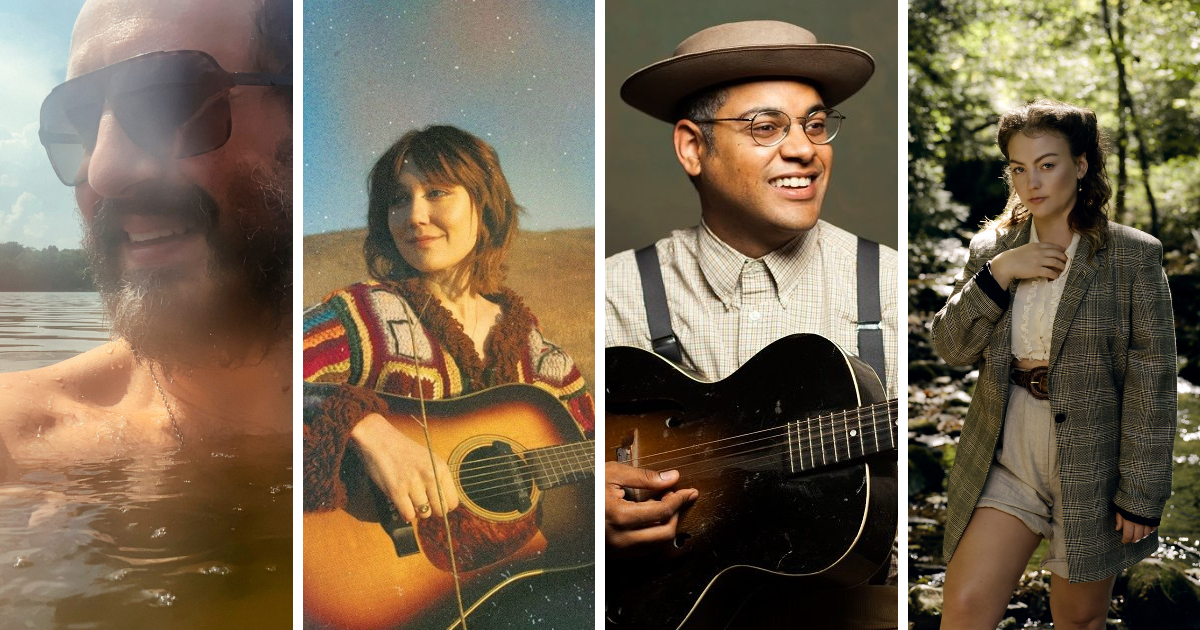
Artists featured at top (L-R): Phosphorescent, Molly Tuttle, Dom Flemons, Angel Olsen

WATCH: 49 Winchester, “Russell County Line” (Acoustic)

Artist: 49 Winchester
Hometown: Castle, Virginia
Song: “Russell County Line” (Acoustic)
Album: Fortune Favors the Bold
Release Date: May 13, 2022
Label: New West Records

In Their Words: “This is one of those songs that lends itself to a stripped back, more subdued performance. Even though the studio version has that big, electrified outro, the heart of the song really is still that acoustic guitar. A simpler approach is sometimes hard to pull off, but with this song, it works. I hope to always be able to write songs with that kind of adaptability. Good songs can be rearranged and experimented with instrumentally and still be good songs, and I think ‘Russell County Line’ is like that. I’d love to do a bluegrass version of the tune with a banjo bouncing along and carrying that melody.” — Isaac Gibson, 49 Winchester


Photo Credit: Joshua Black Wilkins