35 Songs That Hate Nashville

Hating on Nashville – whether Music City, Music Row, Lower Broadway, the tourists, the industry, the traffic, or almost anything and everything else – is a trope and tradition essential to country itself. As long as this town has been a roots music mecca it’s been a curse, too. It’s a maker and breaker of dreams that’s all at once exactly what it is and what it looks like, and a figment of your imagination, too.

On the roots songwriter’s map, it might be the capital city. Flanked by Memphis and “Carolina” and Los Angeles and Malibu and the bluegrass of Kentucky and the “concrete jungle where dreams are made of,” all familiar locales to songsters of all genres referencing places and cities. Places are excellent characters in songs, and we return to our favorite destinations over and over as we relish tracks like “Dublin Blues,” “Eight More Miles to Louisville,” “Big Ball in Brooklyn,” “Take Me Home Country Roads,” and so many more.

But isn’t there just something special about songs that hate Nashville? As a motif, it stands out among songs about places or among places as a trope, in country and outside of it. Songs that hate Nashville can ooze pain or vengeance. They can be aspirational or giving up all hope. But perhaps their real unifier, besides Music City itself, is that each and every song that offers a variation on this theme is really, at its core, declaring a deep love for the town.

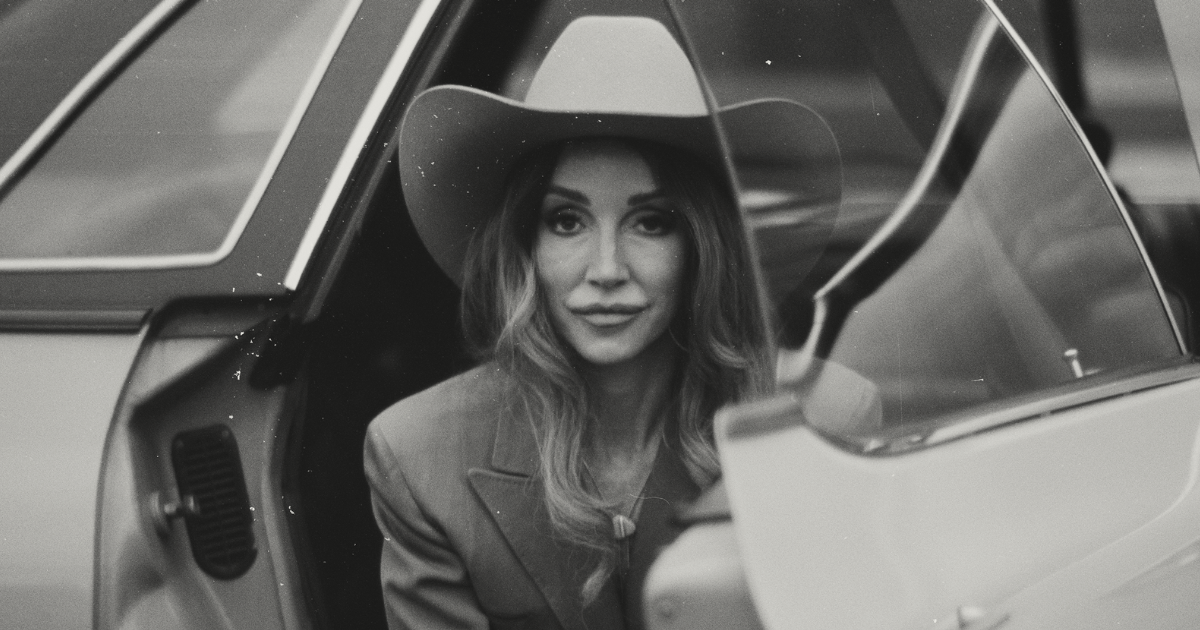
In March, country artist, singer, and songwriter Ashley Monroe surprise released an eight-track original album, Dear Nashville. Not quite a concept album – perhaps rather having a concept at its core, instead of as its entirety – it’s an incisive and vulnerable demonstration of Monroe’s love… and hatred of Music City. “I Hate Nashville” opens the album with gauzy pads and a forward-leaning train beat as Monroe sings words that clearly haunt her, and so many like her. Lyrics often uttered by the gatekeepers of the world, the holders of the keys to this city. “They can’t make you a star,” “somethin’ ain’t stickin’,” “pay your dues.”

The rest of the song, though, is something different. It’s exasperated and exhausted, yes. Defeated, almost. But it’s not a hate letter Monroe is writing to her hometown of decades. She sings on the chorus:

Country music
Is the reason I’m alive
Paul Franklin playin’ steel
God knows I love Vince Gill
But I hate Nashville

And wouldn’t you know it, that mournful, heart-wrenching pedal steel singing along with Monroe’s beautiful, East Tennessee voice is played by Paul Franklin himself. Because that’s what Nashville is capable of. That’s what it does best. It makes dreams reality, it makes friends of idols. It can be everything you pictured, but wouldn’t let yourself believe is possible.

Wrote a lot of songs
Made a lot of friends
And if I’m being honest
I’d do it all again
I remember the first time
I saw the skyline shining
Sometimes the road to the top’s
A lot of downhill climbin’

Verse two captures the duality of songs that hate Nashville perfectly. Monroe is displeased with the industry, with the machinations of a community designed to reap profits and profits and profits, and that isn’t so concerned with art or country anymore. But her dreams have come true. She has paid her dues – and then some – and she’s made records and sung songs with Franklin, Vince Gill, Miranda Lambert, and so many more name-droppable peers, heroes, legends, and virtuosos. And, if she’s being honest, she’d “do it all again.” Who wouldn’t?

In each of these 35 songs, you’ll find artists just like Monroe, from across generations and from a variety of backgrounds and origin points inside and outside Music City. Each grapples with these same essential questions of this place. Of Nashville, Tennessee. Struggling with the industry, or Music Row, or the politics of each. Some demonstrate internal battles, others are so external they itch. There are songs that decry capitalism and that long for acceptance by it. There are songs of love lost and romantic haunts turned sour. You may hear someone writing on the outside looking in, or the inside looking out. It’s all compelling, the same but different.

Whatever you hear across these songs that hate Nashville, you’ll hear excellent music and a country tradition so essential to the format it belongs right next to losing your love, your truck, your dog, your house, your job, your… dream of making it in Nashville. Three chords, the truth, and hating Nashville. It’s as country as it gets.

“Heartbreak Town” – The Chicks

“Square people in a world that’s round.” That’s an indictment, for sure, written as only Darrell Scott could. Scott is well-practiced in songs that hate Nashville whether this magnificent track made even more delicious by the Chicks or “Long Time Gone,” also cut by the Chicks and included on this playlist, or even “Hopkinsville,” a Scott original inspired by longing to be done working on the Shelby Street bridge downtown. The Chicks sold the true heartbreak of Nashville on this number even before the city’s central machine turned its ire toward them. As we all know, they survived being on the receiving end of Music City’s ire more than once – and made millions doing it.

“Kay” – John Wesley Ryles

A story song for the ages, and about Nashville, to boot. “Kay” is sung from the perspective of a depressed taxi driver, “I’m living and I’m dying, staring out at Music City, from my cab.” The singer moved his love, Kay, to town to give her a shot at making it big. He’s hearing her record on the jukebox – it “don’t sound bad.” Woof. Gut punch. (At least if she’s gonna be famous, let her sound bad!) The perspective in the song is dynamic and surprising in a modern context, but reminds of how literary and poetic country story songs in the ‘60s and ‘70s could be. And how narratively dense. “Kay” peaked at No. 9 in the U.S. and is Ryles’ best-known record.

“Nashville Blues” – Billy Strings, Bryan Sutton

Out of so many versions to choose from, we chose this one. Can you blame us? Perhaps Bryan Sutton’s joke at the top is the real reason it belongs on this playlist. He introduces “Nashville Blues,” a classic in the bluegrass and old-time canon, thusly, “Here’s a song about Nashville that Billy wrote on the way here stuck in traffic.” The crowd cheers at the joke and a man can be heard responding, “That’s gonna be a long song.” Everybody at the sold-out American Legion neighboring the famous, coveted 37206 zip code laughs. Hating Nashville unites us.

“Ten Year Town” – Hailey Whitters

Speaking of dues, Ashley Monroe’s “I Hate Nashville” immediately brings to mind Hailey Whitters’ “Ten Year Town.” Released in 2020 on The Dream, it drives to the heart of the strange but usual expectations projected by others and ourselves – onto Nashville, careers, dreams, and music- and art-making. What Whitters is really singing about – and Monroe, too, to a degree – is that country music is a trade. Whitters is asking what else she could do besides this, while noting all she’s had to do besides make music in order to make music her trade. But if, like Monroe and Whitters, the trade you’ve plied your whole life or for decades can’t make you a living, what good is paying dues? In investing 12 years in a “ten year town”?

“Nashville Without You” – Tim McGraw

You know what else is country AF? Referencing country songs in a country song. If roots music is going to be one thing, it’s going to be self-referential. All songs about Nashville do this to a degree, but Tim McGraw’s “Nashville Without You” does it remarkably well. Especially for highly stylized mainstream radio country such as this. As a bonus, this is also an “I Left My Heart in San Francisco” sort of love song, where one’s relationship to a place is entirely colored by another person and your shared connection to that place. Ryles’ “Kay” in another generation!

“Nashville” – Indigo Girls

Let’s not forget the folks who have the most reason to hate Nashville – in the music industry and outside of it – have always been women, queer folks, Black and Brown folks, and disabled folks. That’s certainly part of why so many women have written such excellent songs panning Music City. There’s an added layer of truth, an extra heaping helping of grit. 70 cents on the dollar, 12 years to equal the ten-year town requirement.

As an extension of that theory then, being both women and queer as alt-country indie folk artists in the ‘90s is a huge part of what imbues the Indigo Girls’ “Nashville” with honesty and resonance. It’s artful in its lyricism and for painting as much with absence as presence, fleshing out the story by leaving it out here and there. But it’s the perfect song to leave off with, as you continue your listening to the full 35-song playlist below.

Emily Saliers and Amy Ray touch yet again on the maelstrom of mixed feelings musicians and creatives feel about this place, reminding of the central existential love/hate in Monroe’s “I Hate Nashville.” Saliers sings:

I’m leaving
I’ve got all these debts to pay
You know we all have our dues
I’ll pay ’em some other place
I never ask that you pay me back
We all arrive with more
I left with less than I had

The song is so seemingly over-and-done-with Nashville and yet, there’s a crack under the door. The window is not quite latched. A pathway however slight to wiggle back in. You can see it again elsewhere in the song, “I can’t place no blame/ But if you forget my face/ I’ll never call your name again.” Are they singing to a person? To the industry? To Nashville? To all of the above?

One thing we know for sure, they hate (love) Nashville. Just like Monroe. Because how does she close her album, Dear Nashville? It’s how we decided to close our playlist, too. With “Quittin’.” Another song co-written by Monroe with co-producer Luke Laird. It ends:

So much for quitting
I guess I’ll stay on the ride
‘Til the day that I die

We should hope so. There are so many more songs about hating Nashville to write and to enjoy!

Below, sample many more songs that hate Nashville from artists like Marty Stuart, John Anderson, John Hartford, Margo Price, Donovan Woods, Lindi Ortega, Kacey Musgraves, Steve Earle, Kris Kristofferson, Charley Crockett, Dale Watson, Waylon Jennings, and many more.


Additional contributions and curation by Shelby Williamson. 

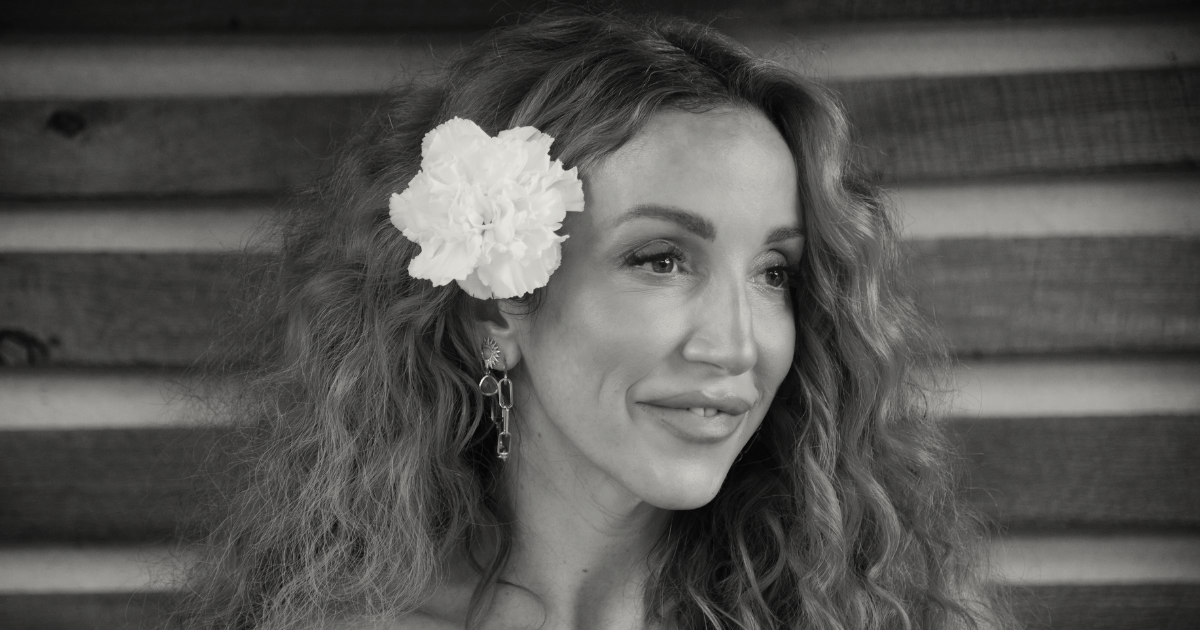
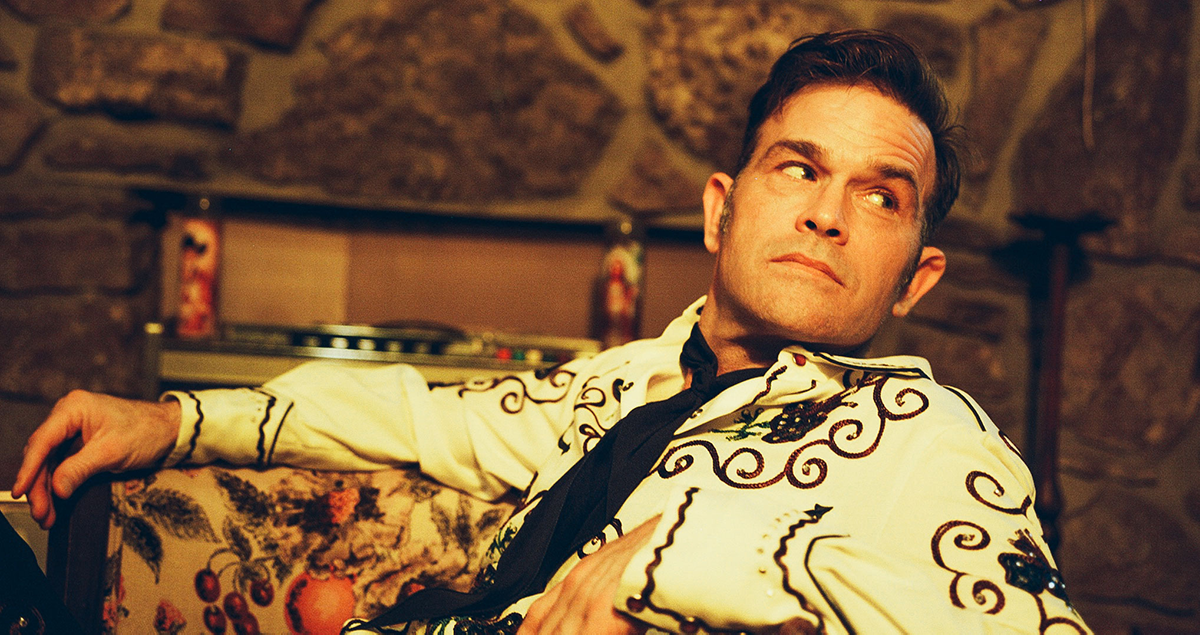
Photo Credit: Ashley Monroe by Becky Fluke.
Shooter Jennings’ Heartfelt Tribute to His Legendary Father

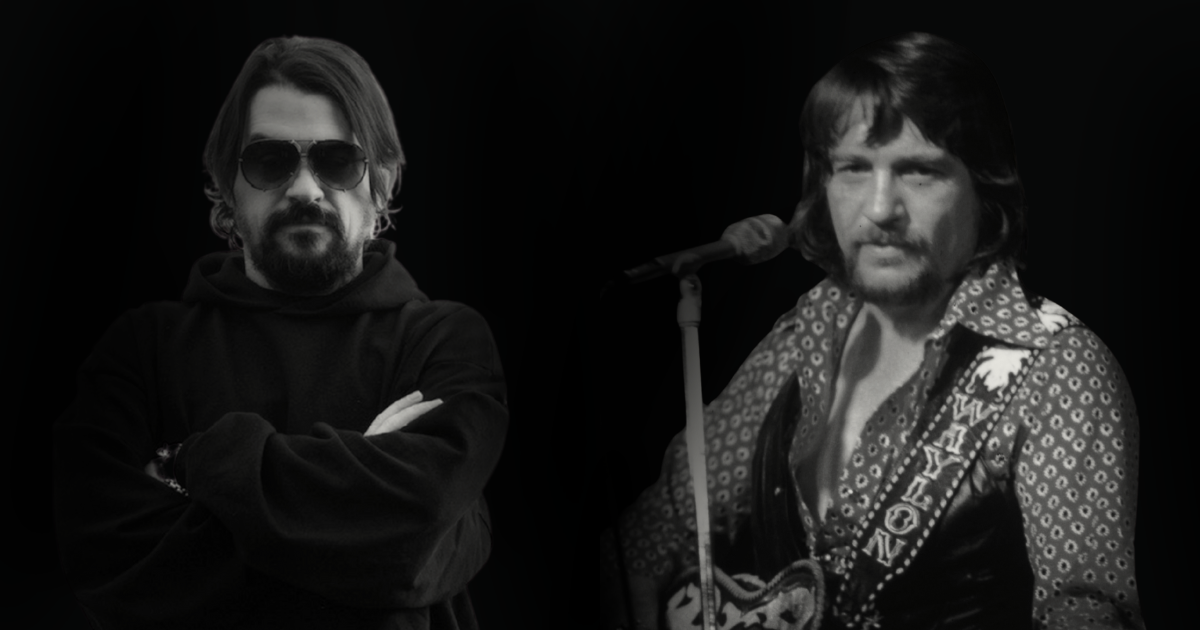
Being the son or daughter of a legendary artist can often cause self-esteem and identity problems, especially if offspring choose their famous parent’s profession. But that clearly hasn’t been the case with Waylon Albright Jennings, much better known to music fans as “Shooter.”

The son of greats Waylon Jennings and Jessi Colter, Shooter Jennings has forged an impressive career as a singer, songwriter, instrumentalist, and producer covering over three decades, while displaying an idiomatic flexibility that’s seen him excel with both country and rock projects. Though he never uses the term “prodigy,” he was playing drums at five, taking piano lessons at eight, and sitting in with his father’s band on guitar at 14, while often spending time riding on his dad’s tour bus. Since then, he’s done an array of projects from heading bands to helming sessions, but he’s also always upheld a mantra of his father’s, which is stressing authenticity and passion in whatever he’s doing, writing, or playing.

Towards that end, Shooter’s newest venture both pays tribute to his famous father and reaffirms the musical values both have always championed. That’s the album Songbird (released October 3 via Son of Jessi/Thirty Tigers), which is the first of a planned posthumous trilogy of releases from the famed vocalist, who was one of the most distinctive and dominant voices to emerge in modern country during the ’70s and ’80s. Waylon’s landmark recordings, both as a solo artist and later in collaborations with Willie Nelson, Johnny Cash, Kris Kristofferson, Tompall Glaser and Jessi Colter, not only ushered in the “outlaw country” movement, they signaled a major step forward for artistic independence and creative freedom that resonated across the popular music spectrum.

Waylon Jennings was an innovative and vital figure not only as a performer, but as a personality. His voice and stature helped give gravitas to an otherwise forgettable TV show (The Dukes of Hazzard) and helped fuel a drive for authenticity within country. Still, despite that quest for freshness and originality, Waylon knew how to make hits. He had 16 number one tunes on Billboard‘s Hot Country Songs chart and 11 number one albums on Billboard‘s Top Country Albums chart during his amazing career, while always being a staunch advocate for his view of what constituted country.

Though Shooter has always called himself “an MTV kid who went down the rabbit hole with rock and roll,” he’s also long held a great reverence and respect for country. He began sorting through hundreds of his father’s personal studio recordings during the summer of 2024. Having just begun an exclusive residency at Hollywood’s historic Sunset Sound Studio 3 (which he redubbed “Snake Mountain”), Shooter began examining the tapes with veteran engineer Nate Haessly. Things moved quickly, his initial goal of finding previously lost Waylon songs he could share with the world morphing into instead deciding the best way to present what turned out to be a rich treasure trove of recordings. The material he was hearing was recorded between 1973 and 1984 and featured such guest stars as Tony Joe White and Jessi Colter.

“I started listening to this material last year and knew right away I had to put it out,” Shooter said during a recent phone interview with Good Country. “Once we began thinking about what we would put out there first, ‘Songbird’ just really kind of took over.

“Everyone that I played the song for heard it and they were really emotionally affected. Many broke out in tears the first time they heard it. It was an example of my father’s philosophy about doing songs from other people. Any song that he chose to record he would turn it into his own type of anthem. I really think that was the case with ‘Songbird,’” Shooter continued. “It gives the album a power and special flavor, and I’m really proud of everything on it.”

Songbird was released the first week of October, with Jennings’ evocative and stirring cover of the Fleetwood Mac tune its lead single. It debuted at number six on Billboard‘s Top Album Sales chart and it’s been in either the Top 10 or 20 on a host of other charts as well, representing the highest any Jennings LP has charted in 35 years. The 10-track release contains several other notable singles, most of them already previously complete. But on a couple of cuts, Shooter utilized the talents of surviving members of The Waylors, including guitarist Gordon Payne, bassist Jerry Bridges, keyboardist Barny Robertson, and backing vocalist Carter Robertson to add some spice. Elizabeth Cook and Ashley Monroe were also enlisted to help propel Songbird to new heights. Shooter mixed the songs in a purely analog fashion on Sunset Sound Studio 3’s custom 1976 DeMedio API mixing board.

Another song that’s quite appropriate in these times of extreme social conflict and division is Waylon’s version of Johnny Rodriguez’s “The Cowboy (Small Texas Town),” which finds him urging both cowboys and hippies to direct their ire away from each other and towards those causing greater structural harm to society. Additional recommended cuts include a sizzling Jennings version of Johnny Cash’s “After The Ball” and “I’d Like To Love You Baby” that features Jessi Colter.

Both “Wrong Road Again” and “I’m Gonna Lay Back With My Woman” are trademark Jennings numbers, while his version of Jesse Winchester’s “Brand New Tennessee Waltz” is also solid. The one criticism that some hardcore Waylon fans might make is Songbird doesn’t offer any previously unissued gems that he penned, feedback that Shooter’s been around long enough to anticipate. “What we went through and chose here were numbers that were made memorable through his treatments,” he continued.

“That’s something that my father always talked about and stressed, that whenever you do a song, make sure that you’re not just replicating something else, you’re making your own statement. That’s why Songbird has such an impact and that’s the case with everything on this album. These are songs that he loved from other people and wanted to perform and put his own stamp on them.”

Though born in Nashville, Shooter made the move to Los Angeles in 2001. Since then, he’s comfortably moved back and forth between rock and country. He’s had a mixed amount of success as a performer, cutting 11 albums and EPs in both genres. His biggest country hit came on the 2005 LP, Put The O Back in Country. That album’s lead single, “Fourth of July,” peaked at No. 22. The album version featured a cameo by George Jones, who sang the chorus to his signature song, “He Stopped Loving Her Today,” at the end. Unfortunately that was purged from the radio version, but Jones was credited on the Billboard charts.

The album also spotlighted Shooter’s then-new band, The .357s, which consisted of Leroy Powell on guitar, Bryan Keeling on drums, Ted Kamp on bass, Robby Turner on steel, and backing vocals by Bonnie Bramlett. Later that year his song “Busted in Baylor County” was featured in the 2005 film version of The Dukes of Hazzard. Furthermore, Jennings portrayed his father in the Johnny Cash biopic Walk The Line alongside Joaquin Phoenix and Reese Witherspoon. His rendition of his father’s song “I’m A Long Way From Home” was featured on the film’s soundtrack.

Still, Shooter’s greatest fame has come as a producer for a wealth of recordings. He was introduced to the studio as a child, his earliest exposure being inside Chips Moman’s studio in Nashville. His rock influences come through in his at times freewheeling use of studio technology that wasn’t in general use during his father’s heyday, but on any of his productions he’s never let the artist’s voice be overwhelmed by layers of excessive production or backdrop.

He’s been nominated for five GRAMMYs in that role and won two. A short list of memorable sessions he’s produced include such artists as Brandi Carlile (Best Americana Album GRAMMY), Tanya Tucker (Best Country Album GRAMMY), and American Aquarium, as well as Jessi Colter, Jamey Johnson, Jaime Wyatt, The White Buffalo, Hellbound Glory, The Mastersons, Julie Roberts, Kelsey Waldon, Yelawolf, Marilyn Manson, Jason Boland, Billy Don Burns, Avi Kaplan, Billy Ray Cyrus, and Angry Grandpa. Just this year alone, Shooter Jennings produced acclaimed releases by the Turnpike Troubadours, Charley Crockett, and Jake Owen.

When asked what he enjoys most or looks for in terms of production collaborations, Jennings says, “The people that I truly enjoy working with the most are the ones who have their own ideas of what they want to do, how they want to sound, or what they want to sing. Then they bring those ideas into the studio and we take it from there. I’m not really quite as good when it comes to just taking someone who doesn’t really have a sense of who they are and saying why don’t you try this or try that.

“With Charley [Crockett], for instance, that guy comes into the studio and he’s already got all these things together and we can just hit the road from there and take it forward. A guy like Duff [McKagan], who can just write their ass off, or a group like American Aquarium, I can get really excited. Brandi [Carlile] came to me and wanted me to work with her and that was a fantastic experience. But in general, if you’re someone who has their concept of what they want to do, then we can sit down and really make it work in the studio.”

Shooter also has amassed some good credits in the worlds of broadcasting, film, and television. As well as getting the chance to portray his father in the 2005 film Walk The Line, he has made celebrity appearances on television shows CSI, Marvel’s The Punisher, and American Revolutions, while also playing a gunslinger in the 2013 film The Other Life.

Back in 2009, Shooter participated in a CMT Crossroads session, paired with close friend and fellow musician Jamey Johnson. The evening’s set list consisted entirely of duets, including a cover of “Outlaw Shit” from the Waylon Forever album, two songs from Jennings’s discography – “God Bless Alabama” and “It Ain’t Easy” – and four songs from Johnson’s album That Lonesome Song including “High Cost Of Living,” “Mowing Down The Roses,” “Between Jennings and Jones,” and “In Color.”

Shooter cites Glenn Danzig and the band Oasis as folks that he hasn’t yet worked with whom he’d like to in the future. But right now, his main focus is on the two remaining Waylon Jennings posthumous recordings – though he’s not sure yet exactly when they will come out or what will be on them.

“One thing I can say for sure is that there’s a lot more great music coming,” Shooter concluded. “I was really amazed at how much great stuff is there, and I think the fans are going to really be thrilled when we get these next two out there. My father did a lot of great music before he passed, and we’re going to get as much of it out there as we can.”


Photos courtesy of Shooter Jennings.

Ashley Monroe’s Patchwork Quilt:
Tennessee Lightning

“Let me look at your radar,” Ashley Monroe says, pulling out her phone. “I have all kinds of radar apps on here: 24-hour flight radar, storm trackers…” She types in my location. “Yep, it just popped up red,” she says, forebodingly.

We’re speaking over Zoom about her album Tennessee Lightning and, fittingly, a massive storm is rumbling through New York, with loud thunderclaps sending a jolt through our conversation. Monroe is calling from an apartment in West Nashville, which she rents as a creative space in a building shared by fellow musicians and friends Meg McRee, Ben Chapman, and Lukas Nelson. The weather in Nashville is calm for now, but there’s always the chance another tempest could be brewing.

“For a while there I was like, someone’s gotta get me a bunker. ASAP,” she says.

Tennessee Lightning is her sixth studio album (not including the four she’s released as part of supergroup Pistol Annies alongside Miranda Lambert and Angaleena Presley) and her first since 2021’s Rosegold. The latter found her sloughing off the classic country sounds that defined her early work and embracing trap beats and synthy pop moments. Shortly after the release of Rosegold, Monroe underwent treatment for a rare form of blood cancer, a life-altering experience that she’s still processing. Now in remission, she feels newly awash in creative inspiration, breaking the creative silence that immediately followed her diagnosis.

The resulting album, her second as co-producer with GRAMMY-winning producer and engineer Gena Johnson, is a sprawling, 17-song “patchwork quilt” of songs that range from gritty rockers to moony love songs to bracingly stripped-down piano ballads. It’s less story-song-heavy than her beloved early work, but Monroe says that the album – a mix of new and older originals, along with a few carefully chosen covers – is as personal and revealing as anything she’s ever recorded.

“With every song on this record, I feel and see my own personal story in it,” she says. “Maybe I just didn’t need to put the third parties in this time.”

The release of Tennessee Lightning dovetails with the tenth anniversary of The Blade, Monroe’s GRAMMY-nominated 2015 album, which she recently celebrated with an intimate show at The Basement East and it remains fresh on her mind. She spoke to Good Country about her rootsy new sound, whether it’s safe to call this her Americana turn, and how music helps her weather life’s most painful storms.

I’m curious about the title of the album. It’s interesting, because in many ways, this feels like a homecoming, but then it’s also quite different from your earlier music. How did Tennessee Lightning start coming together?

Ashley Monroe: There’s actually a song called “Tennessee Lightning” that I wrote with Shelby Lynne and Jedd Hughes. It’s awesome, but by the end we had over 25 songs and it wasn’t fitting the album anymore. And at that point, it’s almost like Tennessee Lightning had become me, in a way. It’s just a zap of like, “This is everything. Boom.” Gena Johnson is the co-producer and engineer on this record and a dear friend. The two of us loaded up a ton of gear a couple years ago and rented a cabin in East Tennessee. We went to my dad’s grave, we went to see my Granny and Poppy and drove the back roads in Tazewell, Tennessee. We just immersed ourselves in going back to the roots of it all.

We set up the studio there and she recorded me on the front porch, she recorded me in the yard. We started recording “I’m Gonna Run,” which is a song I wrote in 2004, on the same trip as I wrote “Satisfied” and “Used.” We started with that song, and I was really trying not to overthink anything. I was just letting whatever songs needed to come through, come through. I always say this album is like a patchwork quilt of my life, and that applies to my friends that I’ve asked to play on this record: T Bone Burnett, Butch Walker, Brendan Benson, Marty Stuart, Brittney Spencer, Karen Fairchild. I made a joke the other day, “I’ve called in so many favors, I’m going to have to make new friends to call it more favors.”

I think people may be tempted to call this your Americana record. How do you feel about that?

Great. I’ll take that. Americana has been good to me. A lot of Americana radio stations played “Hands on You” when no one else would, and a lot of other songs. So that’s good company.

Also, I’m from East Tennessee, so no one can really hear my voice and say that I’m not country. It’s just there in the accent and the tenor of it. It’s Appalachia. That’s why I think it’s cool to not do something obvious sometimes, to not cut yourself short or shave the edges off. “I’m Gonna Run” reminds me of when Emmylou did Wrecking Ball, just those weird things she did that I love so much. I’ll take Americana all day.

The sound of this record is quite varied as well.

I guess Tennessee Lightning has different types, but it’s all real musicians, it’s all organic. “Amen Love” I was writing with Ashley Ray and Summer Overstreet, whose dad wrote “Forever and Ever Amen.” We wrote the song for Miley Cyrus, and Ashley’s husband recorded the demo. The song ended up not getting cut, but it just kept haunting me. I always like to do a sexy one, like “Hands on You” and “Wild Love,” so I thought it made sense for the young love part of the record.

Then there’s just me and Marty Stuart and Shelby Lynne on “The Touch,” and that’s as country as anything I’ve done. Gena was really good at getting the raw edges and the breaths and everything. “There You Are” was recorded in one take. It’s just me and the piano. I never did it again in the studio, ever. And then there are other songs that are more polished or have different instrumentation, but Tennessee Lightning to me is like a flash of everything. It’s not just one part; it’s all parts.

I’m wondering if maybe not chasing the country radio thing anymore freed you to explore all these different sounds.

I’m sure it did, even though I will say every label I’ve been on – Columbia, then RCA, then Warner LA and Warner Nashville – I’ve been lucky to have label people who were great at the creative part. My first single was “Satisfied,” which didn’t work, but I love that they chose that. Cris Lacy at Warner was also great at helping me pick songs. I didn’t think anyone would like “Hands on You,” but she heard the work tape and convinced me to record it.

When I got dropped by Warner, I thought to myself, “Now I can do anything.” And it’s been fun to explore. Gena is good about feeling when the spirit is moving through. She knows I like to sing in the dark or with candles. We shut the blinds, and I get to sit in that zone, and she captures it. It’s emotional, it’s raw, and I like recording like that without having to think, “What’s the label gonna say?”

You’ve been called a critical darling pretty much throughout your career. With Rosegold, it seemed like the first time the response was more tentative – warmly received, but not quite as glowing from everyone, particularly the “real country” crowd. Did the response to that record influence your approach to this one?

I really didn’t think about that at all, so that’s interesting. Honestly, though, what I will do next is a honky-tonk record. I know my band, and I know exactly what I’m going to do, which is honky-tonk it to the depths. I haven’t done a live thing like that, and I like switching it up. In my mind, what makes a memorable artist, a true artist, is when everything doesn’t sound exactly the same. Tennessee Lightning just felt like, “What are you feeling? What is it?” It’s cool when art reflects what you’re going through at the time, and for me going back to my roots will always have that earthiness.

I’m thankful for all the great reviews and the “critical darling” thing means a lot, especially as someone who doesn’t win awards or get nominated or included, really, in any circle. I’m okay with that, in a way, because I have a certain confidence — I know I have a gift. I know some people will feel it and some people won’t, but no one can deny I’m doing what I was put on this earth to do. I don’t put too much value on what people think of me, especially now after what I’ve been through. I won’t lose sleep over what a critic thinks.

Another thing that came up with Rosegold was this idea of protecting your joy, of not wanting to feel sadness anymore. Tennessee Lightning has songs that are more cutting – “There You Are” almost feels like it could be on The Blade. It made me wonder if your relationship to your art and this idea of protecting your joy changed between this album and the last one.

You know, when I got pregnant was really the first time I thought, “I’ve got to be careful about what enters here.” That doesn’t mean being delusional or not knowing that things can happen, will happen. Of course, something can always come along and bring you to your knees. But it’s about knowing when everything’s okay and shining a light on it and letting it radiate for a little bit. Rosegold was about hyperfocusing on the good and just letting it beam out for a split second.

I don’t mind if music is sad. I kind of prefer it. With this one, there are some sweet love songs, but also not all these songs are new. “My Favorite Movie” was one Vince [Gill] and I wrote in 2015 around The Blade time. He had it on one of his records, and just never did my version of it. “Hot Rod Pipedream” was written in 2015 or 2016, and “Risen Road” was from around the same time.

Let’s talk about The Blade, which just celebrated its tenth anniversary. You played the album through at a show in Nashville recently. What was it like revisiting those songs?

It was so special because I hadn’t really sung those songs. I’m funny about that – I don’t go back and listen to my old records. It’s not like you forget, but you do move on. Singing those songs, even at rehearsal, I got so emotional.

Did any of the songs in particular hit you differently this time?

I was thinking “I Buried Your Love Alive.” I literally felt thunder. I don’t know how to explain it, but there’s a ghost in that one. “Bombshell,” too. At the show I was thinking about how relevant it still is. I still understand the emotion in that song.

In the commentary you recorded at the time, you mentioned that “Bombshell” could be about a few different scenarios. It struck me that you said it could be about a breakup, but it could be about telling someone you have cancer.

I remember that. I forgot until you started to say that, but it’s so true. It’s that feeling of like, “This is big news, and it’s going to blow up life as I know it.” It was definitely a bombshell, and then I had to tell people I had cancer.

I was diagnosed in 2021, and when I came into Tennessee Lightning, I knew that I had to step back and reflect. I had to look back at the whole picture. I had someone ask me in an interview recently why I didn’t sing about cancer on the album. It’s like, I don’t want to think about cancer. Music to me is my holy, sacred place. Even though I sing about painful things and I can keep those emotions with me, I didn’t want to think about it enough to write a song about it. Maybe it’s that cancer has already robbed so much from me. I mean, it killed my dad. It’s already affected me, my family. Maybe I haven’t fully processed it yet. In a way I’m pretending it didn’t happen.

The only place on the record where I did feel the cancer feeling or acknowledgement of my emotions around it was “Jesus, Hold My Hand.” I used to sing that song when I was really young and feeling scared. I really felt it because when I was really sick, with chemo and everything, I felt as close as I ever have to that feeling of handing it over or surrender. It was like I was leaning on the spirit more than ever before.

The hymn is such a stunning moment, in a way that feels different from what you’ve done before. There are a lot of religious references in your songs, but there’s also this thread of religious guilt, particularly on the Pistol Annies songs “Beige” and “Leavers Lullaby.” There’s a lyric in the latter, “It’s as deep as the water that stains me” that comes to mind. Would you say your relationship to your faith has changed?

I can’t speak for the other Annies, but for me the “bite” in those songs is directed toward the people rather than about the pureness of it. The judgment and sending people to hell thing. I grew up with the Bible Belt and I think Jesus has a sense of humor and a lot of church people don’t. With “Risen Road,” it’s like, “You can read the Bible, quote it verse for verse/ You can steal a pain pill out of Mama’s purse.” And when I say “you,” I mean me, because I would do that. I think there’s something to being humble enough to say, “I can believe in God and still be exactly who I am.”

I wanted to ask about that line on “Risen Road,” which of course caught my attention. Between this song, “Best Years of My Life” and of course “Takin’ Pills,” pain pills have become something of a motif in your work. Why is that?

Well, because I was on pain pills for a long, long, long time. My dad died when I was 13, and at the time I was very straitlaced. All my family lived on the same road, we went to church, nobody cussed, nobody drank, nobody smoked. After my dad died, my mom kind of disappeared with a guy. She had a nervous breakdown, really, looking back. He died in February 2000, and she was gone by June.

Looking back, I was flailing. I was devastated, and my mom wasn’t around, and then my brother started having wild, wild parties and I was like, “Hell, I might as well. Give me a Zigma.” Everyone around me had pills and I’d say, “Give me a pill.” I was probably 14 or 15 and my cousin and I would keep a mirror under the front seat and snort oxycontin. Not oxycodone. Oxycontin. It’s a miracle I’m still alive, because I didn’t even know what that was. I just knew that it numbed me out. And, in all fairness, I needed numbing out. I’m not saying it’s the right thing to do, but sometimes, if you can just stay alive – and thank God I did – these things will get you through.

Honestly, though, I don’t think I was ever hooked on them. I’ve never had trouble giving up something when I know I need to. I was on them in my 20s a lot and I was drinking a lot at the time. And then, you know, I OD’d at Saddle Ranch in LA. Like, they thought I was dead. I was like, “Are you crazy? You survive all of that and then let a pill take you out?” So, after that, I quit taking them. But, you know, I took them after my C-section. I took all of them. I just think different people are wired differently and I do think it’s kind of funny now.

“She’s on the highest dose of Prozac a woman can take.” I was.

“She likes to pop her pain pills with every little ache.” I did.

It’s interesting, what you said about wanting to feel numb, because the songs that you wrote during that time had so much pain in them. They really cut.

Well, music’s always been where I let my pain seep out. When my dad died, I remember holding my guitar and sitting at the edge of my waterbed, and it was like the guitar was saving my life. It was keeping me together. And I still use music like that – I pour out pain that I don’t even know is in there sometimes. The pain pills don’t get you all the way numb. They get you numb for about 25 minutes, and I needed those 25 minutes back then.


Photo Credit: Erika Rock

Hear the Title Track of Kacey Musgraves’ Next Album, Deeper Well

During the primetime Grammy Awards broadcast on February 4, country experimenter/challenger and singer-songwriter Kacey Musgraves announced her next full-length album with a 30-second ad that dripped with pastoral, “cottage core” imagery. Among more than a handful of recent, high profile album announcements – Lana Del Rey announced her upcoming country album just prior to the Grammys; Taylor Swift announced her next album during the ceremony; Beyoncé teased and confirmed her own country foray during the Super Bowl – Musgraves’ messaging felt very pointed, direct, and a bit disaffected. Given her track record and the lyrical content of the album’s title track, “Deeper Well,” it’s not surprising that Musgraves continues to follow her own arrow, wherever it points.

“I’m saying goodbye / To the people that I feel / Are real good at wasting my time…” she sings, and yes, it’s another free and unconcerned middle finger to Music Row, Nashville, and their puritanical country gatekeeping, but it’s so much more than that, too.

In the music video for “Deeper Well” (watch above), which seems pulled directly from a recent Star Wars film or a modernist, fantastic adaptation of Brontë or Austen, Musgraves inhabits a cozy and fearsome solitude. It’s reflected in the lyrics, as well, as the notorious stoner speaks of giving up on “wake and bakes” and giving up all of the flotsam and jetsam that’s gathered in her life since her enormously popular and successful album, Golden Hour, her prominent divorce, and the “controversy” that swirled around genre designations for her critically-acclaimed though nearly universally snubbed follow-up to Golden Hour, 2021’s star-crossed.

It seems that Musgraves is making music with even more intention, even more of herself, and even less concern with industry gatekeepers and mile markers. It also seems that, sonically and otherwise, Deeper Well will draw on the devil-may-care attitude of Same Trailer, Different Park and Pageant Material, while still guiding her audience and fans – by reaching them, directly – toward the same redemption and rebirth that she’s clearly found while making these songs. The production here listens like a combination of boygenius, Nickel Creek, and more of East Nashville and Madison than of Music Row and Broadway. But of course! This is Kacey Musgraves, after all.

There’s a slowing down apparent here, not only in the time that’s elapsed since star-crossed, not only in the imagery of the announcement and the first video, but also in Musgraves’ ambitions and how they fit into the overarching constellation of her work. Ambition has never been the focal point of her music, but it’s always been present; Musgraves is as deliberate and strategic as any woman (is required to be) in country music – like Swift, or Brittany Howard, or Ashley Monroe, or Maren Morris – but she’s leveraging her agency and her position as the CEO of her own outfit to continue to step away, bit by bit, block by block, mile by mile, from the parts of the music industry she’s never cared for.

As it turns out, her fans have never cared for the industry either, whether they know it or not. So, Deeper Well, is poised to – yet again – further broaden and expand the universe of Kacey Musgraves, even while her own, personal world seems to have deliberately shrunk… for the time being.


Photo Credit: Kelly Christine Sutton

BGS Wraps: Pistol Annies, “Snow Globe”

Artist: Pistol Annies
Hometown: Nashville, Tennessee
Song: “Snow Globe”
Album: Hell of a Holiday
Label: RCA Records Nashville

In Their Words: “We couldn’t be happier we got to make a Christmas album. Once we finally surrendered and let the Christmas songwriting spirit take over, we were so inspired and felt that magic on every single one of these songs. We hope to be a part of so many people’s Christmas memories for years to come.” — Miranda Lambert, Ashley Monroe, and Angaleena Presley

Enjoy more BGS Wraps here.

With “Every Breath You Take,” Ashley Monroe and Tyler Cain Cover a Classic

Ashley Monroe’s new project could put a smile on anyone’s face. Together with producer and collaborator Tyler Cain, she’s released The Covers, an EP of five reimagined classics including “Love Hurts,” “More Than Words,” and The Police song performed in this video, “Every Breath You Take.” It’s a celebration of songs that Monroe and Cain both love, with nothing to detract from excellent songwriting. With minimal arrangements and production frills, these two artists captured a pure and innocent expression of admiration in this record.

About the project’s origins, Cain says, “This project began out of a shared love for these songs. There’s just something magical about taking classic songs that we’ve listened to for most of our lives and stripping them down to just vocals and a guitar.” Monroe adds, “Tyler and I were just hanging at his studio and talking about our favorite songs and I said we should just film ourselves recording some of our favorite songs on Earth. The ones that make us feel better. Maybe it will help other people too.”

The EP not only features a five-pack of classic songs, but Cain and Monroe also pulled in friends and artists Ruston Kelly and Brittney Spencer on two of the tunes. Altogether, the EP is refreshing. Listening to working artists perform for no other reason than pure enjoyment is a breath of fresh air in an artistic environment where creativity is often sacrificed for correctness or commerciality. Watch Tyler Cain and Ashley Monroe perform “Every Breath You Take.”


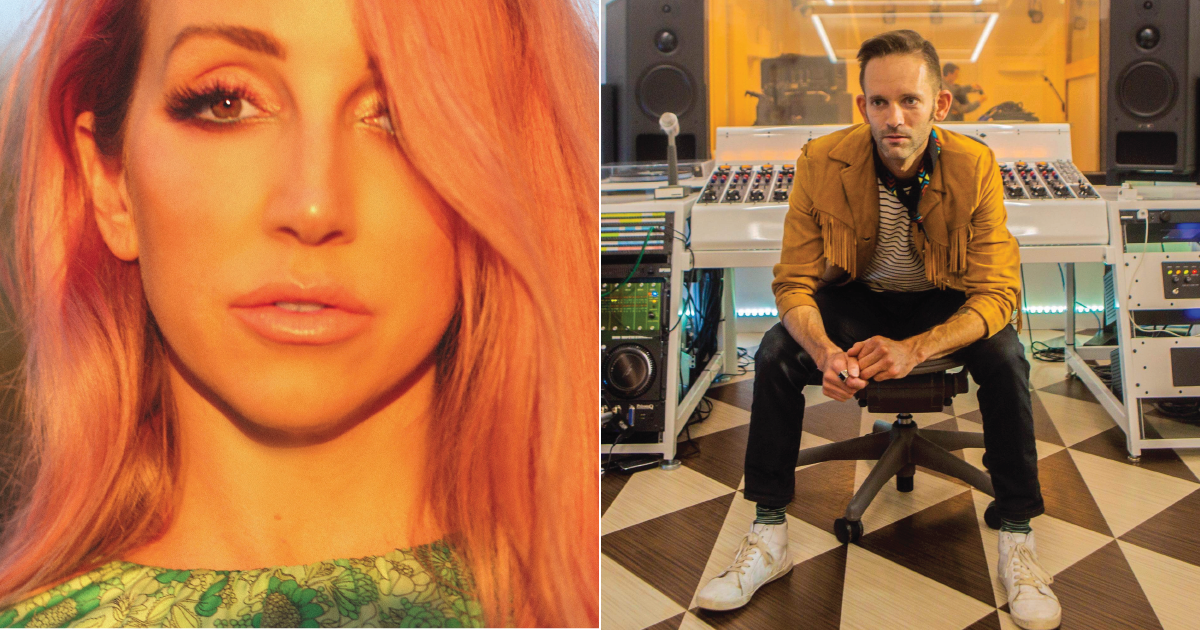
Photo of Ashley Monroe: Alexa King. Photo of Tyler Cain: Jonathan Dale

I Guess I’ll Go Get Stoned: 16 Roots Songs for 4/20

It’s a national holiday. Patron saint, Willie Nelson. And perhaps his heir would be Kacey Musgraves? Or Billy Strings. Or Margo Price. Or Snoop Dogg. We’ve got options. 

Bluegrass and country may be upheld as the pinnacles of wholesome, “American values” music, but in reality artists have been putting the GRASS into bluegrass since as long as that term has been in popular usage. (And damn, does it look good on a sweatshirt, too.)

We hope you ascend to new heights this 4/20, and while we’re at it we hope you enjoy these 16 high lonesome roots songs perfect for the occasion. 

Roland White – “Why You Been Gone So Long”

Roland White, his late brother Clarence, and the Kentucky Colonels are known for “Why You Been Gone So Long,” and in 2018 Roland re-recorded the number on his IBMA Award-nominated album, A Tribute to the Kentucky Colonels, with a star-studded cast of friends. 

Also known for his monthly shows at the World Famous Station Inn in Nashville (pre-COVID), every time Roland sings the line, “Nothing left to do, lord, so I guess I’ll go get stoned,” the crowd erupts with laughter. To this writer, though, that line feels less like a hilarious non-sequitur from a septuagenarian bluegrasser and more like sage wisdom. I guess I will go get stoned!


Selwyn Birchwood – “I Got Drunk, Laid & Stoned”

As modern bluesman Selwyn Birchwood put it in our premiere of this track, “This song proves that you can party to blues music.” That may seem like an obvious fact to a blues fan, but the uninitiated deserve to know the blues isn’t just about what you’ve lost, it’s about what you gain – through the music and otherwise. As Birchwood concludes, “‘I Got Drunk, Laid and Stoned’ is the epitome of what I feel is missing in a lot of blues music right now. You’ll find all of the rawness, edginess, and boundary pushing that I love…” That is the blues. 


Ashley Monroe – “Weed Instead of Roses”

No matter the occasion, when you’re reaching for flower… buds – reach for weed. Ashley Monroe makes a compelling case that men are certainly not the only ones in country who can live up to the outlaw moniker. Guthrie Trapp chicken pickin’ along is the cherry on top of this cannabis bop.


John Hartford – “Granny Wontcha Smoke Some Marijuana” 

For all those who’ve ever imagined hotboxing a steam-powered aereo plane, here’s a lazy, loping sing-along that kicks into barn-burning — or, grass burning? — country meets honky-tonk meets bluegrass. You’ll be calling it “mary-joo-wanna” now too. 


David Grisman & Tommy Emmanuel – “Cinderella’s Fella”

If you’re here, you must be celebrating 4/20, so you might know about Cinderella – a potent, hazy strain that Dawg attributes to his late friend Jerome Schwartz in Petaluma, California. If Cinderella were a princess instead of a strain of cannabis, Grisman would certainly arrive at her door with glass slipper in hand. Instead, we assume he fits her with a glass bowl instead? This performance by Grisman and Tommy Emmanuel is sweet, tender, and jaw-dropping. Classic “Dawg music.”


Courtney Marie Andrews – “Table For One”

Everyone self medicates, whether they’re aware of it or not, it’s just that touring musicians — by the very nature of their jobs — face their self medications, “crutches,” and vices everywhere they go. Courtney Marie Andrews, a lifelong Americana nomad, captures the depression and melancholy of touring perfectly in this haunting song, which reminds the listener that you don’t really want the life of the person on stage, no matter how glamorous it might seem. If the sometimes foggy dissociation of weed smoking were bottled and infused into a song, it would be this track.


New Lost City Ramblers – “Wildwood Weed”

Have you ever asked yourself the question, “What if Mother Maybelle smoked pot?” With this song — a Jim Stafford hit — The New Lost City Ramblers kinda did! 

New life side quest unlocked: smoke weed from a corncob pipe. 


Kacey Musgraves – “Follow Your Arrow”

It’s April 20th and your arrow is pointing directly at your bong. F*CK, water pipe. Follow that arrow, babies! Do you! Light up a joint. (Or don’t.) 

Nah, do. 


Charlie Worsham feat. Old Crow Medicine Show – “I Hope I’m Stoned (When Jesus Takes Me Home)”

We’ve loved Charlie Worsham and the bluegrass bona fides underpinning his brand of modern country for quite a while, but it’s extra perfect when he sits in and otherwise collaborates with the fellas in Old Crow Medicine Show. Heaven’s golden streets? Overrated. What about its fields of pot?! I mean… it will have amber waves of cannabis, will it not? It’s called “heaven.” 


Margo Price “WAP”

She’s partnered with Willie’s Reserve to release her own branded strain of weed, “All American Made,” and she’s infamous for smokin’ and tokin’. But in this Daily Show with Trevor Noah spot featuring comedian Dulce Sloan, Price is called upon to prove the point that if “WAP” were a country song, the universe would still be as upset at its radical centering of female pleasure and agency. (She’s right, of course.) Thank GOD for Sloan and Noah making this point, because it’s given us this country-rendition of Price singin’ “Need a hard hitter, a deep stroker/ a Henny drinker, need a weed smoker.” Perfection. 


Chris Stapleton – “Might As Well Get Stoned”

Look, you can’t mess with the hits. This list wouldn’t/shouldn’t exist without this song on it. Chris Stapleton, perhaps the biggest crossover artist — crossing over from bluegrass to mainstream, of course — in roots music since Alison Krauss proves his allegiance to whiskey and weed in this jam from his smash major label debut, Traveller

It’s like he took Roland’s advice! Might as well…


Peter Rowan – “Panama Red” 

Peter Rowan’s career has been well-peppered with southwestern and Latin folk-flavored bluegrass, but did you know he wrote “Panama Red”? This live recording is suitably trippy for 4/20, with a slight atonal warble as if the record were slightly warped on the turntable and the pickers holding on for dear life to Peter’s delightfully languid phrasing — that somehow drives as much as it lays down for a weed-induced siesta. Everybody’s acting lazy…


Billy Strings – “Dust In A Baggie”

He means kief, right? Right?? 


Guy Clark – “Worry B Gone” 

How every “worried man” in Americana, country, and the blues still has a job when “worry B gone” exists is perplexing, isn’t it? Granted he was not a medical professional, but Guy Clark’s endorsement surely must stand for something. Don’t give me no guff, give me a puff!


Willie Nelson – “Roll Me Up and Smoke Me When I Die”

Did you know that funerary and embalming processes are actually incredibly harmful to the environment and often non-sustainable? But this style of cremation must be ideal. Do it for the earth. Think green. HaHA!


John Prine – “Illegal Smile” 

Love that plant peeking from behind John Prine like a shoulder angel. Let’s all do Prine proud and don illegal smiles today, how about it? 

With that in mind, let’s not celebrate today without also striving towards decriminalization, decarceration, and the expungement of criminal records for anyone currently imprisoned on marijuana charges. Illegal smiles no more!


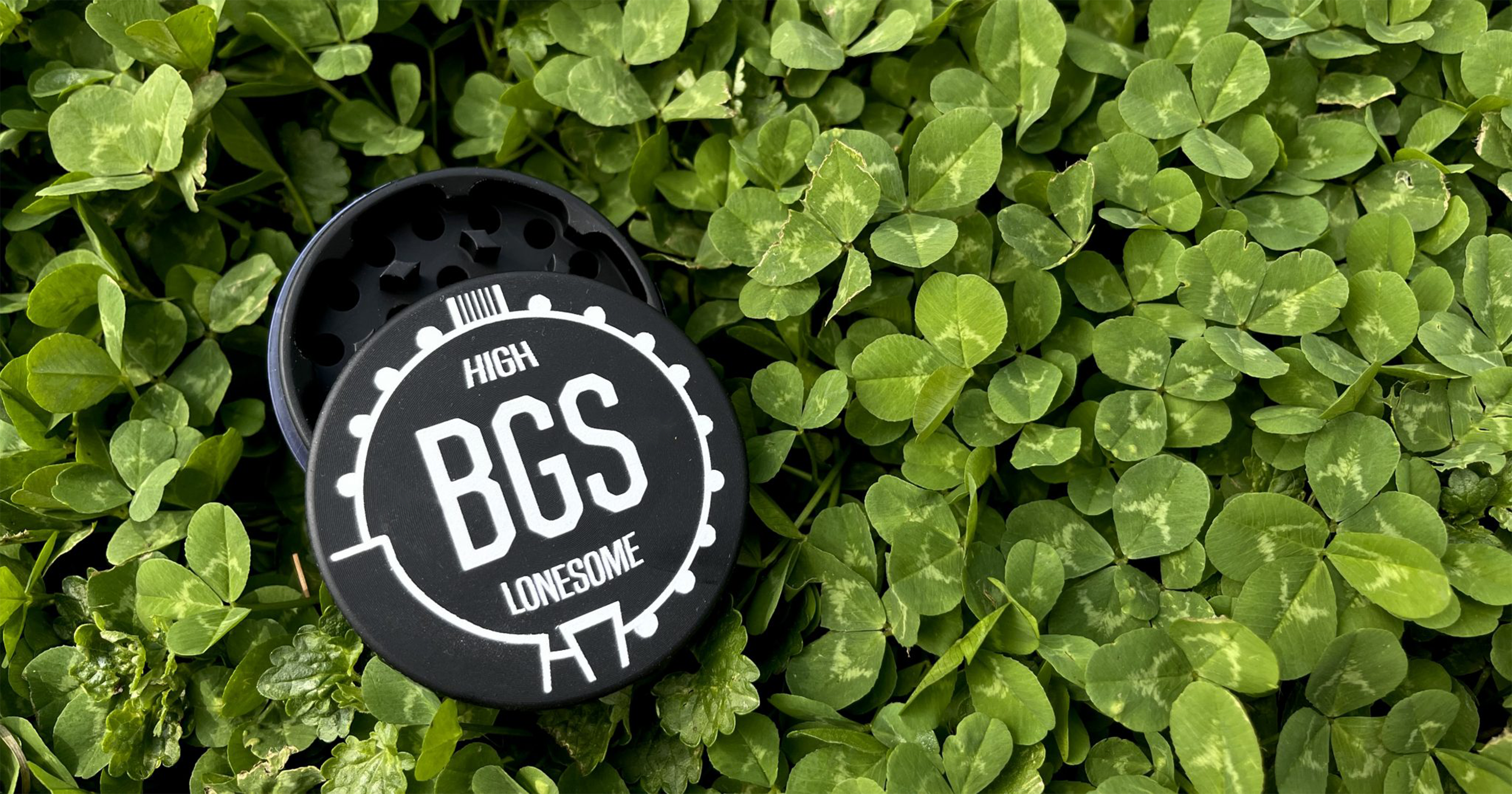
Pictured: Limited edition BGS herb grinder. Want one? Let us know in the comments and we might add them to the BGS Mercantile!

With a New Album About His Turbulent Past, Waylon Payne Makes It Through

Roughly 20 years ago, Waylon Payne’s life had become enough of a mess that he’d been booted off tour by one of his closest friends. These days he’s in a much better spot, though many of the trials and tribulations of his 20s are woven throughout the narrative of his new album, Blue Eyes, The Harlot, The Queer, The Pusher and Me.

The 12-song collection emerged gradually on digital platforms three songs at a time, though now as a whole, it’s also available on vinyl, and it should fit neatly within his own album collection of Bobbie Gentry, Kris Kristofferson, Willie Nelson, and his late mother, Sammi Smith. His late father, Jody Payne, played guitar in Willie Nelson’s band for four decades.

With classic country music in his blood, Payne has had songs cut by songwriting partners like Miranda Lambert, Ashley Monroe, and Lee Ann Womack, yet Blue Eyes, The Harlot, The Queer, The Pusher and Me is uniquely his own story. “I’m extremely proud of it. Every song is mine, and every song is a story that I’m choosing to tell,” he says. “It’s been extremely freeing and extremely cool to know that I’ve made it out of a dire situation and that I lived to tell about it. That’s all I’m really trying to do, buddy, I’m trying to offer some hope and maybe a different viewpoint that people have heard before.”

BGS: What do you remember about the vibe in the studio while making this record?

Waylon Payne: It was a pretty interesting vibe. We cut it at Southern Ground, which used to be in its heyday the old Monument studio, which is where my mom cut “Help Me Make It Through the Night” and a bunch of her other hit songs. She did sessions when she was pregnant with me there, and I was a baby there, and I was a toddler there. It was pretty interesting to sit in the same spot that she stood and sing all of these songs and do this album. It was just lovely. It was something special and everybody knew it I think.

Did you keep a picture of her with you when you recorded the album?

I have her face on my left forearm so I can’t play the guitar without seeing her face.

How did you learn to play guitar? When did you pick it up?

Early 20s, maybe? My friend Shelby Lynne showed me a few chords, and once it bites you, once it gets its grips on you, you’re a slave to it — once it puts its power on you and gets around you. And that was it. I picked out some chords of my own and I pretty much taught myself everything else, or I’d ask somebody about a chord. I was around 23 or 24.

Is that when you started writing songs?

Yeah, that was around the same time, too. It all came along around the same time. I started learning some chords in Nashville but it was LA mostly that really brought it all home.

At what point did you realize that you enjoyed being on stage?

Probably about 2. [Laughs] Who wouldn’t enjoy that? Like I said, once it bites you, you’re bitten.

Was it the applause? The approval?

I think it was because when I was on stage, I was always with my mother. So, it was family. And that’s what I did it for, for the family.

Your parents are referenced in several songs, almost like characters in the songs. So, I’m curious when you’re singing “Sins of the Father,” is that about your father?

Oh yeah, exactly. I developed a drug problem and it was pretty much his fault. He showed me those drugs. When I got myself together and got myself sober, I had another buddy of mine named Edward Johnson come along that showed me what fathers and sons were really supposed to be like. It changed my life. That song’s about my father and my buddy Edward and his son Lake. Lake’s the one that counts it off in the beginning. Lake saved my life — he and his daddy did. They made me stand up to be a better man and they helped me get sober. I’m really proud of those boys.

There’s a line in “After the Storm” about your mother closing the door on you. And you sing that you have trust that it will open again. Is that emblematic of the experience of coming out to her?

Well, there were some deeper circumstances going on in the house than just me being gay. There was some sex abuse that had happened. It was just hard for the family to deal with. That was a brief period of our life, and that is totally a reference to that time period. [I’m saying,] I know that you’re my mother and I know that you’re the one that gave me life. You’re also the one that’s got to teach me the roughest lessons and that was a hard one, when she shut that door on me. But I knew that it wasn’t shut forever.

How old were you when that happened?

18 or 19.

Was there a moment when she reopened that door, when you felt like that relationship was back on track?

Yeah, about four, five, or six years later. We had a nice moment over Christmas and Shelby was responsible for bringing that relationship back together, too. She’s been like a sister to me for many, many years. I love her, love her deeply.

What year did you go to LA?

I probably ended up there in ’99 or 2000. I got fired out there. I was playing with Shelby [on tour promoting I Am Shelby Lynne] and maybe I was drinking and doing too many drugs. Being a dick, so she fired me. [Laughs] And I didn’t have any money to get home, so I stayed there and ended up making it — that’s basically all I can tell you about that.

When I moved to Nashville in the ‘90s, it seems like aspiring artists had a lot of places to play, and several stages were available to them for showcases and other performances. Were you able to take part in those kind of things during that time?

Man, when I came here in ’93 or ’94, Broadway [the city’s strip of downtown honky-tonks] was a godsend for me. Broadway and Printers Alley saved my life, because they introduced me to the greatest pickers I ever knew in my life. It gave me a place to sing six or seven nights a week. I would go to work at six o’clock at night, and by going to work, I mean we would show up down there and we’d start on one side of Broadway and we would sing on one side, go through Printers Alley, and then down the other side. That was how we got our chops in. We would go and find places to sing. We didn’t make any money, but that’s what I did. I learned how to do that stuff right in my hometown of Nashville, on Broadway.

How did you make ends meet if you weren’t making money in the bars?

Well, I was a prostitute back in the day for a while. I also drove hookers around. I was a construction worker, I was a short order cook, I’ve done a lot of things, pal.

There’s a different vibe in Nashville now than there was in the ‘90s — and of course, the ‘90s were different than the ‘70s, too. What do you like about the Nashville music community now?

What do I like about it?

Yeah, what makes it special, and why do you like to be part of it?

Well, I don’t know that I’m necessarily a huge part of it. I’ve got a group that I write with at Carnival — Lee Ann, Miranda, and Ashley, and those folks. I don’t know if I necessarily hang out with a lot of folks. If I’m part of the Nashville community now, then I’ll take that. That’s pretty freaking cool. That’s something I’ve never really heard with my name before, being part of the Nashville community.

I guess I think of you that way because I see your name as a co-writer on Ashley Monroe’s records. What is it about that writing relationship that makes it click?

Ashley, Miranda, and I started writing together four or five years ago on a regular basis, then Ashley and Aaron Raitiere and I write together a lot. We tend to write pretty good music together. If I write music with somebody and it clicks, and we get good songs, then that’s pretty much a good partnership and I’ll stick with that for a while.

You put this record out three songs at a time, but when I listened to it in its entirety, it struck me that there’s a theme of moving forward, and sometimes outright optimism, that comes through. Do you hear that too?

I mean, I always want to give people hope. That’s one of the biggest things about this record: Even though it’s about tragic situations, I still made it out.


Photo credit: Pooneh Ghana

MIXTAPE: Penny & Sparrow’s Songs Begging to Be Covered

From Joe Cocker covering The Beatles, Bon Iver covering Bonnie Raitt, Glen Hansard covering The Pixies, and many, many more, WE LOVE COVER SONGS. In fact, one of the most commonly had tour van conversations is “What should we cover next?” (And we deliberate that almost daily.) The art of taking someone else’s song and making it your own is difficult and praise-worthy. … THUS, when The Bluegrass Situation asked us to cultivate a playlist, we knew exactly where to go. So here it is, dear friend!! A list of songs — in our opinion — that are begging to be covered.” — Andy Baxter and Kyle Jahnke, Penny and Sparrow

Eagles – “New Kid in Town”

Like a lot of Eagles tunes, “New Kid in Town” manages to have emotional depth WITH a hook that’s catchy as hell. Not a lot of folks can do that. They did it over and over again. It reminds me of “Fun Times in Babylon” and for that reason I must have Father John Misty cover this as soon as possible. Please make that happen for me, FJM. You would sound delightful. (Andy)

Willie Nelson – “Buddy”

This song was on Parks and Recreation and it made the reconciliation of Leslie and Ron one of the most iconic scenes in TV history. For the month after, I listened to it over and over and over again. After 30 days of it I started to imagine who I wanted to hear cover it. I landed on one of two extremely recognizable (and lovely) voices: Ashley Monroe or Anaïs Mitchell. Please Universe, hear my cry. (Andy)

John Denver – “Sunshine on My Shoulders”

I would love to hear this covered by someone like Daniel Caesar. The melody with some R&B voicing would sound insane. (Kyle)

Miya Folick – “Thingamajig”

This song is admittedly new for me and (before it came along) it had been more than a year since a song made me cry on first listen. This one undid me. Eight straight listens and now I might die unless I hear I’M WITH HER cover this damn song in three-part harmony. (Andy)

Ace of Base – “Don’t Turn Around”

I love a good ‘80s/’90s jam saddened by some sad indie folk. Thinking if James Vincent McMorrow took this and pitched it to his gorgeous falsetto I would listen on every rainy morning and cry just a little. Maybe give it to Jason Isbell and let him turn it into an Americana masterpiece. (Kyle)

Alvvays – “Archie, Marry Me”

A friend of ours called this song a “We’ll be young forever” anthem. It toes some strange line between the grunge pop of “Cherry Bomb” and the new age sad rock of Phoebe Bridgers. I love it and really really wanna hear a slickly crooned version by Sam Smith. Take all my money Sam, just get it done. (Andy)

George Strait – “Lovesick Blues”

I love the yodeling in this one. Basically I want Miley Cyrus to imitate Dolly Parton imitating a ‘90s George Strait. I love this track. (Kyle)

Slim Whitman – “Rose Marie”

This one feels unfairly unknown. How this song got lost in the shuffle of history is beyond us but I damn sure wanna hear The Kernal or Robert Ellis do a version! (Andy)

All-4-One – “So Much in Love”

This could either be an Ariana Grande acapella jam, or in my wildest dreams a Simon & Garfunkel reunion where they folk harmonize it to perfection and the world is happy since they are friends again and that’s all I really want. (Kyle)

Anaïs Mitchell – “He Did”

Lyrically this song is masterful and angst ridden and haunting. As I think about it now, it would be an incredibly tall order to cover this monster, but I genuinely think a blues/soul rendition could be badass. The lyrics of the song mourn and bleed and I kinda wanna hear Cedric Burnside or Leon Bridges take it on. (Andy)

Cutting Crew – “(I Just) Died In Your Arms”

GIVE ME HAIM SINGING THIS SONG AND IT WILL BE THE RESURRECTION OF AN ‘80S POP RELIC!!!! It would also stream millions of times in a matter of days. It’s a jam and they’re the maestros I wanna hear introduce it to the next generation. (Andy)


Photo credit: Noah Tidmore

Grand Ole Opry at Bonnaroo 2019 in Photographs

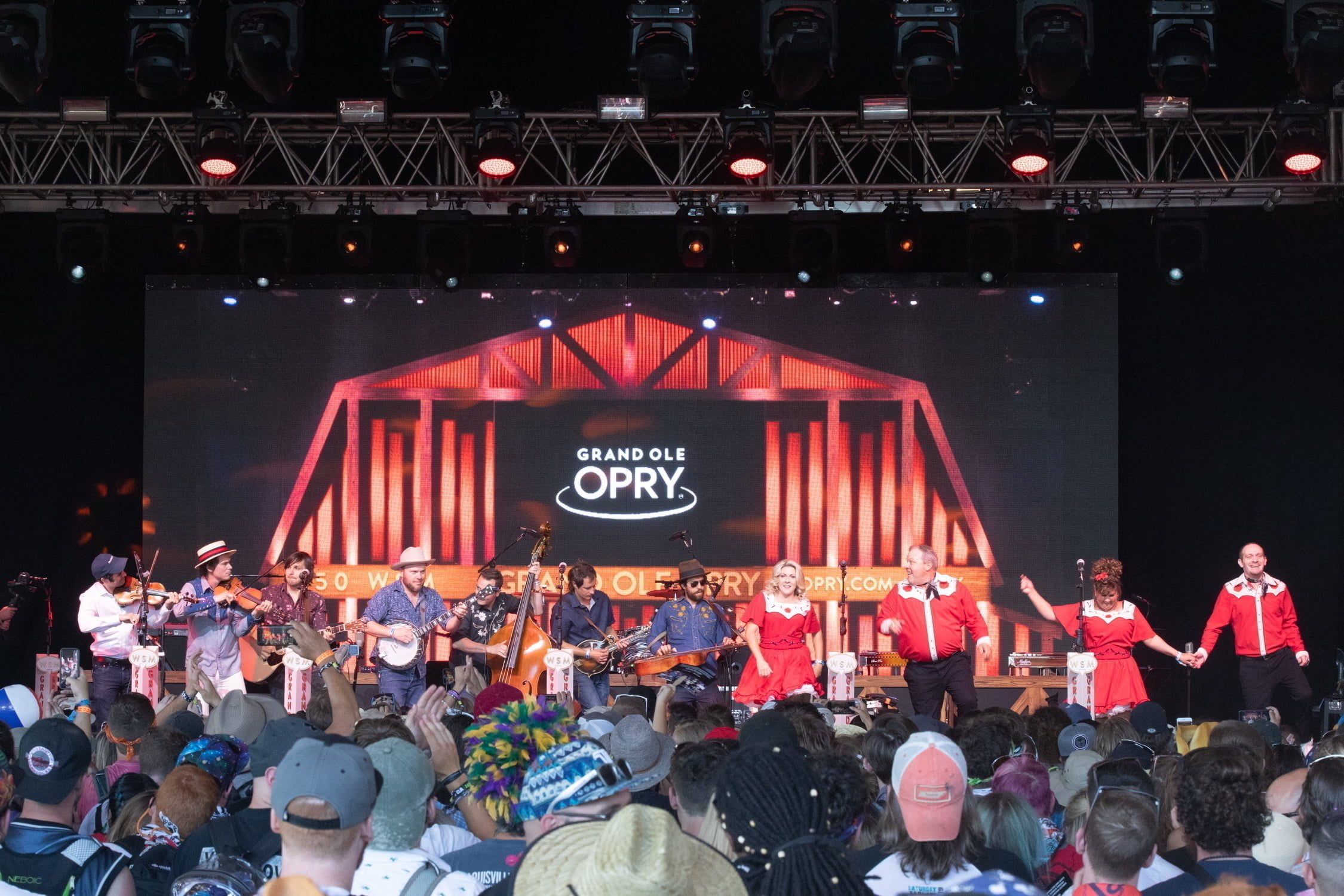
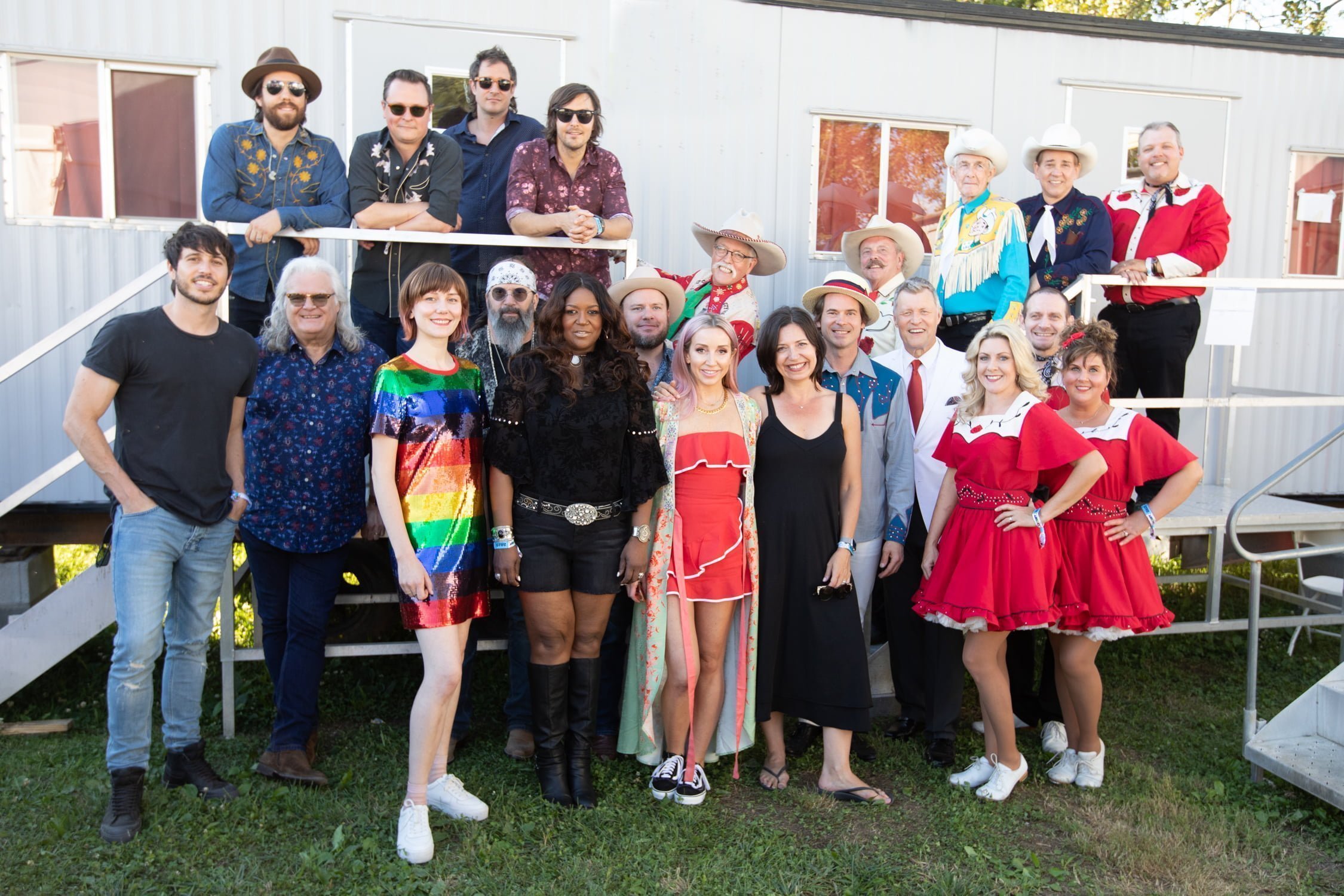
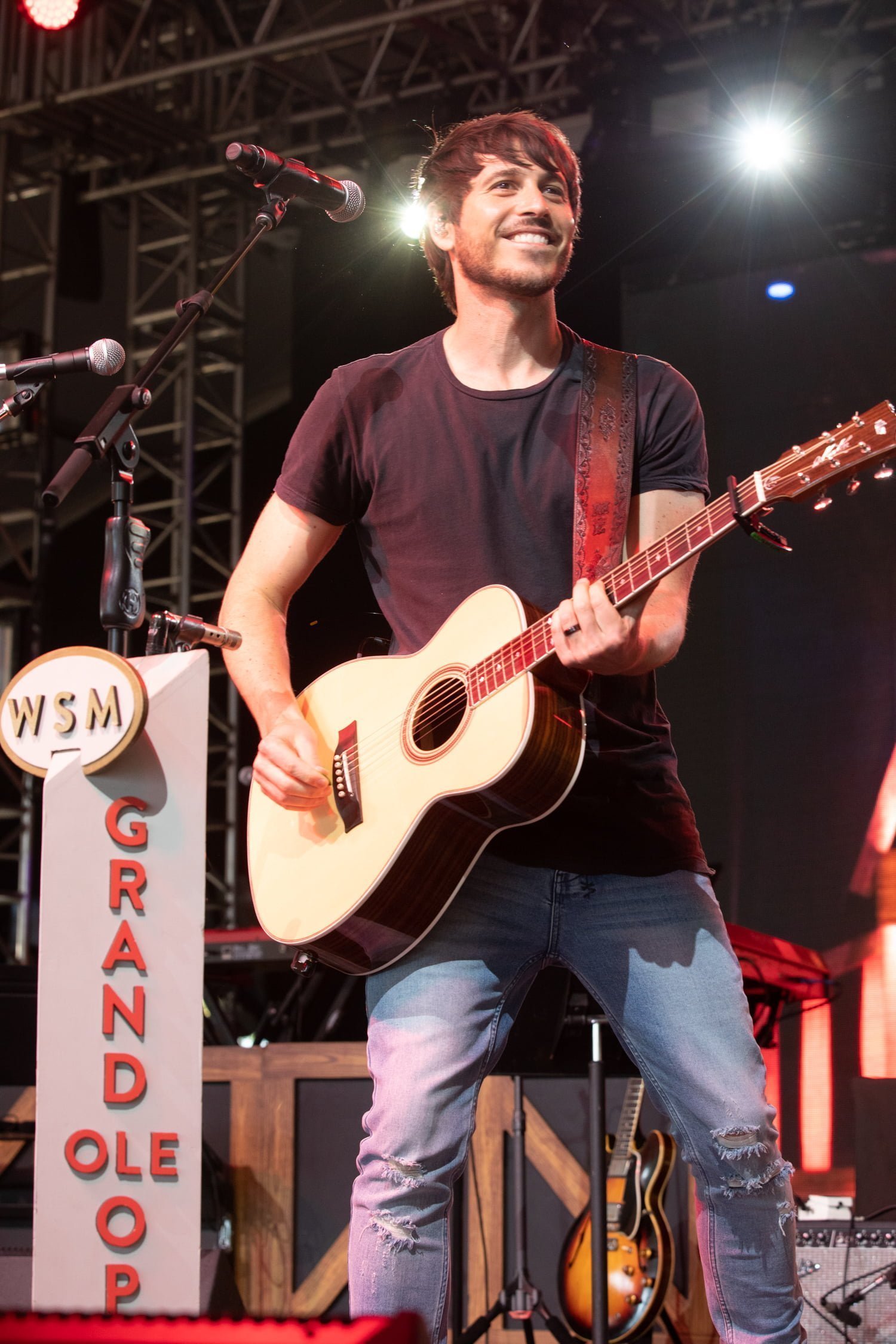
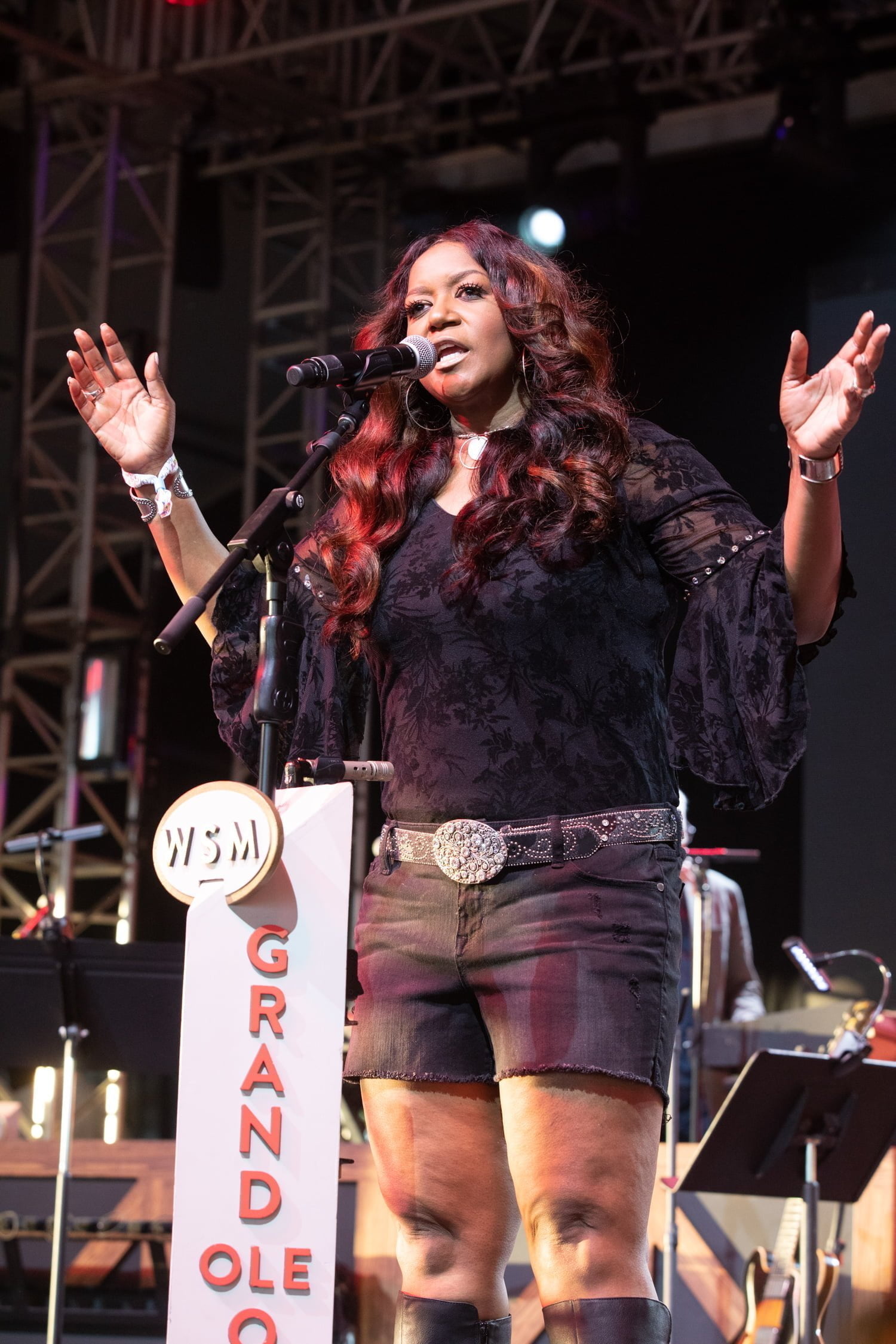
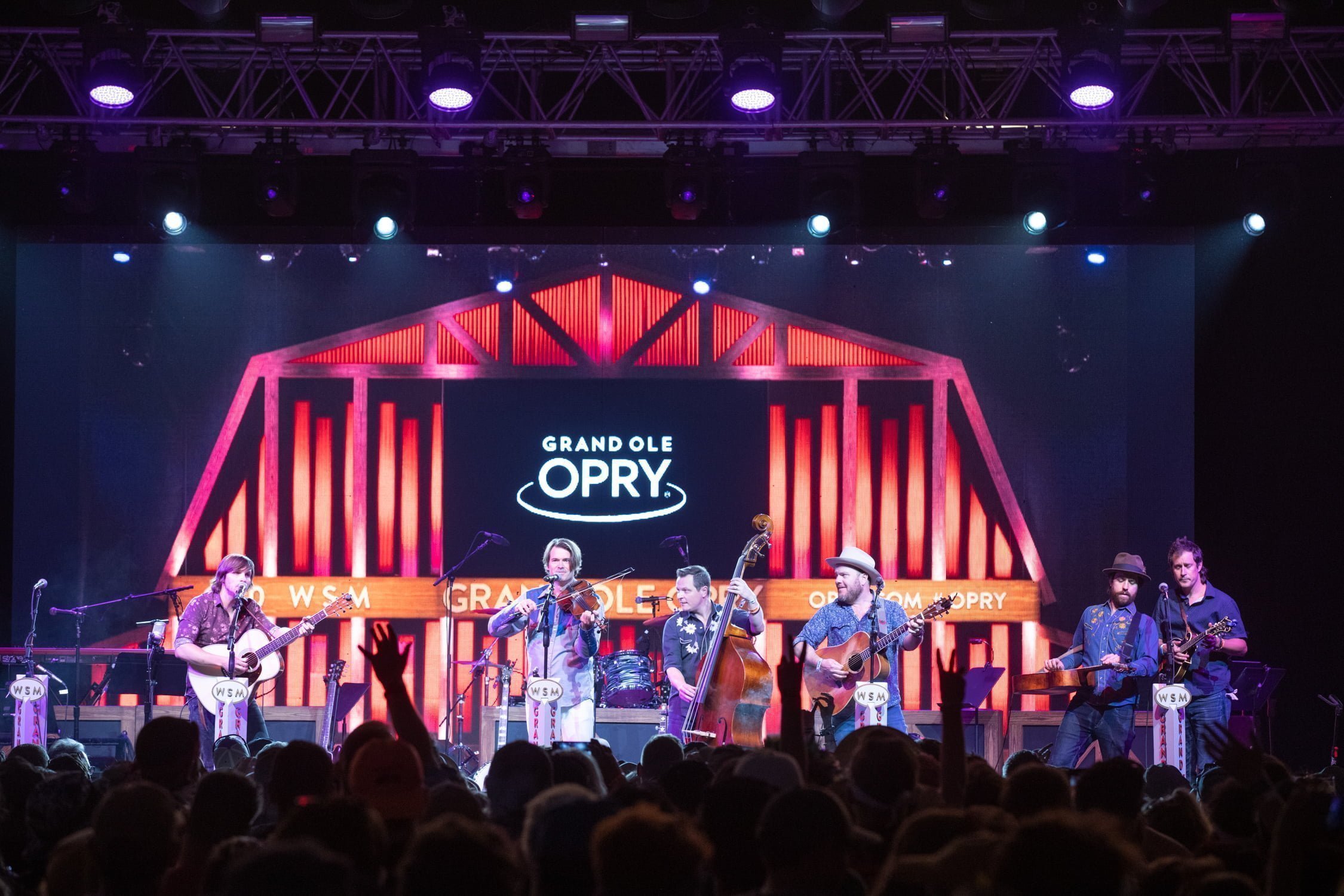
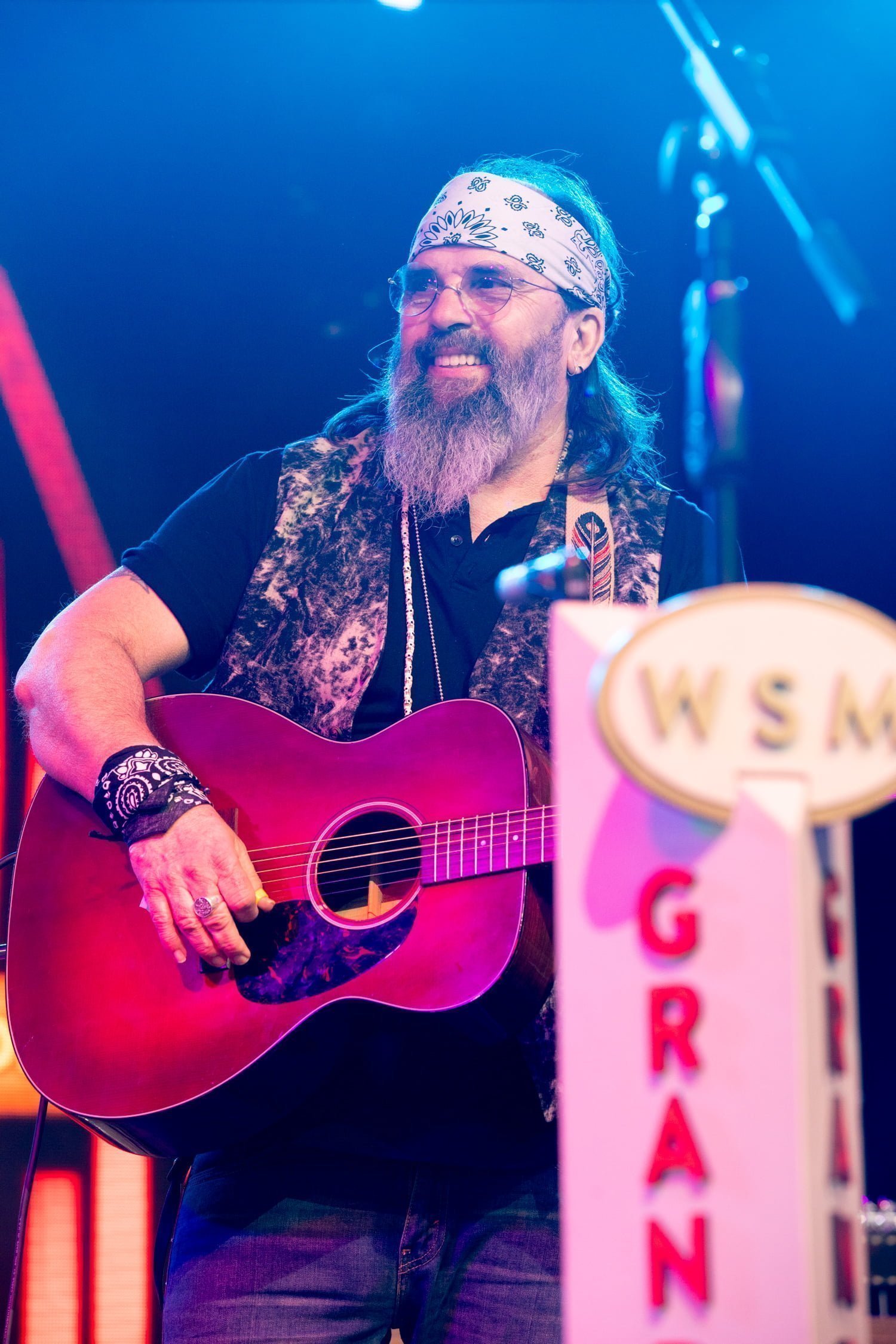
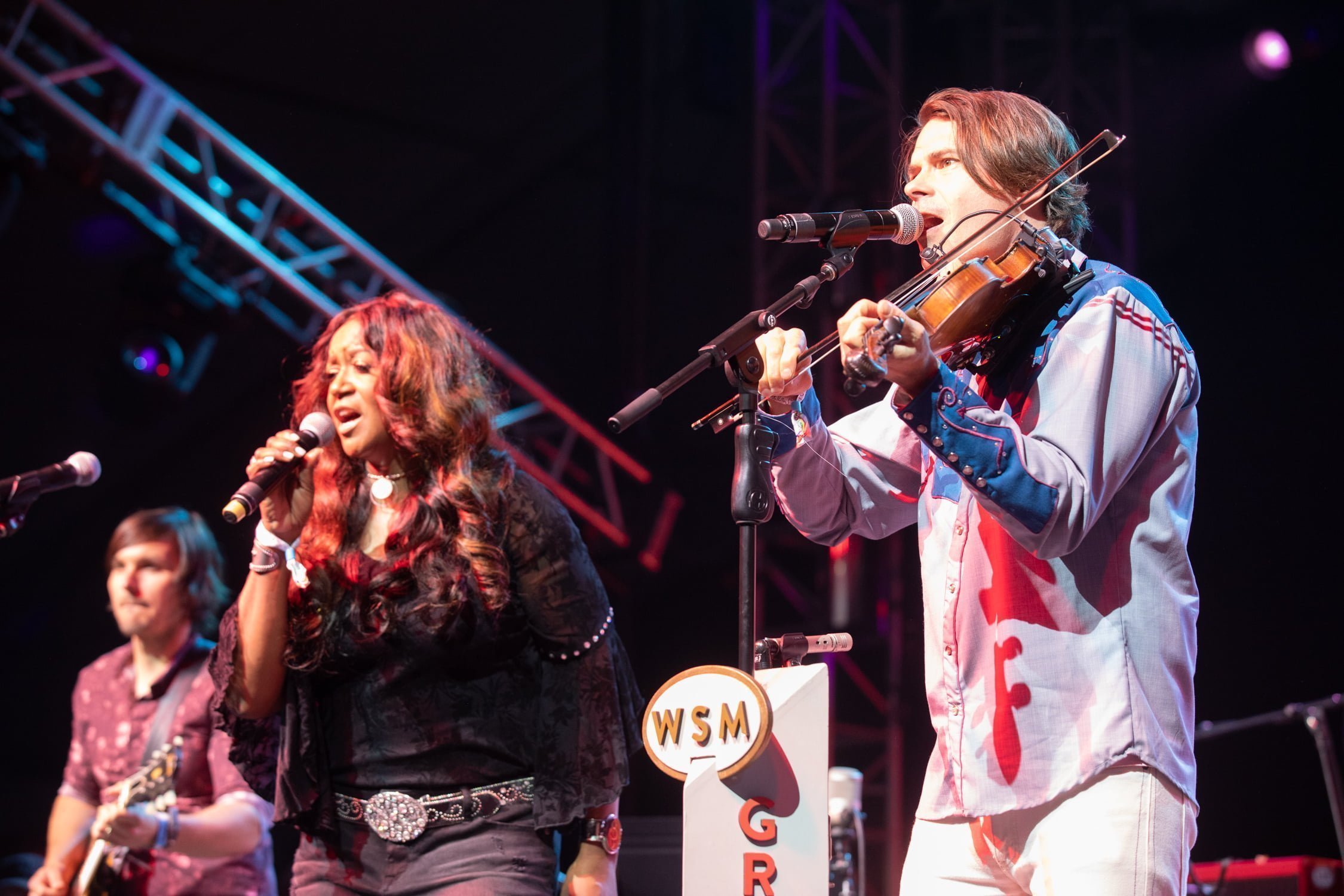
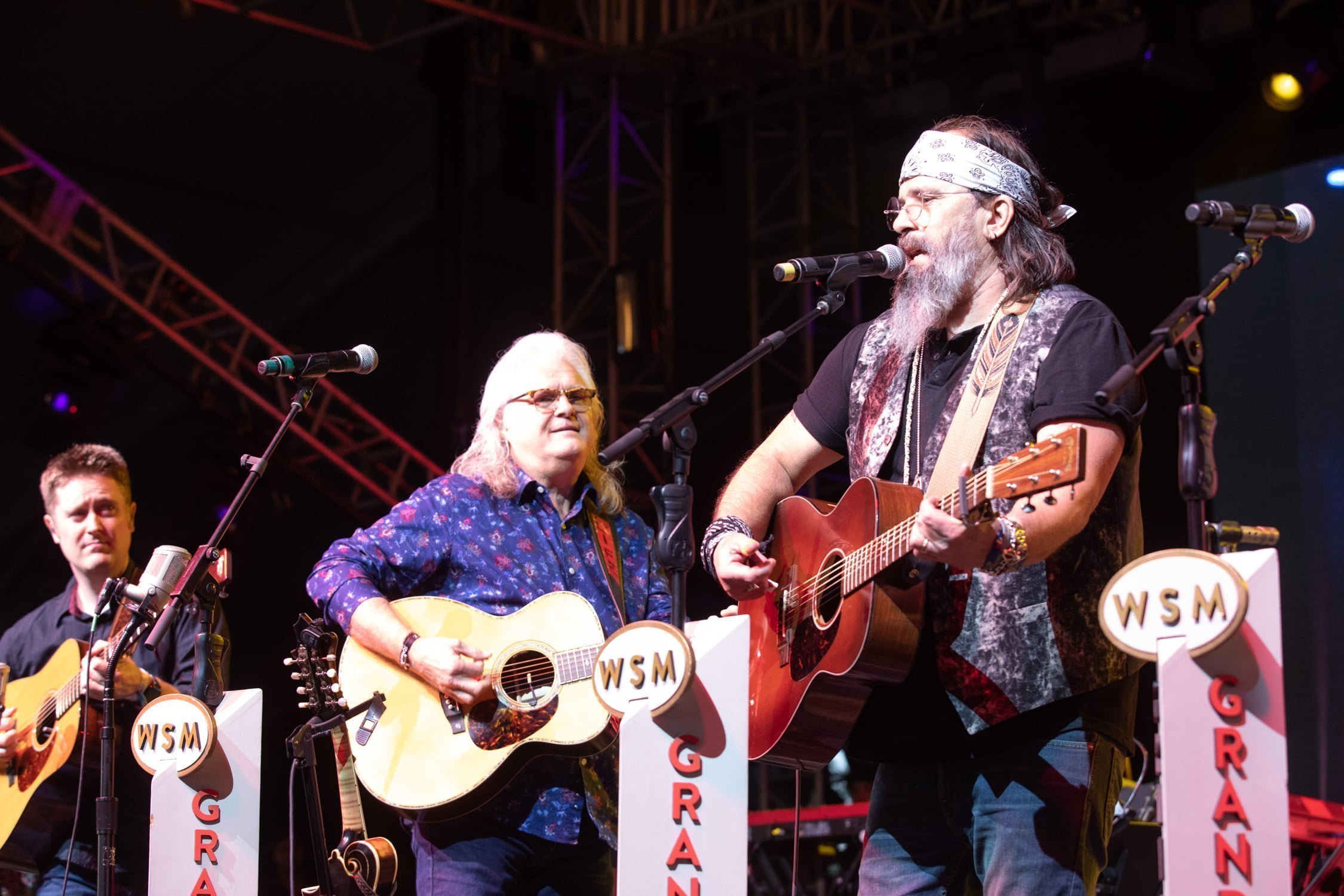
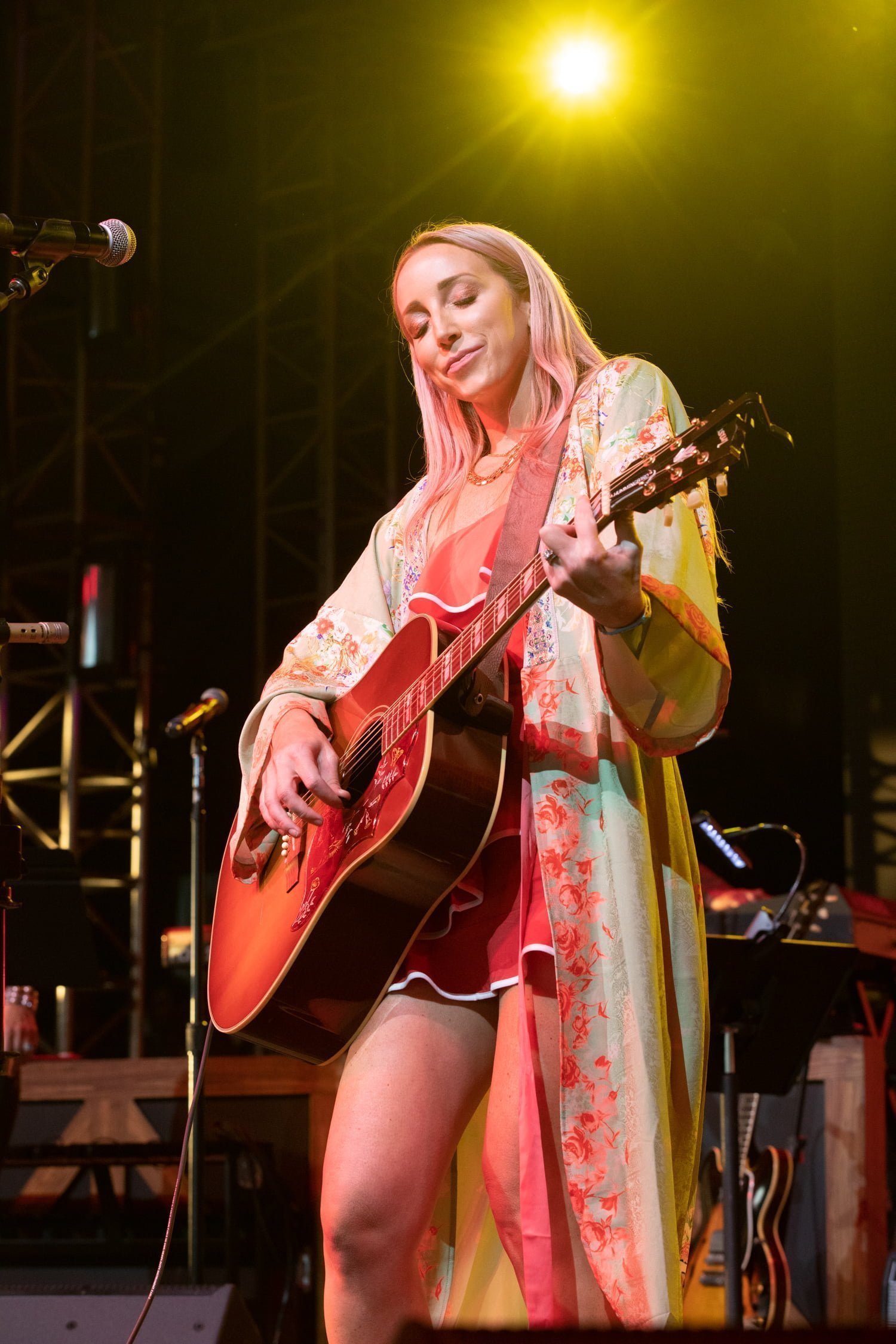
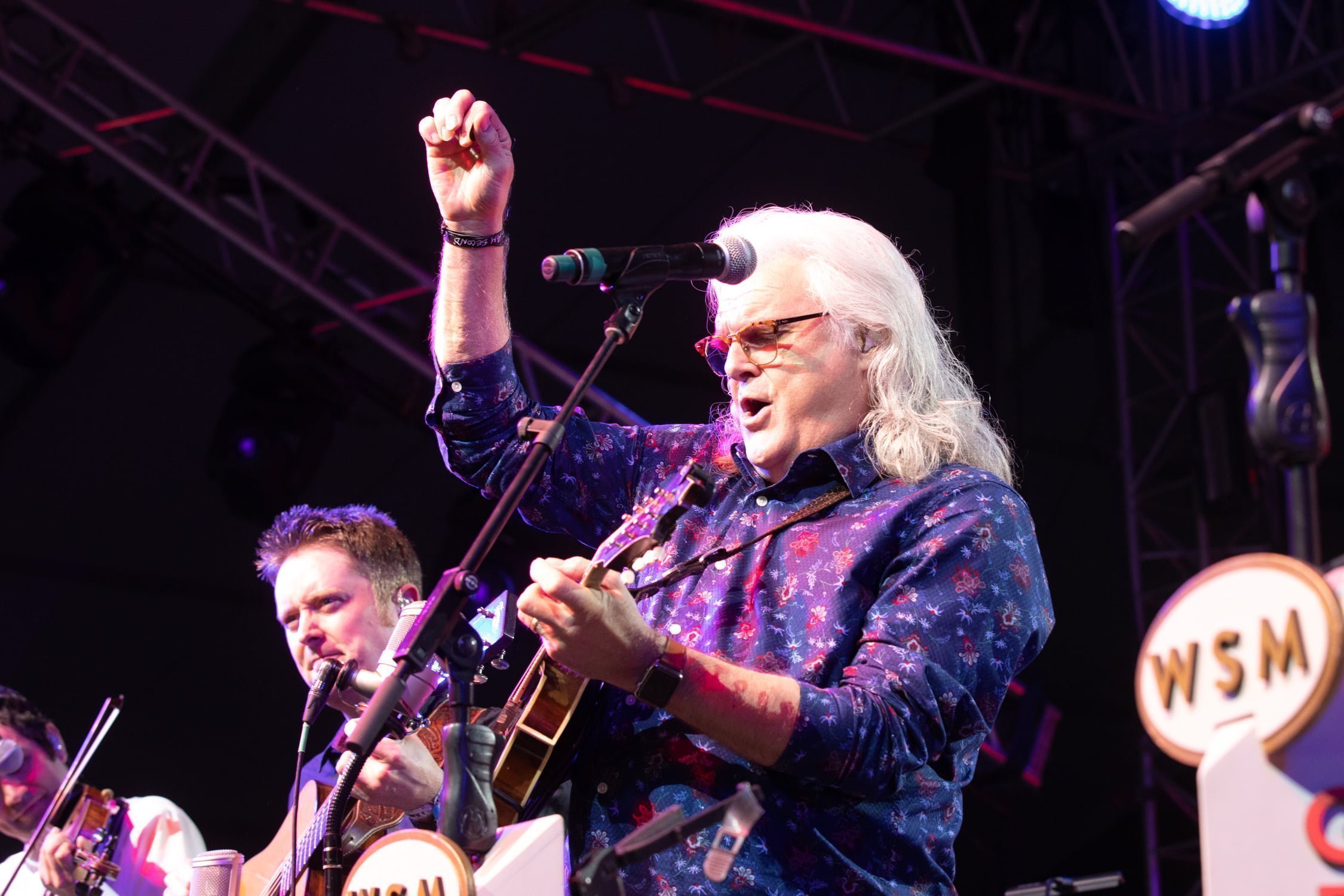
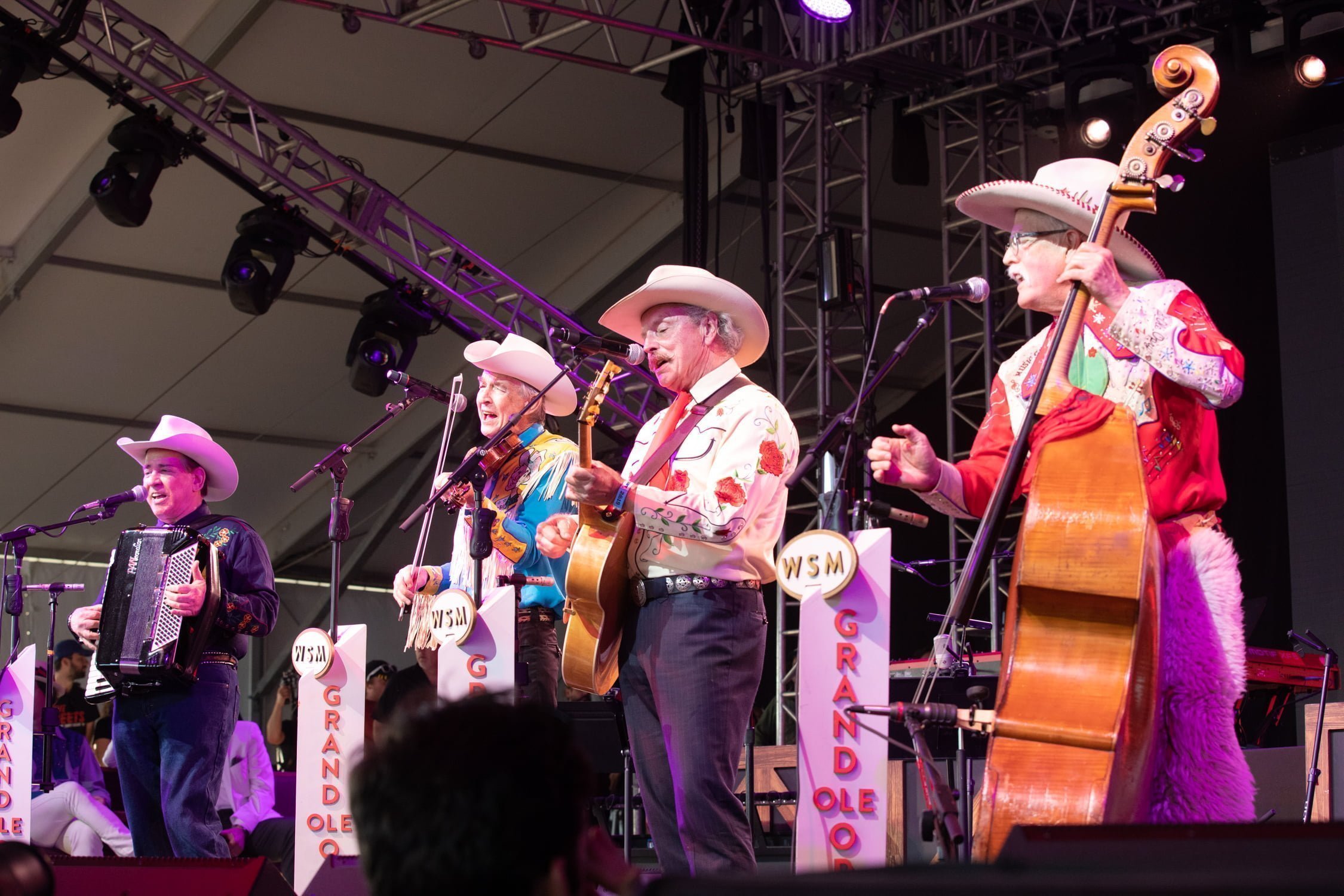
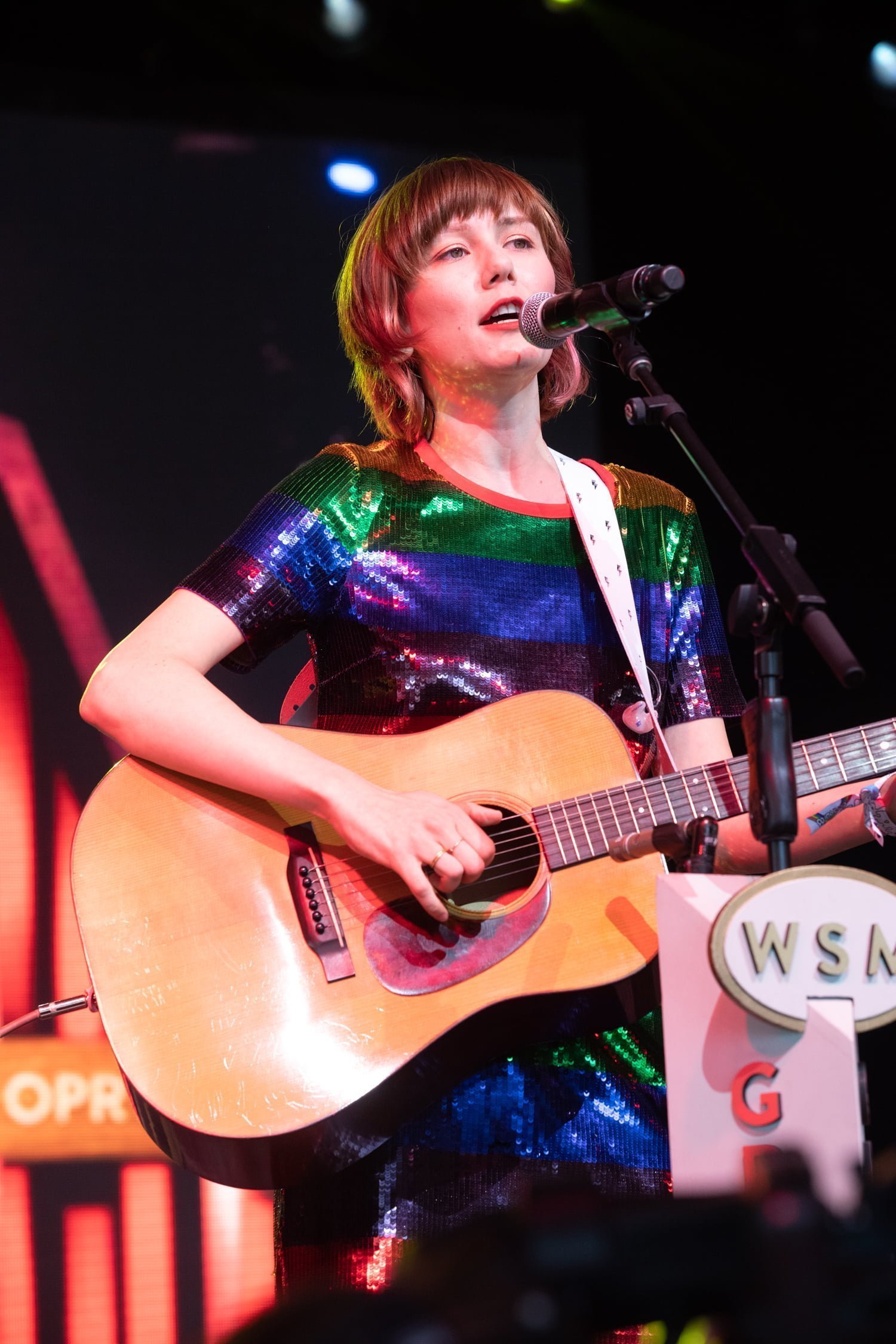
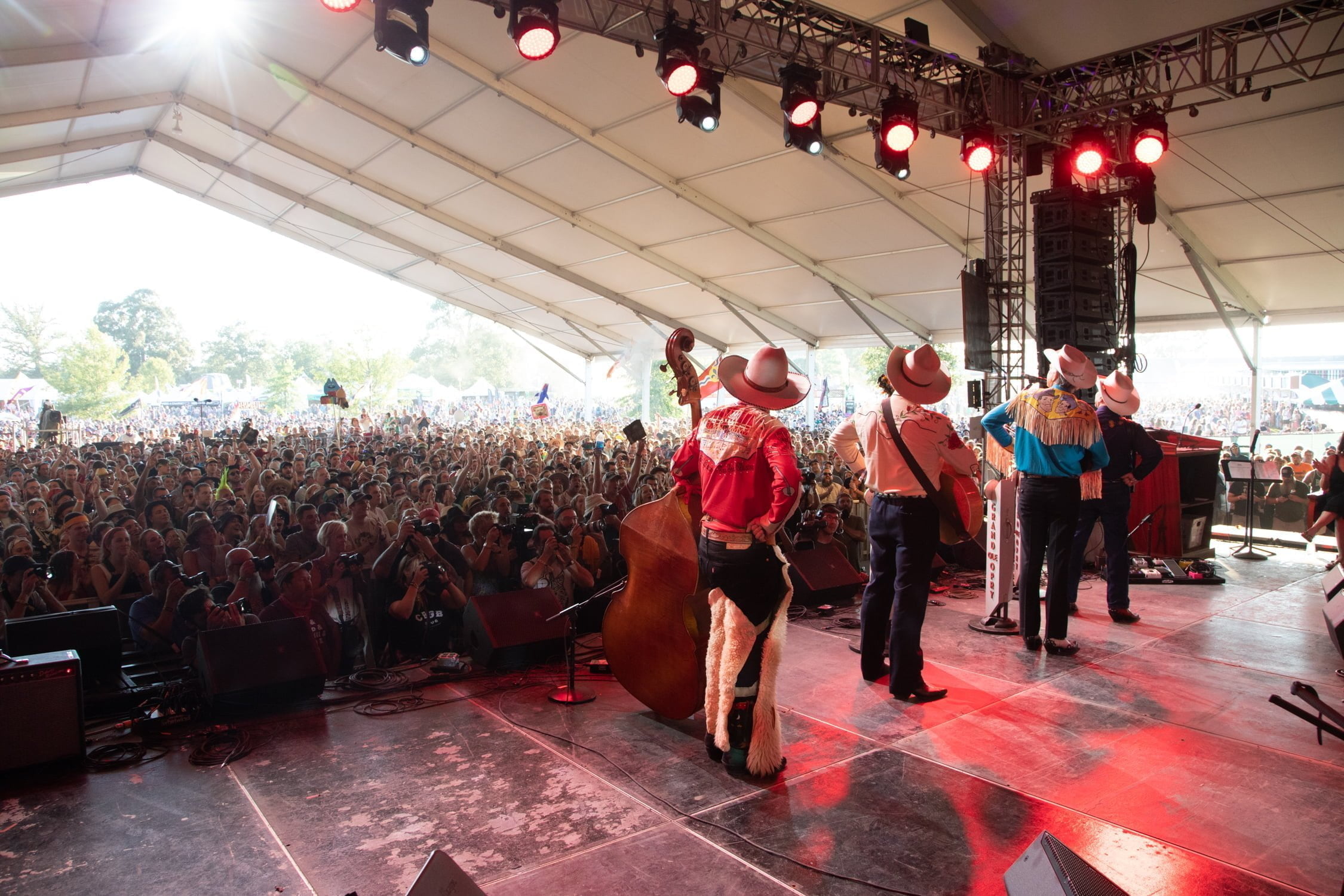
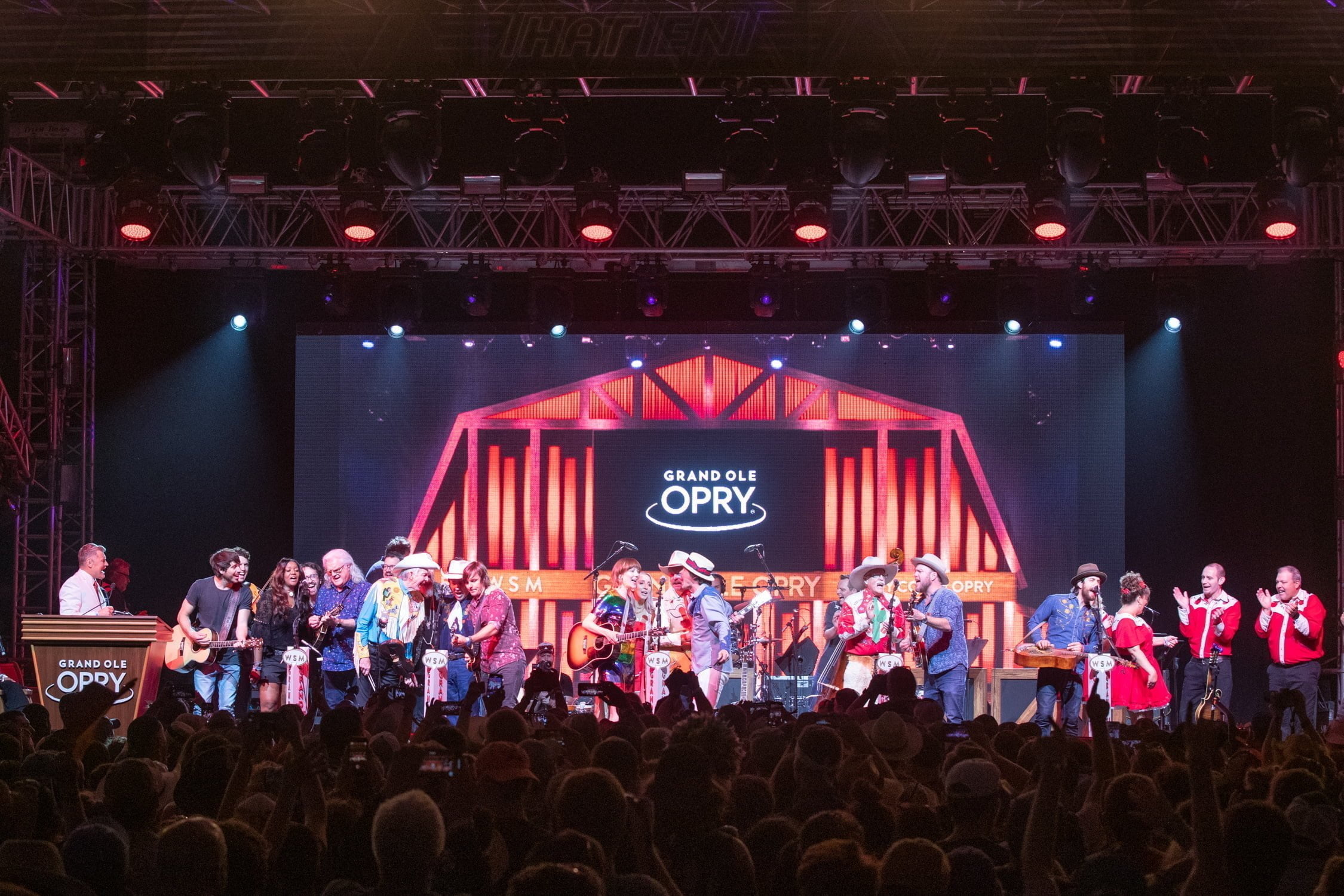
The Grand Ole Opry returned to Bonnaroo Music and Arts Festival this year to headline the festival’s opening night. The Opry carried on the festival’s long-standing tradition of representing country, bluegrass, and roots music with performances by Old Crow Medicine Show and fellow Opry members Ricky Skaggs and Riders In The Sky, plus special guests Steve Earle and the Dukes, Morgan Evans, Ashley Monroe, Wendy Moten, Molly Tuttle, and even the Opry Square Dancers and Opry announcer Bill Cody came along for the ride.

BGS handed off the That Tent torch to the Opry in 2018, after five years of the BGS SuperJam. You can revisit our years of BGS x Bonnaroo goodness here: 2017; 2016; 2014.


All photos: Chris Hollo