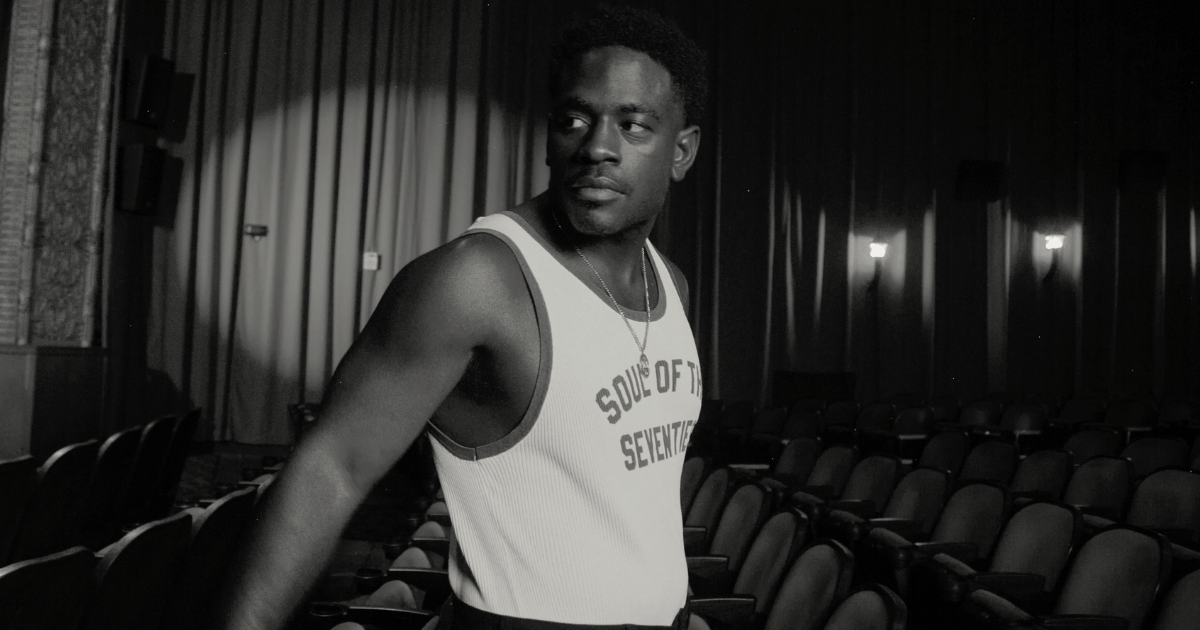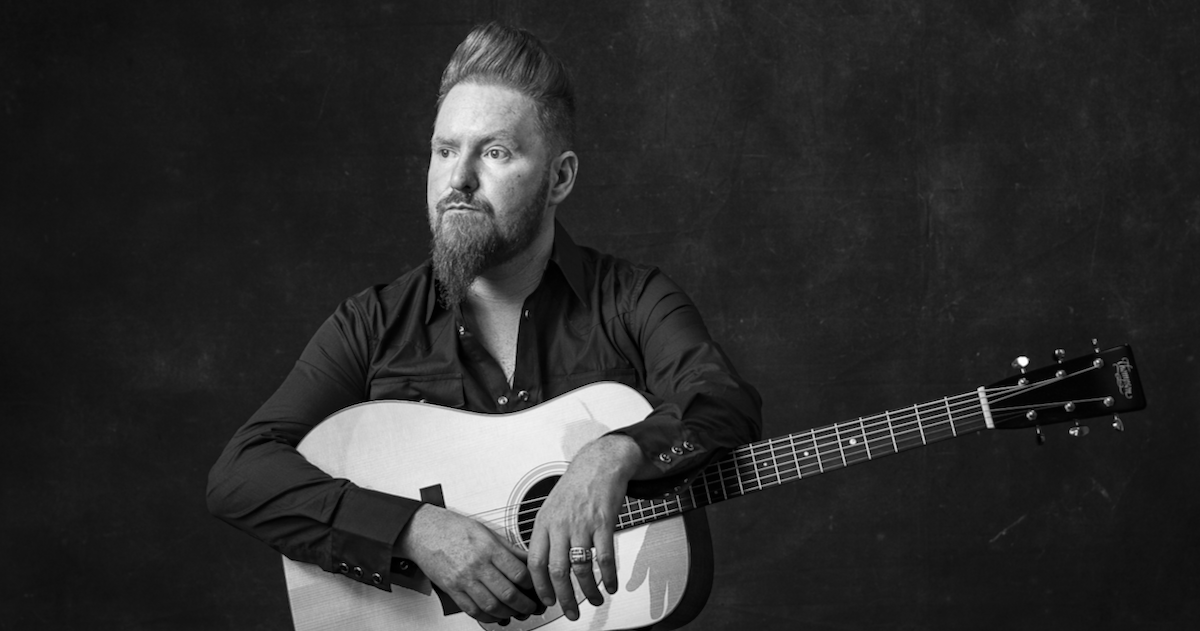
Kashus Culpepper Dreams Big on Act I

Elton John described him as “if Bill Withers made country music,” but for Kashus Culpepper that only scratches the surface of his unique sound, the multitudes of which are displayed in full force on his full-length debut Act I, which was released January 23.

Growing up in Alexander City, Alabama, the singer was always around music, whether it be in church or in the car, but aspirations for a career performing didn’t materialize for the former firefighter and EMT until he found himself stationed in Spain as a Navy corpsman during the pandemic.

“I wasn’t much of a player, but I was listening to so much music growing up,” recalls Culpepper. “I had headphones on all day, even at school, which caused me to get in trouble quite a bit. I would’ve loved to play back then too, but garage bands weren’t really a thing in our town when I was growing up. If they were, I would’ve tried jumping in with folks in a flash.”

During his period of isolation abroad, Culpepper was gifted a guitar, leading him to learn how to play and to eventually post cover songs online. After leaving the Navy in 2022, he returned stateside and began booking cover act shows at honky-tonks and dive bars across the Mississippi Gulf Coast. Although he immediately loved what he was doing, he also noticed that only playing other people’s material would have a short shelf life.

“Once I realized the cover thing would run its course, I knew in order to make a career in music that I needed to start writing my own songs,” he explains. “For so long the thought of writing my own songs and having people sing them back to me was just a silly dream, but now, less than three years later, I’m releasing an 18-track album I helped write the entirety of.”

Ranging from country to blues, rock and roll, pop, and soul, Act I is a full-on musical onslaught that caps off an amazing five-year journey for Culpepper, setting the stage for a continued meteoric rise in the years to come. On the album he’s joined by fellow stars-on-the-rise Marcus King (“Southern Man”) and Sierra Ferrell (“Broken Wing Bird”). But where the compilation really shines is on the tracks in between, like “Alabama Beauty Queen” and “Break Like Me,” that see Culpepper not only pouring his heart out, but doing so with catchy hooks and differentiating styles while remaining fully authentic to who he is – a Southern man making Southern music.

Less than two weeks before Act I’s arrival, Culpepper spoke with Good Country over the phone about his love for Tyler Childers, the importance of co-writing all the album’s material, what it was like earning the support of Samuel L. Jackson, how his collaboration with Sierra Ferrell on “Broken Wing Bird” came about, and more.

How far back do the origins of these 18 songs go? Are most from those early days of writing in 2023 or more recently as you’ve refined your voice?

Kashus Culpepper: Well, the ones that’s already been out [as singles], they’re definitely from around the same time that I was starting out writing. But a lot of songs that haven’t been put out yet, aside from “In Her Eyes” and “Mean To Me,” are all a little more recent.

In reality, none of these songs are that old if you didn’t start writing until 2023!

Exactly! When you think about it, none of these are that old. There’s so many artists who’ve been holding on to songs for years and years – like Chris Stapleton, who just won a GRAMMY for “White Horse” over a decade after first writing it.

Why was it important for you to have a hand in writing all 18 of these songs?

I’m all about developing myself as a songwriter, because it’s something that I can do for the rest of my life even after all the performance stuff is done. Songwriting is something that I truly believe in and love, so I want to be the best at it that I possibly can be. And to be the best at what you’re trying to do, you have to do it all the time and you have to write with people that are way better than you. That’s what I’ve been able to do with this record. I’ve been writing with people that are way better at writing than me. It’s been amazing.

The record is called Act I. Does that mean it’s part of a larger body of music to come?

At the moment, I don’t really know. I called it Act I not as an introduction to who I am, but because I’m a big movie guy. I love theater, movies, dramatics, all of it.

With that in mind, I know you had a run-in with A-list movie star and one of your biggest heroes, Samuel L. Jackson. What was that like?

Samuel L. Jackson is one of my favorite actors of all time. I got a connection with him when “After Me?” was coming out. It definitely makes the world feel a lot smaller when some of your favorite actors or your favorite artists know who you are. A lot of times growing up you think you will never be in connection with your idols, so it really was a humbling experience. It made me realize that anything is possible.

If you have a dream, you can do it. If one day you want to talk to Oprah Winfrey, you can. Don’t take your foot off the pedal just yet!

Has that one happened for you?

No, I have not talked to Oprah Winfrey, but I would like to! And you get a car! And you get a car! [Laughs]

With regard to “After Me?,” wasn’t that one of your first original songs to gain traction online?

My first big song on socials was “Who Hurt You,” but following that I posted a clip of “After Me?” and everything just went crazy. I’m really glad I put it up on socials after writing it with my boy Mark Addison. We didn’t think anything of it at the time – we were just writing. It’s been insane seeing what the song has turned into since then, especially live.

That’s another thing – it’s been cool to see all the new songs develop their own personality with the crowd. For a while, “After Me?” was people’s favorite song, but now it’s been overthrown by some of the newer ones, which I like because it tells me that I’m continuing to write new songs that people want to hear.

Was it always your vision for your debut project to be this massive or did it unknowingly balloon to 18 songs while in the studio?

I think it was the fact that I had so many great songs in my brain that showed the timestamp of a point in my music career and what I’m doing as an artist. Also, I didn’t want to hold back songs that I thought would be cool for my next project – I needed to put them out right now. When people listen to it, I want them to know exactly what was in my head at the moment I was creating it. That way it and everything I do that comes after it can always stand on its own.

You mentioning a desire to curate a specific moment in time reminds me of the intro track that kicks off Act I, where you’re playing the role of a radio DJ on KC 97 FM. Was that intentional on your part?

That’s exactly where I was trying to go with it. I was just trying to show people what it’s like in my head and trying to transport them to a new world as soon as the record starts. If you listen to it start to finish it feels like a radio station tailored by me. My goal is to bring listeners into my world. I hope people don’t skip it, because if they listen to it top to bottom, they’ll understand. It’s like, “Okay, Kash is curating a playlist with all kinds of influences, because he is a man with different sides to him as a person and musically.” I don’t really care about this or that in terms of genre, so long as the song makes me feel something.

And who knows… maybe someday Apple Music or iHeartRadio will come calling and give you the keys to your own real-life KC 97 FM?!

Don’t tempt me! [Laughs] I would love to do something like that. I don’t have time for it right now, but I would make time!

@kashculpeppermusic Messed up kid- Tyler Childers #tylerchilders #countrymusic #fypシ ♬ original sound – Kashus Culpepper

I know the church was a large part of your early musical upbringing, but what role did the radio play in all of it, if any?

For sure. I don’t remember the name of the radio stations, but there was something about summertime in small town ‘Bama, driving around with the windows down that was so freeing. And country music has always given me that same type of feeling. At the same time, I have so many memories not only with country, but also with soul and pop records. I remember a time when I’d even go around singing along to Lady Gaga.

Then when I was in the military and I found out about guys like Tyler Childers, Sturgill Simpson, and Kolton Moore, they turned into my backroad jams and even went on to inspire me to eventually start writing songs myself.

Speaking of Tyler Childers, didn’t you have a moment with his song “Messed Up Kid”?

Yeah, that was one of the first ones that really started popping off for me. Since then I’ve also done “Lady May” – which got a good response, too. I just love Tyler’s music. He’s got one of the most soulful voices I’ve heard in a long time. It reminds me of people I was in church with. In a way, I feel like Tyler and I probably went to the same church growing up. I’ve just connected with his music so much. Not just Tyler, but a lot of other people in Kentucky, too, now that I think about it. One thing musicians from there have in common is they love singing from their soul and being authentic.

Since you were just speaking about soul, one of the most soulful songs on Act I from my perspective is “Break Me Like.” Mind telling me about it?

That song definitely draws from the fact that I am with someone that I should not be with, but it’s okay because we’re in this moment and I know what she’s gonna do to me and it’s fine since right now I need to be with somebody. “Break Like Me” started with that idea in mind, then I had these really weird chords that I came up with while writing with Grady [Block] and Hank [Compton] over at Big Loud. After fumbling around with the lyrics that I had in my head, I came up with something that had a real funky, low-fi kind of vibe. We wanted it to tell a story and be relatively heavy, but while giving it production worthy of cruising to and vibing out with.

What about “Broken Wing Bird” with Sierra Ferrell. How did you bring her aboard, and did you always envision the song as a duet?

I wrote that song with my producer, Brian Elmquist, and at the time wasn’t thinking about it as a duet. We’re both lovers of Willie Nelson and wanted a song that felt like you could be on your back porch and listen to it morning, afternoon, or night with a drink in hand and not have to think about it too much. It’s a song that makes you feel warm and feel at home, but it wasn’t until the production of it when we thought about doing it as a duet.

Once the idea got brought up, one of us made the comment that whoever it is, it would have to be someone that has a voice that feels like it’s not from this time. Eventually Sierra’s name came up and it was like a lightbulb going off. She’s literally the first person that I would want in the whole world to be on this record, but I wasn’t sure if she’d be available to do it. Once we got the green light my excitement went through the roof. I’m so proud that she’s on this record, because she’s an artist that I truly love. I’m hoping somewhere down the line we might have something in the works that’s a bit longer of a project too.

I (and most other people) would not be against that one bit!

Looking back over the past five years, what has your musical journey thus far and bringing Act I to life taught you about yourself?

For so long, I thought I didn’t belong in places, that I wasn’t able to do this or that. The biggest thing I’ve learned is to just dream big because you never know what could happen. You just have to believe in yourself and you can do anything, no matter how crazy it sounds. For the longest time, I didn’t have a dream of doing music because I just thought I couldn’t do it. I thought I wasn’t the kind of person to be singing songs on stage, but look at me now!

With you referencing dreaming big I have to ask, what’s next on your musical bucket list?

My goal is to just keep creating, growing as a songwriter and learning more about myself along the way. If I do that I feel like everything else will follow and I’ll keep growing as a songwriter and as a promoter.


Photo Credit: Cedrick Jones

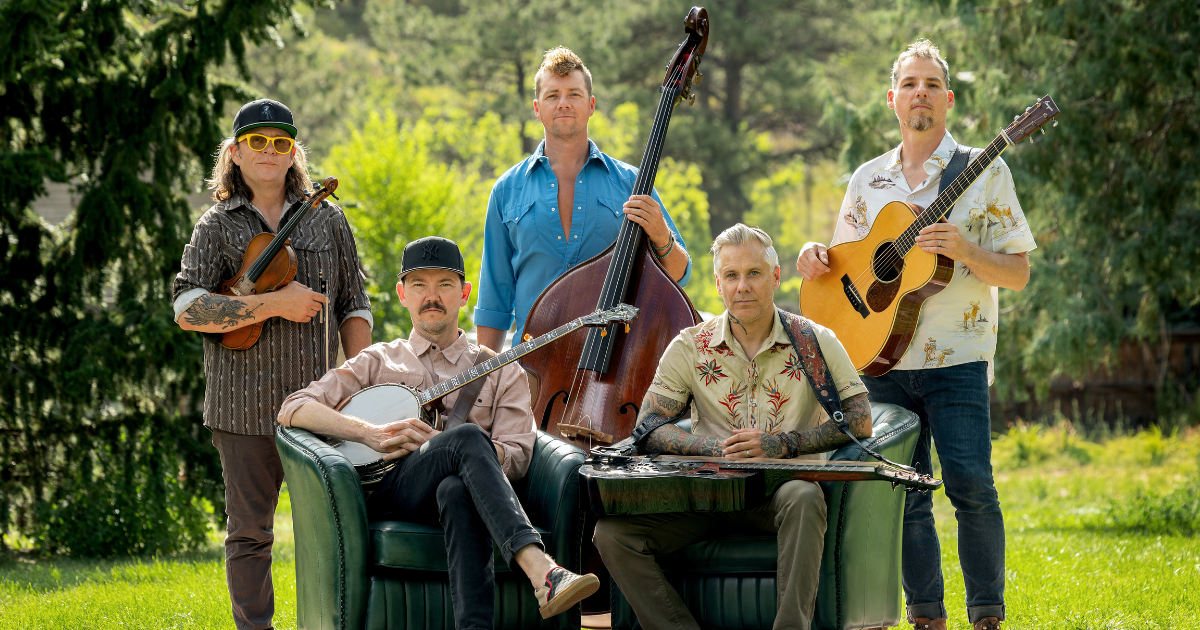
Artist of the Month: The Infamous Stringdusters

During the Infamous Stringdusters’ recent holiday gig at The Orange Peel in Asheville, North Carolina, the storied venue was packed out with jamgrass freaks, the performance itself a kickoff of sorts for the band’s 20th anniversary in 2026. I found myself standing sidestage when show opener Bronwyn Keith-Hynes came up next to me. A smile emerged on her face taking in the band and the audience.

“The Stringdusters made me want to start a band,” the GRAMMY-winning fiddler said, turning to me. “The Fork In The Road album was the most influential modern bluegrass album for me when I was at Berklee.”

Keith Hynes’ sentiment conjured numerous memories and moments I’ve been lucky enough to be a part of when it comes to the ‘Dusters. The first time I ever laid eyes and ears on them, it was the 2008 Targhee Bluegrass Festival in Alta, Wyoming. I was 23 years old and a rookie reporter for the Teton Valley News, based just down the mountain in Driggs, Idaho. By that point in my life, both personally and professionally, I was diving deep into the jamgrass world – the intersection of ancient tones, psychedelia, improvisation, and a collective love of the Grateful Dead.

The initial spark of the modern jamgrass movement was lit by Yonder Mountain String Band, Leftover Salmon, and the String Cheese Incident, all three acts coming into the national spotlight by the end of the 1990s. A musical template had been formed, and the ‘Dusters would emerge in the early 2000s to throw gasoline onto that melodic fire, ultimately becoming a missing link (alongside Greensky Bluegrass) between jamgrass originators, those ‘90s propagators, and folks currently carrying the torch into new, exciting realms: Billy Strings, Sierra Ferrell, Molly Tuttle, Sierra Hull, and more.

“That’s what’s so beautiful about bluegrass music, in particular,” Stringdusters fiddler Jeremy Garrett told me recently. “You pass it on to the next generation and they take it and they do their thing with it. Luckily for us, we were around at a time that [that] was very important, and a transitional time in the industry.”

In 2010, a couple of years after my introduction to the band at Targhee, when I returned to my native North Country of Upstate New York, I found myself covering a show at the intimate Showcase Lounge at Higher Ground in Burlington, Vermont. I was there to see the ‘Dusters once again. Their sound and energy immediately transported me back to the Rocky Mountains that I missed dearly. (Sharing the bill was another rising jamgrass act, Trampled by Turtles.)

I remember walking away from that gig feeling in awe and refreshed with a genuine feeling that something was happening. Something was on the horizon when it came to bluegrass and string band music. This wasn’t a traditional bluegrass band in matching suits, standing like statues. It was a rock show with acoustic instruments. Baseball caps and long hair, grins ear-to-ear. More provocative than standstill, more vibrant than just going through the motions of what past generations were instructed to do.

“Being able to showcase our own songs, in our own way, [our] writing skills, and making the decisions on what was chosen to play and how to play it [were] foremost for most of us at the beginning,” Garrett says. “Over time, we realized that we were actually growing a community. And after all these years, that honestly has become the most important part, the most important thing that we could possibly do.”

What I witnessed in Wyoming and Vermont years ago is what I’ve continued to experience with the Infamous Stringdusters, in person and in method, from Florida to Colorado and beyond. They set the pace then for where we stand with jamgrass right now, built on a full-throttle approach, one which remains sonically elusive as well as paying homage to the architects of bluegrass and those who broke from the pack and made something all their own.

Aside from the talents of the Stringdusters, either as individuals or the sum of their parts, you also have a unique setup. Alongside founding members, banjoist Chris Pandolfi and Dobroist Andy Hall, who emerged from the prestigious Berklee College of Music in Boston, you have the tradgrass pedigree of Garrett, who was born and raised in a traveling family bluegrass band hailing from Idaho. This fusing of road-tested grit and grace with conservatory-style techniques is at the heart of what this group does best: jam.

All of which circles back to the Asheville Orange Peel performance in late 2025. There were tightly knit melodies and freewheelin’ improvisational explorations. They broke down the invisible walls between themselves and the audience, maintaining a two-way street of momentum, energy, and inspiration from both sides of the microphone – a vortex of sound and scope, all revolving around a deep sense of community.

“The band is stronger than ever and making some of the best music we’ve ever made,” Garrett says. “But, the thing I see that is the most important being carried on is that community factor. We certainly didn’t invent that, but we took note and applied the philosophy to our scene, and hopefully the next generation realizes how important that piece is.”

Ultimately, this 20th anniversary celebration for the Infamous Stringdusters is a culmination of a tried-and-true effort to bring this hallowed music into the unknown and unfolding musical landscape of the 21st century. With their upcoming album, 20/20 (out February 13 via Ameriana Vibes) they continue their efforts to break new ground and forge ahead, together, whatever the next 20 years hold for jamgrass and the ‘Dusters.

The Infamous Stringdusters are our Artist of the Month. Below, enjoy our Essential Infamous Stringdusters playlist and stay tuned as we share brand new and archive content on the ‘Dusters throughout the month of February here on BGS – and across our social media channels. Like our exploration of their 20-year discography or our oral history of the band featuring all five members in conversation.


Photo Credit: Daniel Milchev

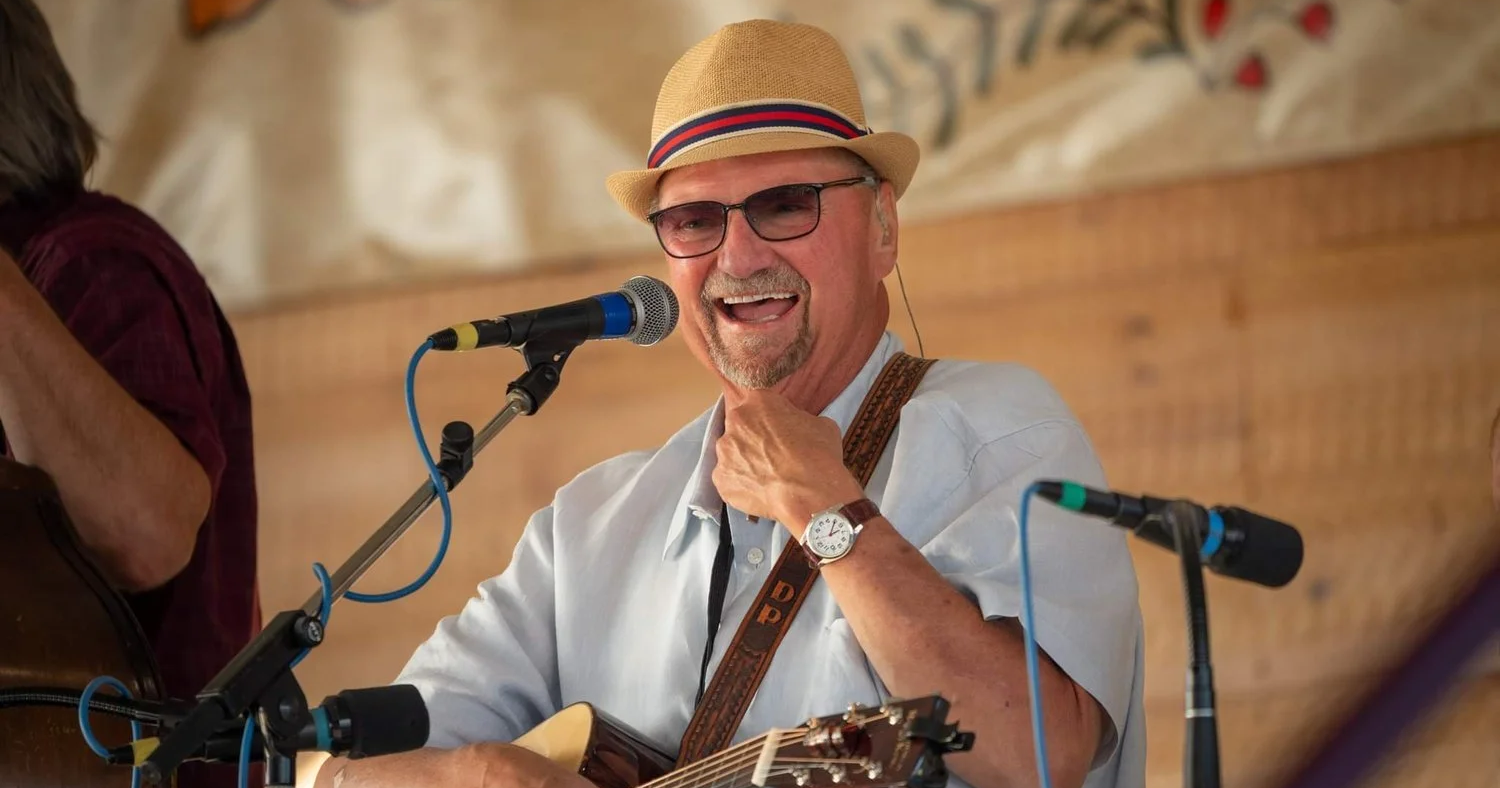
50 Years of the Paisley Family Business

Danny Paisley is a quintessential bluegrass tradesman. He began playing music around the age of 10 and soon after was sneaking into bars and clubs with his dad Bob Paisley, Ted Lundy, and their band, the Southern Grass. Danny was already gigging and touring at the age of 13, and now, five decades later, he’s enjoyed 21 years at the helm of the Southern Grass – with the next generation of Lundys, T.J. and Bobby, and the next generation of Paisleys, his son Ryan, in tow.

Danny learned the bluegrass ropes from his father, crafting and carrying on a traditional sound that draws directly from Bob’s musical foundation but also sounds distinct and personal. When Bob passed away in 2004, Danny had already taken over some of the leadership roles in the band while the elder Paisley had been battling cancer. Danny was determined to continue the group’s legacy, and over the last two decades he’s honored that legacy while consciously expanding it. Along the way, he’s earned four IBMA Awards for Male Vocalist of the Year, while he and the Southern Grass were awarded Song of the Year in 2009 for “Don’t Throw Mama’s Flowers Away.”

His 2025 album, released in May on Pinecastle Records, finds Paisley continuing that expansion, looking for new challenges and focusing in on a fresh sonic sparkle. Bluegrass State of Mind would sound like a straight-ahead traditional bluegrass album to a layperson, but to devoted fans of the Southern Grass, it’s a much more Americana-steeped and forward-looking endeavor. The usual five-piece lineup is augmented by Dobro, snare drum (gasp!), and a healthy dose of “what if we tried… this?” all across the project.

The result is charming, engaging, and downright excellent – it’s one of the finest bluegrass albums of the year, to be sure – showcasing how Paisley’s longevity is built upon a keystone of innovation and looking to the future, rather than being entrenched in the past. For someone who sounds entirely dyed in the wool and is held up by chair-snapping traditionalists as well as jamgrassy rebels, any level of “coloring outside the lines” of the genre would be remarkable. But Paisley isn’t stopping at new challenges and fresh sparkles; he wants to take his Bluegrass State of Mind to as many brand new audiences as he can find.

Fifty years into his career, Paisley is not resting on the assumption that he can keep performing and plying his trade by doing the same ol’ same ol’. No, Danny Paisley & the Southern Grass are still committed to bringing the bluegrass they love and hold dear to anyone and everyone who may enjoy it, by showing folks this kind of music can be for everyone. All the while, he’ll be turning over plenty of new leaves and passing along the family business in real time, too.

We caught up with Paisley at the Industrial Strength Bluegrass Festival in Wilmington, Ohio, between sets, when he and his son Ryan sat down with BGS to chat about his most recent album, what he wants to accomplish next, and the absolute unforgivable sacrilege of including drums on Bluegrass State of Mind.

Right on the album cover for your latest project it says, “Celebrating 50 years of bluegrass music.” To me, you’re a bluegrass tradesman. It’s very clearly your trade, it’s what you’ve done your whole life, and it runs in the family. It began with your father, Bob, and is continuing in the next generation with your son, Ryan. Can you talk a little bit about the meaning that you’re holding right now at 50 years, as you put together this record and were thinking about that anniversary, and that longevity?

Danny Paisley: I didn’t want to do a record rehashing old favorites. I kept hearing different songs and I kept saying, “I want to try this,” just for me to try this new approach. A “new challenge.” We recorded it and some of ’em were not standard Danny Paisley-type songs, but I felt they were awful good songs and I wanted to try it.

So Ryan and I worked it out, and he come up with a different approach for some of the tenor lines I would’ve sang previously. Now Ryan is singing them, so that added a different flavor. We just tried to sparkle the music, just to tweak it.

We added a Dobro for the first time, only ’cause I kept hearing it through so many of the songs. I’m more of a fan of the newer approach to Dobro than the older school. Mike Auldridge was the one that turned me [onto it], the way he was getting tones out of a Dobro.

You’re 50 years into doing this and have such an established sound as your own frontman, your own bandleader. People see you as so solidly traditional, but for you, five decades in, it’s clearly still important for you to turn over new leaves, to find that sparkle you’re describing.

Because I was feeling… maybe I was [feeling] stale, and after my health issues, I felt I really need to do this – for maybe a couple years, now. I regret that I didn’t try it [sooner]. So I tried it and I loved it. Had a great time, had a great producer [Greg Cole] and great help with Ryan and his influence and I think it’s a great CD. Different approach.

You’re still looking for new challenges and you’re looking forward. Obviously, with this record, with the way that you operate as a musician and a creative, you aren’t just somebody that’s like a lot of bluegrass people, with one foot in the past, one foot in the future.

Right.

Looking ahead – ’cause it seems like you’re looking ahead right now – what are the goals you haven’t done yet? Or the bucket list items you haven’t checked off yet?

I want to take our band – and this is a real goal – to reach other audiences. I think there’s a real audience and a real needing, almost, at some of the more jammy festivals. And we’ve done ’em and I’ve realized it really works well, presenting a straight-out, hardcore bluegrass band. We pick out songs that sort of go to that crowd, but we just play ’em in our style and we try to keep it upbeat, just to draw people in for a new audience.

I know the music has gotta move on. I’m a firm believer of it. We revere the past, but we look to the future – and I’m in that category. I look to the future, but I love the past. I don’t want to dishonor it, ’cause it’s the music I love and feel. It’s what’s inside of me. That’s the music I love.

So that’s my goal. I want to bring it out [to new audiences], and I really feel in today’s world, you’ll have to adapt things, but I really wanna make it traditional bluegrass. There’s a real audience for sincere, true bluegrass.

It makes me think of how we have Molly Tuttle, Billy Strings, and Sierra Ferrell–

Exactly.

All who are, at their core, traditionalists. So they’re shining a light on the folks who sound like you. I definitely think there’s space for a band like you in that constellation.

And Billy loves hardcore bluegrass! But he made it an event. People will pay money for an event. He puts it right down in their faces with some straight-out bluegrass, and it’s great.

Our mutual friend Jon Weisberger always talks about how one of the most valuable things you can do as a bluegrass band is to be the most traditional bluegrass band in a non-traditional space. The music can stand out for what it really is and doesn’t fade into the grayness of it all being the same.

There’s so many traditionalists who don’t want any variation, which I respect. We all do. I wanna revere that. But we also gotta realize these people, young folks today, are not coming into the music. With all the outside influences and modern day [stuff], Facebook and all the different Instagrams. [Laughs] They’re not coming into the music the same way. We need to respect that and bring it to them and bring them in.

We can’t expect some young person that’s just getting into music, that’s 18 or 19, to be really drawn in by singing another cabin song. We sing cabin songs, but we can’t [only do that]. And we’ve all had heartbroke and there’s a world of songs about heartbroke. Your lover has passed or left you, boohoo! We have to present it in a fresh way. And meet people where they’re at, for sure. That’s the best line, that’s truly it. And I’m a firm believer in that.

I fully believe in the intrinsic charm of bluegrass. I think everybody’s a fan, they just don’t know it yet. So if you can reach them with music that doesn’t show them or tell them that they’re not allowed to like bluegrass, it happens. Bluegrass can feel exclusive. Or it can feel like, “Oh, that’s music for other people, not for me.”

“Not me,” yeah! Or, “I’m afraid.” “I’m not sure that’s good enough, or that I would be accepted.” Or, “I hear it, but I don’t really want people to know I like it.” Because that stereotype has to go! It has to move on. It’s music for everyone. I don’t care what kind of music you’re in, music is for everyone. And you have to accept that or live in your little corner of the world and think everybody else is wrong.

I’ll probably get in trouble for that. [Laughs]

No, no! But speaking of traditionalism and traditionalists… so, bluegrass drums, huh? [Laughs]

Uh huh! [Laughs]

You’ve got bluegrass drums on the album. And what a lot of people don’t know – maybe our audience on BGS will know – but a lot of people don’t know that bluegrass drums are a traditional bluegrass instrument. I hear the “sparkle” and the difference in these songs, but I also still hear you. It sounds like your personality.

What my approach and my thought is, is I want it to still be me. I’ve had some people criticize it and say they didn’t appreciate that drum. Why? ‘Cause it was listed? [Laughs] It’s there to add some rhythm. And it was only there for a little sparkle, a little snap. And a little rhythm. If you didn’t really know it was there and we didn’t tell you, you probably wouldn’t know it. There’s nothing wrong with that, no. Drums are in a lot of bluegrass.

Exactly. We could list the folks who’ve had drums: Bill Monroe, Jimmy Martin, the Osborne Brothers, J.D. Crowe – the list goes on and on and on.

For you, as a traditionalist, straight-down-the-middle bluegrasser, this album is a few clicks towards Americana. But if you played this album for an Americana audience, it would just sound like traditional bluegrass.

It would be traditional bluegrass, yeah. I’m gonna draw those people in. That’s my goal.

The album sounds so warm and live. You know how bluegrass records nowadays, especially the ones made especially for satellite radio, all sound really compressed. They sound canned and sometimes stale. This album feels really warm and live and fresh.

I think ’cause they all want radio airplay. They have a certain– I don’t know the technical way [to describe it], but sometimes you start compressing the music too tightly. You miss guys like Jimmy Martin who threw his voice real up there and really stood out on a certain line. He popped –I call it popping – he’d pop his voice and stuff. It might have been there, but then they compress it with the recording or the engineering. I try to not let that get too overtaken in the music, even in straight bluegrass, ’cause that adds energy and life.

I do wanna talk about some of the songs on the album. I love these three in the middle: “Diagnosis Broken Heart,” “Two Old Church Pews,” and “Cream in My Coffee.” Let’s start with “Diagnosis Broken Heart,” ’cause that one, I think the sparkle and the challenge you’ve been talking about is there.

We had it recorded and I didn’t really like it. I felt it didn’t really work. So we redid it after we had it all done and mastered, we redid it. That’s a different approach for me. I said, “Let that sink in.” And after it sunk into me, I go, “No, I don’t wanna do it that way. I’m gonna go back and just sing it my way.” And that’s what I did. Then that one, we added the snare. I wanted a little pop – and the groove on that one is great. We brought the tempo up and that one worked.

The most challenging song was “Cream in My Coffee.” David Stewart wrote it along with some other gentlemen and David kept saying, “I want you to do this. I hear this.” And I kept saying, “I do too, but I don’t know if I can.” And so there’s your challenge!

So I did it and it wasn’t right. We’re in the studio and David Stewart’s there and he’s telling me how to do it and I’m not doing it the way I hear it. I’m listening to the way he’s singing it and I go, “I can’t really do it that way.” I’m listening back and forth. Finally, David comes in the studio and he says, “Think of a marching band.” We did a take and next thing I know he’s standing in the [control] room while I’m doing the vocal and he’s in there marching. [Laughs]

More people come and say, “I never thought you would record the song like that,” but I love it. I said that was a challenge, but it was a good challenge.

I also wanted to talk about “Two Old Church Pews.” Can you tell me about where that song came from? That line about how a church is wherever you are, that really resonated.

That was the major part of that song that grabbed me! That song was pitched to me by Brink Brinkman and Daryl Mosley. They sent it and I immediately said, “This is beautiful.” I said, “This wraps up basically how I feel.” You can talk to your deity wherever you are. Some people need to go to church. Some people just go out, have a quiet moment, and sit in the yard or a quiet spot in the house. That’s how I believe. And the two old church pews were [the singer’s] church. He took ’em home and he sat there and he would talk to the Lord in that way.

That’s how I feel and it’s a beautiful song. It rings thanks to Ryan and Greg. It come out excellent. And that’s probably the most traditional feeling, one of the new songs on that CD.

I love the text painting of it. It really feels like you’re seeing the imagery.

That’s what I tried with my singing. Tried to present that way. And the wording of it was excellent. That’s a once in a lifetime song.


Photo Credit: Shot by Rob Wasilewski, courtesy of the artist.

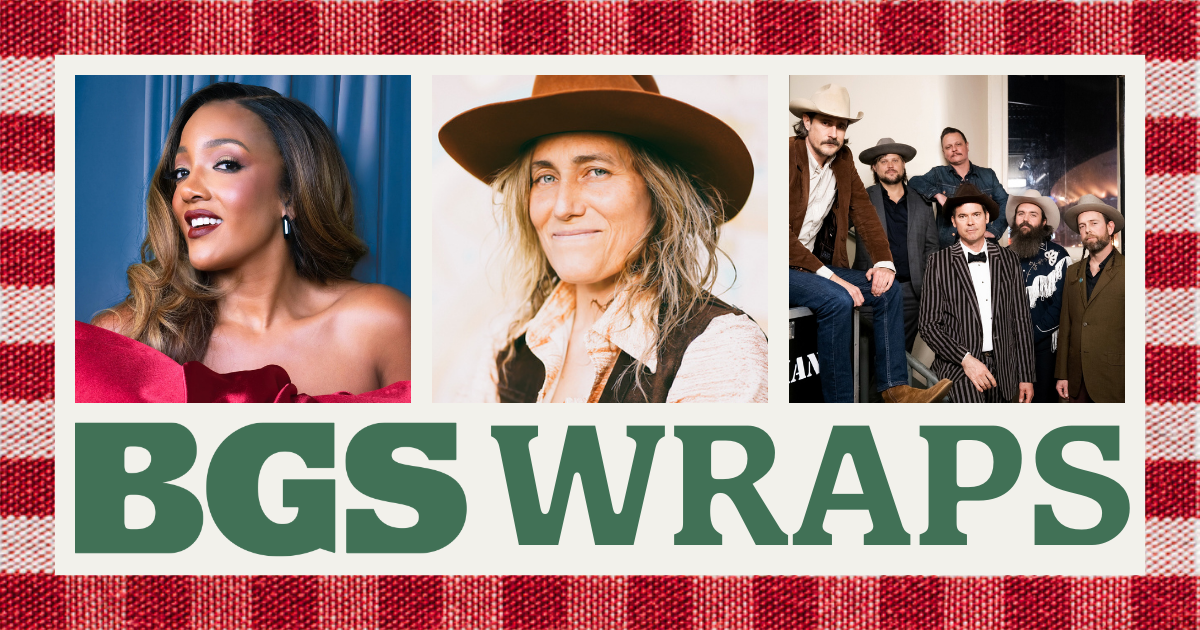
BGS Wraps: Roots Music for the Season

In our eyes and to our ears, there’s no better family of musical genres to usher in the holiday season than roots music. Bluegrass, Americana, old-time, country, blues, and beyond – they’re all perfectly suited for the coziest time of year, for togetherness, for parties and gift giving and cookie icing. Whether you celebrate Christmas, Hanukkah, Kwanzaa, or Winter Solstice – or even if you feel like opting out of the ruckus altogether – there is roots music for you.

Each year, we like to share our picks for the rootsiest time of the year in BGS Wraps, a weekly collection of songs, videos, albums, shows, tours, and events that celebrate the season. We share a few of our favorites, mostly brand new but often classics and timeless selections, too. Plus, we collect all that we can into a running playlist so you’re ready when the family or party hands you the aux cable.

To kick off the season this year, we’ve got a BGS Wraps full of Good Country, jingle bells, Texas snow, holiday generosity, and plenty of glittering lights and joyous cheer. We hope you enjoy BGS Wraps and tune in the next two weeks as we continue our series celebrating the holiday season.

A Very Carper Christmas, Melissa Carper

One of our favorite purveyors of Good Country in the most legit old-school, Texas, Western swing, and outlaw styles, Melissa Carper has just launched her own album of holiday music, A Very Carper Christmas. It boasts quite a few originals and co-writes and a couple covers of classics, too. The collection is silky smooth and timeless, a perfect accompaniment to holiday cooking, decorating, gallivanting from store to store, or cozying up by the fire with your loved one of choice.

Starting December 4, Carper will join JD McPherson’s “Socks: A Rock & Roll Christmas” tour around the Southeast, East Coast, and Midwest. So don’t miss your chance to catch these Good Country seasonal songs live in person. Melissa Carper tour details here.


“When It Snows in Texas,” Chaparelle & Sierra Ferrell

Let’s keep it going with more Austin-based Good Country! Last month, alt-country supergroup Chaparelle announced a brand new co-write and collaboration with everyone’s current favorite old-time Americana goddess, Sierra Ferrell. “When It Snows in Texas” is the perfect seasonal holiday number, apt for each and every rootsy holiday playlist and certainly suited to occasions beyond just Christmas. With a languid, loping groove, it’s all wrapped up in alt sounds that remind of Nitty Gritty Dirt Band and a casual sing-along sidled up to a shiny wooden bar all at the same time. This is the country & western (heavy on the ampersand western) vibe we all crave – this time of year or anytime.


Feels Like Christmas, Mickey Guyton

Singer-songwriter and country star Mickey Guyton is no stranger to festive song releases, but Feels Like Christmas is officially her first full-length holiday album. From the adorable “Sugar Cookie” to the classic pop trappings of the title track to her “Christmas Isn’t Christmas” duet with the Michael Bolton, Feels Like Christmas feels… well, grown up. Fully realized. Ready for your moody, ambient Christmas cocktail hour or a laughter-rich, full kitchen, too. Guyton makes some of the best crisp, modern, radio-ready country around today, and this holiday collection – like most if not all of her discography – feels made to last the ages, too.

Further leaning into the festivities of the season, Guyton will also appear in a brand new Hallmark movie, A Grand Ole Opry Christmas, which is premiering this year during Hallmark Channel’s 16th annual Countdown to Christmas programming event. Guyton certainly has our number, and we’ll be camped out in front of the TV with our hot ciders and sugar cookies ready and waiting for this incredible Opry, country music, and Hallmark crossover.


I’ll Be Home for Christmas, Drew & Ellie Holcomb

Drew & Ellie Holcomb have added to their deep-and-wide catalog of holiday and seasonal music with a brand new EP entitled I’ll Be Home For Christmas. The project adds three lovely covers of Christmas favorites to the stacked roster of selections the couple and their Neighbors trot out each winter for the season. This year, they’ll perform two “Neighborly Christmas Special” shows in Tennessee – in Memphis on December 5 and in Nashville on December 12 – before heading out on their next headline tour in February. Find ticket info here, then put on I’ll Be Home For Christmas while you make your holiday lists and check them twice.


The Greatest Christmas On Earth, Robert Earl Keen

Now this right here sounds like our kind of Americana Christmas circus! Robert Earl Keen kicks off his “The Greatest Christmas On Earth” tour this week, crisscrossing the South and Southeast through the month of December spreading cheer, joy, silliness, and light – and keeping the party going down the road forever, as he does.

The tour will kick off on December 4 in REK’s hometown of Kerrville, Texas, and you can be sure each night will feature his paean to the beauty and dysfunction of families at the holidays, “Merry Christmas From The Family.” Put all your own rowdy relatives in the van and don’t miss these shows. Ticket info here.


“Dream a Dream of Christmas,” Lydia Luce

Lydia Luce just released her excellent brand new album, Mammoth, in late October, but even before the project’s release she was looking ahead to the winter and holiday seasons with a A-side / B-side single release, “Dream a Dream of Christmas.” Like her songs in general, the A-side selection is contemplative, emotional, and rich with text painting and lush piano and vocals. Resonant strings play along with the contours of her vocal, punctuated by Christmas-y percussion and scoring, like Hollywood holiday offerings of the ’50s and ’60s. The track’s B-side is a delightful rendition of the beloved carol “Silent Night” that’s dramatic and rich – and features guest vocals by Caroline Spence. Both songs would be excellent additions to your themed playlists for the season.


OCMS XMAS, Old Crow Medicine Show

It’s hard to believe one of bluegrass and old-time’s longest running party string bands, Old Crow Medicine Show, have just released their first holiday album this year – but it’s true! OCMS XMAS is zany, rollicking, and unhinged. (As it should be.) It’s a collection of stories, songs, and tableaus that are just as fantastic and engaging as any of their rip-roaring live shows or any of their adored albums from their stacked discography. It’s a Christmas album as only Old Crow could make, and frontman Ketch Secor’s fingerprints are all over the track listing. From “Corn Whiskey Christmas” to “Breakin’ Up Xmas” to “Krampus Night” and beyond, this set of material will certainly be a Holiday Hootenanny on stage. Catch their Holiday Hootenanny on tour through December 20, before the band returns yet again to the Ryman Auditorium for their iconic annual New Year’s celebration performances to close out the year.


Sweet Relief’s Annual Holiday Auction

Sweet Relief is a non-profit organization with a mission that we all – in the music industry and outside of it – can get behind. For more than 30 years Sweet Relief has worked to provide financial assistance to musicians and music industry workers who are facing illness, disability, or age-related challenges. Just last week, they launched their annual holiday auction yet again, offering signed memorabilia and in-person experiences with a variety of artists in roots music and beyond, all of which benefit their important mission and vital work supporting music professionals’ mental and physical health.

Folks can bid on offerings from artists and musicians like Billy Strings, Hozier, Pearl Jam, Walker Hayes, The Decemberists, the Black Keys, Amanda Shires, Gregory Alan Isakov, and many, many more. If you’re planning your Giving Tuesday donations and also wondering what to get the music lover in your life who already has everything, perhaps you can check two things off your list in one go by supporting Sweet Relief. Learn more and view the auction items here.


Jingle All The Way Tour, Béla Fleck & the Flecktones

No holiday season would be complete without regularly returning to one of the best roots holiday albums ever made, Béla Fleck & the Flecktones’ Jingle All The Way. Released in 2008, the GRAMMY Award-winning album is beloved in and outside of roots music spheres – it even landed a mention in Oprah’s O Magazine back in ’08! Now, Fleck and the band – including Victor Wooten, Roy “Future Man” Wooten, Howard Levy, and special guests Jeff Coffin, Alash, and Sierra Hull (on select dates) – are taking their virtuosic cheer back on the road with a full slate of Jingle All The Way Tour shows. The tour kicked off in Nashville and will continue through December 20 hitting performing arts centers and theaters in the Midwest and across the Eastern U.S. To mark the occasion, Fleck & the Flecktones released their first holiday music since Jingle All The Way, a single medley of “The First Noel/Joy To The World.” If you can’t make the shows, put the original album and new single on the stereo – but we really recommend snagging tickets and seeing them live, with this superlative lineup, if you can.


Lead Image: Mickey Guyton, Feels Like Christmas; Melissa Carper by Lyza Renee; Old Crow Medicine Show courtesy of the artist.

Danny Burns’ Roots Music Journey Through the South

My new album’s theme, along with the theme of this Mixtape, is a roots-inspired journey through the South, with songs that evoke the feeling of traveling across its landscapes and into the heart of the Deep South. I hope the fans enjoy the journey of these songs and all the sounds and people it takes to make them come to life on Southern Sky – it takes a village.

That village comes to life across the nine-track journey of Southern Sky, where Irish roots fuse with Southern soul driven by Dobros, fiddles, and rich storytelling that soar with Appalachian tradition and Southern warmth. Inspired by the textures of the South, the spirit of the album is like Allen Toussaint’s Southern Nights, where Appalachian tales intertwine with the deep twang of the South.

Southern Sky features a multitude of musical titans – Vince Gill, Tim O’Brien, Ricky Skaggs, and Sam Bush to name a few – all contributing to the exceptional sound that I strive for. – Danny Burns

“Summer in Siam” – The Pogues

I always loved this tune, growing up listening to the Pogues and having met Shane many moons ago.

“My Old Friend the Blues” – Steve Earle

Steve is one of my favorites. I’ve had the honor to sing with him, open shows with him, and hang on his bus. His songs are epic; this is a great example of that.

“Southern Nights” – Citizen Cope

I first met Clarence Greenwood in New Orleans when I was driving him, Neal Casal, and Jon Graboff (the Cardinals) around while they were playing Tipitina’s. I fell in love with Clarence’s songs and his performances. Another great American artist and songwriter.

“Whenever You Come Around” – Vince Gill

I’m a huge fan of Vince and this track is about as good as it gets. I’ve always admired his songs, his voice, and everything he brings to the table.

“Locals Only” – ERNEST

I first heard this song down in Mexico during the pandemic while hanging out on the beach in Puerto Morelos. It became a bit of an anthem for those days by the water.

“Waiting On You” – Cecilia Castleman

A truly killer talent. Cecilia can play, she can sing, and I’m sure her skills as an engineer and producer are just as strong. This song is fantastic.

“Angel Flying Too Close To The Ground” – Willie Nelson

This has always been one of my go-to lonesome Willie tunes.

“That’s How Every Empire Falls” – John Prine

Epic song written by RB Morris out of Knoxville. I love both versions, but it was John’s take that first introduced me to it.

“The Lucky One” – Alison Krauss & Union Station

What can I say about Alison’s voice– absolutely world-class. Pair that with a world-class band, production, and song and it’s just unbeatable.

“Years” – Sierra Ferrell 

This is pure ear candy. So intriguing and instantly captivating. It feels amazing and sounds incredible. Perfect work!

“Colony” – Damien Dempsey

A heavy hitter in the Irish scene, this track is a prime example of his finest work.

“Settle For A Slowdown” – Dierks Bentley

I really loved this album; it feels like a perfect introduction to where country meets bluegrass with a modern twist.

“Señor” – Tim O’Brien

Love Tim and his take on this epic Bob Dylan song.

“Linger” – Áine Burns

Love Áine’s take on this Cranberries hit – can’t wait to hear more from her before the year’s end.


Photo Credit: Jim Wright

The Winners and Recipients of the 2025 Americana Honors & Awards

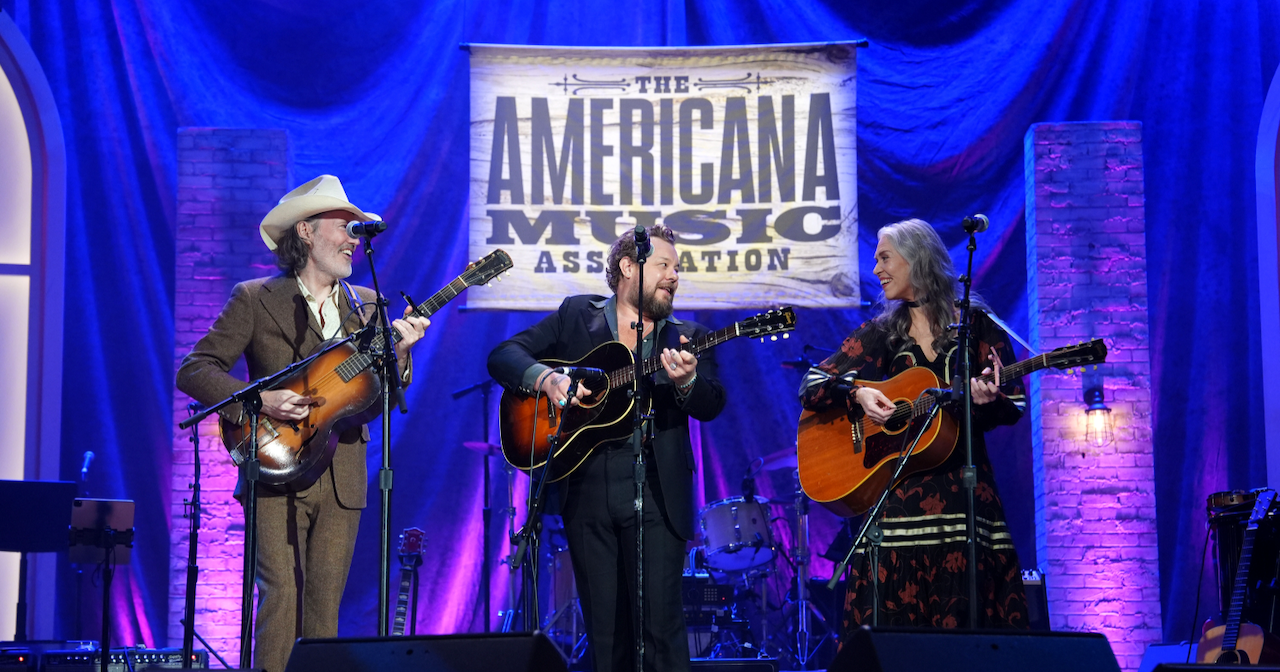
Last night, the Americana Music Association held their 24th Annual Americana Honors & Awards at the Ryman Auditorium in Nashville, Tennessee. The star-studded show, which packed plenty of magical moments into its three-hour-plus runtime, was hosted by actor/comedian/musician John C. Reilly and featured performances by John Fogerty, Emmylou Harris, Joy Oladokun, I’m With Her, S.G. Goodman, and many, many more.

Fiddler Alex Hargreaves, currently touring and recording with Billy Strings, won the first award of the evening, Instrumentalist of the Year, while Appalachian “heavy petal music” starlet-pixie Sierra Ferrell was awarded Artist of the Year. Nathaniel Rateliff & the Night Sweats’ latest LP, 2024’s South of Here, won Album of the Year and Gillian Welch & David Rawlings took home a trophy each for Duo/Group of the Year.

Nashville singer-songwriter, session playing stalwart, and community leader Buddy Miller returned yet again as the musical director of the Americana All-Star Band – including Don Was, The McCrary Sisters, Fred Eltringham, Jen Gunderman, Jim Hoke, and Larry Campbell – to supply the evening’s first-class music. Plus, the McCrary Sisters were honored by AMA and the National Museum of African American Music with the Legacy of Americana Award.

There were many more noteworthy moments, performances, and appearances throughout the proceedings, which were livestreamed via NPR Music – watch here to see all that you may have missed. Below, you’ll find a full list of the winners and honorees – with “Of the Year” awardees marked in bold. Americanafest continues through the rest of the week in Nashville, promising even more roots music magic all across Music City.

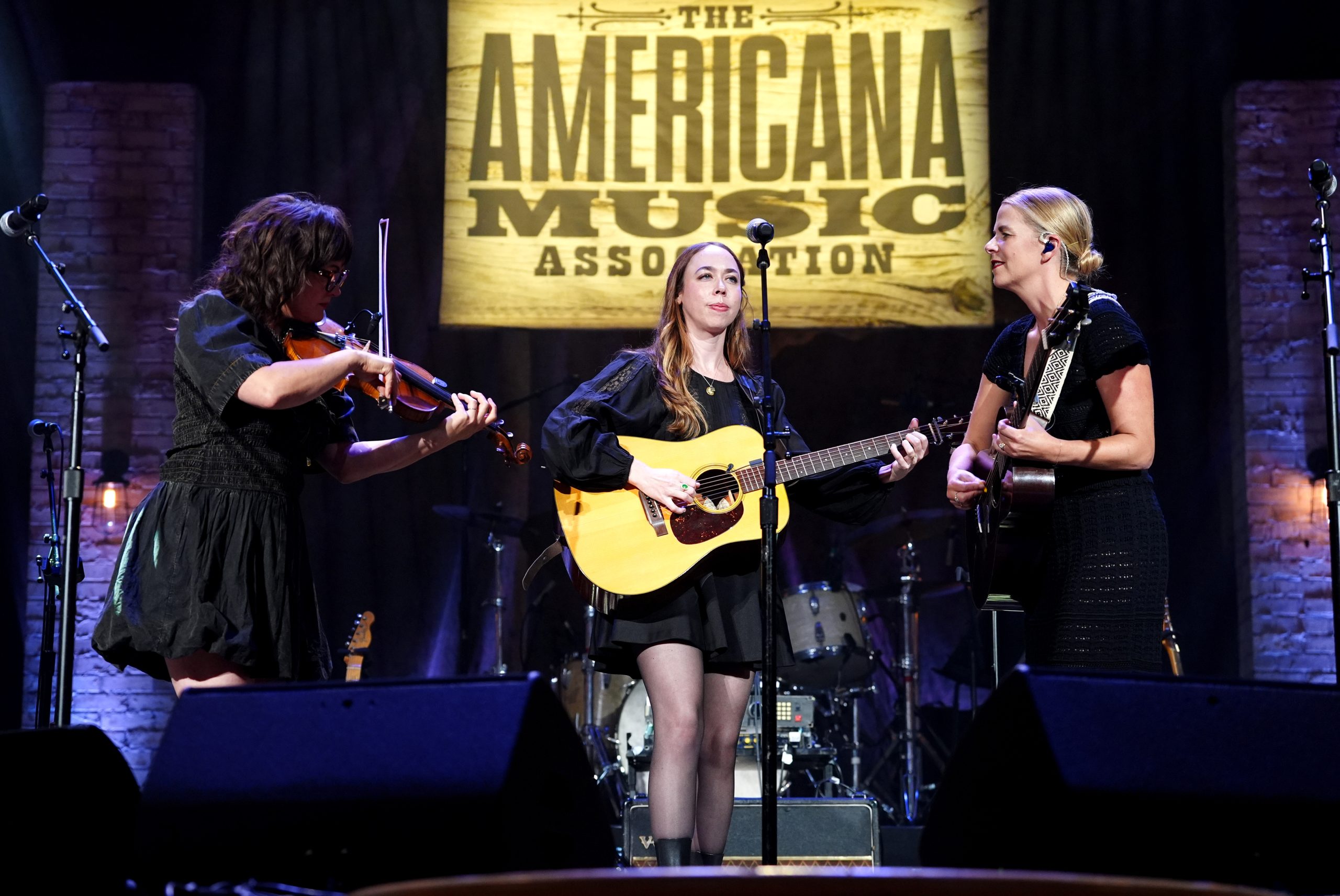
I’m With Her – Sara Watkins, Sarah Jarosz and Aoife O’Donovan – perform during the Americana Honors & Awards at which they won Song of the Year. (Photo by Erika Goldring/Getty Images for Americana Music Association.)

ALBUM OF THE YEAR

Lonesome Drifter, Charley Crockett; Produced by Charley Crockett & Shooter Jennings

Foxes in the Snow, Jason Isbell; Produced by Jason Isbell & Gena Johnson

Manning Fireworks, MJ Lenderman; Produced by Alex Farrar & MJ Lenderman

South of Here, Nathaniel Rateliff & The Night Sweats; Produced by Brad Cook

Woodland, Gillian Welch & David Rawlings; Produced by David Rawlings

ARTIST OF THE YEAR

Charley Crockett
Sierra Ferrell
Joy Oladokun
Billy Strings
Waxahatchee

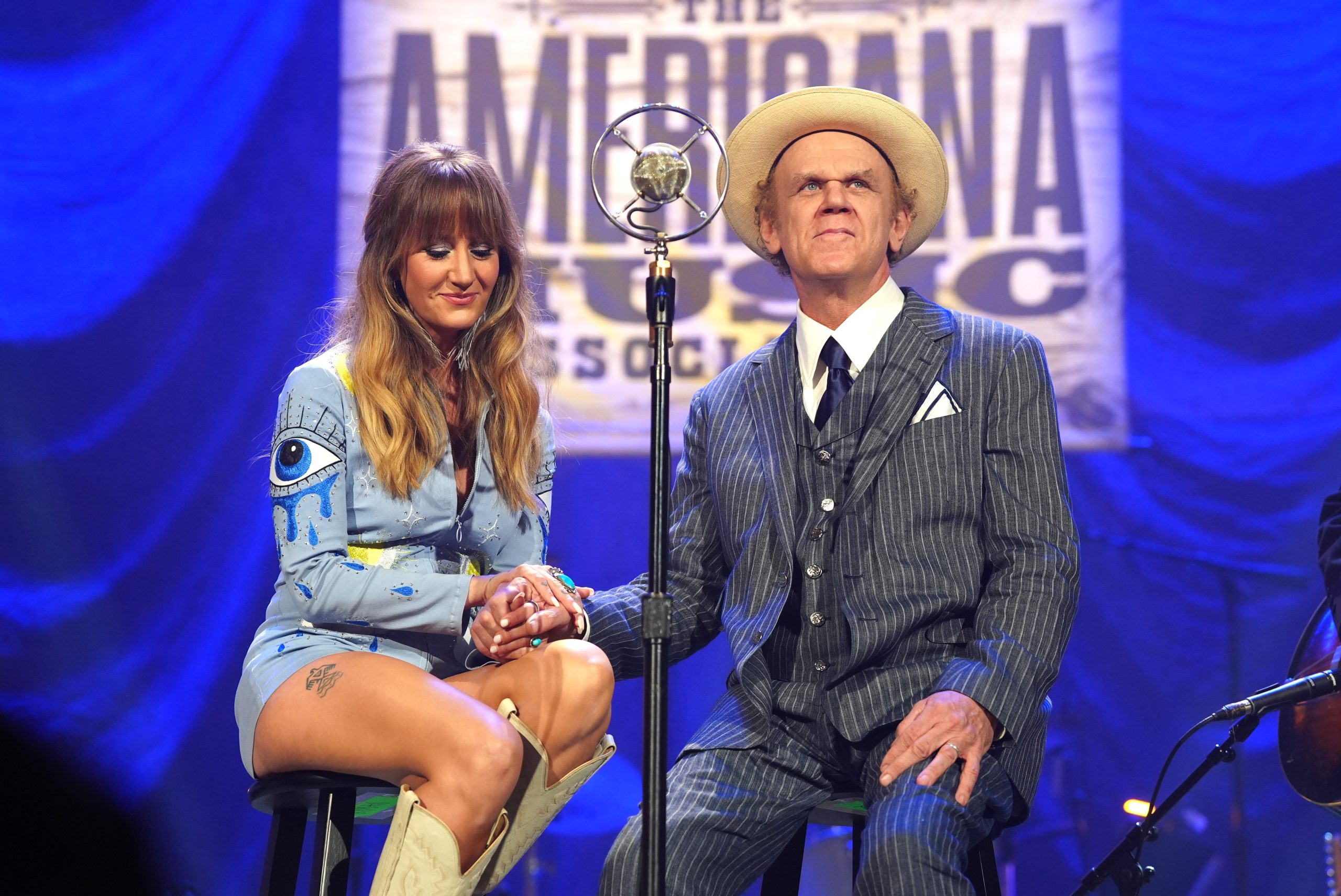
Margo Price and host John C. Reilly center stage at the Americana Honors & Awards. (Photo by Erika Goldring/Getty Images for Americana Music Association.)

DUO/GROUP OF THE YEAR

Julien Baker & TORRES
Dawes
Larkin Poe
The Mavericks
Gillian Welch & David Rawlings

EMERGING ACT OF THE YEAR

Noeline Hofmann
MJ Lenderman
Medium Build
Maggie Rose
Jesse Welles

INSTRUMENTALIST OF THE YEAR

Fred Eltringham
Alex Hargreaves
Megan Jane
Kaitlyn Raitz
Seth Taylor

SONG OF THE YEAR

“Johnny Moonshine,” Maggie Antone; Written by Maggie Antone, Natalie Hemby & Aaron Raitiere

“Ancient Light,” I’m With Her; Written by Sarah Jarosz, Aoife O’Donovan & Sara Watkins

“Wristwatch,” MJ Lenderman; Written by MJ Lenderman

“Sunshine Getaway,” JD McPherson; Written by Page Burkum, JD McPherson & Jack Torrey

“Heartless,” Nathaniel Rateliff & The Night Sweats; Written by Nathaniel Rateliff

Darrell Scott sings with I’m With Her – Sara Watkins, Sarah Jarosz, and Aoife O’Donovan – at the Americana Honors & Awards. (Photo by Erika Goldring/Getty Images for Americana Music Association.)

AMERICANA LIFETIME ACHIEVEMENT HONOREES

Joe Henry
Darrell Scott
Old 97’s

LEGACY OF AMERICANA AWARD

(co-presented with the National Museum of African American Music)

The McCrary Sisters

SPIRIT OF AMERICANA FREE SPEECH IN MUSIC AWARD

Jesse Welles


All photos via Getty Images for Americana Music Association, credits as noted.

Lead image: David Rawlings, Nathaniel Rateliff, and Gillian Welch perform during the Americana Honors & Awards; by Erika Goldring.
Alternate images: David Rawlings & Gillian Welch pose backstage with their award for Duo/Group of the year; by Terry Wyatt.

Sawtooth
Country Soul

To say Kashus Culpepper’s life has changed over the last five years is an understatement. A former state champion wrestler, firefighter, and EMT, the Alabama native developed a raspy, smoke-and-voodoo vocal while stationed in Spain with the U.S. Navy in 2020, forced to pass the pandemic in his bunk. Since then, he’s knocked over one milestone after another.

With a distinctive mix of country, blues, Southern rock, and soul, the 27-year-old cites Robert Johnson, Bill Withers, and Hank Williams as inspirations and is now bringing his roots-renegade instincts to mainstream fans. Despite only releasing his first official track in June of 2024, the music industry short-timer has earned big-time appreciation.

That includes the respect of heroes like Elton John and John Mayer, a Grand Ole Opry debut, tour dates around the country, and inclusion on 2025 “artist-to-watch” lists at GRAMMY.com, Apple, Billboard, Pandora, and more. Culpepper just finished a run of dates with Leon Bridges and he’ll hit the road with Whiskey Myers in June before joining tours by Sierra Ferrell, Darius Rucker, and others later on in the summer. It would all be overwhelming, if he had time to think about it.

“I’ve just been taking it day by day,” Culpepper tells Good Country with a hearty laugh, waiting to perform at a community festival in Arkansas last month. “I think that’s the best course of action. Don’t think too far in the future and just take each show, each writing session, each recording session one at a time. Just pray everything works out and keep going. … Because when things started happening, I was like, ‘Oh, snap.’”

We wanted to get to know Culpepper before anything else “happens,” and figure out what’s fueling the hype. As it turns out, this all-natural talent is just going with the flow.

I read that you didn’t even start playing guitar until you were in Spain for the Navy, right? What made you want to do that?

Kashus Culpepper: Yeah, in Spain we got shut down and I didn’t have nothing else to do, man. I mean, literally I was bored out my mind. It’s a different type of boredom, because during COVID you couldn’t do nothing. It’s not like you can just go outside or go to a bar or hang with your friends. We couldn’t do nothing. So this was a weird point in my life and my buddy had a guitar in the barracks. I was like, “Well, this is a perfect time. I literally have nothing to do.” I just went on YouTube and looked up covers I wanted to learn. Music has always been something I go back to whenever life is hard. So I resorted back to music and that ended up leading me to learn guitar, eventually learn to write songs.

Thank God for YouTube, huh?

Shout out Marty Schwartz!

You seem to have a lot of diverse tastes, but that bluesy, soulful country thing – why did that speak to you?

I think maybe that’s just my music taste. My first taste of music was gospel, and I’m from Southern Alabama, so gospel there, it’s really rootsy already. It already sounds like a folk song. And the way they sing it sounds so bluesy, like old Son House type of vibes. From there I got into blues music outside of church. I got into country music and R&B and folk music a little. I’m all over the place when I listen to music. I can go from Allman Brothers to a Conway Twitty song really quick.

But I know you like John Mayer and all that stuff, too, right?

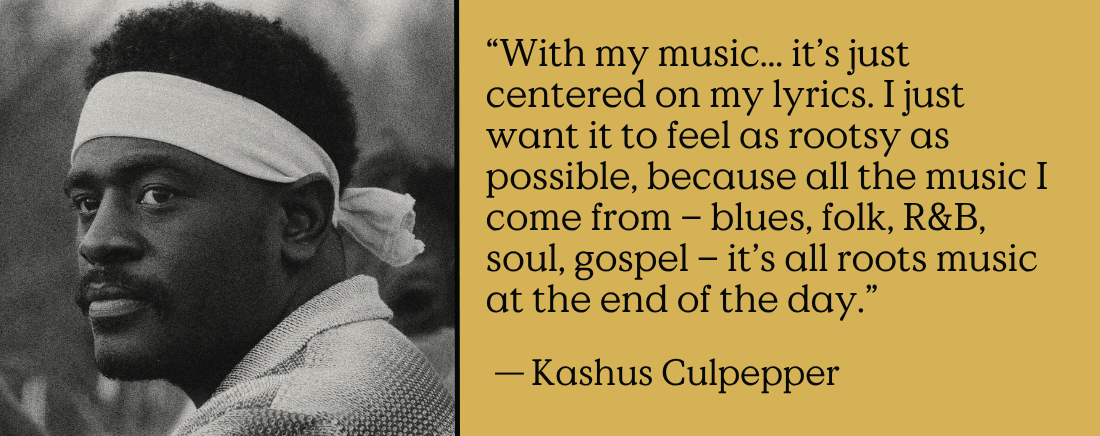
Yeah, yeah. I mean, I love so many of those rock artists, ZZ Top, Led Zeppelin, Skynyrd. People ask me all the time my influence and I’m just like, “Bro, it’s so hard to name everybody.” John Mayer was a huge thing for me. Recently I went back to Norah Jones, I’m like, “Man, I used to love this record.” But with my music, at the end of the day, it’s just centered on my lyrics. I just want it to feel as rootsy as possible, because all the music I come from – blues, folk, R&B, soul, gospel – it’s all roots music at the end of the day.

Your voice is so good at expressing these really raw emotional states, I think. Is that how you are naturally? Or does that only come out in your music?

Most of the time? Honestly man, it’s just with the music. It’s hard to open up to the people. I think for me music has been great, just to express how I actually feel through my singing and my lyrics. I don’t usually just tell people.

So you’re from Alabama. After the Navy, did you go home and keep playing?

I got out the Navy in 2022 and by that point I already had gigs booked on the Mississippi Gulf Coast. I was booked at all these casinos, all these bars. I was booked out for a year in advance. I got out and went straight to full-time doing cover band shows pretty much for another year, until I literally couldn’t take any more of it. Then that’s when I decided I really want to write songs. Literally, I decided “I’m going to move back home to save as much money as I can and move to Nashville.” I was home for maybe a week or two and posting a lot on TikTok and I remember I was in my mom’s living room. I posted a TikTok, I went out because I had an interview for a job, I got back home, and it had reached 100,000 views. From there it was just, “Oh, snap. It’s going on.”

@kashculpeppermusic Replying to @Casey Wayne One week till “Man of His Word” drops! Appreciating all the support on this one❤️ Pre-save link in bio🔥 #country #singersongwriter #original #kashusculpepper #newmusic #livemusic #countrymusic #countrymusiclover #tour #soul #newcountry ♬ original sound – Kashus Culpepper

That’s awesome. Congratulations on how that all turned out. I think one reason for it might be that your music seems so unconventional, almost untamed. Maybe because you did it on your own? Do you feel like fans are hungry for that?

I think so. We talked about John Mayer. John Mayer is kind of like that. He’s all over the place. Sometimes he’ll do a blues song and then straight up pop, and then an R&B song with Leon Bridges. I think people just love that from artists. Artists just being artists. Just do whatever the song feels like. That’s how I feel with songs.

“A Man of His Word” is super soulful, with lots of that gospel influence and a big raspy vocal. Tell me about being the man a girl deserves. Where’s that theme coming from?

I wrote that song with Natalie Hemby and at the time we was just talking about life. The song is from a perspective of a guy looking into a girl and she’s going through hardships, because she don’t have a man of his word. She’s drinking a lot, doing a whole bunch of stuff. The song has a lot of me in it. I grew up with a single mother and you don’t know how those things can affect you without having somebody in your life you can trust. You get the feeling you can’t really trust nobody, because that’s not part of your life, and that leads to mental health problems or substance abuse. You don’t even notice it at the time, until you look back and you’re like, “Dang, that’s why I feel that way.”

After that comes “Broken Wing Bird” with Sierra Ferrell and it’s on the opposite end of the spectrum. Very threadbare and folky, right?

Oh man. So I’m a huge fan of Willie Nelson. One of my favorite songs is “Funny How Time Slips Away” – I just love so much the crooner era that he was doing – and I wanted a song that felt like that.

I wrote the song about somebody that’s not really good for you and you just keep taking ‘em back regardless, because you love them and no matter what they do, you’re always going to. So she’s like my broken-winged bird – no matter what she does, she’s flying back and I’m always going to help her out and then she’ll probably be on her way again.

It’s been good getting to know you a little. Big picture, what do you hope people take away from your music?

I think overall, I hope they can see I’m just an artist trying to express the way I see things, and I hope in some way they can find music that can fit every part of their life. Whether they’re trying to have a good time out partying, or if they want to soak into the sadness of a lover they lost, I just hope my music can fit some aspect of their life. And I hope they can enjoy it.


Photo Credit: Cole Calfee

Sign up here to receive Good Country’s email newsletter direct to your inbox.

Charley Crockett, Gillian Welch & David Rawlings, Waxahatchee Among Americana Nominees

The Americana Music Association has announced the nominees for its 24th annual Americana Honors & Awards. This year’s nominations were revealed by Brandi Carlile, Kashus Culpepper, S.G. Goodman, Jim Lauderdale, Kacey Musgraves and Molly Tuttle in a social media announcement.

The winners will be announced during the Americana Honors & Awards on Wednesday, Sept. 10, 2025, at the historic Ryman Auditorium in Nashville. The celebrated program is the hallmark event of AMERICANAFEST, which returns for its 25th year on Sept. 9-13, 2025.

A full list of categories and nominees for the Americana Music Association’s 24th annual Americana Honors & Awards is below the video player.

ALBUM OF THE YEAR:

Lonesome Drifter, Charley Crockett; Produced by Charley Crockett & Shooter Jennings

Foxes in the Snow, Jason Isbell; Produced by Jason Isbell & Gena Johnson

Manning Fireworks, MJ Lenderman; Produced by Alex Farrar & MJ Lenderman

South of Here, Nathaniel Rateliff & The Night Sweats; Produced by Brad Cook

Woodland, Gillian Welch & David Rawlings; Produced by David Rawlings

ARTIST OF THE YEAR:

Charley Crockett

Sierra Ferrell

Joy Oladokun

Billy Strings

Waxahatchee

DUO/GROUP OF THE YEAR:

Julien Baker & TORRES

Dawes

Larkin Poe

The Mavericks

Gillian Welch & David Rawlings

EMERGING ACT OF THE YEAR:

Noeline Hofmann

MJ Lenderman

Medium Build

Maggie Rose

Jesse Welles

INSTRUMENTALIST OF THE YEAR:

Fred Eltringham

Alex Hargreaves

Megan Jane

Kaitlyn Raitz

Seth Taylor

SONG OF THE YEAR:

“Johnny Moonshine,” Maggie Antone; Written by Maggie Antone, Natalie Hemby & Aaron Raitiere

“Ancient Light,” I’m With Her; Written by Sarah Jarosz, Aoife O’Donovan & Sara Watkins

“Wristwatch,” MJ Lenderman; Written by MJ Lenderman

“Sunshine Getaway,” JD McPherson; Written by Page Burkum, JD McPherson & Jack Torrey

“Heartless,” Nathaniel Rateliff & The Night Sweats; Written by Nathaniel Rateliff


Photo Credits: Charley Crockett courtesy of the artist; Gillian Welch & David Rawlings by Alysse Gafkjen; Waxahatchee by Molly Matalon

Artist of the Month: Alison Krauss & Union Station

After 14 years, one of the biggest and most well-known bluegrass bands in the history of the music, Alison Krauss & Union Station, have returned with a brand new studio album, Arcadia. Released on March 28 to the delight of bluegrass and AKUS fans the world over, the collection doesn’t merely pick up where the group left off with 2011’s Paper Airplane. Instead, Arcadia soars back through the band’s deep and mighty discography landing somewhere, sonically, between So Long, So Wrong (1997) and Lonely Runs Both Ways (2004) – in other words, this iconic bluegrass band made a bluegrass album.

Alison Krauss & Union Station, by many measures, are one of the most prominent bluegrass bands to ever emerge from the genre. With the smashing success of her late ’90s to 2010s projects with Union Station and the incredible momentum behind their particular blend of bluegrass, “mash,” easy listening, country, and adult contemporary, Krauss catapulted to roots music notoriety, becoming a household name. She’d lend her voice to the blockbuster Coen Brothers film O Brother, Where Art Thou?, tour with Willie Nelson and Family, make two smash hit records with rock and roll legend Robert Plant, back up Shania Twain, duet with artists like Dolly Parton, Andrea Bocelli, Kris Kristofferson, Cyndi Lauper, Ringo Starr, and countless others. Was bluegrass, which Krauss had called her musical home since she was a pre-teen fiddle contest phenom, merely a springboard into fame and notoriety?

Of course not. This is the idiom in which Krauss has made most of her art; this is a second language – or perhaps, a first – and the fluency and virtuosity Krauss and her band have displayed are two of the most important bluegrass exports that registered and resonated with the masses who would become her fans. Krauss’s crystalline and powerful voice, sensitive and deliberate deliveries, endless grit, and one-of-a-kind skill for song curation only bolstered the electric, engaging charm of the bluegrass bones endemic in her artistry. It’s no wonder that this iteration of bluegrass ended up becoming arguably the most mainstream and most recognizable in the U.S., if not the world.

So, Krauss spread her wings and flew, carrying those bluegrass sensibilities – however overt or subtle – into everything she made. Whether the clean and country Windy City or the soulful and rockin’ pair of Raising Sand and Raise The Roof with Robert Plant, or the easy and romantic Forget About It, she had new horizons to run towards. But she always brought bluegrass with her. To arena tours, giant amphitheaters, sheds, pavilions, the biggest festivals, and beyond. By the time Paper Airplane took off, many in bluegrass regarded AKUS as bluegrass’s zenith, its peak, its maximum. Would anyone ever go further, achieve more, or play to larger audiences? This, after all, is the woman and band who up until they were bested by Beyoncé herself boasted more GRAMMY wins than any other artist in the organization’s history. Who could ever top them?

Well, it turns out Alison Krauss & Union Station weren’t just blazing a trail only they could trod down. Arcadia, fourteen years on from their most recent studio release, enters a universe – a resplendent ecosystem, a vibrant economy – that wouldn’t have existed if not for this band creating the factors that would allow it to exist. Folks like Billy Strings, Molly Tuttle, Sierra Ferrell, Tyler Childers, Zach Top, and many more have raised the roof on what’s possible for bluegrass and bluegrass-adjacent artists, what heights they can achieve, and what genre and style infusions are acceptable and marketable.

But AKUS and Arcadia, especially by returning to many of the musical markers from their ’90s and ’00s offerings, reenter the world that they created not as legacy artists or sceptered elders. They seem to be quite happy to consider themselves among these fresh giants in or around or from bluegrass as peers, contemporaries. Legends in their own rights, yes, and with a mythical gravitational pull to all of these acts and musicians they have inspired across generations, but Arcadia doesn’t feel stoic or mothballed, or almighty and shrouded by clouds high atop a sacred mountain. There’s mash that sounds direct from the halls of SPBGMA at the Music City Sheraton, there’s tender, longing romance, there’s rip roarin’ fiddle, there are transatlantic touches, there’s a dash of dystopia, and plenty of that iconoclastic melancholy for which Krauss has become known. There’s also a new voice in the mix, IIIrd Tyme Out’s frontman Russell Moore, who sings lead on four of the album’s ten tracks, filling the “big shoes” of former member Dan Tyminski.

In short, Alison Krauss & Union Station may be roots music royalty, but their status has in no way dulled their dynamism. They could rest on their laurels, but Krauss and her cohort are clearly still staring down fresh, new horizons. Could there be a new wind in their sails, as they embark alongside this new class of arena-ready, large scale bluegrassers? Has a tacit permission been given to return to their essential roots? Or maybe it’s just a matter of time. When bluegrass is in you, in the soil from which you grew, it has a tendency to ooze out all along or all at once. That trail of ‘grassy touches is what got Alison Krauss & Union Station here in the first place, and it’s what will bring them through the next fourteen years, too. Whatever sounds, songs, and stories occur between.

Alison Krauss & Union Station are our April 2025 Artist of the Month. Our 3+ hour Essentials Playlist below covers their entire discography, as well as Krauss’ own releases and other collaborations. Stay tuned for exclusive content coming later this month – like our interview with Alison about the album, powering through dysphonia, how she collects songs, and more. Plus, we have a collection of Six of the Best Alison Krauss Covers and our discography deep dive for beginners and longtime fans alike. Don’t forget about our exclusive Toy Heart podcast interview with Alison hosted by Tom Power or our recent interview with Russell Moore himself about how excited he is for this brand new gig. We’ll be diving back into the BGS Archives for all things AKUS, so follow along on social media as, for a month at least, we’ll be a proud Alison Krauss & Union Situation.


Photo Credit: Randee St. Nicholas

GC 5+5: HORSEBATH

Artist: HORSEBATH
Hometown: Montréal, Québec and Halifax, Nova Scotia
Latest Album: Another Farewell (released February 7)

What’s your favorite memory from being on stage?

One of our biggest highlights was definitely opening for Sierra Ferrell at Toronto’s legendary Massey Hall. A few of us are from rural Ontario and grew up going to show’s there, and so to have the opportunity to step on that stage in front of our family and friends was quite special. We are extremely grateful that Sierra trusted us and our music, and it’s a memory we will cherish forever. – Etienne Beausoleil

What other art forms – literature, film, dance, painting, etc. – inform your music?

We love to dance – especially swing and two-step. When we’re jamming and that heartbeat kicks in – the pulse, the groove that drives us – we know we’ve got a tune that’ll pull people onto the dance floor and keep them moving all night. – Daniel Connolly

How often do you hide behind a character in a song or use “you” when it’s actually “me”?

I think it’s easier to use a kind of veil, in a way, when it comes to writing a certain type of song. We often write about our own experiences and it’s always an exposing thing to share. A lot of our songs are quite personal. Maybe we focus on the sadder ones, but I’ve always felt they make for a more relatable story. The “character” can be the way you play or sing it. You can easily picture yourself living through all the same experiences but in another time, era or place. When it’s coming from personal experience, playing with those different imaginary versions we all have inside of us can create an entire mood that becomes the song. – Dagen Mutter

If you didn’t work in music, what would you do instead?

Make films. – DC

We’re all artistic people. It’s hard to say what we would be doing if it weren’t music and this band, but it’s safe to say that we would all be interested in the arts. Some of us have backgrounds in filmmaking and acting, so perhaps we would be involved somehow in the filmmaking industry. – EB

What’s one question you wish interviewers would stop asking you?

What colour we would be. – DM

The meaning of our name. – DC

It’s our best kept secret and only very few people in the world know the true meaning of the name. – EB


Photo Credit: Sophia Perras