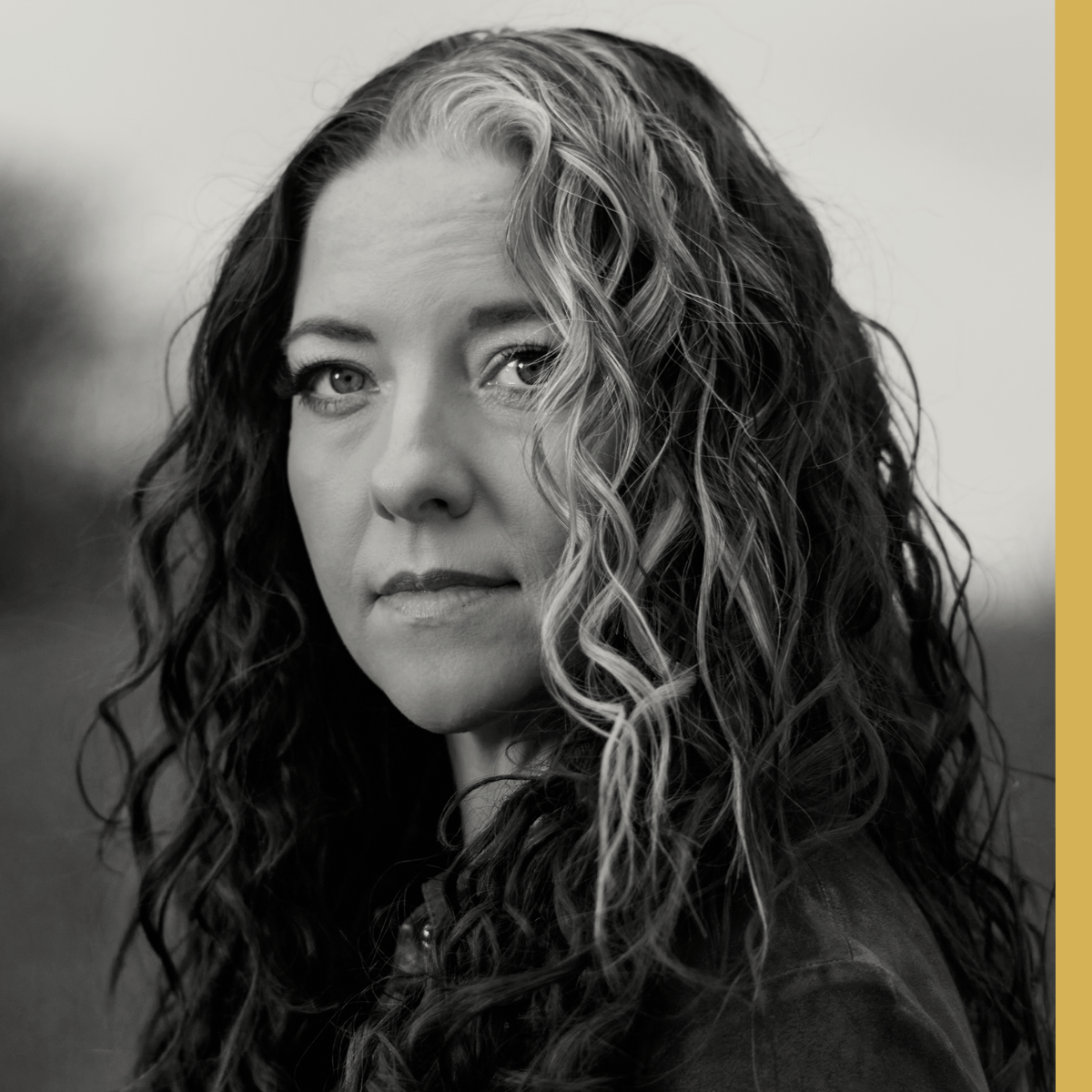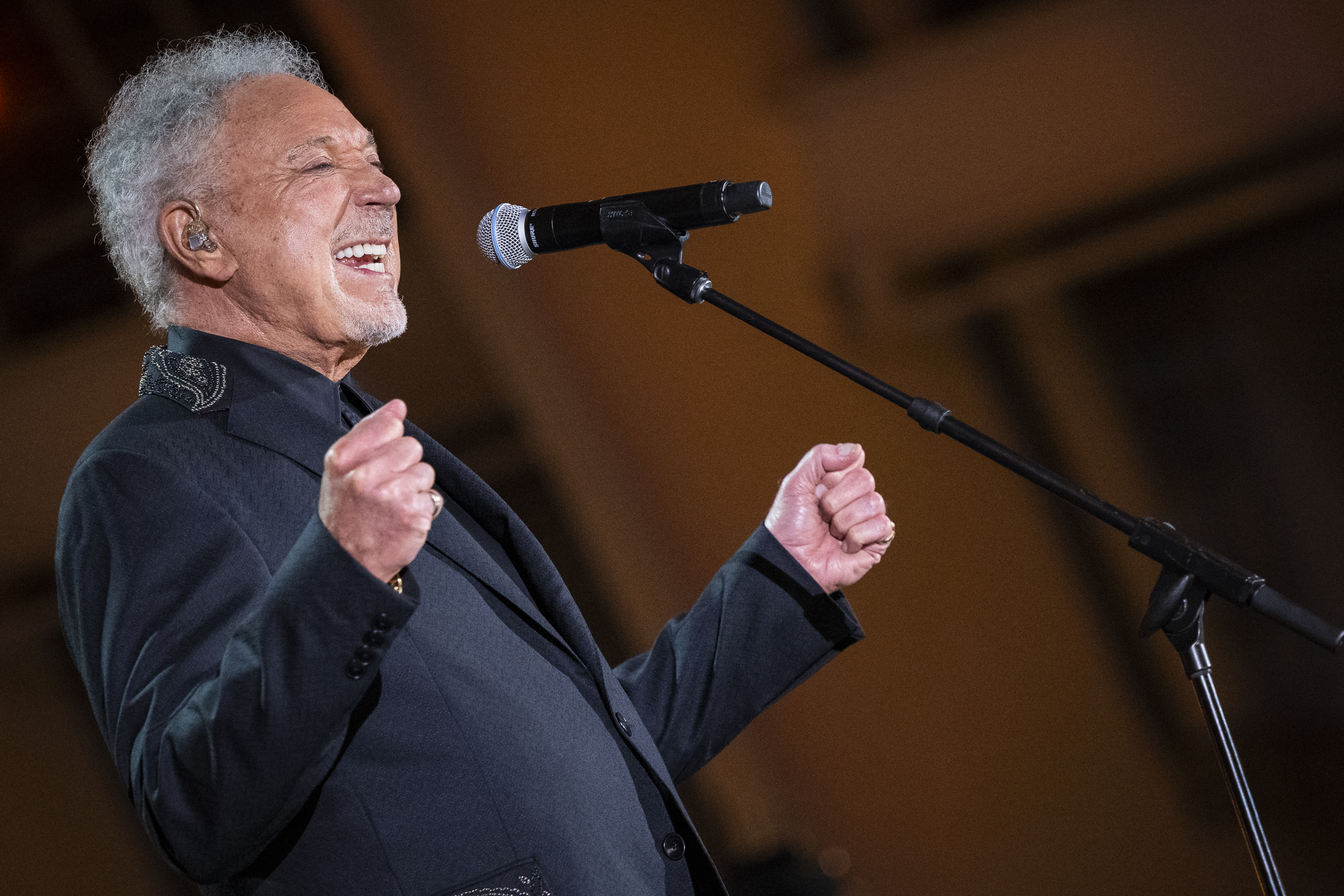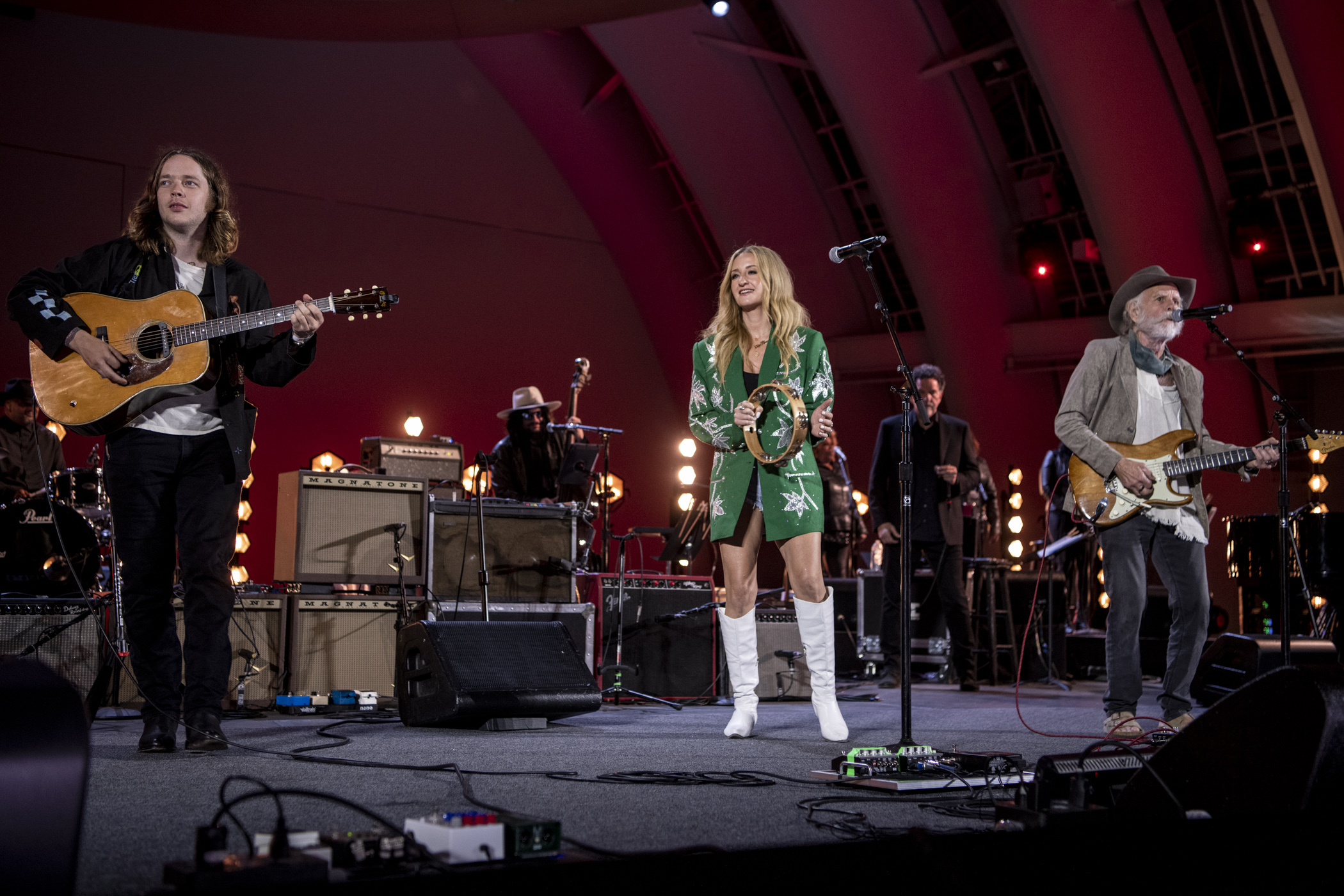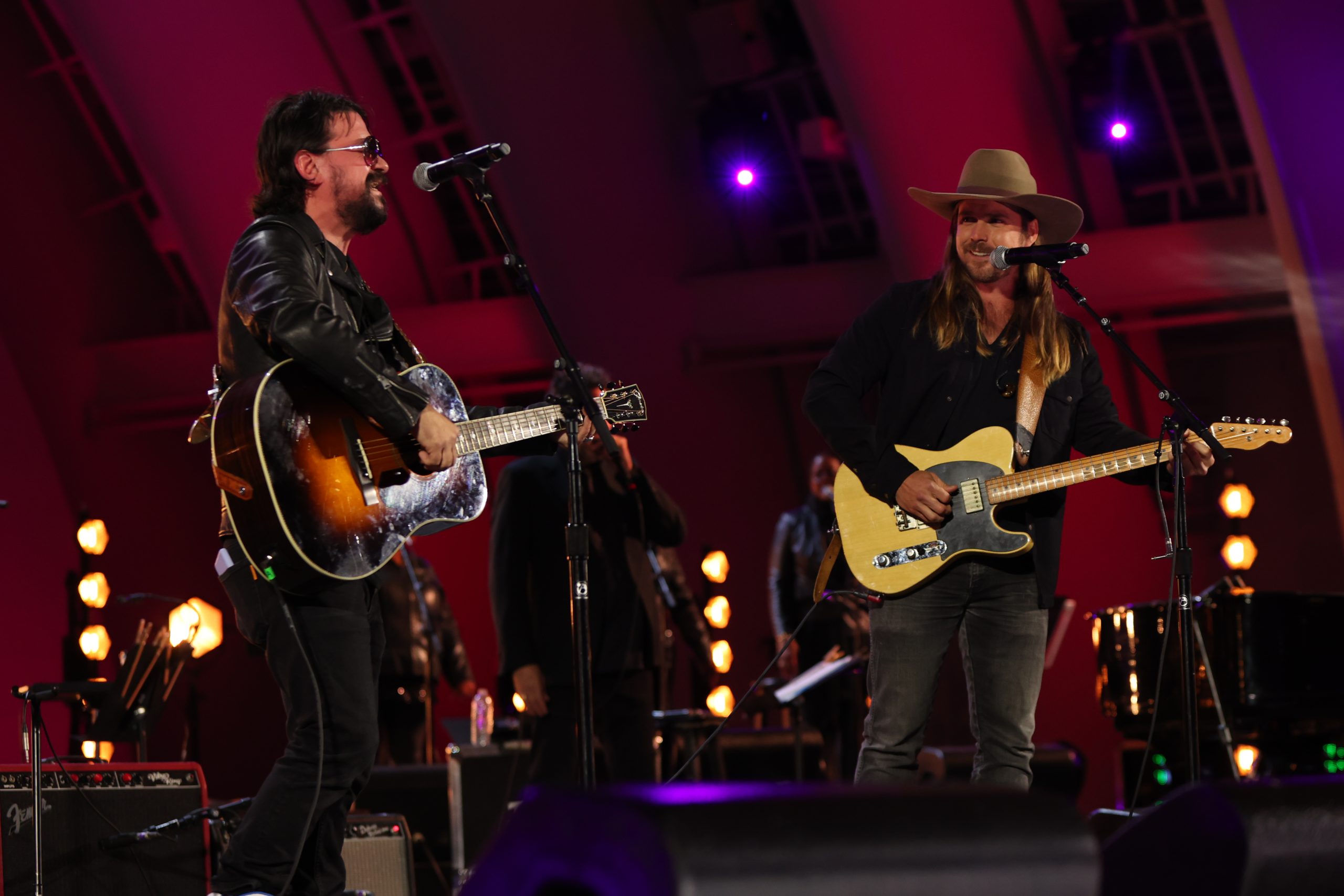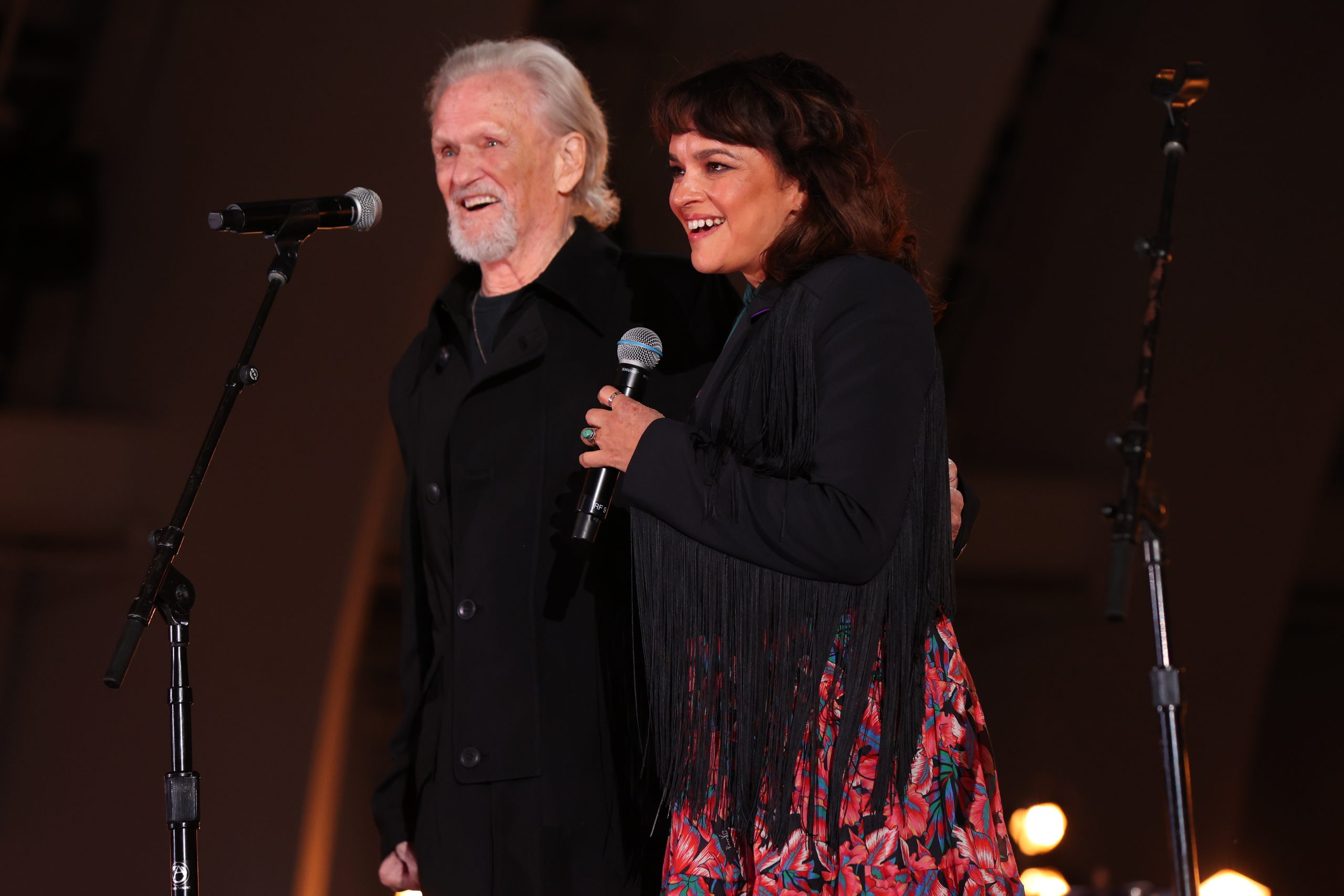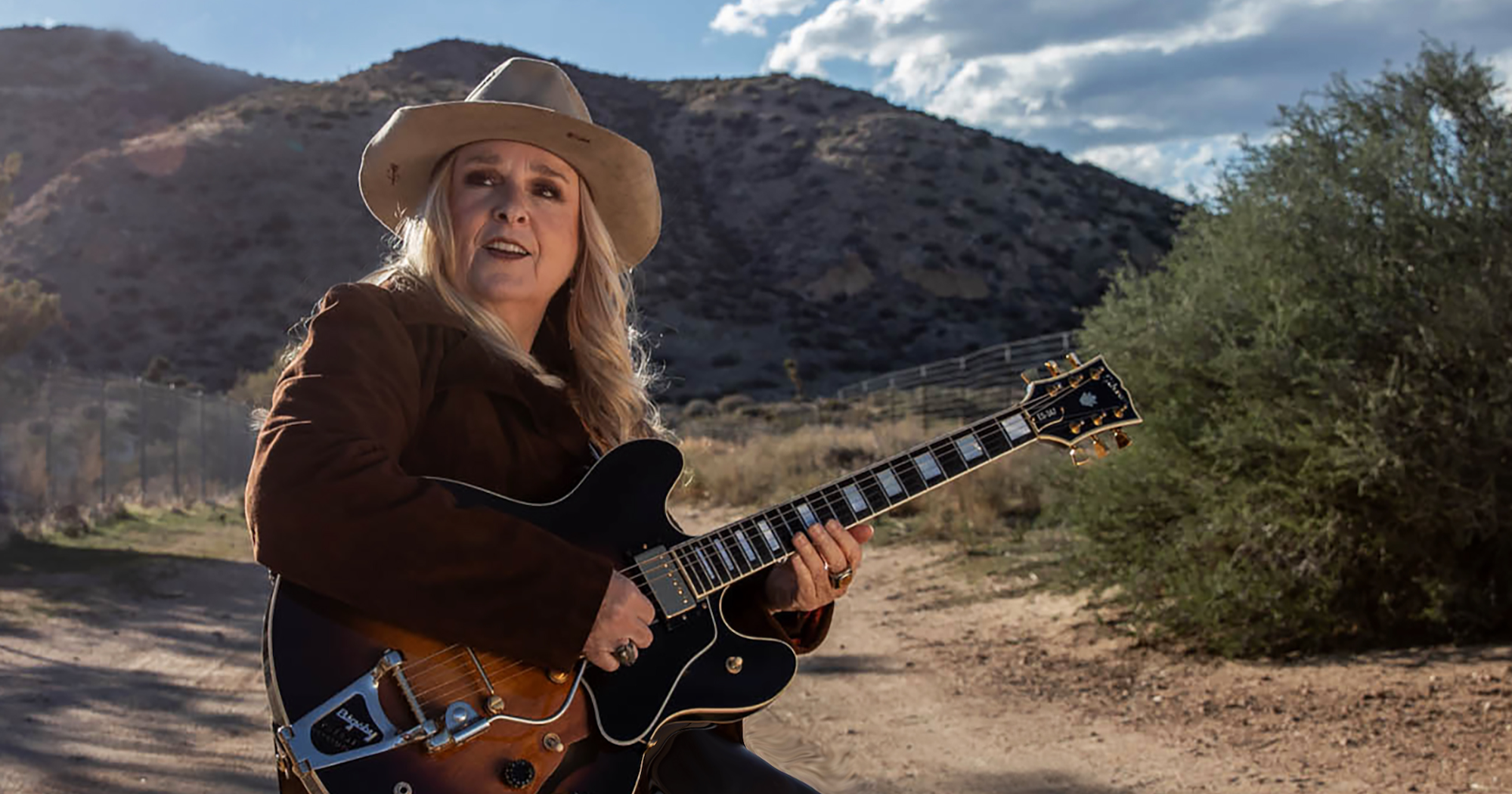
Melissa Etheridge: Rock and Roll and Resilience

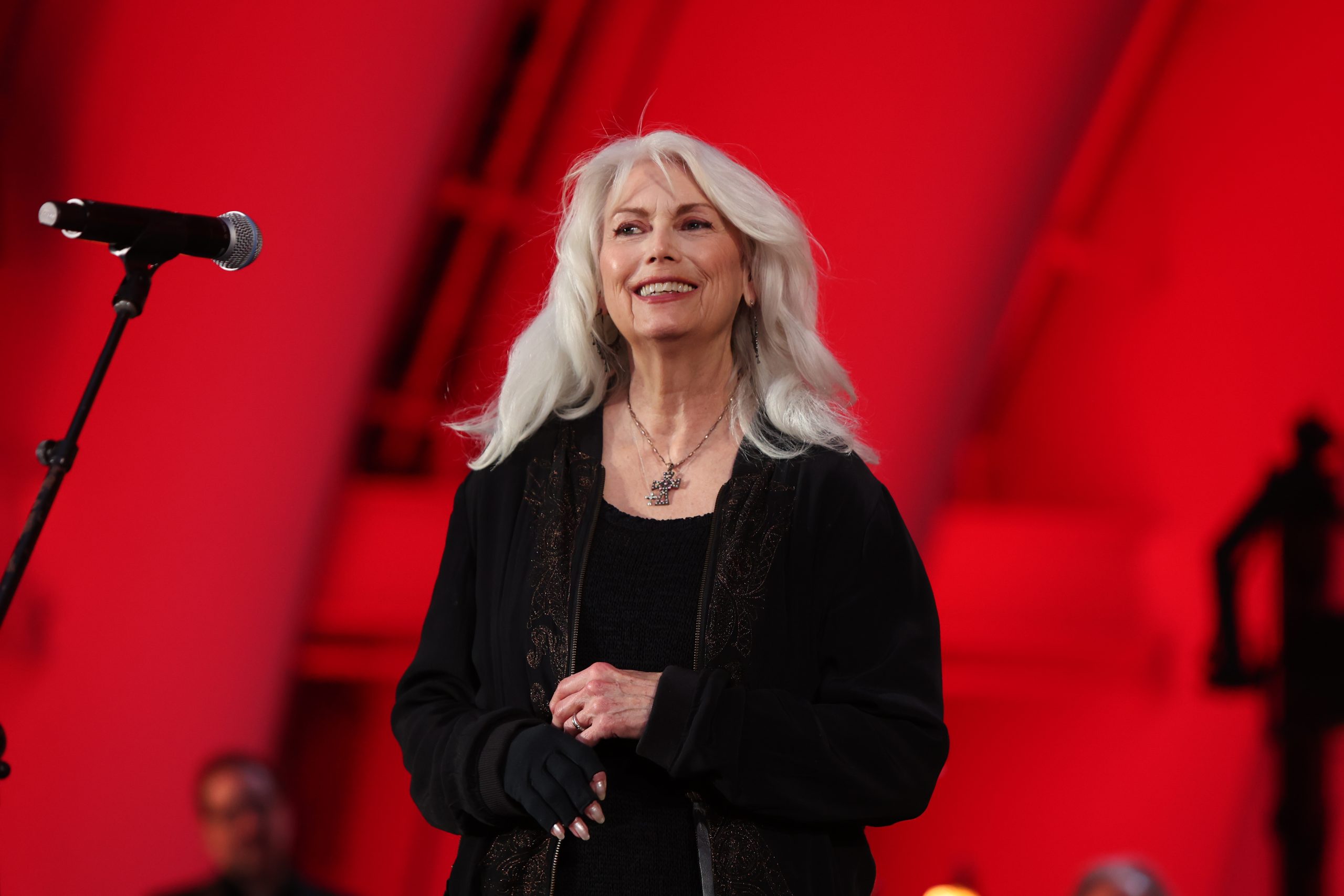
Few people have experienced the highs and lows of the music business to the degree that Melissa Etheridge has. Since releasing her self-titled debut in 1988, she has won two GRAMMYs (and been nominated for many others); been hailed as the second coming of Janis Joplin; won the Gibson Award for Best Female Rock Guitarist; become a mom several times over; been a social activist both for the LGBTQ+ community and for people addicted to opioids; written a memoir; and performed a one woman show on Broadway. Not bad for a kid from Leavenworth, Kansas.

That said, Etheridge has also suffered more than her share of setbacks. She has weathered a couple of high-profile divorces, battled breast cancer – who can forget her duet with Joss Stone at the 2005 GRAMMYs when she took the stage bald after undergoing chemotherapy – and, in 2020, lost her son Beckett to addiction.

The one constant throughout all these ups and downs has been her music, a brand of heartland rock that manages to be personal and universal at the same time. Etheridge is nearly as popular with blue-collar men as she is with lesbians, owing to her raspy vocals, formidable guitar chops, and unpretentious persona. And she’s racked up an impressive list of hits over the years including “Come To My Window,” “If I Wanted To,” “Ain’t It Heavy,” “Similar Features,” “I Want To Come Over,” “Bring Me Some Water,” and “I’m the Only One.”

2026 is shaping up to be a big year for Etheridge. She returned on March 27 with Rise, her first studio album in five years. On the eve of its release, she and her band kicked off a six-week tour in Detroit. And for the first time, Etheridge was nominated for induction into the Rock & Roll Hall of Fame this year.

Rise was recorded in Los Angeles with co-producer Shooter Jennings and includes 11 songs. While they’re diverse musically, the album as a whole feels like a complete statement. It’s a testimony to resilience, to sticking with life through all its ups and downs.

The title track and “Bein’ Alive” (which opens the disc) are both life-affirming rockers. “The Other Side of Blue” is a contemplative duet with Chris Stapleton. The playful “If You Ever Leave Me” puts an Americana spin on Mental As Anything’s ‘80s hit, “If You Leave Me (Can I Come Too).”

The shuffling, midtempo “Matches” was inspired by Johnny Cash’s 1970 concert at the U.S. penitentiary in Etheridge’s hometown. But the two final songs on Rise are also its most personal and poignant. “Call You” is a moving tribute to her son Beckett, while “More Love” was written for her daughter Bailey when she got engaged.

BGS recently had the pleasure of catching up with Melissa Etheridge for a Cover Story interview.

Let’s start with Rise. This is your first new album in five years, which is a significant amount of time. But you’ve been very busy in the last five years; I read your book and saw your show on Broadway. So it’s not like you’ve been sitting around! What do you get out of recording an album that you might not get from doing theater or writing a book?

Melissa Etheridge: Even though I haven’t had an album out in five years, the [last] album I put out, One Way Out, was a previous recording that I’d done seven years before that. So it’s really nine years since I’ve written. And I’ve lived so much of life – from loss to the pandemic to just growth. That’s the part about making a record. I knew that I could create a collection of songs that would make an album.

I love the art form of an album. You know, 45 minutes to be with the listener and take them through an emotional journey. That’s my favorite part; the real crafting of it was the writing. And it was about a year’s worth of pulling things together and then writing [in] December of ’24 and January and February. Then going in the studio [last] March. Going in, it’s so much fun with the road band that I have. It’s like putting on a favorite pair of jeans. Then getting Shooter Jennings to produce it! His studio, Sunset Sound, is so amazing. So it was a pleasure recording there.

It really does flow as an album, but it touches on a lot of different moods. Listening to it as one piece, I felt a sense of renewal and also resilience.

Yeah, that’s something I wanted to get across. There’s so much I experienced through the loss of my son five years ago. That’s about the most devastating thing you can go through. Having gone through that loss, [I] decided that I wasn’t going to drown myself in guilt and shame, I wasn’t going to die – that I was going to experience this, heal with my family, keep loving ourselves, knowing that everyone makes their own choices. I could not save him, he had to make the choices for that. And then making art from that – you know, loving yourself enough to be able to say, “God, I love being alive.”

Writing those songs – especially in this day and age when I find such negativity – if you start believing that, then that’s what you’re gonna see. So I wanted to put [out] positivity without being patronizing or [using] platitudes. You know, lifting people up. Going, “Yeah, you’re gonna fall sometimes. You’re gonna taste the dirt. You’re gonna rise.”

[“Rise”] came after the LA fires. That was something I went through with my family. We had to evacuate. It came right up to our neighborhood. I gotta tell you, LA firefighters are heroes. Every single one of ‘em. They were able to keep it from our neighborhood. But there was a moment, when we were watching the fire reports, where it was like, “Okay. There’s a good possibility that we might lose everything.” I was in a hotel with people who were losing everything. To experience that and then say, “They’re just things. We’ve got our health, our family, our pets.” You know, you’re gonna still rise. There are gonna be these things that knock you down, but man! You’re gonna be stronger and better for it. It’s hard to hear but it’s so true.

I was gonna ask you why “Rise” was the title track but you kind of just told me!

The second to last song on the album is “Call You,” which is really moving and I know you wrote about your son. I don’t have children, but two months ago I lost two of my best friends, one to suicide and one to early onset Alzheimer’s. So I’ve been struggling the last couple of months with a lot of existential stuff and wanting to call my friend Mark – and I can’t. So that song really resonated with me. I guess I wanted to share that with you.

Yeah. Life is full of loss. It really is. You’re not living if you don’t have some loss. And the older you get, the more you’re gonna see it. That’s when the existential stuff [comes in]. I am more than just my body, I am a separate soul here experiencing it. The greater part of me is that non-physical place that I’m connected to – that source that everyone is [connected to].

In “Call You,” I tried to simplify that. Because to me, the times when I miss him the most are the times when it’s like, “I wanna call you!” Even my father who died 30 years ago, you know? When I was nominated for the Rock Hall, I was like “Oh, I just wanna call my dad!”

[“Call You”] was actually the first song I wrote for the album. I knew I had to get that emotional experience down. I had to write that song first.

I also wanted to ask you about “Matches.” When I spoke to you last, you told me about Johnny Cash playing in Kansas when you were just a kid and how one of your thoughts was, “Prisons must be the place where you find entertainers.”

[Melissa laughs]

Tell me more about that and maybe your thoughts about The Man in Black.

Well, growing up in a small town, Leavenworth, we have no places for big artists. Kansas City is 45 minutes away. But our town, in the ‘60s, that just wasn’t a thing. All of a sudden, in 1969, he came to the prison. He came to our town! “Oh my god!” Someone who I’d only seen on his television show or [heard] on the radio and was such a cultural icon – he’s in the same space as me! That really kind of said to me, “Whoa. Maybe I could do that.” It felt close to me. [Cash] always made a big impression on me. I always loved his music, his individuality.

“Matches” was supposed to be a scratch pad song for me. I had just come from the I’m Not Broken [docuseries]. I did a concert in 2023 at the Kansas Women’s Penitentiary. So I was still sort of playing off of that and singing. Scratch songs for me are songs [where] I’m writing for fun and it starts the juices flowing. I kept writing these verses and I played a little bit for my wife, [Linda]. And she said, “You have to put that on! What do you mean that’s a scratch song?”

Can you tell me some wonderful things about Linda?

[Laughs] Yes, I can! That’s easy. For 12 years we’ve been married. We were together four years before that. And before that, we were best friends for 10 years! I married my best friend.

She is… everything I needed or wanted or dreamt about. The only way you really get someone like that in your life is to understand your needs and wants. And to have the love for yourself that you are looking for in other people. The minute I really got in contact with myself and understood what I wanted and loved, I was able to see the best kind of love for me. And she was it.

There’s just a constant partnership that is astounding – a love and desire that never goes away. And it’s because I’m not looking for her to fix me or make everything great. I’m looking for her to be by my side as we both make our choices and walk through this world together.

Tell me a little about “The Other Side of Blue” and what it was like duetting with Chris Stapleton.

Ah! Chris Stapleton is just a national treasure. His soul and his talent and his mind and his heart are so beautiful and so rare. He’s such a unique talent and an incredible man.

I really didn’t know him at all, I just was a big fan. And I didn’t really want to do a duet on this album. But I remember telling my manager, “If I ever did do a duet, I would love it to be with Chris Stapleton. Maybe ask him if he wants to write a song together.” So my manager sent out the request. He said yeah, and that made me so happy. I went down and we wrote the song.

We were writing in RCA Studio A in Nashville, which is where Chet Atkins [recorded]. A massive, huge, historic studio! I just walked in and, “Hello, hello.” We sat down and had guitars in hand. We were just talking and five minutes go by and he asked me about my kids. I said, “Well, I had four but I lost one.” He said, “Oh, I’m sorry.” And I said, “No, no. He was my greatest teacher.” He looked at me and he goes, “You talk in song.”

That was the first line: “Sometimes, I listen when she talks in song.” We were writing within 15 minutes of showing up. It just appeared – every line. It took us maybe an hour and a half to write that song.

You mentioned being nominated for the Rock Hall. Tell me how that feels after all this time.

Well, I was eligible for about 12 years. [Laughs] I was like, “Don’t think about it! It’s not a comment on your music.” I didn’t make my music so that I would be in the Rock & Roll Hall of Fame, that’s not what it’s about. It is lovely and feels really good to be recognized by your peers – by a group of people in the music business who say, “Your contribution to rock and roll has meant something.”

I’ve been on the voting body for exactly 10 years now. Obviously, certain things are subjective, but I thought this year there were a lot of good nominees. More diverse than last year’s group.

Yeah, I love Sade. I love Pink. Lauryn Hill I think is a good one. And then Iron Maiden, come on! It’s time, guys!

I always like to ask you about one older song. My favorite, which I’ve already asked you about, is “Ain’t It Heavy.” Is it okay to ask you about one of the really popular ones? I try not to ask the same things everyone asks. But I am curious about “Bring Me Some Water.”

Oh, that’s good! At least it wasn’t “Come To My Window.” No, “Bring Me Some Water” – that’s fun, that’s an older song.

I’d been playing women’s bars in Los Angeles for five years and a lot of record companies came and turned me down. But Chris Blackwell [finally] comes in and signs me right on the spot, for Island Records. Bam! I’d never made a record and I had no idea [what to do]. So my manager gets this producer, Jim Gaines, from San Francisco. This is 1986. It’s the middle of the ‘80s sound – that sort of Steve Miller, Journey [thing]. We made this record and I play it for Chris Blackwell and he hates it! Because it doesn’t sound like the girl he saw at the bar. It sounds overblown – lots and lots of keyboards and my voice way at the top. He hates it and I’m like, “Oh my God, he hates my album.”

I convinced him to give me four days to try it again in the studio. But in between the time that I finished the first album and went into record again – which became the debut – I wrote “Bring Me Some Water” about this relationship I had with a lovely woman named Kathleen. We lived together and we had this open relationship – which is just a mindfuck! [Laughs] I wouldn’t advise anyone to do that.

This is her being gone and me sitting at home in the middle of September, in Los Angeles. I’m living on Melrose and it’s hot. It’s so hot! So I sit down and I’m like, “Okay. I gotta get back to traditional blues stuff.” I’m just playing [the riff], it’s old Muddy Waters but it’s speeded up. I’m singing about, you know, the foul air. I’m just hot and uncomfortable and I’m mad. So, I wrote this song and Chris Blackwell loved it.


Photo Credit: Candice Lawler
Country Rocks,
Country Rules

Editor’s Note: Each issue of Good Country, our co-founder Ed Helms will share a handful of good country artists, albums, and songs direct from his own earphones in Ed’s Picks.

Ashley McBryde
Ashley McBryde

Ashley McBryde gets the year started off right with a soaring, anthemic new single. As you’ll see with “What If We Don’t,” Good Country and arena country aren’t mutually exclusive styles. Garage rock, country grit, and stadium-ready flair – McBryde is doing it better than almost anyone else out there.


Buck Meek
Buck Meek

Not your mamaw’s “Ring of Fire.” Big Thief’s Buck Meek launches his upcoming solo album, The Mirror, in just a couple of weeks. Its songs were grown where alternative, indie, folk, and country overlap, though each feels just outside of reach of any single one of those terms. Featuring Adrienne Lenker on BGVs, “Ring of Fire,” like Johnny’s classic by the same name, is about love and connection – but is perhaps the flipside of the Cash coin.


Emily Scott Robinson

You can always trust the John Prine-founded Oh Boy Records to put out amazing music by generational songwriters. Emily Scott Robinson is certainly one. Her new album, Appalachia, embodies her heart-forward, community-minded approach to songcraft and musicmaking. Stand outs include “Hymn for the Unholy,” “The Time for Flowers,” the album’s title track “Appalachia,” and this lovely duet with John Paul White, “Cast Iron Heart.”

Read our recent interview with Emily Scott Robinson here.


Langhorne Slim
Langhorne Slim

Speaking of rock ‘n’ roll, our old pal Langhorne plugs in and turns up on his new album, The Dreamin’ Kind, which was produced by Greta Van Fleet’s Sam F. Kiszka. Slim’s personality – and the signature, charming touches that made us all fall in love with his music – is front and center on the new collection, however far into rockin’ territory he brings his Americana and folk sensibilities.

Find out more about The Dreamin’ Kind in our recent Cover Story interview.


Zach Top
Zach Top

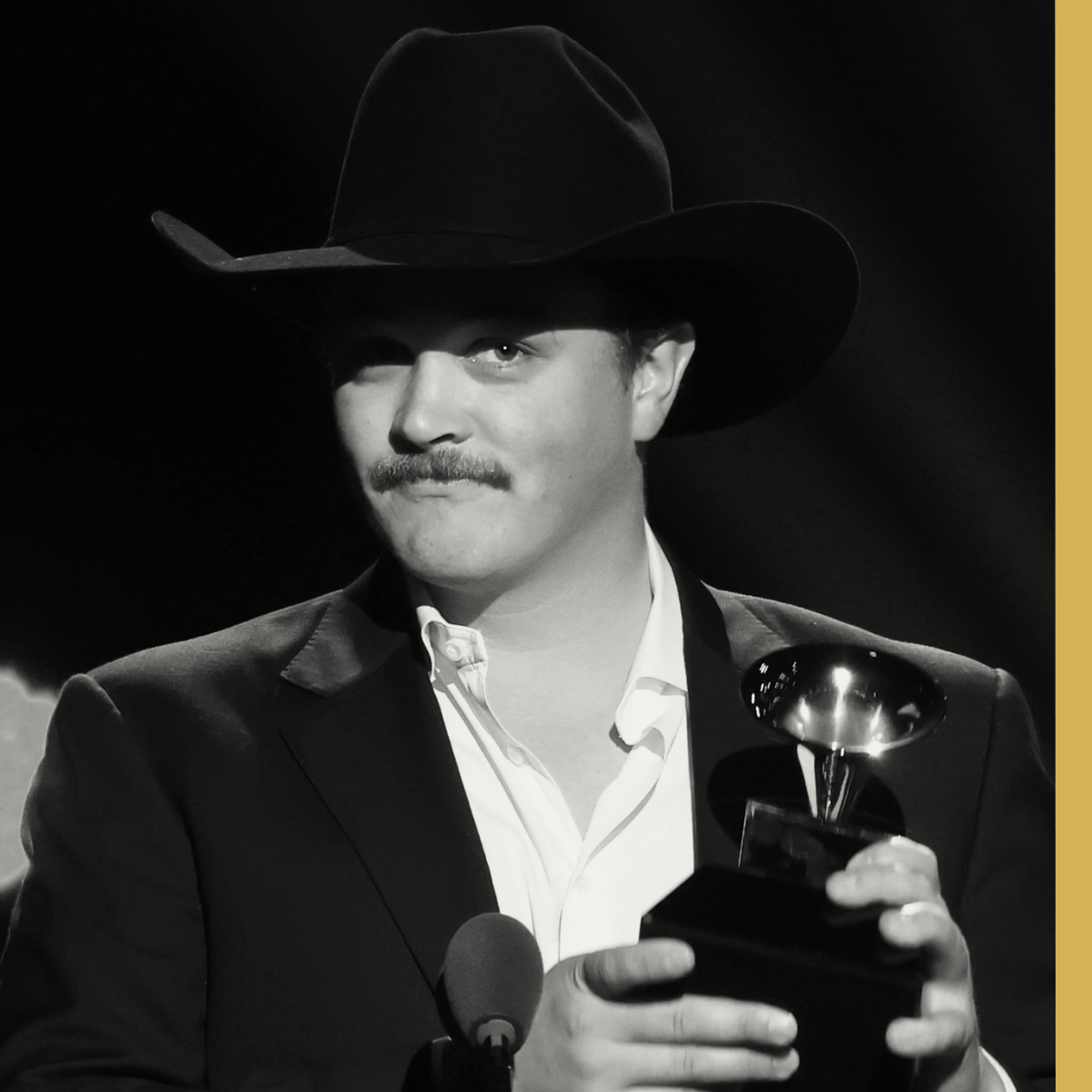
He started as a bluegrass picker in a family band and a Keith Whitley and Tony Rice diehard. Now everyone’s favorite trad country revivalist is a GRAMMY Award winner. Top took home the trophy for Best Traditional Country Album for his sophomore release, Ain’t In It for My Health earlier this month. He’s the first awardee in the buzzed-about new category opposite Best Contemporary Country Album. Well deserved!


Want more Good Country? Sign up to receive our monthly email newsletter – and much more music! – direct to your inbox.

Photo Credits: Ashley McBryde by Nathan Chapman; Buck Meek by Germaine Dunes; Emily Scott Robinson by Angelina Castillo; Langhorne Slim by Savannah Lauren; Zach Top by Getty Images for the Recording Academy.

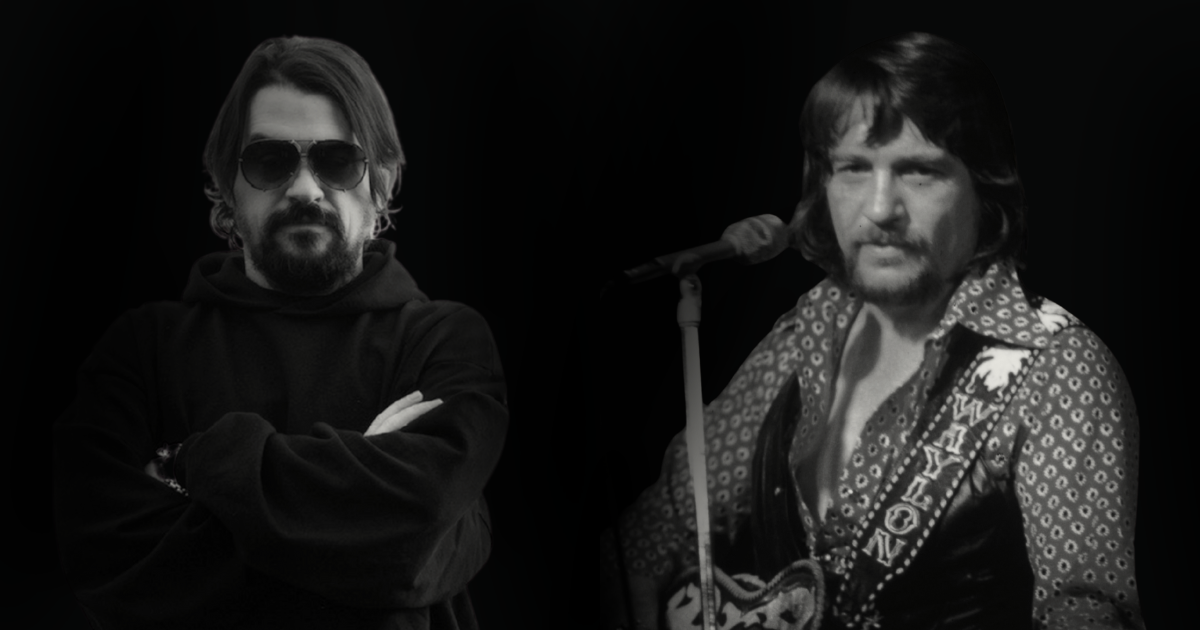
Shooter Jennings’ Heartfelt Tribute to His Legendary Father

Being the son or daughter of a legendary artist can often cause self-esteem and identity problems, especially if offspring choose their famous parent’s profession. But that clearly hasn’t been the case with Waylon Albright Jennings, much better known to music fans as “Shooter.”

The son of greats Waylon Jennings and Jessi Colter, Shooter Jennings has forged an impressive career as a singer, songwriter, instrumentalist, and producer covering over three decades, while displaying an idiomatic flexibility that’s seen him excel with both country and rock projects. Though he never uses the term “prodigy,” he was playing drums at five, taking piano lessons at eight, and sitting in with his father’s band on guitar at 14, while often spending time riding on his dad’s tour bus. Since then, he’s done an array of projects from heading bands to helming sessions, but he’s also always upheld a mantra of his father’s, which is stressing authenticity and passion in whatever he’s doing, writing, or playing.

Towards that end, Shooter’s newest venture both pays tribute to his famous father and reaffirms the musical values both have always championed. That’s the album Songbird (released October 3 via Son of Jessi/Thirty Tigers), which is the first of a planned posthumous trilogy of releases from the famed vocalist, who was one of the most distinctive and dominant voices to emerge in modern country during the ’70s and ’80s. Waylon’s landmark recordings, both as a solo artist and later in collaborations with Willie Nelson, Johnny Cash, Kris Kristofferson, Tompall Glaser and Jessi Colter, not only ushered in the “outlaw country” movement, they signaled a major step forward for artistic independence and creative freedom that resonated across the popular music spectrum.

Waylon Jennings was an innovative and vital figure not only as a performer, but as a personality. His voice and stature helped give gravitas to an otherwise forgettable TV show (The Dukes of Hazzard) and helped fuel a drive for authenticity within country. Still, despite that quest for freshness and originality, Waylon knew how to make hits. He had 16 number one tunes on Billboard‘s Hot Country Songs chart and 11 number one albums on Billboard‘s Top Country Albums chart during his amazing career, while always being a staunch advocate for his view of what constituted country.

Though Shooter has always called himself “an MTV kid who went down the rabbit hole with rock and roll,” he’s also long held a great reverence and respect for country. He began sorting through hundreds of his father’s personal studio recordings during the summer of 2024. Having just begun an exclusive residency at Hollywood’s historic Sunset Sound Studio 3 (which he redubbed “Snake Mountain”), Shooter began examining the tapes with veteran engineer Nate Haessly. Things moved quickly, his initial goal of finding previously lost Waylon songs he could share with the world morphing into instead deciding the best way to present what turned out to be a rich treasure trove of recordings. The material he was hearing was recorded between 1973 and 1984 and featured such guest stars as Tony Joe White and Jessi Colter.

“I started listening to this material last year and knew right away I had to put it out,” Shooter said during a recent phone interview with Good Country. “Once we began thinking about what we would put out there first, ‘Songbird’ just really kind of took over.

“Everyone that I played the song for heard it and they were really emotionally affected. Many broke out in tears the first time they heard it. It was an example of my father’s philosophy about doing songs from other people. Any song that he chose to record he would turn it into his own type of anthem. I really think that was the case with ‘Songbird,’” Shooter continued. “It gives the album a power and special flavor, and I’m really proud of everything on it.”

Songbird was released the first week of October, with Jennings’ evocative and stirring cover of the Fleetwood Mac tune its lead single. It debuted at number six on Billboard‘s Top Album Sales chart and it’s been in either the Top 10 or 20 on a host of other charts as well, representing the highest any Jennings LP has charted in 35 years. The 10-track release contains several other notable singles, most of them already previously complete. But on a couple of cuts, Shooter utilized the talents of surviving members of The Waylors, including guitarist Gordon Payne, bassist Jerry Bridges, keyboardist Barny Robertson, and backing vocalist Carter Robertson to add some spice. Elizabeth Cook and Ashley Monroe were also enlisted to help propel Songbird to new heights. Shooter mixed the songs in a purely analog fashion on Sunset Sound Studio 3’s custom 1976 DeMedio API mixing board.

Another song that’s quite appropriate in these times of extreme social conflict and division is Waylon’s version of Johnny Rodriguez’s “The Cowboy (Small Texas Town),” which finds him urging both cowboys and hippies to direct their ire away from each other and towards those causing greater structural harm to society. Additional recommended cuts include a sizzling Jennings version of Johnny Cash’s “After The Ball” and “I’d Like To Love You Baby” that features Jessi Colter.

Both “Wrong Road Again” and “I’m Gonna Lay Back With My Woman” are trademark Jennings numbers, while his version of Jesse Winchester’s “Brand New Tennessee Waltz” is also solid. The one criticism that some hardcore Waylon fans might make is Songbird doesn’t offer any previously unissued gems that he penned, feedback that Shooter’s been around long enough to anticipate. “What we went through and chose here were numbers that were made memorable through his treatments,” he continued.

“That’s something that my father always talked about and stressed, that whenever you do a song, make sure that you’re not just replicating something else, you’re making your own statement. That’s why Songbird has such an impact and that’s the case with everything on this album. These are songs that he loved from other people and wanted to perform and put his own stamp on them.”

Though born in Nashville, Shooter made the move to Los Angeles in 2001. Since then, he’s comfortably moved back and forth between rock and country. He’s had a mixed amount of success as a performer, cutting 11 albums and EPs in both genres. His biggest country hit came on the 2005 LP, Put The O Back in Country. That album’s lead single, “Fourth of July,” peaked at No. 22. The album version featured a cameo by George Jones, who sang the chorus to his signature song, “He Stopped Loving Her Today,” at the end. Unfortunately that was purged from the radio version, but Jones was credited on the Billboard charts.

The album also spotlighted Shooter’s then-new band, The .357s, which consisted of Leroy Powell on guitar, Bryan Keeling on drums, Ted Kamp on bass, Robby Turner on steel, and backing vocals by Bonnie Bramlett. Later that year his song “Busted in Baylor County” was featured in the 2005 film version of The Dukes of Hazzard. Furthermore, Jennings portrayed his father in the Johnny Cash biopic Walk The Line alongside Joaquin Phoenix and Reese Witherspoon. His rendition of his father’s song “I’m A Long Way From Home” was featured on the film’s soundtrack.

Still, Shooter’s greatest fame has come as a producer for a wealth of recordings. He was introduced to the studio as a child, his earliest exposure being inside Chips Moman’s studio in Nashville. His rock influences come through in his at times freewheeling use of studio technology that wasn’t in general use during his father’s heyday, but on any of his productions he’s never let the artist’s voice be overwhelmed by layers of excessive production or backdrop.

He’s been nominated for five GRAMMYs in that role and won two. A short list of memorable sessions he’s produced include such artists as Brandi Carlile (Best Americana Album GRAMMY), Tanya Tucker (Best Country Album GRAMMY), and American Aquarium, as well as Jessi Colter, Jamey Johnson, Jaime Wyatt, The White Buffalo, Hellbound Glory, The Mastersons, Julie Roberts, Kelsey Waldon, Yelawolf, Marilyn Manson, Jason Boland, Billy Don Burns, Avi Kaplan, Billy Ray Cyrus, and Angry Grandpa. Just this year alone, Shooter Jennings produced acclaimed releases by the Turnpike Troubadours, Charley Crockett, and Jake Owen.

When asked what he enjoys most or looks for in terms of production collaborations, Jennings says, “The people that I truly enjoy working with the most are the ones who have their own ideas of what they want to do, how they want to sound, or what they want to sing. Then they bring those ideas into the studio and we take it from there. I’m not really quite as good when it comes to just taking someone who doesn’t really have a sense of who they are and saying why don’t you try this or try that.

“With Charley [Crockett], for instance, that guy comes into the studio and he’s already got all these things together and we can just hit the road from there and take it forward. A guy like Duff [McKagan], who can just write their ass off, or a group like American Aquarium, I can get really excited. Brandi [Carlile] came to me and wanted me to work with her and that was a fantastic experience. But in general, if you’re someone who has their concept of what they want to do, then we can sit down and really make it work in the studio.”

Shooter also has amassed some good credits in the worlds of broadcasting, film, and television. As well as getting the chance to portray his father in the 2005 film Walk The Line, he has made celebrity appearances on television shows CSI, Marvel’s The Punisher, and American Revolutions, while also playing a gunslinger in the 2013 film The Other Life.

Back in 2009, Shooter participated in a CMT Crossroads session, paired with close friend and fellow musician Jamey Johnson. The evening’s set list consisted entirely of duets, including a cover of “Outlaw Shit” from the Waylon Forever album, two songs from Jennings’s discography – “God Bless Alabama” and “It Ain’t Easy” – and four songs from Johnson’s album That Lonesome Song including “High Cost Of Living,” “Mowing Down The Roses,” “Between Jennings and Jones,” and “In Color.”

Shooter cites Glenn Danzig and the band Oasis as folks that he hasn’t yet worked with whom he’d like to in the future. But right now, his main focus is on the two remaining Waylon Jennings posthumous recordings – though he’s not sure yet exactly when they will come out or what will be on them.

“One thing I can say for sure is that there’s a lot more great music coming,” Shooter concluded. “I was really amazed at how much great stuff is there, and I think the fans are going to really be thrilled when we get these next two out there. My father did a lot of great music before he passed, and we’re going to get as much of it out there as we can.”


Photos courtesy of Shooter Jennings.

The Opry, the GRAMMYs, and Beyond

Editor’s Note: Each issue of Good Country, our co-founder Ed Helms will share a handful of good country artists, albums, and songs direct from his own earphones in Ed’s Picks.

Luke Bell
Luke Bell

When country singer-songwriter and community-builder Luke Bell passed away in 2022, he left an enormous vacuum in the scenes that made him and adored him. But, he left an even larger legacy. His only posthumous album, The King Is Back, was released last week after being lovingly compiled by his mother Carol, sister Jane, and his team, friends, and collaborators – many of whom perform the LP’s 28 Bell-penned songs. It’s a devastating and heartfelt collection that benefits the Luke Bell Memorial Affordable Counseling Program. Learn more and donate here.


Suzy Bogguss
Suzy Bogguss

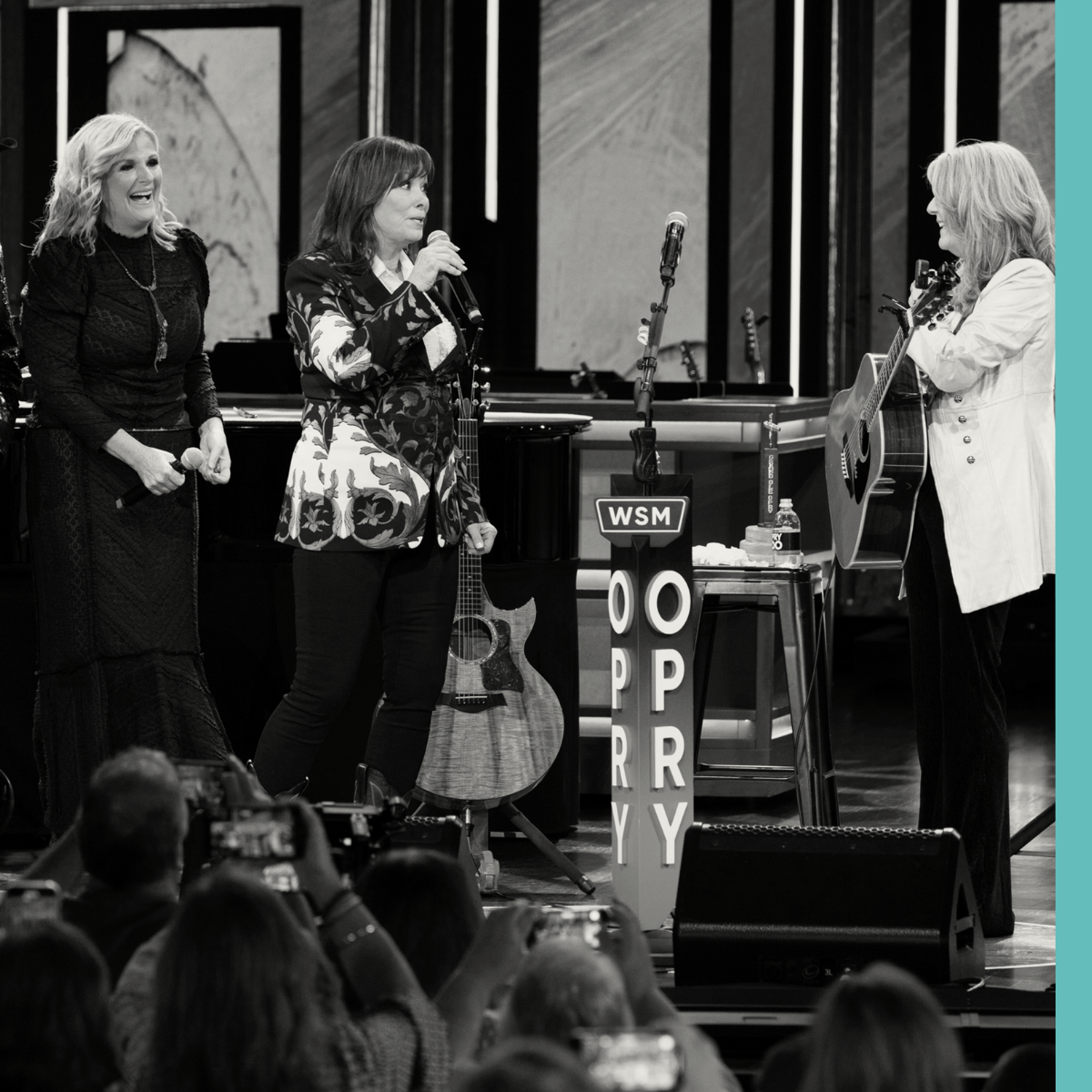
Suzy Bogguss is a country artist and singer-songwriter who’s won a GRAMMY, two CMA Awards, and an ACM award, and has had eight original songs become top 10 hits on the country charts across her career. Now, she’s adding another impressive title to her resumé: Grand Ole Opry Member! Last month, while her longtime friend Kathy Mattea celebrated her own induction into the Opry, Mattea interrupted her performance of “Eighteen Wheels and a Dozen Roses” (with Bogguss, Trisha Yearwood, and Terri Clark singing along) to surprise Suzy with her own invitation. Congratulations, Suzy! (She’ll be inducted in early 2026.)


We’re celebrating 100 Years of the Grand Ole Opry for our Artist of the Month. Dive into our Opry 100 coverage here.


Shooter Jennings
Shooter Jennings

It would be hard to find a more prolific artist-producer-actor in country these days. Shooter Jennings is everywhere, producing albums for Jake Owen, Charley Crockett, Jeremy Pinnell, and the Turnpike Troubadours this year alone. In addition, he’s reached back into the archive of his outlaw father, Waylon Jennings, to release Songbird, the first in a three-album series of posthumous Waylon releases curated by Shooter. His influence is everywhere in modern country – and we’re glad about that.


Read our brand new feature on Shooter Jennings and the new Waylon project,
Songbird, here.


Southern Avenue
Southern Avenue

We first heard about Memphian modern blues-Americana family band Southern Avenue way back in 2017 and now, more than eight years later, they’re nominated for a GRAMMY! Their most recent album, Family, dropped in April and gained the group their second GRAMMY nomination last week for Best Contemporary Blues Album. The band showcases how Memphis, though it’s often overlooked in favor of its nearby music city sisters, produces fascinating, genre-blending roots music dripping with personality.


Read our GC 5+5 interview with Southern Avenue from earlier this year here.


Colter Wall
Colter Wall

Everyone’s favorite Canadian cowboy recluse is back with more of his signature raw, down-to-earth, and grizzled country & western sound. Memories and Empties, Wall’s first studio release in two years, is out today. Tracked in Nashville at the legendary RCA Studio A with his touring band, Scary Prairie Boys, and production by bandmate Pat Lyons, it’s a stellar collection of traditional, working-class, flatland-steeped country that wouldn’t even dare to try getting above its raising. Plus, it celebrates the communities and relationships often obscured or overlooked in songs and recordings that sound like this. Good Country? That’s for damn sure.


Want more Good Country? Sign up to receive our monthly email newsletter – and much more music! – direct to your inbox.

Photo Credits: Luke Bell by Mike Vanata; Suzy Bogguss, Kathy Mattea, and Trisha Yearwood at the Grand Ole Opry by Chris Hollo; Shooter Jennings by Jared Christopher; Southern Avenue by Rory Doyle; Colter Wall by Jake Zielke.

Jake Owen Started Bro Country. His New Album is Anything But

Depending on who you ask, Jake Owen might be responsible for the very first bro country song. His 2011 hit “Barefoot Blue Jean Night” wasn’t the first party-ready ode to Southern summers and ice-cold beer, but its slick mix of country signifiers and stadium-rock production – courtesy of Joey Moi, best known for producing Nickelback and later Morgan Wallen – proved highly influential, arguably paving the way for crossover smashes like Florida Georgia Line’s “Cruise” and Blake Shelton’s “Boys ‘Round Here.”

“Never gonna grow up, never gonna slow down,” Owen sang on his signature hit, neatly summing up the youth-obsessed ethos of the bro country era. Now 44 and newly independent after 20 years on RCA Nashville and later Big Loud, he’s singing a different tune.

“I’ve made a lot of records that had a fantasy, ‘Remember when we were young?’ kind of feel to them,” Owen told Good Country. “What feels good about this new record is that I can listen to it and feel like I’m listening to my life right now. It’s very real.”

Dreams to Dream, Owen’s eighth studio album and his first with Shooter Jennings producing, is a sharp left turn for an artist known for hits like “Beachin,’” “I Was Jack (You Were Diane),” and “American Country Love Song.” Earlier this year, Owen decamped to LA amid the wildfires, leaving the comfort of Nashville behind in search of creative truth and a more organic sound. The result is one of the year’s best and most surprising country albums, which trades bro-ish bravado for world-weary introspection and a classic-country sensibility.

The title track is a rollicking, country-rock statement of purpose that name-checks Hank Williams, Jr. and establishes the stakes: “I’ve been down, but I ain’t no quitter/ ‘Bout to get up on my feet/ ‘Cause I still got dreams to dream,” Owen sings in the rousing chorus. On the Troy Jones-penned “Wouldn’t Be Gone,” he muses about leaving stardom behind to work in a hardware store. (“I already know a thing or two about hardwood floors,” goes the song’s best line.) Other standouts include “Chill of December,” a Haggardian expression of winter loneliness, and “The One I Did It To,” a doleful admission of romantic wrongdoing.

In a Q&A, Owen spoke to Good Country about teaming up with Jennings, defining authenticity on his own terms, and why he doesn’t shy away from his bro country past.

This album is a departure from the sound that you’re best known for. What made now the right time to do an album like this?

Jake Owen: My life has always been about timing and believing that I’m supposed to be where I am. The album’s called Dreams to Dream and it came about because I was in this interesting place in my life where I’ve had a record deal for 20 years and, all of a sudden, I’m doing something on my own. Which felt kind of like freedom, but also felt very scary.

For a long time I was focused on the more commercialized songs that would work on radio, since I was on a major label, and I felt like this is the time to make the kind of record that I’ve always really loved. I’ve always tried to follow my heart and what my intuitions have told me. They haven’t always been right, but I definitely follow them.

What was it like working with Shooter Jennings?

He really exceeded my expectations. I expected to go out there and make a record, but I didn’t know I would leave there with an awesome new friend and somebody that really believed in me as a person with dreams and a purpose and things they wanted to say. He was so encouraging to me. I felt safe with him, which is a weird way to put it, I guess. But you need people to pat you on the back and tell you that you’re doing the right thing.

It also was at a time when – I’m not ashamed to say it – there were not a lot of people ringing my phone in Nashville to tell me they were proud of 20 years of what I’d done in my career and 11 number one songs. Kind of weird, right? But the one guy that was calling me and applauding me and telling me that I could do way better, bigger things in my life than what I’d already done was Shooter Jennings. Out of all people, right? That says so much about how much he loves music and believes in people. I think you’d probably hear that same answer from anybody else that he’s worked with.

The second song on the album, “Them Old Love Songs,” is a Waylon Jennings cover. Why did covering Waylon make sense for this record?

Well, there was no part of me going out there that thought I would do any covers. But Shooter and I just talked about life and music out there, and he was saying that his dad always would cut cover songs for fun when he came off the road. Shooter would encourage me, each night or whenever we were done with the session, to do some covers and just have some fun. With that one in particular, I was nervous to ask Shooter, because it felt a little cliché. I wondered how many people work with him and have wanted to do that or if he’s offended by that.

But I always loved that song and the album that it’s on, Are You Ready for the Country. It’s pretty wild, because that album starts off really rocking, and then it goes into that. To me, if you listen to that song, the lyrics say, “I wish I had a true fine woman/ Let her rock me all night long/ And maybe we could get it together/ Like people do in them old love songs.” I’ve been singing that my whole life and it’s still the way I dream of love. And then, going back to the first verse, it says, “Nobody cares where I’m going, all they know is I’m coming back.” I don’t think anybody cared that I was going to make a record with Shooter. Nobody really even knew.

Also, one of the reasons Shooter and I decided to make this album was our love for the Hank Williams Jr. record, The New South, that his dad actually produced. Hank moved to Alabama to make that album, I think it was in 1977, and said he needed to get out of Music City because he wanted to go make his kind of music with his friends. And I felt the same way. Like, here I am going to LA to make a record with Shooter, and he’s encouraging me like Waylon encouraged Hank. So recording that Waylon song, with Shooter producing it, it just felt right.

You recently celebrated the 20-year anniversary of moving to Nashville and signing your first record deal with RCA. You made a post referring to “the highest of highs and lowest of lows” in your career. Could you tell me about some of those highs and lows?

Yeah, well, first off, thanks for even acknowledging that, which I think is important to the reasoning behind this whole record in general. I would start off by telling you that the highest high for me was just moving to Nashville and knowing that something was ahead of me. When I left college, I left my twin brother and a lot of my friends and my entire family at home in Florida. I still look back on that guy, and I’m like, “What the fuck was I thinking?” But I guess I just had to chase it. And then getting to Nashville and immersing yourself with people that are so much better than you are, I just didn’t have that where I was in college in Tallahassee. I kind of felt alone. Getting a record deal was also a big part of that, feeling like I had accomplished part of what I came here to do. And then I spent the next seven years having to figure out how to keep the guys in the band paid and the buses rolling on the road and how to get my first number one song. Everybody thinks that’s the easy part once you sign the record deal, but it really wasn’t. It was a rude awakening.

And I went through a divorce. I got married, I had a kid. It’s like the classic country song shit, man. I think that was a big low for me, having to leave my family to go on the road. I had been very successful from my dreams that I chased, but the one thing that I probably desired the most, outside of music, was a family life. The one thing that I’ve never been good at and I haven’t figured out is that real solid relationship in life, building love and trust, and that bothers me a lot. It bothers me that I can be good at a lot of other things, and that is the most important thing to me, and I haven’t been so great at it.

You were a major player in the bro country era, which is now having this sort of nostalgic reappraisal. I’m thinking of the HARDY and Ernest song “Bro Country,” which is an ode to that time in country music. When you think about that era, what goes through your mind?

It’s funny, because I don’t know that anybody has said this before, but I’ll tell you right now: I started that shit. Everybody wants to shy away from bro country or whatever, but I invented that shit. And yeah, I am proud, in a way. I remember being at a time in my career where I had a record deal for seven or eight years and I had a couple songs that had done all right, but I was feeling like I was gonna lose my record deal if I didn’t try to do some different shit. And I didn’t have a producer at the time. I’d left Tony Brown, who was great. And he’s like, “Hey, man, you should meet this guy, Joey Moi. I think he’d be great for you.”

Joey obviously came from Nickelback and all that. At the time, no different than when I left Tallahassee for Nashville, everybody was like, “Dude, what the fuck are you doing?” So here’s a guy now from Nickelback who’s gonna try out making country music on me, which was probably a crazy thing, too. It wasn’t that I was trying to sell out. If anything, I look back and I’m like, “Dude, I had the balls to just do something different at the time.”

“Barefoot Blue Jean Night” was our first release and it had all of these claps and stomps and loop shit. It ended up being the most-played song of the decade [according to Country Aircheck]. I have the plaque on my wall. It was a major, major changing point in my life and career, because it worked. Not only did I keep making those songs for the next few years, but it influenced a shit-ton of people.

I think a lot of people might want to avoid that association. It’s kind of like the way that ‘80s rock and roll gets shit on sometimes, but there are still people in their cars cranking it to 11, right? If you look back at my early career, the songs I was writing were very country, because that’s what I always loved. I went on tour with Brooks & Dunn and Alan Jackson. So when all of a sudden, years later, all of the people that were my heroes were like, “I hate this kid,” it kind of hurt my feelings. But I always knew in my heart that I would get back to what brought me to the table.

Among the detractors you alluded to, people who are into more traditional-sounding country music, there’s this idea that pop-country or bro country is inauthentic. What do you think is “authentic” country music?

Authenticity is the ability for artists to take any type of music and just make it their own. Johnny Cash never shot a man in Reno. But it was a huge song for him. George Jones didn’t write “He Stopped Loving Her Today,” but he owns that song. Stardust is the biggest album Willie Nelson ever released and he didn’t write a single song on it. And he’s one of the greatest songwriters of all time. Authenticity isn’t about where somebody’s from or how they grew up. If you own what you’re doing, and you deliver it in a way that’s believable, I think that’s authentic.

I’m thinking now of this back-and-forth you had with Jason Isbell a couple years ago about artists writing their own songs.

Yeah, dude. That guy. I love Jason Isbell, that’s what’s crazy. Some of the artists that I love the most just spout off at the mouth. The other day I said something about Zach Bryan. I love that guy’s music too, right? He’s amazing, and he’s also uber successful – selling 120,000 tickets or whatever, which I could never even fathom. And Jason is out winning GRAMMYs on top of being an incredible guitar player, so much more talented than I could ever dream of being. But I don’t understand why guys like that will take the time on shit on someone else’s music.

That’s never made sense to me and it’s always made me want to just ask that question directly to them. Which is what I did to Jason. I was just like, “Dude, I’m not going to get into an argument with you over Twitter, so give me your number. I’m going to just call you and have a conversation about why you feel this way.” He and I had a great conversation. And he was very cool to acknowledge and entertain my questioning behind why he would just spout at the mouth about stuff like that. We both ended it at the time – and this was years ago, when I was drinking, or maybe he was – he’s like, “Dude, we should catch a beer sometime.”

So, to go back to the authenticity thing, there’s so many people that are so great at a lot of things. One of my absolute favorite artists right now is Charley Crockett and he does that, too. I wonder, sometimes, I’m like, “Why are you guys all trying to prove to one another that you’re more authentic than the next guy?” Sorry, you can tell I’m getting tense talking about it. But I’m confused by it, because those guys make some of my favorite music and it bothers me that they feel the need to try to blow somebody else’s candle out in order to make their already blazing one shining brighter.

I wonder if part of you wanted to prove to that type of person that you could make one of these really rooted, quote-unquote “authentic,” hardcore country records.

I think it was about proving to myself what my intuitions are and what my beliefs have always been about what’s right for me. I also really needed somebody to tell me that what I was doing was the right decision, and Shooter never wavered. He was constantly telling me, “Dude, this is it. You’re going to open up a Pandora’s box for your career in ways that I don’t think you’ve seen before.” I will say that it’s definitely opened my eyes to a lot of things and a lot of people reached out to me that have never reached out to me before.

One of my favorite songwriters, artists, people I’m a huge fan of is Brandy Clark. I think she’s incredible and just a brilliant songwriter. And she happened to be in LA when I was there and stopped by to see Shooter. She called me after and I just started crying. Because she was like, “Jake, I’m so happy for you. Like, I hear you in this.” It was just so fulfilling to hear that from her. She didn’t have to do that, but I was so moved by it.

I’m grateful for people that don’t think about music from a standpoint of judgment, but look at it as a possibility of something greater.


Photo Credit: Spidey Smith

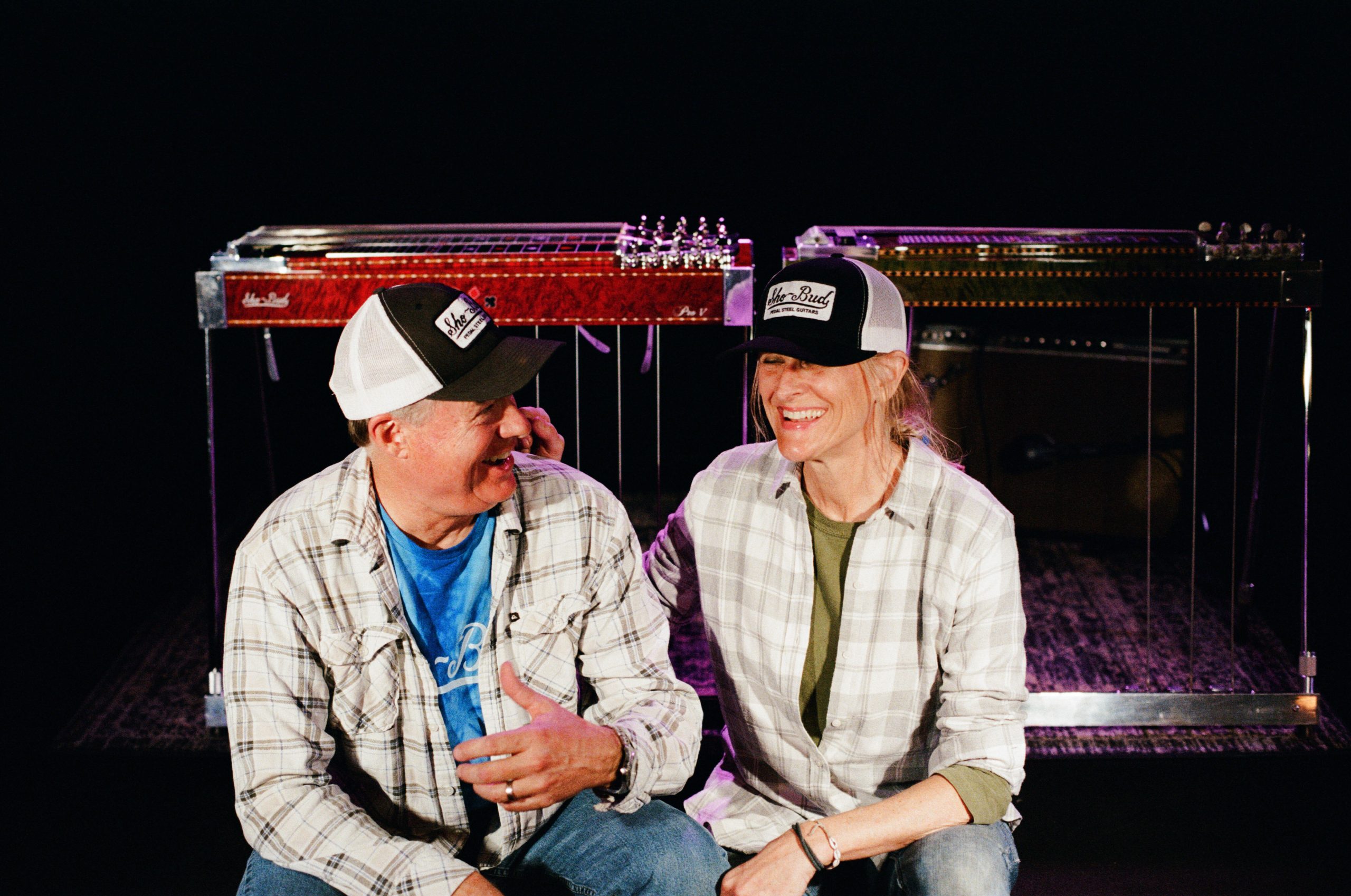
Sho-Bud Steel Guitars Relaunches, A Family Business Once Again

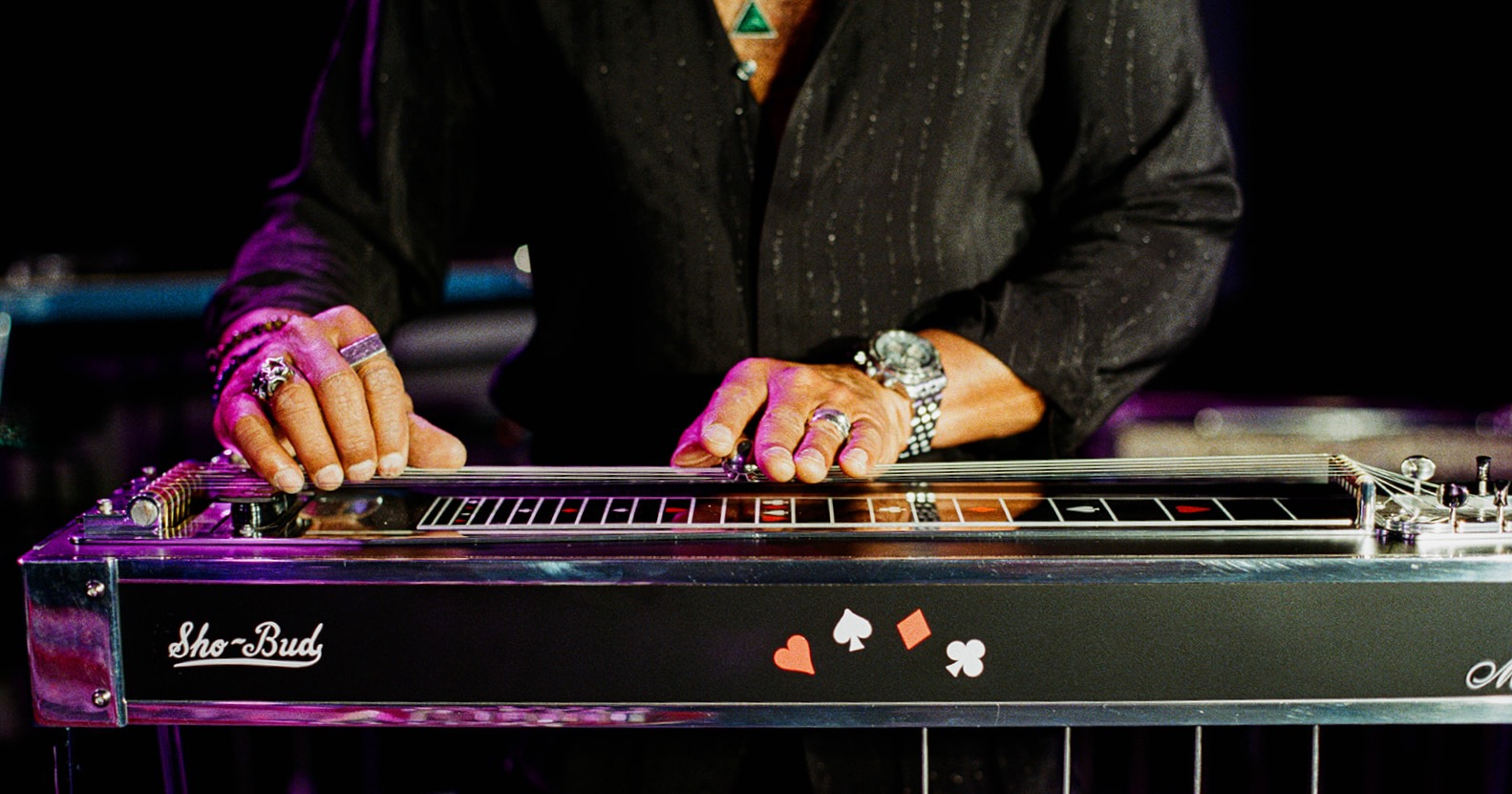
Tone: it’s the Holy Grail for musicians, and it’s the cornerstone of Sho-Bud, the iconic pedal steel guitar company founded in 1955 by Harold “Shot” Jackson and Buddy Emmons. When Emmons moved on, Jackson continued with sons Harry and David, handcrafting instruments integral to the sound of country music.

In the early 1980s, Sho-Bud was acquired by Fred Gretsch. In 2005, after twenty years away from the business, Harry and David Jackson, joined by David’s daughter, Dawn Jackson, resumed building instruments. As Jackson Steel Guitar Company, they introduced new pedal steel, lap steel, resonator, and slide guitars.

In December 2024, the third generation of Jacksons, siblings and co-CEOs Dawn and Will Jackson, reacquired the company name and family legacy. “We knew that the name carried a lot of weight,” says Dawn Jackson. “It’s our heritage, and we wanted to bring it back while Dad and Harry were still building.”

“I want to acknowledge Fred Gretsch, his wife Dinah, his family, and his team,” says Will Jackson. “A lot of people approached him to acquire the Sho-Bud name over the years, and he didn’t do it. He saved it for us. We very much appreciate what he did in terms of preserving the name, keeping it intact, and not selling it to someone else. We’ll be eternally grateful to him for that.”

Sho-Bud relaunched this year with new and classic gear, plus several projects across platforms and generations. The reach stretches from traditionalists devoted to the classic instruments they saw on the Opry stage, to young musicians incorporating steel in everything from country to metal.

Central to all of this, of course, are the instruments, which include the high-level, traditional, maple cabinet Pro V; bender-equipped, stand-up SlideKing LS lap steel; and best-selling Maverick II.

“It’s not the Maverick of old,” says Will Jackson of the Maverick II. “The original Maverick was designed to be a low-cost, entry-level, beginner guitar. With the Maverick II, our objective was to build one of the sweetest-sounding guitars. We developed a front and rear extruded aluminum panel that has a hard rock maple soundboard that sits between them. On top of that, the one-piece aluminum neck now binds the key head and tail plate together.

“When you sandwich all that together, this particular guitar, as Dawn describes it, cuts through all the other noise. It’s distinctive, it’s clear, it rings and resonates. It has that Nashville sound because we still utilize the exact same pickup design that Shot developed back in the ’50s. When you marry that to this modern design cabinet, it is incredible. The Maverick II definitely stands out in terms of its tonal qualities. It’s pretty much unmatched. It’s quite an advancement in terms of pedal steel guitar technology.”

Sho-Bud plans a reissue of the signature Lloyd Green model, the LDG, which the Jacksons describe as “a continuation of the original classic design,” and a limited-edition LDG, cut with modern components and updated mechanisms, each one signed by Lloyd Green, David Jackson, and Harry Jackson. Other reissues will follow, including Jimmy Day’s Blue Darlin’.

Sho-Bud co-CEOs and siblings Will Jackson and Dawn Jackson.
 

“Relaunch,” in Sho-Bud vernacular, is all about name recognition, product reputation, and upholding a decades-old legacy. “We built steels for the past twenty-five years under the name Jackson Steel Guitars,” says Dawn Jackson. “So the relaunch, for us, circles around the Sho-Bud name.

“What’s happened in the months since we secured the name again, the outpouring of support from the guitar industry in general has been overwhelming,” she says. “That lends itself to the weight this brand carried around the world, and how throughout the years of its ‘dormancy,’ it maintained a true following, and not only from older generations. Younger people love the brand too. When we mention Sho-Bud, every door is open. So that’s really the relaunch. We maintained building these amazing instruments during our Jackson Steel era, but the [Sho-Bud] brand itself has the leverage and momentum behind it.”

“A lot of people have asked, ‘Is this just a rebranding of Jackson Steel Guitars?’ Definitely not,” says Will Jackson. “We’ve been sitting on a few patents that we’ve obtained over the last couple of years. They’ve got about fifteen years or so left on them while we fine-tune these components.”

Those components include a tunable vibrato, on-the-fly D Drop, The EDGE® multi-bending system, and Core-Over™ strings, all of which they’ve introduced to Sho-Bud artists with positive response.

“When a traditional, fretted-instrument guitarist is, say, holding a chord, when they use an old-school vibrato — let’s say a Bigsby, for example — when they hit that thing, all those strings are falling out of tune,” says Will Jackson. “Our tunable vibrato doesn’t destroy the chord. When they’re holding a chord and they go down, all those strings fall in tune now.

“We’ve got a Drop D tuner that allows an artist, again on a fretted instrument, to simply roll their E down to a D while they’re playing. They don’t have to take their fretting hand off and adjust anything on the key head. They don’t have to stop and tinker around with their picking hand to adjust anything. They’re able to use the palm, the heel, of their hand, roll it right down to a D, and roll it right back up to an E. So it’s very novel, very easy to use.

“With our Core-Over strings, we take the winding off up to where it passes the bridge and on the pickup side of the nut, so it’s just the core of the string going across those two touch points. It creates incredible amounts of sustain. The sound profile of the string is much rounder, bigger, fuller. It’s amazing.”

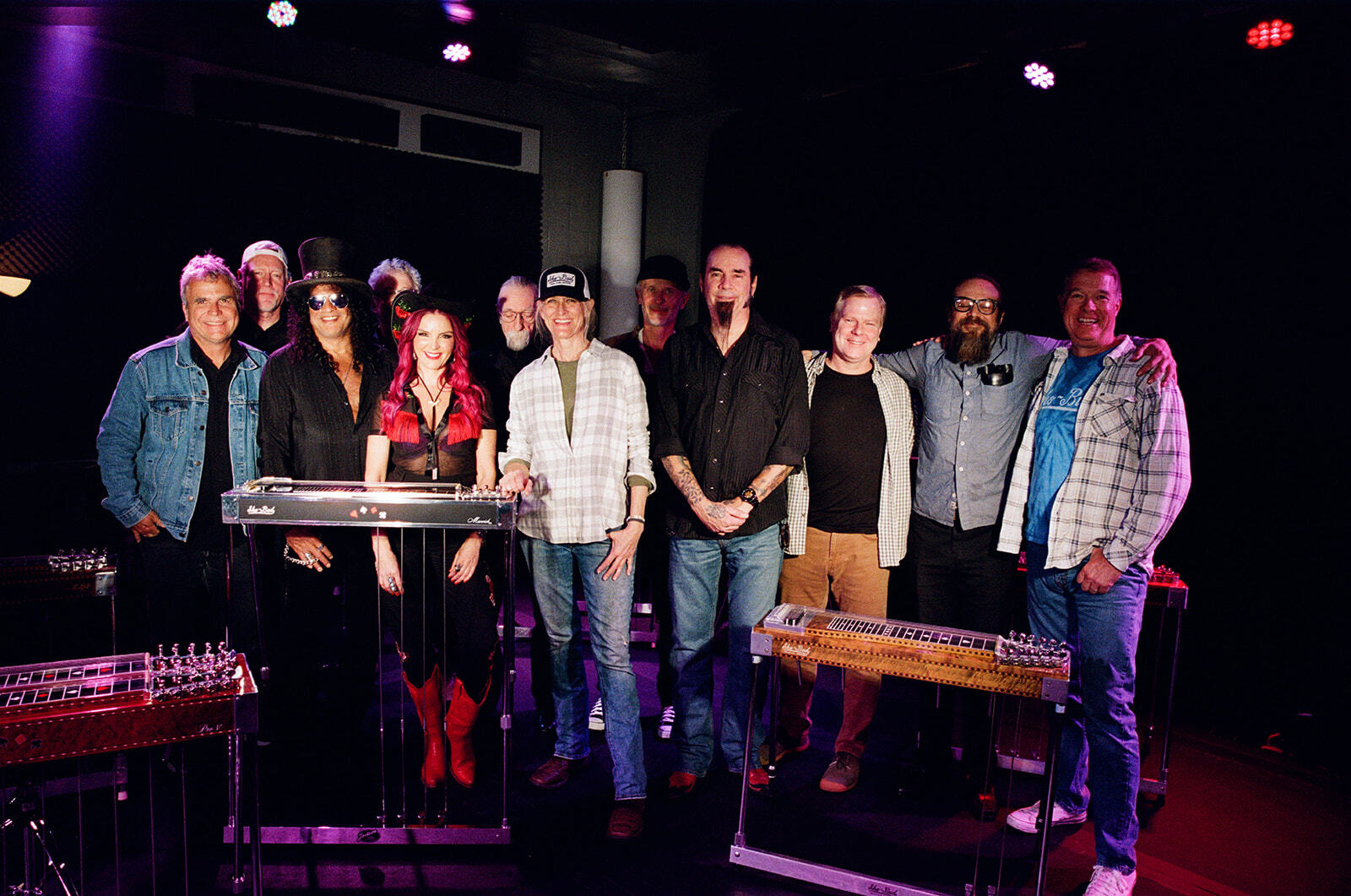
(L to R) Kyle Ince, Bob Sheehan, Slash, Ted Stern, Andrea Whitt, Skunk Baxter, Dawn Jackson, Pavel, Hexx Henderson, Mark Tucker, Rocco DeLuca, and Will Jackson pose for a group photo at the Sho-Bud Showcase Live at the Desert 5 Spot in Los Angeles.
 

On April 24, in Hollywood, the company celebrated the return of Sho-Bud Showcase Live, national concerts spotlighting steel-centric artists in all genres. The series kickoff, Sho-Bud’s first live event in over forty years, included, among its many participants, Jeff “Skunk” Baxter, Robert Randolph,
Andrea Whitt, Rocco DeLuca,
Hexx Henderson, Hatfield Rain, Shooter Jennings, and Slash.

Sho-Bud Music is a record label and publishing company originally established by Dawn Jackson to release an album by her band, the aforementioned Hatfield Rain. “Around that time, I started working with Dad and Harry on Jackson Steel and never did anything with the [album] mixes,” she says. “It’s getting ready to come out after all this time, so I’m super-excited.” Along with that recording, Sho-Bud Music is promoting other Sho-Bud artists.

Coming soon is Shot Jackson’s Sho-Bud Showcase radio program, which will now become a podcast featuring music, interviews, and over 150 digitized reels from the original 1970s and early 1980s WSM broadcasts. “We have all the reels and we’re going to start releasing them,” says Dawn Jackson. “The podcast will also include interviews with today’s Sho-Bud artists and, of course, our dad and Harry.”

Harold “Shot” Jackson built Sho-Bud on a foundation of superior instruments, customer service, customer satisfaction, and customer loyalty. Those values remain at the core of Dawn and Will Jackson’s goals, whether putting instruments in the hands of internationally renowned musicians or newcomers learning their way around pedal steel.

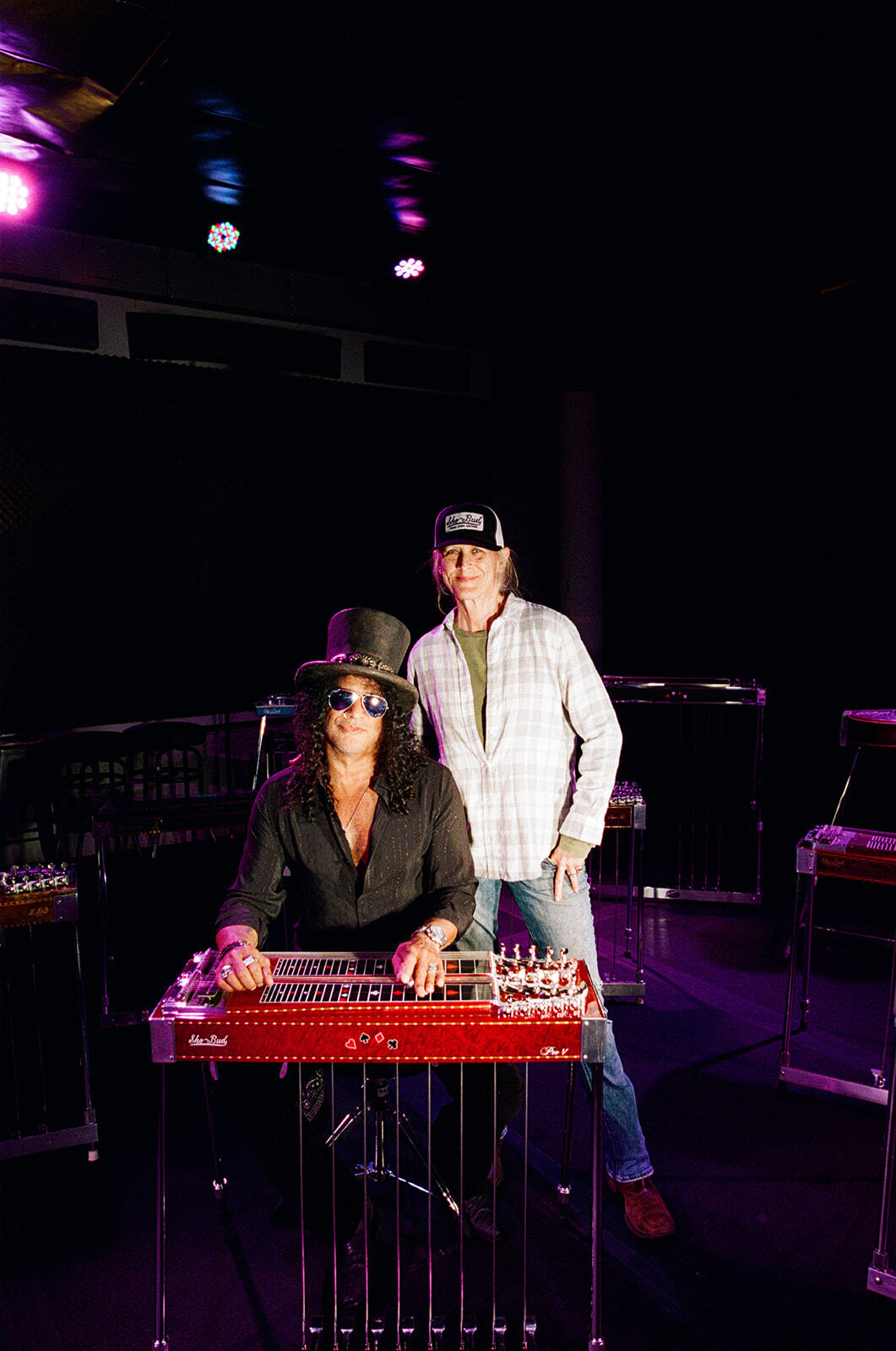
Sho-Bud CEO Dawn Jackson poses with Slash and a Sho-Bud Steel Guitar.

 

“These instruments are not like traditional fretted instruments,” says Will Jackson. “Fretted instruments don’t have moving parts per se. But these do. Because they have those linkages and mechanical pulling mechanisms, as they’re used, they wear. Anytime you make a change to these instruments, you have to be careful, because in the interest of trying to maximize performance or life on one end, you can impact tone on the other end, and that is something we can’t sacrifice.

“Sho-Bud has always been known for that Nashville sound, the tone that we got. The story I recall as a kid was Shot sitting there on a pickup-winding machine, which was made out of an old sewing machine motor. He had apple bushels next to his workbench. He would wind a pickup, plug it in, and if it gave him the tone he was after, performed the way he wanted it to, it went in the keeper bushel. If it didn’t, it went into the discard bushel.

“That is how our family has built these things. There are no Rhodes Scholars over here or MIT graduates in engineering. These guys developed these instruments through pure trial and error and using their ears to develop that tone. Again, we can’t sacrifice mechanical advantages over tone. Some guitar companies do, but we cannot do that. For us, it is about tone, tone, tone. We live and die by that.”

“We’ve always maintained the tradition and look of our guitars — the beautiful cabinets, our certain inlays, the finishes,” says Dawn Jackson, “but aesthetics are second. Tone has always been number one for us.”

“These instruments require maintenance,” says Will Jackson. “If there is a nut, a screw, a bolt, it will get turned by someone. When these things leave the shop, they’re set perfectly. People will start adjusting things, and that’s what they’re for. You need to fine-tune things ergonomically to make it fit. But, because these things can be very sensitive, sometimes they overdo it, or they have trouble chasing the tuning back to where they wanted it.

“We are here to support them in terms of Zoom calls, where they can show us exactly what they’re doing, what the instrument is doing, or what it’s not doing that they would like it to do. We can help walk them through that, using a blend of modern technology to help them fine-tune some of these traditional instruments. We’re always looking for ways to make it easier for them to keep these guitars maintained.”

As a family-owned and operated company, versus a multi-department corporation, the Jacksons are front and center when phones ring, texts chime, and emails arrive – no call centers, AI assistants, or being transferred through a half-dozen departments and hold times. They field calls, walk customers through setups, stay active via social media, keep up with forums, provide instructional videos, and cherish human-to-human relationships.

Slash plays a Sho-Bud Steel Guitar.
 

“Will and I have been a team since we were kids playing football in the backyard,” says Dawn Jackson. “We really believe in team efforts, and that’s why we’re so big on using the words ‘Team Sho-Bud.’ The dynamics between us, our father, and our uncle – we’re all creators and passionate about the things we do.

“We have the same objective in mind, which is to maintain our family heritage,” she says. “I am so proud that Sho-Bud is still a family business, and that people love and respect that. We work together, play off of each other, and it just works and works well.”

“I’m proud of my family – our dad, our uncle – for the sacrifices they made over the years to build these instruments, and to deliver the tone and the sounds that everyone enjoys,” says Will Jackson. “I’m very proud of the work they put into this, and of Dawn for rolling up her sleeves and helping them. I’m proud of the way Sho-Bud has evolved. It’s fun to be a part of the rebirth of Sho-Bud. These instruments, these new components, are going to be total game changers. I’m very proud to represent these products and wear the old brand. It’s exciting times.”


All Photos: Ashley Marie Myers, courtesy of Sho-Bud. Lead and alternate images: Slash plays a Sho-Bud pedal steel guitar.

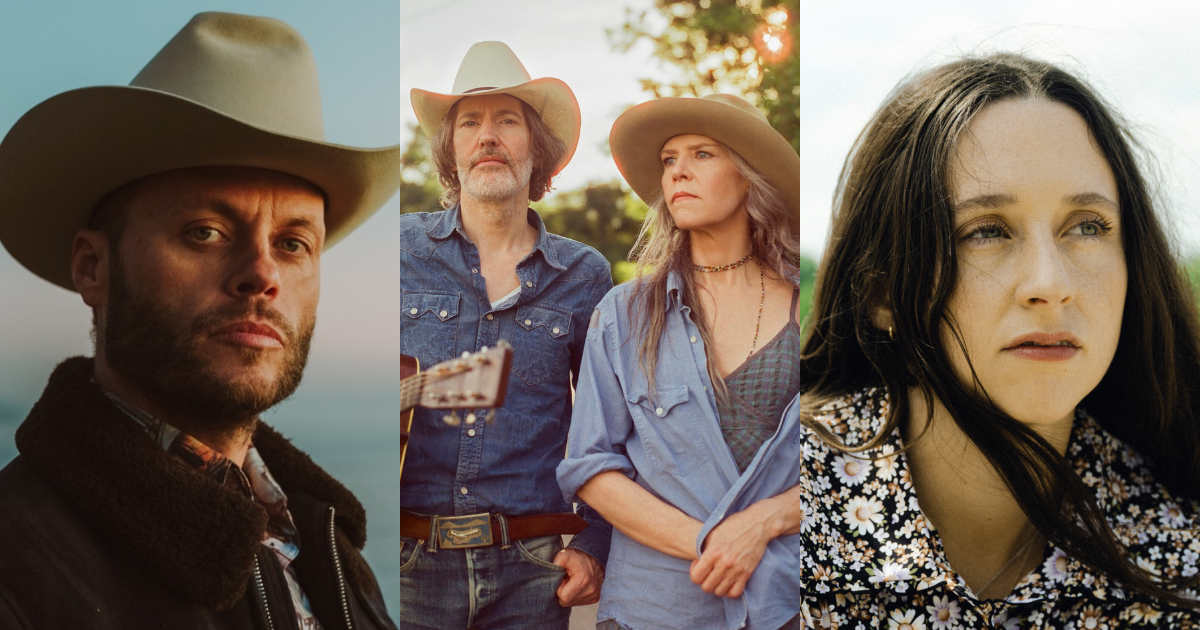
Charley Crockett, Gillian Welch & David Rawlings, Waxahatchee Among Americana Nominees

The Americana Music Association has announced the nominees for its 24th annual Americana Honors & Awards. This year’s nominations were revealed by Brandi Carlile, Kashus Culpepper, S.G. Goodman, Jim Lauderdale, Kacey Musgraves and Molly Tuttle in a social media announcement.

The winners will be announced during the Americana Honors & Awards on Wednesday, Sept. 10, 2025, at the historic Ryman Auditorium in Nashville. The celebrated program is the hallmark event of AMERICANAFEST, which returns for its 25th year on Sept. 9-13, 2025.

A full list of categories and nominees for the Americana Music Association’s 24th annual Americana Honors & Awards is below the video player.

ALBUM OF THE YEAR:

Lonesome Drifter, Charley Crockett; Produced by Charley Crockett & Shooter Jennings

Foxes in the Snow, Jason Isbell; Produced by Jason Isbell & Gena Johnson

Manning Fireworks, MJ Lenderman; Produced by Alex Farrar & MJ Lenderman

South of Here, Nathaniel Rateliff & The Night Sweats; Produced by Brad Cook

Woodland, Gillian Welch & David Rawlings; Produced by David Rawlings

ARTIST OF THE YEAR:

Charley Crockett

Sierra Ferrell

Joy Oladokun

Billy Strings

Waxahatchee

DUO/GROUP OF THE YEAR:

Julien Baker & TORRES

Dawes

Larkin Poe

The Mavericks

Gillian Welch & David Rawlings

EMERGING ACT OF THE YEAR:

Noeline Hofmann

MJ Lenderman

Medium Build

Maggie Rose

Jesse Welles

INSTRUMENTALIST OF THE YEAR:

Fred Eltringham

Alex Hargreaves

Megan Jane

Kaitlyn Raitz

Seth Taylor

SONG OF THE YEAR:

“Johnny Moonshine,” Maggie Antone; Written by Maggie Antone, Natalie Hemby & Aaron Raitiere

“Ancient Light,” I’m With Her; Written by Sarah Jarosz, Aoife O’Donovan & Sara Watkins

“Wristwatch,” MJ Lenderman; Written by MJ Lenderman

“Sunshine Getaway,” JD McPherson; Written by Page Burkum, JD McPherson & Jack Torrey

“Heartless,” Nathaniel Rateliff & The Night Sweats; Written by Nathaniel Rateliff


Photo Credits: Charley Crockett courtesy of the artist; Gillian Welch & David Rawlings by Alysse Gafkjen; Waxahatchee by Molly Matalon

Texas, Townes, and the Truth

(Editor’s Note: Sign up here to receive Good Country issues when they launch, direct to your email inbox via Substack.)

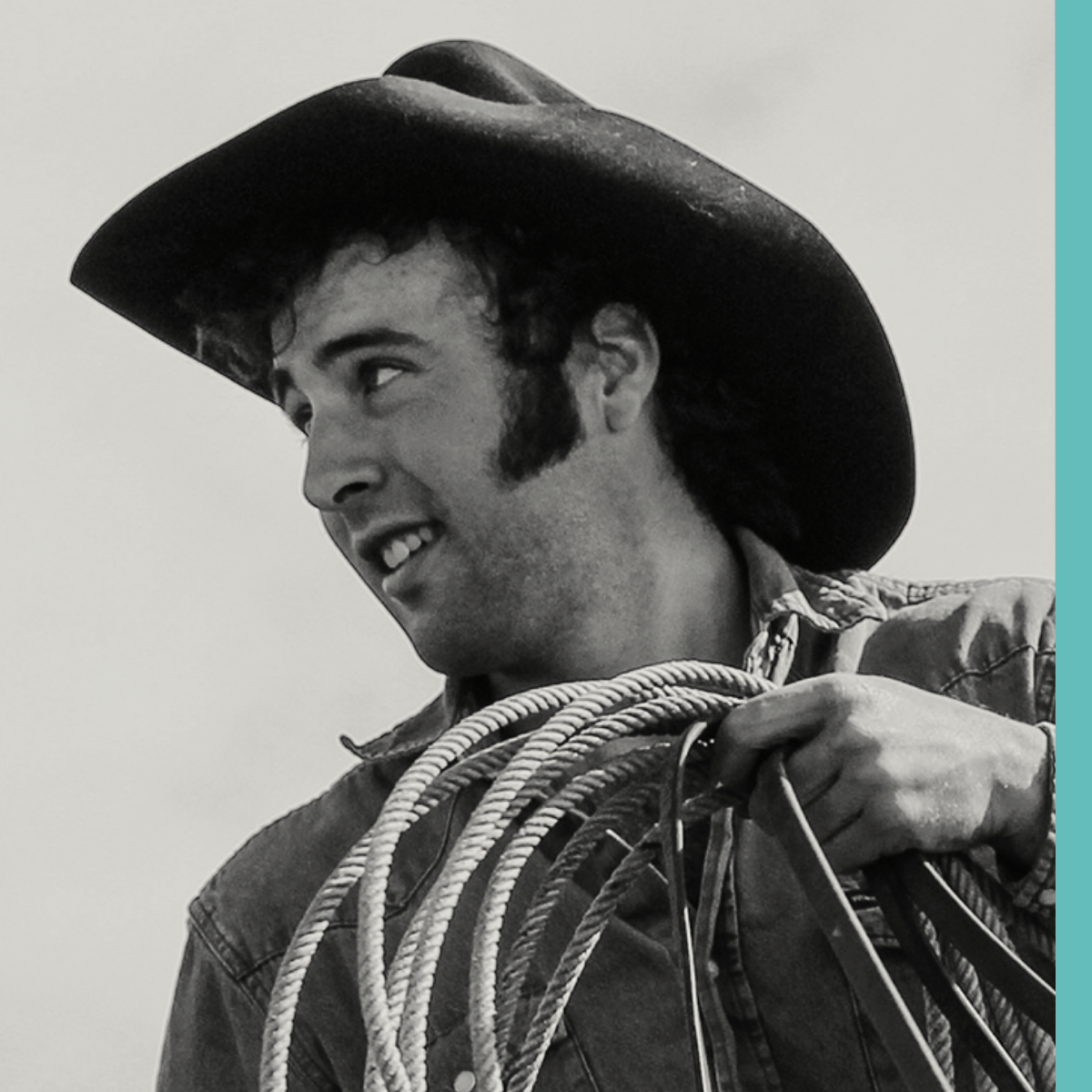
In advance of the release of Vincent Neil Emerson’s latest, critically-acclaimed album, The Golden Crystal Kingdom – which dropped on November 10 – BGS moderated a conversation between VNE and his friend and peer, country & western singer-songwriter and song-interpreter Charley Crockett.

Both artists cut their teeth in music venues in Texas a decade ago. In our conversation, they tell the story of how they came to know each other and discuss ways they protect each other within the business. They talk about covering and cutting each other’s songs and the importance of telling their truths.

Emerson’s new album, produced by Shooter Jennings, veers his sound toward warm ’60s rock and folk influences. He opens up to Charley and BGS about its creation process and what is on the horizon for him.

Charley Crockett: What’s up, Vincent?

Vincent Neil Emerson: What’s up, my boy?

CC: Another day, another dollar.

BGS: Tell me where you both are in the world right now.

VNE: I’m in Asheville, North Carolina, right now, at an Airbnb.

CC: I’m up here in San Luis Valley in Southern Colorado.

Both really nice places to be in the fall.

VNE: You ain’t wrong.

Can you give us a little bit of context about your relationship, where you know each other from, and how long you have been working together?

VNE: Charley, you wanna go?

CC: Oh man, I always tell that story; I wanna hear it from you.

VNE: I met Charley in Deep Ellum. We were playing around town, playing a lot of shows around there and Fort Worth. That was over 10 years ago, maybe?

CC: I was trying to think about it this morning. I think it had to be ’13 or ’14.

VNE: That’s crazy, man.

CC: He remembers it being at Adair Saloon; I remember it being at the Freeman. It really don’t matter, ’cause I’m sure it was both places.

VNE: I’m sure we went and had a drink at Adairs or something like that.

CC: I remember I walked up on him and said, “I like all them Justin Townes Earle songs.” And he said, “I only played one.” I always liked what he was doing, and he used to play solo and do the guitar pools up at Magnolia Motor Lounge all the time. He’d be up there smoking a cigarette, picking through them songs like Townes Van Zandt, and I thought, “Oh lord have mercy, this boy is a force to be reckoned with.”

VNE: Man, I felt the same way as soon as I heard you, brother. I remember a couple of nights I saw you at the Freeman with this band. You had a bunch of guys up on that tiny little stage, and you were just ripping through all these songs, taking all these old honky tonk songs and flipping them on their head and turning them into blues and vice versa. I always thought that was so cool, man.

CC: I don’t remember that well, but I guess you’re right. In those days, every gig we played for both me and Vincent, we ended up getting booked by the same folks, or they were all standing together in some bar, no matter if it was Ft. Worth or Nashville or Los Angeles. One way or another, all them same business folks been standing pretty close to me and Vincent. And that’s the truth.

Well, that’s convenient if you like to work together, I guess. Charley, do you have questions you want to dig in on?

CC: You know, Erin, I don’t even know what the hell we are doing?

Let’s talk about the release of Vincent’s new album.

CC: Well, let me just do this then. Everything he’s been putting out with Shooter [Jennings], like everything else he’s ever done…If you sit there looking at Vincent and he surprises you, it’s like, “Oh damn, I didn’t know old boy was gonna do that.” The very next thing he does, it just happens again — every single time. I remember when he was playing “7 Come 11” way before anybody gave a damn about him and was looking out for his interests or his career. He had all them songs in his pocket way before anybody had ideas or designs on him and his business. I’ve said for a long time that “7 Come 11” is one of the best folk songs written out of Texas in 20 years. Remember Central Track, Vincent?

VNE: Yeah, they did a lot of write-ups on music.

CC: I will never forget that stuff when you did that record and what you were doing live. Erin, he was playing for 50 bucks and a case of Lone Star in them dive bars in Fort Worth, you know? He was living in a 10×10 room. He was hardly ever even standing inside of the damn joint.

A handful of us showed up at the same time, and we are all moving on our own paths, but we’ve all stayed pretty close, or we damn sure weave it together quite a bit even if we get way out there, you know, in the territories, we always come back to each other. I think I met Leon Bridges right around the same time that I met Vincent. I met him in Deep Ellum, too. There is a guy who plays guitar with me now named Alexis Sanchez. He had a band back then, and he was playing at Club Dada there for some little festival, and Leon Bridges was standing there in a trench coat and a bowler hat. I venture to guess that me and Leon and Vincent met each other damn near about the same time. There were a lot of other folks like that. Ten years later, especially for some Texas guys, you know, we’ve all grown a lot, and I think we have always supported each other and loved each others’ music. That’s only grown, and Vincent is standing there as one of the premier, original, authentic talents to come out of Texas since the turn of the damn century. I’m not blowing smoke. I’m just stating what is already happening.

VNE: Man, that is high praise. I appreciate you sayin’ that, Charley.

CC: Well, they want all this shit to write about it, but that’s just the truth. He was playing in Fort Worth and like I said, playing for all that low money. They were calling him Lefty. Why did they call you Lefty? I figured it was because you had a black eye or something.

VNE: Yeah, I had my left eye knocked out of the socket one time, and the nickname stuck for a while.

CC: I remember they wrote about you pretty salaciously there in the Fort Worth Weekly. I know a thing or two about that myself.

VNE: I would say it was because they were trying to sell papers, but it was a free publication.

CC: Shit, they are selling advertisements. I think the Dallas Observer is still doing that to me.

He was playing them bars, we were playing them bars. I don’t know which one of us is which, but more often than not, he sure seems like if I’m Waylon, he’s Willie. I have felt like that for a long time. You could change the names. I think about this stuff a lot. The business folks, it is always hard to tell what they are doing, but you can be sure they are rolling dice and betting and gambling on folks. It ends up being, a guy like Vincent that somebody like me can lean on a lot more. We can trust those guys, and I’m real happy with who I’m working with, and I’m sure Vincent is, too. It is the other artists living life for the song that gets us through. I know I feel like that about Vincent, and I feel like that about a lot of other guys I don’t know as well as him.

Kind of like Johnny Cash said, “We are all family, even though some of us barely know each other.” I think it is because we can see each other and know we are in the same boat and in that way, care more for each other than other people would. I think it is pretty serious. It is life and death.

VNE: That’s a good feeling to not feel so alone in that way and have people out there and doing things similar to you. They probably think a lot of the same thoughts. Me and you are good buddies, Charley, and I feel that way, too. I feel like some guys out there like Tyler Childers – I really respect him, and I feel like he is in the same boat as us. I’m not as well known as you guys, but I think none of that really matters. I think what it comes down to is that we are all songwriters trying to make our own stories happen and be true to ourselves and honest to the world. I think that the reason we can relate to each other is the same reason the fans can relate. Honesty will cut through anything and bring people together.

CC: One way or another, them folks we are selling tickets to, they know.

VNE: You can’t fake the funk, I guess.

CC: Eventually, it comes through. Speaking of Tyler Childers, we ended up on the same plane flying from Nashville to Austin recently… I was there for the Country Music Hall of Fame induction and I didn’t want to go. I get real antisocial and want to hide out from everybody and shit, and I went to Nashville kicking and screaming. Tanya Tucker was getting inducted to the Hall of Fame with a couple of other people. Patty Loveless and Bob McDill, who I wasn’t that familiar with. I had thought that he’d written the Jimmy C. Newman song, “Louisiana Saturday Night”, which I know real well. To be honest with you, it is the only reason I agreed to go out there, ’cause I love singing that song. I made a lot of money writing songs off of that song, so I figured I owed whoever the songwriter was. Long story short, there in the last week, I found out it was a different “Louisiana Saturday Night,” regularly mistakenly attributed to Bob McDill cause he wrote a totally separate song called “Louisiana Saturday Night” that Mel McDaniel had a big hit with, and that’s the one that goes,

“Well, you get down the fiddle and you get down the bow
Kick off your shoes and you throw ’em on the floor
Dance in the kitchen ’til the mornin’ light
Louisiana Saturday night”

That was a big ol hit, right Vincent? He did “Baby’s Got Her Blue Jeans On,” and a bunch of shit like that that I just didn’t realize. My naive, ignorant ass goes up there to Nashville kicking and screaming, and that’s how I feel. A horse gets led to water or something like that. I saw Tanya get inducted. I damn near built my career off of my version of “Jamestown Ferry” when I was younger, and I realized that she had blazed that trail for me, and I had not shown her enough respect. I really hadn’t. Same thing with Bob McDill. All those songs he wrote and the advice he gave in his speech, and my dumbass could really shut up and pay attention to these folks.

Then I ran into Tyler going from there. He was flying to Austin to do a John Prine tribute. That’s how it is. When I see Tyler, I’m on a plane. When I see Vincent, it is at Monterey Fairgrounds. We are ships passing in the night. All these guys like Tyler, Colter [Wall], Leon, Vincent. Whenever I see them, they got a big light around them, and it is shining. You just want it to keep shining for them, and for myself, to keep it going,

I don’t know exactly where you want to go with this, Erin, but I’m excited about this record. Shooter was telling me about your songs and offered to send them and I was like, “No, I ain’t gonna do that. I wanna be like everyone else.” I wanna watch this thing get rolled out, and I wanna be excited. I’m looking forward to going through the songs.

Vincent, can you tell us about working with Shooter on this record?

VNE: I met Shooter a few times. Me and Charley were at this festival in Iowa hanging out, and Shooter came up to me and tapped me on the shoulder. I’d met him before at another festival but I’d never talked to him. He turned me around and said, “Hey man, I really like that thing you did with Rodney Crowell.” He paid me a lot of compliments, and since then, we talked, and when it came time to make another record, Shooter was the first guy I thought of. I thought it would be such a cool idea to work with him on an album. One thing about him is he really is one of the nicest people I’ve ever met, and he is a genuine fan of music. He’s trying to make cool things happen. I’m so lucky I got to work with him on it. That is the big takeaway from the whole thing for me was making a real good friend like that and meeting someone who gets me excited about songwriting and about making an album and making music in general.

Since Charley cut “7 Come 11” and you cut one of Charley’s songs for this record, can you talk about what prompted “Time of the Cottonwood Trees” winding up in this pile of songs?

VNE: Oh man – that song. Me and you were on tour together for three months, was it last summer? We did a bunch of dates, and we were on the road a long time, and I was listening to Charley do that song every night. It was a brand new song that hadn’t come out on his record yet. I got to hear him sing that song every night by himself, and I just think it is one of the best songs I’ve ever heard. It is one of my favorites from you, Charley. I think it is a fine example of songwriting. When it came time to make this album, I always wanted to pay tribute to you and cut one of your songs on a record because you cut “7 Come 11.” That really ties back into that whole Willie and Waylon and all those old timers who cut each others’ songs and lifted each other up like that. I just wanted to pay tribute to you, and that’s why I put it on the album.

CC: Shit, I appreciate it. I’ll be excited to get the check in the mail. You surprised the hell out of me with that one, you really did. I’ve always wanted people to cut my songs. Sometimes, I think I’d be better off that way. I have so many. I’ve always cut a lot of songs that weren’t mine, probably about half of them. And I got about a 250-song catalog of published shit. I would guess about 40-50% are songs I didn’t write. I feel like I’ve caught a lot of heat for that. People have an idea about me that I never wrote a single song. I think that’s because we live in an era where, like what Vincent was talking about, where all those folks back in the day, across genres, and it wasn’t just country it was pop, folk, soul, R&B. It was everything. Everyone was cutting each other’s songs. I just really think that to write a great song, you have to learn great songs from other people.

You have to watch out for these publishers these days. They’ll just put any piece of junk out as long as they’ve got control over it. They figured out they can make money selling junk. If you can make more money than ever before selling junk and you aren’t principled, and you aren’t that close to the music, well, they don’t see the reason not to do it that way. I think it feels like a renaissance.

VNE: Specifically in the genre of country music, there is a lot of junk out there. I don’t want to put anyone down. Most of the time, I just try to ignore whatever I don’t like. I think that’s the best way to go about it. I think there is room at the table for everybody, whatever you are into. I just think it is so cool that Sturgill and Charley and Colter and Tyler, all these other guys that are out here putting out real, honest-to-goodness songwriter songs. And not just that, but real country music. It doesn’t matter if it is your song or someone else’s; if you are telling that story honestly, I think that’s great. I’ve always appreciated you for that, Charley. I think you are a great interpreter of songs, and I think you are an even better songwriter, man.

CC: Damn, I’m glad I talked to y’all this morning. I feel better.

I’m glad that we are talking about cutting songs because that is such a huge part of country music, interpreting other people’s songs or reinterpreting a song. It feels like that art was lost in the past 20 years or so and it is having a resurgence. I’m excited that you guys are at the forefront of that, because great songs have more than one life. And it is an opportunity for songwriters to make more money.

VNE: I think it is one of the greatest compliments that a songwriter could receive – to have an artist who they love and respect cut one of their songs.

CC: There is no question about that. That is the best feeling.

VNE: It is, cause you know that your songs has legs and can go places that you can’t, which is a great feeling.

CC: It really is. It is such a political world, and it is so divided. There is a lot of pressure on people that you step out there into the great mirror of society, and the more out there in front of the public that you get, there is a mirror that starts projecting on you, and it is tough to deal with. It is hard to know what to do, but the thing about it is – being able to write honest songs and tell the truth in your writing; that is the most rewarding feeling. That is why I always look forward to what Vincent is doing. There aren’t a whole lot of people that I anticipate their new works as much as him, if anybody really. That’s the whole deal. You look over, and he’s writing better and better, and it makes me want to write better, too.

Speaking of, Vincent, can you talk a bit about your writing process for this record?

VNE: I kind of pieced together songs over time. Sometimes they jump out real fast; sometimes it takes a while. And thanks for saying that Charley, brother. Damn.

CC: I’ve been saying it for 10 years.

VNE: That’s kept me going a lot of times and I don’t think you realize that. These songs – damn, what was I saying?

CC: You were saying sometimes they come quick, sometimes they come slow.

VNE: I’m very influenced by the music that I’m listening to and that is why I try to be real careful about what I listen to. I think it is like if I’m making a smoothie. I gotta put certain ingredients in my brain, and it comes out me on the other end, hopefully. I was listening to a lot of Neil Young and Steven Stills and David Crosby. A lot of the ’60s rock and roll and a lot of Bob Dylan stuff. That’s just where I was in my headspace, so I was taking in all that. I try to put it all together to make it my own. That’s where I was at when I was making this album.

By the way, I’m excited about this rodeo we are playing together, Charley.

CC: Which one is that?

VNE: The National Finals in Las Vegas.

CC: Oh shit yeah! At the Virgin Theater there? Yeah man, I’m excited about it, too. Thanks for doing it.

VNE: Thanks for having me on.

CC: When it comes to money and shit like that, just any time, whatever you gotta do to make it work cause I wanna keep playing with you as much as we can and build up. I’ve played in some arenas recently, and I really don’t like it. I don’t know if country music belongs in arenas. And I just mean opening. I can’t sell tickets to no damn arena. And I take a cue from Colter cause he and Tyler and them boys, they could be in arenas all day long if they wanted to be. I would rather play rodeos and municipal auditoriums and really special theaters and stack ‘em up. I think we need to get a goddamned Dripping Springs reunion tour going. A real one.

VNE: Man, that’d be great.

CC: You know what I mean, just do some of our own shit. My aunt and uncle and a bunch of people who haven’t been out to see me play in a long time are coming out to Vegas. I used to live with my uncle when I was a kid in Louisiana and Mississippi and shit. He’s gonna flip his shit when he sees you.

VNE: I can’t wait, man, I’ve heard so many stories about him.

CC: He’s wild. We gonna show these folks what country music actually sounds like. They might not be able to tell who is left or right. Nahhh I’m just kidding it is a bunch of cool people.

Thank y’all for letting me be a part of this. I’m just happy to help out or talk about this. I’m real excited about the album for real. The imagery in your writing, man, it’s like everything you write is getting more and more vivid. You paint such a picture. I’ll stop blowing smoke up your ass.

I’m gonna get back on the trail and Vincent, I’ll talk to you soon.

VNE: Thank you for doing this brother, I appreciate you.


Sign up here to receive Good Country issues when they launch, direct to your email inbox via Substack

Photo Credit: Vincent Neil Emerson by Thomas Crabtree; Charley Crockett by Bobby Cochran

6 Times Tanya Tucker Showed Us What Pride Is All About

Just in time for Pride Month, singer-songwriter Tanya Tucker released her new album, Sweet Western Sound, with Fantasy Records, marking the Country Music Hall of Fame inductee’s 26th solo studio record. Tucker is an American country icon, having landed her first hit single in 1972 at the age of 13 with “Delta Dawn.”

Tucker has long supported the LGBTQ+ community and queer equality, and Sweet Western Sound hits many of the same notes. The record was produced by Shooter Jennings and Brandi Carlile, the openly lesbian, roots music singer-songwriter and producer who is the only woman to receive two Grammy nominations for Song of the Year in a single year. Tucker has also collab’ed with drag queen and TV legend RuPaul and performed for GLAAD and Nashville Pride.

To celebrate her inclusivity and the new record, we’re counting down some of her most memorable – and most fabulous – stage performances and duets.

Tanya at Nashville Pride 2022 

Is there anything better than rainbows, bedazzled tassels, and feathers? Absolutely not! And Tucker brought all three in her spectacular outfit at Nashville, Tennessee’s Pride celebration in 2022. Tucker sang “If It Don’t Come Easy” on stage during the celebration and was joined by multiple drag queens wearing rainbow tees emblazoned with “Tanya Mother Tucker.” Guests during her set included her dog and her daughter; the two sang Merle Haggard’s apropos “The Way I Am.”

Tanya Shows Some “Kindness”

Tucker’s latest album features a track called “Kindness,” a country-western crooner that encourages us to be a little nicer to those around us. “I found glory in the ruin of the best laid plans,” Tucker sings. “There were times tomorrow felt so far away. It seemed as though the bitterness was here to stay. I’ve pushed down on my anger through my tears.”

The tune is a good reminder we never know what someone else is going through, and that we could all be a little softer because of it.

Tanya and RuPaul Declare “This Is Our Country”

In a totally unexpected, but absolutely harmonious collab, Tucker and RuPaul teamed up in 2021 to release a duet called “This Is Our Country,” a genre-bending blend of country and pop that celebrates inclusion and equality.

“I can be a queen or I can be a cowboy,” RuPual sings.

“Love is the answer, love always wins,” Tanya adds.

The lyrics state firmly that our country is big enough for all its diverse communities and features more than a few of RuPaul’s rap bars. The video performance features some of Drag Race’s most popular queen and contestants, as well as a couple cute, shirtless cowboys.

Tanya In the Moment With “Bring My Flowers Now”

Co-written by Tucker and Carlile — as well as twins Tim and Phil Hanseroth — “Bring My Flowers Now” is a call to show our love and appreciation for friends and family before they’ve passed away. The tune is from her 2019 album While I’m Livin’, also produced by Carlile and Jennings. In the song, Tucker reminds us there are “rainbows, sunshine, and babies” to celebrate in this life, and that we shouldn’t wait until it’s too late. The simple, slow track features a piano instrumental and Tucker’s iconic vocals — perfect for a gentle moment with the ones we cherish most.

Tanya and Brandi Have “Breakfast In Birmingham”

If it’s a classic country duet you’re craving, Tucker and Carlile’s duet on the new album is just the ticket. “Breakfast In Birmingham” features both singers’ warm, soulful vocals and paints a picture of the city’s past with descriptions of hippies, cheap gas, and crispy-fried bacon. There’s also mention of “shutting down the rebel history,” a reminder that there’s a lot to celebrate and remember this Pride.

Tanya’s First Hit, “Delta Dawn”


This would be no list of Tanya Tucker’s best moments without reaching back to her roots. “Delta Dawn” was Tucker’s first hit, and this 2019 performance at The Troubadour features her famous key change as well as beautiful dobro and electric guitar licks.

Around the 2:40 mark, Tucker pauses her singing to let the audience fill in the words and they don’t miss a beat. This tune is always worth a listen and is one of Tucker’s best-known singles.

Whether you’re a fan old or new, Tucker’s got something for everyone — including a message of equality for all. There’s almost no better country singer ally to revisit during Pride Month.


Photo Credit: Derrek Kupish

Minute-by-Minute at Willie Nelson’s 90th Birthday

6:35pm – Billy Strings kicks off Night Two at the Hollywood Bowl with “Whiskey River.” It’s the same song as the first night but it’s a welcome repeat number (and face).

Billy Strings by Randall Michelson

6:39pm – Ethan Hawke opens the show, saying “Willie has always stood for equality,” so it’s no surprise to see the next guest…

6:40pm – It’s Orville Peck in a sleeveless vest (Aren’t his arms cold?! It’s freezing tonight) and his classic fringed mask. Performs “Cowboys Are Frequently, Secretly Fond of Each Other.” Makes use of the full Hollywood Bowl stage – he is owning this moment.

6:45pm – Charley Crockett. “Yesterday’s Wine.” Lady in box next to me states loudly, “Now this is real country.”

6:49pm – Allison Russell and Norah Jones do “Seven Spanish Angels.” These two voices are so perfectly in sync… please call me as soon as they do a duet record together.

6:56pm – Chelsea Handler introduces Dwight Yoakam for “Me and Paul.”

7:05pm – Waylon Payne and Margo Price take the stage together for “Georgia On A Fast Train.” These two are having the absolute best time together. Their chemistry is off the charts. From the box next to me, I hear a fan whisper under their breath, “MARGO IS MOTHER.” Couldn’t agree more.

Margo Price by Randall Michelson

7:14pm – Particle Kid (aka Willie’s younger son, Micah) along with Daniel Lanois. “I went to the garage and got high as shit and wrote a Willie Nelson song.” The lyrics come from a phrase his dad said one day: “If I die when I’m high I’ll be halfway to heaven, or I might have a long way to fall.”

7:19pm – Dame Helen Mirren (!) introduces Rodney Crowell. Emmylou joins mid-song for “‘Till I Gain Control Again.” Crowd goes bananas.

Emmylou Harris by Randall Michelson

7:33pm – Rosanne Cash does “Pancho and Lefty.” Totally different interpretation compared to Night One (where it was performed by Willie and George Strait), but a universally beautiful song nonetheless.

7:46pm – Lyle Lovett melting hearts and brains on “My Heroes Have Always Been Cowboys”

7:53pm – The “Aloha State Statesman” Jack Johnson performs one of the only non-Willie catalogue songs of the night, “Willie Got Me Stoned and Took All My Money.”  He wrote it after Willie got him stoned and took all his money (in a poker game).

Jack Johnson by Jay Blakesberg, Blackbird Productions

7:57pm – Beck (in sunglasses). First artist to acknowledge the unreal house band. “Can you imagine waking up in the morning and opening your eyes and realizing ‘I’m Willie Nelson’? It’s already a great day.” Performs “Blue Eyes Crying In The Rain.”

8:03pm – TOM JONES! One of the most unexpected joys of the night. His love for Willie shines through in his performance of “Across the Borderline.”

Tom Jones by Josh Timmermans

8:12pm – Surprise guest host Woody Harrelson takes the stage. “Not to self-promote, but just so you guys know, I did open a dispensary… seems like the right audience.” He introduces the legendary Bob Weir. Billy Strings and Margo Price join Bob on stage for a fun and enthusiastic “Stay All Night (Stay a Little Longer).”  Margo is having the most fun tonight.

Billy Strings, Margo Price, Bob Weir by Jay Blakesberg, Blackbird Productions

8:18pm – Shooter Jennings and Lukas Nelson together! The next generation doing their fathers proud with own rendition of “Good Hearted Woman.”

Shooter Jennings, Lukas Nelson by Randall Michelson

8:22pm – Lukas performs a heart-wrenching version of “Angel Flying Too Close to the Ground.” Sounds so much like his dad yet simultaneously unique to himself. He has all 18,000 attendees in the palm of his hand.

8:29pm – The Avett Brothers. Wow. They sound so good, and fresh off the MerleFest stage just 48 hours prior. It’s been a few years since I saw them and gosh I missed them.

8:40pm – Chelsea Handler introduces Norah Jones, who performs an instrumental ode to Bobbie Nelson.

8:43pm – Norah brings on Kris Kristofferson (!) and helps him through “Help Me Make It Through the Night.” There’s not a dry eye in the house.

Kris Kristofferson, Norah Jones by Randall Michelson

8:49pm – Ethan Hawke introduces Nathaniel Rateliff. Not unlike the first evening (where he performed “City of New Orleans”) he steals the show with “A Song For You.” Rateliff is a national treasure who should be protected at all costs.

8:54pm – Sheryl Crow does “Crazy.” Crowd (rightfully) goes Crazy.

9:02pm – Dave Matthews, overflowing with sheepish charisma, tells an amazing story about getting high with Willie on his bus and how proud his mom was of that moment. The photo of that night is still prominently displayed on her mantle. He performs “Funny How Time Slips Away,” a song that seems to be the theme of the night.

Dave Matthews by Randall Michelson

9:18pm – Jamey Johnson and Warren Haynes perform “Georgia On My Mind.” From the first word Jamey sings, the audience goes wild. These two bring down the house.

9:28pm – The Children of the Highwaymen, including Lukas and Micah Nelson (Particle Kid), Shooter Jennings, and Rosanne Cash. One of the few moments during the show with technical difficulties.

Woody Harrelson, Willie Nelson by Randall Michelson

9:35pm – Woody Harrelson returns to the stage to introduce Willie. The man of the hour finally takes the stage. Willie performs “Stardust.” It is perfect. I am crying.

9:53pm – Willie duets with his longtime studio producer, Buddy Cannon, on “Something You Get Through” (which the two wrote together).

10:02pm – KEITH RICHARDS JUST WALKED OUT. I AM DECEASED. It’s hard to even remember what they performed because everyone is in such shock. (They performed “We Had It All” and “Live Forever”).

Willie Nelson, Keith Richards by Randall Michelson

10:10pm – All skate. “On the Road Again” of course. Willie wraps up the night by taking us all to church, ending with a medley of “Will the Circle Be Unbroken” and “I’ll Fly Away.” It’s going to take an awfully long time to process everything from this weekend.


Lead photo of Willie Nelson by Randall Michelson.