The Producers: Dave Cobb

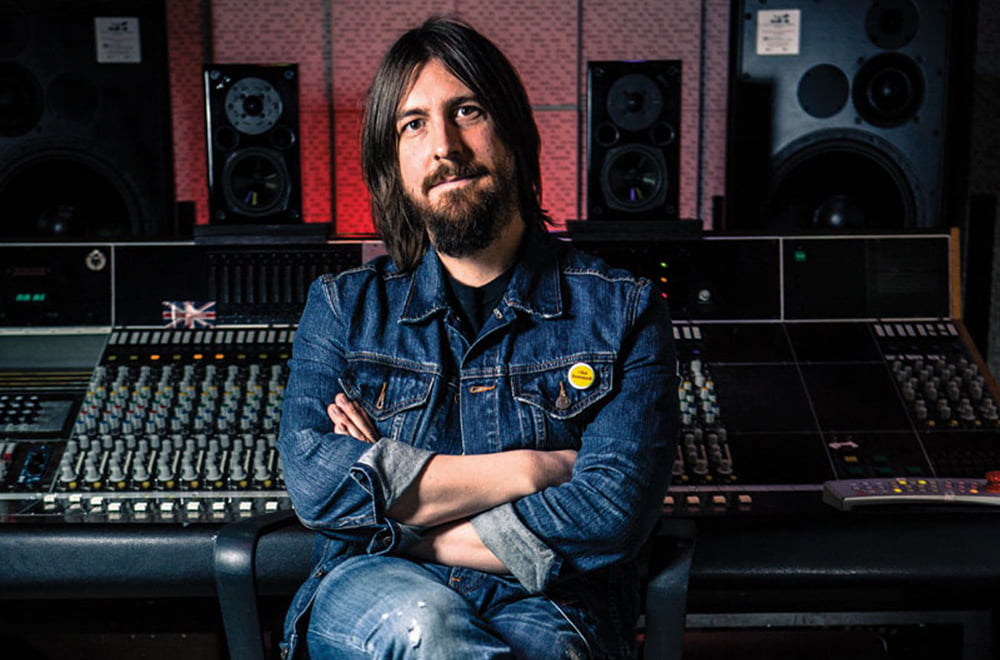
Dave Cobb is the man with the Midas touch. Since the Savannah-born guitarist/producer started working his magic in the studio more than 10 years ago, he’s produced some of the very best Americana records of the decade, including Sturgill Simpson’s High Top Mountain and Metamodern Sounds in Country Music, Chris Stapleton’s Traveller, and both of the brilliant solo recordings from America’s best songwriter, Jason Isbell. Cobb took time out from a session at his home studio in Nashville to speak with the BGS for the first in our series of interviews with producers about making records.

Dave Cobb: What’s happening?

Michael Verity: Not much. I have you down on my calendar for a chat.

Yeah, I remember, man. I’m a big fan of the Bluegrass Situation. You guys do some awesome shit.

Aw, thank you, man. We feel the same way about you!

You guys are one of the only real publications out there. It’s awesome, man.

Thank you! That’s always nice to hear. So, ever since I was a pup and I looked at the back of my first record album, which which was Bridge Over Troubled Water 

… oh, wow.

… and saw "Produced by Roy Halee" …

… one of my heroes …

… I’ve been fascinated by record producers. And then I read that Bridge Over Troubled Water was a template of sorts for Jason Isbell’s Southeastern.

Absolutely. I’m a huge fan of Roy. He’s kind of it for me. And yeah, about Southeastern: We met about two weeks before we recorded and it was hilarious because all I did was talk to him for a second then go, "Let me play you a record." And I played “The Only Living Boy in New York.”

That’s one of my favorite songs of all time. I think it’s one of the most brilliant productions ever. I pointed out that when you think of Simon and Garfunkel, you think of acoustic guitar. You never think of a band or of production. But, if you listen to that record, it’s so badass. They’re singing in cathedrals, there are loops going on. The kitchen sink’s on that record — harpsichords and bells — but it still feels like an acoustic record. And that was the template for Southeastern … to make a record that feels acoustic but not be purely acoustic. It’s awesome that you pointed that record out because it was absolutely the template. [Laughs] Even though Southeastern sounds nothing like it.

Sonically, Bridge Over Troubled Water really summarized much of what was created by the Byrds, the Beatles, and the Beach Boys, and then took it to the next logical step. And opened the door for the kind of productions Gus Dudgeon did with Elton John, for example.

Absolutely. I love those records, too. Tumbleweed Connection is one of my favorite records of all time, as well. You’re absolutely right. Man, you know your stuff.

In my opinion, “Cover Me Up” is one of the best Americana songs to have been recorded in the last 20 years.

Oh, wow.

If I were to put it under a microscope, how many of your fingerprints would I find on that song, do you think?

I had read about the recording of “Mrs. Robinson.” They said the guys recorded that song minus the band and then, after they got the track, they added the band — the Wrecking Crew guys — and that’s why the song feels so good … and moves. So I thought, "I don’t want to influence Jason at all. I don’t want anybody influencing his timing. I don’t want anybody influencing his ebbs and flows, his getting loud and getting quiet."

We were recording at this little tiny studio in the back of my house and it’s a little bit small, a little bit confined. We wanted him to be able to stretch out. So we ran lines into the house and put him in the kitchen, where’s he’s looking out over Nashville. There's nobody else around; he’s in the house completely alone and we’re down in the studio, listening.

So we had him record the song — as well as two or three other songs on that record — completely by himself, acoustic. After we got the track, we added the slide and the Mellotron and the bridge, things like that. 

It’s very simple and it’s supposed to be simple. I think, normally, when people try to record that kind of thing, they get everybody together, and they have a click track. They’re trying to get a really great take and then comp it to go. “Cover Me Up” is a pure performance, a one-take track with just a little bit of sweetening, which was my contribution.

With a Mellotron. Which was an Elton John instrument, right?

I think a lot of people used it. The Beatles used it. The Bee Gees. Back in the day, if you couldn’t afford strings, you got a Mellotron. I think it’s a wonderful instrument and a great way to create some atmosphere. We keep coming back to the same record, but on Bridge Over Troubled Water, there are strings and all kinds of stuff — like the Mellotron. It's an affordable way to get ahold of a glockenspiel or a marimba or whatever crazy instruments you can think of.

The funny thing about “Mrs. Robinson,” as you tell the story about adding the band afterward, is that Paul Simon supposedly didn’t even know they did that. He had gone off to Europe and, when he landed back in New York, he heard it on the radio and was like, "What the hell?"

He probably smiled all the way to the bank on that one.

Not to overstate the whole Bridge Over Troubled Water thing, but on the new Jason record, you can kind of draw some dotted lines between the two albums … the reverb on the drums on “Children of Children,” for example.

Oh, for sure. It’s old chambers — like the echo chamber at Sound Emporium, the studio that Cowboy Jack Clement built back in the '60s. It’s a really beautiful sound; you really can’t fake that. On “Bridge Over Troubled Water,” they were using an elevator shaft.

I know, right? Isn’t that cool? I was looking at the video about the making of [Isbell’s] “24 Frames.” Was your input as we saw it in that video indicative of how you work with musicians?

Yeah. When I go into the studio, I’m kind of the "fifth member." I like to be in the room with the artist and have an instrument on, whether I play on the record or not. It’s a tool to speak the language, to suggest melodic ideas, and push and influence the tempo and the like.

There’s a guy, Jimmy Miller, one of my favorite producers ever, who produced the best Stones stuff — from Let It Bleed to Exile [On Main Street]. The Stones really found their swagger with him. He’d get out there and play percussion or drums or whatever it took to get the groove. I think I kind of do that, as well, whether I have an acoustic guitar on or play percussion or whatever. I try to guide like that, without using clicks.

And with Jason, he’s really open and always very cool. He always has the songs; the songs are done because he’s an unbelievable writer. But with the little themes, the beginnings and ends and bridges, he’s always welcoming to ideas. We always have fun.

“The Life You Chose” and “Hudson Commodore” are my favorites on that album. The things I love about “The Life You Chose” are the idea of being “lucky” by losing three fingers — what delicious irony. And, right as he sings that line, there’s a cello that sneaks into the mix. It just floored me. I thought, “Dude, that is IT.”

Thanks, man. He always let’s me mess around and I love orchestrating. That’s the Mellotron again. That’s not even a real cello. The Mellotron lets me conduct a symphony in my own little studio.

Lindi Ortega did something cool — she recorded a little in Muscle Shoals, did a few tunes with another one of my favorite producers of all time, Colin Linden, and then tracked three of cuts with you. And it’s easy to tell which ones are yours. Just rock 'n' roll, baby. Did you have fun with that?

I love Lindi. I did her previous record, and I think she is such an amazing talent. Every time we work together, those vocals are live. Her songs are pure performance and we were just trying to capture lightning in a bottle. She’s so exuberant and alive and fun to work with … dancing while she sings, jumping around. I think you feel that on tape.

My other favorite you’ve done is Chris Stapleton’s Traveller which is a whole lot different than Lindi and Jason. To me, it has a much more glossy, rock 'n' roll sound. Should I trust my ears on that one?

Yeah. The guy who who engineered and mixed it was Vance Powell, a tremendous talent who did all the Third Man stuff, like Jack White’s records. We wanted a real simple, pure thing; that was driven by Chris. I love strings and stuff like that, but Chris was like, “Nah, no keyboards.” I think there’s like one hit of piano somewhere on the record.

But the way we did it was a really good idea. That guy's such an insane singer so we didn't want to let anything get in the way of the vocal. And he’s a phenomenal acoustic guitar player so we tracked it with him, a bass guitar, and drums, me on acoustic guitar, and his wife on harmonies. That’s pretty much what you hear, other than a few solo overdubs.

We had the privilege on working in RCA Studio A for much of that record and we had a blast. We’d show up at noon and goof around and talk and maybe order some food, talk over some drinks. We didn’t track until maybe 8 o’clock at night but, when we did, we’d get two or three masters. That’s what you hear on the record. It was such a fun session and a real lesson in recording when you’re inspired — not recording because you have a deadline. The label was great. They really let us stretch out. They were really supportive about it all, about having everybody in a good mood.

We talked a little about Jimmy Miller. Now let’s talk about Glyn Johns.

Glyn is my favorite engineer of all time. One of my favorite producers. His records were so hi-fi and beautiful. I think he made a great record with Ryan Adams with Ashes and Fire. I hear that record it makes me want to give up. I think I’m kind of a fake engineer. I work on the records, but I’m more of a songwriter kind of producer. His albums sound like music to me: guitar amps sound like guitar amps, singers sound like they're singing to you. I’m heavily influenced by him, especially by his rock 'n' roll records.

A good place to ask this question: Do you play with Europe? As in “The Final Countdown” Europe?

No, I don’t play with them. I produced their last album. I don’t play in the band Europe, no. [Laughs]

I was a little confused by that one.

Every once in awhile, I’ll jump on stage and play with them. When I was a kid, I used to play along with that stuff. Everybody did in the '80s.

The way that happened was, I produced this band called Rival Sons — they’re more of a traditional rock band. They do really well overseas, and the guys from Europe heard the record and called me about a year-and-a-half ago, asking me about working together. They called me thinking I’d be too cool to work with them, but I was really excited about it. I went over to Stockholm and we made a record that was awesome. It sounds like Black Sabbath or something. It was a lot of fun. We’re going to make another record again. They’re really good guys.

Has production always been in the back of your mind, even while you were in your own band … well before you did your first record with Shooter Jennings 10 years ago and started making a name for yourself?

I always wanted to be in a band and get a record deal and do it as a career. And my band did get signed and did a lot of heavy touring. But we signed a bad deal and got stuck, and if I recorded anything new with the band, it would go directly to the label that we hated. So that’s when I started taking production seriously. I’d met my wife by this time and I was ready to stop touring. I enjoyed playing shows and enjoyed recording records but I hated the road.

And I think when I was in bands, I used to drive everybody crazy trying to tell them what to play. Maybe I was douchier back then and production was a logical thing to do — start being a producer so people would actually start listening to you.

You've found your natural space.

Being a producer is like getting to be in a different band all the time. It’s a lot of fun. When you first join a band, it’s the most romantic thing. Then, after two or three years, you start hating each other. Being a producer, I get the first date kind of feeling all the time.
Hey, CMA Awards, Your Roots Are Showing

The election may currently loom large over America like a toupée-shaped storm cloud, but yesterday, there was one rumor floating around that managed to cut through the noise: Beyoncé might perform at the CMA Awards. Speculation swirled around Nashville and online before it was officially announced late Wednesday afternoon that Queen Bey would, in fact, make an appearance, though details leading up to the show were limited. It was a curious phenomenon, as the bulk of the chatter surrounding “Country Music’s Biggest Night” (ABC’s words, not ours) surrounded an artist outside the genre. In many ways, though, it was a harbinger of what the rest of the evening would bring.

Broadcast live from Nashville’s Bridgestone Arena, the CMA Awards are part awards show, part concert, part ABC product-placement opportunity, helmed since 2008 by country stars Brad Paisley and Carrie Underwood. This year was a special one, as the show celebrated its 50th anniversary and grappled, on stage, with the stark contrast between what 1967’s country, which honored Eddy Arnold with the first-ever Entertainer of the Year trophy, and that of today (Luke Bryan took home that same award last year) look like. The show opened with a medley of classic country songs performed by the genre’s patriarchs and matriarchs: Vince Gill honored Merle Haggard’s “Mama Tried”; Roy Clark and Brad Paisley paid tribute to Buck Owens with "I've Got a Tiger by the Tail."

Many of the other artists involved — including Reba, Charlie Daniels, and Dwight Yoakam — performed their own songs. As iconic artists sang tributes to themselves, you had to wonder: Are there not current artists suited to paying tribute? And while, yes, there are — two notable CMA snubs, Margo Price and Brandy Clark, come to mind — the medley opened the show on a dissonant note. Today’s commercial country is not the country of Hank Williams or Merle Haggard. It's the country of Luke Bryan, whose teeth far outshine his mediocre vocals, and of Florida Georgia Line, a wildly popular duo who, while certainly writing some catchy songs, are more in line with Top 40 than anything with a real twang.

Many of the evening's low points, like an entirely forgettable performance from Bryan of "Move," came from the new guard. Of course, there are still plenty of up-and-comers keeping the genre vital. Maren Morris, who rightfully won New Artist of the Year, delivered one of the best performances of the evening when she brought out the McCrary Sisters and the Preservation Hall Jazz Band for a show-stopping take on "My Church." It was also a crossover moment that would fall in line with some of the show's other standout performances.

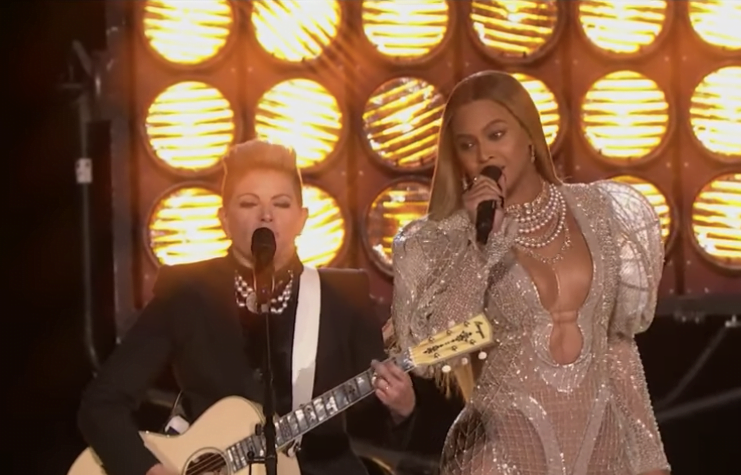
And it wouldn’t be the CMA Awards without a true pop/country crossover performance, the best of which (like last year’s from Chris Stapleton and Justin Timberlake) make up for those that just feel forced. (I know Pentatonix recorded “Jolene” with Dolly Parton, but come on, is that really the best you can do, CMA?) Last night, however, we saw a performance — made all the more urgent by both the day’s rumor mill and the show’s constant promotion of it — that felt less like a crossover and more like the coming together of two kindred artistic spirits: Beyoncé and the Dixie Chicks teaming up for the Lemonade track “Daddy Lessons.”

While it may sound like an unusual pairing on paper, the Dixie Chicks performed the rootsy Beyoncé number, which has been at the center of a debate about what songs can and cannot be called “country,” on their DCX MMXVI world tour this year. More importantly, however, it IS a country song. While Twitter may have been ablaze with cries of, “That’s not country,” you’d be remiss not to consider country’s black roots which run very, very deep. It’s no surprise, then, that the performance, which included a brief interlude of the Chicks’ version of Darrell Scott’s "Long Time Gone,” felt natural, important, and necessary. 

And that’s where this show had its moments that truly shone: when country got to show its roots. Another standout moment occurred when Eric Church brought Rhiannon Giddens on stage to perform "Kill a Word," an anti-hate anthem off his Album of the Year-winning 2015 release Mr. Misunderstood. Paired with Dwight Yoakam and Chris Stapleton's joint tribute to Ray Charles, one had to wonder if CMA was hoping to get a little of Americana's Midas touch for themselves. 

All three of those performances, while honoring the genre's roots, also celebrated, some subtly and some not-so, diversity and inclusion. (Although it should be noted that, while both Yoakam and Stapleton are fantastic singers, it would have been nice to have an artist of color honoring Charles.) Tim McGraw's performance of "Humble and Kind," a Lori McKenna-penned tune that earned her a Song of the Year win, was a nice moment celebrating love in all its shapes and shades, one that felt all the more poignant in this last week of a particularly hateful election season. The show's presentation of Dolly Parton with the Willie Nelson Lifetime Achievement Award featured a who's-who of women in country, all coming together to honor an artist who embodies the spirit of kindness and inclusion better than perhaps anyone else.

Given the common threads running through the night's high points, it's fitting that Garth Brooks took home the night’s biggest honor, Entertainer of the Year. Over the course of his unprecedented career, he's carved out a space for himself that makes room for country traditions, modern pop sensibilities, and, perhaps most strikingly, unabashed progressivism. (You'll remember Brooks won a GLAAD Award way back in 1993 for his way-ahead-of-its-time-for-a-country-song tune "We Shall Be Free.") While some might consider his success to be in spite of that unique position, it’s more likely because of it. And this year’s CMA Awards show, in its best moments, seemed to be following his lead. 

SaveSave

MIXTAPE: 3rd & Lindsley

For music venues in Music City, the competition for both artists and audiences is stiff. But Ron Brice and his 3rd & Lindsley crew — which includes the same door man, head chef, and sound engineer since the club's opening — have made a successful go of it for the past 25 years. Along the way, they've enjoyed a weekly residency with the Time Jumpers (featuring Vince Gill), a 20-year partnership of weekly broadcasts on WRLT-FM, a talent buyer (Santo Pullella) whose first confirmed act was Chris Stapleton, and a calendar filled with legends — and legends in the making.

Here, Pullella selects some of the artists the club is proud to have hosted: 

The Wood Brothers — “Postcards From Hell”
Chris and Oliver Wood blew us all away with their 2006 debut album, Ways Not to Lose, and a performance at 3rd & Lindsley. Now, they’re an international success and one of the world’s best bands.

Sturgill Simpson — “Brace for Impact (Live a Little)”
Sturgill’s name and music had been on our radar, but when he opened for the Devil Makes Three in 2013 on a cold January Lightning 100 Nashville Sunday Night, it looked like the world would know him soon.

The Devil Makes Three — “Do Wrong Right”
We think about whiskey and dark places when we hear this band, and seeing them live is only a real good time.

Nikki Lane — “Seein’ Double”
She is living proof that it is "always the right time to do the wrong thing," and it really works for her! She’s just cool with always being herself — and that’s a unique woman.

Chris Stapleton — “Might as Well Get Stoned”
Chris is a man who worked so hard for so many years in Nashville until it all seemed to tip in his favor, all at once. We’re really happy for him … and even proud.

Lucinda Williams — “Can’t Let Go”
The legendary songwriter has no fear of digging deep into herself and showing it to the world.

Ray Wylie Hubbard — “Mother Blues”
Ray, the National Treasure! Storytellers do not get any better than Ray.

Paul Thorn — “Pimps & Preachers”
Paul is a part of the family here at 3rd & Lindsley. He walks in and its non-stop one-liner jokes and stories until the night is done. Killer band, killer show.

The Mavericks — “All Night Long”
When these guys got back together a few years ago, it was like a legendary athlete showing up at halftime, telling the coach he’s going in, and then taking over. And none can make their sound.

Sam Lewis — “3/4 Time”
We’ve been watching him for the past year, and he’s someone everyone should be watching with his style of blue-eyed country soul. There’s some Van Morrison, James Taylor, and a whole lot of Sam Lewis here! He’s doing a lot of dates this year with Chris Stapleton. The future is very bright for him.

Lake Street Dive — “Call Off Your Dogs”
We’re very happy for Rachael Price and the band. Many, many years of hard work is paying off.

Margo Price — “Hands of Time”
Another artist we’re so proud to see achieving what they deserve. Her two-night run this June sold out fast, and it doesn’t appear there is a limit to her success.


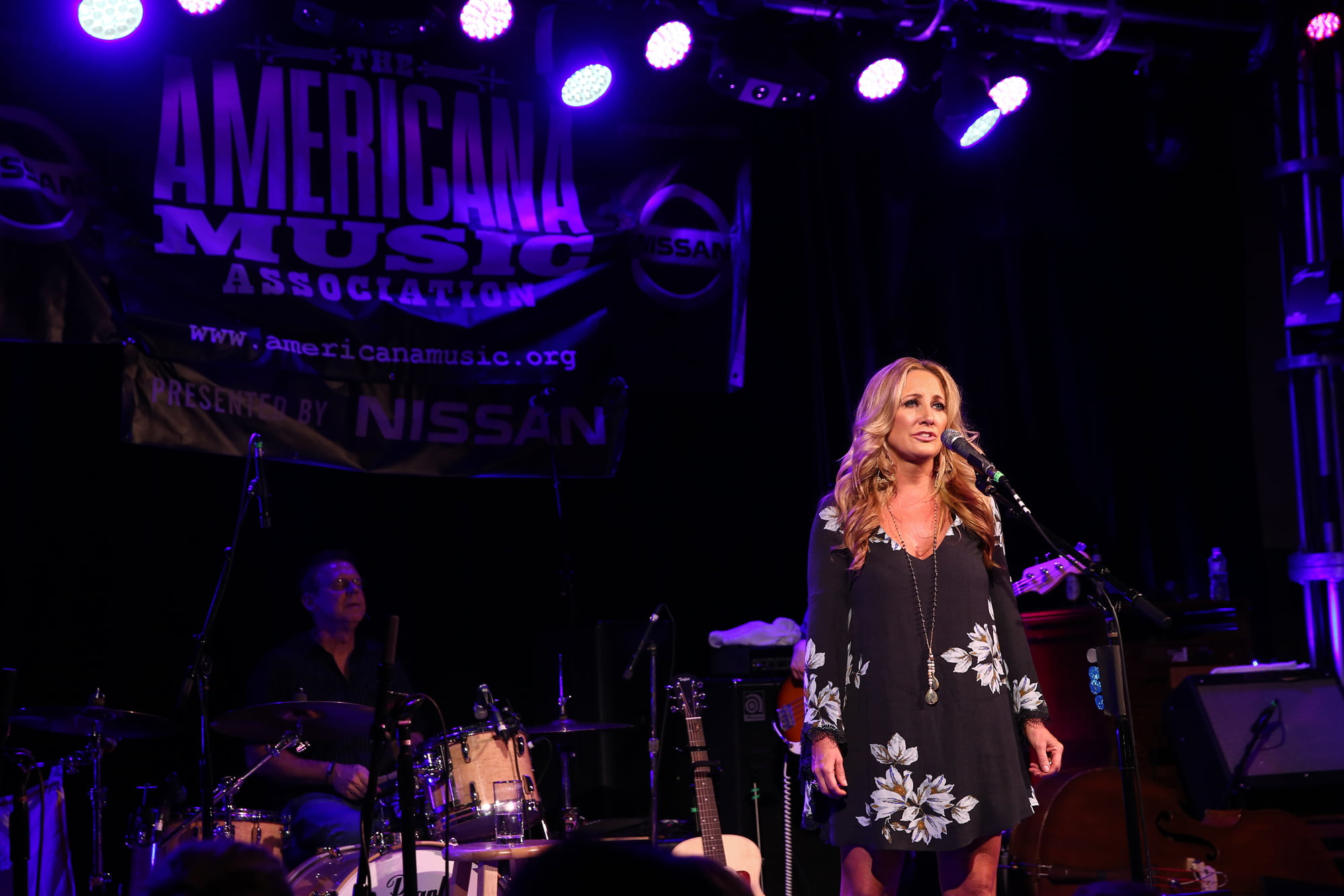
Lede photo: Lee Ann Womack performs during the 16th Annual Americana Music Festival & Conference at 3rd & Lindsley on September 18, 2015 . Photo credit: Terry Wyatt/Getty Images for Americana Music.

If I Were a Grammy Award and You Were a Record (Op-ed)

Now that we have the Americana Music Association and International Bluegrass Music Association awards in the rearview mirror, it's time to look forward — or not — to the Country Music Association awards in November and the Grammys in February.

Because all of the programs have different qualifying timelines, the potential nominees fall in strange places. For instance, Jason Isbell just nabbed two AMAs (Album and Song of the Year) for a record that came out 15 months ago. And Chris Stapleton, who was the 2016 AMA Artist of the Year, is up for another round of CMAs even though his record came out even longer ago than that.

What to say? It's a weird world.

But I do have a couple bones to pick about it all.

Now, I thought Traveller was a good record with solid tunes and Stapleton was a nice guy with an amazing voice before I knew he was pals with Justin Timberlake and before he was firing up the charts. It's great to see his brave and bold video for “Fire Away,” which addresses mental health issues, get a nod and even more wonderful to see his incredibly talented wife, Morgane, get a hat tip for their devastating version of “You Are My Sunshine” off the Dave Cobb-produced Southern Family LP. No problems there. Show 'em how it's done, Stapletons.

I also adored Lori McKenna's songs — though slightly less so when Tim McGraw sings them — long before Faith Hill found her, so I'm thrilled with all of her success and acclaim. There's not a more deserving soul around, as she actually embodies the virtues laid forth in “Humble and Kind,” which is nominated for both CMA Song and Single of the Year. Go get 'em, McKenna! Maybe next year your fantastic record, The Bird & the Rifle, will get some CMA love. (Even if it doesn't, we'll definitely plan to see you back at the Ryman in September for the AMAs.)

Maren Morris and her big ol' voice did something great with “My Church,” creating one of the only over-played commercial country songs I didn't change the station on as I scanned the radio dial. The rest of the record, though, despite a few good moments, fails to measure up … at least to my roots-loving ears. Still, she got tagged by the CMAs in the Female Vocalist, Song, Single, and Album of the Year categories. That's fine, I guess, since she's the hot new kid on the block.

But here's where it starts to get sticky: Last year's hot new kid, Kacey Musgraves, is an artist I like quite a bit, but she didn't release a record during the July 1, 2015 through June 30, 2016 eligibility window … yet she nabbed a Female Vocalist nomination. Meanwhile, Brandy Clark wrote and sang the crap out of this year's Big Day in a Small Town and got nary a nod. Nothing. Nada. Zero. Zilch. What's up with that, CMA? More than a few critics have cited Clark as the best songwriter working in Nashville, and I probably wouldn't be the first to note that she has proven herself to be an outstanding singer, as well. A tsk-tsk and a slap on the wrist for that huge oversight. I mean … seriously. BRANDY. CLARK.

And then there's Margo Price who is, arguably, the breakout country act of the year. She went home with an AMA for Emerging Artist of the Year, but got the cold country shoulder. She's good enough for SNL, but not CMA? Go figure. In terms of country icons, Emmylou Harris and Rodney Crowell won the AMA Duo/Group of the Year and are also nowhere to be found on the CMA list. And where's Loretta Lynn, who has maybe the countriest country release of 2016? Sitting at home in Hurricane Mills … that's where.

It's safe to say that we, in the Americana/roots music community, are more than happy to embrace all of these country music refugees because it's pretty clear that, while the CMAs may be a barometer for country radio, they certainly don't reflect country music.

Dear Grammy voters, you can — and should — do better. So, looking at the Grammy eligibility window of October 1, 2015 through September 30, 2016, here's how I'd love to see the various album categories fall. (A kid can dream, right?)

BEST AMERICANA ALBUM

Cautionary Tale
Dylan LeBlanc

My Piece of Land
Amanda Shires

Beulah
John Paul White

Ghosts of Highway 20
Lucinda Williams

I Am the Rain
Chely Wright

BEST FOLK ALBUM

Honest Life
Courtney Marie Andrews

The Bird & the Rifle
Lori McKenna

The Very Last Day
Parker Millsap

Young in All the Wrong Ways
Sara Watkins

Undercurrent
Sarah Jarosz

BEST COUNTRY ALBUM

Big Day in a Small Town
Brandy Clark

Full Circle
Loretta Lynn

For the Good Times: A Tribute to Ray Price
Willie Nelson

Midwest Farmer's Daughter
Margo Price

Southern Family
Various Artists


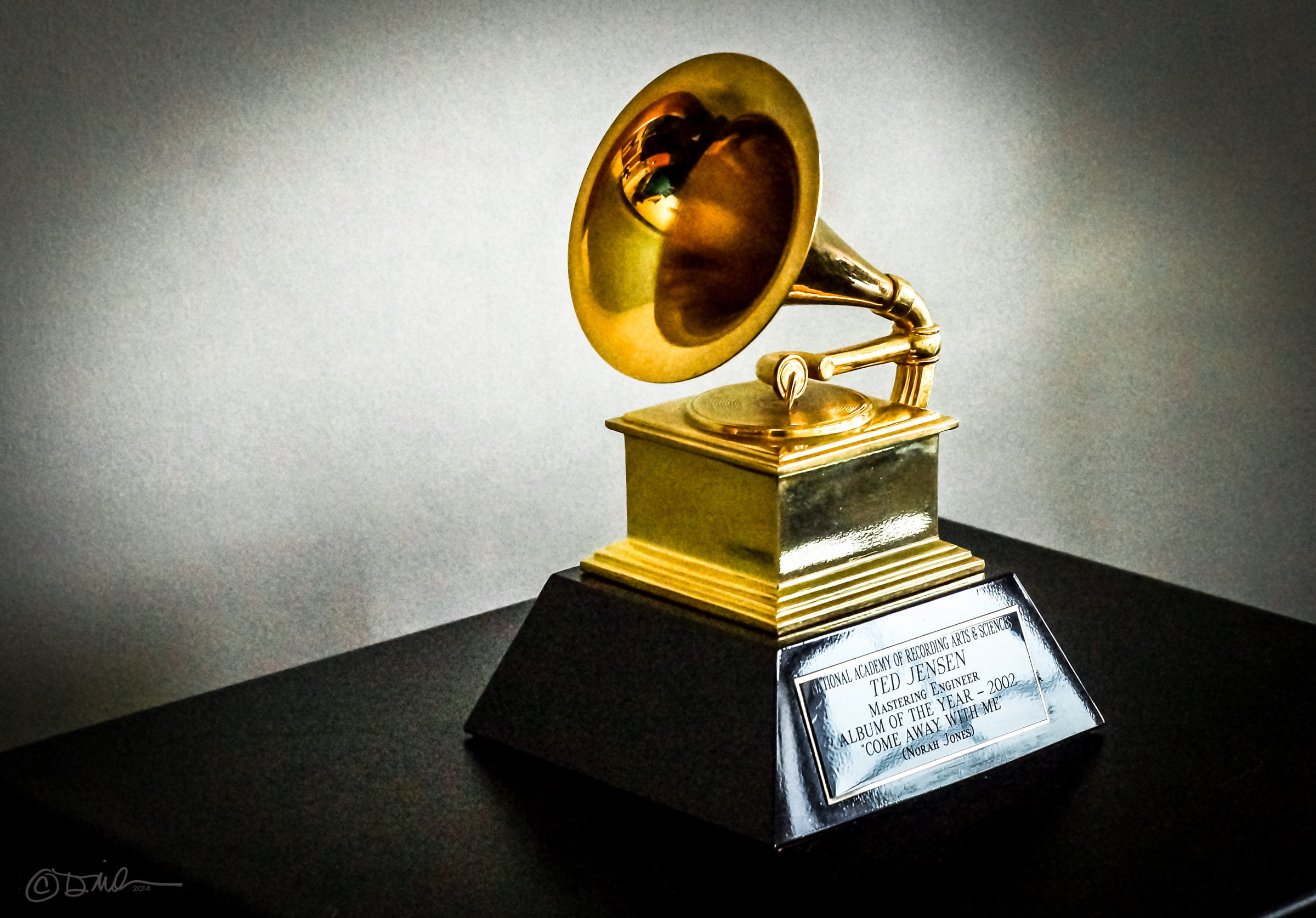
Lede photo of Ted Jensen's Grammy for mastering Norah Jones' 2002 Album of the Year, Come Away with Me, courtesy of Dmileson.

The 2016 Americana Music Awards Winners

The 15th annual Americana Music Association Honors & Awards Show happened last night at Nashville’s famed Ryman Auditorium. Led by host Jim Lauderdale, the festivities honored Bob Weir, Shawn Colvin, Billy Bragg, William Bell, and Lauderdale with Lifetime Achievement Awards.

Each of those recipients also performed, along with Rodney Crowell, Steve Earle, Emmylou Harris, Jason Isbell, Nitty Gritty Dirt Band, Bonnie Raitt, George Strait, Alison Krauss, and quite a many more backed by a Buddy Miller-led house band. Presenters include Jack Ingram, Timothy B. Schmit, Taylor Goldsmith, Wynonna Judd, the Indigo Girls, Bruce Hornsby, and Joe Henry.

Winners are in bold.

Album of the Year
Something More Than Free — Jason Isbell, Produced by Dave Cobb
The Ghosts of Highway 20 — Lucinda Williams, Produced by Greg Leisz, Tom Overby, and Lucinda Williams
The Very Last Day — Parker Millsap, Produced by Parker Millsap and Gary Paczosa
Traveller — Chris Stapleton, Produced by Dave Cobb and Chris Stapleton

Song of the Year
"24 Frames" — Jason Isbell, Written by Jason Isbell
"Dime Store Cowgirl" — Kacey Musgraves, Written by Kacey Musgraves, Luke Laird, and Shane McAnally
"Hands of Time" — Margo Price, Written by Margo Price
"S.O.B." — Nathaniel Rateliff & the Nightsweats, Written by Nathaniel Rateliff

Artist of the Year
Jason Isbell
Bonnie Raitt
Chris Stapleton
Lucinda Williams

Duo/Group of the Year
Alabama Shakes
Emmylou Harris & Rodney Crowell
Lake Street Dive
The Milk Carton Kids
Tedeschi Trucks Band

Emerging Artist of the Year
Leon Bridges
John Moreland
Margo Price
Nathaniel Rateliff & the Night Sweats

Instrumentalist of the Year
Cindy Cashdollar
Stuart Duncan
Jedd Hughes
Sara Watkins

Daddy-O: A Father’s Day Playlist

This Father's Day (June 19), you could do what you always do and buy your pops the same pair of new socks that he doesn't need. Or, you could give dear old dad the gift of music. To get you started, we've pulled together some of our favorite songs about dads, written from both the perspective of fathers and from those of the kids who loved them. If you're feeling generous, pick up an album or two featuring songs from the list. If not, at least send dad a link to the Spotify playlist. Either way, his sock drawer will thank you.

"Daddy Doesn't Pray Anymore" — Chris Stapleton

This tearjerker from Chris Stapleton is served up with a little twist, made all the more heartwrenching by his stellar vocals and somber delivery.

"Daddy Sang Bass" — Johnny Cash

This 1968 tune, written for Cash by Carl Perkins, is a testament to the bonds of both family and music — both of which, in this case, are anchored by dad and his bass.

"Undercover Dad" — Jonny Corndawg (now Jonny Fritz)

A snooping dad must grapple with what he finds in his teenage daughter's diary in this sweet, light-hearted tune from Jonny Corndawg's 2011 Down on the Bikini Line.

"Paradise" — John Prine

A father teaches his son about the perils of mountaintop removal in this classic John Prine tune from his 1971 self-titled debut album. 

"My Father's Father" — the Civil Wars

Ghosts of the past and his "father's father's" blood on the tracks bring a prodigal son home in this song from the now-defunct duo's 2011 debut album, Barton Hollow.

"A Father's First Spring" — the Avett Brothers

One of the most profound statements on an album (The Carpenter) that grapples with bassist Bob Crawford's daughter's battle with brain cancer, "A Father's First Spring" tugs at heartstrings with lines like "I do not live unless I live in your light."

"Coal Miner's Daughter" — Loretta Lynn

"Daddy worked all night in the Van Lear coal mines," and his proud daughter wrote one of the greatest country songs of all time to thank him for that hard work.

"Welcome to Earth (Pollywog)" — Sturgill Simpson

Sturgill Simpson's new album, A Sailor's Guide to Earth, is something of a guidebook for living for his young son, and opening track "Welcome to Earth (Pollywog)" introduces us to "the greatest love [he's] ever known."


Photo credit: CarbonNYC [in SF!] via Foter.com / CC BY.

8 Acts We Can’t Wait to See at Bonnaroo

Summer is here and Bonnaroo is right around the corner … less than a week away, to be exact! In case you missed it, we'll be down at the Farm hosting the best party the Roo's ever seen. Come by the BGS stage on Sunday to catch John Moreland, Sara Watkins, the Wood Brothers, Steep Canyon Rangers, Sam Bush Band, and the BGS Superjam with Ed Helms. 

We'd be remiss if we didn't make the most of the festival and catch as many acts as possible, though, so we're working hard on our schedule. Below are eight acts that we can't wait to see.

Jason Isbell

It's no secret that we're huge Isbell fans here at the BGS, catching his shows whenever we get the chance. For his Bonnaroo set, let's hope he channels his inner Drive-By Trucker and offers up some jam sessions.

Chris Stapleton

While we miss the old days where getting a ticket to see Stapleton wasn't as difficult as getting a ticket to see Hamilton, we're happy for him to finally get his due. If you've never experienced Stapleton's godlike voice in person, now's your chance.

Father John Misty

Who better to watch while surrounded by sweaty hipsters than our greatest satirist of hipster culture? We can only hope FJM serves up some festival-themed commentary along with his thoughtful folk-rock tunes.

Natalie Prass

If Natalie Prass stays true to the arrangements on her excellent 2015 self-titled debut, you should expect one hell of a horn section at her set. As the saying goes, "I need more horns." Or something like that.

Rayland Baxter

Rayland Baxter has long been a fixture of the Nashville music scene, and his 2015 release, Imaginary Man, saw his star rise to higher, more national heights. Catch him while he's on the rise.

Andrew Combs

Nashville singer/songwriter Andrew Combs has earned heaps of acclaim for his thoughtful, throwback country tunes. We look forward to hearing those songs translated to the festival stage.

Dylan LeBlanc

There's no dearth of singer/songwriters performing at Bonnaroo, but you'd be hard-pressed to find one writing better tunes than Dylan LeBlanc. Fresh off some gigs opening for the Alabama Shakes, LeBlanc should be a crowd-pleaser with songs from his latest album, Cautionary Tale.

Aubrie Sellers

Aubrie Sellers is one of our favorite new voices in country music, and we can't wait to see her give tunes from her stellar debut album, New City Blues, the Bonnaroo treatment. And who knows, maybe her mom and fellow BGS fave — Lee Ann Womack — will join her for a song or two before hopping into the BGS Superjam!

Dear Chris Stapleton

From: Patrick Haynes
To: Chris Stapleton
Date: Monday, April 4, 2016 at 11:44 AM
Subject: write?

Hey man!

How’s it going, Chris? I’m in Nashville for a few weeks visiting from L.A. to see if I want to pursue songwriting full-time. I’ve been busking outside the bars on Division trying to meet some fellow troubadours, earn a few bucks, and score pub deals. I got some weird looks for setting up my iPad and Square inside my guitar case, even though that’s how most of us West Coast songwriters and bums get paid nowadays.

Anyway, I’ve been asking around town to see who’s hot these days and your name keeps coming up. You’re definitely at the top of my list of people I want to connect with while I’m in town, so I wanted to see how your schedule looks the next couple weeks. I bet if we got together in a room for an afternoon, we could knock out a huge hit.

A little about me: My style is a bit Sheena Easton meets Skrillex, with a dash of New Jack Swing for good measure. My mom sang at church and my dad was always playing the radio in the car, so I come from a very rich musical background. I definitely want to get into country music — Kid Rock and Hootie were formative influences on my songwriting.

Oh, and I have a beard and a hat that’s never been washed, too! Great minds, right? 

And, hey, Chris, if you don’t have time this week to schedule a co-write with me, maybe we can just grab a beer with Dave. Would love an intro. What’s your cell?

All warms,
p.


The above is a work of satire. Any resemblance to actual persons, living or dead, or actual events is purely coincidental … although entirely likely.

Photo courtesy of Chris Stapleton

Get Off Your Ass: It’s April, Fools!

Langhorne Slim with Sam Outlaw and Susto // Roxy Theater // April 29

Slim’s funky punk twist on country and folk is the leading lane in this packed highway of an evening full of country boys. Tickets

BGS Presents Birds of Chicago // Largo // April 6

Allison Russell and JT Nero bring together '60s soul, mountain gospel, and folk in a way that grooves so well that you know their live performances are on another level. Tickets

Noah Gundersen // The Hotel Café // April 6

Gundersen’s wistful vocals — accompanied by surging strings and melodic guitar and piano — are reminiscent of the best '90s indie music and bound to entrance any audience. Tickets

The SongBirds // The Hotel Café // April 13

Drawing a spotlight to the jazzy trios of the '20s, '30s, and '40s, the SongBirds are three talented women in their own right (Gaby Moreno, Erica Canales, and Dannielle DeAndrea) who form a unique time capsule of energetic and sliding harmonies. Tickets

Chris Stapleton // The Greek Theater // April 27

Without a doubt, the most unmissable act of the year, Stapleton snatched up several awards this year for his breakout solo album after years of hanging out behind the scenes. His wife Morgane is a talent in her own right and performs alongside Chris and, if you need more convincing, please just listen to their hauntingly special rendition of the old classic “You Are My Sunshine” on the new Southern Family LP. Tickets

Rayland Baxter // 3rd and Lindsley // April 7

Baxter has had quite the journey given his young age — his lulling guitar picks hit body-resonating notes that provide the perfect platform for his lyrics to ring out over. Tickets

Kelley McRae // Bluebird Café // April 10

McRae’s quiet storytelling is fed by a vocal tone that blazes an arrow path straight to the heart with its honesty, making her a perfect match with the legendary Bluebird for an evening marking the release of her newest album, The Wayside, out April 7. Tickets

We’re All for the Hall featuring Keith Urban and Vince Gill // Bridgestone Arena // April 12

Celebrating the sixth year of this star-studded benefit for the Country Music Hall of Fame and Museum, hosts Keith Urban and Vince Gill cover a range to bring together a seriously packed night with guests including Jason Isbell, Emmylou Harris, Peter Frampton, and Florida Georgia Line. Tickets

Ben Harper and the Innocent Criminals // Ryman Auditorium // April 22

Reuniting yet again, Ben Harper and the Innocent Criminals funk up the Ryman with their soulful reggae-blues-rock hybrid sound promoting their new album, Call It What It IsTickets

Fireball Mail // Station Inn // April 30

The four members of Fireball Mail are deeply rooted in the bluegrass tradition (and have appeared with legendary names to prove it) honing in on accelerating harmonies and improvisation. Tickets

Pokey LaFarge (with the Cactus Blossoms) // Music Hall of Williamsburg // April 3

Prepare for an incredible evening filled with music that appears to have time traveled — LaFarge and his impressive band bring lively ragtime country to the stage after an Everly Brothers-esque opening act from the Cactus Blossoms. Tickets

Brooklyn Folk Festival // St. Ann’s Church // April 8-10

Filled with musical performances (Spirit Family Reunion, Feral Foster, the Downhill Strugglers, Roy Williams, and many, many more), workshops, film screenings, dancing, and an iconic banjo toss — there’s a whole lot to enjoy in the eighth year of this festival. Tickets

BGS Presents Sierra Hull // McKittrick Hotel // April 19

Hull is a young master of the mandolin benefitting from the best of bluegrass as her mentors and producers (that would be Alison Krauss and Béla Fleck). Catch her at this unique venue, the Heath, at the spooky speakeasy-esque McKittrick Hotel. Tickets

Julien Baker // Bowery Ballroom // April 27

Baker’s Memphis-born talent is making loads of waves with her debut, Sprained Ankle, showcasing her alarmingly heart-wrenching songwriting and stripped-bare sound. Tickets

Parker Millsap // Bowery Ballroom // April 29

Millsap has a voice that just as easily belts and growls as it does sail on a high, clear note trailing off into a soft vibrato. Pick up Millsap’s new album, The Very Last Day, and don’t miss his utterly electrifying performance. Tickets

Restoration and Revival: An Interview with Wynonna Judd

To hear (or read) the name "Wynonna Judd" instantly elicits a reaction from pretty much everyone. And, rightfully so. For the past 30+ years, the country superstar with the big voice and brash style has topped charts and made headlines with every move she's made. But, forget what you know — or think you know — about Wynonna and consider the fact that her new record, Wynonna & the Big Noise, leans on songs by Chris Stapleton, Julie Miller, and Sarah Siskind, and offers up appearances by Jason Isbell, Susan Tedeschi, and Derek Trucks. Produced by her husband and band leader, Cactus Moser, the set finds Wynonna in, perhaps, the finest form of her career and the most peaceful place of her life. 

I read a quote of yours, about you and your mom, that cracked me up. You said, “I knew the minute I was born that I was going to be the lead singer, and I knew by age 3 that I could sing. I just knew as a kid. I didn’t know exactly that she was going to follow me around.” Now that you've lost your shadow, what's the feeling? Freedom? Fear?

Wynonna Judd: One of my goals in this new year is “restoration.” I have a word every year. Restoration is taking the past and using it to propel me into the now which is, “How do I feel right now about being a part of this band?” It's exhilarating and terrifying. It's a lot of work. I'm spending more time as a musician than I ever have. Being an artist is like breathing. It's as easy to me as you writing. It's a part of me. Making this record, being on stage with my brothers … being not as much about being entertaining and funny and “Oh my gosh! She's a celebrity and a star!” It's about me getting back to my roots.

For instance, when Jason Isbell came out to the farm, we sat there and talked about everything from recovery to having children to being artists to how do we balance that. I'm really about making personal connections with people — standing in a dressing room with Bruce Springsteen and talking about what it's like to get older in this business and maintain your integrity. Going to see Susan Tedeschi and her husband, Derek Trucks, at the Ryman and talking about what it's like to be married and share the stage and share your life with a partner.

It's really an interesting time for me because, I'll be honest, I've been doing this for 35 years. Instead of looking at the word “reinvent,” the restoration part is what's really grooving me right now because I'm in a place of real change, both personally and professionally — whether it's going to the vinyl pressing where they're making our vinyl records and going, “Oh my gosh! I started out here and now here I am back 30 years later” … to using vintage instruments to make the record — 1930s drums, '40s microphones.

Cactus made a real smart move when he talked to me and said, “It's time for you to get back to your roots.” When you hear my voice on this record, it's very vulnerable, it's very raw, very real. It's a one-track take. There's no perfection — there's less of that than ever before, which is scary but exciting. It's like going bra-less. [Laughs] It feels really weird, but it's also very freeing because I can get out of the way of myself and the agenda I have and just interpret the songs, like an actor would a scene. I get to be … instead of Wynonna-isms all over the songs and having an agenda, I can just sit there and sing the song while the band plays. Dave Grohl was a huge help to me about how to be in a band, how to get out of my way, and just sing and enjoy myself. That was huge for me.

But you still have to be a band leader to a certain degree, no?

WJ: No, I don't, because Cactus is that. Cactus is the leader. I get to just show up and get away with singing. You know what's really great, sometimes? Letting go. Letting go of the idea of having to be in control. That really was a life saver.

After his accident, I became Mrs. Moser. And I finally let myself be a partner and not feel like I have to be this alpha-female and do it all myself and direct. I can just be a band member and enjoy myself and play my butt off and sing from my toenails. And I don't have to be the decision-maker. He was in the studio saying, “Okay, let's sing that with a different idea.” And I really trusted him. I let go, fell back, and let him catch me.

Cactus Moser: It's really hard, when you're an artist, to always see the spot you're standing on. To know where you need to go and to feel exactly everything is tricky. I looked at her many years ago … I was a fan from afar. I was in a group called Highway 101 and we opened for the Judds for a year. I used to go watch her sing at soundcheck and she would be playing with the melodies — playing around more than she did during the show. I was just floored by her gift and her voice and her talent.

Fast forward to when we got together to work, and I'm still looking at it like I'm a kid in a candy store. To have that amazing singer in a band is one of those rare things you get to do in life. So, when we were working together — both live and recording and writing these songs together — it was just a real dream. Sometimes it's cool to have somebody with you — I've always been in band situations, normally, and I produce a lot of stuff. I always believe in, “Let's work this out together.” She has great ideas, but I would sometimes go, “I hear it like this. Let's try it.” I think that's why there are so many great collaborations. You look at Mick [Jagger] and Keith [Richards] in the Rolling Stones or Glenn [Frey] and Don [Henley] in the Eagles or even the Police, when they were a full band … I think some of the most brilliant things come out of that pull and tug — when you try it from a different perspective. She's changed how I do things and vice versa. I think you get the best, more often than not, by that process.

You hear that on this record. You hear the balance between an edgier roots rock and a smoother contemporary country. Did that start with the songs and work out from there? Was that your process — songs first, sound second? Or did you know what you were going for, sonically, and reverse engineer it?

CM: Sonically, I wanted to make a record that sounds as interesting as it is musical. It's a little bit more of a soundtrack where the music speaks a little more. We used these very distinctive 1930s drums that I played on the whole record. The band all started to react to that instrument and it changed the feel and instrumentation that they played with. And Wy being live on the floor singing to us while we were tracking inspired, of course, everyone. Yeah, there was a sort of vision of the type of sound I wanted to go toward.

WJ: I wanted to have a revival. I don't know how old you are …

I'm old enough …

WJ: Well, you're old enough to know better, right? You know what you want. That's where I was: I know I don't want to be complacent. I don't want to make records like I did in the past where I got hooked on perfectionism, where I have to make this “vocal of the year award goes to …” [Laughs] I just wanted to enjoy myself and shake my butt and boogie. Some of these songs made me wiggle a lot. They made me do these dances while I was singing and he's filming me going, “I don't know if you see yourself doing this, but you're jiggling everywhere from head to toe.” [Laughs]

I just found myself enjoying myself so much that I kept forgetting, “Oh, I'm doing a vocal.” I was so into it, it was almost like I was on stage. I was having such a good performing moment that I enjoyed the process rather than going in and saying, “Oh, crap, I've gotta sing for four hours, get all the notes right, be perfectionism.” I didn't do that and it was so refreshing that it caught me off guard. When I would sing something and he'd go, “Oh my God, that was amazing!” I'd be like, “I have no idea what you're talking about. I was just having fun.” That's the key.

That's the magic, right there.

WJ: That's exactly what I wanted. When I walked away, I felt like I had no idea about the record and how it was going to sound. When I heard him come into the room and put on my headphones and play me Timothy B. [Schmit] singing his favorite Poco memories into this song, I just started to cry because I had no idea what was going to happen. To hear Susan sing on a song, I literally did the hallelujah dance because I couldn't believe it was happening. To get Jason to come out to the house, to sit there in our shed wearing a ball cap, doing this rap about life … one of my favorite things ever. It wasn't about the Grammys. It wasn't about, “Oh my God, this is two big artists making music history.” It was just two artists sitting there talking and having an experience together. That's my favorite.

It feels like you built a little bit of a community for yourself on this record with these folks. I know some of your earliest influences go back to bluegrass and mountain harmonies. So, do you feel like, even if that stuff isn't there musically, it's there in spirit with you these days?

WJ: Totally! And it transfers to the stage. I tell stories about everything from being 15, walking into the kitchen, and watching Stevie Ray Vaughn practice with his brother Jimmy. I've known Ricky Skaggs since I was 15 years old. He's like a relative. You're right: I did build a community with this record. I have a new appreciation for Susan and Derek. We went to see them at the Ryman and we're so connected on a deeper level than just, “Hey, I'll see you at the Grammys.”

It's a really special time of making connections that are sacred, that have nothing to do with guys sitting in a board room putting together two artists because they know it's going to be number one. These are authentic connections and that's what made it so special for me.

Which leads to … let's do a little name association. Just say the first thing you think of …

[Laughs] Oh, dear. Because I've got … [Pauses] Okay. [Laughs]

[Laughs] I'm not going to throw any zingers at you! Okay: Cactus

CM: Living waters.

WJ: The first thing that comes to mind is “mullet.” Then, the second thing is “cowboy.” When I met him, he had the biggest blond mullet and he was wearing chaps. He's from Denver. So, there you have it.

[Laughs] That's awesome. Jason Isbell.

WJ: The first thing that comes to mind is “recovery.” He's really trying, like I am, to find balance and inner peace. We're both such authentic artists. He's so sweet. I didn't have any idea how sweet he is. He's a very kind and thoughtful person.

Agreed. Chris Stapleton.

WJ: Maverick.

Tedeschi Trucks.

WJ: Badass. I mean, seriously … the best guitar player in the world and people just don't know it. They just don't. He's a badass. He gives me goosebumps when I hear him play. He's just insane.

Sarah Siskind.

CM: Emotional.

WJ: Haunting. The song takes me back to Appalachia. It's haunting. It's my roots.

Last one … Julie Miller.

CM: Honest.

WJ: I would say “authentic.”

I'd maybe add “underrated.” I wish she were more exposed.

WJ: I agree.

CM: For that little, tiny voice, she's such a super-tough badass, in terms of how she writes. She writes like Tom Petty — the most economic use of words to say the most.