Jarrod Walker is Much More Than Just a Sideman

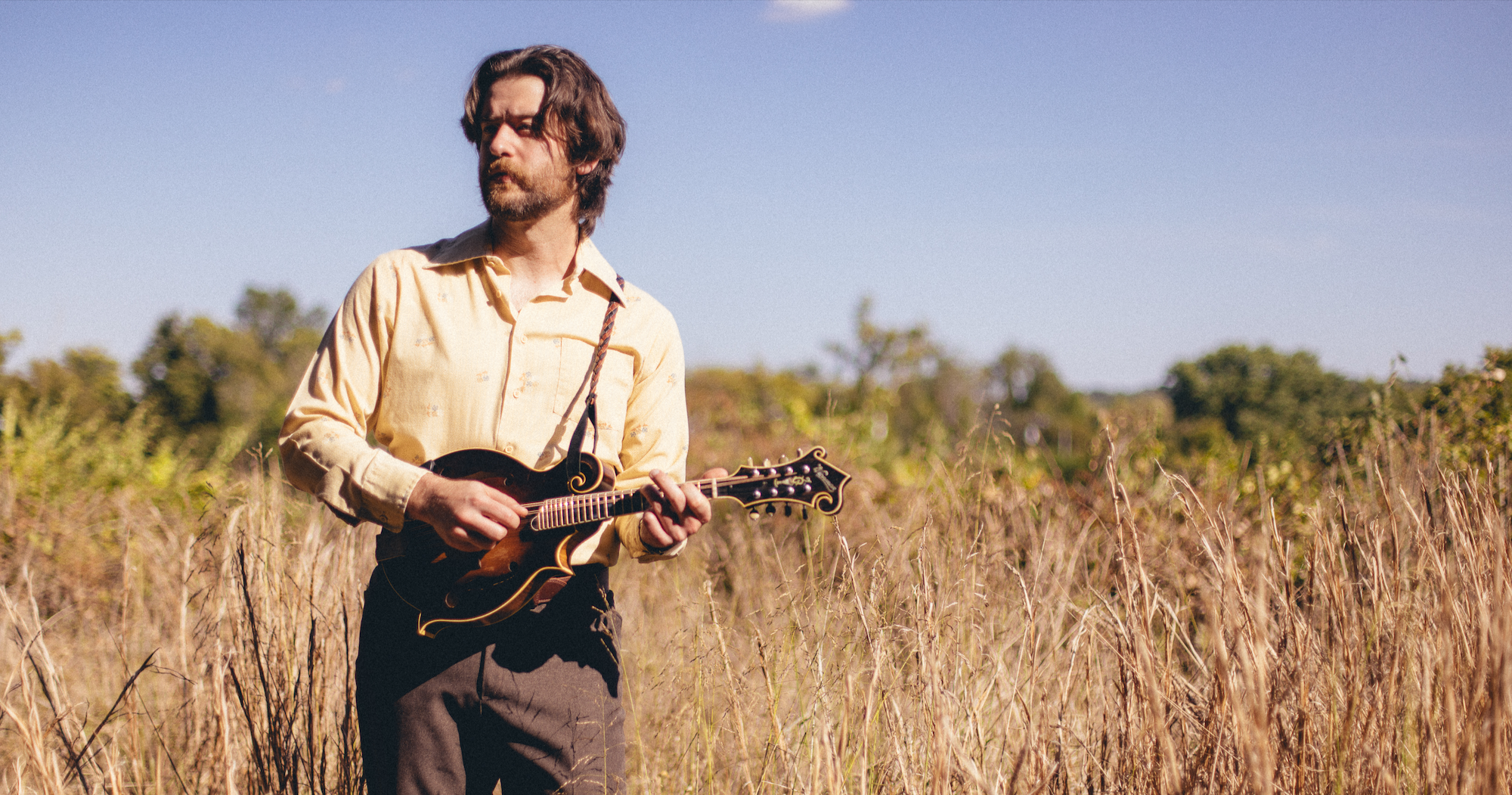
You know Jarrod Walker because for nearly 10 years he’s been Billy Strings’ mandolinist. But within the tight-knit bluegrass community, Walker has been a well-known and sought-after sideman for much longer. Before going on the road with Strings, he did stints touring with Claire Lynch, Missy Raines, Rebecca Frazier, and more, and he got his start in the rich bluegrass landscape of Florida, gigging with his brothers – including East Nash Grass banjoist Cory Walker – in a family band, the Walker Brothers.

Beloved for his taste, virtuosity, and a cleanliness to his picking unparalleled in modern bluegrass mandolin – except perhaps by his childhood friend and peer Sierra Hull – Walker enjoyed a reputation pre-Billy Strings that holds strong now, as he’s gone from being a humble bluegrass sideman and session player to having nearly 50,000 followers on Instagram and a niche fandom of his own within the greater Billy Strings Cinematic Universe. His song “Red Daisy,” recorded and performed by Strings and co-written with longtime friend and fiddler Christian Ward, has garnered more than 10 million streams and was awarded IBMA Song of the Year in 2022. (Though, shockingly, Walker has still never even been nominated for Mandolin Player of the Year by IBMA.)

Earlier this month, Walker took yet another step toward the limelight and away from the increasingly reductive “sideman” title. He released Nighthawk, his debut solo album, a fascinating and artful collection of bluegrass and string band-centered Americana that demonstrates the incredible depth and breadth of skills he has developed since his Lynch and Raines touring days. All but one of the 13 tracks are Walker originals – many co-written with Ward, who also plays fiddle on the project – and all but the two instrumental tracks are sung by Walker, as well. His vocals are thoughtful and intricate; he’s clearly put in plenty of time and energy into crafting an equal level of virtuosity with his voice as an instrument.

For a picker who’s remained booked, busy, blessed, and performing on stage hundreds of times a year on average for the greater part of two decades, it’s notable that Walker has launched Nighthawk and, with it, shown the remarkable level of growth and development he’s undertaken simultaneously, right under our noses. An impeccable sideman has blossomed into a fully-fledged, intentional, and multi-faceted artist. Even if, like me, you’ve been fortunate enough to call Walker your friend and a collaborator over those years, this is a revelatory, infinitely expressive body of work – surprising if not at all unexpected.

This isn’t an album meant to capitalize on Strings’ rabid audiences and pick up some extra spending money at the merch booth. This isn’t a vanity project or simply a mandolin record – or a hobby with which to spend time and keep him occupied when he’s not on the road with his main gig. No, it’s clear that with Nighthawk Jarrod Walker is telling the world exactly who he is, what he does, how he thinks, and what he sounds like. And it sounds damn good.

I wanted to start by talking about how you kick off the album with “Miles on My Shoes” and how the first single released was “Nighthawk,” the title track. Both of those tracks, to me, feel like straight-ahead, traditional bluegrass. I was curious about this being the audio “swatch” that fans and listeners first get of this album and about what you’re trying to communicate to them by the first track and the first single being pretty much straight-down-the-middle trad bluegrass.

Jarrod Walker: It took a long time to decide what to put forth as the first single, and same goes for the first track on the album. But I did feel like there was a certain expectation of me putting out a record and there being bluegrass elements to it. I wanted to reassure people that there would be some bluegrass elements. And, like you said, those two tracks are probably the most straight-ahead bluegrass tracks on the album. But the rest of the album is very different. The second single, [“Cordova Street Blues”] is very different from the first track or the first single. I think it was somewhat a conscious decision, but also just listening to people around me and seeing what they thought.

For no particular reason both of the singles that came out wound up being the two songs that Billy Strings sang background vocals on. It just worked out that way. We decided not to do the whole “featuring Billy Strings” route, because then that puts such an emphasis on [what’s] really just background vocals. But of course you could put “featuring Jake Stargel” or “featuring Christian Ward” [on it] by the same regard, ‘cause it’s not a true feature or whatnot.

But yeah, Cordova Street is a street in St. Augustine, [Florida] where I’ve spent a lot of time. I have some family who still live down there and some deep family roots going back to a store in the main part of town, which is now the historic district, called Denmark Furniture. It was probably very misleading to people, because I don’t think they sold Danish furniture. [Laughs] I think it was just American furniture with my mom’s maiden name, which is Denmark – and it’s my middle name. I’ve spent a lot of time down there and it’s inevitable that some St. Augustine imagery would make it into one of these songs. “Cordova Street Blues” is more of a dreamscape, ethereal kind of track, which is entirely different than the first single, “Nighthawk,” which is more or less just a Stanley Brothers-style bluegrass song.

It’s funny that you say “dreamscape,” because I was already drawing parallels here between single one “Nighthawk” and single two “Cordova Street” and track one “Miles on My Shoes” and track two “Leaving Canaan’s Land.” What I wrote in my notes for “Leaving Canaan’s Land” is “it’s like an Americana dreamscape” – especially with that groove and its pacing. So I see this parallel with the singles and also with the sequence: “here’s what you’re expecting, here’s where we’re going eventually.” Bluegrass, then beyond. You’re immediately showing people the continuum on which you’re creating music, sonically.

The groove differences between “Nighthawk” and “Cordova” or “Miles on My Shoes” and “Leaving Canaan’s Land” are incredible, too. It’s the best kind of whiplash from barn-burning, leaning-forward bluegrass to this sort of languid, lazy river, chill, floating vibes. Can you talk a little bit about that?

I’ve always liked the contrast and the juxtaposition between something, like you said, very bluegrass and something that offsets that. It’s like sometimes I wear camouflage and then I wear a tie-dye T-shirt. “Who the hell is this person?” I like to do that musically sometimes, too.

There are a lot of songs on the record that I wrote with just a guitar. It was more of a folky kind of approach. But then I decided to get drums and percussion and pedal steel on nearly the entire record and that really shaped these songs into something that I hadn’t imagined before – in a very positive way. I think it’s turned out how I would’ve wanted it to, ultimately. But it wasn’t necessarily a conscious decision. I think I just have that mentality throughout a lot of aspects of my daily life.

The variety also makes the album listen by really quickly. You have so many different textures and so many different style points and references. But, when I listen through the whole thing, to me it still feels like a bluegrass album. It reminds me of Jim & Jesse when they had pedal steel and drums in the band. Or a lot of those bluegrass bands from that golden age of bluegrass where they still were calling themselves country – the Osborne Brothers, Ricky Skaggs, J.D. Crowe and the New South.

Oh, for sure. I feel like I have never been afraid to introduce some drums or exterior, non-traditional bluegrass instruments into the mix. Like you said, I think it just adds some texture. And I love the early bluegrass where they were still figuring out and shaping the sound. There’s so much snare drum in Jimmy Martin music. And like you said, the Osborne Brothers, Jim & Jesse – and listen to J.D. Crowe and the New South’s first record. There’s steel, there’s piano, there’s drums and percussion. By that definition a lot of people, on paper, would consider it not a bluegrass record. But of course it’s one of the classics that everybody thinks of.

I think it was the reason that I put drums on nearly everything. But I made the decision after things started shaping up and I heard the songs that were more folk-oriented coming together. They would’ve been incomplete without drums. I wanted to use drums as glue for the record and to offer some cohesion. The pedal steel served that same purpose, too. Spencer Cullum is a fantastic steel player. And Jamie Dick is playing drums on this. They’re both coming from a different musical background, so it kinda makes everybody else think on their toes. Everybody has to adjust a little bit in order to accommodate each other, and I think everybody being a little bit out of their element gives it a certain freshness that it might not have had otherwise.

I was struck by how your voice sounds so good and confident. You’ve always been a singer, but on this record I hear so much more personality in your voice and I hear more of your musical point of view – in your voice as an instrument, instead of your voice just being something you also do. How did you feel in the process of getting to the point where you’re singing on all but two of these tracks? Your voice sounds really dynamic, even when you’re shifting between trad bluegrass and those slower, grooving songs. It doesn’t sound like you’re intimidated by the space that’s left for your voice to inhabit. It really feels confident and self-possessed.

Oh, thank you. I think you’re right, most people see me playing on stage and think of me more or less as a sideman. That’s what I have done for years. But behind the scenes, I have been writing a lot of songs, and when I have written those songs oftentimes they are sung by Billy Strings. So the outlet was not necessarily available to me.

A lot of these were songs that I threw into the mix over the years with Billy and they wound up getting passed on for one reason or another. For some of them that’s the case, others I was holding onto for a record. But this was really just an opportunity to work that muscle. And myself, if I’m going to listen to a record, most of the time I prefer to listen to lyrical music in some shape or form. Having written all these songs, it was like, “I’m not gonna get somebody else to sing these songs.”

So, over the years it has been something that I’ve worked on, and I guess somewhat behind the scenes. This project was very informative. I might have died a thousand ego deaths in the vocal booth. [Laughs] … It’s been just like playing an instrument. You learn things about it over the years. Now I listen to some of the singing [on the record] and I’m like, “Oh, I wish I would’ve done this differently,” but that’s the name of the game. I think, ideally, I will not look back 20 years from now and be like, “This is the best thing I ever did.” ‘Cause hopefully I continue to improve, love it for what it is, and move on from it. …

We tried to leave everything as live as possible, which– emphasis on “live as possible.” Because sometimes you hear something and it’s so wrong you have to change it. There are some moments where I could have probably taken a better mandolin solo than what I left on the record. But you just start going down a very deep, dark rabbit hole when you start chasing the perfect solo. If I can live with what I played in the moment, it’s probably gonna come across as a more real representation anyway. There’s something that you lose when you try to perfect things.

I want to talk about the songwriting, because in a similar way to noticing the development of your vocals I think your songwriting is really great. It doesn’t feel “try-hard” or contrived. So many of these songs are about movement, traveling, covering ground, putting miles underneath your feet. That’s not entirely surprising, given the last eight to 10 years of your life being you doing exactly that. Can you talk a little bit about the songwriting process and the inspirations for the songs? And that sort of overarching theme of movement and traveling – and that sort of loneliness and longing that comes with that?

Most of the songs that I’ve written in the past 10 years have been with Christian Ward, who’s playing fiddle on the album. Early on we would just get together and spend the entire day trying to just come up with a verse. We would work on things maybe to a fault. Extensively. But through doing that I think we found a rhythm where we were able to get things done a little faster. He and I both like and hate many of the same things.

I don’t think it was a conscious decision to write songs that are involving movement, but like you said, it does make sense. That’s how they turned out. Oftentimes I’ll just see a pond and I’ll say, “Oh, I could make a chorus using the word pond.” And then, “What rhymes with pond?” That’s how it takes shape. Generally I don’t start with, “I wanna write a song about leaving home on the next train” and that’s what it turns into. Most of the time when I start writing something it turns into something vastly different than what I originally imagined.

For me at least, I’ve only written one song – as far as I remember – where I wrote the music before I wrote the lyrics. … Almost always it’s just an object or a singular thought that winds up turning into a song. That song that I wrote with Christian called “Red Daisy” was kinda the same way. It’s a very simple song, melodically and lyrically, but it more or less sprung from that.

So maybe you knew this question was coming, but we gotta talk about “Nighthawk,” not just from the perspective of it being a song about longing, existential dread in the middle of the night. But also, to me, nighthawks – as a group of birds – I always equate them with Florida. Florida’s one of the only places you see them during the day when they’re migrating; it’s where I’ve had some of my favorite experiences with whip-poor-wills or chuck-will’s-widows, out in the middle of the Everglades and you hear them booming their song in the middle of the night.

When I saw the lead single/title track come out I immediately drew a line from that song to Florida – I have a feeling I’m making that connection up, but I wanted to ask you about that song, the inspiration of it, and if there is any reference here to all the nightjars – nighthawks – in Florida. [Laughs]

When I lived in Florida, I didn’t know different bird species – other than maybe a Bald Eagle and a turkey. [Laughs] So unfortunately, I probably have seen a bunch of them and didn’t realize that I was looking at them. I probably wrote it off as something else. But the way that I found out about nighthawks was through this book called The Dictionary of Obscure Sorrows. Little did I know these were made-up definitions [in the book]. When I first was thumbing through this book I was just like, “Oh, this could make a good bluegrass song.” Nighthawk – it sounds a little macabre, a little gothic. One of the pillars of my songwriting is that I can’t write a joyful song. So I was like, “This is perfect.”

When I first started writing that song, I was trying to make it more of a vibey song. Eventually, I was just like, “This works better just as a bluegrass song.” Sometimes I want to expand my horizons and try to do something entirely different, but ultimately, the world that I know the best is bluegrass and a lot of times it’s very difficult to write a good bluegrass song. It can be very challenging and there’s also such a precedent and such a box that you seemingly – at least from my experience – have to write within. You can’t talk about modern technology or you have to pretend a little bit. It’s a little bit of cosplay.

With those kinda songs, I try to make them as authentic as I possibly can. Which oftentimes is just being a little bit more ambiguous and not as direct in the songwriting. These lyrics – “nighthawk, just an old memory” – that’s very vague. But I come to find out the word nighthawk was associated more or less with that famous painting. I was writing with somebody one day and I was like, “I just wrote this song called ‘Nighthawk.’” He was like, “Oh yeah, like the painting.” I totally had seen the painting, but didn’t know the name of it. It’s called Nighthawks.

I probably should have done some research before completing the song. [Laughs] Truth be told, I thought it was just a hawk. Which is very logical of me to assume, right? But then I found out it’s its own species of bird. I had to make sure when I was having all the artwork drawn – I was like, “Hey guys, just want you to know a nighthawk is not a hawk. Don’t draw a hawk. Here is the silhouette of a nighthawk. Let’s do something like this.” ‘Cause I knew somebody like you would be out there and would catch it instantaneously!

Oh man, I would’ve been so happy to “Um, actually…” you. It would’ve been the first thing I said on this interview! [Laughs]

That’s what keeps me honest! [Laughs] I just downloaded the Merlin app [for identifying birds by song and call], which I had never heard of. It’s great! …

It’s so hard for me to try to write a song without including either a bird or a flower or trees. I want to get to a point where I can write about any given subject and just talk about that thing. But once you put birds or trees or flowers or mountains into a song, it’s like, “Okay, now we’re getting somewhere.”

I think my favorite track on the album is “Cold Daylight.” I love the groove of it, I love the feel of it. I love the long, extended vocals. But the thing that jumped out at me is that this must really be a bluegrass record, because you reference a bluegrass song in one of the songs!

Which is against the rules. [Laughs]

Since when?! You sing about “True Life Blues” – again you’re talking about lonesomeness and that same sort of existential feeling, sitting around a fire, singing “True Life Blues.” Can you talk to me a little bit about that song and where it came from?

Jarrod Walker: That particular song was maybe the best example of a song that I just wrote in more or less typical, boom-chuck, medium tempo bluegrass, folky, singer-songwriter [style]. It bored me at first, just the way that the chords were, the way that they laid, didn’t resonate with me. I revisited the song and tried to imagine it with drums – this was a couple weeks before actually going into the studio – then I fell in love with that song again.

I think the idea for this was just another example of some word association. Like, daylight is generally warm, but what if you call it cold? That’s where that came from. It was a challenging one to get the groove of [right], but it wound up being one of my favorite tracks on the record, too. It was probably the toughest vocal to lay down.

It feels pretty exposed vocally.

Yeah, it is. Like I said, being in that vocal booth is no joke. Singing the line that’s, “Pass the bottle around the fire and sing those ‘True Life Blues,'” I was a little hesitant to reference another bluegrass song within a bluegrass song – to do the bluegrass inception thing. But I was like… “Gillian Welch does it. I gotta give myself a pass to do that.” It adds another dimension, another layer. If you just said “singing those blues” it wouldn’t have the same effect. And most people don’t even know what the song “True Life Blues” is. It also just works as a phrase. it doesn’t necessarily have to be a song, so it kinda works on a couple levels.


Photo Credit: Jesse Faatz

Ragtag East Nash Grass Say We’re All God’s Children

Featuring Harry Clark on mandolin, James Kee on guitar, fiddler Maddie Denton, bassist/Dobro player Jeff Partin, and Cory Walker on banjo, East Nash Grass began as ragtag group of pickers blowing off steam at a honky-tonk in Madison, Tennessee, just northeast of Nashville proper. It has always been a band open to both unusual ideas and committed to the classic form. Still, their new album, All God’s Children, takes the metaphorical cake.

After winning the 2024 IBMA Award for New Artist of the Year, touring internationally, and even making their co-headline debut at Nashville’s Ryman Auditorium, All God’s Children feels like a joyful tribute to the many ways life gets good – and to bluegrass’s many salt-of-the-earth styles. With skillful traditional picking and a focus on diversity (both thematically and in the band’s tendency to share the spotlight at center stage), East Nash Grass deliver a truly spirit-satisfying album. Just don’t let its name fool you – this ain’t gospel.

“I enjoyed that it’s a little bit of a misnomer,” says Kee, with a touch of mischief in his voice. “We are a fairly traditional bluegrass band and we do some gospel music, but … anybody who knows us would know pretty immediately, it’s not a gospel album. I kind of liked that it would make somebody who doesn’t know our music take a second look.”

Out August 22 and featuring everything from good-old fashioned traveling songs to a reimagined West African folk tune, All God’s Children celebrates the coming together of worlds. James, Harry, and Maddie spoke with BGS from a Montana tour stop and explained how they reached their universally minded creative crossroads.

What’s the vibe with you guys these days? The last few years have been a bit of a Cinderella story and you’ve done so well. How are you feeling creatively?

Harry Clark: We’re in road mode right now. I feel like we were in a real creative mode around December when we were finishing the album and you kind of have to go into a different mode for … “Alright, let’s get through three weeks on the road in a van.” That’s a different kind of mindset.

But going into the album process, was there no pressure to change the way you’ve been doing things in the past – just because now there’s been a little more success?

HC: I feel like there are just ideas and things that seem to exist that we want to bring into life. That’s how the creative process has been for us. I wouldn’t call it aimless, but we kind of just let it happen on its own in terms – what songs people are bringing in and what the mood of those are. It’s just recording a record. It’s kind of like seasons of your life.

This one has a little bit of everything. You’ve got some new songs, a couple covers, and even a [modified] Liberian chant. Was this just kind of a cross section of everything the band is into right now?

Maddie Denton: I think everybody’s been getting into different stuff on their own. And everybody’s writing with other people, while we’re writing together. So I guess “cross section” is a good word for it. We just wanted to put together some songs that we liked.

How about thematically? It’s called All God’s Children and you guys say very clearly this is not a gospel record, but it does have a spiritual element, right? What do you mean by that?

James Kee: We debated a couple different titles. I was afraid that this traditional bluegrass crowd would hear that [title] and assume it was gospel, which would be an issue. And then once I kind of sunk my teeth in, I actually thought that [song, “All God’s Children,”] was the heart of the album, and it just seemed like the right title.

All the songs on it are a good showing of different walks of life. It’s not just one thought for each song. It’s not about the same person throughout each song. It’s different short stories throughout the album. It kind of goes hand in hand with “all of God’s children,” because it’s a bunch of different things. Not just one.

MD: It also came about after we had done some international travel as a band. Some of us had been to other countries, but not with the band, and then in February of last year we went to Ireland and Switzerland with East Nash Grass and this record started falling into place after that. And then later in the year we went to France. I think we got inspired by seeing some different folks and ways of life than what we were used to. There’s a small element of world music inspiration behind the record, too. So I think that comes from just traveling more.

You have always been a very inclusive-minded band, while also sticking pretty close to traditional bluegrass roots. When you started at Dee’s [Country Cocktail Lounge], was that kind of the goal?

HC: I feel like that’s where we all came from individually. Each and every one of us grew up going to these lawn chair snapping festivals where you go up and they have the same bands every year and there’s people out watching the show in their lawn chairs – sometimes sleeping [like] they’re dead. But there’s also this killer community of jamming that happens at these festivals, and you go and you jam with people and you just learn the repertoire. You get together with people you haven’t even met before, but who’ve been in the same places, and you can just all kind of speak the same language.

We were able to take it from there. We all have that same background from our childhoods of going to these places and these shared experiences. So when we got together, it was like we had been doing it for a long time. But everyone’s got new ideas, new energy coming from other places musically as well. … I think we all pull from that individually and it comes out sounding like traditional bluegrass, but at the same time, not really at all.

After winning the IBMA New Artist of the Year award, do you feel like that is more accepted in the bluegrass community nowadays?

HC: It’s art and it has to move … so it just seemed like the time to do our own thing. The most important part is always the music. I hope it stands the test of time and somebody else listening can look back 20 years from now and say it was a good guidepost throughout the evolution of bluegrass music. That is most important to us, as opposed to trying to fit into a certain box that has just been built many, many times.

You all do a really good job of sharing the spotlight. Different singers, different featured instruments. From a friendship perspective, what’s it like watching your bandmates do their thing every night?

MD: Man, it’s pretty cool. Everybody is such a good musician and such a good singer. I mean, even Cory can sing a little bit – he just doesn’t like to do it and play banjo at the same time. Everyone has a little special unique thing that makes them stand out.

HC: For me personally, everyone has something they do really well that I just can’t do. And when I get to see ‘em do that, I’m in awe. It’s inspiring when someone crushes something right in front of your face and you’re like, “Man, I dunno how they do that every time.”

JK: Also anything that’s a win for one person in the band is a win for the whole band, and that’s kind of how we’ve looked at it. It’s like it’s the sum of all parts.

The reason I ask is because you made your headline debut at the Ryman Auditorium a couple of weeks ago. What was that night like?

HC: It’s hard to describe. It’s the Mother Church. It’s truly my favorite venue to see a show, and now play a show. There’s no time like the first time … and it’s just such an honor to be up there, have our name up there, and have our own little night there.

There’s only a few places where once I get on stage, it hits me where I’m at and what I’m doing, and then I focus in on everything so close, and that never helps me out. To touch on the question you asked prior to this, one of the best parts about this band is there’s been times where I felt like I didn’t play a great show personally, but the band probably played one of its best shows, because everyone can step up and pick up weight. It really pays off when that team spirit comes out, because I do feel like that night at the Ryman I got up there and was in my head – because of this place. But as a band, the band crushed it. Once again. It was a great feeling.

Tell me a little bit about the story behind “All God’s Children.” It’s got this warm and fuzzy bluegrass feeling and then you’ve got some joyful children noises in there too. Where’s all this coming from?

MD: Well, that’s our buddy David Grier’s son Nash Grier. Nash helped us out with those joyful children noises.

JK: Yeah, Nash is seven and he’s fluent in Japanese and English.

MD: And he can play – I mean, probably any instrument, but I’ve seen him play fiddle. He’s crazy good, so everybody keep their eye open for old Nash Grier. He’s coming for everybody’s jobs in Nashville.

HC: That was a song that me and Christian Ward and Cory Walker wrote and I kind of had that phrase in mind. The idea behind the song was loosely based on real life, but at the same time, it kind of has that old-time limerick thing where you can take whatever the words are and use your imagination to make ‘em what you want it to mean.

How about “Jump Through the Window.” Is this one the Liberian chant? I think it speaks to the way you made all these songs your own that I can’t necessarily tell.

MD: Yeah! Our tour manager and my best pal, Brenna MacMillan, she grew up with some siblings adopted from Liberia, and they knew this song, this chant. It was like a thing that the Liberian kids over there knew. … Brenna came to me with this idea of like, “Hey, there’s this chant that I grew up hearing with my siblings and I think it would be cool bluegrass. Can you help me with it?”

Everybody spent time learning it because it’s kind of a weird thing, but we arranged it and everybody had really nice ideas. I think Jeff had some ideas at the end for those chord substitutions, and it just came together really nicely. Then we brought Brenna in to sing some harmony on it. There’s the part where we all are singing unison together, so Brenna is on that. The engineer of the record, Jake Stargel, also hopped on a mic and joined us in the little chant part. And James was the town elder singing the bass part.

That speaks to the inclusive nature of a set called All God’s Children, which you have done a few times here. I just wonder, what do you hope listeners take away from this batch of music?

HC: A bunch of merch. [Laughs]

MD: There’s a peacefulness to me about this record, and that comes from having seen some of the world and singing about those experiences and connectedness. For me, this record, it’s like we had to pull together to make it, and I want it to reach different types of folks and everybody feel connected.

HC: I remember when I was a teenager, I’d played bluegrass for eight years and it was becoming more and more the forefront of my life. And when I would hear something that hit me as new or fresh, it inspired me to want to do something new and fresh, and get out of the box a little bit. I hope we can do that for other young musicians. It feels good when you see a young musician that you see a little bit of yourself in, who is inspired by what you’re doing. It kind of gives it a little more gravity, and you realize, “Oh, there is reason and purpose behind this just other than fulfilling that weird urge to create art.”

JK: And to that end, with all of us being lifelong bluegrassers, we know there’s a big contingent of folks that know all these same songs that we know and won’t get outside of that box, and that is okay. There’s no problem if that’s what you want to do as a musician, is to play those same songs for the rest of your life. But I feel like this is a statement that you don’t necessarily have to do that. You can use the same traditional instrument lineup and be a bluegrass band by all norms, and create something new and do some new music, and this is kind of our offering.


Watch our DelFest Sessions with East Nash Grass here.

Photo Credit: Scott Simontacchi

You Gotta Hear This: New Music From JOSEPH, East Nash Grass, and More

You Gotta Hear This! It’s another excellent roundup of track and video premieres plus new music arriving on digital “store shelves” today. There’s bluegrass, folk, Americana, and more.

Kicking us off, Kentucky’s Bibelhauser Brothers enlist their hero and friend Sam Bush on their rendition of “One Tin Soldier,” from their upcoming album, Down The Road. As an added bonus, Aaron Bibelhauser and Sam Bush had a nearly hour-long chat about the track, too – you can find and watch that video below. Also in a bluegrass space, Irish ‘grasser Danny Burns offers his cover of “Brother Wind,” a modern classic written by Tim O’Brien. Dan Tyminski joins Burns on the track, which does O’Brien and Darrell Scott’s versions of the song justice, for sure.

Alt- and indie-folk outfit JOSEPH return with new music, bringing us a video for their new track, “Bye and Bye,” borrowing a classic and often ecclesiastical line to explore growth, loss, and the drawn out transformations life brings each of us – while tipping their hat to a bar by the same name. You can also hear Appalachian mountain music duo the Wildmans perform “Autumn 1941,” a song co-written by Berklee’s Mark Simos and Roger Brown that touches on the harrowing reality of eugenics in the mountains of the Southeast.

East Nashville’s favorite band of lovable bluegrass delinquents, East Nash Grass, released a new single earlier this week, too! Don’t miss the excellent and lovely “Followin’ You,” written by ENG guitarist James Kee and new Travelin’ McCourys fiddler Christian Ward especially for Maddie Denton to sing. Plus, Nick Dumas is readying a bluegrass album, offering our readers a peek at a new video for “Where Have You Been,” a song about how sometimes folks you love “go away” without actually leaving.

There’s still more fantastic roots music, though! Award-winning fiddling phenoms Deanie Richardson and Kimber Ludiker are teaming up on a twin-fiddle album coming soon from Mountain Home Music Company; you can hear “Cacklin’ Hen,” the first offering from that project, below. And, wrapping us up this week, Jessica Willis Fisher went into the studio with Bryan Sutton playing guitar and mandolin to record the heartfelt and touching, “Seeds,” a country/Americana flavored track about interrupting generational cycles of pain and trauma and refusing to reap the seeds someone else may have sown in your heart and mind.

It’s quite the collection of music, and, as we say every week: You Gotta Hear This!

Bibelhauser Brothers, “One Tin Soldier” (Featuring Sam Bush)

Artist: Bibelhauser Brothers
Hometown: Louisville, Kentucky
Song:One Tin Soldier” featuring Sam Bush
Album: Down The Road
Release Date: May 15, 2025 (single)
Label: Common Loon Records

In Their Words: “Our latest collaborative effort, ‘One Tin Soldier,’ marks the first studio version of the familiar song that features Sam Bush singing and playing mandolin. The Father of Newgrass jumped right in as an honorary Bibelhauser Brother on this fourth single from our forthcoming album, Down The Road, slated for release this October. (I actually had a candid, nearly hour-long conversation with Sam on video to chat about the track – check that out here.) With his help, we’ve made an honest attempt to frame this song as a missing link in ‘newgrass’ history, connecting the dots between some larger-than-life personalities quintessential to the evolution of the bluegrass world. Much like many of our heroes, we’d like to keep the traditional torch burning bright, while igniting our own flame, fusing elements of blues, country-rock, and soul with our primordial bluegrass sensibilities.” – Aaron Bibelhauser

Track Credits:
Sam Bush – Mandolin, vocal
Adam Bibelhauser – Vocal, bass
Aaron Bibelhauser – Vocal, guitar
Steve Cooley – Banjo
Jeff Guernsey – Fiddle


Danny Burns, “Brother Wind” (Featuring Dan Tyminski)

Artist: Danny Burns
Hometown: Donegal, Ireland
Song: “Brother Wind” featuring Dan Tyminski
Album: Southern Sky
Release Date: May 16, 2025 (single); August 22, 2025 (album)
Label: Bonfire Recording Co.

In Their Words: “I first discovered ‘Brother Wind’ on the Transatlantic Sessions on BBC many moons ago. I’ve had the great pleasure of knowing Tim O’Brien and working with him — he was one of my very first collaborators in Nashville when we cut a few songs at John Prine and Ferg’s Butcher Shoppe [studio]. I asked him about ‘Brother Wind’ and he said, ‘Yeah, you should cut it.’ So, we did — tried to stay true to his original version while adding something new. Having Dan T. come in and sing on it brought it to another level of cool.” – Danny Burns

Track Credits:
Danny Burns – Vocals, guitars
Dan Tyminski – Vocals
Ethan Burkhardt – Upright bass
Billy Contreras – Fiddle
Matt Menefee – Banjo, mandolin
Cody Kilby – Guitars
Jerry Roe – Drums

Video Credit: Shot by Ryan Kay at the Station Inn, Nashville, Tennessee.


Nick Dumas, “Where Have You Been”

Artist: Nick Dumas
Hometown: Sturgeon Bay, Wisconsin
Song: “Where Have You Been”
Album: Where Have You Been
Release Date: May 16, 2025
Label: Skyline Records

In Their Words: “Everyone has been in that place – where someone close to you just isn’t there like they used to be, even if they haven’t gone anywhere. This song really struck me because of how real and universal that feeling is. And when Jim Van Cleve came in to mix it, he completely brought out the emotional tension in a way that blew me away. There’s this haunting, almost cinematic atmosphere that he created in the mix – it’s ominous, raw, and it elevates the story in a way that made me hear the song differently. It gave the whole track this weight, like you’re walking through fog trying to find someone.” – Nick Dumas

Video Credit: Thomas F. Obrien, TFOBV 


East Nash Grass, “Followin’ You”

Artist: East Nash Grass
Hometown: Madison, Tennessee
Song: “Followin’ You”
Album: All God’s Children
Release Date: May 13, 2025 (single); August 22, 2025 (album)
Label: Mountain Fever

In Their Words: “East Nash Grass was touring Ireland the first time I heard the demo recording of ‘Followin’ You,’ which I was told that our guitar player, James Kee, and our good songwriting pal and fiddler, Christian Ward, had written for me to sing on our upcoming record, All God’s Children. We were on the way to our next gig, driving through scenery too incredible to describe, and I was enchanted by an iPhone recording of Christian playing the guitar and singing this new song. The chorus is simple: following you. That’s all. And right there, in the beauty of simplicity, I understood that we had all been brought together to make this music to share, not because someone told us to or because of any hidden agenda; but purely because there was no other option for us.” – Maddie Denton

Track Credits:
Harry Clark – Mandolin
James Kee – Guitar
Jeff Partin – Bass
Maddie Denton – Fiddle
Cory Walker – Banjo
Gaven Largent – Dobro


JOSEPH, “Bye and Bye”

Artist: JOSEPH
Hometown: Portland, Oregon
Song: “Bye and Bye”
Release Date: May 16, 2025
Label: Nettwerk Music Group

In Their Words: “This song is about being a woman in her late thirties with none of the results she expected from the plans she made – no husband, no house, no kids, no religion. The start of the song came one night when I was getting dinner with my then-girlfriend Talia at a bar called the Bye and Bye on Alberta St. in Portland. Our sister Allie had just quit the band, I was about a year past my divorce, I had a hunch the relationship I was in couldn’t keep going in its current form. I told Talia, ‘I feel like, in a way, I just died. Like everything I am – every bit of identity I’ve had – is over.’ I started crying in the way that isn’t tidy so I ran to the bathroom and let the tears rip. It had been a rough few days and as I sat on the toilet lid bawling I opened my notes app and typed ‘Crying in the bathroom of the Bye and Bye/ Saturday’s mascara in my eye/ it’s Tuesday.’” — Natalie Closner


Deanie Richardson & Kimber Ludiker, “Cacklin’ Hen”

Artist: Deanie Richardson & Kimber Ludiker
Hometown: Nashville, Tennessee; Silver Spring, Maryland
Song: “Cacklin’ Hen”
Release Date: May 16, 2025
Label: Mountain Home Music Company

In Their Words: “I’ve been a Kimber Ludiker fan for many, many years now since I heard her play at the Grand Master’s Fiddler contest. I was a judge that year and she completely blew me away. I think Kimber is one of the most tasteful, versatile fiddlers that we have in bluegrass music today and the work she’s done with Della Mae speaks volumes for her integrity and her talent. Kimber and I have been talking about doing a twin fiddle record for at least three years now and we’re so glad that we found a home and so glad that we found a place to record this record. Mountain Home has been so generous and good to me and allowed Kimber and I the space to come record this twin fiddle record. And we took it back-old school — just twin fiddles through the whole thing and we’re super excited for you guys to hear some fun music.” – Deanie Richardson

“Deanie Richardson has long been one of my favorite fiddlers and has always been my favorite to play with. We’ve been dreaming about a twin fiddle record for years and Mountain Home is the perfect label to share our excitement and vision. With our bands Della Mae and Sister Sadie, we’ve both had a long commitment to showcase and create a platform for women in this music, and we’re excited to add our fiddling to the canon of tunes in our music. I especially hope young girls will be excited to have more and more recordings of instrumentals played by women to inspire their learning.” – Kimber Ludiker

Track Credits:
Deanie Richardson – Fiddle
Kimber Ludiker – Fiddle
Cody Kilby – Acoustic guitar
Hasee Ciaccio – Upright bass
Tristan Scroggins – Mandolin
Kristin Benson – Banjo


The Wildmans, “Autumn 1941”

Artist: The Wildmans
Hometown: Floyd, Virginia
Song: “Autumn 1941”
Album: Longtime Friend
Release Date: July 11, 2025
Label: New West Records

In Their Words: “‘Autumn 1941’ is a song Roger Brown, former Berklee College of Music President, co-wrote with Berklee songwriting professor Mark Simos. Mark has written for Alison Krauss, the Infamous Stringdusters, and Del McCoury. Del recently released the other song in this series titled ‘Working for the WPA.’ The ‘Autumn 1941’ story hails from Roger’s North Carolina Appalachian roots, it was passed down through his family and while some of the specifics remain unknown, different versions of this story of eugenics prove to be true across Appalachian regions and more largely other minorities throughout American early-mid 20th century history. Stories of this same movement took place in Virginia and communities like Floyd, our hometown. Once we got into the studio with this song, it just flowed and out of it came a haunting authenticity we hadn’t yet discovered in our music.” – The Wildmans


Jessica Willis Fisher, “Seeds”

Artist: Jessica Willis Fisher
Hometown: Nashville, Tennessee
Song: “Seeds”
Album: Blooming
Release Date: May 16, 2025
Label: Bard Craft Records

In Their Words: “When we’re young, much of our life is shaped in ways we can’t control. Seeds are planted in our life and when we grow up, we can be left reaping the effects of toxic generational patterns. A big part of my life the last few years has been weeding out so many beliefs and habits that, if left to continue to grow, would choke me to death in many ways. Some days are harder than others and I still have doubts that rise up about which way to go in life, how to best move forward, how to heal from the abuse I experienced when I was younger.

“That vulnerability and honesty felt important to include on this record which centers around healing and growth.” – Jessica Willis Fisher

Track Credits:
Jessica Willis Fisher – Vocals
Bryan Sutton – Acoustic guitar, mandolin
Ben Fowler – Engineer, producer, mix engineer


Photo Credit: JOSEPH by Gardenia Miramontes; East Nash Grass by Scott Simontacchi.

LISTEN: East Nash Grass, “Magic City Grey”

Artist: East Nash Grass
Hometown: Madison, Tennessee
Song: “Magic City Grey”
Album: Last Chance to Win
Release Date: August 18, 2023
Label: Mountain Fever Records

In Their Words: “When our buddy Christian Ward and my brother Jarrod wrote this one, we couldn’t help but think of our beautiful home, Madison. They wrote it about Magic City (Birmingham, Alabama) but THEY WROTE IT IN MADISON. Madison IS Magic City to us, and we love the song. This was the first song we recorded that morning at the Tractor Shed. We’re so excited for people to hear our new album, Last Chance to Win, available August 2023.” — Cory Walker, East Nash Grass


Photo Credit: Aaron Fishbein