MIXTAPE: The Steel Wheels’ Music for Your Community Gathering

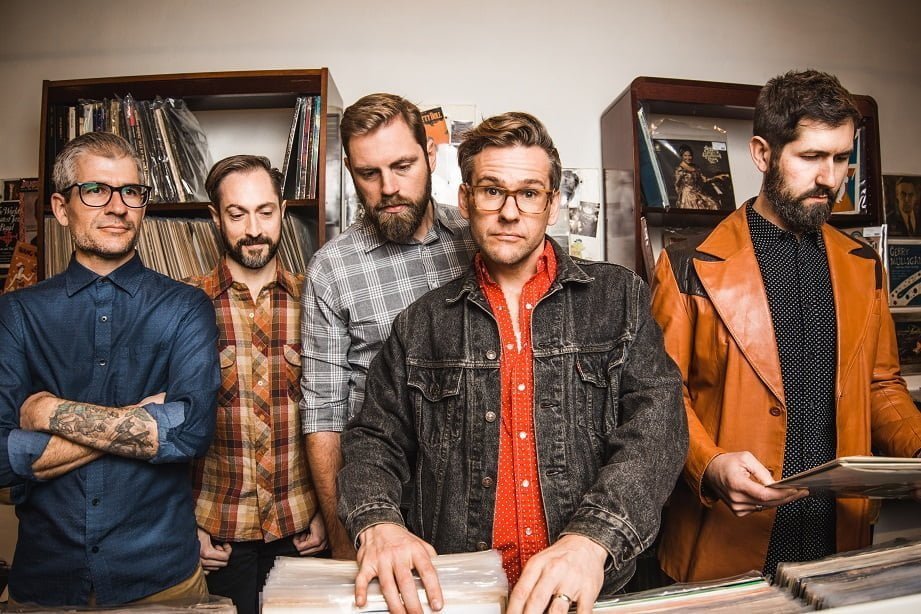
Building community is part of what music, and all good art, does. It brings us together. Music is a common rhythm, a poetic notion, an underlying common language for us all. A good mixtape grabs hold of that commonality and builds on it, with a few surprises along the way. As a band, The Steel Wheels curate a music festival each year, and a mixtape, or playlist, is kind of the digital version of that venture. So, let’s stop talking about it, and start building community with a PERFECT mix. – Trent Wagler, The Steel Wheels

Fruit Bats* – “Humbug Mountain Song”

Let’s start with a groove anyone can get behind. It’s accessible for the pop music lovers who wandered into this gathering — they didn’t know they liked the banjo at all until the second half of this intro kicks in. But now they’re engaged. And why can’t the piano, banjo, and drums live together in harmony? Stop closing your mind.

Kristin Andreassen* – “Get Together”

A good mixtape needs to establish that everyone is included. Loading things up with all your favorite new and rare songs isn’t always inviting. A cover song is common language at the very best. A little freshening up of a classic song will get us all swaying together in time. And what better theme than coming together? Now we’ve got everyone in the room in tune and we can introduce more variance in the mix.

The Wood Brothers* – “Sing About It”

The foundation of community is the strength we have together. Nothing better exemplifies this than the tight grooves and sweet harmonies of the Wood Brothers. And their message here is spot on. No matter where we are in our journey of pain, loss, trouble, or fear, singing a song just might help it pass.

Kaia Kater* – “New Colossus”

Now that we’re all in this, let’s tie the knots tighter. This song is like a sweet honey that helps stick us tightly. The way the melody veers and twists through literary verses encourages your conversations to dig a little deeper.

Jerry Garcia & David Grisman – “Russian Lullaby”

I think it’s more than nostalgia that brings me back to these late Garcia recordings, when he teamed up with longtime friend and musical pioneer David Grisman. The loose nature of these recordings makes you want to sit crisscross applesauce and share most embarrassing moments with a new acquaintance. If the ice wasn’t broken earlier, Jerry will rockabye you, baby. Collaborations are community building at their core.

River Whyless* – “All of My Friends”

Now that we’re all floating together in a musical high, don’t pull away. Leave the phones in your pocket. Let’s be here together fully. River Whyless is a band that simultaneously indicts and playfully dances with the information-overwhelmed age we live in.

Cedric Burnside* – “Hard To Stay Cool”

What is more true blue than these dyed in the wool Burnside family blues. Cedric Burnside’s whole album is full of these tasty grooves. It’s not hard for him to stay cool.

Tim O’Brien* & Darrell Scott – “With a Memory Like Mine”

Here’s another one of my favorite collaborations. The album Real Time by Tim and Darrell has had such a musical impact on me. To hear two great songwriters, who sing and play any instrument they pick up with such mastery, is humbling and inspiring.

Bahamas – “No Wrong”

I’m obsessed with Bahamas’ music right now. The guitar, the groove, and the vocals. The presence of this recording is also so immediate and direct. When you’re among your people, it feels like you can do no wrong.

The Steel Wheels* – “Road Never Ends”

I couldn’t help but include one from our new record. The love and joy of the road is bittersweet. This song puts words to the difficulties of transience while acknowledging the beauty of the strange kind of mobile community it creates.

Ana Egge – “Rock Me (Divine Mother)”

There are few songwriters who tap into deep spiritual depths without cliché like Ana Egge. She’s a treasure. And this song has slayed me every single time I’ve ever heard it.

Tinariwen – “Imidiwan Win Sahara” (feat. Tunde Adebimpe)

All music conjures up a sense of place. Tinariwen was introduced to me by our drummer, Kevin Garcia, and I’ve regularly wanted to go to where their sound takes me. As a songwriter and specifically a lyricist, it’s helpful to reset your listening ear and turn off the language centers of your brain by listening to music with lyrical content in a language you do not speak.

Dr. Dog – “Listening In”

A good mixtape has some curveballs. Dr. Dog has been a sonic companion for me since I first saw them live 10 years ago at Bristol Rhythm and Roots. The lyrical tapestry is so full and always connects through some kind of thought-lightning striking through your brain. I love the line, “I can hear the fear in me…talking.”

David Wax Museum – “Time Will Not Track Us Down”

We’re getting towards the end of our little mixtape. Like the Sunday afternoon lazy picnic, we are starting to wind it all down. David Wax is known for his high energy original Latin-inspired masterpieces, but this simple paired down guitar/vocal really calms my spirit and prepares us to part.

Robert Ellis & Courtney Hartman* – “Up On The Hill Where They Do The Boogie”

One more cover song for good measure. Let’s celebrate the most wacky and wonderful souls among us, and let’s boogie like John Hartford.

Josh Ritter – “Homecoming”

Remember that curating music for your gathering is a privilege. You are setting the sonic table for everyone in your presence. It’s also a responsibility. Everyone wants to feel at home at the end of the day. Everyone wants be at their best and be reminded that they are capable of their best. Music replenishes the various ways daily life drags us down. A mixtape is a good refuge and stand-in for when music festival season is slow.


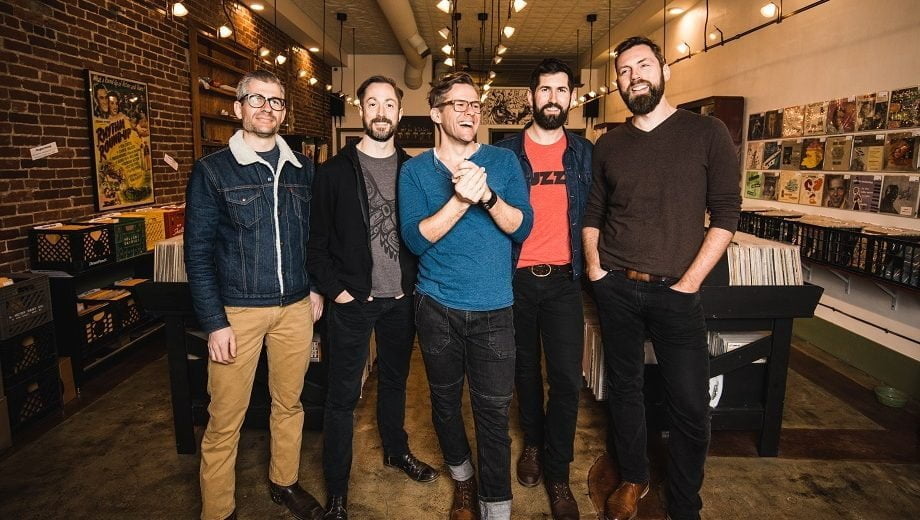
Photo credit: Josh Saul

*2019 Red Wing performers. Red Wing Roots Music Festival takes place in Mt. Solon, Virginia, on July 12-14, and is hosted by The Steel Wheels

BGS 5+5: Justin Hiltner & Jon Weisberger

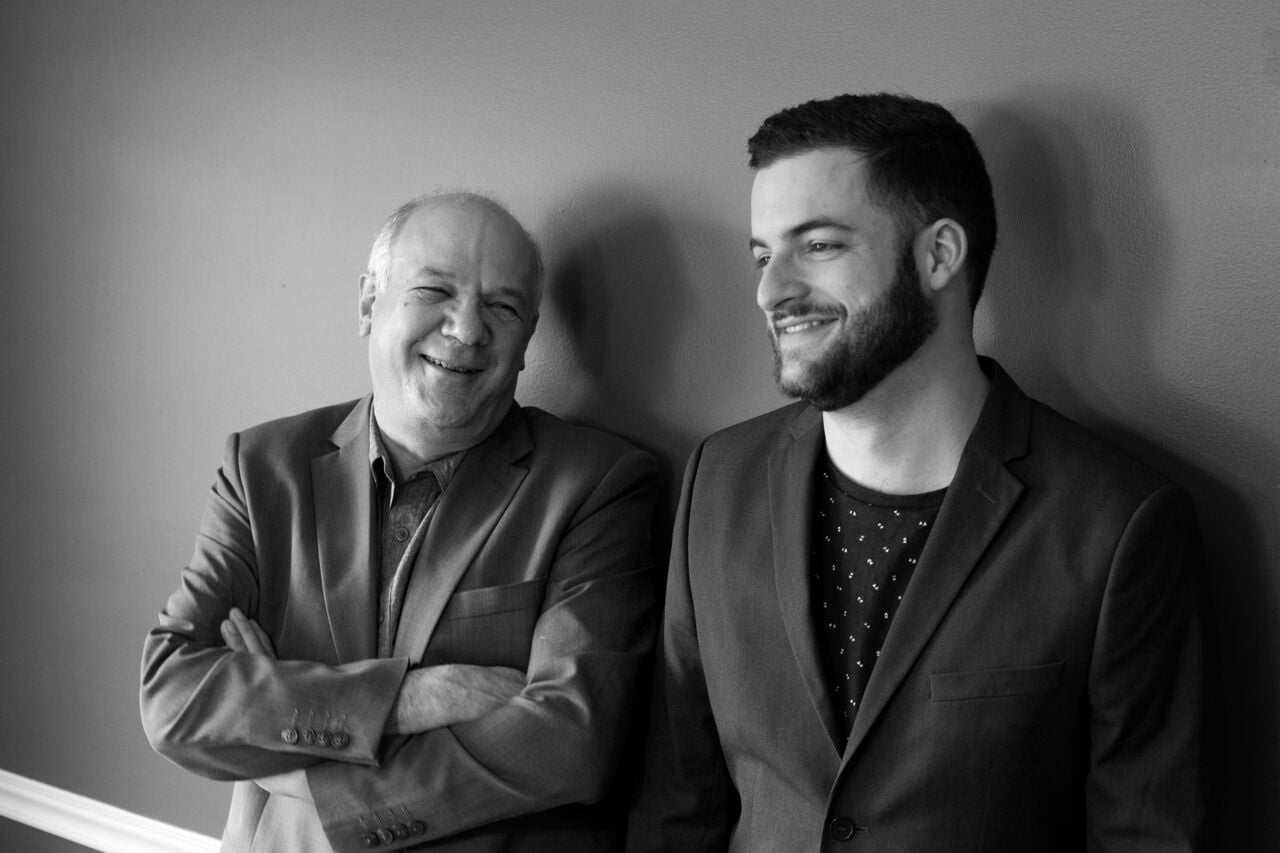
Editor’s Note: Our writers at the Bluegrass Situation have many talents — and for regular contributors Justin Hiltner (pictured right) and Jon Weisberger, their original music is worth discovering by our BGS readers.

Artist name: Justin Hiltner & Jon Weisberger
Hometown: Nashville, Tennessee
Latest album: Watch It Burn
Personal nicknames (or rejected band names): “J-Dubs” (Jon); “HUSTIB” (Justin).

Which artist has influenced you the most … and how?

Jon: It would have to be Merle Haggard. His music and his career exemplify so many things that first attracted me to country and bluegrass music. For instance, he worked as a sideman before going out on his own, in a classic sort of apprenticeship that I really appreciate; he wrote about a lot of different things in a lot of different ways, with his personal story being just one element in his songwriting; and to me, he really found a sweet spot between acknowledging and taking part in tradition on the one hand, and having his own, unique voice on the other.

Justin: It’s difficult to pinpoint just one, especially given that bluegrass is predicated upon versatility and wearing all of the creative and musical hats all at once. If I were to hazard an answer, based on where I stand at this point in time, musically and otherwise, it would have multiple parts. Earl Scruggs, first and foremost, really and truly is my most important banjo inspiration. “Little Darlin’ Pal of Mine” off of At Carnegie Hall! was undoubtedly my OH-SHIT-EARL-SCRUGGS moment. Darrell Scott would probably fill the most influential songwriter slot (and getting to sing harmony with Tim O’Brien on Watch it Burn’s “If I Were a Praying Man” let me live my Darrell Scott dreams, if just for one song!) And if I were to pick an influential vocalist, it would have to be Lee Ann Womack. Now I ought to stop while this answer is still sufficiently succinct.

What’s the toughest time you ever had writing a song?

Jon: There are several different kinds of tough! I remember that when Jeremy Garrett and I first wrote “Where The Rivers Run Cold,” he got some feedback about the song that caused us to spend some time trying to write a different chorus, and that was tough; eventually, the band adopted it as it was originally written, which turned out pretty well. And he and Josh Shilling (Mountain Heart) and I recently revisited one we kind of thought we had finished back in late 2014, but that none of us was really satisfied with; that one wound up with a different time signature and a different chorus that we love, but working out what to change and what to keep was a real job.

Justin: On my own, I tend to write hyper-personal, intensely specific songs. I often find myself way too close to a song’s hook or core idea, so close that I can’t make progress or finesse the writing at all. The beauty in having a co-writer like Jon nearby, someone that I’ve worked with for so long, is that I can trust him to take one of those personal song ideas and flesh it out in a way that cares for the premise, but insures that it’s relatable to a broader audience. This is exactly how we wrote “This Isn’t How I Wanted to Come Home” together, a song about my grandma passing away. Without a steady co-writing hand like Jon’s, so many difficult songs sit languishing, unfinished, in my iPhone notes!

If you had to write a mission statement for your career, what would it be?

Jon: Super-simple: write and play music that means something to me, and do so well enough that it means something to others, too — enough that I’m able to, as Melvin Goins used to say, put a biscuit on the table.

Justin: That no one ever feel excluded from these roots genres that we love because of who they are. Full stop.

Which elements of nature do you spend the most time with and how do those impact your work?

Jon: I guess that would be fauna — specifically, cats. My wife and I have two, and they affect my work every time I write with someone at our house! Matisse, the older of the two, appears in the “at the writing table” photo used in Watch It Burn’s graphic design, and in other promotional photos, too, illustrating the exact nature of that impact — entertainment and/or distraction.

Justin: I should hope at this point that it’s a well-known fact that I’m an avid birdwatcher and amateur naturalist. I’ve got 353 species of birds on my life list (an ongoing list of every species I’ve ever successfully identified in-field). I learned very early in my time as a performer that I ought to bring my binoculars wherever I go on tour. I write a lot of songs about birds, but so many aspects of nature filter into my writing — as in “Lady’s Slippers,” from the record, a song indirectly about a gorgeous, rare native orchid. “Winnsboro Blue” was written for a quarry near property my uncle owns in upstate South Carolina, where we go birding every time I’m in the area. It comes through whether you can always trace the connection or not!

How often do you hide behind a character in a song or use “you” when it’s actually “me”?

Jon: I’ve never really thought about it in that way, I guess, in part because I’ve pretty much always been a side musician and singer who took up songwriting more out of need than out of the urge for self-expression that I think motivates a lot of singers and writers, at least when they’re starting out. Too, bluegrass and country are fields in which distance between singer/writer and the character written or sung is no less legitimate than complete identification. Perhaps this more craft-oriented approach has helped as a co-writer; I’m really accustomed to looking for how I can relate to the germ of a song idea almost in the way a listener, rather than a writer would. As a result, I do think there’s a part of me in every song I’ve written, even though they’re almost all co-writes — in fact, that’s part of what makes co-writing so enjoyably mysterious or mysteriously enjoyable.

Justin: I used to hide myself and my identity in my songs not by clever or deflective writing, but by literally distancing myself from my songs. If I had written something with prominent male pronouns I would pitch the song to women, operating under the assumption that I could not/would not ever be the one singing those songs. For so long I felt that my queerness need not be present in my writing and my art, because, “Straight people aren’t flaunting their identities in their music!” Turns out 99.9 percent of all music ever made flaunts heteronormativity pretty unabashedly, so I consciously broke the habit of filtering my own perspective out of my songs. It was a pivotal point for me, personally and professionally, and I’ll never go back to hiding behind songwriting rhetoric choices ever again!


Photo credit: Bethany Carson, Carson Photoworks

How to Have It Both Ways: Darrell Scott in Conversation with Elizabeth Cook

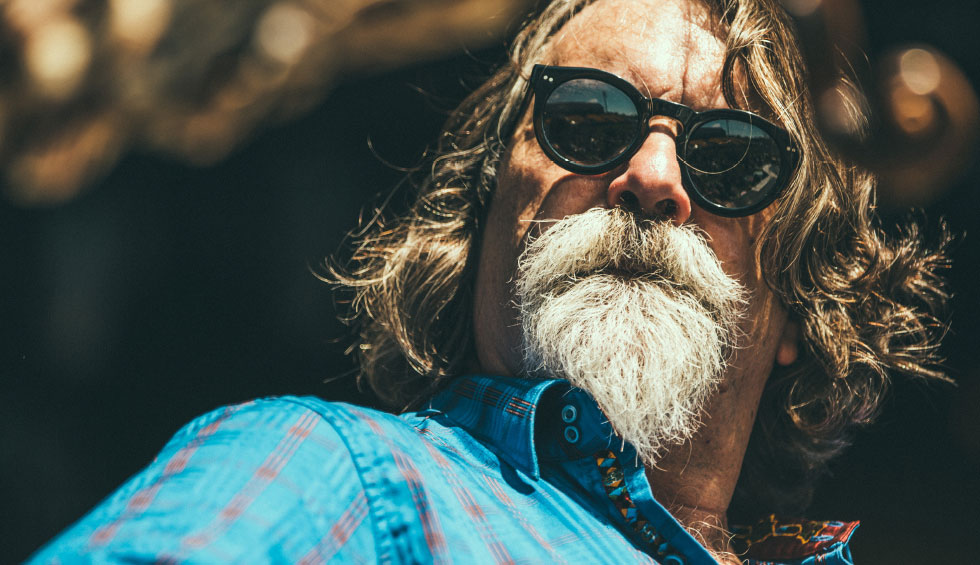
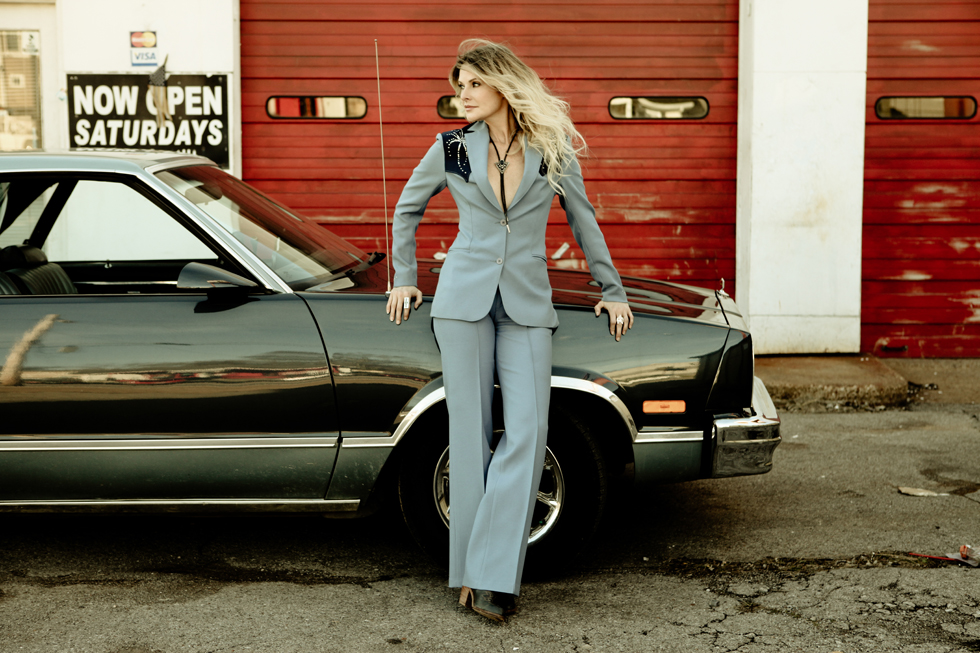
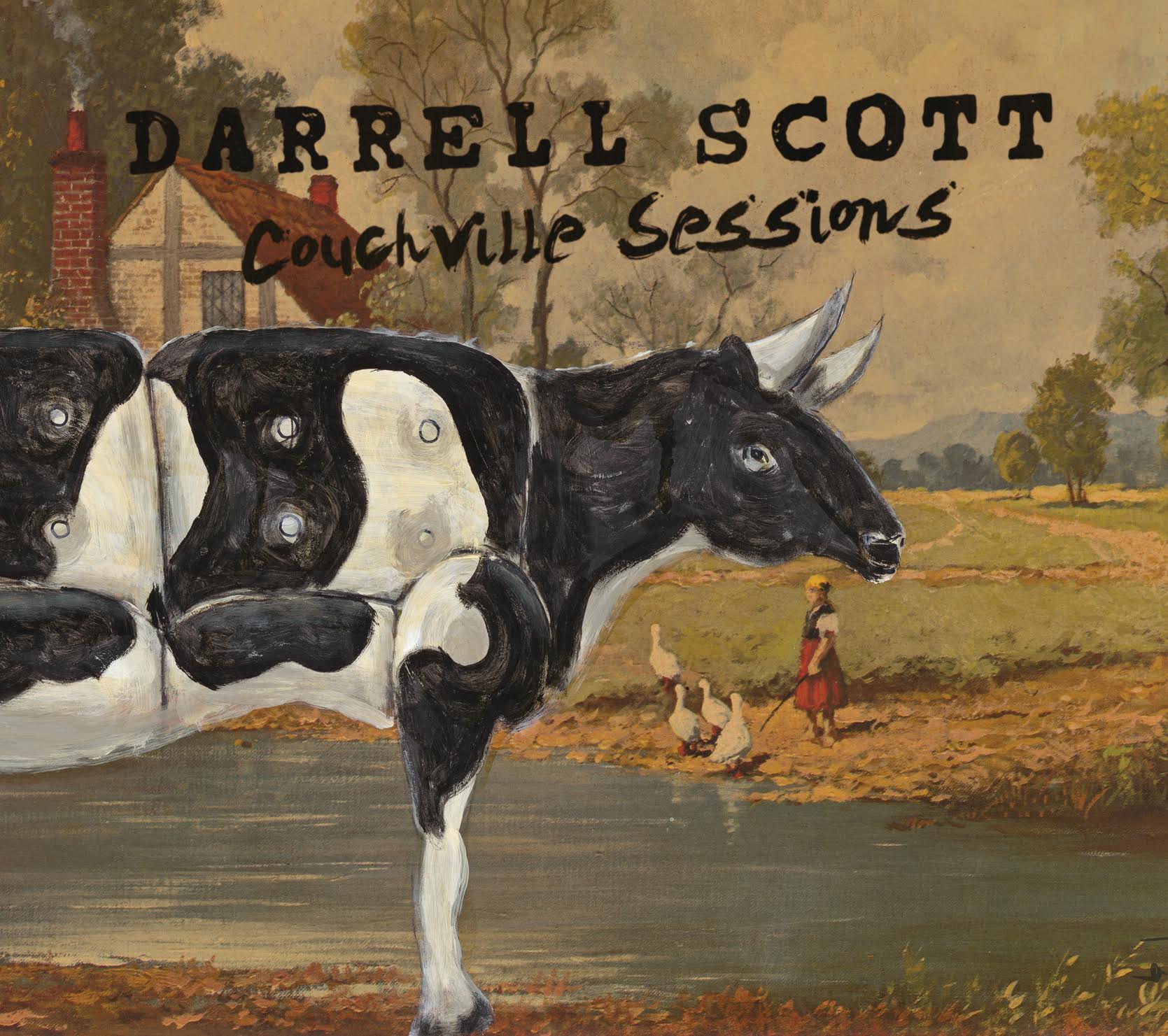
If you’d happened into the bars where a young Elizabeth Cook and Darrell Scott and various members of their families played hardcore honky-tonk music for working people some decades ago — she in small-town Florida, he wherever his dad had most recently decided they should try to make a go of it — you would have witnessed their immersive education in earthy expression. All these years later, the bodies of work they’ve each built up as singer/songwriters command the respect of a different sort of crowd — theater- and festival-goers attracted to literary sensibilities and more elevated notions of artistry. Scott and Cook, though, have found ways to work the full range of their musical experiences into what they do, including their latest albums, her Exodus of Venus and his Couchville Sessions. They got on the phone with us to compare notes.

I’ve done several of these three-way interviews, and usually the two interviewees haven’t met and I’ll have to make the introductions, but I figured that wouldn’t be necessary in this case.

Darrell Scott: That’s true.

Elizabeth Cook: We go back to the Raffi days. Was it a Raffi track we did? It was some children’s project.

DS: Yeah, I think it was Raffi.

EC: And then you played on the Hey Y’all album [her debut on Warner Bros. Nashville].

DS: Yeah, I think it was one of your first records in town or something, back in the day.

EC: Yeah, 2002.

So this was a country tribute to Raffi?

EC: Yes! It’s been a thousand years. Let me think of what the song was. Did we do “This Little Light of Mine”?

DS: Yeah, that was it. You’ve got a good memory.

The last time I saw you, we were doing a round with Guy Clark, Buddy Miller, and me and you over at the Country Music Hall of Fame.

Darrell Scott

Darrell, I’ve heard the album that you produced for your dad, Wayne Scott, some years back, who really bore a strong sonic resemblance to Hank Williams, and Elizabeth, I’ve heard songs that your mom wrote for you when you were singing as a little girl, that old chestnut “Does My Daddy Love the Bottle?” being one of them. You both spent your formative years in down-home music but eventually found your ways into serious-minded singer/songwriter scenes. How do those seemingly disparate musical worlds and aesthetic values add up in what you do?

EC: Hmm, Darrell?

DS: Well, for me, I kinda feel I’m a giant sponge. I certainly grew up on country music to the full tilt. That’s all that was gonna be on the radio if you’re in the cab of the truck with my dad or my mom. My mom leaned toward, let’s say, Tammy Wynette and Marty Robbins, where my dad was more Hank and Johnny. They met at Merle Haggard, it seemed like. But that was where I started. And then church music gets in there, and it’s Southern Baptist stuff. And my family’s from Kentucky, so it’s got some of that. And then I’ve had the singer/songwriter periods of Joni Mitchell and Jackson Browne and Leonard Cohen and all that stuff, so all that gets thrown in. And I had a jazz-fusion period. And then I went to school and got an English degree.

To me, it’s all game in order to write a song that might want to go more bluesy or more honky-tonk or more confessional. Because I’ve loved so much stuff, it all shows up when it’s time to write something that’s leaning one way or another.

EC: I think that, like Darrell, coming up and hearing the hardcore honky-tonk music, that certainly established the ground base of what would be the rudiments of how I created — the chords that I knew and how they went together. So there’s that part. I didn’t re-emerge into the church scene until I was about 12 years old and we had stopped singing around the bars and stuff as much, and my dad was going through the initial phases of recovery from alcoholism. The Church of God songs were almost rockabilly. It felt like rock ‘n’ roll compared to the honky-tonk music. It was very lively — drums and organs and a lot of rolling around and tambourines. And then I think it took just growing up to realize that I was surrounded by this rich cast of characters and they were all storytellers verbally. None of ‘em wrote songs, but daddy did like to tell stories, and he was a character. And 10 half-siblings and all the people that came in and out of our lives.

After college and being torn over whether to pursue an English lit path or the mathematical business path — and choosing the mathematical business path in a rebellion period — that was almost like a sabbatical from music for me. And I was really trying to establish a different kind of life. But once I got out of that and came to Nashville is when I started learning that there was a Lucinda Williams and getting into deeper catalog Rodney Crowell and Nanci Griffith and Guy Clark, and finding out who Townes Van Zandt was, and hearing Steve Earle. And it was like, “Oh, there’s a sense of poetry that can be applied to this.” So there were the remnants of the musical style and then the sort of observation period, trying to learn and develop the poetry skill set and the storytelling skill set and marry all those things. And that’s still where I feel like I am now, on that path.

Elizabeth Cook

I wonder if either of you have ever found yourself challenging the way people define sophisticated and unsophisticated songwriting, since you’ve been intimately acquainted with this whole range of “highbrow” and “lowbrow” sensibilities and don’t view it as simplistically as some other folks might.

DS: Well, to me, that distinction comes down to the song. If there’s a song that’s tapped on my shoulder that wants to be absolutely simple, wants to speak from a character who has an eighth grade education, I figure my job is to facilitate, so to speak, or just let that song come to life the best I can with what started in the first place, as opposed to me sitting there saying, “Hey, I can’t write this song with that language. I’m gonna have to shift it over somewhere else.” That’s not my job. My job is to follow through with the initial inspiration and, if that inspiration wants to be coming from a farmer or an auto mechanic or a steel mill worker or something like that — and those are folks and characters I know, absolutely — then I’m gonna follow through with that. And the next song might be more poetic or more worldly or something, then my job on that one is to be that way. So I feel the songs sorta tell us what to do, as far as whether it’s sophisticated or a little more jazzy or a little more dark or a little more gospel or a little more anything.

EC: I think so, too. Music can do so many different things, you know? There’s music to boogie to, music to party to. There’s music that’s engaging on a more sophisticated level, and that’s where, to me, the more intricate lyric and storytelling and the more original way that you can say something [come in], even if it’s from a character that maybe you’ve heard speak before. For me, I guess I’m just saying it totally depends.

I’ve really enjoyed lately getting more into trying to find different jumping off points. If I’m wanting to write a song like this song “Evacuation” that’s on the new record about a lady in New Orleans … I decided to just immerse myself in learning about voodoo culture, and in [learning] that terminology and ideas, the story gets a little bit richer. So the process of digging deeper is what’s been exciting to me and a way to try and grow my writing.

As I listened to Exodus of Venus and Couchville Sessions and revisited some of your previous albums, I was thinking about the introspective approach that I’ve heard from other contemporary singer/songwriters, who tend to be up in their heads and disengaged from their bodies. That’s not at all what I get from your work. You can each get really expansive with the stories you tell or the experiences and settings you describe, but always also acknowledge physicality. Is that something that either of you are conscious of?

DS: You go ahead, Elizabeth.

EC: No, you go. We’ve got a little groove going.

DS: I’m conscious, and it’s not really while I’m doing it, but afterward. I look at my work and see that it’s sort of what you described there. Another way of putting it, for me, is linear — I feel like a lot of my writing is linear. I wish I weren’t so literal, to tell you the truth. I see that quality show up a lot in my writing.

You were describing some other type of singer/songwriter — folks who seem more disconnected. I’d love to be more disconnected sometimes. I just don’t get to get there. Not ‘cause I don’t want to. When a song like that does come along, I’m like, “Hallelujah. I got one, at least.” You know? There’s a slight different between a groove and a rut. I appreciate that linear quality in my writing, when the song’s appropriate, but I’d sure like to bust out and find the songs that allow me to not feel like I’m repeating a version of myself. I’d hate to think that I’m repeating myself, but I do see that linear quality in my writing and I’d like to bust it up. If you guys have any ideas how I could do that, let me know.

[All Laugh]

EC: Immerse yourself in voodoo culture.

No, I certainly don’t know. I’ve gone through phases of ideas and theories about it where I’m like, “Well, that’s kind of a cop-out just to write about the moon and the river, because you can totally bullshit your way through that.” I want to write rich stories and make them rhyme. I think that feels more challenging; it feels more interesting. If you can learn to do that well, I almost think it’s more rare than any other. So I follow that path and try to master that and, in doing that, sometimes I feel like, “Well, this is trite, and I wish I had something original to say about the moon and the river.” I think I’m also, like Darrell, trying to figure out how to crack that nut, how to maybe be sometimes a little more metaphorical or whatever you want to call it, and still be original and interesting and sophisticated and all those things that I feel like we’re challenged to do.

Darrell, it’s really interesting to hear you describe your sense of how your writing unfolds as “linear.” I don’t think I would’ve chosen that word. What I’m trying to get at is that your songs often operate on multiple different layers — you make the listener aware of what’s right in front of them, what can be seen with the eye, but also all these subtexts, stuff that’s felt and not said. For example, when I listen to “Waiting For the Clothes to Get Clean,” I see the people in the laundromat, their physicality, but I also feel the complex emotions they’re mired in. What does it take to work all of that in there?

DS: Well, that one came in a number of ways. One was just trying to describe that couple in that song. They obviously have major problems, you know? The whole thing is about a conflict. And they’ve just gone to the laundromat, so it’s an hour-and-a-half, but the shit they throw on each other just in something as simple as washing your clothes, it tells everything about how they don’t have it together. They just live in different worlds, but they’re in the same car, the same laundromat, and share the same bed. So that one, to me, was kind of a character study. Sometimes I’ve been embarrassingly too much like the male in that song, which I despise that part of me. But men … sometimes it takes them a long time to get out of whatever they’ve seen their parents do or whatever their male bravado crap is.

When I say linear, I mean, for example, that songs goes from the beginning of the laundromat experience to them driving back. Literally, it goes from unloading the clothes to now they’re driving back home after the hour-and-a-half or so at the laundromat. So that’s what I mean by linear: This happens, then that happens, then he said that, then she said that.

EC: Sort of like chronologically in time.

DS: That’s right. Yeah.

What goes on in that song, it points to all the psychological stuff between the two characters. So I hear what you’re saying. To me, the linear in that song is that it’s a real crisp timeline.

Elizabeth, you mentioned that you’ve been trying to find different starting points for your songwriting. You’ve always painted really evocative, detailed pictures in your lyrics, but I do pick up on some new elements in this batch of songs. In songs like “Exodus of Venus” and “Slow Pain,” it’s like you’ve pared down your lyric writing to this intense sensory stuff with dark blues shadings. That’s my description of it, but I wonder how you’ve experienced it and what got you there.

EC: You always get that cliché question, “Which comes first, the music or the lyrics?” Those were examples of ones that were initially music-driven out of the gate and the lyrics followed. When I’m writing to an emotion that’s already established in a sound, it’ a little more freeing. There’s a little bit less responsibility on the lyric, if that makes sense. I didn’t have that before, and a lot of that is because of writing with the producer for the record, Dexter Green, who’s a great guitarist and way into tones and pedals and all this stuff. So it’s been a different jumping off point instead of some sort of dense narrative coming out of my journal.

As you’ve been performing this material live, how have you seen people respond to hearing different stuff from you?

EC: I tell you what, I’m really encouraged and relieved, so far. And it’s still early, but we’re pretty much running the board. It’s been very positive. I was worried that it would be, “Well, this isn’t as country. This isn’t as sunshine-y.” But everybody’s been enjoying the exploration of the darker side and what I hope is an evolution to the writing. So far, so good. Only a couple people said, “You’re keeping it country, aren’t ya?” And I’m like, “Well, not really.” I love country music. I love it. But I don’t care if something I’m writing is country or not when I’m writing it. I just don’t care.

I feel like that’s probably a perspective on writing that you could identify with, Darrell.

DS: Yeah, very much. When it’s time to write, it all gets set aside. If we’re doing it right, all the attention goes to this song, this inspiration sitting in front of us. Fantastic, if it’s country. Fantastic, if it doesn’t rhyme. Again, I’m really trying to do what the song is telling me to do. And that may sound a little, you know, like it’s not exactly me writing it; I’m certainly there, but I’m paying attention to the song. Wherever the song is going, I hope to bring whatever I got to the table to help it to come to life. My country music background can sit at the side, if it doesn’t need any of those skills. I don’t feel like I have to interject anything.

Something else I appreciate about each of your music is that you have ways of drawing together the sensual and the spiritual. You have songs that explore the power of physical connection, that don’t beat around the bush about sexual tension. Darrell, your song “Come into This Room” comes to mind. Elizabeth, I heard that kind of power in “Straightjacket Love” or, on the more playful side, in “Yes to Booty.” You each also have a way of grounding bits of spirituality in the body. Through that blurring of lines, are you sort of letting us in on the way you experience the world?

DS: Well, for me, it’s part of that quality of telling the truth in the songs. If we’re sensual beings and if we’re sensual-minded as we walk around the planet — and I am — that has to enter in. So does the spiritual, because that’s how I walk around the world, too. So I try not to be ashamed of that. Depending on our background, you can be taught to hide that, and it’s scary, and you’re sure as hell not supposed to write a song about it. But, to me, that’s just part of the deal of breaking away from the stuff that didn’t work from childhood. Country music worked; I’ll take that. And maybe the Southern Baptist stuff didn’t work so well, or didn’t stick. So I can leave that one behind, but take away the general community of my church background or the general idea of the great gospel songs or the energy of people all feeling it together. To me, I walk around with the sensuality and the spiritual, and it would be no wonder how it would show up in songs. They’re part of what I carry around.

EC: I sort of think it’s inherent, for me, in music period. It’s like music taps into all those things, and that’s why I relate to it. It taps into sensuality. It taps into spirituality. That’s why it’s almost like an awakening when you connect with it. So I think it’s inherent in making music that those things would be present, if you’re truly succeeding in being connected to it. Those things would hopefully, naturally show up. I think that’s probably why.

That’s my best guess.

That’s a good guess.


Illustration by Abby McMillen. Elizabeth Cook photo by Jim McGuire. Darrell Scott photo courtesy of the artist.
Darrell Scott, ‘Down by the River’

"We won't give a damn, if it's rock, folk, country, or blues," sings Darrell Scott on "Down by the River," a gloriously rollicking tune that's maybe all four of those things. And, really, who cares which? Writing, performing, and recording in Nashville for well over two decades, Scott was Americana before it was a trend and country before it bro'd, managing to exist in that glorious middle ground where he can both flirt with Music Row and give it a hefty, hearty middle finger.

"Down by the River," from his upcoming LP, Couchville Sessions, is mostly the latter. A locomotive folk waltz through the tumultuous journey of trying to keep your integrity in an industry often more concerned with sales figures and clever marketing campaigns than artistic freedom, it boasts a cascade of instrumentals, a howling gospel chorus, and even a little annotation by the one and only Guy Clark … and, if you listen closely enough, a lesson or two on just how to stay haunted by the mysterious, elusive muse in a world where even the simplest slight (or pushy A&R executive) can spook it away for ever.

"I have lived in Nashville for 24 years," says Scott. "I love the musical and cultural diversity here. This is a song about finding and then keeping your unique voice as an artist in an industry town that could attempt to talk you out of it."

… whether it's rock, folk, country, or blues.

REVIEW ROUNDUP

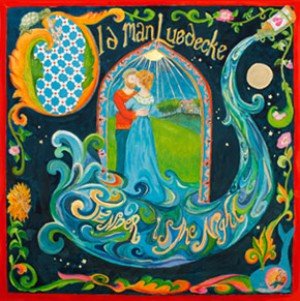
Old Man Luedecke — Tender is the Night  (True North 2012)

At first you’d almost think that Old Man Luedecke was a musical gimmick. He has a folksie name, he plays the banjo almost exclusively, and he dresses pretty conservatively. This sure isn’t any kind of ironic hipster roots music. The best part about Old Man Luedecke is that he is exactly who he is. He writes unvarnished, unpretentious folk songs and picks along gaily with his sweet clawhammer banjo-playing. And he’s done quite well for himself. In fact, he’s one of the better known roots artists coming out of Canada right now. That’s because his songs are so open and honest and compelling, that it’s hard not to fall in step with him. Luedecke’s kind of like a modern day Woody Guthrie, if Guthrie had been born Canadian, and written songs that were more about living a well-loved life than killing fascists. I think of him like the Jason Segal Muppets-remake: he wins in the end because he keeps his music kind and welcoming. His new album, Tender is the Night, is a great way to get to know his music if you’re not familiar already. In all honesty, I was really hoping that this album would continue the intriguing direction of his last album, My Hands Are on Fire and Other Love Songs. There, Luedecke was experimenting with a fully fleshed out band and some more indie influences. With Tender is the Night, Luedecke returns to familiar ground, breaking down folk song after folk song in his own trademark style. With the great Tim O’Brien producing, we have here a 100% folk music album, the kind of folk music that we used to make before the hordes of singer-songwriters subverted the name. This is good, old-fashioned music for the people.


Town Mountain — Leave the Bottle  (Pinecastle Records 2012)

So many bands these days are looking for ways to move beyond the bluegrass label, looking to be “Americana,” or “indie,” or anything other than back-woods North Carolina ass-kicking bluegrass. So thank god that Town Mountain are around to blow a hole in all the genre-juggling games of which music writers like myself are so fond. They play bluegrass. Period. They play it hard, they play it fast, and they play it like their fingers are bleeding and their picks are breaking. Which is exactly how you should play bluegrass. Which isn’t to say they’re a bunch of young speedsters, for they can hold it down just as well on slower songs, bringing the same intense emotion to their singing and playing at the lower bpm levels. Their new album, Leave the Bottle, aptly balances out the tempos, showcasing a band at the top of their game. Chock-full of original songs, Leave the Bottle has many highlights, from the raw-edged grit of “Lawdog” to the old-school burner “Lookin in the Mirror” or the Jerry Lee Lewis swagger of “Up the Ladder.” So often in bluegrass it seems that young bands have something to prove, but the impression you get from listening to Town Mountain is just pure comfort and joy in the music.


Tim O’Brien & Darrell Scott — We’re Usually A Lot Better Than This (Full Lights 2012)

The new album from roots music masters Tim O’Brien & Darrell Scott has been quite a confusing journey for me. It’s a live album, but it was recorded back in 2005 and 2006, so it’s pretty old by now. It’s the sequel to their first album together, but it includes a few tracks from that album. And the earlier album came out in 2000, so not too far behind when this was recorded… Aw jeez, who cares! Sometimes we can get so stuck on getting our facts right and doing our homework as reviewers that we forget to just listen and enjoy. This is a masterful and joyous live album from two great masters who are obviously having a blast together. It’s truly remarkable that they can play this tightly and weave their music together so well without having rehearsed and polished this duo to death. The fact that they’re not always perfectly in sync is actually the best part of the album. It feels vibrantly live, and you find yourself wishing you were at this concert, which must have been a grand night!

If you want the full story of how this album came about, go over to Uprooted Music Revue to read their revealing interview with both Tim and Darrell.  Whatever the case of how and when this album was made, it’s just great. Darrell Scott’s singing on Townes Van Zandt’s “White Freightliner Blues” is electric, and you can feel the buzz in the house that night. Tim O’Brien’s singing on “Mick Ryan’s Lament” is remarkably moving, and brings a deft bit of Celtic taste to the album, without having to bring on any maudlin Irish trappings. “Keep Your Lamp and Trimmed and Burning” is a delightfully swirling spin-around through the classic song, and “You Don’t Have to Move the Mountain” is like a master-class in how to fit gospel blues into modern bluegrass. I could go over the other highlights of this album, but honestly it’s pretty clear that this is a must-have album for any roots music lovers. It’s there in the name: Tim O’Brien & Darrell Scott. ‘Nuff said!