Take the Journey: 17 Songs for a Sunny and Warm Summer Vacation

In July we put together a playlist of bluegrass songs for summer vacation and once the inspiration was flowing, it was difficult to stop! We thought we should return to the theme, but slightly zoomed out, to include songs from across the roots music landscape. With the summer still shining, enjoy these 17 folk, Americana, and country songs perfect for your road trip playlist.

“Ride Out in the Country” – Yola

Yola was a 2020 Best New Artist nominee at the Grammys and she’s just returned with a new, full-length album on Easy Eye Sound, Stand For Myself. The entire project is lush and resplendent, like the glory days of orchestral, big-sound country-pop in the ‘60s and ‘70s. For this playlist, though, we return to her prior release, Walk Through Fire, and the perfectly country track, “Ride Out in the Country.” Take the scenic byways and crank the volume!


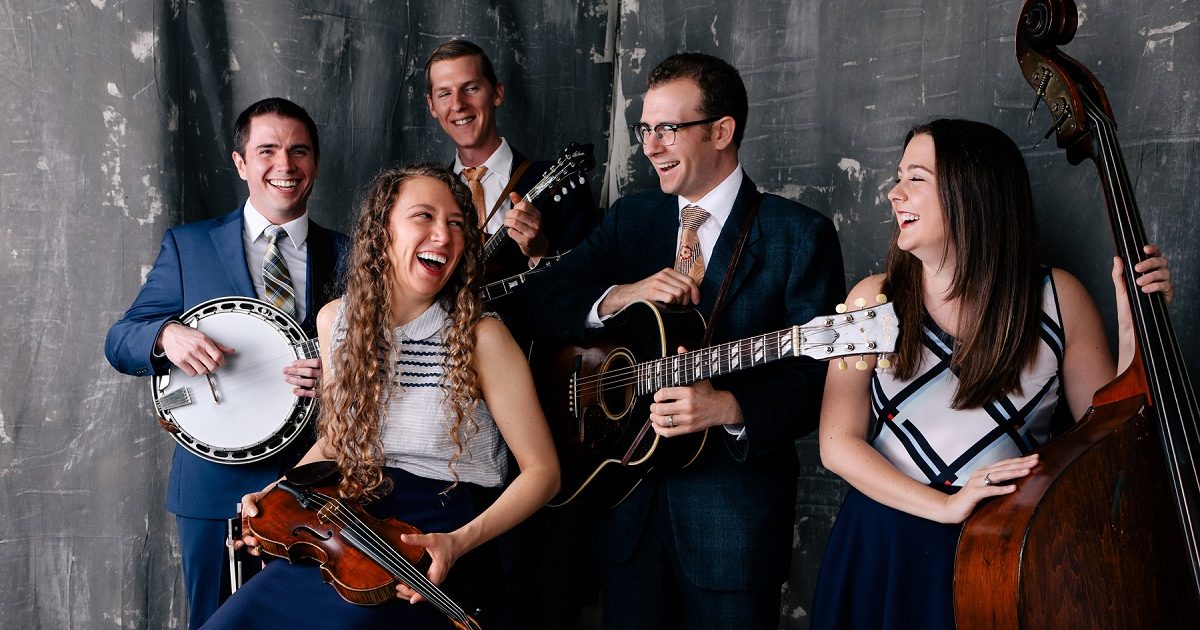
“I Like It When You’re Home” – Della Mae

One of the nicest silver linings of vacation is missing home – and that delicious feeling of returning to your own space and your own bed after being away. And your loved one(s), too! Della Mae captures that sentiment in this jammy, rootsy track from their album, Headlight. Take the day off, drive north, sit by a lake.


“A Little Past Little Rock” – Lee Ann Womack

A truly quintessential driving song. A must-add even if your vacation route comes nowhere near Arkansas. The baritone guitar intro, the shout-along-with-the-lyrics chorus, the whimsically late ‘90s production. A banger. A bop.


“Sunny and Warm” – Keb’ Mo’

Keb’ Mo’ is a master of vibes. His single “Sunny and Warm” showcases the acoustic blues musician in a more traditional R&B light – and the impact and result are simply golden. This track will have you craving your happy place, wherever that warm and sunny locale may be.


“Heavy Traffic Ahead” – Bill Monroe

Look, we’re The Bluegrass Situation! We’ve gotta get our bluegrass kicks in somewhere – bluegrass is roots music, after all. Given that we left this classic by the Big Mon himself off our Bluegrass Songs for Summer Vacation we felt it was worth inclusion here. And worth a mention so that you’ll go check out the entirely bluegrass playlist, too!


“Country Radio” – Indigo Girls

Finally a country song about country radio – and cruising around aimlessly listening to it – that is enjoyable and free of the guilt associated with the false nostalgia, conservative politics, authenticity signalling, and post-2000s country. Especially the kind most often played on the radio! This Indigo Girls track is testament to all the folks out there who love country music, even if it doesn’t always love them back. Don’t worry, it will. Eventually! (Read the BGS interview.)


“White Noise, White Lines” – Kelsey Waldon

If you catch yourself daydreaming, in a dissociative or meditative trance as you keep it between the lines, Kentucky-born singer-songwriter Kelsey Waldon has the exact soundtrack for you. “Whie Noise, White Lines,” the title track of her most recent album, speaks to that near-trope-ish phenomenon of losing oneself amid the countless miles traveled while living the life of a traveling musician. Waldon, as in most of her music, accomplishes this motif without stereotypes or clichés, and the result is a song that will be a staple on vacation playlists for decades to come.


“Table For One” – Courtney Marie Andrews

A variation on the same theme, this time from Courtney Marie Andrews, “Table For One” is gauzy and lonesomely trippy. “You don’t wanna be like me / this life ain’t free,” the singer pleads, seeking a sense of reality in a life almost entirely abided within liminal spaces. Find peace in the redwoods, but try to hold on to it. You might lose it twenty miles later.


“Two Roads” – Valerie June

Cosmic and longing, Valerie June distills Kermit the Frog’s “the lovers, the dreamers, and me” into album form with her latest outing, The Moon and Stars: Prescriptions For Dreamers. Whatever bug you’ve been bitten by – rambling, restlessness, cabin fever, listlessness – let this song and this album scratch that itch. And as you let the miles fade behind you, on whichever of the two roads you take, don’t forget to look up… at the moon and stars and beyond.


“Christine” – Lucy Dacus

Whether or not you’ve experienced the beautiful, transcendent, and heart-rending forbidden love of being queer — on the outside looking in on love that society has constructed to which you’ll never have access — Lucy Dacus’ fantastic, alt/indie roots pop universe will give you a crystalline window into this very particular iteration of unrequited love on “Christine.” The song feels almost as though you’ve woken from a warm, sunny, time-halting afternoon nap in the back seat of a car yourself.


“It’s a Great Day to Be Alive” – Darrell Scott

Darrell Scott goes two for two, landing on both our bluegrass summer vacation round-up and our rootsy list, too! “It’s a Great Day to Be Alive” is THE song for the moment you realize you’re out of the office, away from your chores, without a care in the world — whether you have rice cooking in your microwave or not.


“Hometown” – Lula Wiles

For those summers when all you can muster is a trip home. Lula Wiles don’t just trade in nostalgia and hometown praise, though, they take on the subject with a genuine, measured perspective that picks up paradoxes, turns them over, and places them back down for listeners. It’s a subtly charming earworm, too.


“Heavenly Day” – Patty Griffin

“Oh heavenly day / All the clouds blew away / Got no trouble today…” The exact intention to be channeling during vacation! Don’t let your summer getaway be one of those vacations from which you end up needing a vacation. Leave your troubles behind, have a heavenly day.


“Midnight in Harlem” – Tedeschi Trucks Band

Your travels may not bring you even within the same state as Harlem, but this song had still better be on your road trip playlist. There’s almost no song better to put on at midnight, wherever you may be roaming, than Tedeschi Trucks’ “Midnight in Harlem.”


“Outbound Plane” – Suzy Bogguss

Every time I step into an airport my anxiety seems to sing, “I don’t want to be standing here with this ticket for an outbound plane.” It’s always true. This writer has not yet returned to the jetways post-COVID, so we’ll see how that goes. At least there will be the security and comfort of this jam (composed by Nanci Griffith and Tom Russell) from Suzy Bogguss’ heyday.


“455 Rocket” – Kathy Mattea

There are plenty of modern versions of muscle cars available and on the road today, but not a single one is an Oldsmobile 455 Rocket! Kathy Mattea represents the rockabilly/Americana tradition of paeans to automobiles and gearhead culture with this loping tribute to a 455 Rocket, an early cut for Gillian Welch and David Rawlings. If you happen to take your country drives in a muscle car, regardless of brand, this track is for you.


“Take the Journey” – Molly Tuttle

What better way to conclude our playlist than with this always-timely reminder from Molly Tuttle? It might be a cliché, though it really is true: It’s about the journey, not the destination. So take the journey! Enjoy its twists, turns, and be in the moment. And take some clawhammer guitar along with you.


16 Bluegrass Songs for Summer Vacation

It’s summer, our second in the “after times,” where road trips, national parks, and scenic byways are king. As you head off on your COVID-aware vacations this summer, don’t leave all the driving music to indie, easy listening, country & western, or rock ‘n’ roll. The chop of the mandolin, thump of the doghouse bass, and rapid-fire roll of the five-string banjo are just as suited to soundtrack your sunny forays. To prove that point, here are 16 bluegrass songs perfect for inclusion on your summer vacation playlists. (Listen to the full playlist on Spotify below.)

“Highway” – Claire Lynch

Bluegrass being an itinerant livelihood and a nomadic community, traveling songs are just as expected a feature as murder ballads, train tunes (a form of travel song unto themselves!), and moonshine running tales. This modern classic via Claire Lynch — written by Lynch and Irene Kelley — is a perfect example of the form, more ‘90s country offered by a string band than a traditional, four-on-the-F-style grassy track. It’s delightful — and perfectly winsome and longing when you find yourself listening while traveling down the highway.


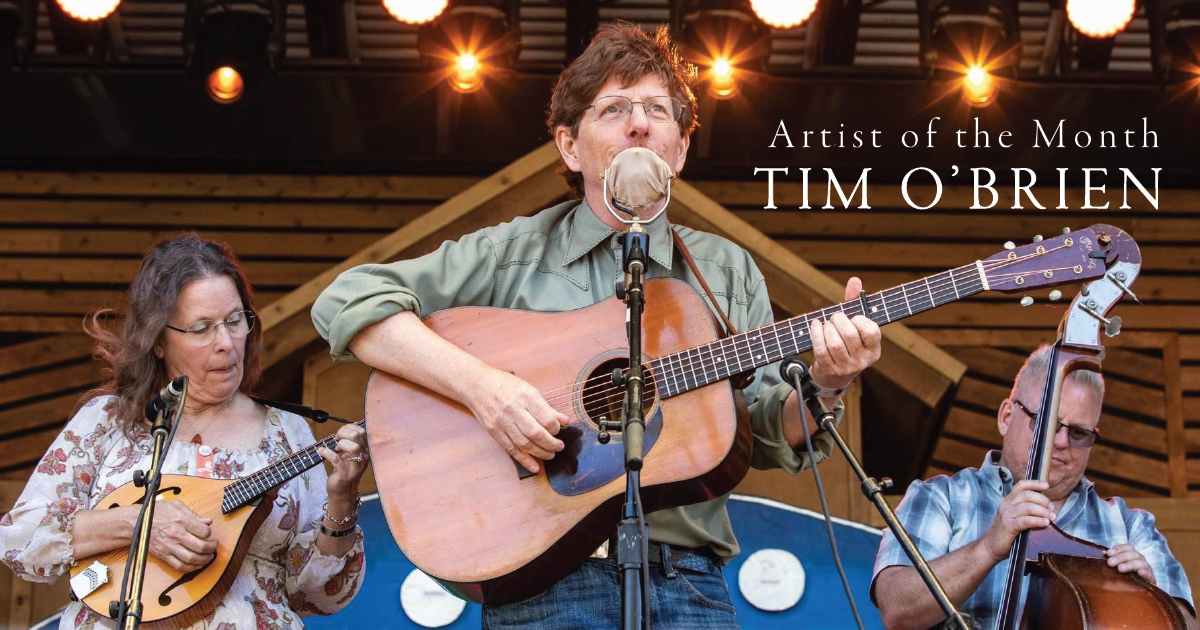
“Handsome Molly” – Tim O’Brien

Our July 2021 Artist of the Month Tim O’Brien’s rendition of this bluegrass classic is a far cry from, say, a Flatt & Scruggs’ cut. O’Brien’s has a slight transatlantic bent — with a distinct island detour, perhaps through the sunny Caribbean. If you’ve found a craving to set your foot on a steamboat and sail the ocean ‘round deep inside your soul, this one’s for you.


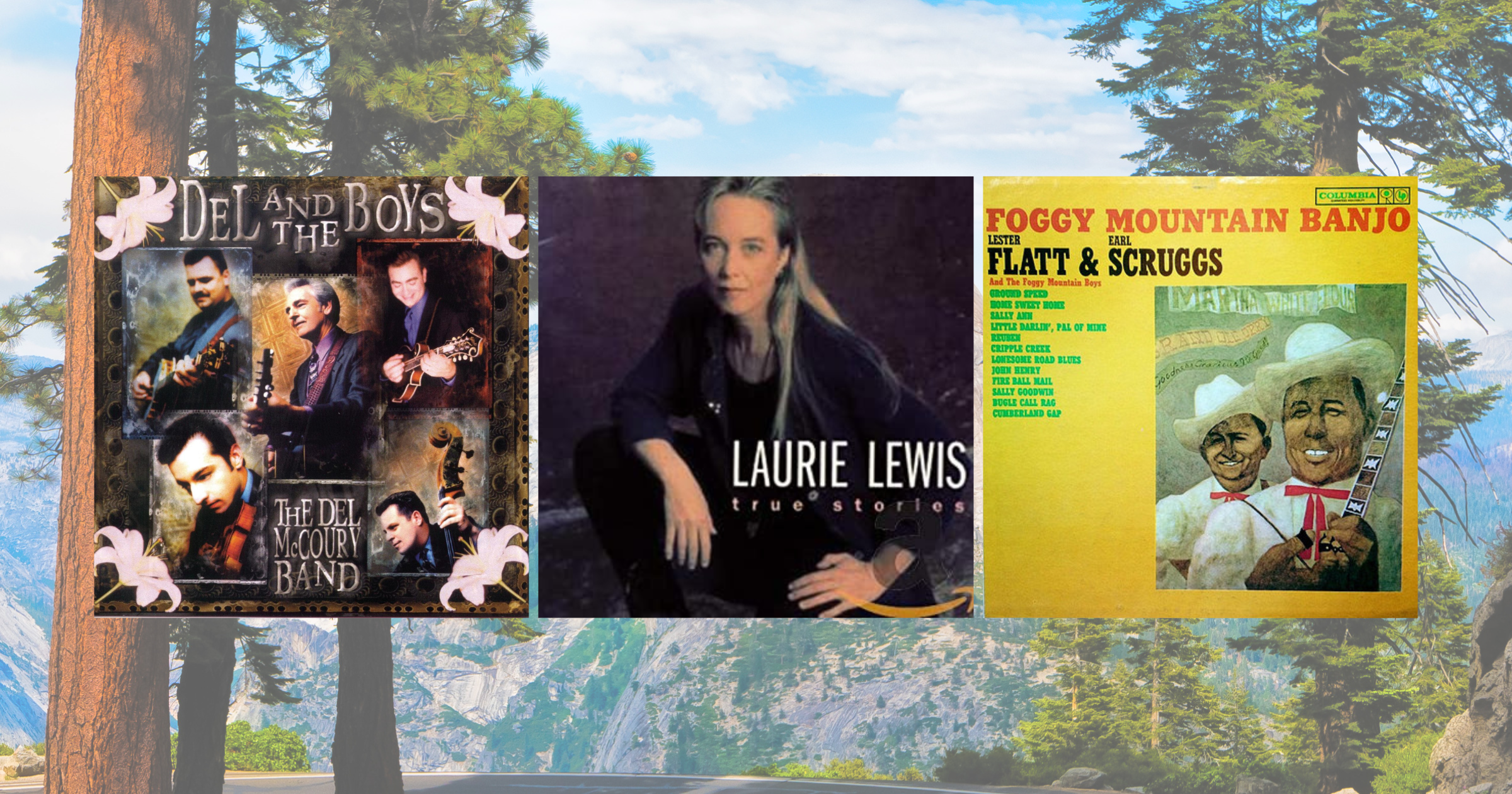
“1952 Vincent Black Lightning” – Del McCoury Band

Another track with a transatlantic story, this ever-popular, most-requested number covered by the Del McCoury Band is a road trip staple — whether you get in or on your vehicle to hit the highway. It would be a sin to make a bluegrass summer vacation playlist and not include “1952 Vincent Black Lightning!”


“Val’s Cabin” – Laurie Lewis

A rare example of a bluegrass song actually about summer vacations, this Laurie Lewis original, “Val’s Cabin,” begins as a simple retelling of childhood memories — nostalgia being a common rhetorical device (and when attempted by many other writers, a well-worn trope) in bluegrass. But Lewis, a veteran through-hiker, wilderness excursioner, and backpacker as well as a Grammy-nominated bluegrass singer and songwriter, tinges the story with melancholy and the existential questions raised by the ever-worsening climate crisis. The song is as evocative as it is gorgeous; though the singer can’t find the way to “Val’s Cabin” any longer, every listener can.


“Paddy on the Turnpike” – Vassar Clements

If you ever happen to find yourself Crossing the Catskills on a summery jaunt, “Paddy on the Turnpike” must be in your listening rotation. Avoid the tolls, but still go for a ride on the turnpike with Vassar Clements’ wild, unpredictable, jaw-dropping, wonky fiddling. “Paddy” is a blank canvas for Clements and a study in bluegrass’ unending affinity for flat seven chords.


“Don’t Give Your Heart to a Rambler” – Tony Rice

A hit in nearly every jam circle that ever circled, “Don’t Give Your Heart to a Rambler” is almost as if “Gentle on My Mind” had been written by a much less kind or compassionate protagonist. Tony’s solo vocal stylings are as iconic as his six-string licks, nearly obliterating any memory of this song ever having been sung by anyone else. What’s more, the titular advice of the track still stands. Just don’t.


“Highway 40 Blues” – Larry Cordle & Lonesome Standard Time

Because “Interstate 70 Blues” just doesn’t roll off the tongue. And that melodic hook should go down in history as one of the best country licks to ever lick! Cordle wrote one built for the long haul with “Highway 40 Blues.” It’ll keep you good company as you go wherever and back.


“Banjo Pickin’ Girl” – Annie Staninec

Is there any better reason to go around this world than being a banjo picker? There are never enough banjo pickin’ girls and this anthem, no matter how many times it’s picked up, studied, and retooled by another banjo pickin’ girl, always SLAPS. (Clawhammer pun intended.) Fiddler and multi-instrumentalist Annie Staninec, who’s traveled around the world making music quite a bit herself, gives an excellent old-time rendition of this favorite.


“A Crooked Road” – Darrell Scott

Darrell Scott turns a literary device pretty common in songwriting on its ear, with a tender eye for detail and emotion that he brings into all of his musicmaking. Life is, after all, about the journey — not the destination. Why not take the crooked, and thereby, the road less traveled? 

Plus, take this song as suggestion: The Crooked Road, Virginia’s Heritage Music Trail, is well worth a visit. Put this song on and take the Crooked Road.


“Up and Down the Mountain” – David Parmley & Continental Divide

Work life doesn’t suit you? Does “paradise” mean a fiddle and the open road? If so, “Up and Down the Mountain” is for you and your road trip playlist. Especially if you’re planning on trekking through the Rockies, Sierras, Ozarks, Applachians, or what-have-you. Turn off cruise control, watch for the runaway truck ramps, and go up and down those mountains! David Parmley & Continental Divide know something about geography and topography, after all…


“Roving Gambler” – The Country Gentlemen


Not sure why you’d be headed to Las Vegas during one of the hottest summers on record, but if you’ve got your sights set on a casino — wherever it may be — crank up “Roving Gambler” and hope your 2 a.m. slot machine binge or your evening “re-learning” blackjack ends more amiably than with gunfire. Speaking of which, perhaps “Blackjack” deserves a slot on this playlist…


“Travelin’ Prayer” – Dolly Parton

The kick-off of one of Dolly Parton’s masterpieces, her 1999 bluegrass album The Grass Is Blue, “Travelin’ Prayer” was actually written by Billy Joel. Yes, that Billy Joel. The original, from 1973’s Piano Man, featured banjo playing by Eric Weissberg and Fred Heilbrun. So of course the tune stands up to the bluegrass treatment and then some, between Stuart Duncan’s haunting fiddle cadenza to begin the track, the rip roarin’ tempo and train whistle harmonies, and the lonesome feeling of being away from your baby while he travels the world. We’re gonna assume Dolly’s blessed pen and ink added the lyric: “And keep him away from planes / cause my baby hates to fly!”


“Road to Columbus” – Kenny Baker

Growing up this writer frequented a bluegrass jam in Granville, Ohio, about 25 miles east of the state’s capital, Columbus. Like clockwork, every week as the jam wound down around noon on Wednesdays, Troy Herdman — a local bluegrass community stalwart, Doc Watson-style flatpicker, and mentor of many who lived in or around Columbus — would call this tune. Everyone would chuckle, and we’d play “Road to Columbus” as everyone, but especially Troy, hit the road to Columbus. 

Herdman passed away last week at the age of 91. I certainly wouldn’t be the musician I was today if it wasn’t for Troy, and I know quite a few others who would say the same. So no matter where I travel, I always keep “Road to Columbus” nearby. Especially when I’m headed home to Ohio.

Many pickers speculate over whether Kenny Baker and Bill Monroe were referencing Columbus, Ohio, or Columbus, Indiana. But, according to Roland White — who introduces the song with an anecdote from his time on the road with Monroe — it’s about Ohio. For this Ohioan, that’s confirmation enough!


“That’s How I Got to Memphis” – Tom T. Hall

His own recording of one of his most popular hits may sound more like straight up and down country than ‘grass, but even the most casual fan of Tom T. Hall knows that this Bluegrass Hall of Famer is bluegrass to his core. If you’re headed down I-40 from Nashville — or, really, towards Memphis from any direction, no matter how direct or circuitous, this song is a must-add for your road trip playlist.


“Where Rainbows Never Die” – The SteelDrivers

This song is about a decidedly different kind of journey, not often referred to as a “vacation,” but even so it’s a poignant, encouraging, and downright delicious song to background any journey. If you’re road weary — or life weary — “Where Rainbows Never Die” is a certified pick-me-up that doesn’t shy away from reality, like the grit and coarseness in Chris Stapleton’s lead vocal wrapping you in its warmth. There’s a comfort in life not being sugar-coated — and in knowing somewhere, west of where the sun sets, rainbows never die.


“Home Sweet Home” – Flatt & Scruggs

Home never feels so sweet as when you’ve just returned after a long, restful, relaxing vacation. So we’ll close our summer vacation playlist with Flatt & Scruggs’ rendition of this tune pulled directly from the American songbook, “Home Sweet Home.” We hope a banjo roll always greets you at your door, and if not, this playlist will at least cover that for you. Wherever you roam, there’s no place like home! And no music like bluegrass.


Editor’s Note: Check out our follow up playlist, Take the Journey: 17 Songs for a Sunny and Warm Summer Vacation

Tim O’Brien Sings of American Life, Then and Now, on ‘He Walked On’ (Part 1 of 2)

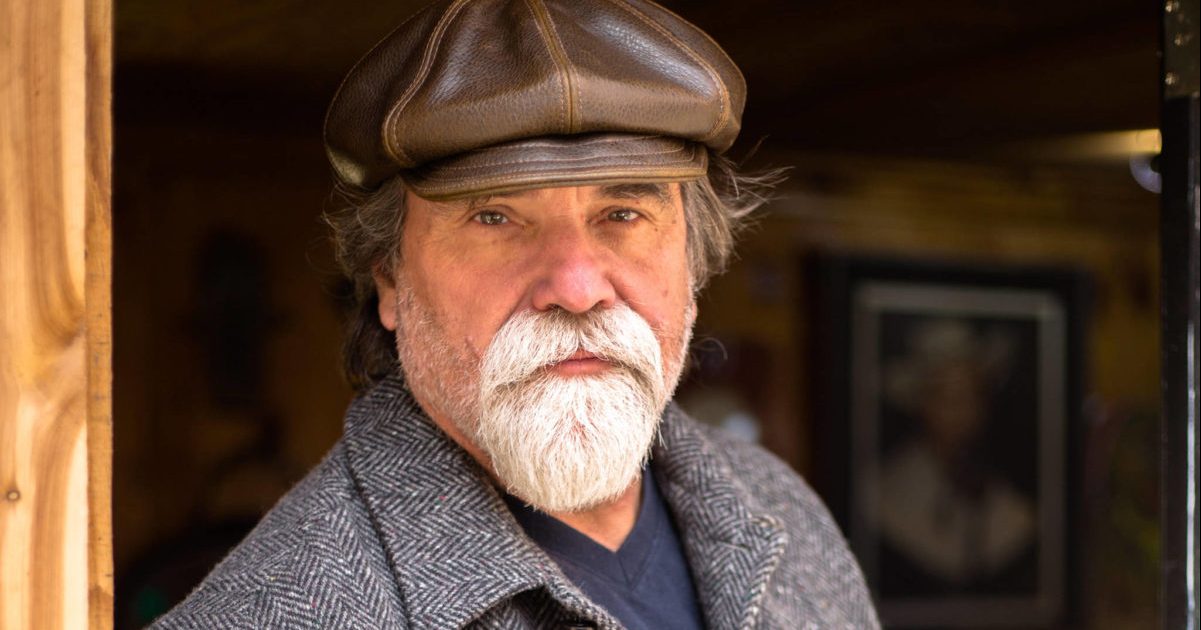
Tim O’Brien’s latest album, He Walked On, explores the many realities and histories of what it means and what it has meant to be American. With his well-known ability to tell a story through song and his less recognized, but equally powerful ability to pick and perform covers, O’Brien shares intimate and intriguing stories including the traditions of the Irish Travellers living in the U.S., Volga German immigrants turned sodbusters, or Thomas Jefferson’s children birthed by his slave, Sally Hemings.

Such stories and topics are not uncommon for O’Brien to write about, but in the wake of the murder of George Floyd and the protests that followed, as well as the Black Lives Matter movement, these songs feel even more topical and personal. His music is often presented with a lightheartedness that settles the listener and reminds them not to take themselves too seriously. And while some of that can still be found here, there is a somber tone that reflects the state of the country today. He’s joined on the album by bassist Mike Bub, drummer Pete Abbott, fiddler Shad Cobb, and vocalist (and fiancée) Jan Fabricius.

In the first of a two-part interview, BGS catches up with O’Brien, our Artist of the Month for July, to discuss the songs from He Walked On. (Editor’s note: Read part two here.)

BGS: The songs on this album speak to a lot of current events and the theme is more “political” than some of your previous work — although I don’t like thinking of human rights issues as being political.

TO: Yeah, they are politics nowadays. I think that the artist’s job is to reflect and respond to what’s going on around you and in your life. I don’t know anybody that creates original stuff who’s not doing that. Of course, this is an exceptional year for that. There’s a lot of things going on that were highly, highly provocative such as the Black Lives Matter movement and the pandemic itself and the way the politics entered into that, which was unfortunate. And then related to that is paying attention to history, the developments of technology, and how it affects society. That’s where songs like “Nervous” came from and they’re not “political,” but they’re kind of a report on the state of humanity.

You’ve often written about your experience in the modern world and talked about technology before but usually with a humorous tone. When I heard “Nervous” and “Pushing on Buttons,” it made me think of “Phantom Phone Call” from Chameleon.

You know, actually, I think one of the saddest things I’ve ever written is “Pushing on Buttons.”

Yeah, that’s what I was getting at. There’s usually a lot of whimsy when you’re talking about modern stuff, but “Pushing on Buttons” is pretty somber.

Yeah, I almost left it off because I thought, “Nobody wants to hear how sad this is.” But I was able to get Chris Scruggs in the studio and said, “I ought to cut this song so let’s make it like a Hank Williams number, if I can.”

The tone on the album felt more serious, in general, than your previous work. Do you feel that way?

Yeah, I suppose so. I don’t know how it will ring with everybody, but I felt like this was the thing to do. The Black Lives Matter movement is another step on a long road of reckoning with our history and the racial divide in this country. When stuff gets thrown up in the air like it did with George Floyd it’s time to look at all that’s been going on from day one and try to make sense of it. I could have written these songs like “When You Pray” and “Can You See Me, Sister?” any time. But it was staring me in the face much more so this year. Whimsy is good and all, but I couldn’t ignore these things.

But, in general, I try to stay light on my feet and that’s more of the tone of “When You Pray, Move Your Feet” which is a pretty happy song in a lot of ways. And I hope that means something. “He Walked On” is like, well, the only way to really get through this is just to try and notice the good. Notice when it’s really good and when you don’t just keep going and try to find it again. So it is sort of a mission statement for living in the United States. You have people doing their various jobs — farming, or trading mules, or coal mining, or looking at a computer — and we’re all kind of looking for the same things. It’s nice to have somebody to share your love with and a roof over your head. It’s nice to help other people find that as you’re going along to help yourself.

Songs like “He Walked On” or “Can You See Me, Sister?” — like a lot of songs that you’ve written — are told from a different perspective than your own life experience. How do you approach writing those stories in particular?

I don’t know. Maybe my age is telling me to look at it in different ways. But I don’t know that I was conscious about trying to write differently. Back working with Darrell Scott, I realized that he had so much personal detail in his songs and it made them more universal. Which is counterintuitive, but I’ve noticed that that’s the case. So, “He Walked On” is about changing your perspective and getting a glimpse of the divine. We’re not always paying attention but about one percent of my time, I wake up and go “gee, look at that” and really appreciate it and really be present and in the moment.

In the case of “Can You See Me, Sister?” it was such a fascinating story. I kind of knew about Sally Hemings and Thomas Jefferson because in the early days of Hot Rize, we played in Charlottesville, Virginia. A bluegrass fan brought us around to Monticello and took us on a personal tour. Jefferson is a really interesting character in American history in so many ways, but you and I can relate to him in that he was a fiddler. He was really interested in old-time fiddling. He played tunes like “Money Musk” and they have his handwritten transcriptions of some of these tunes at Monticello. He was a renaissance man — an artist, a writer — and apparently he carried a pocket fiddle around with him. He had a little mini-fiddle you could put in your overcoat pocket.

So I had known some about him but I recently learned more about the children he had with Sally Hemings. It was a great loss for him when his wife [Martha Jefferson] died. He promised her he wouldn’t get remarried and he didn’t. But he turned to Sally Hemings, who had been a slave at Monticello and was brought to France to nanny his daughter. She birthed at least six of Jefferson’s children and I hadn’t realized until recently that a couple of them passed as white and lived their adult lives in white society.

The decision to have a spoken word introduction to “Can You See Me, Sister?” was interesting. I don’t remember ever hearing one in any of your other songs.

Mike Bub brought it up because when I sent the demos around he heard it and liked it, and then I told him what it was about. He said, “Wow, there’s a lot more punch to it when you know what it’s about.” He said most of the radio listeners wouldn’t know that so he recommended having some kind of explanation. It was a conscious choice and it was interesting to write. I don’t usually  write stage dialogue. I guess I hone it as I go and I get more succinct and more pointed and more efficient with it as I learn. But this was before I ever performed it on stage. I wanted to have the right introduction that would say what needed to be said; no more and no less.

What inspired you to write “See You at the Funeral?”

“See You at the Funeral” is kind of an odd one. It’s about Irish Travellers in America, which is a subset of American society that’s kind of unknown. The song is about the once-yearly reunion in Nashville of the greater clan of the Sherlocks families and their relatives. They have all their funerals and weddings for the year in one week so everybody can be there and then they scatter and go do their own thing. … It’s all the happy parts and the sad parts and the big ball of wax. By the end of that week, you would have a sense of where you come from, who you are, and what’s next. Those rituals are part of what helps us get by. That’s Americana. It’s from a lesser-known part of our history and our society. That is the part that I’m interested in. And if it means something to me, maybe I can make it into something to someone else.

What about some of the covers like “Sod Buster”?

Jan’s family is from western Kansas and her great-grandfather was another type of migrant. Their background is what they call Volga German; they were German farmers that got recruited by Catherine the Great of Russia to farm wheat on the Volga River. Then the politics changed and they were going to have to serve in the Russian army. That’s when everybody started coming to the American plains. The railroads had started and they were advertising for people to move. Her great-grandfather was one of the earliest sodbusters in the late 1800s.

It’s a Bill Caswell song that I just love and I ended up talking to him about it and he said, “Oh, yeah, that’s about my grandfather. He was out there at that time and plowed with a team of horses.” I love Bill Caswell and I love this song. And I wondered why nobody had yet recorded it. So we worked it up and it means something because of Jan’s connection. We go out there sometimes and I really love being out in someplace exotic like that. I grew up where there’s hills everywhere and being on an absolute flat plain with the sky and the grass is an amazing thing.

I’ve always admired how much of a personal connection to all of your music that you have. It all feels very intentional.

John Hartford gave good advice to Hot Rize one time. He said, “You don’t want to get famous doing something you don’t like doing.” So I want to try to aim for the intersection of what people might enjoy and what I’m interested in and it ends up attracting people that think like me. I’m a bit of a bleeding heart liberal, if we got down to it. But I try to mostly put something out that people could enjoy and then maybe give them something to think about and maybe they’ll think poorly of it, or maybe they’ll change. You know, that’s a Buddhist thing. You work towards conscious change. Change and betterment and creativity. You just try to find your opening and hopefully I’ve found a few here.

(Editor’s Note: Read the second half of our interview with Tim O’Brien here.)


Photo courtesy of Tim O’Brien

The BGS Radio Hour – Bluegrass Duets, New & Old

Every week for the past few years, we’ve brought you a radio show, and now podcast, revisiting all the great music recently featured on the pages of BGS. This week, we bring you a special episode for our Duos of Summer series — a musical recap of our 2019 collection of the 22 Best Bluegrass Duos.

APPLE PODCASTS, SPOTIFY

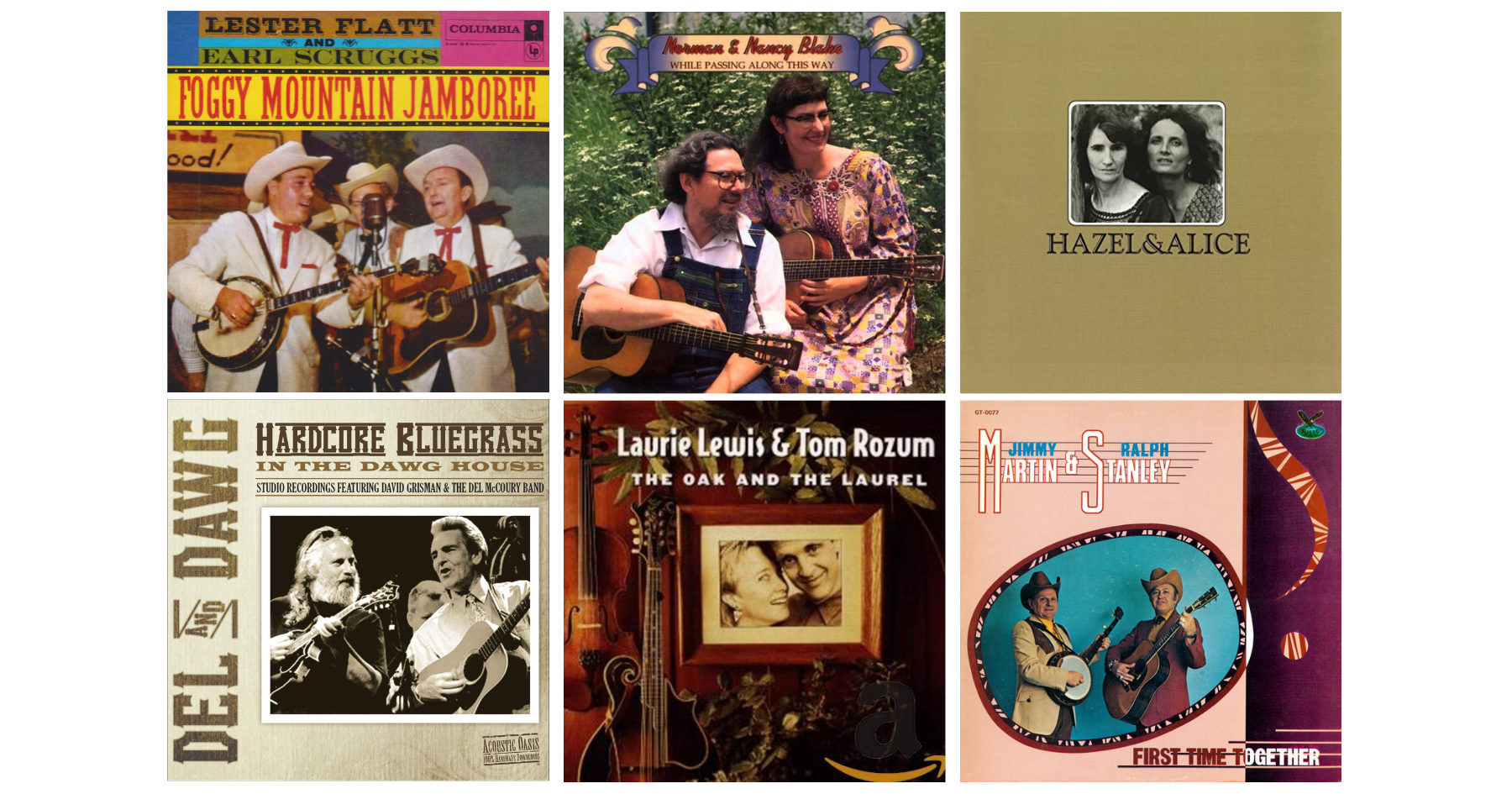
We’re listening to some of these classic duos, and exploring bluegrass’ longstanding and continuing tradition of wonderful duet harmony, be it sibling or otherwise. And while most fans of the genre may recognize names like Flatt & Scruggs or the Monroe Brothers, here you’ll also find newer acts that are following the path laid by those hall-of-famers.

Head to the original story to explore the full list while you listen!

BGS 5+5: Casey Driessen

Artist: Casey Driessen
Hometown: Asheville, North Carolina
Latest Album: Otherlands:ONE

Editor’s Note: Casey Driessen has released Otherlands: A Global Music Exploration, a self-produced travelogue of on-location recordings, short films and essays that documents collaborations with masters of regional music in Spain, Ireland, Scotland, India, Japan and Finland. Otherlands was filmed and recorded between 2019 and May 2020. During this time, proceeds from the Bandcamp sales of Otherlands:ONE will support music and folk arts rural communities in West Bengal, India.

Which artist has influenced you the most … and how?

I’m going to give some big props to fiddler Richard Greene, by way of Darol Anger. Back in the mid-1960s, while playing in Bill Monroe’s band, Richard invented a percussive bowing technique on the fiddle/violin called “chopping.” Darol Anger was the first person to learn this from Richard, and I then pulled parts of the technique from Darol. Chopping has been an essential part of my musical trajectory and has allowed me to fit into all sorts of exciting musical situations.

What’s your favorite memory from being on stage?

Two polar opposite ones just appeared in my mind simultaneously… 1) Playing a daytime set at the Telluride Bluegrass festival in a trio with Béla Fleck and Bryan Sutton, staring out at the gorgeous Rocky Mountains, when all of a sudden I hear amazing vocal rhythms joining us, and Bobby McFerrin appears by my side. I couldn’t stop smiling. 2) Playing an evening set with Steve Earle & the Bluegrass Dukes (Tim O’Brien, Darrell Scott, Dennis Crouch) when a heckler starts asking for “Copperhead Road.” It’s in the set, and we’ll get to it, but that’s not good enough. Heckles continue. Steve gives him the finger. A full beer can sails through the air (mind you, we’re all around one mic), hits the stage, bounces and hits Dennis’ bass. A fight breaks out in the audience. The guy is taken away. The next thing thrown on stage is a bra.

What other art forms — literature, film, dance, painting, etc — inform your music?

I’m very visual and find inspiration in painting, drawing, and sculpture. The forms, shapes, patterns, lines, colors, and composition all give me ideas about how to approach my instrument or music.

What’s the toughest time you ever had writing a song?

I’ve never written a song, only instrumental compositions. So, I suppose the toughest time is all the time. That said, no particular composition sticks out to me, but the process of applying compositions to a live looping setup (when I was doing my Singularity project) was quite challenging. There are so many parameters to work within, from effects pedal limitations, physical coordination to pressing buttons with your feet while singing and playing, how to create engaging live looped arrangements from song to song without becoming repetitive or boring, and keeping a solo set interesting for yourself. They were some tough puzzles to solve.

If you had to write a mission statement for your career, what would it be?

I think either “A global music exploration in red shoes” or “The fiddle can’t be on everything?…I’d like to try.” I’m hungry for experimentation and inspiration from unlikely sources.


Photo credit: Arthur Driessen

Raised Along the Country Music Highway, Brit Taylor Was Bound for Nashville

An exquisite singer who is undeniably country, Nashville singer-songwriter Brit Taylor is taking a stand for herself in her debut album, Real Me. It’s an intriguing collection of original songs that position the East Kentucky native as one of Americana music’s most promising artists. After a number of setbacks, ranging from the demise of a marriage to the end of a publishing deal, she contacted producer Dave Brainard to talk about a fresh start. Around the same time, she met Dan Auerbach, who encouraged her to sound like a traditional country singer, even though she’d been told for years that nobody was buying that kind of music anymore.

Emerging from a cloud of depression, Taylor channeled her emotions into song. Then she released Real Me in November, staking her claim as an artist that proudly honors her roots without sounding stuck in the past. Songs like “Waking Up Ain’t Easy” and “Broken Hearts Break” echo her true country influences, too. Talking by phone from her farm, with a few goats roaming nearby, she told BGS about the journey.

BGS: You’ve said that your family wasn’t very musical, but was there music always around as you were growing up?

Taylor: Yeah, I grew up in Eastern Kentucky, right by the Country Music Highway, US 23. So, the culture of country music is super rich around Eastern Kentucky. I grew up singing in the Kentucky Opry Junior Pros in Prestonsburg, Kentucky. I was always singing and playing music every weekend of the summer, and through the Christmas season.

What were those shows like?

It’s kind of like something you would see in Branson. Back when I was a kid, it was booming and tourism was really rich around there. We would sell out shows every Christmas and have to add matinees. I felt like I was in the big time when I was a kid! [Laughs] It’s a really nice theater, too. I saw my first concert there, and it was George Jones. I played there for 10 years, and then I moved to Nashville and started playing tiny bars! It was such a shock, The Junior Pros opened up for the older members who were in the Kentucky Opry. What I was in was just kids. I don’t think anybody was older than 18.

When did you learn to play guitar?

I learned to play guitar in my senior year of high school. I had a vocal coach and I was taking piano lessons. He knew I wanted to move to Nashville. I was very [eager to move]! I was always playing by ear, and I was always frustrating him, because I hated to read music. One day he said, “How are you gonna pack this piano around Nashville?” And I was like, “Well, I don’t know.” He said, “You’re not going to make it in that town unless you learn how to play guitar.”

And I went home and I was like, “Mom, you have to buy me a guitar. Now.” [Laughs] We went to the music store and she didn’t know anything about music. The guitar was a hundred bucks, or two hundred bucks, and my mom said, “I am only spending $50 on this guitar.” I told the guy at the cash register that I would sing him any song that he wanted if I could have that guitar for fifty dollars. I sang him a Fleetwood Mac song and he let me buy the guitar.

You had to overcome a lot of setbacks to get where you are. How did you stay focused and inspired to keep going?

I don’t think I ever thought about the option of quitting. It’s always just been there, that this is what I want to do. There’s never been any other thought. It was hard at times, but it was never like, “I want to do something else.” This is just what it’s always been. I don’t picture life any other way.

What kind of lessons did you learn from your family? Were they good at teaching you a work ethic, focus, and dedication?

Oh yeah. My dad’s an entrepreneur and he was always going against the grain, working for himself. A lot of people don’t understand that, but I came from a family that understood being an entrepreneur and chasing your dreams at all costs. He was also a martial arts instructor and that’s how he got started. So, he always taught me how to fight, whether it was in a karate match, or in real life.

Did you take lessons in martial arts as well?

I did. Dad had me whippin’ ass since I was 4. [Laughs]

How much of this dream you had was about songwriting as well? How important was it to develop your voice as a songwriter?

Oh, I wrote my first song when I was 13. It was terrible, but it came so natural. The structure came natural. I think I had listened to so much country music at that point, it had to come natural. Yeah, I moved to town to write songs. I wanted to be an artist, too, but I definitely wanted to write my own songs. It’s always been a dream to have other people record my songs as well.

Who were some of your heroes when you moved here?

Patty Loveless. I love her. She’s one of my favorite artists. Darrell Scott, and lots of songwriters, too. I grew up listening to a lot of Elvis and oldies. I sang a lot of Patsy Cline and Loretta Lynn growing up. The Judds, Dwight Yoakam, all those Kentucky artists.

Were you listening to the words even back then?

Every single word. My dad’s favorite story to tell is about when we were on the way to Myrtle Beach. I was always my dad’s little sidekick and I would sit in the front seat while my mom and my brother would nap in the back. We were listening to Sam Cooke. The line in the song was, “My baby’s gone and she ain’t coming back.” And my dad called me his baby. I was 4 years old, and I think I thought that song was about the man’s daughter. Dad said he looked over and saw me crying, and he said, “What’s wrong, baby?” And I said, “Why won’t his baby come back to him, Daddy?” [Laughs] I’m just sitting over there bawling, listening to Sam Cooke, and it’s not even about what I thought it was about, but it hit me.

Did you go to college in Nashville?

Murfreesboro. I moved here to go to school for music business at MTSU.

What do you remember about those early days, finally being so close to Nashville?

Oh my gosh, it was the best time of my life! I felt like such an adult. I’ve always been a little ahead of myself, I think, and just being on my own, getting to make my own decisions because I’m really independent, was just the best time time in my life. I had already started writing songs and co-writing songs, and I was just ready.

I moved here when I was 19 and I remember that feeling of excitement. It feels like the whole world is in front of you.

Oh, it does. That’s the cool thing about living on the farm, too. I remember when I would drive from Murfreesboro to Nashville, or Kentucky to Nashville, seeing the skyline of Nashville is so exciting! It’s just glorious! It still makes my heart drop because I’m not in it every day. So when I get to drive to town, it’s still really special.

Are you living on a farm now?

Yeah, I live out in Mount Juliet, outside of Nashville, and I’ve got a little over three acres. And I adore it! I don’t know if it’s because I grew up this way, but there’s some kind of peace about it when you can be out in the woods. I’m an animal lover. My next thing I want to get, with these goats, is these miniature donkeys. [Laughs] And you can’t really have those in Nashville.

Where did that love of animals come from?

Oh, I’ve always had animals. My dad’s a big animal lover. And his dad had llamas, emu, ostriches, donkeys, horses… I mean, he was always getting some kind of crazy animal. And apparently I’ve taken on that role in the family.

I think animals can bring comfort in stressful times. Is that the case for you?

Yeah, I can’t look at these little Pygmy goats and not smile. They’re just hilarious! And they make me happy. The music industry is full of ups and downs, and life in general is full of ups and downs, and it’s so easy to walk outside and be grounded in nature. It’s just being in nature and watching the animals running around, because they don’t have to think about anything. They’re just hollering for some more hay.

When you listen to Real Me now, what goes through your mind?

I’m grateful. I just listened to it and I’m grateful. I’m just as much in love with this record as I was in the process of making it. I still listen to it and get butterflies.


Photo credit: David McClister

MIXTAPE: High Fidelity’s Traveling Music

While High Fidelity is known for representing a specific niche in the bluegrass music landscape from the 1950s and early ‘60s, each member brings a diverse palate of musical tastes and styles. This playlist is a fine example of some of the diverse listening one might hear on our travels. Some of us remember making mixtapes of our favorite songs and tunes in the days of the cassette. Well, our van still has a cassette player in it! I hope you’ll enjoy listening to some of the music that inspires us, and maybe I should run off a tape of this for our next trip! — Jeremy Stephens, High Fidelity

Flatt & Scruggs – “Earl’s Breakdown”

This is probably the first song that really lit a fire under me to love and play bluegrass music. I first heard it on a red 8-track tape. I was absolutely drawn to Earl’s banjo playing and the famous section of the song where he tunes the second string down a whole step and then brings it right back up. Honestly though, the part of the tune that tore me up and still tears me up is Everett Lilly’s mandolin break. When I first heard that break, I thought it was the most incredible thing ever. Still is the best 15 seconds of mandolin playing on record. — Kurt Stephenson

Don Reno – “Coffee Cup”

I love “Coffee Cup,” because it showcases Don Reno’s banjo playing and creativity to the max. Though Reno didn’t write the song, he had a masterful arrangement of it. I believe it demonstrates nearly every signature technique that is unique to Don Reno. Each solo (they’re all banjo solos) is an adventure, and a fun one at that! — KS

Lonesome River Band – “Say I Do”

I always credit Lonesome River Band with sparking my interest in contemporary bluegrass sounds. My first LRB album was One Step Forward and my favorite song on the album is “Say I Do.” I love the groove, the harmonies, the chord structure, and especially the musical groove. Kenny Smith plays an incredible and beautiful guitar solo, which is followed by a banjo solo from Sammy Shelor. That particular banjo solo taught me so much about dynamics; especially in regards to coming out of a solo and leading in to the vocal. — KS

Reno & Smiley – “Country Boy Rock ‘N Roll”

I’m a country boy and I like to rock and roll, so this song fits. I remember picking up the album that included this song at a flea market when I was about 12 or 13, and it was my very first introduction to Reno & Smiley. — Daniel Amick

Tim O’Brien – “Wind”

I like this song because it’s a good song. It speaks to my soul. We have wind at my house. — DA

Punch Brothers – “Boll Weevil”

As a farmer sometimes I deal with crop failure, bugs, and drought. The goal is of course to problem solve and see beyond the failures to the success just on the other side, but seeing this as a story from the bug’s perspective is pretty interesting. — DA

Jim & Jesse – “Did You Ever Go Sailing”

The In the Tradition album by Jim & Jesse is the first album I remember consciously listening to, the first instance I remember understanding what an album was and what it meant to be an artist. When I would go to 3-year-old preschool, I listened to this on cassette continually and just wore the tape out. My first favorite song was this one. I still love everything about that album and this song! Glen Duncan’s fiddling, Allen Shelton’s banjo playing, and of course Jesse’s mandolin playing are just the cream of the crop, with the added bonus of Roy Huskey Jr. on upright bass. Jim is featured here singing lead on the verses and jumping to harmony on the choruses, making for an all-around awesome arrangement! — Corrina Rose Logston

Red Smiley & the Bluegrass Cut-Ups – “It’s Raining Here This Morning”

Tater Tate’s fiddling has been a huge influence on me, and it’s something I go back to over and over again for inspiration. This particular cut features Tater front and center just wearing it out! I love a song in the key of F like this, and this cut is just exceptional. Red Smiley’s flawless lead singing is like golden drops of honey. Billy Edwards’s playing out of open F on the banjo is the epitome of my happy place. It just doesn’t get much better than this for me! — CRL

Sarah Siskind – “Lone Tree”

It might surprise fans of High Fidelity that most of my “newer” music listening is outside the realm of traditional bluegrass. In fact, outside of the High Fidelity setting, my own solo artistry and songwriting is like a musical amalgam drawn from many diverse sources throughout my life. I love Sarah Siskind’s artistry and draw so much inspiration from her music. It’s hard to pick favorites but this particular song is pretty high up on the list for me! And, fun fact, Jeremy Stephens was staying with Sarah’s mom and dad the year that Jeremy and I met each other at SPBGMA in 2009! — CRL

Homer & Jethro – “Tennessee, Tennessee”

I knew I wanted to include a Homer & Jethro number, but I didn’t know just which one. I’ve always admired their ability to integrate belly laugh-inducing lyrics to some serious mandolin precision. “Tennessee, Tennessee” is one that I’ve always wanted me and Corrina to cover. That last verse makes me lol every time. — Vickie Vaughn

Tim O’Brien & Darrell Scott – “Walk Beside Me”

This is the opening song to my desert island record. I just need one and this record, Real Time, is IT. That GROOVE, though. I’ve listened to this song at least a hundred times and the repeating mandolin hook paired with the mandola toward the end of it makes me feel like I. CAN. DO. ANYTHING. Thanks for that confidence, Tim & Darrell. — VV

Jim Oblon (with Larry Goldings & Jim Keltner) – “Copperhead”

I’ve known Jim for a while. I met him here in Nashville before I even knew what he was musically capable of. Friends later told me that he was Paul Simon’s drummer. Now we’re old friends and I try to be cool when I see him now and again at the gym and I try to refrain from nerding out over yet another musical discovery I had while listening to his records. Get a load of this RIFF on “Copperhead.” Not showcased on this recording is Jim’s incredible vocal prowess. Make sure you take time to find a song of his to hear that. You’re welcome. — VV

Kilby Snow – “Close By”

I’ve loved the autoharp since my Mamaw got me one for my sixth birthday from the secondhand store she worked at. I didn’t start playing it seriously until I saw my banjo mentor, Troy Brammer, playing autoharp when I was in my early teens. I’ve gone quite a few years without playing it seriously, but since we’ve all been shut in at home, I’ve been playing autoharp almost exclusively around the house for a couple months now. My favorite of all the autoharp players is Kilby Snow from Grayson County, Virginia. He played autoharp left-handed upside down, and did these open-bar “drag” notes to make it sound like the roll on a five-string banjo. This is a great Bill Monroe number played by Kilby on the harp, and it’s one I’ve found myself playing quite a bit lately. I learned to play his style right handed from his son Jim when I visited him in Oxford, Pennsylvania, in 2006. — JS

United Sacred Harp Convention – “Sherburne 186”

I first heard sacred harp shape-note singing on a 78 RPM record at Kinney Rorrer’s home. Kinney is a serious record collector and has been a mentor to me in the history of old time music. After first hearing the singing on that 78, I was hooked, and I couldn’t get enough of Sacred Harp. I learned to read and sing the shape notes and listened to many recordings of Sacred Harp conventions. Of all my listening, this recording of this tune has stood out to me, and I wanted to include it here. Hope y’all like it! — JS

Reno & Smiley and the Tennessee Cut-Ups – “Mountain Church”

There is no set of recordings that I have returned to over and over for more than 20 years, except for Reno & Smiley’s 1953 and early 1954 recordings. The tone, feel, playing, and singing of these 24 sides sum up everything that I really love about Reno & Smiley’s corner of bluegrass music. This era of their work has greatly informed what I bring to the table stylistically with High Fidelity. “Mountain Church” is one of my favorites of Reno & Smiley and we perform it occasionally in High Fidelity. — JS


Photo credit: Amy Richmond

Avi Kaplan Comes Full Circle to Folk Roots on Solo EP, ‘I’ll Get By’

Growing up near the Sequoia forests of Northern California, Avi Kaplan gravitated toward the low-key albums by John Denver, Bill Withers, and Simon & Garfunkel in his parents’ CD collection. But in time, the term “low-key” took on a whole new meaning as his baritone voice dropped dramatically upon starting high school. Suddenly possessing a clear, thundering bass range, Kaplan discovered a newfound confidence and rare vocal ability that ultimately led him away from the dream of becoming a choral director to joining the a cappella group Pentatonix.

After six years as a member of that Grammy Award-winning group, Kaplan parted ways with Pentatonix in 2017 and essentially went off the grid for a year. Now living in a cabin in the woods outside of Nashville, he is ready to reconnect to his roots — as he did on his new album, I’ll Get By. With a speaking voice that’s as resonant as you’d expect, Kaplan caught up with BGS by phone.

BGS: I’ve read that you had an early interest in folk music, so I was curious to know if you’d consider this is a full-circle moment, coming back to the music that you grew up loving?

AK: Oh yeah, absolutely. I grew up listening to it and it’s always the music that I’ve listened to throughout my life. And it’s always the music that I’ve written as well. I had a departure when I went and did the Pentatonix thing, but it definitely is a full-circle thing. It’s really surreal for me.

You released “Change on the Rise” about a year ago and it sent you on the path to this record. Why did you choose that song to usher in this stage of your career?

In the past I’ve written a lot of songs that are softer and maybe on the prettier side. A little fire, a little less power, and more about the soft, serene beauty of folk music. I really wanted to come back with something that just had a little more fire in it, because it was really reflective of where I was in my life. I felt like I really got my fire back. I didn’t want to come back with something people had already heard from me. Even then, people hadn’t heard much from me in general, when it came to a solo voice, or my voice out of its lower register. So I wanted to come back strong.

What was on your mind when you wrote “I’ll Get By”? That seems like an anthem of this record.

Thanks, man. Whenever I write a song, I don’t listen to it for a while. Then I come back and listen to it again so I can hear it on fresh ears, without the critical ear. When you’re in the writing situation, you’re criticizing everything you’re doing, so I had to get myself out of that. And when I listened to it again, I got emotional. It was something that really felt special to me. It felt really strong to me. It felt like it was conveying exactly what I was going through at that time, and hopefully something that would help other people get through the same type of thing.

On another song, “Chains,” there’s a lyrical reference to needing peace, and phrases similar to that. Were you needing peace and quiet to keep on going?

Oh yeah, absolutely. I was living in L.A. for about seven years and I’m just not a city guy in general. But when I wasn’t in L.A., I was touring non-stop. I was always going, so I really feel like I lost myself and I lost touch with the things that I loved the most – hanging out with my family, being in nature, all that stuff. … It was about a year after I left the group that I really started delving into writing. I wanted to do some healing first, but even through that, I was still healing just from a lot of stuff I was going through. So yeah, absolutely I was in that spot.

What did that healing process look like for you? What were you doing that year?

Well, I left the group and I just took some time to do the time to do the things that I’ve been longing to do. So I camped a bunch. I moved out of L.A. and moved into a cabin in Tennessee. But before that, I went back out to the Sequoias, where I’m from, and did a camping trip there. I did a lot of time in the Eastern Sierras and the Mojave Desert, and up in the mountain lakes.

I also went to Holland. I went to Germany and did a bunch of nature stuff. Then I went to Israel and I went hiking out there as well. So, I kind of went all over and just got away from everything as much as I possibly could. I just sought out to heal and find myself again, and just do work on myself. It was really important at that time. It was something that I needed more than I even knew.

Why did Tennessee become the place you ultimately settled?

I knew that I wanted to do music still. And really Nashville is the only music city where you can drive like 15 minutes outside the city and be in the country. And that’s where I wanted to be. That was a huge reason and also my sister lives out here. Also, with the music that I’m doing, I would say it’s more of a hub than I would say L.A. or New York anyway.

So, all signs pointed that way. I never had a doubt in my mind either. It was like, “OK, now it’s time for me to move out to Tennessee. I need to get a cabin out there and be in the forest.” It was all very clear to me what I needed to do. I didn’t exactly know how I was going to get into a place where I was good again, but I knew that’s where I needed to go to do it.

You mentioned earlier that you’re singing in a different part of your range on this record. But not a lot of people can sing as low as you. When did you realize you can do something that very few people can do?

It was my freshman year of high school. I joined the choir when I was in eighth grade but I was a baritone back then. And over that summer between eighth grade and freshman year, my voice changed big time. So I remember coming to the choir room and my choral director was extremely excited to hear my voice because it’s hard to find basses and that’s very much needed in choir. So he was a huge inspiration for me and a huge advocate for me. He helped me realize how different it was and how I could utilize it. I owe a lot to him, definitely.

It sounds like music education in your school is a cornerstone of your development.

That’s huge for me. Now I run a summer camp for high schoolers based around harmony and a cappella, music, songwriting, and all that, because that was such a huge inspiration to me. It changed the course of my whole life. It’s always been something that’s been important for me. Before I joined the group I was on track to be a choral director. I was also studying opera, but being a choral director was the dream, just because it had such an impact on me.

Was country music an influence for you growing up?

I didn’t listen to actual country, like Garth Brooks and that type of thing, but I loved bluegrass. I loved John Denver. Bluegrass is more of what I listened to when I was younger. And the Sons of the Pioneers, old-school country. There was actually a band in my hometown that was very similar to them called that Sons of the San Joaquin that I listened to a lot.

What was your entrance point into bluegrass?

I really started delving into it when I was a bit older. What’s funny is that I got on the Bluegrass Situation’s YouTube channel and I just went down a rabbit hole. I was blown away by some of the newgrass that was going on, and by some of the old-school. I think one of my favorite videos that you did was the one of Tim O’Brien. That blew me away. I love it so much! I would watch it all the time.

Then I started getting into Hot Rize, and an album with Tim O’Brien with Darrell Scott, and then I got into Elephant Revival, then Mandolin Orange, and I kept going down and down and down. I really delved into it and fell in love with it even more because it felt like my roots. I had grown up with that kind of thing, but I had gotten into more of the contemporary modern folk with Iron & Wine and Bon Iver.

I’m a huge fan of bluegrass and I tell people all the time that bluegrass musicians are world-class musicians. They are truly virtuosic. So unbelievably talented. It’s amazing to hear music that I love with such virtuosic musicians. That is something that is always very inspiring to me – a musician’s musician, someone who is really amazing at their craft. And that is definitely what bluegrass is about.

I wanted to ask about auditioning people for your band. What are you looking for when you pick a band?

I’m always looking for vocals. Harmonies. That’s the most important thing to me. Especially with my music, it’s not the toughest stuff to do, instrumentally speaking. With this album, the drums are actually more complex than I thought they were going to be, but at the end of the day, it’s nothing crazy. The harmonies are really where I’m looking for the strength. Yeah, that’s it – harmonies, 100 percent, all the way.


Photo credit: Bree Marie Fish

LISTEN: Darrell Scott, “Fool About You”

Artist: Darrell Scott
Hometown: Nashville, Tennessee
Song: “Fool About You”
Album: Darrell Scott Sings the Blues of Hank Williams
Release Dates: March 13, 2020 (single); April 24, 2020 (album)
Label: Full Light Records / Soundly Music

In Their Words: “I remember this song from early childhood — it was one my dad sang at home. Hank did not write it, but it was fun, it grooves, and it talks about flop-eared mules and hogs rooting under a fence… what more do you want out of a song?” — Darrell Scott


Photo credit: Gabriel Scott

WATCH: Darrell Scott Reminds “It’s A Great Day To Be Alive”

Song sorcerer and musical mage Darrell Scott is celebrating autumn with a refreshed rendition of his ever-popular song, “It’s A Great Day To Be Alive.” In a nod to his acoustic roots, Scott recorded a bluegrass version of the hit, which has been covered by many artists in country, Americana, and bluegrass. In October, he released the official music video — depicting fall festivities like hay rides, a corn maze, and other images of the season — which, as he tells it, was actually inspired by a surprising collaboration.

“I found that a local Nashville corn maze (Honeysuckle Hill Farms) wanted to put my image and song ‘It’s a Great Day to be Alive’ into its corn maze design this fall,” he explains. “And since I had never made a video for the song, and since the song’s message is as needed as ever, we decided to make a video with great help from family and friends. I love the result.”

Feel the warmth of autumn through this music video; watch right here on BGS.


Photo courtesy of the artist.