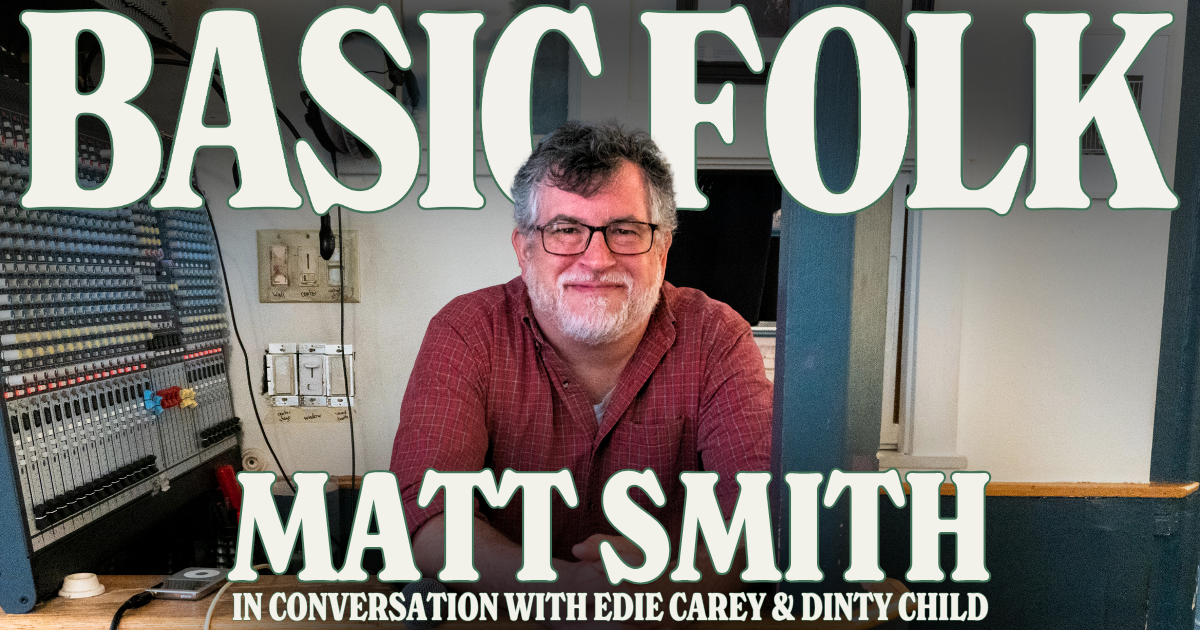
Matt Smith is a living legend with his unbelievable 30-year run at Club Passim, the historic folk venue nestled in a Harvard Square basement. Currently in the role of Managing Director at Passim, Matt is the most passionate music lover I know. He has used his platform at the club to help establish artists like Lori McKenna, Anaïs Mitchell, Lake Street Dive, and so many more. I met Matt while working as a student at WERS 88.9FM, where he brought fantastic shows to a listening room filled with people who were clamoring for honest music in an intimate space. He’s been a very good friend and mentor to myself and thousands of musicians since he began his tenure at the club in 1995.
In honor of Matt’s 30th anniversary at Passim, we brought two longtime friends on the pod to talk to him about his role in the Passim community – and beyond. Musicians Edie Carey and Dinty Child join us in conversation with Matt; he shares advice he would give his younger self, we chat about what a vacation without music would look like, and his incredible memory. That memory is tested in our lightning round where he answers Passim trivia (almost 100% correctly). There’s also a discussion about what Matt is most proud of in all his years at the club: the campfire. festival, which takes place every Memorial Day and Labor Day weekends featuring sets in-the-round of mostly unknown new acts. I would imagine if you’re listening to this episode of Basic Folk, you either know Matt or Club Passim. Hello to all our friends and I hope you enjoy this window into one of the best people we’ve ever known: Matt Smith!
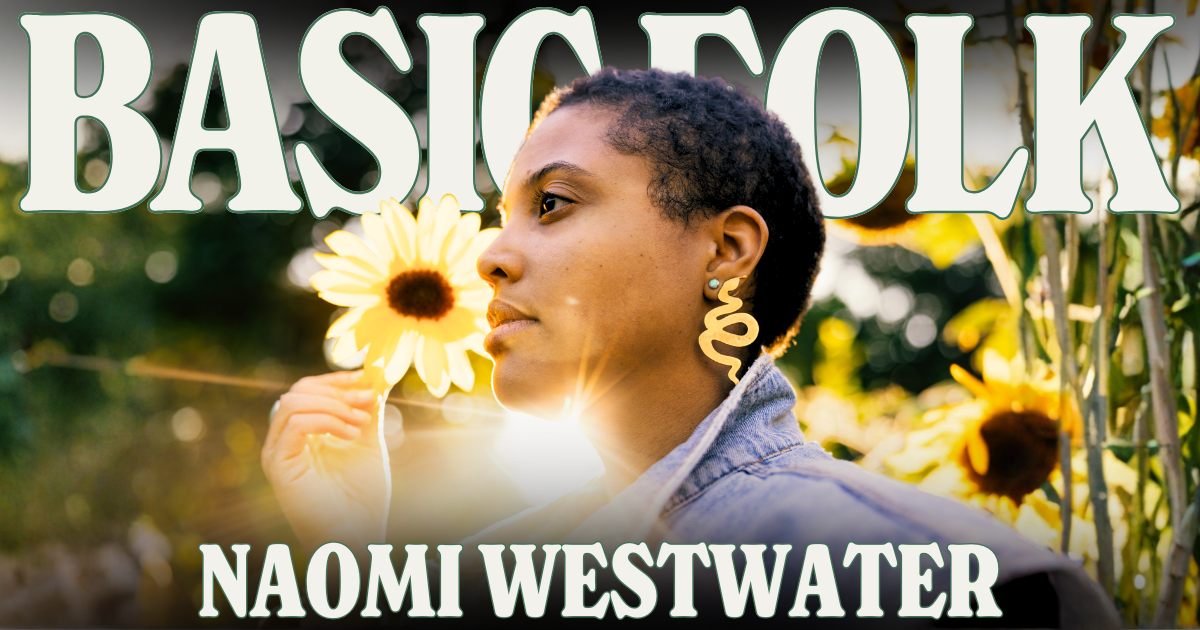
Something you might notice about Boston musician Naomi Westwater is that they have both sides of the brain on lock. They are very good at community organizing, grant applying, advocating, and other “left-brained” activities. However, they are also a creative, deeply spiritual, open-hearted person, traits typically associated with the right brain. That’s not always something that goes hand-in-hand, but it is a beautiful thing when it does!
Westwater, who identifies as queer and Black-multiracial, grew up on Cape Cod in Massachusetts, where they never felt like they fit in. Thanks to their parents, there was a lot of music being played: reggae, jazz, funk, classic rock and ’70s feminist folk. There was always a deep connection with nature, which plays into their spiritual practice and their songwriting, two areas they previously kept separate.
On their album, Cycle & Change (released May 9, 2025), Naomi made an effort to fully embrace her identity as a songwriter and a witch. She shares, “Each song ties back to its seasonal context, weaving a story that spans spring’s hopeful beginnings, summer’s vibrancy, autumn’s introspection, and winter’s quietude…” Right in the final stretch of preparing to release the album, all these very hard things happened: the sudden loss of Naomi’s father; they went through a divorce; and they relocated. It was as if, with the album, they had created the blueprint for remaining grounded during these challenging life changes. We get into all of this on Basic Folk, as well as navigating self-advocacy while struggling to get their endometriosis and adenomyosis diagnosed and treated and the impact their father’s death had on their creativity.
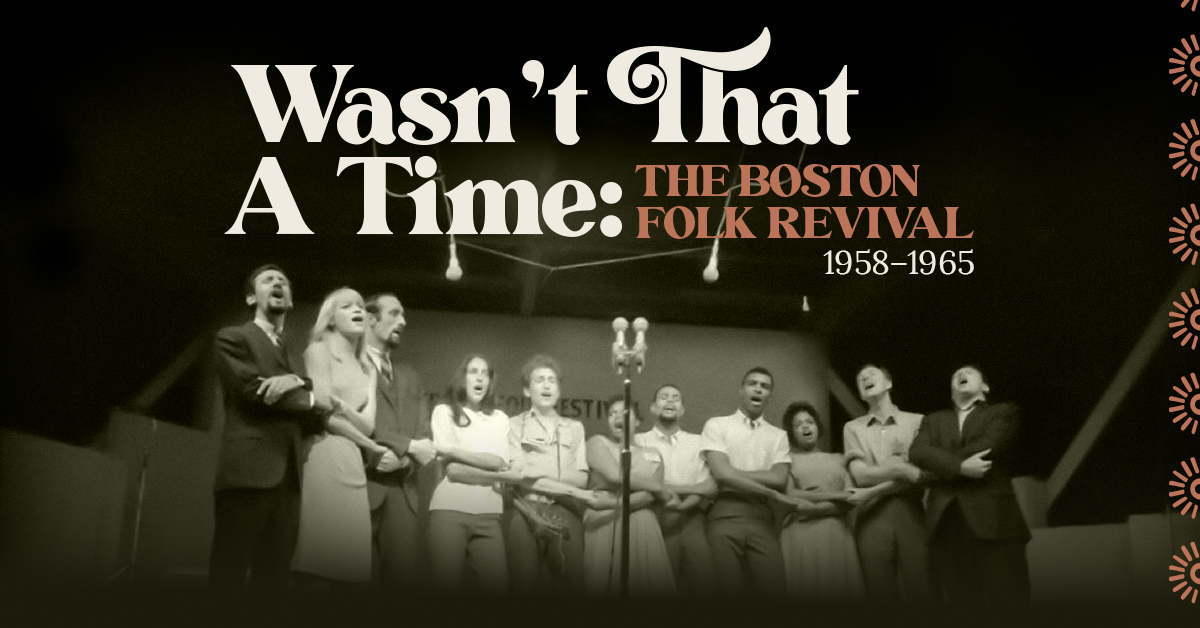
Editor’s Note: On September 27, 2025, the Folk Americana Roots Hall of Fame in partnership with the Bruce Springsteen Archives and Center for American Music held a collaborative symposium entitled Wasn’t That A Time: The Boston Folk Revival 1958-1965. Over the course of the day, attendees at the Arrow Street Arts Center in Cambridge, Massachusetts, enjoyed sessions and panels on such subjects as Club 47, Joan Baez, Bob Dylan at Newport Folk Fest, a conversation with Peter Wolf, and much more. The symposium programming was captured and filmed, and over the last few weeks we’ve shared select sessions with our audience right here on BGS. We hope you’ve enjoyed learning more about how Boston was at the epicenter of the folk revival in the ’50s and ’60s.
Speakers: Deana McCloud (moderator), Tom Paxton, Ralph Jaccodine, Ellis Paul, Jim Brown
About the Video: After the Folk Revival era, how has “folk” changed? What were the pivotal moments and artists who influenced these changes, while continuing the traditions of folk? What do you see as today’s folk scene and why is it still relevant?
“… Sadly, this is our last panel of the day. I say ‘sadly,’ because I’ve enjoyed and learned so much today and I hope all of you have, too. I hope that if we do this again that you all will come again, because it’s been such a great day for this community.
“Our final session today is on ‘Post-Revival Folk’ and it will be moderated by Deana McCloud and she’ll be speaking with Ralph Jaccodine, Ellis Paul, Tom Paxton, and Jim Brown. Enjoy!” – Casey Soward, President and CEO of the Boch Center
Editor’s Note: On September 27, 2025, the Folk Americana Roots Hall of Fame in partnership with the Bruce Springsteen Archives and Center for American Music held a collaborative symposium entitled Wasn’t That A Time: The Boston Folk Revival 1958-1965. Over the course of the day, attendees at the Arrow Street Arts Center in Cambridge, Massachusetts, enjoyed sessions and panels on such subjects as Club 47, Joan Baez, Bob Dylan at Newport Folk Fest, a conversation with Peter Wolf, and much more. The symposium programming was captured and filmed, and over the course of the next few weeks we’ll be sharing select sessions with our audience right here on BGS. Tune in and enjoy learning more about how Boston was at the epicenter of the folk revival in the ’50s and ’60s.
Speakers: Bob Santelli (moderator), Elijah Wald, Douglas Brinkley, Jeannie Brand, Court Carney.
About the Video: When Bob Dylan traded his acoustic guitar for electric at the 1965 Newport Folk Festival, he ushered in a shift to the traditional folk scene. How did the audience and his fellow performers respond, and why? How did this change folk at the time and continue to influence the genre?
“Continuing the series from our Symposium, we tackle one of folk music’s defining moments: Dylan going electric at Newport ’65. What followed changed everything. This panel brings clarity, context, and insight to a moment that continues to shape American music.” – Casey Soward, President and CEO of the Boch Center
Editor’s Note: On September 27, 2025, the Folk Americana Roots Hall of Fame in partnership with the Bruce Springsteen Archives and Center for American Music held a collaborative symposium entitled Wasn’t That A Time: The Boston Folk Revival 1958-1965. Over the course of the day, attendees at the Arrow Street Arts Center in Cambridge, Massachusetts, enjoyed sessions and panels on such subjects as Club 47, Joan Baez, Bob Dylan at Newport Folk Fest, a conversation with Peter Wolf, and much more. The symposium programming was captured and filmed, and over the course of the next few weeks we’ll be sharing select sessions with our audience right here on BGS. Tune in and enjoy learning more about how Boston was at the epicenter of the folk revival in the ’50s and ’60s.
About the Video: Joan Baez first played Club 47 when she was 17 and performed there every Tuesday night until her career took off at Newport Folk Festival. How did this shift from local coffeehouse performer occur, who and what were the pivotal influences on Joan and her career, and how do music archaeologists study her career?
“This panel on Joan Baez is one of the richest conversations we hosted at our September Symposium – a panel that captures Joan Baez’s artistic legacy through the voices of people who’ve both lived and studied her story up close. It’s smart, emotional, and full of perspective you won’t hear anywhere else. We’re excited to share it with BGS readers.” – Casey Soward, President and CEO of the Boch Center
Editor’s Note: On September 27, 2025, the Folk Americana Roots Hall of Fame in partnership with the Bruce Springsteen Archives and Center for American Music held a collaborative symposium entitled Wasn’t That A Time: The Boston Folk Revival 1958-1965. Over the course of the day, attendees at the Arrow Street Arts Center in Cambridge, Massachusetts, enjoyed sessions and panels on such subjects as Club 47, Joan Baez, Bob Dylan at Newport Folk Fest, a conversation with Peter Wolf, and much more. The symposium programming was captured and filmed, and over the course of the next few weeks we’ll be sharing select sessions with our audience right here on BGS. Tune in and enjoy learning more about how Boston was at the epicenter of the folk revival in the ’50s and ’60s.
Our first installment focuses on the origins of the folks scenes in Boston and Greenwich. Watch above, learn more below.
“Origins of Boston and Greenwich Folk Scenes”
Speakers: Melissa Ziobro (moderator), Mitch Greenhill, Jim Brown, Jim Rooney, Tom Paxton
About the Video: “Recorded at the Wasn’t That A Time: The Boston Folk Revival 1958-1965 symposium presented by the Folk Americana Roots Hall of Fame, ‘Origins of Boston and Greenwich Folk Scenes’ traces the beginnings of the American folk revival through the voices of those who lived it. Moderated by Melissa Ziobro, curator at the Bruce Springsteen Archives and Center for American Music, the panel features Jim Brown, Jim Rooney, Mitch Greenhill, and Tom Paxton in a wide-ranging conversation about the artists, venues, and cultural currents that gave rise to one of the most influential movements in American music.” – Casey Soward, President and CEO of the Boch Center
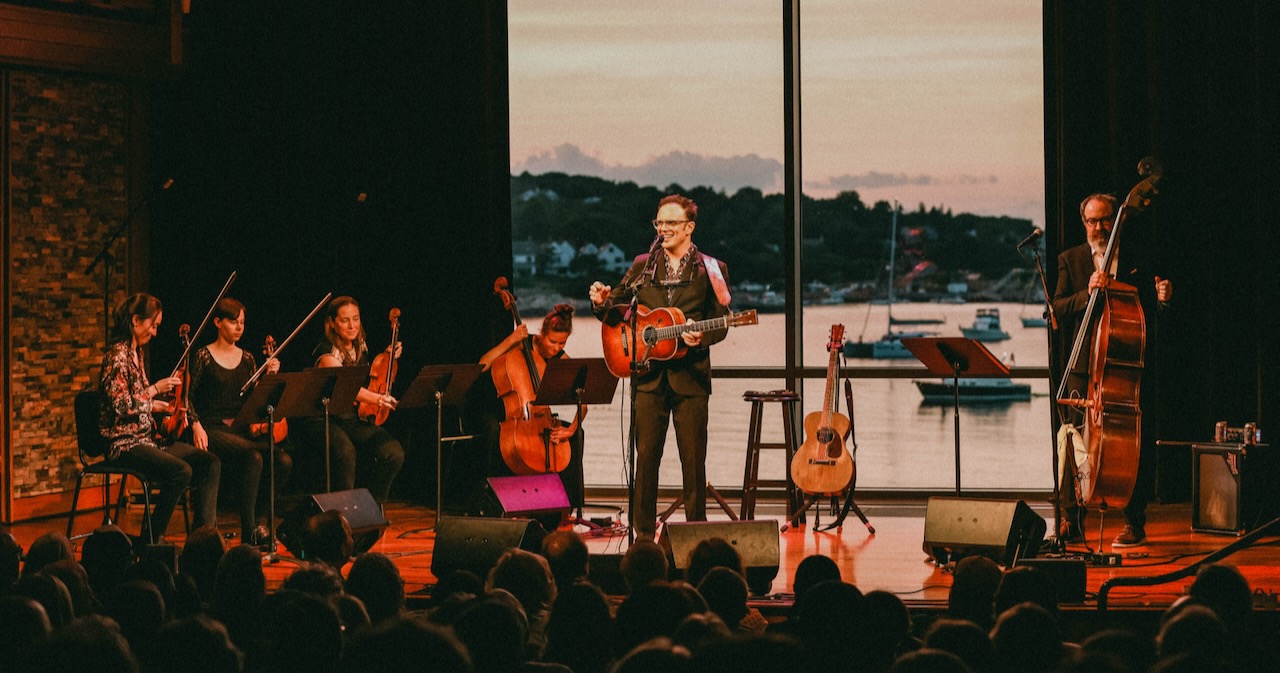
Just as spring began its soft awakening here in the Northeast, Mark Erelli breathed new life into his vast catalog with the release of Live in Rockport: Mark Erelli & His String Quintet. As if his 13 solo albums, three bluegrass albums, and a considerable list of collaborations weren’t extensive enough, Erelli’s newest album forages entirely novel innovations.
With the help of longtime collaborator Zachariah Hickman (bass, vocals, arrangements), Erelli dispenses a selection of nine songs from throughout his decades-long vault of material with an imaginative twist – each has been delicately rearranged for Erelli, his guitar, and a string quintet. Recorded live in the sonically apt Shalin Liu Performance Center of Rockport, Massachusetts, the painstakingly intricate layers of strings weave a dynamic backdrop for Erelli’s potent songsmanship.
Cinematic and profound, the resulting tracklist examines these illustrious songs through new textures and colors. With deep attunement to both past iterations and new arrangements, listeners are struck by the simultaneously transient and perpetual nature of a good song.
BGS had the pleasure of chatting with Mark Erelli about the musings and process behind his newest creation.
So tell me about what the inception of this project was like – what propelled you to make a live album with a string quintet?
Mark Erelli: I’ve wanted to make a live record for years. And the question for any artist is always, “When do you do it?” If you do it too early in your career, you don’t maybe have as much experience performing live and you’re maybe not at the height of your powers. Yet, if you do it when it’s been a long time between records, it can seem almost like an afterthought. So I’ve always wanted to do it, but I’ve really struggled with the “when” of it. And then I’ve also grappled with what the format should be, because I perform in a lot of different formats, but I think my native performance format is still as a solo acoustic singer-songwriter.
I’ve thought about doing that live since I don’t have any records where it’s just me and my guitar. I’ve actually tried to professionally record live shows, but I never really captured a show that felt magical, and that’s the thing about live performance, right? It’s such an ephemeral thing, that’s the beauty of it, and that’s the frustrating thing if you’re trying to capture it. As I got further and further in my career, I realized I didn’t want to do the kind of live record that is just a snapshot of me on a normal night. I decided if I was going to do it, I wanted to make something really special and I wanted it to be a classic moment that really transforms how you think about an artist.
One of my favorite live albums is At Fillmore East by the Allman Brothers Band – it’s a high bar to measure yourself against, but I really wanted a live album that showcased my work in a new light. That’s where the string quintet came in. I had worked with strings on my most recent three records or so and I started working with strings on my covers record in 2018 called Mixtape. Strings are such a novel, fun, really amazing element to be able to work with – they’re quite the extra color to paint with, but I always had used them in the context of a band performance, tracking the strings after to support and augment the band.
I started wondering, what would it sound like if the strings just were the band? I got the chance to figure this out when I re-released my debut record on its 25th anniversary and I re-recorded one of the songs with a string quintet. That’s when I realized, “Oh yeah, this is gonna work out great, we’ve got to find a way to document this.” We made the live record shortly thereafter.
What do you think changes about the music and the material when you intentionalize the context and the sound like this?
Strings are really unique in that they can support a very wide dynamic range. For example, if you’re playing with a rock band, it’s pretty easy to get and you can only really get so quiet. The drums can only be so quiet. Electric guitars can only be so quiet. But the strings can get as loud and as percussive as stirring as a rock band. There’s this extra part of the dynamic range at the lower end of the spectrum, at the quieter end, that is not really accessible in any other kind of band format. String players are really adept at playing very quietly, because sometimes they have to provide atmosphere and/or introduce tension. But then other times they have to have this totally, totally aggressive, intense kind of energy, like with Psycho. What I love about the string quintet is that they just let me keep the full dynamic range of my music on the table, as far as what kind of songs I can play and how I deliver them, meanwhile I don’t have to sing over a drum kit.
Could you talk a little bit more about that process of arranging with the quintet? And I’m also curious about song selection – what it was like picking and choosing which songs you’d arrange?
I mean, I can’t speak specifically to the arrangement process, because that is pretty much entirely the purview of Zachariah Hickman, who wrote all the arrangements. I’ve worked with Zach basically on every project I’ve done since 2008 in some capacity. He’s produced a lot of them. We do a lot of projects and side projects together, which is to say that we’ve built up almost 20 years of really intense, deep trust. Zach is a far more trained musician than I am and he just always knows what I want to hear or what I’m trying to strive for, even if I can’t quite verbalize it. And he wrote these string parts accordingly.
As far as which songs to do, I think some songs have a more cinematic quality to them for whatever reason, whether it’s the sweep of the imagery and lyrics or the interaction between tempo of the song and the chord changes. Some chord progressions just feel more majestic. Anytime there’s majesty and a big sweep of emotion involved, the strings are a no-brainer. The bigger challenge is to present the strings within the kind of fuller spectrum of what I can do. I didn’t want to just do a whole live record of ballads. I wanted some songs to be able to rock, and I wanted to show that the strings can rock too. “Is it Enough” and “Love Wins in the Long Run” are two songs I specifically commissioned for this record to have some rockers with strings, not just these beautiful ballads. As far as which songs to add strings to from my catalog, I feel like I’m not even done with this yet. I want more.
Yes, same here! What was it like practicing with the strings for this performance?
It’s interesting – when you have a rock band, the parts aren’t always necessarily written out. There might be specific hooks or chord changes that have to happen, but there’s a lot more freedom for improvisation in the performance. You just kind of play the songs together a few times, then you go out and you play them in front of people, and you see what happens. Oftentimes it’s very different with strings. All their parts are written out, so I’m the thing that changes every time. Zach’s bass parts are not written out either, so the two of us can kind of move together as a dynamic unit. If I move to sing something a certain way, or phrase something with a particular feel, he can match my feel and translate between what I’m doing and what the rest of the quintet is doing.
But for the most part, the form is set. If I don’t play the basic structure as their charts are written out, they’re lost and then it comes off the rails. But within the form, there’s a lot of freedom for me to phrase things a certain way. I can phrase behind the beat I can push my phrasing a little bit against how they’re voicing their parts. That’s where I think a lot of the best art comes from. Having complete freedom to create and improvise, unless you’re working with the highest, highest caliber of musicians, is just really tough. Having no rules and no parameters – it’s really hard to make that compelling, unless you’re a band of virtuosos.
To me, it’s the constraints that really let you play around with the other factors. Maybe that’s the scientist in me talking. Everything can change. Something has to stay the same. In the case of these string quintet shows, the structure of the song is the same every time, but the way that you color in those lines – there’s almost endless variations to play with.
I’m curious how your relationship to these songs has evolved throughout the years and then specifically within the creation of this record. How will this process inspire your artistry moving forward?
The first song on Live in Rockport is the last song from my most recent studio record. Then towards the end of the live record is the song “Northern Star,” which is from my debut that I re-recorded 25 years later. So there’s a huge spread there. It tends to be mostly focused on stuff from the last 10 years or so, but having that early song there has helped me see more of a through line within my body of work that I previously was less aware of.
I think of my catalog as falling into either side of a particular line, and that line being parenthood—or at least when I started to really think seriously about becoming a parent. The art that I made before I was a parent, or before I started considering it, that all feels sort of separate from the art I make now. Sometimes it’s been hard for me to relate to the kid that made that work and the kind of man that I am now that’s been changed in so many ways by all that new love in my life – not just marriage, but family. So to reach back across that dividing line and to take a song like “Northern Star” and treat it the same way that we’re treating some of these newer songs and have it come alive so vibrantly really made me think, “Okay, well maybe that was the same person all along.”
I was just growing all along. So in some strange way, the strings have helped me kind of reconnect with some of my earlier material when I would have never thought to even dream of having a string quintet on my records – I wouldn’t have had any idea how to do that. And if you’d asked me if the songs would support it or if it was appropriate for the songs, I would have said, “I don’t think so. “Hearing all the songs side by side like this from such a long period of time has made me connect with the fact that maybe I’ve always been the same kind of artist that I am now and it just took me a while to grow into that realization.
I think when the audience is hearing me with the strings, it can be pretty revelatory – they’re really learning new things about me as an artist. And when I’m on stage performing with the strings, I’m learning new things about myself in real time, too. To me, that’s the beautiful thing that made working with the strings just so amazing – it really was a growth opportunity all around, just like anytime you do something that affords you a new perspective, or a new appreciation of a particular dimension of what you do. You just can’t help but be a better artist on the other side of that. I have a lot to be grateful for, as far as the different configurations that I’ve been able to work with. And this, right now – this is one of my absolute favorites.
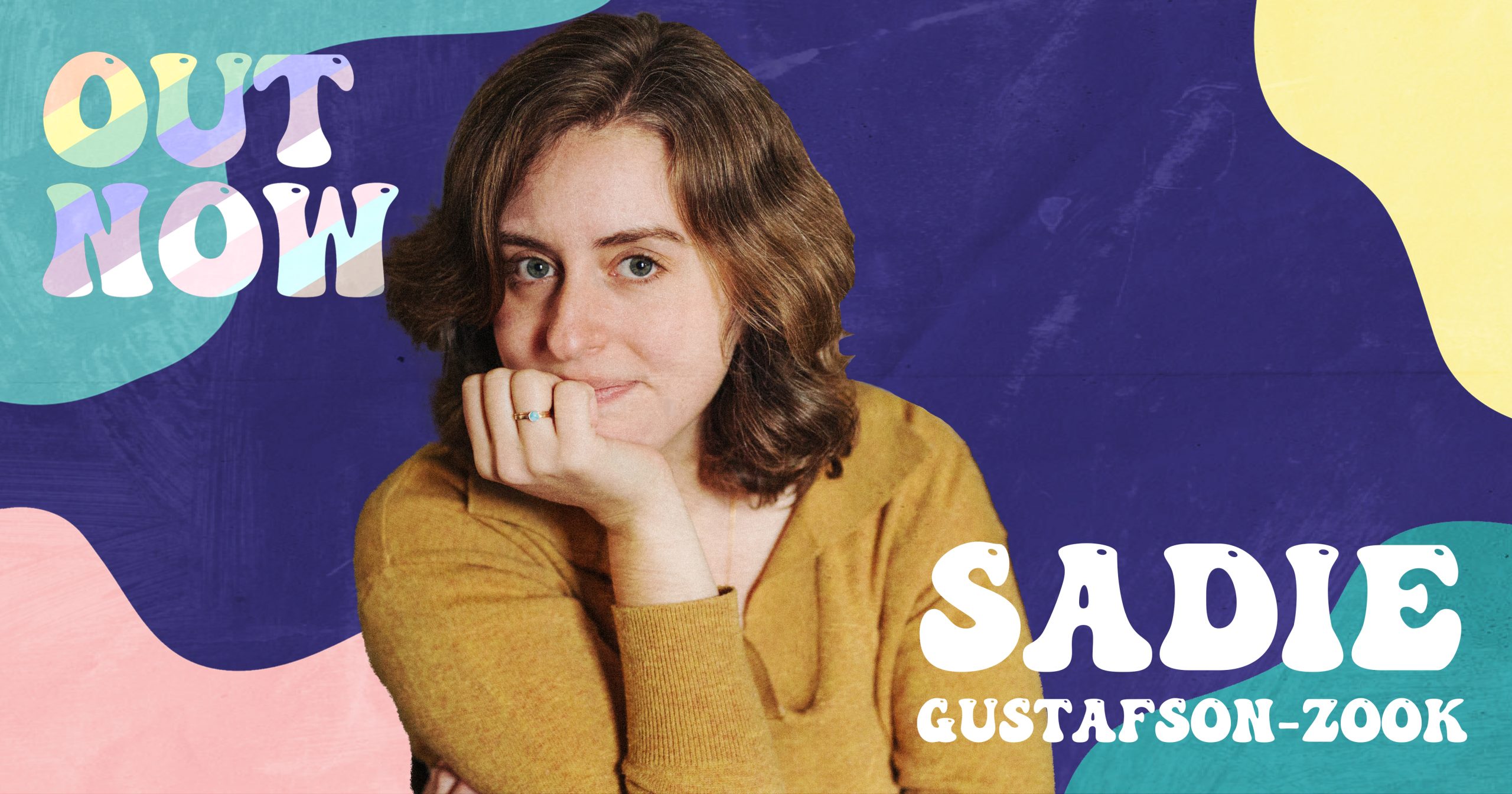
Sadie Gustafson-Zook is a detailed songwriter, pulling together collages of images and ideas and stitching them into melodies and lyrics. I met Sadie in 2019 at Club Passim, a renowned folk venue in Cambridge, Massachusetts known for promoting generations of great folk music. I was studying in Boston at the time, surrounded by incredible developing artists. Sadie was one of them, alongside Liv Greene,Jobi Riccio (featured before on Out Now), and Olivia Barton, another queer artist who came through the Club Passim folk scene and is now gaining traction.
We are excited to share our interview with Sadie the same week she releases the incredible new album, Where I Wanna Be (available May 10). Their thoughtful writing, pure voice, and creative guitar lines are sure to impress. Many of the songs on the album have a lullaby-like feel enhanced by Sadie’s soft voice and soothing melodies.
This month, Sadie is touring the Midwest with Brittany Ann Tranbaugh, who we also featured on Out Now earlier this year. They are powerful songwriters and performers alone, but seeing both artists in one show is a treat that you don’t want to miss! If you’re in the area, be sure to catch their tour through Wisconsin, Minnesota, Michigan, and Indiana.
What’s your ideal vision for your future?
Sadie Gustafson-Zook: Ideally, I would be able to keep doing what I’m doing, but slightly more of it. I think my music offers something special and I would like for more people to hear it. At the same time, I really do like living at least part of the time as a normal person who is in their house and has a cat and is a part of their local community’s life – so maintaining a sense of balance is definitely something I’m passionate about.
Right now, my ideal vision would be to play 100+ fun gigs per year (I’m not really interested in gigging for the sake of the grind – I mostly want to have a good time and hang out with people I love); continue teaching privately and at music camps (I’ve been really lucky to be able to do this at Kerrville’s Song School, Kentucky Music Week, and this summer I’ll be at Ossipee Valley’s String Camp); spend a lot of time in nature and with my family; and keep absorbing so I have things to write about.
Why do you create music? What’s more satisfying to you, the process or the outcome?
I create music because I think it’s fun to sing and play instruments and I like writing about my own life in a way that other people can relate to. Personally, I like being able to organize my thoughts into a nugget that is shaped like a song and that helps me sort out my emotions. And then socially, I love having the opportunity to share those songs and feel a broader sense of connection with people around me – and people who I don’t know! So, I think the process and the outcome are both things I really enjoy.
Do you create music primarily for yourself or for others?
In college, I was a voice major and I spent four years singing operatic arias. I didn’t initially think this was what I was going to spend my college years doing, but once I started singing in such a big and full-body way, I had a really fun time experimenting with the extremes of what sounds my body was capable of producing. But when I performed these songs written by classical composers I didn’t feel very connected to the essence of the music. I sang it for myself, because it was fun (and probably also because I wanted people to pay attention to me), but I wasn’t assuming that my performance would touch something deep in someone else.
Since then, I have shifted towards writing and performing original music. I enjoy writing songs that are fun to sing and I write based on what I’m going through and what I need to talk about. Ironically, this feels like a more communal act than performing music that someone else wrote. I have the greatest chance of connecting with an audience over a shared experience if I’m speaking directly from my own experience, and ultimately my biggest goal is connection.
You shared about maintaining a sense of balance between being in the music industry and living in a home, with your pet, surrounded by community. Many artists and music-industry professionals have a challenging time with this. How have you built a sense of balance between these things? Do you have any words of advice for others working through the same challenges?
I’m very privileged to have an affordable living situation right now thanks to moving back to my hometown in the Midwest and having my parents as landlords. This freedom has made it possible for me to pay my bills exclusively with music-related work, which helps keep morale high in the music department. So I just want to preface everything else I say with the acknowledgement that it’s a lot easier to feel balanced when I’m not constantly worrying about money. While my situation is a privilege, I also know that not everyone would want to leave their music city hub and move in across the street from their parents in Indiana! Ha!
In terms of time balance, I’ve been testing out the way it feels to have music plans that take me away from home for one(ish) week each month, with some longer exceptions in the summer. That has been a nice way to not get too antsy at home, while also giving myself time to do more administrative work and be present in my town between tours. My first year of living in Goshen, I was pretty lonely and spent most of my time online, which honestly was horrible. I was really craving more in-person connections, so this year I’ve been digging into local activities as well as being really intentional about seeing my songwriter friends’ shows when they’re in a nearby city. Even when I don’t feel like leaving my house or driving a few hours away to see someone, I’m almost always happy that I did.
Your music is so descriptive, thoughtful, and well-crafted. What was the process like for you to write these 10 songs on the new album?
Thank you! The majority of these songs were written when I was living in Nashville in the spring of 2022 and then also when I was traveling around, sleeping in my car that summer. I had just had a breakup in Seattle and had to figure out where I wanted to live and between those two major changes I had a lot of processing to do! I also was spending a lot more time alone than I was used to and I felt like I had a lot of pent up creativity that came out really fast. Then there are also a few songs that I wrote once I was starting to feel a bit more settled in my hometown, as memories from my past kind of overlaid on top of my newer understanding of myself. Those came out more like steady drips throughout the end of 2022 and into 2023.
What inspired you to write Where I Wanna Be? What does the album mean to you and what do you hope others will take away from this collection of songs?
Although the album is called Where I Wanna Be, thematically the songs are more about who I wanna be and what I need to change in order to be that person. When someone asks, “How are you?” it’s easier to talk about geographical location (“I’ve been traveling a lot!”) as a substitute for emotional location (“I’ve been feeling really ungrounded”), especially when everything is in flux.
Each song, in its own way, speaks to who I want to be; I want to be someone who is free and expansive, who knows what makes me happy, whose identity reflects who I know myself to be, who is a part of a team/community, who doesn’t give my power away, who is consistently and historically queer, who trusts myself, who speaks up for myself and takes accountability, who feels at home in my geographical location, and someone who maintains a sense of curiosity in the midst of uncertainty. And that’s basically the whole album.
I think that’s why the album feels so intimate. Though I wrote this collection of songs for my own processing, I know that a lot of people go through this process for themselves, so I’m happy to lend my own experience to folks who might find it helpful.
The title track of the album, “Where I Wanna Be,” includes the lyric, “Every year I drive around, scope out the towns, thinking is this where I wanna be found.” I am curious if you feel a sense of the “grass is greener” in another town? I feel like this is a huge theme, especially among young adults, the idea that we may feel more fulfilled in another place.
Even if I daydream about moving, I find that I feel pretty aware of what I’m missing out on (in a positive and a negative way), and that helps with not over idealizing certain places. I know about the realities of living in Boston, or Brooklyn, or Nashville, or the PNW, and so all things considered, I’ve chosen to live where I am and visit those other places.
Sometimes I still daydream about living somewhere else, but mostly what I find myself imagining are the different communities I could be a part of. I’ve gotten little windows into different communities through meeting people at festivals and conferences, which are mysterious liminal spaces where people who live in different places gather together. They don’t represent an actual location where I could live permanently. And I think it’s helpful for me to remember that when I start feeling like I should move. Likely I’m imagining somewhere that doesn’t currently exist. Not that we couldn’t start an artist commune, though.
Who are your favorite LGBTQ+ artists and bands?
God, more like who isn’t LGBTQ+! [Laughs]
Spencer LaJoye, Flamy Grant, Jean Rohe, Liv Greene, Jobi Riccio, Singer & the Songwriter, Cloudbelly, Lindsay Foote, Olivia Barton, Joy Clark, Allison de Groot & Tatiana Hargraves, Olive Klug, Jane O’Neill, Brittany Ann Tranbaugh, Elisabeth Pixley-Fink, Adrienne Lenker, Taylor Ashton, Eliza Edens, Rachael Kilgour, Emily King, Judee Sill, and tons of obviously bisexual woman performers who aren’t publicly out.
For anyone reading this who might not be out of the closet, were there any specific people, musicians, or resources that helped you find yourself as a queer individual?
Although I’m bisexual, reading the Lesbian Masterdoc was very helpful as a way to sort through my past, draw connections between memories and feelings, and generally deconstruct the idea that being straight was the only option for me (compulsory heterosexuality). I also really loved reading Katie Heaney’s book, Would You Rather, and The Fixed Stars by Molly Wizenberg. (In addition to following every cute queer person I found on Instagram.)
What does it mean to you to be an LGBTQ+ musician?
I often feel like performers are treated kind of like inspirational court jesters, where we’re being the weird, thoughtful, creative ones, and the normal people come to shows to live vicariously through us. Honestly, it’s pretty similar to how queer people break boxes and live expansively just by being ourselves (except that queer stories are often suppressed and not amplified). So, if I have the opportunity to have a platform and the power to influence my audience, I want to take that responsibility seriously and show up as my fullest self so they can see that it’s possible for them as well. I love being a queer musician and knowing that by just being myself, I might be helping audience members learn more about themselves as well.
What’s the best advice you’ve ever gotten?
In 2016, I was attending the Rocky Mountain Song School and was a part of a partnered songwriting class where each participant told their partner a story from their life and then the partner would use that story as a songwriting prompt. My songwriting partner told me about his career trajectory and how someone advised him to get an entry-level job at the local venue that he wanted to play. So he got a job as a busboy at this venue and then progressively worked his way up, eventually becoming tight with the booker until he was selling out shows with his name on the marquee.
Although he wasn’t giving advice per se, I kept this story in mind when I moved to Boston after college and I got a job working at the box office of Club Passim. Regardless of career prospects, I think it’s a really good idea, for community building purposes, to become a regular wherever you want people to know you. For me, in working at Passim, I was hanging out there all the time and it was inevitable that I met a ton of super cool people who are doing really great things and now I feel pretty well-connected.
What are your release and touring plans for the next year?
This year is a big one for me! I’m (obviously) releasing this new album, Where I Wanna Be, and I actually have another recorded project scheduled for the fall! Tour-wise, I have been upping my booking game and will be touring around the Midwest in May with Brittany Ann Tranbaugh (we’ll likely be around Wisconsin and Minnesota when this article is published), the West coast in October with Jean Rohe, and the Northeast in November, and a lot of other spots in between! I’ll be teaching at a few songwriting and music camps as well, which I love to do. So I think it’ll be a great year!
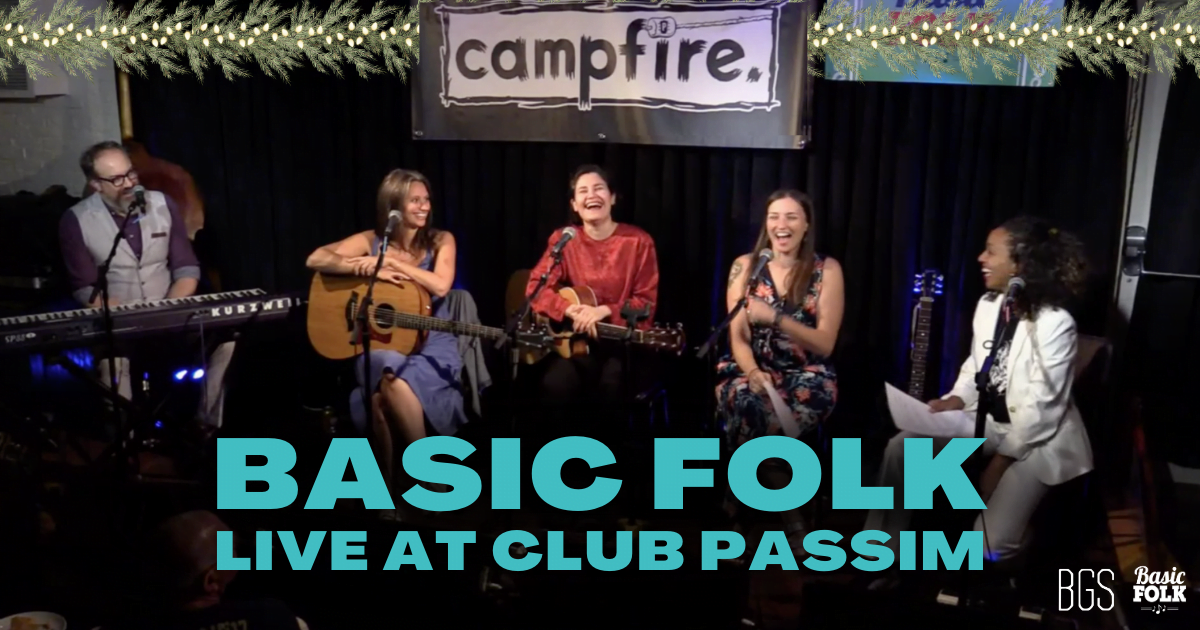
Let’s get folking special! We’re closing out 2023 with an exclusive live recording from folk mothership Club Passim, the historic folk venue located in Cambridge, Massachusetts, that celebrates the bi-annual campfire festival and its remarkable 25th anniversary. It started as a way for the club to book a slow holiday weekend and now 25 years later, campfire is still held every Memorial Day and Labor Day weekend. It remains an extremely popular fundraiser for Passim.
Cindy and Lizzie host this live show featuring captivating performances by Lizzie, Zachariah Hickman, Kara McKee, and Mercedes Escobar. Additionally, listeners are treated to a rare on-stage interview with managing director and campfire founder Matt Smith as well as club manager and campfire programmer Abby Altman, providing unique insights into the festival’s evolution and the passion that fuels its success.
This episode highlights the unpredictability of campfire, where both emerging artists and legends like Peter Wolf share the sacred stage. Matt Smith and Abby Altman’s dedication shines through as they discuss their exhaustive efforts in planning, booking, and executing nearly 60 campfires, showcasing the heart and soul behind this beloved festival. Tune in for a mix of live music, insightful conversations, and a nostalgic journey through the rich history of “campfire.” and Club Passim.
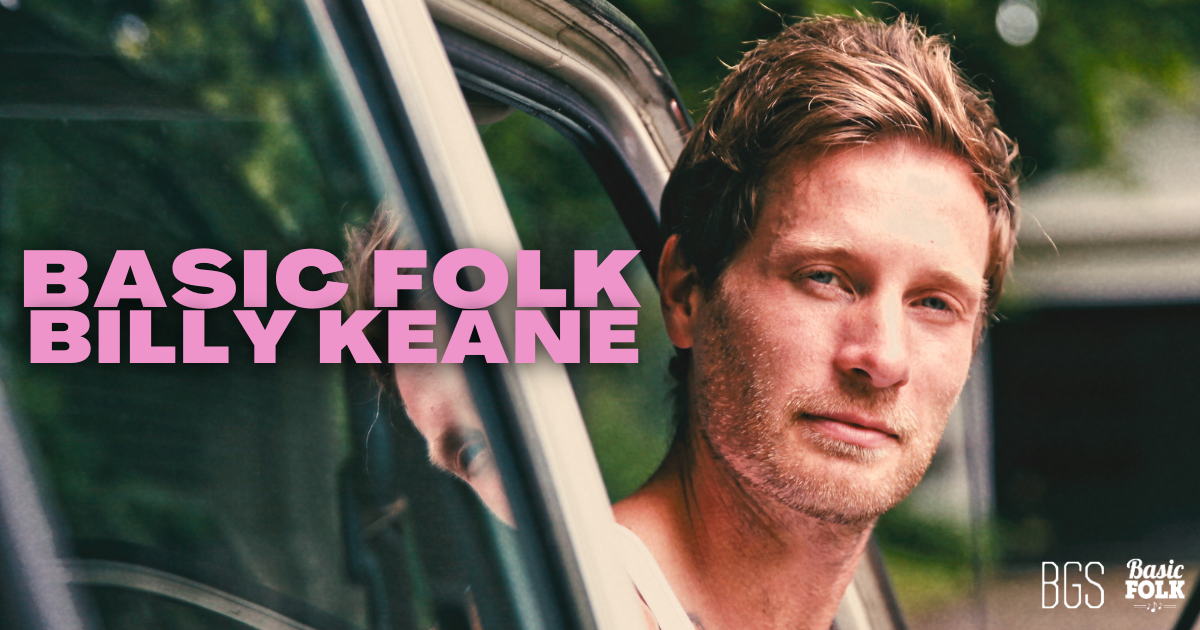
Curiosity, luck, and drive are three words that revolve around singer-songwriter Billy Keane. He was born with all three traits and they are the hallmark of his music, especially his new album Oh, These Days. The seven song cycle was written during the pandemic and right after some very big life changes: He got divorced, quit alcohol and split with his band, The Whiskey Treaty Roadshow. Billy approached his healing process with an extreme curiosity and a need for simple living. For the last several years, he’s been cultivating a simple space to ignite creativity in the Western Massachusetts town of Lenox, where he owns land and a small cottage.
In our conversation, Billy talks about his roots in spirituality and his early devotion to music. Keane was born in Australia while his father was working as a minister there. The family moved to Connecticut when he was two years old. He left his hometown at 18 for college, but then left for Seattle to work in commercial deep-sea diving. From there, he made his way to Western Mass, where he found himself working at James Taylor’s studio. James and his wife Kim quickly realized that Billy was a talented musician and turned into key figures and big-time supporters. Oh, These Days, Billy’s second album, is truly a meditation on the human experience met with an insatiable love for life and rebirth.
Photo Credit: Dylan Law Photography
This website uses cookies to improve your experience. We'll assume you're ok with this, but you can opt-out if you wish.AcceptRejectRead More
Privacy & Cookies Policy
Privacy Overview
This website uses cookies to improve your experience while you navigate through the website. Out of these, the cookies that are categorized as necessary are stored on your browser as they are essential for the working of basic functionalities of the website. We also use third-party cookies that help us analyze and understand how you use this website. These cookies will be stored in your browser only with your consent. You also have the option to opt-out of these cookies. But opting out of some of these cookies may affect your browsing experience.
Necessary cookies are absolutely essential for the website to function properly. This category only includes cookies that ensures basic functionalities and security features of the website. These cookies do not store any personal information.
Any cookies that may not be particularly necessary for the website to function and is used specifically to collect user personal data via analytics, ads, other embedded contents are termed as non-necessary cookies. It is mandatory to procure user consent prior to running these cookies on your website.