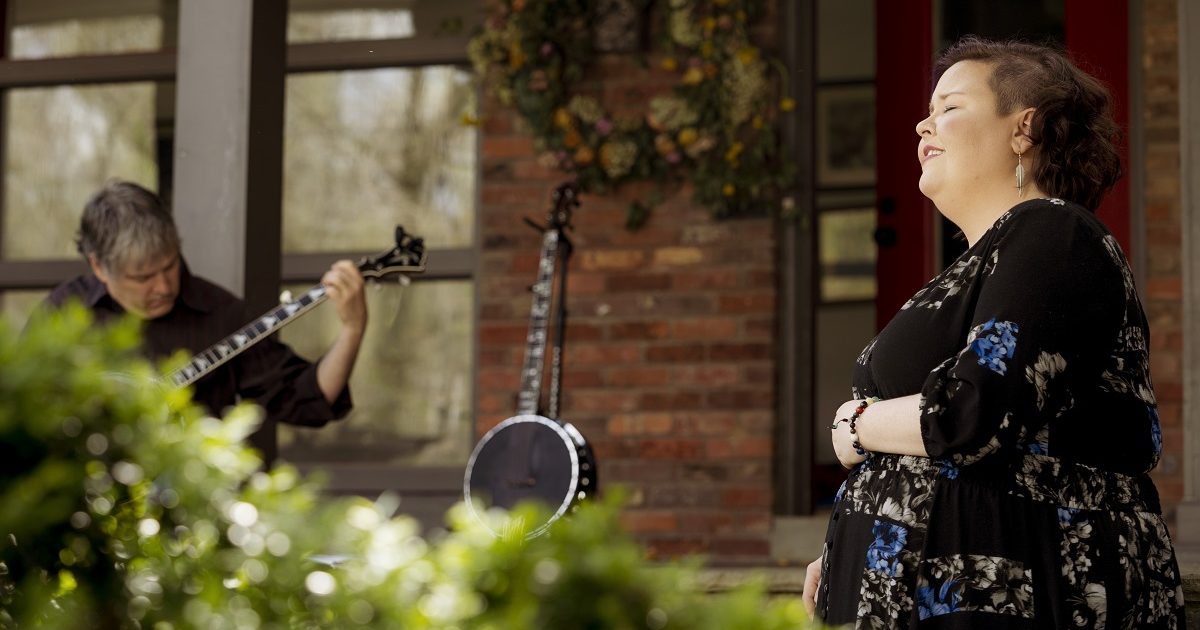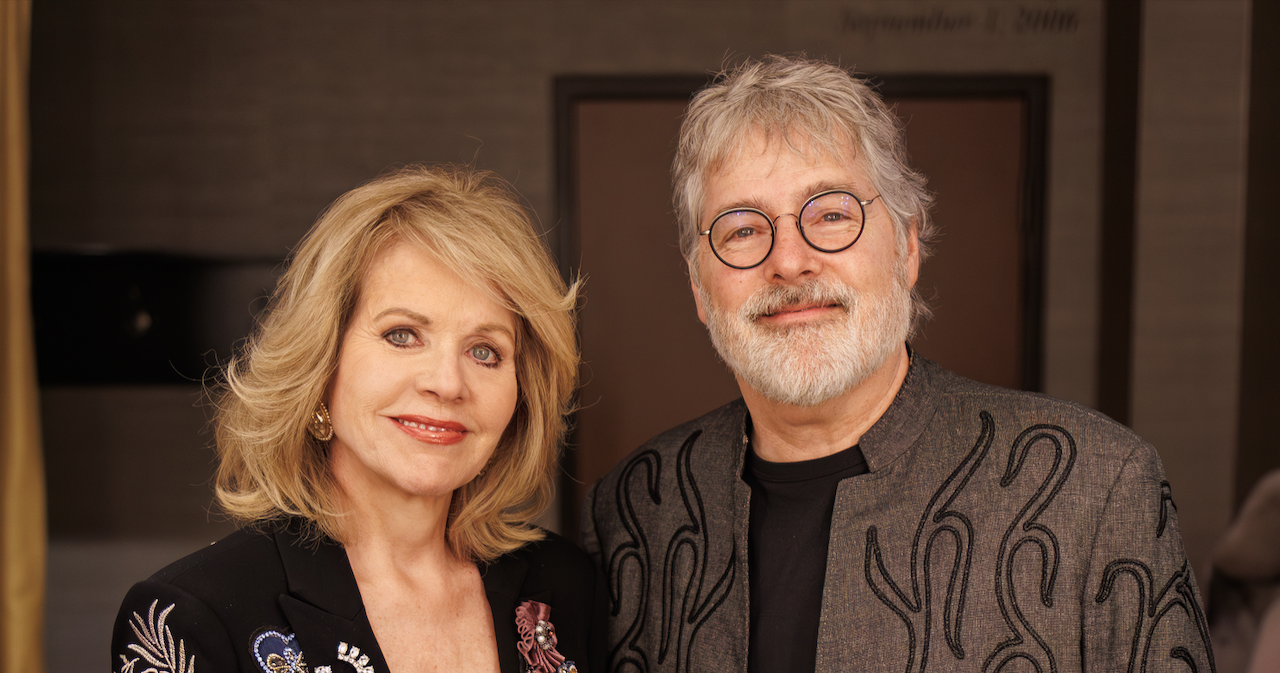
Renée Fleming and Béla Fleck in Conversation

Renée Fleming, Béla Fleck, Appalachia, and an all-star bluegrass band. Though the knee-jerk reaction to this list might be to play “one of these things is not like the other,” there is much more to this premise than meets the eye – and ear.

Fleming is one of the most renowned opera singers of the modern day, but the internationally acclaimed soprano has a long history of musical curiosity and often enthusiastically indulges thereof. From this trait alone, she and Béla Fleck found a resonance within one another, embracing and making music beyond the bounds of their respective claims to fame. This resonance sparked an idea that endured for more than 20 years, culminating in The Fiddle and the Drum, an album of Appalachian songs sung by Fleming and produced by Fleck – one that, more than anything, reveals a journey of familiarity and discovery for both artists.

The pair joined BGS on a phone call to delve into the musical, historical, and personal connective dimensions of this record. The memories shared are rich and many. Some extend as far back as Fleming’s preteen years. Others revive Fleck’s contemplations of how each song might come to life through Fleming’s vocal prowess. Every one of their recollections is imbued with immense mutual respect and awe for each other as well as the album’s many collaborators; it’s clear they both appreciate the gifts each and every person brought to this record.

Our conversation isn’t without painful realities, as the album’s focus on love and loss and war prompts reflections on fights and fatalities happening today. But, ultimately, it’s a conversation colored by a range of emotions and experiences, not unlike the very music of The Fiddle and the Drum itself.

Renée, you’ve spoken extensively about your upbringing and how you formed your relationship with a lot of folk music and folk artists. In that vein, how would you describe the initial perspective you formed about the music of folk, bluegrass, and Appalachia during the younger formative years of your life?

Renée Fleming: I think it was in middle school that they offered a guitar class – which I think is a fantastic way to get kids interested in music, because it’s an instrument you can carry around and you can read tablature pretty easily and pretty quickly. So that got me interested in [music], but also some of the music that I really genuinely liked [and got me interested] came a little later, including my discovery of Joni Mitchell in junior high school and high school. Then I was exposed to it through my family as well, because my grandfather was a fiddler and a drummer, so we had very eclectic tastes in music. I just was constantly exploring. [I] wrote a lot of songs and wrote a lot of music, starting probably when I was 12 years old, and it just branched out from there.

Where did Béla Fleck initially come into the picture for you?

RF: I was already a fan of Béla because of Béla Fleck & the Flecktones. In college, I really started singing jazz with a big band and also with the trio every weekend, so I was a big fan of his [at that time].

Obviously everything worked out the way it was meant to, but you still carry those glimpses into other worlds – folk, jazz, and so on – and it helped somewhat shape where we are now. I think it’s really brought a lot of extra color, showing people that [music] doesn’t have to be so rigid and doesn’t have to be about genres and specific labels and I think that’s something that really shines through with The Fiddle and the Drum.

Béla Fleck: I think we all have a tendency to pigeonhole people and put them into a black-and-white kind of a concept. You know, “They do this, they don’t do that,” but people are nuanced and love all kinds of things, especially when growing up and you’re open, you’re trying things and figuring out where you’re going to land.

I was also a huge fan of Joni Mitchell, and I was a vocal major in school, even though I couldn’t sing worth a darn and was secretly working on the banjo in the closet. But being exposed to classical music in high school – and my stepfather is a cellist, so I was listening to string quartets and stuff when I was a kid. People might be surprised by that, or maybe not, considering the kind of music I like to do, which is very varied. But I think it makes all the sense in the world that all of these other interests make Renée an even better opera singer, if that’s the right thing to call her. But the bigger your world is, the more you can bring to the specific things that you do.

RF: I never heard that you were a voice major before. I love that.

BF: Don’t think I’m gonna sing, because I want to protect you from awful pain, agony, despair.

RF: I don’t believe it.

BF: Nobody ever gave me a voice lesson, but they started me on French horn. I got into my school playing guitar and then it became clear that I wasn’t going to be able to play the French horn. They said, “Listen, you could just go stand in the chorus and still be in the school.”

So they put me back in there, but they needed tenors. I wasn’t a tenor so I just kind of screamed, looked at the music, and tried to figure out what they were singing and sing along. Then, when I got to my final year, they said, “Oh, we found out we’re doing Rhapsody in Blue for the semi-annual concert, and we found a banjo part so you can get out of chorus. If you want to get out of chorus, you can play this banjo part on the final concert.” I was like, “I think I’ll stay in chorus.” I liked it at that point.

Then on the last day of school, the chorus teacher – a woman named Mrs. S, who was an amazing vocal teacher – she had never spent any time with me, but she got me in front of the piano and said, “Stand up straight, sing from your diaphragm!” And she gave me a few quick things she made me do and I was singing like a bird. I was like, “Holy cow, I wish you had given me a lesson when I started at the school. I would actually be able to sing!” She knew exactly what I needed to do. It was remarkable.

Speaking of singing technique, Renée, when you were preparing to record the songs for the album, where on the spectrum of vocal expression did you anticipate needing to steer your voice?

RF: I think it was Béla who kind of clocked that a lot of the songs we were choosing kind of fell in line with [themes of] love and loss – and war, as well.

One of the things that I do, especially when I’m singing outside the classical genre, is I try to avoid an obviously classical sound. That, typically for me, means the upper register. But we worked it in some songs and you just have to be mindful of vibrato. It’s really thinking about style and, for me, that’s the same as when I’m singing on a program of French art song versus an Italian aria. So I may sound the same, but the style is completely different.

What struck me as I listened to the album was just how subtle and yet impactful the differences in how you sing can be. It’s just shaping and forming your voice around the mood that needs to come through. And I visualized that, if your voice was some kind of an entity or something that could be shaped, that you just have this beautiful ability to mold it and manipulate it into exactly the shape and form and size it needs to be to express whatever the music calls for.

RF: I like to record. I like the idea of focusing only on what we hear and not adding so many other elements like you do in a live performance, where it’s also your acting and your movement and how you look and your facial expression. This is a very much more focused activity and we would do many versions of the same song. I left it to Béla to choose which versions he liked. I had almost no complaints about the choices he made.

BF: I loved to hear your voice on all the takes. And then sometimes there would just be a magic moment of, “Oh my god, the song is really happening here. We’ve got to make sure this is part of the final takes.”

I have a frustration when you have something killer that happens in one portion of the take and then the rest of the take isn’t as good. I like to find those magic moments and have them all end up on the record. But I also think for Renée, there’s an unconscious element to being a musician. [To Renée:] You’re inspired by a moment, and sometimes it’s hard to put into words all the things that you’re [doing]. You put the material in front of yourself, you decide [to] embody it, and the music is correct and things are happening in the right way – you just know what to do. And it’s hard to say how you know.

Renée and I worked really, really hard on our craft, but I think the craft is there to serve something that’s a little harder to quantify, which is just what the unconscious – what our bodies and our souls – wants to doubt when it’s time to make the music.

RF: And it has to do with the expression. I’m also thinking of specific pitches and words that relate to the song, but [to Béla:] I was really thrilled to hear how much you could vary what you were playing. Sometimes your harmonies would just come from another world and I’d say, “Wow, that’s so cool. Béla can kind of put in a jazz harmony once in a while.”

BF: You also pushed for that. I remember the first arrangements you said, “I think this could be more interesting.” And then in the moment, I had to come up with a better arrangement, a more interesting arrangement, for the first song on the record [“He’s Gone Away/Storms Are on the Ocean”]. I’m really proud of it. I think if you hadn’t pushed and I hadn’t reacted, we wouldn’t have ended up with that arrangement, which was quite unusual for that song, and then that kind of led the way to being a little bit more open.

It’s funny, when I’m playing with the Flecktones, or Chick Corea, or somebody like those folks, I feel very open harmonically. When I’m playing music that’s more traditional, I’m very careful not to get too harmonic. So, when I discovered this was a safe place to explore a little bit and look for just the right kind of harmonic additions to the basic chords, it was very freeing and inspiring. And of course, getting to work with a great vocalist like Renée… I’ve been a big fan of female vocalists since Joni Mitchell and Joan Baez and Linda Ronstadt and all of these people. I saw that there was a lot of art to working with a great vocalist like that. I was eager to have that opportunity and thankful to get a chance to try and figure out how to make it work from my end.

RF: It’s funny you say that, because I’m a huge fan now of Hazel Dickens, and you said that you had worked with her. Because there’s something so plaintive about the way she sings, it’s like Roscoe Holcomb, too. There’s something– I can’t describe it. It’s authentic and it’s immediate simplicity. I just absolutely love it.

BF: We used to talk about the “ancient tones” in the bluegrass world, and Bill Monroe had this quality. It might not always be perfectly in tune but it didn’t matter. It was just so pure and so powerful. And Hazel has that. It’s like it’s coming from another planet, almost. It’s so deep and powerful the ordinary rules don’t apply. It’s something else.

RF: I agree.

Connecting this topic of the intangible with the themes of the record, how are you both feeling about the album’s thematic focus, given the various experiences of war and loss that are happening in the U.S. and abroad?

BF: What happened was, we had a certain amount of songs we were committed to and we were excited about, and we were looking at quite a large list of additional songs that might finish out the record. That’s when I started looking at the original six songs we had recorded and thought, “You know, there really is a thematic arc.” Some of these songs were not working for me, and I couldn’t explain why until I put my finger on the fact that the six songs that we’d already recorded were telling me a story. When I explained what I was seeing to Renée, she said, “Oh, I see that. That makes all the sense in the world.”

It kind of starts with a romantic relationship that leads to commitment and then the man, in this case, goes off to war and doesn’t make it back. The woman is left on her own, maybe with a child, and then in the end, there’s a rumination about life and the way it goes like this often in the world. So that’s the story arc. Basically, to me, that is about when you make a man your boss, you give yourself up. You give up your beauty. You give up your individuality and all the promise that you could be if you weren’t in that kind of a relationship, you know what I mean? And in a way, the woman in this story is taken advantage of by bigger forces, a war.

Well, this stuff is happening every day, all over the world. And we’re in a big one right now, and there’s a lot of questions as to whether we should be there. Those questions usually come out a few years after the war is over, and everybody will say, “Oh, this was a terrible idea, and here’s why.” You don’t have to be a genius to know that we’re going to be saying the same thing about a lot of these conflicts before long. So to me, it just makes the record have that much more meaning. It’s happening right now, just like it always does – this is what people do. This is what mankind does. And it’s very disappointing that it keeps going back to this place.

RF: [My and Béla’s] generation has been fortunate that, in a way, we’re too young to have really understood what was happening in Vietnam. A lot of this repertoire really relates specifically to Vietnam. But there’s also the Civil War. And every once in a while, things really fall apart. We’re in a period now where the same thing is happening. And it’s really not useful. It’s not going to move the needle for Iranian citizens – it might even make it worse for them. So I just think it’s tragic when leaders feel like the only alternative is war.

BF: Renée also mentioned she wasn’t sure that “Scarlet Tide” would fit with the other songs, but we went ahead and did it because we both loved it. And then when we looked at what we had – again, those first six songs – it made all the sense in the world. The songs were leading us in a direction, one that, unfortunately, mirrored what mankind does.

RF: And my heart goes out also to people in the Ukraine. There are always conflicts happening around the world. There have been so many reasons for these things, it’s shocking that sometimes it’s just [plain] political. I find that really sad.

It certainly has just felt like a very heavy time, for quite a long time. So even though the themes on this album are rather heavy and emphasize a lot of the sadness that’s going on, I think it’s also very cathartic.

BF: It’s funny how in blues and bluegrass, sometimes you’ll sing the most terrible lyrics – little girl and the awful, dreadful snake or a guy killing a woman – and make this very happy, jolly song about it. It’s bizarre! And in blues, a lot of time you’re singing the saddest things, but it’s uplifting somehow to bring them out in the open and treat them maybe in a different way that allows you to experience them differently and work them through in different ways. Some bluegrass songs are really, really sad but they’re so jaunty you don’t quite realize it.

RF: Well, it’s also that we are practicing grief. That’s one of the things that scientists have come up with, that sad songs really help us process and learn how to process actual grief, because we’ll all experience it.

BF: I think also having kids – we’re both parents – but you realize that people process grief in really different ways. Some people don’t show it for a long time, but then it comes out. It’s handled in a lot of different ways.

When you were putting the music together, what kind of unexpected creative sparks came up amongst the two of you and also among the large group of immensely creative artists that are contributing to the album?

BF: I think with music, you can be over prepared because there’s a lot of things that happen very spontaneously when you have musicians of this caliber – people like Sam Bush, Jerry Douglas, Stuart Duncan. Just like Renée colors every take differently, they’re going to do the same. They’re going to be very responsive. Things are going to happen on the floor. Someone’s going to want to stay on the floor in the studio while we’re doing takes, someone’s going to say, “Yeah, I don’t know, that part’s not working for me.” And we’re going to solve it in a matter of seconds and something’s going to work.

It’s a very emotional place to get into when you’re recording, especially songs like this. As we’re all listening to Renée, we’re all inspired by how she’s singing them. They’re different than we’re used to hearing. So we’re playing differently than we’re used to. But we also come up with an arrangement, develop it, and do it a few times so we really think we have something and try not to rush through it. But there’s a tendency for things to really work out very quickly.

So with the producer role that I was in – and Renee didn’t have that experience with these folks, although she has with a lot of other musicians that are improvising musicians – where the parts are not written down and they’re very spontaneous, she was able to ride those waves very well. And whenever she spoke up, she gave me a lot of latitude, a lot of rope. But whenever she spoke up with any comment, it was always dead on the money. It was going to make it better. We listened and we tried to incorporate everything we could to make it her music.

RF: I think also that collaboration, for me– the example I would use is working with a conductor is, at best, very intuitive. You’re reading each other’s signals that you’re giving musically, in terms of dynamics, and it’s never the same way twice. I think that was true in this process as well. And having Béla, who had really created the structure for each of these arrangements, helped to anchor everything.

But to have those other musicians playing – they’re the crème de la crème of Nashville I think, and the singers as well. I mean, the way Dolly Parton was able to add her voice to the track I had already created [“In the Pines”] and just blend in amazingly, but then to also add so much to it. And the same was true for Jerry Douglas. Aoife O’Donovan, I already knew and had worked with her already on a project at the Kennedy Center. I didn’t know Sierra Hull and Sarah Jarosz, who are also just extraordinary musicians and terrific artists. For me, it was really a delight to be working with so many truly great musicians.

I’ve been fortunate to see Béla perform live in other genres with other musicians. [To Béla:] You never do anything easy, because I just wondered at your ability to manage these polyrhythms and changing meters, and then also to keep track of where you are. I mean, it just boggles my mind.

BF: Thanks. I feel like the banjo is like a percussion instrument. Like a tuned percussion instrument, similar to maybe a marimba. The rhythm of things is very fundamental to what makes me tick and what makes the banjo tick, because we don’t have sustain. So everything’s all about where you place the note.

So when they say, if you [lose or] don’t have a sense, your other senses become stronger – I think, as a banjo player, we have certain limitations that are almost like senses we don’t have. We can’t take a note and hold it for a long time. It’s just not possible. So we get better and better at timing and rhythm. If we’re on top of it, and we understand that, then we become rhythmicists.

It’s more challenging for me to do music with a lot of space, because I can’t do it. Banjo won’t do it. So notes will hang in the air for a little while. I can’t sustain like a piano with the whole pedal or things like that, but I find ways to work around it. In this case, I got to play the band. I couldn’t sustain, but I sure know who could. Jerry Douglas, Stuart Duncan, they know how to hold a note and have it mean something. It’s not just a length, it’s a feeling and a depth. So, I know I can step out of the way.

I mean, for a record that you’re kind enough to want my name on the record as an equal, I felt like I was really playing more of a producer role most of the time, and I really enjoyed that opportunity.

As the producer for the album, did you have a vision for the overall sonic profile of the music? Was there a particular way you envisioned blending the typical folk and bluegrass instrumentation with Rénee’s voice before you hit the record button?

BF: I did have the experience of hearing her sing live, doing opera in China. But I also listened to her recordings before taking the project on, because part of me was wondering, “Well, can she do this? Is this going to work?” I listened to some of her recordings and I heard some stuff that she did with Bill Frisell on one of her records, where she used a lower range. It was almost like a different person. I was amazed at how much I loved it. I love hearing her do her opera thing, because it’s the best it can be. It’s just so good. It’s like how I was not a basketball fan, but when Michael Jordan played, I wanted to watch.

I feel like Renée is like that with opera. Even if you don’t know about opera, or the form is strange to you and you’re not sure what you think about it, when you get a chance to hear her, do it. You want to see it. You want to do it, you want to hear it. I knew she was a world-class singer, but I didn’t realize that she had this other gear that was possible for her in her low range. I’m not trying to say that the opera stuff isn’t unbelievable. It’s just in a different language. It’s a different world of music. It’s a role. She plays these roles on every song.

I just didn’t know if she could translate her honest, personal humanity to these songs. And when I heard these Bill Frisell tracks, I went, “She can, she can! And it’s not a bluegrass/country singer doing their thing. It’s a whole different authenticity. I guess I didn’t know at that time that she had it in her family, and that it was music that she’d heard the whole time. So she wasn’t sitting there thinking or singing down to it, “Well, I can do this. This is easy. I do hard stuff.” She wasn’t like that. She was like, “I’m committing. I’m really going to do this thing.” So I was very impressed by her professionalism but also in the way she could summon up the emotion that felt true and authentic.

I think the album will just keep reinforcing to the listening population out there that people should embrace differences, embrace new, and embrace change – and maybe even embrace the unknown.

BF: I think it’s important to remember that it’s not just the idea that’s good or bad, it’s how it’s done. The same idea could be a disaster if it’s not done the right way.

We have something called a mashup, when you take two people that do completely different things and you throw them onto the same song and they alternate doing their thing. To me, that can be fun and enjoyable, but it’s not a true collaboration – where the artists actually have to change, grow, and listen to each other. You have to actually learn things. I look for those kinds of collaborations, where you’re doing something different from what you normally would do in order to play with this person.

But again, and you can talk about politics [in the same framing], too. Sometimes it’s not the thing that they’re doing, it’s the way that they’re doing it that is either good or bad. When you put musicians together from different musical worlds, often we can figure something out. We can work something out.

When I play with musicians from different parts of the world, people get really excited and happy. I do, the other musicians do, and we find a common ground. We find some way to play together. The people around that are there hearing it are uplifted by the idea that, “Hey, you guys worked it out.” And again, that’s what we need to do politically, too. We need to find ways to reach each other and connect with each other and listen to each other. It doesn’t need to be as hard as it feels like it is.

My most uplifting times have been playing with musicians from other cultures or from other musical worlds and finding common ground – finding a way to be yourself, together, and accommodate each other in that aural space.


Photo Credit: Madison Thorn
One To Watch: With Connecticut Origins, On the Trail Find Their Way in Bluegrass

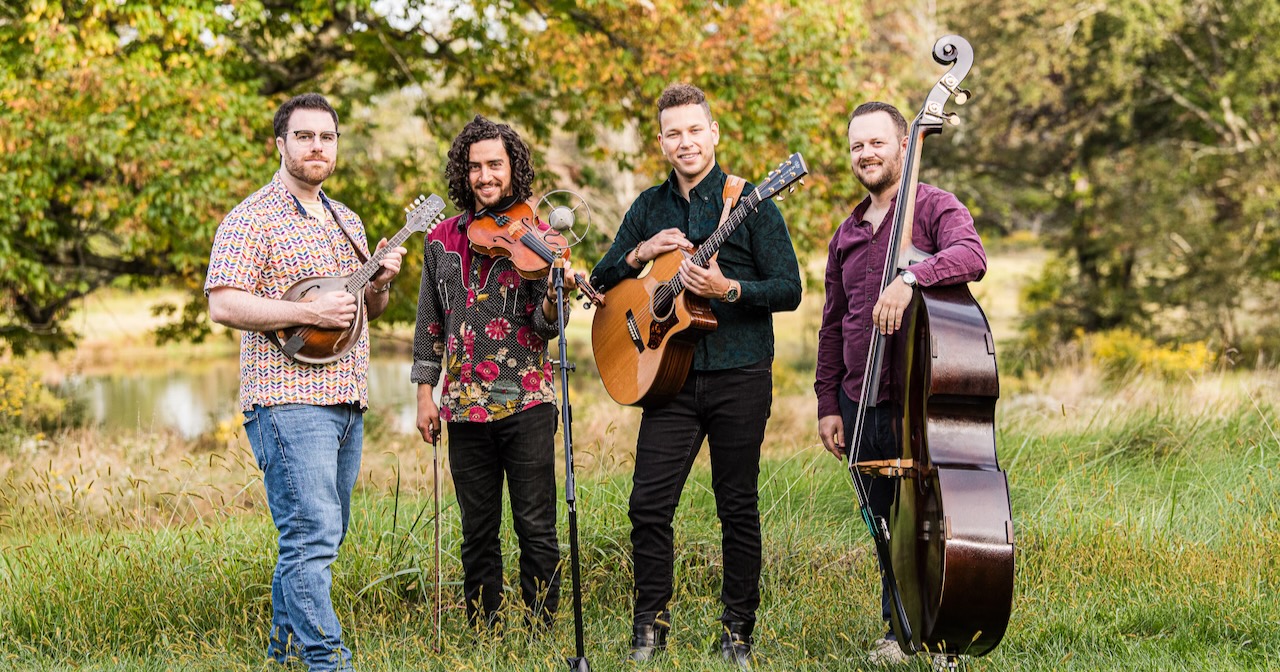
While Boston may claim its title as the bluegrass capital of the Northeast, acoustic quartet On the Trail is living proof that the Connecticut bluegrass scene is not only alive and well, it is thriving. Composed of four impeccable musicians who each attended Western Connecticut State University to earn vastly varying degrees, On the Trail weaves together an uncommon collection of backgrounds to deliver a unique sound.

Drawing inspiration from opera to the Beatles to jazz, these four achieve a sonic richness that will leave listeners edified and enamored. True to their band’s name, they trailblaze full force with the release of their first full-length album, Where Do We Go from Here.

BGS recently had the pleasure of sitting down with Tom Polizzi (mandolin, guitar, vocals), Matt Curley (bass, vocals), Charlie Widmer (guitar, vocals), and Austin Scelzo (fiddle, vocals) to discuss all things On the Trail.

Congrats on the new album! Will you tell me a little bit about how you all ended up in a bluegrass band together?

Tom Polizzi: Well for me, I was a really, really serious jazz guitar player for a number of years – it was my whole life. Then around the end of high school I started to get a little more disillusioned with what jazz was about and where that could take me in life. I knew about Chris Thile, though weirdly I didn’t know about mandolin’s association with bluegrass, but I knew I was really interested in mandolin, the tone and potential of the instrument. I got a little $400 scholarship from the music department at my high school and bought myself a mandolin as a graduation gift for myself.

I learned to play walking around a camp that I worked at that summer with the thing on my back, playing while I walked anywhere around the camp. I remember standing somewhere at that camp with the mandolin and someone asked, “Do you want to play a bluegrass tune?” I was like, “A what?” And then they taught me “Cherokee Shuffle.” From there, I just started learning fiddle tunes and while in college I pretty much gave up on jazz aspirations. Even though I got my scholarship to school with jazz, I just kind of started playing Doc Watson and bluegrass tunes and the rest is history.

Austin Scelzo: My background was in classical violin. I learned to read [music] growing up in school orchestra and then went on to study it in college. But in the summers of my later high school years, I got sent to those iconic fiddle camps that get so many people in the door and that opened up my whole world to non-classical playing, which eventually propelled me into spending my summers in college exploring different music camps and festivals. My freshman year of college I went to Grey Fox, my first bluegrass festival. And throughout college, I started playing in a bluegrass country group locally. I would play classical music in school systems and then spend summers floating from festival to festival, living out of my car and really digging into the bluegrass stuff, which over time grew to become my primary musical expressive tool. So between the classical/arranging mindset and my investment in traditional bluegrass, that’s kind of where my musical tastes lend themselves to this group.

Default icon

Charlie Widmer: Austin and I met when I was 19 years old – he’s actually the one that married my wife and me; he got ordained for it. We’ve known each other for such a long time. I had auditioned on a whim for a musical at 16. Didn’t know I could sing. They were doing Grease and I had a crush on a girl at the time. I went into that room and I met my now-wife, that same day at the audition, and I ended up getting the lead role. And then that kind of spiraled into more musical theater and trying to get into music school.

When Austin and I met, I was in school for classical singing and we were both interns at a church in Ridgefield [Connecticut], where we were both paid section leaders in the choir. After about a year of working together, somehow we ended up sitting next to each other. You know, we were in an a cappella group together, lots of different choirs, all these classes, but we just hadn’t connected. But as soon as we sat next to each other it was clear that we were getting along.

And so, fast forward five years, I was in the middle of a gig with my hip-hop soul band. I’d been doing stuff as a front man for a hip-hop soul group and it was awesome. I’m drenched in sweat, and Austin and I are talking in the break and I say to him, “Hey, man, I’ve been listening to Chris Thile and his group, Punch Brothers, and they’re sick, man. If that’s, like, a possibility in bluegrass, I’d love to do something where I’m playing guitar – let me know if a gig pops up.” We kind of agreed that he needed another year to finish school and get settled into being a teacher and everything. And a year later, almost to the day, he said, “I got us something if you want to drive.” It was perfect timing. My other group was falling apart. When this started, it just kept working and going. I don’t think any of us ever thought at that point, six years later we’d be here with an album.

Matt Curley: I was the last member to join On the Trail and I’ve been in the group for about three-and-a-half, four years now. I started playing guitar when I was in middle school and in early high school, I was playing in punk rock bands. When I got to high school, I really wanted to play in the jazz band playing guitar, but the guitarist was very good, So I thought, “I’ll play bass. It’s easy, it’s four strings.” Then the band director points to the upright bass. I remember thinking, “No, no, not that one!” So during that rehearsal it was the first time I ever played upright, and I eventually came back to the bass.

I’m the kind of guy who’s switched instruments several times. I switched to percussion, joining the drum line. I ended up marching drum corps for a few years, which led me to majoring in percussion at WestConn and then to get my master’s degree in Tennessee, right outside of Nashville, in classical percussion performance. For a while I thought I was going to be in professional orchestras, as I was training and practicing to take auditions for triangles and cymbals. Glad I didn’t do that. Then I started teaching band down there in Tennessee and I ended up moving back up here. I was teaching and Austin was the orchestra teacher in the same school, so we started jamming. Up to this point, I knew nothing about bluegrass. Even living in Nashville for a while, I knew nothing about bluegrass. Then I just happened to own a bass, so that led to me showing up to an On the Trail rehearsal. Here we are, three and a half years later.

CW: We also had a banjo player with us for the first three years, Chet, who was from Mississippi and originally grew up in Nashville. Chet lent a hand on some of the songs, even on the album. He got a doctoral offer to go down to Florida and get his doctorate in philosophy. He’s a genius, really such a smart guy – we always hope that Chet will join us again. We just always have a lot of fun together. I think that can be rare in groups.

Absolutely. Y’all have amazing chemistry and it’s evident. You recently released the band’s first full length album, Where Do We Go from Here. What are you each proudest of on the album?

TP: I think the fact that I actually wrote songs with lyrics and they made it somewhere. After I finished school with an audio engineering degree, I did our whole first EP – all of the editing, mixing, mastering – myself. And with this record, I felt like that kind of stuff culminated in a different way, where I knew how to be on the other side of the booth, so to speak, in a way that was productive. I think I was able to help us keep the sessions thoughtful and productive throughout, from a perspective of final product.

I also love that I’ve got a couple of very sad or introspective songs on the album, one of which my fiancée didn’t know I had written. We were on the phone with her mom and she was talking about “Help Me” on the album. She said something along the lines of, “This is so devastating. Tom, you really wrote something beautiful.”  And Claire goes, “You wrote that devastating song about heartbreak and loss?!” I had all these things written years ago after I broke up with my ex-girlfriend. Claire had never heard it because I don’t sing it – Charlie sings it on the record and we don’t play it at shows very much. She didn’t know I was capable of even having such sad words in my brain.

AS: I love that this album captures three or four original songs from each of us. My three songs all have a really different feel than anything else I’ve put out and they all mean something really powerful to me. They each capture a timestamp of a part of my life. The title track, “Where Do We Go from Here,” was one of the last songs we recorded, and one of the last songs that we even talked about putting together. It almost didn’t make the album at all. But we’re so proud of that track. That’s the song I’m by far the most pleased with. I also really like the way that “Trouble in My Soul” captured a different side of my voice that I’ve never captured on a record. It’s a lot more gritty, which is kind of cool, and then “Can’t Get You Out of My Mind” has some really nice moments too.

CW: For me, honestly I think the whole album is the pride point. When we did our first record, we had no clue what we were doing. I was really green to bluegrass in so many ways. Those first couple years were trial by fire, where I had no clue about any artists or vernacular and I was constantly terrified of every gig and jam. It felt like everyone was speaking a language. This record feels very full circle – we’d been talking about it forever. It really captures who On the Trail is. As songwriters, I think all of us have gained some confidence, though so much of that has come from just performing these pieces and getting positive feedback from the audience the last six years. When we started we didn’t know we had something, but our friends and family and even strangers told us to keep going. It just kept fueling us, you know? So, yeah, when I think about the proudest thing, it’s that we have this collection.

Given the diversity of musical backgrounds you each come from, where do you feel like your aligned priorities are? Do you have through lines about what you all prioritize and value musically?

TP: I would say one of the biggest factors that held us together is just that joy of making music. One of our biggest frictions, probably, is that diversity of background – even now, in the background of this interview, I’m just wrapping up my marketing job, my day gig, Matt’s driving home from teaching school, and Charlie and Austin both freelance more and do more things that are full-time music. A lot of it has been about finding that balance that brings us all joy and keeps us believing in what we’re doing. But you know, on our toughest days, what drives us ahead is that we love making music together, we love making music on our own and sharing it with one another.

CW: Yeah, as any musician knows, we’re always just chasing that incredible moment. We all share a true appreciation of music, and we are all deeply aligned regarding what exciting music feels like. When something’s hot, we all can agree immediately – it’s not even so much of a discussion.

AS:  We’re all also pretty consistent with the vocal harmony, regardless of the song. No matter the arrangement, we value strong vocal harmony and strong vocal presence. So a big part of this group is understanding harmony to a point where we can get really good three-part and other types of arrangements.

TP: For probably the first year and a half, I didn’t sing a note in the band. Vocals have become such a big thing. I learned from these guys, who are and always will be better singers than I, but they coaxed it out of me.

MC: Same for me. I’ve never taken a voice lesson or anything and now I’m singing four or five songs. It’s incredible.

For our final question – you’re our One to Watch, but who are you watching right now? Any creatives, musical artists, or otherwise that are inspiring you right now? Could even be a TV show or a Tik Tok creator.

TP: I’m sure they’ve been featured here a lot, but someone who’s been talked about a lot in our band is AJ Lee & Blue Summit. We love them. We’ve played with them. We’re inspired by them. Lots of our friends just around here, you know, keep us moving. The Ruta Beggars are doing fantastic things. Cahaba Roots, High Horse – all of those guys have so much going on. And if you’re looking for a good TV show to watch, watch Shrinking, because it’ll just rip your heart out. Oh, and one sleeper album – if you love all the music that we’ve talked about, this is an album I’ve heard no one else talk about. Maybe I’m just not talking to the right people, but it’s an album called Passages by Ethan Sherman. It’s got Wes Corbett on the banjo, and Thomas Cassell plays amazing mandolin on that album. I found it very inspiring.

CW: For me, a constant, big influence in songwriting and sticking to your vision and making it work has been Theo Katzman, who’s one of the guys from Vulfpeck. His last record especially resonated incredibly. All of his records have, but that one was during the process of making my album, as well as On the Trail’s album, and it empowered just feeling brave enough to do what we felt was right for the music. He was a big inspiration.

Allen Stone is also a huge inspiration for me as a singer and as a songwriter and he just dropped a new project. I always come back to Nickel Creek and Punch Brothers. Nickel Creek’s last album, I thought, was stunningly brilliant and beautiful.

MC: It’s really a great time for bluegrass, country, and folk music, even in the Northeast, not just down south [or] in Nashville. There are a lot of groups that are getting really big here. I mean, we have a Connecticut group, North County Band, that is doing some good things. Another group that I played with this summer, Raquel and the Wildflowers, from the Poughkeepsie area, are also doing great things. Shout out to the Rock Hearts, the other group Austin fiddles with. They’re great too.

AS: I mean, I would definitely have to reiterate the bands that Tom mentioned. We’re so steeped in the New England scene, we play so many shows, and my best friends are in so many of these bands. We’ve been friends with the Ruta Beggars forever. I mean, they were my earliest experience seeing young people play bluegrass music at Grey Fox. I just love those guys – they are so hardworking. They just got signed this year and are doing awesome stuff.

I go to IBMA every year with the Rock Hearts and I see some of the upcoming bands, and every once in a while one will really strike me, and the one that struck me this year was Never Come Down. I got to hang out with them in Colorado and I was hanging with the Stillhouse Junkies, who have a new player from New England that just joined them this year, so they’re a quartet now. They’re doing some really cool new stuff. Another band is Della Mae, and they’ve been around for a really long time, but they’re still producing amazing new songs. I mean, some of the songwriting that comes out of the group has absolutely made me weep, multiple times. Some of the songs are unrecorded—they’re still building a repertoire that’s really meaningful and really powerful.

I think we always have an eye on Twisted Pine, too, who just came out with a new album, and they have all these really fun videos, too. They’re doing something that I think we hope to do as well, which is kind of keep a foot in the bluegrass door, but also step into spaces that bluegrass music hasn’t been to. I think our music is suited for that, to get it outside of the traditional festival circuit, the traditional concert series, and preserve the tradition we’re so grateful for while also being innovative.


Photo Credit: Courtesy of the artist.

BGS 5+5: Lyle de Vitry

Artist: Lyle de Vitry
Hometown: Originally Lancaster, Pennsylvania, but I now live in Asheville, North Carolina.
Latest Album: Door Within A Dream
Personal Nicknames (or rejected band names): I have a lot of nicknames in my family. Pan, Chi, Fluffy Bundun, Lymees, Lyman are a few classics.

Which artist has influenced you the most – and how?

Nick Drake has been a long time favorite and he’s certainly one of my biggest influences. When I was about 14 or 15, I remember diving deep into his records and being so completely blown away by his guitar playing. I had never heard anyone play like that, and it opened up a whole world for me. At that point I wasn’t writing my own music, but I learned some of Nick’s songs and began exploring his tunings, which, to me, were so wonderfully strange and emotionally evocative.

When I started writing my own songs I would often use some of these tunings, as well as some other open tunings I picked up along the way from other artists. Eventually, I began inventing some of my own tunings, which is something I’m not sure I would have been as likely to do had I not delved so deeply into Nick’s work. Playing a guitar in an unfamiliar tuning helps me to get into that childlike, playful state where I’m making discoveries and delighting in them. Like trying ice cream for the first time or leaping into your first icy cold river. In those moments, there is no time or space to feel self-conscious – for your full attention is fixated on this new joyful experience.

I tend to be drawn to artists who sing more softly. In addition to Nick Drake, some of my greatest influences and inspirations include Jose Gonzalez, Sufjan Stevens and, in more recent years, Adrianne Lenker. It’s funny though, I actually have a really big voice when I want to use it – and at one point was considering pursuing a professional career in opera. We’ll see, I might decide to open up my voice a bit more as the years go by and I continue to develop my style. It won’t be opera, but I’m just excited about experimenting with the way I sing, volume level, vibrato, tone, range, etc.

What other art forms – literature, film, dance, painting, etc. – inform your music?

When writing a song, I try my best to write lyrics that could stand alone as a poem. If I’m feeling stuck, I try reading some of my favorite poetry. Mary Oliver, Wendell Berry, and translations of the German poet Rainer Maria Rilke all come to mind.

I’ve always especially loved the work of Mary Oliver. She wrote a lot while walking through the woods and observing the world around her – always practicing looking with as much reverence as she could muster. I try to slow down and notice things like she did. It’s really a practice of awe and amazement – and often with regard to things that appear simple at first glance or that I might take for granted. Or that I just wouldn’t have noticed if I hadn’t waited a little longer and been more patient.

Along with poetry, visual art is another art form that plays a big part in my creative life as a songwriter. Sometimes when I’m experiencing a creative block, I’ll go into a period of just focusing on making really colorful and vibrant abstract visual art. It helps me get out of the self-judgment loop, and I find myself getting back to that kid that’s inside, playing with shapes and color just because it’s fun and not because I hope anyone will think it’s any good. And then I can take that mindset back with me when I return to my songs.

What was the first moment that you knew you wanted to be a musician?

I remember singing my song, “To Be Adored,” for a close friend shortly after I had written it. When I looked up after finishing, he was smiling at me ear to ear and had tears streaming down his face. This same thing happened a few other times with other people – and I began to realize that I could really touch others with my music on a deep emotional level. I’ve always loved music with nostalgic and maybe even sad undertones, and so a lot of the music I make has this kind of feeling. The thing is, “sad” music always made me feel kind of… good? From the beginning, I think I knew I wanted to make sounds that could help people heal in some way, or at least serve as a form of comfort. When I started seeing the impact my music was having on people in real time, I knew I wanted to continue writing and sharing – with the hope that I too could be a healer and could help make the world a little more beautiful.

If you didn’t work in music, what would you do instead?

I would probably be a visual artist/art teacher. Making art has always been one of my favorite things to do – and, as I mentioned, it still sometimes plays a role in my creative practice at times. I’m often thinking about bigger paintings, murals, or other visual projects I want to be making, but usually I’m spending my free time playing music these days. I keep thinking about getting into wood block printmaking though and I just ordered some carving tools – albeit with the intention of creating some merch!

I do have a part-time day job assembling and setting up banjos for Pisgah Banjo here in Asheville – but it’s the most music-related day job I’ve ever had. When I’m done setting up a banjo part of my job is playing it to make sure the set up feels good, which I always enjoy. I also do a bit of private music teaching.

What would a perfect day as an artist and creator look like to you?

I usually need a lot of uninterrupted solo time to really get into a creative flow. It’s also super helpful when I can put my computer and phone away for the day and replace them with poetry books and/or nature walks. And as much as I love being out in nature, I must admit I would still want to retain my creature comforts. I’m envisioning waking up in a cozy cabin close to a lake, stream, or river. I’d come to consciousness feeling well-rested, listening to the sounds of insects and birds and the laughter of the water. Maybe it’s raining softly on the roof? But then the sun comes out, and it’s a perfect 75 degree day, breezy. I’d give myself ample time to rest and take breaks throughout the day, swim, exercise, cook, and eat delicious food… sign me up!


Photo Credit: Rita Kovtun

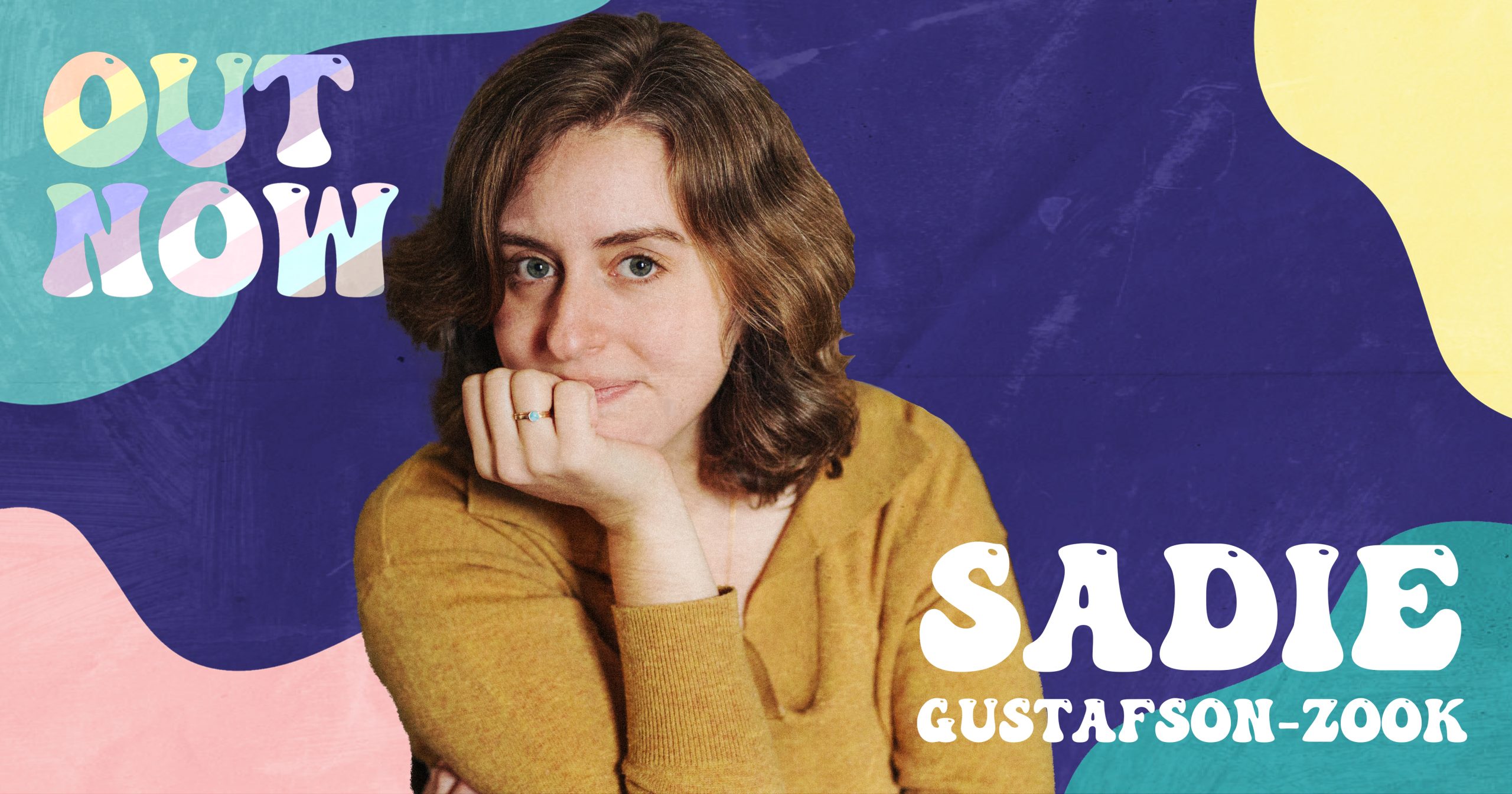
Out Now: Sadie Gustafson-Zook

Sadie Gustafson-Zook is a detailed songwriter, pulling together collages of images and ideas and stitching them into melodies and lyrics. I met Sadie in 2019 at Club Passim, a renowned folk venue in Cambridge, Massachusetts known for promoting generations of great folk music. I was studying in Boston at the time, surrounded by incredible developing artists. Sadie was one of them, alongside Liv Greene, Jobi Riccio (featured before on Out Now), and Olivia Barton, another queer artist who came through the Club Passim folk scene and is now gaining traction.

We are excited to share our interview with Sadie the same week she releases the incredible new album, Where I Wanna Be (available May 10). Their thoughtful writing, pure voice, and creative guitar lines are sure to impress. Many of the songs on the album have a lullaby-like feel enhanced by Sadie’s soft voice and soothing melodies.

This month, Sadie is touring the Midwest with Brittany Ann Tranbaugh, who we also featured on Out Now earlier this year. They are powerful songwriters and performers alone, but seeing both artists in one show is a treat that you don’t want to miss! If you’re in the area, be sure to catch their tour through Wisconsin, Minnesota, Michigan, and Indiana.

What’s your ideal vision for your future?

Sadie Gustafson-Zook: Ideally, I would be able to keep doing what I’m doing, but slightly more of it. I think my music offers something special and I would like for more people to hear it. At the same time, I really do like living at least part of the time as a normal person who is in their house and has a cat and is a part of their local community’s life – so maintaining a sense of balance is definitely something I’m passionate about.

Right now, my ideal vision would be to play 100+ fun gigs per year (I’m not really interested in gigging for the sake of the grind – I mostly want to have a good time and hang out with people I love); continue teaching privately and at music camps (I’ve been really lucky to be able to do this at Kerrville’s Song School, Kentucky Music Week, and this summer I’ll be at Ossipee Valley’s String Camp); spend a lot of time in nature and with my family; and keep absorbing so I have things to write about.

Why do you create music? What’s more satisfying to you, the process or the outcome?

I create music because I think it’s fun to sing and play instruments and I like writing about my own life in a way that other people can relate to. Personally, I like being able to organize my thoughts into a nugget that is shaped like a song and that helps me sort out my emotions. And then socially, I love having the opportunity to share those songs and feel a broader sense of connection with people around me – and people who I don’t know! So, I think the process and the outcome are both things I really enjoy.

Do you create music primarily for yourself or for others?

In college, I was a voice major and I spent four years singing operatic arias. I didn’t initially think this was what I was going to spend my college years doing, but once I started singing in such a big and full-body way, I had a really fun time experimenting with the extremes of what sounds my body was capable of producing. But when I performed these songs written by classical composers I didn’t feel very connected to the essence of the music. I sang it for myself, because it was fun (and probably also because I wanted people to pay attention to me), but I wasn’t assuming that my performance would touch something deep in someone else.

Since then, I have shifted towards writing and performing original music. I enjoy writing songs that are fun to sing and I write based on what I’m going through and what I need to talk about. Ironically, this feels like a more communal act than performing music that someone else wrote. I have the greatest chance of connecting with an audience over a shared experience if I’m speaking directly from my own experience, and ultimately my biggest goal is connection.

You shared about maintaining a sense of balance between being in the music industry and living in a home, with your pet, surrounded by community. Many artists and music-industry professionals have a challenging time with this. How have you built a sense of balance between these things? Do you have any words of advice for others working through the same challenges?

I’m very privileged to have an affordable living situation right now thanks to moving back to my hometown in the Midwest and having my parents as landlords. This freedom has made it possible for me to pay my bills exclusively with music-related work, which helps keep morale high in the music department. So I just want to preface everything else I say with the acknowledgement that it’s a lot easier to feel balanced when I’m not constantly worrying about money. While my situation is a privilege, I also know that not everyone would want to leave their music city hub and move in across the street from their parents in Indiana! Ha!

In terms of time balance, I’ve been testing out the way it feels to have music plans that take me away from home for one(ish) week each month, with some longer exceptions in the summer. That has been a nice way to not get too antsy at home, while also giving myself time to do more administrative work and be present in my town between tours. My first year of living in Goshen, I was pretty lonely and spent most of my time online, which honestly was horrible. I was really craving more in-person connections, so this year I’ve been digging into local activities as well as being really intentional about seeing my songwriter friends’ shows when they’re in a nearby city. Even when I don’t feel like leaving my house or driving a few hours away to see someone, I’m almost always happy that I did.

Your music is so descriptive, thoughtful, and well-crafted. What was the process like for you to write these 10 songs on the new album?

Thank you! The majority of these songs were written when I was living in Nashville in the spring of 2022 and then also when I was traveling around, sleeping in my car that summer. I had just had a breakup in Seattle and had to figure out where I wanted to live and between those two major changes I had a lot of processing to do! I also was spending a lot more time alone than I was used to and I felt like I had a lot of pent up creativity that came out really fast. Then there are also a few songs that I wrote once I was starting to feel a bit more settled in my hometown, as memories from my past kind of overlaid on top of my newer understanding of myself. Those came out more like steady drips throughout the end of 2022 and into 2023.

What inspired you to write Where I Wanna Be? What does the album mean to you and what do you hope others will take away from this collection of songs?

Although the album is called Where I Wanna Be, thematically the songs are more about who I wanna be and what I need to change in order to be that person. When someone asks, “How are you?” it’s easier to talk about geographical location (“I’ve been traveling a lot!”) as a substitute for emotional location (“I’ve been feeling really ungrounded”), especially when everything is in flux.

Each song, in its own way, speaks to who I want to be; I want to be someone who is free and expansive, who knows what makes me happy, whose identity reflects who I know myself to be, who is a part of a team/community, who doesn’t give my power away, who is consistently and historically queer, who trusts myself, who speaks up for myself and takes accountability, who feels at home in my geographical location, and someone who maintains a sense of curiosity in the midst of uncertainty. And that’s basically the whole album.

I think that’s why the album feels so intimate. Though I wrote this collection of songs for my own processing, I know that a lot of people go through this process for themselves, so I’m happy to lend my own experience to folks who might find it helpful.

The title track of the album, “Where I Wanna Be,” includes the lyric, “Every year I drive around, scope out the towns, thinking is this where I wanna be found.” I am curious if you feel a sense of the “grass is greener” in another town? I feel like this is a huge theme, especially among young adults, the idea that we may feel more fulfilled in another place.

Even if I daydream about moving, I find that I feel pretty aware of what I’m missing out on (in a positive and a negative way), and that helps with not over idealizing certain places. I know about the realities of living in Boston, or Brooklyn, or Nashville, or the PNW, and so all things considered, I’ve chosen to live where I am and visit those other places.

Sometimes I still daydream about living somewhere else, but mostly what I find myself imagining are the different communities I could be a part of. I’ve gotten little windows into different communities through meeting people at festivals and conferences, which are mysterious liminal spaces where people who live in different places gather together. They don’t represent an actual location where I could live permanently. And I think it’s helpful for me to remember that when I start feeling like I should move. Likely I’m imagining somewhere that doesn’t currently exist. Not that we couldn’t start an artist commune, though.

Who are your favorite LGBTQ+ artists and bands?

God, more like who isn’t LGBTQ+! [Laughs]

Spencer LaJoye, Flamy Grant, Jean Rohe, Liv Greene, Jobi Riccio, Singer & the Songwriter, Cloudbelly, Lindsay Foote, Olivia Barton, Joy Clark, Allison de Groot & Tatiana Hargraves, Olive Klug, Jane O’Neill, Brittany Ann Tranbaugh, Elisabeth Pixley-Fink, Adrienne Lenker, Taylor Ashton, Eliza Edens, Rachael Kilgour, Emily King, Judee Sill, and tons of obviously bisexual woman performers who aren’t publicly out.

For anyone reading this who might not be out of the closet, were there any specific people, musicians, or resources that helped you find yourself as a queer individual?

Although I’m bisexual, reading the Lesbian Masterdoc was very helpful as a way to sort through my past, draw connections between memories and feelings, and generally deconstruct the idea that being straight was the only option for me (compulsory heterosexuality). I also really loved reading Katie Heaney’s book, Would You Rather, and The Fixed Stars by Molly Wizenberg. (In addition to following every cute queer person I found on Instagram.)

What does it mean to you to be an LGBTQ+ musician?

I often feel like performers are treated kind of like inspirational court jesters, where we’re being the weird, thoughtful, creative ones, and the normal people come to shows to live vicariously through us. Honestly, it’s pretty similar to how queer people break boxes and live expansively just by being ourselves (except that queer stories are often suppressed and not amplified). So, if I have the opportunity to have a platform and the power to influence my audience, I want to take that responsibility seriously and show up as my fullest self so they can see that it’s possible for them as well. I love being a queer musician and knowing that by just being myself, I might be helping audience members learn more about themselves as well.

What’s the best advice you’ve ever gotten?

In 2016, I was attending the Rocky Mountain Song School and was a part of a partnered songwriting class where each participant told their partner a story from their life and then the partner would use that story as a songwriting prompt. My songwriting partner told me about his career trajectory and how someone advised him to get an entry-level job at the local venue that he wanted to play. So he got a job as a busboy at this venue and then progressively worked his way up, eventually becoming tight with the booker until he was selling out shows with his name on the marquee.

Although he wasn’t giving advice per se, I kept this story in mind when I moved to Boston after college and I got a job working at the box office of Club Passim. Regardless of career prospects, I think it’s a really good idea, for community building purposes, to become a regular wherever you want people to know you. For me, in working at Passim, I was hanging out there all the time and it was inevitable that I met a ton of super cool people who are doing really great things and now I feel pretty well-connected.

What are your release and touring plans for the next year?

This year is a big one for me! I’m (obviously) releasing this new album, Where I Wanna Be, and I actually have another recorded project scheduled for the fall! Tour-wise, I have been upping my booking game and will be touring around the Midwest in May with Brittany Ann Tranbaugh (we’ll likely be around Wisconsin and Minnesota when this article is published), the West coast in October with Jean Rohe, and the Northeast in November, and a lot of other spots in between! I’ll be teaching at a few songwriting and music camps as well, which I love to do. So I think it’ll be a great year!


Photo Credit: Morgan Hoogland

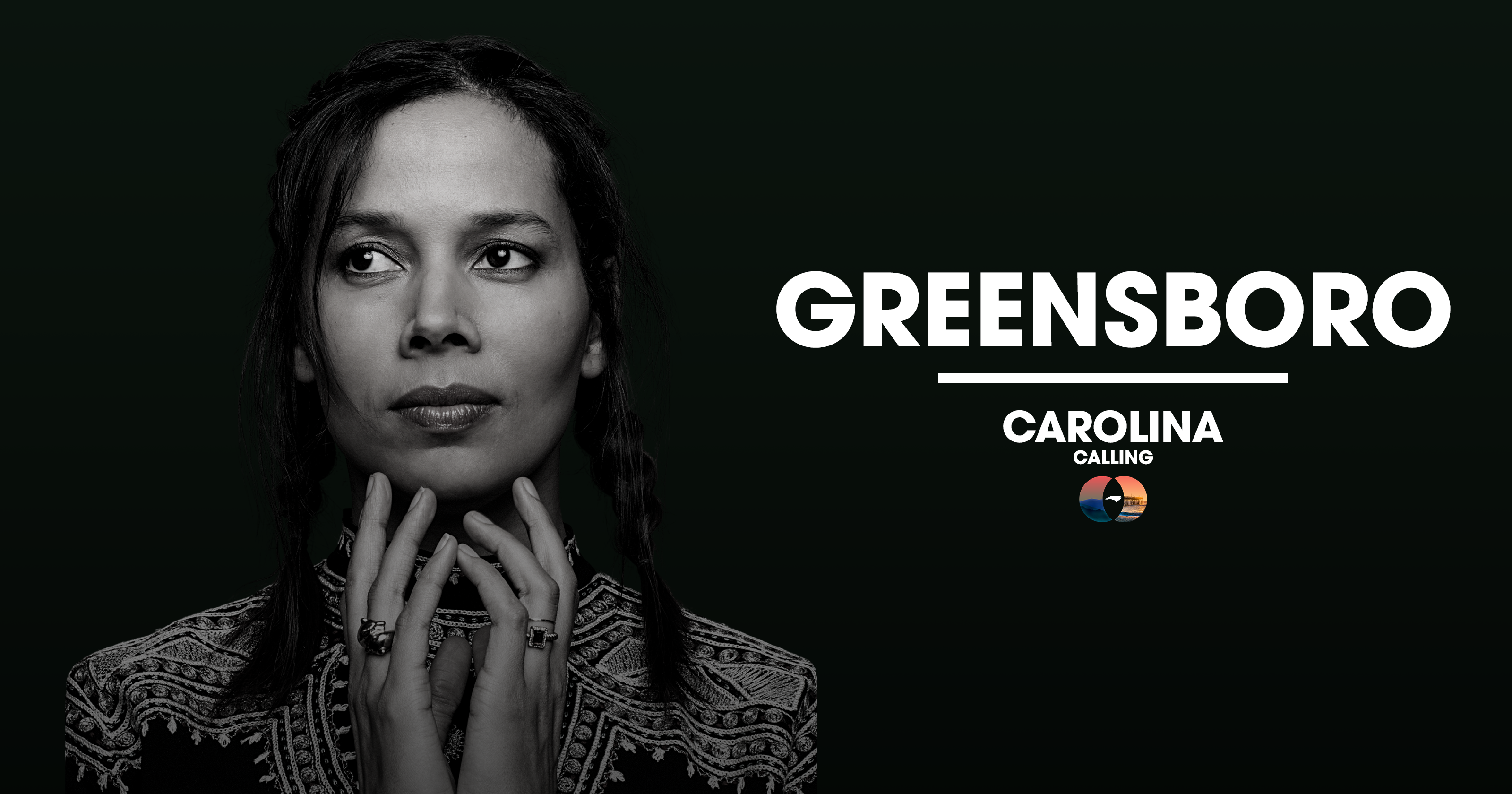
Carolina Calling, Greensboro: the Crossroads of Carolina

Known as the Gate City, Greensboro, North Carolina is a transitional town: hub of the Piedmont between the mountain high country to the west and coastal Sandhill Plains to the east, and a city defined by the people who have come, gone, and passed through over the years. As a crossroads location, it has long been a way station for many endeavors, including touring musicians – from the likes of the Rolling Stones and Jimi Hendrix at the Greensboro Coliseum, the state’s largest indoor arena, to James Brown and Otis Redding at clubs like the El Rocco on the Chitlin’ Circuit. Throw in the country and string band influences from the textile mill towns in the area, and the regional style of the Piedmont blues, and you’ve got yourself quite the musical melting pot.

LISTEN: APPLE • SPOTIFY • STITCHERAMAZON • YOUTUBEMP3
 

This historical mixture was not lost on one of Greensboro’s own, Rhiannon Giddens – one of modern day Americana’s ultimate crossover artists. A child of black and white parents, she grew up in the area hearing folk and country music, participating in music programs in local public schools, and eventually going on to study opera at Oberlin Conservatory in Ohio. Once she returned to North Carolina and came under the study of fiddler Joe Thompson and the Black string band tradition, she began playing folk music and forged an artistic identity steeped in classical as well as vernacular music. In this episode of Carolina Calling, we spoke with Giddens about her background in Greensboro and how growing up mixed and immersed in various cultures, in a city so informed by its history of segregation and status as a key civil rights battleground, informed her artistic interests and endeavors, musical styles, and her mission in the music industry.

Subscribe to Carolina Calling on any and all podcast platforms to follow along as we journey across the Old North State, visiting towns like Durham, Wilmington, Shelby, and more.


Music featured in this episode:

Rhiannon Giddens – “Black is the Color”
Andrew Marlin – “Erie Fiddler”
Carolina Chocolate Drops – “Cornbread and Butterbeans”
The Rolling Stones – “Rocks Off”
Count Basie and His Orchestra – “Honeysuckle Rose”
Roy Harvey – “Blue Eyes”
Blind Boy Fuller – “Step It Up and Go”
Rhiannon Giddens, Francesco Turrisi – “Avalon”
Carolina Chocolate Drops – “Snowden’s Jig (Genuine Negro Jig)”
Barbara Lewis -“Hello Stranger”
The O’Kaysions – “Girl Watcher”
Joe and Odell Thompson – “Donna Got a Rambling Mind”
Carolina Chocolate Drops – “Country Girl”
Carolina Chocolate Drops – “Hit ‘Em Up Style”
Our Native Daughters – “Moon Meets the Sun”
Rhiannon Giddens, Francesco Turrisi – “Si Dolce é’l Tormento”


BGS is proud to produce Carolina Calling in partnership with Come Hear NC, a campaign from the North Carolina Department of Natural & Cultural Resources designed to celebrate North Carolinians’ contribution to the canon of American music.

Photo Credit: Ebru Yildiz

Enter to win a prize bundle featuring a signed copy of author and Carolina Calling host David Menconi’s ‘Step It Up and Go: The Story of North Carolina Music,’ BGS Merch, and surprises from our friends at Come Hear North Carolina.

With Béla Fleck, Opera Star Jamie Barton Finds Her Way Back to Appalachia

At BGS, we are well aware of the immensely talented folks that have come out of Appalachia. Countless celebrated pickers, singers, writers, and performers have come from the mountainous heart of the American east. Jamie Barton is one of those singers, but her inspiration and voice led her to an entirely different realm of music than her neighbors tend to find. Barton is an acclaimed opera singer whose mezzo-soprano voice and commanding artistry have paved the path for her work with top-level ensembles like the San Francisco Opera, the Chicago Opera Theater, and the Metropolitan Opera.

Originally hailing from the foothills of Appalachia in Georgia, Barton’s roots are in bluegrass, old-time, gospel, and classic rock ‘n’ roll. The singer retains her those roots off stage as well, regularly using her platform to champion issues of social justice, sexuality, and body positivity. The all-around badass that she is, Barton is featured in a San Francisco Opera featurette called In Song: Jamie Barton, in which she returns to her musical roots in performances with Béla Fleck, who knows a thing or two about Appalachian music traditions. Produced in partnership with Hardly Strictly Bluegrass, the short film is both heartwarming and eye-opening. And it’s always a treat to see two musicians of the highest caliber perform together. Take a look.


Photo credit: Taylor Ballantyne

BGS 5+5: Grace Clark

Artist name: Grace Clark
Hometown: Williamston, Michigan
Latest album: Grace Clark EP
Rejected band names: Still pushing for Grace Clark and the Red Dirt Girls (even though all the members of my band are guys)

What’s your favorite memory from being on stage?

I’m not sure if I can think of one specific memory (there are so many!) But it’s always the best feeling whenever I can walk on stage, let go of expectation and allow myself to be fully present. It’s so easy to get caught up in our heads, always overthinking and putting pressure on the way we think things should go. Being able to find that space where I can trust that the hard work has been done, and then make the conscious choice to let everything else go and enjoy my time on stage is such a beautiful gift. Those performances always solidify why I’m pursuing this path.

What’s the toughest time you ever had writing a song?

I’ve been in the process of writing a song about my birth mother for a little over two years now. I have two tunes — one from my perspective and one from the perspective of my mother. I was adopted when I was four months old from South Korea and for so much of my life it has felt mostly unfathomable to imagine coming from people who look like me, who share my blood and my heart. As I’ve gotten older, the desire and yearning to feel more connected to my ancestry and my roots has gotten stronger. I find myself either feeling so many intense emotions about it all of it or the exact opposite — distant and unable to really comprehend that part of my life. I think that’s what makes writing these songs so difficult.

What rituals do you have, either in the studio or before a show?

I always enjoy pampering myself and spending some quality time alone. Hot water with lemon and honey, yoga, and a long, hot shower are always a must on the day of a show. I’ve struggled with getting caught up by the high energy of a performance, ungrounded by all of the extroverted energy and the little things that can come up on the performance day. I find that a bit of meditation and silence always puts me in a good head space! Also a shot of tequila can sometimes do the trick, haha.

How often do you hide behind a character in a song or use “you” when it’s actually “me”?

Opera taught me that the moment you walk onto the stage, you are your character. And you’ve probably spent countless hours off-stage channeling that energy and perfecting the role. What I loved most about that practice was finding ways to connect with my character, whether it was a major role or a small part in the chorus. Taking from my own life events and then using that to deepen the relationship with the role always made the process that much more exciting.

When I first got into the bluegrass scene, I think I took people a little off guard by how much I “performed.” So many facial expressions, lots of hand dancing (look up any video of me and you’ll understand what I’m talking about). I remember being really insecure that maybe people thought I wasn’t being very genuine, but I think that theatrical side has always felt like the most honest me. Most of my tunes are about real life experiences, so I feel like I rarely hide behind a character but rather, just allow myself to let that dramatic side come out and hopefully convey to my audience how deeply I feel about these songs.

What was the first moment that you knew you wanted to be a musician?

I was in fourth grade and was performing at Carnegie Hall with a group called the MSU Children’s Choir. The experience was unlike anything I had ever been a part of. I remember being on stage, looking out into this beautiful hall, being surrounded by hundreds of other kiddos singing out. There really is nothing like singing with a giant group of people! My little 10-year-old self was freaking out and my heart felt so darn full. At the time, I wasn’t thinking, “I really want to be a professional folk singer!” Haha…but the thought, “I want to do this for the rest of my life” resonated with every part of my being.


Photo credit: Carly Miller

From Banjo to Opera, Rhiannon Giddens Brings History to the Stage

An interview with Rhiannon Giddens these days feels like a game show lightning round. Since winning the Steve Martin Banjo Prize in 2016 and a stunning $625,000 MacArthur Fellowship in 2017, the songwriter, singer, and instrumentalist has widened her scope and let a range of fine and folk arts projects flood into her idea-driven world. When we caught up with her in Nashville, for example, she was in rehearsals for Lucy Negro Redux, a multi-layered original ballet about Shakespeare, his purported black mistress and issues of identity and otherness. Working with poetry by Caroline Randall Williams, she composed the music with one of her latest collaborators, jazz pianist and world percussionist Francesco Turrisi. They’ve made a duo album set for release this year.

Here, Giddens speaks about her broader artistic scope and her attention on how women of color negotiate the past and present.

How different is your creative life now versus five years ago?

Oh my god. It’s like: “Who was that person?” I don’t even know. I am so grateful for that time. I was transitioning from the Carolina Chocolate Drops to my solo career. But it’s definitely become more of a creative life. I still am very much an interpreter. I’m very interested in giving old songs new life and putting them through a lens of today and I think there are a lot of things that are left on the shelf that need to be aired. But I definitely have found over the years that I’m finding more and more of my creative life to be in writing and collaborating. I’m very rarely going to sit in a room and write stuff. It’s like I write things and then I want to work with somebody and develop them or have a reason to do it.

So my collaborative opportunities have really grown since I left the band because it’s a lot easier to do things as your own person. There are all these things you have to think about when you’re in a band that I don’t have to think about any more. And it’s really allowed me to focus on the woman side of things, which is hard to do when you’re in a band full of boys, you know? Now I feel I can focus a bit more on what I’m finding is very important and front and center for me, which are women’s issues and women of color, in particular. Dealing with the history of what we’ve had to go through in this country and in other places, and what does that mean? And creating platforms for other women of color to have their voices heard, in my limited capacity.

You have background in opera, which may be the most collaborative of all the fine arts, with all its component parts. And you’ve started doing Aria Code, an opera podcast. What’s that about?

I was approached by Metropolitan Opera to be guest on this podcast and it just turned into becoming the host. And that’s been really fun. The wonderful producer Marrin Lazyan, she’s put it all together and I’m there to provide context and if there’s stuff that jibes particularly well with what I know like Otello, the Verdi opera, I can bring in my expertise on blackface and things like that. It’s been great.

And I’m going to be in my first production next year as a mature artist. I’m doing Porgy & Bess with the Greensboro Opera. It’s to open up the new arts center in Greensboro. So it’s kind of part of my involvement in my hometown. And also an opportunity to sing Bess, which I’ve never been able to do. So opera’s come back into my world in kind of unexpected ways. I’m writing an opera. I sing with orchestras on a regular basis. So it’s been really wonderful to see that come back into my life because it is something that I love so much and that I have spent a lot of my years doing. So we’ll see where it goes. I don’t know!

You produced the album Songs of Our Native Daughters, which brings you together with Amythyst Kiah, Allison Russell, and Leyla McCalla. What motivated this and how do you put these women into context?

It was an amazing opportunity. I was already working on this idea of early American musical history and speaking to it through the music of the banjo and the music of minstrelsy for Smithsonian Folkways. So it took this little turn and became a record with these really strong women of color. With my co-producer Dirk Powell, we were talking about who we wanted to be on this project, and that’s where we ended up. I was like, “Oh, this is where it needs to go.” From then on it took this slightly different path down to really talking about the woman of color’s experience in America and having a platform to respond to that in an artistic way.

And to each of the women who came in, I said, look, bring your banjo. And let’s talk about what it means to be a woman of color here and what it means to have ancestors who’ve gone through what they’ve gone through. It was an amazing experience to watch them feel like they had this space to write about these things that maybe they’ve touched on, but to have days to focus on these themes and these ideas. It was a beautiful collaborative thing. I’ve worked with each of them in various ways so I just knew it was going to work. And it worked better than I could have ever really dreamed. It went places I’d never have considered. That’s why you pick people and then you let the project do what it does instead of going, “It’s not exactly what I envisioned.” Well, usually because it’s better! So leave it alone and let it do what it’s going to do.

In this respect, do you see yourself as a mentor, or as a leader in this widening and overdue effort to infuse folk and roots music with more voices?

I’m always looking for ways to facilitate. People in these positions, like the folks putting on the Cambridge Folk Festival or at Smithsonian Folkways, they’re looking to me, and I’m like, “Hey these people, because they’re awesome.” And if that’s how I can use whatever little power I have in the world, that’s what I want to use it for. I’ve got my own career and it’s very important to me, but that’s also very important to me–creating the community of people that are doing this.

Because that was the strength of the Carolina Chocolate Drops. We were a band and we had each other. In a time where, even less than now, people were like, “Black people on banjos? What?”, we had each other and I know what that community can mean as an artist. It really gives you strength. And that was my idea with Our Native Daughters and with anything I’m (doing). Amythyst has opened for me. Leyla was part of the Chocolate Drops. JT and Ally (Birds of Chicago) — I’ve definitely championed them. I think that’s what we need to do for each other. If I’m in a position where somebody who has power asks me, I’m going to spread that around. Because I think that’s what you’re supposed to do.

They tell writers that it’s better to show than to tell. And it strikes me that roots music is moving from a phase of ‘telling’ about inclusion to a phase of showing. Is that fair to say?

I think so. I’m definitely moving that way in my own life. There was a lot of talking with the Chocolate Drops because you had to educate people. But there was also a lot of just doing. We found the balance; we’re going to contextualize this, but then we’re just going to play it. Because the facts are the facts and we’re not in a position to shame you about not knowing this. We didn’t know this. But I definitely found that over time, I’m tired. I just want to play and sing.

And the next record of mine is not a project. It’s not a mission. It’s coming out in May (I think) and Francesco and I did that together. It’s really all the worlds that I’ve been talking about and being in all together. I just want somebody to put it on and listen to it, and they don’t know anything about me, and they come away – I want them to love the record but I also want them to feel this aspect of nobody owns any sounds. Nobody owns any experiences in humanity. We’re taking all the sounds you heard in the ballet and the notion that humans have been moving since the beginning, and we’ve been affecting each other since the beginning.

So a religious trance drum from Iran works perfectly well with an Appalachian a cappella ballad. Because they’re representing universal human truths. It would be really nice for people to just experience that through sound and through the experience of the songs. And of course we’ll talk about it. But I’m kind of moving toward showing and inhabiting all the work that’s come up until now and living in that and taking that to where it needs to go.


Craig Havighurst covers music for WMOT Roots Radio. Hear the interview.