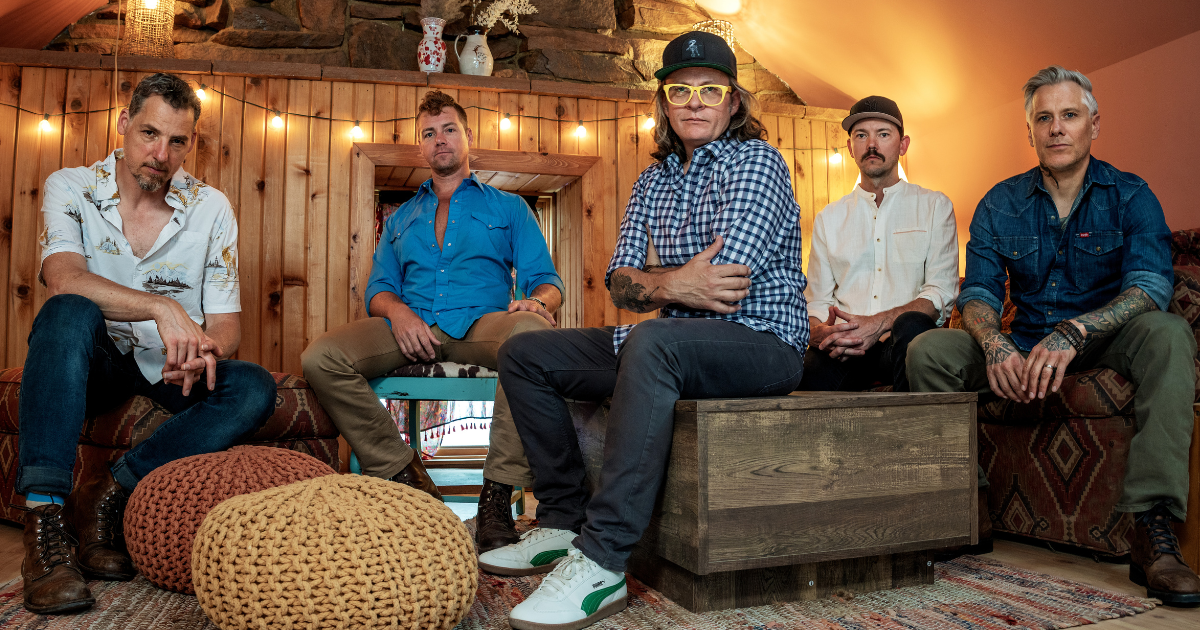
An Oral History of the Infamous Stringdusters

BGS was founded 14 years ago and from the very beginning, we’ve been covering, collaborating with, and cheering on the Infamous Stringdusters. Our first posts about the group published to our site in 2013 – not even a year after our launch – spotlighting banjoist Chris Pandolfi’s Bluegrass Manifesto, the band’s only-four-years-old marquee event The Festy Experience, and their most recent album at that time, Silver Sky. Now, in 2026, they’re not only our Artist of the Month for the second time, they’ll be headlining our stage at Bourbon & Beyond this September, too. But, our love for the band – and the many partnerships we’ve built together – began, like most, back in 2007 with their now iconic debut album Fork in the Road and a banner year for the group at IBMA’s World of Bluegrass and the IBMA Awards.

Back then, when the Stringdusters took home trophies for Song of the Year (“Fork in the Road”), New Artist of the Year, and Album of the Year, perhaps no one – not even the band themselves – would have predicted the seismic, existential impact they would end up having on bluegrass and the as-yet-unnamed subgenre thereof: jamgrass. Twenty years on, the Stringdusters celebrate their duo of decades with 20/20, an album of 20 songs celebrating 20 years of defining and redefining bluegrass and jamgrass.

For our Artist of the Month coverage, BGS and Good Country co-founder Amy Reitnouer Jacobs sat down with all five members the Infamous Stringdusters for a wide-ranging conversation of a band that epitomizes bluegrass, jamgrass, and psychedelic string band music in the 2000s.

First of all, again, I wanna just thank you for doing this. We are so thrilled to have you guys as our Artist of the Month and congratulations on 20 years of the ‘Dusters.

I wanna start this with Panda actually, and this is not gonna be just an oral history interview, but I think, looking back on 20 years, it feels appropriate to start from the beginning. So let’s talk about origins and start back at Berklee [College of Music], if that’s cool. Tell us a little bit about the beginning of the band.

Chris Pandolfi: I arrived at Berklee in 2001, which was the year that Andy [Hall] had just left Boston for Nashville. I first met Critter [Chris Eldridge] through Zach Hickman, who was playing in Josh Ritter’s band. He went to Oberlin [University] with Critter. We got together and we were playing, and Zach had some free studio time at a spot in New Hampshire and we were gonna go record some music, just for fun. Our careers were not underway in any way, shape, or form. We didn’t have any grand designs here. We were just gonna go record some music and have some fun.

Then, on the precipice of this recording, we went down to the Cantab Lounge to meet this guy named Andy Hall. We went there and–

Andy Hall: [It was] The Plough and Stars.

CP: The Plough and Stars! Andy was playing–

AH: I don’t remember exactly if I was playing or if you were playing.

CP: And the next day we were in New Hampshire at this recording studio and we made this EP called Stable Horse. Essentially, Andy was already living in Nashville, so around that same time, he had met Jeremy [Garrett] and they were playing together. It was that recording session that got the wheels turning for me. Like, “Oh, we could do this thing with other people our age,” and not fall into the very sort of common thing in bluegrass where you get hired by someone else and you’re essentially a sideman.

We were recording and teeing things up, and we all had other gigs at that time. It was me, Andy, Jesse [Cobb], Critter, and Alan Bartram from the Del McCoury Band. But that was my earliest memory of “We could start a band with our contemporaries.” And Zach Hickman, I give him credit, he facilitated that.

I don’t even think we had the name “Stringdusters” yet. Alan got the offer to go play with Del McCoury and we had met Travis [Book] at IBMA, so we called him up and he came and lived in my driveway for a few months. True story.

Travis Book: You can really get away with a lot if you park your car in someone’s driveway and then try to stay outta the way.

So Andy and Jeremy, what are the origins of you guys starting to play together?

AH: Was it Ronnie Bowman? Was that the first time? I was in Ronnie Bowman’s band and the fiddle player and Ronnie had a bit of a falling out while we were on the road and–

CP: We were all at a festival, so we scooped up Jeremy and he got on the bus with Ronnie Bowman!

Jeremy Garrett: Yeah, I definitely knew about you two beforehand. And, of course, in bluegrass everyone’s a fan of Ronnie Bowman. He’s such a crooner and such a cool cat. I definitely had plenty of experience before, but this was like one of my first major Nashville gigs. And it was eye-opening very quickly that, as a sideman, it’s pretty limiting.

The conversations I remember started happening pretty fast in the back rooms: “Hey, let’s maybe consider doing something of our own. Long-term, how can we make this happen?” But it was just like whispers. I remember going to IBMA – that’s where I met Chris Pandolfi and he blew me away with his melodic banjo playing style and this futuristic sound that he had. I’d really never played with that before, because I came from a very traditional side of bluegrass.

CP: Didn’t I give you a copy of my record? I remember you telling me that.

JG: Yeah. And I listened to that record all the way home from IBMA – I’ll never forget – and my dad was riding with me. I was just like, “This guy’s awesome.” Overall, it felt like all of us coming together through our connection in Nashville and these music parties that used to happen on the reg. I don’t know if they still do. We would have huge jam sessions, especially at Panda’s Pad. There’d be 20-30 people all gathered up in somebody’s backyard, picking. And it was almost every night. So you can’t help but get tight and start seeing the writing on the wall, the possibilities, through those kind of connections.

CP: These days in Nashville are so different. It’s so much “cooler” now. There’s so many young people playing bluegrass and when you hear about a lot of the socializing in Nashville, it’s a lot of young musicians. When we were having these parties, it was a real diverse mix of ages. You had Sam Bush there, you had Scott Vestal, you had Ronnie Bowman, and the McCourys. We were the young cats around and there wasn’t a very vibrant young scene. We were intermingling with a lot of the elder statesmen of bluegrass.

That’s a really special time in Nashville. I can remember that’s when I started hanging out in town and there was like a magic in the air. That intergenerational mix doesn’t organically seem to be happening as much, but maybe it is and I’m just not invited to parties anymore.

So Travis, were you coming to Nashville from Colorado? Where were you before then?

TB: Yeah, I was living in Durango and Anders Beck from Greensky [Bluegrass] and I started playing music together in maybe 2002. There were gigs and we were learning this music and then Andy Thorn and some other friends – that’s Leftover Salmon – they just showed up in a music store one day. Andy was probably 19 on college break and we hung out with him for three days straight. When he went back to North Carolina, we called him up. We’re like, “Dude, you gotta come back! We gotta make a band! We’ll play RockyGrass, you’ll win the banjo contest, we’ll win the band contest.” Anders and I were like, “We can see the future, but we need Andy Thorn,” because he was such a compelling musician and just such a natural. Still is.

We started this band called the Broke Mountain Bluegrass Band with Jon Stickley, who’s also a visionary in our music. We were all picking and almost entering that same path as Leftover Salmon or Yonder [Mountain String Band]. We were already doing this like hippie bro band, just loving playing music and camping and playing festivals and going to hot springs and just fucking around. It was brilliant.

But then we went to IBMA, which at the time was the best way to show off your band and position yourself in the context of the larger [bluegrass] world. Try to get some gigs and go party your absolute brains out for a week. We were pretty rough around the edges, but one night I stepped off an elevator and Chris Eldridge came around the corner. [He] was like, “We need a bass player for this jam. Will you come jam with us?” I went into this little alcove and it was essentially the Stringdusters. It was Critter and Pandolfi and Andy Hall and Jeremy and Jesse Brock. I was just hanging out, holding on for dear life. I’m partying, I have a backpack full of beer, I have no shoes on, and I looked around and all my band mates were just there sitting along the hallway floor listening to the jam.

Andy’s partner at the time, Janice, said, ” Do you ever think about moving to Nashville?” I just laughed. Absolutely not. But I had fixed myself in their mind and once they exhausted all the possibilities of people who could play bass in Nashville – at least this is my understanding – they dug into their collective consciousness and called me up to audition. They’re like, “We think you’re the guy. When can you move to Nashville?” So I went out there to work on Fork in the Road that summer. What was this, 2004? Am I right, guys?

AH: I think that would’ve been 2005.

TB: Yeah, you’re right. 2005. [I] moved out there in September and lived in this guy’s driveway. It was kinda wild.

Falco, I promise we’re getting to you. We’re almost there!

In pretty quick succession though, you’ve got the core crew with Critter and Jesse [Cobb] at that time, you record the album, and get signed to Sugar Hill. And then things just start happening! Can you walk me through the time between recording and the IBMA Awards in ’07?

CP: There’s a lot of extremely disorganized touring. We’re driving around in two cars. I still have the notebook from the gigs – we were getting paid a few hundred bucks a night, maybe a thousand on a good night. Doing everything that we could.

We didn’t have grand designs on anything. The IBMA Awards was a really big moment for our band. Thinking back, it was a moment of legitimacy, of just getting [to] one of the hardest things as a band, which is the collective feeling that this thing is gonna stick together. That’s the peril of starting a band with players who you think are really good: at any time anyone could get hired away for something. But we were playing gigs, we were loving life, we were working on our music, and we were poor as could possibly be. I just remember the IBMA Awards as a big moment of solidity, of that feeling like we could really do this, we could really be in this for a long time.

TB: There was that first summer we had a couple of big anchor gigs, but a lot of it was really just driving around and killing time in between these anchors and hoping that we could reach the right audiences. I think that the big bluegrass scene was ripe for some young pickers who were taking it seriously and committed to each other.

JG: Yeah, getting gas in the tank right off the bat was huge for us, that’s for sure. And we spent a lot of time in between those gigs just going to be in the wilderness and spending time together. I don’t know, for lack of a better way of explaining it, [we were] bonding like a band.

But man, when you’re a real band and you’re not just like a frontman or whatever, you’ve got a real synergy with other guys in a group. It’s special. And I feel like a lot of what brought us together and [what] makes us as tight as we are now was those off times where we were discovering our lives and just doing cool stuff like that. Creating this thing together.

I do need to know who came up with the name. Where did the name come from?

CP: Ben Eldridge.

AH: Yeah!

CP: We were working with a list of pretty mediocre names and Ben came up with “Stringdusters.” After 20 years, I can say there’s a lot of bad band names out there, but the Stringdusters – I think it’s a cool band name and it suits us.

All right. Now we bring Falco into the mix. So how did you get mixed up in all this? Tell us your origin story.

Andy Falco: So, Critter fell off the back of a truck and I got picked up – no! What happened was, I’d known Pandolfi and Andy Hall from the Northeast bluegrass scene. I was playing with this guy, Buddy Miriam, who’s on Long Island, and who actually was friends with Bill Monroe because he got struck by lightning at the Berkshire Mountain Bluegrass Festival, which of course was Grey Fox. And Monroe found out about it and reached out and they became friends. So he learned a lot of mandolin directly from Monroe.

My brother was getting into bluegrass and was like, “You should come to this bluegrass festival.” I went up there and saw Doc Watson and really got into playing bluegrass. ​I moved to Nashville maybe a year after Panda and Critter did. Andy Hall was already playing in Dolly Parton’s band. And I had met Jeremy, actually by accident, at SPBGMA. My first time in Nashville, some guy came up to me and said, “Hey man, how are you doing? How’s everything been?” I was like, “Great. This is my first time in Nashville. Everything’s been great.” Then he stopped and said, “Man, I thought you were someone else.” And he says, “Come meet my son.” That was Jeremy’s dad, and that’s the first time I met Jeremy.

When I moved to Nashville, these guys were starting the band. I was watching them doing their sets at IBMA. It was killer. Then when Critter left, they asked if I’d be in. I wasn’t gonna start until September and one month later was the IBMA Awards. So I just joined the band and here they are, winning all these awards.

JG: I would like to say, I’ll never forget your first gig. You killed it harder than literally anybody I’ve ever worked with to this day. Absolutely stepped into the role and blew it away. And it was very obvious at that moment that he was the right man for the job, for the Stringdusters.

AF: I had big shoes to fill with Critter – and Critter and I were friends. In fact, I knew Critter before I met anybody in the Stringdusters. We met at seven o’clock in the morning on the last day of IBMA, when we’d pick all night and our door was open. And here comes Critter with his guitar.

CP: Critter introduced us.

AF: Yeah.

CP: He said to me, “Do you want to go hear the fastest guitar player alive?” And I said yes.

AF: I worked with Critter, too. Critter was very supportive of coming over when I was preparing to join the band, showing me the parts that he played on the record. So I had a really good foundation, thanks to Critter, of what he had done. Then I was able to put my stamp on it.

So what is that pivot then? You all mentioned the kind of shift that occurred, moving you away from traditional bluegrass and more towards jamgrass. How did you find your own sound? What was the decision to pivot?

AH: I remember a specific show where we decided we were gonna try and extend some [of the] set. I think it was the Animus Theater in Durango and it was a Colorado bluegrass crowd, which was more of a dancing crowd. They were used to more diverse sounds. I don’t remember, we were just like, “Let’s try and put a jam in this one song,” or whatever. So we’re playing, we’re jamming, and we’re extending whatever song it was. The whole crowd was just dancing. The energy was feeding back and forth and it was like, “Whoa! This is so much more exciting,” in contrast to everyone sitting silently and clapping in between songs. We made a choice one night and we saw the crowd just light up and dance and lose themselves in the music, and that fed our energy.

CP: Also, we were into that stuff.

AH: Yeah.

CP: But we hadn’t really made that connection yet. The real moment that I remember is we opened three shows for Railroad Earth. We played the 9:30 Club. We played Theater of the Living Arts and, I think, and we played Burg Williamsburg, when our van broke down and we showed up last minute. Those are the gigs that I referenced in the Bluegrass Manifesto. When I did the IBMA keynote that grew out of that, it really referenced those. I remember a few shows, too, where we would come off stage and we’re like, “Oh my god, that jam. Let’s do that again.”

We played these shows with Railroad Earth and it connected some dots that didn’t connect automatically, even though we had Grateful Dead, Phish, playing all the time. We were really coming from that IBMA buzz and awards. And, like anything, it took some time to discover, [it took] some experience. That was when some real change started happening around our business. Then the music really followed that trend.

JG: I’ll say, you guys, don’t forget about the Zeltfestivals. They were beyond anything that I personally had ever experienced. We went out and these people were going absolutely bonkers for our music – they had barricades out there and stuff. I’d never seen any of that at a bluegrass show. To me, that was fire in the tank.

AF: I think that also a big part of that is just, I know for myself, not growing up playing bluegrass music and then getting turned onto it by Garcia and Grisman and people like that. But I think it was just like when I started learning bluegrass. There’s a way that you have to do it and then, finally, you get to a certain point where all these dots are being connected, where you start to let these other influences come out, because you start to get more comfortable as a band. You start to allow that like, “Yeah, why can’t we do it? Why can’t we mix these things?” Even just as individual players. Why can’t you play this style? Blending these kind of jammy elements and these rock elements and then seeing how it worked.

You all have such varied individual projects and influences. Do you still think that you’re shifting your sound? What are you listening to and is that influencing what you’re doing?

AH: It’s definitely influencing what we’re doing. I think, to Falco’s point, I feel like I’m allowing [in] more and more of my original influences that I grew up with. I was a metal dude in high school. I think the older I get, the more I enjoy letting in who I am.

AF: Getting away from the “that ain’t a part of nothing” bullshit, right? Like, what? Who’s to say, right?

JG: Yeah, at the end of the day it’s art and you gotta let that lead itself, if you’re a true artist. Otherwise, you’re doing a preservation society kind of thing in the bluegrass world. For the longest time, I felt we were all paying homage to this awesome music, but we’re not letting it breathe like it should sometimes. It’s very fun to be an artist and be able to have the permission to just kinda let it flow, which is what we let ourselves do. We let the art dictate what we did, and we were true to ourselves in that way. That was something that served us very well. Still does.

You all live in different places now. I know the band is not as centered in Nashville as it used to be, but you did talk about the off-times and how that bonded the group early on. How do you stay bonded as a band now? How have things shifted? Being a decentralized band, how has the writing recording process changed for y’all over the last 20 years?

JG: I think that’s an important point. Yes, we’ve changed a lot over the years, but we’ve been able to stay tight because of those early formative years when we were all just broke traveling around in a band. I didn’t have any brothers growing up, but these guys are definitely my brothers and they know more about me than anybody else in this world. To allow each one of us to have the freedom to live where we wanna live and come together the way that we want to come together, I think that has been really one of the main things that have kept us together.

Over the years we’ve all developed little side things outside of the band. I think that’s been healthy. For me, I like to do my own solo music, music that I write and I like to perform – and stuff that wouldn’t necessarily fit within the confines of the Stringdusters. But I still want to get that art out there. We continue to challenge each other. Music can be competitive in a not-healthy way. But I feel like we do it in a healthy way, in the sense that we drive each other to just be the best that we can be at what we do.

CP: I got married last fall and in the run up to my wedding, one of my aunts asked me, “Are all your bandmates gonna be there?” In my mind I had this moment where I was like, “Are my band mates gonna be there?” You might as well ask me if my family is gonna be there! It’s just life at this point. After 20 years, it’s cool to observe the level to which you become each other’s family.

That’s the definition of community and you don’t think about these things when you’re going into this life, but there are some incredible unintended consequences. That informs the music and that informs all the life experiences too.

And here we are, 20 years later. That’s pretty cool.


Explore more of our Artist of the Month coverage of the Infamous Stringdusters here.

Photo Credit: Daniel Milchev
Mark Erelli Had an Idea for a Special First Live Album: a String Quintet

Just as spring began its soft awakening here in the Northeast, Mark Erelli breathed new life into his vast catalog with the release of Live in Rockport: Mark Erelli & His String Quintet. As if his 13 solo albums, three bluegrass albums, and a considerable list of collaborations weren’t extensive enough, Erelli’s newest album forages entirely novel innovations.

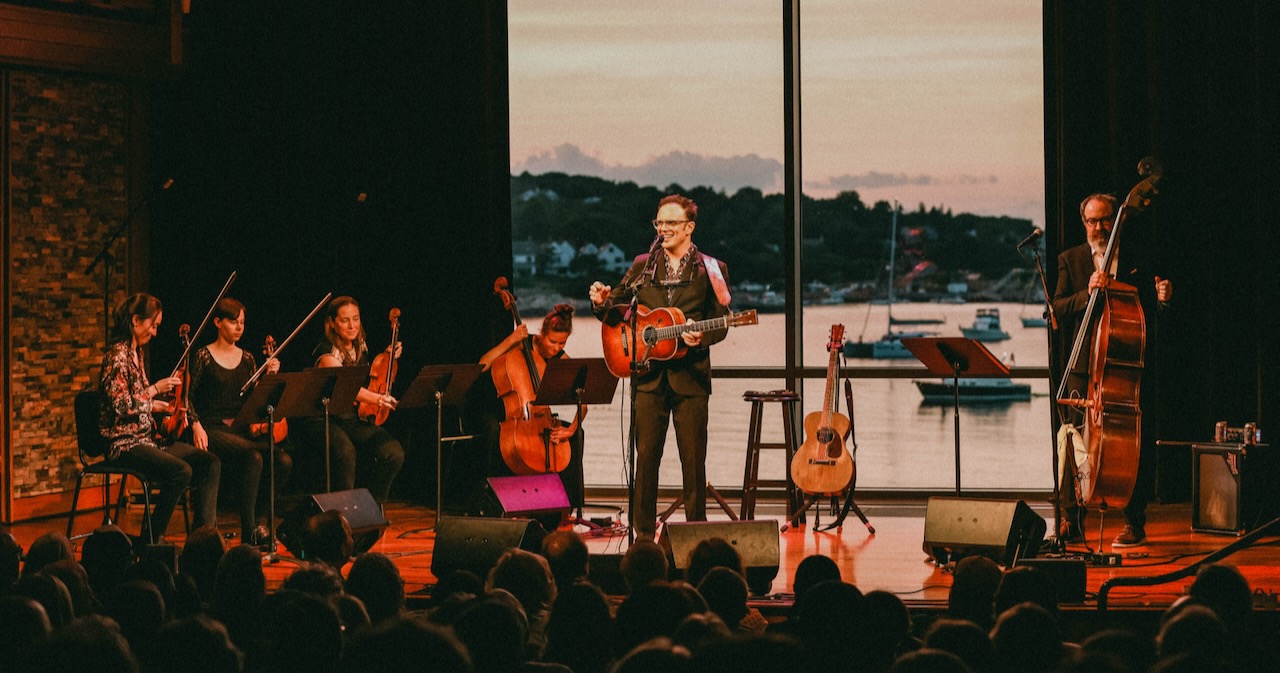
With the help of longtime collaborator Zachariah Hickman (bass, vocals, arrangements), Erelli dispenses a selection of nine songs from throughout his decades-long vault of material with an imaginative twist – each has been delicately rearranged for Erelli, his guitar, and a string quintet. Recorded live in the sonically apt Shalin Liu Performance Center of Rockport, Massachusetts, the painstakingly intricate layers of strings weave a dynamic backdrop for Erelli’s potent songsmanship.

Cinematic and profound, the resulting tracklist examines these illustrious songs through new textures and colors. With deep attunement to both past iterations and new arrangements, listeners are struck by the simultaneously transient and perpetual nature of a good song.

BGS had the pleasure of chatting with Mark Erelli about the musings and process behind his newest creation.

So tell me about what the inception of this project was like – what propelled you to make a live album with a string quintet?

Mark Erelli: I’ve wanted to make a live record for years. And the question for any artist is always, “When do you do it?” If you do it too early in your career, you don’t maybe have as much experience performing live and you’re maybe not at the height of your powers. Yet, if you do it when it’s been a long time between records, it can seem almost like an afterthought. So I’ve always wanted to do it, but I’ve really struggled with the “when” of it. And then I’ve also grappled with what the format should be, because I perform in a lot of different formats, but I think my native performance format is still as a solo acoustic singer-songwriter.

I’ve thought about doing that live since I don’t have any records where it’s just me and my guitar. I’ve actually tried to professionally record live shows, but I never really captured a show that felt magical, and that’s the thing about live performance, right? It’s such an ephemeral thing, that’s the beauty of it, and that’s the frustrating thing if you’re trying to capture it. As I got further and further in my career, I realized I didn’t want to do the kind of live record that is just a snapshot of me on a normal night. I decided if I was going to do it, I wanted to make something really special and I wanted it to be a classic moment that really transforms how you think about an artist.

One of my favorite live albums is At Fillmore East by the Allman Brothers Band – it’s a high bar to measure yourself against, but I really wanted a live album that showcased my work in a new light. That’s where the string quintet came in. I had worked with strings on my most recent three records or so and I started working with strings on my covers record in 2018 called Mixtape. Strings are such a novel, fun, really amazing element to be able to work with – they’re quite the extra color to paint with, but I always had used them in the context of a band performance, tracking the strings after to support and augment the band.

I started wondering, what would it sound like if the strings just were the band? I got the chance to figure this out when I re-released my debut record on its 25th anniversary and I re-recorded one of the songs with a string quintet. That’s when I realized, “Oh yeah, this is gonna work out great, we’ve got to find a way to document this.” We made the live record shortly thereafter.

What do you think changes about the music and the material when you intentionalize the context and the sound like this?

Strings are really unique in that they can support a very wide dynamic range. For example, if you’re playing with a rock band, it’s pretty easy to get and you can only really get so quiet. The drums can only be so quiet. Electric guitars can only be so quiet. But the strings can get as loud and as percussive as stirring as a rock band. There’s this extra part of the dynamic range at the lower end of the spectrum, at the quieter end, that is not really accessible in any other kind of band format. String players are really adept at playing very quietly, because sometimes they have to provide atmosphere and/or introduce tension. But then other times they have to have this totally, totally aggressive, intense kind of energy, like with Psycho. What I love about the string quintet is that they just let me keep the full dynamic range of my music on the table, as far as what kind of songs I can play and how I deliver them, meanwhile I don’t have to sing over a drum kit.

Could you talk a little bit more about that process of arranging with the quintet? And I’m also curious about song selection – what it was like picking and choosing which songs you’d arrange?

I mean, I can’t speak specifically to the arrangement process, because that is pretty much entirely the purview of Zachariah Hickman, who wrote all the arrangements. I’ve worked with Zach basically on every project I’ve done since 2008 in some capacity. He’s produced a lot of them. We do a lot of projects and side projects together, which is to say that we’ve built up almost 20 years of really intense, deep trust. Zach is a far more trained musician than I am and he just always knows what I want to hear or what I’m trying to strive for, even if I can’t quite verbalize it. And he wrote these string parts accordingly.

As far as which songs to do, I think some songs have a more cinematic quality to them for whatever reason, whether it’s the sweep of the imagery and lyrics or the interaction between tempo of the song and the chord changes. Some chord progressions just feel more majestic. Anytime there’s majesty and a big sweep of emotion involved, the strings are a no-brainer. The bigger challenge is to present the strings within the kind of fuller spectrum of what I can do. I didn’t want to just do a whole live record of ballads. I wanted some songs to be able to rock, and I wanted to show that the strings can rock too. “Is it Enough” and “Love Wins in the Long Run” are two songs I specifically commissioned for this record to have some rockers with strings, not just these beautiful ballads. As far as which songs to add strings to from my catalog, I feel like I’m not even done with this yet. I want more.

Yes, same here! What was it like practicing with the strings for this performance?

It’s interesting – when you have a rock band, the parts aren’t always necessarily written out. There might be specific hooks or chord changes that have to happen, but there’s a lot more freedom for improvisation in the performance. You just kind of play the songs together a few times, then you go out and you play them in front of people, and you see what happens. Oftentimes it’s very different with strings. All their parts are written out, so I’m the thing that changes every time. Zach’s bass parts are not written out either, so the two of us can kind of move together as a dynamic unit. If I move to sing something a certain way, or phrase something with a particular feel, he can match my feel and translate between what I’m doing and what the rest of the quintet is doing.

But for the most part, the form is set. If I don’t play the basic structure as their charts are written out, they’re lost and then it comes off the rails. But within the form, there’s a lot of freedom for me to phrase things a certain way. I can phrase behind the beat I can push my phrasing a little bit against how they’re voicing their parts. That’s where I think a lot of the best art comes from. Having complete freedom to create and improvise, unless you’re working with the highest, highest caliber of musicians, is just really tough. Having no rules and no parameters – it’s really hard to make that compelling, unless you’re a band of virtuosos.

To me, it’s the constraints that really let you play around with the other factors. Maybe that’s the scientist in me talking. Everything can change. Something has to stay the same. In the case of these string quintet shows, the structure of the song is the same every time, but the way that you color in those lines – there’s almost endless variations to play with.

I’m curious how your relationship to these songs has evolved throughout the years and then specifically within the creation of this record. How will this process inspire your artistry moving forward?

The first song on Live in Rockport is the last song from my most recent studio record. Then towards the end of the live record is the song “Northern Star,” which is from my debut that I re-recorded 25 years later. So there’s a huge spread there. It tends to be mostly focused on stuff from the last 10 years or so, but having that early song there has helped me see more of a through line within my body of work that I previously was less aware of.

I think of my catalog as falling into either side of a particular line, and that line being parenthood—or at least when I started to really think seriously about becoming a parent. The art that I made before I was a parent, or before I started considering it, that all feels sort of separate from the art I make now. Sometimes it’s been hard for me to relate to the kid that made that work and the kind of man that I am now that’s been changed in so many ways by all that new love in my life – not just marriage, but family. So to reach back across that dividing line and to take a song like “Northern Star” and treat it the same way that we’re treating some of these newer songs and have it come alive so vibrantly really made me think, “Okay, well maybe that was the same person all along.”

I was just growing all along. So in some strange way, the strings have helped me kind of reconnect with some of my earlier material when I would have never thought to even dream of having a string quintet on my records – I wouldn’t have had any idea how to do that. And if you’d asked me if the songs would support it or if it was appropriate for the songs, I would have said, “I don’t think so. “Hearing all the songs side by side like this from such a long period of time has made me connect with the fact that maybe I’ve always been the same kind of artist that I am now and it just took me a while to grow into that realization.

I think when the audience is hearing me with the strings, it can be pretty revelatory – they’re really learning new things about me as an artist. And when I’m on stage performing with the strings, I’m learning new things about myself in real time, too. To me, that’s the beautiful thing that made working with the strings just so amazing – it really was a growth opportunity all around, just like anytime you do something that affords you a new perspective, or a new appreciation of a particular dimension of what you do. You just can’t help but be a better artist on the other side of that. I have a lot to be grateful for, as far as the different configurations that I’ve been able to work with. And this, right now – this is one of my absolute favorites.


Photo Credit: Bri Gately

Mandolinist Joe K. Walsh on Building ‘Trust and Love’

On April 4, Joe K. Walsh released his latest album, Trust and Love. The project is an utterly gorgeous take on minimalism within music. It combines a unique instrumentation of Joe (on the mandolin family instruments), Rich Hinman (guitar, lap steel, pedal steel), Zachariah Hickman (bass), Dave Brophy (drums and percussion), John Mailander (fiddle, except track 2) and Bobby Britt (fiddle, track 2).

I’ve been very fortunate to get to study mandolin with Joe as my teacher for the last four years at Berklee College of Music. In talking with him about Trust and Love, what stood out to me in a significant way was the excitement he has in making music with his friends and finding music that brings a great amount of joy. Often as musicians, we lose track of the point of playing music–to bring joy to ourselves and those who are listening to it. Joe has always emphasized this and in listening to his new album, it brings home this powerful message.

What was the inspiration of the album and when did you start writing it?

Joe K. Walsh: Well, I’m always writing. Every day I try to write, I think it’s a good goal. I like the concept of not waiting for inspiration and there’s that line Bill Frisell had in his notebook which was, if you want to learn how to write, pick up a piece of paper and a pencil or something like that, just start doing it. So I try to write every day and most of it’s garbage, but I believe in the numbers game. This wasn’t really a batch of tunes written all together. Some of the tunes are older, probably as old as six or seven years. As for the inspiration for the album, the music I need at the moment and have [needed] for about five or six years is peaceful music. Music that has a restorative quality, as opposed to exciting or some sort of impressive stuff. I’m trying to write stuff that fills a room with beauty as opposed to stuff that’s just like, “Oh man, kick ass bro!” That was the idea with this collection of tunes.

Let’s say I have 30 or 40 tunes. In a moment where I’m like, “These might be worth giving some air to in public,” then you look for some sort of theme that ties some of them together. That was the theme here. There was a while when I was making records that I believed in, but were also partially about what I thought the mandolin was supposed to do. There was a disconnect between what I listened to and what I played, and I think it’s weird that there was a disconnect. I just became really aware I was listening to these spare and peaceful records that are entirely about interaction and trying to find beautiful melodies as a composer, but also as an improviser with the group. That’s not totally distinct from bluegrass, but it’s also not the same.

In your album description, you write that this body of work is “showcasing the power of musicians listening and reacting to each other, sensitive improvisors sharing a musical conversation and following the threads.” When you’re writing something like this and give it to the band, was there more or less an arrangement idea that you had? Or was it just you all playing with each other and experimenting with it as you went?

I think it’s a little of both. I think in situations like this record, the hiring is probably as important as the writing. Finding people whose musical instincts I completely trust and don’t want to direct was really important. I’ve been privileged to be in situations like that with people where I don’t want to give them all the answers. I know that if I do, the end result will not be as good as if I bring in some ingredients and see what collectively we come up with. I’m not saying a person wouldn’t come in with some arrangements, I like to come in with ideas and try things out. I like the phrase “remain open to revelation.”

You also say that a big concept of this album is “less is more” and that, now more than ever, we need to be thinking about that. Can you talk about how you would take those life concepts and apply them to your music and how you practice?

There’s a lot there! [Laughs] Well, first of all, I am kind of a little disenchanted with the approach to playing the mandolin or the approach to playing improvised music that is centered around technical fireworks. I think that that can be exciting, but it’s also not where I’m at emotionally these days, with the state of the world and the state of my family and everything. I do think I’m finding myself preferring music that leaves space and that doesn’t have to state everything, that has faith in its listener, where you can hear a connection without it being explicit or made insultingly explicit. I think all those things would fall into the category of less is more.

But the main thing for me, and this is not a “hot take,” this is not my solitary opinion, but obviously we’re living in a maximalist moment with just an unstopping onslaught of information and stimuli. I really need music now where we have an attention span and patience for something unfurling slowly. Obviously that’s not everybody, everybody doesn’t need that, but I do. I need a longer form. You know there’s longer form journalism, I’m drawn to that of course, and I think there’s an argument that there’s a connection with music for longer form and longer amounts of patience.

Yeah, I definitely hear that.

I feel like many people know you for your more bluegrass-adjacent mandolin playing. You also play in a not-so-bluegrass, bluegrass-related band, Mr. Sun, which sounds pretty different from this album. You talk about the idea of minimalism in a time of maximalism, do you feel like that is a newer concept that you are playing with in this album, or is that something that you are thinking about often, even when you’re playing a lot of straight ahead bluegrass? Are these concepts and feelings still in your mind?

Yeah, you know how the version that one friend knows of us is different than the version somebody else knows? Both of those versions can be true and I feel like the same thing happens with going from one musical relationship to another. What comes out may be dramatically different, and hopefully you focus on the shared value system of whomever you’re playing with. That may end up being a distinctly different sound. I guess that is to say, I feel like all these things are reflecting a similar value system; it just comes out differently with different people.

How did you come up with the instrumentation for this group?

That’s a good question. It’s unusual to have a record with mandolin and pedal steel on it together.

I love it!

Nice, awesome! You know, when I came out of Berklee, I used to think, “OK, I found a banjo player, now I need to find a fiddler.” You know, thinking about it from these “recipes” we’re getting acquainted with and understand. It took me a little while to shift to thinking about personalities that I connect with more so than instruments. I just felt a strong intuition that all the things I’m articulating were values that Rich shared, but also I knew it was the case with John, Bobby, and Zach. I knew Dave less, but I felt safe guessing. But specifically with Rich, I really felt that all the things I was trying to do were based on values that he shared and I didn’t even have to particularly discuss it. That’s always the best, when you just know that someone gets your goals and you don’t have to describe them; they’re already sharing the same goals.

I feel very grateful to have the opportunity to work with musicians that I find very inspiring and beautiful. It’s a great privilege to get to share some days with musicians like that and have them be willing to share their personalities that way. It’s not something to take for granted.

That’s pretty beautiful, especially with an album that’s just so much about time and space and overall has a sweetness to it.

I appreciate that. Like I said, I realized the things I was listening to just sometimes felt distinctly different than what I was sometimes playing. Both are great, and I’m definitely not trying to say I don’t like playing bluegrass or listening to it. I absolutely love it. It’s great and definitely a big part of my musical diet, but also, for years – decades even – I’ve been listening to these really quiet, understated records. I always think, “What’s the thing that ties Martin Hayes and Bill Frisell together?” They are very different, but they sustain my attention in a way that doesn’t use the tools that many other people do with maximalism is really what I mean.

That’s a great way to put it, because I never really thought of music as being minimal or maximal. But after listening to your album and reading what you wrote about it, I started thinking about it and it’s interesting to go back and observe things that you thought were just so sweet, realizing that actually there is so much happening.

Music, for me, is about trying to create beauty and trying to create a feeling and a shared connection through those things. I’m really adverse to the idea of music as a tool for ramping up our own egos, which is a challenge. I feel like there are choices you can make, and I’ve become more aware of the choices that I feel are serving my ego versus serving the music or moving towards a feeling. It’s not always either/or, but I’m trying to be more suspicious and adverse to the things that feel like they’re serving my ego.

On this album, you go between different members of the mandolin family–

Yeah, mandola, octave mandolin, and the mandolin of course.

How did you find the right instrument for each song?

[Laughs] It’s an experiment! They’re all tuned in fifths, so in a sense you could just argue they all feel the same, but I think when you try and write, even picking up different mandolins, even just one mandolin to another, may inspire different thoughts. Certainly switching from the mandolin to the mandola leads to me paying attention to different things and, if I’m lucky, catching inspiration to chase an idea. Some of these tunes were written specifically on the mandola and stayed there, and the same is true with the octave mandolin.

I also think, [thinking about] sustain, the octave mandolin, bizarrely enough, feels to me like it does that in the mandolin family. Sometimes I feel like playing the octave mandolin you can’t be as athletic, because of the physical challenges of the instrument, but also it can sometimes have a little more sustain. Again, you can be nudged in a nice, positive, “less is more” direction trying to be musical with a smaller collection of what’s possible.

Let’s talk about some of the tunes on the album! I feel like throughout the whole project there is this really solid vibe that you build and it’s just gorgeous. Then you get to “Cold City” and it feels to me like a different vibe. Did it feel that way to you?

I think that’s fair.

I can see what you mean with the minimalism in this song, but it also has that kind of rocking “oomph” vibe going.

No, you’re totally right. You know, part of the whole thing with this arc – of trying to just crack the code on how to make quieter music that sustains interest – is just being afraid of letting go of some of these things that I know sustain interest. I like that tune, and I think it turned out good, although I think I also could have saved it for a more bluegrass record and that maybe would have made more sense. [Laughs]

I think it works in such a cool way on this album, because it lends this new lens to what you’re already seeing through the other songs.

I also think contrast is one of the most important things in music and that song certainly is contrasting. Basically, I never walk away from a record feeling like I will no longer doubt the decisions I made. That’s not how it works for me. You kind of just get used to the idea that there won’t be a full resolution on some of these decisions you wrestle with. That’s just how it is and you move forward anyway.

The pedal and lap steel on this album are really awesome and amazing. I feel like a lot of musicians don’t seem to mess around with those sorts of textures. There is a moment in the steel solo on “Closer, Still” where it feels like the other instruments drop out a little bit and it’s just the mandolin and steel. That spot feels really special to me and feels like there is this little conversation that the mandolin and steel are having. What it evoked to me was that they are sharing a little secret. How do you think about those two instruments intertwining in general and with music on this album?

Well, one thing that is distinctly different playing with a pedal steel – and again, I really feel like it’s about personalities you can connect with. But in a more tangible way, sustain changes everything. It’s not like we don’t have sustain on the mandolin, but it’s not like a fiddle or a pedal steel. I think with sustain, you’re able to do less and I think that’s probably true for what Rich can do or doesn’t have to do. I think it’s also true that when he is sustaining something, I don’t feel as compelled to, “Quick! Do something!” I think there’s a sense that things can wait a little bit.

I also think that’s true having the drums. That buys a little space, in a sense. There’s more going on, but somehow I can do less or it feels like there’s less going on.

As I recall, there isn’t steel on the whole album. There are some songs where Rich plays other instruments. I like that, in that moment coming out of the steel solo, or still kind of in there, it’s just such a different texture and it was really cool to hear it.

One of my favorite things is listening to people who really listen to each other and for whom the next thing that’s gonna happen is not predetermined. That’s the thing that kind of ties together the people that I was excited to hire for this particular record!

You can do that, obviously, with jazz language and that’s a beautiful thing, but I also think it’s really beautiful and under-explored to do that without requiring jazz language. So often that approach, mentally, goes with advanced and more complicated harmony that some people would call “jazzier” harmony. It’s a really beautiful thing to have that mindset, but not necessarily move in a more harmonically complicated direction.


Photo Credit: Natalie Conn

Our Most Memorable Musical Moments of 2024

Music is all about moments. It’s a fact we tend to lose sight of, forest for the trees, despite the fact that music can only exist in this, the present moment. Each pluck of a string, each breath of a voice, each lick, hook, and improvisation – no matter how practiced or free – is but a mere moment.

As we all rewind the calendar year to relive the last twelve months and all of the turmoils and triumphs they held, we asked our BGS contributors to reflect on which musical moments they experienced this year that were most memorable, most moving, and most transportive. Which musical moment would you return to, if you could? Which musical moment returns to you, again and again and again?

Our year-end lists are not intended to center on superlatives or “bests;” we don’t so much care about what “should” or “shouldn’t” land in one of these collections. Curation of this sort is never truly objective, so why pretend it is? Instead, we hope our writers and our readers will be able to demonstrate and appreciate that music is never about measuring or comparison, metrics or accomplishments, accolades or awards. Music is about moments – and about wholly inhabiting those moments, together.

Below, our first-rate writers, thinkers, and contributors share the musical moments from 2024 that impacted them most. From Beyoncé galloping through our hearts with Cowboy Carter to intimate, people-first festivals like Laurel Cove Music Festival in Kentucky. There’s also music from harlequin creators like American Patchwork Quartet, Kaia Kater, and Rhiannon Giddens alongside memories of the late Dexter Romweber and the strength of mutual aid and community solidarity in Western North Carolina post-Hurricane Helene.

2024 held so many intricate, ineffable, one-of-a-kind moments, good, bad, ugly, and gorgeous. We hope you’ll take a second to recall your own most memorable musical moments of the year while we share ours – and while we all look forward to many more in the year to come.

August 20, 2024 – Chris Acker and Dylan Earl at Folk i Storgata, Oslo, Norway

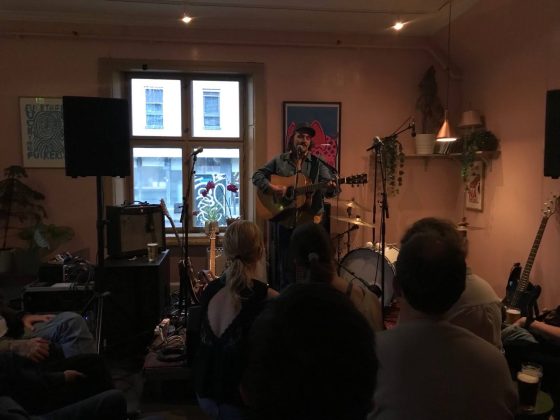
Photo by Dana Yewbank taken at a show by Chris Acker and Dylan Earl at Folk i Storgata in Norway.

While this doesn’t quite fit any stereotypes about Scandinavia, black metal, or Viking-inspired neo-folk, Norway has a thriving Americana music scene that welcomes and celebrates even lesser-known American folk and country artists. Chris Acker and Dylan Earl are two of these undersung artists, both represented by Nick Shoulders’ record label Gar Hole Records out of Arkansas. This past summer, Acker, Earl, and I all coincidentally ended up in Oslo, Norway, at the same time, where the pair put on an intimate, inspiring, and tightly-packed show for a crowd of about 30 people in a tiny bar with pink walls. They bantered with the audience, backed each other up on a few songs, and even spontaneously formed an unrehearsed superband with the bar owner and their Norwegian opener – and they were damn good. Acker and Earl are both deeply thoughtful musicians who use their power and presence as men on stage to question the status quo of “good ol’ boy” country and stoic male musicality. Their candidness and subversive humor drew the room together that night with a sense of camaraderie, safety, and concentrated joy. – Dana Yewbank

Act Now! A Paperface Zine Benefit Tape for the Palestine Children’s Relief Fund

A harrowing statistic from the UN agency for Palestinian refugees (UNRWA) reports that as of March 2024, the number of children killed in Gaza over a mere five months (October 2023 to February 2024) surpassed the number of children killed in global conflict over the four years prior, combined (2019-2022). As of December 2024, we are a year and two months into the ceaseless genocide being waged against the innocent civilians of Palestine and the horrific violence only continues.

I salute everyone who has waged resistance against genocidal powers, be it contacting senators, galvanizing communities to action, participating in rallies, or, in this instance, artists and musicians who have used their platform as an act of protest. Paperface Zine, a blog that writes and interviews an eclectic mix of underground artists, spearheaded this collection of tunes in an effort to express solidarity with Palestine and raise funds towards the Palestine Children’s Relief Fund. This Benefit Tape is a shining example of how most any skill can be mobilized to support greater communities; creativity and care forever go hand in hand. – Oriana Mack

American Patchwork Quartet, American Patchwork Quartet

American Patchwork Quartet have pieced together one of the best albums this year. Don’t take our word for it: they’ve been nominated for a GRAMMY for Best Folk Album. That’s the moment we want to celebrate. With all due respect to the other nominees, it’s exciting to see a brand new project get recognized so quickly – particularly one that colors outside the lines like APQ. The quartet add a number of global influences to traditional American songs: a guitar solo here, a sitar there, and a fine sprinkling of tabla make the quartet live up to their name. Now, especially, we need statements that American traditions were born of a tapestry of European, African, and Indigenous cultures that continue to be built upon by everyone who chooses to make this place a part of their own quilts. – Rachel Cholst

September 26, 2024 – Asheville, North Carolina’s Music Scene and Hurricane Helene

On the night of September 26, Hurricane Helene ravaged Western North Carolina with unprecedented rainfall and flooding. What resulted was a tight-knit area completely decimated and utterly distraught by the destruction of numerous communities. The current death toll for the state sits at 103, with many others still missing.

Beyond the cultural, economic, and unbelievable physical devastation to Asheville and surrounding towns, the city’s vibrant and world-renowned live music scene was brought to its knees – a radio silence that lasted several weeks, with numerous unknowns lingering for certain storied venues. But, with great resolve and a steadfast attitude of helping your friends and neighbors, the vast music community in Asheville and greater WNC came together with countless benefit concerts and fundraiser album compilations (Caverns of Gold, Cardinals at the Window) — an effort that remains at the forefront of the region’s recovery that will take years, if not decades, to return to normalcy. – Garret K. Woodward

Beyoncé, “Jolene”

Country music is for everyone and there is something fascinating about an album which ends up in the territory between categories. Beyoncé is a great singer, and has been flirting with country for a very long time; she has the chops to sing “Jolene” better than Dolly. So, when she sings that she’s “still a Creole banjee bitch from Louisiana,” she is making a series of arguments: that country exists in response songs; that the other woman should be given the mic; that the landscape mirrors the territory; and that the gatekeepers should be torn down, like the walls of Jericho. – Steacy Easton

February 4, 2024 – Tracy Chapman & Luke Combs, “Fast Car”

Luke Combs released his version of Tracy Chapman’s “Fast Car” in 2023, but it was his performance with Chapman on the 2024 GRAMMY Awards primetime telecast that rocketed the song from country radio back into the mainstream zeitgeist. Where Combs’s recording highlighted the song’s working-class vibes, seeing him perform it alongside its (Black, queer, female) writer gave the song’s legacy even greater heft. “Fast Car” was always a song about women carrying more weight than any single human can; about the urgent, nagging desire to flee toxic cycles; about how fleeting freedom can sometimes feel. For better or worse, all these things became emblematic of 2024. – Kim Ruehl

Rhiannon Giddens

You would be hard-pressed to cite anyone in any genre who had more memorable musical moments in 2024 than the superb vocalist, composer, and instrumentalist Rhiannon Giddens. Her writing brilliance was showcased through the Silkroad Ensemble group and project. Her arrangements of folk songs were part of their landmark American Railroad tour program along with commissioned pieces from jazz artist Cécile McLorin Salvant and film composer Michael Abels, as well as fellow Silkroad artists Wu Man, Layale Chaker, Haruka Fujii, and Maeve Gilchrist. Giddens was featured on banjo and viola on the hit single “Texas Hold ‘Em,” part of Beyoncé’s huge Cowboy Carter LP. Giddens added another GRAMMY nomination for Best American Roots Performance with “The Ballad of Sally Anne” from the excellent compilation My Black Country: The Songs of Alice Randall, too. Hard to believe there’s any ground left to cover for the MacArthur Genius and Pulitzer Prize winner, but Rhiannon Giddens continues to stun and surprise audiences with everything she does. – Ron Wynn

November 14, 2024 – Zachariah Hickman’s Power Outage Party! at Club Passim, Cambridge, MA

Not sure how bassist and music director Zachariah Hickman (Josh Ritter, Ray Lamontagne, Barnstar!) pulls off his many acts of mischief, but the Power Outage Party! shows are the most creative, beautiful, and emotional musical experiences around. Presented in mid-November by Club Passim, the shows featured a collective of musicians (including members of Della Mae and Session Americana) and guests (this year including Taylor Ashton, Mark Erelli, and Kris Delmhorst) performing without any power in the historic 100-seat club in Harvard Square. The band is lit with camping lanterns and tea lights. The audience is shoehorned in so tight (I was nearly sitting on the cello players’ lap) that you can’t help but feel a part of a very special community. Every time I go, I carry the experience and inspiration with me as we all work through the darkest part of the year. – Cindy Howes

February 24, 2024 – Kaia Kater, “In Montreal” at Folk Alliance International

One of my favorite and most memorable musical moments of the year occurred at Folk Alliance International, where Kaia Kater and her band performed tracks from her brand new album, Strange Medicine, at BGS’s private showcase. In a small hotel room with a handful of audience members, Kater began “In Montreal” with her looping, cyclical, trance-like clawhammer banjo groove. I was immediately transported, immediately grounded, gently – and forcibly – brought to the moment. I still experience the same visceral sensation each time I hear this track begin, the old-time banjo hook leaving and rejoining the beat deliciously, sketching out an expansive pocket. This night, in cold Kansas City, Kater was joined by flutist Amber Underwood (AKA Flutienastiness), who was even further transportive and dreamy in her interpretations of the track. It was a transcendent song, a daring banjo-flute dialogue, a mind-blowing mini set, and a perfect harbinger of what Strange Medicine would cure and balm. – Justin Hiltner

June 7-8, 2024 – Laurel Cove Music Festival

The gem of a festival located just north of the Cumberland Gap in Pineville, Kentucky, has fostered several special moments in recent years, but none come close to matching the memories from Wyatt Flores and The Red Clay Strays headlining sets there this past June.

The first came when Flores’ mics were cut off before an encore, leading to his band sitting atop the speakers lining the stage for a crowd sing along to Tyler Childers’ “Lady May” that to this day still gives me goosebumps. But if that wasn’t enough, The Strays topped it the following night when their show turned into an impromptu baptism after people in the crowd began jumping into the shallow pond surrounding the stage during a performance of their hit song, “Don’t Care.”

Both occurrences were pure magic from two of the year’s hottest country-adjacent acts in an intimate setting with only 1,500 people in attendance, showing that even in the age of corporate mega-festivals the best things still do come in small packages. – Matt Wickstrom

February 16, 2024 – The Death of Dexter Romweber

Though he was never top of the pops – or even on the charts at all, either solo or with Flat Duo Jets – wildman proto-rockabilly guitarist John Michael Dexter “Dex” Romweber was still an inspirational icon in the roots-rock world and a key influence on major bands like White Stripes and Black Keys. Romweber was just 57 years old when he died from a cardiac event this year, a shocking event that inspired a worldwide outpouring of tributes that went on for days. Maybe the best of all came from Jack White, who was always wide open about the depth of Romweber’s influence on White Stripes. Writing on Instagram, White proclaimed that Dex “was the type that don’t get 3 course dinners, awards, gold records and statues made of them because they are too real, too much, too strange, too good.” That’s the truth. – David Menconi

July 27, 2024 – Langhorne Slim, “We the People (Fuck the Man)” Live at the BGS Jam at Newport Folk Festival

While putting together the set list for the BGS Late Night Jam, “A Bluegrass Situation,” at Newport Folk Festival back in July, our old pal Langhorne Slim suggested a new tune he had just written. Would the house band be willing to learn it for this special occasion? In the words of our jam host and BGS co-founder Ed Helms, the song was an “instant Newport Classic.”

Slim’s new tune, “We the People (Fuck the Man)” – later released on streaming platforms just before the election – echoed through the Pickens Theatre that Saturday night and immediately got the audience on their feet. Its lyrics are as timeless and rallying as any Guthrie tune, but amidst all the declarations against greed and polarization there’s an optimistic plea in the chorus:

So let us love our neighbors
Protect the land
Look our brother in the eye
When we shake his hand
It’s been this way a long time
It’s hard to understand
The time has come for everyone
We the people, fuck the man

In these tumultuous times, Slim gave us words (and a performance) we shouldn’t soon forget. – Amy Reitnouer Jacobs

Sam Williams & Carter Faith, “‘Til I Can Make It on My Own”

Sam Williams and Carter Faith drape their fringe-laced voices over Tammy Wynnette’s “‘Til I Can Make It on My Own.” While honoring the song’s 1976 roots, the two rising stars spin their own lonesome and delicate performance that seems to transcend time and place. “Lord, you know I’m gonna need a friend,” they sing, trading stunningly confessional lines and background harmony. “‘Til I get used to losing you/ Let me keep on using you, ‘til I can make it on my own.” Through a honeyed, emotionally resonant arrangement, Williams and Faith demonstrate exactly why they’re among the best of today’s new crop of talent. – Bee Delores

Yasmin Williams, Acadia

The guitar is perhaps the most ubiquitous instrument in the modern world, making it even more notable that a picker like Yasmin Williams could still stake out fresh territory on the instrument, finding and championing her own truly original sound and approach. Acadia is a masterwork, breaking still new ground after Williams’ incredibly successful 2021 album, Urban Driftwood. While Acadia isn’t exactly a reinvention for the picker-composer-innovator, it does limitlessly expand the acoustic universe she’s been fleshing out since releasing her debut, Unwind, in 2018. That’s a fairly short runway for a creative to accomplish so much, especially given Williams seemingly treats her guitars as brand new devices each time she picks them up to compose. The results are often bafflingly, jaw-dropping, and dramatic – but always musical and ceaselessly inspiring. – Justin Hiltner


Photo Credit: Tracy Chapman live on the 2024 GRAMMY Awards; Kaia Kater by Janice Reid; Langhorne Slim with Ed Helms at Newport Folk Festival by Nina Westervelt.

Basic Folk: Barnstar!

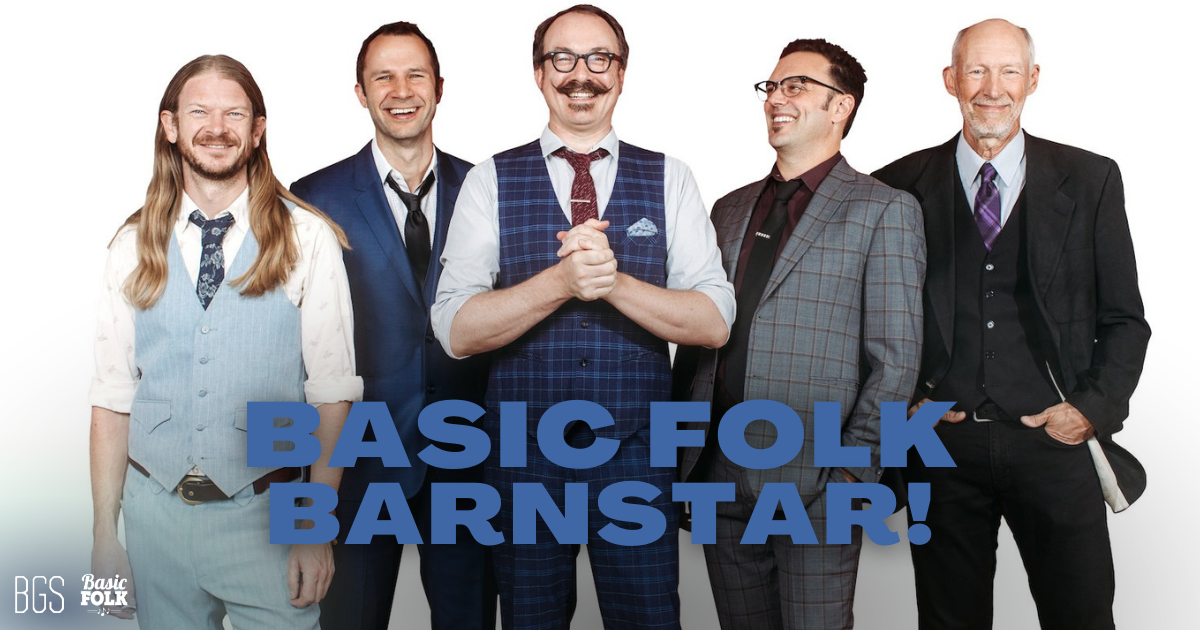
Barnstar!, Boston’s premier kinda bluegrass and definitely bombastic band, has released their new album Furious Kindness and we’re #blessed to welcome Mark Erelli and Zachariah Hickman to the pod. Originally a fun side hustle and bluegrass vehicle for Zack, the group – which also includes Charlie Rose and Taylor and Jake Armerding – started very casually performing at the legendary local Cantab Lounge. Zack accurately likens the vibe of the place to a basement Star Wars Cantina full of bluegrass bands.

LISTEN: APPLE • SPOTIFY • STITCHERAMAZON • MP3

In between their main gigs with performers like Josh Ritter and Lori McKenna and amidst their solo careers, Barnstar! has cultivated explosive live performances filled with energy and emotional expression, leaving concert attendees cheering and crying along. Included in their repertoire are some of the finest covers including many that you’d never expect to see on a kind of bluegrass band album, like The Hold Steady, Patty Griffin, Elliott Smith, and Elizabeth & The Catapult.

On this episode of Basic Folk, we talk about what it’s like to bring a cover song to the band to learn as well as co-writing with friends like Dinty Child and Chuck Prophet. We’d be remiss if we did not address the alien-like quality of Mark Erelli’s singing voice and learn that it is because of his bestie Zack and Barnstar! that he can sing like this. Now he finds himself performing vocal warm-ups before hitting the stage with the guys. Not something he ever thought he’d do. All members of Barnstar! contribute to and sing on the new album, Furious Kindness, a recording that just wants to shout in your face about how awesome you really are.


Photo Credit: Sasha Pedro

Basic Folk: Dinty Child

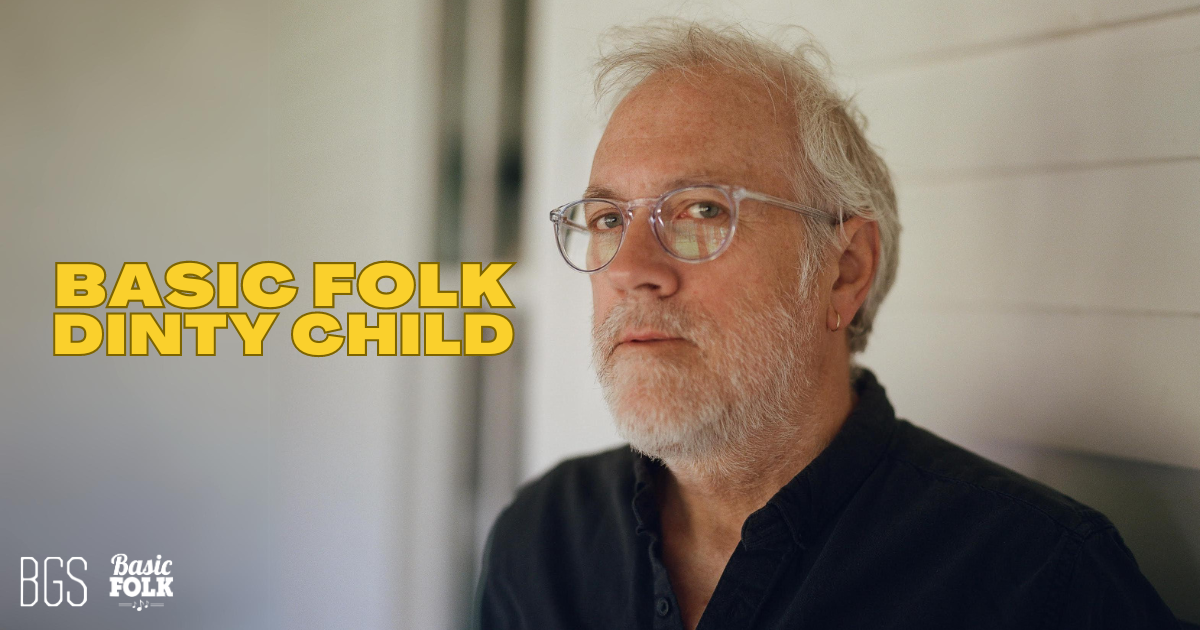
Dinty Child, founding member of Session Americana, the beloved Boston roots music collective who’ve accidentally been a band for 20 years, has just released his second solo album, Letting the Lions In. The new songs feature co-writing on all tracks between Dinty and Boston area songwriters like Mark Erelli, Kris Delmhorst, and Dave Godowsky. A self-proclaimed slow-writer, the majority of these songs were written on the annual Sub Rosa songwriting retreat Dinty runs on Three Mile Island (no, not that Three Mile Island) on Lake Winnipesaukee in New Hampshire. Owned by the Appalachian Mountain Club, Dinty’s family has been working at the island for over 100 years. Dinty currently serves as the off-season manager, putting his musician and carpenter skills to good use hosting songwriter friends at said retreat – like Rose Cousins, Rose Polenzani, Rachael Price, Miss Tess and many more, as well as Miles of Music, a summer camp run by Dinty, Kristin Andreassen, and Laura Cortese.

LISTEN: APPLE • SPOTIFY • STITCHERAMAZON • MP3

Letting the Lions In was co-produced by Zachariah Hickman (Josh Ritter, Ray LaMontagne) and recorded at Great North Sound in Parsonsfield, Maine over the course of three days in the spring of 2021. Dinty says, “I often trade construction work for studio time there.”

During our conversation, we dig into why these songs needed to be recorded. Our consensus is that legacy and spreading joy to his community are the top two reasons. Also, Dinty, who says an annoyingly large percentage of his songs start as dreams, talks about what kind of sleeper he is, what’s with the lion, and his thoughts on drinking – thanks to the handful of alcohol songs on the new album. Dinty is a dear friend to the podcast and an important part of the New England musical landscape, we’re thrilled to have him on the show!


Photo Credit: Sam Kassirer

Basic Folk: Celebrating 25 Years of Club Passim’s Campfire Festival

Let’s get folking special! We’re closing out 2023 with an exclusive live recording from folk mothership Club Passim, the historic folk venue located in Cambridge, Massachusetts, that celebrates the bi-annual campfire festival and its remarkable 25th anniversary. It started as a way for the club to book a slow holiday weekend and now 25 years later, campfire is still held every Memorial Day and Labor Day weekend. It remains an extremely popular fundraiser for Passim.

Cindy and Lizzie host this live show featuring captivating performances by Lizzie, Zachariah Hickman, Kara McKee, and Mercedes Escobar. Additionally, listeners are treated to a rare on-stage interview with managing director and campfire founder Matt Smith as well as club manager and campfire programmer Abby Altman, providing unique insights into the festival’s evolution and the passion that fuels its success.

LISTEN: APPLE • SPOTIFY • STITCHERAMAZON • MP3

This episode highlights the unpredictability of campfire, where both emerging artists and legends like Peter Wolf share the sacred stage. Matt Smith and Abby Altman’s dedication shines through as they discuss their exhaustive efforts in planning, booking, and executing nearly 60 campfires, showcasing the heart and soul behind this beloved festival. Tune in for a mix of live music, insightful conversations, and a nostalgic journey through the rich history of “campfire.” and Club Passim.


Photo Credit: Club Passim

Americana Music Association Reveals 2020 Nominees, Expands Ballot

The Americana Music Association has revealed the nominees for its 19th annual Americana Honors & Awards, with Brandi Carlile, Brittany Howard, John Prine, Tanya Tucker, and Yola nominated for Artist of the Year. Nominees in the Duo/Group category are Black Pumas, Drive-By Truckers, The Highwomen, Buddy & Julie Miller, and Our Native Daughters. Nathaniel Rateliff and Aubrie Sellers received multiple nominations as well.

This year, the Americana Music Association expands its award categories to include five nominees instead of four, with the exception of Song of the Year, totaling six due to a nomination tie. The winners of each category will be announced during the Americana Honors & Awards on Wednesday, Sept. 16, 2020, at the Ryman Auditorium in Nashville.

However, a press release states that “the health and safety of the Americana music community is the association’s utmost concern, and the event organizers will continue to monitor the COVID-19 situation closely while following all national, state and local guidelines as they approach the scheduled ceremony date.” Ticketing information will be announced as plans unfold.

Here are the nominees for the 19th Annual Americana Honors & Awards

Artist of the Year:
Brandi Carlile
Brittany Howard
John Prine
Tanya Tucker
Yola

Duo/Group of the Year:
Black Pumas
Drive-By Truckers
The Highwomen
Buddy & Julie Miller
Our Native Daughters

Album of the Year:
And It’s Still Alright, Nathaniel Rateliff, produced by James Barone, Patrick Meese and Nathaniel Rateliff
Country Squire, Tyler Childers, produced by David Ferguson and Sturgill Simpson
The Highwomen, The Highwomen, produced by Dave Cobb
Jaime, Brittany Howard, produced by Brittany Howard
While I’m Livin’, Tanya Tucker, produced by Brandi Carlile and Shooter Jennings

Song of the Year:
“And It’s Still Alright,” Nathaniel Rateliff, written by Nathaniel Rateliff
“Bring My Flowers Now,” Tanya Tucker, written by Brandi Carlile, Phil Hanseroth, Tim Hanseroth and Tanya Tucker
“Crowded Table,” The Highwomen, written by Brandi Carlile, Natalie Hemby and Lori McKenna
“My Love Will Not Change,” Aubrie Sellers featuring Steve Earle, written by Billy Burnette and Shawn Camp
“Stay High,” Brittany Howard, written by Brittany Howard
“Thoughts and Prayers,” Drive-By Truckers, written by Patterson Hood

Emerging Act of the Year:
Black Pumas
Katie Pruitt
Aubrie Sellers
Billy Strings
Kelsey Waldon

Instrumentalist of the Year:
Ellen Angelico
Annie Clements
Brittany Haas
Zachariah Hickman
Rich Hinman


Photo credit: Brandi Carlile by Alysse Gafkjen; Brittany Howard by Danny Clinch; John Prine by Danny Clinch; Tanya Tucker by Danny Clinch; and Yola by Alysse Gafkjen.

AMA logo courtesy of the Americana Music Association.