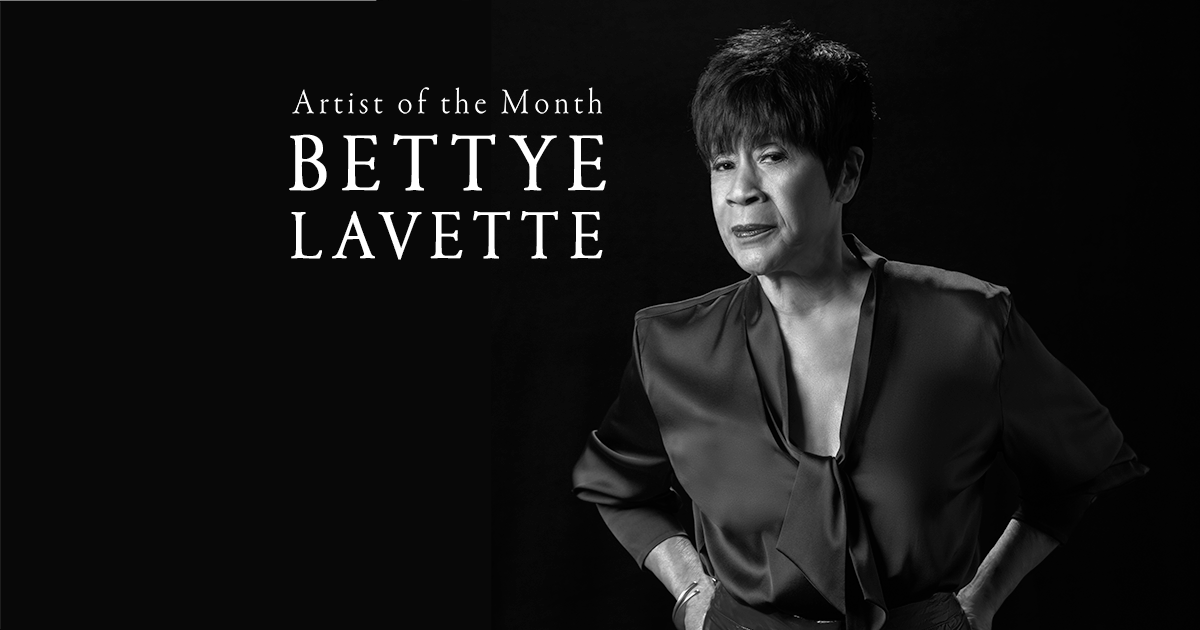
On ‘Blackbirds,’ Bettye LaVette Honors Black Women Who Inspire Her (Part 2 of 2)

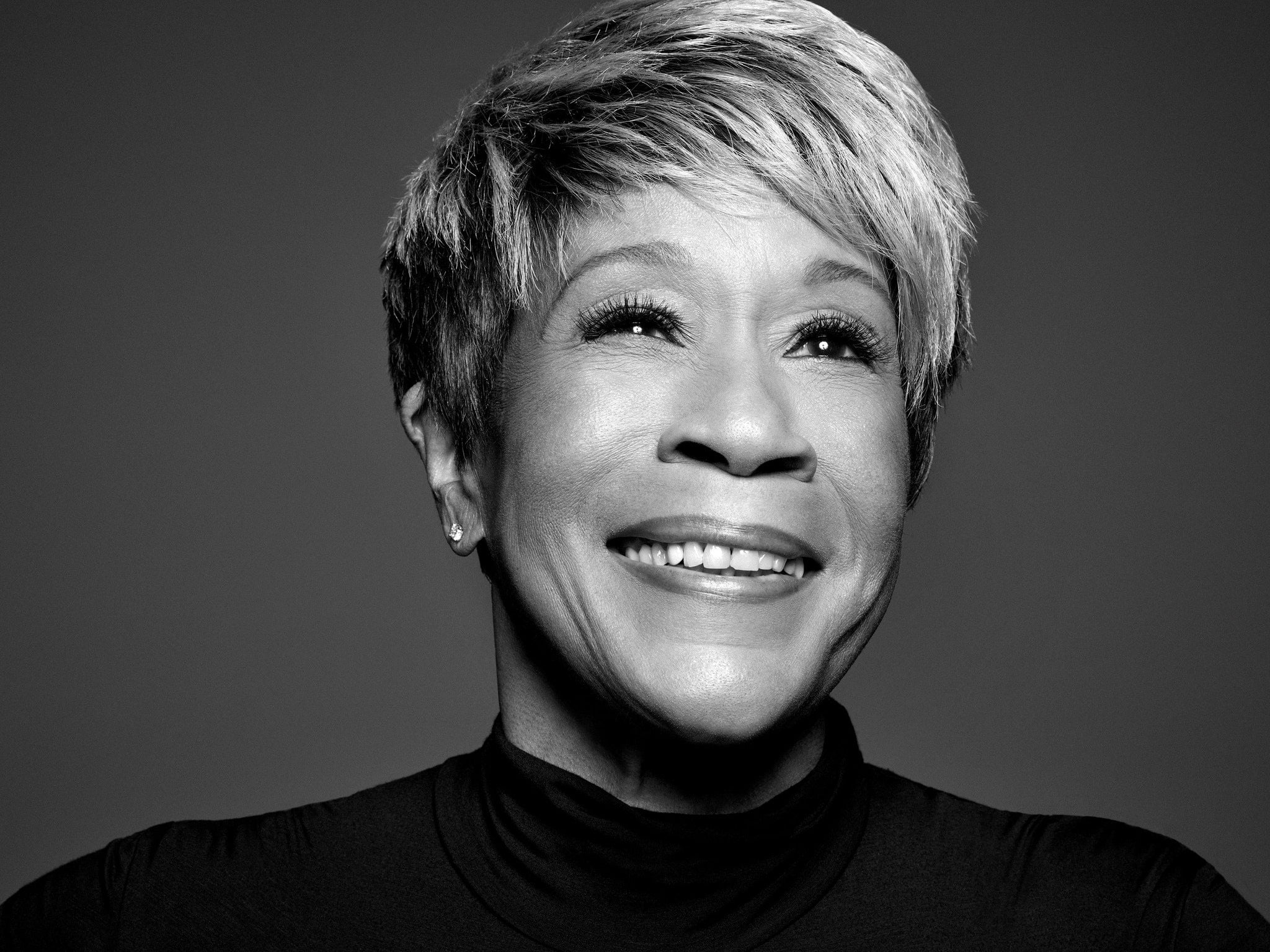
When Bettye LaVette sings “I Hold No Grudge,” she brings the weight of all her years to it. The 74-year-old vocalist draws out certain notes, delivers certain lines almost in a speaking voice, as though she wants to show us how difficult, but also how essential, it can be to let things go. “Deep inside me there ain’t no regrets,” she declares, “but a woman who’s been forgotten may forgive but never, never forget.” She draws out that second “never” to underscore its harsh finality, to remind you that she’ll live with the memory of this slighting forever.

“I Hold No Grudge” has never been merely a song about romantic betrayal — not when Nina Simone recorded it for her landmark 1967 album, High Priestess of Soul, and not when LaVette recorded it more than sixty years later. This new version sounds like it’s addressed to anyone who stood in LaVette’s way so many years ago, in particular those executives at Atlantic Records who saw fit to shelve her debut album in 1972 without so much as explanation, much less an apology. That decision crushed her and thwarted her promising career. “That’s exactly what it is,” says LaVette. “I probably have some grudges, but they aren’t big enough to make me stop. I’ve not been defeated. I’m extending the olive branch once again.”

“I Hold No Grudge” opens her latest album, Blackbirds, which collects her interpretations of songs made famous by Black women in the 1940s and 1950s, including Dinah Washington, Ruth Brown, Nancy Wilson, and Billie Holiday. She calls them “the bridge I came across on,” referring to that era between big band blues of the 1940s and rhythm & blues of the 1960s, when these artists were pushing popular music in new directions.

With a small band led by producer-arranger Steve Jordan, LaVette runs through deep cuts like “Blues for the Weepers,” a song first sung by Ruth Brown (and later made famous by Lou Rawls). It’s a song dedicated to “all the soft-singing sisters and torch-bearing misters,” she sings. “They just come to listen and dream.” She understands that we go to songs now for the same reasons we did sixty or seventy years ago: to find sympathy and solace, but also to find a way forward, perhaps some promise of a better life.

The most familiar tune on Blackbirds is likely “Strange Fruit,” popularized by Billie Holiday ninety years ago at Café Society in New York City and covered by countless singers ever since. As a result it’s difficult to make the song sound new and urgent, yet LaVette manages to do just that. Against her band’s dolefully trudging rhythm, she tilts the melody forward just slightly, as though pulling us toward some horrific destination, and she shreds the syllables of the song’s climactic declaration: “Here is a strange and bitter crop.”

That middle word is frayed almost beyond recognition – “stra-ya-ange” – to make the song’s metaphor sound tragically real. LaVette recorded it nearly a year ago and was startled when it became so heavily relevant again. To hear her sing “Strange Fruit” in 2020 is to be reminded that the injustices so many Americans are protesting — the murders of George Floyd, Breonna Taylor, and too many other Black men and women — are not new or specific to the current era.

In the second installment of our Artist of the Month coverage, LaVette talks about growing up with a jukebox in her living room, giving these formative artists their due, and how Paul McCartney fits into all this.

(Editor’s note: Read part one of our Artist of the Month interview here.)

BGS: This record is rooted in the history of popular music. Can you tell me about this particular period and what it means to you?

LaVette: People — especially white people — they throw “rhythm and blues” and “blues” together a lot. And now today, they’re throwing “rhythm and blues” toward young blacks and young whites who want to sound black. When people talk about rhythm and blues, they go back about as far as Etta James, but these women are the bridge that Etta came across on as well. Rhythm and blues was a music that came from blues, of course, and from gospel. When people ask me the difference between “blues” and “rhythm and blues,” I always tell them that you can cry to blues, but you can dance and cry to rhythm and blues.

It’s a short bridge, from about 1948 or ’49 to the burgeoning of Atlantic and Motown’s rhythm and blues, which was about ’61 or ’62. That’s when I came along. We took away the saxophones and added more guitars. We took the blues guitar and sped it up and put it in our tunes. The people who took us from the late ‘40s into the early ‘60s are rarely mentioned, and that’s why I chose this group of women.

I didn’t even know there were Black women who sang, other than Lena Horne and Dorothy Dandridge. And then, hearing LaVern Baker and Ruth Brown and Little Esther, I don’t know whether it gave me hope or whatever, but it really surprised me. I didn’t know that women who sung in such a bawdy way even existed.

When did you first hear these women?

When rhythm and blues came about, that was when I was young and I was dancing. That was when I was coming up and my sister was a teenager. We had a jukebox in our living room in Muskegon, Michigan, which is where I was born, and it had all the current tunes of the day, which my sister played daily when she got out of school. They were all rhythm and blues songs. You know, they weren’t into jazz — they were either blues or rhythm and blues songs on the jukebox. And gospel and country-western, no less. At one point, my favorite singers used to be Doris Day and Dale Evans.

Wait, you had a jukebox in your living room?

My parents sold corn liquor in the ‘40s and ‘50s. Muskegon was extremely segregated, so if you wanted a drink after dinner or after work, you had to come by my house. These were homes that had been built for the soldiers returning from the Second World War. So they were theoretically projects, but they hadn’t started making them out of brick yet. They looked more like barracks, and everybody’s house was just alike.

It was living room, dining room, small kitchen, two bedrooms, and a bathroom. My parents sold corn liquor and chicken sandwiches and barbeque sandwiches. There was no gambling. Nobody could cuss but my mother. But they could get shots and pints and half pints. And the jukebox was there in the living room where most people’s couch probably was. I was about 18 months old when I learned all the songs on the jukebox — all of them.

How did you choose the songs for this record?

I keep several files. Or, I should say, my husband keeps them for me. I’ve got all kinds of files. I’ve got a country and western file. I’ve got a strictly George Jones file. What I do is, I offer my label two or three ideas based on these files, and they tell me which one they like best. So I have some ideas that I like, and that way I don’t have to take their suggestions. If they find one they believe in and are willing to spend money on, I’ve got the songs already in.

I had this file here of standards, some of which I had done when I did little gigs in places around, just me and a keyboard player. Some of them, like Nancy Wilson’s “Save Your Love for Me,” I had done in other venues that most people haven’t seen me in, because they didn’t come where I was. A song like “I Hold No Grudge, which I heard eighteen years ago, it’s been in my file since then. I thought, if I ever get a chance to do that kind of album, I will do that tune. I wasn’t going to throw it away.

When did you discover that song?

I was living in Detroit, and I was getting my hair done. Usually in Black salons, there’s a radio on that plays Black music, and this song came on. I had never heard it before! And because Detroit is one of the places where I can pick up the phone and call whoever is playing whatever it is and I’ll know them, I called them up and she told me it was Nina Simone. And I said, well, if I ever get the chance, I’m gonna record that tune. That was eighteen years ago.

Just a few years ago I performed at a party for David Lynch, the movie producer, and this gentleman came up to me and said, “I loved your performance. My name is Angelo Badalamenti, and I do all the music for David Lynch’s films.” My husband, who loves David Lynch’s films, was ecstatic. Angelo says, “I have a tune. Years ago, I used to work with Nina Simone, and I wrote this tune for her that I think would be perfect for you.” I said, “What’s the name of it?” “‘I Hold No Grudge.’” I said, “I know you aren’t going to believe this, but I’ve had plans to do that tune for the last fifteen years!” So when I got the opportunity to do this album for Verve, I got in touch with Angelo and sent it to him, and he said he could hear Nina listening to it, closing her eyes, and saying, “Yeah, she got it.” Of course that made me feel very good.

Another song I wanted to ask you about is “Strange Fruit,” which seems sadly very timely right now.

But it just became timely! When we recorded it back in August, it was one of the oldest tunes on the album. And then all of this mess broke out, and the tune became timely! But all of this wasn’t going on when we recorded it. That’s not why we recorded it. We recorded it to fill in the Billie Holiday slot. While we were waiting for the album to come out, all of this happened. And it was just timely — as if we went to look for a tune to describe what’s going on now. So it’s bad that it’s timely — it’s awful that it’s timely — but it’s timely.

I knew the tune had not lost any of its power, and I knew I had to do it completely different from Billie. I’m blessed to work with Steve Jordan because he doesn’t hear these songs the way they were originally recorded. He hears them the way I sing them, because his age is closer to mine. He was born and raised in Harlem, and he grew up with these rhythm and blues tunes. He knew that I wanted “Strange Fruit” to be terse and sad and black and dark, and when we finished recording the music, I said, “Steve! I didn’t want it to sound exactly like they’re standing by the tree playing this song,” but it does. It’s just haunting. That’s the thing that makes Steve so important to me.

The outlier on the album is your interpretation of the Beatles’ “Blackbird.” What made that song fit this project?

The reason that I chose it — and I chose it for the title — is because many Americans don’t know that Brits call their women birds, and Paul is talking about a Black girl that he saw standing up on a picnic table singing one night in a park. He’s talking about a Black girl singing and I thought that that would just be perfect for it.

(Editor’s note: Read the first half of our Artist of the Month interview with Bettye LaVette.)


Photo credit: Joseph A. Rosen
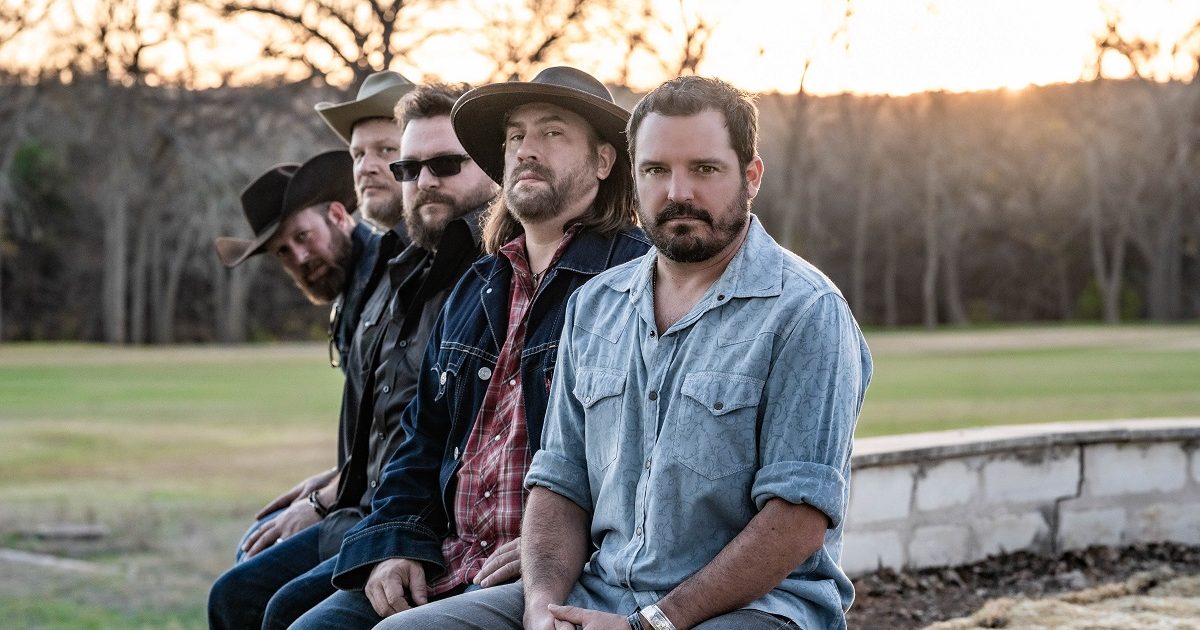
 

BGS 5+5: Reckless Kelly

Artist: Reckless Kelly
Hometown: Austin, Texas
Latest album: American Girls & American Jackpot

Answers provided by Willy Braun

What other art forms — literature, film, dance, painting, etc — inform your music?

I get a lot of ideas from books, lines here and there, but a lot of time they’re just ideas. A theme or a mood. I get some ideas from movies as well but that’s a little more rare. I’d say most of my ideas for songs come from things people say or do in everyday life. I’m always writing things down.

What was the first moment that you knew you wanted to be a musician?

I’ve always known I was going to be a musician. It’s the family business. My dad, uncles, grandpa, brothers, cousins, etc., are all musicians. I grew up singing on stage with my dad’s band and eventually my brothers and I all joined so there was never really any question about what path we were going to go down.

However, to answer the question more directly, I remember when I was about 5 I got up and sang a song with my dad at a chili cook-off. After the show the girl at the concession stand gave me my Coke for free, and I remember thinking that was the coolest thing ever. It may have been what hooked me for good.

Which elements of nature do you spend the most time with and how do those impact your work?

I have a place in Idaho where I do the majority of my writing these days. It’s in the high desert with mountains all around so it’s really inspiring. It takes me a few days to get in a groove but once I find my rhythm I usually get a lot done. It also helps that it’s off the beaten path so distractions are at a minimum.

Since food and music go so well together, what is your dream pairing of a meal and a musician?

If I could meet one person it would probably be Sir Paul McCartney. I’m pretty sure he’s a vegetarian so I’d eat whatever he wanted to have as long as we could chat about writing and of course, the Beatles. I’m sure we’d have a couple bottles of wine to wash it all down as well.

How often do you hide behind a character in a song or use “you” when it’s actually “me”?

I use a lot of metaphors in my songs so that’s a place to hide out, ha ha. I almost always write with a caricature in mind, so even when I say “me” I’m not usually talking about myself. A lot of my stuff is fictional so I don’t worry about hiding much. The new albums are the first time I’ve really explained a lot of meaning behind the songs. Normally I let people make up their own version of what they think it’s all about. This time I felt like it was important to let people behind the curtain a bit because of the concept. I wanted them to get it.


Photo credit: Cynthia Dawn Photography

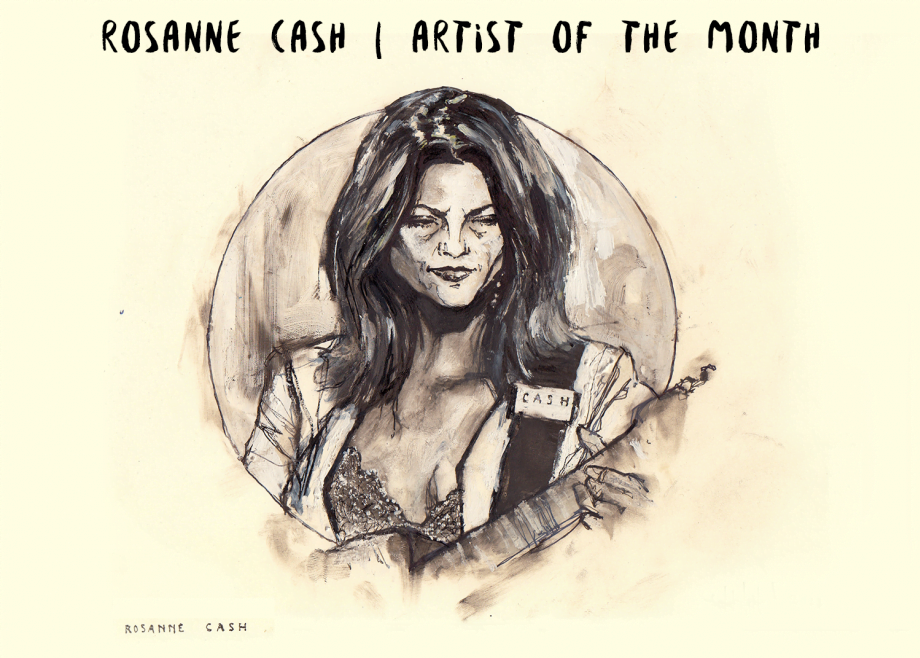
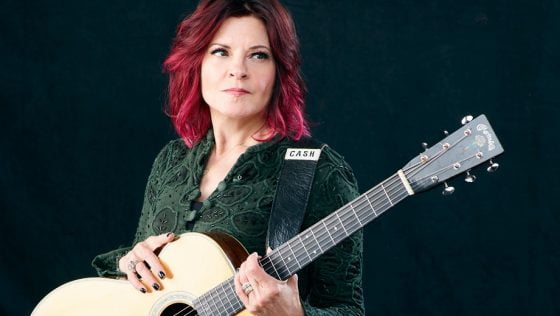
Rosanne Cash Brings Urgency, Courage to ‘She Remembers Everything’ (2 of 2)

On her new album, She Remembers Everything, Rosanne Cash keeps watching the clock. It’s an album about time slipping away, about the bittersweet realization that you have more time behind you than ahead. “It just wasn’t long enough,” she sings on the hymn-like “Everyone But Me.” “Still it seems too long.” And on “Many Miles to Go” she puts her affairs in order, itemizing the artifacts and inside jokes she shares with John Leventhal, her frequent collaborator, longtime producer, and husband of twenty-three years. With its rambling, almost anxious upbeat tempo, the song celebrates their relationship more than it commiserates its inevitable end: “There aren’t many miles to go and just one promise left to keep.”

However, she didn’t record that song with Leventhal, who produced roughly half the tracks on She Remembers Everything. He was, she says, shy about the song. Instead Cash traveled about as far from her home as she could, all the way from Manhattan to Portland, Oregon, to record with the album’s other producer, Tucker Martine. By disrupting her creative process, she says, “It did break something open in me.”

(Editor’s Note: Read Part 1 of the Bluegrass Situation’s interview with Rosanne Cash here.)

You’ve mentioned that these songs are very autobiographical. How does your relationship with these personal songs change over time? What is it like to revisit them onstage?

I played some of these songs for the first time just recently, and it felt good. I felt very relaxed with them. You know how the truth can unsettle you and scare you, but the truth can also allow you to let your guard down and relax? That’s how I felt. But it’s different every night. Every audience is going to bring something different to what they hear, and hopefully they will bring their own lives to it. They’re not coming to hear about my feelings or about my life. They’re coming to experience their own lives and their own feelings. They’re coming to have things reflected back to them that will be revealing or inspiring or whatever.

That’s the function of art. It’s that kind of service industry. We help you access your life and feelings. It’s not about narcissism. It’s not about me. That takes the fear out of it. These aren’t diaries; they’re songs. There’s craft that went into them. There’s music. There’s a beat and a melody. So I’m not going to be up there naked.

That leads me to another song I wanted to ask about, “Not Many Miles to Go,” which almost sounds like a letter you wrote to your husband.

I have a very tender feeling about that song because I really did write it for John — and to John. When you’re in a long-term relationship, it’s inevitable that one of you is going to leave the other. It’s sad, but it’s worth acknowledging the artifacts of your life together, even if it’s just a Telecaster. So you know when we’re gone, that Telecaster will still be here. Our son will probably play it. I wanted to document those things for us.

I like the idea we keep the beat for each other.

That’s a beautiful idea, and a close couple will do that for each other. When I wrote that line, I was thinking about the actual tempo when I play rhythm guitar for him. We have to remind each other to stay in time. I’ll tell him he’s too slow, or he’ll tell me my timing is off. He used to complain about my meter a lot, and then we did a gig with some other people a few years ago. When he came offstage, John said, “I’m never complaining about your timing again!”

How does he feel about the song? It’s really an intimate conversation in front of the audience.

I think John felt a little shyer about it than I did, but I think he’s gotten past that. And his guitar solo just kills me, especially that real Telecaster sound that he pulls off. It sounds like Clarence White or James Burton. When I wrote the song, it had more of a folk vibe, and then Tucker took it to this really intense place with a lot of energy to the arrangement. That was a bit of genius on Tucker’s part. It’s funny, I couldn’t have done that song with John. I had to do it with Tucker, and then we flew John’s solo into the track.

How did you end up working with Tucker Martine?

I’m a huge Decemberists fan, and he works with them. Then I heard the case/lang/veirs record he produced and I just loved it so much. I’d been thinking that I wanted to break away from John a little bit, because I felt I’d grown so dependent on him. He has very forceful opinions and it’s easy for me to acquiesce to his sensibilities because he’s such a gifted musician. I started thinking, you know, I need to be making those decisions, even if the choices are “wrong.” I need to do that. I called Tucker out of the blue and asked if he’d be interested in working with me. I truly didn’t know what he would say. Maybe I wasn’t his kind of thing.

But he said he’d love to and it was a matter of getting our schedules together. I was nervous, he was nervous — we didn’t know how it was going to work out. But it was this incredible experience, start to finish. I teared up many times, feeling so grateful to be working with him. It did break something open in me. After doing five tracks with Tucker, I came back to work with John and I felt fresh. We wrote some of the best songs I think we’ve ever written, like “Crossing to Jerusalem” and “Everyone But Me.” I had most of the lyrics for “The Undiscovered Country” and he wrote the music for it.

And you got The Decemberists frontman, Colin Meloy, on the record, too.

That was through Tucker. I was really shy about asking him and one day I just asked Tucker if he thought Colin would sing on the record. He thought he might, so he called him and Colin came down to sing on “The Only Thing Worth Fighting For.” While he was there, we snookered him into singing on “Rabbit Hole.”

Overall, on these songs, I get the sense of time running out. This seems to be an album about realizing that time is short and that creates a sense of urgency.

Well, time is running out. It’s an hourglass. It’s less than half-full now, and I feel an urgency about saying whatever else I have left to say. It’s really quite emotional to me. The regrets I have at the end of my life — except for the regrets I have about hurting anyone or mistakes I made as a mother — are going to be about what I didn’t say in my work, in my life. What I held back. So there is some urgency to get that out there, but I feel more liberated than ever because now my thinking is, what’s the point of not doing it or not saying it? This is the life I’ve chosen, to live in a public sphere and to be in this service industry of songwriting and performing. I don’t want to hedge my bets anymore.

Most people would rather not think about the time they have left and what to do with it. I know I’m guilty of that a lot of the time.

It’s painful, so that’s what we do: We push away what we don’t want to consider. Buddhists say death is certain, so how will you live? We push out the first part, and then we push out the second part to the extent that we default on our choices every day. We put the blinders on and think we have forever. I do not exempt myself from that. I do it, too. I say, “I’m going to wait to do that.” No. Can’t do it anymore.

When I heard Leonard Cohen’s You Want It Darker, that gave me a little more courage. Even the title of that Paul McCartney album from a few years ago, Memory Almost Full, struck me too. Paul and Leonard are obviously older than me, but they were signposts in that direction. I notice those things when they’re out in the world. I notice those pieces of poetry and music. I find myself responding to it more and feeling somewhat comforted by the fact that other people my age are doing it as well.


Photo of Rosanne Cash: Michael Lavine
Illustration: Zachary Johnson

Throwing Out the Rulebook: A Conversation with Bettye LaVette

There are singers, there are songwriters, and then there’s Bettye LaVette. She prides herself on being an interpreter, on using her voice to guide new melodies out of lyrics that have become a second skin to many listeners. But don’t you dare call her a covers artist. The septuagenarian’s new album, Things Have Changed — her first major label effort since 1982 — marks the first time LaVette has ever released an album focusing on one artist exclusively, and it just so happens to be Bob Dylan.

The idea sprang out of her 2008 Kennedy Center Honors performance in which she interpreted the Who’s “Love Reign O’er Me” and effectively stunned Pete Townshend. She eventually translated that moment into her 2010 album, Interpretations: The British Rock Songbook. But Dylan is a different beast. LaVette shape-shifts his Nobel Prize-winning words into growling, bluesy affairs and soul-laced R&B, each track so unlike its origin that it’s a wonder they ever came from his mouth in the first place.

LaVette uses her voice to guide her interpretations in ways that defy the traditional notion of covering a song. “I got with my keyboard player, and he played it the way I sung it,” she explains about her process on Things Have Changed. With that basic foundation in place, she approached her producer, Steve Jordan, and Dylan’s long-time guitarist, Larry Campbell — who plays on the album — to work out the arrangements. “It was going a completely different way, and they had to go with it,” she says.

One of Dylan’s most iconic songs, “It Ain’t Me, Babe” (from 1964’s Another Side of Bob Dylan), sounds like a soul-infused ditty straight out of the Stax era, while LaVette picks up on the menacing quality running throughout “Ain’t Talking” (originally “Ain’t Talkin’ from 2006’s Modern Times), lacing it with equally ominous strings. “I thought about these naked banshees running through the forest playing violins,” she says. Dylan being Dylan, there’s a certain aura surrounding his music, but LaVette strips away all that pomp and circumstance, and reimagines these songs as new possibilities for the modern age. After all, things have changed.

Even though the title of your album pulls from Dylan’s song, it seems so appropriate today. As an artist, how are you trying to cope with the changes we’re witnessing on an almost daily basis?

Well, my husband says I do better some days than I do others. Some days he tells me I’m just too angry about it and I have to calm down. When I do these lyrics to “Political World” and “Times They Are a Changing,” it sounds as though they were written for today, so I don’t know if Dylan is prophetic, along with brilliant, or if he just didn’t have any faith in anything getting better and he was right!

The central sentiment on “Things Have Changed,” how do you push past that to still care?

Oh, honey, I am 72 years old. I basically don’t give a fuck. Nothing at this point wears me down. I know that all of this going on right now, either it’s going to pass or we’re going to pass. Something’s going to stop, though. I hope it’s not us.

You said Dylan’s lyrics were almost prophetic in a way. How does contemporary art need to respond to this moment more than it has been?

I don’t know. I don’t really like for people to sing about what’s going on; I’d rather them say it. If you’re a big enough star, then go somewhere important and say something. I want our entertainers to be well informed and to know everything that’s going on politically really does affect all of us. I’d like to see us become a little more serious-minded, instead of sitting around and singing about it all day.

I was looking at something the other night — Jay-Z was on something — he and Snoop Dogg both are speaking so much better than when they first started, and about so many more important things. I watched them when they started, and to hear what they speak about now, it warms my heart. I still am not a fan of hip-hop, but I’m glad that, since they’re making so many millions, they’re trying to contribute something now.

Absolutely. It’s an interesting conversation taking place. So, can you take me back to the moment when you first started listening to Dylan?

I’ve always heard him, but he’s never sounded appealing to me. I’ve recorded four of his tunes — those were the only ones that I could break down to size. Otis Redding said he’d never do one. It’s too damn many words! [Laughs] He was not played a lot on Black radio, and I didn’t like, necessarily, the way he presented his songs, and I always had a whole bunch of other stuff to sing about. He hasn’t been a mainstay in my life.

As I understand it, the album’s executive producer, Carol Friedman, brought the idea to you. What was it that excited you from a creative perspective?

This was more than just a big musical opportunity. This was a big business opportunity, as well. This is my 57th year in show business, so I’m not fascinated or enamored with anyone right now. I was fascinated and enamored that I would get a chance to get a really big shot and, because the company thought it was a really great idea, I thought I would tackle it for that reason. When I started to choose the tunes — which was very difficult for me to do because there’s only so much of what he says that I want to repeat — it was quite a daunting thing. I wasn’t going to tributize him, and I don’t do cover tunes. I can sing, so I don’t have to do the song the way you do it.

Right. You’ve described yourself as an interpreter.

No. I am an interpreter. That is what I do. I had to write a whole bunch to make it fit into my mouth. I had to change the gender in a lot of places, and I got to know him a lot better. I understand him much better. I would like to talk with him, though, because I’d like to know why he feels the way he does.

Has he gotten wind of this project?

Oh, I’m sure. His manager loved it. He gave me license to change the lyrics and gave me license not to license it. So I assume Bob has heard it.

As we know, white folk artists in the ‘50s and ‘60s covered or referenced Black artists in their music. And, here, it’s thrilling to see a Black woman interpret a white man’s music. Did that ever strike you during the project?

Oh, yes! I definitely thought about it. I listened to John Lennon and Paul McCartney say that B.B. King is their idol, and I know that B.B. came very close to dying broke and unheard of, so when I did the Interpretations album, that was pure vengeance. I thought of it that way. I wanted to do the tunes well enough for whites who were in love with these guys to realize that they’re just writers. These songs are not hymns; they’re just songs. Having a husband who was a white teenager who grew up with all of these guys and has been enamored of them forever, one of the greatest joys of my life was for me to make Pete Townshend cry and for him to see it. So I enjoyed that tremendously. [Laughs]

They are considered sacred among a set, but I love what you’ve done on this album, because these songs don’t sound like what we know Dylan’s catalogue to be!

As I said, I had to sit and think about them for a long time, whereas the ones that I’d chosen to do by him before, they were just songs that I liked and I just did them. But with 12 of them facing me at one time, I said, “Now, here, let me think about them.” I had to really listen because they weren’t going to be a part of what I was doing. They were going to be what I was doing. I had to make them definitely fit into my mouth perfectly, squarely, just as if they’d been written for me. The greatest joy for me now is that the people I’ve been seeking out are Bob Dylan fans. I’m not asking my fans what they think about it; I’m asking Bob Dylan’s fans what they think about it.

And what’s the reaction?

I wanted them not to recognize them, and I wanted them not to be able to sing along with them.

You said you selected songs you could fit into your mouth. What did you want this project to say exactly?

The only words I don’t use are, “If you do this, I’ll die” and “Boy.” I’ve never said, “If you do this, I’ll die,” because that just ain’t gon’ happen. And, when I was 12, my boyfriend was 18, so boys have never been a part of my life. As long as I can remember, I’ve wanted to be grown. But I can’t think of anybody who can write a song that I couldn’t sing because you don’t have to sing it the way they write it. Sing it the way you sing.

I think some of the best songwriters are those that can be interpreted in any genre.

I find when people cover Bob Dylan songs, they worship. They don’t change them or do anything. That’s no fun!

It’s like you said, they’re not hymns.

Listen, I would not want anyone to say, “My goodness, she captured Bob perfectly.” No! No!

In terms of process, how much time do you need to spend with a song in order to hear it in a new way?

When I start to sing it without the recording, that kind of dictates the way mine is going to go. So, when I sat down with Larry Campbell, he knew immediately he could not play the way he’d played for Bob [Dylan] with the way I was singing it. I was really like a director in that, “This is no longer going this way. This is going this way.” When we did Interpretations, the first thing I said to all the musicians was, I said — all of them were white — ”I know all of you grew up with these tunes, but I want you to suspend thought about them, and don’t play anything other than what is on the paper. Play this as if it’s a song you’ve never heard before.” Some were easier for them to do than others.

Well, Things Have Changed is really something else. You’ve captured something, but it’s not his!

I’m so glad that you hear it. I wanted young people who have been given a Dylan album in their cradle when they were born, and they feel that that’s the way it should go to hear it. I would give anything to have seen [Dylan] hearing it.

To be a fly on that wall!

I would have liked to know did he recognize them all the moments they started playing, or if he didn’t recognize them, which ones didn’t he recognize? That would’ve been fun to me.

3×3: Brother Roy on Nicknames, Nilsson, and Nice Shoes

Artist: Brother Roy
Hometown: New York City, NY
Latest Album: Last Man Standing
Personal Nicknames: Brother Roy

And I hauled this damn piano across the country for the gig. #piano

A post shared by Roy Williams (@brother_roy__) on

What’s the best concert you’ve ever attended?

Paul McCartney

How many unread emails or texts currently fill your inbox?

10,850

How many pillows do you sleep with?

2

How many pairs of shoes do you own?

2 … one shitty, one nice

If you were going to buy a famous musician’s pair of dirty socks off of eBay, whose would you buy?

Harry Nilsson

What’s your favorite vegetable?

Carrots

Pet Sounds at Rico Ranch, Big Sur fiddle camp. Magic Place

A post shared by Roy Williams (@brother_roy__) on

Fate or free will?

Fate

Sweet or sour?

Sweet

Sunrise or sunset?

Sunset

3×3: Levy and the Oaks on a Love of Olives, a Fear of Heights, and a Dream of Macca

Artist: Duane Okun (of Levy & the Oaks)
Hometown: Asbury Park, NJ
Latest Album: Levy & the Oaks
Personal Nicknames (or Rejected Band Names): Levy, the Levees

If you could go back (or forward) to live in any decade, when would you choose?

The ’60s. It seemed so exciting. Everything was changing into this new era. I recently watched 11.22.63 which stars James Franco as someone who goes back in time to stop the assassination of JFK. I love the cars and how everyone is dressed so stylishly. 

Who would be your dream co-writer?

Paul McCartney. To even have someone as legendary as him listen to your song would be an honor. Writing a song together would be a dream. I’d keep a recording of it at all times so I can always be like, “Hey, I don’t know you, but you gotta listen to this song I did with Macca!”

If a song started playing every time you entered the room, what would you want it to be?

“Trololo” by the late great Eduard Khil.

What is the one thing you can’t survive without on tour?

Clean socks. If you don’t have clean socks, you got nothing.

What are you most afraid of?

Heights. I must have fallen to my death in a past life.

Who is your favorite superhero?

When I was a kid, I liked Beast from X-Men. Even though he barely fought in the old animated TV show.

Pickles or olives?

Olives!

Which primary color is the best — blue, yellow, or red?

Red. Sexy.

Which is worse — rainy days or Mondays?

Mondays. I tend to come up with some good musical ideas on rainy days. Maybe it’s to do with the sound of all that dripping and tapping.

3×3: J.E. Sunde on Sad Songs, Greedy Bastards, and Unsurprising Surprises

Artist: J.E. Sunde
Hometown: Minneapolis, MN
Latest Album: Now I Feel Adored
Personal Nicknames: Jon


Hey Madison! Playing at @crescendomdsn tonight! Kalispell goes on at 7pm

A post shared by J.E. Sunde (@sundeje) on

If you had to live the life of a character in a song, which song would you choose?

Ha! That’s hard. I tend to like the sad songs, and it tends to be that the folks in those songs are rather sad themselves. How about Etta James’s song “At Last”? I wouldn’t mind a bit more of that sense of relief and surprise when it comes to love.

Where would you most like to live or visit that you haven’t yet?

I am really drawn to Reykjavik, Iceland.

What was the last thing that made you really mad?

After watching Inside Job and learning more about how people and organizations driven by greed, entitlement, and no sense of responsibility preyed on folks during the housing crisis and recession. And then that none of the responsible parties and organizations were punished for this. That made me pretty furious.

Which Judd is your favorite — Naomi, Wynonna, Ashley, Apatow, or Hirsch?

Judd Apatow

Whose career do you admire the most?

Tom Waits. The man is incredible and has crafted a beautifully individual career.

What are you reading right now?

I’m currently reading Silence by Shusaku Endo.

Whiskey, water, or wine?

Whiskey

Facebook or Twitter?

Facebook, I guess, though both exhaust me.

Grammys or Oscars?

Oscars. There’s a bit more romance to that one. Also, it seems like the same six folks get Grammys every year and, inevitably, Paul McCartney will be the “surprise” guest performer.


Photo credit: Joshua Ford