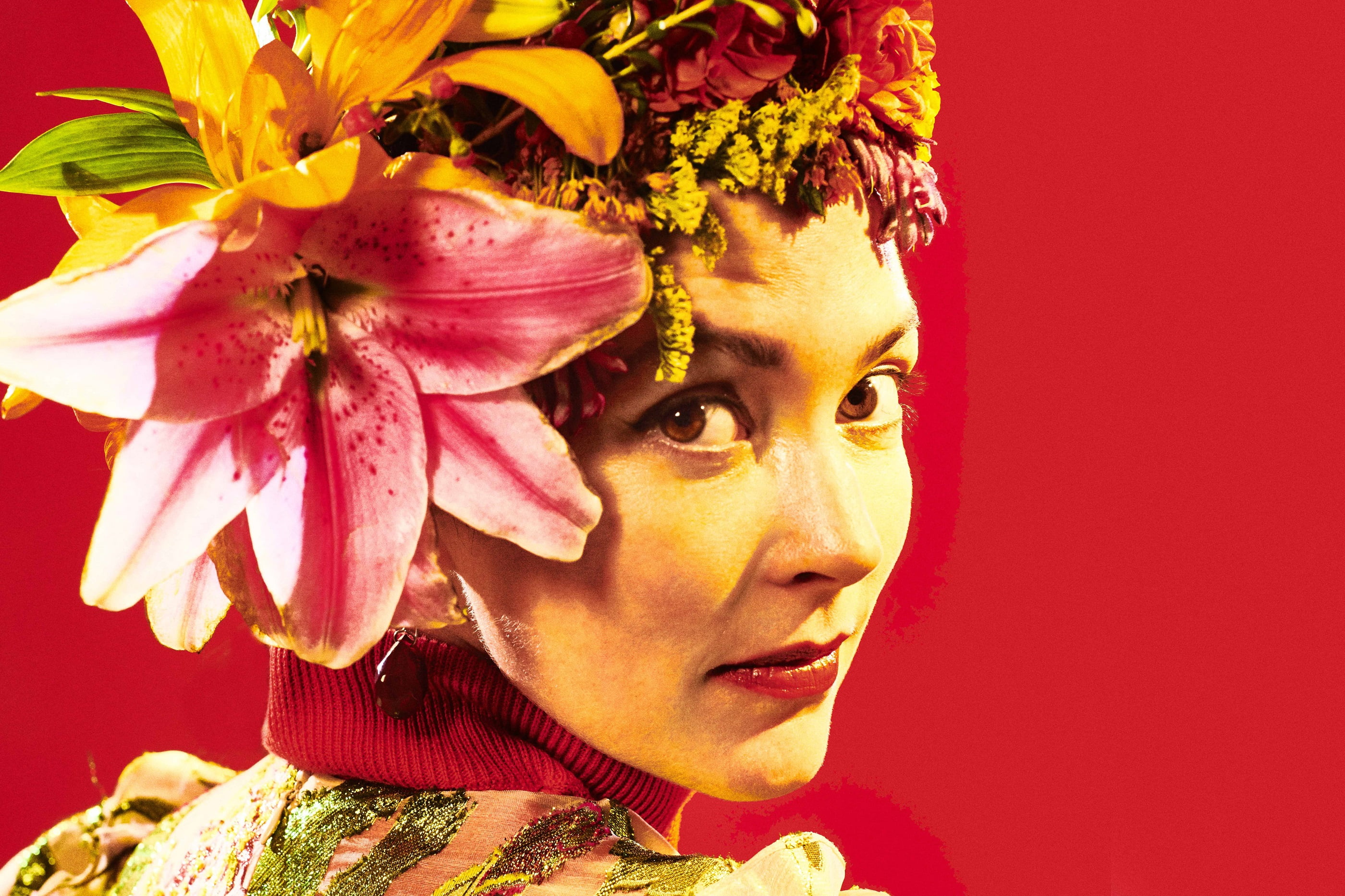
In Their Words: “Since the holiday season seems to begin sooner and sooner each year, my favorite holiday songs are the ones that make you want to cuddle up with a warm cup of tea and watch through the window as the season shifts from fall to winter.” — Valerie June
Artist:Bear’s Den Song: “Only Son of the Falling Snow” Album:Only Son of the Falling Snow (EP)
In Their Words: “I wrote the song a while ago. It’s a very nostalgic and reflective song which imagines someone looking back on their own life and walking into their old house, reliving some pivotal moments of their life and re-engaging with who they are as a person and where they’re at now. I read Winter, the novel by Ali Smith, and it really inspired me to want to write songs specifically about winter. I think it’s an incredibly inspiring time of year and it was a really fun and collaborative process for Kev and I to work on these songs, flesh them out, and bring them to life: embracing piano ideas and more acoustic elements whilst still exploring electronic textures behind the more reflective lyrics and sparse arrangements. We’re very proud to share this song with you.” — Andrew Davie, Bear’s Den
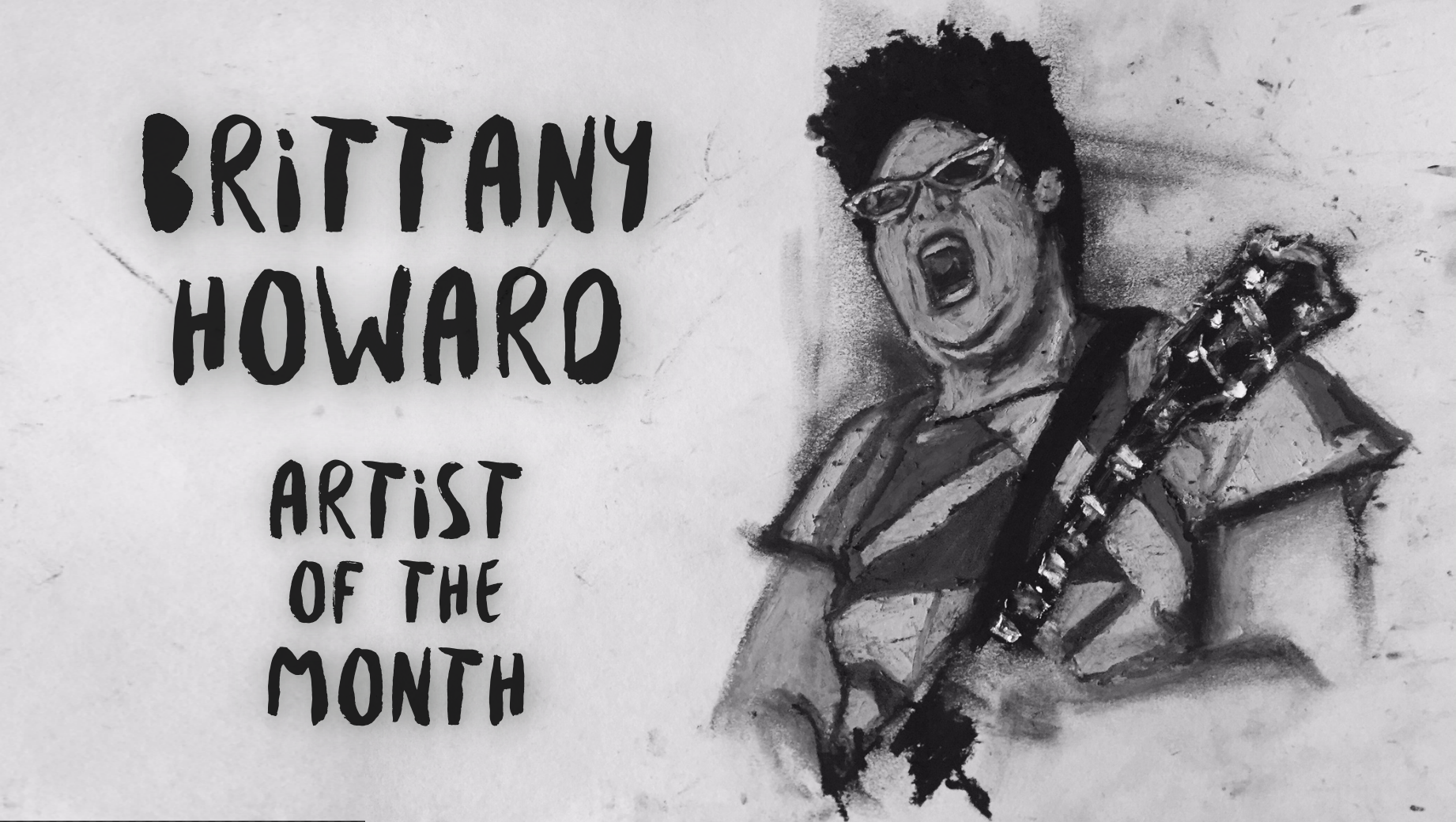
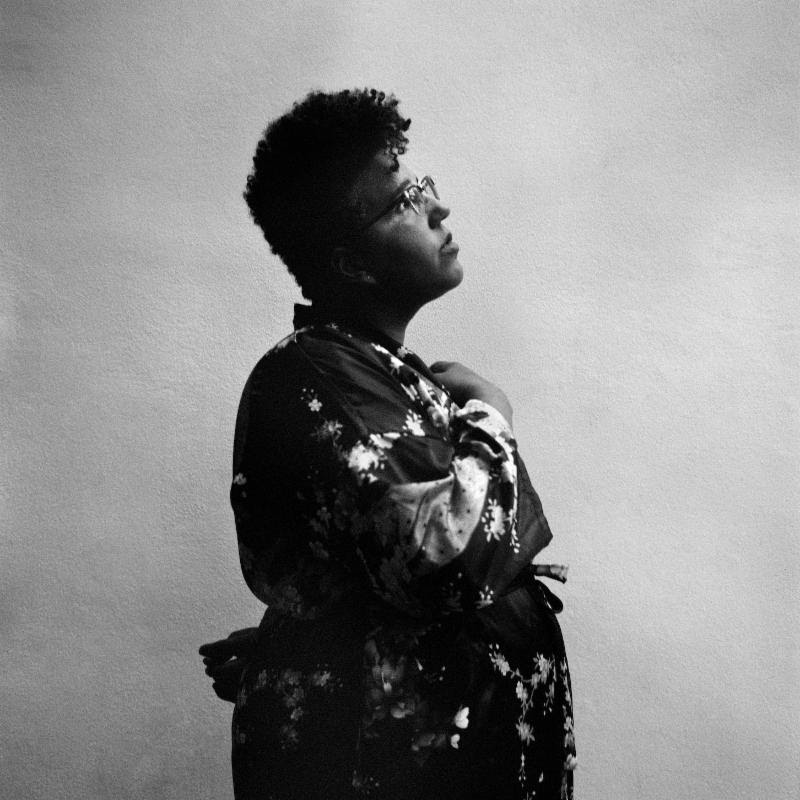
Hardly escapable with a presence everywhere from car commercials to the drugstore checkout line, Brittany Howard’s deeply expressive voice permeates our culture. It is a storytelling voice, capable of inimitable gymnastics and invoking multiple emotions simultaneously. Howard’s first solo project, Jaime, shines a floodlight on the fact that she’s the woman responsible for the vision and the creation of this carefully crafted universe.
Named for her late sister, Jaime speaks to Howard’s own family experiences growing up in Alabama and addresses the cultural imprints of the region’s complexity, rife with some of the deepest pockmarks in human history. The album doesn’t so much feel like she’s grappling with that past. More so, it is a comprehension of the impact that it has all had on her own life, like a summit’s view of a past on which she’s built a mountain of a career.
Howard has won four Grammy Awards as a founding member of Alabama Shakes. In January, she’ll compete for two more with “History Repeats,” her latest single from Jaime. Howard spoke to BGS by phone from San Francisco.
BGS: Not only did you write a very personal narrative on this record, but you also controlled it through the production. Were there differences with the recording process from other projects that you’ve done?
BH: I wouldn’t say it is that different from the Shakes just because usually when I was making the music I would just use my laptop to orchestrate everything. Then I’d show the guys and say, “Ok I’ve got this idea. What do y’all like about it? What don’t y’all like about it?” It was the same process except at the end of it, I just didn’t ask anybody what they thought about it.
Was there a difference in the anticipation of the release of this project because of that?
You know, I was really excited to put it out into the world because it was my baby. I didn’t really know what anyone was gonna think. And I honestly didn’t care or pay much mind to it. I was just happy to do something on my own and have that to show for it. It’s just one of those things.
How did the band come together for this? Did you know when you were writing these songs that you wanted some jazz players as collaborators?
I just wanted to play with people I looked up to and had a lot of respect for. Everybody I’m playing with right now, it is just people I’ve always wanted to play with. Nate Smith is my favorite drummer. He’s been my favorite drummer for several years so I reached out to him and asked if he’d play with me. With Robert (Glasper) it was the same thing. It was a level of respect for how they played and why they play and that’s why I got them on the project.
What was the recording process like? Was it experimental or did you have it mapped out?
It was pretty well mapped out. I use Logic to compose a lot of my songs so I just showed up with that. We used a lot of the guitar parts I had pre-recorded and put some new drums on it. Nate came in with drums and Robert came in with keys. It was mostly stuff I had already put down.
What guitars did you play on this record? Similar to what you’ve played in the past?
I just used this old Japanese Teisco guitar that I found at the pawnshop. It looked cool, felt cool. I just stuck to that.
It is widely known that there are astoundingly few female producers. What do you think the biggest barriers are to women in this field in 2019, and did you experience those barriers yourself?
I think probably the biggest barrier is not seeing enough female producers. We know of the most famous female producers. We know of Bjork and we know of Missy Elliot but there are so many other producers out there like Georgia Ann Muldrow that create beautiful music for all of these, especially, R&B artists that we look up to like Erykah Badu. You know there’s always somebody behind the “somebody.”
I think this is the hugest issue. We don’t know about them because they aren’t the ones going up and accepting Best Engineered Album. That’s part of it. And then giving props whenever you can to people like that, because this is our platform, doing interviews like this, to speak the word about people we look up to and are also inspired by. I love being a producer of my own work because when I was growing up I didn’t see enough of it. Still to this day, when I run into female producers and female engineers, I’m just like, “Wow, wow, wow!”
Would you ever produce other acts?
Maybe when I’m older. Right now I don’t really know how to do that. But I never say never.
What do you think it is about that Muscle Shoals, Alabama, area that yields so many artists?
Hmmm. You know, I don’t know. It’s got a colorful history and maybe because it is next to the water. I don’t know.
I’ve asked my dad that question about Mississippi and he says it is because they had so much spare time.
That could literally be it in the south. You finish work and what else you got to do? I think your dad’s got a good point. That’s why I got into music in the first place because I was bored.
Is that how you learned to play guitar?
Yep. I’ve been making up songs since I was itty bitty. Like 5 years old. I first got hold of an instrument when I was 11. I just stayed in my room and learned how to play it. And then when I got bored of that instrument, I’d pick up another instrument and learn how to play that. It was fun. Instant gratification.
Did you start on guitar?
No, drums were my first instrument and then bass guitar. And then keys and then I picked up guitar.
Were your parents supportive of that?
Yeah, they were pretty supportive. They are really supportive now. I think back then they were just like, “Man, what is she doing?” My rehearsal room was right next to my dad’s bedroom. I’d be playing the same thing over and over again for hours. He wouldn’t complain until like 11 p.m. and then he’d be like, “All right, that’s enough. You gotta cut the amps off.” I definitely don’t think they expected all this.
Who were some of your heroes when you were 11 and just starting to play?
When I first started playing, I liked that popular stuff, like anything and everything. I think one of my greatest inspirations was Chuck Berry. He was such a cool guitar player the way he played. And I really liked Bonn Scott from AC/DC. I thought he was a really good frontman, really entertaining and had really good energy. I liked anything I could get a hold of when I was 11. I’d play anything really. I even tried to play metal. Couldn’t do it but I tried. I was just so curious.
When you go from writing back then — when you were a child or when you were still an anonymous citizen — to writing now for an audience that you know is there, does it change the way that you approach writing?
Whenever I start getting bugged out, I just change what I’m doing. Once I think too much about what I’m going to make, that’s when I gotta get out of that headspace. I think the best thing to do is change instead of thinking about, “What am I gonna write about today?” Or “how do I write a song about this?” The best thing for me, in my opinion, is don’t try too hard. Just show up.
Did you approach the process of writing this record differently than you have in the past?
No. Here’s the thing. When you first start a record, well for me anyway…Boys and Girls [Alabama Shakes’ 2012 debut album] was different because we had all the time in the world to make the first record, like they say. But then the second record I was panicked because I was like, “Oh shoot. What if this is a fluke and I can’t do it no more.” There is always this panic.
So then with this record, I was panicking, because I was like, “What am I gonna write about? What’s it gonna sound like?” But I was less worried because I had been there before. So I would just say, I just sat down and quit thinking so much, and then that begat this record.
What would you as a young child growing up in Alabama think of this record?
Oh man, I would have loved it. I would have thought it was so dope when I was younger. But then I’m pretty biased, you know. I would have loved hearing something like that and knowing that a woman made all of it. Just like when I heard those Missy Elliott records and she made all those beats. It was like her child. Timbaland would leave the studio and she would finish the song. Knowing she did all that. Also Bjork. I think it would have been so cool to know.
Do you feel a sense of responsibility with that at all, like you need to be out there talking about that for the next generation?
I think it only helps everybody to talk about it. Like, “Hey, I made this and if you are a young woman that wants to make music how she hears it, don’t let nobody tell you different.” Everybody can have ideas but when it comes to creativity, it’s subjective. It is like everything else, it’s just about how you feel and how you wanna move people. I would say, no searching for perfection. Just search for the best way to talk about your experience and what makes you unique and your individual self. I think that the more you talk about that, the more interested in the music they will be.
Photo credit: Danny Clinch Illustration: Zachary Johnson
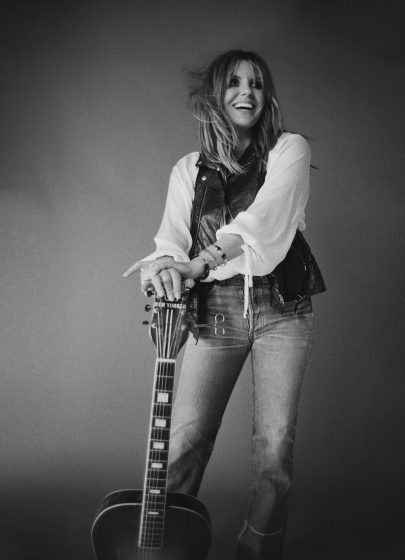
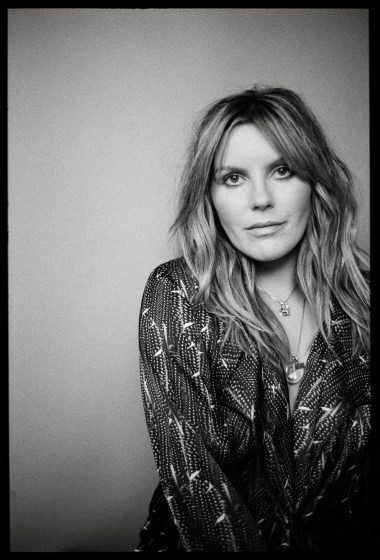
Grace Potter possesses one of the most commanding voices in popular music — which is a good thing, because on Daylight she’s got something to say.
Potter co-wrote much of the new solo album with producer Eric Valentine, with whom she fell in love while still married to a member of her band — which is now broken up, too. After their divorces, Potter and Valentine married, started a family, and now live in Topanga Canyon, California.
The overwhelming emotions of these dramatic life changes are channeled into Daylight, with many of the songs written with Valentine, and on occasion, his longtime buddy Mike Busbee, who died in September.
“Love Is Love,” a potent opener to the project, grabbed immediate attention as the first single, but in this interview with BGS, Potter goes deeper into musical pathway that ultimately led her to Daylight.
“Release” is about the aftermath of the breakup. Who was the first person you played that for when you finished it?
Grace Potter: Eric. Busbee actually texted it to Eric but it was only half the song. Our voice recorder cut off before we finished. But he just wanted Eric to hear where we were at with the writing and Eric had to pull over the car because he was bawling listening to it. And Eric doesn’t cry easily. So that was a really important moment and one that I didn’t expect.
That song, I’d started it myself in the bathtub and it had sat in my voice memo bank for like a year and a half before Eric had heard it and was like, “Let’s not sleep on that one. Let’s pursue that and see where it goes.” Obviously it went and went and went and it’s definitely the one that gets under my skin, every time. It’s hard to play live actually.
And you’re setting yourself up as the character that set this all in motion, too.
Yeah. “I know that I caused this pain…” And that really is the full taking ownership and being accountable for your choices and knowing that those choices are not always this self-righteous, “I can do no wrong” thing. Humans are vulnerable. Humans do make mistakes. Humans change their mind. Lives and careers and happiness and financial fortitude – it all shifts and changes over the time that we live. And the more I’ve lived, the more I realize that it’s okay to give yourself permission, to be that vulnerable.
You quoted the opening line to “Release,” and the opening line on “Shout It Out” sets up that song’s storyline, too. I’ve always thought that those opening lines are something you do really well, but I didn’t realize until researching for this interview that you went to film school.
Oh yeah.
So I’m curious, do you think there’s a correlation there? Because when you make a movie, you have those establishing shots in the beginning, and in your songs you have those establishing opening lines.
And sometimes I like to mislead. I like that opening line to take you in, like, a Quentin Tarantino direction. But it’s actually like a Nora Ephron romance. But I really love storytelling. It’s the same thing I do when I’m writing my sets too. Every single song and every musical experience has to take you on an emotional journey. So there’s a launch point and there’s a revelation, which you know, within the first 20 minutes of a movie, you’re always supposed to basically set up the premise of the movie and potentially introduce one twist. For me, my life was full of so many twists while I was writing Daylight that it wasn’t hard.
After the Nocturnals ended, you had to start a band again. What’s an audition process like to be in your band?
I just want to be around people I like first. Then hopefully they’re good at music. For real. Life is too short to be in a band with people that don’t fit into your ethos or feel, or just don’t feel right. You get these feelings, you get a sense when you’re in a room with someone, if they suck the air out of the room and they have that negative energy, it really changes your entire life and your entire demeanor.
You can feel yourself going kind of gray. I call it the Eeyore effect. You know, it’s this “uhhhhh” feeling. So I generally avoid Eeyores. Although an occasional well-balanced, calm person who doesn’t talk all the time is a wonderfully welcomed part of the road because we can’t all be psychotic extroverts. It’s enough with just me and my baby. But I really enjoy finding musicians who specialize in something that’s just one step quirkier than what you would expect.
Busbee, what I loved about him was that not only was he an amazing songwriter, he played the trombone. Just randomly, like, “I studied trombone.” Really? Eliza Hardy Jones, my keyboard player and singer in my band, is a next level, Olympic champion quilter. Quilting is her thing. She’s actually got a huge show in 2020. She’s doing a massive exhibition in Nebraska at the quilt museum.
Our new drummer, Jordan West, was working for Roland demoing the audio equipment, but actually was hiding in plain sight for so many people. I was looking for a female drummer who could sing, or a female bass player who could sing, or a female guitarist who could sing. I just wanted two female voices that could do all the Lucius parts. So it was fitting the puzzle pieces together for me. Instead of auditioning a bunch of people saying, “I know exactly what I’m looking for,” I just waited until I found a flow of people that felt right. And if they happen to play an instrument I needed, then you’re hired.
Kurtis Keber, our bass player, who’s been with us since last year, came into our world through my previous drummer, Matt Musty, who is now out with Train. We miss him all the time, but these happy accidents happen where you find your people. I saw Kurtis the other day. I was like, “Kurtis, what are you doing? Are you in the studio?” He goes, “No, no, I’ve been building. I’m helping do some carpentry.” My longtime guitarist [Benny Yurco] is now becoming obsessed with recording and becoming one of those crazy studio guys — from the humble beginnings of not even using one guitar pedal to this mad scientist lab they have in Burlington, [Vermont] now.
I like jack-of-all-trades people who like doing lots of things. Those are the things that attract me to people. Their strangeness. Their idioms, their specific obsession with just the tiniest little thing. You know, loose leaf tea. You can talk for an hour and a half about loose leaf tea? I’m in, count me in.
I read the lineup of your Grand Point North festival this year and you did an acoustic set on that Sunday night. What is it about that presentation that you enjoy?
Well, Warren Haynes from Gov’t Mule has been a longtime collaborator and it’s been something that we have talked about doing because we share a joy of being musical and not really knowing what’s going to happen. And not having the stakes be so high that there’s an entire band behind you train wrecking. You know what I mean?
Usually you have to rehearse and really gain a mastery over every single song and arrangement, but when you’re doing an acoustic set, there’s so much freedom to explore. Warren’s musicality and my musicality are complementary to one another where we can take it in a lot of different directions and kind of wring out the towel different every night.
We’d done it a lot backstage and not in front of people, but we felt like it would be a cool thing to share because so many musicians, they just get out there and they run the Ferris wheel, they crank the thing up and they do the same show night after night. There’s been nine years of my festival. People have seen me play with my band. They’ve seen Warren play. He’s played three times in my festival. So I really wanted to treat the audience to a different experience.
Is part of that perspective because you went to a lot of festivals growing up?
Yeah. I came from the jam band world. Warren really ushered me into it. I was very much standing in the shadows of some amazingly talented people who paved the way for me. The festival circuit is really the only way that I was able to break out on my own and be noticed and stand out. I think it’s because of those festivals that I have the sense of diversity. I can take it in a lot of different directions and it’s more fun that way.
And if you’d go to a music festival, you’re going to hear seven, eight, ten genres of music in one place and love every single one of them. I think my instincts took me in that direction, to continue on in my career through creating in the moment, more than creating for a forever thing. …
I think none of my records have ever done my musicality justice because it’s like a high school photo album. It’s this one moment — and maybe it was a very manipulated moment that isn’t even the real reflection of what I was feeling in that moment. So Daylight was the opportunity to completely break that down, take away that premise, take away this idea of having to bottle lightning, and package it and sell it to the world. And instead have an experience. Be vulnerable and open to it and see where it takes you.
As you were talking about festivals, I was wondering, did you ever get an ear for bluegrass?
Absolutely. I grew up listening primarily to Appalachian and Celtic music, which have so many deep connections. And from my family’s record collection, I was obsessed with traditional English, Irish, and Scottish songwriting because the storytelling has these archetypes in it. It’s like the Brothers Grimm. There’s these really intense, very dark stories of women that are shape-shifting and there’s these evil goblins, and then they turn into a beautiful woman. This is a combination of fantasy and reality and love and lust and danger and war. There’s all these amazing cinematic storytelling moments in those songs.
So I grew up around that, but then bluegrass came into my world because in the festival scene, there was so much crossover. I got to meet and be in a songwriter circle early on in 2006 with Béla Fleck, Chris Thile, Jim Lauderdale, and Buddy Miller. It was such a cool lineup, pulling all these people together from all these walks of life and just playing. And it was very humbling. It made me realize I got to get my shit together, my instrumentation, because these guys know how to hold it down.
I understand that you’ve moved from Vermont to Topanga Canyon, which must’ve made your inner hippie very happy.
Oh man! My inner hippie became my outer hippie. I walked to the store two days ago in a pirate shirt with a Burberry trench coat, sweatpants, Doc Martens, and a flower crown. And I didn’t even think about it until somebody sent me a photo of it and I was like, “I did what?” That was just my usual day-to-day getup. That’s Topanga. I live and breathe that lifestyle and those people really get me.
It’s a real community too. It’s a small, small group of people. And again, I think the thing I’ve been finding that I want in life is accountability. And in a big city like L.A., you can hit someone with your car, drive away and never see them again and not really ever worry about getting caught. But if I, or anyone in town, sees anything out of the ordinary, we check in on each other. That’s how tight-knit we are, and how much we care about one another. And it’s a really, really wonderful community to be a part of.
What do you hope that fans will take away from the 2020 version of Grace Potter on tour?
You know, everything about my life has been unexpected, even to me, so I certainly can’t tell people what to expect yet because I just — every bit of it has been this ride. And as I’ve gone on as a musician, I realized that my favorite part of being a musician is inviting people into that ride with me. Instead of presenting them with a packaged thing, that is what it is, I don’t know what it is! I don’t know how this is all going to work. I’ve got a baby now and my life has fundamentally changed in so many ways. I can’t wait to see how it manifests onstage. I guarantee you there will still be headbanging, that’s for sure!
Artist:KINLEY Hometown: Charlottetown, PEI Song: “Run With You”
From the Artist: “The inspiration for my new track, ‘Run With You,’ came from reflecting on one of my musical heroes who I’d opened for during my time as a member of Hey Rosetta! Before one gig in Toronto I passed her in a stairwell. It was just the two of us. I complimented her sequined skirt. She smiled the most beautiful smile. Some people had said in the past that she had an attitude but I think that maybe she was misunderstood. In that moment in the stairwell I only saw goodness. She gave off the vibe of, ‘Who cares what anyone thinks anyway?’ This song is an homage to her, expressing my appreciation for all the music she has written.” — Kinley Dowling
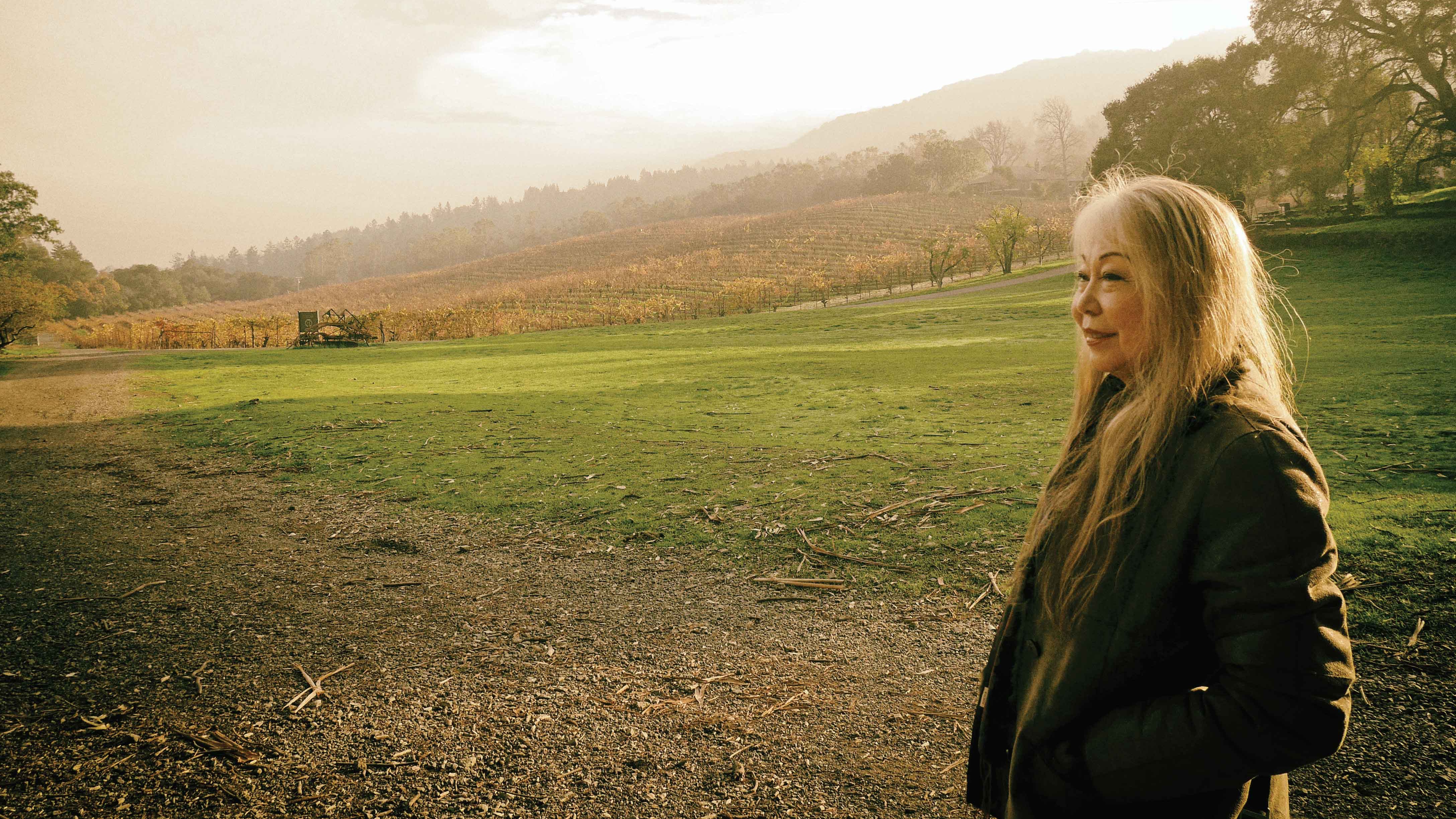
Being a “first” — a trailblazer, a pioneer, a renegade, an innovator — is an impossibly heavy mantle to take up. That being said, it’s not surprising that, when it is accurately applied, the term is almost never opted into or self-ascribed. It’s a fascination. A sort of voyeuristic moniker given by the media, by fans, by historians, by anyone who notices, or attempts to commodify, the importance of fresh offerings from new voices. In musical spaces, “firsts” tend to get more and more granular as they become more and more rare, necessitating countless modifiers and descriptors to lend accuracy to the idea that being on the edge, being an outlier in this way, is a selling point. Or, that it’s a merit in and of itself.
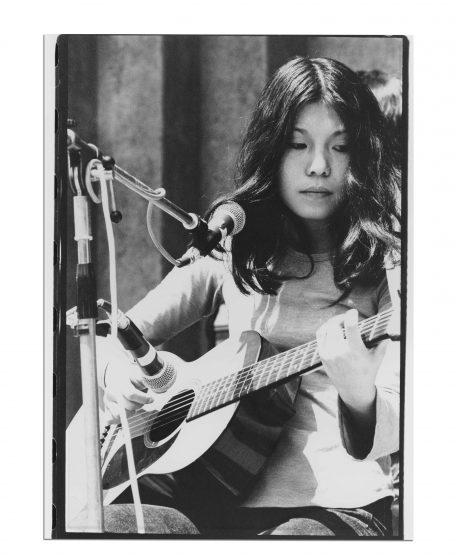
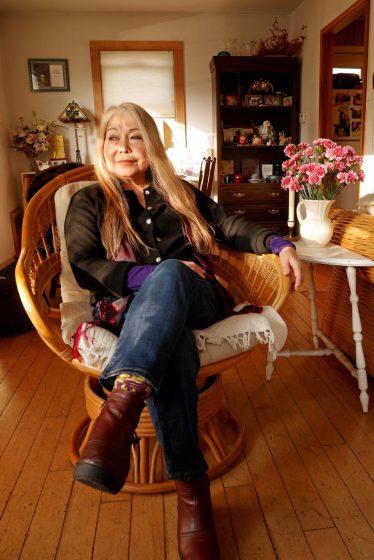
Guitarist, singer/songwriter, and performer Sachiko Kanenobu‘s claim to firstdom is no ball-and-chain, however. It is truly inconsequential to her — despite its legitimacy. And as for intricate modifiers? Just one. Kanenobu is considered Japan’s first female singer/songwriter. In an age when writers and artists alike are attempting to retire “female” as a pertinent adjective in music journalism, the designation does give pause. Though, 46 years after her debut album, Misora, was released in Japan, it’s important to remember that being a woman permitted to take up space — in these cultures that champion masculinity above all else, and in artistic spaces historically reserved for men — is still significant. And the circumstances that prohibited other women from going before Kanenobu were not that long ago. And not unique to Japan.
Misora is a stunning work. Singular in its musical aesthetic, its production values, its amalgamation of European pop stylings and folk revival influences, and most of all in the fact that despite being sung entirely in Japanese, the songs are shockingly accessible, evocative, and relatable. Reissued by Light in The Attic Records in July of this year, the album has followed Kanenobu through her decades living in the states, her forays into other genres and musical phenotypes with other bands and artists, and her absolute tirelessness as a songwriter and adept guitarist — even if she may not consider herself “a picker.” New generations of fans continually trip over and into this gorgeous record, and now, hopefully, countless others will have their eyes opened to this true masterpiece — and to a musician who deserves her place in the pantheon of folk singer/songwriter and guitarist greats.
Being designated as a “first” anything is kind of an enormous responsibility to bear. Do you see your role as one of Japan’s first women singer/songwriters in that way? How has it felt to blaze that trail? Or did it not feel like that at all?
Kanenobu: No, I don’t feel responsible, but it is exciting when I hear myself being referred to as the first Japanese woman singer/songwriter. I’m very grateful for the recognition. In the late 1960s there were no women who wrote their own songs and played guitar in Japan. I was the first one to do it on URC (Japan’s first independent record label). Thinking back, it felt good to be in that position. At that time, I was really young so I always wanted to be different from other musicians. I didn’t mind being the only woman doing what I was doing.
Part of why conversations about “firsts” can be stumbling blocks is because, often, these “firsts” are just examples of the first visible examples of X, Y, or Z. I wonder, are there artists, women or otherwise, that influenced you? That showed you there was a path forward for your music and your art?
I grew up in a family (with three sisters and two brothers) that loved music and sang, which obviously had a big influence on me.
My oldest sister (18 year age difference between us) was a big star in Takarazuka, a famous woman’s theatre in Osaka, Japan where she performed in musicals such as The Sound of Music and The King and I. My mother would take me to all her performances. My second sister probably had the biggest influence on me as she played Western records (such as Bing Crosby, Dinah Shore, Doris Day, Nat King Cole, and others) in our house, loved classical music (Beethoven, Mozart, etc.), and also introduced me to some music coming out of France at the time. My third sister would also go onto to become a singer/songwriter. She wrote Enka Japanese country music and can play the piano even though she’s blind.
So, yes, my family was my biggest influence on my musical path.
At least stateside (but almost certainly pervasively, across the globe) general attitudes toward women in music often result in women being considered songwriters or singers before instrumentalists, but your guitar playing is clearly foundational to what you do — and so distinct. How did you develop your playing style, you are totally self-taught, yes?
Yes, self-taught. One of my brothers learned how to play classical guitar and I would watch him play. Eventually, he got tired of playing so I asked him if I could borrow his guitar to try and teach myself to play. This was the beginning of my lifelong friendship with the guitar.
Later, during my high school years, my friend and I would sneak into the folk club on the campus of Kansai University. At that time American folk music was really popular among college students. Luckily, I met some great guitar players during that time who showed me how to fingerpick and play some simple chords.
Eventually I would meet film score composer Ichizo Seo, who introduced me to Donovan and The Pentangle, and I would try to copy their simpler songs, but it wasn’t easy so I would simplify the scale and created my own style. Even now I can’t tell you which chords I’m playing. I have to ask someone, “What chord am I playing?” I love Pentangle’s guitarists Bart Jansch and John Renbourn, who created a unique style with their duet guitar playing. Their playing still inspires me.
Do you find that people automatically consider you more of a singer or songwriter, rather than a picker? Or has your experience been different?
No one labeled me a guitar player back then and even I considered myself a singer/songwriter who used the guitar to create the tone first and the words would follow. It wasn’t until recently did I get the recognition as a guitarist and singer/songwriter.
This new recognition started when Misora first got reissued in Australia in 2006 by Guy Blackman of Chapter Records. Around that release the album started getting radio play in the Western world. Brian Tuner, former music director and DJ at New Jersey’s WFMU, was a big supporter. My first long-form radio interview for the Misora reissue was in 2007 with WFMU’s DJ Joe McGasko. At that time, it had been over ten years since I had performed any tracks off Misora but Joe took me seriously as an artist and encouraged me to start performing again. He had me on his show “Surface Noise” to perform four songs off Misora and two new songs. After that performance I started getting recognized as a guitarist and singer/songwriter, but before then I wasn’t confident enough to even consider myself “a picker.”
That WFMU performance was an amazing experience because it had been so long, that even I was really surprised that I had remembered all the guitar chords and lyrics off Misora. I remember thinking it was a miracle I pulled it off.
All of the tracks on Misora are sung in Japanese, but the music is still so accessible and immediate and touching, even with the language barrier. How do you accomplish that? Do you think that’s a product of the integrity of the music, or intention you put into writing and performing it, or something else?
Thank you for that. I put a lot of my love and soul into Misora but I thought it was going to be my first and last album, because in the middle of recording it I made the decision to marry Paul Williams [music writer and founder of Crawdaddy Magazine] and leave Japan. Three songs from the album were written after I met Paul and when I’m in love songs pour out of me.
When I first heard The Beatles and Bob Dylan I didn’t understand the words but I totally connected with how they were expressing emotions. This feeling of connection and bringing people together was a goal of mind when making Misora.
Plus, the album was heavily influenced by the Japanese band Happy End and the melodies you hear were influenced by the Western music I grew up on… so seeing the music be reintroduced to Western youth is really nice for me.
In the time since blazing this trail, how has the scene for folk singer/songwriters — especially women — in Japan grown? What has excited you about the progress that’s been made?
I can’t really say, but I know that after I left Japan, I learned of so many singer/songwriters that became very famous in Japan such as Akiko Yano, Minako Yoshida, etc. and they were not afraid to express themselves. Friends have told me if I didn’t leave Japan after recording Misora it might have impacted the singer/songwriter scene there but I don’t know if that’s true.
Are there artists here, in the U.S. that you are listening to right now? Any that get your creative juices flowing?
I listen to all kinds of music: folk, rock, country, world, classical, jazz, blues, space, and classic movie soundtracks.
Right now, I enjoy listening to Steve Gunn. I love his originality and guitar playing. Steve and I have become very good friends and his playing inspires me to play my guitar more. I love the creative sounds that he makes with his guitar. He has a lot of passion and love of playing; I can both see and hear it. He is a very calm solo performer that plays so naturally I can’t tell when the tuning ends and the song begins. He is one of my favorite musicians right now. He invited me to open for his Bay Area tour earlier this year. He and his band, plus James McNew from Yo La Tengo, backed me up as we performed at SummerStage in Central Park, and Union Pool in New York. I hope someday to perform again with Steve and make a record.
I also still love listening to Joe McGasko’s show “Surface Noise” because he brings interesting new and old artists on, which is how I was introduced to Steve Gunn.
I would love to collaborate again with Mr. Hosono Haroumi, who co-produced Misora.
What do you think are the biggest differences you’ve felt between the scene here, in the U.S., and that in Japan?
Biggest differences are language and culture. There is more freedom of speech here in United States. People express themselves more openly and say things more directly. It can be seen in American music as well. I have become more Californian than Japanese over the years, because I have lived in America much longer than in Japan.
Western culture and music influence each other, it is interesting how everything comes together. Music comes around full circle in Japan and America, Eastern and Western worlds vibrate. We influence each other. That is what is happening now and it’s a wonderful thing.
To wrap up, here’s the obligatory, “What’s next?” question: What’s next? This reissue of Misora, decades later, is such a testament to your longevity and your impact — how are you planning to take that further into the future? Are you?
First, I’d like to say thank you to the label, Light in The Attic Records, who put out a beautiful reissue of Misora this year on vinyl and CD.
I’ve been performing Misora over the last two years and I just performed the whole album in Tokyo for the first time in 46 years since I left Japan. For that Tokyo performance I remixed some of the songs, adding and rearranging some parts. Someday, I would like to make a new version of Misora, applying some of the ideas Mr. Hosono and I couldn’t use in the original 1972 recording.
I’m still writing new songs, but putting out a new version of Misora would be so wonderful. I’m 71 years old now and I’m in the last chapter of my life so as long as I stay well I would love to continue performing for others. To my family, my dear old and new friends, and to Misora fans in the East and West, I love you all and I’m so thankful for your support and love.
Color photos: Yosuke Kitazawa Black & white photo: Takashi Yamamoto
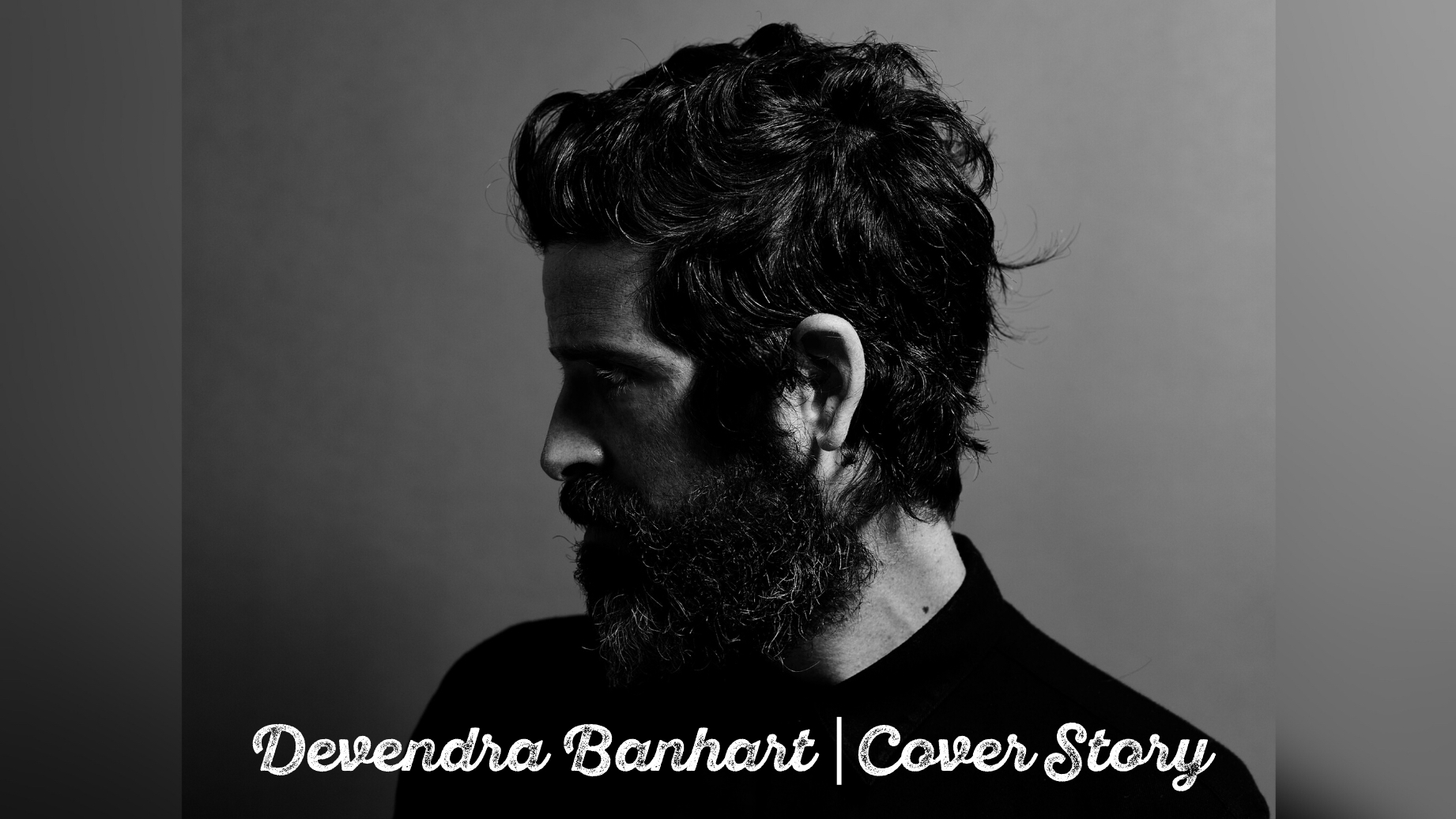
On Ma, the new album by folk-globalist Devendra Banhart, there are appearances by singer-songwriter Cate Le Bon and 1970s English folk-rock cult heroine Vashti Bunyan. Lyrics reference his love for Brazilian stars Chico Barque and Caetano Veloso as well as Japanese electro-art-pop pioneer Haruomi Hosono. And no less than Carole King is a presence in a co-write nod via lyrics drawn from “So Far Away.”
But when it comes to guest stars on the album, there’s one that’s hard to top: the Pacific Ocean.
Yup. That noted body of water is credited, fittingly, for “ocean sounds” on the song “October 12.” It’s a song of grief after the death of a friend, and Banhart, who spent much of his youth in Venezuela, his mother’s native country, sings it in Spanish.
“Actually, on every track there is the ocean,” he says, freshly landed at home in Los Angeles after flying across that very ocean from Singapore. “You don’t really hear it, but it is throughout the whole record. What inspired us to do that in the beginning, we recorded in a Buddhist temple in Kyoto with no walls. It is open to a garden. We wanted to create that feel on the album.”
Working with his longtime producer Noah Georgeson and several of his regular musical cohorts, Banhart was invited to record in that temple for just one hour, after a brief Asian tour. The experience was something they wanted to extend through the whole of the album, which they later accomplished by recording in a studio in a house along the Northern California coastline.
“You could hear the Pacific,” he says. “We had the windows open. That’s the big support system for the songs.”
It’s a nurturing presence, even in its most subtle ambience, it being the primal source of life. And as such, it represents the life-giving concept at the heart of the album: motherhood.
“Maternity is the theme,” he says.
There’s more than that here, of course. There is grief in songs such as “Memorial,” about his father, with temple bells mixed in the music, and “The Lost Coast,” about death and loss. The magic of serendipity permeates the album, as does the state of being open to what the world offers. None of the songs are explicitly about motherhood, per se. The notion, in many poetic manifestations, ties it together.
“There’s the relationship one has with a country,” he says, distressed about devastating political and economic strife of the nation in which he was nurtured. “Venezuela has been a constant issue on this record. Moments before now I was talking with my family and reading about what is going on there. It’s a truly apocalyptic situation. My way of writing about it is so related to my mother. At this point I can’t separate my own mother from Venezuela.”
His mother is not currently living there and the last time he visited was two years ago, but he has aunts and uncles and cousins who are there, seeing their country and its people suffer greatly. For him, it’s hard to separate that situation, with which he has such a deep personal relationship, from suffering elsewhere, whether from his own roots or in places where he has spent considerable time (Nepal and Tibet, among them) or that he has merely seen on the news.
“There is the insane suffering of the Venezuelan people, the political madness of the situation in the U.S., Duterte in the Philippines, China and Tibet suffering so much, and the people in Hong Kong.” Banhart seeks solace in the connections he’s made through music, “There’s music and art as the parent-and-child relationship. I turn to music to be consoled, to be less alone, to feel loved and nurtured.”
In that regard, few are more significant to him than Vashti Bunyan. The English singer came from the same folk-rock scene that gave us Fairport Convention, Nick Drake, and the Incredible String Band. Her 1970 album, Just Another Diamond Day, languished in obscurity until the late 1990s when it was “discovered” by musicians in a nascent movement that came to be called freak-folk, a young Banhart among its numbers. That brought about the album’s reissue, and various new recording projects, some involving Banhart. Now in her mid-70s, Bunyan sings with him here on the album’s closing “Will I See You Tonight?”
“Within that maternal theme, I don’t think anyone in my life encapsulates the archetype of the wisdom of artists as much as Vashti does, in terms of that nurturing quality of music,” he admits.
Banhart also seeks to make, or embrace, connections in music itself, some coming quite by surprise. This album is threaded with inspirations from and references to music from many lands and cultures, often connecting in ways wondrous, delightful, and serendipitous. Rarely is any of that planned — at least consciously.
“Sometimes the lyrics come first,” he says. “The music is a platform for the lyrics. As you start, as the song starts to take shape, there’s some collaborative element with other musicians, but also with the song itself, in that way. I don’t mean to be oblique, but it’s this strange way that it takes you in these certain directions. It’s out of your hands.
Sometimes it’s easy, he says, as in the song “Carolina,” which cites an earlier song that has influenced him.
“It’s a song for a song, a song written for the song ‘Carolina’ by Chico Barque,” he says. “It’s an homage to Brazilian music and South American music. There’s a samba feel to it, and me really singing about wanting to hear that song and saying I should probably learn Portuguese someday. In those lyrics it was easy to see the shape of that music.”
Others have more convoluted paths, but in them reveal the global pathways he has so openly relished in his music and in his life.
“In some songs I was quite surprised what was coming out.”
“Kantori Ongaku” offered several such surprises. In the chorus, sung in Japanese, he uses words from a song by Hosono, one of the founders of Japan’s landmark trio Yellow Magic Orchestra. At one point in the cited lyrics, Hosono sings, in English, the words “country music.” That planted some ideas for Banhart as he wrote his song although he wished to sidestep literalism.
“I wanted to do a Buck Owens thing here but that wouldn’t work out,” he says. “J.J. Cale was a great hero of mine so I took J.J. Cale as inspiration, not literally, but that kind of platform emerged for the song. Those things aren’t really done consciously. There are people who are inspirations I’ve been listening to for so long that it enters into the music, naturally.”
In some ways, Ma is a culmination of Banhart’s past work in a career from the two shambling albums he released in 2002 through 2016’s ambling Ape in Pink Marble that’s seen him go from neo-hippie troubadour to bossa nova evangelist, from playful folkiness to, well, playful electro-pop. He’s been a part of collaborations with kindred spirits from Beck to Brazilian tropicalia great Gilberto Gil, with whom he shared the Hollywood Bowl stage one highly memorable evening, to the Strokes’ Fabrizio Moretti to Antony and the Johnsons.
Yet the range and depth of Ma extends beyond even that, particularly in its emotions, the sense of loss in some songs not just complementing the joy in others, but expanding upon it in ways that truly honor the maternal wonder of the world.
How to make that work? How to bring all that together so naturally?
Well, now we get to the other concept of Ma. Yes, the title is a word generally associated with mothers. Banhart’s use of it comes from something else.
“The word ma is actually born from a different meaning,” he says. “It’s a philosophical term for space in Japanese. Starting the record in Kyoto, that’s where I learned the word. I’ve always failed but have strived to get a type of space in the music. How do you create spaciousness in music? Ma is a term of how essential it is to an object, and in music the space between the notes is essential. I really got into that word, and it also happened to be the perfect word for the theme of the album.”
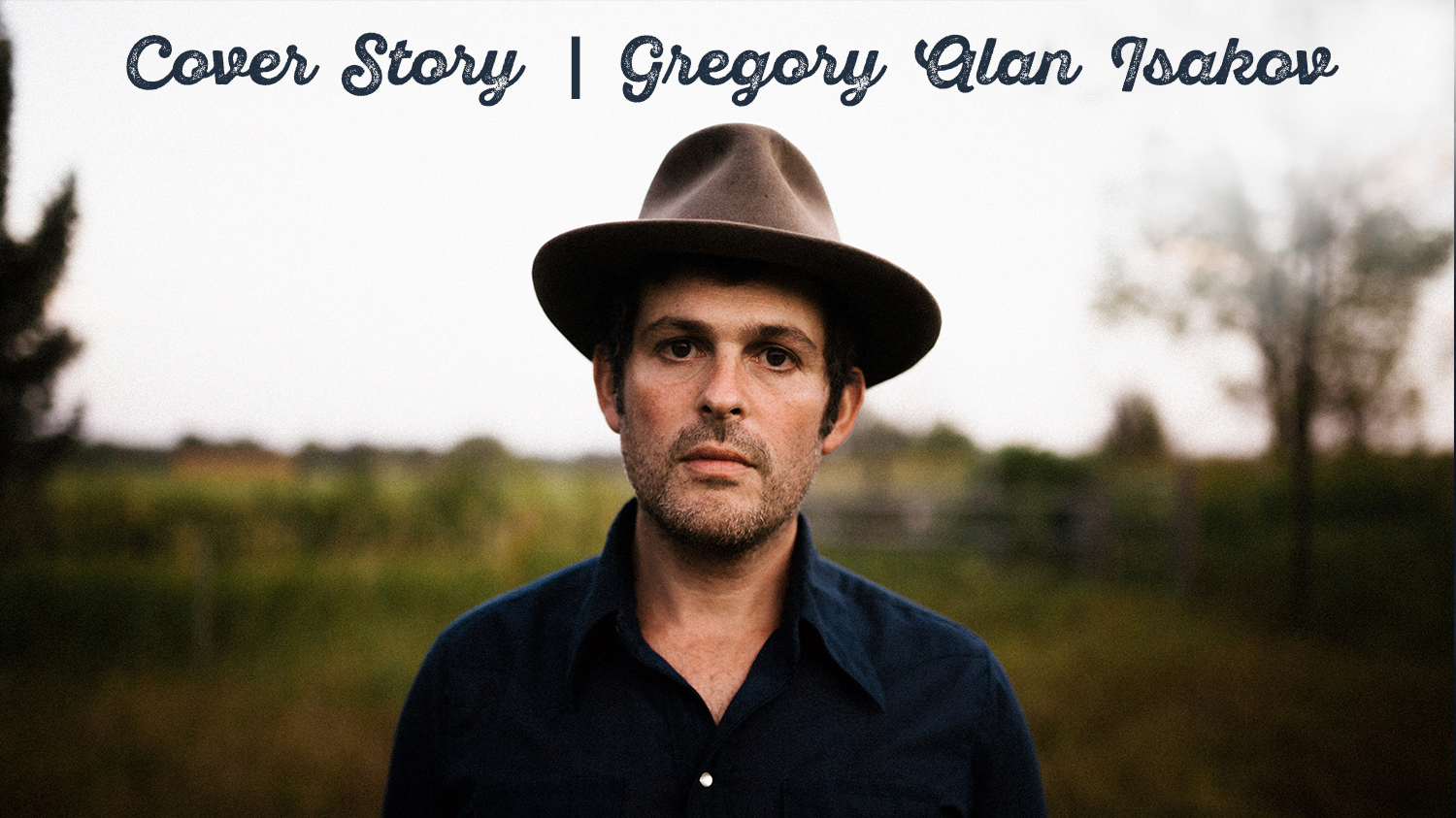
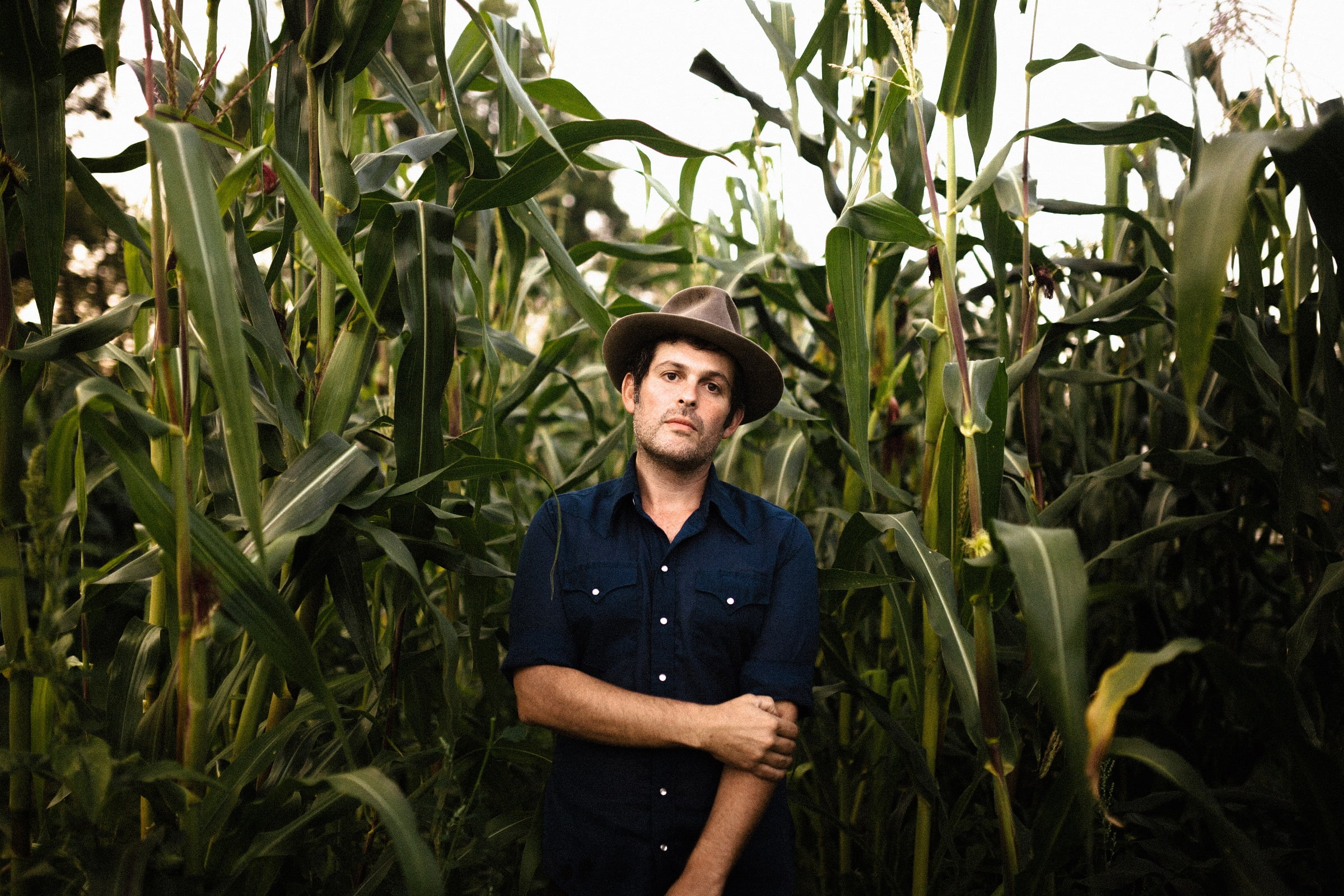
You could call it an epiphany of sorts. Gregory Alan Isakov was riding an elevator with the rest of his band when the doors slid open and a woman got in. She noticed their instruments and asked the question musicians dread. “What kind of music do you play?”
Isakov chuckles. “I never know what to say to that question, you know? So I said, ‘Oh, like, sad songs about space.’” It was, the band immediately agreed, as perfect a genre definition as Isakov could have given.
The singer-songwriter’s new album, Evening Machines, is undeniably dark and cosmic. Atmospheric, opaque, and layered with texture, its electronically accented folk-rock is a departure from the spare, intimate sound Isakov has favoured in the past. And while he is perfectly upbeat today, looking out from his kitchen window onto his four acres of Colorado fields and handful of sheep, he admits that his latest music came from “a pretty dark birth.”
On the face of it, Isakov’s life was going great. But even as he had just fulfilled one of his most fantastic career goals – orchestrating his work for the Colorado Symphony – he was beginning to suffer from a debilitating physical anxiety. “When you’re touring, and trying to figure out how to put out records, you forget about peace and quiet for long periods,” says Isakov, who admits to being a natural introvert. “You’re just hustling all the time. I did that for so long I forgot how to unplug. And it caught up to me in a way I’ve never experienced before.”
And then, on the plane home from Scotland after a six-month tour of Europe, he heard the news that Donald Trump had won the presidential election. “I’ve never had a sense of overwhelming darkness and anxiety like I had that year. You can’t ignore it on an emotional level, whether you read the news or not. And it does make it into the landscape of music or anything that you’re doing. You’re going to feel that stuff. It’s part of being alive.”
Songwriting was a focus and a release; it was also, he says, a reminder that he was someone who needs space and quiet built in his life. Hence the sheep. Isakov took 12 months off from touring and immersed himself in the life of the land he has been working for some years now, supplying vegetables to restaurants and markets. When Isakov was not in his recording “barn” with engineer Andrew Berlin, he was out in the fields, planting salad greens, turnips, and cucumbers, feeding and watering his 10 sheep. “They’re great, they have good vibes when you want to chill,” he smiles. “They’re so easy to look after.”
While the songs on the album draw from what Isakov calls an “otherworldly landscape,” the farm itself is a very real character in his recording process. Apart from the live symphony recording, every album he has released has been made in his own home – “because I really don’t like studios,” he laughs. “I don’t like the glass, I don’t like going into another room to listen, I like to have the words to the songs up everywhere, and all the stations ready to go.”
For Isakov, the key factor is speed: the ability to capture, as quickly as possible, the emotions and sensations he is exploring. Evening Machines, it turns out, is full of first takes. “To maintain whatever feeling you’re having is really important. In the moment you say, ‘This is just an idea, but later I’ll do this good,’ you know? And then I’ll come back to it and something’s different and I can never get back that initial emotive, ineffable something.”
So Isakov developed his own mantra – “sketch to keep” – and created a working space nimble and nearby enough that he could to capture inspiration whenever it struck. The ‘evening machines’ of the title are actually the blinking lights of his electronic equipment, which he visited mostly at night. By the time he came to create the record, he had more than 40 tracks to choose from.
The songs that made the final cut – the ones that felt, to Isakov, to “live together” – share a common, haunting feel. Images return in numerous songs, stars and weightlessness, gunpowder and bullet holes, while the sounds of the machines – a Juno synth from the ‘80s, a compressed drum kit, an Orcoa pump organ that sounds like a toy – provide an unnerving and ethereal backdrop. It is a sound far heavier and, dare one say, dirtier than Isakov’s previous albums. And yet the lyrics remain fraught with the fragility of human essence.
Some, like “Powder,” read off the page like poems – “were we the hammer/were we the powder/were we the cold evening air” – which pleases Isakov to hear. “That’s the goal!” he laughs. “Powder” in particular was inspired by one of Isakov’s favourite poets, Billy Collins. “I bring his poems out with me on the road because I tend to slow down whenever I read them.” And if meaning can feel mysterious in Isakov’s songwriting, it’s not only obscured to the listener: Isakov says he often doesn’t know what his songs are about until after he’s written them.
Take “Berth,” which he wrote with his brother Ilan – a film score composer and “one of my all-time favourite songwriters.” The pair often spend the summers together, engaged in all-night-co-writes. “We start after dinner, and this time I had a melody in my back pocket, that crooked piano part, and I went to one end of the building and he went to the other and we wrote as many verses as we could and then met back up, and mixed them together. The original song was 17 minutes long!” It was only when they edited it down to its final version that they realised what they’d written. “And then we were like: I think this is an immigrant song. We didn’t see that coming.”
Isakov was born in South Africa at the heart of the apartheid era – “a pretty rough situation” – and his family emigrated to the U.S. when he was a young child. For the first couple of years, he lived in a one-bedroom apartment with his parents, his granny, and his two brothers. “A lot of friends I made growing up were immigrants and I really connected to their families a lot. They had a different vibe to the American kids I knew.
“Even now – in no way is our country somewhere that feels safe all the time, or going in a good direction at all – but, man, we are lucky to be in a place where we can have a sense of freedom and be able to work and create whatever we want. That doesn’t exist hardly anywhere and it’s a nice perspective to have.”
His upbringing also created a close bond with his brothers, who would play instruments together in the basement: “I was always excited to get back home from school to play with them. That was the fun part of my day.” Not that music has made any of them any less introverted, Isakov admits. “When we’re hanging out, we don’t even talk,” he laughs. “One of us will ask, ‘Who’s he dating now?’ and the others will be like, ‘I don’t know, we don’t talk about that.’”
But then, Isakov is happy to live with uncertainty. It’s a principle that’s central to his creativity. “I’ll read an interview with another artist saying ‘I wanted to write a song about this or that,’ but that’s never happened to me,” he says. “I never set out to write a song about anything.
“I feel like I’m sort of holding on, not even driving. You just hope you can get it all. Sometimes you do, and when you do it’s the greatest feeling, you’ve struck gold or something. But there’s plenty of times I don’t get it. My trash can’s pretty big.” It makes him reluctant, he says, even to take credit for his songs – and even more so to imbue them with too much narrative. For instance, “Was I Just Another One” can sound to the unknowing ear like a simple love-gone-wrong story. “To me that song’s about a relationship with someone on heroin but it never says that. And it’s not interesting what I think it’s about.”
His fascination with roots – from jazz and blues standards to the old-time clawhammer banjo he learned to give him a break from guitar – has not left him. “Some of the traditional songs that are so relevant today, stuff like Mississippi John Hurt, you can listen to it and they could have been written right now.” And now that his own dark period is, happily, over – “I’m so lucky to be on the other side of that” – the lighter tracks he recorded over the past year will be repurposed into a new, more country-influenced collection. If this record has taught him anything, however, it’s never to assume. “Songs have minds of their own,” he laughs. “And I’m just following them along!”
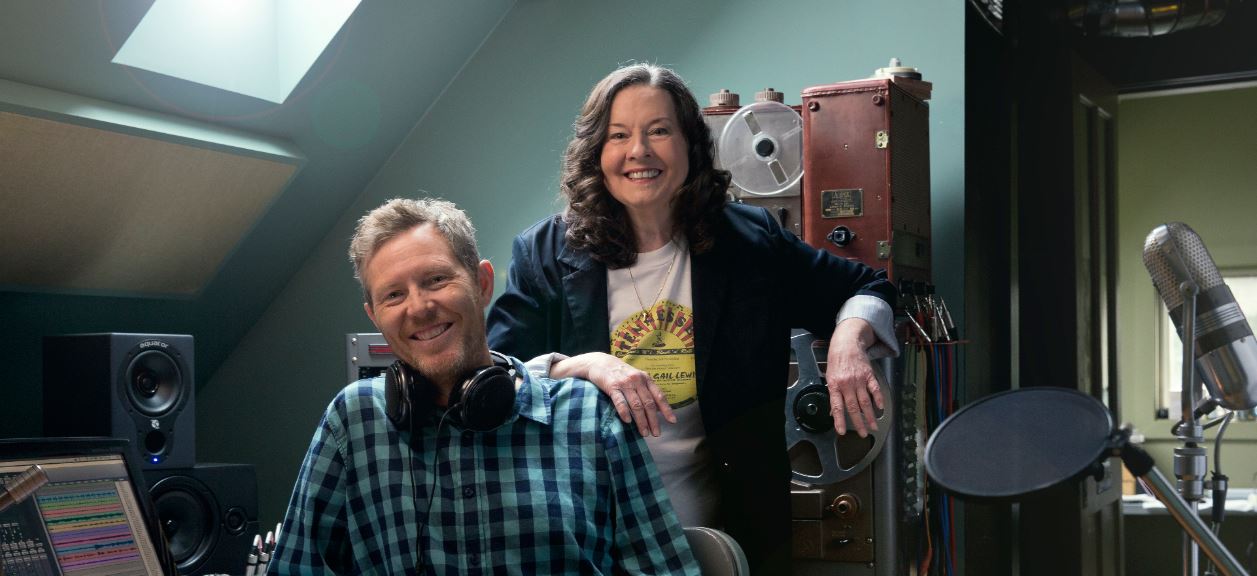
Linda Gail Lewis was never destined to be the most renowned member of her family — or second, third or fourth-most famous, for that matter. There’s not a lot of oxygen left in the shotgun shacks of Ferriday, Louisiana or the public mindset when you have original rock wild man Jerry Lee Lewis for a brother and your cousins are Mickey Gilley and Jimmy Swaggart. But unlike her early-starter kin, Linda Gail has come more into her own later in life. The 71-year-old little sis has emerged as a heroine to the rockabilly crowd not just because she trades off the trademark style of the Killer but because she has slayer instincts, too.
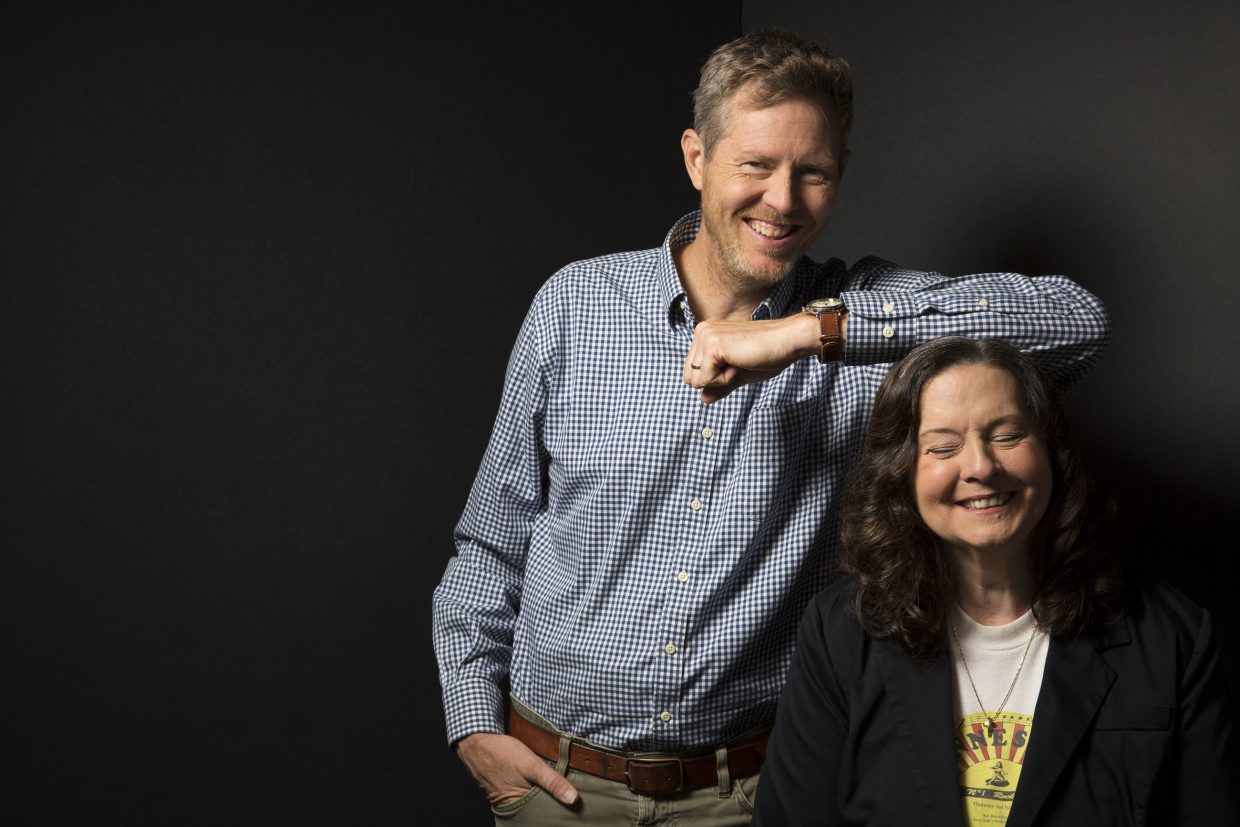
Still, she’s traditionally benefitted more from being a duet partner than a solo act. She recorded and toured with Jerry Lee in the ‘60s and ‘70s — the sibling duo had a Top 10 country hit in 1969 with “Don’t Let Me Cross Over” — and then she reentered the consciousness of the music intelligentsia in 2000 when no less a fan than Van Morrison asked her to make a joint album and tour together. Now, she’s on to her third partner in musical crime: the alt-country great Robbie Fulks, who joined her for Wild! Wild! Wild!, an album he produced all of, wrote most of, and participated on as an equal vocal partner only with some urging.
So how does Fulks stack up against his two famous predecessors in the duet partner’s seat?
“I was the best of them all, I would say,” Fulks says. “Oh, sorry, go ahead.”
“Absolutely!” Lewis agrees, although when it comes down to it, she may not quite be ready to declare new Bloodshot Records partnerships thicker than blood. “Singing with my brother and Robbie, I love one as much as I do the other, which is saying quite a lot. And I don’t mean to say anything bad about Van. I appreciated doing the album [You Win Again] with him, and it was good for my career, and… I wouldn’t say it was actually fufn in the studio, but I did get through it, and I lived to tell the tale,’” she says, laughing. “It was impossible to really match up with him on the recording, because his phrasing is so different from my brother’s. But Robbie’s is similar enough that it was easy for me. You’re every bit as great as those other two, Robbie. And don’t tell my brother I said that.”
“I’m not telling anybody you said that,” Fulks says. “Maybe my wife.”
Wild! Wild! Wild! includes five true duets, two Fulks solo vocals, and six that feature Lewis alone as frontwoman. If that math leads you to suspect that the project might’ve started life as a Linda Gail Lewis solo album Fulks was producing before it became co-billed, your guess would be right.
Says Fulks, “The idea was a little bit imposed on us because the label said, ‘Well, we’d rather have a duet record,’ and that wasn’t what I originally had in mind. Duet singing with her, nobody would say no to that. And I think male-female duet singing is just about my favorite kind of country music. So to be able to write to that and then to perform with her was just a whole other level of fun over, you know, sitting in a chair and listening to people play.” Lewis, too, was happy it became a duo project, and cites “I Just Lived a Country Song” as her favorite track on the album, even though that’s one of the two tracks that Fulks sings without her.
To the extent that it’s partly a Robbie Fulks record, it’s an old-school Robbie Fulks album, which should tickle a lot of long-time fans who’ve charted his changes. It harks back to early- to mid-period records like 1996’s Country Love Songs, 2005’s Georgia Hard and 2007’s Revenge! when Fulks was the master of classic country pastiche, writing severely clever tunes with tellingly witty titles like “Goodbye, Cruel Girl,” “All You Can Cheat” and “The Buck Stops Here” (as in Buck Owens, of course).
There is certainly some pure country on the album to go with the more snare-smashing stuff, like their duet on “That’s Why They Call It Temptation,” which he wrote rather overtly in the George-and-Tammy mode. (Sample lyrics — Robbie: “I tried to keep my hands from where they longed to go.” Linda: “And I did all I could to help you, short of sayin’ no.”)
Meanwhile, there’s a Tennessee-meets-New Orleans horn section on a Fulks-penned tribute to Lewis’ adopted hometown, “Memphis Never Falls From Style,” which has Linda singing the lines, “Thank you Memphis for the great insight/That music is a drag if it’s too f—in’ white.” They went back and forth over whether to keep her singing the F-word; “I grew up on the road with a bunch of musicians, and I have no problem with a little profanity,” she says. But ultimately Fulks decided that a loud bleep was called for, out of nostalgia, if not bashfulness. “I remember being 8 years old and hearing ‘Johnny Cash at San Quentin,’ and those bleeps would come on real loud, and it reminded me of being a kid and the joy of bleeped-out profanity, which you don’t get to hear anymore.” For Lewis’ part, “I was worried about being in trouble with my brother. So I was happy to have the bleep,” she laughs. “And I plan to tell him that I didn’t really say it.”
Jerry Lee Lewis was into his country period — having fallen out of favor as the British Invasion superseded America’s pioneer rockers — when he started enlisting his little sister to join him on records and at shows. (For example, a 1973 performance of “Roll Over Beethoven” on the Midnight Special program.) Their sole hit together was a cover of the Carl and Pearl Butler song “Don’t Let Me Cross Over.”
“Jerry was a big fan of theirs and they were good friends of ours, and we never felt right about covering their song,” Linda admits. “But still we did it, and it was Kenny Lovelace’s idea,” she adds, mentioning her brother’s long-time sideman — and one of her ex-husbands. “Jerry and I had trouble getting through it because we were singing a love song and we’re brother and sister. We were on the same microphone, and we would look at each other and start cracking up. We only were able to get through it once.”
“That’s a little like Nancy and Frank Sinatra singing ‘Something Stupid’ together,” says Fulks, “although that was a lot creepier, I think.”
The sibling duo act came to an end out of jealousy, she says. “My sister-in-law at that time hated me and didn’t want me to be around, so I had to go,” Linda says. “And you know, sometimes even your enemies will help you. Because had she not done that, I would never have left my brother, and I would never have had my own career, and I never would have learned to play he piano. All the things my brother had shown me through the years helped me when I started playing rock and roll and boogie-woogie piano in 1987. My brother’s fans were coming to see me, and they wanted to hear ‘Great Balls of Fire,’ so I had to make sure that I could play it, especially because the piano player that I had in my band in Memphis had no feel for it.
“And I’ve had such a wonderful career, and now of course, with, this great album that I have with Robbie, I feel so blessed. To me it’s the highlight of my career, and life. I don’t think I’ve ever been this happy. And I just looooove my ex-sister-in-law that hates me, because she did this wonderful thing for me.”
Before they made the album, Fulks once blogged that hearing Linda Gail play piano put him in mind “of a cotton field with a candelabra in it.” He sounds embarrassed to be reminded of the phrase now. “Oh my God,” he says. “I didn’t realize I said that. It’s alliteration, anyway. It sounds like literature. ‘Cotton fields…’ I better stop blogging.” Lewis offers him a sharp retort. “Don’t you dare! I loved that. I actually saved that in my iPhone so I can just go back and read it over and over.”
In a separate conversation, Fulks talks about how his appreciation for Lewis developed. “You just say Jerry Lee Lewis’s sister and then go on to say yes, she plays like him and she’s a great singer, and she’s been doing it for 50 years or whatever, and that gets people interested. … With Linda, her voice and her career are so tied into his, it would be hard to separate it out too much, and a good deal of her act is a tribute to and an expression of love for him. But to me she’s interesting partly for the fact that she’s a woman in that family, and just as I’m interested in what it was like for people like Jean Shepard to get along on the road with Ferlin Husky and those guys in the ‘50s, I’m interested in what it was like for her to be part of that clan in the ‘50s and ‘60s, and to be holding her head above water.”
And he’s fascinated by the nature-versus-nurture aspects of the playing she picked up later in life. “She’s a great piano player, and it doesn’t really doesn’t boil down to the notes that she’s playing,” Fulks says. “It’s kind of a family style and a genetic style, and there’s something that’s unlearnable about that style. Anybody could read this off of a sheet and make the moves, but nobody could sound like that. I looked at her the other night when we played together, lifting her hands a foot and a half above the keyboard and banging down on two notes repeatedly, and you just think, well, that’s ridiculous! It’s a real mystery, and it’s thrilling to hear.”
When Amanda Shires throws a party, it’s a crackling and cackling affair. The singer-songwriter has often enjoyed lacing her candor with a biting sense of humor, and her new album To the Sunset offers listeners a celebratory and sharp-tongued toast to all the bits—the good, the bad, the ugly—that have shaped her. Beyond giving birth to her daughter Mercy (with husband Jason Isbell), she completed her MFA in creative writing, but that was after someone stole her thesis and she faced the nightmare of starting over. To the Sunset presents many lessons, but central among them is learning how to accept both sides of the coin because together they pay your way.
Shires once again worked with Dave Cobb, the two aiming for a larger sound than what she’d previously accomplished. For longtime listeners, the result strikes a different chord. She and Cobb hit upon a headier pop sound, integrating slick vocal production, wild rhythms, and scorching, electrified solos. There’s a greater lightning running through To the Sunset, which comes, in part, from the use of pedals to elevate Shires’ fiddle from its folk roots. Between her new sonic direction and razor-edged lyricism—thanks to that MFA—her latest album raises a glass in raucous style. To the Sunset is a dark fête, the kind of party that only occurs when you truly let go and learn to be yourself.
Let’s talk about your MFA. How long did it take you to recover from having your thesis stolen?
I cried and then I got mad. Jason said, “You know, whatever you write will be better than what you already wrote because you’re practicing writing,” and at the time I thought that was the most stupid thing I’d ever heard somebody say, but it’s true. The more practice you get, the better you get, and it all works out in the end. If you really want something, you’re going to find a way to make it happen.
It’s so exciting to hear what you’ve written on this album.
I think it’s pretty cool because I can tell a difference from other records, where I was working with basically instinct. Going to school, I got what I wanted, which was to learn the reasons why I should go with one choice over another, or at least have a way to argue with myself, and a way to back myself up when I’m editing. They teach you there’s no such thing as writer’s block. If that was a thing then nobody would graduate.
Who are some of your favorite poets?
I like Billy Collins, Mary Oliver, Mark Strand, and then, you know, regular favorites like Octavio Paz and all the greats.
What would you say you look for in other poets’ writing?
It’s a time to be quiet and reflect and think deeply. You are the audience of one at the time, really. I like poetry because it can go pretty deep and it’s not three minutes long. It’s as long as it takes you to understand it. Songs are such different animals. You have a lot of things that you don’t get with poems, like, you get a sonic landscape and a mood can be provided, whereas on the page it has to be presented with such precision and such intention that you can understand it without anything else helping you.
You recorded your prior album, My Piece of Land, two weeks before giving birth, and you mentioned having to hide in a closet to write this album. Mercy has, in a way, impacted your last two albums. How do you continue to carve out space—besides the closet—for your creative side to flourish?
I’m lucky because Jason’s an excellent co-parent, so if I need to write and do stuff, he’s all hands on deck, and if he needs to write, I’m right there. When I had to be in the closet, I had to make use of a small space, and it wound up leaking into my bedroom, too, so I was taping everything to the walls, so it wouldn’t accidentally get smashed or crumbled by the two-year-old. I learned how to accept things in their early stages. Before, I was real, like, “Nobody sees what I write until it’s all done.” This was a cool thing where I learned to accept my very shitty lines as they faced me every day and tried to make them better. When I was done, I shredded them and I put them in a composter and that goes into my garden.
Have you found that your plants are growing better because of it?
I don’t know. It’s toward the end of the season until that composter’s done cooking. That was a lot of shredded letters. I’m an editor over and over. Some people can write real fast, but I think everything needs tweaking all the time.
Does the editor side of your brain gets in the way of your natural instinct?
It does, it sure does. I found a thing that helps me with that. It’s called FlowState, it’s an app. You set a timer and if you don’t keep typing it erases your work, so it removes the editing process; you can leave it up there and get your free association going, and really try to put your thoughts into words. When I first got it, I started out doing five minutes at a time, now I do 30 minutes at a time. The further you go with it, it’s like a door in your mind opens and you figure which things you need and which things can wait.
Turning to space, that theme—the space between people—surfaces throughout your catalogue. Here, on “Leave It Alone” and “Charms,” it functions in compelling ways. What particularly interests you about space and relationships?
On “Charms,” my mom’s mom abandoned her at a young age, and that’s where that song came from, and just thinking about how hard that would be for both parties. A lot of times as individuals, I know we all often deal with feeling alone or that nobody understands us. You’re born alone, and you die alone. It’s a thing I think about a lot, and that’s why it presents itself in the work.
As a touring musician, as much fun as it is, things get sacrificed. All that’s to say, writing about it and dealing with it makes me a happier person, and if there’s anybody else that feels like me, then I feel I’ve done a better job because it is a way of connecting in the end.
On the My Piece of Land track “I Know What It’s Like,” the desire to run away comes up, and that theme surfaces again on “Charms.” Except running has turned into forward momentum. When did that shift occur for you? How do you push against the desire to cut and run?
[For “I Know What It’s Like”,] I had a person in my life that was telling me these things, like, “I know what you’re going through, just keep talking to me about it.” To have a comrade in that was nice, and I wanted to keep that conversation, I wanted it to be preserved. The running thing, we all want to run away, but then we’re like, “Nah, our problems aren’t really that bad.” It’s really better for you to not run way, to pick up your big girl underwear or your big boy underwear, or whatever. Put your head down and do the work.
I appreciate that you took the momentum that would cause someone to run and shifted it to a positive momentum on “Charms.”
All this stuff is all inherited—you know, how we do life. I will now cite Philip Larkin: “Your mom and dad, they fuck you up.” So in that one I was moved that even though my mom experienced abandonment, she didn’t fall into that learned thing. I think it’s wild to break habits that have happened in your family, generationally. You can’t let fear be the thing that owns you. It’s just silly. This is such a vague thing to describe, fear and doubt and all that stuff—thinking about hypotheticals for situations—it’s so useless; it’s such a waste of time and energy because you can’t control the future, and you can’t control what’s already happened. It’s about trying to accept what’s happened and move forward, and if you fuck up, you fuck up. At least you tried.
Right, you need to make mistakes in order to figure it out. It’s like editing. You never write something perfect the first time.
Yeah, you’ve gotta find a way to trust yourself.
That’s hard when you’re younger.
Totally because you don’t have much experience with it, so you gotta do all the things that give you experience and wrinkles. They’re worth it. Then you start figuring out that, even as you get older, you were this person and now you’re this person. You’re always changing. You might look back and say, “I don’t even recognize that person.”
Joan Didion had that fantastic quote about making peace with your former selves because you’ll never fully leave them behind.
That’s a whole thing I’m trying to say with To the Sunset, that sort of a cheers or toast. It takes all the things to make you who you are and who you want to be, rather than just ignoring it, or putting it in a box under the bed.
It’s hard to fight, though, because there can be messy parts of yourself that you don’t want to admit.
If you’re not doing that, you’re probably ignoring something that you need to feel. You need to feel ashamed and humiliated sometimes by your own actions. It’s easy to rewrite the way things happened. Once you face it, you can learn yourself better.
Lastly, there are some beautiful portraits of women on this album. How has your sense of womanhood changed, if at all, since having Mercy?
I always felt like I had a responsibility, but I feel like I have that even more. Doing as much as I can and thinking more about the world for her and hopes for her and fears for her. I also feel like, for a long time, you couldn’t talk about things. Even the ugly parts of being pregnant or postpartum, you couldn’t talk about anything, and everything’s supposed to be dreamy and awesome. Now, it’s easier in that more and more women feel like it’s OK to talk about the ugly parts. I think that that might keep us going in the right direction, somehow. One of the coolest things on the record, woman-wise, is my only guest was Gillian Welch, and she sings the harmony part on “White Feather,” what I call the “God” part. Whatever your God is. That was pretty cool. That was a day I thought I was going to die.
Also, your album is coming out at a time when a lot of artists are challenging this sense of perfection.
Yeah, like we don’t need to write a lot of ballads or whatever. It is a cool moment. I’m so happy to see so many women putting out records this year. There’s always been a ton, but there’s not been as much attention or as much room. … It took all those people before us to get to this spot now; I definitely don’t think it’s just happened over the past few months. They’ve always been there, but to move together works better than to move singly.
Photo credit: Elizaveta Porodina
This website uses cookies to improve your experience. We'll assume you're ok with this, but you can opt-out if you wish.AcceptRejectRead More
Privacy & Cookies Policy
Privacy Overview
This website uses cookies to improve your experience while you navigate through the website. Out of these, the cookies that are categorized as necessary are stored on your browser as they are essential for the working of basic functionalities of the website. We also use third-party cookies that help us analyze and understand how you use this website. These cookies will be stored in your browser only with your consent. You also have the option to opt-out of these cookies. But opting out of some of these cookies may affect your browsing experience.
Necessary cookies are absolutely essential for the website to function properly. This category only includes cookies that ensures basic functionalities and security features of the website. These cookies do not store any personal information.
Any cookies that may not be particularly necessary for the website to function and is used specifically to collect user personal data via analytics, ads, other embedded contents are termed as non-necessary cookies. It is mandatory to procure user consent prior to running these cookies on your website.