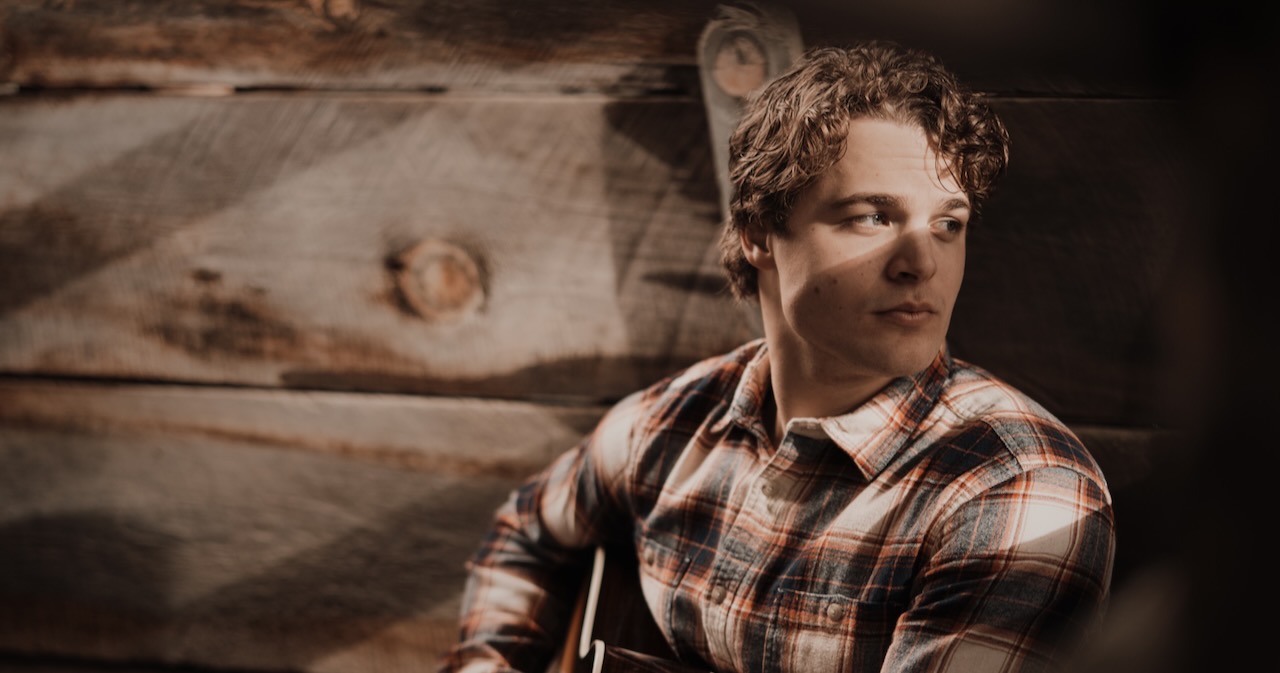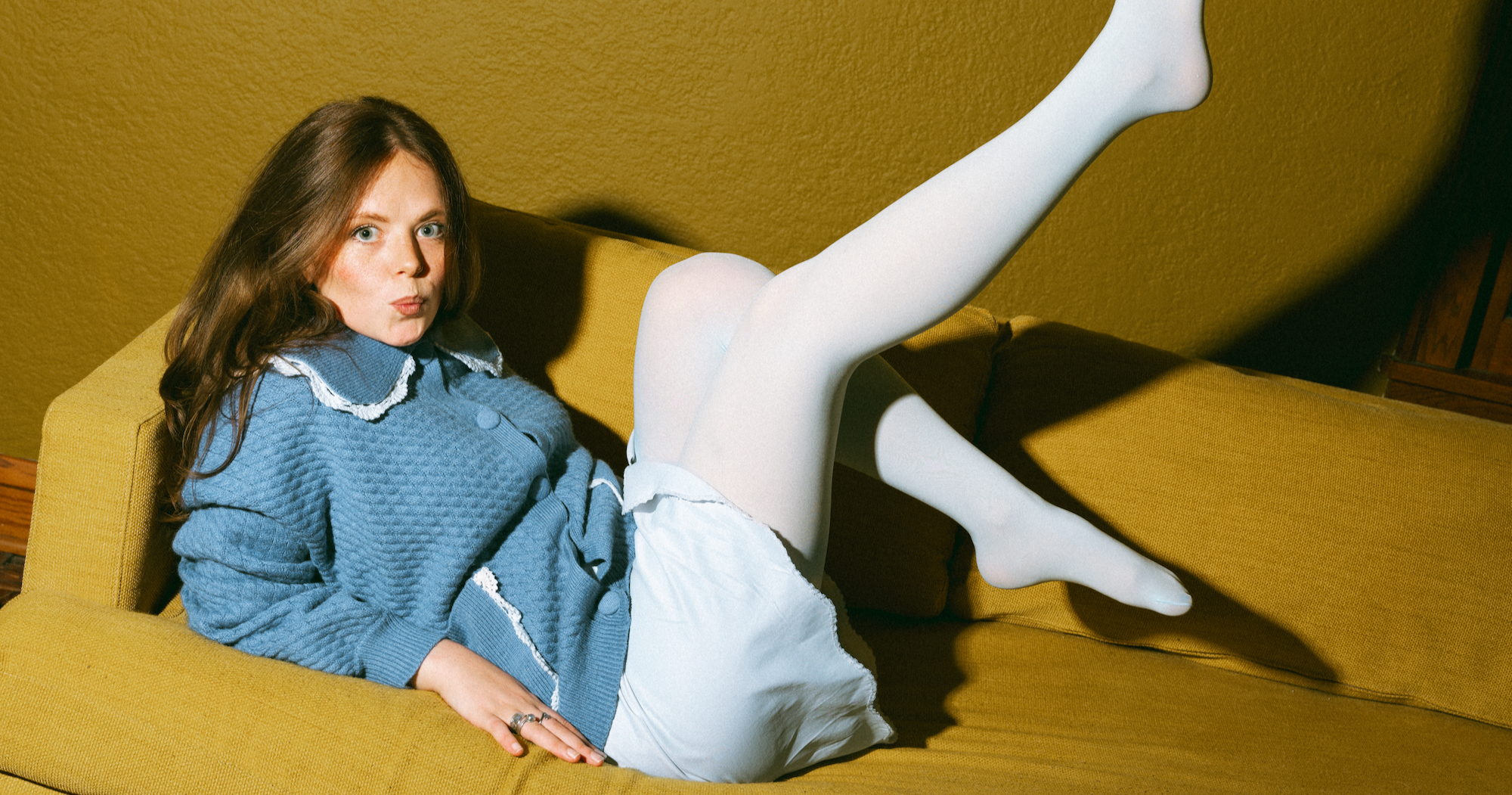
Ber Is No Longer Hiding Her Folk Elements

When you think of common musical touchpoints for young roots artists, the Shrek movies’ soundtracks likely don’t come to mind. But those compilations, beginning with the first film in 2001 and continuing through a handful of sequels in the aughts and ‘10s, feature an impressive if surprising roster of artists, including Rufus Wainwright, Tom Waits, Frou Frou, and David Bowie.

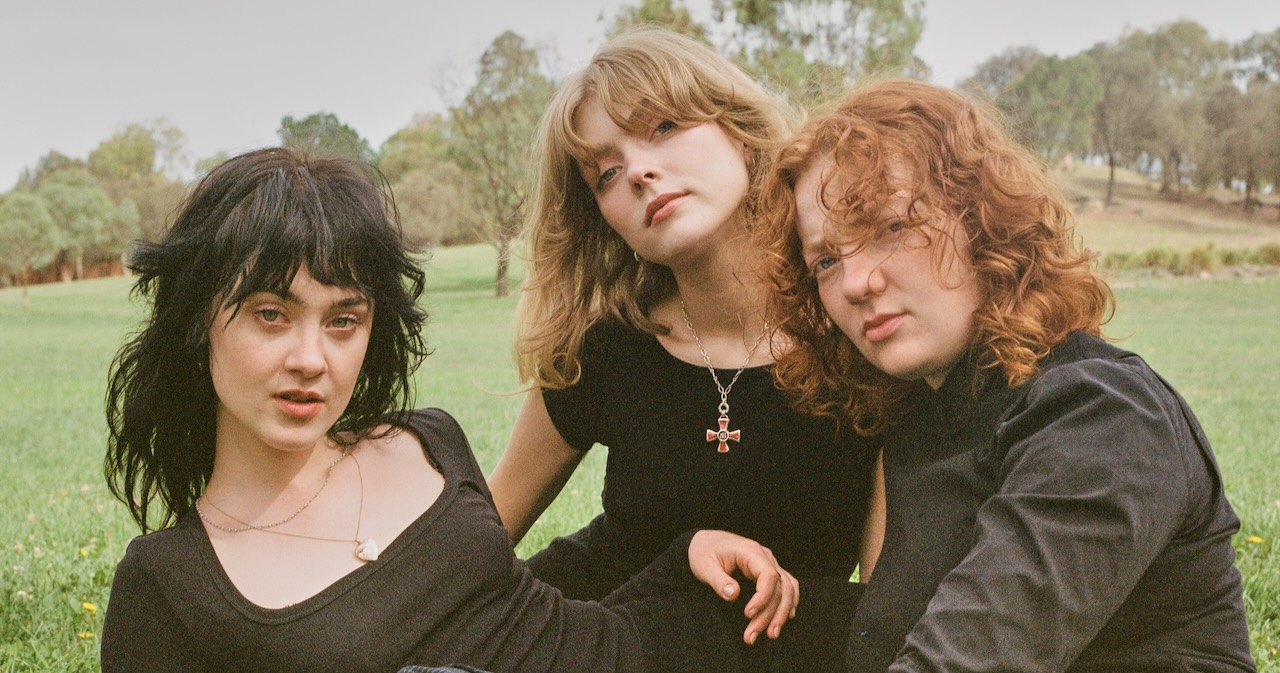
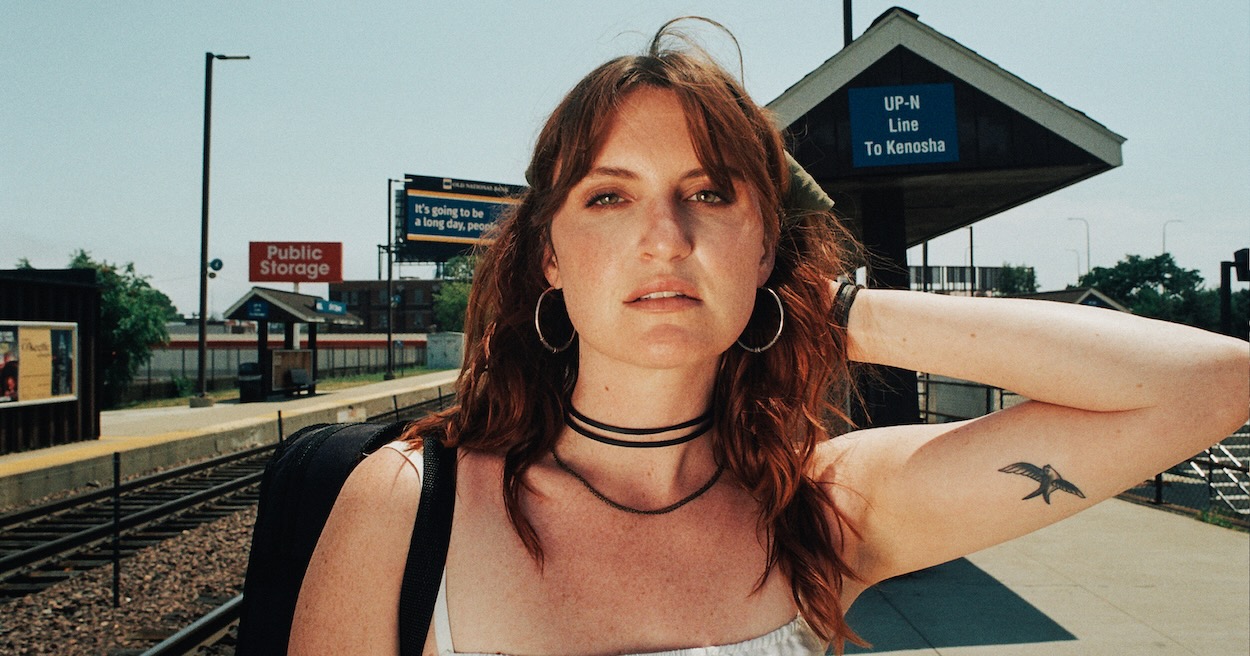
Quickly rising singer-songwriter Ber laughs as she reveals her penchant for those soundtracks, but her affection is sincere. On the Minnesota-born artist’s first full-length album – the newly released Good, Like It Should Be – she turns that winking sincerity inward, writing a dozen songs about opening up to love despite the real risk of heartbreak.

Ber wrote and recorded the bulk of the LP with close friends and collaborators Rob Milton, Austin Ward Sherman, and Bradley Hale, who joined her on a writing trip to Pepin, Wisconsin, and helped deepen both the record’s narrative vulnerability as well as its sonic range. The resulting songs are self-assured and lived-in, with an emphasis on melody and emotional tension that lets her agile, nuanced vocal shine.

Below, BGS catches up with Ber the day before Good, Like It Should Be releases, chatting about songwriting, a-ha moments and, yes, everyone’s favorite big green ogre.

Tomorrow – or in just a few hours, really – you’ll release your new album, Good, Like It Should Be. What are you feeling in this last stretch as you get ready for folks to listen to the project in its entirety?

Ber: It’s a little crazy. I think it’s actually out in Australia already. Maybe this slow burn of me realizing, all day, that it’s just gradually coming out will make it a little less overwhelming. But I would say overwhelming is the default nature of the last month. Coming up to this April 3 date has been challenging but also really exciting, and something I’ve tried to accept and just be really happy about, because it’s really crazy to be putting a whole album out. It feels really, really wild. I’ve never done that before. It’s new territory. We’ve been rolling out singles for six months, and I’ve been listening to the whole album for like a year, so really it’s not going to hit me that other people haven’t sat with it yet until tonight. I’ve been crying a lot, mostly happy tears. But it’s definitely a little bit of a release, emotionally, too. So, it’s a weird one to have to process.

To your point about living with this music for so long, do you feel like your relationship to the music has shifted in that time? Has any new meaning or insight been revealed to you?

It feels really solid. I don’t think it’s shifted so much outside of maybe me reaching for songs for the month of November, and then kind of getting sick of that one so then going for another one. I think I’ve sat with all of it in different ways. I haven’t been doing loads of writing in this period of releasing the album, so this is really the stuff that exists for me right now. And it is where I am still, which I think is really fun. We were pretty careful about choosing what the singles would be, so that there was still some magic in the unreleased tracks that people could hopefully discover when the whole album came out.

Let’s talk about the early days of the record. As you mentioned, this is your first full-length album. Did you originally set out to write a full LP?

Definitely. When I decided that it was going to be an album, there was a moment where I shocked myself that I even felt capable of that. But we definitely were like, “Okay, this is going to be a full-length record. We’re going to do 12 songs.” It was pretty concise in the planning that way, but I didn’t realize I was writing it at the time. The first songs from the album were just moments where I was pulling from things and writing for fun. I hadn’t really signed up to the task yet, so I think that’s really fun.

The first song that was written for the album is called “Smooth Ride.” I wrote that in my second EP cycle, in 2021 or 2022, with Rob Milton and Benjamin Francis Leftwich, who are just great. It was the first day we had all met and it was the first day I met Rob, who since then has been this really sturdy and really inspiring collaborator. We wrote that song and I didn’t like it then, so it got tabled. It’s something we revisited last summer, and I was like, “Oh, it lives on the album. It’s here. It’s time. I wasn’t ready for this yet, but now I am, and I love it now.” It’s one of my favorites…

The rest of it all came in a window of eight months of really intentional writing towards the album and trying things with different people, being in London or going back to Minnesota, going on this writing trip with my friends Brad and Austin [Ward Sherman] to this Airbnb in Pepin, Wisconsin. We wrote eight songs in three days and five of them shaped what the album ended up sounding like and feeling like and being about. It was the glue for all these other songs that I’d been working on in my own time with Brad. So, it was really like a puzzle to piece it all together and to choose the track list. There were probably 50 songs that we whittled down to 12.

To write eight songs in three days, you must have a special creative relationship with those friends. Do you know what it is about your working relationship that makes it so fruitful?

I just trust them implicitly. They both know so much about me and I think that trip really cemented our relationship as a collaborative team. We had been working together for a few years at this point, but Brad, who produced the record, is one of my dearest friends… It’s a really specific thing to be able to sit in the studio with someone and just make eye contact and go, “So that’s what this is.” Or, “Oh no, that’s not what you’re trying to say.” He could call my bluffs a lot and tell me to chase something, and I could follow that direction, because I trust him and I love him.

Then bringing Austin into that, too, was so fun, because he’s brilliant and he suggests things that I would never in a million years think of. He has a very band-y sensibility about his production and his vision for music and I really loved that… When you do a writing session with someone, you basically spill your guts for a few hours. You have to be really honest with yourself and with the people around you, otherwise the thing you make is gonna sound like trash. With the album, I really wanted to make something that felt true to where I was at the moment, and I was falling in love. I had to be really vulnerable with them about the things I was feeling and the way I would possibly describe it.

It is indeed a very personal record, so it makes sense to hear you are so close with your collaborators. When you write songs grounded in your own experience, do you end up understanding yourself or your place in those experiences better?

Absolutely. It’s a point of reflection for me, often. I used to journal a lot. I’ve been doing that a little bit less recently, which is something I want to pick back up. But when we were writing these songs, regardless of what we would walk into the room with, as you’re writing about it and sitting there with music around you, you’re thinking about how it actually feels. You’re putting down words onto paper and it is a very telling experience, because you find stuff and you write words in an order and it moves you, and you go, “Oh, my God. I didn’t even think that I felt this way about that.”

“Good, Like It Should Be,” I cried after writing that song. We all did. I’m tearing up thinking about that moment. That song was about getting out of your own way and letting something just be good, because it is good and you don’t have to question everything being good. At that point, I don’t think I even realized that I was suppressing so much.

There’s a line in there that’s like, “I know it’s a choice, I can be sturdy/ Let it be good, good, like it should be.” And I was like, “Oh, wow, that explained it to me. Actually, this new love, this letting something be good, this is actually a decision for me. Not only is it natural, but I have to also accept it and come to terms with this.” It was such a big moment that was like a light bulb for the entire album, and for what I had been writing about for a year at this point. Writing these songs revealed pieces of me that I didn’t really know were in there, and that’s such a treat. It’s exhausting emotionally, but in the good type of way where you feel like you walk out of it learning something new about yourself. It’s like tarot, getting you toward those subconscious things that need to come up.

The production is so lush and intricate, and really gives a fullness of emotion to the lyrics you wrote. Could you hear a fleshed-out version of a song in your head as you were writing it, or did they find that fullness in the studio?

Probably both in different situations. I’m so pleased with the production. It was really fun to sit with Brad and to sit with Rob, and not only watch them create magic but also be able to listen to it and partake and play these instruments. We played all of the guitars. I got to play tambourine on a lot of stuff. Brad took it upon himself to teach me how to engineer a little bit while he was recording all the drums in our basement, which was really fun. And it gave me the itch to get into more production.

But yeah, when we wrote them, there were some songs that just had to be the way they are. “Forget Me Not” was like, “Okay, we should essentially just do a demo. This is so touching and beautiful.” When we did that writing trip, we just brought this one Korg eight-track recorder and that was all we were allowed to use. So, we did a lot of in-the-room recordings of the six songs that ended up on the album from that trip. “Hey, Bluebird” and “Give It All Away” both have samples from those demo recordings in the final product. We wanted to hold on to the energy…

With other songs that are a little bit more produced, like “Cool, Boy,” I did that one with Rob and he had just gotten off of vacation. He was like, “I am only listening to Clairo and I absolutely love the beach, and I think we should do something beachy and flirty and fun.” And I was like, “Bet, that sounds cool. Let’s just see what’s up.”

In addition to Clairo, what were you listening to or feeling inspired by while you were making the record?

You might laugh, but I pretty much exclusively listened to the Shrek soundtrack. It’s brilliant. There’s just bangers on there. “I Need a Hero,” the Frou Frou version, is amazing. We were referencing Counting Crows. I also am a massive Kacey Musgraves fan. I grew up on Mumford & Sons, and the Decemberists, and Kings of Convenience, and some really rootsy stuff my parents turned me onto.

For a long time, at the start of me writing songs on my laptop and posting them and putting EPs out, I was really hiding from this folk element that I knew I had in me. But I wasn’t ready to touch it yet. I decided with the album we’d just really dive deep and let it be good. It’s some of the stuff I resonate with the most. But yeah, Clairo has been a huge indie inspiration. I love everything she does. And, again, it was Shrek that really did it.

You spent a lot of time figuring out the record’s sequence. How did you eventually settle on a final track list?

There were, like, 40 iterations of the track listing. It was the bane of my existence for a long time. And I actually really credit my manager for putting up with me for that window of time. Honestly, I love where it landed, but it was never my first choice. All I knew was that I wanted to sandwich the entire album between “Good, Real” and “Good, Like It Should Be,” that was my non-negotiable. So, it was like a deck of cards, sort of feeling it out.

I know a lot of people like to try and tell a story through the songs, but as I was listening to them, the story was just me. These are all things I felt and there wasn’t necessarily an order or a rhyme or a reason to it other than I made them. I would be remiss to say it was purely artistic.

My team was pretty heavy on the idea of most of the singles landing on side A of the record. And I hated that. I was so angry at the time, because what do you mean we’re gonna prioritize how an album feels on a streaming platform, of all things? It genuinely drove me over the edge for the longest time. But then I got to this point where I was like, “Maybe it’s not that deep.” … I wanted to have the journey of listening to the album feel like you land somewhere at the end, and it’s like a soft pillow. I think with where it’s landed, that’s the experience I at least have. You get to boogie a little bit in the first few and then I slowly go through the motions.

You’ve already been out playing shows around the record and you have more dates coming up later this month. What are you enjoying and looking forward to most about playing this new music?

These songs are where I feel I resonate the most at the minute anyway, so what a treat to be able to push these and to sit in them and sing them for people. I love my first three EPs and I have a lot of empathy for the girl who wrote them. I love those songs and how far they’ve reached people, and I definitely will never just let them go, but I think it’s going to be so special to be able to sit down and sing most of these songs at, like, First Avenue in Minneapolis. I’ll probably cry so much that day.

I’ve been testing the waters on these last two tours. I’ve been so lucky to fill the first quarter of my year with touring with SYML in the EU and then touring now with Callum Scott on the West Coast in America. It’s given me the opportunity to sing acoustic versions and the response I’ve gotten has been amazing… It’s really wild, I think artists are constantly releasing and performing behind themselves, in the sense that you grow so much in the time that it takes to put out an album. So often, that album and that album cycle exists in a year or two years before the person you are when you’re actually performing them and talking about it to people. But in this moment, it feels true to me and it feels really exciting to talk about still. It’s very cathartic.


Photo Credit: Tom Thornton
Artist of the Month:
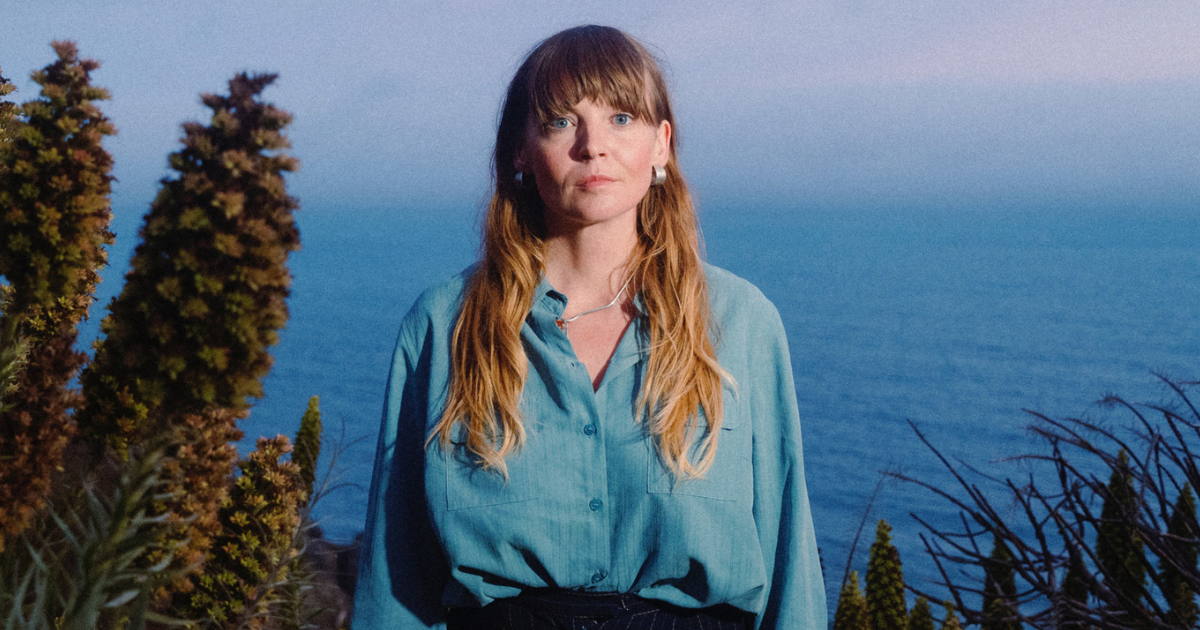
Courtney Marie Andrews

On singer-songwriter Courtney Marie Andrews’ upcoming album Valentine, you can hear her letting go.

It’s a process she ostensibly started – at least, musically or outwardly – on 2022’s Loose Future, a collection on which Andrews also reckoned with being in a period of transition, personally and professionally, letting go of former five- and 10-year plans and recentering in the present.

Approaching four years since that most recent studio album, with Valentine it seems Andrews is intent on reinforcing and revisiting the same lessons she taught us and herself on Loose Future. The new album, which will be released on January 16 by Thirty Tigers, begins with a grand, tone-setting opener, “Pendulum Swing.”

Reminiscent of ‘60s pop-folk and rich with arpeggiated 12-string guitars, Andrews vocally soars into the verses and murmurs each contemplative chorus:

If I get what I want
Gotta let the pendulum swing
Can’t be good for too long
Let the pendulum swing…

It doesn’t exactly strike a listener as the sort of Loose Future Andrews formerly envisioned, but the song also doesn’t seem to wallow in the apparent feeling of impending doom, or the instinct that imbalances of “good for too long” must be righted. Instead, to this writer, it rather sounds like she’s focusing on the instinct itself. On her belief, conscious or subconscious, active or passive, that “karma” or “deserving” necessitates inevitable negative responses to anything positive.

As with all of her impeccable albums, Valentine finds love as a frequent subject – as well as community, perception, expectations, and how all of these topics touch on or intersect with existential dread. But Andrews seems to be letting go of her ideals of what love is or what it can be, as well. Thankfully, her perspective on the subject is always expansive, never simply reduced to just romance or sex or heteronormativity – or some slurried combination thereof. But Valentine is more direct in its approach to love than some of her LPs.

“[Valentine is] a record in pursuit of love,” Andrews explains via press release. But that love “is a lot more than I gave it credit for,” she continues. “It’s built over years, it’s built with trust, with changes, it becomes something new and unrecognizable, the deeper you go.”

Songs like “Keeper,” “Cons and Clowns,” and “Everyone Wants to Feel Like You Do” follow in tight formation behind Andrews’ past songs on love, connection, and romance – especially the masterful album, 2020’s Old Flowers. But other tracks, perhaps chief among them “Best Friend,” indicate that expansion on love as an idea and point back to the creative process here also being one of letting go.

You can sense that surrender, the gradual unclasping of fists and de-whitening of knuckles, in almost every aspect of Andrews’ creative output. It has, after all, been quite a few years since she last released an album. Her prior rhythm of abject road-dogging and releasing LPs every year or two has been replaced by much more thoughtful and intentional tours, performance forays, and product launches. She’s leaned more into another medium, painting, and has gone full-bore as a published poet, too. She’s released two collections of poetry – Love Is a Dog That Bites When It’s Scared having arrived this past August – and has built up her creative, community infrastructure to feed more than just her itinerant musical pursuits and former wall-to-wall, year-round tour schedule.

It’s almost like you can hear the retooling of Andrews’ idea of success happening in real time, from Loose Future through to Valentine. Like you can hear her realizing that giving up the version of herself who existed on Honest Life (2017) through May Your Kindness Remain (2018), and the version of herself from Old Flowers and Loose Future, doesn’t ever mean net loss. Like being on the road less means one could grow flowers, feed stray cats, and build a support system in her new home of Nashville that, especially as an only child and retired nomadic busker, she’s always craved.

The sense of letting go was perhaps infused into Valentine by the specific circumstances that gave birth to these songs. “I was in one of the darkest periods of my life,” Andrews continues in the project’s album bio, “and songs were the only way I could reckon with it.”

“I felt cursed, and the only mental cure felt like songwriting and painting.”

It’s why this album, like almost all of her prior releases, also feels as self-directed as it is outward-facing and primed for wide audiences. Andrews has learned that letting go – of control, of her past self, of expectations, of legalism around or criteria for love, of the “power” (and curse) of individualism, of freneticism and frantic ladder-climbing, or of life itself – is a process we don’t ever graduate from. We never muster out. We have to return to ourselves, to introspection, to the very constructions of our selfhoods over and over again to do that work.

The redemption and sheer beauty of this album are not because Courtney Marie Andrews has found her Valentine, but because she can hold up her wants, needs, and dreams as valid and wholesome goals on one hand, while stripping – and re-stripping – them of any power they may hold over her on the other. It’s an impressive duality, one that wouldn’t be nearly as successful without Andrews already having done so many reps in finding herself and of letting go.

Andrews is our January 2026 Artist of the Month, an auspicious start to a brand new year of roots music. Here, you can read our feature interview with Andrews all about Valentine, its making, and the unique way she and her collaborators went about recording these fantastic songs. Below, enjoy our Essentials Playlist and tune in on social media as we dip back into the BGS archives throughout the month to share all things Courtney Marie Andrews.


Photo Credit: Wyndham Garnett

BGS 5+5: Folk Bitch Trio

Artist: Folk Bitch Trio
Hometown: Melbourne, Australia
Latest Album: Now Would Be A Good Time (out July 25, 2025)

(Editor’s Note: Answers have been supplied by Gracie Sinclair.)

What’s your favorite memory from being on stage?

A memory that will forever glow in my mind is one from our first ever show. We were 18, 18, and 17, and it was at the Merri Creek Tavern in Northcote, Naarm / Melbourne on the 17th of December. We now consider it the FBT Birthday.

The tavern has a tiny back room that fits about 50 people, with a little red curtained stage that is as wide as the narrow room. We all had good amounts of stage experience under our belts by that time doing other things, but it was all of our first times performing anything that we had written. The adrenaline, vulnerability, and one pint in my 17-year-old whip frame held us all up in the air. I knew secretly in my heart that we were on to something special then. Even if no one else in the room had liked it. It’s also now still the set of my stage performance dreams where I am running around looking for Jeanie and Heide, late to start our set…

What rituals do you have, either in the studio or before a show?

We have the ritual of locking in. What this intangible act is changes depending on the situation, but it means that when we go in to sing together we are aligned. This can look like having a special sing backstage, or watching a movie on the couch together at night. But we don’t really compromise on being a unit before we do anything.

What has been the best advice you’ve received in your career so far?

I had a very influential teacher when I went to a performing arts school for my last two years of school, who one day in the middle of a lesson said to our class – and at the time she was mainly talking to classical pianists and violinists, etc. Rather impromptu she said: “Don’t do music if you think you can do anything else. Don’t do it if you think you want to or could become a teacher or a doctor or a lawyer. Do it if and because it’s the only thing you can do.”

That has always stuck with me. I feel like she was speaking about the matter of the heart. (Would I, deep down, be secretly disappointed later in life if I hadn’t chosen working in music performance avenue?) But also she was speaking about playing to your strengths.

The further that we get into this career the more I resonate with this thought. Music performance, music writing, and the ability to creatively collaborate are all strengths that we have, but also the ability to be away from home for long times, be performers on stage and in front of the camera, run the show and run the business. All the aspects of being in a band that you wouldn’t expect, we also excel at.

I’m an excellent bartender, but I have the rare seed in me which loves to be on stage and bring everyone together. So that is the card I will play.

Does pineapple really belong on pizza?

I think Jeanie and Heide disagree with me on this one. Yes. Apologies to Italy. It’s a perfect abomination. Thank you Canada for that one, it’s very popular in Australia. People will outwardly rag on it and then you’ll see them having a slice later. I prefer it without onion. Think of a really nicely done one, with proper ham instead of shredded. It’s good!!

What’s one question you wish interviewers would stop asking you?

We get asked about our name. A lot. We get it. We love it. We are glad it seems to influence our reputation preceding us. I think sometimes the humour of it evades people, but most people get it. It was a joke that stuck because it’s simply the truth, but we are all three interesting musicians who have a lot to say about our craft and its annoying when we get less time to talk on that.


Photo Credit: Copper Taylor-Bogaars

MIXTAPE: Denison Witmer and the Meaning of “Home”

What does “home” mean?

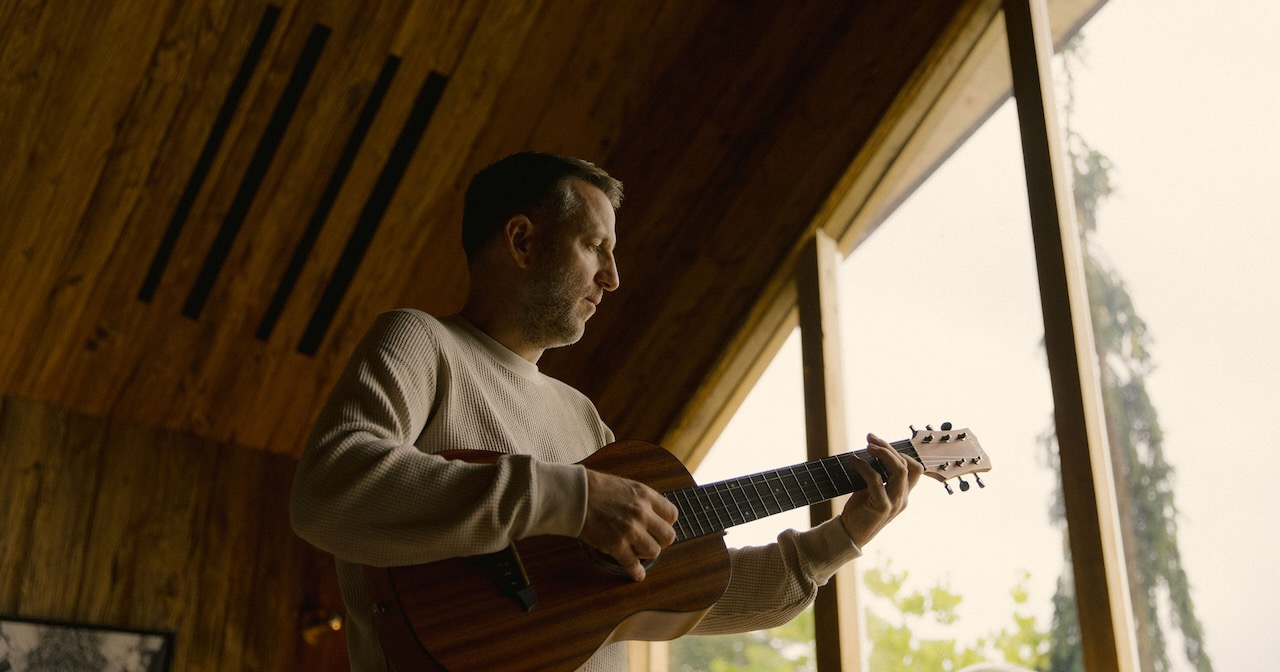
Answering this question became one of the main themes in my lyrics over the last several years – especially on my new album, Anything At All. After touring consistently for the first 15-20 years of my music career, I finally bought a house in South Philadelphia. Ten years later, my family and I relocated to my hometown, Lancaster, Pennsylvania. Before moving back to Lancaster, most of the places I lived felt kind of like a coat rack. Sure, most of my belongings were there, but I knew I’d be traveling again soon – things that felt centering or “home-like” to me existed outside of the confines of a space.

My current life is a lot different than that time. Now I am a husband, a dad of two young kids, a carpenter, and a part of my local community. I spend a lot of time trying to build a comfortable and consistent home life for myself and my family. My idea of what a home means is changing yet again. I’ve compiled a few songs that encompass the various meanings of “home” to me. – Denison Witmer

“Homesick” – Kings of Convenience

I think this is one of the best opening tracks on any album. The way the two guitars immediately start walking down the scale is captivating. My favorite lyrics are the last few: “A song for someone who needs somewhere to long for/ Homesick because I no longer know where home is…” It makes me think about the many days I’ve spent in headphones traveling in trains or tour vans, leaning my head against the window and listening to music that made me feel at home.

“Rene And Georgette Magritte With Their Dog After The War” (Original Acoustic Demo) – Paul Simon

I put this song on almost every mix I make. This is Paul Simon at his finest – just him and a guitar. In this story we follow Rene and Georgette Magritte as they reflect on the differences between their time in New York City and their lives in Europe during WWII. Ordinary moments like opening dresser drawers or window-shopping trigger memories of home.

 “Just A Song Before I Go” – Crosby, Stills, & Nash

Starting with a crash cymbal and leading right into a fuzzy guitar riff, this song has an instant warm vibe. I’ve always loved the way Graham Nash leans into writing about his life as a musician/songwriter. There’s a risk that it might not be relatable to a wider audience, yet he always finds a way to make the feeling universal. The lyrics “When the shows were over/ We had to get back home/ When we opened up the door/ I had to be alone…” connect deeply with me.

There were a lot of times on tour that I felt like I was turning into a ghost – passing through towns and people with no real sense of deeper connection or longevity. No real sense of home. Sometimes weeks would pass with mostly small talk and I would lose sight of who I was. Finally getting home, dropping my bags, closing a door behind me, and spending a week alone in silence was just what I needed to recoup.

“In Tall Buildings” (Live) – Gillian Welch

A lovely song written about returning to and centering your life around the things that really matter to you. I love the lyrics “When I’m retired/ My life is my own/ I made all the payments/ It’s time to go home/ And wonder what happened/ Betwixt and between/ When I went to work in tall buildings.” It’s a beautiful reflection on the things that we leave behind either knowingly or unknowingly when we get swept up in the paths our lives take. Gillian Welch’s vocal delivery is always beautiful. The way she can take any song and filter it through her own style with honesty and sincerity is incredible.

“A House With” – Denison Witmer

Yes, adding one of my own songs here. It fits with the theme. Mid-COVID lockdown, my wife and I got really into two things: birding and plants. We did everything we could to get birds to visit our yard. We did everything we could to green the outside and inside of our house. This led to hanging bird feeders all over the place and planting everything from shrubs to trees to lots (and I mean lots) of indoor plants.

This song started as kind of a joke. I often walk around my house playing a small classical guitar and making up goofy songs to make my wife and kids laugh. This song started that way — I was watching the birds on our feeder and naming them as I saw them, then I went from room to room naming the plants we have in our window sills. I recorded an iPhone voice memo and forgot about it. I’m not sure what motivated me to share it with Sufjan (who produced my new album and this track), but I think it was because I knew he is a fan of concrete nouns and words that are interesting phonetically. He ended up choosing this from the batch of demos I presented to him. I am glad he did, because it’s one of my favorite songs on the album.

Sufjan didn’t like the original lyrics of the last verse… I remember him saying, “In the first two verses you are telling us what you are doing and how it fills your heart, but you never tell us why. You should try to answer that question for yourself.” I rewrote the ending and it was at that moment that things clicked into place for me.

“Take Me Home, Country Roads” – John Denver

You can’t really go wrong with the earnest nature of John Denver. I love the lilting quality of this song – lyrics about longing juxtaposed against the happy upbeat sound. It’s a love song to a place. I have a lot of respect for John Denver, because he was always unapologetically himself. He talked about how he wanted to not just entertain people, but also touch them. I think he understood the magic of music and connection. Listening to John Denver also makes me think about my dad because he was his favorite musician.


Photo Credit: Lindsay Elliott

On Her Debut Solo Album, MUNA’s Katie Gavin Searches for Connection and Finds It

On the album cover for singer-songwriter Katie Gavin’s solo debut album, What A Relief, she sits half-dressed in the middle of her shiny, sage-green bedspread with various clothes and possessions strewn around her and the floor; even the cat stands awkwardly mid-sit or stand, it’s hard to tell. The immediacy of this messy in-between moment conveys the intimacy Gavin reaches to again and again on the album.

I want you to see me
When you’re not looking
I want you to fuck me
When we’re not touching

The album’s opening track, “I Want It All,” exhumes a lust for connection so all-consuming she knows already, “I’m gonna lose my mind / I’m gonna lose…” But it’s also Gavin’s thirst for and attention to these acutely relatable moments of humanity that render the album enticing.

“I’m really hungry for connection. And I think that in putting out songs that express that, or putting out images that express that, and having it met with understanding gives me that experience of like ‘we’re all humans having a human experience,’” Gavin says. “I want to push myself in terms of what I allow other people to see.”

Much of Gavin’s career has been with pop band MUNA (who opened for Taylor Swift’s Eras Tour earlier this year). Solo, Gavin sheds her dazzling pop-star persona and the trappings of MUNA’s spectacular auditory and stage presence, retaining their honesty and emotional precision. What A Relief, which was produced by Tony Berg, is a collection of 12 songs Gavin wrote on the side over the past seven years. With them, and a clarity born of self-assurance and yearning for connection, Gavin pulls up a chair to settle in for a heart-to-heart with her audience.

“Some days you do your best / Some days you do what gets you out of bed…” Gavin sings on “Casual Drug Use,” possessing an inscrutable ability to pinpoint reality neatly and poignantly. That realism remains throughout the album, which unfolds as a masterful look at the human condition through the micro view of Gavin’s relationships with the world, herself, and others. Many times, she sounds so thrillingly close to the microphone it’s as if she’s singing right into your ear.

As she winnows down her experiences to a few kernels of truth, Gavin deliberately and deftly seeks accessibility and relatability without catering to weirdness or discomfort simply to make a point. “I am pleased with the same chords, over and over, as long as there’s a story and someone is saying something compelling,” she explains.

Her lack of pretense serves as shorthand for her palpably raw portraits of life: “But I think this is as good as it gets, my love/ I think this is as good as it gets/ Pray to god that you think that it is enough…” she sings in “As Good As It Gets” – which features guest vocals by Mitski – about a relationship that is not always a fairy tale. It’s an acknowledgement that you can both love someone and be underwhelmed by them, at least some of the time.

“‘As Good As It Gets’ reflects this big question that I’ve had for a long time, and I still have about what is reasonable to expect from a romantic relationship. And how good is it supposed to feel?” she says.

Elsewhere on the album, in “Sanitized,” Gavin carefully takes a wet washcloth to the bottoms of her dirty feet, afraid to stain her lover’s clean bed (“I lie perfectly still so I don’t mess up my hair/ I’m a sanitized girl, I clean up for you my dear”); or promises not to stalk her ex online, except “once in a while I’ll wanna know if you’ve died,” as she muses in “Keep Walking.”

Growing up in Illinois, Gavin’s parents gave her free reign to explore music and she gravitated unsurprisingly to pop music, entertaining preteen love for the Spice Girls and Samantha Mumba, and teen obsessions with Riot Grrrl, Gravy Train, and the Weepies’ “Gotta Have You.” She also gravitated toward queer, explicit music (Gavin is queer, but was in the closet at the time). When she started writing her own music as a teenager, her mother introduced her to Imogen Heap and her father stoked her folkie music interests with Jackson Browne and Jim Croce.

Gavin’s broad musical tastes inform her writing of course. In the case of What A Relief, she draws particularly on her love for John Prine’s flawed, human characters, and perverse, weirdo songster Loudon Wainwright III whose Attempted Mustache remains one of Gavin’s favorite albums.

“It’s the same magic that’s in a lot of John Prine songs, where these people aren’t afraid to talk about what real people experience in their real lives, even if it’s really silly, and then really mixing that with the profound.”

Silly mixed with the profound is perhaps the best possible description of Gavin’s own music. In the middle of the album, Gavin drops the bluegrass-folk portrait “Inconsolable,” about generational baggage’s impact on our well-being. Wrapped around a divinely-gratifying fiddle melody (she brought in Nickel Creek’s Sara and Sean Watkins to add a little extra bluegrass cred to the track) the song is first and foremost a reflection on learning to be vulnerable while falling in love.

It’s an experience that feels every bit as familiar as Gavin’s messy bed, but in a way that seems to make sense for the very first time – the gift of a stellar songwriter. More than that though, “Inconsolable” is a study in the way tiny moments elevate Gavin’s songs through her allegiance to the balance between silly and unvarnished experiences. We’ve all curled up on the couch hesitant to show how we’re really feeling.

But I’ve seen baby lizards running in the river
When they open their eyes
Even though no one taught them how or why
So maybe when you kiss me I can let you
See me cry
And if we keep going by the feeling
We can get by

Mid-verse, Gavin pivots from the endearing image of baby lizards learning to swim to emotional vulnerability in a fledgling relationship with the blockbuster realization that salvation and connection again might just come from that blind leap of trust.

Gavin’s quest for an honest examination of emotional intelligence stems in part from time spent with her grandparents, two of whom she lost in the last few years. Soaking up their stories, she thought about how much they endured and how many times older generations weren’t afforded a chance to be heard, or to feel their feelings.

Elders teach both by omission and by passing the torch. In “The Baton,” What A Relief’s anthemic third track, dedicated to the lineage of socially and generationally inherited womanhood, Gavin outlines her understanding of resilience as it passes from mother to daughter. Imagining what she’d say to her own daughter, Gavin also reaches to the wisdom from generations before her:

I’d pass her the baton and
I’d say you better run
‘Cause this thing has been going
For many generations
But there is so much healing
That still needs to be done

Not for rebellious reasons, but rather to instill a deep love of self, by the end of the song, Gavin’s come out the other side as her own mother.

“It’s a sense of learning, a sense of ownership and agency and learning to really listen to myself and trust myself, like if I’m going into a situation that I’m nervous about,” she explains. That’s a transformation not unlike her experiences writing the album, which she started when she was 24 and concluded at the age of 31: “You’re kind of moving from this archetype of maiden to mother.”

“I’m aware of a younger part of me that might be nervous and might have needs,” she says. “I often talk to her and say, ‘I got you, you’re coming home with me.’ And, ‘You don’t need to worry that I’m gonna forget about you or give you away to somebody else, or make you tap dance for somebody else.’”

Part of mothering yourself is finding your pitfalls and learning to prevent them. For Gavin, that includes thinking about addiction a lot, well beyond drug use.

“I can get addicted to a lot of different things; I can get addicted to different processes; I can get addicted to people; and I can get addicted to looking at furniture on Facebook marketplace,” she says. “I was thinking about this idea that when we as humans get stuck in the process of addiction, the things that make us feel good, and our actual relationship with the world gets smaller and smaller.”

That idea became the song “Sketches,” wherein Gavin distills addiction into a two-dimensional study of self reduction. In a simple acoustic guitar and cello-accompanied track, she imagines her character reduced to a sketch by an overbearing relationship: “That the deeper I’d go/ The smaller I’d get…” until she takes back control, painting herself back to size.

“The process of recovery has been really one of expansion, learning that I can feel intimacy and connection and pleasure and joy from so many different experiences in life and from so many different people,” Gavin says. “And there’s something that just feels very profound about that for me in this time.”

Even when it comes to writing about climate change, Gavin filters her stories through our relationships to one another. It feels more effective than shaming people for not recycling, she says. In “Sparrow,” she ruminates on the dangers of the quick fix, hoping in vain for the song of a sparrow in spring, only to discover that the tree it would perch on has died of a cure applied rashly and without thinking.

But perhaps Gavin’s most profound relationship moment on the album comes when she eulogizes her dog in “Sweet Abby Girl.”

“She’s taking up most of the mattress/ Can’t imagine being so un-self conscious/ She’s pushing her back up against my legs…” Abby becomes a foil for Gavin’s insecurities, as throughout the song she considers the vulnerability within unqualified love for another being.

Buried late in the album, “Keep Walking,” its penultimate track, reveals Gavin’s raison d’être: “What a relief / To know that some of this was my fault.” Superficially, it’s a breakup song. But it’s also a relief for Gavin’s to put these songs into the world, to share another side of herself, and forge new connections with listeners.

Fundamentally, we get through hard times by laughing with our friends, Gavin says. As she’s matured as a songwriter, she’s been drawn to including those moments of levity in her songs. Invariably, they feel like the best of conversations with friends and lend themselves well to What A Relief’s stripped-down, singer-songwriter format.

“There was just something funny about this idea of putting out this part of me that had up until this point been unexpressed; it does feel like a relief to just let it out,” Gavin says. “I like the sentiment in the song … ‘what a relief to know that some of this was my fault,’ which is just agency. I haven’t behaved perfectly, and that gives me some space to have compassion and forgiveness for you.”

“Real life” is such a tired phrase. Gavin’s version, though, feels scintillatingly, comfortingly relatable, and like her messy bedroom, gives the listener agency to let go and just be, too. What a relief.


Photo Credit: Alexa Viscius

You Gotta Hear This: New Music From Sarah Klang, Jaelee Roberts, and More

Who needs Black Friday when you have New Music Friday? We’ve got your doorbusters right here, in our weekly premiere roundup!

This week, from the bluegrass realm, we have two new tracks from labelmates Benson and Jaelee Roberts. Check out “Down That Road” from husband-and-wife-duo Benson, featuring bluegrass veterans Kristin Scott Benson and Wayne Benson – with vocals by Keith Garrett. Plus, Jaelee Roberts pays tribute to ’80s and ’90s bluegrass with a loving homage to the Lonesome River Band with her cover of “Looking For Yourself.”

Also in our premiere collection, we have a brand new lyric video for “Go to the Sun,” a new single from Swedish folk-pop singer-songwriter Sarah Klang all about going from a dark place to one of hope. To wrap us up this week – and this month! – don’t miss our exclusive two-song Tønder Session with Ugandan-Texan roots artist Jon Muq.

It’s all right here on BGS and You Gotta Hear This!

Benson, “Down That Road”

Artist: Benson
Hometown: Boiling Springs, South Carolina
Song: “Down That Road”
Release Date: November 29, 2024
Label: Mountain Home Music Company

In Their Words: “‘Down That Road’ is a great song. I love to play banjo on tunes with this lilting groove. Wayne and I are both huge Keith Garrett fans and we love his vocal delivery on this one. The song conveys a vulnerability and he did a great job capturing that.” – Kristin Scott Benson

Track Credits:
Kristin Scott Benson – Banjo
Wayne Benson – Mandolin
Cody Kilby – Guitar
Kevin McKinnon – Bass
Tony Creasman – Drums
Dustin Pyrtle – Harmony vocal


Sarah Klang, “Go To The Sun”

Artist: Sarah Klang
Hometown: Gothenburg, Sweden
Song: “Go to the Sun”
Album: Beautiful Woman
Release Date: November 29, 2024 (single); February 7, 2025 (album)
Label: Nettwerk Music Group

In Their Words: “‘Go to the Sun’ is one of the most personal songs I’ve ever written. This song represents going to better places, be it in your mind or physically traveling to those places. It’s about a person’s mental state going from a dark place to one of hope. It’s about escaping from the day-to-day and finding your way.” – Sarah Klang


Jaelee Roberts, “Looking For Yourself”

Artist: Jaelee Roberts
Hometown: Nashville, Tennessee
Song: “Looking For Yourself”
Release Date: November 29, 2024
Label: Mountain Home Music Company

In Their Words: “I absolutely love the ’80s and ’90s eras of bluegrass music and ‘Looking For Yourself’ (originally recorded by the Lonesome River Band) completely embodies that vibe. I’ve been a LRB fan my entire life and this song has always jumped out at me while listening to that classic album, so I decided that ‘Looking For Yourself’ should be the first bluegrass cover song that I’d record. Andy Leftwich, Cody Kilby, Ron Block, Byron House, John Gardner, and Grayson Lane are absolutely awesome and made this track go from dream to reality for me! Speaking of Grayson Lane, I just have to say how happy I am to have him singing harmony with me on this. We have known each other since we were born (literally) and he is one of my favorite singers and his voice on ‘Looking For Yourself’ was the icing on the cake. I hope y’all will enjoy my spin of one of my favorite bluegrass songs and that you’ll listen to it loud and sing along at the top of your lungs!” – Jaelee Roberts

Track Credits:
Jaelee Roberts – Vocals, harmony vocals
Byron House – Bass
Cody Kilby – Acoustic guitar
Andy Leftwitch – Mandolin, fiddle
John Gardner – Drums
Ron Block – Banjo
Grayson Lane – Harmony vocals


Tønder Session, Jon Muq

Earlier this year, during the waning days of summer, our videographer friends at I Know We Should traveled to Denmark to capture a handful of special sessions with Americana and roots artists performing at Scandinavian music festivals. For our next installment in this mini-series, we’re excited to feature singer-songwriter Jon Muq performing during his time at premier Danish music event, Tønder Festival.

Born and raised in Uganda, Jon Muq has made waves since relocating to Austin, Texas, and leaving his mark on the American roots music scene. Earlier this year he released his debut full-length album, Flying Away, on Dan Auerbach’s Easy Eye Sound. That’s the project from which Muq’s first selection is pulled. On a waterside boardwalk with a marshy backdrop, Muq offers “Bend,” a song about resiliency, flexibility, and connection, and “Hello Sunshine,” another track from Flying Away – one just perfect for August in Denmark.

Watch the full performance here.


Photo Credit: Sarah Klang by Fredrika Eriksson; Jaelee Roberts by Eric Ahlgrim.

MIXTAPE: Rainbow Girls’ ‘HAUNTING’ Inspirations

Hey BGS! Erin from Rainbow Girls here. Our new record, HAUNTING, just came out October 13th and we put together this Mixtape of reference tracks that inspired the writing or making of the songs on our record. We ended up choosing one reference track per song. Got some help from Caitlin and Vanessa for a couple of these and we ended up creating an awesome playlist. Hope you enjoy! – Erin Chapin, Rainbow Girls

“Sadness as a Gift” – Adrianne Lenker (for “sixth grade girlfriend”)

I’ve always been so inspired by Adrianne Lenker’s style of guitar playing. There’s an intricacy and an intimacy that lends itself so perfectly to the lyrics; the guitar and the poetry of the words stand like a power couple, instead of one falling into the background as support. “Sadness as a Gift” is this beautifully poignant song about losing a relationship, but still wanting to hold the memory in your hand like a moth – it just breaks me. – Caitlin

“Let It Be Me” – The Sweet Inspirations (for “paying my tab”)

The Sweet Inspirations’ 1967 version of “Let It Be Me” inspired me to write a song with a similar groove. I heard that simple intro and it immediately grounded me. Griffin Goldsmith from Dawes played drums on our song, “paying my tab,” and he took this reference track and ran with it to the moon and back.

“Cold Little Heart” by Michael Kiwanuka (for “you must not feel the way i do”)

“you must not feel the way i do” was written after we had already started recording for HAUNTING, but we knew it was the single. We had all the vocals and main instruments recorded, but it needed a hook to open the song. I kept demo-ing this weird sound with my voice we were calling the “vocal theremin” – this ghostly, half-human/half-instrument sound. I knew it would sound too crazy for anyone else in the band to get excited about, so I sent them Michael Kiwanuka’s hit, “Cold Little Heart,” to exorcise any doubts. Thanks, Michael.

“Running Down a Dream” – Tom Petty (for “loser”)

Nirvana loomed large when writing the chord progression for “loser,” but it was a Petty classic that kept rearing its head and ultimately snuck its way into the lyrics. “Running Down a Dream” takes us on a journey that winds towards aspiration. The road is wet and laden with obstacles, but it’s the act of surmounting those blocks that makes accessing the dream so much sweeter. – Vanessa

“Song for Prine” – Jordan Smart (for “how to deal”)

Caitlin wrote “how to deal” the day John Prine died. Part of it is a response to our friend Jordan Smart’s “Song for Prine,” which is about all his attempts to see John Prine perform live, which ultimately he never got to do. But life goes on.

“The Boy Who Blocked His Own Shot” – Brand New (for “if i saw you now”)

The progression and mood of “if i saw you now” was inspired by Brand New’s “The Boy Who Blocked His Own Shot.” Brand New has a way of holding the morose and appalling within their songs that few other artists can capture.

“Ageless Beauty” – Stars (for “ageless beauty, pt ii”)

When we first met and started playing music together in college, “Ageless Beauty” by Stars was on repeat. It was one of the first songs we ever sang together. Our song “ageless beauty, pt ii” reflects on our experience at that time and the beginning of Rainbow Girls.

“Fake As A Dream” – Rainbow Girls (for “sms to the void”)

“Fake as a Dream” is one of our songs, off our record Rolling Dumpster Fire. We had asked our friend Chris Lynch to arrange a string part for it, but what he sent back was so much more. It took the song to another dimension. When we decided that “sms to the void” should be more than an a cappella song, we knew Chris was the person to take the reins. And he did it again – the string arrangements, the piano. It’s both subtle and heartbreakingly gorgeous.

“Last Night” – The Lostines (for “a subtle f u”)

I heard the song “Last Night” by The Lostines and realized there was an entire element of “haunting” missing from our record. Their song opens up with this sweet-yet-spooky melody on an ambiguous keyed instrument and the sound conjures memories of classic ’90s Halloween-esque movies and tv shows like Hocus Pocus, Nightmare Before Christmas, Goosebumps, and Are You Afraid of the Dark. I knew we needed to have a layer like that somewhere on HAUNTING and our song “a subtle f u” won the draw.

“Subterranean Homesick Alien” – Radiohead (for our cover of it)

A cover of one of our favorite Radiohead songs. Alien contact, abduction, insanity. Everything you could ever need from a spooky social commentary.

“motel” – Hot Brother (for “spread me thin”)

We were in the studio recording our song “spread me thin” when we realized that we had 3/4ths of the band Hot Brother recording on the track with us (Nick Cobbett – drums, Ben Berry – bass, Jeremy Lyon – guitar). We decided to ask the 4th (and really first) member, Brittany Powers, to sing on it and that ended up transforming the song into a duet between two women singing about their community. Brittany performs with several other artists in the Bay Area and her voice is an iconic part of the music scene in Northern California. “motel” is the first song off her/Hot Brother’s upcoming record and it is a sheer banger.

“I Want Jesus to Walk With Me” – Mississippi Fred McDowell (for “dead ringer”)

Our song, “dead ringer” is a slide-heavy, minor blues song about being buried alive. It is musically inspired by Mississippi Fred McDowell’s 1959 version of “I Want Jesus to Walk With Me.” The vocal melody parallels the slide guitar’s melody interchangeably throughout the song, creating an eerie, almost trance-like soundscape.

“Cinnamon Tree” – Marty O’Reilly & the Old Soul Orchestra (for “goodnight angel”)

The last track on HAUNTING functions as a sort of secret track, though not-so-secret in the age of streaming platforms. “goodnight angel” is a lullaby we often sing to our friends at the end of long, inebriated nights that was actually a drunken, collective-consciousness co-write with our friend Marty O’Reilly while on tour together in the UK in 2013. We used to play shows together all the time when we first started out and “Cinnamon Tree” was one of our band favs from his first release.


Photo Credit: Kory Thibeault

Basic Folk: Lisa Loeb

Looking back at her wildly successful and always adventurous career up to this point, it feels inevitable that Lisa Loeb was always going to be a songwriter. But young Lisa probably could have done any creative job well. She grew up surrounded by music, yes, but she also had a passion for theater and got her degree in comparative literature. It was her theater and film side hustles that led Lisa to her first big break. Lisa’s friend Ethan Hawke shared her song “Stay” with Ben Stiller, who included the song in the soundtrack for the film Reality Bites. “Stay” was a massive hit and Lisa was the first-ever artist to have a Number 1 hit on the Billboard charts without a recording contract.

LISTEN: APPLE • SPOTIFY • AMAZON • MP3

The second act of Loeb’s career is the main focus of our Basic Folk conversation. This chapter in the book of Lisa Loeb is all about… children’s music! As her latest album, That’s What It’s All About, demonstrates, Loeb has managed to keep playfulness and curiosity at the center of her life well into adulthood. She has figured out the delicate balance of making music for kids that adults can relate to as well. Happy memories of music from her own childhood, as well as nods to her elders, make this new record a sonic storybook that listeners of all ages will enjoy.


Photo Credit: Juan Patino

BGS 5+5: Max McNown

Artist: Max McNown
Hometown: Bend, Oregon
Latest Album: Wandering
Personal Nicknames (or rejected band names): Almost went by Max Winter (Winter is my middle name)!

What rituals do you have, either in the studio or before a show?

My pre-show rituals remain somewhat consistent from show to show. I stay hydrated throughout the day leading up to soundcheck and I typically take it easy on my voice while I rehearse the songs (because I haven’t warmed up at that point). Post-soundcheck, I rest in the green room and use a steam inhaler to clear my sinuses before letting my vocal cords cool down from the heat for at least 30 minutes. After that, I kill time until around 30 minutes before I hit the stage, occupying myself with iPhone games to distract me from the pre-show nerves. At 20 minutes before the show I do a 10 minute vocal routine. At the 10 minute mark I call a circle with my band and say a prayer of thankfulness, asking that whatever happens, we impact the crowd for good. Minutes before stepping on the stage I conduct a box breathing exercise to slow my heart rate, and I’m off to the races!

If you had to write a mission statement for your career, what would it be?

Growing up, I leaned on music to get me through some of my most difficult moments. If I could summarize my “mission” it would be to return that healing… To repay what music has done for me to those who hear my own songs.

How often do you hide behind a character in a song or use “you” when it’s actually “me”?

Considering nearly all my songs are directly influenced by my own life, I hide behind characters often. I purposefully keep it vague when discussing which lines in which songs are fully “true stories.” Some of the most impactful films of my life are “based on a true story” and I take that knowledge into every writing room. Occasionally I take liberties when storytelling, but a lot of my work is pretty accurate to my own life journey.

Does pineapple really belong on pizza?

Considering Hawaiian-style pizza is one of my favorite foods, I strongly believe if you enjoy the taste, you can put whatever you want on pizza!

If you were a color, what shade would you be – and why?

If I were a color I’d have to think I’d be my favorite one, forest green… Simply because of my upbringing in the lush Oregon trees, my green eyes, and my love for nature!


Photo Credit: Benjamin Edwards

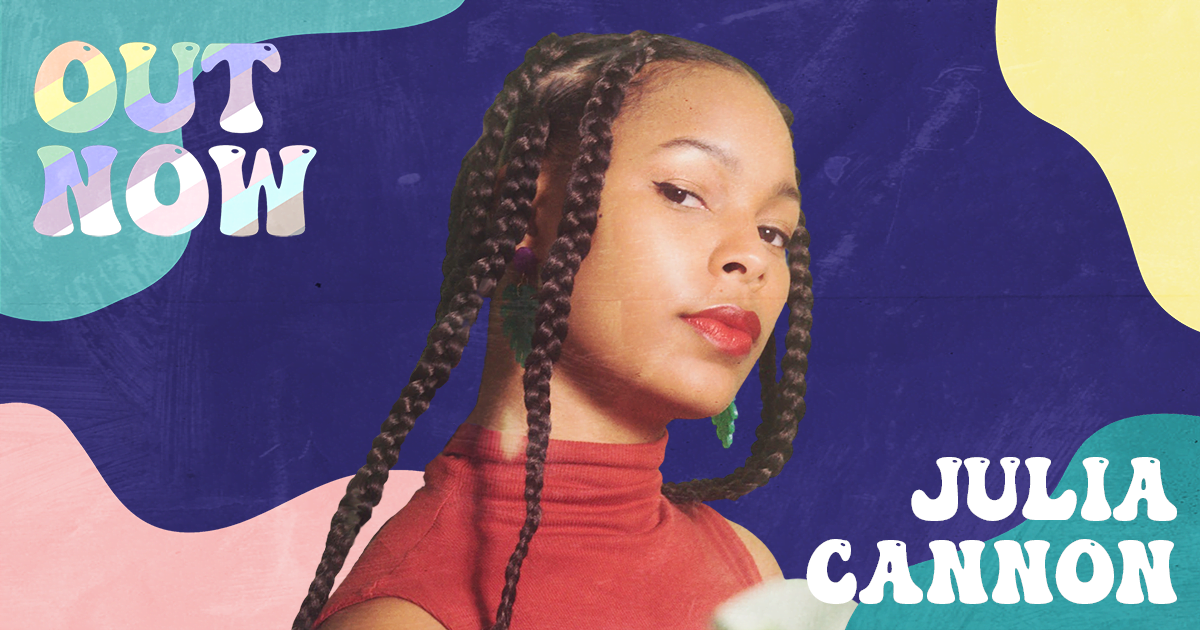
Out Now: Julia Cannon

Julia Cannon is one of a kind. Energetic. Witty. Sparkly. Bold. Creative. Unapologetically and fully herself. Her energy is captivating, outfits intriguing – she sometimes shows up in a full ball gown on stage – and her music is catchy and relatable. With a magnetic presence and unapologetic authenticity, Julia brings a fresh and vibrant energy to the music scene. In addition to being a songwriter, instrumentalist, vocalist, and performer, she also produces and mixes her music. 

Julia has played many Queerfest showcases and was part of Queerfest 2023, taking the stage at The Basement East. In this interview we talk about her dedication and the hard work required to pursue her career in music, her experience as an LGBTQ+ artist, and her pursuits as both an artist and producer.

What’s your ideal vision for your future?

Julia Cannon: It would include a lot more peace and a lot more freedom. I’ve been working since I was 12, sometimes two jobs trying to get to college or help my mom with her alterations shop or pay off my private student loans. I just want to be able to fully invest more time and more of the money that I make into my craft.

What is your greatest fear?

Not reaching my full potential and never being able to invest fully in myself.

What is your current state of mind?

I’ve been in the grind mindset my entire adulthood. I’m 30 now, and I’m finally starting to be able to do some of the things that I want to do. I just finished my first little tour and had a blast. I’m transitioning as I pay off my private loans in the next year or so.

What would a “perfect day” look like for you?

I’d sleep in until 10 a.m., go and have some tea with my cat, and then start playing guitar. Hopefully I’d end up making music somehow, and then a shitty rom-com and I fall asleep on the couch. Can you tell I’m an introvert?

Why do you create music? What’s more satisfying to you, the process or the outcome?

It’s the first way that I learned how to process and communicate my feelings and thoughts. And it’s still the best way to root around in there. And then I get to share it and that’s magical.

Do you create music primarily for yourself or for others?

It’s selfish. And I’m not even motivated by external validation, which is hell. But it’s also freeing. But sometimes my inner critic is a dick.

What’s the best advice you’ve ever gotten?

Recently I was freaking out about god-knows-what and my Uncle Vic said, “Just go where the joy is,” and I was like… damn, it is that simple.

Who are your favorite LGBTQ+ artists and bands?

I saw The Collection at Queerfest 2023 and instantly became a fan. I am also a big Carmen Dianne and Kentucky Gentleman fan. Purser is still my fav queer artist in town for sure, though!

For anyone reading this who might not be out of the closet, were there any specific people, musicians, or resources that helped you find yourself as a queer individual?

Find your people and go where the joy is. And also therapy.

What does it mean to you to be an LGBTQ+ musician?

Queerness in general just means freedom from following the norm. Life outside of the box. I think that translates to the art that we make as well.

What are your release and touring plans for the next year?

I have no idea. While I’m still working full time to pay off my loans, I’m taking it day by day. I’d love to release some EPs and keep playing in new cities. I had so much fun on tour.

Your album, How Many, came out this year. What was the process like for you to write, record, and release this collection of songs?

It was really fun and fulfilling. I want to keep growing as a producer and a mix engineer and I feel like I did that with this album. I got to see where I need to continue growing and have new goals for future projects. I crowdfunded How Many, so I was able to hire and work with a lot of people that elevated the project as well. It made me so happy.

You’ve collaborated with other LGBTQ+ artists like Purser. What is it like for you to work with other artists in the community?

My inner child is so stoked about it. I grew up in such a small town in Alaska. Being able to collaborate with inspiring artists who are also queer is incredibly healing.

What has your experience been as a queer woman of color in Nashville?

Mixed bag honestly lol. I feel tokenized sometimes and sometimes I’m happy to be representation for younger generations. I think, in general, things are trending upward. I feel safe and supported.


Photo courtesy of Julia Cannon