Old Crow Medicine Show’s Americana Commonwealth Canon

More than any of the world’s music, the songs of America are a reflection of a national identity and character. We are our songs.

Distilled into a few memorable minutes go the nation’s hopes and aspirations, the glories and tragedies of her past, and the promises of her future. This American canon is as diverse and vast as the country itself – our blues, breakdowns, or corridos are as different as prairies are from coastlines, as the Appalachians are from the Rockies. And yet, somehow, still our sound is a commonwealth, a singular voice rising from the chorus of many just like our national motto purports: “E Pluribus Unum.”

250 years is not a long time in the global scheme, and neither is 28 years of Old Crow Medicine Show‘s reign as an Americana string band. But somehow it is the vigorous and youthful American voice/song/songwriter/band (and not our transoceanic elders) that can best capture the world’s heart and soul in just a few minutes.

In this Mixtape, I’m proud to share some examples of this powerful artistry. You might already know every word to some of these songs while others you may have never heard, yet each is stitched together with a cloth of commonwealth that can only be found of uncommon ancestry. Though the singers may be perfect strangers, the songs that bubble up from our national cauldron are enough to nourish each and all. – Ketch SecorOld Crow Medicine Show

“Howdy Do America” – Old Crow Medicine Show, Jesse Welles

Jesse Welles came whirling into the studio the other day and helped put a spit shine on this love song about the 50 states. I wondered if he was gonna get excited when he sang “Arkansas” and brother, he did not disappoint. Love this cat. He’s a brother, and I expect we’ll all be singing his tunes for years to come.

“Golden Rocket” – Jim & Jesse

I had the privilege of knowing Jesse McReynolds, even traveling and performing with him, and buddy there’s no wonder why Jerry Garcia thought he was the best of the bluegrassers.

“Field of Opportunity” – Neil Young

I was raised on Neil Young’s unique brand of tall prairie country rock. This track features the great Cajun fiddler Rufus Thibodeaux.

“Heaven Help Us All” – Joan Baez

Joan’s a real hero of mine. She’s like that tree planted by the water we all sing about, unmovable. Of all the singers on this playlist, I can say without a doubt if more people could be like Joan Baez, then this world would be a better place.

“I Wanna Go Country” – Otis Williams & the Midnight Cowboys

I love this Motown singer turned country crooner, and the world would have too, if Nashville hadn’t been so narrow-minded.

“Beautiful Land” – Old Crow Medicine Show, Maggie Rose, Lee Oskar

I wrote this one with a Baháʼí faith elder named Eric Dozier just down the street from the Tennessee State Capitol building. Sometimes politics feel like a fortress. But music has a way of wandering through the keyhole of even the most impenetrable door.

“There’s a Star Spangled Banner Waving Somewhere” – Elton Britt

I played this one for my kids on Memorial Day. They sat through it start to finish, and you should, too. It’s easy to get complacent about the sacrifice our grandparents and great-grandparents made in the 1940’s for each of us. Don’t do it.

“Oasis” – Molly Tuttle

Molly’s my favorite American singer. Here’s one of our travelogue-style songs. I had it stuck in my head all last week at the Tico Time Bluegrass Festival in Aztec, New Mexico.

“The Green Rolling Hills of West Virginia” – Hazel Dickens & Alice Gerrard

These girls rip. Back at MerleFest in the year 2000, I filled out Old Crow’s first ever W-2 form and gave it, with a shaky hand, to the great Alice Gerrard.

“How’s About You” – Dave Rawlings Machine

The Great Depression gave the world some of its most powerful songs. And even generations later, the events of the 1930s remained powerful enough to inspire music like this.

“Rock of Chickamauga” – Jimmie Driftwood

Songs about the Civil War are some of my favorites in the national cannon. Jimmie Driftwood is one of my favorite songsmiths. He’s an absolute master of the historical ballad.

“Across The Great Divide” – Kate Wolf

I am awestruck by the landscape of the West, and few songwriters can take you there better than the amazing Kate Wolf.

“What Did You Learn in School Today?” – Tom Paxton

I’ve been singing this one since I was a youngin. When I was 12, I discovered my uncle’s weathered copy of Vanguard’s album Newport Broadside: Topical Songs at the Newport Folk Festival 1963, and that was my introduction to Tom.

“The Tramp on the Street” – Molly O’Day

Born in Pike County, Kentucky, she’s one of my favorite bluegrass singers. She first heard this song from Hank Williams on a Birmingham radio station, and it became her signature song. American music has a way of championing the underdog better than most.

“Shenandoah” – Bob Dylan

I think I was 15 when I first heard Bob singing this gem, hidden in the ruffles of one of his more questionable ’80s albums. I thought, “Damn, Bob knows where I’m from.”

“Corrido de John F. Kennedy” – Los Reyes del Corrido

My band has been dabbling in conjunto for two decades now. We got to learn this one for next time we play the big D (Dallas).

“Which Side Are You On” – The Weavers

No collection of American songs is complete without a protest piece from the labor movement, the first dark corner where the full power of American music was unleashed.

“The City of New Orleans” – Arlo Guthrie

When we play Chicago, I always talk about Steve Goodman, who wrote this song. I sure would have liked to have known the guy. Thankfully his music will last forever.

“Cowboy National Anthem” – O.B. McClinton

O.B. left this world before he was fully known by the country music fanbase that would soon send black country singers consistently to the top of the charts. He was a man before his time, but the music he made reminds us that, just like Ray Charles said, “Country music is black music.”

“Deportee (Plane Wreck at Los Gatos)” – Old Crow Medicine Show

We love Woody Guthrie, and this is one of the numerous songs of his we’ve recorded through the years. In a nation of immigrants (I’m a French Huguenot), it’s hard to imagine how we could exist without a steady flow of new members to our American family.

“Big Backyard” – Molly Tuttle

When Molly and I wrote this, it was on account of having a massive vacant lot behind the house we were composing in. Now that same lot is full of little yellow flags and “coming soon” signs. Yet still we sing, louder this time.

“For What It’s Worth” – Buffalo Springfield

A few years back, I had the distinct pleasure of sharing an elevator with Stephen Stills, author of this earthquaking song which Buffalo Springfield recorded in 1966 – and we covered this year on our new album, Union Made. I wanted to tell him thanks, gush, and get my picture made. Instead, I stood quietly until he rasped, “I heard your soundcheck. Great band you got there. Keep ‘em together if ya can.” Thanks, I will Stephen.

“Louder Than Guns” – Old Crow Medicine Show

This summer, PBS stations across the country are broadcasting the film we spent three years making in a half-dozen tour stops along our travels. It’s a movie about bringing together the disparate ends of the 2nd Amendment debate during an era in which guns kill innocent Americans at shocking rates. It’s a tall order, coming together to flatten the curve, seeing past our silos and personal politics, but in town after town I watched people listening across the divide. As easy as it is to be hopeless, the film has made me hopeful we’ll get beyond this impasse and prioritize the safety of our communities. This song is the theme of this film.

“American Tune” – Allen Toussaint

I’m glad you made it through to the end. Old Crow opened up for the great Allen Toussaint in the Berkshires back around 2011. The record featuring this song had just come out and when he launched into it, I was nearly knocked off my feet. So powerful. So simple. Says it all.


Photo Credit: Ed Rode
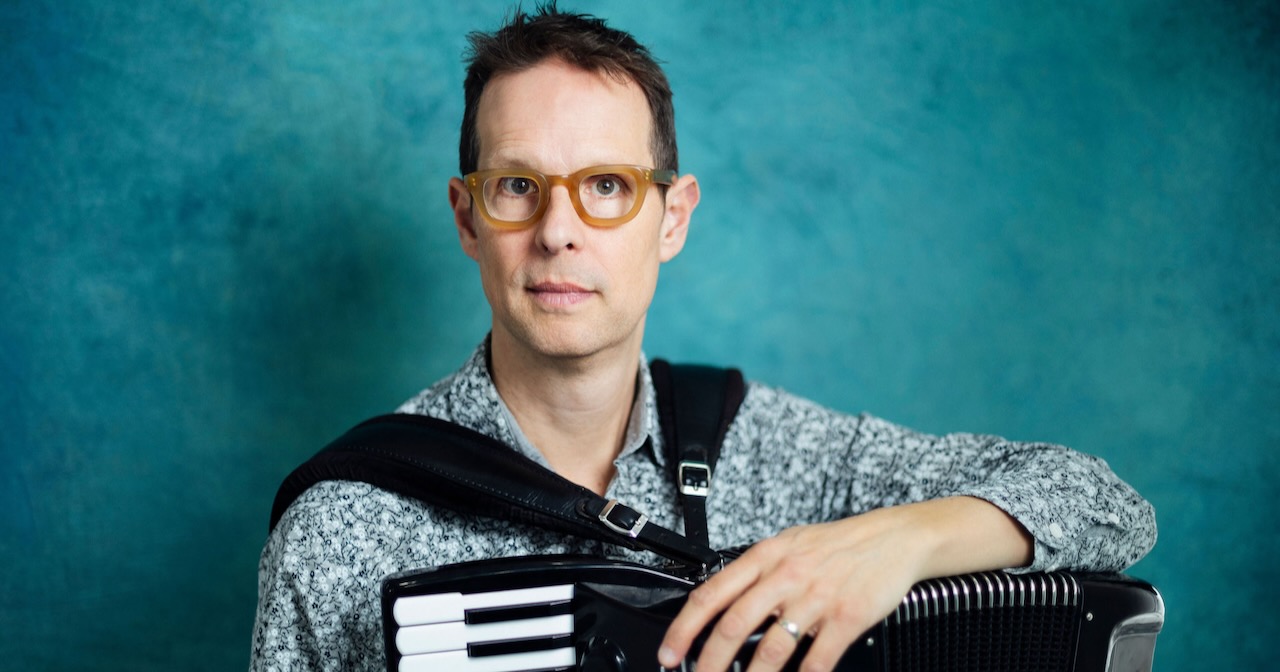
MIXTAPE: Will Holshouser on the Accordion in Country, Bluegrass, and Roots Music

The accordion is like a cousin you don’t see very often, but who is an integral, colorful member of the family. In country, folk, bluegrass and related roots music from the U.S., the accordion has always been there, more of a presence than you might think. It’s central to styles such as zydeco, Cajun, and conjunto music, but also many foundational bluegrass and country artists – such as Bill Monroe and the Carter Family – used accordion in their music at times. The accordion was in the environment, part of the sound world of mid-20th-century popular music, adding a special touch to bands of all kinds. Although it did not continue to flourish as a central bluegrass or country instrument, there’s no musical reason for that absence: it fits right into the sound. Whether playing rhythm or lead, it can be versatile, punchy, and expressive.

If country music is our unifying theme here, the accordion makes a great lens for viewing the vast diversity of the genre and its extensive family tree: Tejano-conjunto accordion playing, with its polka and Spanish origins and its two-beat and waltz rhythms, is a natural fit with country; zydeco and Cajun music overlap with it seamlessly; Western Swing bands, which merged jazz and country, often included accordionists from the Midwest with Central or Eastern European backgrounds. Of course, the impact of African American blues, swing, and jazz is so strong in all these styles that it’s more than just an “influence” – really a foundation. Jewish klezmer music is also a branch of the “roots music” tree; it came from Europe and developed in the U.S., absorbing many of the same influences as the other genres while making great use of the accordion. – Will Holshouser

“Together Again” – Steve Jordan

The incredible Esteban “Steve” Jordan grew up playing conjunto music in Texas and expanded his repertoire to include country, Latin music, rock, zydeco and more. He was known as “El Parche” for the patch he wore over his blind eye and also as the “Jimi Hendrix of the accordion,” since he played through an effects pedal (flanger or phaser). On his version of this Buck Owens tune, he plays many roles brilliantly: lead vocals, accordion solo, fills and accompaniment.

“J’ai Eté-Z-Au Bal” – Steve Riley & the Mamou Playboys

Steve Riley is one of the finest Cajun accordionists working today; this blistering version of a classic Cajun tune (“I Went to the Dance”) shows his virtuosity, the Cajun (diatonic) accordion in a lead role, and his band’s deep groove.

“Tennessee Waltz” – Pee Wee King & His Golden West Cowboys

Pee Wee King was born Julius Frank Anthony Kuczynski to a Polish-American family in Wisconsin. He learned accordion from his father, who played in a polka band, and went on to become a famous Western Swing bandleader and write the music for this country classic. His beautiful, single-reed accordion fills and moving thirds sound totally country, while revealing a Slavic touch.

“Blues de Basile” – Amédé Ardoin

Amédé Ardoin made some of the very first accordion records in Louisiana and is a common musical ancestor of all zydeco and Cajun accordion playing. His innovative, rhythmic, virtuosic accordion style and haunting vocals won him a great reputation both inside and outside his Afro-Creole community. He often played dances and made records with his close musical partner, Cajun fiddler Dennis McGee, including “Blues de Basile” in 1930. His life ended tragically when he was beaten by white vigilantes.

“Hard to Love Someone” – Clifton Chenier

Known as the King of the Bayous, Chenier brought together southwestern Louisiana zydeco rhythms and Delta blues. On this slow blues tune recorded in 1970, his fluid improvising and support of his own singing is nothing short of glorious. His brother Cleveland Chenier plays the rubboard.

“Bluegrass Special” – Bill Monroe (with Sally Ann Forrester)

Most people know that Bill Monroe defined the classic bluegrass sound. Some may not know that an early version of his band, The Blue Grass Boys, included a Blue Grass Girl, Wilene “Sally Ann” Forrester, on accordion. Her solid rhythm playing and all-too-short accordion break add warmth to this early instrumental, a 12-bar blues. If things had worked out just a little differently, maybe every bluegrass band today would include an accordion! (Hey, it’s not too late, folks.)

“Root, Hog or Die” – Mother Maybelle & The Carter Sisters (with Helen Carter)

Later in her life, Mother Maybelle Carter of the iconic Carter Family had a long performing career with her daughters. The group featured Helen Carter playing great accordion and often Chet Atkins on guitar. Here, too, the influence of swing and blues is readily apparent. “Root, hog, or die” is an old expression that means “you’re on your own.”

“Alon Kouri Laba” – Corey Ledet Zydeco

Corey Ledet, one of today’s most exciting zydeco accordionists, plays beautifully and sings in Louisiana Creole on this high-energy tune from his album Médikamen (2023).

“American Without Tears” – Elvis Costello (with Jo-El Sonnier)

Accordionist Jo-El Sonnier brings his sensitive touch and gorgeous Cajun waltz style to this song from Elvis Costello’s album King of America. (Rock producers and engineers, please take note: this is where an accordion should be in the mix – loud enough that it can breathe dynamically and find its place among the other instruments.)

“Shouting Song” – Will Holshouser

Here’s a tune from my new album, The Lone Wild Bird. I wrote “Shouting Song” with the sound of shape note singing in mind. This is a choral tradition in the rural U.S., mostly in the South, with a unique sound: shape note composers ignored (or just didn’t know about) many European harmonic rules which disallowed features like parallel fifths and chords with only two notes. Along with influences from various folk traditions and camp meeting spirituals, that stark approach to harmony gives the style its sound, which I use here as a point of departure.

“Un Mojado Sin Licensia” – Flaco Jimenez

The creative genius of the great Flaco Jimenez is on full display in this conjunto song about the hardships faced by a Mexican immigrant in Texas. His rhythmic drive, melodic inventiveness, and roller-coaster chromatic runs are thrilling to the ears.

“Streets of Bakersfield” – Dwight Yoakam (with Flaco Jimenez)

Here’s Flaco again, on a recording that went to the top of the country charts in 1988. This song was written by Homer Joy, first recorded by Buck Owens in 1972, and re-done here by Dwight Yoakam with both Buck and Flaco as guest stars.

“Spadella” – Spade Cooley (with Pedro DePaul)

Accordionist and arranger Larry “Pedro” DePaul grew up in Cleveland, Ohio, where he studied music at the Hungarian Conservatory. Spade Cooley, originally from Oklahoma, was a popular Western Swing bandleader in the LA area. There’s a grisly tale behind this tune: Cooley wrote it for his wife Ella, who he was convicted of murdering in 1961.

“Second Avenue Square Dance” – Dave Tarras with the Abe Ellstein Orchestra

Any discussion of the accordion in American roots music should include klezmer, Eastern European Jewish music that came to the U.S. and absorbed influences such as the drum kit, certain jazz band formats, etc. On this tune the great clarinetist Dave Tarras plays the lead, but the anonymous accordionist is heard prominently, playing beautiful fills and rhythm, harmonizing with the melody, and using rich chords to blend with the horns. Second Avenue in Manhattan was the epicenter of the Yiddish theater scene, which had a huge impact on Broadway. The title could be just a lark, or a nod to the musical kinship between klezmer and country music!

“Atlantic City” – The Band (with Garth Hudson)

Garth Hudson’s adventurous playing with The Band carved out a role for the accordion in that kind of rock music. (He also played the horizontal keyboards: organ, etc.) I had the thrill of meeting him when we both played on Martha Wainwright’s live Edith Piaf tribute album (Sans Fusils, Ni Souliers à Paris). Unfortunately, the producers had us playing on different tunes, not at the same time! On this cover of a Bruce Springsteen song, recorded in 1993, Garth creates a fantasy using multi-tracked layers of accordion and organ.


Photo Credit: Erika Kapin

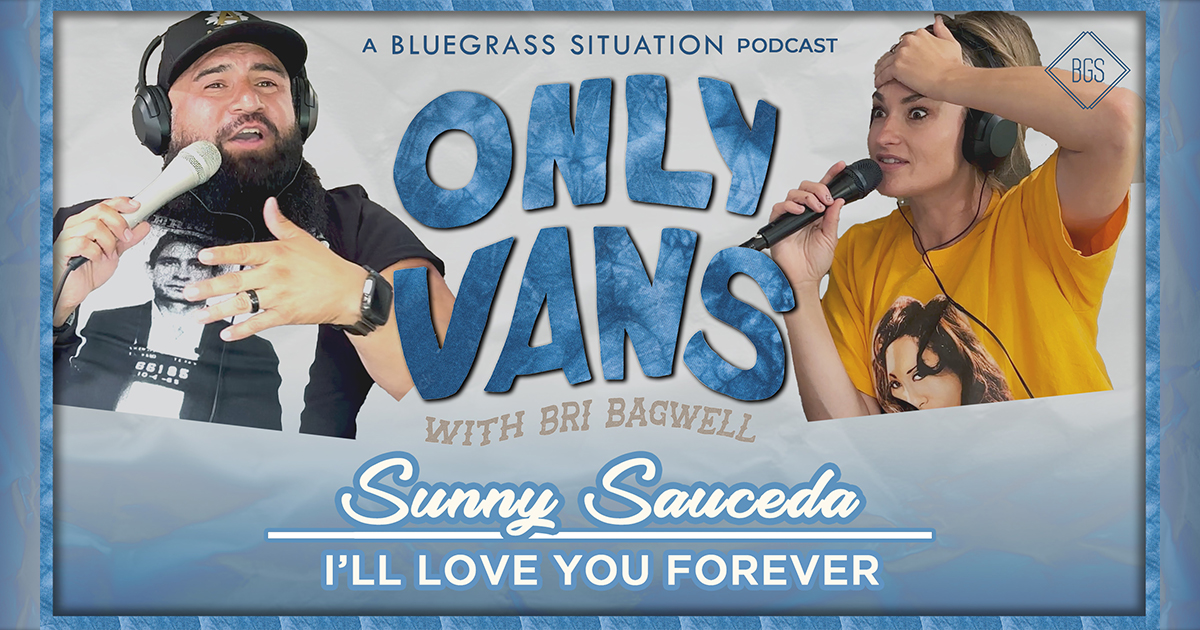
Sunny Sauceda on Only Vans with Bri Bagwell

My “Redneck, Squeezebox, Mexican” amigo Sunny Sauceda joins us on Only Vans this week to talk about content creation. He’s a three-time GRAMMY Award winner who’s making the switch from Tejano to Texas Country. He has some great insight on content creation, mentality, and blurring genre lines to share!

LISTEN: APPLE • SPOTIFYAMAZON • MP3

Find Sunny Sauceda’s music, tour dates, and merchandise here.

Thanks to our sponsors for this episode, The MusicFest at SteamboatLakeside Tax & CH Lonestar Promo!


Find our Only Vans episode archive here.

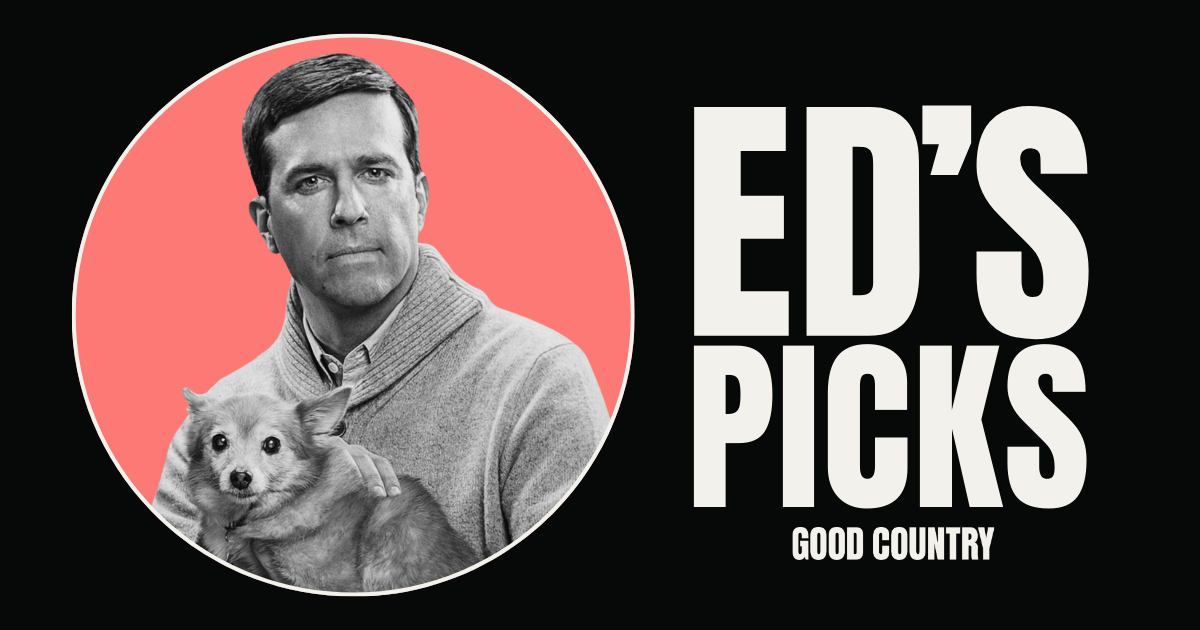
Ed’s Picks: Tejano, Country, Bluegrass, and More

(Editor’s note: Each issue of Good Country, our co-founder Ed Helms will share a handful of good country artists, albums, and songs direct from his own earphones in Ed’s Picks. 

Sign up here to receive Good Country issues when they launch, direct to your email inbox.)


Sign up here to receive Good Country issues when they launch, direct to your inbox.

Brittany Haas Joins Punch Brothers Just in Time for the Energy Curfew

I first encountered Brittany Haas when I was 14 years old, attending the Mark O’Connor Fiddle Camp outside of Nashville. Brittany was only a few years older than me, but she was miles ahead of me musically and professionally, already gigging with some of the best traditional musicians around. I bought a copy of her self-titled CD and learned every single track on it. When I would meet other fiddle players my age, we would often bond over this recording and its shared influence on our playing.

Haas went on to join Boston-based band Crooked Still, one of the most influential string bands of the last 20 years. In the small community of acoustic music makers and lovers, Crooked Still was the kind of iconic band – much like Nickel Creek and Punch Brothers – that created a hundred baby bands in its wake, each inspired by the reinvention of traditional song in modern and exciting ways. There was even a period of time when seemingly all of the young women involved in the folk and bluegrass scene (myself included) began dressing like Haas, wearing messy buns in their hair and colorful leggings under short boho dresses.

Following her time with Crooked Still, Haas went on to play with Gillian Welch and Dave Rawlings, in the house band on Live From Here, and with her own genre-bending quartet, Hawktail – among many other projects. Unlike other powerhouse women instrumentalists like Missy Raines, Molly Tuttle, and Sierra Hull, who have carved out career paths by leading their own bands, Haas has stayed largely under the radar to the wider public, working primarily as a collaborator or band member.

As my own musical interests have grown and changed, I have found myself feeling guilty at times for not putting my focus on being an improvisational instrumentalist, fearing that I’m taking a too traditionally female path as a songwriter, and reenforcing gender expectations. But as Brittany has kicked through ceiling after ceiling as an instrumentalist, I’ve thought “Hey, it’s OK, Brittany is so good that nobody will ever doubt that a woman can do it!” For years, Haas has been a pinnacle, an example for the rest of us female instrumentalists. So, you can imagine the thrill that I felt when it was announced that Haas would be the newest member of Punch Brothers, a band that is representative of the highest caliber instrumental prowess in today’s acoustic music scene.

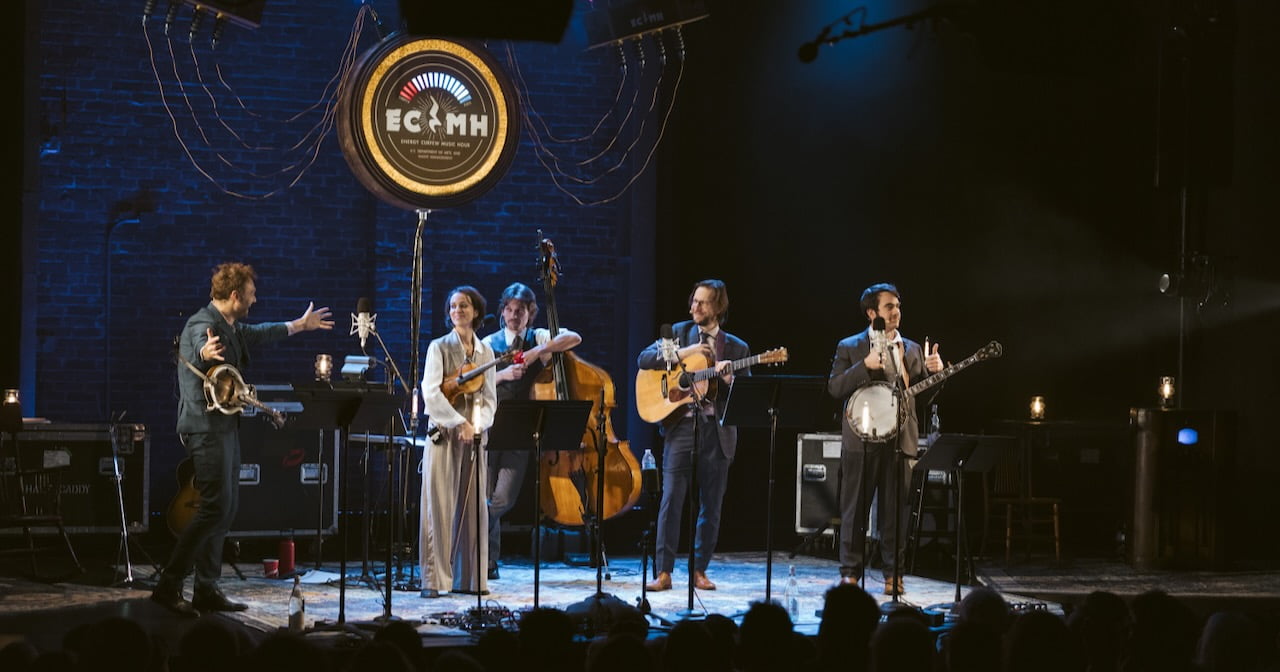
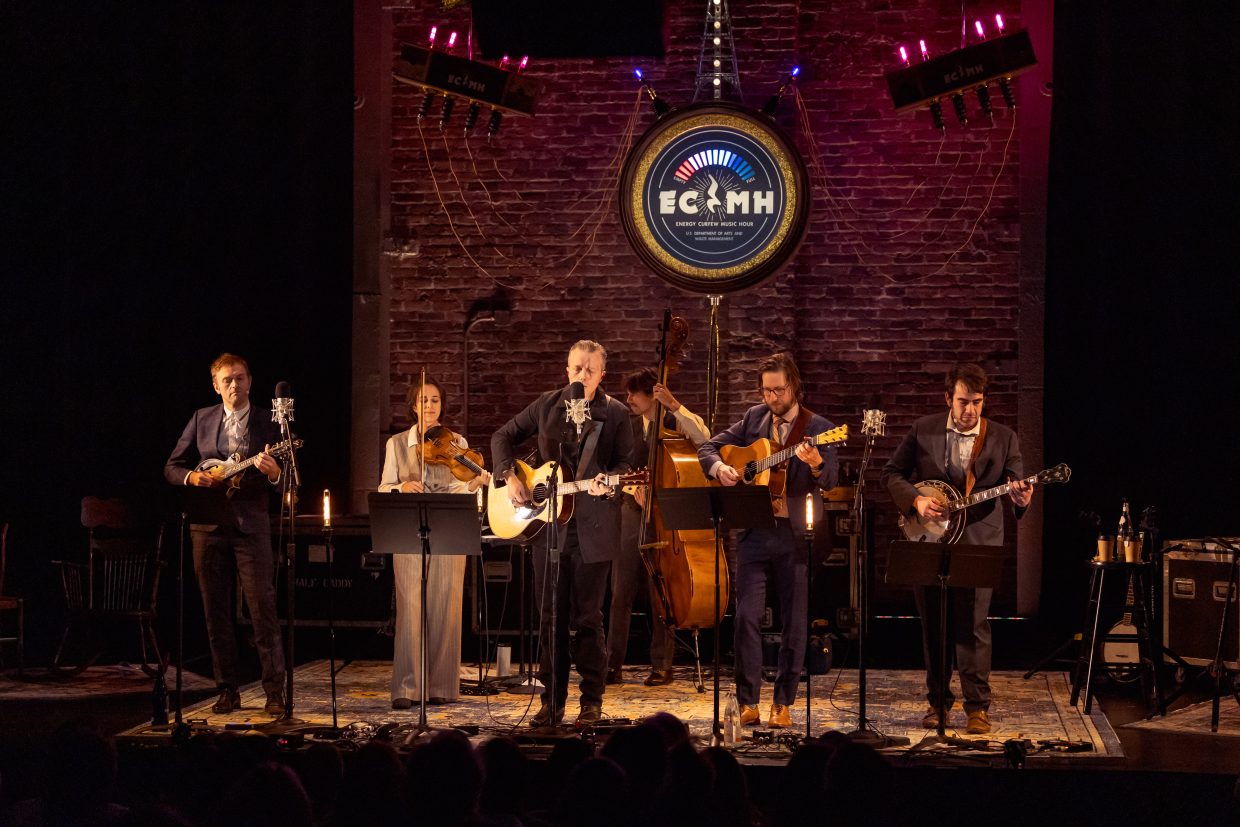
Haas’ first gigs with the band have been as part of The Energy Curfew Music Hour, a live radio-style show created by Claire Coffee and Chris Thile in collaboration with Audible. The show features Punch Brothers along with special guests like Jason Isbell, Gaby Moreno, and Sylvan Esso among others.

BGS had the opportunity to ask Brittany Haas a few questions about her career and her hopes for joining the band in the lead up to a handful of Energy Curfew Music Hour shows in New York City this month at Minetta Lane Theater.

Chris Thile & Punch Brothers perform at Energy Curfew Music Hour with Jason Isbell in December. Photo by Rebecca J Michelson.

You’ve had a lot of experience working with various members of Punch Brothers in different bands and formats over the years, what about the particular aesthetic and ambition of Punch Brothers made you want to accept the gig?

I’ve been a fan of the band for a long time – I guess as long as they’ve been a band. So the idea of joining was very exciting. I think any fan would tell you that there’s something about the band – the expansive nature of their approach to writing and arranging music – that is really unique. They’re making music that doesn’t sound like anything else. Getting to jump into something that’s been evolving and expanding into and beyond itself for so long is really cool. And as an instrumentalist in this “new acoustic” musical universe, it’s basically a dream gig, joining four incredibly talented and smart people and making music through which I know I will grow as an artist.

You’re known as a fiddle player that’s rooted in old-time traditions, but also improvisationally virtuosic. Do you feel like your background in old-time will bring a different flavor to the band moving forward?

Old-time is a genre in which I feel a lot of joy and comfort, so it’s always nice when that can be utilized in service of a tune or a song. Lately, in playing with my sister and with Hawktail, I also feel that my voice is strongly Celtic and Scandinavian – basically a combination of the genres I grew up around at fiddle camp and got obsessed with. I think that stuff will come out naturally no matter what new music we’re creating and perhaps some of the music will be written in that direction.

When stepping into a role that has been created and maintained by one specific fiddle player for so many years (Gabe Witcher), how much freedom do you have to remake the parts for the older material in your own voice?

I think this is true in many areas of life– the more deeply you know something, the more you can put yourself into it. Once you know intimately how it goes, you can be freer and more artful and playful with it while staying true to its nature. So that’ll be a journey for me with the back catalog material. Also, sometimes the parts he played were just the best thing that could happen in that musical moment. Some of the parts are more written than textural/improvised, so in those cases I will need to stay true to what he played. And I love his playing! Playing like Gabe is fun for me, because it stretches me in a different way than I normally go.

What made you want to wear a suit for this gig?

I’d never worn a suit before joining the band, so I saw it as an opportunity to try that. I always thought that the women I saw wearing pantsuits looked awesome. Plus it’s great having so many pockets for mic and in-ear packs. The other part of my thought process was, this is a band and I want to integrate into it, so it makes sense to wear the uniform. No one said I had to wear a suit. I’m sure it would be cool with everyone if one of them wanted to start wearing dresses, so it’d be cool for me to do that too, and maybe I will at some point.

You’ve made incredible records in a lot of different fiddle genres at this point, is there any uncharted territory that you hope to explore in the future?

The depths of my own mind! I’m partially kidding; I do want to write more music. But there is always uncharted territory! Darol Anger is an inspiration in this – he never stops practicing and devising new ideas for getting around the fiddle. I hope to keep learning tunes from different musical traditions. Lately I’ve enjoyed learning conjunto music and I’d like to spend more time with Eastern European folk music, getting comfortable in different time signatures, etc.

What is a record that has been inspiring you lately?

James Taylor’s album Hourglass from 1997. We learned a few of those songs to play with him on the show and I fell in love with them. Also Alasdair Fraser’s album Dawn Dance, which I returned to recently after first being obsessed with it about 25 years ago. It is still as lovely as I remembered.

What is your process for preparing to play with so many different guest artists on the show – how do you approach constructing fiddle parts?

Mostly listening. Generally, when we get together with the guest artists that’s when most of the decision making about parts happens. So my job is just to show up being familiar with the music. Sometimes there are more specific string-oriented parts to play.

You’ve been a part of the Live From Here house band in the past, how does the vision and format for the Energy Curfew shows differ from that show?

The format feels similar, although there is more of an air of collaboration, because there is a bit more time for creation and also the same core band for every show. And, the premise of the show centers on the idea of it being purely acoustic music, so that’s mostly what it is with some inventive ways around that rule when needed.


Photos courtesy of Audible. Lead image by Avery Brunkus; inset image by Rebecca J Michelson.