BGS Class of 2025: Books

2025 was a standout year for roots music books. In a time of political upheaval and uncertainty, authors like Craig Shelburne & Brenda Colladay and Alisa Murphy brought us deep into the history of music institutions that have weathered generations of American ups and downs: the Grand Ole Opry and The Station Inn. Reading about these places is a reminder that culture is often a better litmus test than news cycles, when it comes to what a country stands for and where its soul can be found.

Biographies of Dolly Parton and Alice Gerrard (the latter written by Gerrard herself) highlight women who defied the odds to become iconic voices in country and old-time. Parton first debuted on the Opry at the age of 13 and her influence on American culture has spanned from highlighting women in the workplace with “9 to 5” to donating a million dollars for medical research to accelerate the creation of the Moderna COVID vaccine. Gerrard, while less of a household name, is considered one of the last of the old guard in traditional music; even if you haven’t heard of her, you’ve probably still been touched by her work. These books detail the unlikelihood of these women’s successes given the time and place of their work and both good reminders of changing gender norms that we now take for granted.

Two books on Black American fiddle and banjo music continue the quest to restore African music’s and African American musicians’ rightful place in the history of the American string band tradition. With additional archival and notation resources, these books offer not only scholarship, but an opportunity for dedicated pickers to add to their repertoire, too.

And finally, roots musicians Paul Burch and Charlie Parr channel their creative writing into novels Meridian Rising and Five, respectively, the former a fictionalized story of Jimmie Rodgers and the latter a wild meditation on the wanderings of a troubadour.

From coffee table aesthetics to novels and new tunes, 2025’s roots music books have you covered! See a list of our favorites and a collection of “honorable mentions” below.

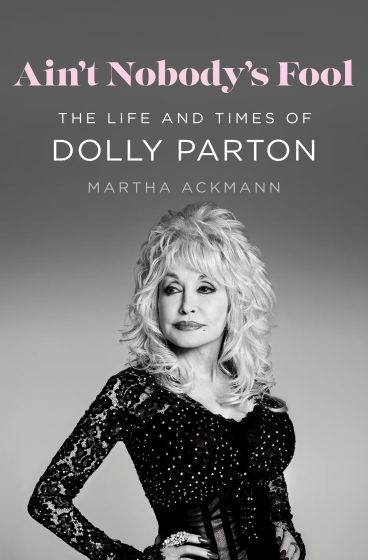
Ain’t Nobody’s Fool: The Life and Times of Dolly Parton by Martha Ackmann

Martha Ackmann is known for illuminating the stories of women who rise above societal expectations, so it’s only appropriate that she should tell the story of Dolly Parton’s ascent to success. With new interviews and documents, the book focuses on the price Parton paid for her early fame, penalized and criticized by those who saw it as a betrayal of her roots. Despite legal battles and struggles with her mental health, Parton persevered and went on to use her affluence to help her East Tennessee home, through the development of Dollywood, her charitable work, and the creation of The Imagination Library. Find it here.


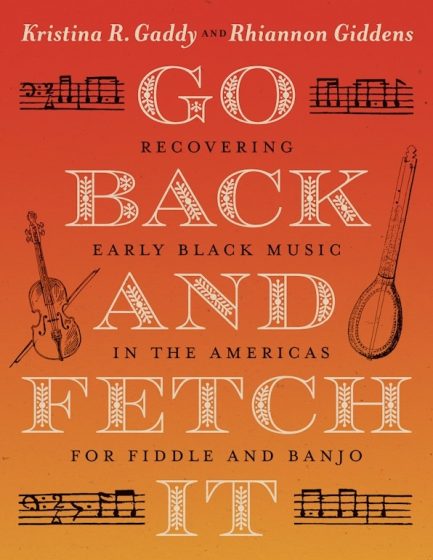
Go Back and Fetch It: Recovering Early Black Music in the Americas for Fiddle and Banjo by Kristina R Gaddy and Rhiannon Giddens

Appropriate for pickers and scholars alike, this collection of early Black Atlantic music is equal parts songbook and history lesson. Nineteen carefully transcribed tunes sourced from 1687 to the 1860s are presented in standard notation and banjo tablature, and accompanied by rich historical essays detailing their origins, cultural context, and evolution over time and place. This collection is another important step in the recovery of Black history of the American musical canon – and specifically the fiddle and banjo canon – from two lauded experts on the subject. Find it here.


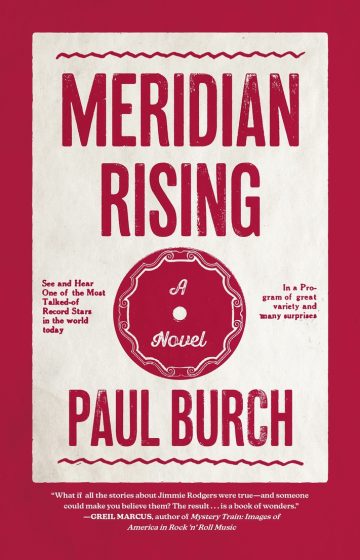
Meridian Rising by Paul Burch 

Meridian Rising, the debut novel from Paul Burch, fictionalizes the life of country star Jimmie Rodgers and was released this fall to rave reviews. As the Chattanooga Free Press says, “Burch must have done a great deal of research to deliver a story that feels so authentic, but research alone doesn’t make a good novel. The writing is what matters, and Burch skillfully renders a large cast of narrators throughout Meridian Rising, especially its main subject, whose witty, sometimes barbed voice is vivid and memorable.” Find it here.


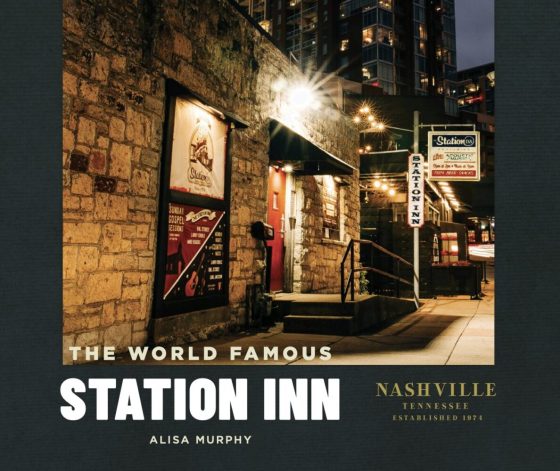
The World Famous Station Inn by Alisa M Murphy 

The passing of JT Gray in 2021 marked the end of an era for The Station Inn. Although the venue continues its bluegrass legacy with new management, it has been long past time to commemorate this (as its name rightly points out) world-famous venue with a book of stories and photos. Author Alisa M Murphy spent two years immersing herself in the culture of the venue and conducting interviews to put together her coffee-table book, The World Famous Station Inn. Find it here.


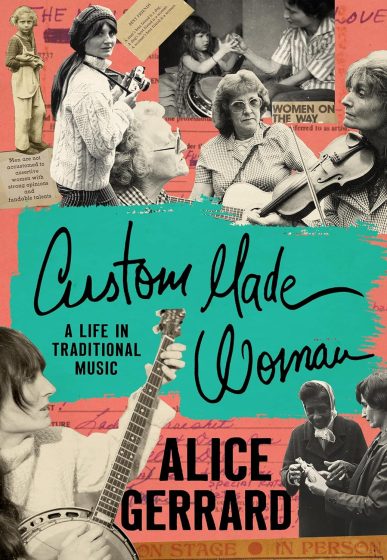
Custom Made Woman: A Life in Traditional Music by Alice Gerrard

This new memoir from one of our national treasures, Alice Gerrard, features over 100 of her personal photographs along with stories from pivotal times and an exceptional life in traditional music. Gerrard’s career saw her crossing paths with Bob Dylan, Doc Watson, Elizabeth Cotten, and many more. Recent rereleases of Gerrard’s trailblazing collaboration albums with Hazel Dickens have been put out by Rounder Records and Smithsonian Folkways, and they can be listened to in an entirely new context thanks to this book. Find it here.


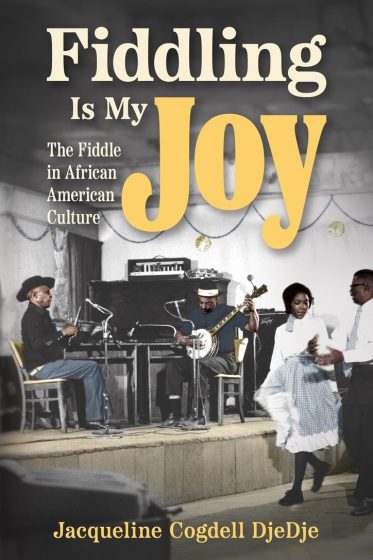
Fiddling is My Joy: The Fiddle In African American Culture by Jacqueline Cogdell DjeDje

UCLA Ethnomusicologist Jacqueline C. DjeDje investigates the fiddle in Black America, not only helping restore it to its rightful position in history, but also exploring why fiddle in African American culture disappeared from the mainstream story of the instrument in the first place. In addition to exploring geographic differences in African American fiddling traditions, DjeDje’s scholarship looks at fiddle traditions in West African and how their specific characteristics made their way to both Black and white American fiddlers. The book is accompanied by an online eScholarship Companion with primary source documents and audiovisual examples of music discussed in the text. Find it here.


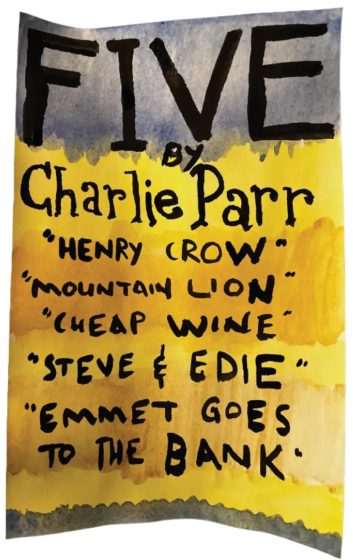
Five by Charlie Parr

The second collection of short fiction from beloved Minnesota musician Charlie Parr is not for lovers of a tight plot and succinct characters. Parr’s five stories are, according to his own description, “more like sad anecdotes told to you at the end of an impossibly long dinner party by the drunken spouse of someone that you barely know while you’re easing your way to the door, having already put your coat on around the time that these stories began.”

But, if you’re a fan of Parr and his 18 (!!!) studio albums, this collection is a must. Find it here.


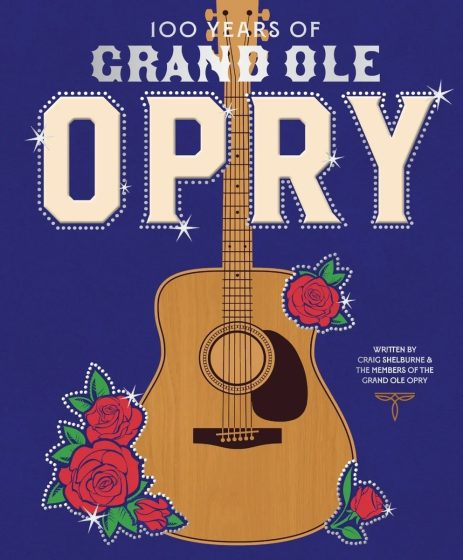
100 Years of Grand Ole Opry by Brenda Colladay & Craig Shelburne

Music journalist Craig Shelburne worked tirelessly with Opry historian Brenda Colladay – and dozens of artist, announcer, and Opry employee interviewees – to tell the story of the world’s longest-running live radio show over a century. The Grand Ole Opry is certainly the main character. This book is perfect for collectors and readers alike, since it’s full of illustrations and photographs. It’s separated into chapters by time periods, following the twists and turns of the Opry’s youth, adolescence, and adulthood. From Lester Flatt to the 2010 flood, the book is as deep as it is wide. An entertaining resource for country fans who like to get the full story. Find it here.


Other Reads From Our Inbox

  • Solomon Simon Dog Man Jack by Cindy Baucom, illustrated by Grace van’t Hof (Self-published)
  • Bluegrass Gospel: The Music Ministry of Jerry and Tammy Sullivan by Jack Edward Bernhardt (University Press of Mississippi)
  • Land of a Thousand Sessions: The Complete Muscle Shoals Story by Rob Bowman (Malaco Records Press)
  • Heart Life Music by Kenny Chesney with Holly Gleason (Harper Collins)
  • Southern Mountain Music: The Collected Writings of Wayne Erbsen (McFarland Books)
  • Howdy! Welcome to the Grand Ole Opry! by Emily Frans (Abrams Books)
  • Blood Harmony: The Everly Brothers Story by Barry Mazor (Da Capo Press)
  • The Hours Are Long, But the Pay Is Low: A Curious Life in Independent Music by Rob Miller (University of Illinois Press)
  • Star of the Show: My Life On Stage by Dolly Parton (Ten Speed Press)
  • Roots & Rhythm: A Life in Music by Charlie Peacock (Eardmans)
  • Poets and Dreamers: My Life in Americana Music by Tamara Saviano (Texas A&M University Press)
  • Bluegrass and Religion by Pete Ward (Bloomsbury)


Be Part of Our Winter Readers’ Collection

What is your family’s version of a “Lime Jell-O Marshmello Cottage Cheese Surprise”? Did you ever sing a song about it? We’re dying to hear about it!

In anticipation of the holiday season, BGS wants to read your food and music stories, writings, and traditions! We welcome fiction, nonfiction, poetry, and hybrid-form writing (perhaps a recipe with music?) of up to 1,000 words focusing on the crossroads of food and music. Please ensure that your writing incorporates both of these topics in some small way, not either/or (i.e. not just a recipe).

Selected entries will be published in our new, periodical BGS creative writing collection. See our first scary-season-themed collection and its selections here. Selected writers will receive free BGS merchandise and will be invited to present their work on the BGS website and social media. In addition, BGS will retain no rights to your work and creators are welcome to publish elsewhere or on their own channels.

Submissions will close at 50 entries, so make sure to send in your work ASAP!

Deadline: November 24, 2025 at midnight PDT.
How to submit: Please fill out this Google Form and attach your work as a Word file (.docx).


Our Readers’ Campfire Stories for Scary Season

Long before folks were strumming guitars and picking banjos, they were telling stories. Stories about origin, hopes, dreams, and fears, and lessons learned. These stories guided lives and relationships, became myths, legends, and songs, and were passed down for generations and adjusted for place and time. From “The Knoxville Girl” to “Down in the Willow Garden,” to Lindi Ortega’s “Murder of Crows” and Tyler Childers’ “Banded Clovis,” the spooky story looms large in bluegrass, old-time, and Americana music.

For the season, we asked BGS readers to share their own roots music-themed writing with us in the form of spooky fiction, creative non-fiction, poetry, or cross-genre writing. We were not disappointed! Below, Emily Garcia’s young musician narrator achieves justice for poor Rose Connelly of “Down in the Willow Garden,” and Stuart Thompson details the sad fate of two brother fiddlers who became entangled with the wrong woman.

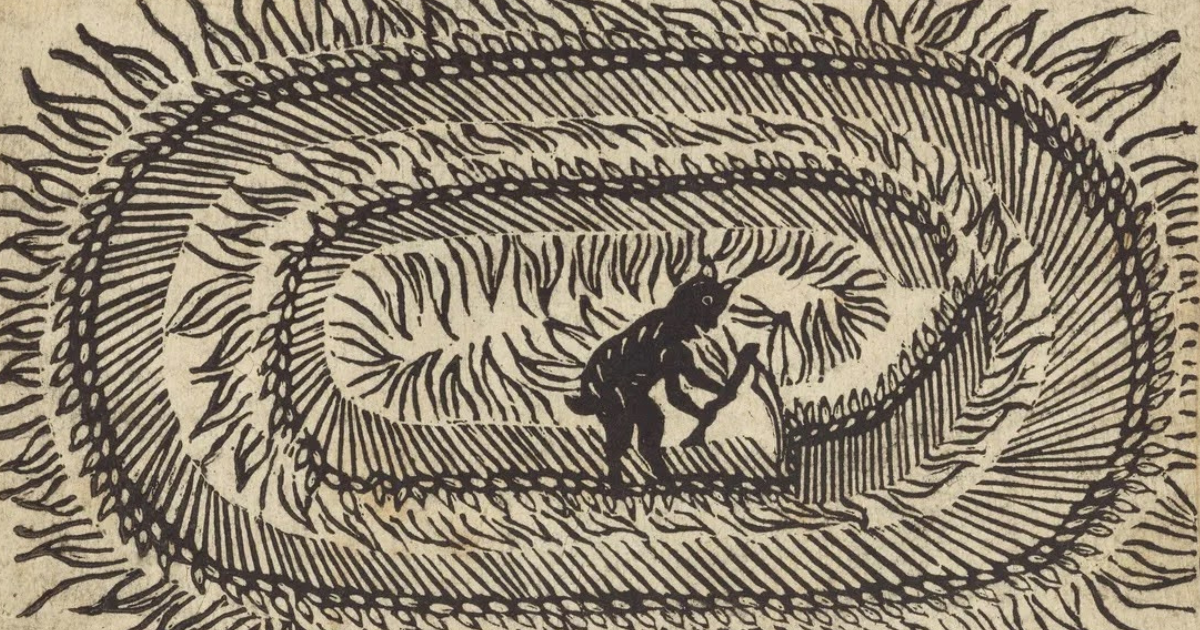
But first, we share with you an old tale of the farmer and the devil, regarding the origin of crop circles, found in a newspaper from 1678 – from which we’ve also pulled the creepy and fantastic woodcut we’ve chosen for lead image.

With this series, we hope to honor and continue the long tradition of storytelling and verse that has lived alongside and contributed to our favorite genres of music.

“The Mowing Devil Or, Strange News Out of Hartford-Shire”

Being a true relation of a farmer,
who bargaining with a poor farmer about the cutting down three half acres of Oats;
upon the mower’s asking too much, the farmer swore, that the devil mow it, rather than He;
And so it fell out, that that very night, the crop of oats shew’d as if it had been all of a Flame:
But next morning appear’d so neatly mow’d by the Devil, or some infernal spirit, that no mortal man was able to do the like.
Also, how the said oats now lay in the field, and the owner has not power to fetch them away.


Source: The Public Domain Review. August 22, 1678.


“Beneath the Sun, Above the Moon”
by Emily Garcia

The Hunter’s Moon, red from eclipse, slides above the pines and half-bare maple trees, its hollow stare cast over Virginia’s Appalachian Plateau. Behind it, the night is black as pitch.

“You okay, Wills?” asks Annie. No, she hasn’t been okay in months, but Annie doesn’t want to hear that.

“Yeah, of course!” Willow rosins her bow, trying to ignore the wailing in her ears.

Annie glances down, rocking the toe of her boot into a groove on the worn cabin floor. “I hope I wasn’t too pushy…I just thought playing again might help.”

Two weeks earlier, over the phone, Annie had been less concerned about being pushy. “Willow Rose O’Connell, I’m not taking no for an answer. You are coming to Hunter Jam Weekend, just like you have every year for the last four years. I will not let my best friend rot away in some North Carolina suburb just because one tour didn’t work out.”

Didn’t work out. That was the story she let everyone believe: she had quit the gig of a lifetime halfway through the European arena tour, all because she couldn’t handle the pressure and had a nervous breakdown in a hotel room in London. It was a breakdown so bad that she flew straight back to Nashville that night, packed her entire apartment, drove eight hours to her parents’ house in Raleigh, and was now living in her childhood bedroom strung out on Xanax.

“What a shame,” people liked to say.

Now, she forces a smile. “I appreciate it, Annie. I’m good. I’m glad I’m here.”

Relief washes over Annie’s face. “Okay awesome. Let’s go, then. You don’t need to solo or anything, just play.” Annie grabs her mandolin and heads for the door. Willow follows, fiddle tucked neatly under her arm.

They wind through a wooded path lit only by the moon, towards the fire where the rest of their group has already started jamming. She can’t shake the wailing sound. An old recurring nightmare from childhood, a screaming woman next to a riverbank, has resurfaced with a vengeance since she left the tour six months ago. On the worst nights, the screams would weave themselves around memories of her grandmother’s shriveled voice singing old folk songs by the fireplace.

My race is run beneath the sun, the devil is waiting for me.

What no one knows is that an hour before the nervous breakdown, she forced her way out of the back of the tour bus, shaking uncontrollably, the manager’s whiskey breath staining the air. She had escaped the worst, thank god, but his slurred voice taunted behind her. “Don’t even try telling anyone, Will. You know I can ruin you.”

She knows. She knows how this industry works.

They reach the circle and Willow perches on a stump by the fire. There are a few awkward mumbled greetings, her former companions from the Nashville scene now looking at her like the ghost of an old friend. “Okay, where we at?” Annie cuts in. “‘Deep River’?” And with that, the jam resumes. Every time solos reach her, she leans to Annie and passes them off. The screaming is back, louder than usual, mixing with the songs into a sideways cacophony that makes her feel sick to her stomach. Her playing drifts off, she squeezes her eyes shut. The fire feels like it’s taking over her body.

The tune ends, and she gets up. “Sorry guys, I think I need to go lie down for a second. My head is killing me.” A murmur of concern ripples through the group but she can hardly hear it. She heads up the path towards the cabin.

The screaming is getting louder, and the ground feels like it’s shifting beneath her. Vertigo, maybe. The devil is waiting for me. She stumbles forward, barely conscious of where she’s going. You know I can ruin you. She reaches for a tree to steady herself, but the trees seem to be sliding up and down the periphery. She falls, hands driving into the dirt. Eyes squeeze shut.

The screaming stops.

A faint sound of banjo and a slurring male voice touches the air. She slowly pushes herself up, eyes adjusting. The sun is out, hanging red and low over the horizon, as if the moon has reversed its course. A river runs to her right.

In front of her lies a young woman, wispy brown hair fanned across the dry grass, and a half-empty bottle of burgundy wine next to her. She could almost be peacefully asleep, if not for the 15-inch knife sticking out of her chest and the crimson blood soaking her white cotton dress.

She stares at the woman like a mirror, the smell of whiskey burning her nose, when she hears him, gasping. She looks up. He’s in a loose-fitting linen shirt and dirty denim overalls, his eyes bloodshot, a banjo clutched in his left hand. His splotched face drains to white as their gazes meet.

“Rose– I– Rosie, my dear– I– I– I… my God, my God.” His trembling voice is centuries old. He glances wildly at the dead girl’s face, then back at Willow.

Her fingers curl around the knife handle and she pulls upward.

“I didn’t m-m-mean… I– I– I… Rosie please, I love you.”

She raises her bow arm. Her movements are not her own. Virginia turns red beneath the sun. The screaming begins again, different now, deafening.

Then it stops.

Heavenly quiet. And then a heavy splash.

It’s dark again. The moon is fixed to the night sky, and she’s standing at the edge of the circle. “You scared me!” Annie raises her eyebrows. “You okay, girl?”

“Yeah I’m good. Just needed a quick nap.”

Willow picks up her fiddle, which she had left leaning against the stump, and gives it a quick tune. “Okay y’all. ‘Wheel Hoss’? I’ll kick.” Without waiting for a reply, she jumps in. A few hollers from the group, and they all launch after her. Her fingers dance across the strings as everyone else holds back to hear her, finally, play again.

The final notes ring out. Silence, then the circle explodes into wild cheers and laughter.

Annie turns to her, grinning. “See Will, I told you playing again would help…” Her voice trails off.

Willow follows Annie’s stare. Her hands, strings, and fingerboard shine in the firelight, covered in blood.


Emily Garcia is a writer and fiddle player who spent her early career studying and performing within Nashville’s roots scene. She is now based in southern Maine and continues to perform, travel, and write stories inspired by American music and place. You can follow her work on Instagram at @imemilygarcia.


“Brother Fiddlers”
by Stuart Thompson

Up in Clear Creek County, when the wind is lying still,
They say you can hear it high above the Argo Mill.
The sound is lonesome, and the sound is low,
Like the fiddlers pointing out the guilty with their bows.

Will and Tom were brothers, bold and bound for gold,
They followed the rush where the rivers ran cold.
They staked their claim where the tall pines lean,
And they carved their camp in a cut of green.

By day they dug with blood and sweat,
By night they played in the dry sunset.
Twin fiddles rose in the old saloon,
And the one they played for was a gal named Lou.

She poured the drinks and danced the floor,
With eyes that knew what men were for.
She’d kiss you soft, then slip away–
Leave you lost ’til your dying day.

Up in Clear Creek County, when the wind is lying still,
They say you can hear it high above the Argo Mill.
The sound is lonesome, and the sound is low,
Like the fiddlers pointing out the guilty with their bow.

They struck it rich – oh, mother lode!
A vein so thick it near broke the road.
One would sleep while the other stood,
Guardin’ gold in the dark pine wood.

But Lou, she schemed with a serpent’s smile,
Fed them lies and love the while.
“I want the stronger,” she said with a kiss.
“One who’d fight for a prize like this.”

So Will took watch on a moonless night,
With rage in his heart and death in sight.
Tom came quiet, just to check the claim–
But Will saw red and took his aim.

The shot rang once, and his brother fell,
And all went silent but the echo’s knell.
Will knelt down with a choking cry–
Then Lou stepped out with a pistol high.

No words she spoke, no tear she shed,
Just one quick flash – and Will was dead.
She buried them both where the cold creek bends,
And set her sights on richer ends.

Up in Clear Creek County, when the wind is lying still,
They say you can hear it high above the Argo Mill.
The sound is lonesome, and the sound is low,
Like the fiddlers pointing out the guilty with their bows.

She bought new gowns and she drank top shelf,
But Lou could never escape herself.
At night she’d wake with a strangled cry–
Hearing bows that scraped like a widow’s sigh.

She climbed the trail where the cold winds moan,
To the shaft where the brothers’ blood was sown.
And some say madness took her mind–
She walked into that hole and left no sign.

Now nothing grows where the gold once lay,
Just wind and whispers and strings that play.
The miners say, when the stars hang low,
You’ll hear twin fiddles weep and glow…

Up in Clear Creek County, when the wind is lying still,
They say you can hear it high above the Argo Mill.
The sound is lonesome, and the sound is low,
Like the fiddlers pointing out the guilty with their bows.


Stuart Thompson is a husband, dad, and mandolin picker from Denver, Colorado. He can be found online at @stu.art.thompson.


Stay tuned for more opportunities to publish your own writing or art on BGS in a future collection!

Collection edited by Rachel Baiman and BGS staff.
Lead Image: Woodcut, “The Mowing Devil Or, Strange News Out of Hartford-Shire”, August 22, 1678. Source: The Public Domain Review.

You Gotta Hear This: New Music From John Cowan, Jason Carter & Michael Cleveland, & More

To close the month of May, we have an absolutely stacked round up of premieres this week!

It’s lovely any time natural and organic themes twist their way through our batches of premiere. This week, it certainly seems like cutting-edge bluegrass is front and center, with new tracks and videos from John Cowan, Jason Carter & Michael Cleveland, and husband-and-wife duo, Benson.

Plus, we have a trio of songs about touring, coming and going, leaving and returning – Rob Baird asking his listeners to “Hold Tight” ’til his return, Evan Boyer longs for home and hearth in a song for his wife, “Home to You,” and Rose Gerber pays tribute to a vagabond period in her own life with “Off to See America.”

Finally, don’t miss a danceable rockabilly number, “If I Didn’t Have You,” from Matt Hillyer and roots duo Native Harrow bring us a new music video for “Borrowing Time.” It’s a packed premiere round up this week and You Gotta Hear This!

John Cowan, “Fiction”

Artist: John Cowan
Hometown: Nashville, Tennessee
Song: “Fiction”
Album: Fiction
Release Date: June 7, 2024 (single); Fall 2024 (album)
Label: True Lonesome Records

In Their Words: “The genesis of the song is that Eddie [Sanders] and I had sat down to write a song for this new recording that eventually was titled ‘Fiction.’ I have been a voracious reader my whole adult life. I was discussing with Eddie the problem of living in a world at this time, which is confounding, scary, and frustrating. My expansive bookcase is loaded with non-fiction books. I had just said to him that I can hardly stand to pick up these two new books I’d bought, ’cause I didn’t feel like I needed any more affirmation about the state of our country and the world. What I needed was an escape to a place of commonality with the people I’ve encountered and my loved ones. I think we did a good job on it and that’s all I know for now except, I always believe in hope and grace.” – John Cowan


Jason Carter & Michael Cleveland, “Give It Away”

Artist: Jason Carter & Michael Cleveland
Hometown: Floyd, Kentucky, now living in Hendersonville, Tennessee (Jason); Charlestown, Indiana (Michael)
Song: “Give It Away”
Release Date: May 8, 2024
Label: Fiddle Man Records

In Their Words: “I feel that the world we live in is a beautiful place, but it takes all of us to make that world. Every time I hear this song it brings a smile to my face, thinking of the day we recorded it. The room was filled with friends making music and the joy that was shared between us really comes through in the recording. This song was written by two of my favorite fiddlers, Tim O’Brien and Matt Combs, and that was another thing that made me feel like it was right for Michael and I to record it.

“Every time I’ve been around Sam Bush, I feel the love he puts out into the world and I thought he’d be the perfect person to sing this song with. I feel the same way about Michael, it’s always such a joyful experience to get to play or even hang out with him. With that said, ‘Give It Away’ sets the tone for the entire record, I hope you enjoy it.” – Jason Carter

“‘Give It Away’ is a hard driving bluegrass song in the key of B, except this time nobody leaves or dies. Instead, it reinforces the valuable lesson that if you want to ever find love, you have to learn to give it away. I would like to thank Bryan Sutton, Cory Walker, Alan Bartram, and Sam Bush for creating one of the most grooving tracks I’ve ever been a part of, they really made this song come to life. This song was a natural for twin fiddles, and Jason and Sam’s vocals are absolutely incredible.” – Michael Cleveland


Rob Baird, “Hold Tight”

Artist: Rob Baird
Hometown: Austin, Texas
Song: “Hold Tight”
Album: Burning In the Stars
Release Date: June 21, 2024
Label: Hard Luck Recording Company

In Their Words: “Early on in my career, I spent a lot of time in a van, touring all over God’s green earth. This song, ‘Hold Tight,’ is a reflection of those times. It’s about the chaotic feeling of driving through the night to get back home to one who’s been waiting for you. I wanted that feeling of desperation and determination to build every second of this song. Hold tight and hold on for just a few more hours.” – Rob Baird

Track Credits:
Produced by Brian Douglass Phillips.
Jacob Hildebrand – Electric guitar, slide guitar
Z Lynch – Bass guitar
Brian Douglas Phillips – Pedal steel, background vocals
Fred Mandujano – Drums, percussion
Sean Giddings – Organ


Benson, “Donner Pass”

Artist: Benson
Hometown: Boiling Springs, South Carolina
Song: “Donner Pass”
Release Date: May 31, 2024
Label: Mountain Home Music Company

In Their Words:“‘Donner Pass’ is a tune I wrote while traveling with IIIrd Tyme Out. We were heading back east after a west coast string of gigs and, with a little time to kill, decided to stop in Reno, Nevada. We parked in the same general area where the Donner Party had been trapped over the winter, so this felt like a great song title for a minor-key melody. I had been working on the tune itself for a few days as we played out our gigs in California, but the original cell phone demo was recorded at Donner Pass where we parked overnight before driving into town.” – Wayne Benson

“This is one of my favorite tunes that Wayne has written. It feels dark, which is appropriate considering the title and location that it’s written about. The track moves a lot dynamically and I always enjoy that — I love taking a fairly simple melody and working with it to create different moods.” – Kristin Scott Benson

Track Credits:
Wayne Benson – Mandolin
Kristin Scott Benson – Banjo
Cody Kilby – Acoustic Guitar
Tony Creasman – Drums
Kevin McKinnon – Bass


Evan Boyer, “Home to You”

Artist: Evan Boyer
Hometown: Somers, Connecticut originally; Dallas, Texas since 2010
Song: “Home to You”
Album: The Devil in Me
Release Date: June 7, 2024 (album)
Label: Medicine for Mary Records

In Their Words: “‘Home to You’ is a special song to me for a few reasons. First, the writing – it was the first song I really wrote for my wife. I’ve had others kind of about us or about our relationship, but I had never written one that focused on the fact that she’s my rock. Another is the production and the players I have on this track. Jenee on fiddle absolutely blew me away. Tim wrote that solo on the floor and then was able to perfectly replicate it two other times so that we could layer it three times. It’s stuff like that that’ll keep me making records for as long as I can.” – Evan Boyer

Track Credits:
Lyrics and music by Evan Boyer.
Produced by Bradley Prakope.
Recorded at The Panhandle House, Denton, Texas.
Evan Boyer – Vocals, acoustic guitar
Timothy Allen – Electric Guitar
Nate Coon – Drums
Bob Parr – Bass
Jenee Fleenor – Fiddle
Drew Harakal – B3 organ


Native Harrow, “Borrowing Time”

Artist: Native Harrow
Hometown: Philadelphia, Pennsylvania
Song: “Borrowing Time”
Album: Divided Kind
Release Date: September 13, 2024
Label: Different Time Records

In Their Words: “This is one of those songs that was written in a few minutes, recorded in an afternoon, and came together like it was always a song. The rhythm signifies a lazy, hazy walk through the fields, lost in thoughts and daydreams. It is loose and meanders its way with pedal steel swirls (Joe Harvey-Whyte) and a single snare drum played with brushes while the bass thumps its way along the dusty trail. I go on daily walks to clear my head and to be in nature. I never want them to end and am always a little melancholy when they do and I have to return to my to-do list. I feel things very deeply and in trying times it often feels like life is a giant wheel rolling down a road and I am either being plowed over by it or chasing to keep up and it doesn’t pay any mind to my own struggles. In writing this song I realized that maybe being lost is better than having it all figured out and we’re all just borrowing time.” – Devin Tuel

“We recorded ‘Borrowing Time’ on a hot, dry day last summer (2023), setting up in the living room, with the windows wide open to take in the little bit of breeze that snuck in over the hills that afternoon. We started with Devin’s vocal and guitar and my Hofner Beatles bass (no click track, of course), sitting a foot away from each other. So close in fact, that you can hear the faint clack of my pick on the flat-wound bass strings bleeding into the vocal track. Next, we added a simple snare drum with brushes (myself) and shaker (Devin), again around the same mic. Finally, we added the electric guitar overdub, my black Gretsch hollowbody guitar through our old Fender amp, with its drippy reverb and dense tremolo, before sending the track up to our buddy Joe Harvey-Whyte in London where he added his cosmic outer space pedal steel. Sometimes we like to spend weeks working on a track, adding as many layers as it needs, and sometimes a finished song (as in the case of ‘Borrowing Time’) comes together in a single afternoon. Either way, we’ll take them as they come.” – Stephen Harms

Video Credits: Photography by Rosie Lord.
Edited by Devin Tuel & Stephen Harms.


Matt Hillyer, “If I Didn’t Have You”

Artist: Matt Hillyer
Hometown: Dallas, Texas
Song: “If I Didn’t Have You”
Album: Bright Skyline
Release Date: June 7, 2024 (single); June 21, 2024 (album)
Label: State Fair Records

In Their Words: “I got my start playing rockabilly music. I’ve enjoyed playing many different styles of roots music over the years, but I always seem to gravitate back to that rockabilly swing. It just feels good and puts a smile on my face. It’s even better being able to have some great players and even better friends on it: Heather Stalling on fiddle, Kevin Smith on bass, Lloyd Maines on steel guitar, and Arjuna Contreras on drums. The song itself is a love song, and in my opinion, you can’t have enough of those. I was thinking about my wife when I wrote it. I was imagining a way to tell her how lost I’d be if I didn’t have her in my life.” – Matt Hillyer


Rose Gerber, “Off to See America”

Artist: Rose Gerber
Hometown: Portland
Song: “Off to See America”
Album: Untraveled Highway EP
Release Date: July 5, 2024

In Their Words: “When I was 17, I set out on a road trip that had no planned end. I was a high school drop-out running from a broken home and thought the romance of the road would save me. You can’t run from life though and the road wears you down. After thumbing around, riding freight trains and some lean times, I finally threw in the towel; but can’t say I regret a minute of it. This song is a tribute to that time of my life.” – Rose Gerber

Video Credits: Starring Mary Krantz and Just Clark.
Directed By Benjamin Olsen.


Photo Credit: John Cowan by Madison Thorne; Jason Carter & Michael Cleveland by Sam Wiseman.

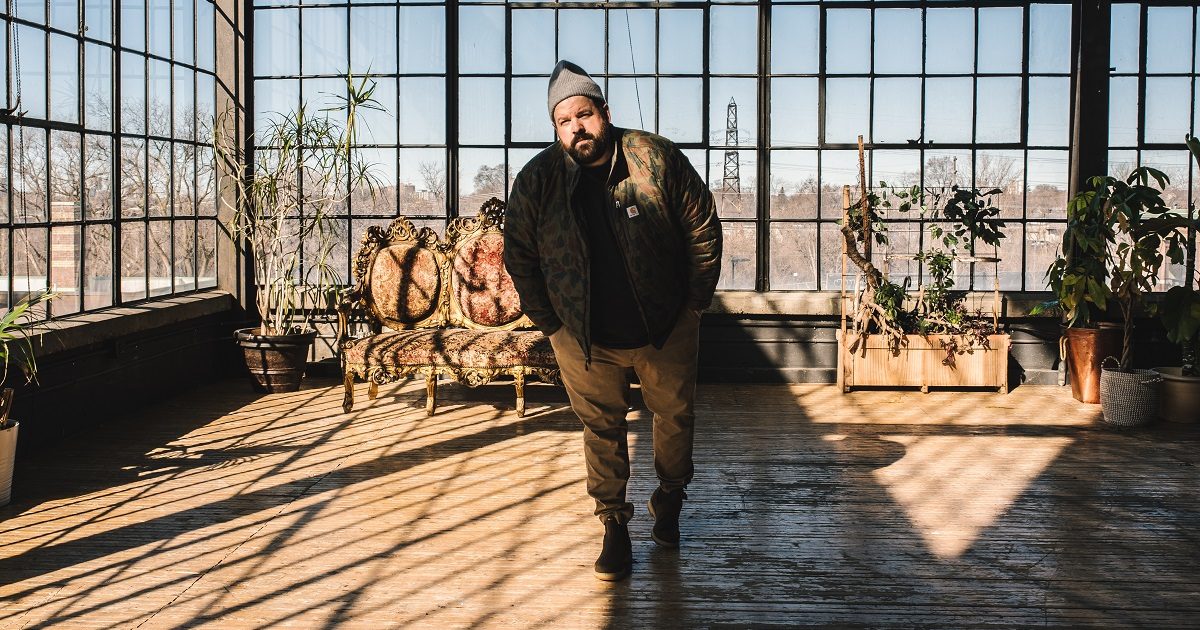
BGS 5+5: Donovan Woods

Artist: Donovan Woods
Hometown: Sarnia, Ontario, Canada
Latest Album: Without People (Deluxe)

What other art forms — literature, film, dance, painting, etc. — inform your music?

I read a lot of fiction and journalism and I’m always writing down little passages in hopes of merging their feeling into lyrics in some way. I’d like to think that painting informs me, because I love it so much. I’m entranced by it, but I can’t think of any songs of mine which are directly influenced by paintings. Maybe I’ll try. I’ll try!

What’s your favorite memory from being on stage?

We played in London, UK a few years ago, we’d never had a real ticketed show there and we surprisingly sold it out. Brits are just better at being in crowds. Everyone sang, yelled and made us feel really great. So lovely to have that many people really present and enjoying the songs that far from home.

What was the first moment that you knew you wanted to be a musician?

I think when I started to write songs that people liked. I would send them to friends and they would say, “I would actually listen to this!” and I was very encouraged. I was already in my 20s. It took me a long time to figure it out. It’s never particularly easy to me. I think this notion of “god being in the room” or whatever is really compelling but he doesn’t seem to come into the room for me. It’s just me and my brain trying to figure it out. The closest I come to “god in the room” is I get to write with Lori McKenna sometimes.

Which elements of nature do you spend the most time with and how do those impact your work?

Swimming. I think swimming in bodies of water is the actual meaning of life. I walk a lot while listening to mixes. I feel like that’s the only way I can tell if it’s actually good. My wife likes to go camping. I don’t much like it.

If you had to write a mission statement for your career, what would it be?

I do what I want. It’s bratty, but that’s really it.


Photo credit: Briony Douglas

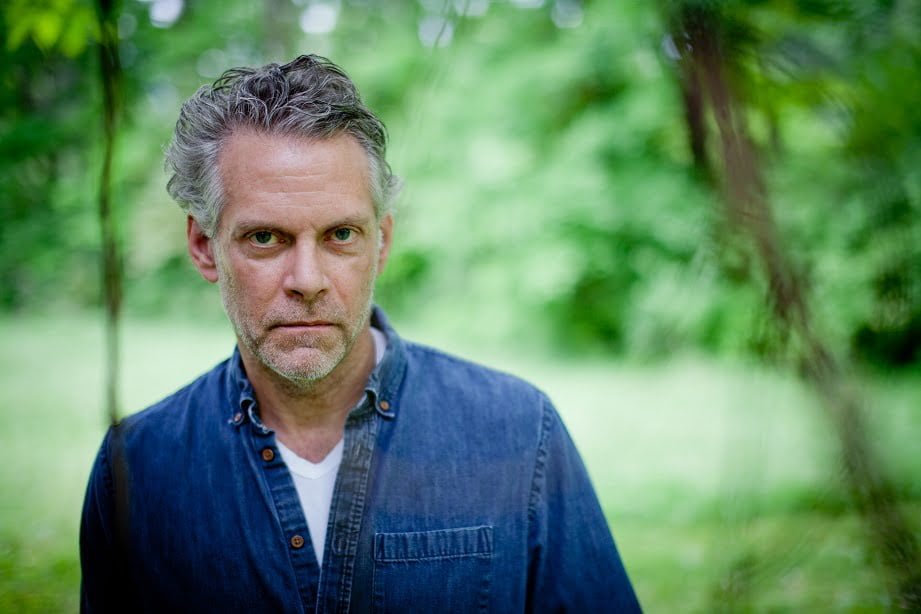
Rod Picott Feared This Might Be His Final Album

Rod Picott writes from the heart, and that’s particularly true on his new album, Tell the Truth & Shame the Devil. A frightening heart condition – mercifully caught just in time – shifted his songwriting perspective inward, resulting in 12 news songs recorded with merely an acoustic guitar, a harmonica, and a storyteller’s voice.

That’s a familiar set-up to anyone who’s seen Picott perform over the last 20 years. The Nashville-based songwriter released his first album, Tiger Tom Dixon’s Blues, in 2001, and he’s toured almost constantly since then. While most of his albums are fully produced, Tell the Truth & Shame the Devil is almost whispered in places, inviting listeners to lean in.

Lately, Picott has turned his attention to writing fiction, poetry, and a screenplay, but music remains a central theme of his life and career, clearly evidenced by a conversation in a Nashville coffee shop.

BGS: I’m curious about the song “Ghost,” because it describes somebody who seems to be at the end of his rope. What was on your mind when you were writing that song?

RP: I was in the middle of [the health scare] when I wrote that one. I did feel there was a time during the making of this record where I thought it’s possible that this will be the last record that I get to make. And if that’s the case, what do I want to say? How do I want it to be? I realize that sounds dramatic, maybe overdramatic, but when you’re in the middle of it, it sure doesn’t feel like that.

Because you thought you weren’t going to live? Or you weren’t going to be able to sing?

Didn’t know. I mean, I knew something was wrong and I knew it had something to do with my heart. My blood work came in. The doctor called me at night. Of course they don’t do that. He’s the on-call guy and he basically said, “You need to stop whatever you’re doing right now. You need to drive to the pharmacy and pick up this prescription. I’ve already called it in. They’re waiting for you.” He said, “You need to do it right now or you might not make it through the night, because your potassium level is so high, it’s messing with the electrical signals to your heart.” A simple thing like that — potassium levels. Who would know? They eventually got it figured out.

Did it affect the way you sing, or your singing voice in general?

I was weaker when I was recording, to be honest with you, which might have played a role in how intimate the recording sounds. I’m singing pretty quietly on most of the songs. Not all of them, which is counterintuitive because the quieter I sang, the bigger it sounded, which is very strange. It’s like cinéma-vérité, like I’m actually living the thing that I’m singing about, and it’s playing a role in how I’m singing.

I can hear some of that, but it’s not like this album has 12 songs from the brink of doom.

No, no, there’s a range. And there’s one song from 20 years ago, “Spartan Hotel,” which never fit in any of the other records, but it felt right for this record. There’s a handful of songs I still like from back then, but they just haven’t fit on a project.

On “Mama’s Boy,” you’re singing about boxing and it reminded me of “Tiger Tom Dixon’s Blues,” from your debut album. What’s your relationship with those older songs now? Do you still like to play those songs from the early records?

I’m still proud of them, yeah. I still play those songs from that first record. I wish I could redo the performances now, because I think I’m a better, more honest singer than I was then. But when I moved to Nashville, or even before I moved, I promised myself I wasn’t going to make a record until I had 10 songs I thought were worth people hearing. So that served me well, even though it took me a long time to get there. That first record, the songs themselves still hold up. I still play them all the time.

What was it like for you to move to Nashville in that era? What was your impression of it here?

I was married at the time and obviously my wife came with me. I’d never been to Nashville. I didn’t know anybody that lived in Nashville. I didn’t even know anybody who knew anybody who lived in Nashville. So it was completely blind. We got a hotel downtown and went for a walk. And of course, in 1994, half of downtown was boarded up, old porno shops and stuff.

At one point on the walk, we were looking for a restaurant. You couldn’t even find a single restaurant. We couldn’t find any place to eat. She just stopped and started sobbing: “Why did you bring me here?” [Laughs] But over the next six months or a year, I figured out the lay of the land. Playing a lot of open mics, and meeting other writers and really working hard at trying to decode how the town worked.

How did you found your tribe? Just going out to open mics?

Yeah, for sure. That was a big part of it. And writers nights where they would have a little 20-minute spot, as opposed to just getting on the list. Those were better, kind of playing a mini set. It was a huge learning curve. I loved to go into the Bluebird Café. I used to go to the early shows at the Bluebird right after work and sit at the end of the bar. I was one of those classic guys with a notepad, which is really annoying to other songwriters, because they feel like you’re stealing the song. Which I wasn’t, I was just making notes about what worked and what didn’t. It was wonderful. Soon after that, I realized Nashville had John Prine, Lucinda Williams, Gillian Welch, and Guy Clark, and I thought, OK, this gives me a marker to shoot for.

In your work, there’s often a theme of your family and a theme of a work ethic — and a lot of times they’re in the same song. Is that something that was instilled in you?

I think it’s just you write what you know. That really defined my childhood. My father was a solid, blue collar union guy, in the pipefitters union. He was a welder and surrounded by other really hardworking men. So I’ve always been really interested in that, because I was a slightly unusual kid. I was very sensitive, which didn’t work with my father’s personality. I don’t think he really knew what to do with me. Now I can look back and see the kid that’s me, and I can think, “Well, now I understand it. I was an artist.” But I was just a kid. I wasn’t there yet, so it was a very uncomfortable relationship for a long, long time with my father.

I’ve always been interested in those themes. Also I was in the construction world for a long, long time, for almost 20 years. I was a sheetrock hanger and finisher. Having an artistic nature and working in the construction world is a very, very tricky balancing act. I had to learn how to be tougher, which wasn’t my nature, really. I learned when you had to stand up for yourself and not get run over, but it was uncomfortable. I always felt like I had one foot in the arts and one foot in this working world. I took it seriously and I was really good at it. I loved walking out of a job and seeing those clean lines and knowing I did the best I could, and that the painter was going to have a really easy time with the job.

That’s pride in your work.

Yes. And that’s part of your inner makeup. That’s either there or not. It’s not something you can fake or create.

You’ve been doing making music as you’re living for a while now. What’s your secret?

You almost have to be in a state where you can’t not do it. I do remember having a really specific moment before I put the first record out. I was 35 years old and I had been in Nashville for six years then, I guess. I did have an afternoon where I had this sort of “come to Jesus” moment where I thought, “Man, if you’re not going to do it now, you’re not going to do it. Like, today. You start today.” I remember the feeling coming over me, and it was almost like panic, realizing that I hadn’t started yet, not really. I was learning and I was working hard at it, but I wasn’t really committed to it. I was sort of testing it to see if I could do it. That afternoon, I committed to it and I never looked back.


Photo credit: Stacie Huckeba

Bad Listener: Episode Nine

After firing shots at the moon, I understood that this story was at an end.

The police in this part of Missouri were waiting on me, surrounding the hill’s slope where there had been girls once, many fireflies long ago (the only miracle I’ve known), the water tower nearly touching the moon, so near the house of Martha and her mother. What ate me up was not so much that Sheriff O’Connor and his gang caught me, but that I would be sent away childless, without progeny, single, imageless. Brindle sat in the jalopy and put his paws against the glass and barked as I was cuffed and questioned.

The moon was the plate into which I once stared and saw the face of what might have been. Sound of water. Coulter’s Creek, just down the way, softly grumbled and received its life from other sources of its blood-water. Regret surged in my chest like a nest of poisonous snakes.

The sheriff asked what I was doing near Martha’s mother’s house. He had a leathery, taut face, sad eyes that regretted that he would have to take me into the squad car and to the jail; eventually, he would drive me to Joliet, Illinois. The charges against me, though you aren’t allowed to know most of them, added up to a good deal. Tax evasion, breaking a restraining order, unlicensed weapon, et cetera, et cetera. If only O’Connor knew. There was much, much more.

But it wasn’t the list of criminal accomplishments that burned. I had wasted my life. Have you ever actually admitted that? That’s what really killed me under the pre-dawn sky that burned all around with sirens and cars, lights like signal fires surrounding the hill and fields near Prospect Heights. There were no prospects and few heights, as most subdivisions are inadvertently contradictory. You know what I am trying to say.

The sheriff’s voice sounded insect-like, due to decades of heavy smoking and, in the end, he filled the rest of his forlorn days with regret that it had been him who’d caught up with me. He had pulled me over in my younger days and poured my beer out on the roads. We had been friendly and he had even seen me play baseball so long ago with the other kids who yelled and hollered in the green, green fields of Summer. Snow started to come down and it was almost as if O’Connor was disappointed in me, himself, life.

“I’m sorry, Sheriff.”

“I am too, Harry. Damned sorry about all of this,” his voice creaked. “You should’ve laid low and kept working and not come here to all of this.”

“I wanted to see Martha.”

“Why in the hell …?”

“… I guess I missed her. I know I did, in fact. But things are over before they end.”

“What do you mean?” he croaked nervously.

“A lot of the stars you see are dead, even though you don’t know it.”

“So what?”

“We’re made of that stuff. Stardust. They died so we could live.”

“Do you believe in God, then?”

“I suppose I do. I just dislike Him.”

“Chrissakes, Harry. He goes and kills the stars so we can live, and you dislike Him?”

“I don’t know. I suppose I don’t know how that all works.”

“You should know about this shit, Harry.”

“So he made the stars? The ones I fired at?”

“Yes.”

“Well, then the both of us are wasteful destroyers. Can you see me back here?”

“Yes.”

“There’s the difference, Sheriff.”

We drove on past the suburb, the fields and, as I glanced back, shackled in the car, I swore I saw a figure in the window of that house I was attempting to get to. I heard a cry that swallowed the universe. I was busted. In the cell that night, I cried out to what I disliked or hated, even, and nothing stirred and the world went spinning on its axis and it was cold inside and out. I was as wasteful as God, and we both knew it.

I won’t tell you about Joliet. It makes me sick. This place is the opposite of making sentences. What I mean is that I felt good this past year making sentences, writing, and I felt they — the sentences — made me a better person. Or at least writing made me able to keep going. Now it’s the sound of a different type of machine for washing dishes, and the faces here scowl and the voices howl out and the hatred is palpable. I walk the yard and wait. Faces in the turrets and towers. Wire. Razor wire and barbed wire and no mail and it’s so goddamned cold, and still I wonder what happened to Brindle and the rest of my life. Woof.

Catch up on the whole first season of Bad Listener by reading from Episode One.


Photo courtesy of Sundve via Foter.com / CC BY-SA

Bad Listener: Episode Eight

Once, I lectured to my students about the histories of certain families or the history of the family within Shakespeare’s Hamlet. I was entirely unqualified to do this, but there was one persistent theory that drove my speech — and that was the utter collapse of the stable home life, the disintegration of mothers and fathers, the selfishness that can be inherent and persistent in our hearts, that chokes the heart like a great knot of weeds and ends up ruining us. I couldn’t help it. I kept talking in order to kill the entire period. Sally, one of those better students — curious, disinterested in grades and points — asked about my parents toward the end of our class. I told her to re-read Hamlet. Sally, eager to please her teachers, laughed in a nervous way. Our time was up. The students filed out like ducks or stooped, arthritic figures. Generally, the boys wore capacious jeans and logo-tees; some of the girls dressed to impress or interest the boys who, in general, noticed nothing. I stared out of the windows and saw a kite trapped in the crotch of a tree. This meant nothing.

I would have told Sally this, though: that this is my mother in this particular photograph, holding me in the sun. This is my mother, who looks like Joan Baez and the Virgin, who laughs in the soft light of the Polaroid, and I am laughing with her. Or rather, I laugh with them … a feminine-trinity of the folk singer, the mother of our Lord, and I laugh with my mother who is present in the photograph. I am still laughing, to think I once had the gall to talk Shakespeare and other fine things to the students at the community college. I was born laughing, scoffing even. I have read of a debate that took place between two scholars, two adversaries who farted their opening remarks and cross-examinations. This seems right to me: Watch the news, listen, be alert. The stench of the world lies in the mouths of most pundits. I can only laugh today.

Once, a teacher in high school told me that laughing would not get me through my days. He’s six feet under now, after living out his time with a verbally abusive, domineering wife, and I am quite alive and going to see Birdcloud — a band with which I’m totally unfamiliar — with my nephew this evening. He insists I’ll love them. I have the day off from Eddie’s and am getting ready to clean the apartment that has become such a mess over the last few months. This is the gun my father bequeathed to me, a Smith & Wesson 9mm. I loved my dad, the way he used to refer to Brindle as “Mr. Brindle” in an ironic voice as the pup would wag its bit of tail, the way he took care of me when I once was ill for months — the photograph of my mother was taken by him. I truly miss him now. We hoisted his coffin and it was heavy the way memories are heavy, not only the body but time, time, time rioting within the wooden casket. That’s why I haven’t been cleaning lately. There are too many reminders of my losses around here. But today, I feel, is different. It is a day to make amends, to hustle around, to clean and think about what must be done. "What must be done must be done," I say to Brindle. He agrees and then sleeps into the afternoon on the dusty leather couch.

At 7 pm, my nephew picks me up in his “Creed Truck.” This machine — an old Chevy with rust and dents — has become infamous for somehow channeling the music of Creed whenever I enter the cab. After a minute or so of “With Arms Wide Open,” after being able to hear the under-bite of Scott Stapp coming through the speakers, we begin to laugh. This stuff — this music — has always been ridiculous. But Scott and I are not so far apart. At the end of the day, we’re both crazy. Snow falls, dimming the streets. I am wearing a gray blazer, jeans, cowboy boots. Tony Lamas, ma'am. So is my nephew, for that matter. We are a duo of scoffing, howling maniacs. And I can’t say we’re not ensemble quite dapper dudes.

We enter the club where numerous bodies brush against other bodies.

“That’s them,” my nephew says, gesturing to the two girls at the bar, beautiful girls.

“Who?”

“That’s Birdcloud.”

“And …?”

After several drinks, he and I lean against a wall waiting for the duo to start. They sing gorgeously — one plays mandolin, the other guitar — and they face each other while they play, as if they were lovers, best friends, something like that. A song begins about being pulled over by the police: The refrain is something like, fuck you cop, what you gonna do? What must be done must be done. The crowd howls and laughs with each satirical song, and I begin to wonder about how Birdcloud must feel about this particular audience. They — the audience — are collectively smashed and have bovine, dumb faces weighed down and bloated with stupidity and drugs and alcohol. I find Birdcloud’s music good enough to be played in a symphony hall, not a hole-in-the-wall dump like this. We should all be laughing in a great space, like the space in which I saw Rachmaninoff for the first time. Who set up all these peculiar rules?

I am as sharp as a cracked white plate tonight — my nerves are even and I will do what needs to be done. I feel the country calling me out to its vast, cold spaces even as Birdcloud sings another song … something about Jack White retweeting their tweets. I know this sounds impossible, but after the show, after filing out of the club into the night, we get in my nephew’s ride, and immediately Creed plays some terrible song about jumping from an edge. If only they had.

The faces of the women in Birdcloud are etched into my mind’s eye. Kind faces, too good for the environment they got stuck in tonight. Some fights broke out. I shoved a man to the ground and told him I would end him, if he bumped into me again. He scurried into the bathroom, and his ridiculous mustache had cocaine on it. What a cheap type. I was once his double.

Alone in the apartment, the freshly clean apartment, I play "Damn Dumb" off the EP my nephew has leant to me. Brindle cowers in the corner or is fearful of something. I pick up the phone and call Martha. What must be done must be done. You’re damn dumb, so goddamn fucking dumb. No answer. Dial again. No answer. I leash Brindle and then put the holster back on. I get in my own jalopy and head toward the country. The wheat fields glisten with ice on the edges of the stalks. I know it must be warm where Martha is, at her mama’s. A lone hawk soars across the stars and I am smoking like a demon. I turn onto a gravel road, far from the city, kill the engine, and begin to think about these places. I must right what has been so wrong. I must do what needs to be done. I pull my father’s 9 from its holster, point at the great moon that hovers over the detritus of a cornfield, and fire. Little did I know that moon and sun and stars — my bit of the universe — would come crashing down as I would fire up the jalopy with the pup at my side, waiting on an answer, a reckoning that was long overdue. I am so dumb, so goddamn fucking dumb.


Click here to read Episode One. Photo courtesy of UnknownNet Photography / Foter.com / CC BY-SA

Between the Lines: ‘Cocaine Blues’

It was Christmas Eve. A silent snow blanketed the yards in South St. Louis while occasionally one could hear boots crunching along the sidewalks in the darkness. Henry and Larissa sat together around the coffee table, looking down at the bag of cocaine and the money — single dollars — ready to be rolled into tubes. This is how far they had strayed, like terrible horses, on the night of the birth of Christ, some calling him Lord, worshipping Him at midnight mass. A terrible feeling of hunger, worry, and rebellion hung around the air in the apartment. Snow began to fall, white and soft, and it did not stop until morning. Henry began to wonder if this would kill him. His heart raced, his brain felt ill. Larissa — no novice to the drug but certainly no aficionado — watched the snow outside through the windows, and occasionally shed a tear, missing desperately her mama. A lone SUV sailed down the icy street like a great, pale hull sliding along the moat where a fire hydrant had burst and stopped and frozen. The vehicle went running on and disappeared.

Earlier that evening, Larissa met her connection at a bar downtown. A few skeletal men sat coughing and drinking at the counter. She undid her scarf as she entered and shook out the snow from her blonde hair. The dealer was a dirty, bearded man who sat in a back booth and signaled to her without seeming to look up from his paper. Something about Tangiers. Something about the history of the Straits of Gibraltar. Some picture of a great, colorful boat on the cover that didn’t seem to fit the coldness of this heavy season.

“Well, as I live and breathe. It’s my love, my heart, Miss Larissa,” Randolph muttered, still staring at the paper with its boat. “You get around, don’t you? Something on the brain?”

“I feel sick even doing this,” she said. “Here.” Larissa put down a hundred dollar bill and waited on a gram. He pulled it from his great coat and laid it on the table.

“You know,” said Randolph, “they say this kills you but not when.” He laughed and pushed the bag of white toward her.

“At least you’re quick,” Larissa muttered. “I might even say efficient.

“How was your morning?”

“What do you mean?”

“I mean how was it? What did you do?”

“I woke up. I woke up and jumped out of bed and felt pain in my legs due to all this damn cold around us.”

“Well, this should help with all of that.”

“No. None of this is any damn good. What a Christmas.”

“It ain’t for men.”

“What does that mean?’

“None of this — the cold, the season, that — none of it’s any good. But you be careful. Bye now.”

He looked back into the paper and rolled the hundred in his fingers, absent-mindedly. As Larissa opened the door to the bar, the cold roared in and the skeletal men looked up abruptly from their beers. They coughed and looked back down. Her breath hung in the air like smoke. The car seats were as cold as the man who’d sold her the cocaine.

She went into the apartment and could spy Henry then, sitting nervously around the glass table. He was reading the Bible, some verse about the day being sufficient to the evil thereof.

“Do you want to start?” she asked Henry.

“Not really. Not tonight. I’m frightened for some reason.”

“I paid rent today.”

“It’s not the money,” said Henry. “It’s the feeling I have that this is not the right night for it.”

“When would be a right night?”

“I don’t know. Not now, though.”

That evening their Christmas tree flickered with lights as Henry and Larissa held onto each other in their cold bed. They made love and then got up to eat a late breakfast at one in the morning. They went back to bed. Larissa prayed while Henry slept, muttering something about disappearing and life out West and a better time of things. They didn’t open anything, any of the gifts that sat silently beneath the boughs of the pine. It was over.

Story based on "Cocaine Blues" which was written by T.J. Arnall and recorded by Johnny Cash, Townes Van Zandt, Woody Guthrie, and others. Photo credit: amseaman / Foter / CC BY-ND.