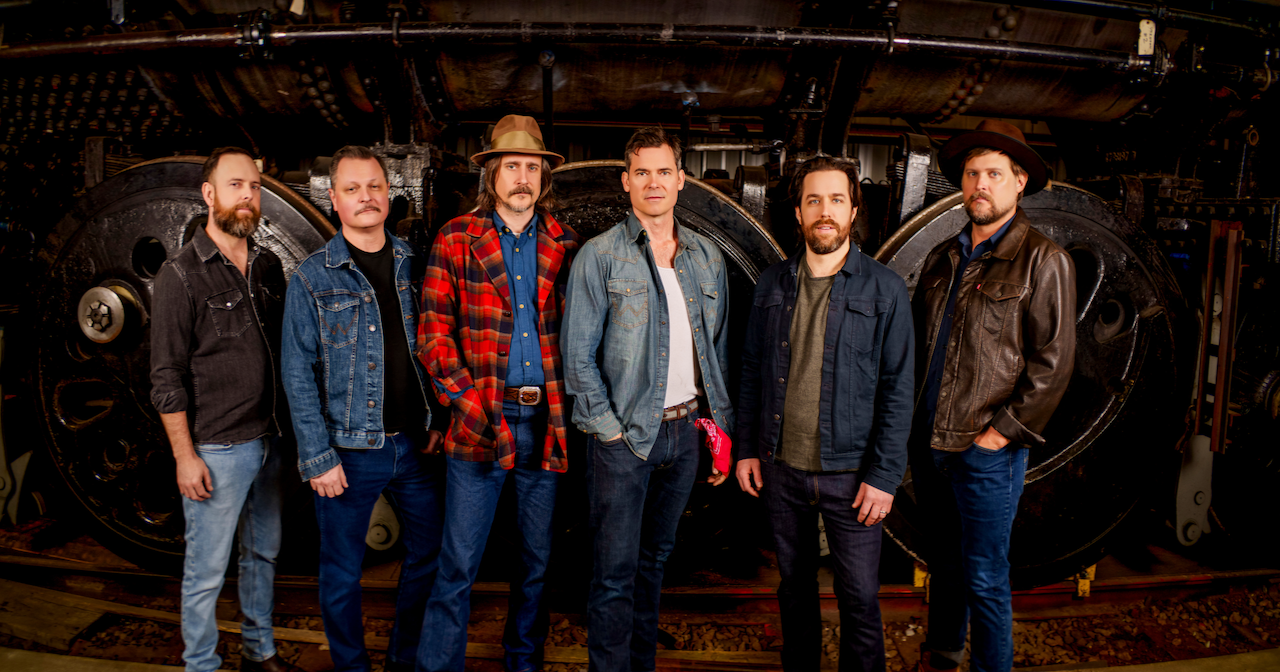
Old Crow Medicine Show’s Americana Commonwealth Canon

More than any of the world’s music, the songs of America are a reflection of a national identity and character. We are our songs.

Distilled into a few memorable minutes go the nation’s hopes and aspirations, the glories and tragedies of her past, and the promises of her future. This American canon is as diverse and vast as the country itself – our blues, breakdowns, or corridos are as different as prairies are from coastlines, as the Appalachians are from the Rockies. And yet, somehow, still our sound is a commonwealth, a singular voice rising from the chorus of many just like our national motto purports: “E Pluribus Unum.”

250 years is not a long time in the global scheme, and neither is 28 years of Old Crow Medicine Show‘s reign as an Americana string band. But somehow it is the vigorous and youthful American voice/song/songwriter/band (and not our transoceanic elders) that can best capture the world’s heart and soul in just a few minutes.

In this Mixtape, I’m proud to share some examples of this powerful artistry. You might already know every word to some of these songs while others you may have never heard, yet each is stitched together with a cloth of commonwealth that can only be found of uncommon ancestry. Though the singers may be perfect strangers, the songs that bubble up from our national cauldron are enough to nourish each and all. – Ketch SecorOld Crow Medicine Show

“Howdy Do America” – Old Crow Medicine Show, Jesse Welles

Jesse Welles came whirling into the studio the other day and helped put a spit shine on this love song about the 50 states. I wondered if he was gonna get excited when he sang “Arkansas” and brother, he did not disappoint. Love this cat. He’s a brother, and I expect we’ll all be singing his tunes for years to come.

“Golden Rocket” – Jim & Jesse

I had the privilege of knowing Jesse McReynolds, even traveling and performing with him, and buddy there’s no wonder why Jerry Garcia thought he was the best of the bluegrassers.

“Field of Opportunity” – Neil Young

I was raised on Neil Young’s unique brand of tall prairie country rock. This track features the great Cajun fiddler Rufus Thibodeaux.

“Heaven Help Us All” – Joan Baez

Joan’s a real hero of mine. She’s like that tree planted by the water we all sing about, unmovable. Of all the singers on this playlist, I can say without a doubt if more people could be like Joan Baez, then this world would be a better place.

“I Wanna Go Country” – Otis Williams & the Midnight Cowboys

I love this Motown singer turned country crooner, and the world would have too, if Nashville hadn’t been so narrow-minded.

“Beautiful Land” – Old Crow Medicine Show, Maggie Rose, Lee Oskar

I wrote this one with a Baháʼí faith elder named Eric Dozier just down the street from the Tennessee State Capitol building. Sometimes politics feel like a fortress. But music has a way of wandering through the keyhole of even the most impenetrable door.

“There’s a Star Spangled Banner Waving Somewhere” – Elton Britt

I played this one for my kids on Memorial Day. They sat through it start to finish, and you should, too. It’s easy to get complacent about the sacrifice our grandparents and great-grandparents made in the 1940’s for each of us. Don’t do it.

“Oasis” – Molly Tuttle

Molly’s my favorite American singer. Here’s one of our travelogue-style songs. I had it stuck in my head all last week at the Tico Time Bluegrass Festival in Aztec, New Mexico.

“The Green Rolling Hills of West Virginia” – Hazel Dickens & Alice Gerrard

These girls rip. Back at MerleFest in the year 2000, I filled out Old Crow’s first ever W-2 form and gave it, with a shaky hand, to the great Alice Gerrard.

“How’s About You” – Dave Rawlings Machine

The Great Depression gave the world some of its most powerful songs. And even generations later, the events of the 1930s remained powerful enough to inspire music like this.

“Rock of Chickamauga” – Jimmie Driftwood

Songs about the Civil War are some of my favorites in the national cannon. Jimmie Driftwood is one of my favorite songsmiths. He’s an absolute master of the historical ballad.

“Across The Great Divide” – Kate Wolf

I am awestruck by the landscape of the West, and few songwriters can take you there better than the amazing Kate Wolf.

“What Did You Learn in School Today?” – Tom Paxton

I’ve been singing this one since I was a youngin. When I was 12, I discovered my uncle’s weathered copy of Vanguard’s album Newport Broadside: Topical Songs at the Newport Folk Festival 1963, and that was my introduction to Tom.

“The Tramp on the Street” – Molly O’Day

Born in Pike County, Kentucky, she’s one of my favorite bluegrass singers. She first heard this song from Hank Williams on a Birmingham radio station, and it became her signature song. American music has a way of championing the underdog better than most.

“Shenandoah” – Bob Dylan

I think I was 15 when I first heard Bob singing this gem, hidden in the ruffles of one of his more questionable ’80s albums. I thought, “Damn, Bob knows where I’m from.”

“Corrido de John F. Kennedy” – Los Reyes del Corrido

My band has been dabbling in conjunto for two decades now. We got to learn this one for next time we play the big D (Dallas).

“Which Side Are You On” – The Weavers

No collection of American songs is complete without a protest piece from the labor movement, the first dark corner where the full power of American music was unleashed.

“The City of New Orleans” – Arlo Guthrie

When we play Chicago, I always talk about Steve Goodman, who wrote this song. I sure would have liked to have known the guy. Thankfully his music will last forever.

“Cowboy National Anthem” – O.B. McClinton

O.B. left this world before he was fully known by the country music fanbase that would soon send black country singers consistently to the top of the charts. He was a man before his time, but the music he made reminds us that, just like Ray Charles said, “Country music is black music.”

“Deportee (Plane Wreck at Los Gatos)” – Old Crow Medicine Show

We love Woody Guthrie, and this is one of the numerous songs of his we’ve recorded through the years. In a nation of immigrants (I’m a French Huguenot), it’s hard to imagine how we could exist without a steady flow of new members to our American family.

“Big Backyard” – Molly Tuttle

When Molly and I wrote this, it was on account of having a massive vacant lot behind the house we were composing in. Now that same lot is full of little yellow flags and “coming soon” signs. Yet still we sing, louder this time.

“For What It’s Worth” – Buffalo Springfield

A few years back, I had the distinct pleasure of sharing an elevator with Stephen Stills, author of this earthquaking song which Buffalo Springfield recorded in 1966 – and we covered this year on our new album, Union Made. I wanted to tell him thanks, gush, and get my picture made. Instead, I stood quietly until he rasped, “I heard your soundcheck. Great band you got there. Keep ‘em together if ya can.” Thanks, I will Stephen.

“Louder Than Guns” – Old Crow Medicine Show

This summer, PBS stations across the country are broadcasting the film we spent three years making in a half-dozen tour stops along our travels. It’s a movie about bringing together the disparate ends of the 2nd Amendment debate during an era in which guns kill innocent Americans at shocking rates. It’s a tall order, coming together to flatten the curve, seeing past our silos and personal politics, but in town after town I watched people listening across the divide. As easy as it is to be hopeless, the film has made me hopeful we’ll get beyond this impasse and prioritize the safety of our communities. This song is the theme of this film.

“American Tune” – Allen Toussaint

I’m glad you made it through to the end. Old Crow opened up for the great Allen Toussaint in the Berkshires back around 2011. The record featuring this song had just come out and when he launched into it, I was nearly knocked off my feet. So powerful. So simple. Says it all.


Photo Credit: Ed Rode
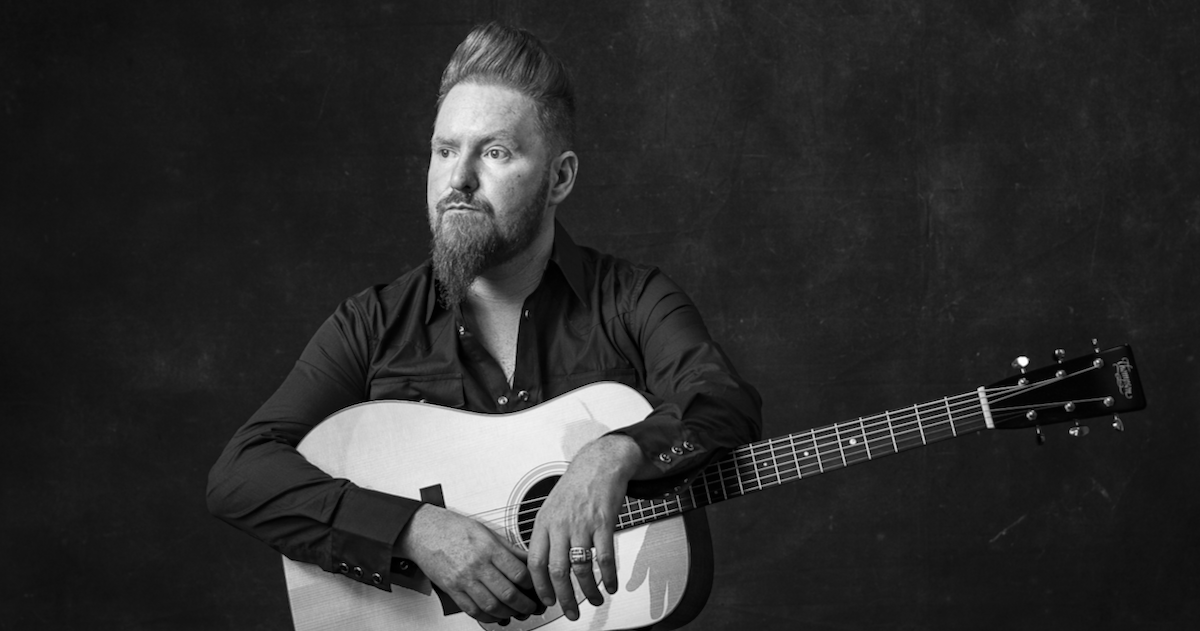
Danny Burns’ Roots Music Journey Through the South

My new album’s theme, along with the theme of this Mixtape, is a roots-inspired journey through the South, with songs that evoke the feeling of traveling across its landscapes and into the heart of the Deep South. I hope the fans enjoy the journey of these songs and all the sounds and people it takes to make them come to life on Southern Sky – it takes a village.

That village comes to life across the nine-track journey of Southern Sky, where Irish roots fuse with Southern soul driven by Dobros, fiddles, and rich storytelling that soar with Appalachian tradition and Southern warmth. Inspired by the textures of the South, the spirit of the album is like Allen Toussaint’s Southern Nights, where Appalachian tales intertwine with the deep twang of the South.

Southern Sky features a multitude of musical titans – Vince Gill, Tim O’Brien, Ricky Skaggs, and Sam Bush to name a few – all contributing to the exceptional sound that I strive for. – Danny Burns

“Summer in Siam” – The Pogues

I always loved this tune, growing up listening to the Pogues and having met Shane many moons ago.

“My Old Friend the Blues” – Steve Earle

Steve is one of my favorites. I’ve had the honor to sing with him, open shows with him, and hang on his bus. His songs are epic; this is a great example of that.

“Southern Nights” – Citizen Cope

I first met Clarence Greenwood in New Orleans when I was driving him, Neal Casal, and Jon Graboff (the Cardinals) around while they were playing Tipitina’s. I fell in love with Clarence’s songs and his performances. Another great American artist and songwriter.

“Whenever You Come Around” – Vince Gill

I’m a huge fan of Vince and this track is about as good as it gets. I’ve always admired his songs, his voice, and everything he brings to the table.

“Locals Only” – ERNEST

I first heard this song down in Mexico during the pandemic while hanging out on the beach in Puerto Morelos. It became a bit of an anthem for those days by the water.

“Waiting On You” – Cecilia Castleman

A truly killer talent. Cecilia can play, she can sing, and I’m sure her skills as an engineer and producer are just as strong. This song is fantastic.

“Angel Flying Too Close To The Ground” – Willie Nelson

This has always been one of my go-to lonesome Willie tunes.

“That’s How Every Empire Falls” – John Prine

Epic song written by RB Morris out of Knoxville. I love both versions, but it was John’s take that first introduced me to it.

“The Lucky One” – Alison Krauss & Union Station

What can I say about Alison’s voice– absolutely world-class. Pair that with a world-class band, production, and song and it’s just unbeatable.

“Years” – Sierra Ferrell 

This is pure ear candy. So intriguing and instantly captivating. It feels amazing and sounds incredible. Perfect work!

“Colony” – Damien Dempsey

A heavy hitter in the Irish scene, this track is a prime example of his finest work.

“Settle For A Slowdown” – Dierks Bentley

I really loved this album; it feels like a perfect introduction to where country meets bluegrass with a modern twist.

“Señor” – Tim O’Brien

Love Tim and his take on this epic Bob Dylan song.

“Linger” – Áine Burns

Love Áine’s take on this Cranberries hit – can’t wait to hear more from her before the year’s end.


Photo Credit: Jim Wright

BGS 5+5: Zachary Williams

Artist: Zachary Williams
Hometown: Acworth, Georgia
Latest Album: Dirty Camaro
Personal Nickname: Ray ray

What was the first moment that you knew you wanted to be a musician?

The first time I stepped onto an open mic stage and completely bombed. It was addicting.

Which elements of nature do you spend the most time with and how do those impact your work?

I like to take a nice long walk by myself without my phone or anything just to clear my head. I’m in the woods a good bit. There is something about walking through a forest knowing that every tree is connected somehow. It makes you feel very small which is a very good feeling to me.

What’s the toughest time you ever had writing a song?

“Losing You” on this album has been with me for 12 years. I’ve worked on it for that long and it has got to be the hardest one for sure.

If you had to write a mission statement for your career, what would it be?

This is lame, but before I started The Lone Bellow, I was invited to have breakfast in the Upper West Side of Manhattan with Bono. I remember I was a nervous wreck. I mean. It’s Bono. They shut down the whole place so we could sit down together over some eggs. At the end of our meal we stood up and I asked him if he had any advice for a young buck like me. He said, “Set yourself on fire every night.” I hear those words before every single show.

How often do you hide behind a character in a song or use “you” when it’s actually “me”?

Great question. For several records I never did and then a couple years ago I started flirting with the idea of trying to write someone else’s story. Trying to put myself in someone else’s shoes. On this record, it’s “Her Picture.” Everything else is me.


Photo Credit: Eric Ryan Anderson

LISTEN: Robert Plant & Alison Krauss, “High and Lonesome”

Artists: Robert Plant & Alison Krauss
Song: “High and Lonesome” (written by Robert Plant and T Bone Burnett)
Album: Raise the Roof
Release Date: November 19, 2021
Label: Rounder Records

In Their Words: “It’s such a far cry from everything I’ve done before. I love the whole kaleidoscope of music that I’ve explored, but this is a place where you can think within the song, you can decide how to bring home an emotion. It’s another blend that we’ve got, and long may we have more of them.” — Robert Plant

“One of my favorite parts of this is the songs and songwriters that I had never heard of. Working with Robert, and with T Bone, is always a great education in music history.” — Alison Krauss

Editor’s Note: Plant and Krauss’ 2007 album, Raising Sand, won six Grammy Awards. Like its predecessor, Raise the Roof was produced by T Bone Burnett, and features twelve new recordings of songs by legends and unsung heroes such as Merle Haggard, Allen Toussaint, The Everly Brothers, Anne Briggs, Geeshie Wiley, Bert Jansch, and more. The collection also includes “Can’t Let Go,” written by Randy Weeks and first recorded by Lucinda Williams.


Photo credit: David McClister

LISTEN: Robert Plant & Alison Krauss, “Can’t Let Go”

Artists: Robert Plant & Alison Krauss
Song: “Can’t Let Go”
Album: Raise the Roof
Release Date: November 19, 2021
Label: Rounder Records

In Their Words: “We wanted it to move. We brought other people in, other personalities within the band, and coming back together again in the studio brought a new intimacy to the harmonies.” — Alison Krauss

“You hear something and you go ‘Man, listen to that song, we got to sing that song!’ It’s a vacation, really — the perfect place to go that you least expected to find.” — Robert Plant

Editor’s Note: Plant and Krauss’ 2007 album, Raising Sand, won six Grammy Awards. Like its predecessor, Raise The Roof was produced by T Bone Burnett, and features twelve new recordings of songs by legends and unsung heroes including Merle Haggard, Allen Toussaint, The Everly Brothers, Anne Briggs, Geeshie Wiley, Bert Jansch and more. The collection also includes a Plant-Burnett original, “High and Lonesome,” and “Can’t Let Go,” written by Randy Weeks and first recorded by Lucinda Williams.


Photo credit: Frank Melfi

BGS 5+5: Ric Robertson

Artist: Ric Robertson
Hometown: Greensboro, North Carolina
Latest album: Carolina Child

What’s your favorite memory from being on stage?

I attended second grade at Garden Ridge Elementary in Flower Mound, Texas. The twenty or so of us in my class put on a play about popcorn, some of us dressed as corn that had been popped, others of us were merely kernels. I was a kernel. My one line happened before the big final musical number, encouraging the other kernels, “WE CAN DO IT!” Then the song…

“Weeee can do it (POP! POP!) weeee can do it (POP! POP!) weeee can do it, if we try, try, try.”

What a thrill. Still waiting to pop.

What rituals do you have, either in the studio or before a show?

Ideally I spend the four days before a show without any sleep, alternating every hour between practicing didgeridoo circular breathwork techniques in the sauna and soaking in a bathtub filled with lukewarm matzah ball soup. Then I try to always miss soundcheck and arrive at the gig exactly 13 minutes before it starts. Finally, I look for all the emergency exit doors and fire alarms in the venue, and make sure to set them all off immediately before I walk on stage to create some excitement for the audience.

What was the first moment that you knew you wanted to be a musician?

I never wanted to be a musician, I just happen to be one. It’s working out alright, though I’m not sure I’d recommend it. The list of things I want to be grows bigger everyday, the last few additions being:

· kitesurfer
· card-carrying member of the Bohemian Grove
· cat

If you had to write a mission statement for your career, what would it be?

Break even.

Since food and music go so well together, what is your dream pairing of a meal and a musician?

Seven cheesy Gordita crunches from Taco Bell while watching a Justin Bieber livestream in bed. With napkins, of course. And a bowl of Fiona Apple Jacks for dessert.


Photo credit: Gina Leslie

BGS 5+5: Oliver Wood

Artist: Oliver Wood
Hometown: Boulder, Colorado (born & raised); Nashville, Tennessee (current locale)
Latest Album: Always Smilin’
Personal nicknames: O

Which artist has influenced you the most … and how?

I’d have to say that Ray Charles has influenced me the most. And I don’t claim to sound anything like Ray, but I think most of my heroes are people who combine all types of American music and come up with their own unique recipe. Artists like Ray, The Band (especially Levon), Dr. John, Sly Stone, The Allman Brothers Band, Aretha Franklin, and Allen Toussaint. It could be a long list, but all of them are able to combine musical traditions in their own way to create a unique voice. And as much as I love traditional music, I really get excited when someone creates something unique by mixing up those traditions and adding their own personality. Ray was a master at that, and I’ve probably listened to him more than anyone.

What’s your favorite memory from being on stage?

My favorite memory of being on stage is when my brother Chris and I got to sing with Levon Helm (multiple times!). We did several shows with Levon and his band, but the most memorable were the Rambles at Levon’s barn. Being in that intimate space and standing right next to him at his drum kit and singing “The Weight,” with him smiling at us and egging us on… that was a huge highlight for me. To meet and sing with your hero is a pretty rare and special thing.

What other art forms — literature, film, dance, painting, etc. — inform your music?

Other art forms definitely inform my music, especially books and films. I love stories that have ambiguity and abstraction, like a David Lynch film or a Faulkner book. I like when you can feel something without fully understanding it. And the ambiguity allows for personal interpretation. It’s nice when something isn’t completely spelled out for you and you can draw your own conclusions. And a great thing about books is that you can put your own pictures to the images and characters described in the stories (which is why movie adaptations often disappoint). That can happen in songs too. And I like when I’m able to write a song based on my own experience and images in my head that resonates with someone else, even though they may interpret it in their own way.

What’s the toughest time you ever had writing a song?

I’d say the toughest songs to write are often the most rewarding and cathartic. When my mom was dying I found there was no way to not write about it. My brother and I were so consumed by her illness (ALS) and passing that it just became part of our work. And as painful as it was, it was also a way to process and understand the situation (and a way to immortalize our mom). Songs like “Loving Arms,” “Blue and Green,” and “Don’t Look Back” came from that time. In the years since then I have found that writing tributes to my close friends who passed away was a difficult but healthy pursuit.

If you had to write a mission statement for your career, what would it be?

Stop giving a f#%k and just do it. Don’t worry, think, hesitate or compare yourself to others. Just be completely yourself, because that’s all you have, and that’s enough… Of course I’m not there yet, but that’s what I’m going for.


Photo credit: Joshua Black Wilkins

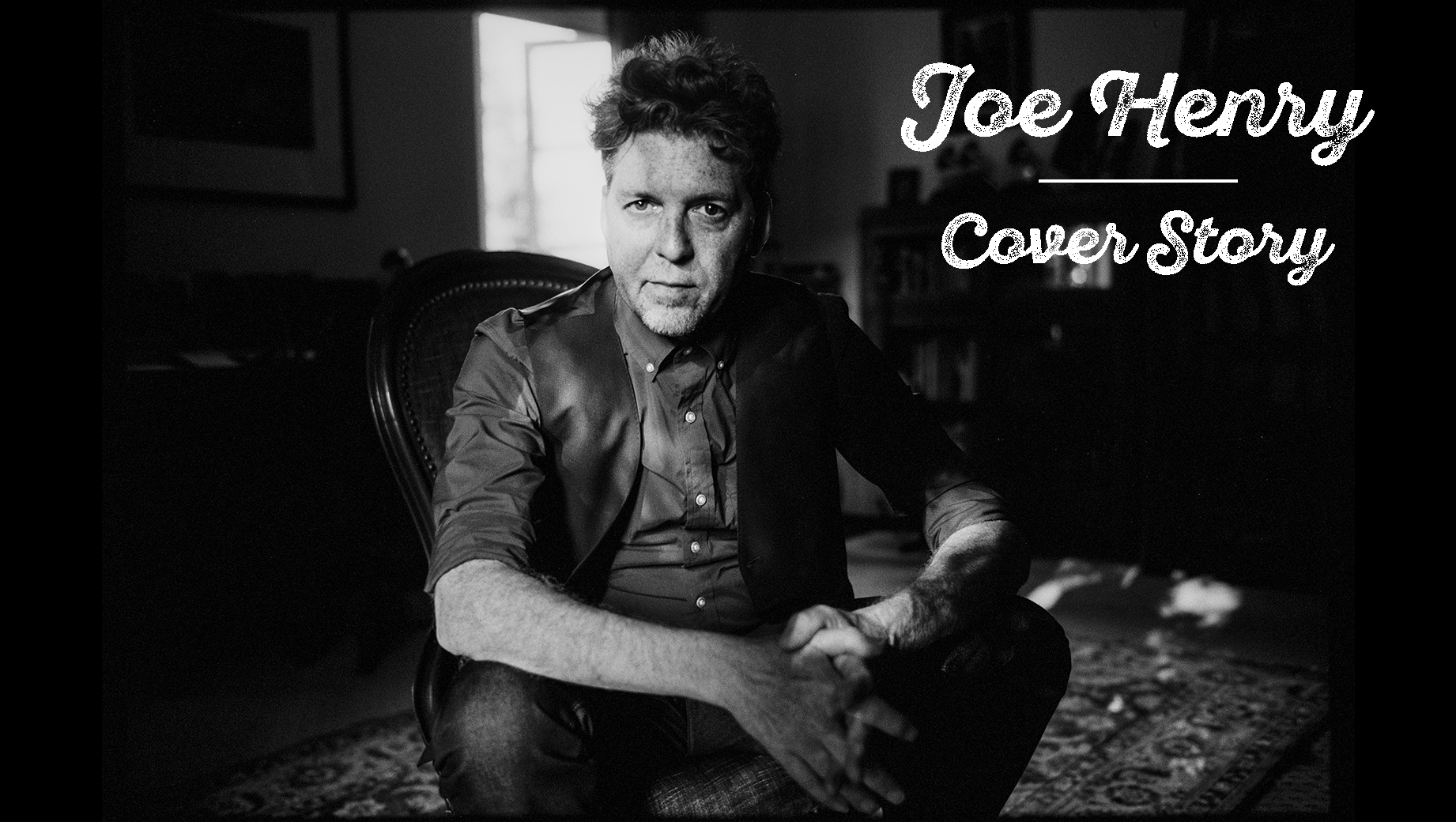
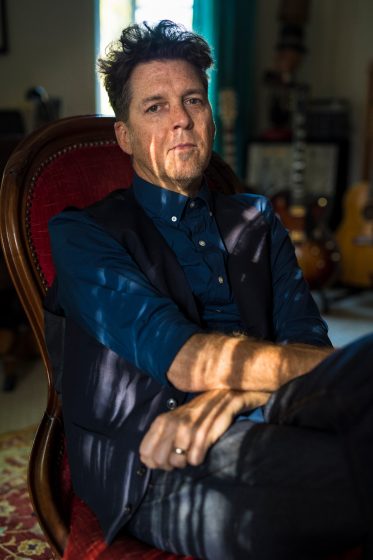
Joe Henry Surrenders to the Song

Joe Henry is sitting and chatting in the living room of his vintage, Spanish-style home in Pasadena, California. The subject of the note that starts off his new album, The Gospel According to Water, comes up. He looks over his left shoulder and points to the corner.

“It’s that guitar right there,” he says. “It’s an all-mahogany Martin from 1922. It was the first guitar they made that was created for steel strings.”

Seeing this small, plain instrument, it seems impossible that it was from this that he conjured the note in question, a sound deep yet brittle, intimately resonant. It’s at once ancient and fully present in the now. And it’s a sound that serves as something of a motif throughout the marvelously moving, affectingly poetic cycle of songs. It was a sound from a specific source that was echoing in his head when he sat in the Los Angeles studio of his longtime friend, recording engineer Husky Huskold, to set a new batch of songs on tape.

“I played him one song from Lightnin’ Hopkins,” he says. The song was “Mama and Papa Hopkins,” a 1959 recording from the point of view of young Lightnin’ getting his feuding parents to see the good they share.

“It was just vocal and acoustic guitar. And Lightnin’ is mostly singing to a single string that he’s playing. And yet the way it’s recorded, it’s so heavy. There’s such a sense of ominous space. And I said, ‘Look. I know I’m not him. I’m never going to be Lightnin’ Hopkins. But listen to what’s going on here. There’s something that’s making this so visceral in a way that I want to hear. Even if this is just demos, I want to hear a sense of drama.’”

You’d think Henry, who just turned 59 last week, would have had more than enough drama. A week before Thanksgiving 2018, he’d been diagnosed with prostate cancer, which had metastasized to his skeletal system. (He is in remission now and feeling hearty.) When he went in to record, it was a week before Father’s Day. All but two of the songs had been written in an unexpected rush of expression that started at Valentine’s Day. He specifically references those poignant holidays when giving the timeline.

As he plucked that first note for “Famine Walk” (one of two songs on the album written during a two-month writing residency at a small art college on the west coast of Ireland, before the cancer diagnosis), he had no idea it would be how he opened the album. He had no idea he was making an album.

He just wanted to get these songs down while they seemed fresh, and that’s all he thought he was doing in the course of two quick days of recording with his son, as well as reeds player Levon Henry, pianist Patrick Warren and guitarist John Smith sitting in on some of the songs, and with David Piltch playing bass on “Book of Common Prayer.” At the end of the second day, he went home to listen to the recordings, sitting in his office with his wife Melanie Ciccone, Levon, and a friend. Only then did he really hear what he had.

“We just listened to the whole thing,” he says. “And it was so obvious to me and to everybody in the room listening back that it felt fully realized. I mean, it’s raw. It’s really spare. But emotionally speaking, I heard it and thought, ‘I don’t know if I’ll get closer to the intention of these songs.”

The only thing added later was the background vocals of Allison Russell and JT Nero, AKA Birds of Chicago, on the songs “In Time for Tomorrow” and “The Fact of Love.” He would have added his longtime drummer Jay Bellerose to some of this, but when he sent the tracks to him, Bellerose responded with a simple voicemail: “Um, not on your life.” His drummer’s instincts of when not to play, though extreme here, were exactly right.

In its sense of space, The Gospel According to Water is a perfect portrayal of the experiences that brought it about, mystifying and mystical in as personal a way as can be. At times it’s as elliptical and elastic as the engagingly playful folk-jazz that’s been a signature of his last several albums. But here that portrayal is stripped down to its essence.

At the center is the natural fragility of Henry’s voice as he lingers over key words and phrases in ways that can be enchanting and startling, sometimes both at once. While it’s instantly recognizable to anyone familiar with his work, it stands apart not only from his previous 14 solo albums, but also from his many production credits: for New Orleans titan Allen Toussaint’s final works (including the 2006 The River in Reverse, a collaboration with Elvis Costello following the city’s devastating flood), Bonnie Raitt, Rosanne Cash, Bettye LaVette, the Milk Carton Kids, Joan Baez’s most recent album Whistle Down the Wind, and Rhiannon Giddens’ and Francesco Turrisi’s stunning there is no Other.

But he winces at this being considered his “cancer album.” He even considered trying to avoid the topic in interviews and promotion of the release. But ultimately he opted for openness.

“Whether it’s fair or not, it’s going to happen,” he says. “I lost a little bit of sleep over that, wondering how I can mitigate that. And then I just realized that I can’t now, more than I ever could, control how people respond to the music — if they respond at all — and rein that in… People are going to hear it like that, and there’s not much I can do about it. It’s an aspect of how this record happened and what it is.”

Indeed, as the music made its way out to the world, friends and fans alike started sending him notes, almost all mentioning his health issues. He came to accept that for the good intentions, too.

“I just believe in the songs enough,” he says. “They’re already moving out into the world without me. They’re going to have to make their own way. They’re going to have to straighten their own teeth, find their own job. I can only do so much and when I go out and perform these songs, I may or may not at times offer any framing context about how the songs occurred or when they occurred.”

He references a comment made many years ago by his mentor T Bone Burnett, who produced Henry’s 1990 album Shuffletown, when discussing his Christian faith in regards to his art. Burnett said that while some sing about the light, he sings about what he sees illuminated by the light. Henry addressed that, in his own way, when he first played a few of the songs in public, in a concert at the Los Angeles’s Largo theater.

“Part of my preamble was to say, ‘Look, I know I’m holding this shoehorn that would help you into the tight fit of a big batch of new songs. And if I have one reluctance to hand this shoehorn over it’s because I don’t want you to think, from what I’m about to say, that where a song comes from is what a song is,’” he says. “A song is not where it comes from. Just because my particular health crisis has invited me to receive these songs in a particular sort of way, that is not what the songs are.”

He thinks back to being with Toussaint, doing interviews right after New Orleans was flooded in 2005, his home among the many destroyed. In interview after interview, Henry saw Toussaint refuse to deliver the “heartbreak” stories journalists craved. Finally, when pushed by a CNN interviewer, he made his point.

“He said, ‘You have to understand something: More than a drowning, this was a baptism,’” Henry recalls. “And talk about something that silenced the room, myself included. I’ve thought about this so many times since this occurrence for me, the fact that Allen wasn’t in denial about what had just happened. He just had the ability to see, that his vision didn’t stop with this trauma. He was seeing beyond.”


Some of that is elusive on the album, found in shadows cast by the metaphorical light. The song “Orson Welles” is a good example, with its arresting chorus: “You provide the terms of my surrender, I’ll provide the war.” He’s still mystified how that one came about, the words written as he and Melanie flew from Burbank to San Francisco.

“That’s just something I found falling off my hand,” he says. “I open my notebook and I literally watched my hand write ‘Orson Welles’ at the top of the page. And I didn’t know what Orson had to do with anything. It’s just one of those moments where it felt spring-loaded. I didn’t believe I was writing about Orson, but I believe that somehow his specter was kind of directing, gesturing me on to something, somewhere I needed to go in that moment. And I just followed, because, you know, who wouldn’t?”

He found himself thinking about a part of Citizen Kane in which Welles’ title character wants his newspaper to have headlines from a conflict in South America that is petering out, so he cables his correspondent there, “You provide the prose poems, I’ll provide the war.” (In real life, William Randolph Hearst instructed his staff, “You furnish the pictures, I’ll provide the war.”)

For Henry it took a different turn, though, with the idea of surrender — certainly tied to his health situation, and the ultimate lack of power over it, but extending far beyond that.

“I feel like I’ve written about surrender a good bit,” he says. “And I don’t mean surrender in terms of resignation, I kind of mean surrender in terms of radical acceptance, which is empowering, which is motivating, as opposed to the idea of collapse.”

Two titles stand out, though, for the clear view of the basics of life, the perspective brought by such things as loss, age, kids growing up and facing mortality. “The Fact of Love” is pretty much self-explanatory, but “Salt and Sugar” really captures it. “Everything is salt and sugar now,” he sings, boiling it down to things that make life possible and meaningful — though too much of either can kill you.

He explains that he and Melanie have been doing some “decluttering” in recent years, having left the large house in which they raised their two kids, and moving twice to subsequently smaller places. But the song definitely shows what he’s seen from the light brought by his health.

“It’s paring things down to salt and sugar,” he says. “Everything. What matters? How do you make a record? How do you express what you want to say? Who do you spend your time with? What do you spend your days doing? All that.”

He recounts many of the changes in his life in recent years, the moves, the attachments and the letting go of attachments. Finally, he sums it up in a way that gets to the heart of what he has done with The Gospel According to Water, and it’s just as on-point as that note he plucked to start the album.

“I mean, just, you know, occupy life.”


Photo Credit: Jacob Blickenstaff

BGS 5+5: John Smith

Artist: John Smith
Hometown: Essex, UK
Latest Album: Hummingbird
Personal nicknames (or rejected band names): Smitty (Joe Henry and The Milk Carton Kids started calling me this around the Invisible Hour recording sessions and it stuck. I like it). Johann Schmidt (when on tour in Germany and Austria). When I first started gigging I had a little outfit of bass, cello, and violin. I called us The Wooden Ducks for about five gigs. Since then it’s been the John Smith Trio. I’ve always admired jazz musicians and to me, the words Trio and Quartet are innately very cool words to use, even for a folkie like me.

What’s the toughest time you ever had writing a song?

I remember it took almost a year to write “Great Lakes.” I had the first verse and the chorus but I spent months trying different ideas, looking for the right path and tripping over myself the whole time. That’s what got me into co-writing. I started to share ideas with others which opened up my creative thinking in a new way. Suddenly I felt more receptive even to my own ideas. I finished writing “She Is My Escape” with Joe Henry and then “Great Lakes” revealed itself to me. I’ve been into co-writing since then.

What’s your favorite memory from being on stage?

I used to play electric guitar with David Gray. There was a moment during a slide solo at Red Rocks when the band went quiet. I had a very brief moment of very loud guitar heroism with the sun going down over the mountains and I didn’t screw it up! It’s so easy to screw up a guitar solo though. I think they are often best avoided or attempted alone at home. I played a bum note in the Royal Albert Hall around that time and half the crowd laughed. I had to die a little inside before I was able to see the funny side. My classical musician friend told me, “Darling, you’re no one until you’ve whacked out a spare at the Royal Albert Hall.”

In Amsterdam a guy in the audience asked if he could play and sing a song on my guitar, and he performed a beautiful rendition of one of my own. That was a kind of magic. It’s one thing seeing it on YouTube but another entirely when it’s onstage at your own gig. That would be my current favourite memory.

What was the first moment that you knew you wanted to be a musician?

When I was 11 years old I had already passed a few grades on the piano. I thought nothing of it beyond the fact that I was simply playing piano in school. I enjoyed music of course but I don’t think I knew that I could live my life through its lens.

So my dad sat me down one day and put on the Physical Graffiti LP and I heard “Kashmir” by Led Zeppelin for the first time. It completely blew my mind, a totally definitive experience. I saw a different world on the other side of the needle. Doors opened in my mind and I felt alive in a very different way to before. It might sound a little hyperbolic but it’s true. I knew right then that I wanted to make music and I actually needed to play guitar. My dad gave me a Stratocaster and that was it for me.

What rituals do you have, either in the studio or before a show?

I learned early on from Joe that if you’re going to work you need to dress the part. Not just for yourself but for the people around you. When I’m in the studio I make sure to iron my shirt and comb my hair. I work harder and concentrate well if I’m holding myself to a reasonably high standard. The same goes for being onstage. I believe you should look good for the people who’ve paid to see you.

In the dressing room, or maybe it’s just a corridor or a bathroom, before a show, I warm up with a song or two and write a couple of notes. I don’t believe in carrying much around with me. I try to use what’s in my guitar case.

Since food and music go so well together, what is your dream pairing of a meal and a musician?

I once ate a bowl of olives at an Allen Toussaint concert and those were the best olives I ever tasted. I like to listen to Ry Cooder when I eat. I reckon Bop Til You Drop is the record I’ve listened to the most in my life. My dad used to put it on every time we had friends over for dinner, and he cooks Indian food. Therefore I like to cook curries and play Ry Cooder records for my friends. I don’t know a better way to do it. If ever I have a clear day off at home, I’ll spend it cooking and listening to Freddie King, Joni Mitchell, Keith Jarrett. Sometimes I’ll crank up Mastodon to help chop the onions.

About the Playlist: Songs and interpretations by the artists who have influenced my life as a folksinger, not only in the musical sense but in the way I think about the bigger picture; each of these records has helped to guide me to where I am now.


Photo credit: Rose Cousins

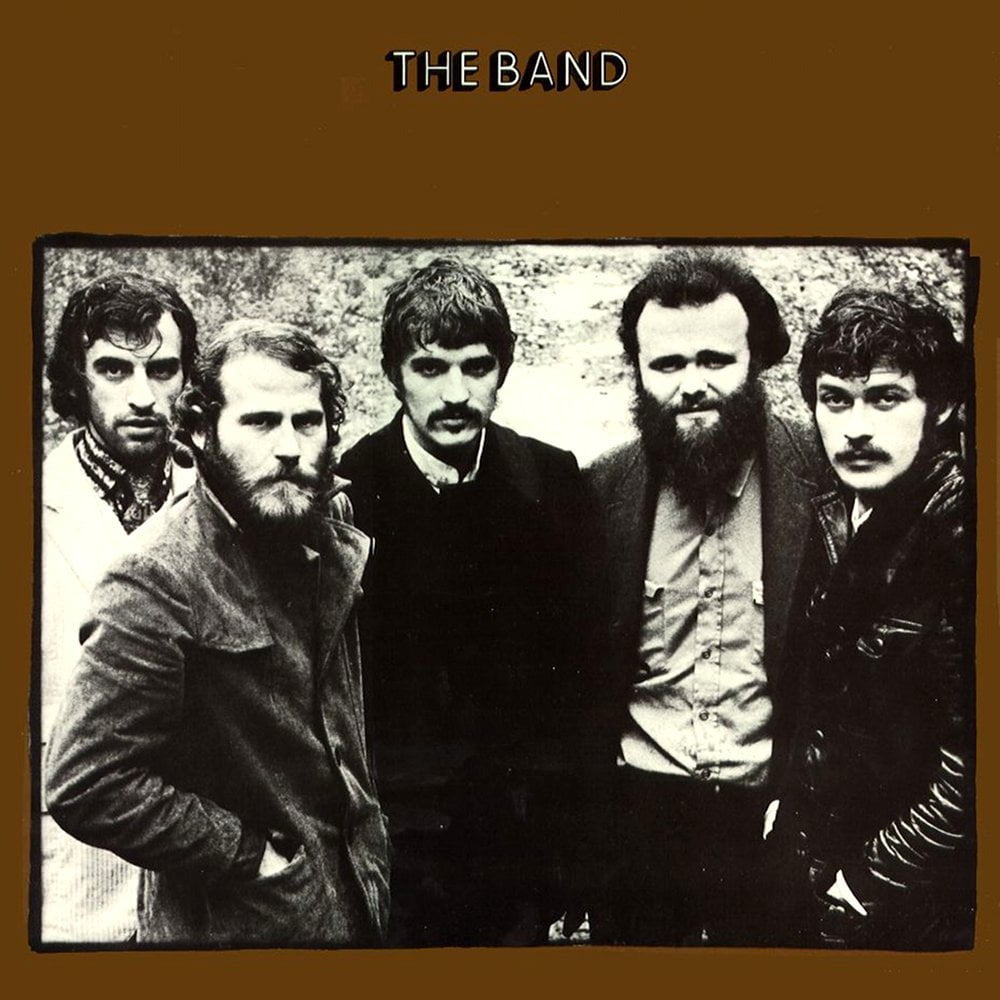
Canon Fodder: The Band, ‘The Band’

For decades, “The Night They Drove Old Dixie Down,” the third song on the Band’s second album, has been among their most popular and beloved songs. It has appeared on every official live album and greatest hits compilation they’ve released — most notably on The Last Waltz with a horn chart by Allen Toussaint. It’s been covered countless times: Johnny Cash, John Denver, the Allman Brothers Band, the Black Crowes, the Zac Brown Band, Tanya Tucker, and even Roger Waters have recorded their own versions. The original was not a hit for the Band, but Joan Baez’s cover went to number five in 1971. More recently, it scored a pivotal scene in Three Billboards Outside Ebbing, Missouri.

Robbie Robertson, a Canadian, wrote the lyrics to “The Night They Drove Old Dixie Down.” Every member of the Band contributed to the arrangement. Levon Helm, the only American in the group — and a Southerner, to boot — sang lead. Together, they all tell the story of Virgil Caine, a farmer in Virginia bearing witness to the cataclysmic end of the Civil War. Every element comments on his story: The wheeze of Garth Hudson’s organ evokes his spiritual fatigue, while the insistent tap of Helm’s snare drums jumps a beat when he sings the line about his dead brothers. And the four singers — Robertson and Helm joined by Rick Danko and Richard Manuel — harmonize beautifully, when Caine seems to have run out of words and can only express himself with a chorus of na na na nas.

Robertson gets the details just right to evoke this dark iteration of America: He introduces himself by saying he “served on the Danville train,” referring to the Danville & Richmond Railroad that was a crucial transportation for the Confederate Army. And when he declares, “I don’t care if my money’s no good,” he’s referring to the Confederate dollar, called a “greyback,” which was worthless after the war. His literary and Biblical references — to Dante’s Divine Comedy, to the Book of Genesis — suggest that this is not the actual South, but a mythological one. Is Virgil Caine our guide through the Purgatory of Reconstruction? Is this a retelling of Cain and Abel on a national scale? (And, if so, why is the South Cain instead of Abel?)

As Ralph J. Gleason wrote in his Rolling Stone album review in 1969, “Nothing that I have read … has brought home to me the overwhelming human sense of history that this song does … It is a remarkable song. The rhythmic structure, the voice of Levon, and the bass line with the drum accents and then the heavy close harmony of Levon, Rick, and Richard Manuel in the theme, make it seem impossible that this isn’t some oral tradition material handed down from father to son straight from that winter of ’65 to today. It has the ring of truth and the whole aura of authenticity.”

That could be said of every song on The Band. A self-schooled student of North American history, Robertson was writing about the past, setting the Band’s song deep in what Greil Marcus, writing about The Basement Tapes they recorded with Bob Dylan, called “the old, weird America.” This was not necessarily a new tack, as folk musicians had been not only reviving songs from previous centuries, but had occasionally written a few themselves. But the Band weren’t folk musicians — at least not strictly. They were a rock band. Rock in 1969 was still considered new: The Beatles and the Who proved it could be serious, heady high art; the San Francisco bands proved it could be political discourse; and the psych bands proved rock could serve as a narcotic/existential inquiry. The Band proved rock could be old, as well as new, the lens through which we view the past, either how it actually was or how we might want it to be.

Not every song is quite as specific in its historical setting as “The Night They Drove Old Dixie Down.” “King Harvest (Has Surely Come)” explores the hard life of subsistence farmers, who faced innumerable tribulations and catastrophes. The narrator might even be Virgil Caine himself, turning from the lamentations of the Civil War to the horrors of survival in rural America. Other songs are much more elusive, like the fleet “Look Out Cleveland” (about Texas, not Ohio) and the randy, country-funk number “Up on Cripple Creek.” The latter is one of several songs on here about sex. Perhaps it was a response to the sexual liberation of the 1960s (as opposed to the 1860s) or perhaps the Band were merely addressing rock ‘n’ roll’s favorite topic through the filter of history. “Jemima surrender, I’m gonna give it to you,” they sing on “Jemima Surrender.” “Ain’t no pretender, gonna ride in my canoe.”

In the half-century since the Band recorded their second album, the Americana scene has pushed forward not with their openness about sex, but with the historically based songwriting. It’s nearly impossible to gauge their impact on the contemporary country and roots scene, but it’s safe to say that, whenever you hear an artist sing about something that happened decades ago, you’re hearing the Band’s influence. Last year, Colter Wall ended his breakthrough album with “Bald Butte,” a lengthy gunslinger story-song that is somehow bloodier than “The Night They Drove Old Dixie Down.” The year before that, Shovels & Rope recounted the Battle of Chattanooga on “Missionary Ridge,” imagining the ghosts of the Civil War dead still haunting those hills.

Almost every singer/songwriter resorts to historical re-enactment at some point. Steve Earle wrote “Ben McCulloch” about the disgraced Civil War brigadier general. Johnny Cash recorded a song called “God Bless Robert E. Lee” for his 1983 album Johnny 99, praising the general’s decision to surrender at Appomattox. There are many, many others, too bountiful to count, some dealing with the Civil War and even more dealing with other historical events. (A favorite: “Saskatchewan” by the Toronto band the Rheostatics, which describes a sailor’s death in a sinking ship.)

These songs all reflect shifting attitudes toward (North) American history, new ideas, and new opinions, but our thinking about history continues to change no matter how many times we play these songs. As a result, these historical songs become pieces of history themselves, reflecting outdated attitudes and concerns. In 2018, at a moment when the Confederate flag has become a lightning-rod controversy and Civil War monuments are being defaced or removed, “The Night They Drove Old Dixie Down” takes on a very different meaning than it had in 1969. The melancholy of those na na nas has curdled into something ugly and regrettable — not something to be celebrated, but something to be commiserated.

In their 2014 book — The Long Reconstruction: The Post-Civil War South in History, Film, and Memory — Frank J. Wetta and Martin A. Novelli call “The Night They Drove Old Dixie Down” “the theme song of the Lost Cause ideology.” It is a song about the defeated, about the thwarted righteousness of the Southern cause. But it’s that righteousness that has become so disgusting in 2018, when the most spurious political groups have adopted the symbols and syntax of the Confederacy. Let’s not mince words: The Lost Cause excuses the enslavement of an entire race of people and rationalized it with misinterpreted Bible verses and twisted moral logic.

So, what do we do with a song like “The Night They Drove Old Dixie Down”? It remains a compelling document of its time — 1969, not 1865 — and it is still a tremendous piece of music, inventive and innovative and finally, extremely influential. In that regard, it is exactly like every other song on The Band and on their 1968 debut, Music from Big Pink. Unlike a public monument, it cannot simply be removed from public space. Music doesn’t work that way. It is not stationary. It moves about, impossible to contain. We might strike it from future greatest hits albums, yet we would then have only a limited understanding of the Band’s story or their moment in time.

What do we do with disagreeable art? That’s one of the most important questions facing us in the final years of the 2010s. And here we come back to Three Billboards Outside Ebbing, Missouri. That film has been accused of being racially tone deaf and, sure enough, Baez’s version of “The Night They Drove Old Dixie Down,” which does nothing to interrogate Virgil Caine’s sympathies, plays during a scene in which a character with a history of racially motivated violence redeems himself by trying to solve the rape and murder of a white girl. If it were ironic, it might be a powerful moment dissecting Southern masculinity, but I doubt director Martin McDonagh had as much in mind. It’s just a song, just a signifier of Southernness. And that’s definitely not how it should play in 2018.