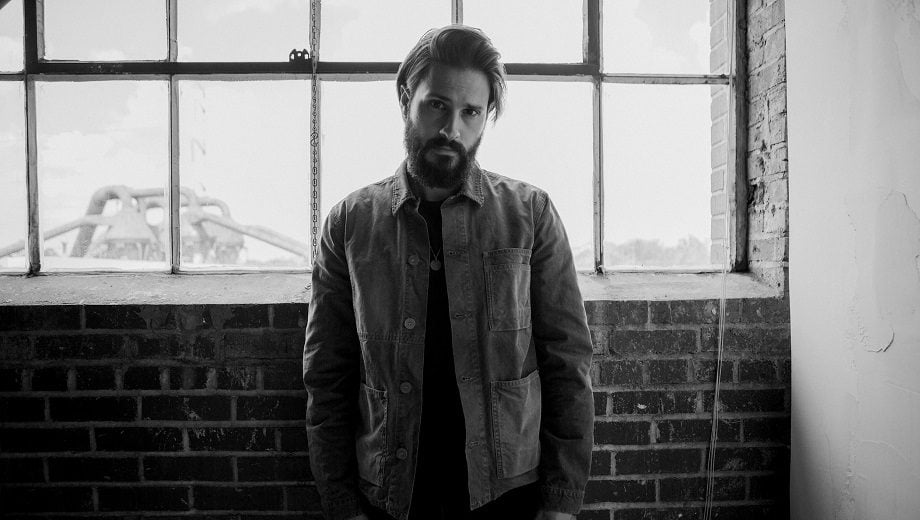
Artist:Michael McArthur Hometown: Lakeland, Florida Song: “Rest’s Unknown” Album:Ever Green, Ever Rain Release Date: January 25, 2019 Label: Dark River Records
In Their Words: “When we were kids, the world we lived in seemed larger than life. The trees we climbed, our backyards, and our bedrooms. As you grow, that perspective grows with you. When I was 5, my older brother and I were racing to the field near our house. He stepped in front of me and I tripped and fell on the asphalt. Broke my writing arm, but I didn’t cry. The greatest lessons in life can’t be taught, they can only be learned. ‘Rest’s Unknown’ tells the story of growing up and going through life, learning that you’re not invincible, but meeting strength and courage for the first time. It’s about losing your innocence and realizing that if you look hard enough, you’ll find it again.” — Michael McArthur
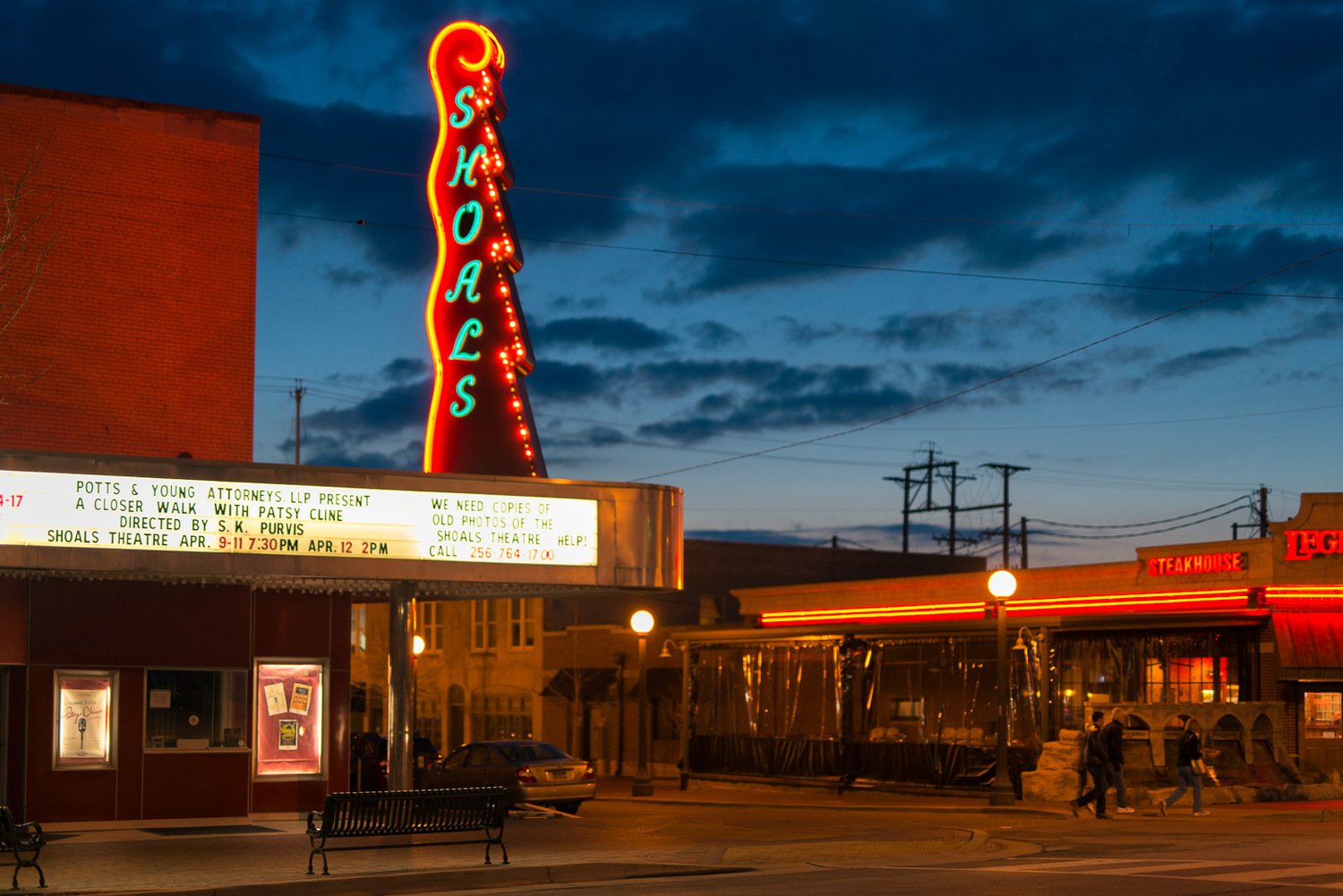
How and why this humble collection of towns hugging the Tennessee River in northern Alabama became a historic musical hot spot is an improbable, wonderful American story. More and more, roots and rock and roll musicians have been traveling to Muscle Shoals to record.
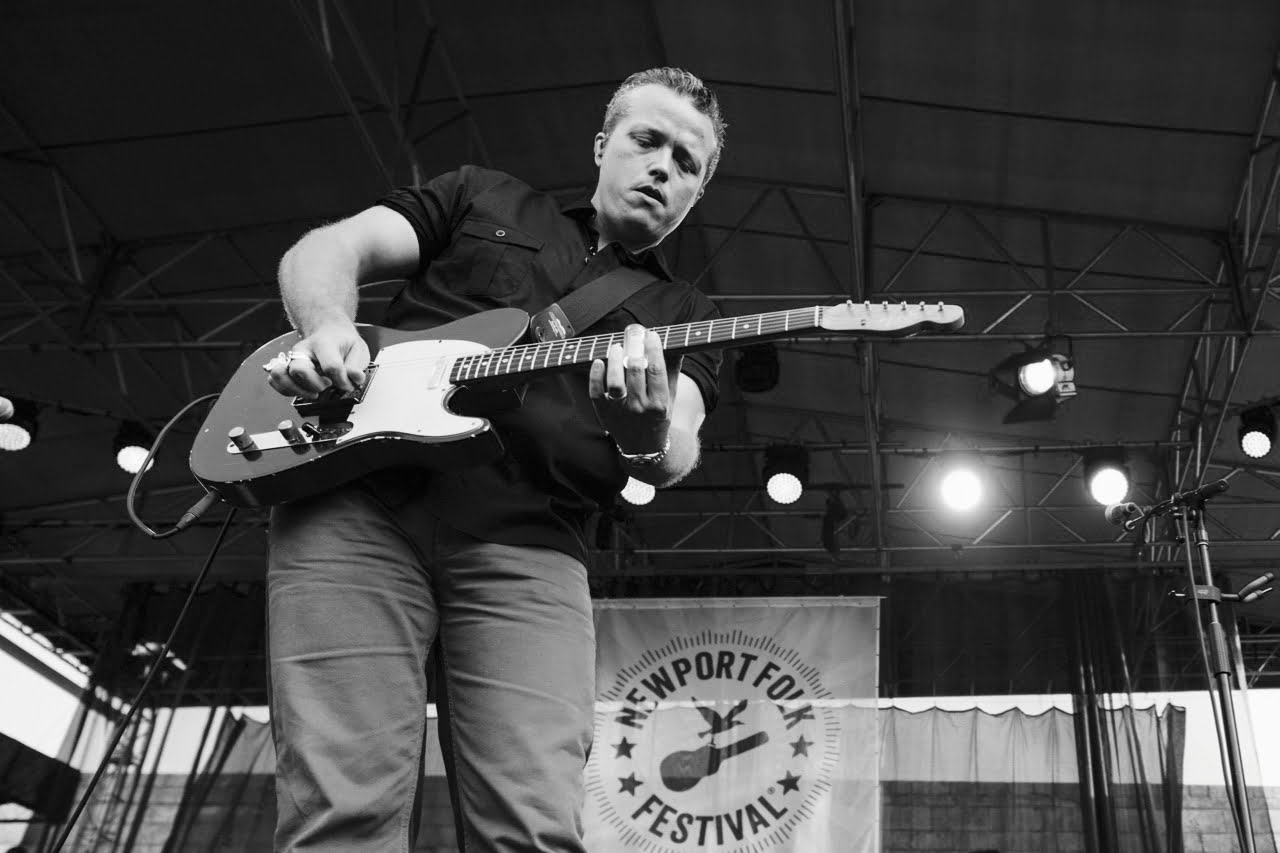
A string of remarkable bands and songwriters, including Jason Isbell, John Paul White, St. Paul and the Broken Bones, Dylan LeBlanc, and The Secret Sisters, have had projects emerge from the area in recent years. Half a dozen studios are in demand and busy. It’s become clear that Muscle Shoals is no museum. It’s a scene. So the only thing to do was to go there and listen.
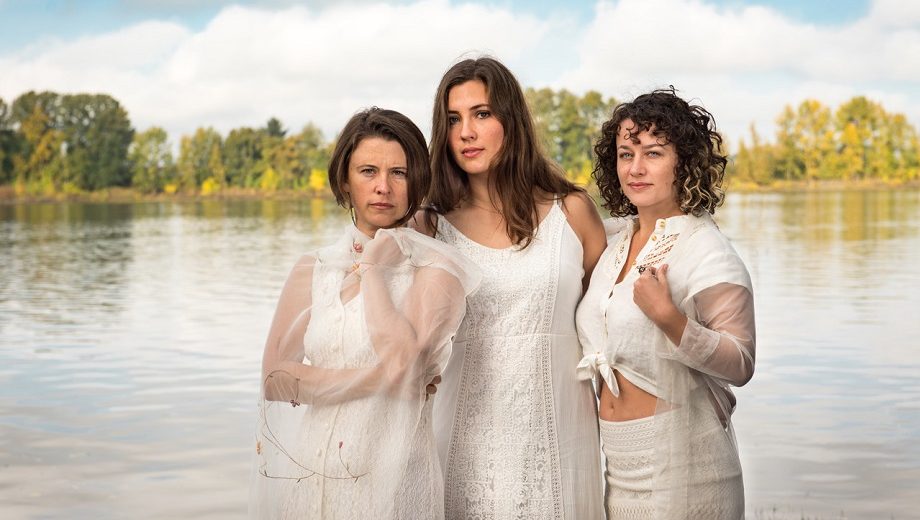
Artist:Five Letter Word Hometown: Portland, Oregon Song: “Silent Message” Album:Siren Release Date: January 11, 2019
In Their Words: “This song is from the point of view of someone who can tell her partner is losing interest in the relationship. She sees them pulling away through their actions, giving her a ‘silent message’ that she would rather hear in words. It is a situation we’ve all been in before, and it’s never fun, but this song takes a playful, upbeat tone, as a nod to the inevitability of change within love.” — Five Letter Word
“There’s no such thing as someone else’s war Your creature comforts aren’t the only things worth fighting for Still breathing, it’s not too late We’re all carrying one big burden, sharing one fate.” — Jason Isbell, “White Man’s World”
If one musical phenomenon united the year 2018 from the very moment the ball dropped over Times Square, it was the protest song. The soundtrack of the resistance clearly had enough time to percolate, deliberate, and incubate since our 45th president’s administration began in January 2017, because protest emerged as a recurring theme.
In the summer of 2017, Americana speak-your-mind hero Jason Isbell may have been the earliest adopter with “White Man’s World,” where he was decrying his own privilege while championing our common humanity and our shared fate. A year later, string band virtuosos Punch Brothers went so far as to name the elephant in the room and describe him thusly on “Jumbo:” “Whoa, here comes Jumbo with a knife and a tan/ And an elephant’s tail for his Instagram/ Grown up brave on the fat of the land of the free…”
Falling in line with this common theme, in an interview earlier this year River Whyless’ drummer Alex Waters described their creative process for their latest album, Kindness, A Rebel, as grappling with the fact that, “it’s just hard to avoid the elephant in the room as far as the current political situation and feeling like we didn’t say or do enough.” Boston-based bluegrass outfit, the Lonely Heartstring Band, opted to protest by not protesting — a press release described their single, “The Other Side,” as, “a song that takes no sides, but encourages empathy and understanding for people regardless of political beliefs.” Korby Lenker and Nora Jane Struthers took that perspective directly to far-right cable television show, Huckabee, performing a co-written plea for the sanctity of the dinner table, “Let’s Just Have Supper.”
Several issues arise when you start to consider the commonalities between all of these songs, the coincidence of their releases, and the apparent level to which political mayhem must reach before the greater community sees these songs as necessary. Look, we’ve got at least two more years of this level of political division and discourse ahead of us. Before you sit down to write your scathing, politically-minded, resistance-inspired anthem perhaps consider these few questions and suggestions:
Is this your story to tell?
Story songs and character songs can be sensationally moving and evocative, and they’re an integral part of American roots music’s songwriting traditions, but writers should be careful not to simply co-opt and capitalize on stories, concepts, ideas, and experiences of a marginalized person or group of people. Try not to appropriate any identity or culture, especially if there are marginalized voices out there already telling these stories. Which leads us neatly to the next question:
Is a marginalized or underprivileged person already telling this story?
One of the best ways folks can utilize their privilege to support resistance and activism is to pointedly and intentionally step aside to let a marginalized person own their own stories, their truths, and to be able to speak to those stories and truths. Ask yourself if telling a certain story, especially someone else’s story, could deny someone else their agency. Use your privilege, whether it be simply tied to your identity or to your professional position, to bring in the voices of forgotten folks who are already telling these stories. Use their points of view to strengthen and reinforce yours, rather than assuming that, by taking on these stories of our own accord, we’re strengthening and reinforcing those who don’t have the access or advantages that we have.
Furthermore, is this song already written?
Consider how galvanized our intersectional movements can be if we draw upon all of our constituent strengths from each and every individual’s personal story. Think of the power of protest music from across the generations. If your song is “already written,” it doesn’t mean that your feelings and your convictions are invalid. It means you aren’t alone. Your goals are the goals of someone — perhaps many someones else. Sometimes you just don’t need to reinvent the wheel.
Stay away from rhetoric such as “we’re better than this,” “this is not who we are,” “we should go back to the way things used to be,” etc.
Ask yourself if the particular phenomenon you’re writing about is truly unprecedented and unique to this era. For instance, indigenous Americans’ experiences are erased if we allow ourselves to believe the narrative that this is the first time our country has detained and imprisoned thousands of children. What about decrying the travel ban on majority-Muslim countries? Not a new occurrence, either. Mourning innocent drone deaths? Those casualty numbers actually don’t neatly correlate to which party holds the White House, as one might assume.
Try to avoid opining for “normalcy” or to “go back to normal.”
As individuals from almost any marginalized people group in this country would be happy to report, there is not an “again” to which we can return the United States that would truly be best, better, or “great” for all Americans. Whether we’re talking about Native Americans, stolen African slaves, African Americans, Americans with disabilities, LGBTQ+ Americans, or women in America — none of these groups have ever enjoyed a period of time in this country that was truly, equally great for any or all of the above. Wishing for something that never existed, except perhaps to the most privileged Americans throughout history, is the self-fulfilling prophecy of erasure at work. There ain’t no such thing as the good ol’ days.
Consider your audience, but not too closely.
Are you writing a protest song knowing that the majority, if not the entirety, of your audience already agrees with you? If so, why? Landing ourselves in echo chambers of our own political and ideological views doesn’t actually do anyone any good. Are you writing the song as a pat on the back? However, having an audience that may diametrically oppose your personal beliefs doesn’t mean that any subject, any cause, or any identity, is yours to take on as your gauntlet. Keep in mind, the most relatable songs, especially politically-minded or motivated songs, are at their best when they’re truly personal.
Speak to your own experiences, unapologetically, and speak to others’ as they relate to yours. It’s called being human. But, don’t get too bogged down considering your audience, either. If you find yourself debating whether or not a song is right for a certain audience, it’s time for a privilege check. Is your anti-gun anthem the best fit for an audience in rural Montana? Maybe not. But consider the artists and songwriters out in the world whose identities are already politicized. The trans artist. The songwriter who uses a wheelchair. An artist of color.
There is no choice, when any of these artists come into the spotlight, of whether or not the political statement of their very existence is too much for their audience. If you are able to avoid a certain song or a political point of view for the convenience of potentially not offending someone, you have an ability that many artists do not possess. That should be in the front of your mind each time you take the stage to find an audience with which you might not feel totally comfortable. For some artists, every audience conjures that feeling. Directly in the face of their art.
Are you simply, innocently following a songwriting trend?
Nope. You’re complicit. Stop. If you’re writing a protest song simply because it’s “in,” something is very broken. (Not capitalism though. That would be very much in tact.)
Write your truth!
Write what you feel. Write what pours out. Let it be personal, let it be real and vulnerable, let it process all of the confusing, complicated, and often treacherous peaks and valleys that we’ve all been crossing together these days. If you’ll stop and consider a few of these points listed above with kindness and empathy, and if you continue with only one metric against which you measure yourself, let it be this: that you are as true to yourself and your truth as you are careful and cautious with the selfhood and truths of others. Carry that with you and you almost can’t go wrong.
Isbell has it pretty much right. And he’ll be the first to admit that he wasn’t the first person to conceptualize the straightforward profundity in his lyrics. We really do all share a common fate–and our own creature comforts, however they’re provided to us, cannot be the only factors that we consider. It’s going to require active, progressive change, allyship realized as a verb, not a noun, to take what has begun as simply a quorum of protest songs from the past year and morph them into a true vehicle for change on the right side of history.
“I’m a white man living in a white man’s nation I think the man upstairs must’a took a vacation I still have faith, but I don’t know why Maybe it’s the fire in my little girl’s eyes…”
Something completely magical happens when musicians find the perfect blend of darkness, quietness, and intensity. It almost feels like the bottom drops out of the music, guiding the listener’s ears into the void of beautiful nothingness below. I still can’t pin it, how such a soft sound can feel so immeasurably huge, like it somehow contains the entire universe within itself. It’s something I’ve grown to love over the past few years, and I hope these songs will touch you as they’ve touched me.
P.S: The tracks on this list have been responsible for the majority of my tears over the past few years, so get your tissues ready. — Nate Sabat
“Humble Me” – Norah Jones
The raw story mixed with the incredibly honest delivery of the lyric always gets me with this one. Norah at her absolute best. I also particularly love the line “it never rains when you want it to.” I feel like it sticks out in a really, really good way.
“Pink Champagne” – Kathleen Edwards
The combination of Kathleen Edwards’ brilliant songwriting and Justin Vernon’s production approach are in full force on this track. Since hearing this song I’ve made it one of my life goals to not feel like this on my wedding day.
“Unless” – Hawktail
I love the winding, lush melody of this tune, paired with the beautifully shot video at Nashville’s Downtown Presbyterian Church. And also, I like, TOTALLY geek out at Paul’s bass shredding. Ya know, as a fellow bass player and all.
“Louise” – Daniel Romano
I first heard Daniel Romano on WUMB, Boston’s premier folk music radio station, with his song “Time Forgot (To Change My Heart).” Since then I’ve dug into a ton of his stuff, and particularly love his record Modern Pressure, an ode to the psychedelic sounds of yesteryear.
“Dreams of Nectar” – Abigail Washburn
This track is so cool and collage-like. I’m such a sucker for horns, so was instantly pulled in from the start the first time I heard it.
“Turning Away” – Crooked Still
I love how exposed Greg Liszt’s banjo part is on this track. The track is so short, but also the exact right length.
“Bonden & fan / Leffes polska” – Hazelius Hedin
This pair of tunes from Swedish duo Hazelius Hedin are so dark, so expansive, and so, so rich. I always picture a dark Swedish forest after an intense rainfall when I listen to this one.
“Your Long Journey” – Sam Amidon
This song, written by Rosa Lee and Doc Watson, has been beautifully reimagined by the great Sam Amidon. In my opinion he’s one of the greatest interpreters of folk and traditional music on the scene today, so definitely check out more of his stuff if you haven’t already.
“Harbour Hawk” – Becca Stevens
Becca Stevens’ music is some of the most interesting stuff I’ve heard to date. Constant texture and groove changes are tied together with impeccably crafted lyrical content. I love the opening riff of this song, and how it re-enters throughout in such a smooth way.
“00000 Million” – Bon Iver
One day last summer I was in a dark place, so naturally I listened to Bon Iver, specifically the entirety of 22, A Million. This song, the final one of the record, was so comforting. I remember being amazed at how powerful music can be, that it could somehow reach into my mind and make me feel better.
“Closer” – Joe Walsh
Man, Joe wrote an absolute gem. I don’t know if I’ve ever heard a melody so simple and profound. I told him how much I loved this tune, and that I always thought of the name as meaning “closer to someone or something,” but he told me that it’s actually “the closer of the album,” as it is actually the closer of his latest album, Borderland. Go figure.
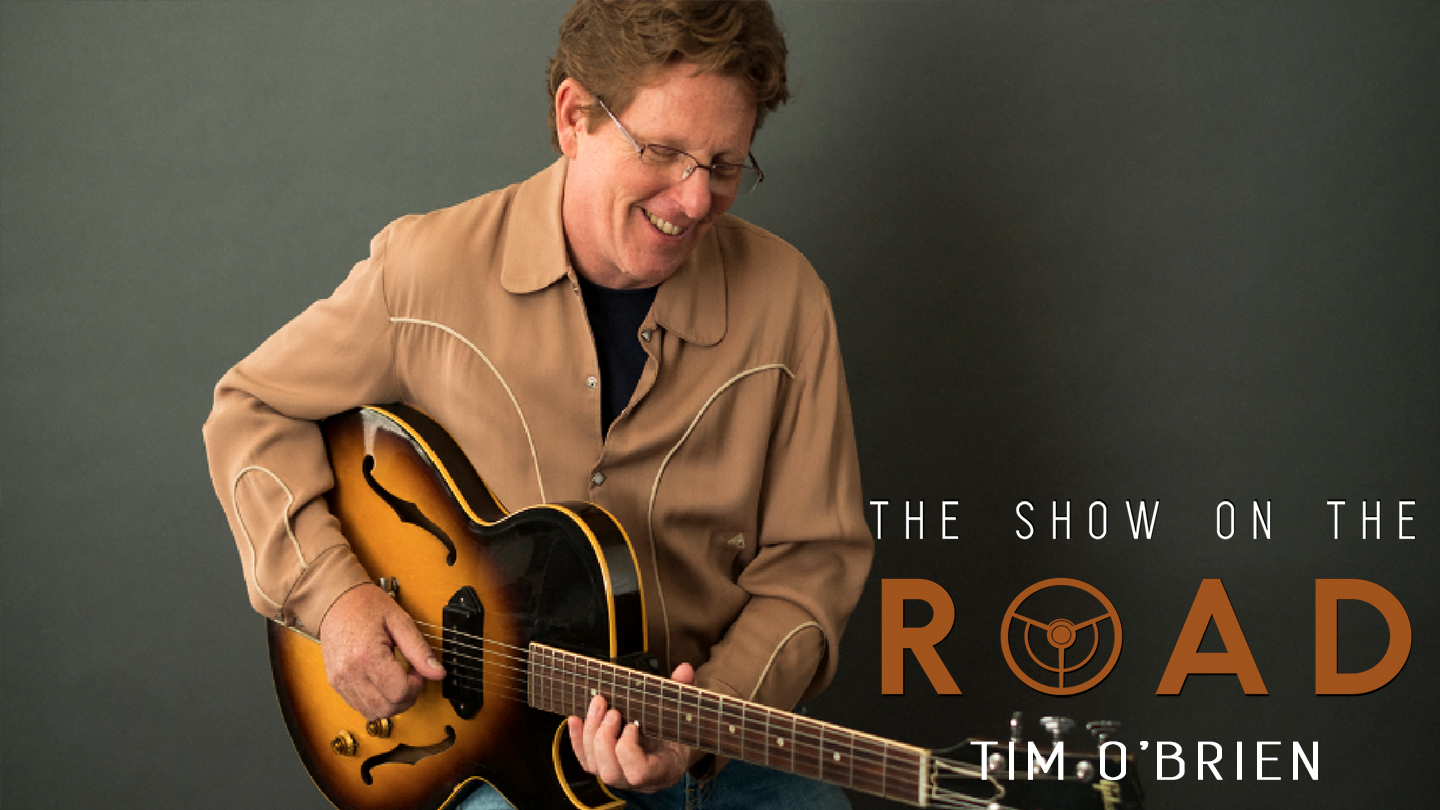
Starting in the late 1970s with the pioneering string band Hot Rize, Tim O’Brien has trailblazed a quietly powerful and influential solo career that includes 16 albums and multiple Grammy awards, writing what many consider to be the new standards of bluegrass music.
Now that he’s a bluegrass elder statesmen, O’Brien has made the time to produce albums for a new crop of festival headliners like Yonder Mountain String Band and the Infamous Stringdusters. He’s recorded and toured with Mark Knopfler and Steve Martin, had his songs covered by the Dixie Chicks and Garth Brooks — not bad for the small, bespectacled kid from Wheeling, West Virginia who dropped out of college and headed west with the idea that maybe, just maybe — if he learned enough songs — he could make it.
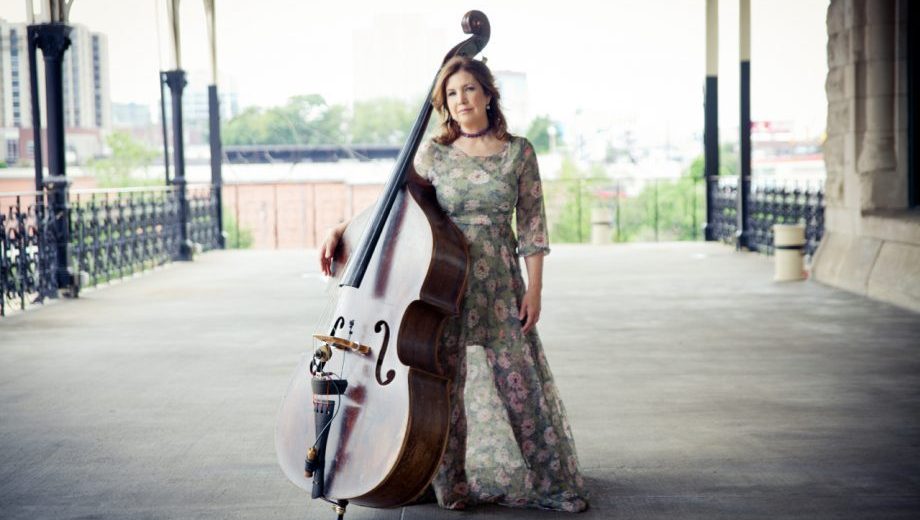
Bassist and singer/songwriter Missy Raines has spent the majority of her life on the road — she began professionally touring with bluegrass bands as a teenager. Early on, she supplied the low end to acts like Eddie and Martha Adcock and Claire Lynch Band, but the greater part of her past musical decade has been spent fronting her own band, the New Hip, and exploring genre-bending terrain on the fringes of bluegrass. Royal Traveller, her brand new album, sheds the New Hip moniker, but keeps the exploration, inspired by the handle of a suitcase and her ever-nomadic life. But this isn’t an album that you’d simply file away as a musical fulfillment of the “it’s about the journey, not the destination” cliche. It’s an open and honest telling of the realities of a life in transit, a life in flux, in constant motion. The countless miles Raines has traveled are a gorgeous, weathered patina on her songwriting as well as the careful, intentional arrangements — and rearrangements — of these songs. That patina — which we temporarily coined “haggardness,” clearly the word of the day during our conversation earlier this month — is balanced by a hopeful message, youthful joy, and the feeling that, despite that weariness, the album ultimately still looks ahead to what’s next.
There’s a beautiful kind of — and I don’t want this to sound insulting at all — haggardness or road-weariness, this totally relatable human feeling of, “wow we’re still doing this,” in the record. It’s kind of beautiful because it doesn’t feel depressing or downtrodden, it doesn’t drag you down, it feels like a musical sigh of relief. How intentional were you in fostering that feeling — or were you? Do you feel that in the record?
I don’t think it was an intentional “sigh of relief,” but I definitely chose these songs intentionally to say the same thing, hopefully in different ways, which is, “I’m still here. I’ve endured.” And, not just “I’ve Endured” — I chose that song specifically because I’ve always loved the words, I’ve always loved it, and wanted to do some kind of different version of it, but also, I wanted to be able to say, “Here’s a little bit about what’s happened to me through these years.” It’s that feeling like, “It is what it is.” I’m not going to sugarcoat it, it is what it is.
The guests on the album demonstrate, once again, how far your musical travels have taken you. Whether it’s 10 String Symphony or Amy Ray of the Indigo Girls, or your husband, Ben, singing harmony with you. You also collaborate so much across generations. It’s such an important part of bluegrass as a community, but it’s just as important to these sorts of conversations, right? What shaped the process of bringing all these collaborators together on the album?
A lot of it came from different configurations of the band and people I’ve worked with before. A lot of those guys are a generation below me at least. I just wanted them to be part of it. I do enjoy collaborating with people from different generations, I really do. I don’t know that we thought about it like, “Let’s get you paired up with somebody who’s not in your age bracket.” I don’t think we did that in that regard, specifically. I know that I do think about wanting to play music with different people just based on how much I like whatever it is they do.
10 String Symphony was just the obvious choice to do this sort of bowed effect we did on “I’ve Endured.” I get so much out of playing with younger people. It’s a kick in the butt. It makes me want to keep playing. I feed off of that, I feed off of the people I’m around, the band that I tour with, when they have this freshness and this eagerness and joy. I still have joy, but I know that I can’t help but be jaded in certain ways and maybe cynical about certain things that they aren’t. It’s interesting to hear from their perspective and it helps me to maintain what I’m doing every day, because I’m getting this input.
Touring with those younger, joyful people is the perfect balance to that haggardness we were talking about, so the music doesn’t strike listeners as beleaguering or at the end of a long, tiring road. Even at the end of all these journeys, the music still sounds like it’s not retiring, it’s asking, “What’s next?”
That’s how I feel. I’m at the point in my life where I have definitely done a lot of miles and done a lot of things, but I’m in no way finished. It feels exciting to think about what the next thing is. I’m thinking about that and excited by that and ready for it. Yes, being around younger people feeds that, to me. I want to learn from them, I want to know who they’re listening to, I want to be turned onto things that I normally might miss, because I just can’t keep up.
We’re all in our little bubbles. I want to hear what their bubbles are. And on the flipside, I like hearing how young people are viewing how they’re struggling. I don’t mean to say just because they’re young doesn’t mean they don’t have struggles, I like hearing how they deal with their struggles. It helps me keep my shit in perspective. We’re still all fighting and we’re all moving in the same direction and that’s really empowering.
I hear your activism in the album as well; it’s simply you, your ethos, and your worldview coming through the music. You’re not only collaborating with all these women, but your deep pride in Appalachia shines through as well. You don’t fall into the trope of a downtrodden, helpless, bleak Appalachia and South. I wonder if this has been a conscious decision, to opt for this sort of hyper-personal approach to your activism, or is it subconscious, just you being you?
I’m just inspired by the fact that there are so many amazing women, both in my generation and coming up behind us, and the ones who came before, too. I’m inspired by the young women, by the women who are my age and kicking ass, and the women who are older than me who keep kicking ass. I’m also so encouraged and feel positive and excited and happy — I can’t find the right word… content. Not content with the way things are, exactly, but content with the fact that it is changing. I’m content that we are on a path. Things are changing. And that my nieces and grandnieces that I have are not going to be in the same world that I grew up in.
And I think it’s just me being me. I don’t think I’ve ever had anything together enough to make a plan that could’ve been contrived that well. [Laughs]
But see, I think that that’s why your music, and that more subtle activism, is so effective, because it’s not overwrought.
I appreciate that, I had tried to make those kinds of important decisions come from my gut. It sounds cliche, but it’s really true. The times that I haven’t done that, when I’ve done things that I’ve felt were what I should do or what would go over better, I’ve always regretted those decisions. When I’ve leaned back and allowed my gut to take me, it’s always been a better feeling and it’s always worked out better in the long run.
It’s interesting that you bring up the heritage and the Appalachian thing, because a few people have said this to me anecdotally or from fans, they’ll come up to me and say, “I can tell you’re such a proud person from Appalachia from this record.” I can tell you that that is the absolute last thing that I was going for. I feel that I am that [proud] person, it’s not disingenuous, but that wasn’t in my thoughts at all. All I was trying to do was to capture a bit of my story.
With “Allegheny Town” I just went to the feelings I get when I go back home, because I get all these really weird feelings when I go back home. I was trying to capture all of that in all of this — in “Royal Traveller,” in “So Good.” I leaned on a lot of visual images [of home] while I was writing this stuff. It’s fascinating to me that people are getting this from this! I’m thrilled, because when you’re not actively trying to get something across, but it is part of what you feel and part of who you are, it feels good when it’s worked.
You’ve played our Shout & Shine showcase at IBMA twice now. It’s not the first or only movement there’s ever been for inclusion in bluegrass, which is important for the record to reflect, but there is this new movement for diversity and inclusion in bluegrass and I wonder what you think, watching this unfold and being a part of it, after being in this community for your entire life and your entire career?
It fills my heart with joy. It’s like the fulfillment of something. Something that had been so missing is now being filled. It’s not completely full, you know–
But the spigot is on.
The spigot is on and I’m just thankful that I’m still alive and that it happened within my lifetime. I’ll hopefully be around for a lot longer, but to know that it’s happening feels like — you know, I’ve often talked about bluegrass is my family. It’s more than just music, it’s literally the family and community that I have chosen to be in. I don’t know where I leave off and where bluegrass begins, I really don’t. Despite all of my explorations into other kinds of music and my fascination with other kinds of music, I say I am bluegrass. I am of bluegrass.
It’s not where I end, but it does define the core of me. Without the community it’s nothing. It’s like being at a family reunion that lasts all year long. You’re at the family reunion and you’re sitting there, and you’ve just eaten a bunch of things, and you’re sitting with all your favorite people, but then you look over here and you see that two facets of the family that haven’t been speaking are now talking to each other. And you’re just filled with joy cause the family’s coming together more, becoming stronger.
All of a sudden it’s like a Fellini movie, people are hanging off of chandeliers and riding Ferris wheels that weren’t there a second ago, and we’re all just playing together. Because another link just got connected. That’s how I feel. We’re all in this family reunionwhere in the past, people wouldn’t have been connecting, and now that’s all starting to change. It makes me very, very happy. It’s an inexplicable feeling because it’s so important to me. I’m just happy to be a part of it.
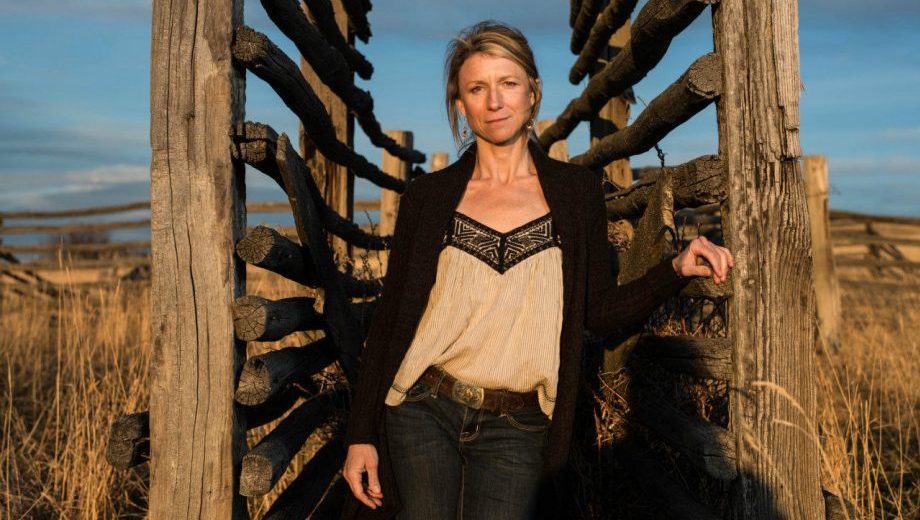
Growing up, Martha Scanlan says she equated music with “belonging and family and home.” The Montana-based folk singer-songwriter has woven those elements into her fourth album, The River and the Light, but, for Scanlan, home doesn’t exactly signify hearthfire. There’s a wilderness brooding about the album, as she moves throughout the landscapes that shaped her. She’s found her place in the natural world as much as those vistas have found their place in her.
Longtime friend and creative partner Jon Neufeld produced The River and the Light, continuing a collaboration that spans back to her 2011 album, Tongue River Stories. The two blended an array of brooding and beautiful timbres — with fiddle and accordion from Dirk Powell — that speak to those natural landscapes: The expansive skies and pressing quiet of Montana (“Only a River/True Eyed Angel”), the weathered mountainscapes and ancient tones of Appalachia (“West Virginia Rain”), and even, at times, the lush forestry and friendship she’s found in Oregon, where they recorded the LP.
Scanlan herself has described The River and the Light as a journey, which makes sense when you consider that journeys are as much about leaving as they are arriving home. She joined Neufeld on the phone during this interview with the Bluegrass Situation.
Looking back to Tongue River Stories, elements of place and belonging and journeys have always informed your songs. If you look at The River and the Light as a new chapter, what have you learned in that interim?
Martha: There’s this old cowboy saying that just jumped into my mind: “A horse will make a liar out of you.” As soon as you say a horse is one way, like, “This horse never bucks,” it’s going to buck you off. As soon as I say that a song is about something, it’ll end up being about something else. One thing that was interesting in terms of Tongue River Stories, which was such a collaboration with the landscape itself, is we were recording songs outside and the sound between the notes was the actual landscape. This record feels like its own landscape.
You both seem quite interested in atmosphere. I couldn’t get over the timbres on “Too Late.” How did you build those colors into that song?
Jon: Well, I know we got Dirk Powell’s fiddle part. He wasn’t able to make it to the studio, but he sent us a rough mix — he played some fiddle and accordion parts in that. I added some baritone guitar and acoustic guitar. There may have even been omnichord on that one. I ended up sneaking the omnichord on quite a few songs. And then near the end, I was thinking we needed something more, and Martha was back in Montana already, and she sent me… How did you even record that?
Martha: I had this really lame zoom video recorder that I got eight years ago or something, but it has a pretty good microphone. I recorded some brushes, like playing brushes on tambourine, and some harmony parts.
Jon: [Laughs] So she sent that. And I added that to it.
Martha: I think that song is probably the most layered one on the record. Or the most that had an afterwards. What was interesting to me about Jon’s production, I don’t know another musician that’s so in the moment and improvisational when we’re playing live or in the studio or anything. It’s fun because to watch him putting on different layers or overdubbing something because it’s that improvisational. It’s not contrived, it’s not overworked; it tends to feel really alive.
Dick Powell has said about you, “Martha feels the natural world…to such an extent that the stories transcend themselves.” How do you view your relationship with natural space?
Martha: I think there’s an openness, for me, about working and living so close to landscape that’s very much like music. I lived on this small ranch for seven or eight years in southeastern Montana. Doing Tongue River Stories, we recorded most of that outside and we could do that because it’s that quiet — there aren’t cars or planes overhead. To me, writing is more about listening than it is about planning or thinking. I’ve never been good about like, “I’m going to write a song about this.”
It unfolds on its own.
Martha: Yeah and seeing what shows up. As far as a theme in writing and in the music, I think that there was an element of this record that was an exploration of rivers, or different currents that run through and wind together. For both Jon and I, that’s something that occurred early on when we were passing ideas back and forth.
Are you thinking specifically about a certain river or more metaphorically about them?
Martha: Kind of both. I think I’ve always been fascinated with rivers and I’m around rivers a lot.
Jon: Yeah, I remember that back and forth. The theme of rivers was on the last track, “Revival.” I was like, I think it’d be really cool if you were going along a river and this thing pops up. All of a sudden, there’s an acoustic guitar solo for no reason; there’s no acoustic guitar until then. Just the way you go down a river and something appears and is gone. That was a very real theme, like visualizing the river and making a sonic imprint of that.
What keeps this partnership between the two of you so worthwhile in your minds?
Martha: It’s a hard question to answer because it feels really easy and congruent. What would you say, Jon?
Jon: I feel like in the first five seconds you can tell if you’re going to jive with somebody or not; I think it’s especially so with artists and musicians. When we first started playing together, it’s an obvious feeling. It’s obviously not wrong.
Right. You wouldn’t have worked together so many times if it weren’t working.
Martha: Something I really appreciate about working with Jon is there’s this constant sense of improvisation on stage and in the studio. Everything is very alive. We don’t practice a lot. [Laughs] We usually show up on tour and the first time we play together is, like, a radio show or at the sound check. But it keeps things very fresh and alive, I think.
Speaking of being in the moment, I read that “Brother Was Dying” was done in one take.
Jon: That’s probably the truth about most of the album.
Martha: That one, I had just finished putting the words together — I had written most of it, but it was still in this place where I wasn’t sure how it would all stitch together — and we went in and recorded it. I hadn’t sung it as a complete song; that was the first time we’d really played it.
What does your writing process look like nowadays?
Martha: For this record, I had started playing electric guitar; I was pretty psyched about that. It’s a really different animal: It’s a wash of sound, the physicality of it is really different, there’s a lot more fluidity in it. So I think messing around with that influenced some of the writing. It’s still to me such a process of discovery, writing songs. Some things just kind of show up, and then it becomes an inquiry, and sometimes that process continues for years after I write the songs. I feel like I go out and interact with whoever is listening to it and come back changed. I really enjoy that part of it. I think my last record, which Jon also produced, was so much about the current that moves through things, and this record felt even more whittled to the current that’s flowing through.
The UK scene is as varied as it is exciting, even with doing an article each month, I haven’t really scratched the surface. There are so many fantastic UK acts that deserve some love, so with it being the end of the year, and the season of giving, let’s have a quick-fire round of artists that are worth some time in your busy ears. All are worth an entire Brit Pick, but time is short, and you have present to wrap so let’s get to it.
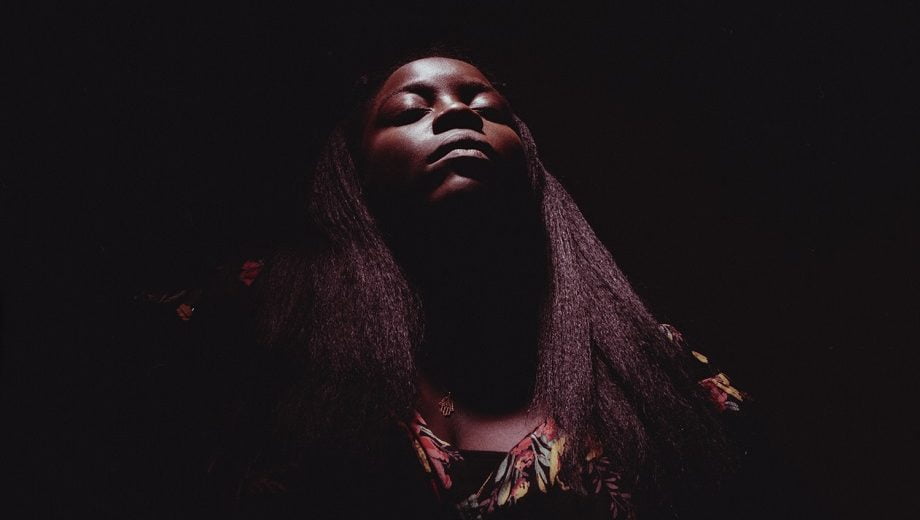
Yola
Yola is someone who is no stranger to BGS but she’s dropped her last name (Carter) and has a new single out, “Ride Out in the Country,” with a long-awaited new album on the way in 2019. She’s one to watch for sure. Country Soul at its finest, like taking off a pair of tight shoes, Yola soothes the soul.
O&O
London duo O&O formed in Liverpool via Israel and Colorado, with harmonies for days.
Treetop Flyers
Treetop Flyers have been rocking the UK scene for a while now but their 2018 self-titled album and appearance at Americanafest in Nashville kicked it all up a notch.
Emily Barker
Emily Barker has a lovely bluesy Memphis sound, she’s from Australia, but we’ve adopted her and she’s adopted us and everyone is happy. She’s a leading light on the UK scene and was named UK Artist of the Year at the UK Americana Awards in February.
The Marriage
A duo from Edinburgh and London, The Marriage are masters of sublime truth telling.
Hannah White
Hannah White has worked hard providing a space for homegrown acts to perform at her Sound Lounge initiative in London and has fought local government and developers every step of the way to do so. She’s a mighty fine artist as well, and one who gives back.
The Luck
The Luck are a brother/sister duo with a touch of the Eagles and Fleetwood Mac about them–what’s not to love?
Noble Jacks
Noble Jacks will get your feet stomping and raise any roof that’s not nailed down properly.
The Hungry Mothers
Aside from having an amazing name, the Hungry Mothers combine dreamy folk with indie soundscapes.
Lucas & King
Finally, Lucas & King sound like they stepped out of the ‘60s in the best way. I love them.
So there you go, an embarrassment of riches from these isles to get you through the holiday season. If you want even more, dig into my personally-curated playlist and enjoy:
As a radio and TV host, Baylen Leonard has presented country and Americana shows, specials, and commentary for BBC Radio 2, Chris Country Radio, BBC Radio London, BBC Radio 2 Country, BBC Radio 4, BBC Scotland, Monocle 24, and British Airways, as well as promoting artists through his work with the Americana Music Association UK, the Nashville Meets London Festival, and the Long Road (the UK’s newest outdoor country, Americana, and roots festival). Follow him on Twitter: @HeyBaylen
Artist:Old 97’s Song: “Snow Angels” Album:Love the Holidays
In Their Words: “‘Snow Angels’ is a holiday song written in the tradition of ‘Do You Hear What I Hear?’ Unlike really any other song I’ve ever written, it deals with issues of social justice and world peace in a very upfront way. We are all the same and we are all brothers.” –Rhett Miller
This website uses cookies to improve your experience. We'll assume you're ok with this, but you can opt-out if you wish.AcceptRejectRead More
Privacy & Cookies Policy
Privacy Overview
This website uses cookies to improve your experience while you navigate through the website. Out of these, the cookies that are categorized as necessary are stored on your browser as they are essential for the working of basic functionalities of the website. We also use third-party cookies that help us analyze and understand how you use this website. These cookies will be stored in your browser only with your consent. You also have the option to opt-out of these cookies. But opting out of some of these cookies may affect your browsing experience.
Necessary cookies are absolutely essential for the website to function properly. This category only includes cookies that ensures basic functionalities and security features of the website. These cookies do not store any personal information.
Any cookies that may not be particularly necessary for the website to function and is used specifically to collect user personal data via analytics, ads, other embedded contents are termed as non-necessary cookies. It is mandatory to procure user consent prior to running these cookies on your website.