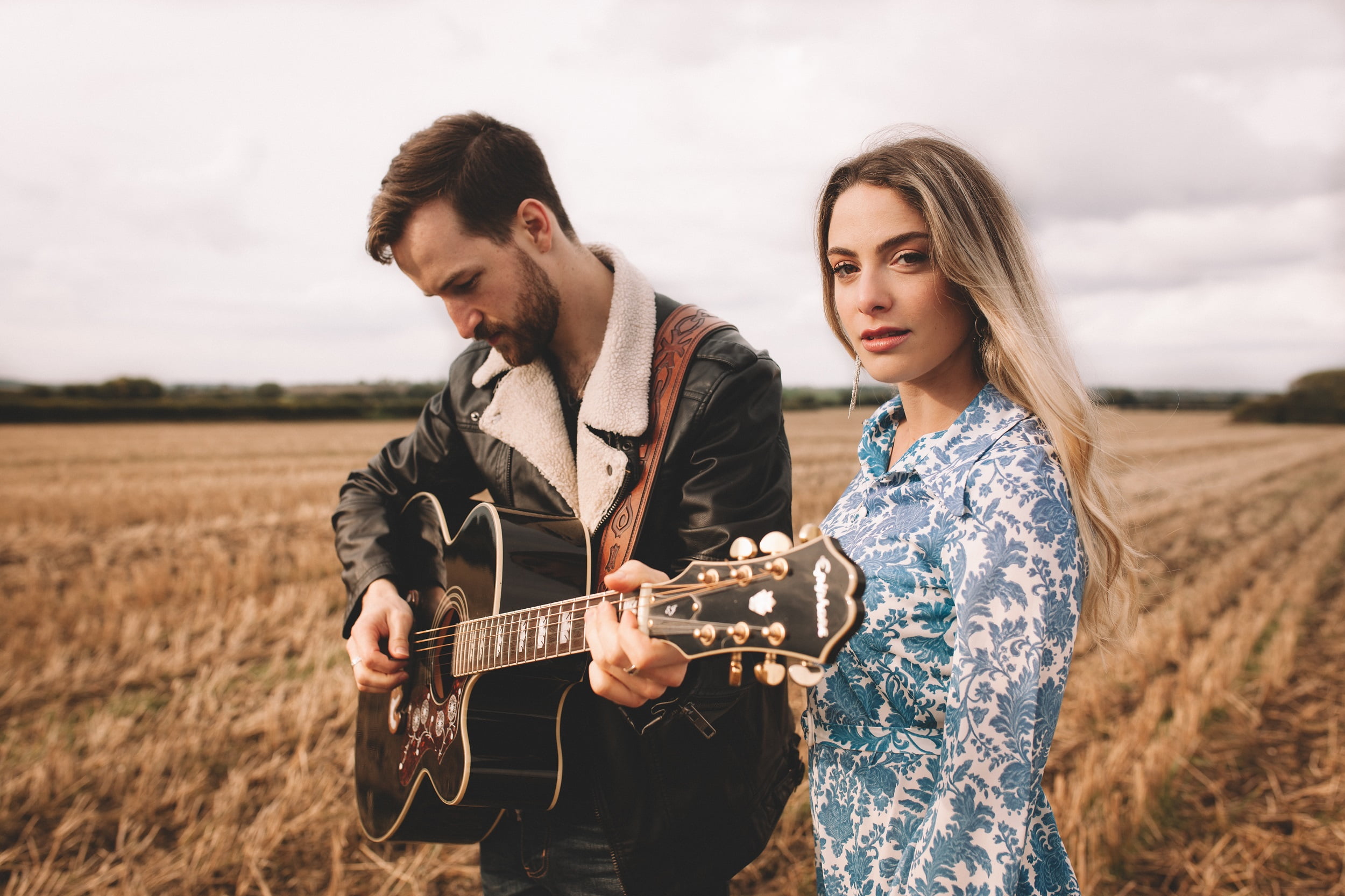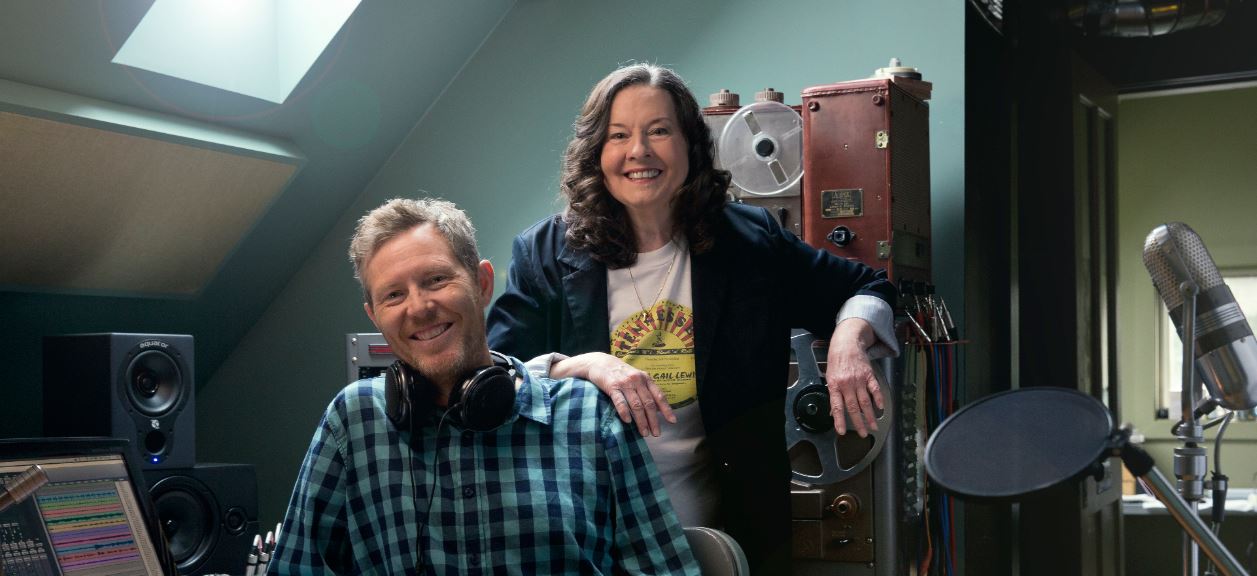
Wild Things: Robbie Fulks and Linda Gail Lewis

Linda Gail Lewis was never destined to be the most renowned member of her family — or second, third or fourth-most famous, for that matter. There’s not a lot of oxygen left in the shotgun shacks of Ferriday, Louisiana or the public mindset when you have original rock wild man Jerry Lee Lewis for a brother and your cousins are Mickey Gilley and Jimmy Swaggart. But unlike her early-starter kin, Linda Gail has come more into her own later in life. The 71-year-old little sis has emerged as a heroine to the rockabilly crowd not just because she trades off the trademark style of the Killer but because she has slayer instincts, too.

Still, she’s traditionally benefitted more from being a duet partner than a solo act. She recorded and toured with Jerry Lee in the ‘60s and ‘70s — the sibling duo had a Top 10 country hit in 1969 with “Don’t Let Me Cross Over” — and then she reentered the consciousness of the music intelligentsia in 2000 when no less a fan than Van Morrison asked her to make a joint album and tour together. Now, she’s on to her third partner in musical crime: the alt-country great Robbie Fulks, who joined her for Wild! Wild! Wild!, an album he produced all of, wrote most of, and participated on as an equal vocal partner only with some urging.

So how does Fulks stack up against his two famous predecessors in the duet partner’s seat?

“I was the best of them all, I would say,” Fulks says. “Oh, sorry, go ahead.”

“Absolutely!” Lewis agrees, although when it comes down to it, she may not quite be ready to declare new Bloodshot Records partnerships thicker than blood. “Singing with my brother and Robbie, I love one as much as I do the other, which is saying quite a lot. And I don’t mean to say anything bad about Van. I appreciated doing the album [You Win Again] with him, and it was good for my career, and… I wouldn’t say it was actually fufn in the studio, but I did get through it, and I lived to tell the tale,’” she says, laughing. “It was impossible to really match up with him on the recording, because his phrasing is so different from my brother’s. But Robbie’s is similar enough that it was easy for me. You’re every bit as great as those other two, Robbie. And don’t tell my brother I said that.”

“I’m not telling anybody you said that,” Fulks says. “Maybe my wife.”

Wild! Wild! Wild! includes five true duets, two Fulks solo vocals, and six that feature Lewis alone as frontwoman. If that math leads you to suspect that the project might’ve started life as a Linda Gail Lewis solo album Fulks was producing before it became co-billed, your guess would be right.

Says Fulks, “The idea was a little bit imposed on us because the label said, ‘Well, we’d rather have a duet record,’ and that wasn’t what I originally had in mind. Duet singing with her, nobody would say no to that. And I think male-female duet singing is just about my favorite kind of country music. So to be able to write to that and then to perform with her was just a whole other level of fun over, you know, sitting in a chair and listening to people play.” Lewis, too, was happy it became a duo project, and cites “I Just Lived a Country Song” as her favorite track on the album, even though that’s one of the two tracks that Fulks sings without her.

To the extent that it’s partly a Robbie Fulks record, it’s an old-school Robbie Fulks album, which should tickle a lot of long-time fans who’ve charted his changes. It harks back to early- to mid-period records like 1996’s Country Love Songs, 2005’s Georgia Hard and 2007’s Revenge! when Fulks was the master of classic country pastiche, writing severely clever tunes with tellingly witty titles like “Goodbye, Cruel Girl,” “All You Can Cheat” and “The Buck Stops Here” (as in Buck Owens, of course).

There is certainly some pure country on the album to go with the more snare-smashing stuff, like their duet on “That’s Why They Call It Temptation,” which he wrote rather overtly in the George-and-Tammy mode. (Sample lyrics — Robbie: “I tried to keep my hands from where they longed to go.” Linda: “And I did all I could to help you, short of sayin’ no.”)
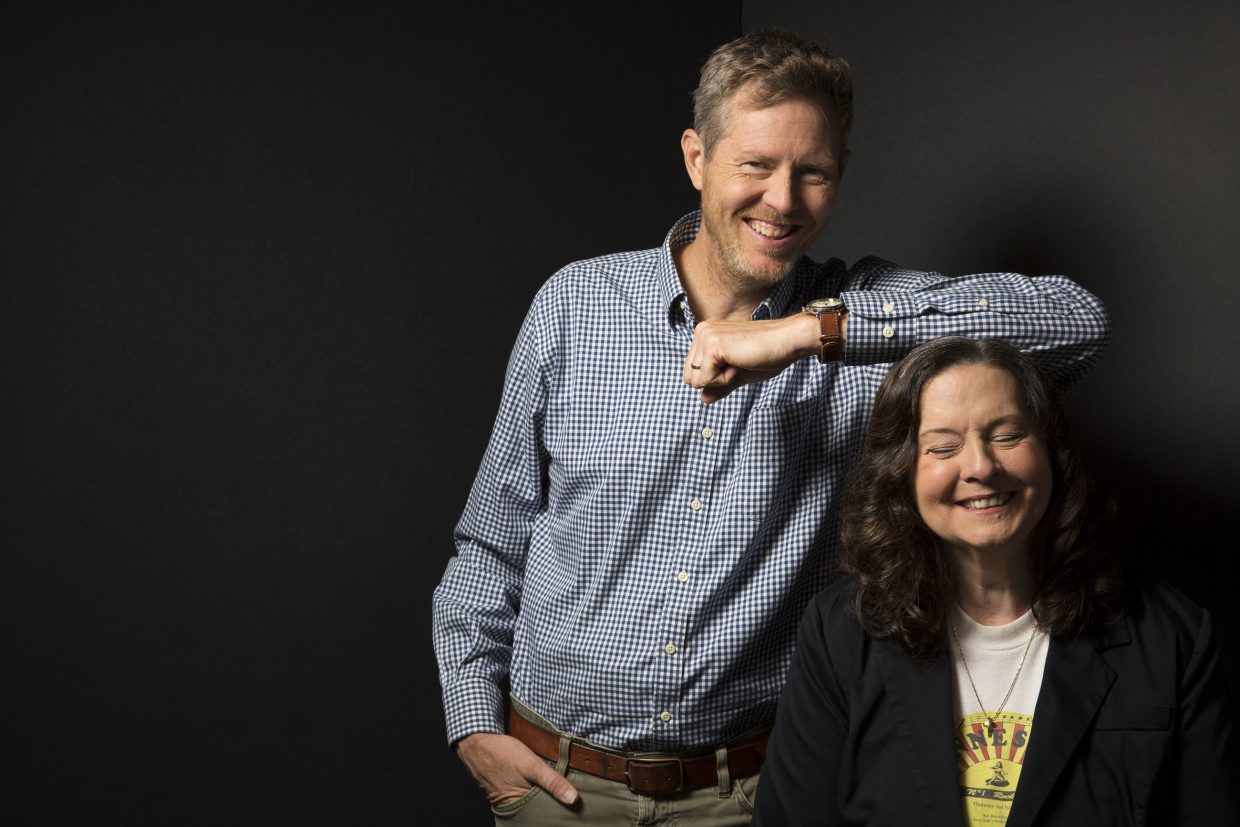
Meanwhile, there’s a Tennessee-meets-New Orleans horn section on a Fulks-penned tribute to Lewis’ adopted hometown, “Memphis Never Falls From Style,” which has Linda singing the lines, “Thank you Memphis for the great insight/That music is a drag if it’s too f—in’ white.” They went back and forth over whether to keep her singing the F-word; “I grew up on the road with a bunch of musicians, and I have no problem with a little profanity,” she says. But ultimately Fulks decided that a loud bleep was called for, out of nostalgia, if not bashfulness. “I remember being 8 years old and hearing ‘Johnny Cash at San Quentin,’ and those bleeps would come on real loud, and it reminded me of being a kid and the joy of bleeped-out profanity, which you don’t get to hear anymore.” For Lewis’ part, “I was worried about being in trouble with my brother. So I was happy to have the bleep,” she laughs. “And I plan to tell him that I didn’t really say it.”

Jerry Lee Lewis was into his country period — having fallen out of favor as the British Invasion superseded America’s pioneer rockers — when he started enlisting his little sister to join him on records and at shows. (For example, a 1973 performance of “Roll Over Beethoven” on the Midnight Special program.) Their sole hit together was a cover of the Carl and Pearl Butler song “Don’t Let Me Cross Over.”

“Jerry was a big fan of theirs and they were good friends of ours, and we never felt right about covering their song,” Linda admits. “But still we did it, and it was Kenny Lovelace’s idea,” she adds, mentioning her brother’s long-time sideman — and one of her ex-husbands. “Jerry and I had trouble getting through it because we were singing a love song and we’re brother and sister. We were on the same microphone, and we would look at each other and start cracking up. We only were able to get through it once.”

“That’s a little like Nancy and Frank Sinatra singing ‘Something Stupid’ together,” says Fulks, “although that was a lot creepier, I think.”

The sibling duo act came to an end out of jealousy, she says. “My sister-in-law at that time hated me and didn’t want me to be around, so I had to go,” Linda says. “And you know, sometimes even your enemies will help you. Because had she not done that, I would never have left my brother, and I would never have had my own career, and I never would have learned to play he piano. All the things my brother had shown me through the years helped me when I started playing rock and roll and boogie-woogie piano in 1987. My brother’s fans were coming to see me, and they wanted to hear ‘Great Balls of Fire,’ so I had to make sure that I could play it, especially because the piano player that I had in my band in Memphis had no feel for it.

“And I’ve had such a wonderful career, and now of course, with, this great album that I have with Robbie, I feel so blessed. To me it’s the highlight of my career, and life. I don’t think I’ve ever been this happy. And I just looooove my ex-sister-in-law that hates me, because she did this wonderful thing for me.”

Before they made the album, Fulks once blogged that hearing Linda Gail play piano put him in mind “of a cotton field with a candelabra in it.” He sounds embarrassed to be reminded of the phrase now. “Oh my God,” he says. “I didn’t realize I said that. It’s alliteration, anyway. It sounds like literature. ‘Cotton fields…’ I better stop blogging.” Lewis offers him a sharp retort. “Don’t you dare! I loved that. I actually saved that in my iPhone so I can just go back and read it over and over.”

In a separate conversation, Fulks talks about how his appreciation for Lewis developed. “You just say Jerry Lee Lewis’s sister and then go on to say yes, she plays like him and she’s a great singer, and she’s been doing it for 50 years or whatever, and that gets people interested. … With Linda, her voice and her career are so tied into his, it would be hard to separate it out too much, and a good deal of her act is a tribute to and an expression of love for him. But to me she’s interesting partly for the fact that she’s a woman in that family, and just as I’m interested in what it was like for people like Jean Shepard to get along on the road with Ferlin Husky and those guys in the ‘50s, I’m interested in what it was like for her to be part of that clan in the ‘50s and ‘60s, and to be holding her head above water.”

And he’s fascinated by the nature-versus-nurture aspects of the playing she picked up later in life. “She’s a great piano player, and it doesn’t really doesn’t boil down to the notes that she’s playing,” Fulks says. “It’s kind of a family style and a genetic style, and there’s something that’s unlearnable about that style. Anybody could read this off of a sheet and make the moves, but nobody could sound like that. I looked at her the other night when we played together, lifting her hands a foot and a half above the keyboard and banging down on two notes repeatedly, and you just think, well, that’s ridiculous! It’s a real mystery, and it’s thrilling to hear.”


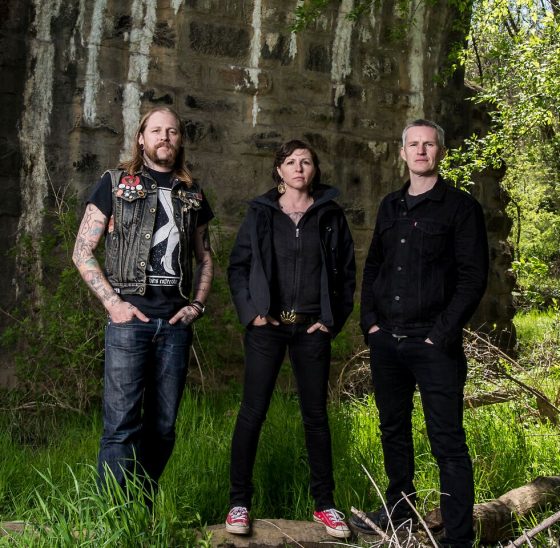
Photo credit: Andy Goodwin
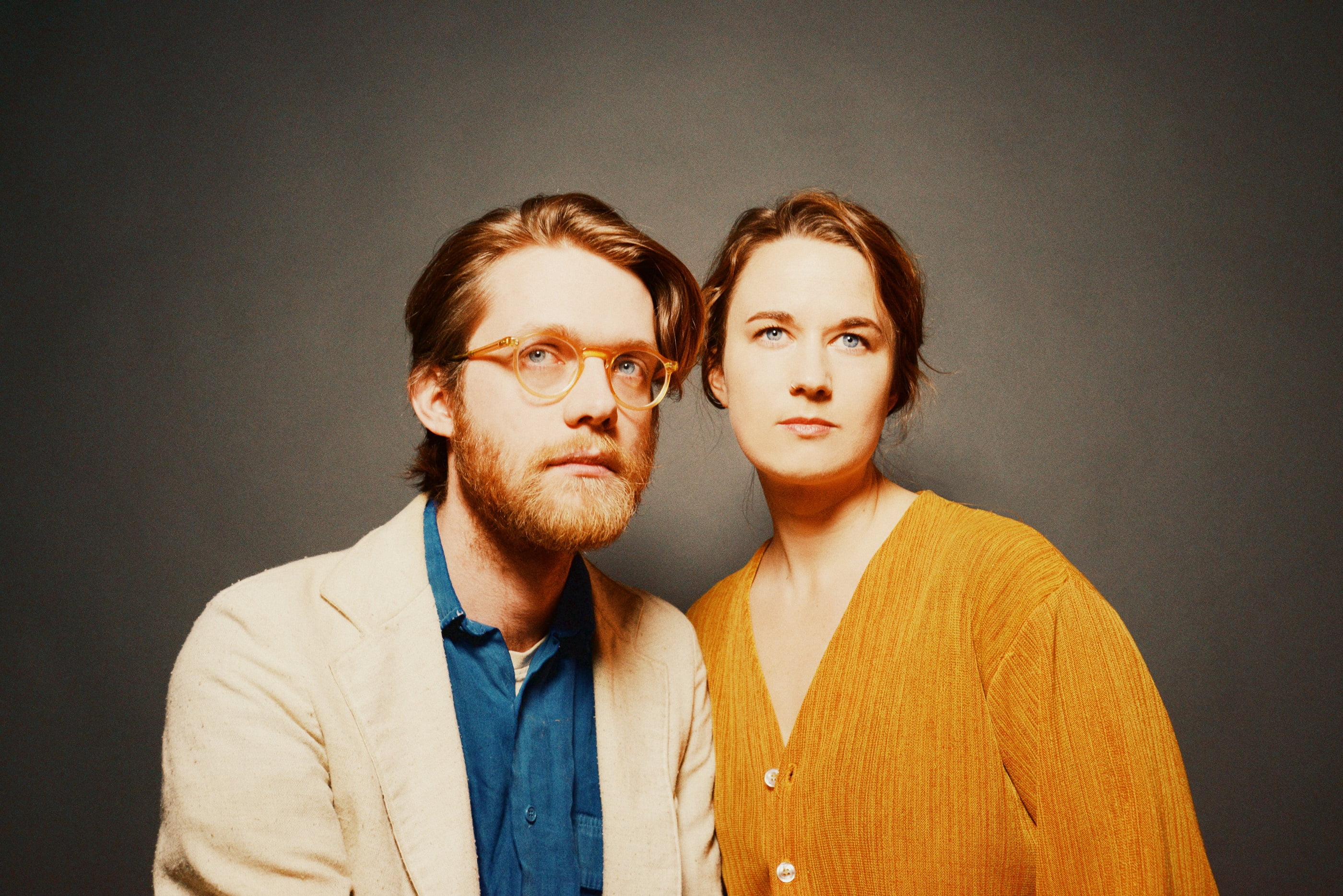
LISTEN: Courtney Hartman & Taylor Ashton, “Better”

Artist: Courtney Hartman & Taylor Ashton
Hometown: Brooklyn, New York
Song: “Better”
Album: Been on Your Side
Release Date: August 31, 2018
Label: Free Dirt Records

In Their Words: “Courtney and I and about 25 other songwriter friends around the world had an email thread going last year where we had a weekly deadline to send in a new song, as an exercise in mutual encouragement to keep in the practice of writing. One week I forgot about it until 1 a.m. on the night of the deadline, and even though I had a gig at 9 a.m. the next morning, I spent a couple hours with my banjo and “Better” came to me. It took a second to arrive at the first line and the rest all sort of fell into place. At some times in my life I’ve been attracted to the idea that you can’t force inspiration, and that it chooses when to strike. But this is an example of a time where if I hadn’t been holding myself to some arbitrary deadline I would definitely have just fallen asleep and never written this song.

The voice in the song is sort of an amalgam of myself and of a lot of people in my life so it feels good to sing it with Courtney — it brings it into a cool middle ground for me, between a specific personal sentiment and a more universal one. And to me it feels good to sing about your personal flaws in harmony with somebody else. I think the chorus is something we all want to cry out at certain times in our lives.” — Taylor Ashton


Photo credit: Shervin Lainez

LISTEN: Tony Joe White, “Big Boss Man”

Artist: Tony Joe White
Hometown: Oak Grove, Louisiana (now in Nashville)
Song: “Big Boss Man” (written by bluesman Jimmy Reed)
Album: Bad Mouthin’
Release Date: Sept. 28 2018
Label: Yep Roc

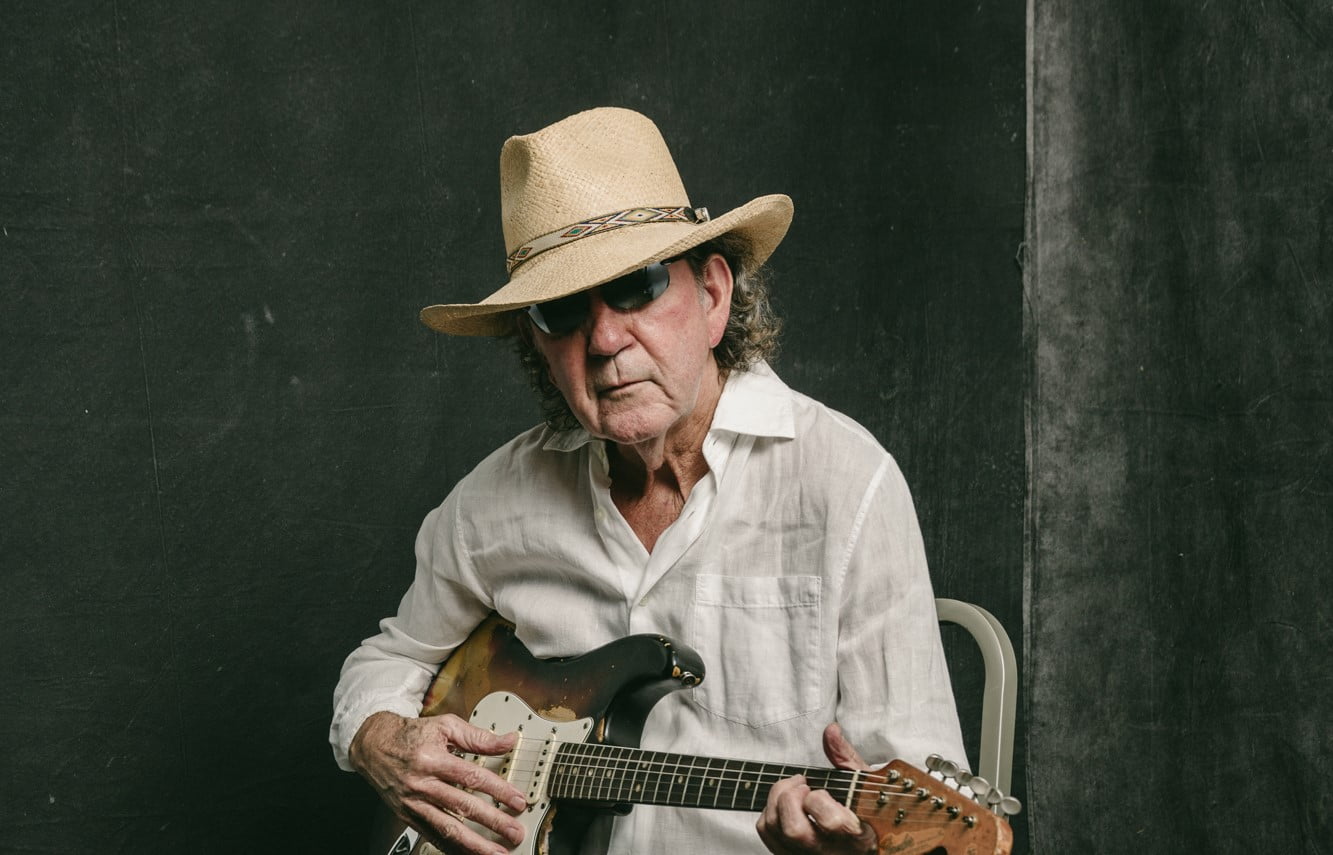
In Their Words: “At the time I was just playing electric guitar and singing. When I heard Jimmy Reed and ‘Big Boss Man,’ I went straight to the music store and bought a harmonica with a holder. I thought I bought the wrong key, but come to find out, all the blues players pull on the harmonica instead of blowing on it so it was alright.” — Tony Joe White


Photo credit: Joshua Black Wilkins

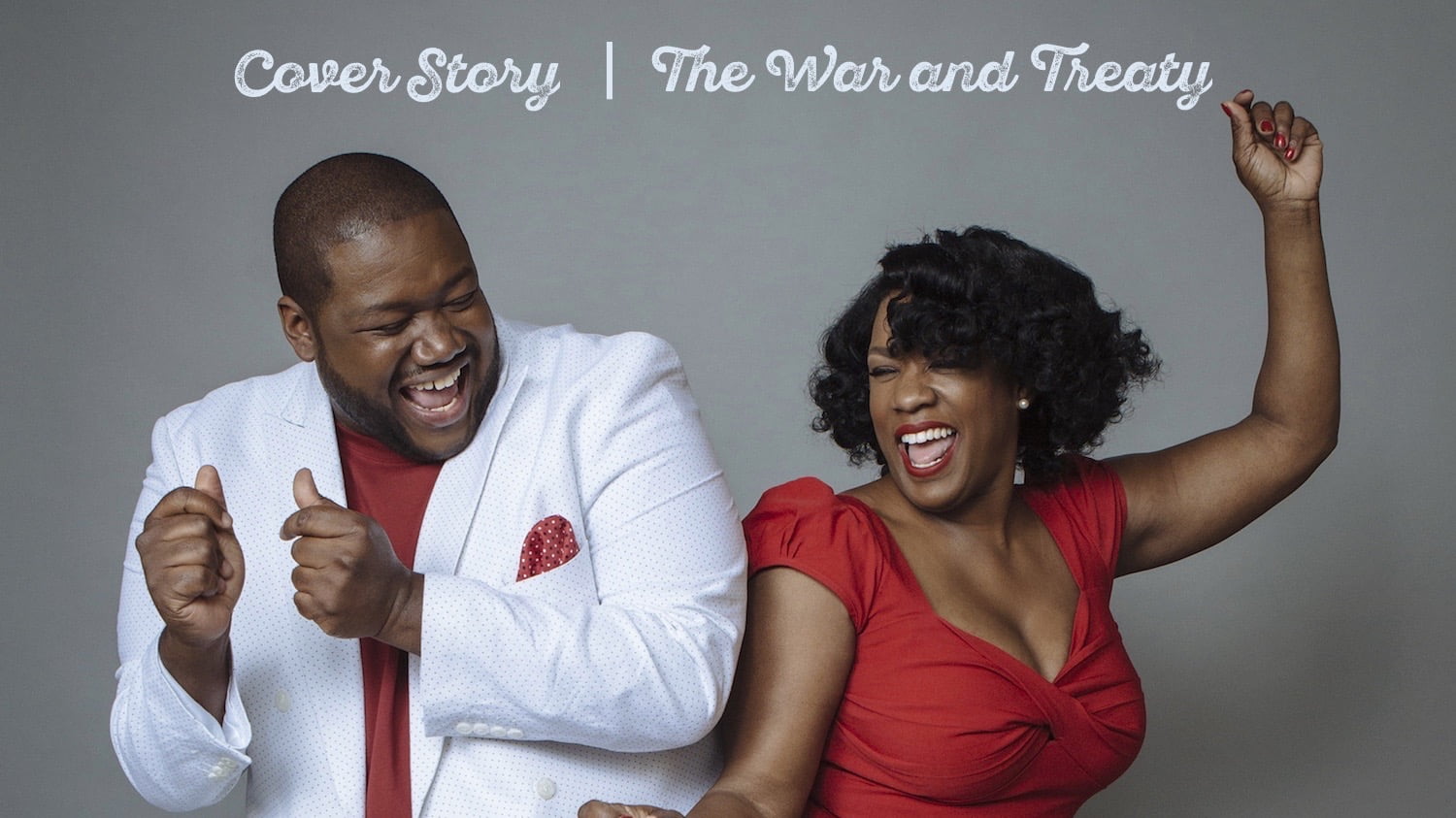
The War and Treaty Bring Their Love to ‘Healing Tide’

More often than not, it seems, the telling of the story of the War and Treaty begins with the war, specifically a piano in the basement of one of Saddam Hussein’s palaces. It is a tantalizing tale, and we’ll get to that.

But this time, let’s start with the Treaty: the moment Michael Trotter Jr. and Tanya Blount first met and two formidable talents took hold in life and in music.

“We have probably two different accounts,” Michael says by phone from Nashville, Tanya audible in the background, laughing as she agrees with the prediction.

Spoiler alert: There is to be much laughter in the ensuing chat, from giggles to hearty peals, and much weighing in from whoever doesn’t have hold of the receiver. And some tears and choking up too. It’s a real delight, everything up-front and on the table, just as anyone who has seen them perform would expect, and every bit of it captured in their new debut album, Healing Tide, a wonder of gospel-soul-country-rock-folk carried on their from-the-heart vocals, both of them capable of gale-force belting and whispered-breeze tenderness, sometimes, somehow, both at once.

It’s a love story through and through, evidenced in song titles along: “Love Like There’s No Tomorrow” (the album’s foot-stomping gospel invocation), “Are You Ready to Love Me?,” (swampy Southern soul), “Here Is Where the Loving Is” (fiddles and guitars and Emmylou Harris!) among them. And a belief that love is contagious, that it can repair the world — the boisterous title song (a bit of Ike and Tina and a lot of Delaney & Bonnie, perhaps), the steamed-windows twinkle of “Jeep Cherokee Laredo.” And in “One and the Same” they have given us unity anthem for the ages. All of the ages. And in album-closing “Little New Bern,” Michael wrote a vivid ode to Tanya’s large, loving family and the former plantation land where it began and at which all the cousins still gather with her grandparents (73 years of marriage!) every summer.

But back to that meeting: “I remember going to Laurel Lakes Park for an event, the Love Festival, Aug. 28, 2010,” he says of a day of music in Laurel, Maryland, near where each lived at the time, at which they were both scheduled to perform. “I was led under this awning and I saw this most beautiful woman I ever saw in my life.”

A “wow” is heard in the background, as if she’s never heard this before.

“And she did what any beautiful woman would have done with a slouch like me. She ignored me,” he says. “We introduced ourselves and she thought nothing of me. I thought everything of her. So I got on stage and performed, and then after I saw this woman running across the field in heels toward the stage, and it was her. She just wanted to know about my songwriting. The rest is history.”

Tanya grabs the phone: “He’s kinda telling the truth,” she allows. “Mine is the part where he says I ignored him. I was out there with some friends and a young lady working with me at the festival kind of whisked me away and said, ‘I want you to meet Michael.’ Which kind of came as he said it. It may come off as I was ignoring him. But I wasn’t. I was trying to do two things at once.”

As to her reaction to his songs, well, on that she agrees wholeheartedly.

“Oh my goodness! I lost my mind!” she says. “After he finished performing I ran over and bought six of the CDs he had and was a crazy person handing them out to people — ‘This is the best thing I’ve heard!’ He was amazing.”

And then?

“We exchanged numbers — and he would have a different account here,” Tanya says. “He lost my number! Threw it in the trash can. So I proceeded to call him and ask him if he could write songs for my brother and I. We were working on a project. I invited him over to the house. He wrote 10 songs in about two hours. He had songs ready, came over and sang them to me and we became friends, inseparable friends. And after I had a birthday party, that was September of 2010, and from there, the next day, we never separated. He moved into my house the next day.”

Michael’s take?

“You know? That’s accurate.”

Okay, then. Now let’s skip ahead to March this year, when the couple, having made their home in Albion, Michigan, found themselves in Nashville, being produced by Buddy Miller at his house — “We wanted to give Buddy Miller a chance to be discovered,” Michael says, barely containing silly giggles. “Just wanted to help him out” — and surrounded by such stellar musicians as drummer Brady Blade, fiddler Sam Bush, pedal steel and banjo player Russ Pahl and multi-instrumentalist Jim Hoke, realizing the love-filled vision they’d been honing tirelessly in the intervening years.

Oh, and there’s Emmylou Harris climbing the porch stairs, not only to add her voice to “Here Is Where the Loving Is At,” but to deliver a batch of birthday brownies to Michael one day.

“Another lady who might need to be discovered,” Michael says, not succeeding at holding back the giggles, before adding, “Everyone knows her for her singing, but people don’t know she makes the BEST BROWNIES EVER.”

The sound is a realization of an array of influences and passions, some shared ones including Aretha Franklin, Ella Fitzgerald, Nat King Cole, the gospel icons the Gaither Singers and James Cleveland. A big influence when they started performing together, Michael says, was the Civil Wars — he sheepishly notes running into that act’s John Paul White and, tongue-tied, blurting out that his act was called the Civil Wars. But what the War and Treaty draw on together is distinctly their musical DNA.

“We really have different backgrounds,” Tanya says. “My mom was from Panama. I grew up listening to Calypso and opera. My dad was from New Bern, North Carolina, and we also listened to Christian music, gospel, but also secular music — Whitney Houston. A plethora of sounds growing up. My dad loved western, so some country songs. We would have a guitar player in church, or sometimes just foot-stomping and clapping. ‘Love Like There’s No Tomorrow’ comes from that. Michael comes from a Seventh Day Adventist background and grew up listening to incredible harmonies and some of his writing comes out of that. His uncle Zilbert Trotter plays organ like no one I ever heard before. We took all that and married it together and it came together with the help of Buddy Miller as a beautiful piece of art.”

Though they’d made a well-received EP, Down to the River, spawning some viral videos to match the word-of-mouth from their dynamic concert performances, this was a whole other world for them, with new expectations, intimidating ones.

“When you get those musicians in the room, they know that no matter what accolades they have, they say, ‘Lead us,’” Michael says. “I had to learn to lead. Buddy Miller is not going to let you escape that responsibility. You come in and have a vision, he’s going to hold you to it. He’s a sweet man, but he has a way to make sure you stay authentic. He’s not going to do take 17, take 18. We did two takes of everything. We had it in the first one. Did the second one because Buddy felt guilty that we had it in the first one.”

He continues, “They all wanted to see where I wanted to go — show us what you’ve got. The intimidation factor was sky high. I don’t consider myself of the caliber of those giants, but then you have to believe you belong there. I remember playing my minor 7ths and diminished chords and this and that and they were laughing, had to explain to me what I was doing. Russ Pahl said, ‘How does it feel to have millions of dollars of education, and never gone to school a day in your life?’ I said, ‘Feels pretty good, Russ.’ He popped me on the head with a wad of paper and walked away.”

The closest he had ever gotten to a music education was under the most unusual circumstances, which brings us back to Saddam’s piano. Michael, having enlisted in the Army in 2003, was sent to Iraq, scared and unprepared. He found himself in a platoon stationed in one of Hussein’s abandoned palaces. A captain heard him sing, heard the inspirational power of his voice and took him to the basement where there was a piano and told him to go at it, learn to play, make music. Not long after, the captain was killed and Michael was asked to sing at his service, the first time he ever sang a song he wrote in public.

But as he talks here, that wasn’t the part of the Iraq story he wanted to tell.

“No one knows this,” he confides. “This is special. I was singing in Baghdad once, and it was probably two in the morning, singing to the troops. And they were singing and clapping with me. And one of the soldiers on guard duty said, ‘You all gotta come see this!’ And when I looked over the gate, the Iraqis with their tea were sitting down at the gate, listening to me sing. And they were clapping and patting their thighs with me. That’s the power of music, the power of songwriting. The war stopped for at least 30 minutes.”

That’s the kind of thing he remembers as his and Tanya’s life accelerates, as success builds and the demands grow — not least being having to spend more time away from their child.

“I’ve cried on the road and broken down,” Michael says. “We travel with our son, but time has now come where we have to leave him with someone for two or three weeks at a time, all for the call of the mission and honoring our life.”

That mission. That call.

“I’m singing with my wife, songs I wrote for us, and we’re on the road and helping bridge humanity in our way. Toughest thing we have to deal with is leaving our son. But no one’s calling us derogatory words.”

He cites a couple of rough epithets that in past have been hurled at many from various directions.

“No one is doing that. There are no signs that you have to drink from the black water fountain. That’s not happening,” he says. “We are blessed that we have not faced it that way. We have a multi-cultural band that reminds folks of what we have overcome. I’m not here to promote the black race or white race, but am genuinely invested in unifying the human race. I do believe there ain’t no better thing in life. I’m almost coming to tears just thinking about if Dr. King’s dream can be a reality daily. We make sure at every concert that everyone hugs each other and tells each other they matter, black or white, foreign or domestic. We are all human beings.”

As the song says, with equal grace and power, we are all “One and the Same.”

Tanya puts it simply and profoundly: “This project is an act of love.”


Photo credit: David McClister

WATCH: Ben Kunder, “Better Human”

Artist: Ben Kunder
Hometown: Toronto, Ontario, Canada
Song: “Better Human”
Album: Better Human
Label: Comino Music

In Their Words: “We can’t stand still in our sorrow or our joy. We must advocate for positive change and it has to start with the self. We’ve got to love ourselves before we can love anyone else. You’ve got to love yourself before you can love anyone else. The song’s message is strong and clear, and it is meant to unite us. I wrote ‘Better Human’ as a personal mantra for myself to work harder to be a better human for my partner and children, to tackle my own struggles through life and art, and to find the energy to contribute to the world as an activist and support other humans in all forms. I want you to know that the more we share with each other, the more we realize how much we have in common, both in light and darkness.

“When I set out to make this music video, I wanted to find a creative director who would bring a perspective that was different from my own. I didn’t want the story to be about me in a singular sense. This song wasn’t meant to have a singular vision but to have a universal message of love and connectedness: that we all need to be working harder for each other. I found what I was looking for in Detroit-based photographer/director Megan McIsaac. She had the vision of our hero, Juliana Ledesma, a transnational adoptee from Colombia and single mother of two beautiful children, who has grown up in North America where she’s found that her life is very different than it would be in Colombia. She’s had so much support here to be free, independent, and to live her truth, but that doesn’t leave her without struggle or pain. She is our hero in this video, finding ways to be at peace in a world full of personal obstacles and in a societal climate that can make us feel alone and disconnected. She is a human whose story needs to be told.” — Ben Kunder


Photo credit: Scarlet O’ Neill

LISTEN: The Devil Makes Three, “Pray For Rain”

Capturing your band’s live sound in the studio is right up there with writer’s block as one of the most common challenges you can face as an artist—particularly if, like The Devil Makes Three, your live shows are your bread and butter.

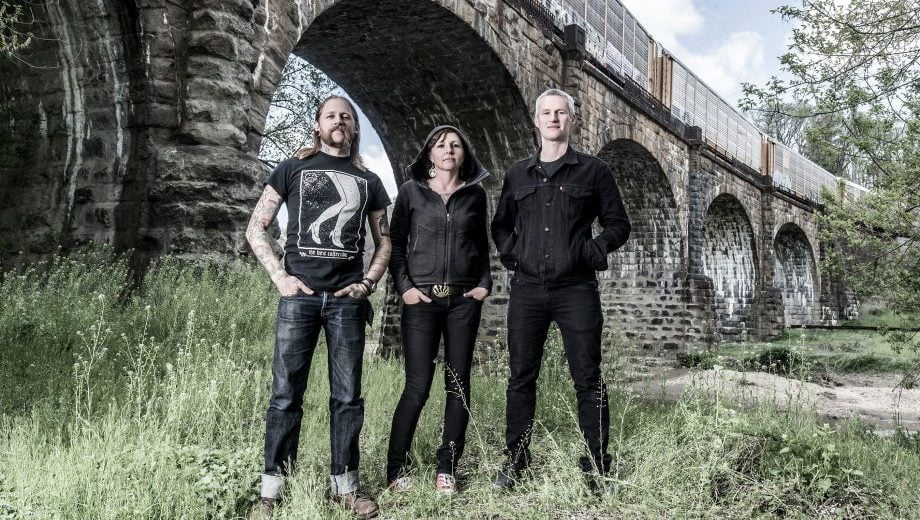
The California trio, whose high-energy tours and festival appearances attract a fiercely dedicated fan base, have already released a couple live albums. But as they were writing Chains Are Broken, Pete Bernhard, Lucia Turino and Cooper McBean made a conscious effort to further capture their live instrumentation in the studio by inviting their touring drummer, Stefan Amidon, to record with them.

“We recorded with a [session] drummer who we really liked on our last album, Stranger, and it was just fun,” Bernhard says. “It gave us a lot more, I dunno, freedom I guess. There’s a certain freedom in playing as a string band too, but it was a different kind of freedom. But yeah, we’ve been playing with [Stefan] for years. Sometimes people see us play and they’re really shocked that we have a drummer, but that usually means that they haven’t seen us in like three or four years.” He laughs. “So we wrote a lot of the songs including drums, so when we went into the studio, it seemed like the natural progression to have him play.”

However, that doesn’t mean drums are a permanent addition to the band’s setup.

“I don’t like to predict the future,” he says. “I think that maybe we’ll use him if we think the song is appropriate, and if we write a song that’s just like a guitar and a bass, then we’ll do that. The main thing I like to do is just approach it like there really aren’t any rules, you know? And if the song wants drums and it wants a bass clarinet, then that’s what we’re gonna do. And if it doesn’t want that, if it wants like an electric guitar and standup bass and vocals and nothing else, then that’s what we’ll do.

“We still play without a drummer sometimes, it just really depends on the gig. But for us it was really exciting to do it and just try it because we hadn’t done it before. But yeah, for the next record, maybe we won’t. Maybe we’ll use drums on some songs like we did on Stranger and not on others; maybe we won’t use them at all. I think it really depends on what we’re excited about writing. There are no hard and fast rules.”

That lack of rules when it comes to their recording process led them to venture out to Texas for a new sort of studio experience as well, working on Chains Are Broken at the Sonic Ranch, the largest residential recording studio complex in the world.

“I’d never been to a recording studio like that before,” Bernhard says. “I’d never done like a live-in sort of studio. It was really cool. It was a very strange experience. You live at the studio, and there’s a lot of other people recording there too, so it’s kind of like—I don’t know, I don’t know how to describe it. It’s like band camp or something. Because while we were there, there’s like a jazz artist next door who’s recording, and there’s a rock group, and then there was Tito & Tarantula, which is a little more on the punk side of things, and it was really cool and very, very different. We’re used to sort of going into a city and recording in a studio and kind of spending a lot of time someplace in the middle of everything, and this could not be further away from that.”

He adds, “It was incredibly isolated. It was down by the Mexican border. It was really, really pretty and really quiet and really peaceful, and we just focused on playing every day for a couple of weeks and before we recorded the record, we sort of hung out and played the songs and talked about how we wanted to change them, things we liked, things we didn’t, and it was like we got so much more space and time to work on the record than we ever have before. It was really cool. It’s kind of creepy out there though…It’s the desert, you know? And I think that kind of influenced the sound of the record too. Just sort of the environment is very kind of empty and really pretty but also a little bit lonely.”

You can hear that influence on tracks like “Can’t Stop,” a deceptively upbeat song with dark lyrics that only reveal themselves if you’re listening closely. Bernhard says it’s about the pitfalls of being an artist.

“I think mainly for me it’s just a song about being an artist of any sort—a musician or a visual artist—and what I think is sometimes necessary to be an artist. When I wrote the song I was thinking a lot about how a lot of artists kind of finish their lives in a terrible way, you know?” he says. “Like someone like Hemingway, he was given electroshock therapy and he basically drank himself to death, and somebody like Townes Van Zandt also met with a sad end. I was reading James Baldwin and he was talking about how being an artist is one of those things where instead of you choosing to do it, it’s one of those things where you can’t help doing it. You have to do it. And you don’t have a choice whether you do it or not, and you do whatever’s necessary in order to make that happen.”

He continues, “And sometimes that’s kind of not that great. But people who are artists and feel they have a vision that they want to see happen and that they’re driven to are willing to do that. And I think that was the inspiration for the song, you know, really not being able to stop. You might want to, but you can’t. And I think that’s sort of a part of the life of being an artist or a creative person in any way, and it is kind of dark sometimes. I think it’s a really great thing and it’s a wonderful gift to be given, but at the same time, yeah, it can be kind of a dark thing. And just that feeling of not being completely in control, I think that that’s part of being an artist of any kind. You kind of give yourself over to that, and it takes you wherever it’s gonna take you, and sometimes where it takes you isn’t that great, but that’s part of the ride.”

Sonically, Chains Are Broken is a heavier record as well—a natural progression stemming from the band’s live show.

“I think it actually sort of unfolded in the live show over the years, playing with a drummer, and everybody in the band is really into heavier music,” Bernhard explains. “It’s pretty funny, actually, if you like go around the room and ask the band what kind of music everybody’s listening to right now, the answers you get back are really hilarious for the kind of music that we play. We all started out in the punk scene, and as we’ve gotten older, I think Cooper especially got really into sort of slow metal and a lot of experimental music, like drone music.

“So yeah, we definitely made the album heavier just out of our music getting heavier over the years onstage. I think it’s just kind of happened naturally. And it’s also so fun to play like that. I think we’ve always tried to emulate that, even when we were just three people playing acoustic instruments. We always tried to play as fast and hard as we possibly could, so it’s sort of a continuation of that.”

But like their live show, no Devil Makes Three record is immune from being tweaked with and evolving, and Bernhard says the group is eager to see how Chains Are Broken shifts as they take it on tour.

“I think the thing that happens for us, you know, we write a record, we’re excited about it, we go out on the road, and then a lot of times we change it.” He laughs. “We change how we play the songs. We like to do them in a different way, we might change the tempos of them, it’s like things evolve and we find a certain way that we really like to perform stuff. I mean, I think that’s part of why you want to see a band live, too. Just sort of to see the different songs and see how things evolve.”


Photo credit: Jay Westcott

Baylen’s Brit Pick: Elles Bailey

Artist: Elles Bailey
Hometown: Bristol, England
Latest Album: Wildfire

Sounds Like: Mollie Marriott, Jo Harman, Bonnies Tyler and Raitt, with a touch of Amy Winehouse.

Why You Should Listen: I love a husky voice and Elles Bailey has it in spades. Of course a voice that sounds like it’s had more nights out than me and smoked more cigarettes than Maggi Hambling (art school reference for you there) isn’t enough to make a great album, as wonderful as that voice may be.

So it’s good news that Elles combines that voice with sharp-edged lyrics, a soulful bluesy sound, country roots sensibilities, and top notch musicianship. Combine all that with a contemporary edge and you’ve got yourself a great new hope of British music. The smokey voice, by the way, doesn’t come from either cigarettes or art school; it’s the result of a stint in hospital when she was a child. Elles doesn’t dwell on that though and neither should we. It’s just another reminder of how sometimes light comes from darkness; she’s embraced it, turned it to her advantage.

I’d known of Elles for awhile and played her on my radio shows plenty but I only got to catch her live at the opening party for last month’s Nashville Meets London festival, and she blew the roof off the place. She has an easy, engaging stage presence and is the only artist in three years of the festival to start her set at a grand piano. A grand piano always adds a bit of oomph doesn’t it? She’s also a dab hand at a self-deprecating story, which makes you love her all the more.

All that aside, she could just stand stock still centre stage and sing her songs and that would be plenty, they are that good. Her latest album Wildfire was produced by Brad Nowell, tracked in Nashville, and features Grammy Award-winning guitarist Brent Mason and Musicians Hall of Fame keyboard player Bobby Wood, so all the boxes are checked in the Real Deal category. She’s appearing at The Long Road festival in England in September, thank God it’s an outdoor festival, I don’t think the insurance would cover another roof blown off by Elles Bailey.

As a radio and TV host, Baylen Leonard has presented country and Americana shows, specials, and commentary for BBC Radio 2, Chris Country Radio, BBC Radio London, BBC Radio 2 Country, BBC Radio 4, BBC Scotland, Monocle 24, and British Airways, as well as promoting artists through his work with the Americana Music Association UK, the Nashville Meets London Festival, and the Long Road (the UK’s newest outdoor country, Americana, and roots festival). Follow him on Twitter: @HeyBaylen


Photo credit: Alex Berger

LISTEN: Dawn Landes, ‘Meet Me at the River’

Artist: Dawn Landes
Hometown:
Louisville, Kentucky
Album: Meet Me at the River
Release Date: August 10
Label: Yep Roc Records

In Her Words: “I was lucky enough to work with the legendary producer Fred Foster for my new record. Fred has been making hits for most of his 87 years. Merle Haggard once said, ‘he lives in the songs.’ He does, he’s there in ‘Pretty Woman’ and ‘Me and Bobby McGee’ and Dolly Parton’s first hit, ‘Dumb Blonde.’

I learned so much working with Fred on this record and I’m really proud of it. Some of my favorite lessons were:

* ‘Keep it conversational.’ If you can speak the lyric and it reads, it’s all the morepowerful.

* ‘A great song can be sung by anyone in any style and any meter.’ He learned this from the great publisher Fred Rose, who sat at a piano and played him Hoagy Carmichael’s “Starlight” in its popular form, then in 3/4 time, then in a Western swing style. They all worked.

* ‘The feel is the thing. If you’re in the wrong tempo you won’t have the feel.’ The drummer Eddie Bayers who played on the album has said that Fred sets the best tempos of anybody. I believe it.

We recorded everything in Nashville with the heaviest hitters around: Kyle Lehning, Charlie McCoy, Steve Gibson, Bobby Wood, Eddie Bayers, Russ Pahl, Larry Paxton, Larry Franklin and more.” — Dawn Landes


Photo credit: Shervin Lainez

A ‘Sunset’ Toast: A Conversation with Amanda Shires

When Amanda Shires throws a party, it’s a crackling and cackling affair. The singer-songwriter has often enjoyed lacing her candor with a biting sense of humor, and her new album To the Sunset offers listeners a celebratory and sharp-tongued toast to all the bits—the good, the bad, the ugly—that have shaped her. Beyond giving birth to her daughter Mercy (with husband Jason Isbell), she completed her MFA in creative writing, but that was after someone stole her thesis and she faced the nightmare of starting over. To the Sunset presents many lessons, but central among them is learning how to accept both sides of the coin because together they pay your way.

Shires once again worked with Dave Cobb, the two aiming for a larger sound than what she’d previously accomplished. For longtime listeners, the result strikes a different chord. She and Cobb hit upon a headier pop sound, integrating slick vocal production, wild rhythms, and scorching, electrified solos. There’s a greater lightning running through To the Sunset, which comes, in part, from the use of pedals to elevate Shires’ fiddle from its folk roots. Between her new sonic direction and razor-edged lyricism—thanks to that MFA—her latest album raises a glass in raucous style. To the Sunset is a dark fête, the kind of party that only occurs when you truly let go and learn to be yourself.

Let’s talk about your MFA. How long did it take you to recover from having your thesis stolen?  

I cried and then I got mad. Jason said, “You know, whatever you write will be better than what you already wrote because you’re practicing writing,” and at the time I thought that was the most stupid thing I’d ever heard somebody say, but it’s true. The more practice you get, the better you get, and it all works out in the end. If you really want something, you’re going to find a way to make it happen.

It’s so exciting to hear what you’ve written on this album.

I think it’s pretty cool because I can tell a difference from other records, where I was working with basically instinct. Going to school, I got what I wanted, which was to learn the reasons why I should go with one choice over another, or at least have a way to argue with myself, and a way to back myself up when I’m editing. They teach you there’s no such thing as writer’s block. If that was a thing then nobody would graduate.

Who are some of your favorite poets?

I like Billy Collins, Mary Oliver, Mark Strand, and then, you know, regular favorites like Octavio Paz and all the greats.

What would you say you look for in other poets’ writing?

It’s a time to be quiet and reflect and think deeply. You are the audience of one at the time, really. I like poetry because it can go pretty deep and it’s not three minutes long. It’s as long as it takes you to understand it. Songs are such different animals. You have a lot of things that you don’t get with poems, like, you get a sonic landscape and a mood can be provided, whereas on the page it has to be presented with such precision and such intention that you can understand it without anything else helping you.

You recorded your prior album, My Piece of Land, two weeks before giving birth, and you mentioned having to hide in a closet to write this album. Mercy has, in a way, impacted your last two albums. How do you continue to carve out space—besides the closet—for your creative side to flourish?

I’m lucky because Jason’s an excellent co-parent, so if I need to write and do stuff, he’s all hands on deck, and if he needs to write, I’m right there. When I had to be in the closet, I had to make use of a small space, and it wound up leaking into my bedroom, too, so I was taping everything to the walls, so it wouldn’t accidentally get smashed or crumbled by the two-year-old. I learned how to accept things in their early stages. Before, I was real, like, “Nobody sees what I write until it’s all done.” This was a cool thing where I learned to accept my very shitty lines as they faced me every day and tried to make them better. When I was done, I shredded them and I put them in a composter and that goes into my garden.

Have you found that your plants are growing better because of it?

I don’t know. It’s toward the end of the season until that composter’s done cooking. That was a lot of shredded letters. I’m an editor over and over. Some people can write real fast, but I think everything needs tweaking all the time.

Does the editor side of your brain gets in the way of your natural instinct?

It does, it sure does. I found a thing that helps me with that. It’s called FlowState, it’s an app. You set a timer and if you don’t keep typing it erases your work, so it removes the editing process; you can leave it up there and get your free association going, and really try to put your thoughts into words. When I first got it, I started out doing five minutes at a time, now I do 30 minutes at a time. The further you go with it, it’s like a door in your mind opens and you figure which things you need and which things can wait.

Turning to space, that theme—the space between people—surfaces throughout your catalogue. Here, on “Leave It Alone” and “Charms,” it functions in compelling ways. What particularly interests you about space and relationships?

On “Charms,” my mom’s mom abandoned her at a young age, and that’s where that song came from, and just thinking about how hard that would be for both parties. A lot of times as individuals, I know we all often deal with feeling alone or that nobody understands us. You’re born alone, and you die alone. It’s a thing I think about a lot, and that’s why it presents itself in the work.

As a touring musician, as much fun as it is, things get sacrificed. All that’s to say, writing about it and dealing with it makes me a happier person, and if there’s anybody else that feels like me, then I feel I’ve done a better job because it is a way of connecting in the end.

On the My Piece of Land track “I Know What It’s Like,” the desire to run away comes up, and that theme surfaces again on “Charms.” Except running has turned into forward momentum. When did that shift occur for you? How do you push against the desire to cut and run?

[For “I Know What It’s Like”,] I had a person in my life that was telling me these things, like, “I know what you’re going through, just keep talking to me about it.” To have a comrade in that was nice, and I wanted to keep that conversation, I wanted it to be preserved. The running thing, we all want to run away, but then we’re like, “Nah, our problems aren’t really that bad.” It’s really better for you to not run way, to pick up your big girl underwear or your big boy underwear, or whatever. Put your head down and do the work.

I appreciate that you took the momentum that would cause someone to run and shifted it to a positive momentum on “Charms.”

All this stuff is all inherited—you know, how we do life. I will now cite Philip Larkin: “Your mom and dad, they fuck you up.” So in that one I was moved that even though my mom experienced abandonment, she didn’t fall into that learned thing. I think it’s wild to break habits that have happened in your family, generationally. You can’t let fear be the thing that owns you. It’s just silly. This is such a vague thing to describe, fear and doubt and all that stuff—thinking about hypotheticals for situations—it’s so useless; it’s such a waste of time and energy because you can’t control the future, and you can’t control what’s already happened. It’s about trying to accept what’s happened and move forward, and if you fuck up, you fuck up. At least you tried.

Right, you need to make mistakes in order to figure it out. It’s like editing. You never write something perfect the first time.

Yeah, you’ve gotta find a way to trust yourself.

That’s hard when you’re younger.

Totally because you don’t have much experience with it, so you gotta do all the things that give you experience and wrinkles. They’re worth it. Then you start figuring out that, even as you get older, you were this person and now you’re this person. You’re always changing. You might look back and say, “I don’t even recognize that person.”

Joan Didion had that fantastic quote about making peace with your former selves because you’ll never fully leave them behind.  

That’s a whole thing I’m trying to say with To the Sunset, that sort of a cheers or toast. It takes all the things to make you who you are and who you want to be, rather than just ignoring it, or putting it in a box under the bed.

It’s hard to fight, though, because there can be messy parts of yourself that you don’t want to admit.

If you’re not doing that, you’re probably ignoring something that you need to feel. You need to feel ashamed and humiliated sometimes by your own actions. It’s easy to rewrite the way things happened. Once you face it, you can learn yourself better.

Lastly, there are some beautiful portraits of women on this album. How has your sense of womanhood changed, if at all, since having Mercy?

I always felt like I had a responsibility, but I feel like I have that even more. Doing as much as I can and thinking more about the world for her and hopes for her and fears for her. I also feel like, for a long time, you couldn’t talk about things. Even the ugly parts of being pregnant or postpartum, you couldn’t talk about anything, and everything’s supposed to be dreamy and awesome. Now, it’s easier in that more and more women feel like it’s OK to talk about the ugly parts. I think that that might keep us going in the right direction, somehow. One of the coolest things on the record, woman-wise, is my only guest was Gillian Welch, and she sings the harmony part on “White Feather,” what I call the “God” part. Whatever your God is. That was pretty cool. That was a day I thought I was going to die.

Also, your album is coming out at a time when a lot of artists are challenging this sense of perfection.

Yeah, like we don’t need to write a lot of ballads or whatever. It is a cool moment. I’m so happy to see so many women putting out records this year. There’s always been a ton, but there’s not been as much attention or as much room. … It took all those people before us to get to this spot now; I definitely don’t think it’s just happened over the past few months. They’ve always been there, but to move together works better than to move singly.


Photo credit: Elizaveta Porodina

WATCH: O&O, “Tears in the Rain”

Artist: O&O
Hometown: Colorado / Israel (based in London)
Song: “Tears in the Rain”
Album: Tears In The Rain

In Their Words: “The video for ‘Tears In The Rain’ is our second collaboration with filmmakers Jordan Rawi (director) and William Fielding (director of photography). We shot the whole video in one day at the historic Clementi House in Notting Hill. We wanted the video to reflect the uncertainty of where the relationship in the song stands and add a haunting element. In the video, the two characters are in a mysterious pursuit of each other through the many rooms of the quirky house, but whether or not they could ever find each other again is open to the viewer’s interpretation.” — Obadiah Jones & Orian Peled


Photo credit: Max Weir