Steep Canyon Rangers Are “A String Band Again”

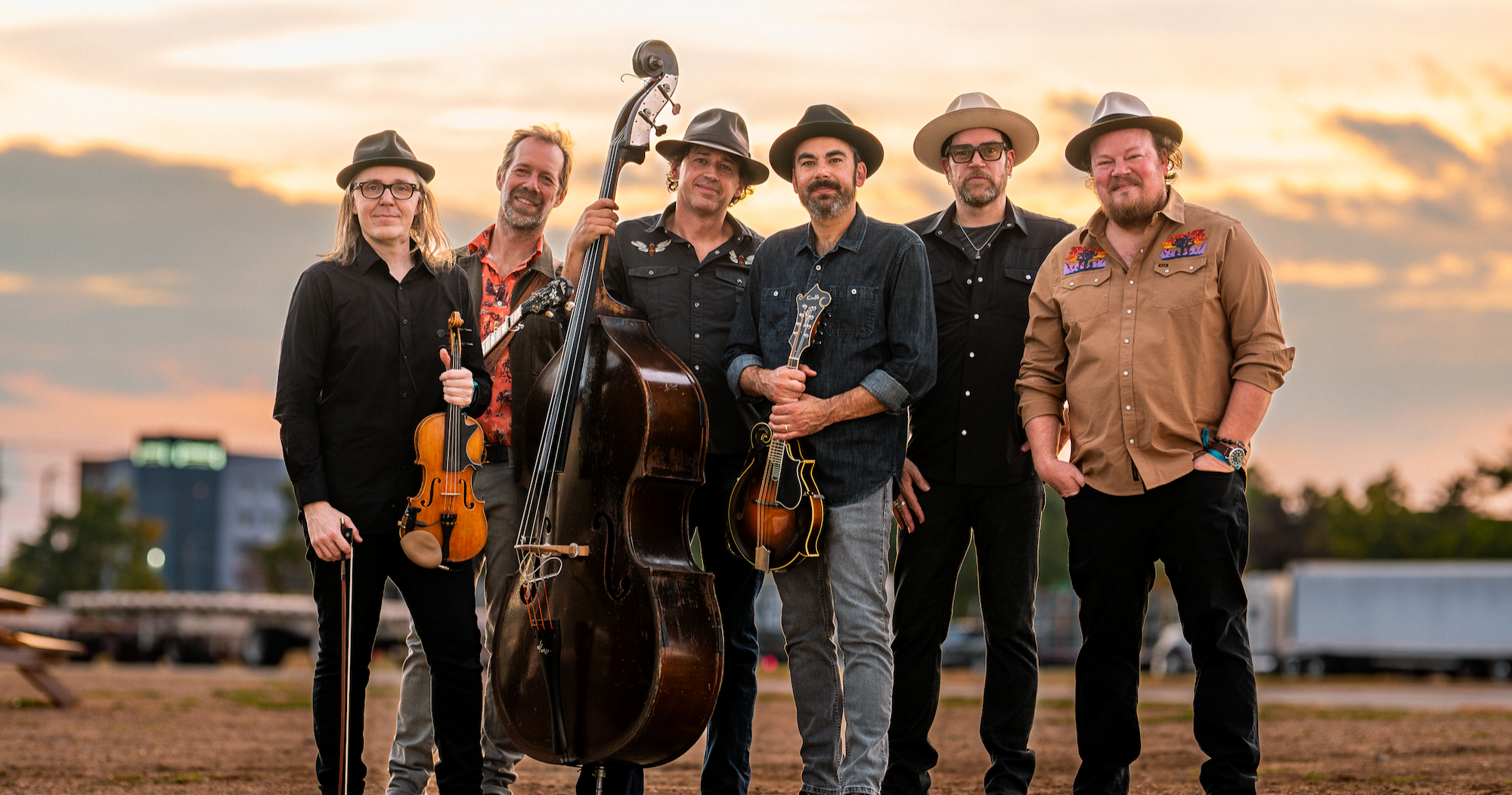
Twenty-six years into its life as a band, the Steep Canyon Rangers get back to basics on Next Act, unplugging their amps and instruments in favor of an acoustic setup with minimal percussion. It marks a return to the foundations that first set the group up for success.

Releasing May 22, Next Act is the second studio effort to feature guitarist and vocalist Aaron Burdett, who joined the Rangers in 2022 following the departure of founding member Woody Platt. In addition to appearing on their 2023 album, Morning Shift, Burdett is part of the Rangers’ 2024 live record, which features several of his own compositions, too.

Alongside the band’s other members – Graham Sharp (banjo), Mike Guggino (mandolin), Nicky Sanders (fiddle), Mike Ashworth (percussion, Dobro), and Barrett Smith (bass) – Next Act brings Burdett into the fold even more, with six tracks written or co-written by him. “Roll of the Dice” catalogs Burdett’s early days traveling with the band and “Hard Times” finds him reflecting on adversity and how moments that once felt overwhelming can later soften in memories.

According to Ashworth, the growing role of Burdett in the band is simply a carryover of having multiple voices contributing to their songwriting over the past decade, with Sharp being the other primary force of late.

“Aaron came into that role really well with a bunch of his own material while also taking lead on some of the stuff Graham had written as well,” Ashworth explains. “After incorporating more of his own stuff on that live record, the next step was to up the ante even more on this album by bringing even more of his older work into the studio.”

Steep Canyon Rangers’ Mike Ashworth and Barrett Smith caught up with BGS to delve into how books inspired two of the album’s songs, how a road trip instigated “Halfway To Reno” featuring Edie Brickell, what remains on the group’s bucket list, and more.

How did Aaron’s level of involvement on this record grow compared to Morning Shift?

Barrett Smith: It feels like Aaron has always been here – he just fits with us so well. He’s become such a close friend and a great person to work and make art with. We’re just excited with everything having to do with the band right now, and Aaron is a big part of that. Things went well when we worked together on Morning Shift, even though we were considerably less worn-in and stable than we are now on this album. We’re really cooking right now and feel great together as a group.

Mike Ashworth: From a relationship standpoint, things have gelled much further than I’d ever hoped. It does feel like Aaron’s been a member for more like 10 years, not three. On this record you can see the band in more of a way that feels like a group that’s sure of itself. The last time we were in the studio we arranged in more of a rock ‘n’ roll style where everybody reinforces the same rhythms, but on Next Act we gave everyone a lot more room to explore their own parts. It’s indicative of how much we trust each other now and how much growth artistically the band has seen in the last few years.

BS: Another good indicator of the growth is that on Morning Shift we worked with a producer, Darrell Scott, even though we enjoy and produce ourselves really well. But then when Next Act came along, we felt like we had enough chemistry together that we could move forward without an outside producer this time. Doing that allows us more space to bounce ideas around and feed off each other, which we feel like is our greatest superpower as a band.

As well as y’all work together, it’s hard to pass up a collaboration with someone like Darrell Scott when it presents itself!

MA: I imagine it’d be hard to come into a band like this and produce, because oftentimes we have to be careful to not already be done with everything. As a result, we intentionally leave certain things unarranged or on the table to give them something to do or else we’ll just wind up taking everything away from them.

BS: I remember Darrell, a number of times, looking around and saying, “Y’all are pretty weird with how you do things.” One time when we were recording, I remember him stopping and asking us if we always had so many opinions about each song that we communicated to each other. Eventually he started telling us to just “shut up and play” – that was one of the catchphrases of our studio time together. [Laughs] If you have an idea, we want you to be confident that it’s going to be heard. There’s a lot of trust in the whole system.

MA: Another thing Darrell pointed out was, “Y’all really care so much about the story.” He’d never heard an entire band comment on the lyrics and stories behind each song like we do – whether it’s where to punch things up or down or when to add harmonies.

That’s the cool thing about this new record. It delves even more into that exploratory realm of the band trying to sell the story – and the whole band, not just one singer, absorbing what it’s all about.

Tell me about naming the album Next Act. Is that a nod to this full circle journey that’s brought you back to being more of a traditional string band?

MA: The intention was twofold, but that was definitely a part of it. As the title of the song, it’s about picking yourself up, moving into a new phase of life, and embracing change. However, Next Act for the band is us reflecting on our change and growth and the ability to reveal what our potential is at any given moment. Because of that it became a pretty conscious decision to make it the title of the record.

BS: On Arm In Arm [in 2020], it was fun getting to mess around in the studio with organs, electric guitars and all these special guests – it was like our own mini-Brian-Wilson-like experience. But on this record, we wanted to bring it back home and return to being a string band again. Because of that, this new record doesn’t have any electric instruments on it. There is percussion, but it’s not a full drum set. We’ve been doing a lot more stuff around one mic at our live shows recently and feel like these new songs are very representative of that.

MA: We’ve all had amps and drums buzzing around our heads for years, so we wanted to remind ourselves that this thing still starts around a campfire and can always come back to that. I don’t think fans will know what to call what we’re going to do on any given night, because even we won’t [know] until we see the room and start to feel the vibe of the city and people there. Doing this record has allowed us to rediscover the foundation of what we are when you strip everything away. That’s been a really cool and unnerving process to get out from behind all the extra noise and see that when you take those things away, the art is still really good.

There’s a couple songs on this record – “Back of Beyond” and “Circling the Drain” – that were inspired by books, Barbara Kingsolver’s Demon Copperhead and Horace Kephart’s Our Southern Highlanders, respectively. With that in mind, how would you say literature informs the band’s songwriting, not only with this record, but overall as well?

MA: Graham actually wrote both those songs, but I do want to speak about Demon Copperhead, because we all just absolutely loved that book. We’re not just a band, we’re also a close circle of friends, and with that comes shared mutual interests, like books. I’m so glad that Graham is my friend, because he can write things that I wish I had the ability to say. But once something is written, whether it be a book or a song, it doesn’t belong to [the writer] anymore, it belongs to you, [the reader/listener]. That’s the really cool thing about art.

I love that Graham is a voracious reader because we wind up getting a lot of great songs out of it, like these two. Damon [Demon Copperhead’s protagonist] is such a wonderful, resilient character that reminds me so much of people I grew up with – and I’m sure Barrett would agree.

BS: As a writer, artist, and creator, I think it’s a good habit to have different areas you pull inspiration from to keep you out of a rut. For Graham a big one is literature. Demon Copperhead threw all of us for a loop as it was getting passed around the bus. When we found out he was basing a song off it we jumped right on it.

As for “Back of Beyond” and Our Southern Highlanders, I think that book is essential reading for any Western North Carolinian. “Back of Beyond” was simply a term that came from meaning the middle of nowhere out in the country, in a place where you can go for days without seeing anyone or speaking a word.

“Back of Beyond” is a song that’s been lingering with y’all for several albums before finally getting recorded now. What made Next Act the right spot for it to land?

BS: During my time in the band, I would say that “Back of Beyond” is the biggest survivor, in terms of songs that have stuck around and taken on many different forms before finally making it onto a record. We actually wanted to include it on Morning Shift, but Darrell Scott didn’t think it would be a good fit, so we didn’t. We may have even called that album “Back of Beyond” if it had been on it. But when that happened, we knew it would reappear on our next record. After it missed the cut we all really wanted it for this one, which is why we call it a survivor.

I was also curious about the song “Halfway to Reno,” which came from a roadtrip you [Mike] had with Aaron from California to a gig in Reno, Nevada. Is that right?

MA: That’s right. I think Aaron was behind the wheel that day. From my view, he’s someone that is more influenced by an experience or feeling than anything else, which he can then take like putty and mold into a piece of art. That’s the beauty of being in this band, these guys will come up with these nuggets – and if it hits the Steep Canyon grinder and comes out the other end still in one piece, then they’ll take it and finish writing it.

Then when we were mixing that song we kept envisioning a high voice on it, but couldn’t figure out exactly who to ask to fill the role. Then we sent it to our dear friend Edie Brickell and she ended up putting the icing on the cake. The song is about one lover trying to get back to the other and the little things that you carry through your day – especially when you’re separated by distance – that keep you tied to home. She really understood the assignment and put this beautiful piece on top of the tune that I absolutely love.

How did the opportunity to work with Edie on the tune come about?

MA: We first met her over a decade ago through Steve Martin. He would send her banjo ideas and she’d send them back to him with lyrics over them. That quickly evolved into a fantastic record produced by Peter Asher called Love Has Come For You in 2013. But touring together is where we really befriended her, during late nights on the bus and in the dressing room. I remember being drawn in by her spontaneity and creativity and the way that she can write a song in the moment about that moment. It’s almost like a fortune teller.

Since that first encounter we’ve recorded many times together through the years and she’s become not just one of my favorite female artists, but one of my favorite artists, period. She’s just so heartfelt every time she adds to something. It comes from a real place and that’s harder and harder to find these days.

Speaking of Steve, what did it mean to have him featured with you on “Heart’s the Only Compass”? I think this is his first time on an album or single with you since 2020’s “California.”

BS: It’s always a huge honor any time we’re able to work with Steve. He’s an iconic American art figure, so to have the opportunity to create with him is a treat. When we decided we wanted clawhammer banjo on that tune we tossed a few other names around first, but it all came back to Steve, because the prowess he has on the instrument is second to none.

From what I understand, you reconstructed “The Kindest Thing” in the studio at the behest of Nicky. Tell me about that process and how the final song differs from what you were initially going for?

BS: That song took on a bunch of different forms in the studio, as our songs often do. At one point it had this Don Williams, cool country kind of feel and Nicky heard that pretty late in the game, but didn’t care for it. Instead he kept talking about “Going to California” by Led Zeppelin, which led to Mike Guggino kicking off this riff similar to the one in that song that wound up setting the foundation for what the song eventually turned into. Ultimately, it was a good decision on Nicky’s part.

Steep Canyon has been together for 26 years now. With that in mind, is there anything that remains on your musical bucket list?

BS: The band hasn’t won a GRAMMY since I’ve been a part of it, so I’d love to see that happen – maybe even with this album. [Laughs] Aside from that, it’s hard to think of specific venues, not that there aren’t any, but because we’ve gotten to play so many of our dream places already. My bucket list is mainly just keeping on and continuing to discover and hone my role in this band.

What has bringing this album to life taught you about yourselves?

MA: I thought I’d become more patient as I became older, but I actually think I’m becoming less. [Laughs] In all seriousness, this session taught me to slow down again. I kept wanting to schedule and have it done sooner rather than later, but instead, the cycle for this record was one of the longest we’ve ever endured. In the end I think it’s exactly what it wanted and I’m grateful for how it got me to take it easy and be more in the moment.

BS: Even though we’ve been playing together for so long, working on this record brought me a new level of comfort and trust with the band. I have more faith in the people in the band, what we’re doing and my place in it than ever before, which is such a good feeling. I’m really enjoying where we are right now and am excited to see how we keep building upon it.


Photo Credit: Jay Strausser

Our Jamgrass column is brought to you in partnership with Preston Thompson Guitars.
Anna Tivel Makes Poetry in Music From Poetry in Nature

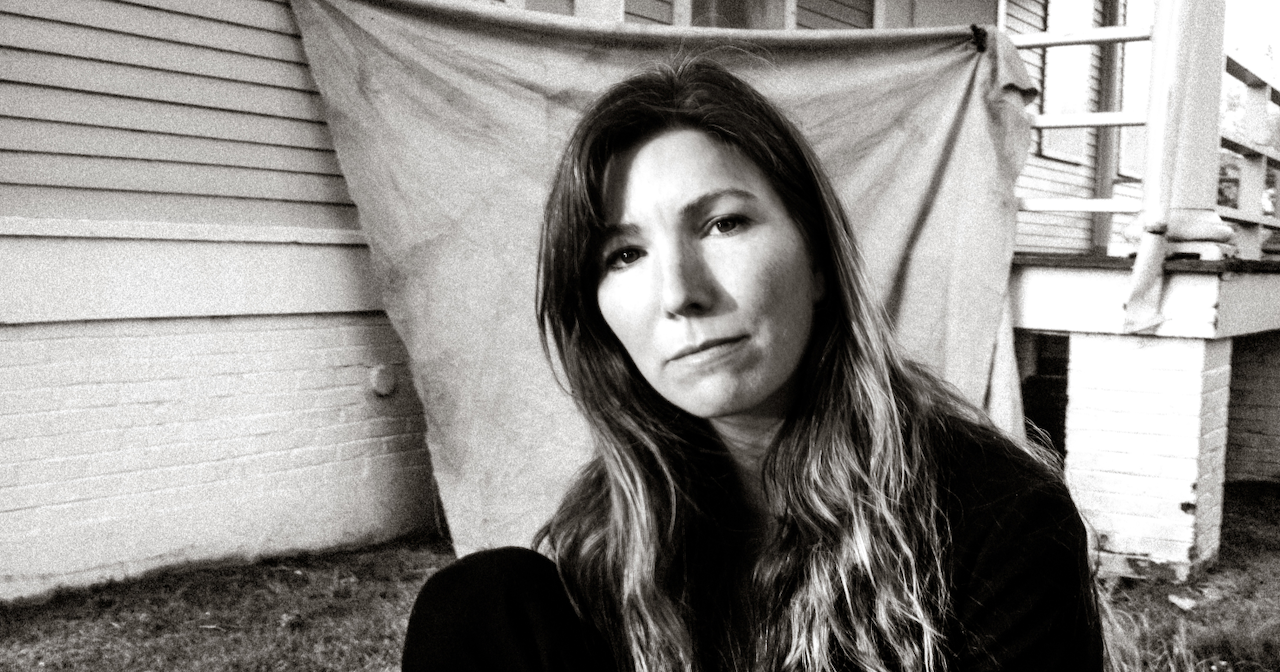
There is something woodsy and nature-rooted about Anna Tivel’s songwriting. It calls to mind mountain hiking, tall pines, mushroom foraging. The clink of a water bottle against a caribiner. The gentle tiptoe sound of dew dropping from treetops. Maybe it’s Oregon that’s seeped into her bones. Maybe it’s just the way her intrinsic poeticism steers things.

Listening to Tivel’s music tends to conjure the words of other writers. Consider some of the final lines from Barbara Kingsolver’s Prodigal Summer:

“Solitude is only a human presumption. Every quiet step is thunder to beetle life underfoot; every choice is a world made new for the chosen.”

Or, consider the poetry of Wendell Berry or Mary Oliver or Andrea Gibson. Each seemed to have plucked their pieces from shrubs and vines – or at least from the air around their foliage. Indeed, some of these names came up in our recent conversation with Tivel about her new album, Animal Poem, which drops August 29 on Fluff & Gravy Records.

Much like a walk through the woods, Animal Poem offers listeners a pathway toward retaining their humanity in a world that can feel inhumane. Though Tivel notes she began writing this album two years ago, she was conscious of the shifting geopolitical landscape and the way the chaos in the news might – or might not – echo into people’s private lives.

In the end, she suggests that life is mostly made of small moments between people who are guided by love and who are trying to understand one another. Those are the moments of dissonance where our commonalities have the best chance of prevailing. To hear Tivel tell it, that is the basis of her job as both poet and songwriter.

With so much going on in the world geopolitically, so many people are struggling with how to make art and why to make art and, of course, feeling compelled to continue to make art. But there’s this existential part of it that I feel like you’re addressing on this album. Maybe also in the creation of this album, which I’m guessing was recorded well before what’s happening today, and will be different from what will be happening when we publish it.

So, when you think about this album now, and what you were working through with these songs in that moment, how has it aged in your mind?

Anna Tivel: That’s funny, I was thinking today how, in this particular year so far, I’m having trouble [writing songs]. I’m having a lot of trouble finding the core of what I mean. I always feel like writing is this search for something a little beyond your understanding. You’re just moving through the world kind of trying to express what you see and what you’re learning and what you’re reaching for. And I’ve been finding, in this particular moment, it’s just so loud and it’s so tangled. I’m writing a lot of angry things that I will never play, [about] not understanding and not even knowing what to reach for to try to understand.

This album was all written like two years ago now, in a state of the world not dissimilar from this one. I was reading a lot of Wendell Berry and just thinking about big, overarching systems and how impossible it is for those to stay about people. [I was thinking] about the earth and kind of thinking about how these smaller communities … function and how things ripple outward. But, the really small things, like your family or your neighborhood. Power lies in these very mundane but magical lives we’re living. How we’re touching the person across the street from us or how we’re figuring out our own hearts, and how powerful that is in the overarching, huge system that [can] become very inhumane so easily.

I think there’s a lot of that there – a lot of love and immense, wild power. All these things are coming out of the technological wavelength that we’re on. And then things like love [that] just can’t be snuffed out.

As you were talking about what we’re reaching for, and the small things, I kept thinking about this image at the end of this record, in the song “Meantime.” The swing set that nobody used and this family that, maybe there was abuse, but the dad built the swing set. Nobody went out to play on it, and they left, and the swing was still there, blowing in the wind.

A swing doesn’t know what it’s reaching, but it’s always there to lift you. What a beautiful thesis that it is for this record, coming as it does, at the end. Can you talk a little bit about that song, “Meantime,” and your decision to place it second to last? Does it feel to you like that’s what this record was reaching toward? I’m always interested in how sequencing tells the story.

Sometimes [sequencing] is really just meaning-based, or it’s sort of sonically based. I really liked the idea of this record kind of starting with this song that expands as much as the whole country. And then going all the way down to the last song, [which] is just very quiet, about love between two people, or what it is to build the language of love with the people nearest to you. I like there to be some kind of journey on a record, where you’re taken through different stories and different lives, for there to be some sort of arc.“Meantime,” to me, feels [like] that’s what I’m trying to say, but it takes place in a very small image. It’s one neighbor. There’s always a lot of neighbors in my music. [I’m a] very voyeuristic neighbor, probably.

There’s this feeling on the record, I think, that we hold all these things and we’re contributing to all these things – such pain and also such beauty. And we’re all sort of trying to separate ourselves from each other [and] from these big forces.

You can recognize yourself in everything, both the good and the bad. But inside of me is so much love and there’s so much cruelty and so much confusion. And becoming part of a family or a community – or a global community – it’s almost like the deeper you [go,] the more you recognize that you are just like everybody. You hold all those things and they hold all those things, even if they feel ugly or small or huge or powerful, they’re in there.

You’re reminding me of the poem by the late, brilliant Andrea Gibson. When I first heard their line, I actually thought of you. And then listening to this album, it came back to me.

The line is, “Do you know how many beautiful things can be seen in a single second?” It’s from the poem, “In the Chemo Room…” It’s thoughts from chemo, which is such a hopeless, awful thing, theoretically. And yet, all of Andrea’s work is so full of hope. I feel like that is so true to what this album conjured for me. I’m wondering if you have any kind of relationship with their poetry or if you were even aware of that parallel.

Yeah, I wish. I wanna take it in, because my good friends in Portland were just telling me to go read their work. I haven’t yet, but I resonate a lot with that. Like, you can just look all around you and see horror upon horror. [But] we are stunningly alive. Full of love and mystery, all at the same time. You’d die if you couldn’t hold that. You can kind of lean in either direction, or you can kind of like just sit there in all directions at once. That’s the journey of the whole thing.

While I’m bringing up poets, you mentioned Wendell Berry. One of my other favorite lines is from him: “Be joyful though you’ve considered all the facts,” Right? Like, this whole idea that we are animals among animals on this planet. Everything’s brutal – and there’s joy. And there’s love, you know. This is such a vital part of what every poet says, right?

There’s a song on here called “Animal Poem,” but the fact that you chose that phrase as the title of the album seemed to resonate. What was it about, to you, to choose those two words as the title of this project?

It’s exactly that. I feel very much like I want to be another being on the earth [who is] trying to express all those things at once, that everybody’s feeling, going through, and finding ways to say to each other.

There’s so many ways that we hold the word “animal”: Wild, untethered, maybe dangerous, maybe instinct[ive], maybe disturbing. … A poem is such an intentional, beautiful way to capture a small part of being. I like the idea that maybe this whole thing is just [us] running around confused, trying to find a little beauty, in what often appears to be utter chaos.

But where is the line, in your mind, between poetry and music? Is there any difference? Is it something intrinsic to the piece? Or, how do you decide what gets music added and what stays a poem?

Yeah, maybe I just think it all comes from the same place – the raw urge to express something. The way that music, or any art form, allows you to express it a little more honestly, because it’s not so straightforward.

When you can live outside the exact facts and use all the colors and the sensory details and emotion of a thing, sometimes that feels more true than being like, “Ted went to the store and bought an egg.” You know? There’s all the other things that happened in that moment that informed the way Ted’s heart was moving, that can be more readily got-at with art. There’s all these ways that people do that.

Ted’s egg was actually quite an experience for him.

Yeah, I mean, why did he go for just one egg? That’s my question.

There’s only one egg left. Poor Ted.

Logistically, when it came to making this record, you noted that it was a group of people in a room just kind of playing together. Was there rehearsal? How many times did everybody else hear these songs? And what was the creative process in that circle?

It was really free. I loved making this record. It felt, to me, like a bunch of freedom. Hearts in a room, just having our thing.
Some of us had toured together a little bit, so we played some of these songs in various ways. Some were new. We sort of just sat and played together for a day or two beforehand. We tried really hard not to make parts. [We were] really trying to at least get comfortable with the forms, so you know where the bridge lives, so it doesn’t surprise you. But [we didn’t do] so much that people settled into things.

Then we just sat in a circle. We didn’t wear headphones, which I loved, and we put my voice through a little monitor in the middle of the room. I’m fairly quiet, so everyone could at least hear the words. We mixed ourselves and just played music in the room together. There was no turning yourself up in the headphones or adding reverb. It just was what it was.

That felt really free. It felt like we forgot we were making a record. Just trying to feel the thing in the moment. I love this group of people. I’ve done a lot of touring with [them] over the years. [I’ve] known them a long time and really respect their musicality, but also their spirits.


Photo courtesy of the artist.

This Music Festival’s Goal Is Healing Appalachia, From the Inside Out (Part 2 of 2)

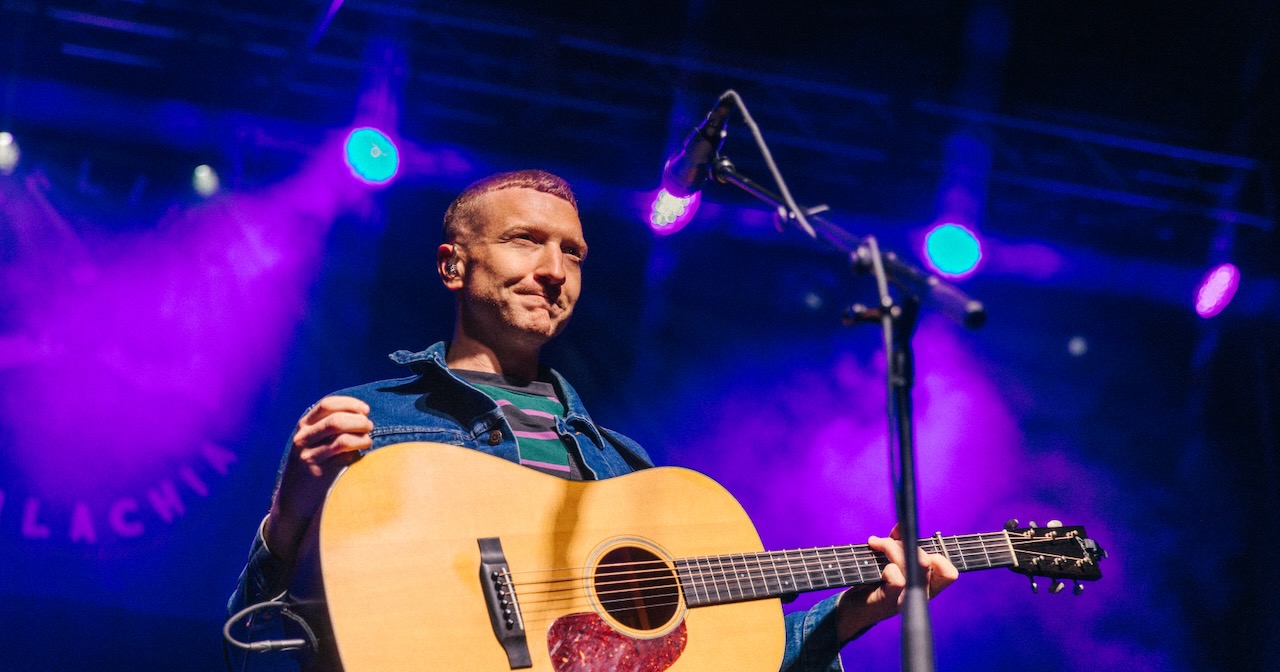
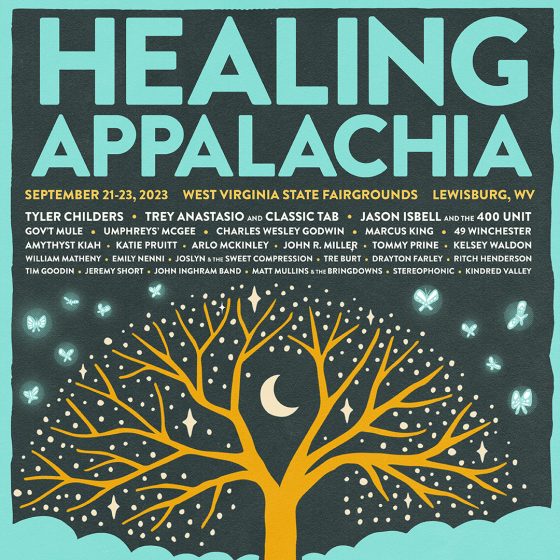
This weekend, September 21, 22, and 23, at the West Virginia State Fairgrounds in Lewisburg, West Virginia, ascendant, down home country star Tyler Childers and his cohort will gather for an event begun in 2018 called Healing Appalachia. The benefit festival, put on by West Virginia based non-profit Hope in the Hills, will include performances by some of the biggest and buzziest names in American roots music: Jason Isbell & the 400 Unit, Trey Anastasio Band, Marcus King, Umphrey’s McGee, Amythyst Kiah and many more.

Healing Appalachia is just one of many such community-led, collective efforts born from within the region in recent years that is working towards effecting positive change while offering local, ground-up solutions to big, systemic problems. Their social media and website put it elegantly and succinctly: Their vision is a prosperous Appalachia, free from addiction. The opioid crisis has hit Appalachia, especially West Virginia and Childers’ home state of Kentucky, incredibly hard. When 26 people overdosed on one day in Huntington, West Virginia, in 2016, the mission for Hope in the Hills and Healing Appalachia was born.

At the time, Childers and his hardscrabble team were still climbing the music industry ladder, building connections and community that would eventually grow and blossom into the multi-day event Healing Appalachia has become today. Childers’ friend and manager, Ian Thornton – who founded WhizzbangBAM, the booking and management company that represents Childers – together with festival program director Charlie Hatcher, Hope in the Hills board president Dave Lavender, and others took that tragic day in Huntington and turned it into an accretion point, around which they gathered and took action. Now, the festival has a local, annual economic impact approaching $3 million while raising thousands of dollars to be distributed to local, on-the-ground organizations and non-profits that specialize in addiction programs, recovery, support, and healing for this long-oppressed region of the world.

We spoke to Ian Thornton and Dave Lavender for a two-part interview preview of Healing Appalachia, that dives into the work of Hope in the Hills and explores this grassroots music event’s community-first mission, that hopes to heal these music-steeped, underestimated communities in Appalachia from the inside out. Read our conversation with Dave Lavender below, read our conversation with Ian Thornton here.

Unable to attend the festival this weekend? You can donate to support the cause here.

Can you talk a bit about the impetus or inspirations for Healing Appalachia?

Dave Lavender: Hope in the Hills, our non-profit, was started in 2017, and then the first Healing Appalachia was held in 2018 as it took a minute for Ian Thornton, Keebie Gilkerson and Charlie Hatcher, and the other OG board members to get the all-volunteer non-profit going.

The birth of the group is rooted in the events of 2016 – two historic things happened that year. In June 2016, central West Virginia got record flooding that killed 23 people. Shortly thereafter, the Huntington music scene, which was really getting built-up in a mighty way with touring bands, came together and raised more money in one night at the V Club than some big corporate fundraisers had in a couple weeks. I think all of us there saw a ragtag bunch of musicians could really make a difference banding together. Interestingly, Tyler Childers and the Food Stamps’ first New York City trip was that August as well, for a West Virginia flood fundraiser organized by our friend, Michael Cerveris, the two-time Tony winner from Huntington.

As that was happening in August 2016, Huntington, West Virginia, hit the world’s headline news with 26 overdose calls within four hours. It might have been a shock to the world, but we were all living around it in West Virginia so Ian, Tyler and Charlie Hatcher, Healing’s co-founder and show producer, knew how bad it was, and knew it was time to project the “bat signal” in the air, and unite their super friends in music to gather again and put on a show to help out the boots-on-the-ground folks overwhelmed and trying to assist in this opioid crisis.

One thing that struck me about the organization and the event is how y’all are from the region and building support systems, resources and pathways for folks from within the region – can you talk about the importance of mutual aid and community to the org and also the event?

DL: Everyone in the world knows the West Virginia theme song is “Country Roads,” but I would say the West Virginia and Appalachian motto is a song from Slab Fork, West Virginia-native Bill Withers. He wrote “Lean on Me” about being raised in the coal camp where you rely on your neighbors. Being from Appalachia, we know help is not on the way and that we are also better and stronger together.

For Hope in the Hills as a granting organization, we try to stay acutely aware of the ever-changing recovery ecosystem and fill the gaps where we can. For instance, I think the general public thinks of the opioid crisis as, “That’s the guy with the backpack at the recovery house.” Yes, true. But, the opioid crisis has created deep and wide fall-out – from historic numbers of kids in foster care (addressed by Barbara Kingsolver in her latest Pulitzer-Prize winning book, Demon Copperhead), to an overloaded prison system with non-violent drug offenders to many governments not wanting to fund harm reduction – even though they know through countless studies that it saves lives. Without harm reduction, communities are likely to get horrific spikes in hepatitis and HIV.

We try to put what funds we have into the gaps to provide a little help, but to also let folks know through our socials about some of these amazing programs happening across the region with things like camps for kids in trauma, and innovative recovery-work programs.

As for the event, I think that “Lean on Me” spirit is really palpable everywhere you look at Healing Appalachia. We’ve modeled ourselves in the spirit of using music to create social change, after Farm Aid. Healing is shining a light on a crisis that many choose to ignore. We’re highlighting amazing people who help daily to deal with that crisis. We’re inspiring attendees through the music, testimonials from the stage, and the dozens of service providers there, to go forth and be the change when they get home from the concert, wherever home is. And that home is widespread – last year we had folks from 38 states and 3 countries.

The message I hope the casual music fan receives in their heart and acts upon from Healing Appalachia is that the opioid crisis is not “us and them,” it’s just us. Last year, we lost more than 109,000 in the United States to overdose. Music is a powerful vehicle for conveying with love that message of empathy. Even if you haven’t lost someone personally to overdose, we lost Prince, Tom Petty, Whitney Houston, and a long list of beloved musicians to opioid overdoses. So I hope that at the very least the casual music fan who comes just to see some amazing bands, goes back home with an improved empathy muscle that allows them to lay down the proverbial stones and jokes and judgment they were set to throw at someone suffering from Substance Use Disorder and in active addiction.

For the recovery service groups coming to Healing – and this year we will have more than 40 from 13 states – I want them to know, that as Mavis Staples sings, “You’re Not Alone.”

That they hopefully will meet folks from organizations like them who are in the trenches everyday, doing the hard, tedious and often-unsung work of helping someone along their journey, and that they may pick up some best practices, some group to ally with, and some friends from across Appalachia who know their struggles and can be an encourager.

Do you have a favorite anecdote or story about a partner organization or individual or program that was particularly impactful, or a perfect representation of why you do what you do?

DL: At Healing Appalachia last year, Kenney Matthews, the ONEBox coordinator for Drug Intervention Institute was one of our main speakers. I’m typically running around taking care of a lot of back-end stuff at the fest, but I was out there with him before he went out. He was really nervous, but I hugged him and told him he was going to crush it. He did, and threw down this beautiful line about “the opposite of addiction is connection.” It really was electric, so real and so true. I was talking with my wife, Toril, after Healing and Kenney – who spent 15 years in prison – told her about running into a prison guard who knew him on the inside at the festival. The guard tells Kenney he never did think he would change and that he was really proud of him, and they both had a moment of healing at Healing. We’ve had LOTS of moments in doing this work and the fest is full of them, but I loved hearing both sides of Kenney’s story and its impact to spread hope.

How do you – either individually or as a group – see music and the arts (especially arts with regional ties, like folk and country music and folk arts) as part of these regional solutions to regional problems?

DL: In Appalachia, storytelling and music are so grapevine-wrapped in who we are, how we think, what we do, so connecting and teaming up with those artists who are using their music with intent and purpose is what we want to do.

As a group, Hope in the Hills, we’ve been building out a Music Is Healing program that has active music therapy programs in East Tennessee with Cecilia Wright (who plays cello with Senora May and who has her own band), and in Eastern Kentucky at ARC and West Virginia with Huntington-based music therapist Margaret Moore (a multi-instrumentalist folk artist who also teaches the Wernick Method bluegrass jams). She also happens to be an expert in forward facing trauma.

The inspiring thing is we are bringing folks like Cecilia and Margaret – with that intersectionality of professional musicianship and therapy – to team up with other regional artists of all genres and do sessions not only at drop-in centers and recovery houses but also at regular music festivals to spread the fact that music is therapy and can be tapped into to get on a higher spiritual plateau.

At Addiction Recovery Care (ARC) Centers in Eastern Kentucky, Margaret gets to work with world-class bluegrass artists Don and John Rigsby, long-time nationally-touring bluegrass artists who are sharing their music to inspire folks on their recovery journey. Through ARC, Don’s built out a studio in Lawrence County, Kentucky, where he is teaching some of the ARC guys the recording industry. Along those career pathway lines, at Recovery Points in West Virginia, Hope in the Hills (Dave Johnson and Charlie Hatcher) have been working with folks there who have in years past helped build Healing’s stages and do stage-hand and festival security work, get paid for additional festival work as a career pathway build-out as an employment option.

Hope in the Hills is also helping fund the WVU School of Medicine’s music therapy program at the opioid unit. We’re also contributing to the inspiring Troublesome Creek Stringed Instruments program with Doug Naselrod in Eastern Kentucky, where Doug is doing music therapy while also carving out recovery-to-work opportunities for his world-class luthier shop making traditional music instruments.

Specifically for Healing, we’ve leveraged the fact that we have a large audience to help train them on using Naloxone. Last year (the first year back after two years off because of COVID), we teamed up with the WV Drug Intervention Institute to have a Naloxone training tent that really broke down the stigmas of Naloxone with a festival spirit. Our buddy Joe Murphy got Gibson Gives involved and we loaded up swag bags with Tyler CDs, water bottles from Healing, and then additional swag from other artists.

Are there particular bands/artists/acts on the lineup this year you’re especially excited about?

DL: Gotta give crazy props to Charlie Hatcher and Ian Thornton for pulling aces and connections to reel in an insanely good lineup that includes 24 national acts. This is only our fourth Healing Appalachia, so to have Marcus King, Umphrey’s McGee, and Warren Haynes and Gov’t Mule back-to-back-to-back – would be the envy of jam band festival in the world! Truly a guitar lover’s feast on Friday. And opening act Joslyn and the Sweet Compression is one of my favorite R&B bands out there.

I’m really knocked out that 49 Winchester (who’s up for Americana Group of the Year) are throwing down for two nights in a row hosting our Late Night Jam with some killer bands and songwriters on those bills.

As far as really impactful musicians and people in that recovery space, we feel beyond blessed to have Jason Isbell & The 400 Unit on Thursday as the headliner and then Trey Anastasio and Classic TAB on Saturday headlining with festival co-founder Tyler Childers and The Food Stamps. Isbell, who was on a recovery panel at SXSW 2022 with our good friend Jan Rader, has put in the hard work to become increasingly more comfortable and sure-footed in that space and has Weather Vanes fresh out — the album to prove it. That’s been inspiring to watch.

We’re over the moon to have Trey (who is 15 years in recovery) with us and bringing Classic TAB, after a full summer of Phish shows, and with the great news that his 40-bed recovery center Divided Sky Foundation is on the way to opening in Ludlow, Vermont.

As a West Virginian, I’m super stoked to get Charles Wesley Godwin back on home turf to do something so real. I think he could grow into the biggest thing out of West Virginia since Brad Paisley. His new 19-song album, “Family Ties,” drops the day after he plays Healing on Thursday.

Margo Price performs at Healing Appalachia 2022.

What does a healed Appalachia look like to you?

DL: The problems are many, but the power of collective hope is growing and change is in the air all over Appalachia.

A healed Appalachia spends its riches and resources on mental health and particularly on children, making sure they are loved, nurtured, yet independent, and have all of the coping skills needed. We are now in an era of record kids in foster care and, as we know, childhood trauma is a thread that runs through folks who suffer with Substance Use Disorder. So first order for a healed Appalachia would be a widespread movement and budget shift to help kids in trauma now.

A healed Appalachia is one that has abundant opportunities within a clear line of sight for everyone in the community. A healed Appalachia gives everyone a seat at the table regardless of their past.

I’m a big fan of Brad Smith, who along with John Chambers and others, helping launch and rebrand West Virginia as the start-up state, where we create a really robust small business economy that allows folks here to dream big and launch those dreams here, like Ian, Tyler and the WhizzbangBAM team have done in Huntington, building out a business that builds spiderwebs of creative economy supporting regional musicians and artists.

A healed Appalachia has ample and good-paying sustainable green-energy jobs that pay a living wage and that brings wealth and health and that are not destructive to our beautiful Appalachian Mountains and to the workers.

A healed Appalachia is one with nature, gardening, exercise and healthy lifestyles that bind us to our beloved mountains and valleys.

A healed Appalachia talks less about politics and more about community and being a good neighbor – as the wonderful new Tim O’Brien song, “Cup of Sugar,” suggests we should do.

A healed Appalachia is full of true forgiveness, grace and second chances for folks, making forgiveness not just an often-trotted out word in a book but something real and necessary to heal our communities.

I think that’s probably enough healing or I’ll have to send you a doctor’s bill… [Laughs]

(Editor’s Note: Read part one, our conversation with Hope in the Hills board vice president and WhizzbangBAM founder Ian Thornton, here.)


Photos by Hunter Way / Impact Media

BGS 5+5: Michaela Anne

Artist: Michaela Anne
Hometown: Nashville, Tennessee
Latest Album: Oh to Be That Free

What’s your favorite memory from being on stage?

I love when I feel like I’m having a conversation with the audience and I’m not just standing up there singing at them. I’ve had so many fun shows like this but for some reason I remember a show at the Chapel in San Francisco, opening for Joe Pug in the fall of 2019. I was playing solo and I just remember laughing with the audience so much. Felt like I was in a room full of friends.

What other art forms — literature, film, dance, painting, etc. — inform your music?

Literature for sure. Richard Powers’ book The Overstory was especially influential to this album, specifically the song “Trees.” So is the work of Barbara Kingsolver whose novels all have some incredible way of showing how connected and necessary we all are in nature. I love being in nature. I love the mountains and desert, the ocean, the forests. But because of where I live in Nashville, I spend most of my time walking in the woods by Percy Priest Lake. Being in nature calms me immensely and helps me remember that a lot of the stuff that distracts me from my work, the business of it all…none of it really matters in the big picture. Just make art.

What rituals do you have, either in the studio or before a show?

I try to gather myself and do a short meditation of sorts before going on stage. It’s a way to make sure I don’t feel so scattered and can retain my focus.

Since food and music go so well together, what is your dream pairing of a meal and a musician?

I love good food… Bastion is one of my favorite restaurants in Nashville. I’d have to say my dream would be a dinner there with Emmylou Harris. There are so many things I want to ask her.

How often do you hide behind a character in a song or use “you” when it’s actually “me”?

Not very often. I definitely have written about different characters from time to time but most of my songs in some way always come back to me.


Photo Credit: Natia Cinco