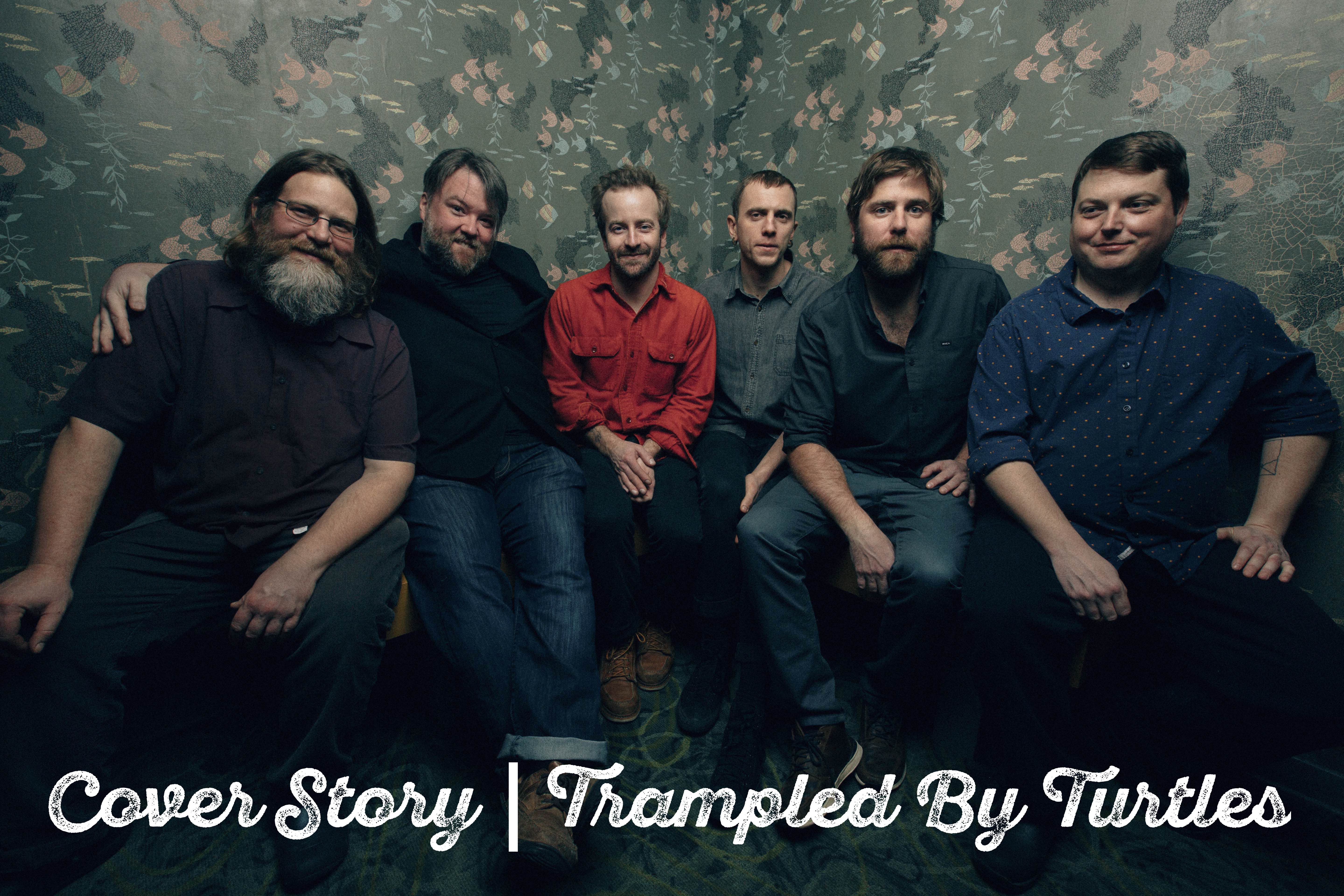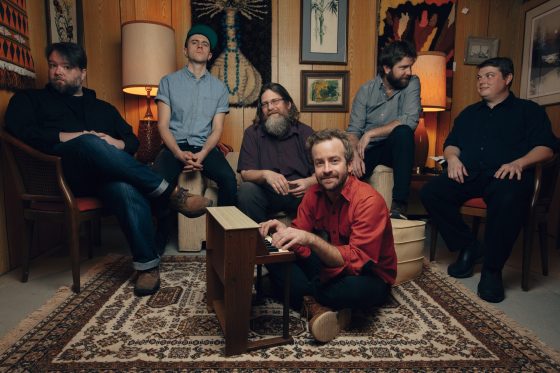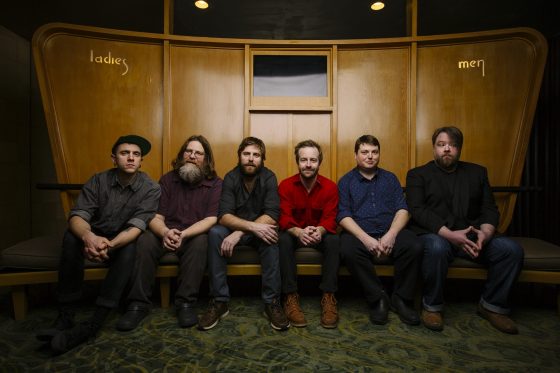
Steep Canyon Rangers Are “A String Band Again”

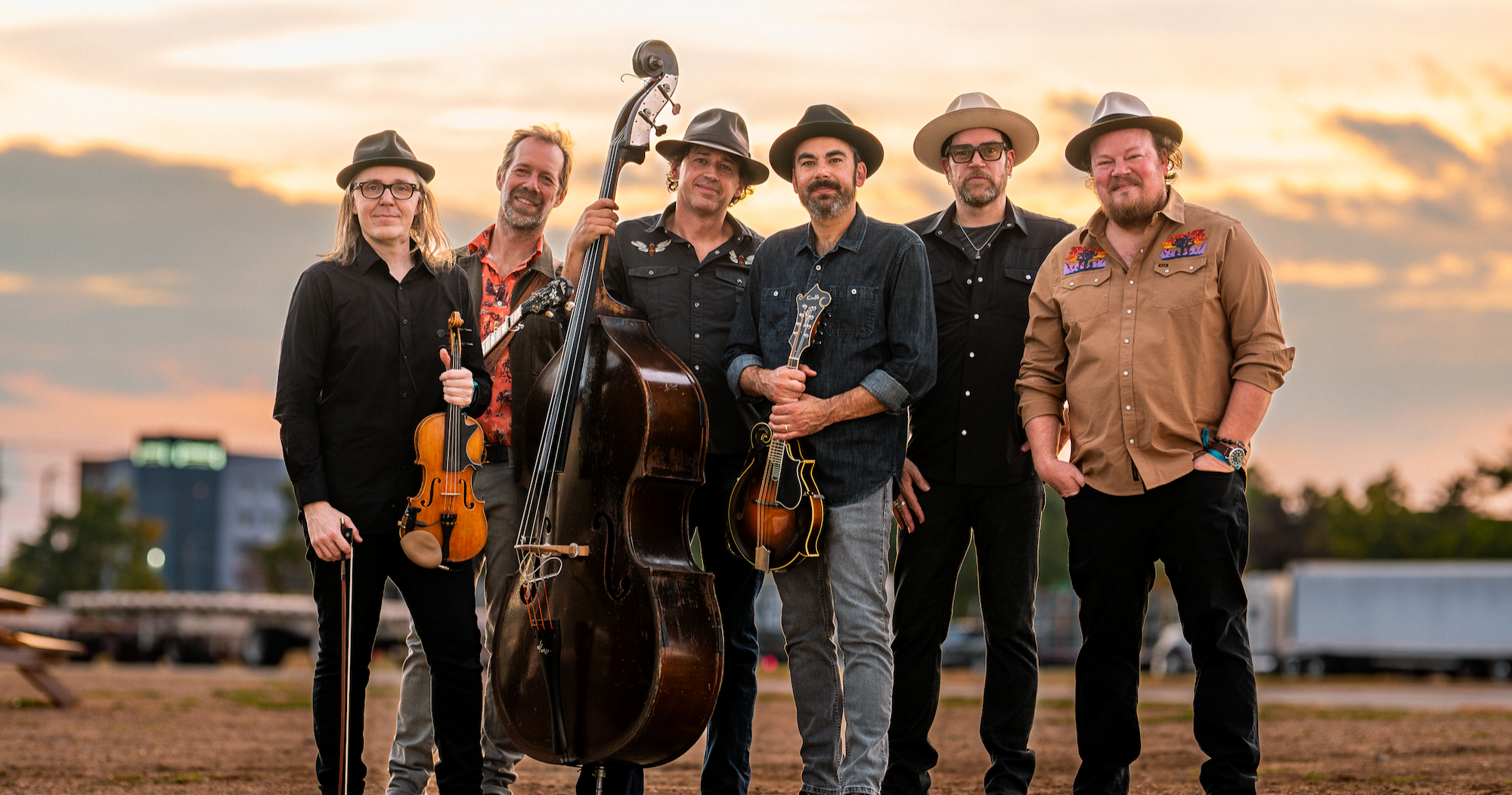
Twenty-six years into its life as a band, the Steep Canyon Rangers get back to basics on Next Act, unplugging their amps and instruments in favor of an acoustic setup with minimal percussion. It marks a return to the foundations that first set the group up for success.

Releasing May 22, Next Act is the second studio effort to feature guitarist and vocalist Aaron Burdett, who joined the Rangers in 2022 following the departure of founding member Woody Platt. In addition to appearing on their 2023 album, Morning Shift, Burdett is part of the Rangers’ 2024 live record, which features several of his own compositions, too.

Alongside the band’s other members – Graham Sharp (banjo), Mike Guggino (mandolin), Nicky Sanders (fiddle), Mike Ashworth (percussion, Dobro), and Barrett Smith (bass) – Next Act brings Burdett into the fold even more, with six tracks written or co-written by him. “Roll of the Dice” catalogs Burdett’s early days traveling with the band and “Hard Times” finds him reflecting on adversity and how moments that once felt overwhelming can later soften in memories.

According to Ashworth, the growing role of Burdett in the band is simply a carryover of having multiple voices contributing to their songwriting over the past decade, with Sharp being the other primary force of late.

“Aaron came into that role really well with a bunch of his own material while also taking lead on some of the stuff Graham had written as well,” Ashworth explains. “After incorporating more of his own stuff on that live record, the next step was to up the ante even more on this album by bringing even more of his older work into the studio.”

Steep Canyon Rangers’ Mike Ashworth and Barrett Smith caught up with BGS to delve into how books inspired two of the album’s songs, how a road trip instigated “Halfway To Reno” featuring Edie Brickell, what remains on the group’s bucket list, and more.

How did Aaron’s level of involvement on this record grow compared to Morning Shift?

Barrett Smith: It feels like Aaron has always been here – he just fits with us so well. He’s become such a close friend and a great person to work and make art with. We’re just excited with everything having to do with the band right now, and Aaron is a big part of that. Things went well when we worked together on Morning Shift, even though we were considerably less worn-in and stable than we are now on this album. We’re really cooking right now and feel great together as a group.

Mike Ashworth: From a relationship standpoint, things have gelled much further than I’d ever hoped. It does feel like Aaron’s been a member for more like 10 years, not three. On this record you can see the band in more of a way that feels like a group that’s sure of itself. The last time we were in the studio we arranged in more of a rock ‘n’ roll style where everybody reinforces the same rhythms, but on Next Act we gave everyone a lot more room to explore their own parts. It’s indicative of how much we trust each other now and how much growth artistically the band has seen in the last few years.

BS: Another good indicator of the growth is that on Morning Shift we worked with a producer, Darrell Scott, even though we enjoy and produce ourselves really well. But then when Next Act came along, we felt like we had enough chemistry together that we could move forward without an outside producer this time. Doing that allows us more space to bounce ideas around and feed off each other, which we feel like is our greatest superpower as a band.

As well as y’all work together, it’s hard to pass up a collaboration with someone like Darrell Scott when it presents itself!

MA: I imagine it’d be hard to come into a band like this and produce, because oftentimes we have to be careful to not already be done with everything. As a result, we intentionally leave certain things unarranged or on the table to give them something to do or else we’ll just wind up taking everything away from them.

BS: I remember Darrell, a number of times, looking around and saying, “Y’all are pretty weird with how you do things.” One time when we were recording, I remember him stopping and asking us if we always had so many opinions about each song that we communicated to each other. Eventually he started telling us to just “shut up and play” – that was one of the catchphrases of our studio time together. [Laughs] If you have an idea, we want you to be confident that it’s going to be heard. There’s a lot of trust in the whole system.

MA: Another thing Darrell pointed out was, “Y’all really care so much about the story.” He’d never heard an entire band comment on the lyrics and stories behind each song like we do – whether it’s where to punch things up or down or when to add harmonies.

That’s the cool thing about this new record. It delves even more into that exploratory realm of the band trying to sell the story – and the whole band, not just one singer, absorbing what it’s all about.

Tell me about naming the album Next Act. Is that a nod to this full circle journey that’s brought you back to being more of a traditional string band?

MA: The intention was twofold, but that was definitely a part of it. As the title of the song, it’s about picking yourself up, moving into a new phase of life, and embracing change. However, Next Act for the band is us reflecting on our change and growth and the ability to reveal what our potential is at any given moment. Because of that it became a pretty conscious decision to make it the title of the record.

BS: On Arm In Arm [in 2020], it was fun getting to mess around in the studio with organs, electric guitars and all these special guests – it was like our own mini-Brian-Wilson-like experience. But on this record, we wanted to bring it back home and return to being a string band again. Because of that, this new record doesn’t have any electric instruments on it. There is percussion, but it’s not a full drum set. We’ve been doing a lot more stuff around one mic at our live shows recently and feel like these new songs are very representative of that.

MA: We’ve all had amps and drums buzzing around our heads for years, so we wanted to remind ourselves that this thing still starts around a campfire and can always come back to that. I don’t think fans will know what to call what we’re going to do on any given night, because even we won’t [know] until we see the room and start to feel the vibe of the city and people there. Doing this record has allowed us to rediscover the foundation of what we are when you strip everything away. That’s been a really cool and unnerving process to get out from behind all the extra noise and see that when you take those things away, the art is still really good.

There’s a couple songs on this record – “Back of Beyond” and “Circling the Drain” – that were inspired by books, Barbara Kingsolver’s Demon Copperhead and Horace Kephart’s Our Southern Highlanders, respectively. With that in mind, how would you say literature informs the band’s songwriting, not only with this record, but overall as well?

MA: Graham actually wrote both those songs, but I do want to speak about Demon Copperhead, because we all just absolutely loved that book. We’re not just a band, we’re also a close circle of friends, and with that comes shared mutual interests, like books. I’m so glad that Graham is my friend, because he can write things that I wish I had the ability to say. But once something is written, whether it be a book or a song, it doesn’t belong to [the writer] anymore, it belongs to you, [the reader/listener]. That’s the really cool thing about art.

I love that Graham is a voracious reader because we wind up getting a lot of great songs out of it, like these two. Damon [Demon Copperhead’s protagonist] is such a wonderful, resilient character that reminds me so much of people I grew up with – and I’m sure Barrett would agree.

BS: As a writer, artist, and creator, I think it’s a good habit to have different areas you pull inspiration from to keep you out of a rut. For Graham a big one is literature. Demon Copperhead threw all of us for a loop as it was getting passed around the bus. When we found out he was basing a song off it we jumped right on it.

As for “Back of Beyond” and Our Southern Highlanders, I think that book is essential reading for any Western North Carolinian. “Back of Beyond” was simply a term that came from meaning the middle of nowhere out in the country, in a place where you can go for days without seeing anyone or speaking a word.

“Back of Beyond” is a song that’s been lingering with y’all for several albums before finally getting recorded now. What made Next Act the right spot for it to land?

BS: During my time in the band, I would say that “Back of Beyond” is the biggest survivor, in terms of songs that have stuck around and taken on many different forms before finally making it onto a record. We actually wanted to include it on Morning Shift, but Darrell Scott didn’t think it would be a good fit, so we didn’t. We may have even called that album “Back of Beyond” if it had been on it. But when that happened, we knew it would reappear on our next record. After it missed the cut we all really wanted it for this one, which is why we call it a survivor.

I was also curious about the song “Halfway to Reno,” which came from a roadtrip you [Mike] had with Aaron from California to a gig in Reno, Nevada. Is that right?

MA: That’s right. I think Aaron was behind the wheel that day. From my view, he’s someone that is more influenced by an experience or feeling than anything else, which he can then take like putty and mold into a piece of art. That’s the beauty of being in this band, these guys will come up with these nuggets – and if it hits the Steep Canyon grinder and comes out the other end still in one piece, then they’ll take it and finish writing it.

Then when we were mixing that song we kept envisioning a high voice on it, but couldn’t figure out exactly who to ask to fill the role. Then we sent it to our dear friend Edie Brickell and she ended up putting the icing on the cake. The song is about one lover trying to get back to the other and the little things that you carry through your day – especially when you’re separated by distance – that keep you tied to home. She really understood the assignment and put this beautiful piece on top of the tune that I absolutely love.

How did the opportunity to work with Edie on the tune come about?

MA: We first met her over a decade ago through Steve Martin. He would send her banjo ideas and she’d send them back to him with lyrics over them. That quickly evolved into a fantastic record produced by Peter Asher called Love Has Come For You in 2013. But touring together is where we really befriended her, during late nights on the bus and in the dressing room. I remember being drawn in by her spontaneity and creativity and the way that she can write a song in the moment about that moment. It’s almost like a fortune teller.

Since that first encounter we’ve recorded many times together through the years and she’s become not just one of my favorite female artists, but one of my favorite artists, period. She’s just so heartfelt every time she adds to something. It comes from a real place and that’s harder and harder to find these days.

Speaking of Steve, what did it mean to have him featured with you on “Heart’s the Only Compass”? I think this is his first time on an album or single with you since 2020’s “California.”

BS: It’s always a huge honor any time we’re able to work with Steve. He’s an iconic American art figure, so to have the opportunity to create with him is a treat. When we decided we wanted clawhammer banjo on that tune we tossed a few other names around first, but it all came back to Steve, because the prowess he has on the instrument is second to none.

From what I understand, you reconstructed “The Kindest Thing” in the studio at the behest of Nicky. Tell me about that process and how the final song differs from what you were initially going for?

BS: That song took on a bunch of different forms in the studio, as our songs often do. At one point it had this Don Williams, cool country kind of feel and Nicky heard that pretty late in the game, but didn’t care for it. Instead he kept talking about “Going to California” by Led Zeppelin, which led to Mike Guggino kicking off this riff similar to the one in that song that wound up setting the foundation for what the song eventually turned into. Ultimately, it was a good decision on Nicky’s part.

Steep Canyon has been together for 26 years now. With that in mind, is there anything that remains on your musical bucket list?

BS: The band hasn’t won a GRAMMY since I’ve been a part of it, so I’d love to see that happen – maybe even with this album. [Laughs] Aside from that, it’s hard to think of specific venues, not that there aren’t any, but because we’ve gotten to play so many of our dream places already. My bucket list is mainly just keeping on and continuing to discover and hone my role in this band.

What has bringing this album to life taught you about yourselves?

MA: I thought I’d become more patient as I became older, but I actually think I’m becoming less. [Laughs] In all seriousness, this session taught me to slow down again. I kept wanting to schedule and have it done sooner rather than later, but instead, the cycle for this record was one of the longest we’ve ever endured. In the end I think it’s exactly what it wanted and I’m grateful for how it got me to take it easy and be more in the moment.

BS: Even though we’ve been playing together for so long, working on this record brought me a new level of comfort and trust with the band. I have more faith in the people in the band, what we’re doing and my place in it than ever before, which is such a good feeling. I’m really enjoying where we are right now and am excited to see how we keep building upon it.


Photo Credit: Jay Strausser

Our Jamgrass column is brought to you in partnership with Preston Thompson Guitars.

Wanted! The Outlaws
Turns 50

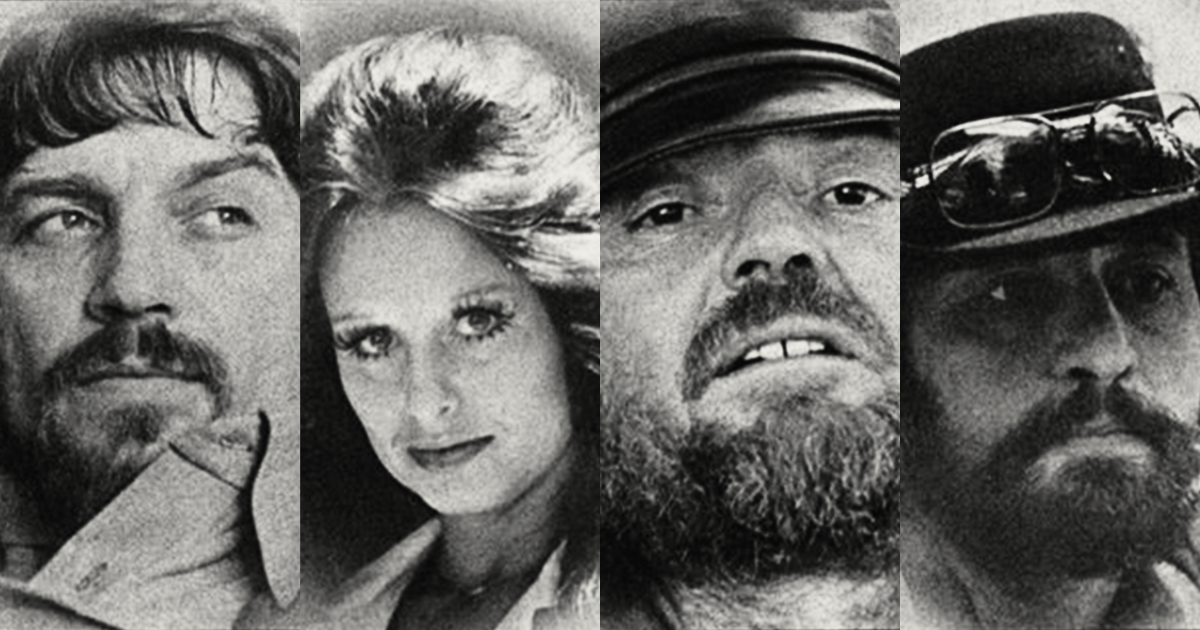
It’s strange to say about an album widely regarded as one of the 20th century’s most iconic, but maybe the most notable element of 1976’s Wanted! The Outlaws was its highly stylized cover. An old “wanted” poster associated with the wild, wild west of the American frontier (or at least movie depictions of the same), it depicted sepia-toned parchment with a trio of bullet holes. And it pictured the album’s four artists in mugshot form with Waylon Jennings as top headliner over Willie Nelson, Jessi Colter, and Tompall Glaser.

That appeared to be an unlikely quartet for a supergroup. But Wanted! The Outlaws turned out to be one for the ages, topping the country album charts and spinning off hit singles the artists performed for the rest of their careers. Wanted! even reached the crossover promised land in reaching No. 10 on the Billboard 200, a pop-chart peak for everyone involved except Nelson. When all the dust settled, it was the first country album to earn the then-newly introduced platinum certification for sales of over 1 million copies.

Despite the album’s thematic packaging, its 11 songs play less like a cohesive, organically conceived new work than the compilation it actually was. Each of the four headliners got a couple of songs, together as well as separately, and whatever unity it had came in the form of a musical vibe much closer to the progressive country coming out of Texas roadhouses than the traditional Nashville sound.

Considered as a collection of songs, Wanted! The Outlaws is a great record. And yet it emerged from a peculiar set of circumstances because it really, truly is a music-industry version of a breakfast sausage – appealing and tasty in spite of rather than because of how it was made. It’s fair to describe the feelings of many observers as mixed.

“More than anything else, it really was a triumph of Nashville marketing,” says Joe Nick Patoski speaking to Good Country. He’s the author of the 2008 biography, Willie Nelson: An Epic Life, and many other key writings about Texas music over the past half-century. “And it kind of crystalized everything Waylon, Willie and others had been doing. It almost seemed like a joke, but it worked and it sold. So who am I to kvetch?”

If Wanted! The Outlaws was a culmination that added up to more than the sum of its parts, it would not be such a key milestone without all the individual breakthroughs of its principals, starting with Waylon Jennings. A longtime journeyman who became a star, native Texan Jennings was only still alive in the 1970s because he’d given up his seat on Buddy Holly’s plane to Jiles Perry “The Big Bopper” Richardson Jr. on that fateful night in Iowa in February 1959. He’d been working the honky-tonks ever since, and by the mid-’70s his brand of too-rock-for-country-but-too-country-for-rock was landing commercially. On the strength of the statement-of-purpose hit “Are You Sure Hank Done It This Way,” Jennings’ 1975 album Dreaming My Dreams was his first to go gold.

And yet Jennings wasn’t even the biggest pop star in his own home. That was his wife, singer Jessi Colter, who had a massive No. 4 pop single in 1975 with “I’m Not Lisa.” That would remain her mainstream peak.

By 1975, however, Willie Nelson was breaking through at an even bigger level than Jennings and Colter put together. Long revered as one of the 20th century’s great songwriters, Nelson penned for-the-ages hits for the likes of Patsy Cline and Faron Young – “Crazy,” “Hello Walls,” “Night Life,” and many more. Yet success under his own name eluded Nelson, though not for lack of trying. He made album after album for RCA Records’ Nashville division, but the city’s prevailing sound just wasn’t a good fit for him. Nelson seemed doomed to be remembered as songwriter first, performer a distant second.

It took parting ways with Nashville and its assembly line – going home to his native Texas and leaving RCA to sign with Atlantic and then Columbia Records – for Nelson to finally establish himself as a viable recording artist. What finally put him over the top was 1975’s Red Headed Stranger, his 18th studio album but first for Columbia, and also the first where Nelson had complete artistic control. Spare, downcast, and terse as a Hemingway short story, the album’s sound and feel was miles removed from the Nashville sound. It was his first to crack the pop charts, selling millions, and “Blue Eyes Crying in the Rain” remains a beloved classic five decades later.

As he watched Nelson’s Red Headed Stranger success, RCA executive Jerry Bradley wanted in on it. Bradley had taken over as head of RCA Nashville from Chet Atkins several years earlier, and chief among his label’s assets was having Jennings under contract. While Nelson was long gone, RCA still had a voluminous catalog of recordings he’d left behind. RCA was already reissuing Nelson’s recordings as best-of compilations and doing some business, but taking them to the next commercial level was going to require an angle. It started with Waylon and Willie’s relationship as kindred-spirit friends and collaborators.

By the mid-1970s, Waylon and Willie had known each other for a decade. Both had artistic identities in contrast to staid Nashville, fitting in alongside other Texas-based acts like Michael Martin Murphey and Jerry Jeff Walker in an upstart wave dubbed “progressive country.” The music came out of that era’s back-to-basics ethos and was scruffier than Nashville’s assembly line. Author Jan Reid captured this particular moment with a landmark book, The Improbable Rise of Redneck Rock, first published in 1974.

Bradley’s idea was to put out an album where Jennings and Nelson joined forces, with songs both solo and in tandem. But if it was really going to take off, it needed fresh branding and a new descriptor beyond progressive country or redneck rock. That’s where old-fashioned marketing necessity entered into the equation.

Nashville writer Hazel Smith, who was working as Jennings’ publicist at that time, is widely credited with coining the phrase “outlaw country.” With that image in mind, Bradley came across a vintage “wanted” outlaw poster in a Time-Life illustrated encyclopedia about America’s 19th century western frontier. He took it to designer Herb Burnette with instructions to model a cover based on that, and then it was time to present the concept to the artists.

“He showed that to Waylon, who told him, ‘This is your idea, do whatever the hell you want,'” Patoski said. “And Jerry said, ‘Thank you’ and walked out the door. That poster on the cover really gave people something to grab onto, and ‘outlaw country’ is easier to say than ‘progressive country’ or ‘alternative country.'”

In Patoski’s telling, Nelson’s manager Neil Reshen was initially less than enthusiastic about the concept. But Bradley made it clear that RCA still had ownership and control of Nelson’s old catalog and an Outlaws album would come out with or without their blessings. It turned out that Nelson was more amenable to the idea, having just bought the Texas Opry House in Austin. He was happy to have an advance payment from his former label to fund its refurbishment.

Jennings regularly produced Colter’s music (including “I’m Not Lisa”), so she was an obvious addition to the lineup. The fourth piece of the puzzle, Tompall Glaser, also came from Jennings’ camp and was added at his insistence. Formerly of the Glaser Brothers, he too was peaking in 1975 with his cover of Shel Silverstein’s “Put Another Log on the Fire (The Male Chauvinist Anthem),” his highest-charting single on the country charts.

And thus The Outlaws were born, with success that was both immediate and long-lasting. The Academy of Country Music Awards named it album of the year for 1976, with “A Good Hearted Woman” winning the Country Music Association’s single of the year, and the album was added to the GRAMMY Hall of Fame in 2007. It also created another niche for country artists.

“My joke when people started telling me we were part of the ‘outlaw movement’ was to say, ‘No, we’re part of the in-law movement,’” said Ray Benson of the long-running Texas swing band Asleep at the Wheel in a conversation with GC. “We all thought it was kind of stupid, because everybody’s music was completely different. It was a style of marketing, not music, but it did create a shorthand to label and sell something. Honestly, the only ‘outlaw’ thing about it was the dope. What did we all have in common? We did drugs. Everybody liked something different, pot or coke or speed. But they were all illegal.”

Released in January 1976, Wanted! The Outlaws was accompanied by all the fanfare and major-label marketing of a new-music release. But the album mostly consisted of previously available material. As selected by RCA’s Bradley, seven of the original album’s 11 songs had been released in different versions as far back as 1970. But it did have a big ace in the hole, the dynamic of the Waylon and Willie show – “a juggernaut that was big and getting bigger,” said Patoski.

The duo’s live version of “A Good Hearted Woman” was one of the album’s four new tracks, and it would be its highest-charting pop single at No. 25 on Billboard’s hot hundred. It also launched Waylon and Willie’s ongoing partnership, which blew up even bigger the following year with “Luckenbach, Texas (Back to the Basics of Love).” They went on to make a series of hugely popular Waylon and Willie albums, plus their Highwayman supergroup with Kris Kristofferson and Johnny Cash.

Jennings opened Wanted! The Outlaws on a somber, solo note with “My Heroes Have Always Been Cowboys.” And yet that song is associated with Nelson, too. Four years later, he’d have a solo hit version of his own in the soundtrack to the 1980 Robert Redford/Jane Fonda movie The Electric Horseman.

Along with serving as foil to Jennings, Nelson’s key contribution to Wanted! was to give the album its main outlaw artifact in “Me and Paul,” a 1971 song chronicling some of his misadventures over the years with his drummer and partner in crime Paul English. That song’s good-natured sense of never-do-well scruff is in the DNA of some of Nelson’s singer-songwriter descendants like Robert Earl Keen and the late Todd Snider.

Colter’s most notable contribution to Wanted! was as Jennings’ duet partner on a cover of the 1969 Elvis Presley hit “Suspicious Minds,” foreshadowing their 1981 duet album Leather and Lace. Glaser’s contributions fall at the very end, with his take on Jimmie Rodgers’ “T For Texas” and “Put Another Log on the Fire” as the final two tracks. They’re classic songs rendered well, but they do feel kind of tacked on.

Wanted! would be enough of a success that the niche it created was soon viewed as problematic. Just two years later, in 1978, Jennings asked in song, “Don’t You Think This Outlaw Bit’s Done Got Out of Hand?” By then, outlaw country was bumping up against disco, and the 1980 movie Urban Cowboy was the result. Mainstream country descended into a not-great state in the early ’80s until the next wave of insurgents came along mid-decade – Steve Earle, Dwight Yoakam, Lyle Lovett, k.d. lang, and other artists who didn’t quite fit in with Nashville’s ways.

Through all of that, Waylon and Willie both kept on keeping on, separately as well as together. Jennings would remain a beloved elder statesman of country music (as well as Colter’s husband) until his 2002 death at age 64. He is still well-remembered. Glaser passed on in 2013 at age 79, but Colter is still around, making music, and released her most recent studio LP in 2023. And Nelson is, at the time of this writing, still kicking at age 92 – The Last Leaf on the Tree, as he put it on the title of his 2024 album.


Although he lives in North Carolina nowadays, San Antonio native David Menconi’s Texas bona fides include co-writing 2011 “Texan of the Year” Ray Benson’s memoir, Comin’ Right At Ya: How a Jewish Yankee Hippie Went Country or, The Often Outrageous History of Asleep at the Wheel (University of Texas Press, 2015); and his University of Texas journalism Master’s thesis, Music, Media and the Metropolis: The Case of Austin’s Armadillo World Headquarters (1985). His most recent book is Oh, Didn’t They Ramble: Rounder Records and the Transformation of American Roots Music (University of North Carolina Press, 2023).

Lead Image: Wanted! The Outlaws via Sony Music Entertainment

Want more Good Country? Sign up to receive our monthly email newsletter – and much more music! – direct to your inbox.

Hear the Title Track of Kacey Musgraves’ Next Album, Deeper Well

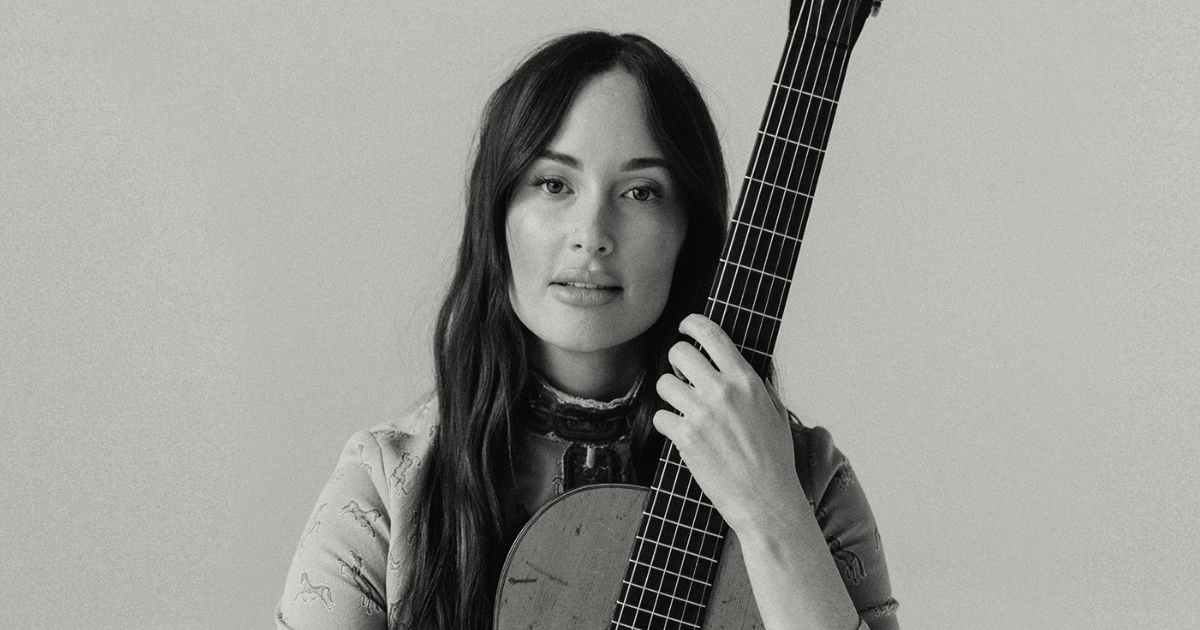
During the primetime Grammy Awards broadcast on February 4, country experimenter/challenger and singer-songwriter Kacey Musgraves announced her next full-length album with a 30-second ad that dripped with pastoral, “cottage core” imagery. Among more than a handful of recent, high profile album announcements – Lana Del Rey announced her upcoming country album just prior to the Grammys; Taylor Swift announced her next album during the ceremony; Beyoncé teased and confirmed her own country foray during the Super Bowl – Musgraves’ messaging felt very pointed, direct, and a bit disaffected. Given her track record and the lyrical content of the album’s title track, “Deeper Well,” it’s not surprising that Musgraves continues to follow her own arrow, wherever it points.

“I’m saying goodbye / To the people that I feel / Are real good at wasting my time…” she sings, and yes, it’s another free and unconcerned middle finger to Music Row, Nashville, and their puritanical country gatekeeping, but it’s so much more than that, too.

In the music video for “Deeper Well” (watch above), which seems pulled directly from a recent Star Wars film or a modernist, fantastic adaptation of Brontë or Austen, Musgraves inhabits a cozy and fearsome solitude. It’s reflected in the lyrics, as well, as the notorious stoner speaks of giving up on “wake and bakes” and giving up all of the flotsam and jetsam that’s gathered in her life since her enormously popular and successful album, Golden Hour, her prominent divorce, and the “controversy” that swirled around genre designations for her critically-acclaimed though nearly universally snubbed follow-up to Golden Hour, 2021’s star-crossed.

It seems that Musgraves is making music with even more intention, even more of herself, and even less concern with industry gatekeepers and mile markers. It also seems that, sonically and otherwise, Deeper Well will draw on the devil-may-care attitude of Same Trailer, Different Park and Pageant Material, while still guiding her audience and fans – by reaching them, directly – toward the same redemption and rebirth that she’s clearly found while making these songs. The production here listens like a combination of boygenius, Nickel Creek, and more of East Nashville and Madison than of Music Row and Broadway. But of course! This is Kacey Musgraves, after all.

There’s a slowing down apparent here, not only in the time that’s elapsed since star-crossed, not only in the imagery of the announcement and the first video, but also in Musgraves’ ambitions and how they fit into the overarching constellation of her work. Ambition has never been the focal point of her music, but it’s always been present; Musgraves is as deliberate and strategic as any woman (is required to be) in country music – like Swift, or Brittany Howard, or Ashley Monroe, or Maren Morris – but she’s leveraging her agency and her position as the CEO of her own outfit to continue to step away, bit by bit, block by block, mile by mile, from the parts of the music industry she’s never cared for.

As it turns out, her fans have never cared for the industry either, whether they know it or not. So, Deeper Well, is poised to – yet again – further broaden and expand the universe of Kacey Musgraves, even while her own, personal world seems to have deliberately shrunk… for the time being.


Photo Credit: Kelly Christine Sutton

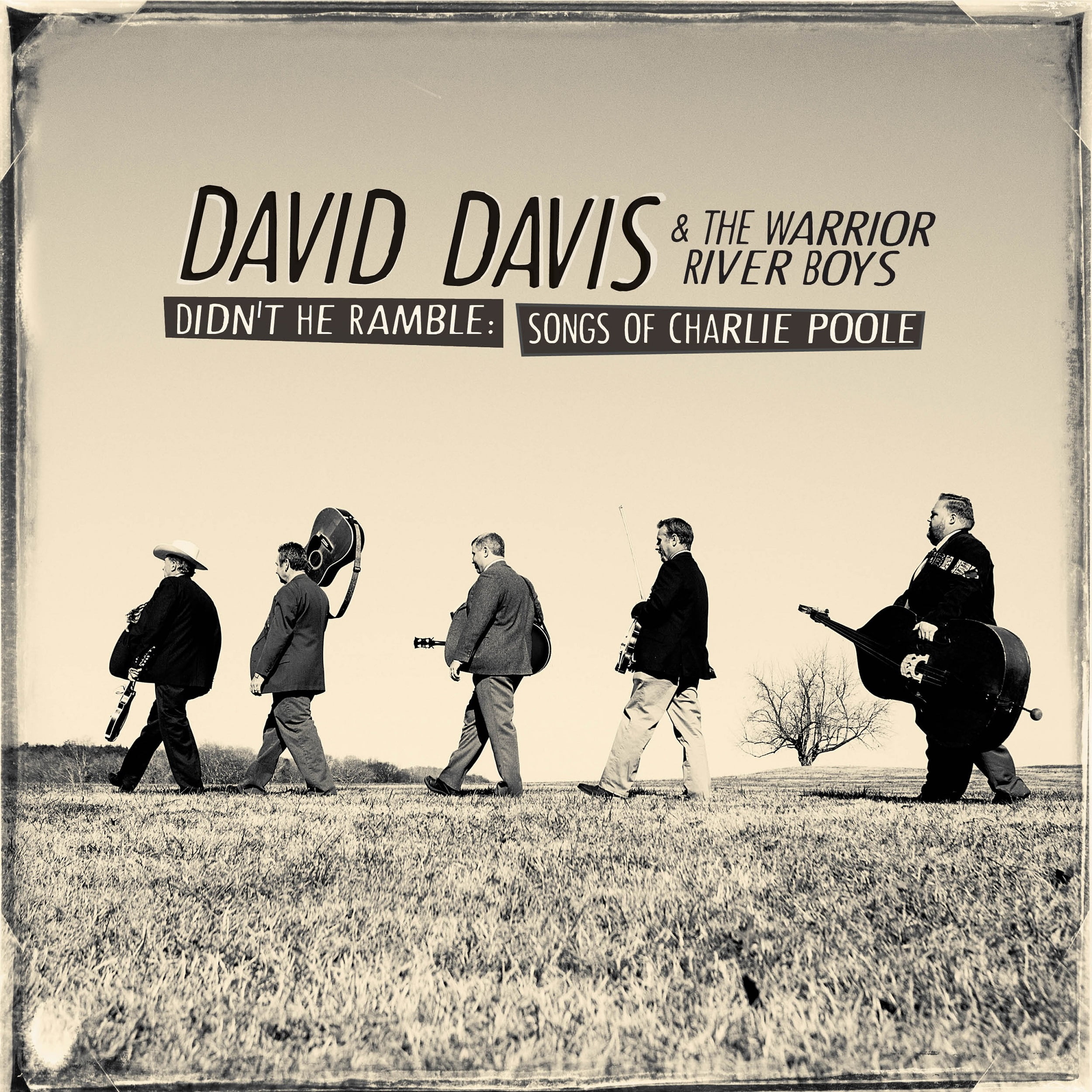
STREAM: David Davis & The Warrior River Boys, ‘Didn’t He Ramble: Songs of Charlie Poole’

Artist: David Davis & The Warrior River Boys
Hometown: Cullman, AL
Album: Didn’t He Ramble: Songs of Charlie Poole
Release Date: June 1, 2018
Label: Rounder Records

“Our goal with this recording was to take the key elements of Charlie Poole’s music and build from that, evolving the material into a more modern form of traditional music. Poole had reimagined popular songs of the day including Tin Pan Alley songs and blues songs into his own style and his treatments were widely accepted by the public. For us, when we started looking at the songs closely, they morphed just as easily into the way we play music. For a number of years we have called Charlie Poole our “Grandfather of Bluegrass Music” but really his music has influenced a much larger roots-based family.” – David Davis

Reading the Room: A Conversation With Trampled by Turtles

Trampled by Turtles are living up to the title of their newest album, Life Is Good on the Open Road. The Minnesota-based band parked the bus for nearly 18 months after touring behind their prior album, 2014’s Wild Animals. Leading up to the new project the six-piece group gathered at a lakeside cabin and rekindled their connection forged over more than a decade of performing together. Those positive vibes carried over to the new album, which emphasizes their exceptional acoustic chops. On the afternoon of their Ryman Auditorium show in Nashville, frontman Dave Simonett and mandolin player Erik Berry visited backstage with the Bluegrass Situation.

I know you cut this new album live-to-tape, but I was still surprised to see it took just six days to record it.

Simonett: We were surprised too. We had two weeks booked in a studio, which I think for a lot of people might be fast as well. For us that’s plenty of time, usually. But we ended up mixing the whole thing while we were there too.

Berry: Yeah, there was a dinnertime meeting where it was like, “Gentleman, I think we’re done. We got one more song to record tomorrow.” “Really?”

Other than just the general efficiency, what’s the upside to that?

Simonett: I enjoy lots of parts about live recording. I like to do it quite a bit. When I produce other people, I try to get bands to do it as well. It’s always spoken about in a vague way because I think it’s really hard to describe. But you do capture some kind of energy, a vibe. People play differently, if you want to get practical about it, when they’re all playing with each other, rather than playing to something that’s already been recorded.

The rhythm is one. You’re not following anything, you’re all just kind of moving in the same direction at the same time and it’s elastic. Nowadays it might be considered risky because it’s so easy to make things perfect now. But I’ve never felt like that really benefits that many people anyway. But especially us who have been playing together for a while. When we all sit and play and look at each other and play with each other, it sounds different than if we don’t, I guess.

Berry: To add to it, we hadn’t played together for about a year, outside of the weekend retreat we did. To build on what Dave’s saying, when people are playing together live, there’s also something different when something’s happening for the first, second, third, or fourth time, than when you’re playing that tune for the 50th time. Stuff grows on it; they move together differently.

Simonett: Yeah, I’ve always loved trying to capture a song before people start to really think about what they’re doing. Before people come up with parts to play. Before it gets dissected too much. It’s cool to see what happens naturally. I’m burnt out after a fifth take. That’s as far as I want to go.

Dave, how do you introduce your new songs to the band? From what I understand, you had songs already in your back pocket when you got together to record. How do you show the band, “Here’s some songs I’ve written”?

Simonett: That’s about as simple as that. Sit down and…

Berry: I use the phrase “coffee house ready.” Dave’s got them to a point where you could go to a coffee house and play the song.

Simonett: Yeah, I can play them. Core structure, melody, lyrics are pretty much done. And then I just sit there and play it a few times, and people join in when they feel like they have the hang of it, and it’s pretty organic.

That seems cooler than recording a little demo and emailing it to everybody.

Simonett: Yeah. I do that too, just so people can get the vibe, or at least know what’s coming – maybe if I have the song done in time to do that kind of thing. That is a nice thing to be able to have. I don’t think the real learning of it happens until we are all in the same space, though.

Berry: The real benefit of having stuff in advance is like in “Annihilate,” where I have a part that I wrote on it because I had the time to think about it.

Simonett: I also don’t know how to write music down on paper, so it’s all pretty simple anyway.

You guys seem to operate a lot on instinct. Is that something you had to develop and learn?

Simonett: Oh, I think it’s the absence of learning for me. I don’t really know any other way to act.

Berry: I hate the word “easy,” but there’s been a certain easy chemistry that all of us have always had with each other. On the very early shows, I’m like, “That’s pretty good. I could see doing that again.” So there’s something like that, too, now that it’s 15 years down the road.

Simonett: There’s a lot of bands in the string band world, if you want to call it that, that are amazing at that kind of stuff. I guess I don’t want to list examples because I’ll probably leave somebody out, but I think we’re pretty comfortable being a band that’s not that. It’s maybe more song-driven than upfront-playing driven, if that makes sense. That’s just where we naturally fit, I think.

Berry: I’ll name a couple names. When we first started, I didn’t know what I was doing. So I went across the street from where I worked to the Electric Fetus Record Store in Duluth and said, “I’m just getting this bluegrass band starting. I don’t know what to listen to.” So they sold me a Bill Monroe CD and they sold me a Yonder Mountain String Band CD. They were like, “This is your basis. Here’s what’s happening right now.” That Yonder Mountain disc was Mountain Tracks, Volume 2. That’s a live one. There’s some really great stuff on there. It didn’t take me very long for me to realize I couldn’t play like that. [laughs]

You guys are good at reading the room by now, I’d imagine, after 15 years on the road.

Simonett: Yeah, I think so. It’s always kind of a mystery. You can play the same set list two nights in a row and the response could be completely different. My goal as a performer is to get as far away from caring about that as possible. Any true performer will tell you that you can’t please everybody and that’s really not your job anyway. My job onstage – I don’t view it as to be up there to make everybody in the room happy because I can barely keep myself happy, you know? But I feel like we tailor to rooms, though, with our set list.

Berry: If we were going to do a set that no one was going to watch, I think that what we would prefer to do would be like, “OK, let’s take a break with a little slower one, now. Now we’re going to kick it up again.” I think people like our tastes. We’re pretty lucky … I don’t know, I’ve had to come to grips with it, too, because people aren’t shy about letting you know they’re disappointed.

Simonett: They love it, actually.

Berry: People have been telling me after shows that it’s bullshit that we didn’t play “Song X” or “Song Y” since the year 2005.

Yeah? What do you do when that happens?

Berry: You play a 90-minute show. If you have more than 90 minutes’ worth of material, the odds of dropping a song are high. … If we played every original song we have, that’s a four-hour show. That’s not going to happen. So I could challenge any Trampled fan: “Here. Write your ideal set, 24 songs.” I know that I could read it and be like, “But you left off… Now you know how it feels.”

Simonett: A listening crowd – it’s a weird relationship, man. It feels great generally. I like performing. It took me a while to like it. I still get freaked out about getting up on stage. But I enjoy the act of it now. But you can’t go up there with the illusion that everybody in the room is going to enjoy what you do. I think if you start thinking about that too much, you start changing yourself and you’re really close to becoming a cover band.

Do you mean like a cover band of your own material?

Simonett: Of ourselves, yeah. To just go up there and try to do what you think people are going to like. That’s not the point. For me, I like to think as an artist, I want to be able to feel totally comfortable. This tour is a good example – to go up and play new music every night. That’s holding on to still being valid in some way.


When I listen to this record, there does seem to be a sense of motion in the writing and the songs. Do you agree with that?

Simonett: I agree with it, yeah. I think even the title. But all of that came about after we made it. It’s happened to me before. You write a bunch of songs and make a record and you have no clue of any kind of thread that binds them all together until you put it in order and listen to it. “I guess I was singing about traveling a lot.” [laughs] I don’t really notice it as it’s happening.

Listening to “Thank You, John Steinbeck,” I heard a reference to the book Travels With Charley. What are the literary influences you draw on for inspiration?

Simonett: Steinbeck is really high on my list. That book in particular. It’s been a couple of years since I’ve done this, but I used to read that book before every tour. Hopefully this isn’t too long-winded of an answer, but after a certain amount of time touring, maybe the traveling part of it starts to lose its sparkle a little bit, and you forget … It’s amazing how easy it is to have a life like this become predictable, which it’s not supposed to be. At least I don’t want it to be that way. [I want to] remember that it’s still an adventure. You’re still roaming around the world playing music. I think the core of that book is appreciating the adventure of a road trip. It made me want to pack my camera, you know?


Photos by David McClister