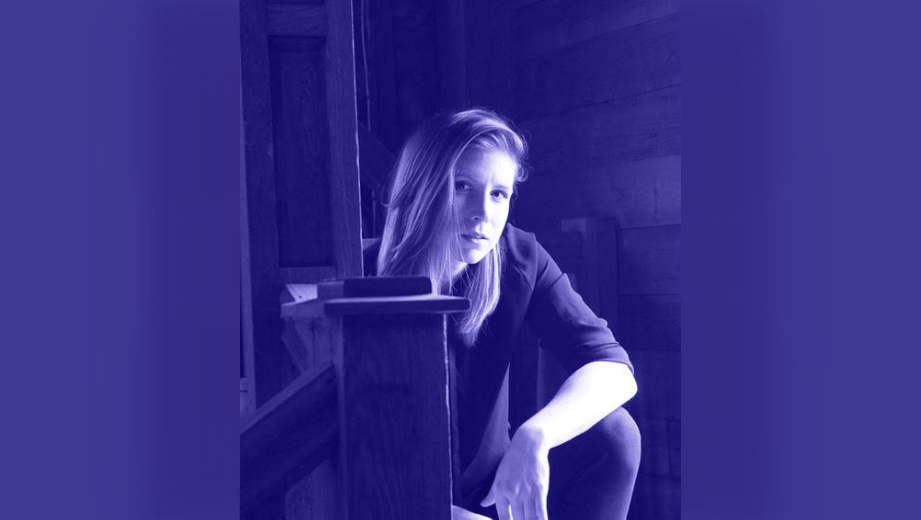
Artist:Ariana Gillis Hometown: Vineland, Ontario, Canada Song: “The Maze” Album:The Maze Release Date: June 14, 2019
In Their Words: “‘The Maze’ is based upon the Greek myth of the Minotaur in the labyrinth. The hero, Theseus, needs to find his way back out and he does so with the help of a ball of thread. The song deals with the questions, ‘What are we most afraid of? Are these fears real or are they just imagined?’ The ribbon in the song is the thread that guides us through dark and frightening times in our lives. By facing our fears head-on we develop a strength and courage that we never had before.That’s what ‘The Maze’ means to me.” — Ariana Gillis
Artist:Gillian Nicola Hometown: Hamilton, Ontario, Canada Latest album:Dried Flowers Personal nicknames (or rejected band names): Ginny, Giggy, Giggz
Which artist has influenced you the most … and how?
This is a really tough question for me to pin down, because I am influenced by so many people. Kathleen Edwards is probably my most influential songwriter. I love her storytelling and how easily she can float between fragility and strength. She was one of the first Americana/Canadiana artists I started listening to and I think her music very much shaped the way I think about songwriting. I am also very influenced by genre-fusing artists like Joni Mitchell and Kacey Musgraves.
What’s your favorite memory from being on stage?
Last year, I performed a small house concert in cottage country in Ontario. We performed the concert on a dock and it was a very beautiful, intimate concert — with a nice summer breeze as the sun was setting. That on its own was magical enough. What I didn’t know at first was that while we were playing, boats were pulling up to watch from the lake. It was such a perfect Canadian scene and I will remember that one forever.
What was the first moment that you knew you wanted to be a musician?
I don’t remember this one too clearly, but I’m often told this story by my family. When I was about 4, I was at a family friend’s birthday. In a party mostly full of boys who were playing sports and racing around the room, I took out a chair, sat down, and insisted that everybody stop what they were doing, because I was “going to sing for them now.” Music has always been a part of me — it’s not a firm memory, but rather, an inseparable part of who I am.
Which elements of nature do you spend the most time with and how do those impact your work?
I think open space and the atmosphere of nighttime is a strong part of my work. I sing about the night a fair bit on my new album (“Night Comes to Call” and “Moonshine”) and write the most during the night. There’s also been a lot of influence from water, mostly in terms of writing about space and distance, and how well that’s reflected through bodies of water.
How often do you hide behind a character in a song or use “you” when it’s actually “me”?
I have a very strict policy of never revealing who a song is about and whether or not it’s a personal anecdote or about someone else. Many of my closest friends don’t know who or what I am singing about (though I’m sure many could take a stab at it) and I prefer to keep it private that way. The only song that I’ve written where I explicitly talk about who the character is on “Across the Sea” off of Dried Flowers.
I wrote this song about one of my best friends who moved to London, England, a few years ago. He is the first person I send new songs to and despite the distance, we have remained very close. It was really nice to be able to write a love song for a friend, instead of from a romantic angle. Other than that, everyone will just have to make their own assumptions, which they probably would do anyways even if I confirmed or denied anything.
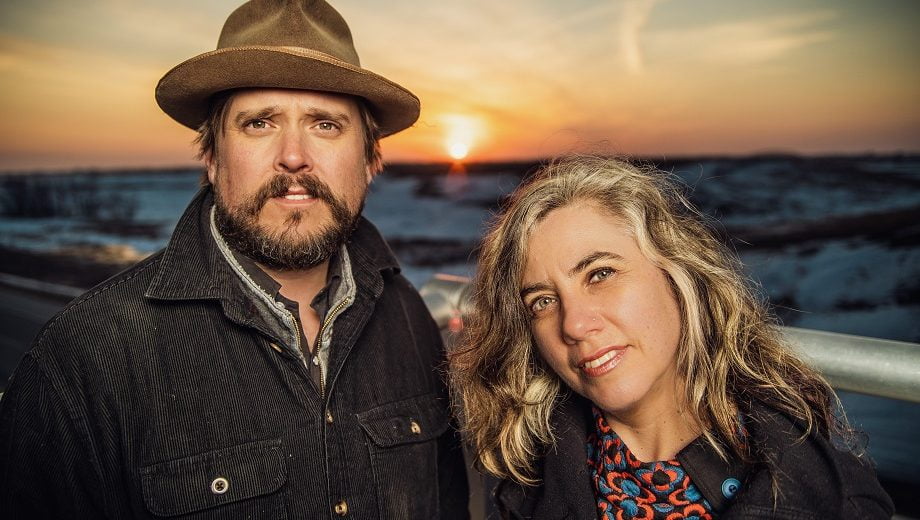
Artist:The Small Glories Hometown: Winnipeg, Manitoba, Canada Song: “Secondhand” Album:Assiniboine & the Red Release Date: June 28, 2019 Label: Red House Records
In Their Words: “We spend a significant portion of our life out on the road, without our partners, families, or close friends. When we come home we tell stories about our adventures and share all our photos, and everyone seems happy for us. But the reality is that our loved ones want to be in those pictures; they want to be there with us experiencing all these interesting things together. A song written for those we love, dreaming and wishing they could take the plunge and be out on the road with us.” — Cara Luft, The Small Glories
Artist:Tim Baker Hometown: St. John’s, Newfoundland Latest album:Forever Overhead
What’s your favorite memory from being on stage?
In late 2017 my former band Hey Rosetta played our final farewell shows before going on hiatus, and probably the final one had the most beauty packed into it I can remember being packed into any show before or since. We were a seven-piece sort of scrappy orchestral indie-rock band from St John’s, Newfoundland, that somehow managed to tour off the island and around the world and get awards and make records for 12 years and I have no idea how we did it but our hometown was very proud of us and good to us and the very final show was in the sold-out stadium there. It had so much emotion and love and nostalgia and significance around it that I don’t think my feet touched the ground the whole time, even though I had bronchitis and strep throat or some god-awful combination of classic touring lead-singer afflictions. I sang and played everything powered by 12 years of support and love and it is the brightest and biggest and best memory I have a show.
If you had to write a mission statement for your career, what would it be?
Listen, sing freely, think freely, listen, don’t be too hard on yourself, don’t be too easy on yourself, listen, work, play, and try to have it all help people and do good. By mostly listening.
Which elements of nature do you spend the most time with and how do those impact your work?
As a Newfoundlander recently resettled in Toronto I spend a lot of time missing and dreaming of nature. And actually this impacts my work a lot. Several songs on this latest record are about moving from a place with easy, instant access to the ocean and the woods, to this grey and glass land of shadows and cars. About trying to get back home, whether literally, or to some forest from our collective past.
Since food and music go so well together, what is your dream pairing of a meal and a musician?
Well, as a man with a lot of dietary restrictions these days I may be more excited about the dream meal than the company, but I would love the most to sit down with Leonard Cohen himself and eat a grilled cheese sandwich, followed by some handmade raviolis, and then some Montreal smoked meat sandwiches, all there around the corner from where he lived and wrote for so long. And then maybe some coffee and cookies and a walk through the mountain after.
How often do you hide behind a character in a song or use “you” when it’s actually “me”?
You are always doing this. Perhaps it’s a defense when your songs get too personal, or perhaps you don’t want to come off as a narcissist that alienates your audience, but yeah, you do this a lot. But actually it can be kind of nice when you listen to songs years later, when you’ve grown so far from that younger singer, and you feel that perhaps this kid is indeed talking to you, and sometimes even has something to say to you.
Artist:The East Pointers Hometown: Charlottetown, Prince Edward Island, Canada Song: “In Bloom” Release Date: March 6, 2019 Label: The East Pointers
In Their Words: “‘In Bloom’ has always been a favourite of ours — it’s such a great song with a very unique chord and melody vibe. A few days before playing Lee’s Palace in Toronto last year, we were chatting about how Nirvana played the same venue almost 30 years earlier. This was our acoustic tribute to them that night!” — The East Pointers
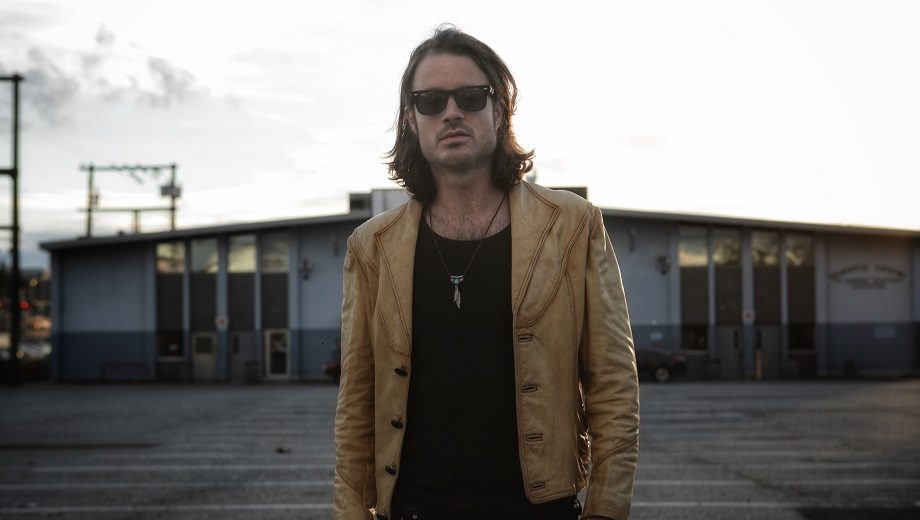
Artist:Dustin Bentall Hometown: Vancouver, British Columbia, Canada Song: “If Yer Willin'” Album: High in the Satellite EP Release Date: March 1, 2019 Label: Roaring Girl Records
In Their Words: “This is a song about being willing to take that chance in love and those feelings you get when you’re falling in that direction. Sometimes you get on that highway blindly and hope that you can make someone’s life richer in hopes that the same thing returned back to you. And maybe that love is just returning to a place you’ve been going to since childhood.” — Dustin Bentall
Artist:Lindi Ortega Hometown: Toronto, Ontario Song: “Liberty” Album:Liberty: Piano Songbook Release Date: January 25, 2019 Label: Shadowbox Music
In Their Words: “What I love about the Piano Songbook version of ‘Liberty’ is how it still has this vintage vibe to it. I immediately picture this tune being played on an old Western saloon piano. I think the sense of triumph is still captured in the chorus but new elements reveal themselves in the melody, and in the bridge of the song that allows it to take a new shape. It’s been extremely interesting for me to get a real sense of the melodies without vocals. Piano has always been an instrument I truly respect and love the sound of; to be honest, I don’t think a full instrumental would work properly with any single instrument other than piano. Piano has body, richness and fullness all on its own. ‘Liberty’ was one of the more produced songs on the original record, and for it to still carry itself with piano is really cool.” — Lindi Ortega
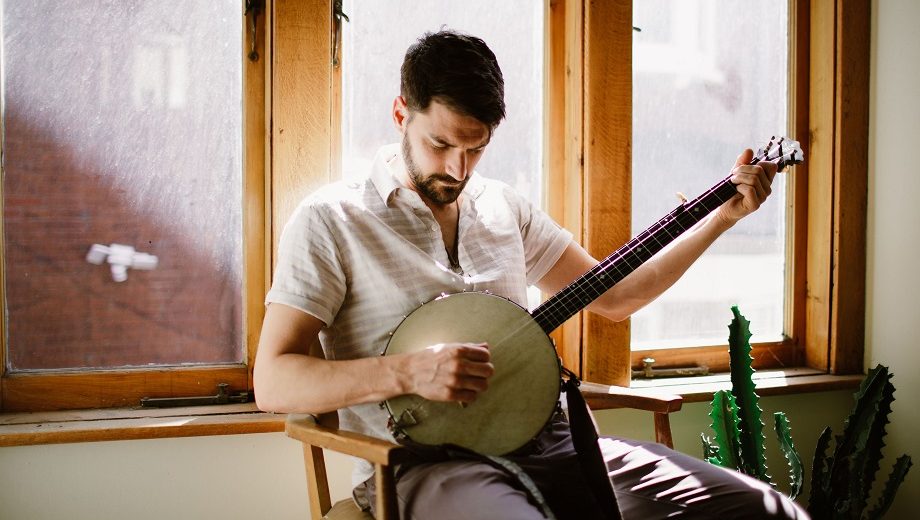
Sometimes self-exploration doesn’t yield the answers we seek. For those patient enough to keep prodding, the real truths emerge in the process, rather than the culmination of examining who we are. Kaia Kater learned as much on her third album, Grenades, which stretches across generations, hemispheres, and textures, and left the singer-songwriter “swimming in her own shadow.”
Born in Canada, Kater grew up hearing about her father’s life in Grenada before he fled at age 14 when the United States invaded the small island country in 1983. As a result, a part of her always existed in a land that lay far away. With the banjo as her guiding force on Grenades, Kater strings a tightrope between her Canadian sense of self and her Grenadian heritage, in order to find a balance between those two poles.
Why did it feel like the right time not only to turn inwards, but to seek a connection back through the generations?
I think it was a multitude of things. I’d been two years out of school, and I found I had more time and space. I’d also had more conversations with my dad, and at a certain point he was like, “You’ve got to go back. You can’t keep putting it off. You’ve got to do it.” I came to agree with him. What started this whole thing is last Christmas I interviewed him in the basement of his house about growing up in Grenada and coming to Canada as a refugee.
And at the age of 14.
I know! It’s kind of crazy. I was 24 at the time I was interviewing him, so just to think about where I was at 14 — it’s kind of terrifying to think about becoming an adult that quickly. It’s kind of unbelievable. But he didn’t really talk about it a lot. I think that’s the thing, people do extraordinary things in order to lead very normal lives.
That’s a beautiful way to put it.
Yes, it’s the story of immigration and the story of refugees. I don’t think my dad ever hid his story, but I don’t think he ever thought it was an extraordinary story. He thought it was his path on the way to doing what he wants to.
It’s fantastic, then, that in addition to fitting your own voice into this musical genealogy you were able to include his voice three times on this album.
Those were from those interviews at Christmas. So much of the music and the emotion was born from that conversation that it felt like an imperative for me to include them. They were not only contextualizing the music, but they were also serving as these light posts for a pretty complicated storyline.
You’ve described Grenades as a lifeline to the South, and yet you grew up in the North. North and South have long existed as such stark dichotomies. Do you think, speaking about your identity, reconciliation is possible, or have you come to accept that there will always be a tension?
I do think it’s like being a hyphenated Canadian. I think there’s a certain cognitive dissonance that happens. This album is really great because it’s given me the space and the time to start to talk to more first and second generation Canadians about “What does being Canadian mean?” In comparison to Grenada, which is 95 percent black, Canada is a multi-ethnic place. It is richer for that. We acknowledge the richness that comes with diversity, but I think it also creates these problems of identity.
I have a friend whose parents are Ghanaian. She’s black and she grew up going to a Ghanaian church in Toronto, and then she went back to Ghana after she got her journalism degree. She was faced with this thing of like, “I have Ghanaian roots, but there’s a part of me that…my accent and the words I use are very Canadian.” I feel a little bit all over the place. Even the nature of exploring all these things is how I feel about it, which is like, I haven’t particularly arrived to a conclusion.
Nor should you. That’s the beauty of any creative form—it allows you to keep exploring. Turning to the album itself, you said you wrote the songs across winter and summer?
I started writing this album really in earnest after I’d had that conversation with my dad at Christmas. Then I went to Grenada in April, and obviously it’s very warm and it’s very beautiful, so it did feel, more than the natural course of the seasons in Canada, like I went suddenly from winter — this gray March — to summer. That’s why I feel it as this change between seasons, but also like we’ve been talking about, it’s a change in hemisphere too.
When it came time to stitch those halves together, what was the process like?
I challenged myself to write all original music on this album. I knew that in order to do that, I would have to push myself and get really analytical with my work. Just changing my environment and going to Grenada was a great help because it brought out different words and melodies and expressions. If all the songs were color-coded in my head, and one is blue for winter and yellow for summer, I can see them that way.
Of the arrangements on the entire album the three that most stand out are “Canyonland,” “The Right One,” and “Poets Be Buried.” Speaking of the latter, the beautiful slow-burn brass is exquisite. How did that unfold?
At this point, I should really credit my wonderful producer, Erin Costello. She is an artist herself; she’s actually releasing a record right around the same time as me. Keyboard is her main instrument, so she works mainly in R&B and soul, but she dabbled a lot in electronic music, and has a Master’s in composition. I feel like her musical tastes are really broad, and she really doesn’t shy away from a challenge, which is why I enjoyed working with her. And it’s also nice to be working with a woman.
I was going to say!
So many of them are men, so it’s nice to have a change of energy. She lives in Halifax. We recorded the album in Toronto, and the next day we flew to Halifax with the hard drive and mixed it there. I’d expressed that “Poets Be Buried” needed something more, and so the brass was actually the last musical piece that we added to the entire album before we mixed it. It was amazing. She had these players come in for an afternoon, and she wrote up the parts in 15 minutes. It sounded beautiful. It’s just French horn and trombone.
If you had to define the banjo’s power as an instrument and storyteller, what would it be?
The banjo has a very ancient quality, and I think especially when it’s played percussively like the clawhammer style, it can bring you into this trancelike, dreamlike state. I’ve found that with traditional music a lot, especially in a jam situation. It’s everybody playing the melody and chording all of the time — it’s not solo-based. When you’re in a jam, you get this trancelike quality where you’re playing this A/B pattern 50 or 60 times. I think the banjo lends itself well to this trance of storytelling. It brings me this inner peace that’s pretty indescribable. I think that’s why I was so attracted to it and why I’ve written on it for so many years.
I read that you play two or three banjos, but your grandpa made one for you?
Yeah, I’m looking at it now on my wall.
If we’re talking about generations, and how your new album encompasses all these different stories, that connection to your grandfather brings it to a whole other visceral level.
I hadn’t thought about that; that is a good point. It’s funny, at the risk of sounding too cheesy, it’s been a guiding light in my life. It’s opened the doors to so many things — not only studying in Appalachia, but also writing things that I may have been too scared to say openly. It’s a really beautiful instrument and a powerful one.
In the liner notes, you remark, “Here’s to swimming in your own shadow.” In dealing with your father’s voice and other generations, how did you create the space for your voice in the midst of intertwining these other narratives?
I think I still am. In the same way when we were talking about northern and southern hemispheres, I think that’s an ever-evolving question for me. For a long time, I’ve had an existential anxiety about having two sides to my family who both have very strong people and very strong narratives, and thinking, “Where do I fit in this picture?” That’s why I create albums, so I can give myself the time and space to explore that.
I’ve put Grenades out, and now I’m going to get to know what it’s about. The “swimming in your own shadow” thing is about getting comfortable essentially with being uncomfortable, and with having a lot of conflicting narratives, and trauma that comes from war or from being biracial, or from being a woman in the world, which people are really starting to talk about. It’s my own way of dealing with that. The album is me carving out that space for myself.
Artist name:Sweet Alibi Hometown: Winnipeg, Manitoba, Canada Song: “Crawling Back to You” (from Canada Covers Tom Petty – A Tribute to Tom Petty) Label: Comino Music
In Their Words: “Petty was a prolific songwriter, he could draw you in just by hearing the first lyric or hook of his songs. ‘Crawling Back To You’ is a song we’ve all lived inside, at one point in our lives. Singing any Tom Petty song gives every musician a taste of what it feels like to be a rock and roll hero.” –Sweet Alibi
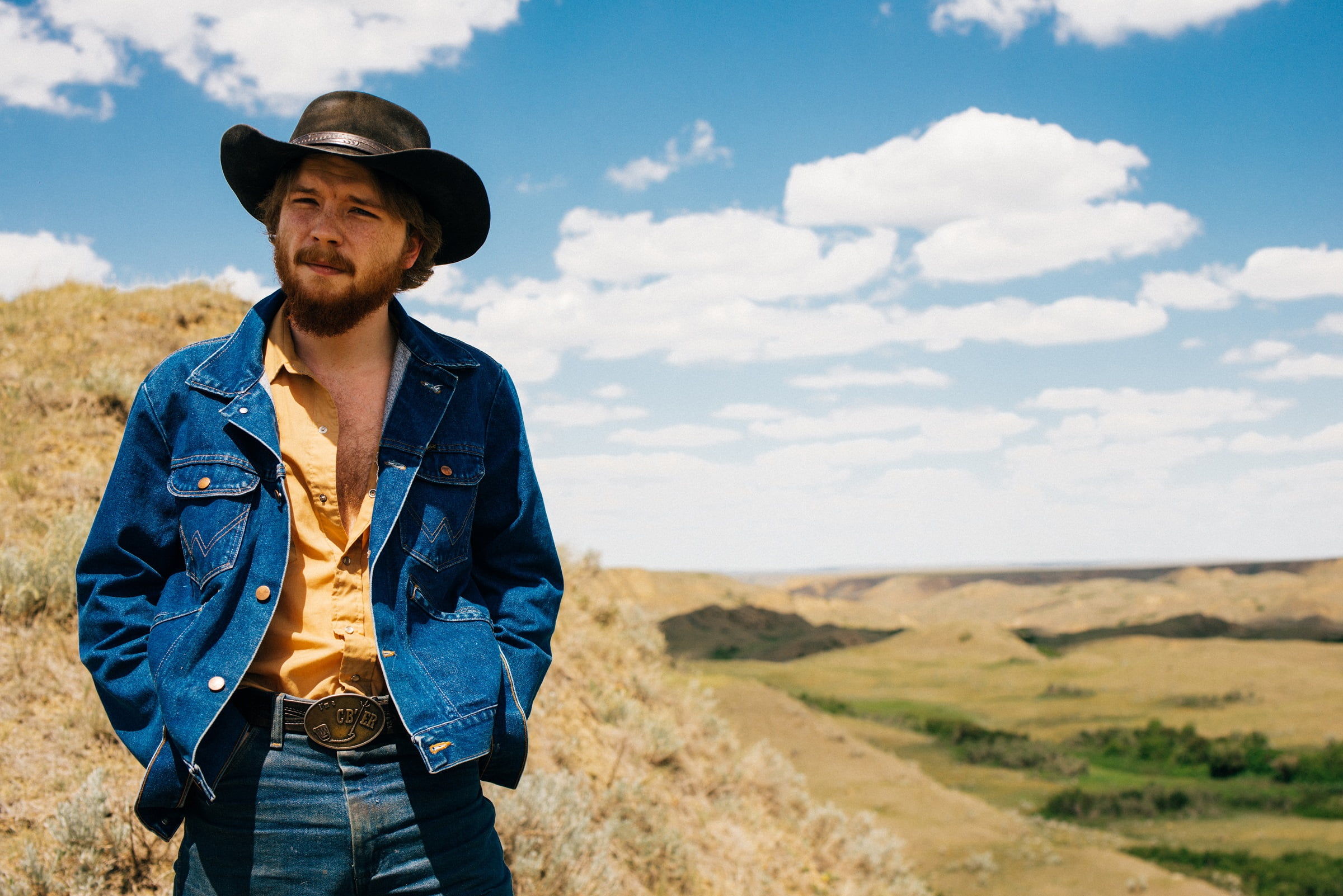
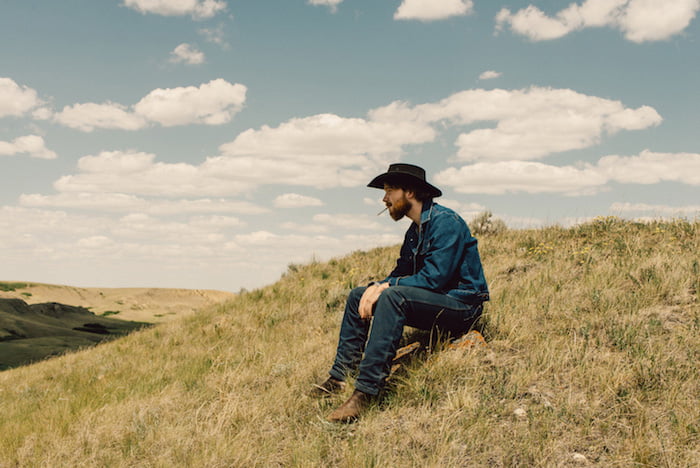
He’s only 23 years old, but Western Canadian musician Colter Wall has created an album which echoes through time with Songs of the Plains.
A traditional Western love letter to the wide open, often-frozen prairies of his native Saskatchewan, Wall’s sophomore project once again highlights booming baritone vocals and an appreciation for historic sounds – but it’s more living artifact than relic of the past. Mixing originals in with covers of Canadian classics like “Calgary Round Up” (by Wilf Carter), “Night Herding Song” and “Tying Knots in the Devil’s Tail” (both cowboy traditionals), its 11 tracks feels as fresh as the first wildflower bloom of spring.
Dave Cobb produced Songs of the Plains, with Canadian country stalwarts Corb Lund and Blake Berglund joining harmonica great Mickey Raphael and pedal steel legend Lloyd Green as guests. But it’s Wall’s youthful enthusiasm for the genre – and his timeless approach to song craft – which stands out. He spoke with The Bluegrass Situation about his love for Saskatchewan, working with his heroes and what it’s like recreating a good-old-fashioned campfire song.
You grew up in Saskatchewan, and Songs of the Plains is very much a Western album. What makes a life out West different? Why does it lend itself to inspiring its own genre?
That’s a great question. Just like any place, the people have an entirely unique culture, and we have our way of doing things, our own way of talking and our own way of telling stories. When I think of the West, because of its history and because of the way people romanticize it, it’s sort of a land of myth. It’s a land of harsh realities and a sort of mythos – one of wild, tall tales. And it’s been painted in a lot of different ways, often by people who aren’t actually from that part of the world.
Not many people are doing this kind of music anymore. How did you get turned on to traditional Western music, especially being such a young guy?
Well I’m just a huge fan of traditional music in general and have been for a long time. … I love those old tales and folk songs and how they’re so rooted in people, being passed down from year to year, changing and shifting over time. I’ve always been fascinated by that. Probably the first cowboy songs that I heard and really dug – and tried to learn – were done by Ramblin’ Jack Elliot, who was notorious for doing cowboy and Western songs, but he played folk music from all over. He would also play Blind Lemon Jefferson songs and Woody Guthrie songs, bluegrass traditionals, country traditionals, and then those old cowboy songs. So I had been listening to his catalog and stuff like Jimmie Rodgers and from there I started to dive down the rabbit hole and discovered all the greats like Marty [Robbins], Tex Ritter, and all those guys.
I really love the opening track, “Plain to See Plainsman.” It seems like autobiography, so what did getting away from home teach you about it?
The short answer is that distance makes the heart grow fonder. I had always loved Saskatchewan, but I didn’t realize how much until I moved down here [to Nashville] and started to travel around a lot. I think I became more interested in our history and culture. Before [moving] I was aware of it, but maybe not trying to actively learn about it and write about it.
“Saskatchewan in 1881” speaks right into that history, right? It’s kind of a warning to a city slicker from Toronto about what he’ll find if he comes West looking to get rich. Why did you set the story in 1881?
That’s my take on prairie humor. The 1880s are when they first started to ship people out to the Western Provinces – and they weren’t even provinces yet, they were territories. The people in the cities back East had just realized that we had all these natural resources out West, so they started surveying the areas and sending people out to settle them. That started in the early 1880s, so the premise was to tell in a humorous way about the lives of people and what life might have been like back then, having to deal with all the frustrations of frontier life. It’s kind of a regional joke.
You’ve got Mickey Raphael and Lloyd Green on this album, and they add so much Western flavor. What was it like bringing those guys on board?
I had known I wanted Mickey to play on the record long before we went into the studio. I had met him probably a year ago at a show where he was part of the house band, and I was already a huge fan. I think he’s the best harmonica player in the world. Since then he’s been really nice and supportive and kept in touch, so that was just a matter of waiting to get in the studio.
With Lloyd, I have to be honest. I wasn’t even aware he was still around. I told Dave [Cobb] I wanted some pedal steel, and he said ‘Why don’t we get Lloyd Green?’ My eyes about fell out of my head. So we called Lloyd and sure enough he came down. I helped him carry his stuff in, then I got to hear him play pedal steel on my songs for about an hour – which was pretty incredible – and then after that I got to listen to him tell stories about playing with [George] Jones and [Johnny] Paycheck, all these legends. It was surreal.
The power and depth of your vocal has always stood out. Does it still surprise people?
The most common thing I get is ‘How old are you?’ And I tell them, and then there’s always some surprise there.
When did you notice you had this deep, timeless baritone of singing voice?
I’ve been working at it for a long time. When I turned 18 I had been trying to sing, and it wasn’t really working out, but I realized I could sing low a little bit in the baritone register. It felt natural, so I kept doing it, and I’m still working at it. I feel like these three records, to me they’re like little stepping stones on my road of trying to figure out how to sing. Listen to that first EP and then the first album, there’s quite a difference in the vocal. And then if you listen to this new record, this is the first time I’ve felt comfortable and like I had control over my voice. I think it sounds better.
You let your voice stand on its own on “Night Herding Song,” and I read you left the studio to record that. How did that decision happen?
We tried to cut it in the studio, but the thing about RCA [Studio A] is that it’s a really big room, but it’s a studio so it’s kind of dead in there – there’s no natural reverb. I don’t record with headphones on, so singing a capella in a room like that, it’s kind of hard to hear. It just wasn’t working out, so we decided to go out to Dave’s house – this tucked-away little spot in the trees with a studio in the basement. But just outside the studio is this patio and fire pit, and we figured we’d cut it outside, just pull the microphone out the door. I was really trying to get a campfire vibe going on, which is a cowboy tradition, and really went with the nature of the song. So I went out there and started a little fire, and recorded it that way. It was a lot easier, and it turned out great.
Did this project satisfy your urge to make a real Western album? Where will you go from here?
Yeah, I’m pretty pleased with the way it turned out. I had more of an idea of what I wanted going into the studio than ever before, and I’m proud of it. As for the future, I’ve got a few ideas of where I might want to go, but it’s hard to say this early. I’ve been playing a lot more shows with my new band, and we’ve been messing around with some interesting sounds, but I just hope people enjoy this one when it comes out. After that we can start worrying about the next one.
Photo credit: Little Jack Films
This website uses cookies to improve your experience. We'll assume you're ok with this, but you can opt-out if you wish.AcceptRejectRead More
Privacy & Cookies Policy
Privacy Overview
This website uses cookies to improve your experience while you navigate through the website. Out of these, the cookies that are categorized as necessary are stored on your browser as they are essential for the working of basic functionalities of the website. We also use third-party cookies that help us analyze and understand how you use this website. These cookies will be stored in your browser only with your consent. You also have the option to opt-out of these cookies. But opting out of some of these cookies may affect your browsing experience.
Necessary cookies are absolutely essential for the website to function properly. This category only includes cookies that ensures basic functionalities and security features of the website. These cookies do not store any personal information.
Any cookies that may not be particularly necessary for the website to function and is used specifically to collect user personal data via analytics, ads, other embedded contents are termed as non-necessary cookies. It is mandatory to procure user consent prior to running these cookies on your website.