Artist:Belle Plaine Hometown: Saskatchewan, Canada Song: “Squared Up” Album:Malice, Mercy, Grief and Wrath Release Date: October 19, 2018
In Her Words: “‘Squared Up’ isn’t about grief, but it is about the choices that musicians make to follow what they love into the world and leave their families. We give up routine and stability to do what we love. I wrote it for my friend Zachary Lucky specifically, but it’s become a song that I sing for all my friends who tour. We’ve become each other’s family – putting each other up when we cross paths, setting up shows, and calling each other for support. There’s as many conversations with my music friends that end in ‘I love you- as with my relatives.” — Belle Plaine
It sounds like the start of a horror movie. A husband and father packs up the car with some clothes and a few guitars, bids farewell to his wife and kids, then drives deep into the Canadian countryside. He bunks at a friend’s country retreat, isolated from society, miles from the nearest human being. Or is he? Cue footsteps in the night, a dead bird on the doorstep, a shadowy figure barely glimpsed at the window. Perhaps there’s a death cult searching for the lost city of Ziox. Or some maniac with a pickaxe. Or some unnamed evil haunting the forest.
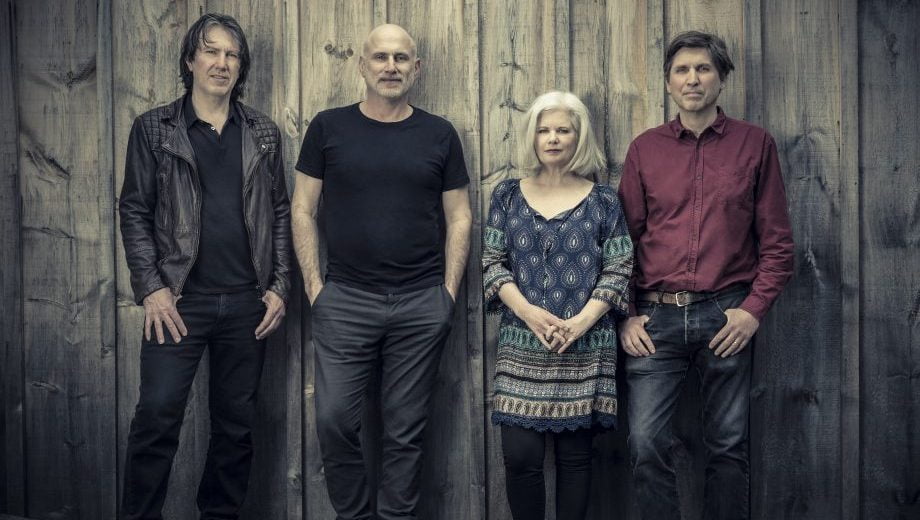
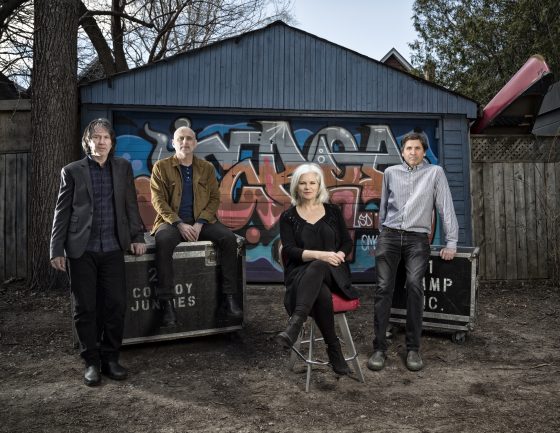
“It’s exactly like a horror movie!” laughs Michael Timmins, who is the man in that scenario and who write songs and plays guitar for the veteran Toronto band Cowboy Junkies. To pen tunes for their sixteenth studio album, All That Reckoning, he had to get out where nobody could hear him scream. “When I write, I have to be writing full time. As the years have gone by, it’s gotten harder and harder to do that, because I have more and more responsibilities at home. So I have to get away where it’s quiet, where I can sit around and think about nothing but songs. I have to get my head into it, so I have to isolate myself completely.”
He made it out alive, of course, but if All That Reckoning is any indication, the real horrors are the ones he encountered once he returned to society. An angry album whose outrage simmers coolly just beneath the surface, a thorny collection that ranks among the band’s best efforts, it chronicles a period of alienation, disappointment, fear, and paranoia. The guitars lurch and grind, the rhythm section lays out chunky, funky grooves, and singer Margo Timmins spits her brother’s lyrics with a strident combination of disgust and compassion. This is the Junkies in punk mode, decrying the hate and hostility that are scarier than any boogeyman.
“I’m not a protest writer,” says Michael, “but there are times in one’s life when the two collide. When I was all alone writing this album, I began to realize that the personal songs are little political analogies, and the ones that are a little bit political are really personal analogies. One feeds the other, and you really see how they cross. I felt like I was taking stock of what’s going on in my life and in the Western world, thinking about having to pay the price for a few things.”
Cowboy Junkies don’t usually traffic in dissent or social commentary; they’re better at documenting the personal than the political. Over the last thirty years they’ve crafted a sprawling body of work whose main subject is their own lives, their sons and daughters and wives and husbands and brothers and sisters. The band is rooted in their everyday lives, such that it feels more like an extension of family than a profession. “Margo and I are basically the same age,” says Michael. “We’re only about a year apart in age. We have our separate lives and things we go through, but when I write about something, she can relate that to something that’s happening in her world. And then she’s able to relate it to the listener by singing it, by giving it voice.”
It wasn’t always that way. After brief tenures in a punk group called the Hunger Project and an improvisational act known as Germinal, Michael Timmins and bass player Alan Anton returned home to Toronto, where they started a new band and eventually persuaded Margo to join as singer. Early shows were wildly spontaneous, with the band laying down a groove over which she would improvise lyrics or sing snatches of other songs. They covered old blues songs by Bukka White and Robert Johnson; they played “State Trooper” like Springsteen was an old bluesman himself. Released in 1986, their debut, Whites Off Earth Now!!, was a modest success, further entrenching them in the Canadian alternative scene but doing little to break them south of the border.
“Before anybody was listening,” says Margo, “we were just playing for ourselves—like all bands. You start in the garage or the basement or wherever, and playing music is fun. So you do a rock song. And then you do a country song, and then you do a blues songs. Nobody cares because nobody’s there.”
For their follow-up, they booked time in Church of the Holy Trinity in Toronto, claiming to be a Christian vocal band to allay any suspicions of sacrilege or heresy. The band recorded around a single microphone, capturing an ambience so strong, so distinctive, so immersive that the church becomes a member of the band. They reimagined “Blue Moon” as a eulogy for Elvis Presley, reinterpreted Patsy Cline’s “Walking After Midnight” as an anthem of urban paranoia, and most famously recorded what Lou Reed declared to be his favorite cover of the Velvet Underground’s “Sweet Jane.”The Trinity Session sounded unlike anything else at the time, and it pointed in new directions roots and folk music might travel: lo-fi, place-specific, history-steeped, atmospheric yet conceptual, beautiful and weird.
“What happens is you have any album like The Trinity Session and then suddenly everybody wants you to sound like that forever,” says Margo. “They want you to do that quiet album again and again. And we just couldn’t do that. We knew it would kill us. We’d get bored really fast, and it would be the end of the Junkies. We did it the way we wanted to do it, and we’re still here.”
After the misstep of 1990’s The Caution Horses—a little too clean, a little too slick—Cowboy Junkies proved themselves a deeply curious and extremely experimental band, one that had much greater range that previous releases had hinted. Black Eyed Man from 1992 is their country record, featuring songs rooted in Southern experience, some written by Townes Van Zandt (including a lovely version of “To Live Is to Fly”). They followed it up in 1993 with Pale Sun, Crescent Moon, a lowdown and occasionally abrasive album featuring guitarwork from J Mascis. There can’t be much overlap between John Prine and Dinosaur Jr, but the Junkies made it sound like a natural progression.
Since then they’ve largely forged their own path, never fully embracing or embraced by the roots community but also never feted as a major postpunk influence. Their most recent albums have been a linked quartet of experimental releases based on seasons of the year: One record was based on Michael’s experiences living in China, another gathered eleven Vic Chesnutt covers. Cowboy Junkies have reached a point where they can exist well outside the trends and slipstreams of contemporary pop, indie, and roots music, where they become a scene in and of themselves. Perhaps more crucially they’ve shown how a band might settle into a long career, enjoying a cult audience more than hit albums. They’ve shown how to make a life in music.
In that regard All That Reckoning is all the more surprising for how relevant it sounds, for how well it surveys our current climate, most crucially for how it suggests that the band’s defining traits—the quiet vocals, the erratic guitars, the menacing midtempo jams—are specifically calibrated to speak to this very moment. As Margo sings on “When We Arrive”: “Everything unsure, everything unstable.”
It’s not easy to write about these topics, but it can be even harder to sing about them. Before she even records her first notes, Margo road tests her brother’s songs, playing them in front of audiences, living with them so she can burrow into them, figure them out, and devise a plan of attack. For All That Reckoning she set up a makeshift studio in the ski chalet where Michael wrote the songs. “Often I don’t know what a song is about, and Mike won’t tell me. When he writes them, he just writes them. They’re mine to interpret and bring my life to and figure my way around.”
She has always been an imaginative singer, but these songs contain some of her best and most precise performances. The disgust in her voice on “Missing Children” is palpable, as is the disdain on “Shining Teeth,” but she sings “The Things We Do to Each Other” as matter-of-factly as possible, as though the lyrics were self-evident, as though a little compassion might help the lesson go down easier.
“Mountain Stream” plays like a record skipping, Michael’s guitar jangling like a pocketful of ill-gotten coins and Margo sounding hazy even though she’s relating a very grounded story about a king surveying his crumbling kingdom. “I wanted to sing it like… you know when you have a dream and you wake up the next morning and you tell somebody about it? You’re telling it in that kind of confused, almost stilted way of talking? You’re shaking your head going, I was here and I was there and then this dog came along. I wanted to sing it in that bewildered sort of way. But it eluded me. I don’t think I got it.”
Perhaps not getting it, perhaps hitting just off the mark, is what gives the song its haunted quality, as though nothing quite lines up, nothing quite makes sense. Everything unstable, everything unsure. “There’s something weird out there, something undefinable,” says Michael, pinpointing the album’s appeal. “We can’t really define it or figure it out, but it’s been out there forever, and for some reason it seems to be getting more common, more present.” The Junkies stare it down on All That Reckoning and they never flinch.
Artist:Wild Rivers Hometown: Toronto, Canada Latest album: Eighty-Eight Personal nicknames (or rejected band names): Wolf Island, Chancey Shoegaze (Andrew’s guitar pedal obsessed alias), Cortez the Killer (Khalid’s wannabe cowboy persona)
What other art forms — literature, film, dance, painting, etc. — inform your music?
The primary influences that inform our music are really our musical heroes. Many of the songs I write come out of listening to some piece of music, getting inspired by one part of it and examining and working around that. Film and TV are other inspirations that I think find their way into the songs. I’m intrigued by movies and TV that examine a specific character. There are so many movies right now that do an amazing job of showcasing a complex, flawed character, while allowing the audience to empathize with them. I think a lot of songwriting is doing just that, telling a story while unapologetically showing both the good and ugly sides of it. — Khalid Yassein
What’s the toughest time you ever had writing a song?
There have been many tough times writing songs. Not so much in an emotional sense, often the most difficult songs emotionally songs are the easiest for me to write. A lot of times in the last few years we’ve written songs where one part of it is really strong, so writing the rest of it to live up to that standard can be exceptionally hard. I’ve got some songs that have been in the works for a few years now, and you can absolutely hit a wall. It can be a lot of frustration, and sometimes 90% [of your time] can be spent toiling and thinking, and then in the span of a few minutes it suddenly becomes perfectly clear what you have to say. It’s about persistence and trying not to put too much pressure on what should be an organic experience. — KY
What rituals do you have, either in the studio or before a show?
We start every show with an off-stage huddle. We get into a circle, and whoever is feeling the most energetic will say a few words to pump us up. Then we count to 3, bonk our heads together and say “team!” It sounds pretty ridiculous, but it really gets us focused and in tune with one another. We haven’t developed many studio rituals yet, other than consuming lots of coffee and making Khal drink some whiskey when we want him to sound more raspy. — Andrew Oliver
Which elements of nature do you spend the most time with and how do those impact your work?
Living in Toronto, we experience the extremes of each season. From harsh winters to hot summers, and the beauty of mild springs and falls, it’s easy to be inspired by the changing landscape. Having distinct seasons also allows for memories to be tied to a specific time of year. I think this definitely informs my songwriting, as it creates a sort of nostalgia associated with each season. I know I definitely write more sad songs in the winter when I’m longing for a little sun. — Devan Glover
Getting away to spend time outside of the city is something we all love to do. Clearing your mind by spending time in nature can be very therapeutic, and always helps to put me in a creative headspace, so it probably indirectly informs a lot of my music and writing. Sometimes when I’m feeling stuck creatively, I’ll drive up to my cottage for a change of scene. — KY
How often do you hide behind a character in a song or use “you” when it’s actually “me”?
I usually write in first person, but I don’t think I’m fooling anyone with a sneaky pronoun change. If you think switching up “I” and “you” is going to protect yourself you’re probably in the wrong business! Most of our songs are really about us and our lives so we have to accept being vulnerable in a very public way. It can be difficult and scary but I think people can tell if you’re being authentic or if something is contrived. Some of my favourite writers say things in songs that are so raw and unashamed, and it’s incredible. Those are the lines that stick with you forever, they make you feel something. — KY
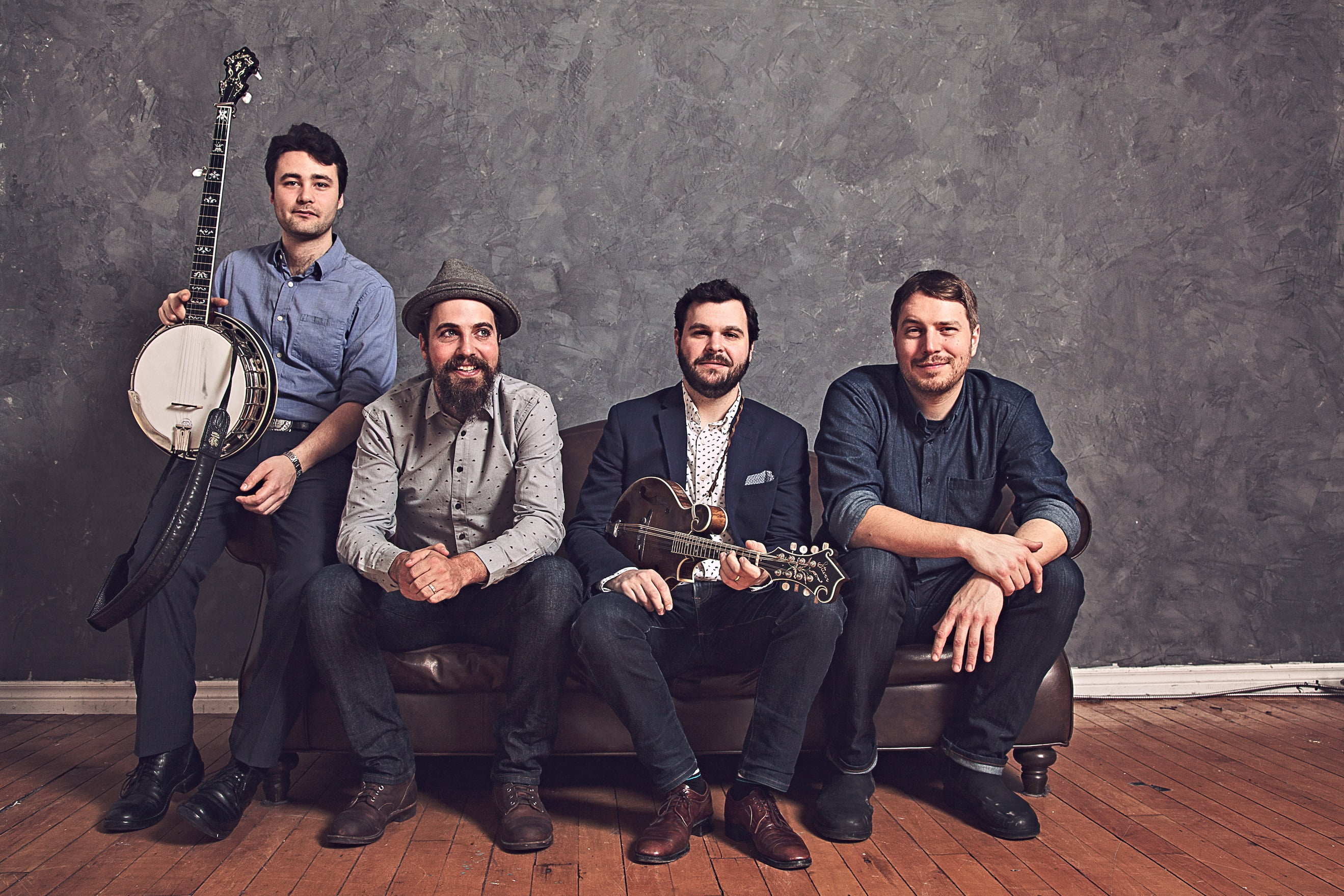
In their words: “My favourite music comes from watching ‘working bands,’ bands that play all the time—they get tight musically and stay loose in spirit and approach. The music presented is a deliberate statement but there’s a real spontaneity in the details. Therein lies the aesthetic for Queen City Jubilee, the culmination of three years on the road since Coffee Creek came out. We had a ball putting this record together, writing a lot of new songs, unearthing old obscure gems, and generally trying to stay out of the way of the music. And check out the artwork! Done by our very own Frank Evans, it offers a rare glimpse into the dark mind of the contemporary bluegrass banjo player.” — Adrian Gross
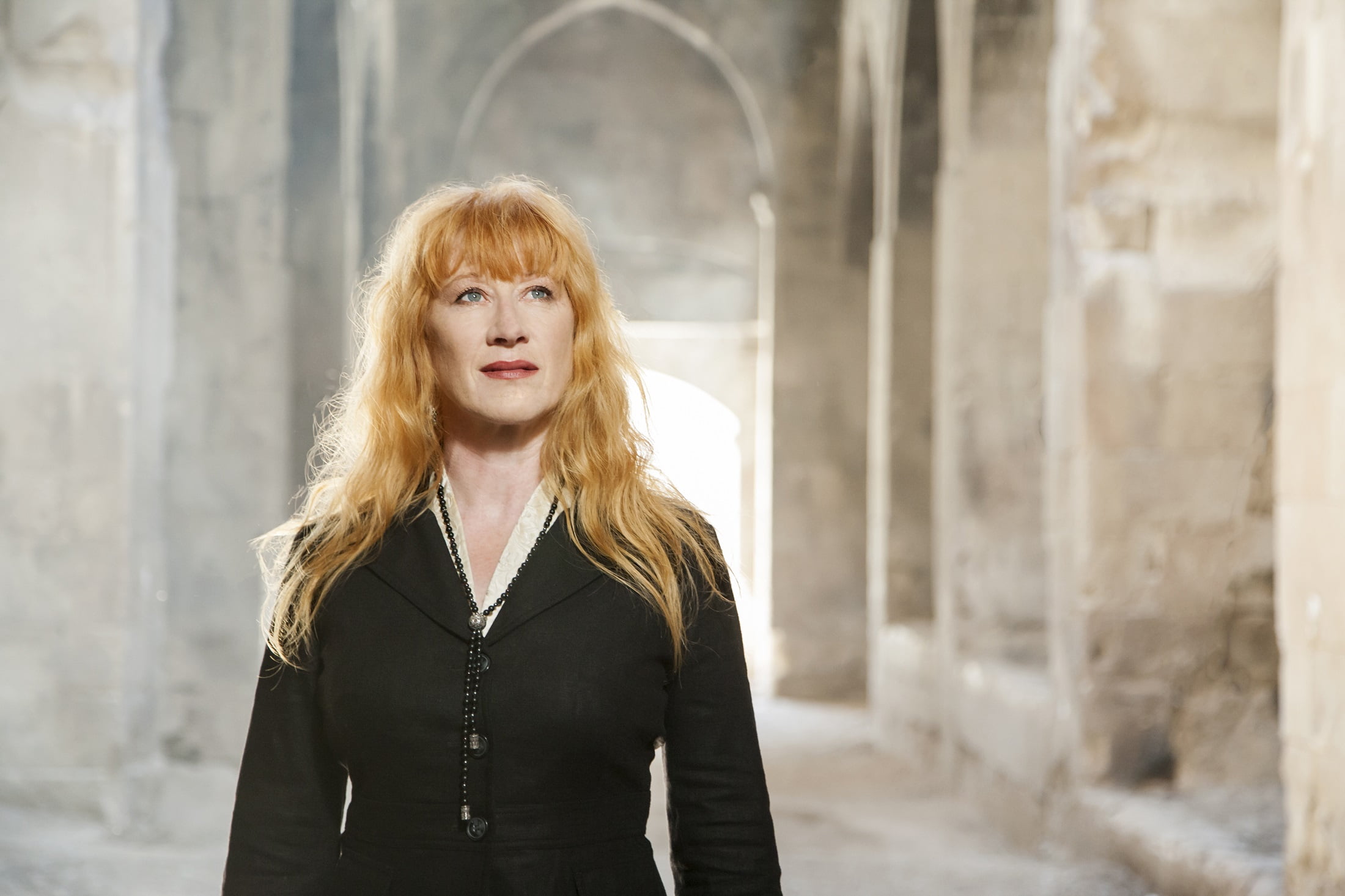
Loreena McKennitt is both a Romantic and a pragmatist. During a thirty-year career that began with her busking on the Toronto subway and led to composing a new work for the Royal Canadian Air Force, the Canadian singer-songwriter-producer-historian has dug deep into European musical traditions (the Celts in particular) and has found vivid inspiration in the Romantic poets (Keats and Yeats in particular). Her music strives for a dreamy kind of beauty, often described as ethereal but usually rooted deep in the soil of her native Canada and her ancestral Ireland.
And yet, she admits the impetus behind, Lost Souls, her first album of new material in more than a decade, was largely practical: “The fact that there hadn’t been anything new was becoming a bit conspicuous. We had a number of people writing to ask if I was going to come out with a soothing original ever again.” In addition to writing a handful of new songs, McKennitt pored through her own archives, finding old songs—some written in the late 1980s—that spoke to her. “There were songs I had written along the way that didn’t fit my previous recordings, so I started looking at those songs again. I thought, yes, they’re a bit like lost souls.”
The songs may have disparate origins, but Lost Souls is neither a rarities compilation nor a retrospective. Rather, the album holds together as a larger statement, as one song after another expounds on the implications of its title: loss and yearning, travel and transience both geographic and temporal, even the end of humanity on Earth.
Can you tell me about putting this album together? It doesn’t sound like a bunch of songs you had lying around.
If I look at it objectively, I suppose it makes sense. There are various composers of music who have stayed within a certain realm of their sensibilities. Even if they wrote something years ago, the material itself has the connection to the person who wrote it. Also, we recorded these songs all freshly within the last year, so I was able to bring a lot of the aesthetic and approach of recent recordings to it. And I am blessed with an incredible bank of talented musicians.
What was it like to revisit these songs and engage with them again?
It was interesting going back to previous mindsets. “Ages Past Ages Hence,” I wrote it somewhere around ’89 or ’90. I remember performing it at the Toronto Winter Garden in 1990. It was at a time when I was listening to Kate Bush. I really liked the angular approach she takes on some of her music, so I thought it might be interesting to head in that direction. “The Breaking of the Sword,” I wrote it about a year and a half ago. I was commissioned to write that piece, but I wrote the melody in 2006 or maybe even earlier than that and only put the words to it last year. Those lyrics mean a lot to me and that’s the piece I would say probably connects most to where I am today.
It’s interesting that “Ages Past Ages Hence” is so old. It seems to fulfill the theme of the song to have it waiting around for so long.
When I think of that song, I remember I was living in a rented farmhouse and my writing desk looked out a window into a wooded area. A lot of the trees were quite mature, probably 100 or 150 years old, and I remember many times reflecting on what they had seen during their lives. They were witnesses to whoever lived there and all the human folly in a more general sense over the years. That sentiment connects to my own Celtic history. The Celts had a major connection with trees. They felt that trees perhaps embodied some of their ancestors, as many indigenous people have, and they felt the trees played a special role on this planet. So the fact that I had this Celtic heritage and this connection with trees is probably not surprising. Also, I wanted to be a veterinarian at one point in my life, and if I hadn’t gone into music, I probably would have gone into wildlife conservation or forestry.
These things are all tied together, and then everything comes together in the last song, “Lost Souls,” which was based on a book I read a few years ago by an anthropologist called Ronald Wright. He studied civilizations as one might study the black boxes of aircraft that have gone down, and he observed that over the millennia we as a species have a tendency to get us into progress traps. We might very well be caught in one now. He observed that around the time of the industrial revolution, we went from being concerned about our moral progress to being more interested in our technical progress. He cites the denuding of the landscape on this planet as one of the big progress detriments, because it’s so integral to oxygen and water retention. All of these things go swimming through my mind as I’m stitching together the recording, which becomes a bit like a quilt.
These are songs about travel, which don’t just mention the places but incorporate the music of those places as well.
I love listening to these various instruments played in their idioms, so part of it is pretty selfish. Secondly, there is the thrill of getting to share that excitement with other people. Bringing in the flamenco player from Málaga gives the music an authenticity that it perhaps wouldn’t have if someone else played that part. So it’s a combination of respect to those cultures and the gratification it gives me to share that with other people as one might share a new recipe with friends.
But it is complex territory. It’s been fresh on my mind because I was listening to an interesting BBC program about the upsides and downsides of selecting music from other cultures and putting it into your own. Some people say, “Hey, that’s our culture. You shouldn’t be taking that.” Other people say, “Wow, I’m going to visit that place and that culture and I’m going to listen to more groups that play flamenco.” I like to think that music is a timeless and international language, and there’s nothing I want to do to damage the distinctiveness of that voice or compromise what I love about, but I love to draw and weave those things into my own music in an honest and meaningful way. I think that manifests itself in “The Breaking of the Sword,” where the military band evokes a very particular feeling, and I felt that nothing but the military band would do.
You debuted that song on Remembrance Day last year. What was the response to it?
There were people who were surprised that I had created a piece like that. But other people were less surprised because they knew my connection to the Canadian military. I’m an honorary colonel of the Royal Canadian Air Force, which in itself is a surprise to people. I was commissioned to write something for the ceremony a year ago, which was at Vimy Ridge in France and commemorates a World War I battle. In the end, the producers decided they wanted me to sing something from [McKennitt’s 1997 album] The Book of Secrets. I was already writing this song, and I thought to myself, if I don’t put it on the recording, it too will become a lost soul. There was a lot of discussion and debate about whether or not it should go on Lost Souls, because it’s not the kind of piece I would have thought to create without being commissioned.
It seems to echo a theme of impossible longing, in particular with this mother wishing for the return of her dead son. It seems like a story that keeps happening and continues to have meaning across every culture.
I think that speaks to what I’m striving for: to come at the concept of lost souls from different directions. “The Breaking of the Sword” is a snapshot of an experience that I think most people who have had someone perish in a military exercise will relate to. I wanted to take great pains not to get trapped in the winning side or the losing side or the right side or the wrong side. Rather, I wanted the song to sit in the simple zone of a family losing a loved one. On one level, it’s about a mother losing a son. But there’s another layer, one that many people may not realize: The military is another kind of family, and it’s a powerful bond amongst those who serve. I’m reminded of that each year when I go down to the cenotaph each year.
I like to think that sense of loss is something that is timeless and universal, which means we shouldn’t get trapped by questions like, “Is it in support of the military? Or is it not?” All of that is another conversation, a very important one for sure, but this was just simply about losing someone who believes they are fighting for the betterment of humanity. It’s about the simplicity of losing someone who defends what they believe in.
From manicured gardens to western hemlocks towering above the mildest climate in Canada, Victoria, BC, may be the most agreeable stamp in your passport. The “City of Gardens” lives up to its name, blooming year round. Hanging baskets and window boxes overflow with green vines, vibrant flowers, and ornamental shrubs lining every walkway. The oldest city in the Pacific Northwest delights travelers with its storied town squares, alleyways, and soundtrack of seagulls squawking overhead.
Getting There
Being on an island makes getting there part of the adventure. Victoria and Vancouver Island are well serviced by ferries, float planes, helicopters, and a self-proclaimed “friendly” airport. Be sure to check ferry booking sites for hidden fees to avoid things like a $16 charge for not booking 24 hours in advance. On the ride in, you get to see views of the immensity of Mount Baker. Getting around this walkable city is doable without a rental car, but taking a drive across the island does afford adventurous mobility.
Stay
Hotel Zed
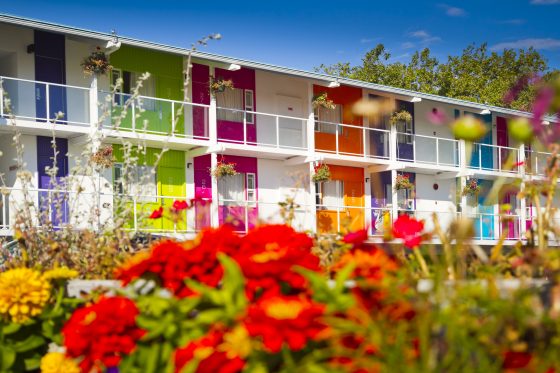
On brand with its charismatic vibe, this bed & breakfast-laden town boasts plenty of temporary abodes. Skip the big box brand hotels and stay at local B&Bs, like the century-old Gatsby Mansion, clad with lush wandering paths, gardens, and fountains on the grounds. For waterfront views, a booking at the Inn at Laurel Point is unparalleled with rooms overlooking the Inner Harbour. Eat your Regal Croissants like an Englishman at the Victorian-inspired Albion Manor Bed & Breakfast. If you’re in it for the ‘gram, Hotel Zed was recently named one of the most Instagram-able hotels by Trip Advisor.
See & Do
The Butchart Gardens
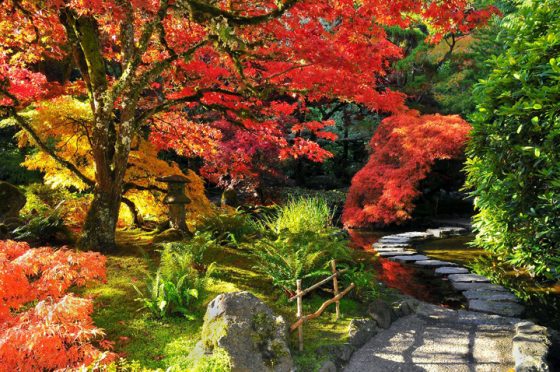
Victoria’s mild, coastal climate lends itself well to growing nearly year-round. Blooms often start in February, when most of Canada is covered in snow, and the city welcomes summer with a tradition of abundant floral hanging baskets. The Butchart Gardens are particularly lush, boasting dinner plate dahlias, Japanese maple trees, and a spectacular rose garden. Much of the island is covered with parks and natural preserves. Sooke Potholes State Park is a natural wonder — its crystal clear water affording you sights of perfectly smoothed rock pools and potholes carved by mother nature. Pacific Rim National Park Preserve is not your typical sandy beach, but closer to a botanical wonderland. Choose from walking along sandy beaches, pebble beaches, or through the mossy forest of huge ferns and spruces.
For those seeking marine adventure, Victoria’s many whale watching tour companies are knowledgeable about the region’s orcas and will help you maximize your chance of seeing one in the flesh. We recommend BC Whale Tours or Eagle Wing Tours, but expect chilly temperatures, use binoculars, and put the camera down to enjoy the moment. (Spoiler: Your friends don’t want to see blurry pictures of whales.)
Symphony Splash (by Deddeda Stemler)
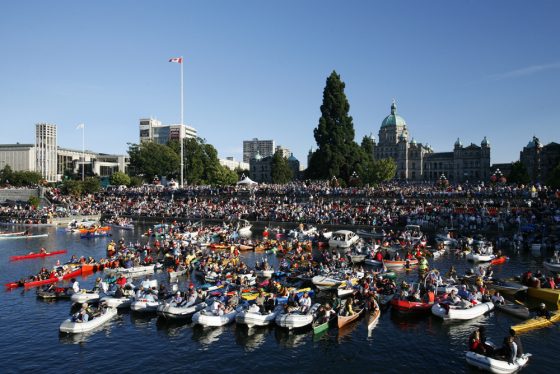
The music scene is sparse, but diverse. A few recommendations include yearly spectacles like the Sooke River Bluegrass Festival and the Symphony Splash — a floating concert by Victoria Symphony in the Inner Harbour.
Eat & Drink
Fairmont Empress Lobby
Eat an indulgent breakfast of eggs benedict with house-made, real butter hollandaise at John’s Place. Their “Mile High Apple Pie” is topped with crumbles of apple crisp and renowned for a reason. Drink an impeccably foamed cappuccino at Shirley Delicious Café paired with their breakfast burrito, if you’re out west around the Shirley area. Nautical Nellies has the seafood you’ll undoubtedly crave while staying on the coast. Try their oysters and one of their 200 wines on the sundeck while enjoying harbour views.
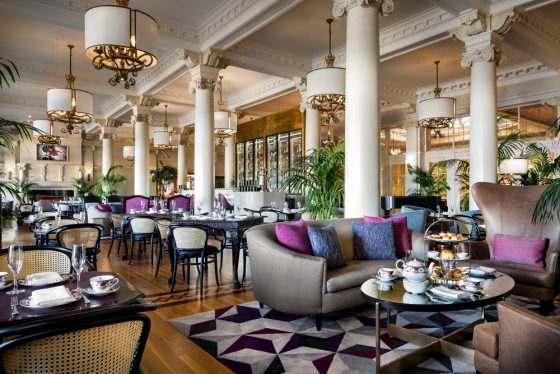
You’ll feel the British Columbia influence with a reservation at Fairmont Empress for high tea. Their fresh baked scones, clotted cream, and fine tea blends will transport you across the pond. Get your fancy fix at Vis a Vis, a charcuterie and wine bar with a quaint and cozy atmosphere.
Vis a Vis
Victoria is the craft beer capital of British Columbia, but their cideries, wineries, and distilleries equally permeate the drinking scene. Sip cider on an apple farm at Sea Cider Farm & Ciderhouse, try a Northwest hops-brewed Blue Buck Ale at Phillips Brewing and Malt Co., drink a Somenos pinot noir while overlooking the city on 40 acres of Averill Creek Winery, and try Victoria Distillers’ award-winning Victoria gin at their newly opened Sydney waterfront distillery.
Lede photo credit: Chris Johnstone via Wikimedia. Other photos credit: Tourism Victoria
Toronto touts itself as the diversely beautiful, densely populated Canadian culture center. It’s probably no coincidence that, in the age of Trump, the city’s current marketing campaign highlights their inclusiveness in the form of the slogan “The views are different here.” It’s not just marketing spin: In fact, 50 percent of the population was born outside of Canada, citizens speak more than 130 languages, and the city government publishes information in 30 languages. Often called “Canada’s Downtown,” this business, media, and sports hub boasts a population of 2.8 million, making it the fourth largest city in North America.
Getting There
A new airport rail link makes getting from the airport to downtown Toronto a quick 25-minute ride. Because Canada always seems to get it right, the city’s public transportation is top notch, so you won’t need more than a TTC card while you’re visiting to hop on and off of their subway, bus, and streetcar system.
Where to Stay
If you want to stay in the heart of the action, the über-stylish Le Germain Hotel is a good choice. It’s located in downtown on Mercer Street and not too far from the airport. Cambridge Suites Toronto is also centrally located and close to St. Lawrence Market. If you’re going car-less, which is definitely possible, staying close to downtown is your best choice. Toronto’s bed and breakfast game is strong, with more than 100 traditional cottages boasting award-winning gardens. AirBnb it in the charming villages of the trendy Bloor West Village or Cabbagetown, or stay in a uniquely Toronto experience: a Boatel — a boat bed and breakfast on the waterfront.
Eats & Drinks
Photo: Kensington Market by Tourism Toronto
The open-air market culture is a unique part of Toronto, and Kensington Market is not to be missed. It’s a multicultural area of about 10 blocks boasting cheese, spices, and tea shops which have been around for years. Try the sourdough at Blackbird Baking Co. and the cardamom/pink pepper/lavender kombucha at Witches Brew.
A quick 15-minute trip across town is another highly trafficked market where maple-flavored everything abounds. Named the top food market in the world by National Geographic, St. Lawrence Market is a 200-year-old traditional market with butchers, bakers, and farmers selling diverse fare. Be sure to try a peameal bacon (a uniquely Canadian treat consisting of pork rolled in cornmeal) sandwich at Carousel Bakery and homemade pasta from one of the artisans.
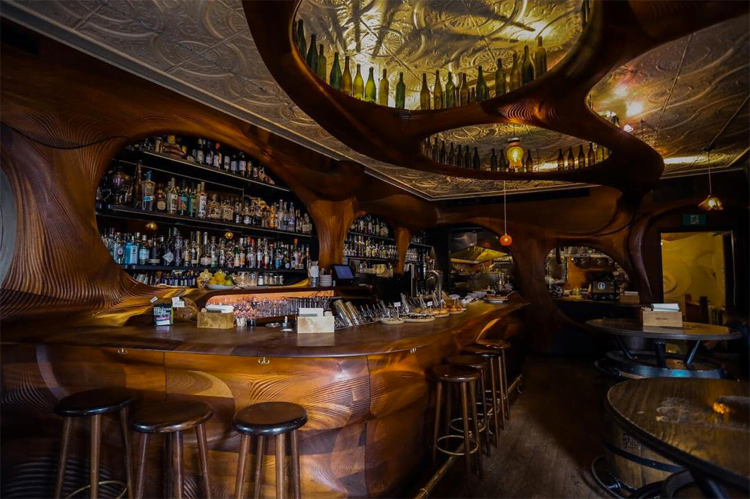
Photo: @Bar_Raval instagram
As for drinks, Bar Raval is a Barcelona-inspired, Gaudi-esque spot for drinks with locals, serving tapas displayed across the bar for you to smell and see before you order.
A multicultural population translates to a worldly food scene, where you can eat your way around the world in Little Portugal, Greektown, Chinatown, Little India, and Little Italy. Toronto is also very into izakayas, which are casual Japanese gastro pubs, and Imanishi is one of the best.
The Gaybourhood
Photo: Church and Wellsley by Tourism Toronto
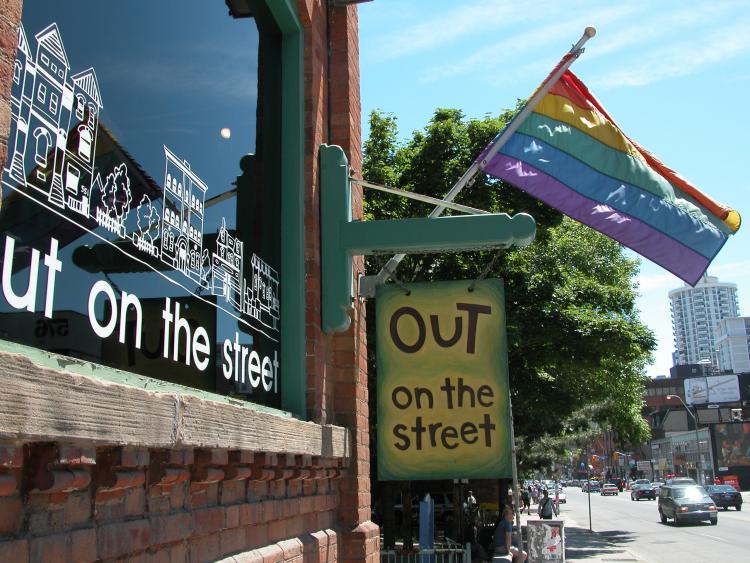
Toronto was the first jurisdiction to legalize gay marriage in North America in June of 2003, so it’s no surprise that their gay scene thrives, centered around the intersection of Church and Wellesley downtown. A staple of the gay scene for more than 25 years, Woody’s is the most popular gay men’s bar enjoying popularity from appearances on Queer As Folk. El Convento Rico started as a safe haven underground club for lesbians and trans people who were persecuted and has featured drag shows for more than 20 years. Fabarnak Restaurant is a great brunch spot, plus it serves as a training environment for people with employment barriers to be guided by professional chefs.
For live music, head to the legendary Horseshoe Tavern, where the Rolling Stones played many impromptu concerts, or Massey Hall, which hosts BGS faves like Jason Isbell and Andy Shauf. Toronto has an impressive roster of musicians who hail from the area … Shania Twain, anyone?
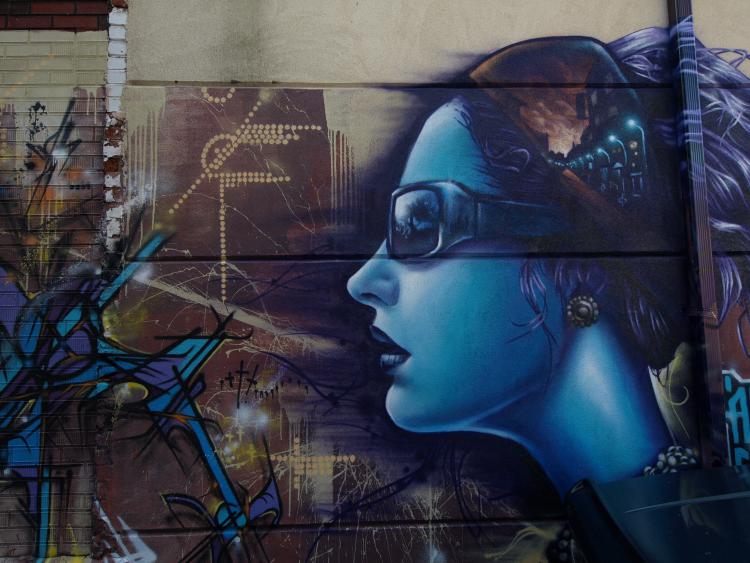
The city’s architecture is exquisite. Be sure to visit the Distillery Historic District, housing 47 buildings from the 1850s which make up the largest collection of Victorian industrial architecture in North America. From the flat iron to city hall — which looks like a giant unblinking eye — Toronto’s architecture runs the gamut. Street art is encouraged by the city and can be seen in Grafitti Alley, the Kensington Market area, the Ossington Laneway, and on the Keele-Dundas Wall.
The following is the final video in a four-part series hosted in partnership with and created by Breakwater Studios. Each piece is part of a larger series, Life’s Work: Six Conversations with Makers, that chronicles the lives and artistic pursuits of makers living on Canada’s Eastern seaboard.
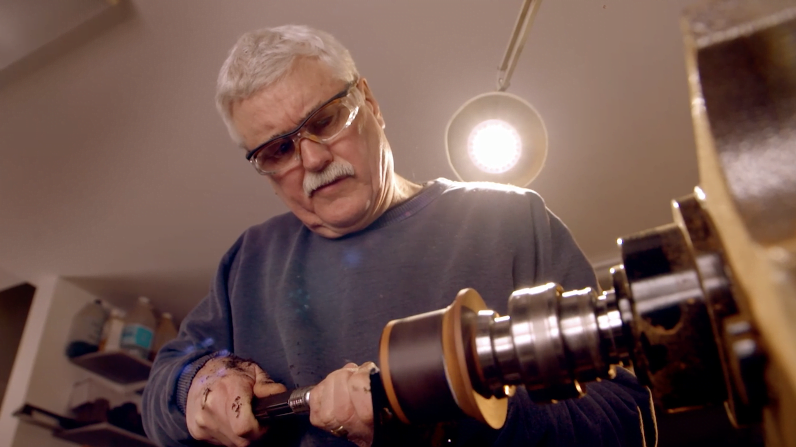
“Turns,” featuring Steven Kennard of Canning, Nova Scotia
When did you first begin working on your craft?
It’s been kind of always, really. I don’t really so much remember a beginning at all. I guess, if you really want to date it, it’s been [since] about 1974 or 1975. As a turner, I’ve always been immersed in woodworking in one way or another from childhood, really. I was excited to beginning turning, to make pieces for furniture which is what I started out doing.
Do you have another profession? If so, what do you do? If not, what did you do prior to beginning your artistic work?
I was a musician, prior to everything. I mean, I had been sharing my time as a turner with being a photographer. I still do it, but more emphasis has been on turning now. I was a musician back in the ’70s, so woodworking became a part of that because I made a lot of stage props and things at the time. English folk music. Button accordion.
How long did it take you to master? What new skills did you have to learn?
That’s a tricky one. I’m not sure that you ever really … it depends whether you decide you’ve become a master or not. I never really feel I’ve ever got there, actually. As far as learning new skills, it wasn’t just a case of, “Oh yeah, I’ve gotta do this, this, and this.” It was a case of acquiring skills over a period of time, you know, making the usual mistakes. It wasn’t like I went off to school or did a course or anything like that because, in those days, there really was no such thing available anyway. It’s a continual growth. There are always aspects of it that you really still feel like you can improve on, I suppose. It’s an accumulation of skills built up over, really, a lifetime, to be fair.
What do you feel you contribute to your community with the pieces you create?
Very little, actually. I’d like to think it was different, but if you look at the community as a worldwide community of woodturners, then I think I’ve made a contribution with my work for sure. I know that I’ve influenced a lot of people’s direction in what they’re doing, but as far as I would imagine, there are very few people that even know that I’m here. It’s really an artistic community rather than a community in Nova Scotia. It’s just too far out in nowhere, if you know what I mean. Culturally, it’s quite different from being in a bigger, larger city or whatever. Population’s low, agricultural-type community where art doesn’t really figure in most people’s lives. As a result of the Turns movie, it really opened up a community to me in a way. A lot of people related to that story.
What have you learned about yourself as you’ve grown as an artist?
There’s never an end to it; there’s always something else you want to go on to. I’ve learned a level of patience, I imagine. And knowing that it’s really a case of practice, practice, practice. Keep doing it, keep doing it, keep doing it. You know, it’s not really one of those things you can just jump in and jump out, really. Obviously, not everything turns out the way you want it to be, but being adaptable, as well, to see all possibilities in a situation. Maybe a thing didn’t work out, or how you find a way around a problem, as well. Problem-solving is a good answer to that, in a way. Constantly trying to work its way through the process by solving problems.
The following is the second in a four-part video series hosted in partnership with and created by Breakwater Studios. Each piece is part of a larger series, Life’s Work: Six Conversations with Makers, that chronicles the lives and artistic pursuits of makers living on Canada’s Eastern seaboard. Look for a new video each Tuesday.
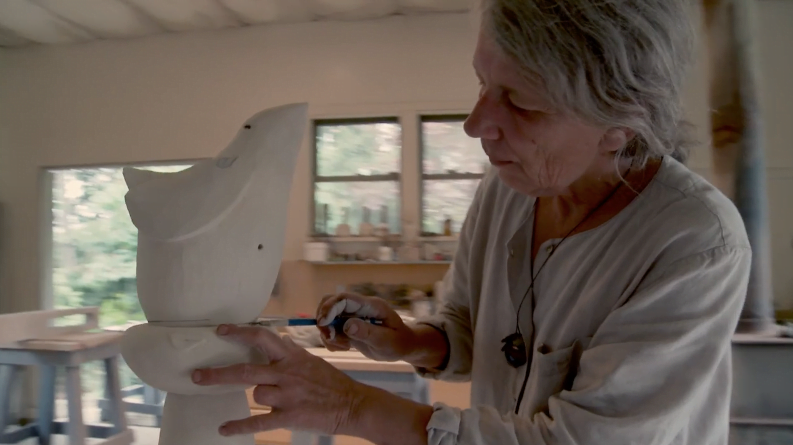
“Stone,” featuring Heather Lawson of Bass River, Nova Scotia
When did you first begin working on your craft?
When I was 24 — so that would be almost 32 years. Oh my God. Getting old.
Do you have another profession? If so, what do you do? If not, what did you do prior to beginning your artistic work?
All I do is beat on rocks. Before I did that, I studied recreation and I was a director of a boys and girls club. I loved it. It was as far as I could go by the time I was 24.
How long did it take you to master? What new skills did you have to learn?
Well, I wouldn’t say I mastered. In the stone craft, to become a master, there are actually things you have to do. It’s your peers who tell you you are a master. You don’t decide that yourself, and you have to have taught, and you have to have successfully run your own business to be a master, as far as stone masons are concerned. I know people who have never done any of those things and they call themselves a master. It’s more, nowadays, if you’ve been here long enough, you can call yourself a master.
As far as mastering your craft, I will never master this craft. There is way too much to it. You could cut every single day of your life and never have experienced it at all.
With stone stuff, especially, because there are so many different things. If you go away from the artistic part, the sculptural part, and you get into the stone masonry part, as far as making, like, cathedral windows, I’ve done that but not all stonemasons are good enough to do that. They are very difficult. Or to do a spiral staircase: You may not, in your whole career, get to do that. It’s not so much the cutting; it’s being able to figure out how to do it. How to set it out. It’s the setting out. The geometrics of it all.
What do you feel you contribute to your community with the pieces you create?
I was going to say my community couldn’t care less. I’ve brought notice to the craft in my community, as far as enriching my community, and I’ve inspired people to pick it up as a hobby craft. Actually, when I do my workshops, it’s pretty much 50/50 [in terms of women]. There are two women that I know of who do it more than a hobby. They work away at it, and I just got an email from a gentleman who took my course twice now, and he sent me pictures of his work and he’s really coming along. And now he wants to learn how to do lettering and I suggested he take my next workshop. [Laughs]
It’s great seeing someone progress like that. Takes me back to my boys club days. Same idea where, back then, you got to share enthusiasm with youth and, here, I get to share the enthusiasm of adults. It’s the same thing; it’s identical. They don’t squeal as much.
What have you learned about yourself as you’ve grown as an artist?
That I still have lots to learn. It’s frustrating when you want to do something, but you still haven’t got the skills to make your hands do what your head is thinking. I could make the same stuff over and over again and get really good at it, but I would be bored out of my mind. I have ideas and I have absolutely no skills to do them because I do work now that has stuff besides stone in them. So trying to figure out how to put the two together or how to make the stone do what I want it to do is challenging, but that’s why I keep doing it. I’d be bored out of my mind if it was the same thing every day.
The following is the first in a four-part video series hosted in partnership with and created by Breakwater Studios. Each piece is part of a larger series, Life’s Work: Six Conversations with Makers, that chronicles the lives and artistic pursuits of makers living on Canada’s Eastern seaboard. Look for a new video each Tuesday.
“Fibre and Wood,” featuring Douglas Drdul and Sanna Rahola of Walton, Nova Scotia
When did you first begin working on your craft?
Douglas Drdul: Well, I was first introduced to wood chisels, the crafting of woodcarving, while learning the craft of building acoustic guitars. It was soon after that that I felt the desire to do more with my chisels, and that would be roughly 18 years ago.
Sanna Rahola: I began working on becoming a textile artist at a very young age (without knowing it, of course). I received my first loom at the age of four and was already crocheting and had learned how to knit.
Do you have another profession? If so, what do you do? If not, what did you do prior to beginning your artistic work?
DD: I’m a woodworker, but I also have a full-time profession which is as a school bus driver. I have the school bus. I drive it out the house in the morning and it resides here overnight. I do a run that’s basically in my vicinity. When you’re a full-timer, you have a run, so to speak. You work in the morning and you work in the afternoon, and you have to make sure your run is as close as possible to where you live and have the bus at home. It’s just more convenient for everyone that way.
SR: Before becoming a full-time textile artist I was at university studying to become a dietitian. I loved biology, nature, and the human body. In between classes, I would knit, crotchet, sketch ideas, et cetera. After classes, I would design and screen print. On weekends, I would sell my screen-printed t-shirts, bags, brooches, et cetera at a farmers’ market in Halifax. Prior to university, I was a certified ski instructor.
How long did it take you to master? What new skills did you have to learn?
DD: Well, what I would say to that is I would never dare to call myself a master. And, in terms of the skills, I would say that, as ideas and projects evolve over time, so do my skills.
SR: I feel very uncomfortable with the word master. I do not feel that is up to me to decide. I will never call myself a master of my craft. I feel, the more I learn, the more there is to learn. I love to be challenged and figuring things out, always experimenting and pushing my boundaries. I feel very comfortable with my hands and will continue to learn and improve.
What do you feel you contribute to your community with the pieces you create?
DD: At times, they are reflecting of the national surroundings, to the area that we live here in Nova Scotia. We also donate to certain charities and organizations from time to time, help there, give them workshops, give them demonstrations, and this would all be here in Nova Scotia within our community, that sort of thing.
SR: I always hope to promote awareness for the beauty and importance of nature. To inspire people to observe, appreciate, and care for nature. I do not want to assume anything. This is what people who see my work in public places tell me — connection to nature, calming, memories of positive experiences in nature, good feelings, joy, inspirational. Annually, I donate a few pieces of work to support causes such as health care, women’s shelters, playgrounds, youth groups, et cetera.
What have you learned about yourself, as you’ve grown as an artist?
DD: I have learned that you are always learning. Pursuing the creative path and expressing it through artistic means, it’s really a lifelong journey process. It really is. They always say you are always learning as you go through life, but I suppose you appreciate a creative kind of expression that way and that’s something you really find passionate. And that’s what I’ve realized: You’re always learning and you’re always changing and evolving and pursuing that process. The process is what’s important and, from the process, comes all that learning.
SR: I have learned that I am usually able to accomplish anything I set my mind to. I always say “yes” and figure it out after. I have learned that I enjoy the process more than the finished work. I have learned that I make people feel good. Colors and textures really speak to me. I feel agitated when something is visually off-balance to my eye (color, composition). I have learned to turn on my creative fountain when necessary, even if I feel mentally exhausted; I guess I work well under pressure. I have learned that I rely on my work to keep me sane through emotionally difficult times. It is a beautiful calm place to escape to. I have learned that I need to balance my gentle, soft medium by working outdoors on a large scale, landscaping, creating spaces in nature.
This website uses cookies to improve your experience. We'll assume you're ok with this, but you can opt-out if you wish.AcceptRejectRead More
Privacy & Cookies Policy
Privacy Overview
This website uses cookies to improve your experience while you navigate through the website. Out of these, the cookies that are categorized as necessary are stored on your browser as they are essential for the working of basic functionalities of the website. We also use third-party cookies that help us analyze and understand how you use this website. These cookies will be stored in your browser only with your consent. You also have the option to opt-out of these cookies. But opting out of some of these cookies may affect your browsing experience.
Necessary cookies are absolutely essential for the website to function properly. This category only includes cookies that ensures basic functionalities and security features of the website. These cookies do not store any personal information.
Any cookies that may not be particularly necessary for the website to function and is used specifically to collect user personal data via analytics, ads, other embedded contents are termed as non-necessary cookies. It is mandatory to procure user consent prior to running these cookies on your website.