Southern Avenue: Music for Peace, Empowerment, and a GRAMMY Nomination

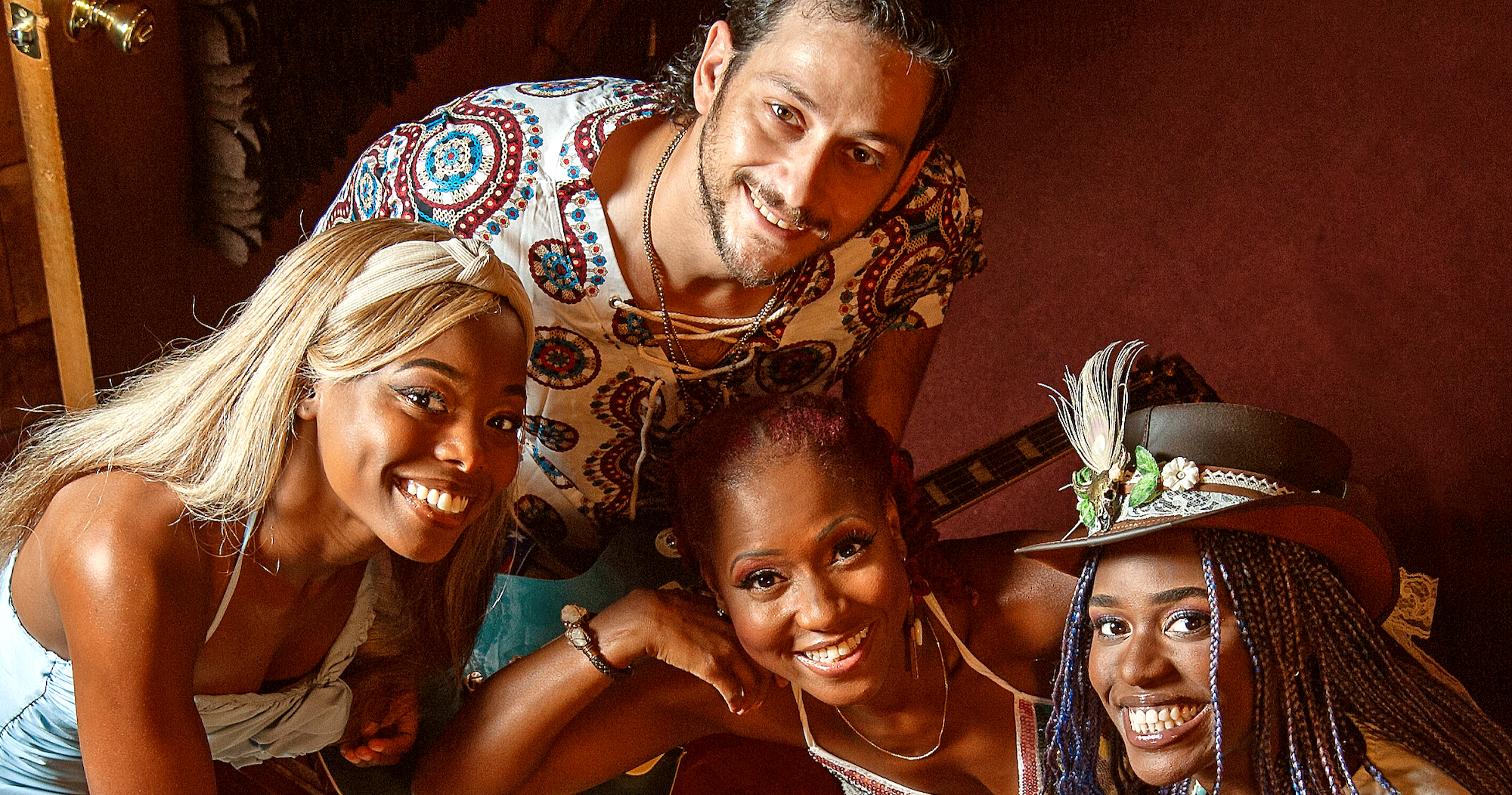
Through joy and sorrow – and they’ve known both in their ten years as a band – Southern Avenue do what they do best: make music. Lead vocalist/songwriter Tierinii Jackson, her husband, guitarist/songwriter Ori Naftaly, and her sisters, drummer/vocalist/songwriter Tikyra “T.K.” Jackson and percussionist/violinist/vocalist Ava Jackson, all reach into their spiritual and emotional wells to tell their stories through song.

It’s there on Family (released in April on Alligator Records), their latest and fourth album. True to its title, it’s a musical journey tracing the band’s personal and professional history. Family was recorded at Royal Studios in Southern Avenue’s home city, Memphis. GRAMMY winners John Burk and Boo Mitchell produced and mixed, respectively.

Southern Avenue write, record, and play with one goal in mind: “We’ve always been a band that speaks about peace and empowerment,” says Tierinii Jackson. “Our music is a place where we can leave the ails of the world outside. We can come together, be equal, and heal.” It’s a noble mission that comes from lived experience and presents in a unique blend of blues, funk, soul, gospel, country, and a healthy serving of guitars.

The rhythmic foundation upon which Southern Avenue is built stems in part from the guitar-and-drums pocket that Naftaly and Tykira Jackson create. “With Ori coming up with really juicy stuff and playing slide, it’s super easy for me to be inspired,” says Jackson. “I feel like what’s actually happening is we all allow ourselves to be creative and truthful to our stories, and we are connected to our ancestors, to our roots, to something much bigger than us. Within that, you get the pocket, because we are locked in.”

Naftaly seconds: “At the end of the day, nothing replaces two people that want to do right by the music, no matter what, and have almost a decade of doing it.”

First interviewed on BGS for Good Country in May 2025, the musicians reunited with BGS just weeks after learning of Family’s GRAMMY nomination for Best Contemporary Blues Album. As requested in their GC 5+5, there were no questions about “how [they] met and how the band started.” You can learn more about that here.

Congratulations on your second GRAMMY nomination. What does this mean to you, musically and personally?

Ori Naftaly: We’re very proud of ourselves, for sure. We felt that this album was special when we were writing and recording it, not just because it’s good music, [but also] because it’s coming from who we are as people. This is the most transparent we ever were. We felt that it is going to resonate. The circumstances for the album are special, and the story behind it. The [nomination] makes us proud because we’ve been so true to ourselves. It confirms our belief that you can create real music, without gimmicks, and it gets appreciated.

Tikyra Jackson: The first time we were nominated [for second album Keep On in 2019], just finding out, in that moment it does something to you that you wouldn’t expect, especially growing up watching the GRAMMYs every year. Five years later, to be nominated a second time, it feels like the first time all over again, because we work so hard.

A lot of times, when you’re the artist, you don’t take time to look at the work you’ve done. You just keep going. With this project being so personal to us, and representative also of our culture and those that came before us, it represents a lot. The GRAMMYs recognizing us also recognizes Memphis in a lot of ways. It gives us hope for the future, that we are becoming the world we live in and not just participants in it; that the world looks like us.

Tierinii Jackson: It makes me feel great. The first time we were nominated, I felt like we had something to prove. We were putting our best foot forward, trying to make everybody happy. But with this project in particular, we really wanted to embrace our roots. It had nothing to do with what people expected of us. It had nothing to do with trying to prove ourselves. It was our time to embrace our lineage, to embrace each other. This nomination is special because it came at a time where we finally found our identity in our journey of self-love. We’re being rewarded for something that’s very, very close to us. We proved we could do it while staying true to ourselves.

Ava Jackson: The previous GRAMMY nomination, I wasn’t [as] involved in the band. I would come in and record background vocals. So the nomination hit, but not as much as it does now. When we found out, my hands were shaking. I had way more involvement in this album as far as contributing to the harmonies, percussion, and fiddle. Having so much of myself involved and getting rewarded with a nomination is something I’m very grateful for. The album is so layered in who we are as individuals and as a family. It’s a triumphant thing to be rewarded and know that you did it wholeheartedly, you put yourself out there, it was authentic. There was so much effort put in even before we stepped into the studio. It’s such a privilege to get a nomination. I’m very appreciative of the process and how everyone has been receiving the album.

In an interview with Rolling Stone, you referred to yourselves as “the spirit of Memphis.” Memphis has a rich musical history … and also a “history.” In those contexts, what is “the spirit of Memphis”?

Tierinii Jackson: The music of Memphis has always reflected the story of Memphis – the struggles, the conflicts, the triumph of being resilient, all the challenges. That’s what we are as a group. We face challenges not only in Memphis, but also in the music business. As young Black women, and for Ori, as a foreigner, we face these challenges, but we turn it into something beautiful.

Our music is uplifting. Our music is positive. No matter what you hear about Memphis and the struggles the city goes through, when you walk into a store, somebody’s smiling at you. You still get that Southern hospitality. It still feels good here. That’s who we are. We are the spirit of Memphis. It doesn’t matter what we’re facing. We come through with this glorious, triumphant spirit. You dance and shout through all those troubles. We have fun. Our crowds – we make sure they’re clapping their hands, and we make it our intention to lift the spirits around us. That’s how you survive in Memphis – by being intentional with your words and how you communicate with your community. That’s how we reflect the spirit of Memphis.

The word “organic” is dreadfully overused, but it’s a bit inevitable with this album. Could you give us some insight into what happens when you create together? Maybe select one track and walk us through the process?

Tierinii Jackson: I would like to start with “Found A Friend In You.” We ladies were raised in church and that was all we knew for years. My father is from Senatobia, Mississippi, and he’s a guitar player. At some point, I wanted to know what the music was like where my father’s from, because I was looking to understand our identity in the blues genre. When I realized that the grooves we grew up playing in church was the sound of North Mississippi blues, we decided to dive in, because that came most natural to us.

“Found A Friend In You” is a Hill Country Blues groove, but it’s also a gospel groove, because blues and gospel are one and the same. That’s what we grew up playing in the church. So, foot-stomping, hand-clapping. It was the easiest to write. The lyrics flowed. The stops you hear right before the choruses – that’s organic. That’s second nature to us. When you hear that “dreadful” word “organic,” [all laugh] it means that when we’re our happiest, that’s the sound you hear, because that’s what comes from inside. That was put in us through generations of rhythms. It’s in our blood.

Tikyra Jackson: Getting into the studio, [there] came organic ideas and things. The tambourines on that song, you’ve got me playing on my hip, and Ava playing as well, and this energy of us being in a setting and worshiping in a way. We’re celebrating. You pull from your environment, and in the environment we grew up in, it was always extra instruments laying around. You just picked up something. In the studio, we came prepared, but a lot was inspired in the moment. When we talk about “organic,” we are so true to the sound and the music that we didn’t have the answers all the time throughout this process, and we trusted that we would find them along the way.

Ava Jackson: We recorded just about everything live and together. We did separate takes of our vocals with separate mics, takes with all three of us on one mic in a booth, and then we doubled all of that. It gives a very dense presence with the harmony. With this song, and in church, we’re hitting tambourines and it’s coming from the Holy Ghost, the spirit, and so you’re hitting it passionately.

What provides the drive in the song is us continuously playing that tambourine rhythm all the way throughout. Sometimes you add rhythmic ad-libs. With the harmonies, it’s like in church – you break out in song and everybody falls into place. I’ll be in the higher range, Tierinii in the mid-range, and TK in the lower range. We break out into that and it continues throughout the song, that reiteration of togetherness and the reflection of how we organically express what we’re singing.

The word “organic”– this style of music is innate for us. You weren’t taught how to do it. You were born into it. The fiddle adds another layer to the harmony and it also feels jovial. So towards the end it’s like you find your way. You’re triumphant. “Found A Friend In You” is like a foot-stomping, hand-clapping, praise type of song, and people receive it that way as well.

Ori, could you address the question from the perspective of guitars within Southern Avenue’s music?

Ori Naftaly: “Found A Friend In You” tells the story of me, Tierinii, and TK meeting and how it felt when we started playing together and finding peace. Past albums were different attempts at “What is the Southern Avenue sound?” When Ava joined full-time, I realized, “We have three singers. This is a family. This isn’t fabricated. This is who we are.” That’s the “organic” we talked about.

We doubled down on what makes us special and that also meant doubling down on guitars. I’ve been listening to Memphis music since I was 6 and I’ve been playing the blues since I can remember. The spirit of Memphis that we talked about earlier also comes from God putting me with Tony Pearson, a Black guitar player from Birmingham, Alabama, for a decade [in Israel], teaching me what it means to play the blues. Many blues purists will tell me that I am not a “blues guitar player,” but the blues is in everything I do; I can’t get away from it. It’s a feeling, not a formula. We play the blues all the time, but we don’t play traditional blues. We play original new music that ends up being blues. So the guitars are a reflection of my existence within the group.

Tierinii Jackson: For years, Ori was the blues guy and me and TK were trying to push the band to be more funk and contemporary. What we’re embracing today, Ori saw years ago. It took us a journey to get to this point where we said, “It’s time for us to embrace our roots and this sound.” We grew up very sheltered, so we were in our rebellious era. We wanted to be rock stars, funk stars, pop stars. We didn’t know who we were. We didn’t know what was special about us. Our fans saw us before we saw ourselves. When we harmonized, they heard the soul, the church, the blues. It took us a while to grow up and ask ourselves, “Who are we?”

When the pandemic set us down and we didn’t have the stage, the crew, the co-writes, and the producers, it was, “Who are we to our core and what can we do?” This is what we came up with. All the tours and festivals that we’ve been through, we haven’t heard anybody do the three-part harmony over the Hill Country grooves. Ori has always been the blues guy. He’s always been trying to get us to see what was special about ourselves. But he also respects us enough to allow us to have this journey.

Given your origin stories, the state of the world, and what you are trying to accomplish – in addition to the stressors of touring, the industry, parenthood, and life in general – how does music help protect your mental health?

Tierinii Jackson: It’s the only tool I’ve had since I was young. I grew up with six siblings. My house was chaos, and I never developed a relationship with my mother where I could talk to her about things and she could give me guiding advice. Music has always been my peace within the chaos. It was always my closest companion. Growing up, I had “friends” at school, but I never had close relationships where I could speak about things. So music has always been my only safe space. When I need to express myself, it’s music that I express myself into. When I need to be hugged, it’s music that will show up in the universe and hit me in the heart. It’s like God’s sign, letting me know I’m not alone. Music is my gift. It’s everything to do with my mental health. It’s the only thing that’s holding me.

Ori Naftaly: All of our albums, we write for our mental health. But there’s two aspects: keeping yourself sane [and] growing spiritually. We do both. We grow spiritually, and we use music as a barrier. We all used music as a gateway when we were kids and as we grew up. We do the same here. We choose to have lyrics that uplift people. If we wrote songs that don’t have messages in them, maybe we wouldn’t touch people the same way.

Ava Jackson: Being raised around music and church, it’s always been a communal thing. There’s always been people jamming and the enjoyment of making music. I think that does provide a certain amount of healing. Music provides release or relief. You hear a song, or you’re singing a song, you’re singing from your heart and soul, and what comes from the heart reaches the heart. Music is where people find true healing and where they can express whatever they’ve been holding in. Music enables you to release all of those emotions or tears. Mentally, I feel a lot better when I’m playing music. If I don’t practice my violin, or if I don’t play for a long time, I start to feel more of a depressive state. But when I do play, I feel that dopamine. I feel the rise in energy and I feel a lot more sharp. To have that at your fingertips is a privilege, and that’s something I know I’ll have forever.

Tikyra Jackson: For me, growing up, music was like drinking water. It was always there. I didn’t know how valuable it was. It was just something I could do. It was music and cinema. We watched so many movies growing up that showed me what the world could look like outside of going to church every day, because that’s really all we did. But in going to church, what did I love about it? The music. Our family was the musicians of the church. My mom was the organist. My dad was a guitar player. My big brother and me — drummers. Then you have the choir. All the girls are in the choir.

Today, music has given me experiences that let me know that as people, it doesn’t matter where you are. We’re all the same. We all want to be understood, we all want to be heard, and we all want to be loved. Music allows me to understand people without having, necessarily, a literal conversation, but a spiritual conversation. Each time you open yourself up in this manner, you evolve, you grow, you expand. Every time you play music, you create new neurological pathways. Within that, I agree with Ava. I have to do this. Music can reach you and touch you in ways that the natural world cannot. It reminds you of what’s important.


Photo Credit: Rory Doyle
Basic Folk: Gina Chavez

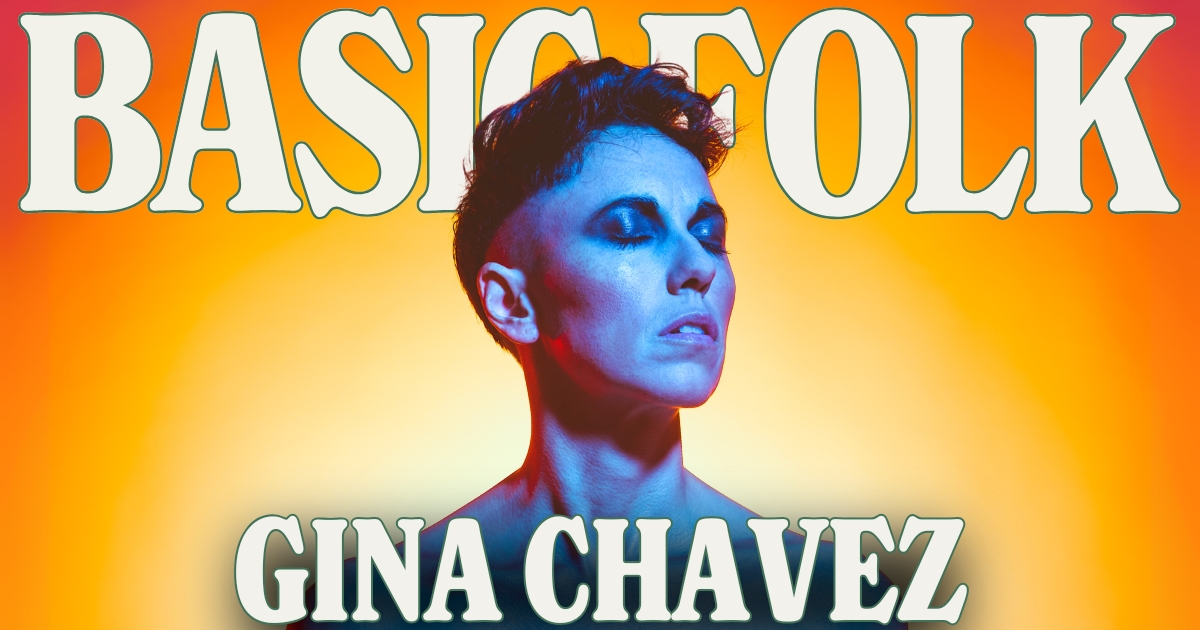
New bestie Gina Chavez speaks about her journey in music, her deep love for connecting with people, and the influence of her mixed cultural background on Basic Folk. Her parents are of Mexican and Swiss-German descent. Her father, although second generation Mexican-American, was not raised with Spanish language or any Mexican culture. Gina discusses growing up in Austin, Texas, and the role music – or the absence of it – played in her household. She talks about being a choir kid in the ’90s before it was cool, about discovering her Latin roots later in life, and how singing in Spanish feels spiritually significant to her.

LISTEN: APPLE • SPOTIFY • AMAZON • MP3

Gina also shares her experiences studying abroad in Argentina, running a college fund for girls in El Salvador, and the moment she unlocked her true singing voice in the studio. We hear about how she met her wife, Jodi Granado, at the Catholic Student Center at the University of Texas. Then, we get into her complex relationship with Texas, her Catholic upbringing, her advocacy work, and the joy of performing on Olivia Travel cruises. Throughout the interview, Gina emphasizes the importance of being true to oneself and learning to embrace and express all parts of her identity.


Photo Credit: Ismael Quintanilla

Aoife O’Donovan and Sara Watkins Discuss the Making and Meaning of ‘All My Friends’

Bearing witness to friends and collaborators Aoife O’Donovan and Sara Watkins in conversation is reminiscent of listening to their frequent musical partnerships, like their trio I’m With Her (with Sarah Jarosz). In moments, they blend perfectly, finishing each other’s sentences. They dance around each other, giving space for thoughtful responses and further questions.

In an artful, deeply reverent, and candid conversation, they delved into the intricacies of creating O’Donovan’s new release, All My Friends. The project originated from a commission by the Orlando Philharmonic Orchestra in 2019 and blossomed into what O’Donovan refers to as a “song burst,” inspired by the life and work of American Suffragette, Carrie Chapman Catt, and the centennial of the 19th Amendment.

The project propelled O’Donovan into unfamiliar territory as a songwriter and what emerged is a beautiful elegy to the women of the past who fought for the right to vote. It’s an homage to women of today – and future generations.

BGS spoke via Zoom with Artist of the Month O’Donovan from her home in Orlando and with Watkins joining from her home in Los Angeles.

Aoife O’Donovan: Hey! How are you?

Sara Watkins: I’m good. How are you doing?

AO: I’m so good. I love that I’m having an official conversation with one of my best friends. It’s sort of weird.

SW: When they called me to ask if I would be interested in interviewing you, it was an hour after I had just sent you that raving text about how much I adore the album and the music. I’m so blown away by it.

AO: Oh, my gosh! You’re so sweet! I love you!

SW: I’m not sweet, and you know that.

AO: You are. You’re a nice person. You just sometimes don’t hug strangers. That’s like your only quirk.

SW: I’ve been listening to the record since you sent it to me. But this week, I’ve been getting to really dive in and have the fun of trying to get inside your head a little bit. From that opening line, from the opening gesture at the beginning of the album, it’s just this gorgeous way of encompassing the whole record so beautifully. But it’s also so open. It’s not a thesis statement, but it powerfully contains the whole album. And I just wonder, where did that particular thing come from? And when did you know that that was going to be the way to start?

AO: It’s funny, that opening phrase, just the idea of “All my friends, all my friends,” that idea came to me many years ago, like maybe in 2018. I just had the melody and the chords and I kind of sat with it. It never was anything except for that. When I started working on the idea of this record, when Orlando (Philharmonic Orchestra) asked me to write 5 songs to commemorate the centennial of the 19th Amendment, I didn’t even go back to that tiny phrase immediately. I started elsewhere.

I started to write this other music, and then I remember sitting at the piano, actually at Full Sail, in the studio that I worked at here and I remember those words, “All my friends,” that was all that it was. I started thinking about what that meant, as even just a very simple, very kind of trite, almost overused lyric. There are tons of songs called “All My Friends.” There are movies called All My Friends. There’s a book that I just read called All My Friends Are Going to Be Strangers. It’s not a very original 3-word statement. But there was something about those words together with those chords, that all of a sudden felt like they belonged in this project. This is about the women who were before and the women who are yet to be born. It felt like this big circle all of a sudden of humanity and womanhood.

SW: It’s powerful on its own and then also with the context of the movement. I don’t often think of movements like that with friends. We think about it for younger generations. Let’s change policies to help younger generations, or to help the American people, but to put the word “friends” on it just makes it so heartbreaking. I just get sisterhood through this whole record in the most powerful way.

In “Daughters,” I have these 2 different visions of what’s happening in that song. With the way the band and the orchestration wrap around your guitar playing – the band does such a great job. You’ve played with Griffin Goldsmith, and with Alan Hampton a ton. The trio entity is so complete and so complementary to the songs and then to add to it, the way that you have the orchestration coming into play and the choir in such supportive ways. I had two images. One was this vision of a battlefield. Like when we were in grade school, where we talked about Gettysburg, or these legendary Revolutionary War battle sites and you see that field where the people are, and then you see these flanks coming in from the sides. That’s how that song feels to me.

AO: That’s like exactly what I was imagining when I wrote it. I’m not joking; that exact image of just being on a battlefield. And then, like the other voices coming in, or like the other people coming in to sort of fill the ranks. That’s exactly what I was envisioning. That’s so funny.

SW: It’s incredible.

AO: I’m so glad that that came across.

SW: It does. And it’s a credit to the arrangement, where you have the choir come in and there’s this rumbling support, or this foundational support from the orchestration before. When that chorus comes in, it just feels like you’re surrounded by kinship or by the sisterhood of support. And then the next verse opens up, and you’re alone again, or like fairly alone and you have to carry this battle by yourself, for yourself. It’s an individual fight. But then, going back to that “all my friends” lyric, it just feels like all of those entities are your friends coming to support you in your time of need.

AO: Exactly. That’s it exactly it. I feel like for me, when I made this record, and even now getting ready to put it out, it’s so specific and it’s so deeply personal. And it’s so not a record of like, “Check out this jam!” It’s just not that kind of record at all. And it’s not meant to be. I’m so glad that you listened to it in this way. This is what my hope for this record is, that people will be able to have the time to sort of process what it is. And these images and that exact thing of going into a battlefield. But then, there are moments when everything is stripped back, and you are sort of alone. But you’re also singing for your friends and for your community and for your mothers and your grandmothers and their mothers and their grandmothers. But also for the daughters of the daughters of the daughters. It just feels like this circle keeps on going.

In that song, specifically having the girl’s chorus, and on the whole record it was such an important thing for me to have the voices of young women, and not necessarily harmony vocals by my peers. I just felt there was something about the innocence of this young voice. The experience of getting to do it live with the Brooklyn Youth Chorus, and in Massachusetts, and even getting to do it in Glasgow with the girls’ chorus, it’s really powerful. It’s hard not to cry, even as a performer. It’s something about seeing young girls up on a stage, ready to give something. It just feels deeply emotional.

SW: And they are giving to you and you are getting to experience that support literally. Being on stage can feel very alienating and very vulnerable. It is a little bit of a fight sometimes within yourself if nothing else.

I feel like this is just such a powerful statement: grappling with change and growth. And obviously, that’s something that needs to be continually grappled with. It’s not like, “Oh, the change happens, and now we’re done. Check it off the list.” It’s a continual engagement, and it’s hard.

With “America Come,” when you get to that point in the album, it feels like the industrial revolution to me.

AO: Yes. I love that.

SW: Especially because you’re singing the words, “manpower, womanpower.” I feel like the machine is running.

AO: Right. I feel like that song with the, “dun, dun, dun, dun, dun, dun,” it becomes very steady. It is like the machine is running. That’s one of the songs on the record that really is so much about Carrie Chapman Catt, the suffragist who I was inspired to write about and write from the perspective of. That song is really heavily lifted from an actual speech that she gave. Some of those phrases are verbatim from her speeches.

That idea of this question, “What is this democracy for which the world is battling?” I feel like that’s a question that we can still ask ourselves. What are we doing here? What does this mean? What is America? I feel like that’s just such a deep question, and to be asking that in 1919 or 1918, or whenever that speech was from, and then to still feel it in 2022 – when I was writing this, it felt so relevant I feel like it’s almost eerie. We can’t give up the fight. We can’t stop. You don’t just check something off the list. As you said, it just kind of keeps going.

SW: And in that way, the album encompasses all the humanity, the micro versions of this, where for instance, in the institution of marriage, or a long-term relationship, or friendships, family, or whatever, it is about checking in every so often: “Wait! Life is running away with us. What do we want? What do we want in choosing this city, this school, this town, this job, this house?”

And that happens on individual levels. Like in my own life, I think, “Have I gotten away from this thing that I cared about five years ago? Have I checked in about this?” I feel like with the content of this album, I found myself thinking about the country, and I found myself thinking about me. Especially, with the more introspective song “The Right Time.” That’s the one where she talks to herself a little bit?

AO: Yeah, exactly. She’s like, “Don’t give them anything to laugh about.”

SW: Like a pep talk.

AO: Yeah, exactly that. It is a pep talk. That’s kind of my idea, about what she or anybody in her position would be going through as a woman with so much to offer, such a big brain, and so much potential. But, what do you have to climb over when you’re living in a time where you’re not valued and the only jobs available are to be a teacher in a one-room school house, or to leave the town that you grew up in? And people are going to look at you. People are gonna make fun of you if you’re a smart woman. People still make fun of smart women. It’s so weird.

Sara, we’ve talked about this a lot, being women in music, about how I feel like I’ve been so lucky and so respected throughout my career as a musician. You know I’ve always felt very valued and have very rarely been made to feel “less than” due to my gender. I feel so lucky that I’ve been in a community of musicians who have really supported me. But I know that that’s not the case for many musicians, and across other fields it is absolutely not the case.

SW: Yeah. I feel I have had a similar experience with that support. I can only imagine that in that era, when community really was the people around you – not people somewhere on the internet, in a town across the country that you can kind of connect with. She could physically rally the people in her region by convincing newspapers to publish things.

AO: By like getting up on stage and giving speeches or by writing a letter to the President and getting responses. Obviously, she’s not the only one. There were many women who were powerful and were doing amazing things. They just had to try so much harder, and that is what’s interesting. I think having a daughter in this time of life, in the 2020s, you want to give them the tools to always feel that they have the confidence and awareness to think of themselves as equal and powerful.

SW: Tell me about the research you did for this. So, the idea was presented to you and commissioned by The Orlando Philharmonic. Is that right?

AO: By the Orlando Phil, yep! So the OPO asked me in 2019. They said, “It’s the centennial of the passage of the 19th Amendment.” A lot of orchestras in the U.S. were asking female composers to write music for concerts they were doing. They were trying to diversify their programming. And when OPO asked me to do a piece, I was sort of like, “Why me?” That’s something I’ve never done before, writing an orchestral piece to be performed as a commission. It just felt like, that’s not how I operate. You know what I mean, I’m a songwriter. But I said, “Yes, that would be a good challenge.”

I didn’t think about it for a while, and then COVID happened, and everything kind of got crazy. I was like, “I’m never gonna write another song again, maybe this is it, maybe I’m done making music.” And then when I got down here to Florida, I started to regain some sense of artistic confidence and inspiration. I started to write a little bit of Age of Apathy that fall and then started to work on this 20- to 25-minute piece of music. So I went into the studio and really started to write it. But without text. I didn’t really even know what the text was going to be about yet. I wrote all the music first, because I had to get it to the orchestrator, Tanner Porter, who orchestrated all the charts for me. That was gonna take a lot of time.

That was November and the concert was supposed to be in May. I needed to get her the music. So I was working, working, working, and didn’t have any text. I wrote all the vocal parts and all the music sketched out to what I wanted it to be. We talked a ton about, “Hey, I want this to open with brass, and I want strings to come in here, and I want this line to be played on cello, and these are the brass lines that I want.” I would make these demos where I would play all that stuff for her, and then she orchestrated it. She also put together all the interludes that sort of stitch the songs together, which are so cool.

It was really fun to have this blank slate without any lyric goal or hesitancy to hold me back. I had simultaneously been doing research, reading, and figuring out what I wanted it to be. “All My Friends” is really just an imagining of the moment when these movements met up in Tennessee to get these votes ratified. And they did march. And they did plead their case and were ultimately successful. But those images are from my own head, like a reimagining of vague historical events.

SW: Let me just jump in really fast just to say that I love how much space you gave for yourself in imagining that imagery. I feel like my own temptation would be to report and do the research and make it rhyme. I feel like you’re the perfect artist for this kind of commission, because of the way that your melodies can float above or without the constraints of rigid time that a lot of us songwriters are tempted to do. The way you carry a line – I don’t think you always realize how extraordinarily unique it is. I think that because of the way that you do music like that, it lends itself to an orchestral project where we’re not dealing with 8-bar phrases and the occasional extra 2 bars and things.

I feel like you are the perfect singer-songwriter to receive this kind of commission. I am so happy that you indulged in that vision of the world, of the people descending into Tennessee, and what the fog was like and what the air was like. Because that is what the feeling was like and that’s the story. It’s not just, “on this date this happened.” I’m glad that you put yourself in the story, because that gave so much room for the arc and the heart of the thing and makes me wanna listen. If I had done this, it would sound like an eighth-grade book report.

AO: No, come on, give yourself more credit, Sara! I don’t have any idea what Carrie Chapman Catt was like personally, because I didn’t know her, but I felt like I could give her dialogue. You can make her personality be whatever it is that you want her to be.

I just read this amazing book called Wolf Hall. I was so fascinated by how the writer, [Hilary Mantel], makes Thomas Cromwell, this character, from the 1500s, feel like this modern, empathetic, shrewd, conniving, and complicated character. That also could have felt like an eighth-grade book report about Thomas Cromwell, but the author injected life into him. That’s the cool thing when you are an artist and when you are a writer, that’s what we do for people who were real or people who we’re making up. You’re taking these embellishments, and you’re telling a story with them.

With the song “Crisis,” [Carrie Chapman Catt] gave a speech called “Crisis” in 1916, and I read that speech and thought, “Oh, my God! This!” Yes, she’s using archaic language, and nobody speaks like this, but how can I imagine her as almost like a bluegrass singer getting up there and saying, “Alright, gather around girls. I’m gonna tell you about what’s going on and what we’re gonna do about it.”

Once I realized I could make it my own because this is my piece, it sort of like set me free into this new creative territory.

SW: And the way that you’re talking about “Crisis,” just the word itself makes you think of ominous minor chords and tension. And with those beautiful horns and flutes, it is just this wonderful, hopeful dawn of a movement. The dawn of a new time is here while you’re singing about the crisis. I love the optimism that’s contained in that and how you acknowledge that everything is all together.

AO: Exactly. One of my favorite things about “Crisis” is I really wanted there to be mandolin on it. It just has that folky feel to it. I had connected with Sierra Hull, who obviously, I’ve known for years and years, but we hadn’t really played that much music together, and I remember being on Cayamo in 2022, and really jamming with her for the first time. And then, you know, fast forward to eight months later I was like, “Oh, I think Sierra would totally kill this song.” I love her playing on it. It just has the right amount of weight to it.

SW: On “War Measure,” I’ve never heard you sing like you do on that chorus. The way you pull down those notes!

AO: It’s hard. It’s actually really hard for me to sing like that. It hurts my voice. But that’s actually my favorite one to do live, because there’s something about singing those lines, “If they pass this amendment to our constitution, we are gonna be talking about revolution.” That’s funny, because I had written that song without the lyrics. And then when I put the lyrics in, I was like, “Oh, this is actually, really rad.” It made it fun.

SW: I bet that was really fun. It makes sense that you wrote the lyrics after a lot of the music, because you get so much in there. It feels like you have room to expand the lines in ways that you might not if you’re writing it down on paper, right? And you get to really chew on certain lines for longer. I feel like there are some lines that get the time that they want to have rather than the time that might have been allotted to them.

AO: Exactly. It was odd, but I’m really glad that it worked out like that.

SW: I love “Over the Finish Line.”

AO: With Anaïs [Mitchell], who is a genius.

SW: And such a wonderful voice to have on here, both in terms of tonality – because you sound amazing together – but also because her songwriting voice has been a voice of movement, a voice of awareness. I love that choice.

AO: The idea kind of came after the fact. I recorded the song and I wanted there to be another voice. I didn’t want it to be me singing harmony with myself. I wanted something starkly different, tonally, from my voice. I’ve known Anaïs for almost 20 years. We’ve been in this same scene and the same world, but we’ve never really done anything together. It worked out so well. I love what she did and how she moves around through the melody and the unison part at the end of the song. I felt connected to her.

SW: I love how it is not the kind of harmony part where you are trying to blend them together. It is very much two individuals choosing to sing together. There are places where your phrasing is different and you’re shortening different lines. It is a perfect example of what you have throughout this record with the children’s choir and the orchestration. To have this lovely duet moment is another version of the sisterhood of letting everyone be themselves rather than needing to have it all looking so pretty and clean and tidy. It is like, “We are existing together, and it’s a beautiful thing.”

AO: Exactly.

SW: It is so well done.

AO: Thank you so much, Sara.


Photo Credit: Sasha Israel