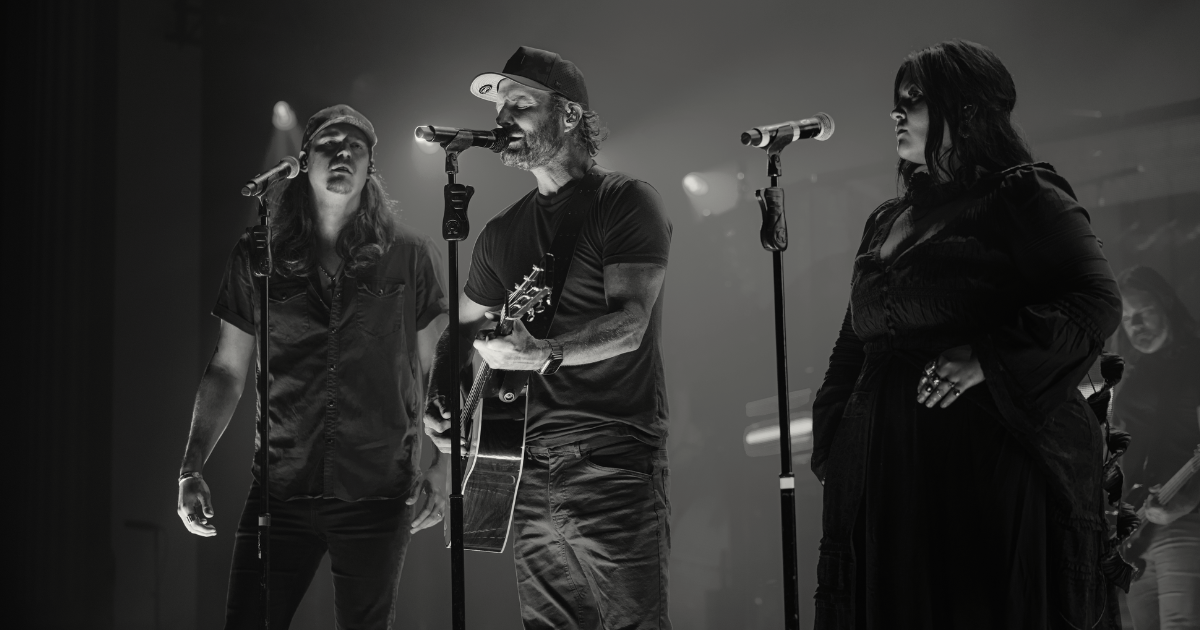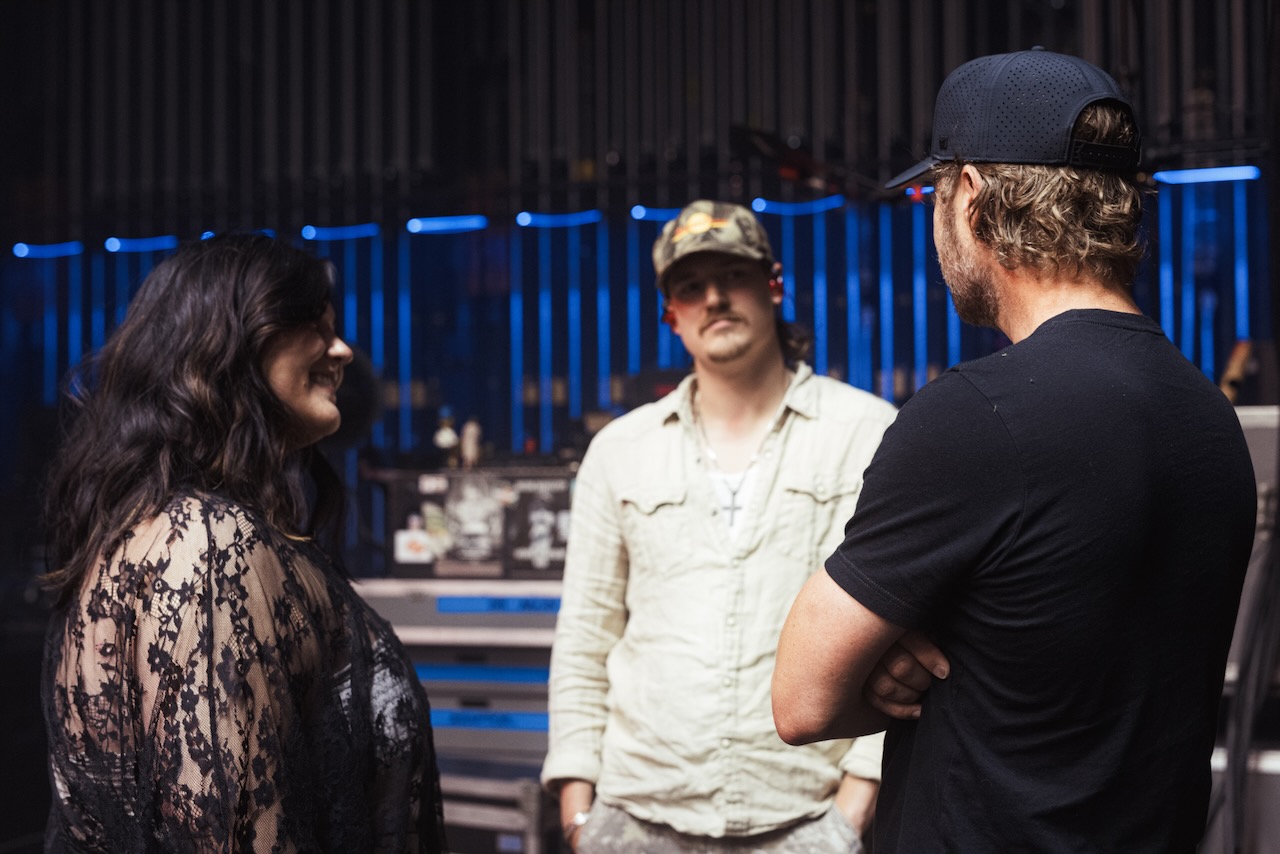
Through joy and sorrow – and they’ve known both in their ten years as a band – Southern Avenue do what they do best: make music. Lead vocalist/songwriter Tierinii Jackson, her husband, guitarist/songwriter Ori Naftaly, and her sisters, drummer/vocalist/songwriter Tikyra “T.K.” Jackson and percussionist/violinist/vocalist Ava Jackson, all reach into their spiritual and emotional wells to tell their stories through song.
It’s there on Family (released in April on Alligator Records), their latest and fourth album. True to its title, it’s a musical journey tracing the band’s personal and professional history. Family was recorded at Royal Studios in Southern Avenue’s home city, Memphis. GRAMMY winners John Burk and Boo Mitchell produced and mixed, respectively.
Southern Avenue write, record, and play with one goal in mind: “We’ve always been a band that speaks about peace and empowerment,” says Tierinii Jackson. “Our music is a place where we can leave the ails of the world outside. We can come together, be equal, and heal.” It’s a noble mission that comes from lived experience and presents in a unique blend of blues, funk, soul, gospel, country, and a healthy serving of guitars.
The rhythmic foundation upon which Southern Avenue is built stems in part from the guitar-and-drums pocket that Naftaly and Tykira Jackson create. “With Ori coming up with really juicy stuff and playing slide, it’s super easy for me to be inspired,” says Jackson. “I feel like what’s actually happening is we all allow ourselves to be creative and truthful to our stories, and we are connected to our ancestors, to our roots, to something much bigger than us. Within that, you get the pocket, because we are locked in.”
Naftaly seconds: “At the end of the day, nothing replaces two people that want to do right by the music, no matter what, and have almost a decade of doing it.”
First interviewed on BGS for Good Country in May 2025, the musicians reunited with BGS just weeks after learning of Family’s GRAMMY nomination for Best Contemporary Blues Album. As requested in their GC 5+5, there were no questions about “how [they] met and how the band started.” You can learn more about that here.
Congratulations on your second GRAMMY nomination. What does this mean to you, musically and personally?
Ori Naftaly: We’re very proud of ourselves, for sure. We felt that this album was special when we were writing and recording it, not just because it’s good music, [but also] because it’s coming from who we are as people. This is the most transparent we ever were. We felt that it is going to resonate. The circumstances for the album are special, and the story behind it. The [nomination] makes us proud because we’ve been so true to ourselves. It confirms our belief that you can create real music, without gimmicks, and it gets appreciated.
Tikyra Jackson: The first time we were nominated [for second album Keep On in 2019], just finding out, in that moment it does something to you that you wouldn’t expect, especially growing up watching the GRAMMYs every year. Five years later, to be nominated a second time, it feels like the first time all over again, because we work so hard.
A lot of times, when you’re the artist, you don’t take time to look at the work you’ve done. You just keep going. With this project being so personal to us, and representative also of our culture and those that came before us, it represents a lot. The GRAMMYs recognizing us also recognizes Memphis in a lot of ways. It gives us hope for the future, that we are becoming the world we live in and not just participants in it; that the world looks like us.
Tierinii Jackson: It makes me feel great. The first time we were nominated, I felt like we had something to prove. We were putting our best foot forward, trying to make everybody happy. But with this project in particular, we really wanted to embrace our roots. It had nothing to do with what people expected of us. It had nothing to do with trying to prove ourselves. It was our time to embrace our lineage, to embrace each other. This nomination is special because it came at a time where we finally found our identity in our journey of self-love. We’re being rewarded for something that’s very, very close to us. We proved we could do it while staying true to ourselves.
Ava Jackson: The previous GRAMMY nomination, I wasn’t [as] involved in the band. I would come in and record background vocals. So the nomination hit, but not as much as it does now. When we found out, my hands were shaking. I had way more involvement in this album as far as contributing to the harmonies, percussion, and fiddle. Having so much of myself involved and getting rewarded with a nomination is something I’m very grateful for. The album is so layered in who we are as individuals and as a family. It’s a triumphant thing to be rewarded and know that you did it wholeheartedly, you put yourself out there, it was authentic. There was so much effort put in even before we stepped into the studio. It’s such a privilege to get a nomination. I’m very appreciative of the process and how everyone has been receiving the album.
In an interview with Rolling Stone, you referred to yourselves as “the spirit of Memphis.” Memphis has a rich musical history … and also a “history.” In those contexts, what is “the spirit of Memphis”?
Tierinii Jackson: The music of Memphis has always reflected the story of Memphis – the struggles, the conflicts, the triumph of being resilient, all the challenges. That’s what we are as a group. We face challenges not only in Memphis, but also in the music business. As young Black women, and for Ori, as a foreigner, we face these challenges, but we turn it into something beautiful.
Our music is uplifting. Our music is positive. No matter what you hear about Memphis and the struggles the city goes through, when you walk into a store, somebody’s smiling at you. You still get that Southern hospitality. It still feels good here. That’s who we are. We are the spirit of Memphis. It doesn’t matter what we’re facing. We come through with this glorious, triumphant spirit. You dance and shout through all those troubles. We have fun. Our crowds – we make sure they’re clapping their hands, and we make it our intention to lift the spirits around us. That’s how you survive in Memphis – by being intentional with your words and how you communicate with your community. That’s how we reflect the spirit of Memphis.
The word “organic” is dreadfully overused, but it’s a bit inevitable with this album. Could you give us some insight into what happens when you create together? Maybe select one track and walk us through the process?
Tierinii Jackson: I would like to start with “Found A Friend In You.” We ladies were raised in church and that was all we knew for years. My father is from Senatobia, Mississippi, and he’s a guitar player. At some point, I wanted to know what the music was like where my father’s from, because I was looking to understand our identity in the blues genre. When I realized that the grooves we grew up playing in church was the sound of North Mississippi blues, we decided to dive in, because that came most natural to us.
“Found A Friend In You” is a Hill Country Blues groove, but it’s also a gospel groove, because blues and gospel are one and the same. That’s what we grew up playing in the church. So, foot-stomping, hand-clapping. It was the easiest to write. The lyrics flowed. The stops you hear right before the choruses – that’s organic. That’s second nature to us. When you hear that “dreadful” word “organic,” [all laugh] it means that when we’re our happiest, that’s the sound you hear, because that’s what comes from inside. That was put in us through generations of rhythms. It’s in our blood.
Tikyra Jackson: Getting into the studio, [there] came organic ideas and things. The tambourines on that song, you’ve got me playing on my hip, and Ava playing as well, and this energy of us being in a setting and worshiping in a way. We’re celebrating. You pull from your environment, and in the environment we grew up in, it was always extra instruments laying around. You just picked up something. In the studio, we came prepared, but a lot was inspired in the moment. When we talk about “organic,” we are so true to the sound and the music that we didn’t have the answers all the time throughout this process, and we trusted that we would find them along the way.
Ava Jackson: We recorded just about everything live and together. We did separate takes of our vocals with separate mics, takes with all three of us on one mic in a booth, and then we doubled all of that. It gives a very dense presence with the harmony. With this song, and in church, we’re hitting tambourines and it’s coming from the Holy Ghost, the spirit, and so you’re hitting it passionately.
What provides the drive in the song is us continuously playing that tambourine rhythm all the way throughout. Sometimes you add rhythmic ad-libs. With the harmonies, it’s like in church – you break out in song and everybody falls into place. I’ll be in the higher range, Tierinii in the mid-range, and TK in the lower range. We break out into that and it continues throughout the song, that reiteration of togetherness and the reflection of how we organically express what we’re singing.
The word “organic”– this style of music is innate for us. You weren’t taught how to do it. You were born into it. The fiddle adds another layer to the harmony and it also feels jovial. So towards the end it’s like you find your way. You’re triumphant. “Found A Friend In You” is like a foot-stomping, hand-clapping, praise type of song, and people receive it that way as well.
Ori, could you address the question from the perspective of guitars within Southern Avenue’s music?
Ori Naftaly: “Found A Friend In You” tells the story of me, Tierinii, and TK meeting and how it felt when we started playing together and finding peace. Past albums were different attempts at “What is the Southern Avenue sound?” When Ava joined full-time, I realized, “We have three singers. This is a family. This isn’t fabricated. This is who we are.” That’s the “organic” we talked about.
We doubled down on what makes us special and that also meant doubling down on guitars. I’ve been listening to Memphis music since I was 6 and I’ve been playing the blues since I can remember. The spirit of Memphis that we talked about earlier also comes from God putting me with Tony Pearson, a Black guitar player from Birmingham, Alabama, for a decade [in Israel], teaching me what it means to play the blues. Many blues purists will tell me that I am not a “blues guitar player,” but the blues is in everything I do; I can’t get away from it. It’s a feeling, not a formula. We play the blues all the time, but we don’t play traditional blues. We play original new music that ends up being blues. So the guitars are a reflection of my existence within the group.
Tierinii Jackson: For years, Ori was the blues guy and me and TK were trying to push the band to be more funk and contemporary. What we’re embracing today, Ori saw years ago. It took us a journey to get to this point where we said, “It’s time for us to embrace our roots and this sound.” We grew up very sheltered, so we were in our rebellious era. We wanted to be rock stars, funk stars, pop stars. We didn’t know who we were. We didn’t know what was special about us. Our fans saw us before we saw ourselves. When we harmonized, they heard the soul, the church, the blues. It took us a while to grow up and ask ourselves, “Who are we?”
When the pandemic set us down and we didn’t have the stage, the crew, the co-writes, and the producers, it was, “Who are we to our core and what can we do?” This is what we came up with. All the tours and festivals that we’ve been through, we haven’t heard anybody do the three-part harmony over the Hill Country grooves. Ori has always been the blues guy. He’s always been trying to get us to see what was special about ourselves. But he also respects us enough to allow us to have this journey.
Given your origin stories, the state of the world, and what you are trying to accomplish – in addition to the stressors of touring, the industry, parenthood, and life in general – how does music help protect your mental health?
Tierinii Jackson: It’s the only tool I’ve had since I was young. I grew up with six siblings. My house was chaos, and I never developed a relationship with my mother where I could talk to her about things and she could give me guiding advice. Music has always been my peace within the chaos. It was always my closest companion. Growing up, I had “friends” at school, but I never had close relationships where I could speak about things. So music has always been my only safe space. When I need to express myself, it’s music that I express myself into. When I need to be hugged, it’s music that will show up in the universe and hit me in the heart. It’s like God’s sign, letting me know I’m not alone. Music is my gift. It’s everything to do with my mental health. It’s the only thing that’s holding me.
Ori Naftaly: All of our albums, we write for our mental health. But there’s two aspects: keeping yourself sane [and] growing spiritually. We do both. We grow spiritually, and we use music as a barrier. We all used music as a gateway when we were kids and as we grew up. We do the same here. We choose to have lyrics that uplift people. If we wrote songs that don’t have messages in them, maybe we wouldn’t touch people the same way.
Ava Jackson: Being raised around music and church, it’s always been a communal thing. There’s always been people jamming and the enjoyment of making music. I think that does provide a certain amount of healing. Music provides release or relief. You hear a song, or you’re singing a song, you’re singing from your heart and soul, and what comes from the heart reaches the heart. Music is where people find true healing and where they can express whatever they’ve been holding in. Music enables you to release all of those emotions or tears. Mentally, I feel a lot better when I’m playing music. If I don’t practice my violin, or if I don’t play for a long time, I start to feel more of a depressive state. But when I do play, I feel that dopamine. I feel the rise in energy and I feel a lot more sharp. To have that at your fingertips is a privilege, and that’s something I know I’ll have forever.
Tikyra Jackson: For me, growing up, music was like drinking water. It was always there. I didn’t know how valuable it was. It was just something I could do. It was music and cinema. We watched so many movies growing up that showed me what the world could look like outside of going to church every day, because that’s really all we did. But in going to church, what did I love about it? The music. Our family was the musicians of the church. My mom was the organist. My dad was a guitar player. My big brother and me — drummers. Then you have the choir. All the girls are in the choir.
Today, music has given me experiences that let me know that as people, it doesn’t matter where you are. We’re all the same. We all want to be understood, we all want to be heard, and we all want to be loved. Music allows me to understand people without having, necessarily, a literal conversation, but a spiritual conversation. Each time you open yourself up in this manner, you evolve, you grow, you expand. Every time you play music, you create new neurological pathways. Within that, I agree with Ava. I have to do this. Music can reach you and touch you in ways that the natural world cannot. It reminds you of what’s important.
Photo Credit: Rory Doyle