You Gotta Hear This: The Lone Bellow, Laurie Lewis, and More

Ready for another batch of new songs and videos? Great! ‘Cause You Gotta Hear This.

It’s a roundup full of friendship and interpersonal connections this week. First up, Americana rockers Chamomile & Whiskey bring a new video for “Friends Are Falling Out.” In the vein of classic, folky alt-rock sounds, the track and video explore the fragility of relationships with a deep groove, distortion, and fiddle and banjo. But keep scrolling, as you’ll also find singer-songwriter Kim Moberg’s testament to the all-too-rare true friend with her new track, “I’ll Always Be A Friend.” The jangly modern folk number was born from Moberg’s desire to communicate to her old and new friends how important they are to her. The paeans to friendship continue with a new video from old-time/folk duo Paper Wings, who debuted their new single “Fumblin” earlier this week. It’s a double-guitar track about awkwardness, eagerness, and how we all stumble through life and through relationships.

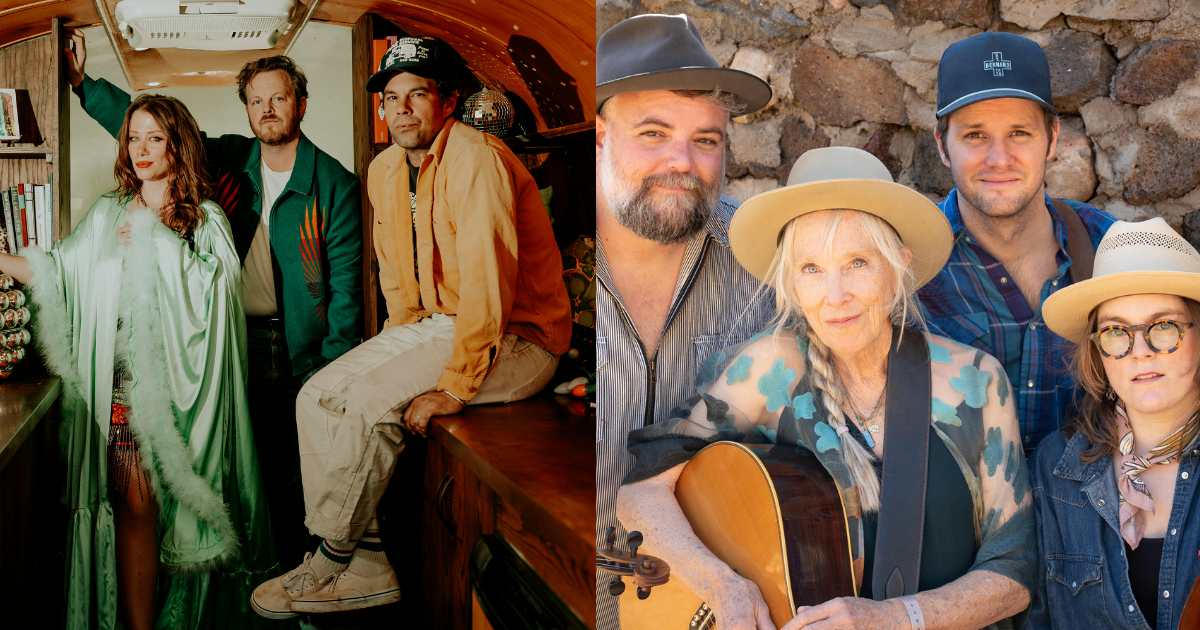
There’s still more to enjoy elsewhere in our collection, too. Bluegrass icon Laurie Lewis has announced her upcoming 2026 album, O California! with a new video for “Look Down That Lonesome Road.” Lewis took the mournful ballad, wrote new verses, and set the lyric to a jammy, driving bluegrass tune that drips with her signature sounds. Plus, fiddler Andy Leftwich calls on his pal, guitarist Cody Kilby, to trade licks on a new original fiddle tune he’s just released called “Old Hickory.” You might never guess he first wrote the melody on guitar.

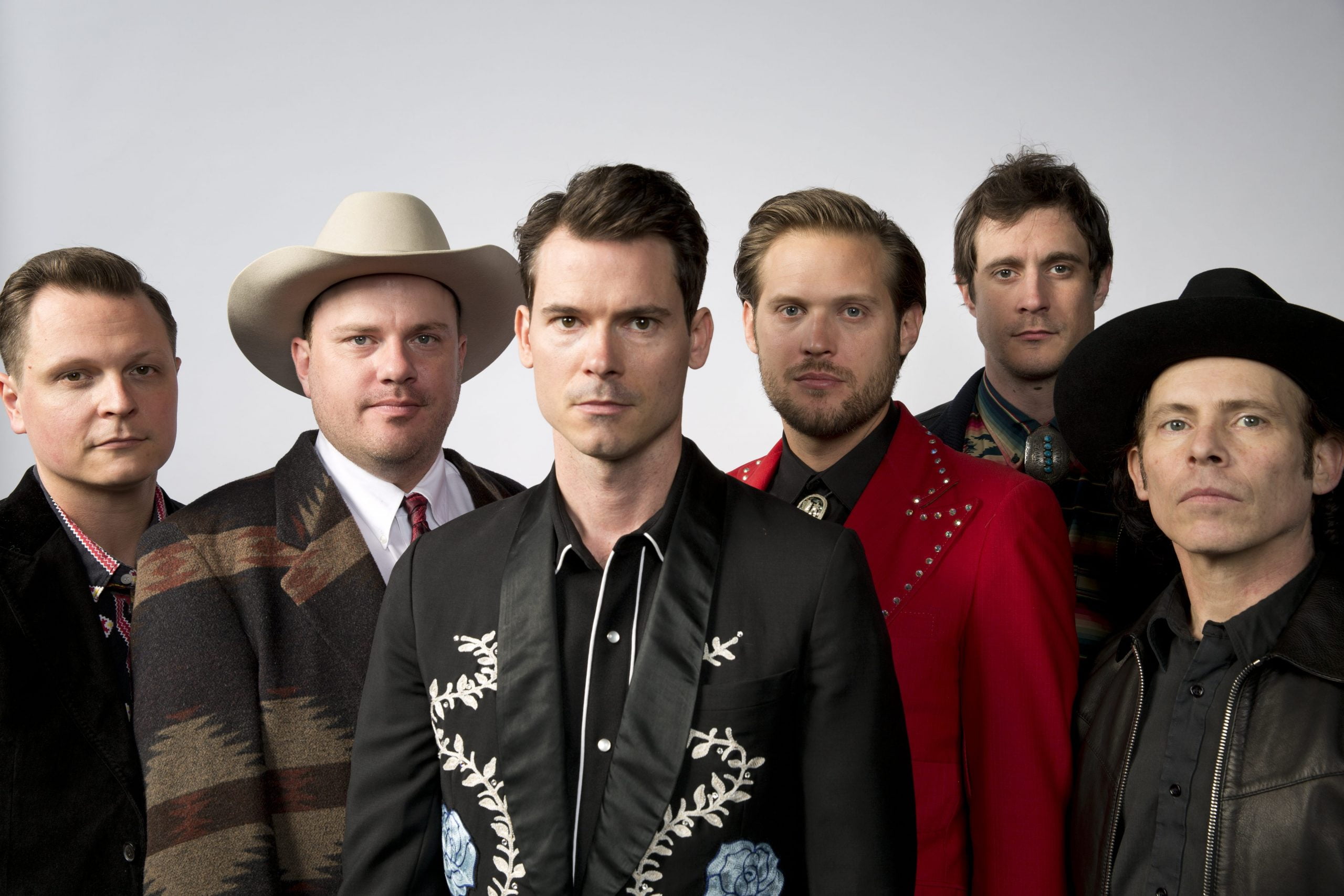
You won’t want to miss “The Doldrums” from New York Americana string band The Mammals. They’ve just dropped an animated video for the track from their recent project, Touch Grass, Vol. 1. The song might just be a cure for its own namesake; it’s a perfect selection to take with us into the often doldrums-heavy winter months. Finally, don’t miss a brand new single from iconic folk trio The Lone Bellow. Today they announced their upcoming record, which will release in February 2026 and was recorded in Muscle Shoals, Alabama. “You Were Living” finds the band with an expansive, resplendent sound that certainly sounds like The Lone Bellow, but steeped in the Shoals.

There’s plenty to find and enjoy in our conglomeration of new music. Scroll on for more. You Gotta Hear This!

Chamomile & Whiskey, “Friends Are Falling Out”

Artist: Chamomile & Whiskey
Hometown: Charlottesville, Virginia
Song: “Friends Are Falling Out”
Release Date: November 19, 2025

In Their Words: “I wrote the line ‘that broken heart might just catch a break’ after meeting up with a friend of mine. She had regaled me with her latest story in a long line of bad relationships. I live in Charlottesville, which isn’t very big, and we’ve got plenty of small-town drama. The song kind of came out of some of that and the fragility of friendships. I finished writing it just before we celebrated 1,000 shows as a band.

“In preparation for the show, Marie and I did an in-studio performance at WNRN, a station we’ve long had a good relationship with. I thought it would be fun to try a brand new song. A few days later they told me that NPR Music had shared the video as their live song of the day. We felt like it must have some juice and we decided to record it ASAP. We all liked the mysterious, Southern Gothic aesthetic that we felt in the studio. Critter added the banjo on top of fiddles before laying down a glass slide part on the guitar. Marie and I grew up in Nelson County and that first Old Crow Medicine Show record, O.C.M.S., was huge in our circles and reminds me of driving around those beautiful backroads as a teenager. To have Critter put his signature sound on one of our songs was special and felt full circle.” – Koda Kerl

Track Credits:
Koda Kerl – Guitar, lead vocals, songwriter
Marie Borgman – Fiddle, backing vocals
Bobby St. Ours – Fiddle, backing vocals
Brian Gregory – Bass, backing vocals
Critter Fuqua – Banjo, slide guitar, backing vocals
Jesse Fiske – Baritone guitar, backing vocals
Drew Kimball – Electric guitar
Stuart Gunter – Drums

Video Credits: Directed by Johnny Saint Ours and Jenny Carhartt. Filmed at Dürty Nelly’s Pub 


Andy Leftwich, “Old Hickory”

Artist: Andy Leftwich
Hometown: Carthage, Tennessee
Song: “Old Hickory”
Release Date: November 21, 2025
Label: Mountain Home Music Company

In Their Words: “Every once in a while, you sit down with your instrument, a melody just falls out, and within a few minutes you have a fun, catchy melody! This is exactly what happened to me with this song. Even though it’s a fiddle tune, I actually wrote it on my guitar. After a few small changes to the melody, I finally landed on something that flowed well under the fingers – not only for the fiddle, but the lead guitar part as well. I was honored to have my good friend, Cody Kilby, take the lead guitar on this one! It’s so much fun to play and was named after ‘Old Hickory,’ a town near where I live.” – Andy Leftwich

Track Credits:
Andy Leftwich – Fiddle, mandolin
Byron House – Upright bass
Cody Kilby – Acoustic guitar
Matt Menefee – Banjo


Laurie Lewis, “Look Down That Lonesome Road”

Artist: Laurie Lewis
Hometown: Berkeley, California
Song: “Look Down That Lonesome Road”
Album: O California!
Release Date: November 21, 2026 (single/video); February 13, 2026 (album)

In Their Words: “I have been playing around with this song since I heard Gaither Carlton sing it decades ago as a mournful ballad. I love it that way, but it seemed to me that sometimes parting needn’t be so sad, if you know you get to meet again (maybe at a festival next year). I started writing verses for it and when I got up to about eight or ten, I decided it was time to get serious. I love the loose arc of the story and the way the band responds to it. We winnowed down the verses to the essentials, leaving the others for the extended jam version.” – Laurie Lewis

Track Credits:
Laurie Lewis – Lead vocals, acoustic guitar
Brandon Godman – Fiddle
George Guthrie – Banjo, harmony vocal
Hasee Ciaccio – Double bass, harmony vocal

Video Credits: Produced and directed by Bria Light. Recorded at the Strawberry Music Festival in Grass Valley, CA.


The Lone Bellow, “You Were Leaving”

Artist: The Lone Bellow
Hometown: Nashville, Tennessee
Song: “You Were Leaving”
Album: What a Time to Be Alive
Release Date: November 21, 2025 (single); February 13, 2026 (album)
Label: Thirty Tigers

In Their Words: “‘You Were Leaving’ is a song about the fleeting, transient nature of life. For us, the song is deeply personal, but it also feels universal. It invites people to find their own story in it, what it means to say goodbye, and what stays with us long after the leaving.” – The Lone Bellow


The Mammals, “The Doldrums”

Artist: The Mammals
Hometown: West Hurley, New York
Song: “The Doldrums”
Album: Touch Grass, Vol 1
Release Date: November 1, 2025
Label: Humble Abode Music

In Their Words: “I wrote ‘The Doldrums’ during a stretch of isolation when joy felt out of reach and time moved so strangely. ‘Why do the good times go so fast? Why do the doldrums linger and last?’ We tend to remember the hardest part of the day when we lay down to sleep, but this song reminds me to appreciate every amazing moment. I’m grateful this recording sounds triumphant and energized – like an anthem to shake out of a low vibration and shine a bright light into the future. For all who listen, may music and friendship help carry you through the next windless day. The Mammals have your back.” – Ruth Ungar

Track Credits:
Ruth Ungar – Vocals, guitar, songwriter
Mike Merenda – Guitars, banjo, vocals
Brandon Morrison – Bass, vocals
Will Bryant – Keys, vocals
Tim Morrison – Drums

Video Credits: Animated and Directed by Anne Beal


Kim Moberg, “I’ll Always Be A Friend”

Artist: Kim Moberg
Hometown: Cape Cod, Massachusetts, the traditional territory of the Indigenous Nauset and Wampanoag Nations
Song: “I’ll Always Be A Friend”
Album: All That Really Matters
Release Date: January 30, 2026 (album)

In Their Words: “As an artist who grew up listening to the amazing singer-songwriters of the 1970s, Carole King’s ‘You’ve Got A Friend’ is embedded in my heart. I love that her song and its message about connection, support, and loyalty have endured all of these many years. I was a military ‘brat’ who attended 10 different schools in 12 years, so growing up I never lived in one place long enough to be part of a friend group or a clique. I was always ‘the new kid’ who was never included. The rare true friend meant more than gold to me.

“‘I’ll Always Be A Friend’ was born from my desire to share how important the friends in my life have been and how equally important the new friends I get to connect with through performing are to me. In these uncertain and trying times, community and friendship are paramount. (And Libra loyalty lives strong in this song!)” – Kim Moberg

Track Credits:
Kim Moberg – Lead vocal, acoustic guitar
Jon Evans – Bass, tenor guitar, drums, percussion, Fender Rhodes, harmony vocals


Paper Wings, “Fumblin”

Artist: Paper Wings
Hometown: Nashville, Tennessee
Song: “Fumblin”
Release Date: November 18, 2025 (single/video)

In Their Words: “‘Fumblin’ is about friendship and watching one another stumble and fumble through the joys and trials of life. We wrote this one together in the backyard in a sort of trance state, describing scenes from our lives. It’s definitely a romanticization of awkwardness and our eagerness to connect as a species despite inevitable failure at times. We played double guitars on this one which we’ve been having fun doing lately. It’s the first track in the world of ours that I recorded and mixed in my studio in Nashville, so that’s quite exciting as well. We have a lot more music coming from this space, so look out!” – Wila Frank

Video Credits: Filmed by Sami Braman, edited by Wila Frank.


Photo Credit: The Lone Bellow by Debbie Ewing; Laurie Lewis and band by Dawn Kish.
Ketch Secor
Contains Multitudes, Too

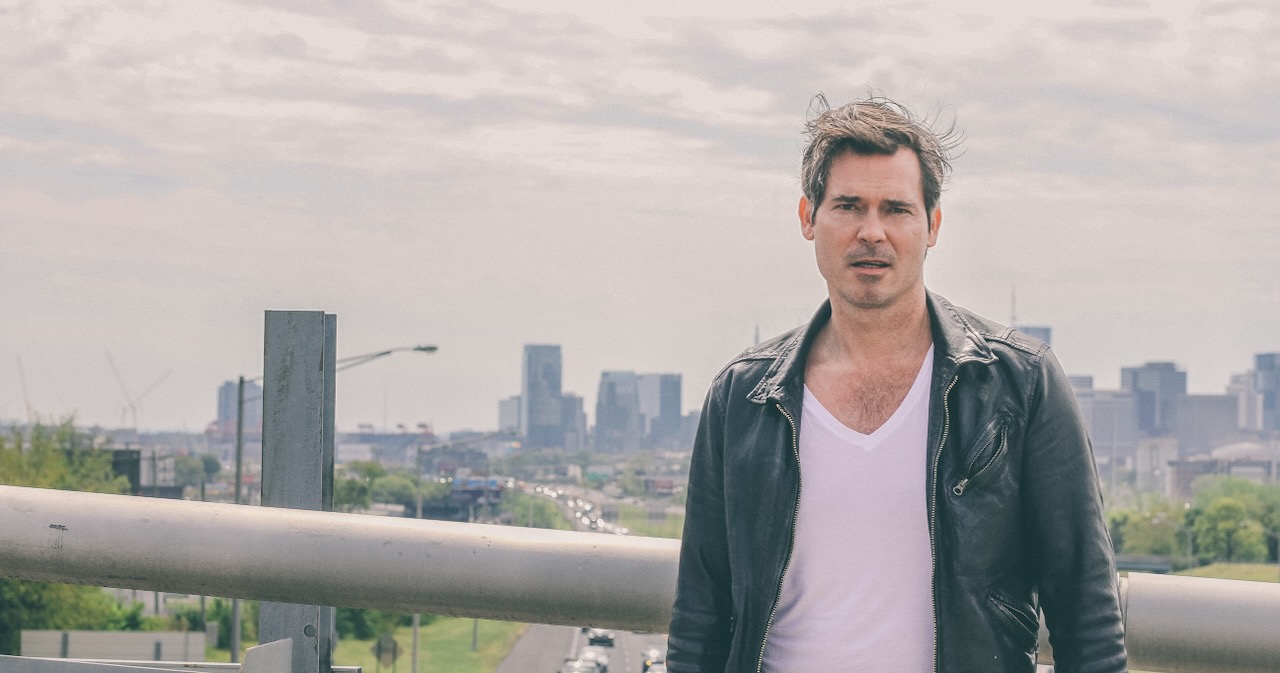
After a quarter century fronting the frenetic bluegrass and jug band outfit Old Crow Medicine Show, Ketch Secor is finally breaking out on his own with his solo debut Story The Crow Told Me. The retrospective record looks back on the past few decades, from his own journey to stardom spurred by a chance encounter with Doc Watson to the certified platinum hit “Wagon Wheel,” through the lens of a soundtrack that’s equal parts bluegrass and contemporary country.

“Because the band [recently] celebrated 25 years, I was already in the mindset of a retrospective look,” Secor tells BGS. “I was thinking about everything that’s happened and transpired over that time and started writing about it. In fact, at first I really thought it was going to be a spoken word record before the music eventually took over.”

Talking over the phone, Secor spoke about the timing for his debut project, its connections to both Old Crow and contemporaries like Dierks Bentley, becoming the new host of Tennessee Crossroads on Nashville PBS, and more.

You mentioned this album was initially envisioned as a spoken word compilation. What led to its transformation into a fully realized album?

Ketch Secor: I was working with Jody Stevens. We had written a couple songs that were largely based around spoken word and others we were looking to add background sounds on. Those sounds started getting more and more like what I already do, which is writing songs with choruses and verses and hooks. It just evolved out of the beat poetry version of the album, which was probably a little less listenable but closer to what I was striving for. The musicality of it is a bit of a compromise to be like “Well, I’m going to make this an actual record people might want to listen to” because the spoken word records I enjoy are not highly listened to.

I recently was trying to find them again since my record collection got lost in the 2010 floods we had in Nashville. I went on Spotify, which I’d never used before, to find all these songs in my head like Amiri Baraka’s “It’s Nation Time” or Moondog – a 1950’s renegade beat poet from New York – in trying to get an understanding of how the spoken word music I heard as a kid was being utilized today. It quickly became clear that nobody listens to that stuff anymore. [Laughs] So it seemed like making it musical would make it more fun for people.

It seems a bit ironic that you had to look up all these songs – many of which would be considered part of the Great American Songbook – on a digital streaming platform like Spotify. Talk about two very different worlds colliding!

I talk a little bit about that phenomenon on the song “Junkin’.” A lot of the experience of making music with Old Crow, especially in the beginning when we were still developing a canon, was about music’s physical form. When the band first started the internet was still new and we were still selling cassettes. The last time I made a solo record was on tape, the band didn’t have a website and none of us even used email when all of this started. It meant that searching for the physical was really important.

There’s another song on the album called “Thanks Again” that highlights the personal relationships that you develop out on the road – these chance encounters that are very much real and put the wind in your sails. There’s something to be said about having to come of age in a time when information was so tactile and often involved a human touch.

With the emergence of the internet and things like streaming and social media it really is an entirely different world for artists to navigate nowadays.

I realized that I had a kind of time capsule in my mind I had yet to crack open in the days before going in to make this record, which was done quickly and often with me writing the songs as we were recording them. Opening it up was really cathartic and essential for me to process and move past because the experience of coming to Nashville when we did and the kind of band we were in was, at times, slightly traumatic. It was a very intense quest similar to a military deployment, being a minor league ball player fighting your way through the ranks or even being a teenage whaler in Moby Dick. You end up leaving everything else behind in search of this one pursuit.

It’s not unique to come to Nashville to make it big, but what made our experience unique was that we were trying to do it with these traditional sounds in an era in which technological changes were happening as we were doing it. It was almost like we were going against the literal tide with our choices and artistic motivation.

You just mentioned writing these songs as you were recording them. Is that something you’d done before?

That was a very new way of going about things. I understand that record-making has changed a lot since we first started – our most popular Old Crow records that gave us a career were the early ones we made with Dave Rawlings on analog tape that we cut with a razor blade. Making a record the way Gillian [Welch] and Dave do is very studious, labor and time-intensive. But now the technology exists to do it super fast.

This record almost felt like a throwback to the seminal recordings of the 1920s and ‘30s that are the headwaters of our sound. Those records were made in three minutes oftentimes without knowing what the arrangements would be. Three minutes wasn’t the time frame of hillbilly music until the record company said it was – they just sat there, watched the light turn on and played. Writing a song and building a track like that actually felt really on par with what it would have been like going to Camden, New Jersey, in 1928 on a train when you’d never left your county before that. The challenge is keeping one foot in the past and one in the present. When you play fiddles and banjos and blow harmonica for a living the instrument kind of does it for you.

You name dropped Jody Stevens a few minutes ago. How’d y’all come together and what was it like working with him?

We met through my publishing company. I was going to do a co-write with him and knew he’d written a lot of songs for contemporary country artists, so I brought my bag of tricks that I bring out when I try to pretend I’m going to write the next big, top 10 country smash, except for this one time with Darius [Rucker]. I love country music even though I feel that in the past 25 years I have a whole lot less in common with it than I did when I was a kid, in terms of what it sounds like today in its mainstream output versus when I was singing along to Jo Dee Messina when I was 19. It was interesting to circle the wagons with Jody because he brought such a unique perspective in record making that comes from contemporary country music even though his roots are in hip-hop.

The other thing that brought us together was that Jody had seen Old Crow a lot, especially in our early days from 2000-2005, which is the sweet spot I try to explore on this record. He’d been there at the Station Inn and the festival Lightning 100 used to do downtown and some of these other places that have since been replaced by high rises. The fact that he had been a first-account witness to the band was really helpful to bounce ideas off of. His sister was also a big Old Crow fan and even though I’ve never met her I thought about her as my target demographic – someone who saw us back in 2001 and wanted to know what that time capsule looked like.

The fact that Jody had done all this work with people that rapped – only to find that 25 years later the tapes and demos he’d made with Jelly Roll were now part of a pop culture consciousness that hadn’t been there when he first started working on them – gave him a similar orientation to country music that I have about Americana. When I got started there was nothing called Americana and nobody lived outside of contemporary country music unless you were alt-country. Coming into this period of time in Nashville where it wasn’t yet determined that anyone with a banjo could make it that wasn’t bluegrass is another place where Jody and I shared commonality. The rap game has since become a massive component to contemporary country music similar to how Americana has become the tastemaker for anything roots-related.

In terms of the sound on this record, the way you move between more Old Crow-esque bluegrass and those pop country flavors reminds me a lot of Dierks Bentley, another person who excels at showcasing the best of both sides of roots music.

I came up with Dierks and remember witnessing his arrival. Before [“What Was I Thinkin’”] came out there was an issue of CMA Up Close that had a story about us on the page opposite one about Dierks and I thought to myself, “Well, if a guy named Dierks Bentley can make it, then probably a guy named Ketch Secor can, too.” Surely Nashville has the appetite for two oddly-named boys. [Laughs] Then I went on and took a moniker that wasn’t my name. Because of that I feel very much like a brand-new artist now and have developed a strong sense of empathy for the young guns who are out there trying to put their stuff out for the first time, because it’s so much harder now than when I was a kid.

What are some of those major hurdles you’ve noticed for new artists today compared to what you first encountered with Old Crow?

Now the way you stand out in a crowd is through visual means that often require the least amount of artistic acumen and the most amount of social media acumen. So far, I’m not sure it’s helping the cream rise to the top, though. The skill set should be how good can you pick a banjo, not how good can you pick the keypad on your iPhone, even though you have to do both to be successful today. When I was a kid it was about making these connections with people, knocking on doors so many times that every time something good came to me [it did] on account of me showing up and being in the right place at the right time.

Seeking a viral moment has an undue effect of potentially limiting the number of new entrants into the arena. For one generation, what was once divinized is now digitized. I’m sure that if there’s a God above that He or She can use the binary code to reach people and connect their children. I can pick up The New York Times and feel like there’s a closeness with the loss in Texas right now, which is only amplified by me having swam in the Guadalupe before and having a personal connection to the area. If you’ve plunged in the waters yourself then you’ll share something so much more vital with those who are experiencing the loss.

It’s really a metaphor for how we all have a shot at playing the Grand Ole Opry or going from the Station Inn to the Ryman like I did. There’s a turnstile in front of that and I want to see it spinning wide so that artists of all stripes can find their way up to that stage where they belong. As a steward of those stages, I want to see the people show up who have found music as the great connector that, regardless of the speed of the computer in your pocket, the speed of music breaks all other forms of sonic barriers.

In terms of personnel, what motivated you to bring in past and present Old Crow members like Willie Watson, Critter Fuqua, and Morgan Jahnig to record these songs with?

I really wanted to have all the past members of Old Crow on the record, because it felt like a bit of an offering to the gods to say “thanks.” So I really wanted a little bit of all their spirits on it. Not only that, but I read through a lot of old journals and called up some people I’d met hitchhiking, but hadn’t talked to in 25 years. I went and visited the guy who coined the term “Wagon Wheel,” because that song was always called “Rock Me Mama” until I met James Sizemore – a wonderful rascal and drug-dealing Vietnam vet.

I went to see him on his deathbed and recorded phone conversations late at night with old friends. While none of that stuff is necessarily on the record in its physical form, it all went into the process of trying to bake something that really felt like I was living in the past and bringing it to the present through these songs. I think a lot about cairn stones that the Inuit people up north call inuksuit, which are like sign posts that tell you where to turn, but they’re also spiritual. So imagine a road sign that could say “300 miles to Memphis,” but also told you the ancestral route of the settlers who first brought buffalo down 7,000 years ago, sort of like the duality of a time signature.

That duality of time reminds me of one of the album’s songs, “What Nashville Was,” which highlights how much Nashville has changed over the decades while also highlighting how no matter how many venues are replaced with condos, music will always be the city’s heartbeat.

A lot about the way Bob [Dylan’s] record Nashville Skyline had a way of pointing out Nashville for the first time to anyone who didn’t live in the South or listen to country music. He was really pointing to Nashville from a unique perspective and certainly Bob Dylan’s Nashville was the kind of Nashville that I was looking for when I first started playing on the street corner there in 1996.

Similarly, I was also looking for Dolly Parton’s Nashville. I wanted the Nashville that Dolly got when she stepped out of the pickup truck and married the first guy that honked his horn at her, the kind of Nashville where Willie Nelson was laying down in the street in front of Tootsie’s thinking he’s gonna kill himself because nobody wants his songs.

I used “Girl From The North Country” as the template for a love letter to a changing place and a cityscape that has gone on to do so much stuff that it itself is largely oblivious to the price it pays for its constant reinvention. And the price is that who we’re ushering in … is probably because you were on a reality TV show more consistently than because you had a song that people couldn’t stop singing at summer camps. Not that those things are good or bad, they just change. But we’re at a point now where the legend and lore of Nashville has grown so much that we’re at risk of the bubble bursting and it being something like Seattle after grunge or Austin after it wasn’t weird anymore – which is a glass, monolithic, industry executive business center. Oftentimes those forces stand in opposition to the ability of songwriters, hucksters, showmen, and the survival spirit that goes into creating the next Bob Dylan of a generation. I’m hoping that we, the architects of Nashville, can endeavor to build a place that still allows a hearty hero or heroine to come through the gates just like Loretta Lynn or Jack White did.

You were recently named the new host of Tennessee Crossroads on Nashville Public Television. How’d that opportunity come about and what’s it mean to you?

When PBS called me about this unique role that had come available with the sudden and sad loss of Joe [Elmore] – who ran the show for 30 or so years – it only made sense to find someone else to step in who’s also run a business for around 30 years that’s similar to Tennessee Crossroads. Old Crow Medicine Show has been criss-crossing the American south getting inspired by quilters, gee-haw whimmy diddles, carvers, and folks that plant by the lunar signs – those are the kind of folk heroes that go into our music. They’re also the same kind of stories that this show loves to tell.

I love public broadcasting and care a lot about access to it in this country. I made my television debut on our local PBS affiliate up in the Shenandoah Valley of Virginia when I was in fifth grade. I fell in love with my own backyard because Ken Burns showed me what was so rich about it and so frightening and tragic, which was the bones of the Union and Confederate armies right here, just past the fence. Ken Burns really illuminated that for me and ever since I’ve been the biggest fan of public broadcasting.

What has the process of bringing this record to life taught you about yourself?

I was born about 35 miles outside the birthplace of Walt Whitman and always wondered why I like the guy so much. Then I recently rode my bicycle there and thought, “God, this guy’s place is really popular!” There were people sleeping on a stoop and waiting for a free sandwich in the parking lot. And it turns out where Walt Whitman used to live is like the center of the drug-addled corpse that is parts of Camden, New Jersey. It looks a bit like the Dickerson Road corridor, at least as it was in about 1999.

I feel like Walt really said it best when he said he contains multitudes on “Song Of Myself, 51.” I feel as a picker of banjos and fiddles and guitars and dulcimers and auto harps; and a blower of jugs and juice harps and harmonicas; and a singer of ballads and lamentations pretty songs; and [an attender of] corn shuckins, frolics, and cotillions, that I am like you, a container of multitudes.


Photo Credit: Jody Stevens

The Essential Old Crow Medicine Show Playlist

Though Old Crow Medicine Show are generally associated with North Carolina, where they were discovered busking outside a drug store in Boone, the band also known as O.C.M.S. are actually the product of two different areas of the Appalachians. Two of the band's five founding members, Ketch Secor and Critter Fuqua, are from the east side the mountain (Harrisonburg, Virginia) while Kevin Hayes and former members Ben Gould and Willie Watson were from the fertile string music scene of Ithaca, New York. It was when Secor headed to Ithaca College — and brought Fuqua along for the ride — that the band got its start in earnest (and later found their big break in Boone).

Like many of their counterparts in modern string music, the members of O.C.M.S. are as influenced by the sounds of Guns ‘N’ Roses as by the songwriting of Doc Watson. It has been their ability to meld the classic melodies and storytelling style of the traditional string music with the energy and enthusiasm of classic rock 'n' roll that have made them so successful.

Now, with nine studio records to their credit, from 1998’s cassette recording, Trans:mission, to their award-winning 2014 set, Remedy, O.C.M.S. have been consistently at the leading and influential edge of modern string music. For newbies and fans alike, here’s an essential playlist that spans most of their career, ranges from covers of classics to their own songs, and includes the tune that not even Bob Dylan has our permission to cover.


Photo of OCMS by Crackerfarm.