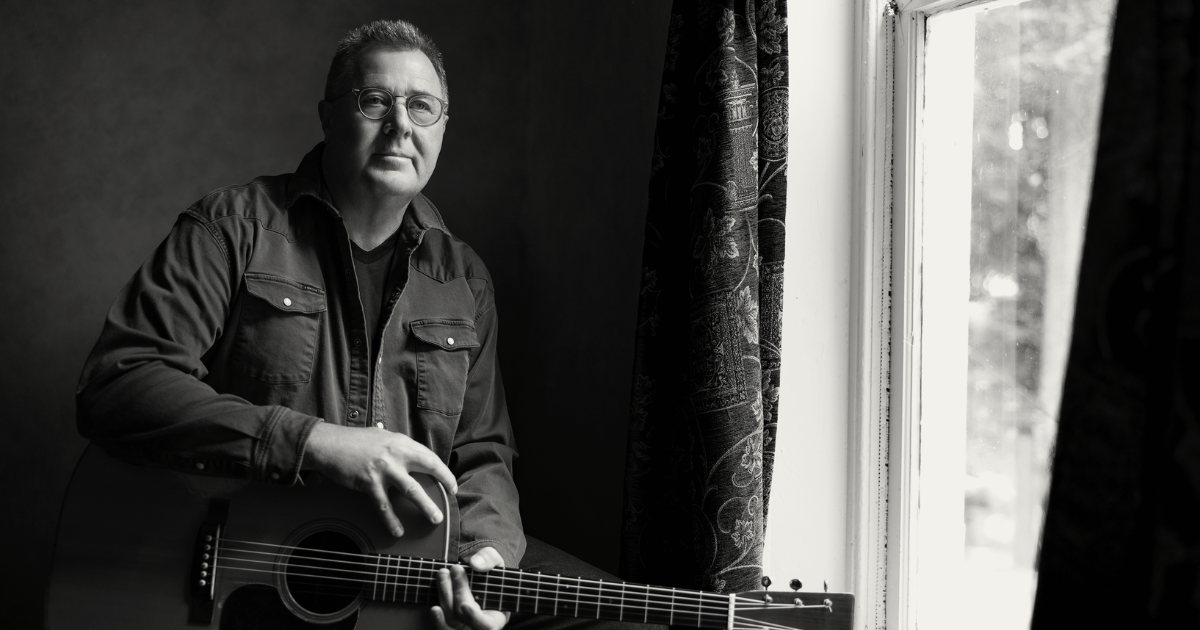
Vince Gill Has Done It All (Part 1)

Vince Gill doesn’t give interviews; he gives conversations – lengthy, engaging conversations filled with the same reflection and storytelling that make his songwriting so relatable and successful. Factor in his enviable mastery of guitar and other instruments and the result is a well-rounded artist who has won 18 CMA awards, 22 GRAMMY awards, and eight Academy of Country Music Awards.

In 2025, he was presented with the CMA Willie Nelson Lifetime Achievement Award, and this year, on May 6, he will receive the Ken Burns American Heritage Prize. He’s been a member of the Grand Ole Opry since 1991 and in 2005 was entered into the Nashville Songwriters Hall of Fame. Two years later, he was inducted into the Country Music Hall of Fame.

Over the course of 21 albums his sales exceed thirty million with 45 chart singles. Coming up is a summer tour, which will wrap with a six-night residency at the Ryman Auditorium, while continuing his ongoing schedule with the Eagles. All of this is only a cursory glance at his many accolades.

Gill’s accomplishments, and the experiences that accompany them, are at the core of his latest project, 50 Years From Home, a yearlong series of monthly EPs marking the fiftieth anniversary of his leaving home to pursue a music career. Each collection features themed new songs and revisited classics, with photos of select guitars on the covers. The EPs are introduced via detailed conversations with friend and colleague Charlie Worsham – watch all episodes on Gill’s YouTube channel.

Down At The Borderline, released February 13, is the fourth and latest EP in the series, while the next installment, Lonely’s What I Do, already arrives this Friday, March 13. A few weeks prior to the release of Down At The Borderline, Gill made himself available for more interviews and conversations, including a talk with Good Country.

At this point, it’s difficult to imagine anything Vince Gill hasn’t done. In fact, there are two key things, neither of which he cares to pursue:

“I’ve never sent a text,” he says, “because I prefer talking to people. What you find out [with texts] is how many people really don’t want to talk to you!” And, “I’ve never posted anything on the internet,” although he does have a scrolling habit, which he gladly admitted to during this discussion.

As you move through endless interviews around these EPs, is there something you’ve always wanted to talk about but have never been asked? Now’s your chance to tell the world!

Vince Gill: I wouldn’t have a clue! I never was much of a planner. I think it’s a blessing that I just live in the moment. I don’t look ahead, I don’t look back much, and there’s not a lot of regrets in my life. I figure the mistakes I made were valuable to learn something. I never planned any of this. I didn’t sit down and have a diary that I’d go, “When I’m this age, I want to have done this and this.” I just answered the phone.

You should probably give classes on that, because this is an industry of nonstop worry: What’s going to happen? Will this work? Will this not work? To move from project to project, stage to stage of your career with that mindset is impressive.

I started out with absolutely not one dollar, so money has never been the reason for any of it. I bought a guitar when I was 18 years old and I moved away from home. It was an old pre-war Martin that was perfect for bluegrass. I spent every dime I had on it and I didn’t worry. I said, “My rent’s $15 a month, I’ll make a couple hundred bucks a week when we work, so I’ll be fine.”

Amazing.

Speaking of going from stage to stage of your career, the EPs are each a chapter told with collections of songs. Tell us more.

The majority of it is fairly new. From the time I started in 1975, there was no reason to have a publishing deal for a long time. Even after I had a record deal, I didn’t see the need because I had a place for my songs to land on my own records. I never partnered up with a publisher, to give away half the money, to give a monthly draw to help pay my rent or whatever. I was able to always pay the rent somehow – my house note, whatever it was – with playing and singing.

Three or four years ago, Jody Williams, who’s a lifelong publisher in Nashville and a friend of mine for 40-something years now, called me and said, “You’ve never had a publisher. Would you consider letting me manage your songwriting for a while? I think you still have a lot to say as a songwriter.” I said, “Yeah, I’ll try that out.”

He would call great songwriters and say, “Would you like to write a song with Vince?” I was never a very good self-promoter, so I would never do that on my own. I just let it unfold with people I would meet. So it started me down this path of writing a lot of music, and over the last three or four years I’ve written twice as many songs as I’ve recorded on this new 50 Years From Home project. I think I’m writing the best songs I’ve ever written. With time you should get better, and I think I have.

I don’t want to check out someday and have all these songs lost in a desk drawer somewhere, so I’ve started recording them all. It’s a different world now, a different way. If you want to release 75 songs, you can do it. You don’t have to have one album with 10 songs on it anymore. So I started thinking about what it would be. My first conception was to release two songs a week, like an A-side and B-side of a 45. “It’s Monday, it’s time for a couple new Vince songs.” The record company came up with the idea of, “Why don’t you do a series of EPs and have six or seven songs on each one?” I said, “That sounds cool. We’ll put one out a month.”

That’s where the whole thing started. I was trying to find a way to put all this out. I realize at this point in my life, I’m almost 69, I don’t have as much time left to be creative as I’ve had to this point, obviously. How much more it matters now is palpable. It really means something to me to be creative, and if I see myself improving, I want to nurture and foster that and continue, because it’s so dear to me, being musical, being creative, coming up with an idea, coming up with a story that could potentially move somebody, touch somebody. It’s unbelievable to be able to have that gift, to be able to do that. So I’m trying to take full advantage of it.

But 68 or 69 today is not the 68 or 69 of our parents’ years. When you’re a kid, your parents turn 50 and it seems ancient.

That’s true. My mom’s a hundred years old.

See? You have many more years to go, especially if you’re still 17 in your head, which happens in this business.

Yeah, and I am. I don’t feel any different than when I pulled out of the driveway and took off. I still have the same love and I’m so drawn to playing music. It’s such a huge part of me. I tell everybody, “My mom’s a hundred and I hope I’m really her son, so I have those genes! For all I know, she might have rented me out of a yard in southern Oklahoma somewhere!” But my dad checked out early. He died at 65 – and I was afraid of being 65. There’s so many instances of people passing at the same age as their parents and whatnot.

I’ve heard from others that it’s a strange feeling when you reach the age when a parent passed.

Absolutely. But my dad drank a lot, he smoked two packs a day, and he didn’t take very good care of himself. I don’t think I have too many of those qualities. I don’t smoke and I don’t drink. I eat bad, but that’s about it.

You’ve stated many times that your goal was always to be a recording musician. With reality shows and social media, do young players have that same goal, or is a lot of it about chasing clicks and stardom? Are you concerned about the future of musicianship?

No, because there are plenty of young kids out there that can play their brains out. There’s so many of them that you don’t worry about it. I tell people all the time, “If American Idol was on in 1948, Little Jimmy Dickens would’ve been on it.” I don’t really care for those shows – and not in a bad way, because a lot of talented people go on them – but sadly, you don’t see that really bear out with a lot of artists coming from those shows that have longevity. They have that moment, but we’re so ready to slide our thumb and move on to the next scrolling thing. It’s the same way with those shows: “The season’s over. Okay, who are the new ones?” And I never like seeing creativity be a contest.

But I don’t worry too much. You see someone like Sierra Hull, who can play better than anybody in the whole world, and Michael Cleveland, and so many that come along that can completely annihilate their instruments. It’s beautiful to watch. I don’t think that’ll ever go away.

Does AI-created “music” concern you?

Of course, but when I’m asked about it, I say, “The people who create it, deep down, they know they haven’t done anything. They know they’ve done nothing.”

As a recording and performing guitarist, singer, and songwriter over a lot of years, how has your approach changed? Your technique, your picking style, your ear, your tone?

It’s a combination of all of those things. I’ve spent the latter years realizing what I don’t need, what I don’t need to do, what I don’t need to play, what I don’t need to sing, what I don’t need to say in the lyrics. To me, the beauty of it is your willingness to try to say the most with the least.

I like my singing better now than I did when I had hits. I much prefer the way I sing and play my songs today. That’s motivation enough, that I feel like I’m better now than I ever was. My ears have never lied to me, and with that, if I feel like I’m making progress, that’s all the reason in the world to keep doing it. If I start wheezing like an old woman, I probably won’t wanna go out there and sing. But, thank God, that hasn’t happened yet,

With music, the more you do it, the more you learn. The point of it is not to impress, but to move people. If you can move people with what you play and sing and write, that’s the real gift. That’s when you really get something that matters out of it, rather than a big “Woo, that was incredible! That was impressive.” That’s fleeting in a way. I like the long haul.

I could have very easily stopped working on other people’s records and being a sideman and a harmony singer and guitar player and what have you. But I love doing that so much, because I always thought it was a harder job to complement somebody and what they’re doing, more so than doing what you want and having everybody follow you. It took more talent to do that – better ears, bigger ears, that kind of stuff. So I continue to do that. I’ve worked on over a thousand artists’ records in the last 50 years. The diversity of that, the willingness to go into any kind of world of music and try, and not just be shortsighted and only do this and only do that – I love all of it. I’ll find something good in any of it. If I can play a part in making something better that’s being done, then that’s a good feeling.

Can you draw a through line from your bluegrass roots to what you’ve done and what you do now?

“When I Call Your Name” wouldn’t have sounded like it did had I not played bluegrass. That high lonesome sound was totally taken out of my love and life of bluegrass. A song on one of my new records [Secondhand Smoke, EP 2] is called “Hill People,” with [harmony vocalist] John Meador – great singer, great player, it just blows my mind how good he is. That sounds the way it does, it was written the way it was, because of my history of bluegrass.

I was never one of those guys that [would say], “I can only play bluegrass and it has to be traditional.” I loved New Grass Revival. They were different than Bill Monroe and I loved it all. If you take whatever’s great about something and cast the rest aside, then you’ve done your job. I’m not critical of young people that don’t do it the way I did it, or the way my heroes did it. That doesn’t serve anybody any good, to be critical of stuff. I remember hearing Billy Strings talk about how he would go to jam sessions and felt unwelcomed, and that killed me. I felt so bad for him.

I experienced that once when I was 17. We were playing some bluegrass festival, a hardcore traditional-minded festival. We were up there playing “Rocky Road Blues,” which is a Bill Monroe song, but we were doing it real bluesy. The promoters kicked us out of the festival and said, “You can’t be playing that kind of music!”

As they were kicking us out, Jim & Jesse were playing Chuck Berry’s “Johnny B. Goode.” I said, “Now wait a minute. We’re playing a Bill Monroe song and we’re going to get kicked out, and they’re playing ‘Johnny B. Goode’ by Chuck Berry? What’s cool about that?” They go, “Their suits match. Get outta here!”

I’ve known Sam Bush for 50-something years. The story he tells about Monroe is that he said, “What is it you call that music you play?” Sam said, “We call it New Grass.” He goes, “Yeah, I hate that.” That kills me, but it didn’t impact Sam one bit. But that hardline thing – I don’t go for it.

You’ve said that the role of the artist is to speak for others. Are there songs that speak for you, or to you, in those moments?

I like the things that are the most honest, that are not trying to be something they’re not. I’m not a fan of singers that alter the sound of their voice to make it do something it doesn’t naturally do. I heard Merle Haggard say, “Man, just tell the truth.” That’s where I’m finding the biggest inspiration in songs is being truthful. I think the truth has always been the greatest thing you can lean on.

People talk about country music, and if you could point somebody to what you think country music is, I’d say Merle Haggard’s “Mama Tried.” How it starts– “I turned 21 in prison doing life without parole.” That’s pretty dark. That’s pretty sad. And then, “No one could steer me right, but Mama tried.” There’s your hope.

One thing they’ve never taken away from me is hope. Even though they quit playing my records on radio stations and I don’t have hits anymore, I’m always hopeful that something will slide through and move people. I had hope when I made my first record at 16 or 17 years old, and lo and behold, some radio station played it and I heard it in my pickup truck. That instilled a hope in me that’s never faded. They can pass on songs, they can not play them, they can do all that, but they have never dinged my hope in my heart for what it is that I want to try to do.

Where were you in your truck when you heard yourself on the radio for the first time?

I-40, Oklahoma City. I was driving and all of a sudden they started playing “July You’re a Woman.” It’s a John Stewart song and we’d done a bluegrass version of it. I was singing lead. I think some other bluegrassers had done that same song. I’m driving and all of a sudden they started playing it on the radio station and I get on the CB radio and start screaming, “You’re not going to believe it! They’re playing our record on the radio!” Truckers were coming back saying, “Hey, you sound good, kid! Hang in there.” Wow.

The first record I ever made, I heard on the radio. It put that dose of hope in me that has never faded.


Editor’s Note: Read part two of our Good Country conversation with Vince Gill here.

Want more Good Country? Sign up to receive our monthly email newsletter – and much more music! – direct to your inbox.

Photo Credit: David McClister
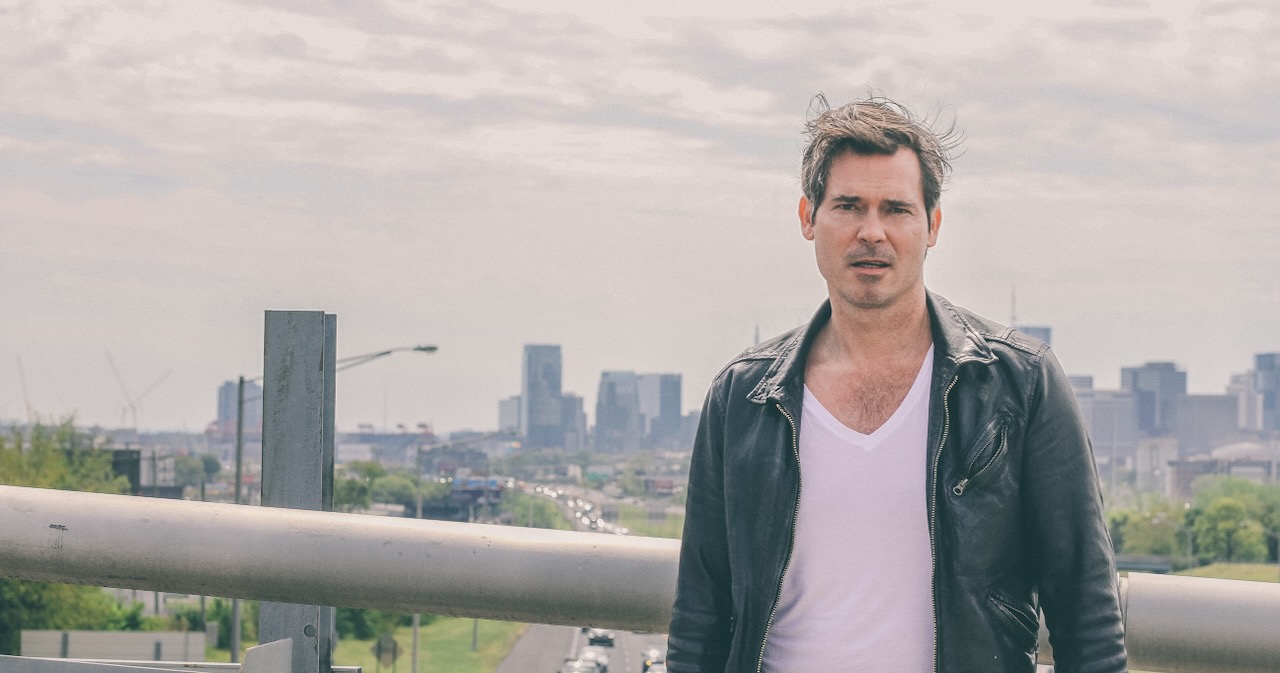
Ketch Secor
Contains Multitudes, Too

After a quarter century fronting the frenetic bluegrass and jug band outfit Old Crow Medicine Show, Ketch Secor is finally breaking out on his own with his solo debut Story The Crow Told Me. The retrospective record looks back on the past few decades, from his own journey to stardom spurred by a chance encounter with Doc Watson to the certified platinum hit “Wagon Wheel,” through the lens of a soundtrack that’s equal parts bluegrass and contemporary country.

“Because the band [recently] celebrated 25 years, I was already in the mindset of a retrospective look,” Secor tells BGS. “I was thinking about everything that’s happened and transpired over that time and started writing about it. In fact, at first I really thought it was going to be a spoken word record before the music eventually took over.”

Talking over the phone, Secor spoke about the timing for his debut project, its connections to both Old Crow and contemporaries like Dierks Bentley, becoming the new host of Tennessee Crossroads on Nashville PBS, and more.

You mentioned this album was initially envisioned as a spoken word compilation. What led to its transformation into a fully realized album?

Ketch Secor: I was working with Jody Stevens. We had written a couple songs that were largely based around spoken word and others we were looking to add background sounds on. Those sounds started getting more and more like what I already do, which is writing songs with choruses and verses and hooks. It just evolved out of the beat poetry version of the album, which was probably a little less listenable but closer to what I was striving for. The musicality of it is a bit of a compromise to be like “Well, I’m going to make this an actual record people might want to listen to” because the spoken word records I enjoy are not highly listened to.

I recently was trying to find them again since my record collection got lost in the 2010 floods we had in Nashville. I went on Spotify, which I’d never used before, to find all these songs in my head like Amiri Baraka’s “It’s Nation Time” or Moondog – a 1950’s renegade beat poet from New York – in trying to get an understanding of how the spoken word music I heard as a kid was being utilized today. It quickly became clear that nobody listens to that stuff anymore. [Laughs] So it seemed like making it musical would make it more fun for people.

It seems a bit ironic that you had to look up all these songs – many of which would be considered part of the Great American Songbook – on a digital streaming platform like Spotify. Talk about two very different worlds colliding!

I talk a little bit about that phenomenon on the song “Junkin’.” A lot of the experience of making music with Old Crow, especially in the beginning when we were still developing a canon, was about music’s physical form. When the band first started the internet was still new and we were still selling cassettes. The last time I made a solo record was on tape, the band didn’t have a website and none of us even used email when all of this started. It meant that searching for the physical was really important.

There’s another song on the album called “Thanks Again” that highlights the personal relationships that you develop out on the road – these chance encounters that are very much real and put the wind in your sails. There’s something to be said about having to come of age in a time when information was so tactile and often involved a human touch.

With the emergence of the internet and things like streaming and social media it really is an entirely different world for artists to navigate nowadays.

I realized that I had a kind of time capsule in my mind I had yet to crack open in the days before going in to make this record, which was done quickly and often with me writing the songs as we were recording them. Opening it up was really cathartic and essential for me to process and move past because the experience of coming to Nashville when we did and the kind of band we were in was, at times, slightly traumatic. It was a very intense quest similar to a military deployment, being a minor league ball player fighting your way through the ranks or even being a teenage whaler in Moby Dick. You end up leaving everything else behind in search of this one pursuit.

It’s not unique to come to Nashville to make it big, but what made our experience unique was that we were trying to do it with these traditional sounds in an era in which technological changes were happening as we were doing it. It was almost like we were going against the literal tide with our choices and artistic motivation.

You just mentioned writing these songs as you were recording them. Is that something you’d done before?

That was a very new way of going about things. I understand that record-making has changed a lot since we first started – our most popular Old Crow records that gave us a career were the early ones we made with Dave Rawlings on analog tape that we cut with a razor blade. Making a record the way Gillian [Welch] and Dave do is very studious, labor and time-intensive. But now the technology exists to do it super fast.

This record almost felt like a throwback to the seminal recordings of the 1920s and ‘30s that are the headwaters of our sound. Those records were made in three minutes oftentimes without knowing what the arrangements would be. Three minutes wasn’t the time frame of hillbilly music until the record company said it was – they just sat there, watched the light turn on and played. Writing a song and building a track like that actually felt really on par with what it would have been like going to Camden, New Jersey, in 1928 on a train when you’d never left your county before that. The challenge is keeping one foot in the past and one in the present. When you play fiddles and banjos and blow harmonica for a living the instrument kind of does it for you.

You name dropped Jody Stevens a few minutes ago. How’d y’all come together and what was it like working with him?

We met through my publishing company. I was going to do a co-write with him and knew he’d written a lot of songs for contemporary country artists, so I brought my bag of tricks that I bring out when I try to pretend I’m going to write the next big, top 10 country smash, except for this one time with Darius [Rucker]. I love country music even though I feel that in the past 25 years I have a whole lot less in common with it than I did when I was a kid, in terms of what it sounds like today in its mainstream output versus when I was singing along to Jo Dee Messina when I was 19. It was interesting to circle the wagons with Jody because he brought such a unique perspective in record making that comes from contemporary country music even though his roots are in hip-hop.

The other thing that brought us together was that Jody had seen Old Crow a lot, especially in our early days from 2000-2005, which is the sweet spot I try to explore on this record. He’d been there at the Station Inn and the festival Lightning 100 used to do downtown and some of these other places that have since been replaced by high rises. The fact that he had been a first-account witness to the band was really helpful to bounce ideas off of. His sister was also a big Old Crow fan and even though I’ve never met her I thought about her as my target demographic – someone who saw us back in 2001 and wanted to know what that time capsule looked like.

The fact that Jody had done all this work with people that rapped – only to find that 25 years later the tapes and demos he’d made with Jelly Roll were now part of a pop culture consciousness that hadn’t been there when he first started working on them – gave him a similar orientation to country music that I have about Americana. When I got started there was nothing called Americana and nobody lived outside of contemporary country music unless you were alt-country. Coming into this period of time in Nashville where it wasn’t yet determined that anyone with a banjo could make it that wasn’t bluegrass is another place where Jody and I shared commonality. The rap game has since become a massive component to contemporary country music similar to how Americana has become the tastemaker for anything roots-related.

In terms of the sound on this record, the way you move between more Old Crow-esque bluegrass and those pop country flavors reminds me a lot of Dierks Bentley, another person who excels at showcasing the best of both sides of roots music.

I came up with Dierks and remember witnessing his arrival. Before [“What Was I Thinkin’”] came out there was an issue of CMA Up Close that had a story about us on the page opposite one about Dierks and I thought to myself, “Well, if a guy named Dierks Bentley can make it, then probably a guy named Ketch Secor can, too.” Surely Nashville has the appetite for two oddly-named boys. [Laughs] Then I went on and took a moniker that wasn’t my name. Because of that I feel very much like a brand-new artist now and have developed a strong sense of empathy for the young guns who are out there trying to put their stuff out for the first time, because it’s so much harder now than when I was a kid.

What are some of those major hurdles you’ve noticed for new artists today compared to what you first encountered with Old Crow?

Now the way you stand out in a crowd is through visual means that often require the least amount of artistic acumen and the most amount of social media acumen. So far, I’m not sure it’s helping the cream rise to the top, though. The skill set should be how good can you pick a banjo, not how good can you pick the keypad on your iPhone, even though you have to do both to be successful today. When I was a kid it was about making these connections with people, knocking on doors so many times that every time something good came to me [it did] on account of me showing up and being in the right place at the right time.

Seeking a viral moment has an undue effect of potentially limiting the number of new entrants into the arena. For one generation, what was once divinized is now digitized. I’m sure that if there’s a God above that He or She can use the binary code to reach people and connect their children. I can pick up The New York Times and feel like there’s a closeness with the loss in Texas right now, which is only amplified by me having swam in the Guadalupe before and having a personal connection to the area. If you’ve plunged in the waters yourself then you’ll share something so much more vital with those who are experiencing the loss.

It’s really a metaphor for how we all have a shot at playing the Grand Ole Opry or going from the Station Inn to the Ryman like I did. There’s a turnstile in front of that and I want to see it spinning wide so that artists of all stripes can find their way up to that stage where they belong. As a steward of those stages, I want to see the people show up who have found music as the great connector that, regardless of the speed of the computer in your pocket, the speed of music breaks all other forms of sonic barriers.

In terms of personnel, what motivated you to bring in past and present Old Crow members like Willie Watson, Critter Fuqua, and Morgan Jahnig to record these songs with?

I really wanted to have all the past members of Old Crow on the record, because it felt like a bit of an offering to the gods to say “thanks.” So I really wanted a little bit of all their spirits on it. Not only that, but I read through a lot of old journals and called up some people I’d met hitchhiking, but hadn’t talked to in 25 years. I went and visited the guy who coined the term “Wagon Wheel,” because that song was always called “Rock Me Mama” until I met James Sizemore – a wonderful rascal and drug-dealing Vietnam vet.

I went to see him on his deathbed and recorded phone conversations late at night with old friends. While none of that stuff is necessarily on the record in its physical form, it all went into the process of trying to bake something that really felt like I was living in the past and bringing it to the present through these songs. I think a lot about cairn stones that the Inuit people up north call inuksuit, which are like sign posts that tell you where to turn, but they’re also spiritual. So imagine a road sign that could say “300 miles to Memphis,” but also told you the ancestral route of the settlers who first brought buffalo down 7,000 years ago, sort of like the duality of a time signature.

That duality of time reminds me of one of the album’s songs, “What Nashville Was,” which highlights how much Nashville has changed over the decades while also highlighting how no matter how many venues are replaced with condos, music will always be the city’s heartbeat.

A lot about the way Bob [Dylan’s] record Nashville Skyline had a way of pointing out Nashville for the first time to anyone who didn’t live in the South or listen to country music. He was really pointing to Nashville from a unique perspective and certainly Bob Dylan’s Nashville was the kind of Nashville that I was looking for when I first started playing on the street corner there in 1996.

Similarly, I was also looking for Dolly Parton’s Nashville. I wanted the Nashville that Dolly got when she stepped out of the pickup truck and married the first guy that honked his horn at her, the kind of Nashville where Willie Nelson was laying down in the street in front of Tootsie’s thinking he’s gonna kill himself because nobody wants his songs.

I used “Girl From The North Country” as the template for a love letter to a changing place and a cityscape that has gone on to do so much stuff that it itself is largely oblivious to the price it pays for its constant reinvention. And the price is that who we’re ushering in … is probably because you were on a reality TV show more consistently than because you had a song that people couldn’t stop singing at summer camps. Not that those things are good or bad, they just change. But we’re at a point now where the legend and lore of Nashville has grown so much that we’re at risk of the bubble bursting and it being something like Seattle after grunge or Austin after it wasn’t weird anymore – which is a glass, monolithic, industry executive business center. Oftentimes those forces stand in opposition to the ability of songwriters, hucksters, showmen, and the survival spirit that goes into creating the next Bob Dylan of a generation. I’m hoping that we, the architects of Nashville, can endeavor to build a place that still allows a hearty hero or heroine to come through the gates just like Loretta Lynn or Jack White did.

You were recently named the new host of Tennessee Crossroads on Nashville Public Television. How’d that opportunity come about and what’s it mean to you?

When PBS called me about this unique role that had come available with the sudden and sad loss of Joe [Elmore] – who ran the show for 30 or so years – it only made sense to find someone else to step in who’s also run a business for around 30 years that’s similar to Tennessee Crossroads. Old Crow Medicine Show has been criss-crossing the American south getting inspired by quilters, gee-haw whimmy diddles, carvers, and folks that plant by the lunar signs – those are the kind of folk heroes that go into our music. They’re also the same kind of stories that this show loves to tell.

I love public broadcasting and care a lot about access to it in this country. I made my television debut on our local PBS affiliate up in the Shenandoah Valley of Virginia when I was in fifth grade. I fell in love with my own backyard because Ken Burns showed me what was so rich about it and so frightening and tragic, which was the bones of the Union and Confederate armies right here, just past the fence. Ken Burns really illuminated that for me and ever since I’ve been the biggest fan of public broadcasting.

What has the process of bringing this record to life taught you about yourself?

I was born about 35 miles outside the birthplace of Walt Whitman and always wondered why I like the guy so much. Then I recently rode my bicycle there and thought, “God, this guy’s place is really popular!” There were people sleeping on a stoop and waiting for a free sandwich in the parking lot. And it turns out where Walt Whitman used to live is like the center of the drug-addled corpse that is parts of Camden, New Jersey. It looks a bit like the Dickerson Road corridor, at least as it was in about 1999.

I feel like Walt really said it best when he said he contains multitudes on “Song Of Myself, 51.” I feel as a picker of banjos and fiddles and guitars and dulcimers and auto harps; and a blower of jugs and juice harps and harmonicas; and a singer of ballads and lamentations pretty songs; and [an attender of] corn shuckins, frolics, and cotillions, that I am like you, a container of multitudes.


Photo Credit: Jody Stevens

LISTEN: The Mastersons, “I’m Your Girl”

Artist: The Mastersons
Hometown: Los Angeles, California
Song: “I’m Your Girl”
Album: Red, White & I Love You Too EP
Release Date: October 16, 2020
Label: Red House Records

In Their Words: “We watched the first episode of Ken Burns’ Country Music and Eleanor wrote this after trying — unsuccessfully — to go to sleep.” — Chris Masterson

“I had Maybelle Carter’s guitar in my head and a little bit of Townes Van Zandt’s and Woody Guthrie’s spirits guiding me. I already had the first verse, which is more abstract, written down in my notebook and then I started thinking about the plight of immigrants today and the rest of the song just flowed out.” — Eleanor Masterson


Photo credit: Curtis Wayne Millard

Americanafest Prepares Thriving Roots: A Virtual Community Music Conference

Although in-person plans for Americanafest are on hold this year, fans of roots music can still take part in celebrating the music, no matter where they are.

From September 16th to the 18th, Thriving Roots: A Virtual Community Music Conference will host intimate conversations between pairings you won’t find anywhere else.

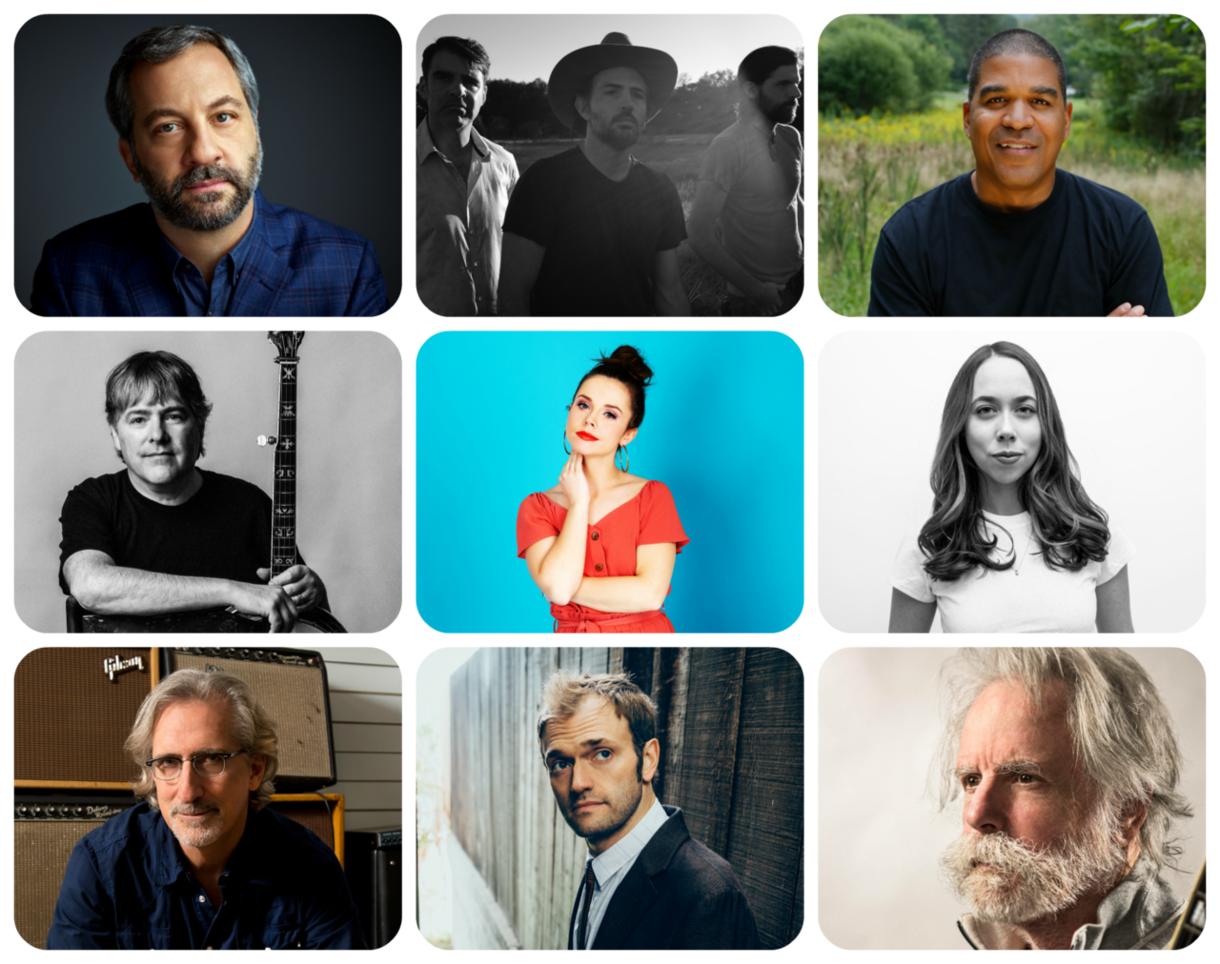
In August, the Americana Music Association Foundation (AMAF) revealed programming featuring director Judd Apatow in conversation with The Avett Brothers; Bob Weir with Oteil Burbridge; Béla Fleck with Sierra Hull; and Sarah Jarosz with John Leventhal and Chris Thile. The latest programming information also includes talks on empowering today’s creatives, developing streaming strategies and musicians in recovery.

https://www.instagram.com/p/CD1R4d_BUzV/

Apatow will sit down with The Avett Brothers to discuss the intersection of film and music, as well as the fine line between fine art and commerce. In 2017, Apatow co-directed the band’s critically acclaimed documentary, May It Last: A Portrait of The Avett Brothers. Since then, The Avett Brothers have released their new album, The Third Gleam.

The music that fans know and love from their favorite artists simply wouldn’t exist without the innovative musicians who came before them. Weir will sit down with fellow Dead & Company member Burbridge as they explore the inspirations and influence Black musicians have had on the Grateful Dead.

Now more than ever, musicians continue to push and blur the confines of genres to create the art they want to make. Fleck and Hull will speak to how roots music transcends and connects with a wide range of audiences during “Music Without Boundaries.” When it comes to creating that art in the studio, a producer’s ability to understand an artist’s vision is an integral part of the creative process. Moderated by Thile, Jarosz and Leventhal will delve into the connections forged between the artist and producer evident on her latest project, World on the Ground.

Additional new programming includes “Independent Control: The Power of Collaboration,” an inside look into how Americana industry professionals are empowering their independent artists to retain full creative control and the benefits of assembling a hand-picked team. Moderated by Jessica Nicholls (Metropolitan Groove Merchants), this discussion will include Blair Clark (Brooklyn Basement Records), Maria Ivey (IVPR) and Michelle Szeto (Paquin Entertainment Group).

In the streaming era, an abundance of digital resources can be found at the fingertips of industry and artist professionals, but how does one optimize those helpful tools? Led by Mike Fabio (New West Records), “Building a Streaming Strategy in 2020” rounds up Charles Alexander (Systemic), Margaret Hart (YouTube), Margaret Jacobi Lee (AMFM Management), Laura Ohls (Spotify) and Amy Wright (DittyTV) for a talk on developing real-world strategies that lead to increasing listenership and growing a solid fanbase.

Presented by Promises Behavioral Health, “The Show Must Go On: Musicians in Recovery” will find artists Phil Bogard and Jaime Wyatt in conversation with Shireen Janti (MusiCares) and Shane Ramer (That Sober Guy Podcast) about the road to recovery while offering how to find treatment and how others can take practical steps toward becoming a sober creator.

https://www.instagram.com/p/CDRhNsvBq-n/

Previously announced Thriving Roots programming includes intimate conversations between Brandi Carlile and Yola; Emmylou Harris and Ken Burns; and Jackson Browne and Mavis Staples. Rosanne Cash will bring together Ry Cooder, Angela Davis, Bonnie Raitt and Alice Randall for “Love and Vigilance,” a look at the history of protest music.

Moreover, RIAA Chairman/CEO Mitch Glazier and COO Michele Ballalynte will share an update on the music industry during “Record Setting” while looking at current trends and sharing their outlook. There will also be artist-friendly songwriting workshops and case studies like Mary Gauthier’s “Accessing the Universal in Your Songs: Mercy Now,” Taj Mahal’s “Music Is the Healing Voice” and an artist development breakdown with Black Pumas.

With over 50 panel discussions and more than 40 special events filled with music, Thriving Roots will bring the Americana music community together from across the world for three full days of engaging insight from its top industry professionals and leading artists.

Adding to the slate of artist conversations music fans won’t want to miss is Linda Ronstadt offering a behind-the-scenes look at Linda and the Mockingbirds, a new documentary that chronicles her 2019 journey with Jackson Browne and Mexican-American song and dance troupe Los Cenzontles to her grandfather’s hometown in Mexico, resulting in a tale of immigration, family and music. Moderated by esteemed journalist Randy Lewis, attendees will be able to watch the film screening and hear insight from the musical icon alongside the doc’s producer/director James Keach and Los Cenzontles founder Eugene Rodriguez.

https://www.instagram.com/p/CE95F1chNOY/

The Lumineers’ Jeremiah Fraites and Wesley Schultz will sit down with renowned filmmaker M. Night Shyamalan for an engaging discussion on the importance of retaining creative control of your art. In addition, Kathleen Edwards will speak with acclaimed Program Director Rita Houston (WFUV) about her new album Total Freedom, which marks her triumphant return to music after an eight-year hiatus from the business.

The common threads and differences of the Americana and country music worlds will be explored during “Ladies, Your Roots Are Showing,” presented by Change the Conversation. Moderated by CTC co-founder Tracy Gershon with freelance music journalist Marissa Moss, this panel session rounds up Brandy Clark, Tanya Tucker and Lee Ann Womack to share how they’ve been able to successfully navigate both worlds while maintaining their artistic integrity. They’ll also reveal the challenges and memorable moments they’ve experienced during their respective careers.

Reigning Legacy of Americana Award (co-presented by the Americana Music Association and the National Museum of African American Music) recipient Rhiannon Giddens joins NPR’s Ann Powers and the legendary Taj Mahal to discuss the theme of “Music is the Healing Voice.”

https://www.instagram.com/p/CEpIcpMhsZ-/

Music buffs should also tune into a special virtual edition of “Songlines Music Meeting,” an Americanafest fan-favorite. Sean Coakley and Leslie Rouffé will once again invite listeners to hear mostly unreleased tunes and score them during the live session, leading to a discussion on how music programmers in various media formats select the songs they feature.

Aside from plenty of educational and networking opportunities, Thriving Roots attendees will have a chance to unwind and recharge with immersive virtual events and lifestyle breaks. Valerie June will walk folks through a guided meditation that explores how to center oneself using ancient teachings. Big Machine Label Group will spotlight The Cadillac Three, Sheryl Crow and Ray Wylie Hubbard with some must-see musical performances.

During “Aw Heck: An Oh Boy Music Break,” join the late John Prine’s own record label Oh Boy Records for a celebration of their talented roster which includes Tré Burt, Arlo McKinley, Dan Reeder and Kelsey Waldon. For “Come Hear NC,” experience the rich music of North Carolina featuring Hiss Golden Messenger, Jim Lauderdale, Mandolin Orange, Steep Canyon Rangers and more.


Pictured above in composite: Top Row (L-R): Judd Apatow, The Avett Brothers, Oteil Burbridge; Middle Row: Béla Fleck, Sierra Hull, Sarah Jarosz; Bottom Row: John Leventhal, Chris Thile, Bob Weir

LISTEN: Mandy Barnett, “The End of the World”

Artist: Mandy Barnett
Hometown: Nashville, Tennessee
Song: “The End of the World”
Label: Melody Place Records

In Their Words: “We were already in the studio with an incredible 60-piece orchestra recording a torch songs album that will be released in 2020. After viewing Ken Burns’ Country Music documentary, we were inspired to add this beautiful song, which was originally produced by Chet Atkins for Skeeter Davis, to our recording schedule. Skeeter was always so kind to me and appreciated my being a new-generation torchbearer for classic country music. Fred Mollin did a stellar job producing it, and I’d like to extend a big ‘thank you’ to Ken Burns for giving this music a new platform!” — Mandy Barnett


Photo credit: Cyndi Hornsby

Old Crow Medicine Show’s Ketch Secor Learned This From ‘Country Music’ (Part 2 of 2)

In Ken Burns’ documentary opus Country Music, a weaving path from the hollers of Appalachia to Garth Brooks’ theatrical stadium concerts was laid out for all to see. But mapping that trail has always been a complicated, cumbersome task.

The sheer number of influences at play required 16 hours of footage for Burns to tell the story – and lots of help from the artists themselves. One of those artists was Old Crow Medicine Show’s Ketch Secor, who gladly jumped in to tackle the unwieldy narrative of his favorite subject.

Secor had a two important roles to play in the series. Most obviously, he related a lifetime’s study of country’s earliest touchstones and how they combined into something uniquely American. But the outspoken frontman was also tapped in the beginning of Burns’ process as a behind-the-scenes consultant, helping guide the project’s tone and ultimately delivering one of its final and most powerful lines.

“It’s almost like [country music] needs to be exhumed, and new life breathed into it,” Secor proclaimed. “The part that is the songs of the people, the hopes and aspirations of the people — the pain and suffering of the people — that needs to remain embedded in country music. If it isn’t there, I’m out.”

Backstage at the Grand Ole Opry House on the night the series premiered, Secor explained what the project meant to a history buff like himself, and how Burns unwittingly played a role in Old Crow’s founding.

BGS: Old Crow Medicine Show’s music has always shined a light on the past. What made you interested in that to begin with?

Secor: I was always interested in history, and I really attribute that to Ken Burns – I saw The Civil War when I was 11 years old. I lived in the Shenandoah Valley, and I wondered why the kids went to Robert E. Lee High School and why we played Stonewall Jackson, why the name of the shopping mall and the subdivision and the motel was what it was — it was all the war. It was everywhere, and we took some field trips but I didn’t really understand it. I could feel this echo, though. Seeing that movie on PBS really helped me to take this tour of my own backyard and see how history was alive. I credit that to him.

Knowing how deeply you care about country music’s history, what did you think when you found out Burns was going to present it?

I thought immediately, “Thank God. Finally somebody is going to tell our story and get it right.” I don’t trust any of these people to our story [gestures to photos Opry stars dotting the dressing room walls] because they’re all right in the middle of it. Everyone here has a very, very different story, and everybody has “The True Story” — but only their truth. Country music is richer than any one truth, so it takes an outsider’s perspective because of Nashville’s tendency toward this clan-ishness, the good ol’ boys network and these sorts of forces.

I mean, we’re the genre that has told its own history ever since it started. The radio charts today are full of songs about the good old days — and they’re talking about the ‘90s. That’s the good old days now. But it doesn’t matter, whatever the good old days were, the ethos here is that times ain’t like they used to be, they used to be better. That’s what they’ve been selling from the start, but they can’t tell our history without making it a commodity. So it takes this outsider, and you can’t ask for a better outsider than America’s most beloved documentarian, because he was the outsider who told us how jazz was born and flourished, how baseball was created, the Roosevelts, the National Parks, the Brooklyn Bridge. Country music is just as important as all that.

What did they actually ask of you?

I talked about slavery and the plantation system, the penal system — because incarceration was a great cultural conversationalist. It kept people locked up in isolation, which is one of the keys to making country music so rich. How long did the Scotch-Irish people live in Appalachia before being disturbed? Well, the great disturbance comes in Bristol in 1927. The record companies came in and said “Whaddya got?” And what they had was so specific to one region that it might sound different one holler over.

Then I talked about the Opry, and then I tried to talk about more New Age-y hip-fangled things, but they didn’t use any of that [laughs]. The other way I’ve been involved is by being an advisor to the film, so I read all the early scripts for the past eight years. But it was great, they just asked me, “How would you tell the story? Where was the birth? Who was important to mention?”

This has been in the works for eight years?

Yeah, he conducted like 140 interviews, and of that maybe 50 or 60 of his interviewees have died. See, the other thing about Ken is he knows when it’s time to tell a story, and by doing the story when he did, he was able to get Little Jimmy Dickens, Merle Haggard, numerous artists who wouldn’t be here — George Jones is in this film.

Did you get surprised by anything?

Oh yeah, a trove of knowledge is in this documentary, I learned a ton. And lots of things made me cry. What I learned primarily was a real self-reflective thought of, “Oh my God, this is my life.” I think almost all of these folks on the wall are in the movie, and when they watch they’ll be crying, too, because they’ll see themselves in the Bristol Sessions. They’ll see themselves at the earliest days of the Grand Ole Opry, they’ll compare themselves to the Outlaw movement and the traditional movement of the ‘80s, the development of the star system, and contextualize their own career.

You talked about isolation. We’re in this weird moment where country is more popular than ever, but rural life is changing fast. It’s easy to connect with people all over the world. How does the film address that?

One of the things that’s great about the film is that it stops around 1996, because Ken Burns isn’t a journalist, he’s a documentarian. He’s not making a movie about today, and here’s why: Historians say you’ve gotta have a generation pass before you can tell what happened. I just think it’s gonna go a lot deeper than anybody could say right now.

Like if you told the story of why Randy Travis mattered in 1986, it would be a lot different. And also the forces that are at play in country music, they need time to gestate for us to understand what they’re saying. Who’s gonna last? Who are we going to be talking about in 25 years? Blanco Brown? Chris Stapleton? Who’s gonna have their picture on this wall in 25 years? I don’t know.

Editor’s Note: Read Part 1 of our interview with Old Crow Medicine Show’s Ketch Secor.


Photo credit: Crackerfarm

Ken Burns, Vince Gill Discuss ‘Country Music’

For the most dedicated country fans, the moment has finally arrived. The 16-hour documentary Country Music is complete and headed to PBS stations on Sunday, September 15. Across eight episodes, filmmakers Ken Burns, Dayton Duncan, and Julie Dunfey tell the story of country music from its beginnings through the mid-1990s

On Today, Burns stated, “This is American history firing on all cylinders. It’s who we are. It’s another way to see the complicated 20th century, and it’s also for today a time where we can bring ourselves together. Country music reminds us we’re all the same boat together. The themes of a country song are the themes of human experience, of love and loss — two four-letter words that most of us are uncomfortable with.”

He added, “You know, we disguise it and say it’s about good ol’ boys, and pick-up trucks, and hound dogs, and six-packs of beer. That’s a small, tiny, little sub-genre. When you hear ‘Go Rest High on That Mountain’ by Vince…. He says, ‘At the end of the day, all I ever wanted from music was to be moved.’ Country music at its heart is telling us about basic human experiences, and that we’re all together in this. It’s only us, there’s no them, and that’s good medicine right now.”

Asked about the evolution of country music, Gill responded, “I think if you’re going to do a comparison, you have to do all music. It’s not fair to just take country music and say only country music has changed. Because jazz has changed, rock ‘n’ roll has changed, rhythm and blues has changed, there’s hip-hop, there’s rap. Every kind of music has found a new way to communicate with people. And we’re no different.”

He continued, “We are so grateful to Ken and Dayton and Julie for taking this on. And from my viewpoint, finally giving us some dignity and some respect that we have longed for ever since we started making this music.”

Vince Gill Lets New Songs Stand Out on ‘Okie’ (Part 1 of 2)

Regarded as one of the good guys in country music, Vince Gill has hosted countless Grand Ole Opry segments and awards shows, and he’s just as welcoming off stage, too. He generously invited the Bluegrass Situation to his Nashville home for a visit about his new album, Okie, as well as his roots in bluegrass music.

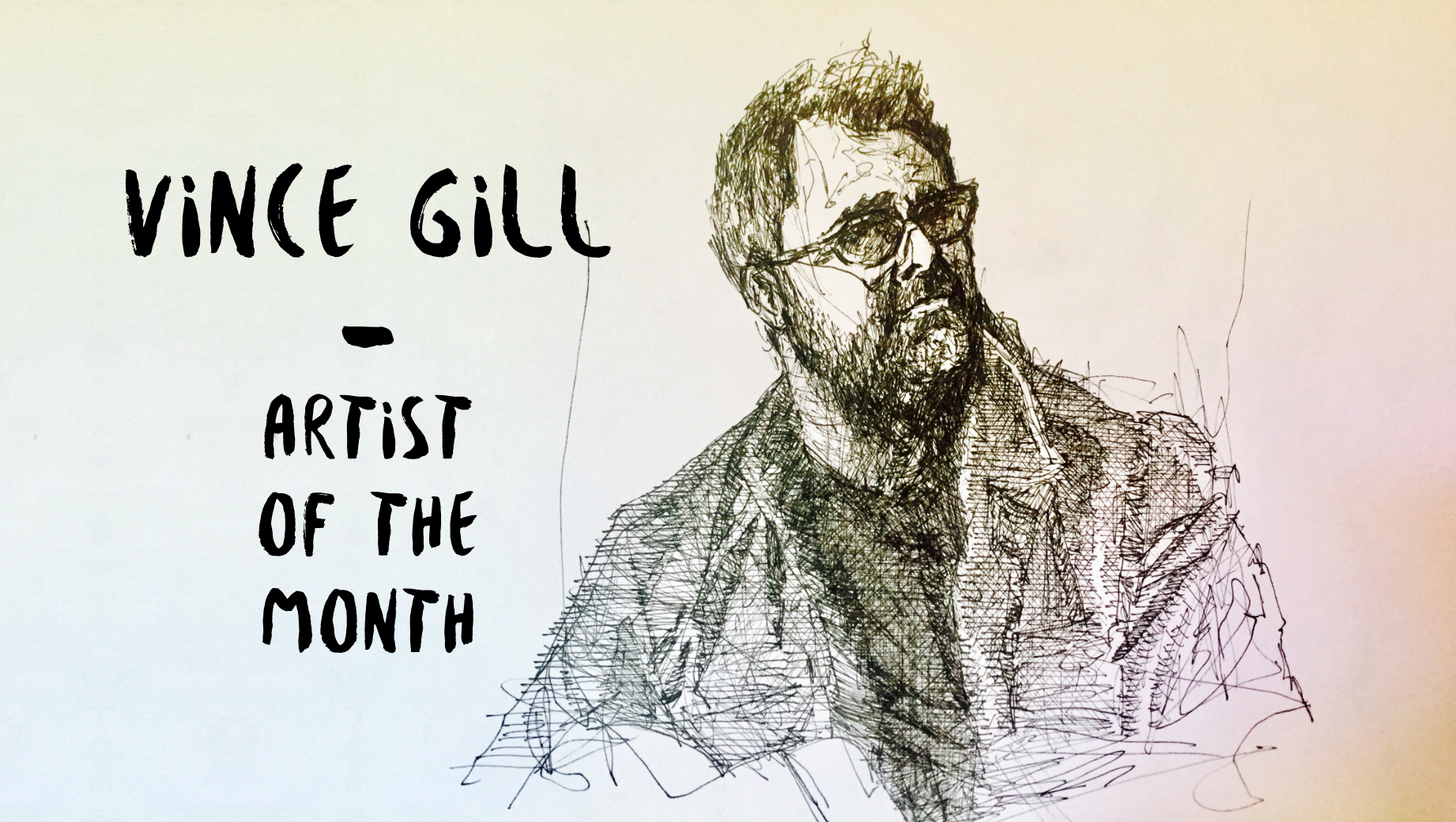
In the first part of our Artist of the Month interview, the Country Music Hall of Fame member pulls back the curtain on some of the key tracks on Okie, and explains how artists like Guy Clark, Amy Grant, and Willie Nelson influenced the album.

BGS: I’ve heard you describe this as a songwriter record, but you’ve written a lot of your hits. What do you mean when you describe this as a songwriter record?

VG: Well, I don’t think the intention of any of these songs is thinking they’ll be hits. I think that in the way of production and the instrumentation, the intent is really to never get in the way of the song. I don’t play any electric guitar on this record. I only played one or two solos on the entire record.

The rest of it is just kind of moody, ethereal, all of us playing together, and nobody stepping out so much in a big way of, “Now it’s your break, it’s time for you to play the big ripping solo.” There’s one instance of that. I think the point of it was, hopefully, that nothing ever got in the way of the song.

And there’s not big choruses with lots of harmonies. I liked Red Headed Stranger by Willie Nelson, and how sparse it was and simple. That’s what I wanted, something with a lot of space.

Did you know that going into it or did that reveal itself?

Yeah, that was the intent. I had this collection of songs. I said this would make a pretty neat, demure kind of record of not trying too hard, I guess. I mean, not singing hard and a lot of licks. Once again, there’s only one song on this record where I really cut loose and sang, and that was “When My Amy Prays.” The rest of it is just telling the story.

I even did a recitation on “Nothing Like a Guy Clark Song,” which scared the crap out of me. I don’t like the sound of my speaking voice very much. I like my singing voice just fine. But I’d only done one other kind of recitation recording in my life and that was tribute to Guy with his song, “The Randall Knife.” It always sounded bizarre to me to hear myself just talking, talking blues kinda stuff.

How did you choose the guitar for that song? Do you have a certain guitar you use?

Yeah, I think I used my guitar or Sparky’s — a friend of mine, Harry Sparks. He’s got a great old 1942 D-45. He lets me keep it here and play it a lot. It’s a long history of a story of our friendship. It’s probably the holy grail of all acoustic guitars and there’s only a few of them made and they sell for many, many, many dollars. And he had it.

I was living in Kentucky at the same time, when I was 18, and we were big buddies. Couple of years later I moved out to California and he called me up when I got out there and said, “Hey, I got to sell my D-45. I’m in trouble.” I bought it from him and told him I’d keep it for him. If he ever wanted it back, I’d sell it back to him for what I paid for it. At the time he finally called, it was worth about 10 times what I paid for it. And I said, “Yeah, I’ll sell it back to you for what I said I would.”

It’s a great story to remind yourself of how important friendship is, and your word. A few years ago we were doing a record here at my house and he brought his D-45 and we played it on a bunch in the record. He was leaving, and he had the case, and he looked at me and just handed to me. He said, “Here. You need to keep this for a while.” So it’s been a neat piece of the puzzle of our friendship.

It sounds beautiful. too, on top of that.

Amazing. It’s one of the best-sounding guitars I’ve ever heard in my life.

You write about race relations on this record a couple of times, particularly on “The Price of Regret.” I was curious if something specific inspired you to explore that topic.

It starts out as basically owning up to, we all have to have some regrets in life, and what they are can be any number of things. But what I’ve always been surprised by is how our eyes fail us. Sometimes when we see something and we look at it, we judge it. It’s the first thing we do is prejudge. Whether someone’s heavy, whether someone’s slovenly-looking, or poor or rich or white or black, and we just have this thing come to us to tell us what we think it is.

If we would honestly receive someone, not seeing them, I think you’d be much more honest in acceptance of one another. That’s what it says in that song: “You’re black and I’m white. We’re blinded by sight. Close your eyes and tell me the color of my skin.” And you couldn’t. Which would be a good thing for us.

At your Ryman show, you spoke about watching the Ken Burns documentary about country music, and you mentioned the fact that AP Carter’s sidekick was a black man, and Hank Williams learned to play guitar from a black man.

Yeah, and DeFord Bailey was one of the first great stars of the Opry and Jimmie Rodgers learned all those songs from black fieldworkers. It goes on and on and it never stops. Ray Charles taught us how much soul our music had. Charley Pride showed you how country somebody could be that was African American. It was powerful to see that we never bought into any of that mess, to some degree. And it is a mess. It’s embarrassing how we’ve handled all that.

The song I keep coming back to on here is “What Choice Will You Make.” I feel like I’m the best friend in the car, hearing that conversation. That first line puts you in the song right away, or at least it did for me.

My favorite part of that song is that it’s a song without judgment, and it happens every day. Young kids wind up, somebody gets pregnant and, “Hey, I’m 16. Look, I wasn’t prepared for this.” And all it says is, “What choice will you make? Whose heart will you break?” It doesn’t say what you should or shouldn’t do. To me, that’s a kinder way to go about tackling the subject of this matter.

The woman I wrote it with, Leslie Satcher, we’ve got a long history of writing really neat songs together. She’s tremendously talented. It was important to me that it not get to that place where we were saying what should or shouldn’t happen. That’s nobody’s place. It’s sort of like “Ode to Billie Joe.” You don’t really know what happens. It starts in that moment of sitting on the edge of town with such a worried mind, and it ends with still sitting there on the edge of town, not sure what to do.

On this record, I hear references to Amy [his wife, Amy Grant] a couple of times, on “Honest Man” and “When My Amy Prays,” of course.  What’s that experience like, playing her a song you’ve written about her?

It’s a running gag. You know you live in Nashville when you write your girl a love song and she tells you the third verse could use a little work. [Laughs] It’s really great to have a friend that does tell you what’s right and what’s not and what’s good and what isn’t. It’s easy to be inspired by her because she’s so gracious with people. She’s the most welcoming person I’ve ever seen in my whole life. Hands down. Nobody I ever seen better at that than her.

And non-judgment. No harsh words about anybody and it’s just beautiful in the way she receives. It’s kind of easy to write songs about her. If they’re songs that are faith-based, everybody assumes that I’m as a big of a church guy as she is. And the truth is, I wasn’t that much of a church kid. So I have to go to her every now and then and say, “Is this kind of close to what happens?” [Laughs] She’ll say, “You’re right on track. You’re OK.”

Read the second half of our Artist of the Month interview with Vince Gill.


Illustration: Zachary Johnson

WATCH: Heather Maloney, “Oklahoma Lullaby”

Artist: Heather Maloney
Hometown: Northampton, Massachusetts
Song: “Oklahoma Lullaby”
Album: Soil in the Sky
Release Date: June 14, 2019
Label: Signature Sounds

In Their Words: “‘Oklahoma Lullaby’ was inspired by the Ken Burns documentary, The Dust Bowl — so when I starting working on the lyric video for it, I decided to incorporate some historic footage as a little nod to my inspiration. Digging around in the National Archives, I eventually found the perfect footage to use in the video: The 1936 short documentary film on the Dust Bowl (by director Pare Lorentz) called The Plow That Broke The Plains.

“I filled an old book with green construction paper and green-screened the images below the words to make it a sort of ‘moving picture book.’ At the last minute, I decided to write a quote by 16-year-old climate activist Greta Thunberg inside the first page of the book. (‘I want you to act as if the house was on fire. Because it is.’) I added the quote because, while the song is inspired by an environmental disaster that happened in the past, I wrote the song to point to the environmental disasters we are creating now. Near the end of the Dust Bowl, we took some accountability for what we’d done to the land, changed the way we farmed, and passed legislation that has kept it from happening at that scale for nearly a hundred years. That gave me some hope that we can make change again.

“Fun fact: Jay Ungar wrote and played the theme song in Ken Burns’ PBS series The Civil War. He also plays the fiddle on ‘Oklahoma Lullaby,’ as well as the prelude to the song ‘Porch Story.’ It was incredibly special to me, having his fiddle on this song.” — Heather Maloney


Photo credit: Scott Housley