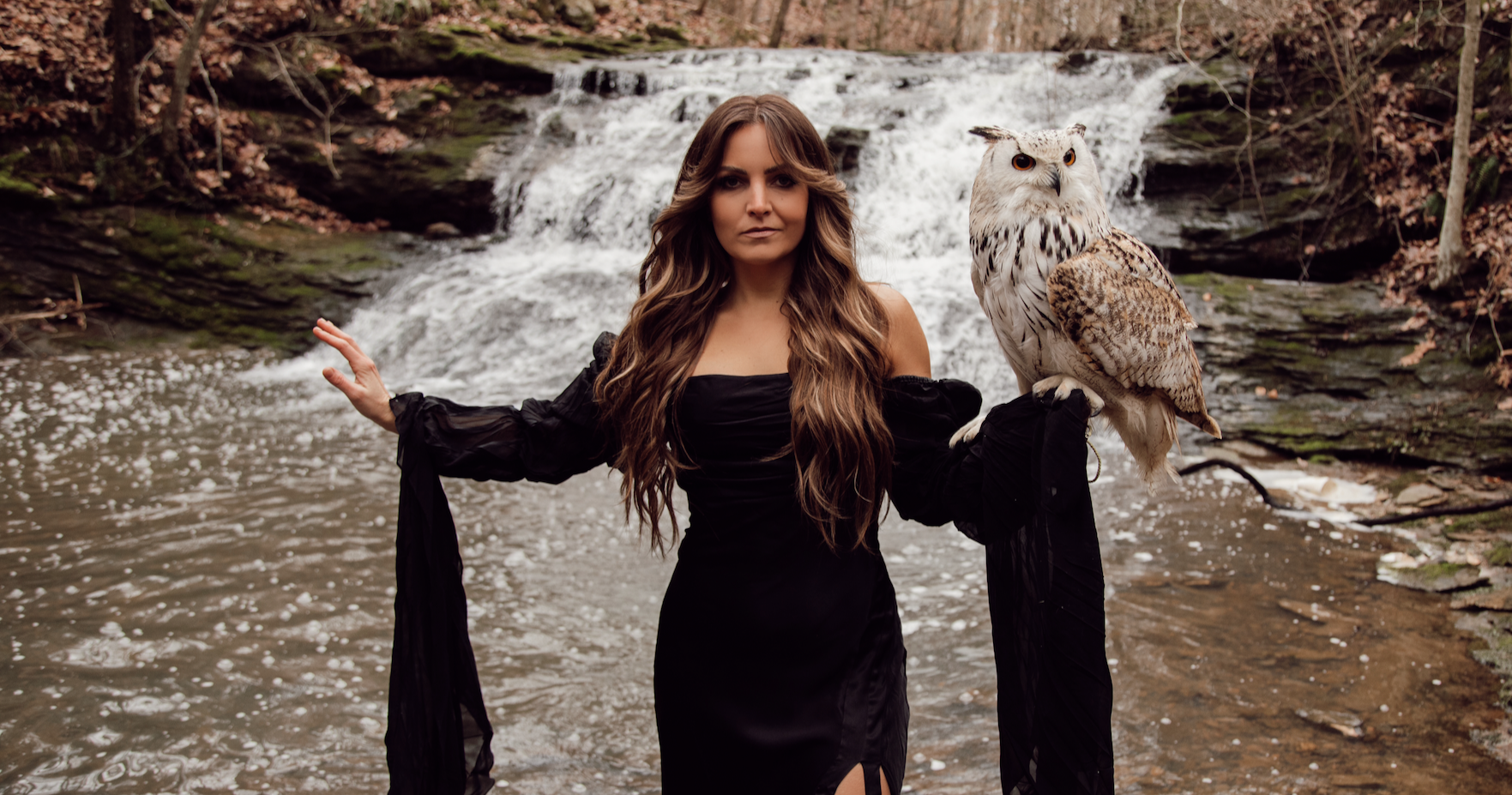
Brit Taylor’s Roots Are Planted in the Land Of The Forgotten

After writing with Dan Auerbach for her 2021 debut, Real Me, and with Sturgill Simpson on 2023’s Kentucky Blue, Brit Taylor instead looked in-house to bring her latest effort, Land Of The Forgotten, to life.

Cue up her husband, Adam Chaffins. Taylor not only co-wrote seven of the album’s 11 songs with Chaffins, but asked him to produce the record, as well – his second straight after doing the same for Kentucky Bluegrassed (2024) as well. Together the two homed in on tunes rich in working class and Appalachian themes that push back and occasionally lean into narratives about the region and its people.

From the hillbilly manifestations of “Broke No More” to throwing all your ex’s possessions out on the curb (“All For Sale”), to the resilience of mountain folk (“Land Of The Forgotten”) and infidelity with the bottle (“Warning You Whiskey”), Taylor shows that Appalachia is much more than just a footnote or only worth mentioning when things go sideways.

“It puts a lighthearted spin on some of the tougher things about life,” says Taylor. “Not to make light of difficult times, but to remind us two things can exist at one time. And, [remind us] not to forget to take a look at the bright side too, and to not take it all so seriously.

“There’s a lot of awful things happening in the world that we need to be aware of and need to do what we can to change, but dwelling on it and ignoring all the good things around us in the process doesn’t help anyone.”

On the eve of the album’s March 6 release, Taylor spoke with BGS about motherhood, outsider perceptions of Appalachia, black sheep, and more.

Leading up to Land Of The Forgotten’s release you mentioned achieving a sound with this project that you’ve been trying to attain since first moving to Nashville in 2007. What was it you captured and how were you able to do it?

Brit Taylor: Just that bluegrass influence on country, particularly the late ‘80s sound of The Judds, Ricky Skaggs, and Patty Loveless. When I go back and listen to those things I noticed they’re all very acoustic driven. At some point all of that became really unpopular – fiddle, steel, and mandolin all went out of style for a while. We had a lot of fiddle on the last record, but [we’re] incorporating those instruments more than ever before on this album, which gave it a very “back to my roots” feel.

Everything, down to how this record is mixed, turned out just the way I wanted it to. A lot of it’s because Adam grew up [just over an hour away] in Louisa, [Kentucky] – so we listened to the same radio stations and the same types of Appalachian country music. Us understanding each other so well musically is what made this all click.

I know that most of the album wasn’t written with bluegrass in mind, but I find it interesting that you say this album is more bluegrass-y than Kentucky Bluegrassed. Are there any key differences between the two?

Even those bluegrassed versions weren’t “actual” bluegrass songs, because they still had drums on them. We made that record to showcase bluegrass versions of those country songs. We weren’t really shooting for a country record with that one, but the goal with Land Of The Forgotten has very much been to make a country record, but one that’s heavily influenced by bluegrass instrumentation similar to anything from Patty Loveless to Lee Ann Womack when she sings “Does My Ring Burn Your Finger.” On those songs you could strip the drums out and they would feel right at home as bluegrass songs even though they all come from country-leaning records.

You just touched on Patty Loveless (Emory Gordy) and Lee Ann Womack (Frank Liddell), both of whom recorded frequently with their husbands as producers as well. Tell me about that connection, both with them and your husband Adam, and how each informed the project?

It started out with me just making a giant playlist of songs I love that were all over the map with no goal in mind. But as I started listening to it I began noticing a lot of similarities between the songs on it, whether they were from Willie Nelson, Ricky Skaggs, Dwight [Yoakam], Patty [Loveless], or Lee Ann Womack. Then I noticed that a lot of them were produced by Emory Gordy or Frank Liddell, whether it was Lee Ann Womack or the Pistol Annies.

From there, I went to Adam and told him, “These are the things that I love – I need you to be my Frank and Emory.” [Laughs] They’re two of my favorites, and just so happened to have worked with their wives, so it made so much sense for me to do the same. Adam knows me better than anybody else and hears me sing in a billion different places. He just knows me, just like [Emory and Frank] knew their wives and knew what they wanted and how to get it as well as pushing and encouraging them at the same time.

Another family tie to this record is that it’s released only a few months after the birth of your first child, Beulah. What was it like bringing this project to market while also going through that experience?

We cut the record last January, and at that point I was not pregnant yet. We’d been talking about wanting a kid for a really long time, and this record came out exactly the way I wanted it to. When we found out about the pregnancy I was like, “I need to be as fearless about the personal decisions in my life as I am about music, and stop letting the stigmas about what the industry thinks of women with kids dictate the way that I live my life.” Or else I’m going to run out of time to get the things done that I want. So we just decided to take a leap of faith and it’s all worked out, as it often does when you trust the universe, that it has your back, and that everything’s going to be okay.

It was so much fun starting out the year cutting that record and then going on tour with the Nitty Gritty Dirt Band and Adam was with me. It was while in St. Augustine, Florida, doing that when we found out we were pregnant. I started back with them on another leg of the tour in July and showed up with a big belly, and it was so fun! I did that entire tour with no shoes. Jeff Hanna was always cracking up because I was just barefoot and pregnant on tour. [Laughs] It’s been really empowering to know that you can have it all, you just have to be brave and stop listening to the limitations that other people would like to put on you all the time.

Of all your albums so far, Land Of The Forgotten has some of my favorite wordplay. A prime example is “Warning You Whiskey,” a drinking song disguised as a ballad about an unfaithful lover. How did the idea for that one come about?

I love when songs have a twist or they’re not quite what you think they are. I also love a good story, so when my husband and I sat down with Adam Wright and he started telling us about this idea for a song called “Warning You Whiskey,” that sounds like you’re talking about a woman at first. I loved it from the beginning. We worked out the music and got that first verse and chorus written so fast that it wrote itself.

When we got to the second verse, I remember sitting there looking at both of them saying, “Man, I really want to kick this whiskey bottle’s butt!” [Laughs] Then my husband blurted out, “I’ll grip my hand around your long, skinny neck” and I just lost it. I jumped out of my chair because I was laughing so hard. Then Adam Wright popped out a line, I did the next, and within five minutes we had the entire thing written.

It reminded me so much of something Loretta Lynn would write and makes me think of women in my family that I’ve observed growing up. My mamaw really fought hard in the beginning of her relationship with my papaw, with him drinking, and she stuck by his side. Sometimes all he needed was a butt whoopin’. She’d just stand by his side and helped him through everything.

In the past you also haven’t hesitated to write a catchy song about getting through the daily grind, like “Rich Little Girls.” This album has two: “Lately I’ve Been Thinkin’” and “Around and Around.” Is there anything beyond that ties the ones on this record together?

“Around and Around” is just about life in general. It’s funny because everybody expected us to tie a really pretty bow on it in the bridge, but we just didn’t, because sometimes that’s how life is – we just keep spinning and spinning. Sometimes we figure out how to get out of the rat race and sometimes we don’t. The song is an observation of this girl who is finally becoming self-aware enough of her circumstances to stand outside of them and decide if she wants to change them or not.

As for “Lately I’ve Been Thinkin’,” it’s definitely inspired by the music industry. We were actually writing a different song that’s going to be on Adam’s record, but in the middle of writing [we] began talking about one of the award shows taking place that week, how much we hated it and all of the butt-kissing that goes on at them. Then [my husband] said, “Lately I’ve been thinking, I don’t like much stuff” and Adam Wright started cracking up. It was so funny because it all just started from a conversation. By the end of it, we all were like, “Well, it’s really not that bad. We get to sit here and write songs. We actually have it pretty good.”

It seems like many of the songs on Land Of The Forgotten originated from spontaneous writing moments. Is that a regular occurrence for you?

Those are my favorite songs. When the three of us write, we never sit down and think we’re gonna write a song for a specific person today. We just write what’s in the room, what’s moving us, and what we’re feeling. That usually ends up being something out of conversation and is oftentimes funny, because the three of us have the same sense of humor and [same] kind of outlook on life. I know a lot of people can get a bad taste in their mouth about co-writing and how like “white-coat” it can be, but when you find your tribe and you find your people, it’s awesome. It’s so much fun.

Earlier you discussed how distinctly Appalachian this record is. In my opinion, one of the best embodiments of that is the title track, “Land Of The Forgotten.” Was there a specific moment or place that inspired it?

I don’t remember if I wrote the song around when the floods happened, but I remember writing the hook down when all the floods happened back in my native Knott County in 2022. I feel like that’s the only time that we’re remembered, when tragedy strikes, and then we’re just kind of forgotten again until somebody can make fun of us. A lot of people have negative perceptions of what they think Eastern Kentucky or what hillbilly is, but it’s nothing like what people think. It’s about resilience, and strength, and honor, and family, and beauty, and folklore. Appalachia is so beautiful and so misunderstood.

I’ll spend the rest of my life trying to write a song as good as Darrell Scott’s “You’ll Never Leave Harlan Alive.” I don’t know if I did that with this song by any means, but that’s always the goal when trying to write about home. I think that’s probably why I’ve never had a song about Appalachia. I’ve had a song about Kentucky in general, but it was more of a love story. I’ve tried to write it a million times, but I finally did one that I’m proud of, and that’s “Land Of The Forgotten.” When we put all these songs together, it quickly became a lot of stories about blue-collar life, surviving, and just how hard it is right now in this economy. Through that, “Land Of The Forgotten” became the theme of the record without even trying.

One of the album’s more lighthearted moments comes on “Crazy Leaf,” which sees you ruminating on that one black sheep we all have in our family. How did that one come to be?

When we sat down to write that – my husband, Jeremy Bussey and I – we started talking about all the crazy people we had in our families. It was Bussey who had the idea for the title, “Crazy Leaf,” which is a combination of these characters from our families into one song. But we didn’t want to pick on anybody too hard or put too much truth in there that you hurt somebody’s feelings.

My favorite thing was when I played it for my mom, and there’s that baptism line – “He got baptized for the fifth time, because the first four didn’t work” – where my mom said, “Your mammy used to say that if the water was too cold in the creek, the baptism wouldn’t take.” [Laughs] But in all honesty, it’s probably me – I’m the crazy leaf in my family.

From “Crazy Leaf” to motherhood and bringing this album to life with your husband as producer, Land Of The Forgotten has a whole lot to do with family. That won’t change anytime soon either with you and Adam going on a co-headlining tour together this spring. What are you most excited for about that?

I could not be more excited to be able to travel with Adam and for both of us to be able to do our own sets. We both work together a lot, but we’re still two individual artists as well, which I think confuses people sometimes. People will ask, “What’s your band name?” I’ll have to say, “No, I’m Brit Taylor and this is Adam Chaffins.” Maybe we’ll do a band thing eventually.

I’m also nervous because we’ll have the baby on the road for the first time, but that’ll also be really fun too. I can’t wait to show her pictures one day. I’ll be taking her on tour with me this summer out west with Nitty Gritty Dirt Band, too. She was in my belly through all those tours last year, so it’s gonna be so fun to have her on the road this time. My goal is to one day be touring bigger venues on a bus with my entire family there so we can travel the world together – that’s the dream.

What has the process of bringing Land Of The Forgotten to life taught you about yourself?

It’s a continuation of what everything keeps teaching me, which is that I just need to trust my gut and stop second-guessing things all the time. Adam has been a huge help with that. I feel like I can be hard on myself and always assume that somebody else knows better than me because they’ve got more experience. I don’t know if the creative process works that way. I think it only works when you’re true to yourself, and that’s something that isn’t always easy for me as a people pleaser and somebody that doubts herself a lot. So just learning to stand in my own truth and stand in my power and be confident in myself.


Photo Credit: Sammy Hearn
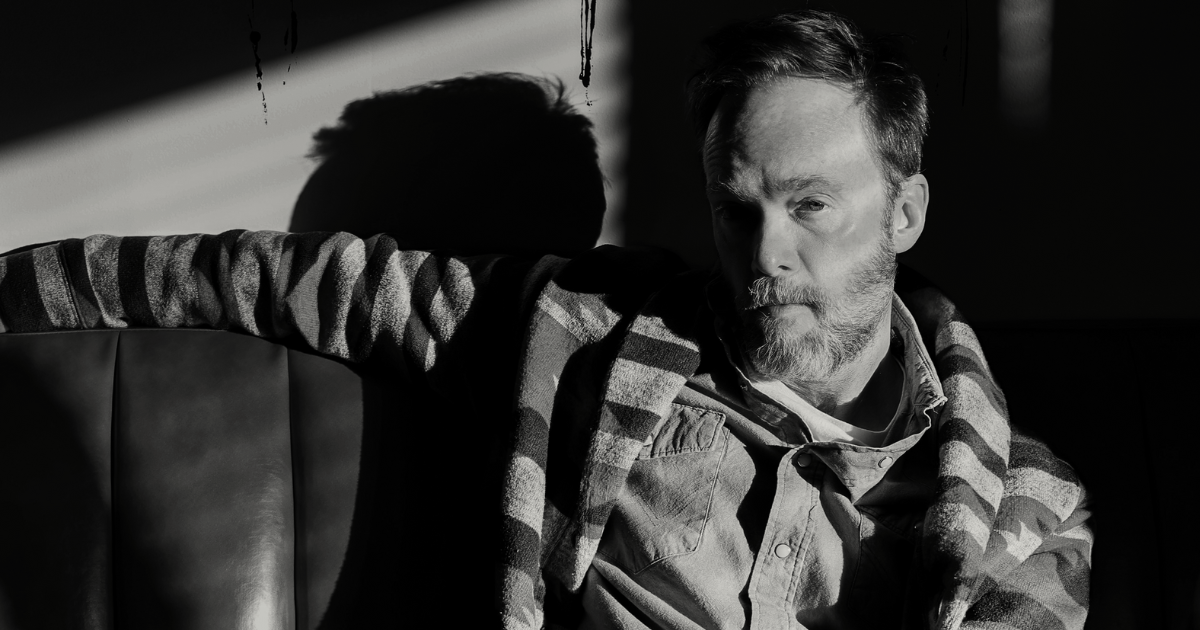
Is Adam Wright the Poet Laureate of Music Row?

Adam Wright is a songwriter’s songwriter. An artist’s songwriter. A poet whose medium is best set to music. And not just any music, but the absolute highest echelons of bluegrass and country – radio, real, outlaw, Americana, and everything in between and beside. He writes daily from an office nestled between Music Square East and Music Square West in Nashville – the fabled Music Row.

His songs have been cut by stars like Alan Jackson, Lee Ann Womack, Garth Brooks, Trisha Yearwood, Brandy Clark, and Robert Earl Keen. In bluegrass, bands like Balsam Range and Lonesome River Band have carried his originals high up the charts, and he’s co-written with many players in the genre, like Sierra Hull, for example. His songwriting and its distinct, intentional, and artistic voice has gained him award nominations from the GRAMMYs, the Americana Honors & Awards, and the IBMA Bluegrass Music Awards.

Since early February of this year, Wright has been leaving a trail of musical breadcrumbs online and on streaming platforms, teasing out his brand new album, Nature of Necessity, in four parts, which he calls “sides.” Along with singles peppering the release cycle throughout the following months, the prior three sides of the project finally convene with the fourth today, September 25, as a coalesced and cohesive project of 18 songs. The novel delivery mechanism for Nature of Necessity feels like an extension of the intentionality Wright brings to each of these literary, textural, and fantastic songs. They each stand alone, certainly, but together they sing.

These are not Music Row fodder, or craven attempts at radio hits, or tracks churned out day-in-and-day-out for volume and viral potential. These are passion projects. Ideas and stories that stuck in Wright’s creative craw and demanded much more deliberate treatments. It’s not as though songs written with the bottom line in mind can’t be this successful as works of art – they often are. It’s just that it’s immediately tangible to the listener that these works by Adam Wright aren’t just some of his best, they were clearly written and produced without a single thought towards saleability. Rather, Wright and his creative partners – especially producer Frank Liddell – gave each of these songs the artistic treatment they deserved on their own merits as stories and tableaus, vignettes and pantomimes.

If you remember when Bob Dylan was awarded the Nobel Prize in Literature in 2016, there was a whole lot of “discourse” on the internet as to the actual literary value of songs and lyrics. It’s a painfully on the nose, forest for the trees moment to even have to accept the premise of that debate in order to refute it. But with a writer like Adam Wright – ever so rare in country and roots music and becoming even more endangered still – it’s easy, direct, and demonstrable connecting the dots between literature and songwriting. Nature of Necessity being 18 compelling points on that trail. With this album, Wright should perhaps be offered a term as the poet laureate of Music Row. Let each of its four sides stand as a resumé.

I really love the sonics of the album, the production. I’m a bluegrass banjo player, so when I listen to records I want to hear the pick noise, I want to hear the room, I want to hear the distance between a singer’s lips and the microphone. I want it to sound like music and I want it to sound like a moment in time.

Granted, I listen to a lot of music that doesn’t check any of those boxes and I like it a lot for sure, but the first thing I noticed about this album was that it sounds not just live, but alive. Can you talk about that and can you talk about how you accomplished it? It feels like, having heard so much of Frank [Liddell’s] work as producer that he was probably a perfect partner to accomplish that production style, too.

Adam Wright: Yeah, he absolutely was. And we wanted the same thing. We wanted it to be live and to sound live. With all the flaws inherent in performance, like a full unedited, undoctored performance.

‘Cause I’m like you – I’m a pretty poor listener currently but I have, in my long life of listening, listened to an awful lot of music and studied a lot of it. I know when I’m listening to a song that was gridded and then a singer came in and sang very carefully and then they cut it up and got it right. Because I’ve made records like that, too.

You sound your best that way, you truly do. It is so flattering to have someone do that to you and then listen back and go, “Wow, I sound fantastic.” So what I’ve enjoyed, for some reason, [is] getting used to what I sound like, giving it my best effort on a play down all the way through, one whole take, and go, “That’s what I sound like.”

It’s like looking at yourself like in a hotel mirror. [They] are the worst mirrors in the world. Like you go in the bathroom in the hotel room and you look awful and can’t figure out why. Something about the lighting or the quality of the lighting or where they’re placed. Every time I’m in a hotel mirror, I’m just like, “What am I doing out in the world?”

It’s a little bit like that. You listen back to yourself, play this song, and you go, “Man… that is not perfect.” There are things I just really dislike about the way I sing certain things on this record, the way I played. I hear me failing the whole way through. ‘Cause we did track it live. Me and Matt Chamberlain and Glenn Worf tracked us a three-piece, me on acoustic and singing with bass and drums. The idea was just to keep all of that as it is, intact, which we did.

I told Glenn, I said, “You’re the lead instrument. No one’s coming to save us. If something has to happen, we just have to do it right now.” We recorded it with that philosophy. The meat of it is my playing and singing with Glenn and Matt and we didn’t fiddle with it. The caveat was, “Okay, we can add things, but this has to remain what it is.” Whatever we did has to be live as it happened.

We did it a bunch of times. We did every song like seven times. So if I didn’t get it, is it gonna get better? No. That’s how I sing that line, obviously. There was some freedom in that … I’ve just gotten to enjoy it.

These feel like songs for you and not songs to sell or to get cut or to pitch on Music Row. Like, they feel like songs that, as they came out of you, you may have been squirreling them away, caching them for yourself for the future. I wanted to see if that was true or if that resonated with you. To me, they’re poetic and they’re literary without being “pick me” or “try hard.” They’re really thoughtful. I love your lyricism because it’s not too esoteric. But, these traits aren’t exactly regarded as commercial. So how did this collection end up… collected?

That’s exactly how that went. And thank you for the kind words, too. I do write every day for a publisher. Usually that means co-writing. I co-write almost every day of the week. Whether I want to or not. I’m usually writing with younger artists that want a record deal or have a record deal and they have some ambitions about the commercial music industry – and for some reason they thought I could help them. [Laughs] As misguided as that is, that’s usually what our job is in that moment. I don’t think a lot about, “Hey kid, I got a hit for you.” My brain just doesn’t really work that way. I just try to write a really good song that I think is tailored towards that particular artist.

I do a lot of that, but I would never try to force one of these ideas like [that] are on this record on someone that is trying to do something like that. This is a different endeavor. I do categorize it differently. That co-writing with people for their records or for whatever they would like to do is almost like a day job. And these songs are my night job. So they are very different. It feels like a different writing brain altogether. The process of writing ’em is very different. It’s not two hours of looking at each other. Some took me weeks, just because I couldn’t unlock ’em, but I kept tinkering away. It’s a much different thing.

I want to find out the deepest realization of whatever the story was or the idea or the character that I decided the song was gonna be about. Just follow that rabbit through the woods as deep into it and as dark as it got, that’s what we were gonna do. It’s rewarding! It’s a lot of work and it takes a long time and I’m so busy at the moment. I don’t know if I could write some of those songs right now. If you told me to write a song that had a lot of Latin in it about watching the dawn, I’m not sure I could pull it off. [Laughs]

But you know how it is when you find these things. You get a hold of this little spark, you follow it, and then at some point it dims a little. Then you’re looking for another spark to light up. I’m currently between sparks – I’m writing every day, but I haven’t found a new thread that I just can’t wait to chase yet. But sometimes you get a little hint of it.

Let’s talk about some of the music. On “Dreamer and The Realist,” are you the dreamer? Are you the realist? Is it about you?

I never really decided if I contain enough pragmatism to be both a dreamer and a realist. Like in some ways I am. Like when my wife says, “Hey, we’re going to Disney World,” that’s what we’re doing. I would never decide to go to Disney World [on my own], because I don’t like fun. [Laughs] But once I know I’ve gotta go, then I can get pragmatic about it.

But aside from those types of things, I’m pie in the sky. If I could stare out a window 10 hours a day every day for the rest of my life and not starve to death, I would do it.

Thank you!

All I really want to do is walk around the world and roll around inside my own brain. That sounds fascinating to me forever, endlessly. And not because I have a fascinating brain, just because I think it’s fun to just go, “What if” and then, “What if” and then, “What if.”

I feel like this is a long way of trying to say, I feel like everyone is some combination of a dreamer and a realist. Or you couldn’t function. But certainly nobody’s all dreamer or all realist, I don’t think. I think we all compartmentalize our dreaming and our realism to certain areas of our life and hopefully we each find someone that compensates for, or augments, [ourselves] in ways. And that’s never perfect. There’s always like a dueling going on with all that stuff. But I love the push and pull of it; within myself and within a relationship. There’s music in all of that I’ll always find it very interesting. The song really is within the same person.

With “All the Texas,” which features Patty Griffin, one of the first things I thought when I heard it was of Lyle Lovett’s “That’s Right (You’re Not From Texas).” Plus, I was thinking about this moment in time with Texas and politics and the culture wars. Country music tends to feature this thinking like, “Everyone loves Texas and you should too!” “Don’t we all agree, Texas is great??” And then you look at what’s happening in Texas and you’re like, “Oh my gosh, Texas. What the hell?” I’ve had all the Texas…

Help us help you, please! Exactly.

Can you talk to me a little bit about that song? Because I have a feeling that there’s much more going on than just the way we’re all feeling about Texas these days.

It really was written before Texas got so Texas-y, recently. I don’t remember what year it was, but it was probably four or five years ago. Texas is always pretty Texas-y, but this was before it got super Texas-y. It was just about a night opening for Patty Griffin there at the Moody [Center] in Austin. It was just a whirlwind of a trip; flew in day of show, ran around Austin for half an afternoon, and then played a show.

She’s so supernatural. There’s just something like… sorcery around her. Anytime you’re around her, she doesn’t come off that way. She doesn’t walk around like talking wizard speak or anything; she’s just such a lovely, cute, normal, funny individual. But there’s still something that swirls around her that is just supernatural.

With all of that, I was like jotting things down, like the whole 24 hours that we were there. I just kept getting like little snatches of things and they all started to have this kind of mythical quality to ’em. Some of it’s literal, the Driskill and all of that stuff was true. But it turns into a sort of dream logic, mythical stuff – which is like watching [Patty] perform. It was an exercise in playing with almost like a journal entry of that experience and then distorting it with mythical language or symbolism.

I also love “Weeds” – and not just because Lee Ann [Womack] is on it. But also because I am obsessed with wildflowers, with native gardening, and habitat restoration. Something that struck me about that line, “Heaven is a meadow with no weeds” is perhaps heaven is a place where we finally understand that a “weed” is a social construct, right? A weed is a plant that we’ve decided is in a place where it shouldn’t be, but maybe we’re the ones where we shouldn’t be–

Yeah, that’s right.

Maybe we changed so much of the environment that we look out and we see a weed, but that plant has been here all along. And [the habitat is] probably supposed to be all weeds.

Exactly.

When I heard “Weeds” I also thought of Dolly’s song “Wildflowers” and the idea of, “What is the difference between a wildflower and a weed?” So, in my own mind, I heard that line as maybe you get to heaven and you realize all these weeds were wildflowers the whole time. Maybe I’m projecting. [Laughs]

I don’t know how the farmer’s perspective developed [on that song], I just don’t remember. And I’m not trying to put any sort of romanticism on it, it just didn’t come to me. I don’t remember what the jump was, but I remember why I started the song initially. I was at the library looking for something new to read and I came across this book, it was like a catalog of late-1800s farming equipment and the techniques and things. You could order out of these catalogs in like, 1870-whatever.

It also had articles about how to fix your wagon or what to do about this particular tractor part. How to deal with a stubborn mule or a pig that wouldn’t do what you wanted them to do. I thought it was fascinating, and the language of it – I love lingo so much. I love getting into some endeavor or line of work or character where there’s lots of language that I haven’t heard before. Like specialized language to a particular job or whatever. This book was full of it. I was just fascinated by all of it.

The whole thing about the last verse about the pig, all of that, it’s just outta the catalog. Those were all things [from the book]. Like, “Are you dealing with a hog who’s ill-formed? And unquiet in his mind? Here’s what you can do.” I found it all so interesting.

Then the middle verse about the tramp, to me he was dressed in soldiers’ clothes. I imagined he’d been shot and was laid over this farmer’s fence. It would have been just at the close of the Civil War era stuff. I wanted all of it to hang together, but with all of these strange things going on the overarching thing is this farmer going, “I can’t get rid of these weeds.” Why does he care? I don’t know. I just liked the guy [because] the thing that sort of kept him going was that his eternal reward might be a meadow without all of these weeds in it.

Your career has intersected with bluegrass and has been part of your career in so many ways. You’re a picker – which is one of the first things I noticed about this album, you guys tracking it live means we get to hear you pick the guitar. All these bluegrass folks have cut your songs, you’ve been nominated for an IBMA Award. What does the genre mean to you? And of course, the inseparable community that comes with it. How does that fit into the constellation of how you make music, songwrite, and be creative in general?

That’s interesting. I love the world of bluegrass. Maybe I’m just a little particular. Like, if you looked at all genres of music as slices of a pie, there’s really only a sliver that I really love. Out of any genre. Whether it be jazz or a big band or blues or bluegrass or classic country or rock, there’s really only a little bit of it that I really like and most of it, the rest of it I find I can leave alone. Not quite for me.

But I always said, good bluegrass might be the best music ever. Like, when it’s good and it’s right. I wish I had started trying to play that kind of music when I was younger. I got fascinated with it too late to physically do it at a level that I appreciate. I can distinguish the difference in the nuances of really great players, but I’m not able to do that. I don’t lose a lot of sleep over it, but I’ve probably got carpal tunnel trying to figure out Tony Rice licks a few times in my life. There’s so much of it that I really like and I love.

I’ve never really sat down to try to write bluegrass songs. I just write songs. Like you were talking about this interview going under the Good Country category, I’ve always sat somewhere in the mushy in-between of folk, singer-songwriter, bluegrass, and country. I’ve just always existed somewhere in the middle of all that stuff. Some of my favorite artists have done that, as well.

Some of my favorite bluegrass artists were folkier or bluesy-er. Del McCoury or Doc Watson. Tony Rice was such a genre evader. I always appreciated that about certain bluegrass artists. But writing-wise, I just always wrote songs. And because of the nature of what I’ve ingested, they lend themselves fairly well to more traditional bluegrass arrangements. They always play everything a lot faster than I think they’re going to. [Laughs]

Last night at the Bluebird [Cafe] I did my version of “Thunder and Lightning,” which is a moonshining song of mine that Lonesome River Band cut. I think I’m playing my version fast, like it feels fast to me. And then I hear them do it and it’s about twice as fast as I play mine. It sounds great when they do it, but if I try to play it that fast it sounds ridiculous.

I write some with Sierra Hull, she’s so much fun to write with. It’s funny, she hardly plays when we’re writing, which I had to get used to. ‘Cause the first time I wrote with her I was like, “Oh I can’t wait to just watch her play!” And I don’t even know if she touched the instrument a couple of times, just to check a chord. But I got to like her so much and enjoy writing with her that it didn’t matter. [Laughs] …

My dad was a piano player – and still is. His dad was a piano player, too. So I started on piano when I… I think I was like four. I was kinda tugging on their shirt going, “Hey, I wanna play piano!” And they’re like, “Yeah, okay. Sure.” But they did let me, I started, and I did like classical piano for years. Then I went to saxophone and then I heard a Chuck Berry record and I needed a guitar. Today. Right now. This afternoon.

I was talking to a friend of mine who is a bluegrasser, saying, “I just don’t know how you guys do it, the flatpicking. How are you doing this?” And he goes, “You remember when you were learning Rolling Stones songs on a Stratocaster when you were a teenager? Most of these guys were playing D28s with grown men at festivals then.” When they were that age, that’s what they were doing. Picking with grown men.

Who were having pissing contests with those children. [Laughs]

Yeah! Sorry kid, not today. [Laughs]


Photo Credit: Emily McMannis

WATCH: Waylon Payne, “All the Trouble”

Artist: Waylon Payne
Hometown: Austin, Texas
Song: “All the Trouble”
Album: Blue Eyes, The Harlot, The Queer, The Pusher & Me
Release Date: Sept. 11, 2020
Label: Carnival Recording Company/Empire

In Their Words: “I had just made the jump in November and moved back to Nashville [from Los Angeles] in 2015. The house I had rented was cool, but I had no sooner signed the lease before my friend Lee Ann asked me to join her on a writing weekend up in the Hamptons. I had not been there in many years, but Adam Wright and I flew to somewhere and met the bus and woke up on Long Island. There was a chill in the air and there was a good feeling going.

“Lee Ann Womack has been my friend for many years. I hold her and her family — Frank, Aubrie, and Anna — as my family and it has always been that way. She had set us up in a huge mansion with stellar views and fireplaces in each room. An added bonus came from a foul-mouthed top chef named Sylvia, who continually supplied (or plied) us with delicious five-course meals — every meal. The evenings were often wrapped with a hot toddy, full of bourbon and butter. We were there for almost a week and the songs started flowing. Adam, Lee Ann, and I wrote a song called ‘All the Trouble’ and another song called ‘Pictures.’ We also wrote some other songs with the band and Ethan Ballinger. The week felt like a success, and we all returned to Nashville just before the Thanksgiving holiday…” (Read more below.)

“…Later, Frank asked if I would like to go with them to Houston to record Lee Ann’s new album. He also asked if I would play guitar on the session. I am a lot of things, but no one has ever really referred to me as a guitar player. [My dog] Petey and I loaded up in a rental car and took off to Houston. The session was electric, and it was amazing to be there with my extended family to make music. Later, when the album came out, I had four songs on it. A few months later, I was sitting in the audience and nominated with Lee Ann and Adam for a Grammy. We didn’t win, and I didn’t mind that we lost to Brandi Carlile.

“As we were cutting this album, I had not planned on including ‘All the Trouble’ until Frank and Eric Masse suggested I give it a shot. I am proud to say it is one of my favorite tracks on the album. Thank you Lee Ann for including me on this fun journey!” — Waylon Payne


Photo credit: Bridgette Aikens