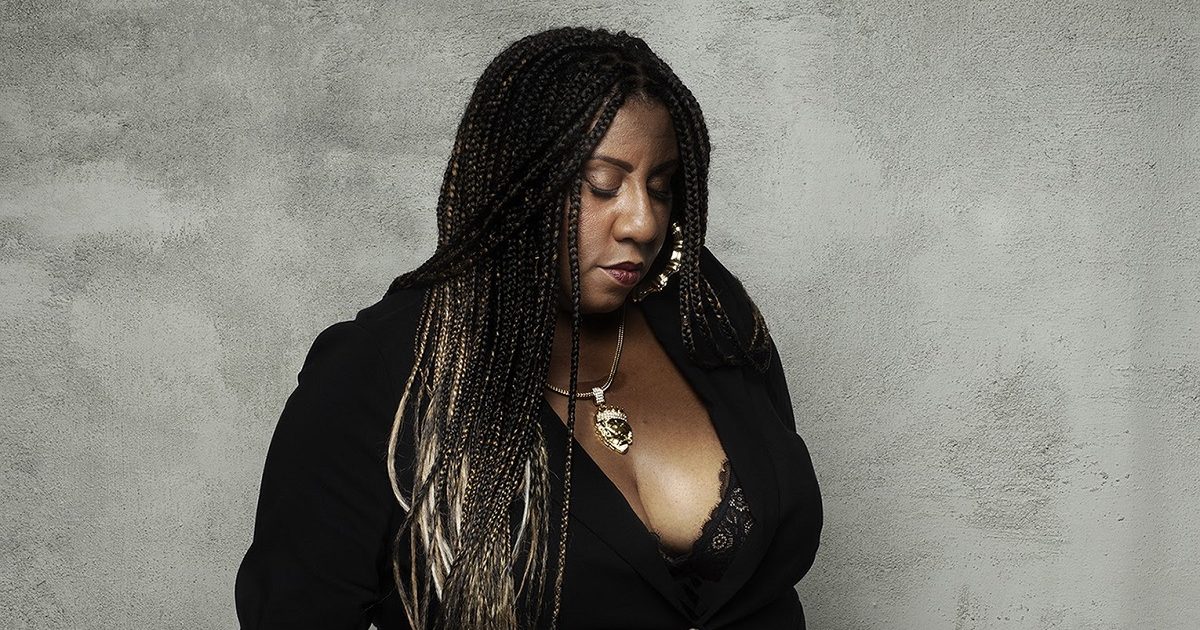
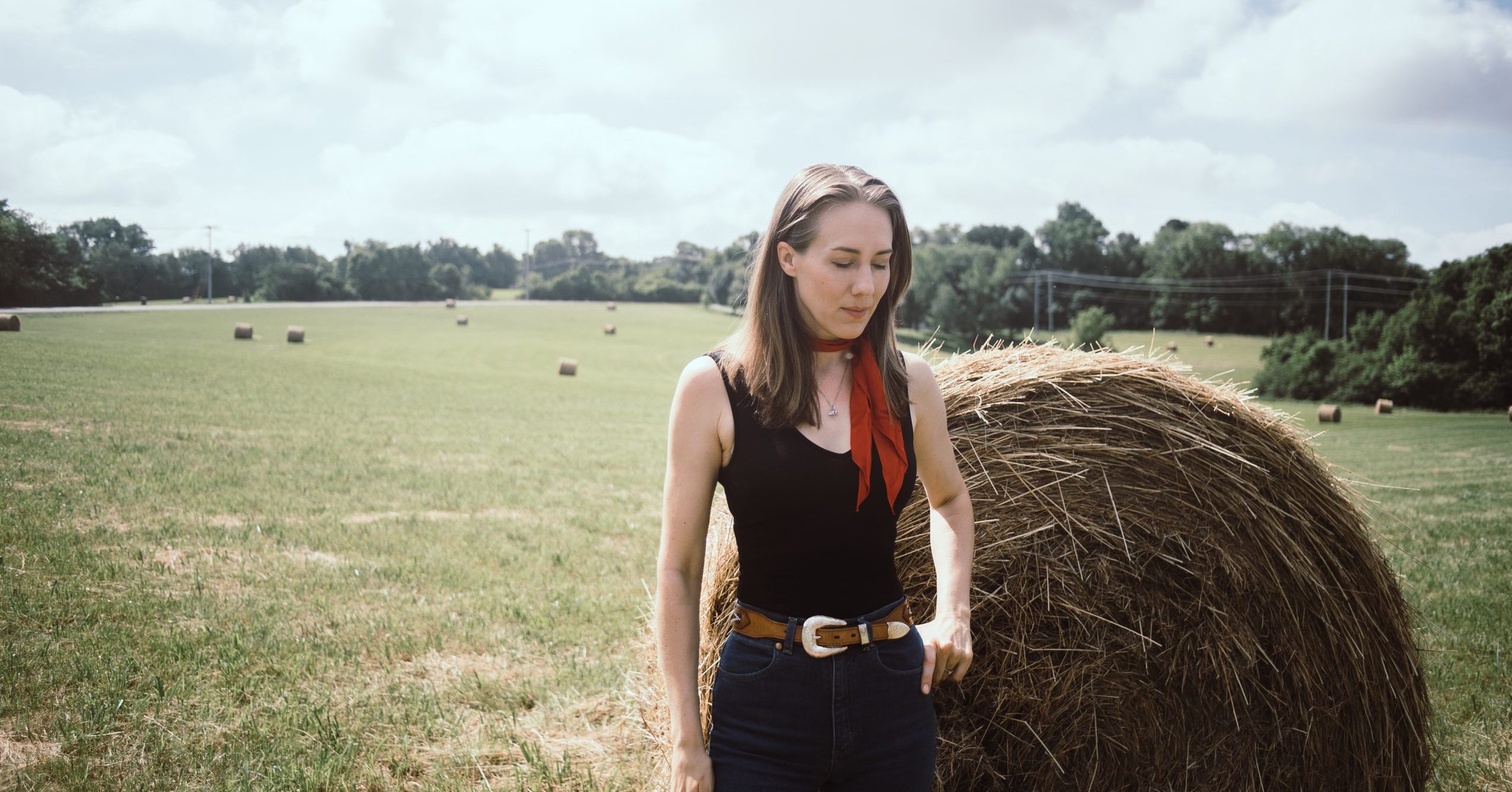
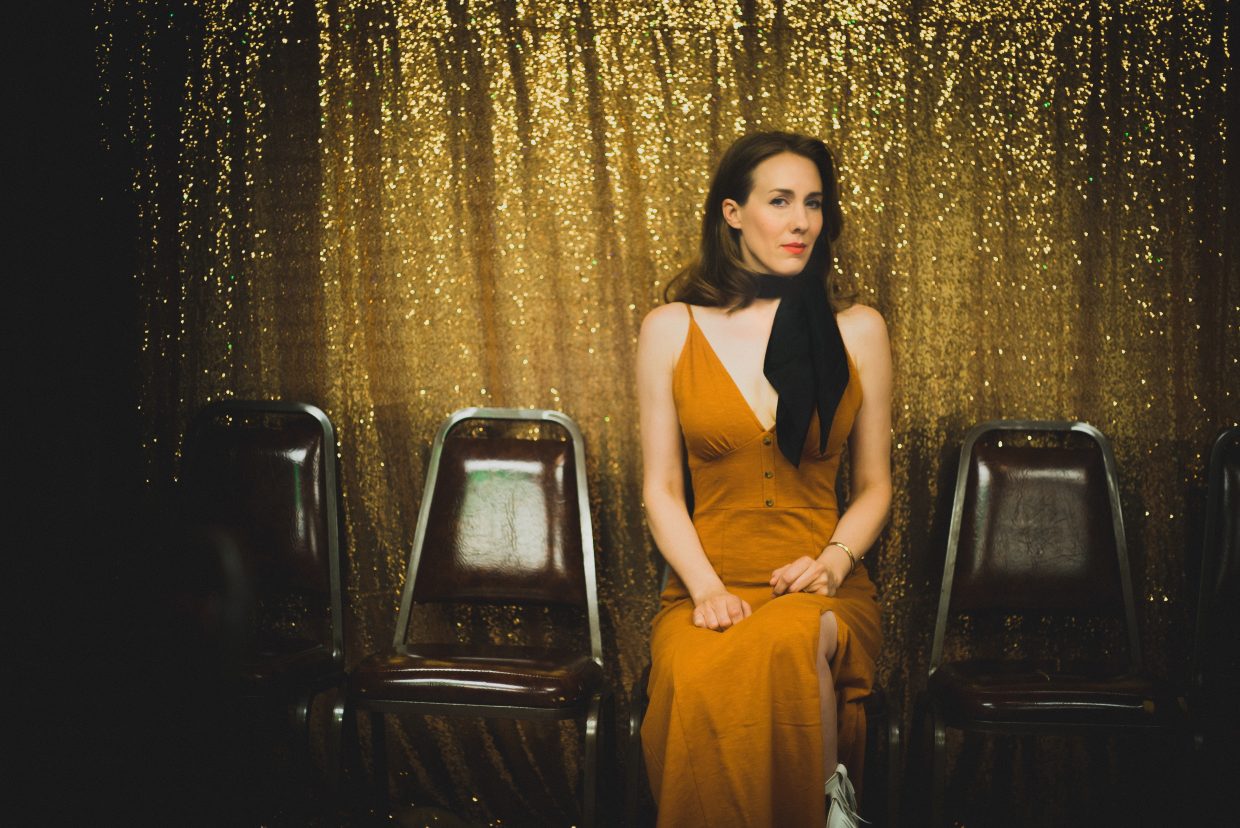
Nearly twenty years after leaving home, striking out to make a living in the bluegrass and country scenes first in Texas and now in Nashville, singer-songwriter Brennen Leigh is still longing for the prairie. Born in North Dakota and raised in rural Minnesota, Leigh’s brand new album, Prairie Love Letter, lives up to its name in all but the stereotypical, assumptive ways implied by its title.
Produced by Robbie Fulks, Prairie Love Letter idealizes Leigh’s harsh, forbidding homeland — as paeans to the prairie are wont to do — but not without the nuance a nomadic, troubadour lifestyle affords, and Leigh’s perspective as a woman in 2020. It’s all underscored by the ever-growing distance between her and the grassy plains for which she pines, marked by months and years, continually ticking by.

Being that the sum of Fulks’ and Leigh’s musical comfort zones lands squarely upon the intersection of old country, bluegrass, Americana, and what we’ll call “alt-roots,” the album cheerfully denies genre ascriptions while reinforcing the Great Plains states’ propensity for birthing country music forged in the furnaces of hard living, firmly-held values (though not necessarily strictly conservative), and a desperate need for the distraction and diversion music brings.
BGS reached Brennen Leigh by phone at her home in Nashville and began our conversation with the album’s seemingly pugnacious, yet perfectly apt lead track.
There’s something particularly resonant about the album’s opener, “Don’t You Know I’m From Here,” because you’re talking about rural life and how these authenticity signifiers are so important to rural life and identity, but they’re also really important to roots music. There’s a really interesting symmetry to “Don’t You Know I’m From Here” where it seems you’re simultaneously asking that question of the region you’re from — Minnesota, North Dakota, the plains — but also asking that question as a woman in roots music and country. What do you think?
I honestly never thought about it in that specific way, but when you put it that way, that is how I feel. Obviously, the going home, the rural element — what did you call them? Signifiers. That’s huge. We’re all in a sort of “countrier than thou” battle all the time. I try to just write what’s true to me as much as I can, and be affected by that as little as possible. When you talk about country music, it’s something I do feel secure in. I don’t need to show or tell anyone — nor have I ever been accused of lacking that authenticity. However, I’ve struggled just as much as the next independent artist. Sometimes it leaves one feeling, “Well, why has this other person been pushed to the top of the pile?” They say not to compare, but you know. Why is this other person edified, when they’re not country, so to speak? [Laughs] It’s hard not to compare yourself to others and get into that mindset.
Also what you said about women — we women, it’s like there’s only room for one at a time. We all have to fight each other. That’s not how I really feel, but your lizard-brain would make you feel like you have to fight with other women for that one slot they give us. This year, one of the silver linings of this pandemic has been that it’s given me some time to appreciate a lot of my peers in ways that I couldn’t before. Or that I didn’t take the time to before. My fellow performers, that are kind of my same age or similar level of fan base, exploring their catalogs has made me feel more like I’m part of that bigger Americana community.
I think that’s an interesting way to get at the crux of this question, because on one hand just talking about authenticity is kind of make-believe, right? “Authenticity” is not a concrete thing, we ascribe authenticity. We perceive it. So talking about it is almost propagating the problem, and to step outside of it and look at it objectively is the real question. I think the nugget in “Don’t You Know I’m From Here” is that the speaker in the song isn’t seeking external validation in asking that question, but rather validating themselves internally. That’s exactly what it is. I don’t need to go home and have everyone at home validate me for being from there. It’s something that comes from inside. I know where I’m from. I know I’m a Minnesotan and I was born in North Dakota. And yet, I get questions cause my accent has changed and I’ve lived in the south now for I think eighteen years. It’s funny, when I moved to Texas I had a little bit of this fear that my music wasn’t going to be “southern” enough. [Laughs] That people were going to think I was inauthentic. But it hasn’t come into question and up north, that was one of my fears, that people would go, “Who is this person from Nashville singing about our part of the country?” That hasn’t happened either, because they’re starved for people to sing about it, because there aren’t a lot of people singing about it.
The album is really flexible with which genre aesthetics it aligns with, it feels like the exact kind of country that comes out of the Upper Midwest. That hardscrabble, bootstraps mentality that we all are used to being attributed to the south, that’s how the plains survives, too. The album’s themes feel really similar to the way that southern country music speaks about life and work and pleasures, but it’s still different. To me, the way that’s most tangible is in how the record playfully denies any genre label. How did the bluegrassy, Americana meets old country quality come together and how is it tied to Minnesota and North Dakota’s music?
For one, we didn’t really plan it in a specific way. Robbie Fulks produced it — Robbie and I talked about how to treat each song. We both are believers in stories. The literature of stories. How do I present this little three- or four-minute story in a way that the listener is going to hear and feel what’s going on? We treated it case by case.
As for the genre… “ambiguity” that you mention, I think it just comes from my influences. I come from old country and bluegrass. The part of the country where I grew up, it’s popular music, but not in the same sense that it is here or in Texas. It’s not as much a part of the culture. It depends on the family. In my family, bluegrass and old country is what we did. We played on the porch and we sang and we went to bluegrass festivals and we went to country music concerts when we could find them. That’s kind of always been in my roots and it came naturally. I’d be curious to see how people would classify it, because we weren’t like, “By golly we’re going to make a country album!” We just did what we knew how to do.
A song like “Yellow Cedar Waxwing,” that one feels so bluegrassy. What was the balancing act like, with Robbie, whether to lead you to bluegrass or away from it on a song? I think we more or less talked about instruments and how they were appropriate to each song. That one is a very vivid memory in my imagination of being a kid and going with my grandmother to pick juneberries on a specific occasion. Here we were, on a gravel road, with buckets over our arms, and we were gonna pick juneberries. Maybe that song was written with thought of the Carter Family, that pre-bluegrass kind of feel. We thought we needed to put a little banjo and stuff on it. The story kinda had a little bit of a bluegrass thing; Grandma, picking berries, it lent itself to that. I’m comfortable with being fluid between the more classic country thing and the more modern thing and the bluegrass thing. I’m not thinking about how it’s going to be taken, I’m not even worried about it too much. But I am interested to know [what listeners think].
There’s a striking theatrical quality to these songs and their characters and their stories. Do you feel that as well in this set of songs? Do you see them as something of a soundtrack or a musical in their own way?
That’s an astute observation, because some of what influenced me growing up was old westerns and musicals, like Oklahoma! That western landscape, where you could just see for miles, always had a symphony and horns. Musicals are kind of in my background. I’ve even thought about writing a musical sometime about something. Originally I was thinking, “Oh maybe I can make these songs fit into a musical!” But I made a record instead. [Laughs]
It was something I kind of wanted to do for a number of years. I always thought there was something musical and something magical about that area. I used to eat up those episodes of Prairie Home Companion that had the “News from Lake Wobegon” stories. Those were my favorite part. I remember when I was painting my apartment in Nashville when I first moved here, I binge-listened to a bunch of those stories from Lake Wobegon. Then I read My Ántonia for the first time. It knocked me over. Something about Willa Cather’s writing about the prairie.
To kind of return to the ideas we began with, this record feels like, almost more than anything else, that it’s examining ideas of what it means to be an insider versus an outsider and how the line between each of those positions is often much more blurry than we think.
I’m coming around to that now. I think in my first few years gone I felt hurt when I would come home. When someone would say, “Well you don’t sound like you’re from Minnesota.” That hurt my feelings, because I wanted to have that stamp of belonging. Now I’m older and I realize that everything that has made me who I am to this point is valid. Living in Texas for fifteen years? I’m proudly part Texan now. I can claim part-Texan. I have some of the same feelings about certain places in Texas [as places in the Upper Midwest.]
That feeling of belonging, that’s what everybody wants. I mentioned My Ántonia, it takes place in Nebraska on the prairie. The reason I tie that book to the album and give it so much credit for inspiring me is because they do have a lot of the same themes. These characters are homesick, they just want to belong somewhere. There’s a part earlier on in the book when the main character feels blotted out. It’s his first time on the prairie and he looks out and he can’t see any mountains and he feels blotted out. What a beautiful and devastating way of putting it… The funny thing is I never really felt like I fit in that well when I lived there.
As someone who idealizes this place and loves it and returns to it not only literally, but also with these songs and this album, what is it like to be from there, away for eighteen years, and writing about now?
When you’ve lived away, you realize there’s some beauty in it. Like my mom says, “Brennen, you just don’t remember how cold it was.” It was so cold in the winter. She’s right, I have forgotten! Putting on your long johns and two pairs of socks and snow boots every single day and freeze in a car on the way to school. I have forgotten those things and it has changed a little bit. North Dakota is very conservative, Minnesota is a swing state last I checked, but even the cultural geography of Minnesota has changed since I moved.
There are a lot more immigrants and things have changed politically. Obviously, Minneapolis — I don’t touch on Minneapolis very much [on the record] — but there’s been the unrest there. That’s pretty far from where I’m from. Where I’m from, I guess it’s kind of mixed in terms of politics. There are just a few things, like the pipeline issue, I couldn’t leave that alone. It made me so mad! [Laughs] Mostly because I knew they had chosen that area because it was worthless to them. That area is not worthless. It’s god’s country. I know a song can’t do very much, but I felt angry enough to write it.
All photos: Kaitlyn Raitz