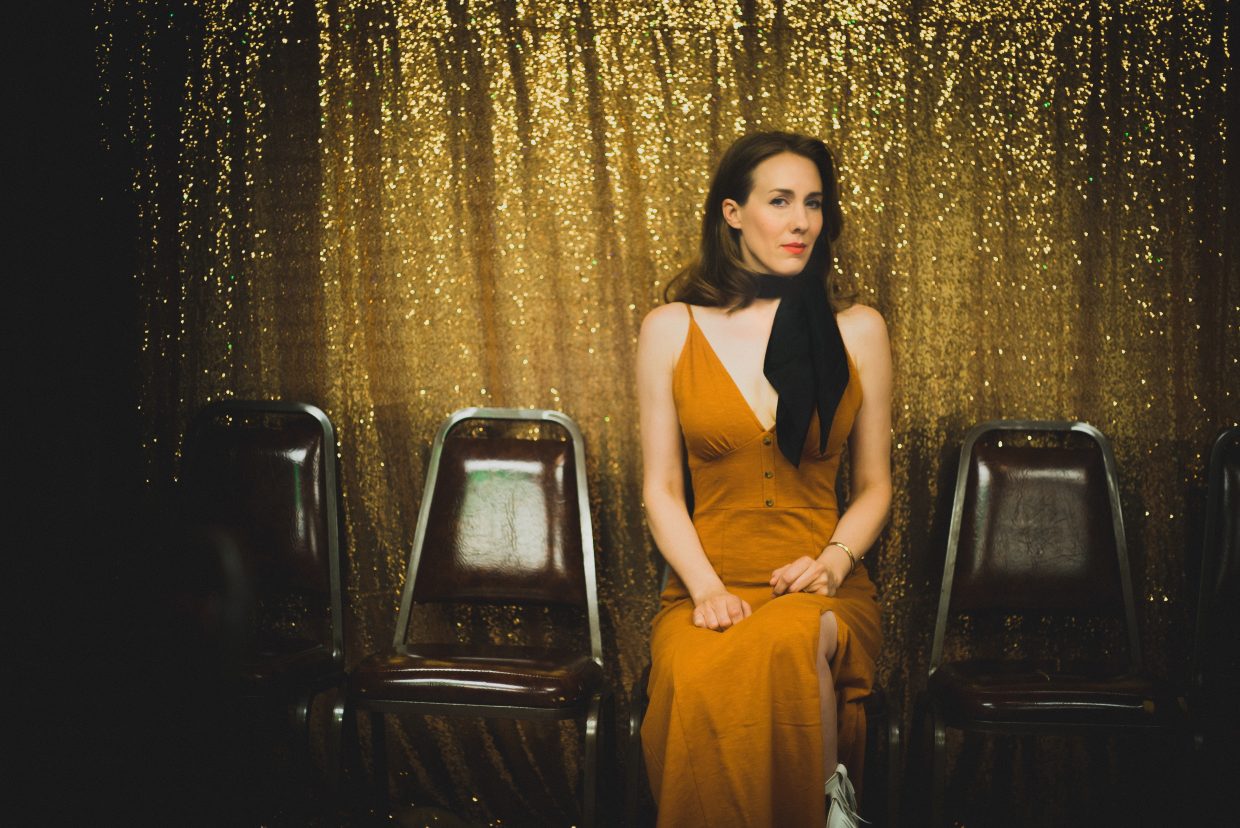
Ber Is No Longer Hiding Her Folk Elements

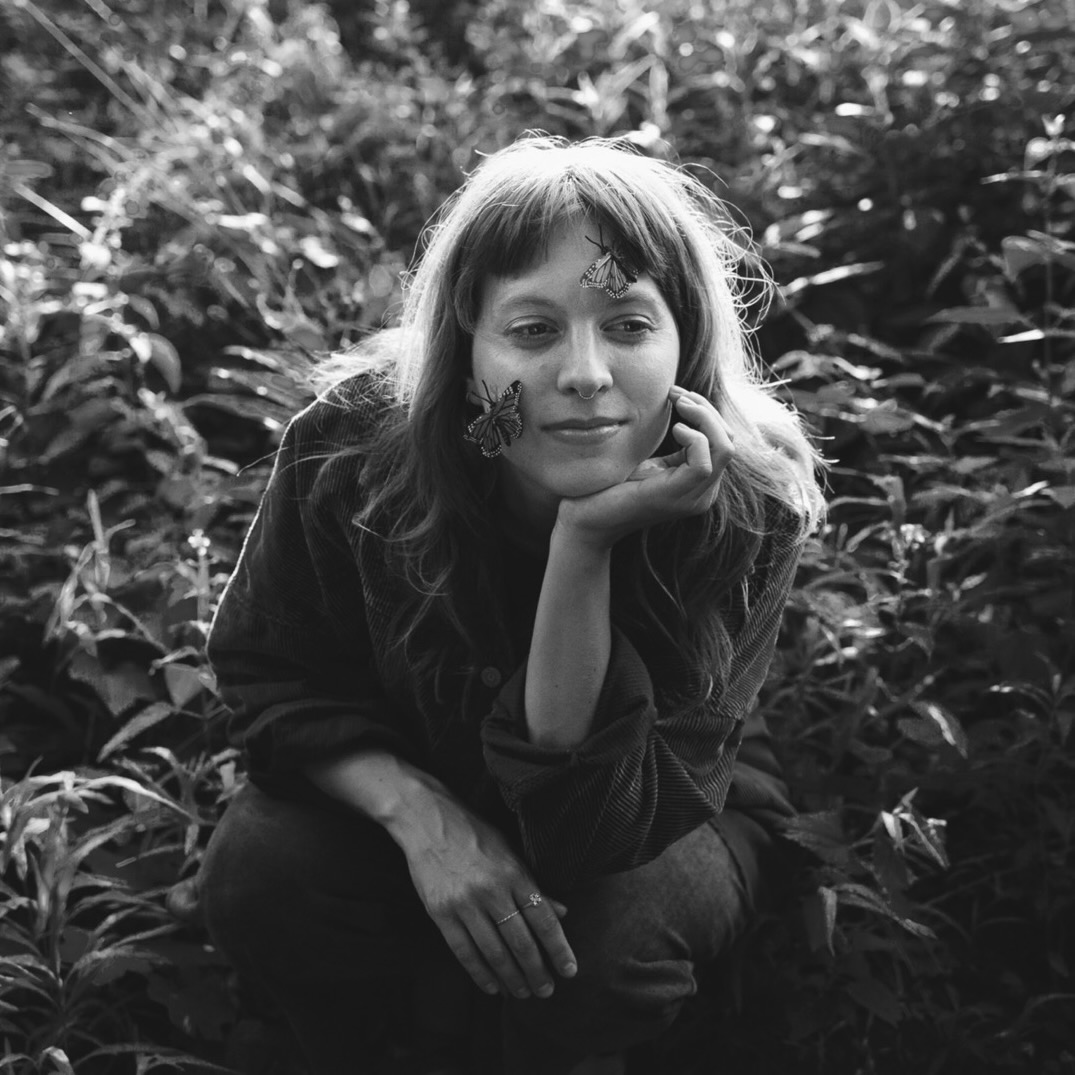
When you think of common musical touchpoints for young roots artists, the Shrek movies’ soundtracks likely don’t come to mind. But those compilations, beginning with the first film in 2001 and continuing through a handful of sequels in the aughts and ‘10s, feature an impressive if surprising roster of artists, including Rufus Wainwright, Tom Waits, Frou Frou, and David Bowie.

Quickly rising singer-songwriter Ber laughs as she reveals her penchant for those soundtracks, but her affection is sincere. On the Minnesota-born artist’s first full-length album – the newly released Good, Like It Should Be – she turns that winking sincerity inward, writing a dozen songs about opening up to love despite the real risk of heartbreak.

Ber wrote and recorded the bulk of the LP with close friends and collaborators Rob Milton, Austin Ward Sherman, and Bradley Hale, who joined her on a writing trip to Pepin, Wisconsin, and helped deepen both the record’s narrative vulnerability as well as its sonic range. The resulting songs are self-assured and lived-in, with an emphasis on melody and emotional tension that lets her agile, nuanced vocal shine.

Below, BGS catches up with Ber the day before Good, Like It Should Be releases, chatting about songwriting, a-ha moments and, yes, everyone’s favorite big green ogre.

Tomorrow – or in just a few hours, really – you’ll release your new album, Good, Like It Should Be. What are you feeling in this last stretch as you get ready for folks to listen to the project in its entirety?

Ber: It’s a little crazy. I think it’s actually out in Australia already. Maybe this slow burn of me realizing, all day, that it’s just gradually coming out will make it a little less overwhelming. But I would say overwhelming is the default nature of the last month. Coming up to this April 3 date has been challenging but also really exciting, and something I’ve tried to accept and just be really happy about, because it’s really crazy to be putting a whole album out. It feels really, really wild. I’ve never done that before. It’s new territory. We’ve been rolling out singles for six months, and I’ve been listening to the whole album for like a year, so really it’s not going to hit me that other people haven’t sat with it yet until tonight. I’ve been crying a lot, mostly happy tears. But it’s definitely a little bit of a release, emotionally, too. So, it’s a weird one to have to process.

To your point about living with this music for so long, do you feel like your relationship to the music has shifted in that time? Has any new meaning or insight been revealed to you?

It feels really solid. I don’t think it’s shifted so much outside of maybe me reaching for songs for the month of November, and then kind of getting sick of that one so then going for another one. I think I’ve sat with all of it in different ways. I haven’t been doing loads of writing in this period of releasing the album, so this is really the stuff that exists for me right now. And it is where I am still, which I think is really fun. We were pretty careful about choosing what the singles would be, so that there was still some magic in the unreleased tracks that people could hopefully discover when the whole album came out.

Let’s talk about the early days of the record. As you mentioned, this is your first full-length album. Did you originally set out to write a full LP?

Definitely. When I decided that it was going to be an album, there was a moment where I shocked myself that I even felt capable of that. But we definitely were like, “Okay, this is going to be a full-length record. We’re going to do 12 songs.” It was pretty concise in the planning that way, but I didn’t realize I was writing it at the time. The first songs from the album were just moments where I was pulling from things and writing for fun. I hadn’t really signed up to the task yet, so I think that’s really fun.

The first song that was written for the album is called “Smooth Ride.” I wrote that in my second EP cycle, in 2021 or 2022, with Rob Milton and Benjamin Francis Leftwich, who are just great. It was the first day we had all met and it was the first day I met Rob, who since then has been this really sturdy and really inspiring collaborator. We wrote that song and I didn’t like it then, so it got tabled. It’s something we revisited last summer, and I was like, “Oh, it lives on the album. It’s here. It’s time. I wasn’t ready for this yet, but now I am, and I love it now.” It’s one of my favorites…

The rest of it all came in a window of eight months of really intentional writing towards the album and trying things with different people, being in London or going back to Minnesota, going on this writing trip with my friends Brad and Austin [Ward Sherman] to this Airbnb in Pepin, Wisconsin. We wrote eight songs in three days and five of them shaped what the album ended up sounding like and feeling like and being about. It was the glue for all these other songs that I’d been working on in my own time with Brad. So, it was really like a puzzle to piece it all together and to choose the track list. There were probably 50 songs that we whittled down to 12.

To write eight songs in three days, you must have a special creative relationship with those friends. Do you know what it is about your working relationship that makes it so fruitful?

I just trust them implicitly. They both know so much about me and I think that trip really cemented our relationship as a collaborative team. We had been working together for a few years at this point, but Brad, who produced the record, is one of my dearest friends… It’s a really specific thing to be able to sit in the studio with someone and just make eye contact and go, “So that’s what this is.” Or, “Oh no, that’s not what you’re trying to say.” He could call my bluffs a lot and tell me to chase something, and I could follow that direction, because I trust him and I love him.

Then bringing Austin into that, too, was so fun, because he’s brilliant and he suggests things that I would never in a million years think of. He has a very band-y sensibility about his production and his vision for music and I really loved that… When you do a writing session with someone, you basically spill your guts for a few hours. You have to be really honest with yourself and with the people around you, otherwise the thing you make is gonna sound like trash. With the album, I really wanted to make something that felt true to where I was at the moment, and I was falling in love. I had to be really vulnerable with them about the things I was feeling and the way I would possibly describe it.

It is indeed a very personal record, so it makes sense to hear you are so close with your collaborators. When you write songs grounded in your own experience, do you end up understanding yourself or your place in those experiences better?

Absolutely. It’s a point of reflection for me, often. I used to journal a lot. I’ve been doing that a little bit less recently, which is something I want to pick back up. But when we were writing these songs, regardless of what we would walk into the room with, as you’re writing about it and sitting there with music around you, you’re thinking about how it actually feels. You’re putting down words onto paper and it is a very telling experience, because you find stuff and you write words in an order and it moves you, and you go, “Oh, my God. I didn’t even think that I felt this way about that.”

“Good, Like It Should Be,” I cried after writing that song. We all did. I’m tearing up thinking about that moment. That song was about getting out of your own way and letting something just be good, because it is good and you don’t have to question everything being good. At that point, I don’t think I even realized that I was suppressing so much.

There’s a line in there that’s like, “I know it’s a choice, I can be sturdy/ Let it be good, good, like it should be.” And I was like, “Oh, wow, that explained it to me. Actually, this new love, this letting something be good, this is actually a decision for me. Not only is it natural, but I have to also accept it and come to terms with this.” It was such a big moment that was like a light bulb for the entire album, and for what I had been writing about for a year at this point. Writing these songs revealed pieces of me that I didn’t really know were in there, and that’s such a treat. It’s exhausting emotionally, but in the good type of way where you feel like you walk out of it learning something new about yourself. It’s like tarot, getting you toward those subconscious things that need to come up.

The production is so lush and intricate, and really gives a fullness of emotion to the lyrics you wrote. Could you hear a fleshed-out version of a song in your head as you were writing it, or did they find that fullness in the studio?

Probably both in different situations. I’m so pleased with the production. It was really fun to sit with Brad and to sit with Rob, and not only watch them create magic but also be able to listen to it and partake and play these instruments. We played all of the guitars. I got to play tambourine on a lot of stuff. Brad took it upon himself to teach me how to engineer a little bit while he was recording all the drums in our basement, which was really fun. And it gave me the itch to get into more production.

But yeah, when we wrote them, there were some songs that just had to be the way they are. “Forget Me Not” was like, “Okay, we should essentially just do a demo. This is so touching and beautiful.” When we did that writing trip, we just brought this one Korg eight-track recorder and that was all we were allowed to use. So, we did a lot of in-the-room recordings of the six songs that ended up on the album from that trip. “Hey, Bluebird” and “Give It All Away” both have samples from those demo recordings in the final product. We wanted to hold on to the energy…

With other songs that are a little bit more produced, like “Cool, Boy,” I did that one with Rob and he had just gotten off of vacation. He was like, “I am only listening to Clairo and I absolutely love the beach, and I think we should do something beachy and flirty and fun.” And I was like, “Bet, that sounds cool. Let’s just see what’s up.”

In addition to Clairo, what were you listening to or feeling inspired by while you were making the record?

You might laugh, but I pretty much exclusively listened to the Shrek soundtrack. It’s brilliant. There’s just bangers on there. “I Need a Hero,” the Frou Frou version, is amazing. We were referencing Counting Crows. I also am a massive Kacey Musgraves fan. I grew up on Mumford & Sons, and the Decemberists, and Kings of Convenience, and some really rootsy stuff my parents turned me onto.

For a long time, at the start of me writing songs on my laptop and posting them and putting EPs out, I was really hiding from this folk element that I knew I had in me. But I wasn’t ready to touch it yet. I decided with the album we’d just really dive deep and let it be good. It’s some of the stuff I resonate with the most. But yeah, Clairo has been a huge indie inspiration. I love everything she does. And, again, it was Shrek that really did it.

You spent a lot of time figuring out the record’s sequence. How did you eventually settle on a final track list?

There were, like, 40 iterations of the track listing. It was the bane of my existence for a long time. And I actually really credit my manager for putting up with me for that window of time. Honestly, I love where it landed, but it was never my first choice. All I knew was that I wanted to sandwich the entire album between “Good, Real” and “Good, Like It Should Be,” that was my non-negotiable. So, it was like a deck of cards, sort of feeling it out.

I know a lot of people like to try and tell a story through the songs, but as I was listening to them, the story was just me. These are all things I felt and there wasn’t necessarily an order or a rhyme or a reason to it other than I made them. I would be remiss to say it was purely artistic.

My team was pretty heavy on the idea of most of the singles landing on side A of the record. And I hated that. I was so angry at the time, because what do you mean we’re gonna prioritize how an album feels on a streaming platform, of all things? It genuinely drove me over the edge for the longest time. But then I got to this point where I was like, “Maybe it’s not that deep.” … I wanted to have the journey of listening to the album feel like you land somewhere at the end, and it’s like a soft pillow. I think with where it’s landed, that’s the experience I at least have. You get to boogie a little bit in the first few and then I slowly go through the motions.

You’ve already been out playing shows around the record and you have more dates coming up later this month. What are you enjoying and looking forward to most about playing this new music?

These songs are where I feel I resonate the most at the minute anyway, so what a treat to be able to push these and to sit in them and sing them for people. I love my first three EPs and I have a lot of empathy for the girl who wrote them. I love those songs and how far they’ve reached people, and I definitely will never just let them go, but I think it’s going to be so special to be able to sit down and sing most of these songs at, like, First Avenue in Minneapolis. I’ll probably cry so much that day.

I’ve been testing the waters on these last two tours. I’ve been so lucky to fill the first quarter of my year with touring with SYML in the EU and then touring now with Callum Scott on the West Coast in America. It’s given me the opportunity to sing acoustic versions and the response I’ve gotten has been amazing… It’s really wild, I think artists are constantly releasing and performing behind themselves, in the sense that you grow so much in the time that it takes to put out an album. So often, that album and that album cycle exists in a year or two years before the person you are when you’re actually performing them and talking about it to people. But in this moment, it feels true to me and it feels really exciting to talk about still. It’s very cathartic.


Photo Credit: Tom Thornton
Violinist and Singer-Songwriter Anne Harris “Brings Things Up a Level” with New Album

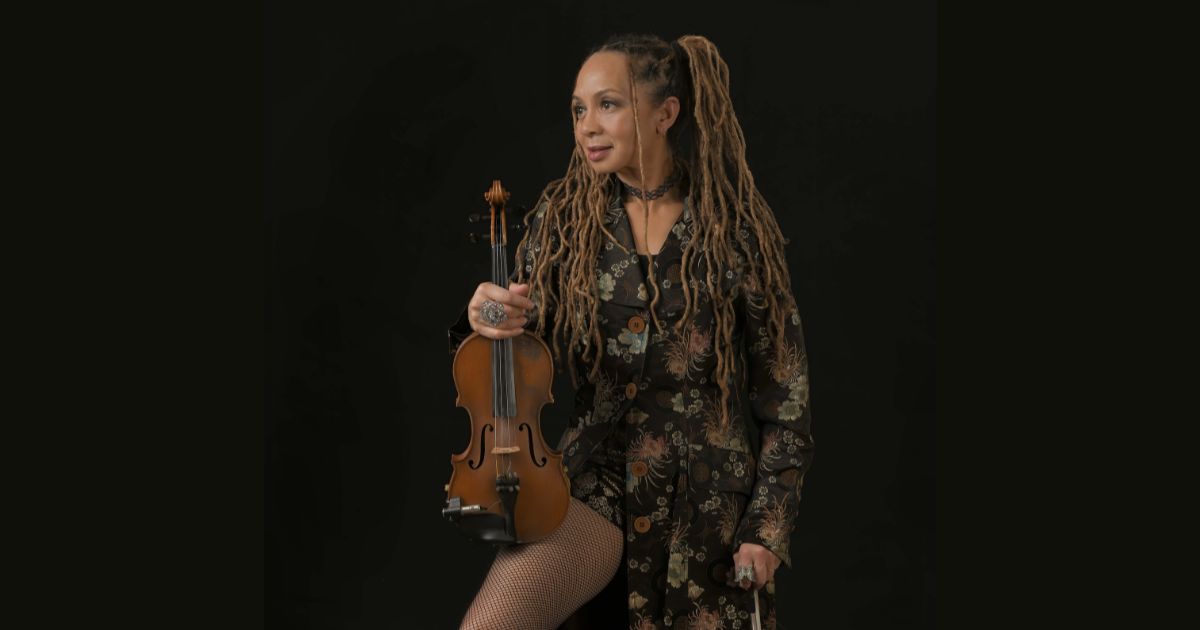
Anne Harris is having a moment. Though many people (this writer included) are just finding out about this Midwestern violin virtuoso this year, she has been making records since 2001. With her new album, I Feel It Once Again (released May 9), Harris decided, in her words, to “bring things up a level.”

Not only is the disc getting rave reviews, it marks the first-ever violin commission in America between two Black women – Harris and luthier Amanda Ewing. The 10 songs on I Feel It Once Again range from traditionals like “Snowden’s Jig” and the closer “Time Has Made A Change” to originals like “Can’t Find My Way” and the project’s title track. Throughout, Harris remains impressive in both her vocals and her violin playing. The album was produced by Colin Linden who has worked with Bob Dylan, Rhiannon Giddens, Bruce Cockburn, and many others.

Harris is currently based in Chicago, but was actually born in rural Ohio. She took to music at a very young age, inspired by her parents’ record collection. After attending the University of Michigan’s School of Music, Harris moved to Chicago, where she delved into the city’s theater and music scenes. Now, she is about to tour with Taj Mahal and Keb’ Mo’ this summer. BGS had the pleasure of catching up with Anne Harris for a conversation about the new album, her Amanda Ewing-built violin, her influences and inspirations, and more.

To start, tell me where and when I Feel It Once Again was recorded.

Anne Harris: I did the record in Nashville. Coming out of the pandemic, I had been writing and I felt like I had a collection of songs – a pool of things that I wanted to be on my next record. I wanted to work with a producer, [but] I wasn’t sure who to work with. All my prior records had just been basement records, basically. Nothing wrong with that, but I wanted to bring things up a level. A friend of mine, Amy Helm – who is an amazing singer-songwriter in her own right – recommended Colin Linden to me.

Colin is Canadian born and raised. Incredible multi-instrumentalist [and] producer that’s made Nashville his home for many years now. Anyone [Amy] recommends I’m gonna listen to. So I started listening to some of the records he made. I got in touch with Colin and sent him, in really rough form, a big basket of songs I was considering. He really loved them and wanted to work on the record. We got the basic core of the record laid down in about a week of intense recording in Nashville and finished up with a few things remotely after that.

Is it true that you first picked up the violin as a kid after watching Fiddler on the Roof?

Yeah! My Mom took my sister and I to see the movie version of Fiddler on the Roof when we were little; I was around three. I was born and raised in Yellow Springs, Ohio. I remember being at this movie theater in Dayton for a matinee. I remember the picture of the screen – you know, this opening scene where Isaac Stern is in silhouette on a rooftop playing the overture. And [my mother] said I stood up, pointed at the screen, and yelled – as loud as I could – “Mommy! That’s what I wanna do!” She was like, “Okay, you gotta sit down and be quiet.”

She thought [it was] maybe a passing thing and that I was caught up in the drama of the music. [But] I just kept bugging her about it. So she let me do a couple of early violin camp kind of things here and there. I just had this intensity about wanting to really study it. So when I turned eight, I started studying privately with a teacher. Suzuki and classical training was sort of my background.

Tell me about the title track, which is also right in the middle of the album. What inspired “I Feel It Once Again?”

A couple of years ago, [my] friend Dave Hererro – who is a Chicago based blues guitar player. Sometimes he’ll come up with a little riff and send it my way and say, “What do you think of this?” He sent me this guitar riff, which is kind of the through line of that song. I heard it and immediately the whole song and story unfolded in my head. I wrote [it] around that guitar riff in, like, one session. I did a demo and I played it for Dave. I’m like, “Dude! I love this so much.” He’s like, “Well, do whatever you want with it!”

Writing is an interesting thing. I’m not super prolific. I’m not one of those people that’s like, “I journal every day for 13 hours!” [Laughs] You know? [I don’t] have a discipline or method other than trying to stay open to inspiration and committing to it when it happens.

[That] was the case with that song. I had the story and a picture in my mind of what that song about. Somebody musing over a loss. You know, it’s twilight and they’re finishing a bottle of wine and mourning the loss of this great love. One part of you is fine when it’s daytime and you can put on a face and you’re going about your business. But then when the curtain comes down, behind that curtain is this loss and this mourning. That’s what that song is about.

Everything looks different at 4am, doesn’t it? [Laughs]

I [also] wanted to ask you about “Snowden’s Jig.” That’s a type of music I know virtually nothing about. I know it’s a traditional.

Yes. “Snowden’s Jig” is a tune that I learned from the Carolina Chocolate Drops record Genuine Negro Jig. It was my gateway into the Carolina Chocolate Drops. I was doing errands somewhere and I had NPR on and [they] were a feature story. And it was just this mind-blowing thing.

Joe Thompson [has] been deceased for a while now. But he was one of the last living fiddlers in the Black string band tradition. They would go to his porch, learn tunes from him, and learn the history of Black string band tradition. That’s sort of how they started their group. [“Snowden’s Jig”] was on that record and they learned it from Joe.

Part of my mission as an artist is to be a bridge of accessibility through my instrument, the violin, to the Black fiddle tradition. There was a time during slavery days when the fiddle and banjo were the predominant instruments among Black players. Guitars were sort of a rarity. That was when string band music was really at its height. North New Orleans was the sort of center of Black fiddle playing. Often time, enslavers would send their enslaved people down to New Orleans to learn how to play fiddle and then come back to the plantation to entertain for white parties and balls.

You’re based in Chicago. It’s a big music city. How has living in Chicago informed your music?

Chicago is known as a workingman’s city, a working class city. There’s something very grounded about Chicago in general and that’s the reputation it has. I’m a Midwestern person [anyway], from Ohio originally. There’s something about us in the Midwest. You know, we’ll never be as cool as New York or LA! But we work our asses off. I feel that translates into the artists in this town. It’s really a place where it’s about the work.

This album apparently marks the first violin commission between two Black women. Yourself and Amanda Ewing?

Correct. Amanda Ewing. It’s the very first professional violin commission that’s been recognized in an official capacity. Amanda has a certificate from the governor of Tennessee – she’s a Nashville resident – citing her as the first Black woman violin luthier in the country.

When I first saw Amanda, it was online. The algorithm basically brought her to my phone. I saw a picture of this beautiful Black woman in a work coat, holding the violin and I about lost my mind. I was so blown away and inspired. I read her story and got in touch with her and told her, “I have to have you make a violin for me. I have to own a violin that was made by the hands of somebody that looks like me.” It never occurred to me, in all my years of playing, what the hands of the maker of my instrument might look like. That’s not an uncommon thing, but it’s sort of sad! It would never occur to me that a Black woman would be an option.

So as soon as I met her, we embarked on a commission that was funded by GoFundMe. She decided she wanted to make two [violins] so that I would have a choice. They were completed in February, a couple of months ago. [One violin] will make its official debut for a public audience on the 23rd of May. I’m gonna be playing at the Grand Ole Opry with Taj Mahal and Keb’ Mo’. I’m going on tour with them.

It’s funny, I was gonna ask you next about that tour! I noticed you had some upcoming tour dates with Taj and Keb’. I wanted to ask your thoughts on that and maybe what people can look forward to on this tour.

A friend of mine is Taj Mahal’s manager and she’s also good friends with Keb’. She said that Kevin [Keb’] had approached her looking for a violinist player for this upcoming tour. They have a new record out as TajMo called Room On The Porch. It’s their second under that moniker and it’s an amazing collaboration. Two iconic figures making beautiful music together. So she recommended me and [Keb’] had seen me before – I think when I was touring with Otis Taylor years ago. He called me and you know I’ll keep that voicemail forever!

As far as what to look forward to, it’s gonna be amazing. The opportunity to work with luminaries… I’m gonna be the biggest sponge, soaking up all of the knowledge from these giants. Taj has been influential to just about everyone on some level. He’s one of those people who’s worked with everybody and done so much. I’m just over the moon.


Photo Credit: Roman Sobus

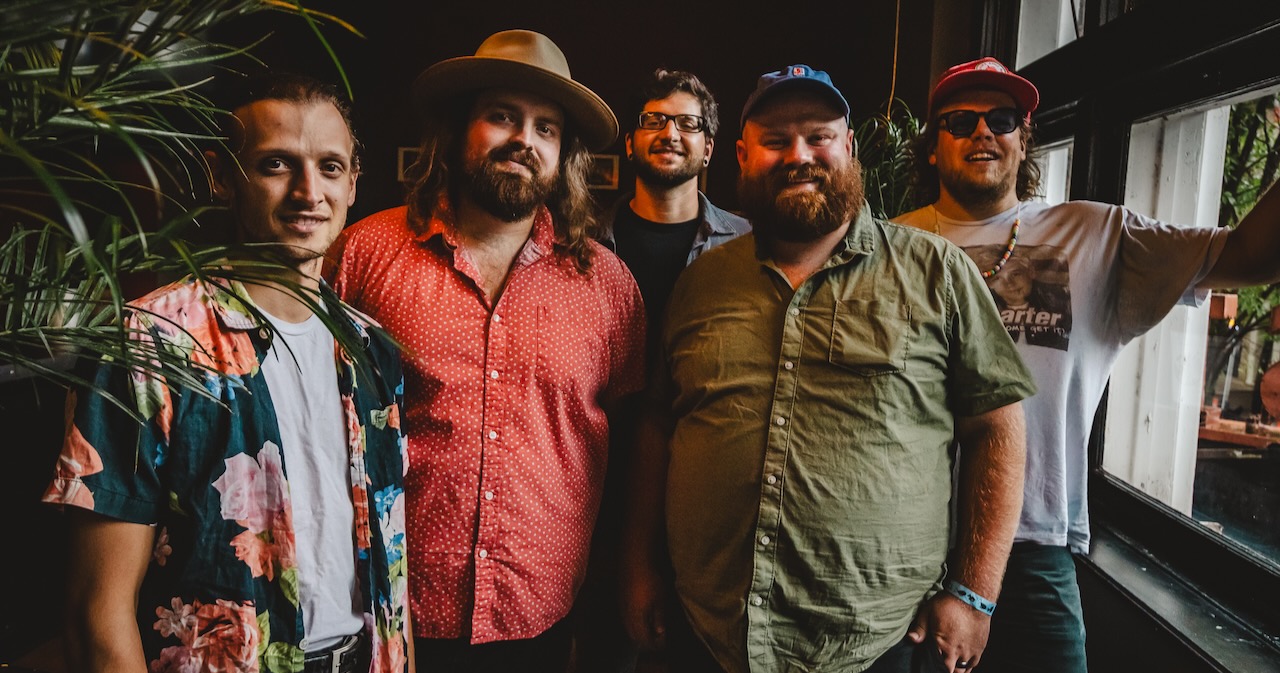
The Rambunctious Wisconsin Americana of Them Coulee Boys

Some of more commonly associated marvels of the Badger State are salty cheese curds, verdant farmsteads, and acrimoniously freezing winters – as well as a whole bunch of simple roadside attractions and signature small-town revelries. It’s the adopted home of Harry Houdini and John Muir and the birthplace of a memorable host of charming eccentrics, including Orson Welles and Thornton Wilder.

Soren Staff, lead vocalist of Wisconsin’s homegrown and free-range Them Coulee Boys, was born in the rolling hills of the country. He has spent ample time explaining the sort of commonsensical people and curiously provincial patois that make the state endearing.

“A coulee is a valley with a river in it,” said Staff. “We’ve had to clear up that name every single step of the way.”

Staff hails from just outside of Taylor, Wisconsin, population 400, and he attended high school in Milwaukee. He and his four bandmates now call Eau Claire home, a small city typifying and sharing their Midwest values and sensibilities: an industrious, approachable, and self-effacing kind of existence.

“People in Eau Claire care about art and music and there is a neighborly goodness to life here,” said Staff. “Wisconsin is not a state that people associate with a lot of luminaries coming from, but I like to think we are doing our part, pulling our weight.”

Them Coulee Boys – who are readying a brand new album, their fifth, No Fun in the Chrysalis (set for release February 28 via Some Fun Records), produced by Grammy winner Brian Joseph – are a bunch of small town Wisconsinites who have found a common place to live, where locals have embraced them with joviality and applause. Banjo player Beau Janke comes from Trempealeau, a beautiful village on the Mississippi River. Soren and his brother, Jens Staff, a mandolin player, come from the Taylor area. Bass player Neil Krause was born and raised in Chippewa Falls. Drummer Stas Hable is a native of Eau Claire and a graduate of the University of Wisconsin-Eau Claire’s music studies program.

Staff and Janke met at Camp Chetek, a Christian camping ministry in northwestern Wisconsin. The two camp counselors played music all day long, from the time of morning prayer, through the daily worship services in the afternoon, to evenings spent entertaining teenagers around the campfire. The following year, Jens joined Soren and Beau.

“That’s where we cut our teeth and cultivated our chemistry with each other,” said Soren. “We met at that camp and it has blossomed into a whole career.”

A few years later, Them Coulee Boys formed and the forceful folk-Americana band has lasted 11 years, which could be lauded as an eternity in the seemingly short-lived music business. Indeed, the music of Them Coulee Boys is grounded in their friendship and rooted in their desire to express a walloping good time. Such closeness, conviviality, and simple gratitude elevate the music to higher stages.

“We care about each other,” said Staff. “I trust and love these guys, personally and musically. Still, it took me time to trust in bringing an unfinished song to the others and to realize that their influences and skills and personalities will serve the song best.”

Staff was exposed to a wide variety of music in his youth, from classic rock to ’70s disco and pop, but it was the unaffected, everyday-man songs that he heard on COW97 (a Western Wisconsin country channel and his grandfather’s favorite) that created the largest impression. He was struck by the simple yet deep songs of Roger Miller and Tom T. Hall and songwriting prowess of granite and stone immortals such as Johnny Cash and Merle Haggard.

Staff, who works part-time at a local print shop, has a fondness for the contemplative capacities of the singer-songwriter experience. With mirth in his eyes, he still attends open mic night at The Plus in Eau Claire on Tuesdays, which he has done for about 10 years. But one of the most special things about Them Coulee Boys is that within the group there exists a worship of many varieties of music. Janke was raised on the thunder of Led Zeppelin, which pushes the band’s sound to an altogether different space, allowing them to turn it up to the heights of exuberance, to blaze the woods on fire.

“Finding the balance between introspective songwriting and the energy, bombast, and power of a rock and roll band, there is a good tension there. Striking a balance in that tension carves out a sound that we want to make.”

Them Coulee Boys started in a basement and, quite honestly, they never expected to be out of that basement. They played their first gig at a ski lodge in northern Wisconsin, the only ones seated and listening their parents and girlfriends. Then they signed up for the 10 p.m. to 2 a.m. spell at as many bars in the state as possible. Once, the guys played four hours of music in four separate bars in four small towns, for four nights in a row. The total haul was $1,000, split between four musicians. At that time, Staff considered their take a grand success. In 2016, the group started taking its energetic, impulsive brand of Wisconsin-Americana outside the state in earnest.

Virtually all of the group’s songs begin with lyrics, melodies, and chord structures that first arise in Staff’s head. He comes up with something rough and ready, presents it to the others, and they turn it into something utilizable, a playable song.

“My biggest job as a songwriter is to be a gatherer and be open to ideas,” said Staff. “I let images run through my head throughout the day, waiting for the words that make me want to keep writing. I’m seeking a line to build off of. If it is a good line it will stick around. If you are looking all of the time, it becomes easier to draw from that when you sit down to write something.”

Staff is pleased with the results of No Fun in the Chrysalis, the band’s fifth album. Rambunctious, playful, and wonderfully inspired, the recording is submerged in the mystery of transformation; the relentless blitz of change the most dominant theme of the songs.

“There has been massive change in my life and the other guys,” said Staff. “Kids. Marriage. Switching jobs. There is tension in change and eventually there has to be acceptance. … The first song, change is a question. But by the last song, there is an answer to it.”

The album reflects a few of those inner and interpersonal changes within the band, an encapsulation of their growth spurts and plodding development.

“Musically, we’ve embraced that we are not a string band,” Staff continued. “We have drums, electric instruments, banjos, mandolins. We’ve pushed our sound forward into different spaces, but we’ve also accepted that we come from a string band background, and could harken back to older records. There are contemplative jams. But there is also a stomping song about making out.”

No Fun in the Chrysalis reveals not only a tumultuous, change-filled time in the individual and collective lives of the musicians, but it serves as a lively expression from a band somewhere in the middle phase of their journey.

“On one hand, we are still trying to prove ourselves,” said Staff. “Though on the other hand, we have a decade worth of experience, and it shows. We’ve come a long way from the basement and hope to have many miles ahead.”


Photo Credit: Kenzie Trezise

With a Collection of ‘Vignettes,’ Humbird Show How Expansive Love Can Be

What makes a song?

It’s a simple sounding question, one that invites discussion about structure, melody, production techniques and more (and certainly has no real answer). It’s also something Humbird explores on her transcendent new record, Astrovan: The Love Song Vignettes, which follows last year’s critically acclaimed Humbird LP, Right On.

Written before the pandemic, the 11-song project spans just 16 minutes, but is expansive in its vision and emotional depth, as principal Siri Undlin muses on love in its many forms using varied musical styles. The resulting album is especially meditative when enjoyed in one sitting and invites listeners to consider how love is present in their own lives, whether in the beauty of nature or in small, domestic gestures from loved ones.

Below, BGS caught up with Undlin to chat about making Astrovan, finding beauty in mundane moments and how creative restrictions can often lead to happy artistic accidents.

This new project is such a cool idea with these short vignettes. I’d love to hear a little bit about the project’s beginnings and how that idea came to you?

Siri Undlin: It started off very much not an album. I was struggling to write and struggling to feel inspired. A friend of mine was like, “Why don’t you write simple, short songs and not worry about if they’re good or not?” I had recently fallen in love, so I was trying to write some love songs that weren’t super annoying. I was like, “Maybe short is the way.” So, yeah, it was just a goofy project that I sometimes did at live shows, because it’s funny.

People usually get a kick out of it and it’s fun to talk on stage about what a song is, like, “Why do we expect it to be a certain length?” It’s a fun, intimate audience moment. But then, a couple of friends who are really talented producers and engineers were at a show and they were like, “What the heck? You should definitely record these.” Those pals were Brian Joseph and Shane Leonard, so the three of us recorded them. This was all back in 2019, so it was also a while ago.

So, you’ve been sitting on those for a little while. What made it feel like the right time to put them out as a full album?

They were just weird enough that I was not quite sure what to do with them. Back in 2019, we were very much a DIY band. I was booking most of the tours. We were self-managed, putting out albums independently. So, it was just this one-woman shop. I honestly didn’t have time. I don’t want to release music unless I can do a good job and be proud of really putting my whole heart behind releasing it. It took a while, but I feel like, in the last year, it was like, “Oh, you should come out.” They’ve been waiting for a while, and now I have the bandwidth thanks to some folks helping me out behind the scenes. I’m also more confident as an artist. We’ve been a band for longer, and we’ve put out other music. So, I felt like, “Okay, if [fans] are into what we’re doing, they have an idea of this project’s personality and we can throw this strange project at them.”

I love how know each song is a love song, but you’re you’re covering lots of different types of love. It’s not just your standard, romantic love – there’s love for nature and plants and for mundane-seeming gestures like leaving food out for someone who’s coming home late. It’s a very expansive vision of love.

I know that in my personal life, sometimes those [mundane] moments are the most loving. Sometimes in love songs, on a broader scale, we get high drama and high stakes. But I love the little, ordinary moments that, when you put them in a song, feel really magical.

It’s a rewarding experience to sit and listen to the record start-to-finish. It feels very meditative, in a way. What was your time recording like? A few moments ago, you mentioned thinking about what makes a song a “song,” and what a song is allowed to be. How did that play out while you brought these songs to life?

In my memory, it was a pretty quick, moving process. I think we did the initial tracking in maybe four days and then we did some overdubs a handful of other days, maybe half a year later. And because the songs are so short, it was like, “Okay, how can we make these feel fully realized in such a short period of time and still take risks and have various arrangement choices that are engaging?”

It has to happen in such a condensed period. It was a great challenge: take your ideas but make them as compact and meaningful as possible because you only have a few seconds. Now that it’s out in the world, people are like, “I wish this song was just a normal length. It’s so sad when it’s over.” But I felt like we had to stick to the premise. Some of the songs could go way longer, sure, but it’s fun to keep it short and sweet.

What did you take away from that experience? It seems like it would be instructive to have to work with those restrictions and to learn how to cram so much meaning into a minute’s worth of music.

The biggest takeaway was that you can do it. You can have an emotionally resonant song in 45 seconds or one minute if you’re really determined. Going forward with recordings that came after it made me a better listener and a better editor of my own work, because when you have to be so cutthroat during the editing and arranging processes, you’ve flexed that muscle. I think it strengthens the writing and arrangements going forward because it was sort of a, “Do we absolutely need this or not?” question. That’s how I prefer to move through music recording: throw it all at the wall and then pare it back and have something you’re really proud of.

I’m surprised to hear that these songs were written so long ago, as I had noticed some musical and thematic connection points between Astrovan and Right On and assumed that Right On played an influential role. Do you feel a connection there, too?

I think you’re hearing it just right. But the truth is that Astrovan led to Right On. Astrovan has some folky, almost country music moments. But then there are also some rockers. Those are, to be honest, some of the first times in the studio where I was like, “Dang, rock and roll is fun to play.” It’s so fun to turn up the amp and use a distortion pedal and just have fun. It’s really cathartic, and those songs were only a minute. So then, when I picked up the guitar again later on to write songs for Right On, I think in the back of my mind I was like, “I want to do more of that fun, loud, more abrasive stuff.” And that definitely informed choices for Right On.

Speaking of Right On, that’s been such a big record for you. And now that we’ve hit 2025, it’s been out for the better part of a year. When you reflect on the year you had in 2024, what comes to mind?

One really cool thing that I didn’t anticipate was a level of confidence that me and my bandmates were able to sink into with the Right On album. We put our whole hearts into making it. It was so fun to record and it’s so fun to play live. As a result of performing it all year, we’ve just gotten better at performing. I think we all really stand behind what we do on stage and in a music ecosystem that’s so confusing and hard to know. But when you can get on stage with people you love and play music that you’re proud of and you’re excited to share with people, that is the best feeling ever.

I feel like that was what a lot of our year was about. We love playing this music. We’re stoked to share it with you. And we’re not getting too caught up in all of the other elements that swirl around with making music your livelihood. Not that those factors aren’t there, but ultimately, the year was about this record that we were proud of. So, that feels great.

You have some festival dates on the books for this year. Do you have any plans to tour, too?

We’re a band that definitely hits the road, historically, and that’s the plan for 2025, as well. We were all upper Midwest kids, so we also hibernate hard. But when the snow thaws, we’ll be out there, and I think it’ll be pretty consistent throughout the year. That’s where we’re at right now as a band and we’re soaking it up because it’s a good chapter to be in.


Photo Credit: Juliet Farmer

Humbird: From Dinner Table Singing to Dismantling White Supremacy

Siri Undlin, better known as Humbird, is a talented singer-songwriter from the Twin Cities with deep roots in Minnesota music and the land that surrounds her. Growing up, she was a true cold-weather kid who loved hockey during winter, but also loved music and feeding her vivid imagination. Her interest in music was nurtured by her parents, religious music, church choir, and also her Aunt Joan, who taught Siri guitar at age 12. Hockey actually led her to her first band, Celtic Club, which would play at Irish Pubs, talent shows, and of course, at the local hockey rink. They introduced her to Celtic music and her first live performances.

LISTEN: APPLE • SPOTIFY • STITCHERAMAZON • MP3

In this episode of Basic Folk, Undlin shares her rich experience studying folklore and fairy tales, which greatly influence her musical journey. She discusses her intensive research in Ireland and Nordic countries, exploring how music intertwines with storytelling traditions.

Throughout the episode, Undlin reflects on her upbringing, her time at an art school, and her evolving approach to songwriting, blending traditional folk music with indie music and experimental sounds. On her new album, Right On, Siri is acknowledging and addressing white supremacy in middle America, as highlighted in her song “Child of Violence.” She talks candidly about what writing and releasing the song taught her about white supremacy. Touring has provided Undlin with unexpected challenges and valuable insights, shaping her perspective as a musician and performer. We talk about the importance of being open to chaos and disciplined in one’s mindset while navigating the music industry and life on the road.

(Editor’s Note: Read our recent interview feature with Humbird here.)


Photo Credit: Juliet Farmer

Into the Squishy Middle: Humbird Celebrates Being Wrong on ‘Right On’

When I first heard Right On, the new album from Humbird, (the moniker for Minnesota-based singer-songwriter Siri Undlin), I thought immediately of Jason Molina and Magnolia Electric Co. There’s an emotional rawness in the production paired with a choral background vocal style on songs like “Fast Food” that reflects a Midwestern landscape to my ears. Imagine a million ears of corn singing to nobody in the blazing heat of summer, right beside a sprawling concrete strip mall.

“Quilted miles of iron and wheat / does it count, if it just repeats?” Undlin sings.

I had the privilege of talking to Undlin over the phone about her new album, while she was at home in Minnesota and I was in a parking lot outside of a Barnes & Noble somewhere in Maryland. The first thing I asked was if she was familiar with Molina’s work, and much to my surprise, she was not. So, I will have to assume that what I heard as historical reference is merely a shared landscape of influence and delicious, melancholy songwriting.

Throughout her new album Right On, Humbird explores the human desire to retreat into ease, safety, and ignorance, rather than put oneself at risk of being wrong. Undlin begins this exploration with the experience of heartbreak, but quickly zooms out to include topics of cultural conflict, destruction of natural ecosystems, societal priorities, and gun violence. All the while, these songs ask us not to know the answers, but to merely be willing to ask the questions.

On “Child of Violence,”she sings: “I could be a break in the chain / you could be a break in the chain / you could be a piece of the change / When you talk about it call it by it’s name…”

I have been a fan of Humbird ever since I saw her performance at the Mile of Music Festival in Appleton, Wisconsin, this past summer and I was thrilled to get to interview her about this album.

Central to this record is a kind of celebration of being wrong. Can you speak to the specific benefits of being wrong and what being wrong means to you?

Siri Undlin: I find that there is a carefulness and reservedness, a real fear of being wrong, that often gets in the way of important conversations, and prevents people from trying to learn and do better. The reality is that sometimes you’re wrong, but you still have a responsibility to show up and be a part of things.

Ah, that makes sense. So on the title track you sing, “You might be dead wrong… at least you’re trying…” This particular song seems to be about a romantic relationship, but in a broader sense, is this about avoiding apathy?

Yes, it’s a central message of the album, and honestly I need to hear it as much as anyone. There is a time for resting and rejuvenating, but I think it’s important to be really honest with yourself about whether you are in that process, or whether you are making excuses because it’s hard. You have to be able to get into the squishy middle of things and really dig in.

I’m from Minnesota and in the wake of George Floyd’s murder, which I have written about explicitly on other records, I’ve had to realize how slow change can be. You have that initial communal outrage, but then what happens a year later? What happens two years later?

Whether its a global event or personal event, I’ve done a lot of growing up and I can’t just ignore these things. It’s a kind of rugged realism that comes with this greater knowledge, which can be really beautiful, but there’s a reframing that just has to happen.

When you talk about rugged realism, it makes me think of your song “Cornfields and Road Kill,” which is one of my favorites on the album.

That is my favorite song to play live and has been for years. I just think it’s one of the more honest songs I’ve ever written. I was able to capture a lot of what I feel about the landscapes where I’m from and the complexities and subtle beauty of it.

There’s so many road songs, but there’s very few songs written about the landscapes of the Midwest; roadkill and monocrops, soy and corn, and animals that are dead is the reality of traveling and the landscape and the economy of the area. It’s this visual representation of the choices that we’ve made about culture and society.

I was just mad about that when I wrote that song. I wrote it as a connecting tool and a bridge rather than just rage… but it is also just fun to be loud and turn up the amps and be cathartic…

I feel like the Midwest is having a real artistic moment right now with Waxahatchee/Plains and Kevin Morby, how do you think the Midwest and specifically Minnesota influence your work?

It’s tricky, because it’s such a subtly nuanced place in a lot of ways. It’s home, first and foremost, which is an endless topic of analysis. But creatively, I do feel really inspired by the landscape of the prairie, because of its subtleties. It’s a landscape you really have to sit with and pay attention to in order to understand it. You have to really slow down. I also think there’s a lot of space for a creative community, which is really exciting when you take into account income inequalities and the densities of the larger cities. There’s space here to collaborate and there’s not really the infrastructure that super ambitious people are interested in, so they move away… I think it was Prince who said that “The cold keeps the shitty people away!” [Laughs]

I am blown away by the production on this record, you worked with Shane Leonard who is another artist heavily rooted in the Midwest. What was the process like working with him, and what did that collaboration bring to the project?

Shane is a dear pal who I have recorded with before, so we have an established workflow. I, along with two of my bandmates, had been playing these songs live for a couple years on tour by the time we went to record, so going into it we were aiming to capture the live feeling of these songs, very much trying for the sound of a band in a room.

In approaching the record, I thought, let’s just go and hang with Shane and record live to tape and try to capture that energy. Because we do tackle heavy and weighty topics, but at the end of the day we still have a blast playing together.

I loved recording to tape. Instead of going into it with infinite options it was like, “Here’s how we play it and just do your best.” That infused the whole process with some magic and adrenaline, and it was awesome.

Humbird is a pretty fluid project, there’s a cast and crew of folks who are always shifting based on people’s lives, but I made the record with Pete Quirsfeld (drums) and Pat Keen (bass) and the three of us have been playing together for six-ish years. So these are road worn and comfortable songs that were ready to be captured.

I read that you spent a year doing research as a Watson Fellow. I’m interested to hear about what you were studying and how that has influenced your own music?

Yeah, the Watson Fellowship is this insane opportunity you basically do research on a topic of your choosing for a year. In my case, I was comparing Celtic and Nordic traditions and their storytelling. Historically, so much happened via trade routes and conflict, particularly in the balladry tradition and saga tradition, you will find that similar motifs and melodies crop up across folklore traditions that are also so specific to certain places.

I spent a year shadowing storytellers and musicians, compiling this bank of folk tales and ballads. I was doing a lot of writing and researching and playing music already, but I didn’t actually know that making music could be a job. When I went and did this research and was shadowing all these folks who were essentially doing DIY touring, or playing or performing in community spaces, witnessing how they move through the world I realized, “Oh my god, you can do this?”

One person I spent a lot of time with is Brendan Begley, on the west coast of Ireland. The Begley family are these incredible musicians on the Dingle Peninsula. It was the first time I was exposed to a DIY arts culture… it was so mush part of the fabric of life there and when I came home I realized I want to make art this way, I don’t want to do it academically. I feel like often in the classroom you’re in the business of taking art apart and I wanted to actually create it.

Speaking of the ballad tradition, when I heard your song “Ghost on the Porch,” it sounded like a brilliant remake of an old ballad a la Sam Amidon, but in this case it is actually an original song. I find your songwriting to be more through-composed in a storytelling way than a typical commercial song might be. Do you draw on that ballad tradition in a conscious way or do you hear that influence?

That is actually a song that started as a short story, a fairy tale of sorts. I love to write fiction and non-fiction and it generally happens on a Humbird record that one or two songs per album are drawn from a short story or some other writing format. I’ll write out prose and then think, actually this could be a song.

Anytime you’re writing fiction your own life is in there, but I have not personally had the experience of a ghost of my own likeness standing on the porch telling me to run for my life, which would be terrifying.

Sometimes with writing, it’s almost like dreaming, where you don’t know where things come from!


Photo Credit: Juliet Farmer

First & Latest: Special Consensus’ 40+ Year Career

(Editor’s Note: BGS is excited to debut a brand new column and feature series, First & Latest, which examines the discographies of artists, musicians, and bands by comparing and contrasting their first album against their latest album.)

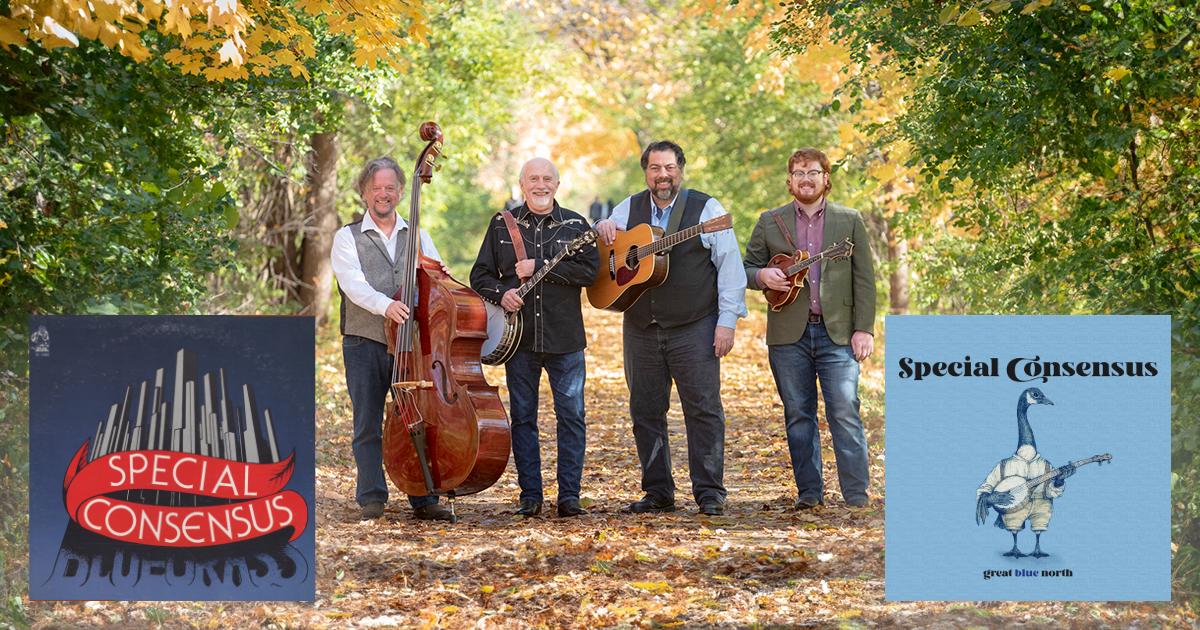
Chicago-based, long-running bluegrass outfit Special Consensus have been making records since 1979, when they released their debut, self-titled album. Since then, they’ve put out about 20 records – and they’ve criss-crossed the country and the globe spreading their modern-yet-traditional, hard-driving sound. Banjo player Greg Cahill, who is also a bluegrass industry leader and community builder, is the band’s sole remaining original member and, across those decades, has been the linchpin, the keystone of what has become a true legacy act.

To mark the occasion of their latest release, Great Blue North (released May 12 on Compass Records), we compare and contrast the band’s debut record with this new project with Cahill – it’s First & Latest, from BGS.

What goes through your mind when you hear a song from that first record, like “Like a Train?”

Greg Cahill: I cannot believe it was so long ago! This was our first time in a recording studio and we knew nothing about the process of making a record. It was truly a complete learning experience and we had a wonderful engineer who was a master at finding the exact place to punch in, and he even manually lined up and spliced the ¾” tape on one of the songs so we could use the first part of the one pass and the second part of a later pass. The album is pretty basic and far from top notch, but we did our best and actually sold a good number of that vinyl record.

At that point, did you ever think this band would have such longevity?

We had no idea about where our journey would take us. Special C actually formed sometime in 1973 – two of us were grad students and two had full time jobs. By 1975, I had finished my masters degree and was playing in local pubs and venues while working a full time job in social work, and all I wanted to do was play the banjo. It was 1975 when bass player Marc Edelstein and I decided we wanted to try playing full time – to play and tour as much as possible to get this bluegrass bug out of our system and go back to “real” jobs/life in a couple years. The other two members decided not to join us for this ride, so we found a guitar player and a mandolin player and quit our day jobs to devote full time to playing music. Marc left the band a few years later but the plan didn’t work for me – the bluegrass “addiction” only became stronger. I just “kept on keepin’ on” with no set time limit on my musical journey and now here I am today, never dreaming I would still be going strong with no set end time.

What do you think has been the key to your spanning the decades in bluegrass – besides yourself, that is!

I have been most fortunate to have had some great musicians/people in the band over the years – and still do have wonderful bandmates. Of course I have experienced the ups and downs of playing full time – it was always worrisome when a band member left or when there were slow times but we always found side jobs and teaching opportunities to keep us moving forward. I guess I am just too stubborn to even think about not playing because I love making music so much.

There’s an energy, a drive, even in this earliest recording that you’ve continued to carry with you. Where do you think that comes from? It reminds me of classic Seldom Scene and Johnson Mountain Boys, like you’re always leaning a bit forward into the groove.

I found bluegrass music through folk music (Kingston Trio; Peter, Paul and Mary; Limelighters, etc.) and eventually Pete Seeger – whose music prompted me to buy a long-neck 5-string banjo and then a 6-string guitar and then a 12-string guitar. I played in a folk trio with friends in college, and one day I heard “The Ballad of Jed Clampett” and immediately knew I had to learn how to play the bluegrass banjo. I found the Earl Scruggs book and was obsessed with playing the banjo every free moment of my life and it was his drive and perfect tone and timing that overwhelmed me. Then I heard J.D. Crowe and he became my model and eventually my mentor of sorts, even before I ever met him. This was in the early 1970s. New Grass Revival also grabbed my ear, and I spent hours trying to learn J.D. solos but also Courtney Johnson licks, determined to not lose the drive when playing non-Scruggs/Crowe licks because at that time many folks felt that Scruggs style playing was the only “right” way to play the 5-string. It has always been about the drive for me – and I learned that from J.D. as well – he always had drive, even on slow songs that he played with superb finesse.

“The Singer” feels like that classic move of a bluegrass band playing a country song, can you talk a bit about what you remember about choosing that track and recording it?

We were city boys playing in big city pubs and venues where the general public had no idea what bluegrass music was. Although we always loved the traditional bluegrass songs and tunes, we felt we had to play some material that the general public might recognize and eventually really like our brand of bluegrass music. So we included old rock songs, country songs, and jazzy swing songs in the repertoire along with the traditional songs. I would say we actually became more traditional over the years, because we were building a local and then national and then international audience while maintaining a varied repertoire.

When I heard “The Singer” I immediately wanted to include that song in our repertoire – the song is so well written, the words are so poignant, especially knowing that Neal Allen wrote the song about his father Red Allen and also that Neal died of pneumonia while on the road. As Bill Monroe would say, “It’s a powerful number.”

Now, about the latest album, Great Blue North, what inspired you to cross the Great Lakes for this album and do Canadian bluegrass?

We are so fortunate to be on the Compass Records label and especially to have Alison Brown as our producer. When we begin preparations to record, the four of us and Alison begin our search for new material. We are basically on a bi-annual release schedule with the label and one of the songs Alison thought would be a good song for us to include on our 2020 release was “Blackbird,” written by the great Canadian songwriter/singer/guitar player J.P. Cormier. We loved the song but as we gathered material for that release the theme shifted to featuring a nod to Chicago, where the band has been based since beginning in 1975, because 2020 was the 45th band anniversary. Hence the 2020 “Chicago Barn Dance” release. We knew we would record “Blackbird” at some point, and after the pandemic shut-down we wanted to let folks know we were still alive and well and anxious to get back on the road, so we recorded “Blackbird” and Compass released it as a single. As we began the search for material for a new recording, Alison mentioned that it might be a good time to give a nod to our Canadian friends — since we have played there so much over the past three decades — and we all agreed. We then decided to include only songs written by Canadian writers and also to ask many of our Canadian musician friends to perform with us on some of the tracks.

Do you think being such a long-running Midwestern-based group informed the new album for you? And your connections to this material?

I think we may have had more opportunities to tour in Canada because of our Midwestern base. We did not play the big festivals when we first began touring there – we played shows for bluegrass associations and community centers in Toronto, Ontario (only an 8+ hour drive from Chicago), Winnipeg, Manitoba (13+ hour drive) and Calgary, Alberta (25-hour drive). We would head directly to Toronto or work our way through Minnesota to the Canadian gigs, which helped us get invited to the festivals. We also learned about the Canadian songwriters through so many of the great Canadian musicians whom we met and became friends with through this networking.

To me, a throughline between your first and latest albums is the arrangements, the way your band is always playing as a tight-knit ensemble, not just a handful of instruments sounding simultaneously. Where do you get the inspiration for the way your individual parts play off of and dialogue with each other?

I think we have always been focused on the power of tight and interesting arrangements. This again goes back to the fact that because we are from Chicago – not a bluegrass hub in the eyes of the general public – we had to make sure to keep the attention of the audience and not have songs begin to all sound alike. The arrangements give the band the opportunity to be more creative and to showcase the tight vocal and instrumental harmonies. I have always wanted an outside/non-band member producer to give us an objective opinion about the sound, the material and the performance. We have always had very good producers and I must say that Alison Brown is a phenomenal producer who has brought the band to another level. From our perspective, she basically considers each song on our recording to be unique and “special” – there are no “filler” tracks, and we spend however much time necessary to make each track stand out.

“Snowbird” will go down as one of Special C’s tastiest cover songs, do you have favorite covers from across the years? It’s kind of a hallmark of your band!

Although we try not to be seen as a cover band, we have chosen to cover some songs from artists that we feel we can make sound like a bluegrass song, and especially sound like a Special C song. We have been most fortunate to have been given some great songs by many great songwriters over the years and we have also chosen some songs from other genres that we thought we could have fun recording and that our fans would enjoy hearing. “Snowbird” was one of the first songs on our list once we decided on the Canadian theme after recording “Blackbird” – my wife had suggested that song many times and now it seemed like the perfect song to feature Greg Blake’s fabulous voice. Some of the covers we have done on past recordings include “Viva Las Vegas,” “Ramblin’ Fever,” “Dream of Me,” “I Cried Myself Awake,” “Big River,” “Sea of Heartbreak,” “Looking Out My Back Door,” “Sweet Home Chicago,” “City of New Orleans,” our entire Country Boy: A Tribute to John Denver recording, “Alberta Bound” and several other songs on the Great Blue North release.

I must say, that as the years pass so quickly and the time between the first record and the current recording becomes so long I realize how fortunate and blessed I have been to be able to keep making music with so many wonderful musicians/people/friends. At times I have felt that the first recording was below the professional level but because of this interview and going back to listen to it, I now truly understand that we can only do our best throughout this journey, be thankful that we are able to keep growing and learning and appreciate our accomplishments no matter how insignificant they may seem at any given time.


Photo Credit: Jamey Guy

The Show on the Road – Pokey LaFarge

This week, we bring you an in-depth dive with vintage roots-n-soul excavator and beloved Illinois-born songwriter Pokey LaFarge. With his trusty guitar on his lap during the talk, taped in his LA breakfast nook, we go through the making of his funky and cheerful new LP, In the Blossom of Their Shade.

Powered by RedCircle

LISTEN: APPLE PODCASTSSPOTIFYSTITCHER
 

For the last decade and change, Pokey LaFarge (born Andrew Heissler in Bloomington-Normal) has crisscrossed the globe making his own brand of historic-minded, literary-tinged folk blues. Europe, especially, has become a second home. From his fashion sense, to his high-cutting delivery, LaFarge seems like he could have stepped out of a road show with Hank Williams and Sister Rosetta Tharpe, and yet, rock luminaries like Jack White saw something deeper than just a player of old-time covers.

Out on his own from a young age, Pokey began busking to get by and soon teamed up with the South City Three to create his first run of albums in 2009. Opening for White got LaFarge in front of huge crowds, and standout records like the danceable Something In The Water (2015) and the darker Rock Bottom Rhapsody (2020) saw him transition from front-porch country folk to muscular jangly rock-n-soul.

If there are a few things that helped the new release In The Blossom of Their Shade come to be, they may have been falling in love again, rediscovering his faith in a higher power, and taking plenty of power naps during his songwriting sessions. During the pandemic, Pokey also began helping the local homeless community in LA.

Stick around to hear an exclusive acoustic performance of his single, “Get It ’Fore It’s Gone.”


Photo credit: Eliot Lee Hazel

Brennen Leigh’s ‘Love Letter’ to the Musical, Magical Prairie

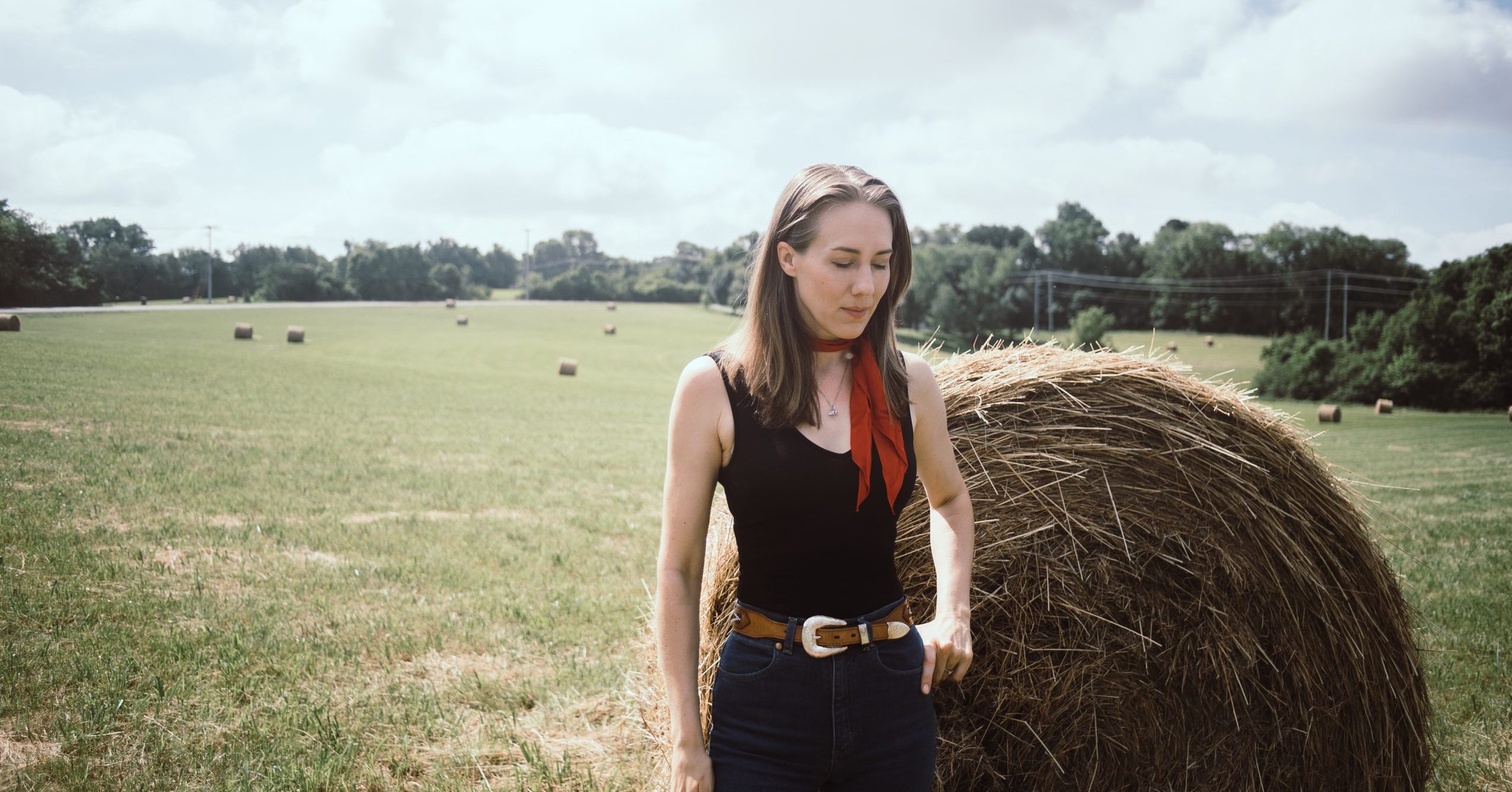
Nearly twenty years after leaving home, striking out to make a living in the bluegrass and country scenes first in Texas and now in Nashville, singer-songwriter Brennen Leigh is still longing for the prairie. Born in North Dakota and raised in rural Minnesota, Leigh’s brand new album, Prairie Love Letter, lives up to its name in all but the stereotypical, assumptive ways implied by its title. 

Produced by Robbie Fulks, Prairie Love Letter idealizes Leigh’s harsh, forbidding homeland — as paeans to the prairie are wont to do — but not without the nuance a nomadic, troubadour lifestyle affords, and Leigh’s perspective as a woman in 2020. It’s all underscored by the ever-growing distance between her and the grassy plains for which she pines, marked by months and years, continually ticking by.

Being that the sum of Fulks’ and Leigh’s musical comfort zones lands squarely upon the intersection of old country, bluegrass, Americana, and what we’ll call “alt-roots,” the album cheerfully denies genre ascriptions while reinforcing the Great Plains states’ propensity for birthing country music forged in the furnaces of hard living, firmly-held values (though not necessarily strictly conservative), and a desperate need for the distraction and diversion music brings. 

BGS reached Brennen Leigh by phone at her home in Nashville and began our conversation with the album’s seemingly pugnacious, yet perfectly apt lead track.

There’s something particularly resonant about the album’s opener, “Don’t You Know I’m From Here,” because you’re talking about rural life and how these authenticity signifiers are so important to rural life and identity, but they’re also really important to roots music. There’s a really interesting symmetry to “Don’t You Know I’m From Here” where it seems you’re simultaneously asking that question of the region you’re from — Minnesota, North Dakota, the plains — but also asking that question as a woman in roots music and country. What do you think?

I honestly never thought about it in that specific way, but when you put it that way, that is how I feel. Obviously, the going home, the rural element — what did you call them? Signifiers. That’s huge. We’re all in a sort of “countrier than thou” battle all the time. I try to just write what’s true to me as much as I can, and be affected by that as little as possible. When you talk about country music, it’s something I do feel secure in. I don’t need to show or tell anyone — nor have I ever been accused of lacking that authenticity. However, I’ve struggled just as much as the next independent artist. Sometimes it leaves one feeling, “Well, why has this other person been pushed to the top of the pile?” They say not to compare, but you know. Why is this other person edified, when they’re not country, so to speak? [Laughs] It’s hard not to compare yourself to others and get into that mindset.

Also what you said about women — we women, it’s like there’s only room for one at a time. We all have to fight each other. That’s not how I really feel, but your lizard-brain would make you feel like you have to fight with other women for that one slot they give us. This year, one of the silver linings of this pandemic has been that it’s given me some time to appreciate a lot of my peers in ways that I couldn’t before. Or that I didn’t take the time to before. My fellow performers, that are kind of my same age or similar level of fan base, exploring their catalogs has made me feel more like I’m part of that bigger Americana community. 

I think that’s an interesting way to get at the crux of this question, because on one hand just talking about authenticity is kind of make-believe, right? “Authenticity” is not a concrete thing, we ascribe authenticity. We perceive it. So talking about it is almost propagating the problem, and to step outside of it and look at it objectively is the real question. I think the nugget in “Don’t You Know I’m From Here” is that the speaker in the song isn’t seeking external validation in asking that question, but rather validating themselves internally. 

That’s exactly what it is. I don’t need to go home and have everyone at home validate me for being from there. It’s something that comes from inside. I know where I’m from. I know I’m a Minnesotan and I was born in North Dakota. And yet, I get questions cause my accent has changed and I’ve lived in the south now for I think eighteen years. It’s funny, when I moved to Texas I had a little bit of this fear that my music wasn’t going to be “southern” enough. [Laughs] That people were going to think I was inauthentic. But it hasn’t come into question and up north, that was one of my fears, that people would go, “Who is this person from Nashville singing about our part of the country?” That hasn’t happened either, because they’re starved for people to sing about it, because there aren’t a lot of people singing about it. 

The album is really flexible with which genre aesthetics it aligns with, it feels like the exact kind of country that comes out of the Upper Midwest. That hardscrabble, bootstraps mentality that we all are used to being attributed to the south, that’s how the plains survives, too. The album’s themes feel really similar to the way that southern country music speaks about life and work and pleasures, but it’s still different. To me, the way that’s most tangible is in how the record playfully denies any genre label. How did the bluegrassy, Americana meets old country quality come together and how is it tied to Minnesota and North Dakota’s music?

For one, we didn’t really plan it in a specific way. Robbie Fulks produced it — Robbie and I talked about how to treat each song. We both are believers in stories. The literature of stories. How do I present this little three- or four-minute story in a way that the listener is going to hear and feel what’s going on? We treated it case by case. 

As for the genre… “ambiguity” that you mention, I think it just comes from my influences. I come from old country and bluegrass. The part of the country where I grew up, it’s popular music, but not in the same sense that it is here or in Texas. It’s not as much a part of the culture. It depends on the family. In my family, bluegrass and old country is what we did. We played on the porch and we sang and we went to bluegrass festivals and we went to country music concerts when we could find them. That’s kind of always been in my roots and it came naturally. I’d be curious to see how people would classify it, because we weren’t like, “By golly we’re going to make a country album!” We just did what we knew how to do. 

A song like “Yellow Cedar Waxwing,” that one feels so bluegrassy. What was the balancing act like, with Robbie, whether to lead you to bluegrass or away from it on a song? 

I think we more or less talked about instruments and how they were appropriate to each song. That one is a very vivid memory in my imagination of being a kid and going with my grandmother to pick juneberries on a specific occasion. Here we were, on a gravel road, with buckets over our arms, and we were gonna pick juneberries. Maybe that song was written with thought of the Carter Family, that pre-bluegrass kind of feel. We thought we needed to put a little banjo and stuff on it. The story kinda had a little bit of a bluegrass thing; Grandma, picking berries, it lent itself to that. I’m comfortable with being fluid between the more classic country thing and the more modern thing and the bluegrass thing. I’m not thinking about how it’s going to be taken, I’m not even worried about it too much. But I am interested to know [what listeners think]. 

There’s a striking theatrical quality to these songs and their characters and their stories. Do you feel that as well in this set of songs? Do you see them as something of a soundtrack or a musical in their own way?

That’s an astute observation, because some of what influenced me growing up was old westerns and musicals, like Oklahoma! That western landscape, where you could just see for miles, always had a symphony and horns. Musicals are kind of in my background. I’ve even thought about writing a musical sometime about something. Originally I was thinking, “Oh maybe I can make these songs fit into a musical!” But I made a record instead. [Laughs]

It was something I kind of wanted to do for a number of years. I always thought there was something musical and something magical about that area. I used to eat up those episodes of Prairie Home Companion that had the “News from Lake Wobegon” stories. Those were my favorite part. I remember when I was painting my apartment in Nashville when I first moved here, I binge-listened to a bunch of those stories from Lake Wobegon. Then I read My Ántonia for the first time. It knocked me over. Something about Willa Cather’s writing about the prairie.

To kind of return to the ideas we began with, this record feels like, almost more than anything else, that it’s examining ideas of what it means to be an insider versus an outsider and how the line between each of those positions is often much more blurry than we think. 

I’m coming around to that now. I think in my first few years gone I felt hurt when I would come home. When someone would say, “Well you don’t sound like you’re from Minnesota.” That hurt my feelings, because I wanted to have that stamp of belonging. Now I’m older and I realize that everything that has made me who I am to this point is valid. Living in Texas for fifteen years? I’m proudly part Texan now. I can claim part-Texan. I have some of the same feelings about certain places in Texas [as places in the Upper Midwest.] 

That feeling of belonging, that’s what everybody wants. I mentioned My Ántonia, it takes place in Nebraska on the prairie. The reason I tie that book to the album and give it so much credit for inspiring me is because they do have a lot of the same themes. These characters are homesick, they just want to belong somewhere. There’s a part earlier on in the book when the main character feels blotted out. It’s his first time on the prairie and he looks out and he can’t see any mountains and he feels blotted out. What a beautiful and devastating way of putting it… The funny thing is I never really felt like I fit in that well when I lived there. 

As someone who idealizes this place and loves it and returns to it not only literally, but also with these songs and this album, what is it like to be from there, away for eighteen years, and writing about now?

When you’ve lived away, you realize there’s some beauty in it. Like my mom says, “Brennen, you just don’t remember how cold it was.” It was so cold in the winter. She’s right, I have forgotten! Putting on your long johns and two pairs of socks and snow boots every single day and freeze in a car on the way to school. I have forgotten those things and it has changed a little bit. North Dakota is very conservative, Minnesota is a swing state last I checked, but even the cultural geography of Minnesota has changed since I moved.

There are a lot more immigrants and things have changed politically. Obviously, Minneapolis — I don’t touch on Minneapolis very much [on the record] — but there’s been the unrest there. That’s pretty far from where I’m from. Where I’m from, I guess it’s kind of mixed in terms of politics. There are just a few things, like the pipeline issue, I couldn’t leave that alone. It made me so mad! [Laughs] Mostly because I knew they had chosen that area because it was worthless to them. That area is not worthless. It’s god’s country. I know a song can’t do very much, but I felt angry enough to write it.


All photos: Kaitlyn Raitz

Trampled by Turtles Revisit Iris DeMent’s “Our Town”


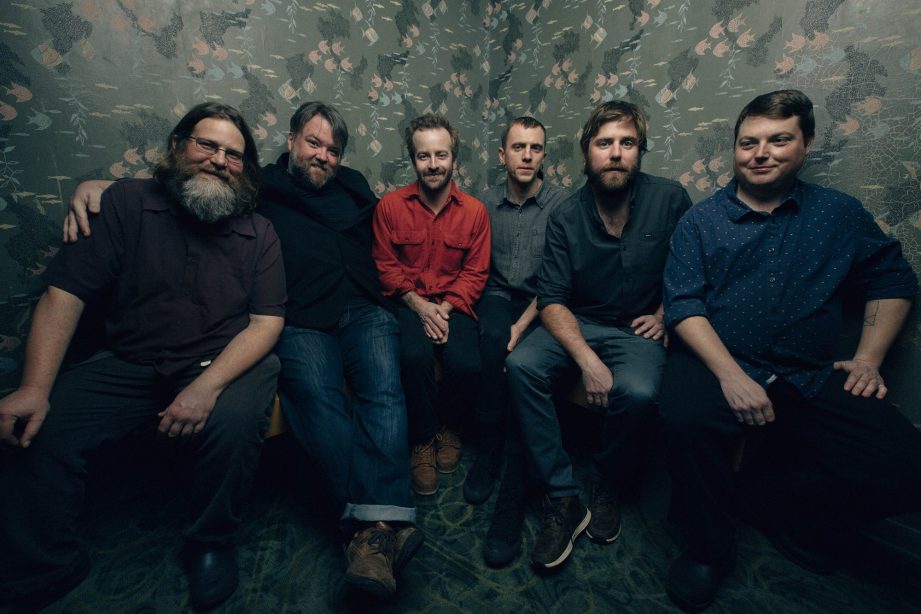
Over the years, Trampled by Turtles have occasionally added Iris DeMent’s stark folk song, “Our Town,” to their set list, with lead singer Dave Simonett delivering the Midwestern loneliness and wistfulness that the tune calls for. Now the Minnesota-based band has finally recorded “Our Town” for an upcoming EP, Sigourney Fever, which drops on December 6.

The track list also includes covers of Neil Young’s “Pocahontas,” Faces’ “Ooh La La,” Warren Zevon’s “Keep Me in Your Heart,” and Radiohead’s “Fake Plastic Trees.” The band will be touring in January and February.

“We are getting back into the readiness of making a full record,” Simonett tells American Songwriter. “Right now, I’m starting to write, but it’s kind of a limbo time. This is sort of like an appetizer for us.”

DeMent once told NPR that she wrote the song after driving through a boarded-up Midwestern town when she was 25 years old, and that the song came to her in its complete form. She wisely recognized that musical experience as her calling to be a songwriter. More than three decades later, it’s good to know that the sun still hasn’t set on “Our Town.”


Photo credit: David McClister