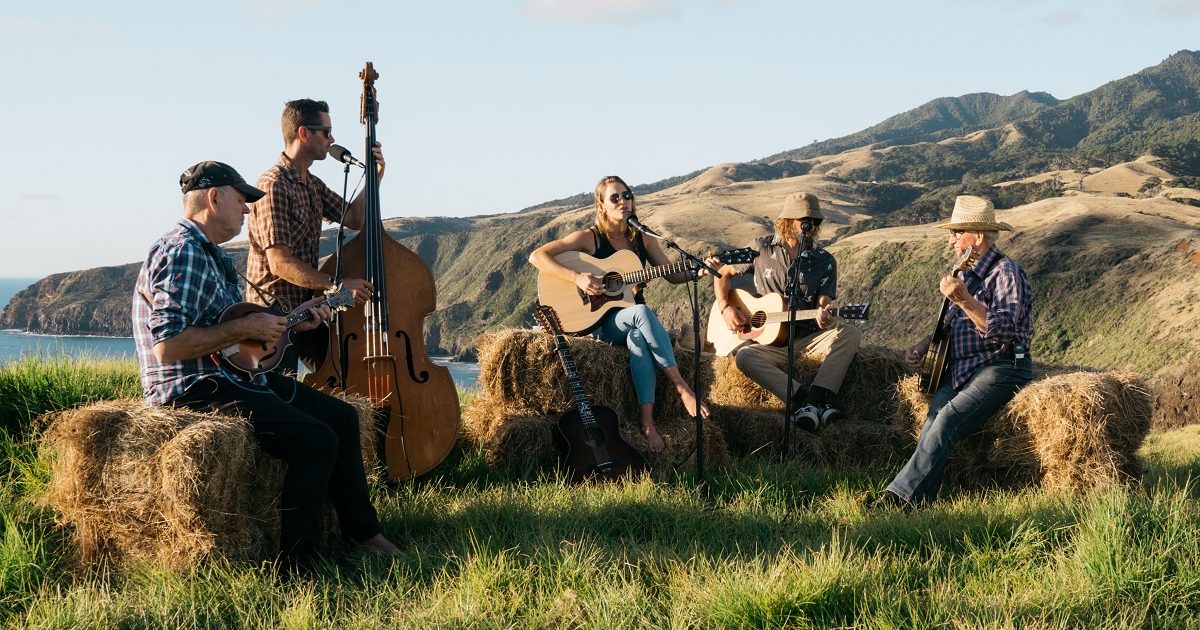
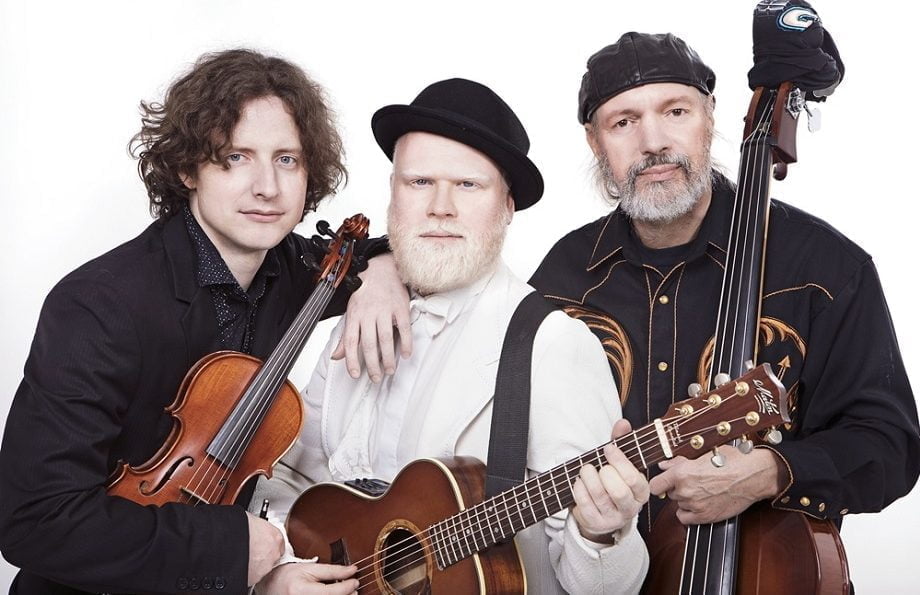
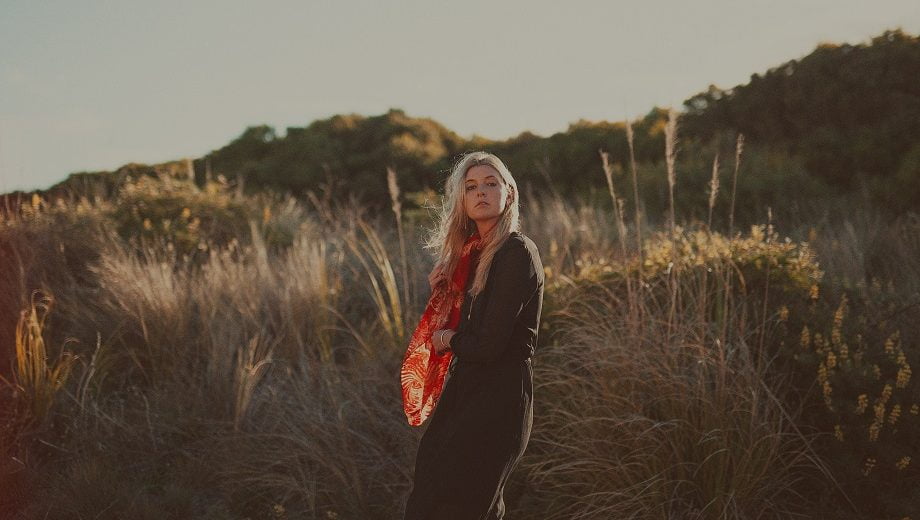
In Their Words: “I spent most of last year making my sophomore album in New Zealand. While there, I was fortunate enough to meet The Trenwiths, a Kiwi bluegrass band, who became great collaborators and even better friends. Before I returned to America this spring, we set up a bunch of hay bales and recording equipment on a friend’s farm in Raglan, New Zealand, to capture us jamming on some of our favorite country/bluegrass classics and a few originals. The Raglan Sessions is the result. I have always loved the song ‘If I Needed You.’ Emmylou Harris is one of my favorite country voices, so I gravitate towards her and Don Williams’ duet version. Keith Pereira, a NZ country singer-songwriter, is also featured in this particular performance.” — Caroline Jones
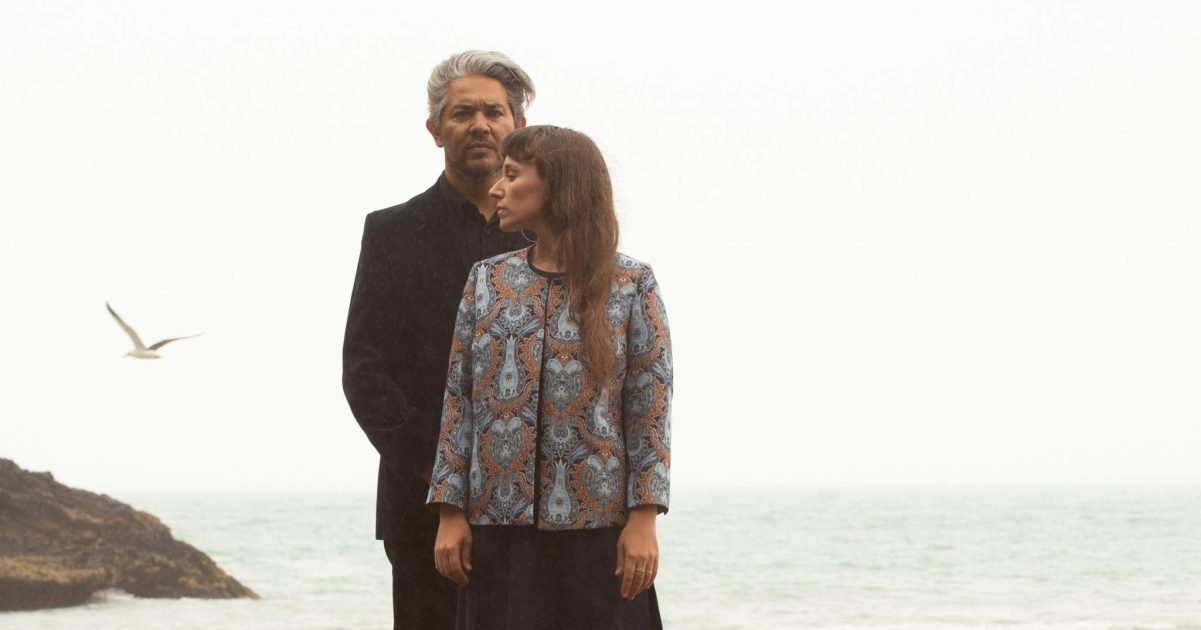
Artist:Terrible Sons Hometown: Christchurch, New Zealand Song: “What a Friend” Album:Mass EP Release Date: February 12, 2021 Label: Nettwerk
In Their Words: “We think of ‘What a Friend’ as a lament. It’s passionate. It’s a song we struggle to sing — it’s laden with regret and disappointment. The song looks into a life that is unravelling internally and externally, a character who struggles to communicate, someone who’s on the edge. We’re really singing about being a failure as a friend, about not being there. Maybe the song is a small declaration that you can’t always be there for your friends, maybe that’s not always healthy for you, and possibly them, but it still hurts to fail others. The song is part of our new EP Mass, and it plays with those ideas of beauty and disappointment. We like to think of these songs as ultimately hopeful; we certainly see the sadness as leading to resilience.” — Terrible Sons
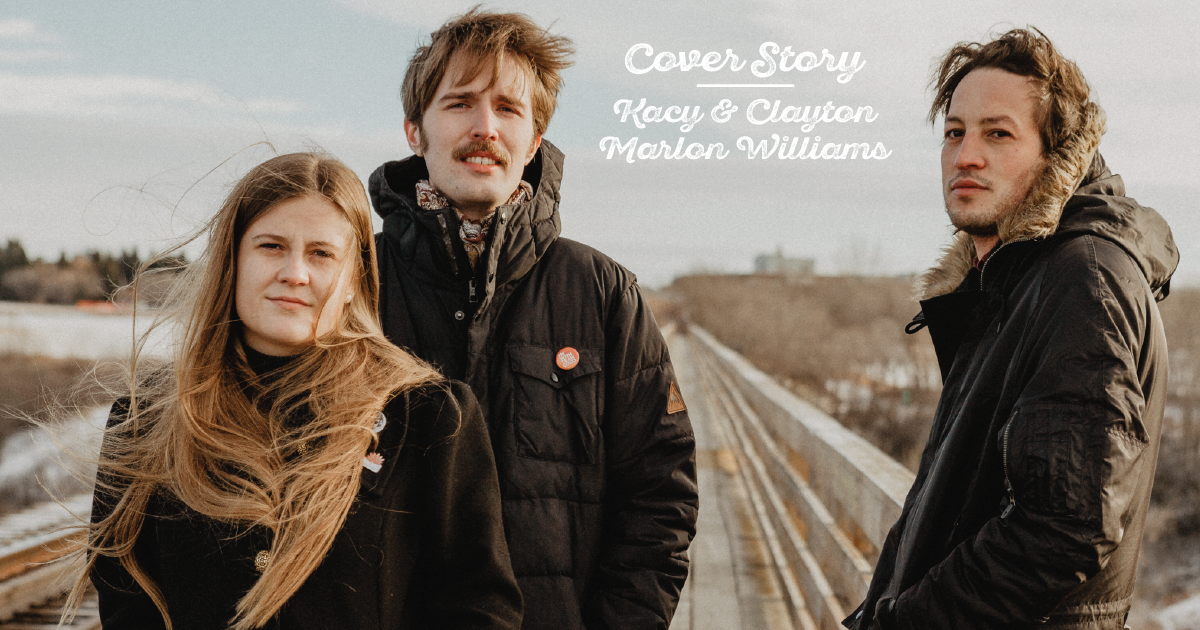
Fans of roots music are likely already familiar with the work of singer-songwriter Marlon Williams and the folk duo Kacy & Clayton. Williams, who hails from New Zealand, released his self-titled debut in 2015, capturing listeners’ attention with his sepia-toned alt-country and his distinct voice, which drew comparisons to Roy Orbison. The Canadian duo Kacy & Clayton have been fixtures of the roots scene for more than a decade, with their most recent album, Carrying On, earning critical acclaim upon its release in 2019.
The acts combined their talents for Plastic Bouquet, a new album born from their mutual respect for one another’s music. Recorded primarily in Kacy & Clayton’s hometown of Saskatoon, Saskatchewan, in late 2018, the album is a lively, intimate snapshot of three talented musicians who thrive on both playing off one another’s differences and digging deep to find common ground. BGS caught up with Williams and Kacy Anderson to talk about songwriting, learning from your collaborators, and just how cold it gets in Saskatchewan.
BGS: Before we dig into the new music, how have you both been doing this year, particularly with COVID-19 and how it’s affected the music industry?
Anderson: I’ve had to develop a personality and interests aside from music and touring. So that’s been trying. It’s actually been a great time.
Williams: We down in New Zealand have had a pretty lucky run of things, in terms of the actual impact of the virus. We’ve sort of been living in our fantasyland down here. It’s pretty easy to pretend there’s no such thing as coronavirus in New Zealand. I’ve learned how to cook a bit more and I’ve been going to the beach a lot. It’s been quite nice.
I know you’ve toured together in the past, but I’d love to hear, in your own words, about how you met and developed your musical friendship.
Anderson: We met in Saskatoon, at the airport.
Williams: Kacy picked me up in the middle of a cold night. And we started singing.
Anderson: Just right there in the airport.
Williams: To take it back further than that, I was on tour in Europe and was listening to music in the van, as you do when you’re on tour. I heard their music come up on Spotify and it was really exciting for me to hear. So I reached out to them and asked if we could make some music, so we did. Fast-forward to Christmas of that year and I was in Saskatoon and it was real cold and we made music.
Anderson: It was very cold for Canada, even. It was in the -40s. But I just pretended like it wasn’t so bad, and Marlon went along with it. I was gaslighting Marlon like crazy.
So was it during that initial visit that you decided to make Plastic Bouquet? Or were you just tinkering around, seeing what would come of some joint sessions?
Anderson: I think we wanted to just do a little bit of music together. But then it made more sense, since Marlon was already coming, to make a full-length album.
Williams: We just loved that sound. It was like, ‘Here’s two and a half minutes of music. And here’s another. And another.’ Eventually, after enough time doing that things start taking shape into an LP.
Anderson: ‘LP’ is short for ‘long playing.’
As far as putting the songs together, did you come together with your own songs to share with one another, or did you sit down and write them from scratch as a group?
Williams: We sent songs back and forth pretty much as they ended up on the album. We didn’t really do much real 50-50 collaboration. We came with nearly full-formed things, got approval from each other and then there were only a couple of moments that there was real songwriting collaboration. Kacy just kept writing bangers and I was trying to keep up. I had to reach deep into my kitty to find some.
Anderson: I really had nothing else to do.
With those moments that you did collaborate on songwriting, how did those experiences compare to writing your own individual material?
Anderson: I don’t know, but I do know that Marlon made me sing “baby” for the first time. I didn’t want to fucking sing it. It’s the only thing I remember wanting to change. Can we just get rid of this “baby” line?
Williams: We’re both used to collaborating. Kacy writes with Clayton a lot, and I’ve done a lot of collaborating with this guy Delaney Davidson down here. We’re both used to the give and take of the collaborative experience, so that made it a lot easier.
Marlon Williams and Kacy Anderson
When it came time to record the tracks, were you recording as you went? Was that part of that same December 2018 visit, or was it something you worked on after the fact?
Williams: We smashed out the bulk of it then and there. These guys have an amazing band so we just really leaned into it. The whole sound was within the studio. We did meet up the next year in Nashville during AmericanaFest and finished it up there. But we pretty much went song-by-song and plowed through it.
Anderson: Yeah, that’s the only way I can handle it.
Williams: Those guys do most of their stuff live, and for me I was like, “Let’s just take time.” But it was real nice for them, since they have the confidence in each other and the familiarity to be able to just work through them so naturally and organically.
Anderson: I was bossy with them.
What were you bossy about?
Anderson: I hate redoing things. Marlon is more caring and precise.
From what I’ve read about the album, a big part of the inspiration creatively for you was the fact that you come from such different roots, both musically and culturally, as well as living in different hemispheres. How did you find that your backgrounds were able to complement one another?
Williams: I think Kiwis and Canadians have a complementary sense of humor, which is most of the battle, really, especially when doing something like recording. You have to use humor as a way of navigating situations, so that was a nice thing. Then we have the same love for the same music. The joy of the process was finding two versions of the same kind of music, coming from different cultural spaces and geographical spaces. That’s the kernel of the album, that discrepancy and familiarity and where those two things meet.
Anderson: I think that was a perfect answer.
In the same vein, what are one or two things you each feel you learned from working with each other, whether it was about music or something else?
Anderson: Just some guidance in the singing department. Marlon is like, “Sing this instead, this one note.” And I’m like, “Okay, fine. I will do that.” I’m not so used to singing arrangements. I was spiteful, in a sense, but then listening to it I’m like, “Yeah, that makes sense. That’s the part that he wrote, so I had to sing it.”
Williams: For me, I’m used to being the main singer in a room. I think being the second biggest voice in the room was a really interesting and a very helpful experience for me, and one that I didn’t know I needed to have. Working out my own place in the background sometimes was a really valuable lesson, I think.
Anderson: You were flexible in the key department. That’s what I appreciated. You can sing in any key. So when I’m like, “I only know how to play this song in a certain key, so we have to use this key,” that made everything easy.
Given that it’s been a couple of years since you wrote the bulk of the album, and since you couldn’t have anticipated the world you would be releasing the album into, how has your perception of the project evolved, if at all?
Anderson: I’m just thrilled that it’s coming out. We tried very hard. Hopefully people can listen to it now and enjoy it. It’s nice to share it finally.
Williams: It’s been so long, in terms of where we’ve got to as a society in that time. The album feels like a little paper boat on a big ocean squall. But it’s all the more exciting for its fragility.
Artist:Graeme James Hometown: Originally from Wellington, New Zealand, but living in The Hague in the Netherlands now. Song: “The Weight of Many Winters” Album:The Weight of Many Winters Release Date: January 1, 2021 Label: Nettwerk
In Their Words: “Full of potent metaphors for the darker aspects of our human experience, the season of winter lends itself to thematic explorations of death, desperation, and weakness. The Weight of Many Winters is the second in my series of four seasonal EPs, and of all the tracks on the Winter EP, I especially wanted the title track to sound like winter. There is a beautiful stillness that settles on the world after a heavy snowfall that is unique in our noisy modern times. I wanted this song to embody a silent moment of honest and sober reflection. In essence; doing business with your soul in the middle of one’s ‘Winter of Discontent.'” — Graeme James
Artist:Tami Neilson Hometown: Auckland, New Zealand Song: “Sleep” Album:CHICKABOOM! Release Date: February 14, 2020 Label: Outside Music
In Their Words: “This song was written by my dear friend and co-producer Delaney Davidson. He wrote it about keeping the Big Black Dog at bay; my two little boys think it’s a lullaby Mama sings only for them. My brother Jay and I wander into the audience at the end of the night with just a guitar and no amplification to sing this to the hush and send our audience gently home. It becomes what you want it to mean, like every song. But, it’s like a warm blanket, a soft pillow.
“This video was created by my other brother Todd Neilson of Valiant Creative Agency. You would never know the chaos behind the scenes! It is one shot and begins with Jay and I singing at the other end of the studio. As the camera pulls out, it reveals we are on the television set in the darkness of a living room where a family has gathered to watch before bed. However, the camera dolly had to roll straight through the living room and the entire thing had to be assembled within seconds in its wake.
“So, as we were peacefully singing, there was shouting and crashing and banging as the rug, plants and furniture were frantically placed by a team of six, the actors rolled the couch in (it was on skateboards!), sat down and had to look relaxed and calm as my little niece, River Neilson, fell asleep. The result is magical and I can almost feel my Dad’s arms around me, carrying me to bed when I watch it.” — Tami Neilson
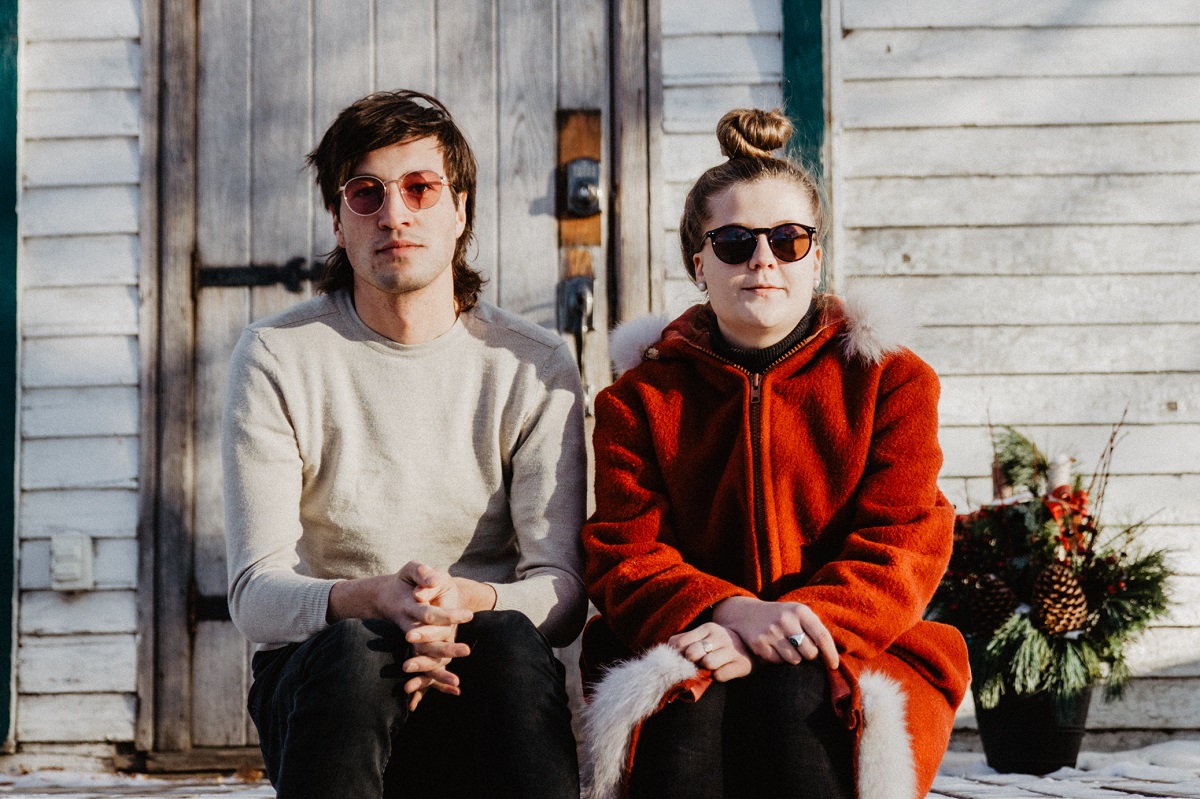
Artist:Tattletale Saints Hometown: Nashville, Tennessee via Auckland, New Zealand Latest album:Dancing Under the Dogwoods (January 24, 2020) Personal nicknames (or rejected band names): Broken Bells (rejected name). Cy is trying to nurture the nickname “Big Daddy C,” but it’s struggling to catch on.
Answers by Cy Winstanley
Which artist has influenced you the most … and how?
It’s no secret, but I love the music and lyrics of Paul Simon. As a jazz kid growing up, his use of varied harmony and its tasteful symbiosis with vivid and often impressionistic, poetic lyrics just blew my mind. His themes too, there are so many dimensions to them — I just get lost in his stories.
What other art forms — literature, film, dance, painting, etc. — inform your music?
I’m an avid reader and like to start my day with non-fiction and close my day with fiction. The more regular I am with that, the more those colors run through my writing. I tend to go through phases with the kind of books too: one of my fav authors is Roberto Bolano; after I read his oeuvre, I cycled through his contemporaries, influences, and other South American authors.
What was the first moment that you knew you wanted to be a musician?
I think as soon as I started playing guitar as a 13-year-old I just loved it so much that I knew it would be a big part of my life. But it wasn’t until later when I developed carpal tunnel in my hands that I had to stop playing guitar, then it was songwriting that became the focus.
What’s the toughest time you ever had writing a song?
Every song feels like the toughest time! It’s very rare that they just ‘fall out’. But perhaps those that are directly about my life are the hardest, because I want to be as faithful to the memory as possible and am constantly fighting with myself over what I want to present.
Which elements of nature do you spend the most time with and how do those impact your work?
Being from New Zealand and also being a long distance runner have given me a pretty strong connection to being outside. When I’m in nature, there is a calmness, and sense of earthly perspective and belonging that pervades my every waking moment.
Artist:Jamie McDell Hometown: Mangawhai, New Zealand (currently Toronto-based) Song: “Worst Crime” feat. Robert Ellis Album:The Botox EP Release Date: October 25, 2019
In Their Words: “‘Worst Crime’ was inspired by a conversation surrounding the idea that some of the worst crimes a person can commit are actually the legal ones. Phil Barton, Nash Chambers, and I threw around some of the everyday mistakes a person can make that can really hurt people. With that idea in mind I started off with the first lyric about forgetting your mother’s birthday and then we all basically made a list from there. After recording the demo Nash and I got the feeling it would be an interesting duet, especially if a male voice represented the victim. Top of my list was Robert Ellis. I’d been a fan for years and as a lot of these relationships begin in the modern era we were ‘Instagram friends.’ I messaged him and he said yes! He recorded his vocal in Fort Worth, Texas and completely brought a unique dynamic to the track.” — Jamie McDell
“I think Jamie is super rad. Her voice is unbelievable and I love the song. I was really psyched to get to try and keep up!” — Robert Ellis
Artist: Albi & The Wolves Hometown: Auckland, New Zealand Song: “Canyon” Album:This Is War Release Date: July 26, 2019 Label: Second Hand Records
In Their Words: “‘Canyon’ is about friendship and shared hardship that people go through when they choose to live an unconventional lifestyle. If you want music to be your career it is a road that is full of so many wonderful moments, but each of those is earned by working very hard every day. A very close friend of mine, Zarek, inspired me to write this song last summer. He works harder than anyone I know and even at his lowest moments he still wakes up every morning to practice and pursue his dreams. He does this with kindness and grace and when I have my own struggles I remember I am lucky to have a friend who knows the same ups and downs that I am going through. It makes it easier to keep going on those days.” — Chris Dent
Name:Jamie McDell Hometown: Mangawhai, New Zealand (currently Toronto-based) Latest album:Extraordinary Girl Personal nicknames (or rejected band names): When I was eleven I was in a rock band called Backfire.
Which artist has influenced you the most … and how?
Jimmy Buffett and John Denver equally, though this obviously requires some context. The majority of my childhood was spent aboard boats, and our largest stint took place in the Mediterranean over a couple of years, starting at the age of seven. We only had two artists’ catalogues onboard in the form of cassette tapes, JB and JD. These were the artists that introduced me to storytelling and surrounded my journey then and for many years following. These were the artists that my Mum and Dad used to cover during boat drinks while I would take note of the three important chords my Dad would strum. As a young adult I’m thankful to many close friends and musicians for broadening my musical tastes but I still find myself feeling most at home amongst John’s stories of the countryside and Jimmy’s tales of the sea, because after all I am also a sailor and I try to incorporate that side of my story into each album I create.
What’s the toughest time you ever had writing a song?
I’ve seen a few different facets of the industry, not that I’ve been around for too long, but I did begin working with a label in New Zealand when I was the tender age of 16. A lot of the time they actually left me to my own devices in terms of songwriting, in that I was never set up with co-writers (perhaps there aren’t so many where I’m from). As I got older and my team started to chop and change I was soon thrust into the world of writing trips or what I didn’t quite realize were ‘smash hit single’ making trips. I had a few unfortunate experiences in this realm but one particular session in LA felt really wrong.
To be honest the other writers were pretty nice, the song wasn’t awful but it just wasn’t me and I hadn’t learnt the skills necessary to steer the session in a more authentic direction so I forced myself through the entire session with John Denver’s voice in my head asking if this is something he’d be proud of? By the time we got to recording my vocal for the demo, I was singing with tears streaming down my face. Turns out, of course the label I was with then loved the demo and pushed for it to be on the record but I found my strength and it never has seen the light of day. Grateful for that session.
If you had to write a mission statement for your career, what would it be?
I wrote this song the other day, maybe it could work as somewhat of a mission statement:
I dream a lot and I don’t even have the brain you do, dress like a kid, the flowers in my hands like summer too. Born from a sailor, born from a sailor born with hope, or just a hopeful joke. I don’t need a lot to get my body ready for a show, in case you’d like to know. I don’t want to be a hitmaker, I just want to write my songs. There’s no point in words, when they are nowhere bound, just like a flightless bird, forever on the ground.
Which elements of nature do you spend the most time with and how do those impact your work?
In New Zealand, as it’s a small country, we’re very lucky to be close to the ocean. I spend as much time as possible there, mainly in the form of surfing. I think surfing is the best form of physical activity in the world for clearing the mind and cleansing the soul however this state of peace rarely helps me with songwriting.
I’ve found over the years that my best work comes out of chaos, a common notion I hear. Though ocean sliding doesn’t always fuel the writing fire, I think it does help me navigate the ever-changing road of being an artist, when I’m surfing I feel calm and in control, it’s nice to have one thing. On another note, I’ve just moved to Toronto where there’s absolutely no surfing so I’m hoping this means the songs will be excellent.
How often do you hide behind a character in a song or use “you” when it’s actually “me”?
I believe I’ve only done this a couple of times and unintentionally. It’s something I often don’t discover I’ve done till after the song is recorded and I’m on my third listen finally realizing that it’s not you, it’s me. I gave myself a songwriting goal last year: to be more honest. For me this is saying what I mean to say, not considering what my mum or your mum might think, or what’s been done before or what I shouldn’t say, so with that there’s been very little hiding lately. It feels scary, but like I’ve found what I’m good at.
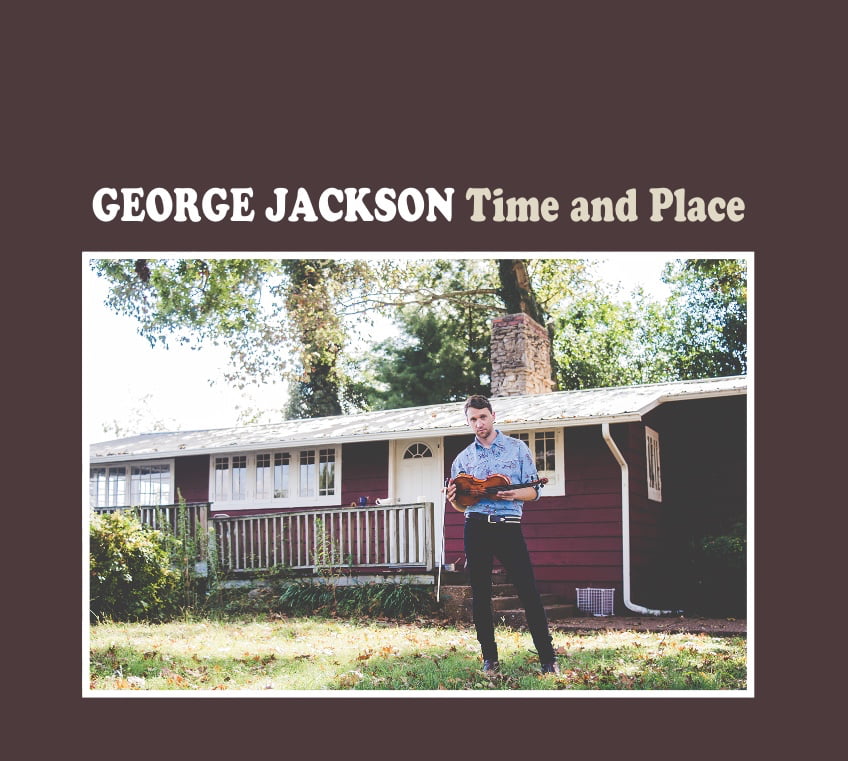
As a fiddler in Nashville, a town whose guitarist population is only rivaled by the sheer quantity of fiddles and bows, it takes a singular voice to stand out. Or, in George Jackson’s case, perhaps it takes a singular accent. The New Zealand native recently transplanted to Music City and has been carving a niche for himself in bluegrass, old-time, and their offshoots ever since. He currently tours with acclaimed bassist Missy Raines’ latest lineup, a minimalist-while-mighty acoustic trio, and he’s also been spotted collaborating with folks like Front Country and Rachel Baiman.
On his brand new album, Time and Place, Jackson steps into the role of frontman and bandleader, demonstrating that his voice — musically and otherwise — is so much more than just a charming, Oceanian accent. His fiddling is an intentional, pragmatic, and judicious combination of styles that range from Vassar Clements’ harebrained wit to Clifftop, West Virginia’s down-homiest old-time sawers. “Dorrigo,” a tune whose title tributes Australia, another former home to Jackson, perfectly demonstrates this old-meets-new, Northern Hemisphere meets Southern Hemisphere originality. The turns of phrase and melodic hooks register as familiar and timeless, before being unwound in surprising trajectories. Mandolin Orange’s Andrew Marlin, Charm City Junction’s Brad Kolodner, Mark Kilianski of Hoot and Holler, and Jackson’s longtime friend and collaborator Andrew Small fill out the band, demonstrating laser focus on old-time simplicity and bluegrass precision.
Perhaps thanks to his international roots, or his egalitarian approach to fiddle styles, Jackson’s “Dorrigo,” and by extension, Time and Place, simply do not bother trifling with authenticity signalling or genre designation. They simply elevate his singular voice.
This website uses cookies to improve your experience. We'll assume you're ok with this, but you can opt-out if you wish.AcceptRejectRead More
Privacy & Cookies Policy
Privacy Overview
This website uses cookies to improve your experience while you navigate through the website. Out of these, the cookies that are categorized as necessary are stored on your browser as they are essential for the working of basic functionalities of the website. We also use third-party cookies that help us analyze and understand how you use this website. These cookies will be stored in your browser only with your consent. You also have the option to opt-out of these cookies. But opting out of some of these cookies may affect your browsing experience.
Necessary cookies are absolutely essential for the website to function properly. This category only includes cookies that ensures basic functionalities and security features of the website. These cookies do not store any personal information.
Any cookies that may not be particularly necessary for the website to function and is used specifically to collect user personal data via analytics, ads, other embedded contents are termed as non-necessary cookies. It is mandatory to procure user consent prior to running these cookies on your website.