Mixtape: Jackie Greene & Band’s Soul and Funk

This is a playlist about the new band’s favorite soul and funk music at the moment. We’re a diverse group of musicians with different tastes and backgrounds, and these are genres we all like and listen to together while rehearsing and recording.

Jackie Greene (Lead):

Sly & the Family Stone – “You Can Make It If You Try”
Who doesn’t love Sly? This is the funkiest circus I’ve ever heard.

Lee Dorsey – “Neighbor’s Daughter”
Sort of an obscure record, The New Lee Dorsey has a bunch of Allen Toussaint songs and all of them are awesome, but I always really liked this one.

Bill Withers – “Ruby Lee”
One of the baddest, rawest grooves ever. The album +’Justments is one of my favorite albums of all time.


Ben Rubin (Bass):

Marvin Gaye – “Got to Give It Up (Pt. 1)”
I love this song because the pocket is so deep and sparse and Marvin lays on top so sweet (yes I meant that figuratively and literally).

Prince – “Sign ‘O’ the Times”
I love this song, because to me it represents some of Prince’s best work. When the song came out, it was so ahead of the times in terms of lyricism AND production.


Megan Coleman (Percussion):

Aretha Franklin – “Day Dreaming”
The groove and musicality of this song legit brings tears to my eyes. Also, I’m a sucker for a good ole fashioned love song.

Michael Jackson – “Don’t Stop ‘Til You Get Enough”
I mean…how beautiful is he in this music video? This was one of the first songs I fell in love with as a child and it will always hold a special place in my heart.


Jon “Smoke” Lucas (Drummer):

D’Angelo – “Playa Playa”
This is the intro to the era that captured my soul at 12 years of age. The sound, feel, and performance of this record is priceless! All-time favorite of mine…


Nathan Dale (Guitar):

Otis Redding – “Ole Man Trouble”
I wore out both sides of my The Dock of the Bay cassette during the summer of ’92. “Ole Man Trouble” was the last song before the auto-reverse tape deck flipped back to side 1. The song hooked me every time. There is some kind of magic happening between Cropper’s guitar parts and Otis’s painful vocal delivery. Otis opened the door to soul music for me.

Prince – “Sign ‘O’ the Times”
Prince’s brew of pop craftsmanship is something I was never embarrassed to admit I loved. His blend of funk, soul, blues, and R&B along with the addictive hooks is a perfect kind of music to me. The genius of his artistry is captured brilliantly in “Sign ‘O’ the Times.” Its sparse musical approach keeps the funk but leaves room for the lyric’s heavy topics of the 1980s.


Alex Kettler (guitar tech)

Lettuce – “Phyllis”
It’s a simple groove that opens up to a plethora of synths and horns. The song keeps progressing while always lightly grasping the main line until it goes full-circle.


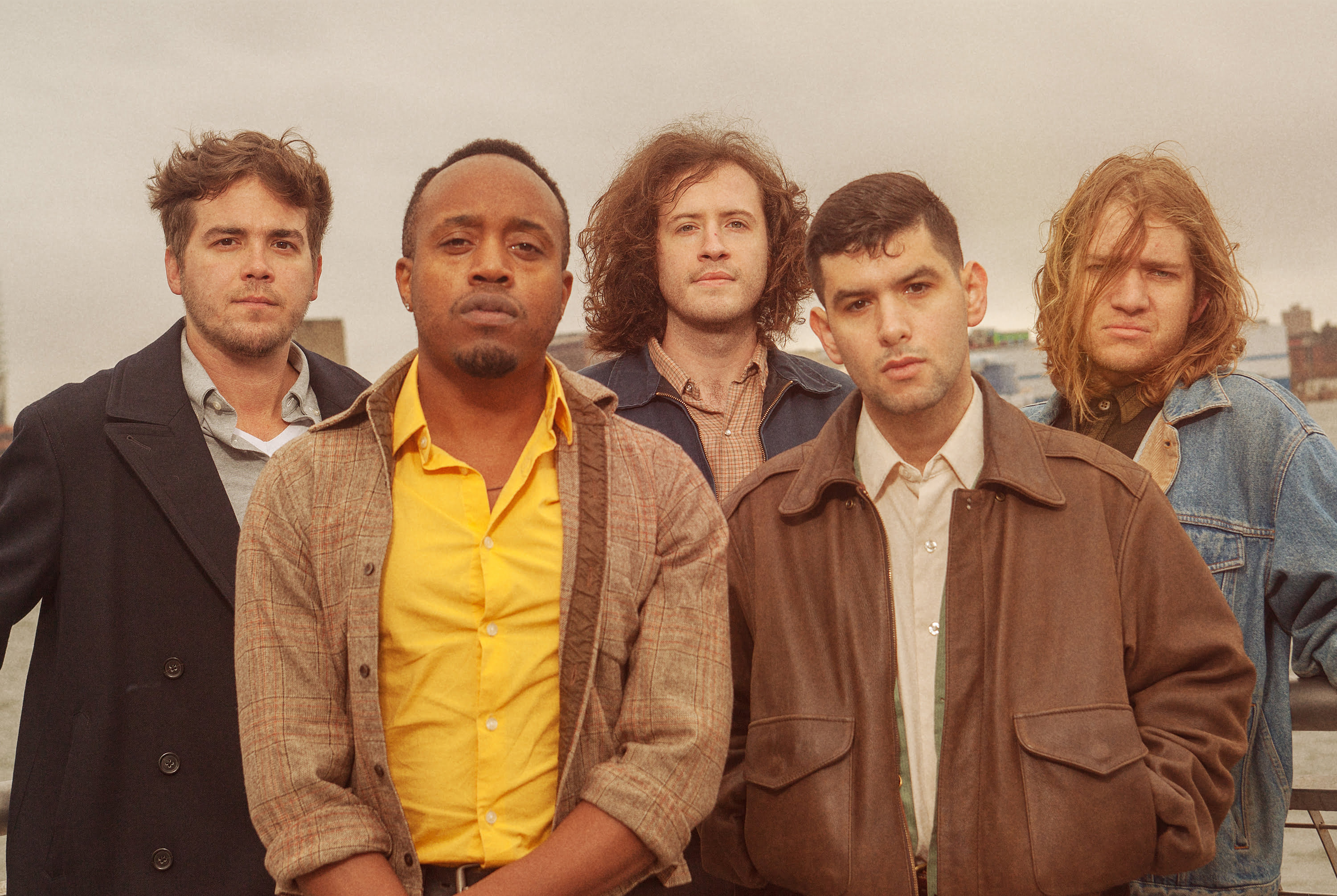
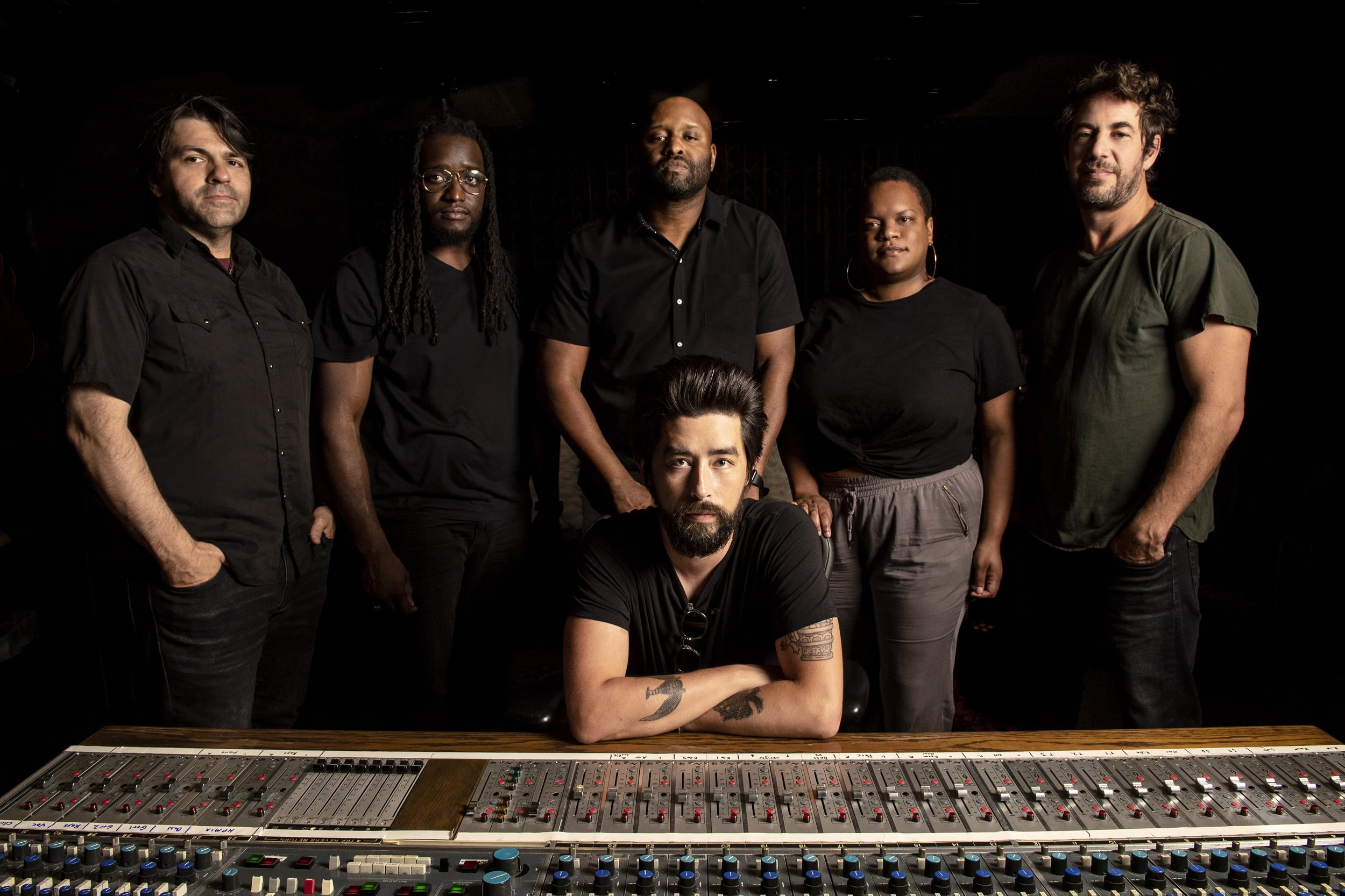
Photo credit: Michael Weintrob. Pictured front: Jackie Greene; Back row (L-R): Nathan Dale (guitar), Jon “Smoke” Lucas (drums), Shannon Sanders (musical director, organs), Megan Coleman (percussion), Ben Rubin (bass).

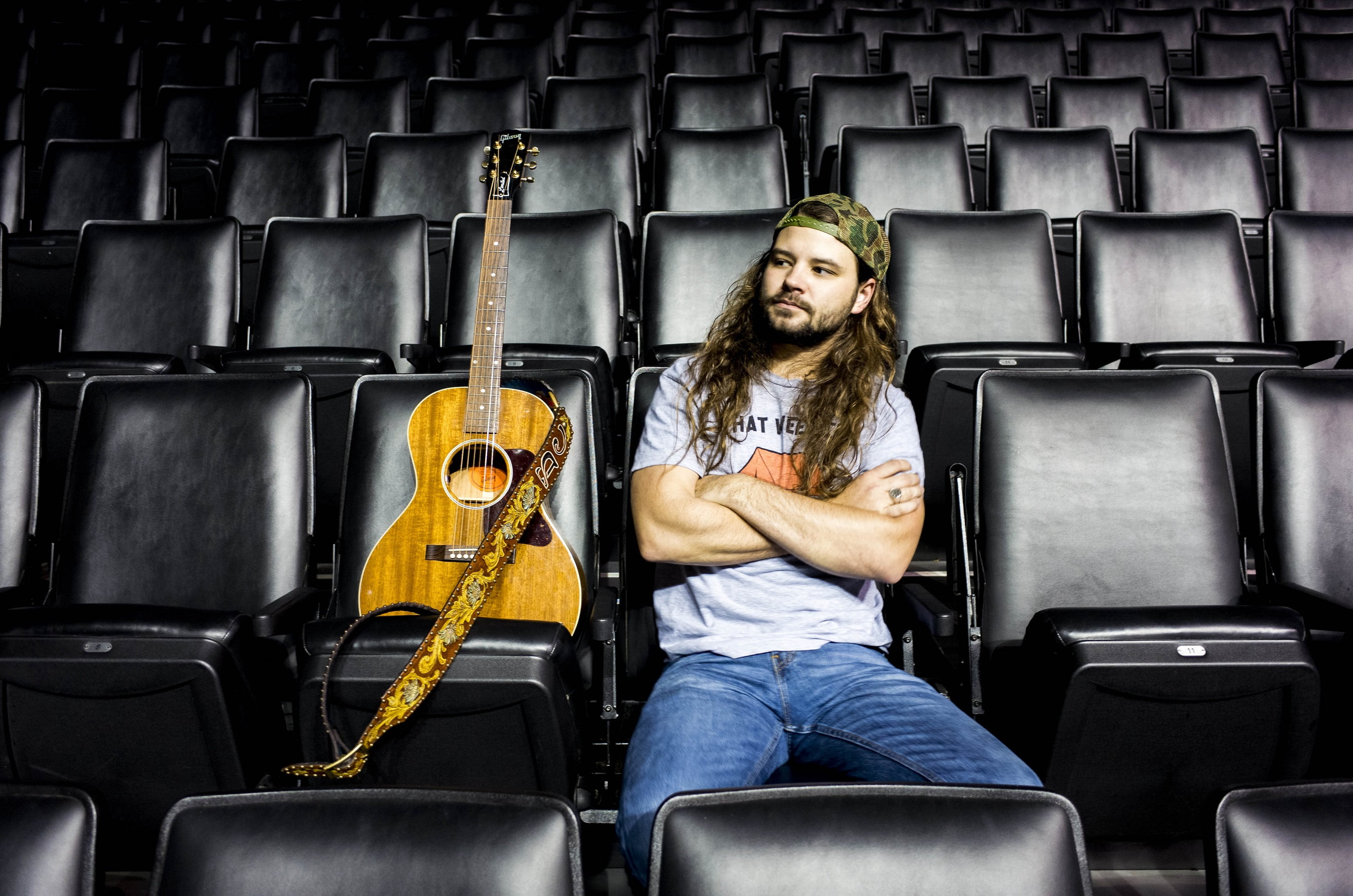
MIXTAPE: Brent Cobb’s Songs from the Road

Brent Cobb may have the coolest summer job ever – opening shows across the U.S. for Chris Stapleton and Marty Stuart. During some downtime in Oregon, the Georgia native gave the Bluegrass Situation the lowdown on 11 of his favorite songs.

“Lord, I Hope This Day Is Good” – Don Williams

I woke up today singing Don Williams’ “Lord I Hope This Day is Good.” Because it just felt that way, you know? It’s just a beautiful day, I kind of want to smell the smell of hickory smoke rollin’ around in the wind. That’s also what Don Williams makes me think of, you know? We got a little somethin’ on the smoker and a little Don Williams playin’ – it’s hard to beat that.

“New South” – Hank Williams Jr.

That kind of leads into the next one, it’s sort of the same path, but Hank Jr., “New South.” It’s on his album, The New South, his first record after he fell off the mountain. Waylon Jennings, Toy Caldwell, and Marshall Tucker — they helped him produce that record. The whole album is so good, you want to sit around a campfire sound, you know? That particular song, “New South,” it also makes me want to put something on the smoker on a beautiful sunny day, pick a guitar, and maybe throw some horseshoes.

“I Wonder Do You Think of Me” – Keith Whitley

After that, I got Keith Whitley, “I Wonder Do You Think of Me.” The other night, I was sittin’ up, a lot of times when I’m on the road it’s the only time that I have to go back to my regularly scheduled writing process program. My daughter’s not out here so I don’t have to wake up at 6 o’clock every morning like I do when I’m home, so a lot of times I’ll sit up and play music and I sat up the other night till about three in the morning listening to songs. This particular one – I had forgotten about this song, I rediscovered it and listened to it about 25 times in a row the other night. It’s just so damn well-written and the chords in that song are amazing. It seems like such a simple country song, but I can’t play it. I try to pick it out.

“Leaving Trunk” – Taj Mahal

Something we listen to every night before we go on stage is Taj Mahal, “Leaving Trunk.” It’s just got that dirty south, down south, funky, country feel that I love. You can tell that the Allman Brothers were borrowing a lot from Taj. And well obviously “Statesboro Blues,” that song particularly, it’s just got that … I don’t know, it feels funky. It also would be great on a day like today, just kind of walkin’ around and have that song playin’ in your mind and be-bopping to your own beat.

“Coming Home” – Delaney & Bonnie

That makes me start thinking of other songs you could listen to, to get in the zone. So I got Delaney & Bonnie’s “Coming Home.” That’s another one we listen to before we play. I know you probably know who that is, but for those who don’t, they would have Clapton and George Harrison and folks play on their records. They influenced a lot of their peers of that time, and Dave [Cobb, Brent’s cousin] actually turned me on to that track. I’d never heard it before. Yeah, just kind of that funky country, man, gets ya goin’.

“Ohoopee River Bottomland” – Larry Jon Wilson

Which leads us into Larry Jon Wilson. Larry Jon Wilson was from Swainsboro, Georgia. He did a couple of records in the ‘70s that were super funky country. “Ohoopee River Bottomland” is the song I’m thinkin’ of. It’s also just that pre-show jam, you know? It kind of gets you down the road a little bit, and the way Larry – especially that song – would use Southern-isms or just rural-isms. He’d talk about, “this low rent land has turned to sand and I’ve done stood ’bout all I can I’m leaving…I’m leaving,” and “I got a wore-out mule and a no ‘count tractor quit now…and this is it now.” I just love the way he talks. You really capture his South Georgia background, but then he’s able to put it to some funky music.

“Play Something We Know” – Adam Hood

Alright so after Delaney and Bonnie and Larry Jon Wilson, that made me think of my buddy Adam Hood, because those are two songs that a lot of people may not know. It made me think of my friend Adam, I do a lot of writing with him. We wrote a lot of songs with this newest album of mine. He has a song called “Play Something We Know.” It’s all about hearing “play something we can sing to and play us something we know.” It’s about that guy or girl in the bar that’s slightly belligerent at your show, and they’re like “play me some ‘Brown Eyed Girl.’” You should check it out, it’s hilarious. Adam is just a great all-around artist.

“Forever Lasts Forever” – Nikki Lane

After thinking of Adam, it made me think of some other peers that I’m into, that I love, that have been good to me. Nikki Lane took us out at the top of last year and I think, in my humble opinion, she’s about the most authentic of our time. She has a song called “Forever Lasts Forever.” If you haven’t heard it, you should really check it out. It’s inspiring to listen to anything she writes, but that song is so wonderfully written. Just a wonderful breakup song, you know? Everybody loves a good breakup song.

“Hole in the Sky” – The Steel Woods

That brought me also to some other peers and also pre-show jams. The Steel Woods did a cover of Sabbath’s “Hole in the Sky.” I don’t know if you’re familiar with them, but son of a gun… It’ll get ya goin’, man. Their whole record is great. They’re recording a new record right now. That “Hole in the Sky” song, I remember the first time I heard it, I had no idea it was an old Sabbath song. It blew my hair back, it’s incredible.

“Anyhow, I Love You” – Guy Clark

Now this is gonna take us to after-show jams….the slow jams. Made me think of Guy Clark, “Anyhow, I Love You.” Man, talk about a damn well-written song. It took me a long time to get into Guy, not because I wasn’t into him…it’s just some things you gotta live enough to really appreciate it. That was one of those songs, man, “Anyhow, I Love You.” I could listen to that one, same as “I Wonder Do You Think of Me,” over and over and over and over again.

“Open the Door” – Otis Redding

That made me think of Georgia because Guy Clark is so good at writing about Texas. It made me think of an old Georgia artist, Otis Redding. Everybody knows him. “Open the Door” by Otis Redding feels like church. It’s like being back at Antioch Baptist Church when the preacher’s talkin’ to you and then he lays it on you.


Photo credit: Don Van Cleave

Following the Groove: A Conversation with Durand Jones and the Indications

Outside of Detroit’s Motown Music, soul has generally tended to inhabit more southern locales. Yet in Bloomington, Indiana, on the campus of Indiana University, a group of music students discovered how their mutual passion for older grooves kindled fires in the snowiest of settings. Louisiana native Durand Jones moved north in 2012 to attend grad school at the Jacobs School of Music, where he eventually met guitarist Blake Rhein, who in turn introduced him to drummer Aaron Frazer. Their subsequent lazy Sunday hangs, which involved exchanging their favorite classic 45s and contemporary albums, quickly turned into fervid jam sessions. And, from there, Durand Jones and the Indications (with bassist Kyle Houpt and keyboardist Justin Hubler) found themselves transforming those influences into heat-soaked soul that evoked Otis Redding, at turns, and Charles Bradley, at others.

Where ‘60s soul combined gospel with R&B, the Indications gaze further and wider, integrating rock, punk, funk, and more. The result is a sound steeped in the fires that first formed soul with enough grit to hold steady alongside the rowdiest of rock bands. The slithering drum-and-bass line on “Make a Change” — the lead track off their self-titled debut album — buttresses Jones’s guttural cry, while the slow-tempo burn of “Is It Any Wonder?” allows him to show off a falsetto-whisper that calls to mind Alabama Shakes’ Brittany Howard. Jones’s voice, which has drawn comparison to the yearning cry of Lee Fields and the robust smoothness of Sam Cooke, ties the whole affair together, but it’s not a path he foresaw walking down. He intended to play his sax at IU. But finding a soul-infused groove with a group of like-minded musicians is the same as discovering heat in the snowy plains of the Midwest: Some kinds of magic just can’t be ignored.

People tend to trek south when they’re looking for soul, but you went from Louisiana to Indiana. What did you discover there?

Durand Jones: I went up there to mainly focus on classical music, but I got a job working with horn players and charting out horn parts for the Soul Revue, and that’s how I met Blake [Rhein] — my guitar player — in that class. He told me that he and Aaron were doing this together. He asked me if I wanted to join along, and I thought it was a cool way to make friends, so I said yes.

IU’s Soul Revue prides itself on training musicians to “interpret and perform” soul music. What did the process look like when you stopped interpreting and started creating your own sound?

Aaron Frazer: I think we’re always synthesizing things. In the process of creating something new, you’re drawing from the old, and not just soul music. Ideally, we listen to a lot of soul music, but also a lot of hip-hop, a lot of country. Durand has an amazing classical background steeped in jazz, too. I think, when you aim for something, if you set out to sound a specific way, oftentimes you’ll fall short, but where you fall short you wind up finding your own voice, and I think that’s what ended up happening with this record.

I know critics have touted this as part of the neo-soul movement, but there’s so much more going on, given your differing influences.

AF: I think it comes through, especially in our live shows. You can see the different influences; it’s not just a straight-up revivalist band.

How do you top your energy every night? It sounds like one helluva party.

DJ: Whenever I met these dudes back in 2012, a lot of the guys were in a band called Charlie Patton’s War, which is a rock ‘n’ roll band, and I really do think that energy comes through live. I just try to bring it every night, just try to lay it all on the line. All of us do.

What kind of instincts have you developed to help you shape the groove you manage to find on every single track?

AF: The process of creating that first album was learning how to write songs, how to arrange, learning what the difference is between how you play during a live show versus how that translates onto a recording. I think now, as we’ve been in the process of preparing our next album, I’ve seen a ton of growth in the group. We’ve focused on concepts and working on arrangements, using more vocal harmonies, but normally, I think one person will bring an idea to the table and then everyone else will help shape that.


It’s a communal table.

AF: Yeah, it’s really, really collaborative. We all have different strengths, and we all learn from each other’s strengths. I know I’m a better songwriter for it.

DJ: It’s very organic, too. It’s never forced. I really love songwriting with these dudes.

Has it grown out of that jamming relationship?

DJ: Yeah, for sure. Aaron and Blake invited me to come hang out with them on Sundays and, eventually, we just started hanging out and listening to records and drinking beers before we even started to jam. It was really cool to see what they were listening to, and how much that was influencing them. Whenever it came to us writing and jamming together, it really taught me what they wanted from me as a singer — what to sing and how to sing it. I personally think that’s how we got to know each other.

Yeah, I read that you guys listened to a lot of 45s before you pressed your own. That must’ve felt surreal.

DJ: Yeah, it was. I wasn’t really into collecting, before I met these guys, but I grew up around a lot of 45s in my grandmother’s house, and it encouraged me to dig through those old records and find some great things. It’s a really cool hobby.

Who were you listening to?

AF: We were listening to a lot of different things. For me, Darondo is an artist that really fascinated me because he put out some singles in the Bay Area, but his music never reached outside of the region. He lived his life creating music kind of for the sake of creating music. In the very last chapter of his life, one of his songs was used in a television show, and it brought his music to a much much wider audience. He was able to enjoy that success. It’s artists like that, where it’s a message in a bottle — you record it, you send it out there into the world, and maybe one day somebody finds it. Maybe they don’t. I think there’s something really seriously interesting about that. But also, musically, his stuff is amazing. He sounds like a tripped-out Al Green.

DJ: We used to have a Dropbox where we would share music that we were really digging at the time. I remember Blake sharing Sly and the Family Stone’s first album. That was something I listened to a whole bunch during that time. I remember Aaron sharing the Alabama Shakes’ first album. I listened to that a whole bunch. There was a whole lot of gospel in that Dropbox. When I first met Blake, he played me Charles Bradley. Honestly, that album got me through grad school. Any time I was having a hard day.

Right? Doesn’t it make you feel better? I miss his voice.

DJ: Man, it’s a way of life.

I know your voice has drawn comparisons to Lee Fields, but I also thought about Charles Bradley, when I first heard it. And then I couldn’t help but think of Sharon Jones. This conversation we have about modern-day soul revolves largely around those three names, in many ways, but there’s so much more taking place. Don Bryant released his debut album last year. William Bell came back and recorded at Stax. How do you hope what you’re doing widens that conversation, and maybe shines a light?

AF: I think that’s spot on. What I really like about the DJs who have been spinning at our shows, I feel like they’re conjuring spirits in a way. A lot of times at our shows, we’ll play covers that are more obscure — they’re deeper cuts — and we really like using that as a moment to help, maybe not educate, but expose crowds to music that hasn’t been performed in decades, and certainly not to audiences like the ones we’ve been playing to. So, yeah, there’s a ton of soul music outside the Daptone family, even though we are eternally grateful to what they’ve done.

It sounds like you guys are the live version of your Dropbox folder.

AF: [Laughs] Yeah, it’s a fun way to connect. For the people who do know those covers, it’s an instant connection. It’s really fun to see who in the crowd really likes when we start playing a deep cover.

Soul music, because it grew up out of gospel, has always been attached to a message. Durand, you’ve mentioned how “Make a Change” touches, in part, on the low minimum wage many have to contend with. What do you hope to share with your listeners, besides this amazing feel and groove?

DJ: For this first album, we really focused on a broad range of love, having the party — songs like “Groovy Babe” — and political and social consciousness, but I think with this next album, we really want to dig deeper into different parts of love — like platonic love, or other subjects. We’ve become really close with the low-rider community out on the west coast, so even writing tunes about cruises. There are so many things I definitely want to write about. Also just encouraging songs.

That’s so necessary, nowadays.

DJ: Yeah, for sure. Curtis Mayfield has always been a really big influence on all of this. I really love his preaching messages, personally. I feel there could be so much more of that out there.

AF: On this first record, I feel like, generally, it’s a zoom out. The message is that people are multidimensional — that life is a lot of different experiences. Sometimes you’re happy and sometimes you’re sad, and that’s okay. You don’t have to put forward this image that you see on social media all the time — this highly curated, polished version of your life. Sometimes you’re heartbroken, sometimes you’re feeling silly in love, sometimes you’re at the party, and sometimes you’re at the protest. That’s the message of this first record.


Photo credit: Horatio Baltz

Throwing Out the Rulebook: A Conversation with Bettye LaVette

There are singers, there are songwriters, and then there’s Bettye LaVette. She prides herself on being an interpreter, on using her voice to guide new melodies out of lyrics that have become a second skin to many listeners. But don’t you dare call her a covers artist. The septuagenarian’s new album, Things Have Changed — her first major label effort since 1982 — marks the first time LaVette has ever released an album focusing on one artist exclusively, and it just so happens to be Bob Dylan.

The idea sprang out of her 2008 Kennedy Center Honors performance in which she interpreted the Who’s “Love Reign O’er Me” and effectively stunned Pete Townshend. She eventually translated that moment into her 2010 album, Interpretations: The British Rock Songbook. But Dylan is a different beast. LaVette shape-shifts his Nobel Prize-winning words into growling, bluesy affairs and soul-laced R&B, each track so unlike its origin that it’s a wonder they ever came from his mouth in the first place.

LaVette uses her voice to guide her interpretations in ways that defy the traditional notion of covering a song. “I got with my keyboard player, and he played it the way I sung it,” she explains about her process on Things Have Changed. With that basic foundation in place, she approached her producer, Steve Jordan, and Dylan’s long-time guitarist, Larry Campbell — who plays on the album — to work out the arrangements. “It was going a completely different way, and they had to go with it,” she says.

One of Dylan’s most iconic songs, “It Ain’t Me, Babe” (from 1964’s Another Side of Bob Dylan), sounds like a soul-infused ditty straight out of the Stax era, while LaVette picks up on the menacing quality running throughout “Ain’t Talking” (originally “Ain’t Talkin’ from 2006’s Modern Times), lacing it with equally ominous strings. “I thought about these naked banshees running through the forest playing violins,” she says. Dylan being Dylan, there’s a certain aura surrounding his music, but LaVette strips away all that pomp and circumstance, and reimagines these songs as new possibilities for the modern age. After all, things have changed.

Even though the title of your album pulls from Dylan’s song, it seems so appropriate today. As an artist, how are you trying to cope with the changes we’re witnessing on an almost daily basis?

Well, my husband says I do better some days than I do others. Some days he tells me I’m just too angry about it and I have to calm down. When I do these lyrics to “Political World” and “Times They Are a Changing,” it sounds as though they were written for today, so I don’t know if Dylan is prophetic, along with brilliant, or if he just didn’t have any faith in anything getting better and he was right!

The central sentiment on “Things Have Changed,” how do you push past that to still care?

Oh, honey, I am 72 years old. I basically don’t give a fuck. Nothing at this point wears me down. I know that all of this going on right now, either it’s going to pass or we’re going to pass. Something’s going to stop, though. I hope it’s not us.

You said Dylan’s lyrics were almost prophetic in a way. How does contemporary art need to respond to this moment more than it has been?

I don’t know. I don’t really like for people to sing about what’s going on; I’d rather them say it. If you’re a big enough star, then go somewhere important and say something. I want our entertainers to be well informed and to know everything that’s going on politically really does affect all of us. I’d like to see us become a little more serious-minded, instead of sitting around and singing about it all day.

I was looking at something the other night — Jay-Z was on something — he and Snoop Dogg both are speaking so much better than when they first started, and about so many more important things. I watched them when they started, and to hear what they speak about now, it warms my heart. I still am not a fan of hip-hop, but I’m glad that, since they’re making so many millions, they’re trying to contribute something now.

Absolutely. It’s an interesting conversation taking place. So, can you take me back to the moment when you first started listening to Dylan?

I’ve always heard him, but he’s never sounded appealing to me. I’ve recorded four of his tunes — those were the only ones that I could break down to size. Otis Redding said he’d never do one. It’s too damn many words! [Laughs] He was not played a lot on Black radio, and I didn’t like, necessarily, the way he presented his songs, and I always had a whole bunch of other stuff to sing about. He hasn’t been a mainstay in my life.

As I understand it, the album’s executive producer, Carol Friedman, brought the idea to you. What was it that excited you from a creative perspective?

This was more than just a big musical opportunity. This was a big business opportunity, as well. This is my 57th year in show business, so I’m not fascinated or enamored with anyone right now. I was fascinated and enamored that I would get a chance to get a really big shot and, because the company thought it was a really great idea, I thought I would tackle it for that reason. When I started to choose the tunes — which was very difficult for me to do because there’s only so much of what he says that I want to repeat — it was quite a daunting thing. I wasn’t going to tributize him, and I don’t do cover tunes. I can sing, so I don’t have to do the song the way you do it.

Right. You’ve described yourself as an interpreter.

No. I am an interpreter. That is what I do. I had to write a whole bunch to make it fit into my mouth. I had to change the gender in a lot of places, and I got to know him a lot better. I understand him much better. I would like to talk with him, though, because I’d like to know why he feels the way he does.

Has he gotten wind of this project?

Oh, I’m sure. His manager loved it. He gave me license to change the lyrics and gave me license not to license it. So I assume Bob has heard it.

As we know, white folk artists in the ‘50s and ‘60s covered or referenced Black artists in their music. And, here, it’s thrilling to see a Black woman interpret a white man’s music. Did that ever strike you during the project?

Oh, yes! I definitely thought about it. I listened to John Lennon and Paul McCartney say that B.B. King is their idol, and I know that B.B. came very close to dying broke and unheard of, so when I did the Interpretations album, that was pure vengeance. I thought of it that way. I wanted to do the tunes well enough for whites who were in love with these guys to realize that they’re just writers. These songs are not hymns; they’re just songs. Having a husband who was a white teenager who grew up with all of these guys and has been enamored of them forever, one of the greatest joys of my life was for me to make Pete Townshend cry and for him to see it. So I enjoyed that tremendously. [Laughs]

They are considered sacred among a set, but I love what you’ve done on this album, because these songs don’t sound like what we know Dylan’s catalogue to be!

As I said, I had to sit and think about them for a long time, whereas the ones that I’d chosen to do by him before, they were just songs that I liked and I just did them. But with 12 of them facing me at one time, I said, “Now, here, let me think about them.” I had to really listen because they weren’t going to be a part of what I was doing. They were going to be what I was doing. I had to make them definitely fit into my mouth perfectly, squarely, just as if they’d been written for me. The greatest joy for me now is that the people I’ve been seeking out are Bob Dylan fans. I’m not asking my fans what they think about it; I’m asking Bob Dylan’s fans what they think about it.

And what’s the reaction?

I wanted them not to recognize them, and I wanted them not to be able to sing along with them.

You said you selected songs you could fit into your mouth. What did you want this project to say exactly?

The only words I don’t use are, “If you do this, I’ll die” and “Boy.” I’ve never said, “If you do this, I’ll die,” because that just ain’t gon’ happen. And, when I was 12, my boyfriend was 18, so boys have never been a part of my life. As long as I can remember, I’ve wanted to be grown. But I can’t think of anybody who can write a song that I couldn’t sing because you don’t have to sing it the way they write it. Sing it the way you sing.

I think some of the best songwriters are those that can be interpreted in any genre.

I find when people cover Bob Dylan songs, they worship. They don’t change them or do anything. That’s no fun!

It’s like you said, they’re not hymns.

Listen, I would not want anyone to say, “My goodness, she captured Bob perfectly.” No! No!

In terms of process, how much time do you need to spend with a song in order to hear it in a new way?

When I start to sing it without the recording, that kind of dictates the way mine is going to go. So, when I sat down with Larry Campbell, he knew immediately he could not play the way he’d played for Bob [Dylan] with the way I was singing it. I was really like a director in that, “This is no longer going this way. This is going this way.” When we did Interpretations, the first thing I said to all the musicians was, I said — all of them were white — ”I know all of you grew up with these tunes, but I want you to suspend thought about them, and don’t play anything other than what is on the paper. Play this as if it’s a song you’ve never heard before.” Some were easier for them to do than others.

Well, Things Have Changed is really something else. You’ve captured something, but it’s not his!

I’m so glad that you hear it. I wanted young people who have been given a Dylan album in their cradle when they were born, and they feel that that’s the way it should go to hear it. I would give anything to have seen [Dylan] hearing it.

To be a fly on that wall!

I would have liked to know did he recognize them all the moments they started playing, or if he didn’t recognize them, which ones didn’t he recognize? That would’ve been fun to me.
MIXTAPE: Paula Cole’s Golden Anniversary Song Celebration

Way back 50 years ago, in 1967, the music was the stuff of legend — full of artists, songs, and culture that begat the Summer Of Love. So many great bands/artists were burgeoning under the surface: Pink Floyd, Joni Mitchell, Rolling Stones, the Who, Janis Joplin/Big Brother and the Holding Company. Tina Turner was preparing to blow away Ike, and Carole King was readying to become her own artist. The Byrds, the Hollies, and Buffalo Springfield birthed CSN(Y), and audiences booed Dylan at Newport Folk Festival for going electric.

It was a time of great social change, a new generation declaring itself in resistance to the Vietnam War and their parents’ conservatism; a time of refuting politics, haircuts, normalcy; a time of experimentation with mind-altering substances, and a quest for peace and love. The late ’60s were a cauldron of cultures and consciousness, and it made for tremendous music.

Let us stand back and appreciate 1967. Let us hope for our cultural renaissance in 2017, in our equally turbulent times. If ever we need a music revolution again, it is now. As Picasso said, “Artists are the politicians of the future.” — Paula Cole (also a product of 1967)

The Beatles — Sgt. Pepper’s Lonely Hearts Club Band

The Beatles were sick and tired of being the Beatles, so they became Sgt. Peppers Lonely Hearts Club Band, creating the first concept album with no singles. Free from touring, they began to live their unique personal lives, then went to the studio to record their masterwork. Psychedelia, innovation in writing/recording, the 1967 London art scene, Yoko, transcendental meditation, brilliance, and irreverence … they made the alter-ego masterwork whose influence is incalculable.

Aretha Franklin — I Never Loved a Man (The Way I Love You)

Newly signed to Atlantic Records, recording with the Muscle Shoals, Alabama, rhythm section featuring Ms. Franklin on gospel rock piano, Aretha stormed the charts and changed music, hearts, and minds forever with fireworks such as “Respect,” “Think,” “Baby, I Love You,” and “You Make Me Feel (Like A Natural Woman).”

Bobbie Gentry — Ode to Billie Joe

My sister from another generation, an introvert, Best New Artist Grammy winner Bobbie Gentry left the patriarchal music business, leaving us with this amazing story. She sang and played her guitar and, importantly, self-produced in a time when women didn’t do that. Her timeless song leaves us wondering what ever happened to Billie Joe, over the course of a Southern American family supper.

Jimi Hendrix — Are You Experienced?

One of the greatest debuts in music history, Jimi marked the sonic marriage of psychedelic UK rock with American blues and R&B.

Dolly Parton — Hello, I’m Dolly

Dolly’s first full-length album introduced her to the world, with two country hit singles — “Dumb Blonde” and “Something Fishy.”

Miles Davis — Live in Europe: 1967

The album celebrated one of the greatest quartets in musical history behind Miles:
Herbie Hancock, Wayne Shorter, Ron Carter, an Tony Williams.

James Brown — “Cold Sweat”

This was possibly the first funk single — with drums breaks, single chord jams, and funky instrumental arrangements.

Otis Redding — “(Sittin’ on) The Dock of the Bay”

He recorded this in December 1967 and died four days later, never knowing the tremendous success achieved on both the R&B and pop charts. It is said that he wrote this song, influenced by listening to Sgt. Pepper’s Lonely Hearts Club Band.

Nina Simone — High Priestess of Soul, Nina Simone Sings the Blues, and Silk & Soul

Enough said! Incredible!

Sly and the Family Stone — A Whole New Thing

Sly and company made their debut with this one, which was lauded by Tony Bennett and Mose Allison, despite no commercial success.

Jefferson Airplane — Surrealistic Pillow

Jefferson Airplane had breakthrough hits with “Somebody to Love” and “White Rabbit,” pioneering the psychedelic era of rock.

Other notable musical moments of 1967:

Grateful Dead — The Grateful Dead
Loretta Lynn — Don’t Come Home A-Drinkin (With Lovin’ on Your Mind)
The Doors — The Doors
Marvin Gaye and Tammi Terrell — “Aint No Mountain High Enough” (off United)
Cream — Disraeli Gears
Simon & Garfunkel — “Mrs. Robinson” (from The Graduate)
Leonard Cohen — Songs of Leonard Cohen
Glen Campbell — Gentle on My Mind
Bob Dylan — “All Along the Watchtower” (off John Wesley Harding)

MIXTAPE: Bette Smith’s Soul Salvation

Who doesn’t like soul music? Come on! My big brother Junior absolutely loved it, too. Also, he was my protector throughout my rough and tumble childhood growing up in gang-infested Bedford Stuyvesant, Brooklyn. I stood there, as he lay dying from kidney failure, under that heartless hospital sign that read, “Do Not Resuscitate.” I sang to him at his bedside at Kings County Hospital, trying to maintain my composure. At the time, I was completing my bachelor’s of science degree with an emphasis in creative arts therapy. Overcome with emotion, I sang to him our favorites songs. — Bette Smith

Donny Hathaway — “He Ain’t Heavy, He’s My Brother”

Sometimes this soul/gospel powerhouse moves me to tears, especially when Hathaway utters the title lines “He ain’t heavy, he’s my brother …” It only adds to the impact when I look at the profile of Hathaway and see the striking resemblance to my dear brother Junior. It’s like wow, wow, wow!

Otis Redding — “The Happy Song”

Yes, everyone knows Pharrell Williams’ recent hit with the similar title, but check out Otis’s brilliant soul ditty. Simply put, this song makes me feel happy whenever I’m down! Like Bounty, it’s the “quicker picker-upper!”

Bill Withers — “Ain’t No Sunshine”

I will never forget the “Do Not Resuscitate” request, which broke my heart on account of my big bother passing away just a week afterward. Now, every time I sing this song, I remember him on his deathbed, saying to me “Keep singing no matter what.” And especially this song. Now, wherever I travel for gigs, I hear that same old song playing on the radio, or by a live band at Louis Armstrong Airport in New Orleans, or pumping through the speakers at the Memphis airport, or the t-shirt store in Hawaii, or at the bar at La Guardia. I am grateful that he’s letting me know that he’s still with me. And Junior continues to make his presence known — loud and clear.

Esther Philips — “Try Me” 

I loved Esther Philips as soon as I heard her sassy and soulful voice. The way she enunciates her words is just so classy. I very much relate to her cheeky and heartfelt style — often delivering it at the same time! See also “Just Like a Fish.”

Otis Redding — “Try a Little Tenderness”

Although I recall hearing this song in classic movies like The Crying Game, it wasn’t until earlier this year I discovered, on YouTube, Otis Redding’s live in London version. Mr. Redding does like a gazillion encores and really brings the house down. What an inspiring performance! It’s really influenced the way I delivered my songs from that point on. Otis encourages me to “break down the wall” that separates the singer from the audience.

Sugar Pie DeSanto / Etta James — “In The Basement”

This is one of the ultimate “get-down” songs. But, what else could I expect from collaboration between two soul goddesses — Etta James and Sugar Pie DeSanto?

Nina Simone — “Ain’t Got No — I Got Life” 

What can I say about this inspirational song that hasn’t already been said by the original High Priestess of Soul? It’s one of those songs that gets you up and off to work on a rainy Monday morning, when you’d rather call in sick and stay in bed all day. (Or why not just stay in bed all day and listen to it?) Either way, it makes you feel grateful just to be alive.

Charles Bradley — “Changes”

This tune was written by heavy metal legends Black Sabbath, but Bradley transforms it into an iconic soulful vibe with his poignant voice. It makes me experience the emotion of regret for every experience of deep friendship that I somehow let slip away because of my inherent shyness. Ugh!

Wilson Pickett — “Mama Told Me”

This song has a fiery, up-beat tempo complete with Wilson’s smooth timeless lyrical interpretation, which I enjoy so much.

Nina Simone — “I Put a Spell on You”

This hauntingly “gutsy” song makes me feel empowered and vulnerable — simultaneously.

Etta James — “I’d Rather Go Blind”

A lawyer who moonlights as my stand-by drummer once said to me, “I never really understood the meaning of that song, until I heard you sing it.” What a compliment! This tune, which I was once hesitant to perform because it’s emotionally demanding, really gets to me. Now I love performing it, as well as listening to it. It’s the ultimate “break up” song.

Danny White — “Kiss Tomorrow Goodbye” 

Songs like this remind me of when my Muhammad Ali-looking big brother tapped his size 15 foot along the cold, hard, aluminum hospital bed frame in time to my singing classic soul tunes. And, like the proverbial “Little Drummer Boy,” I sang my best for him. But he winced with pain soon as I came to the end of my chanting. Then I sung one last verse before saying goodbye for what I didn’t know would turn out to be the last time.


Photo credit: Shervin Lainez

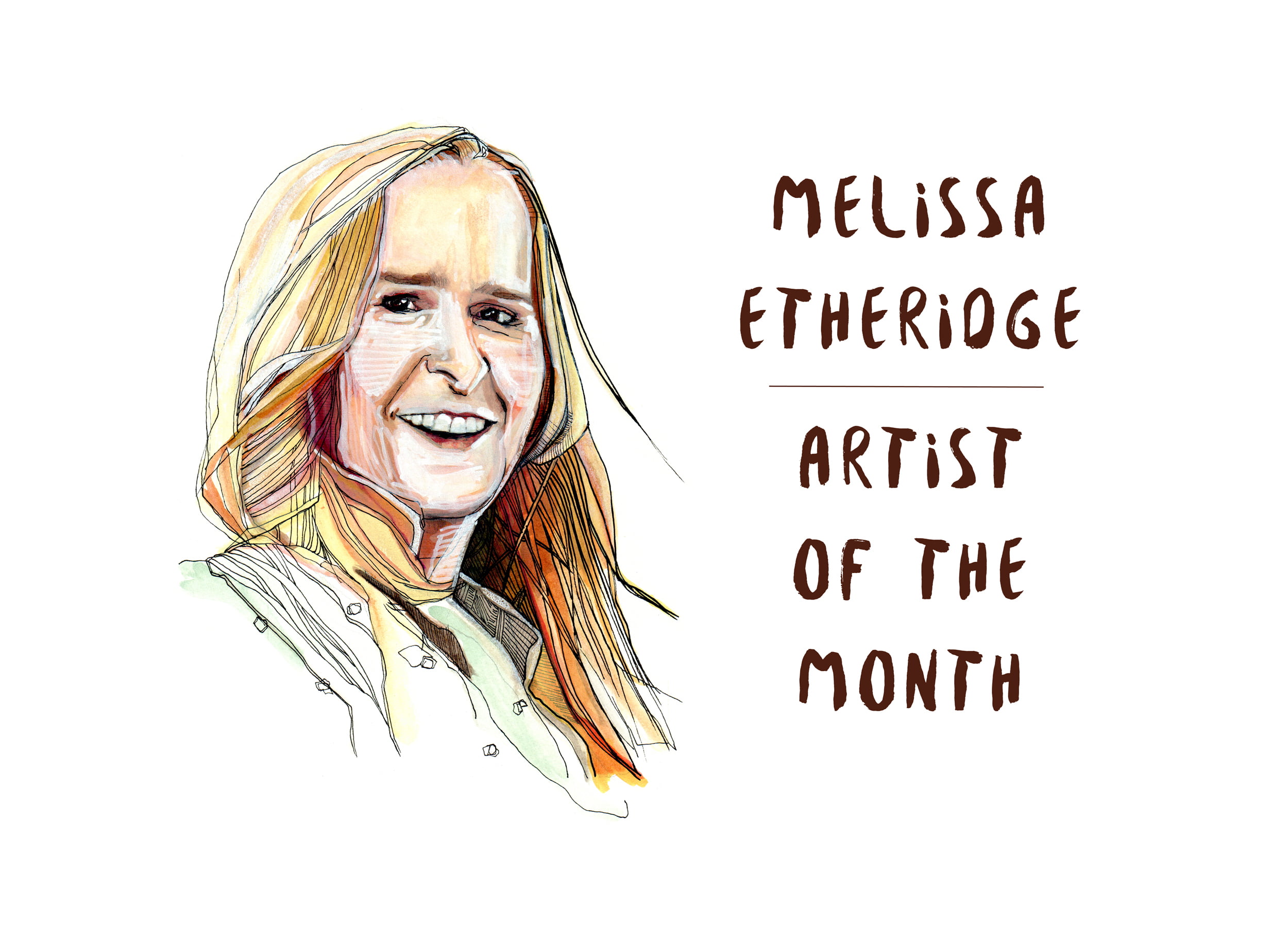
Melissa Etheridge: The Rock ‘n’ Soul of Self-Respect

Melissa Etheridge is closing in on three decades since her first full-length of original material was released and, over the years, she’s represented something distinct to many different kinds of fans. Most know her for her music, with well-loved hits like “I’m the Only One” and the Grammy Award-winning “Come to My Window.” To other fans, her public battle with breast cancer and resilient spirit are an inspiration through illness and hardship. Beyond that, Etheridge’s outspoken and unwavering dedication to human rights causes and the LGBTQ community has made her an icon and an articulate voice for the causes and issues that affect people every single day.

But before Etheridge was on the national stage, it wasn’t always about her own words, songs, lyrics, and melodies. “I’ve always played other people’s music,” says Etheridge with a laugh, recalling a string of cover bands and her earliest gigs. “I learned by playing other people’s music, from country to rock ‘n’ roll to R&B.”

That affinity for the classics has been made apparent plenty of times throughout her career — check her jaw-dropping rendition of Janis Joplin’s “Piece of My Heart” for evidence that Etheridge can slay a cover song — and when she was approached by Concord Records to take a crack at the Stax catalog on her latest studio release, Etheridge jumped at the opportunity. Her forthcoming full-length album, MEmphis Rock and Soul, is a 12-song compilation that covers Stax songs originally recorded by icons like Otis Redding, the Staple Singers, and Rufus Thomas, and it zeroes in on the music that inspired her own.

“Stax, as far as I am concerned, it’s the soul, it’s the birthplace of rock ‘n’ roll,” she says. “I’ve seen film of Janis Joplin watching Otis Redding in concert, and then she moves and sings just like him at Woodstock. The artists that inspired me were inspired by Stax, so this is going back to my serious roots.”

Where does one even begin when the Stax catalog is your playground? Etheridge was left with 200 tracks to choose from after she’d gone through and selected her favorites. Slowly, she picked them apart and narrowed it down to 100, then 50 songs, and finally she got down to the 20 numbers that she brought into the studio. “The main criteria was how I felt inside when I listened,” she says.

“Some of them were inspiring. I mean, ‘Try a Little Tenderness’ is great, but it’s been done a million times, and I didn’t feel like I could give anything newer to it. I tried ‘Knock on Wood,’ and that one just didn’t read, didn’t flesh out. Then, there are even a couple that no one’s heard of that I found. I just loved the beat, loved the whole thing, and thought, ‘Okay, I’m just going to put my rock ‘n’ roll spin on it.’”

The Etheridge you hear on MEmphis Rock and Soul embodies the unrestrained passion that so many artists have found in these songs before her. Maybe it’s the ghosts of Royal Studios coming back for one more encore — after all, the Memphis spot where Etheridge recorded the album was hallowed ground for the likes of Al Green and Chuck Berry, and it was started by Willie Mitchell, whose son Boo Mitchell produced the record with Etheridge.

“Without Boo, this project would not have happened,” says Etheridge. “He was the first one there and the last one to leave every day, and the respect he has for the music, for his father, for his father’s legacy, for Vaughan and Lowe … It’s a real family down there.”

Much is added to MEmphis Rock and Soul beyond Etheridge’s recognizable vocals — astute listeners will catch the sounds of the Hodges Brothers and many other Memphis music legends in the background of the soulful tracks — but Etheridge found herself taking on greater roles than she’d bargained for, too. Take the enthusiastic “Hold On, I’m Coming” — the first single from the forthcoming album and one of her favorite numbers from the compilation. “For the longest time, I was looking for someone to sing it with me. I kept thinking, ‘It’s a duet. It’s a duet. I’m going to ask this person, that person,’” she says. Things didn’t pan out, but she brought the song into the studio on one of the final days of recording. “I thought, ‘Well, I’m just going to put the pedal to the metal and just hit this thing as hard as I can. Make it as rock.’”

Jumping into the recognizable number by herself, Etheridge railed through the song with all of the noisy edge she’d hoped for, zeroing in on her own unique take on the song while preserving the energy that made it a hit in the first place. The vocal that made the final mix was the live one they recorded right then in the studio, and you can hear Etheridge beam as she relives the recording process. “It was just such a great experience, with these musicians there. They’ve seen so much. They’ve played on so much,” she says. “They took me in. I have such great respect and love for all of them.”

Respect comes up a lot in conversation with Etheridge, but her rendition of the Staple Singers’ “Respect Yourself” might be the most soulful embodiment of the virtue.

“I decided to go into Respect Yourself and take the heart of the meaning, and the purpose behind the song,” she says, citing Black Lives Matter and the nationwide push for change and equality as catalysts for her lyrical direction. She called fellow songwriter Priscilla Renee with the intention of maintaining the sense of urgency and the call to action that inspired so many in the ‘70s, but modifying the original lyrics for today’s social and political climate. With the weight of her activism to guide her, Etheridge makes for a compelling voice behind so many numbers that served as a soundtrack for the nation’s civil rights movement.

“I’m 55 years old, and I’ve seen some things,” she says. “I do understand one thing, and that is that I can’t change the world, or I can’t ask the world to change, unless I come from a place inside myself. I can’t ask for respect from the world unless I respect myself. I can’t ask for the world to love unless I love myself. When I do — when I love myself, when I have a deep respect for myself as a human being and as a member of society, when I respect who I am truthfully — every inch of me — then I can truly look at my neighbor with respect, and they will see what respect is. They will see it in me.”

On MEmphis Rock and Soul, Etheridge owns this mantra with a reverence for the musicians who came before her that reveals itself in her respect for her own tastes, interpretations, and talents. It’s easy to belabor the places we’d like to see a bit more respect — on the Internet, in the schoolyard, on the political stage — but it’s got to start somewhere. Why not with a little rock ‘n’ soul?


Enjoy thoughtful female singer/songwriters? Read our Artist of the Month feature on Mary Chapin Carpenter.


Lede illustration by Cat Ferraz.