Brent Cobb Follows His ‘Southern Star,’ Announces New Album

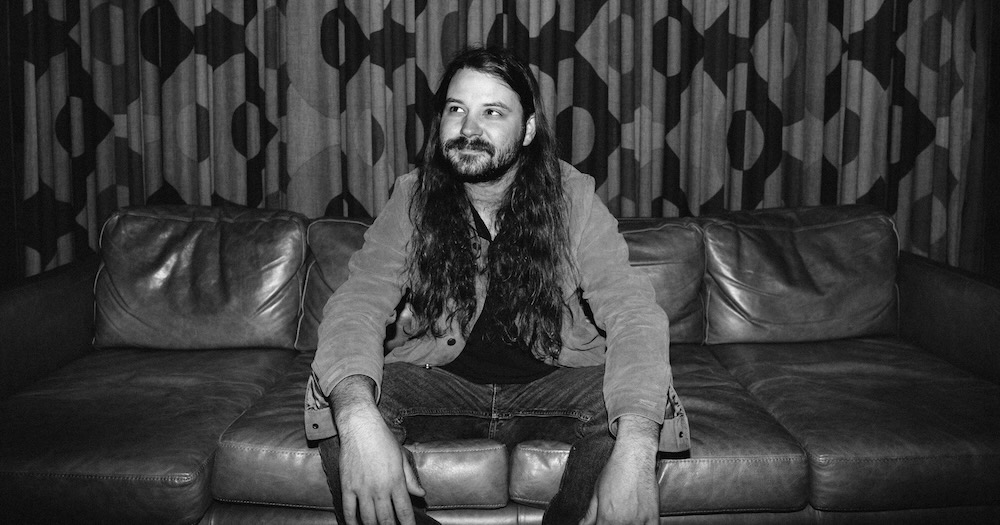
If the rest of Grammy-nominated Brent Cobb’s first self-produced album is like its debut single, “Southern Star,” it’ll be sweet as molasses. To celebrate the upcoming release of the record by the same name, Cobb released the music video for “Southern Star” last week.

The track features Cobb’s honeyed vocals, a vintage tone on the keys, straightforward acoustic strumming, and a light percussion touch. Cobb sings of being a drifter, of feeling lost at sea, but of always having a place to return to — a bright point to move toward no matter what. The video shows Cobb cooking up Southern greens and features shots of the artists who brought the music to life.

You know how when you’re growing up, you’re told that if you ever get lost out there, look for the northern star to help find direction back home? Well, I’m from Georgia,” Cobb said in a statement. “So, I always look for the southern star. This album, the songs, the sounds… it’s all a product of where I’m from both musically and environmentally.”

Southern Star will be Cobb’s fifth studio album and follows releases like his 2022 debut gospel record, And Now Let’s Turn To Page. Rolling Stone called him “an enlightened figure, blessed with the gift of finding purpose and meaning in the smallest of details,” and we concur.

The new record is a love letter to Southern roots and the state of Georgia, and drops September 22 via Ol’ Buddy Records/Thirty Tigers.


Photo Credit: Jace Kartye

Better Late Than Never, David “Ferg” Ferguson Debuts ‘Nashville No More’

As the go-to producer for some of Nashville’s most enigmatic roots talents, David Ferguson is what you’d call a behind-the-board legend. The studio savant known simply as “Ferg” started out as a protégé of producer and eccentric tape-splicer Cowboy Jack Clement and went on to become Johnny Cash’s favored engineer during his late-career resurgence. More recently, Ferguson has been imparting his old-school wisdom on tastemakers like Sturgill Simpson and Margo Price, while on his own debut album Nashville No More, he puts decades of knowledge to work once more.

With 10 songs full of classic charm and creative whimsy, it’s a loose-feeling project of tunes Ferg’s been falling in love with (and recording for himself) for years, molded into an album during the pandemic doldrums. A rotating cast of Nashville A-listers like Kenny Vaughan, Sierra Hull, Justin Moses, Jerry Douglas, Stuart Duncan, Béla Fleck and Tim O’Brien helped him flesh it out, presenting gruff vocals with tender, honest reverence for the lost art of record-making. In the end, it sounds like a love letter to his life’s work – and maybe the last hurrah of a creative culture.

BGS: So we’ll start with obvious question: Why did you want to make your own record, after so many years of helping others make theirs?

David Ferguson: Well, I’ve really always been a musician at heart. But this one fell into my lap over the pandemic. I had to shut down my studio, the Butcher Shoppe, in Nashville because they sold the buildings. So I set up a control room and an overdub room at my house, then the pandemic came along and there wasn’t much work. I started digging around in my recordings from over the years, got ‘em out and started seeing what I could do. That’s kind of how it came together. I really was just putting it together for family. Like, I was just gonna give it to my mom.

That’s interesting, because I think some people might assume you’ve been wanting to do this your whole life, but it sounds more spur of the moment.

Yeah, it’s a little late in life for me to be launching a solo career. [Laughs] But it’s fun to have one coming out and I’ve got a lot of time on my hands.

It might be late to get started, but you’ve had good teachers. Working with people like Cowboy Jack and Johnny Cash, and more recently Sturgill and Margo, what have you learned about being an artist?

To try to be humble. Even doing interviews, it’s hard to talk about yourself. Somebody who enjoys sitting and talking about themselves, there’s something a little bit wrong with them. I think being humble is a great lesson. Johnny Cash was a very humble man, very humble. So I think that — and trying to be kind to people. And don’t take it for granted, because even if something does happen, it may never happen again. You gotta appreciate what you’ve got.

The people you’ve been known for working with, they’re all artists of very strong vision – ones who didn’t compromise their art. Why are you drawn to people like that?

That’s a good question. I don’t know that I am particularly drawn there, maybe it’s just kind of the way it happened. Stuff comes your way and you have to grab the opportunity if it comes. You’ve gotta be ready to make a fool of yourself if you have to, and learn to grow from mistakes. I made a whole lot of records on a whole lot of people that weren’t any good – tons of them! Not everything you’re gonna do is good. But you do your best for the amount of time or money you have.

I always tried to do my very best. I was a fast engineer and got it going quick, because I didn’t want to waste people’s money. It’s hard to come by, and to get to make a record in a studio is a special thing. It used to be a really special thing. Now anybody can make a record. You can make one in your own house. But back in the day when I started, being able to have the money and resources to go in and record an album was a big deal. I still look at it as a big deal.

I think that comes through on your record.

Thank you, man, I tried not to cut any corners. I could have, and used keyboard strings, things like that. But I had real ones. I tried to do it as real as I could do it.

Did you record this the way you would have back in the day?

Yeah. Everybody’s recording on the Pro Tools format, but I can still fire up a tape machine, I’m not afraid of it. It’s just not economically feasible anymore. And plus, people don’t realize, they always used to say, ‘Oh, tape machines sounded great.’ And it’s true. They did and they still do, but you still wind up with a 16-bit CD. Unless you’re listening to it off the tape machine or on a vinyl record, or some super high resolution format, it’s just not gonna make very much difference.

Tell me about the title you chose. You’re from Nashville and have seen how it’s changed. How did you end up with the title Nashville No More? The whole thing has a kind of weary feel to it.

[Laughs] You know it’s not really a bummer. A lot of them are actually love songs. Like “Chardonnay” is a love song to wine. And then “Looking for Rainbows,” it’s kind of a sad song about love. … Nashville No More means a lot to me, because the Nashville that I used to know is no more. I’m not saying that’s a bad thing, it’s just that things evolve, and Nashville has really evolved. The music has evolved into an unlistenable thing to me. Modern country music, to me, is really difficult to listen to. Top 10 radio, it’s not for me. And I know some of those people who are on those channels, those singers, and I really like ‘em. I’m not saying anything bad about their music or anything … I’m really happy for their success, but it’s not the kind of stuff I’m gonna listen to.

Margo Price is featured on “Chardonnay,” and that has such a lovely sway to it. Where did that track come from?

That was written by my friend Roger Cook, and some years ago I made a demo of him doing the song, and I found it like ‘Jeez, where has this song been? I love this!’ … I finished it up with some real players on it, re-sung a couple of lines here and there and then sent it to Margo, and she said, ‘God, I love that song so much.’ She graciously came over and hung out for the afternoon and sung on that and “Looking for Rainbows.” Margo’s a real sweetheart and she doesn’t live far from me. The other person on there is Harry Stinson. He sings harmony, too, and Harry is in the Fabulous Superlatives. Harry’s singing on “Four Strong Winds,” too. He can blend right in there.

I love that you start off with “Four Strong Winds,” which is such a tender song. The first thing you hear is this gentle piano and a loping drum beat. Why start with that sound?

The album was totally sequenced … and it started off just exactly the opposite of what it is now. It started off with number six being number one, and we swapped the A side and B side.

Really?

That’s an old record trick I learned from Jack Clement and Johnny Cash.

What’s the benefit there?

It just kind of takes the obvious away, and that’s good. I’ve done that on more than one record for the years, and I’ve seen Jack Clement do it a few times. It’s a strange thing, but I mentioned to the guys, “Jack used to sequence it out A and B, then a couple of days later he’d be like, ‘You know, B oughta be A, I think.'” And it works!

You end on “Hard Times Come Again No More.” What’s the message in that ending?

Like I said before, that would have been number five, and we swapped it around. But it just seemed like a natural song to go out with. Sierra and Justin were kind enough to show up on that, and I think she’s just a major talent. Probably one of the most talented people I’ve ever met. She’s got the touch, and she’s not one to nitpick stuff. If you say you’re happy, she says, “OK, let’s move on.” She won’t just wear you out with it.

What was it like trying to produce your own songs, though? Is it hard to be critical of yourself?

It’s nearly impossible. Anybody you talk to who sings or even talks for a living, there’s hardly anything more painful than listening to yourself back. It’s as painful to a singer and artist as it is to anybody — unless they have an ego the size of [spreads his arms wide]. But you get in a situation where you have to be critical, so I learned how to do it on this record. I figured it out.


Photo credit: Scott Simontacchi

Sierra Hull Seizes the Moment in ‘25 Trips’

Sierra Hull has a well-established reputation as one of the most talented mandolin players and multi-instrumentalists of her generation, and her gripping new album, 25 Trips, is a look at her life as a musician in her mid-twenties.

The lyrics examine the changes she’s experienced in the past few years, such as getting married or watching loved ones age, as well as the attempt to process these changes in real-time. Meanwhile, she reflects the experimentation of her live show with electric guitar, drums, and synths — instruments not commonly associated with someone who’s won three awards for IBMA Mandolin Player of the Year, which she won consecutively after her most recent prior album, 2016’s Weighted Mind.

“What ultimately ended up being really fun about making this record is that it embraces the things that I like about creating music from multiple angles,” she says of 25 Trips. For the first time Hull enlisted producer Shani Gandhi, who helped shape the album’s diverse production styles — from stripped down tracks with just guitar and vocals, to familiar bluegrass arrangements, to songs with fuller production than those found on her first four albums.

Just before beginning her most recent tour, she spoke to BGS by phone from her home in Tennessee.

BGS: Your albums have often showcased a wide range of influences, but this feels a little different sonically. The electric guitars, drums, and arrangements create a really nice ambience for the material. Was it something you planned from the beginning? Or did those choices reveal themselves over the process of recording?

Hull: I think a little bit of both. Part of my choice to use Shani Gandhi as the engineer and co-producer was that I wanted to have a partner in making this record that would be able to help me achieve some of the things I wanted to do sonically. I knew that I wanted to use the studio a little bit more this time around. My past projects were recorded and presented in a way that I could go out and play the exact same thing live. I didn’t want to worry about that this time around.

I just wanted to make a record and be open to experimenting in the studio more and being able to play multiple instruments myself and layer harmonies and do things like that that, you know, I can’t go out and do live. I can’t play three instruments on a song live. I can’t have four of my voices going. But in the studio, that’s part of the fun. So some of it was planned, in that I thought Shani would be a great person to work with for the kind of experimenting in the studio.

We definitely didn’t go into making this record knowing exactly what it was going to be from the beginning. When we first recorded songs like “Escape,” there were no drums at all. And then we decided to add them at the end and it changed the vibe in a way that I really loved. We did try to be deliberate about things though because adding something like drums can really take something to a different place.

I do feel like we were very cautious about the way in which we presented them alongside the songs that didn’t have drums, because I didn’t want that on everything. We definitely felt like some of the songs could be lifted to a different place that would be really rewarding with that element. But, you know, something like “25 Trips,” adding drums to that, we really went back and forth on like what the vibe of that should be.

Did making this record feel different than your previous records?

Yes, this is the first time with, well, a couple of different things. This was my first time co-producing with a peer, with Shani, you know, someone so close to my own age, but also working alongside a woman. In general, the whole experience felt quite different than the making of my previous albums just based on that. All the people that I’ve worked with on my previous albums have been really wonderful people to work with and have always really respected what I’m trying to say and accomplished as an artist. But in this case, it really felt like there was more room to take the reins in a different way, which is also a little bit scarier.

When you’re working alongside somebody like Béla [Fleck, who produced Weighted Mind] there’s a comfort in knowing, “Cool, Béla likes this, so let’s do that.” There’s a confidence in being able to rely on somebody that you have that kind of respect for. And Shani and I had equal respect for one another. But it also felt like we weren’t leaning on some iconic person to give us the thumbs up, you know what I mean?

There is a certain amount of trusting yourself and trusting your own instincts, which takes a little extra confidence to do. And that’s kind of scary but there was a freedom in that, too. With Shani, I know she’s got amazing ears and I know that we seem to work really great together. So I had to trust my instincts a little more. The whole experience was just really fun and pretty laid-back in a way that I really loved.

How did you end up deciding to work with Shani?

I had been considering a lot of different people but the more I started thinking about it the easier it was to make that decision because it felt like we connected so much from the beginning and she’s such a great personality in addition to just being a great engineer. I knew it would be a fun atmosphere to make a record in and that’s important when you’re trying to take on something that is a lot of work.

Plus, it felt like it would be a different experience to actually work with a young woman who is totally awesome at what she does. There was something really exciting about that. I’ve had wonderful experiences making all of my records but the female hang is just different.

One theme of this record seems to be the idea of time passing. Was that part of the inspiration for the album?

I think most people can relate to the feeling of time passing quickly. When you think, “Wow, this is an amazing moment! I really want to be able to enjoy this.” A song like “25 Trips” is kind of about that and that feeling of, “If I blink, I’m gonna miss this and I don’t want that to happen. I want to be in the moment and be present and really enjoy it.” But a song like “Less” relates more to the feeling during the times where you’re going through a particularly frustrating moment and you’re kind of looking ahead to whatever’s next.

As a mandolin player myself, I was naturally drawn to the great mandolin playing on this record. But I think these songs do a great job of highlighting your talents as an instrumentalist, a vocalist, and a songwriter. Was that balance deliberate or just a natural expression of your musical identity?

I love being an instrumentalist and it’s a huge part of who I am as a musician, but singing and songwriting has really been at the forefront of what I’ve connected to a lot in recent years as an artist. When I think about going in and making my own albums, I’m not really trying to put in a sort of virtuosic musicianship at the forefront of it. I’m just trying to play songs that I feel connected to, and figure out how can we present those in a way that really feels like it’s about embodying all the things that I am as an artist.

Sometimes that might be something really simple like “Ceiling to the Floor” or “Everybody’s Talking.” I think, from a songwriting perspective, because I like to write both instrumental music and lyrics, sometimes those two things collide. A natural balance occurs sometimes. But I don’t think there is a deliberate balance while writing the song. I’m always just trying to honor the song and play what seems appropriate.

However, I wrote a bunch more songs than what we ended up being able to put on this record. So the more deliberate balancing came from taking all the songs I’ve written over the past few years and trying to put together a collection that hopefully shines light on all those different facets of who I am musically.


Photo credit: Gina Binkley