April 6 would have been Merle Haggard’s 89th birthday – and was also the tenth anniversary of his death. So, before these anniversaries get too far in the rearview mirror, I wanted to take a moment to remember one of country music’s all-time legends – and one of the great singer-songwriters in all American popular music.
One lesson of Haggard’s career is that you best honor your musical heroes, not only by playing their records at home or talking up their influence in interviews, but by continuing to perform their songs – on stage and in the studio. Merle released tribute albums to Jimmie Rodgers, Bob Wills, and Elvis Presley, and across his catalog cut at least an album’s worth of Lefty Frizzell songs.
Since his death, it’s been nice to see how often Merle’s musical contemporaries and descendants have taken Haggard’s model to heart, recording his songs and even releasing entire Merle Haggard tribute albums.
In recognition of his ongoing legacy, I’ve chosen 12 of my favorite cover versions of songs by Merle Haggard. I shared a kind of companion piece to this list last week, at No Fences Review, pulling choices from the 20th century only. Now, for Good Country, I’m focusing my dozen picks on Hag covers from this century.
I could assemble similarly strong lists every week for months without running out of possibilities. But these dozen Hag covers are among the very favorites.
“You Don’t Have Far to Go” – Candi Staton (from His Hands, 2006)
Co-written with trucker-song specialist Red Simpson, “You Don’t Have Very Far to Go” was the earliest of Merle’s songs to have legs. Recorded more than a couple dozen times through the years (including three versions from Hag himself), it’s proven a special favorite of first-name-basis country women. Bonnie and Connie, Rosanne and Lucinda, and others all seem to sing the song directly to some toxic asshole: “If I’m not crying, you’re not satisfied.”
My favorite reading of the song in that way is by Candi Staton. She became renowned for her disco and gospel recordings, but when first establishing herself as an R&B star circa 1970, it was with striking country soul takes on hits by Tammy Wynette and Patsy Cline. Decades later, she deploys Merle’s old song to deliver a master class in soulful, thought-by-thought phrasing. Staton sounds fragile and beaten down yet, by the end, her tone hints she may finally have had enough.
“Hungry Eyes” – Leona Williams (from Leona Williams Sings Merle Haggard, 2008)
Leona Williams may be best known as Haggard’s third wife, but she’s a tremendous artist in her own right, a country music lifer who played bass behind Loretta Lynn in the 1960s, enjoyed a solo career worth tracking down, and wrote or co-wrote chart toppers “You Take Me for Granted” and “Someday When Things Are Good” for Merle in the early ‘80s.
Leona’s version of “Hungry Eyes,” from her superb 2008 Haggard tribute, always stops me in my tracks. In the verses, she sounds haunted by her parents’ long-ago struggles. At each chorus, she gulps and springs to the top of her range, once again meeting her mother’s dissatisfied gaze. “She only wanted things she really needed!”
“The Running Kind” – Marty Stuart & His Fabulous Superlatives (from The Marty Stuart Show, c. 2009 or 2010)
“The Running Kind” is both one of country music’s great declarations of independence and, for Haggard, a great self-own: Merle boasts that he’s always on the run from one thing or the other even though, “I know running’s not the answer” to anything. The sentiment can serve as a kind of thesis statement for the Hag’s own restless life and career, so it’s ironic that my favorite version of the song isn’t Merle’s but this live cut from Marty Stuart. From an episode of the singer’s television series, Stuart and his Superlatives rage noisily and headlong, while staying absolutely controlled, through Merle’s tune. The solos from Kenny Vaughan and Stuart are my idea of Telecaster heaven.
“Ramblin’ Fever” – Tanya Tucker (from My Turn, 2009)
My pick for the best-ever “Ramblin’ Fever” is this version by Tanya Tucker. Riding an outlaw thump spiked by country disco high-hat, Tucker honors a musical hero, a former paramour, and a kindred rambling spirit. To that end, she loves it when some good-lookin’ fella rubs her back, but what really turns her on comes in the a.m. when she can drink a cup of coffee before leaving. The series of guitar solos that play out the final 1:20 here sound like she’s already out the door.
“How Did You Find Me Here?” – k.d. lang (from Sweet Relief III: Pennies from Heaven, 2013)
“How Did You Find Me Here?” was among Merle’s finest new songs of this century. From 2010’s I Am What I Am, Merle sings the number like a grim but grateful gospel ballad – his savior has come for him in his grave. “Thank you, Lord,” he prays at the close.
k.d. lang’s spare, ethereal reading feels less straightforwardly religious but, if anything, more spiritual. She’s desperately alone, at her nadir, but now someone – a lover or friend, her sponsor or her community – has seen her for who she is, taken her in. Lang’s contralto sounds bleary-eyed and dumbfounded, but she gains strength as she goes, ready to move on up.
“I Think I’ll Just Stay Here and Drink” – Suzy Bogguss (from Lucky, 2014)
Back in 1989, one of Suzy Bogguss’ earliest charting singles was a cover of “Somewhere Between,” still my favorite version of that great Haggard ballad. So my expectations were unreasonably high for Lucky, a full-length Merle Haggard tribute that she released in 2014. But the album’s a gem straight through, and I especially recommend her take on “I Think I’ll Just Stay Here and Drink.”
Most versions of Merle’s boozy romantic complaint have been done by rowdy dudes who sound like they’re slamming shots while ordering their fourth pitcher ahead of passing out. Bogguss, by contrast, comes off country-jazz cool, sipping a good bourbon and commiserating with herself in some dark corner. Don’t wait up. She’s going to be here awhile.
“Shelly’s Winter Love” – Lonesome River Band (from Turn on a Dime, 2014)
Merle’s most haunting song is about depression: Shelly’s depression each winter, the narrator’s the rest of the year round when the sunshine’s lured her back to town. This Lonesome River Band rendition from 2014 is the most haunting I know. Brandon Rickman sings beautifully but frighteningly too, and LRB’s pacing, like seasonal affective disorder set to a melody, reflects the long, slow days of a long dark winter. Midway through, Sammy Shelor’s banjo plunks a drip, drip, drip, that quickly gathers to a stream. A thaw’s coming; spring is on the way. It won’t be long now…
“A Working Man Can’t Get Nowhere Today” – Rob Ickes & Trey Hensley (from Before the Sun Goes Down, 2015)
This was a savvy cover choice by Rob Ickes, 15-time winner of the IBMA’s Resophonic Guitar Player of the Year award, and Trey Hensley, the association’s pick for Guitar Player of the Year in 2023. For one thing, the song is an underappreciated gem of the Haggard songbook, recorded maybe not even half a dozen times since Merle had a hit with it in 1977. More importantly, this Hag number lets Ickes and Hensley trade elegantly exhausted solos while tapping into a perpetually frustrating and common condition: Working your ass off every day to to put food on the table yet still coming up short. Hensley moans, “I’ll still be deep in debt the day that I fall dead.”
“Some of Us Fly” – Bonnie “Prince” Billy (from Best Troubador, 2017)
Merle’s “Some of Us Fly” served as the concluding track to his underrated release Chicago Wind, from 2005, and featured a guest vocal from Toby Keith. Because both men had already experienced such heights in their career, the message of each chorus – “Some of us fly but all of us fall” – comes off a little like superstars performing their humility. But where Haggard and Keith share hard-won wisdom, Bonnie “Prince” Billy casts a spell. With his duet partner, Irish singer/flutist Nuala Kennedy, he surrenders to a mystery.
On the remarkable 2017 Haggard tribute album, Best Troubador, Billy (AKA indie songster Will Oldham) and Kennedy whisper their way through Merle’s song in cautious harmony, their hands clutched tightly. The whole performance feels so fragile a strong wind might blow it way.
“Today I Started Loving You Again” – Eli “Paperboy” Reed (from Down Every Road, 2022)
Eli Reed specializes in making over all manner of roots-adjacent material into cool, committed soul music. Down Every Road does that for the Haggard songbook with thrilling results straight through. (A duet between Eli and Sabine McCalla on Merle’s most covered song, “Today I Started Loving You Again,” was inspired by a famous, but officially unreleased, 1969 version by Buck Owens and soul singer Bettye Swann.)
I especially appreciate Reed’s take on Merle’s celebratory kiss-off “I’m Bringing Home Good News,” which he relocates from Merle’s dusty, country-rocking San Joaquin all the way down to Louisiana for some funky Tony Joe White-styled swamp.
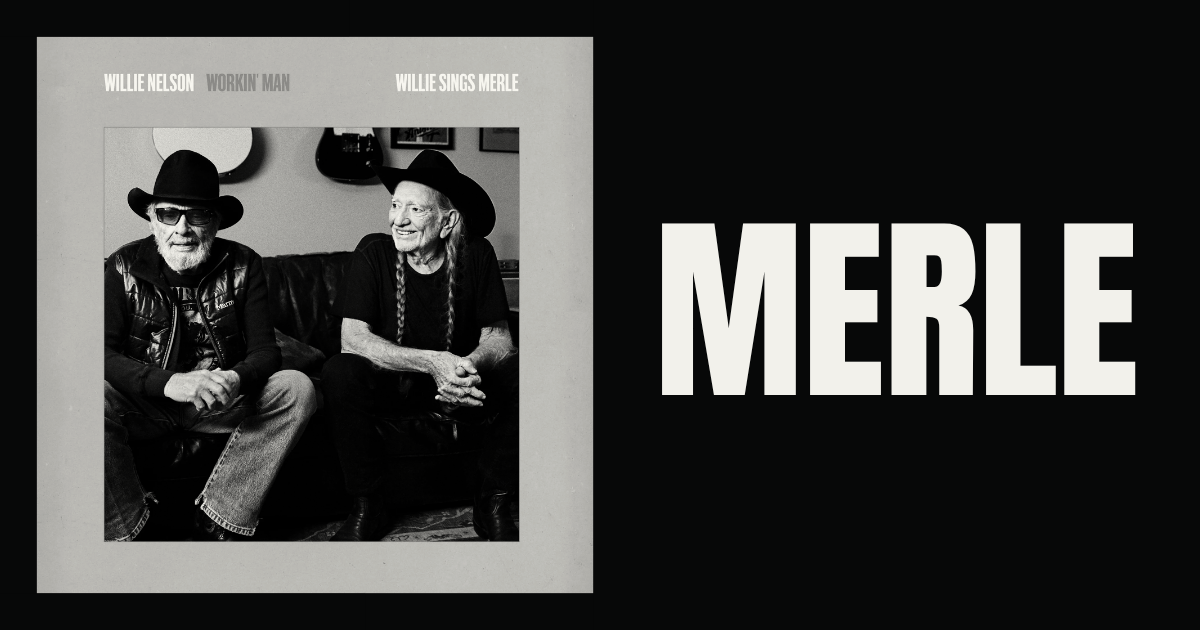
“Workin’ Man Blues” – Willie Nelson (from Workin’ Man: Willie Sings Merle, 2025)
One of Hag’s signature hits, “Workin’ Man Blues,” is usually framed as a purely blue-collar anthem, but it’s good to remember he identified the song as a blues. Having to work to survive while hoping your body holds out as long as you’ll need it is something to be cursed more than celebrated.
From last year’s Workin’ Man: Willie Sings Merle, a 92-year-old Nelson delivers his friend’s lines with a bit of a slur, weary and resigned but also grateful still to be working, to be on the road again until he runs out of road. Similarly, Willie’s arrangement sheds Merle’s Elvis-y fanfare for some hard, use-it-or-lose-it swing. “Play it, little sister,” he says, introducing one of the hot-jazziest solos in the career of the late Family band pianist Bobbie Nelson. Willie’s solos up top and midway through, meanwhile, are things of singular beauty, guitar work that sounds like play but refuses to hide the callouses and the miles. “As long as my two hands are fit to use…”
“Daddy Tried” – Jade Jackson (single, 2026)
Merle’s “Mama Tried” has been covered well over 100 times since he wrote it for the Killers Three soundtrack in 1968. But the song’s indelible ascending chorus and its universal theme – Merle sings it as if he’s as proud of defying his mom as he is remorseful for disappointing her – have encouraged people to use the song in all kinds of ways. Country comic Don Bowman parodied it as “Pappa Tried” as early as 1969 and more recently Angeleena Presley was clearly in conversation with Merle’s classic when she released “Mama I Tried” in 2017. As was Keith Urban when he sampled its lick for “Coming Home” in 2023.
Jade Jackson grew up in a small Cali town between Bakersfield and the Pacific, and her updated, gender-flipped take on Merle’s tale sounds just like that: Her voice feels a little dusty and a little sunny. Switching out Merle’s locale from “prison” to “Nashville” is funny because those two aren’t at all alike, but also because maybe they’re a little alike. For sure the ache in her voice reveals her as another singer-songwriter in a long line of kindred spirits to Merle; she’s going to go her own way, no matter her dad’s good advice.
David Cantwell is the author of The Running Kind: Listening to Merle Haggard, the co-author of Heartaches by the Number: Country Music’s 500 Greatest Singles and the co-creator of No Fences Review. His byline has appeared at Rolling Stone Country, The New Yorker, Slate, and No Depression, among other publications.
Photo Credit: Workin’ Man: Willie Sings Merle on Legacy Recordings