12 Fantastic Merle Haggard Covers

April 6 would have been Merle Haggard’s 89th birthday – and was also the tenth anniversary of his death. So, before these anniversaries get too far in the rearview mirror, I wanted to take a moment to remember one of country music’s all-time legends – and one of the great singer-songwriters in all American popular music.

One lesson of Haggard’s career is that you best honor your musical heroes, not only by playing their records at home or talking up their influence in interviews, but by continuing to perform their songs – on stage and in the studio. Merle released tribute albums to Jimmie Rodgers, Bob Wills, and Elvis Presley, and across his catalog cut at least an album’s worth of Lefty Frizzell songs.

Since his death, it’s been nice to see how often Merle’s musical contemporaries and descendants have taken Haggard’s model to heart, recording his songs and even releasing entire Merle Haggard tribute albums.

In recognition of his ongoing legacy, I’ve chosen 12 of my favorite cover versions of songs by Merle Haggard. I shared a kind of companion piece to this list last week, at No Fences Review, pulling choices from the 20th century only. Now, for Good Country, I’m focusing my dozen picks on Hag covers from this century.

I could assemble similarly strong lists every week for months without running out of possibilities. But these dozen Hag covers are among the very favorites.

“You Don’t Have Far to Go” – Candi Staton (from His Hands, 2006)

Co-written with trucker-song specialist Red Simpson, “You Don’t Have Very Far to Go” was the earliest of Merle’s songs to have legs. Recorded more than a couple dozen times through the years (including three versions from Hag himself), it’s proven a special favorite of first-name-basis country women. Bonnie and Connie, Rosanne and Lucinda, and others all seem to sing the song directly to some toxic asshole: “If I’m not crying, you’re not satisfied.”

My favorite reading of the song in that way is by Candi Staton. She became renowned for her disco and gospel recordings, but when first establishing herself as an R&B star circa 1970, it was with striking country soul takes on hits by Tammy Wynette and Patsy Cline. Decades later, she deploys Merle’s old song to deliver a master class in soulful, thought-by-thought phrasing. Staton sounds fragile and beaten down yet, by the end, her tone hints she may finally have had enough.

“Hungry Eyes” – Leona Williams (from Leona Williams Sings Merle Haggard, 2008)

Leona Williams may be best known as Haggard’s third wife, but she’s a tremendous artist in her own right, a country music lifer who played bass behind Loretta Lynn in the 1960s, enjoyed a solo career worth tracking down, and wrote or co-wrote chart toppers “You Take Me for Granted” and “Someday When Things Are Good” for Merle in the early ‘80s.

Leona’s version of “Hungry Eyes,” from her superb 2008 Haggard tribute, always stops me in my tracks. In the verses, she sounds haunted by her parents’ long-ago struggles. At each chorus, she gulps and springs to the top of her range, once again meeting her mother’s dissatisfied gaze. “She only wanted things she really needed!”

“The Running Kind” – Marty Stuart & His Fabulous Superlatives (from The Marty Stuart Show, c. 2009 or 2010)

“The Running Kind” is both one of country music’s great declarations of independence and, for Haggard, a great self-own: Merle boasts that he’s always on the run from one thing or the other even though, “I know running’s not the answer” to anything. The sentiment can serve as a kind of thesis statement for the Hag’s own restless life and career, so it’s ironic that my favorite version of the song isn’t Merle’s but this live cut from Marty Stuart. From an episode of the singer’s television series, Stuart and his Superlatives rage noisily and headlong, while staying absolutely controlled, through Merle’s tune. The solos from Kenny Vaughan and Stuart are my idea of Telecaster heaven.

“Ramblin’ Fever” – Tanya Tucker (from My Turn, 2009)

My pick for the best-ever “Ramblin’ Fever” is this version by Tanya Tucker. Riding an outlaw thump spiked by country disco high-hat, Tucker honors a musical hero, a former paramour, and a kindred rambling spirit. To that end, she loves it when some good-lookin’ fella rubs her back, but what really turns her on comes in the a.m. when she can drink a cup of coffee before leaving. The series of guitar solos that play out the final 1:20 here sound like she’s already out the door.

“How Did You Find Me Here?” – k.d. lang (from Sweet Relief III: Pennies from Heaven, 2013)

“How Did You Find Me Here?” was among Merle’s finest new songs of this century. From 2010’s I Am What I Am, Merle sings the number like a grim but grateful gospel ballad – his savior has come for him in his grave. “Thank you, Lord,” he prays at the close.

k.d. lang’s spare, ethereal reading feels less straightforwardly religious but, if anything, more spiritual. She’s desperately alone, at her nadir, but now someone – a lover or friend, her sponsor or her community – has seen her for who she is, taken her in. Lang’s contralto sounds bleary-eyed and dumbfounded, but she gains strength as she goes, ready to move on up.

“I Think I’ll Just Stay Here and Drink” – Suzy Bogguss (from Lucky, 2014)

Back in 1989, one of Suzy Bogguss’ earliest charting singles was a cover of “Somewhere Between,” still my favorite version of that great Haggard ballad. So my expectations were unreasonably high for Lucky, a full-length Merle Haggard tribute that she released in 2014. But the album’s a gem straight through, and I especially recommend her take on “I Think I’ll Just Stay Here and Drink.”

Most versions of Merle’s boozy romantic complaint have been done by rowdy dudes who sound like they’re slamming shots while ordering their fourth pitcher ahead of passing out. Bogguss, by contrast, comes off country-jazz cool, sipping a good bourbon and commiserating with herself in some dark corner. Don’t wait up. She’s going to be here awhile.

“Shelly’s Winter Love” – Lonesome River Band (from Turn on a Dime, 2014)

Merle’s most haunting song is about depression: Shelly’s depression each winter, the narrator’s the rest of the year round when the sunshine’s lured her back to town. This Lonesome River Band rendition from 2014 is the most haunting I know. Brandon Rickman sings beautifully but frighteningly too, and LRB’s pacing, like seasonal affective disorder set to a melody, reflects the long, slow days of a long dark winter. Midway through, Sammy Shelor’s banjo plunks a drip, drip, drip, that quickly gathers to a stream. A thaw’s coming; spring is on the way. It won’t be long now…

“A Working Man Can’t Get Nowhere Today” – Rob Ickes & Trey Hensley (from Before the Sun Goes Down, 2015)

This was a savvy cover choice by Rob Ickes, 15-time winner of the IBMA’s Resophonic Guitar Player of the Year award, and Trey Hensley, the association’s pick for Guitar Player of the Year in 2023. For one thing, the song is an underappreciated gem of the Haggard songbook, recorded maybe not even half a dozen times since Merle had a hit with it in 1977. More importantly, this Hag number lets Ickes and Hensley trade elegantly exhausted solos while tapping into a perpetually frustrating and common condition: Working your ass off every day to to put food on the table yet still coming up short. Hensley moans, “I’ll still be deep in debt the day that I fall dead.”

“Some of Us Fly” – Bonnie “Prince” Billy (from Best Troubador, 2017)

Merle’s “Some of Us Fly” served as the concluding track to his underrated release Chicago Wind, from 2005, and featured a guest vocal from Toby Keith. Because both men had already experienced such heights in their career, the message of each chorus – “Some of us fly but all of us fall” – comes off a little like superstars performing their humility. But where Haggard and Keith share hard-won wisdom, Bonnie “Prince” Billy casts a spell. With his duet partner, Irish singer/flutist Nuala Kennedy, he surrenders to a mystery.

On the remarkable 2017 Haggard tribute album, Best Troubador, Billy (AKA indie songster Will Oldham) and Kennedy whisper their way through Merle’s song in cautious harmony, their hands clutched tightly. The whole performance feels so fragile a strong wind might blow it way.

“Today I Started Loving You Again” – Eli “Paperboy” Reed (from Down Every Road, 2022)

Eli Reed specializes in making over all manner of roots-adjacent material into cool, committed soul music. Down Every Road does that for the Haggard songbook with thrilling results straight through. (A duet between Eli and Sabine McCalla on Merle’s most covered song, “Today I Started Loving You Again,” was inspired by a famous, but officially unreleased, 1969 version by Buck Owens and soul singer Bettye Swann.)

I especially appreciate Reed’s take on Merle’s celebratory kiss-off “I’m Bringing Home Good News,” which he relocates from Merle’s dusty, country-rocking San Joaquin all the way down to Louisiana for some funky Tony Joe White-styled swamp.

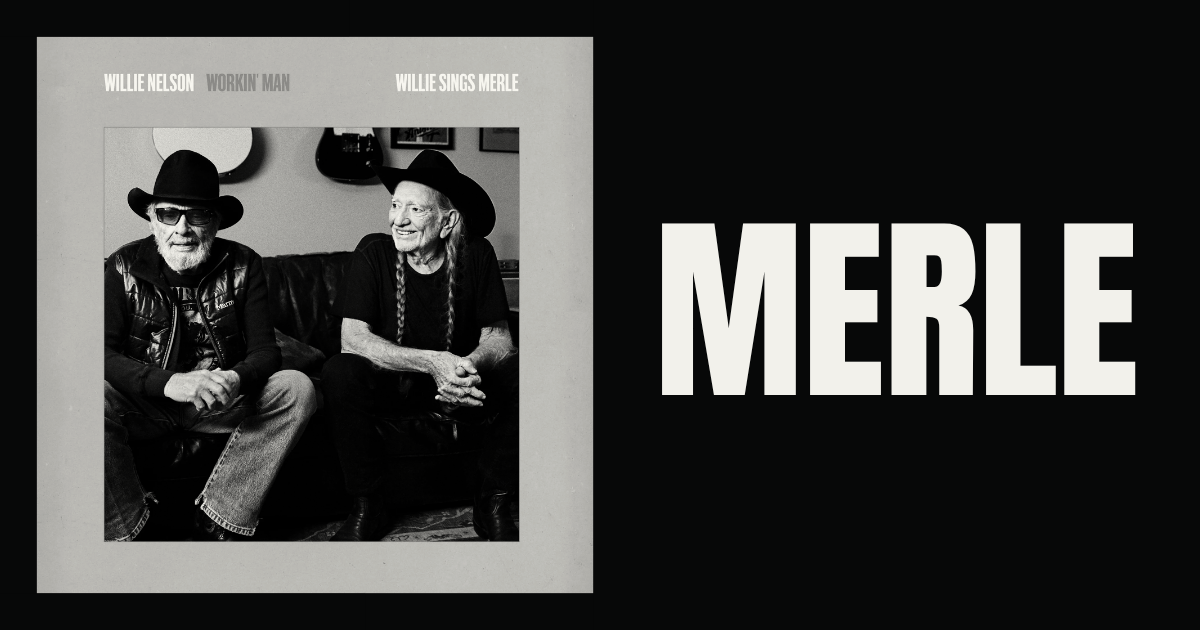
“Workin’ Man Blues” – Willie Nelson (from Workin’ Man: Willie Sings Merle, 2025)

One of Hag’s signature hits, “Workin’ Man Blues,” is usually framed as a purely blue-collar anthem, but it’s good to remember he identified the song as a blues. Having to work to survive while hoping your body holds out as long as you’ll need it is something to be cursed more than celebrated.

From last year’s Workin’ Man: Willie Sings Merle, a 92-year-old Nelson delivers his friend’s lines with a bit of a slur, weary and resigned but also grateful still to be working, to be on the road again until he runs out of road. Similarly, Willie’s arrangement sheds Merle’s Elvis-y fanfare for some hard, use-it-or-lose-it swing. “Play it, little sister,” he says, introducing one of the hot-jazziest solos in the career of the late Family band pianist Bobbie Nelson. Willie’s solos up top and midway through, meanwhile, are things of singular beauty, guitar work that sounds like play but refuses to hide the callouses and the miles. “As long as my two hands are fit to use…”

“Daddy Tried” – Jade Jackson (single, 2026)

Merle’s “Mama Tried” has been covered well over 100 times since he wrote it for the Killers Three soundtrack in 1968. But the song’s indelible ascending chorus and its universal theme – Merle sings it as if he’s as proud of defying his mom as he is remorseful for disappointing her – have encouraged people to use the song in all kinds of ways. Country comic Don Bowman parodied it as “Pappa Tried” as early as 1969 and more recently Angeleena Presley was clearly in conversation with Merle’s classic when she released “Mama I Tried” in 2017. As was Keith Urban when he sampled its lick for “Coming Home” in 2023.

Jade Jackson grew up in a small Cali town between Bakersfield and the Pacific, and her updated, gender-flipped take on Merle’s tale sounds just like that: Her voice feels a little dusty and a little sunny. Switching out Merle’s locale from “prison” to “Nashville” is funny because those two aren’t at all alike, but also because maybe they’re a little alike. For sure the ache in her voice reveals her as another singer-songwriter in a long line of kindred spirits to Merle; she’s going to go her own way, no matter her dad’s good advice.


David Cantwell is the author of The Running Kind: Listening to Merle Haggard, the co-author of Heartaches by the Number: Country Music’s 500 Greatest Singles and the co-creator of No Fences Review. His byline has appeared at Rolling Stone Country, The New Yorker, Slate, and No Depression, among other publications.

Photo Credit: Workin’ Man: Willie Sings Merle on Legacy Recordings

“I Once Was Lost, But I’m Pretty Found Lately” – Olivia Ellen Lloyd Finds Herself Again

In the wake of several viral country songs released in 2023 – most notably the ill-conceived pair of Jason Aldean’s “Try That in a Small Town” and Oliver Anthony’s “Rich Men North of Richmond” – renowned author and country journalist David Cantwell penned an essay for TIME magazine with an absolutely stunning (while quite simple) observation included. Cantwell considered place, citizenship, and ownership. To whom does the “small town” belong?

“…For most of today’s country fans that small town isn’t TV’s tiny Mayberry; it’s a suburb or exurb of some decent-or-giant-sized metro,” Cantwell explains. “I wish more country songs would talk about that proximity, how city folk and small-town folk flow back and forth for work and fun – and are very often the same people.”

And are very often the same people. Humans don’t live their lives along strict, black-and-white boundaries and borders – no matter how often society attempts such demarcations. Our lives are lived in the gray, in the blurry in-betweens, as collections of many disparate and often dichotomous parts.

Singer-songwriter Olivia Ellen Lloyd is just such a person, caught up in the nebulous purgatory between rural and urban, city folk and country folk, doing it for herself and doing it for ambition. Her brand new independent album, Do It Myself, finds Lloyd with a sense of confidence that could only be earned through a hard-working, bootstraps approach to making music – a mindset that, whether within or outside the arts, is well known to West Virginians like herself.

After a stint living in Nashville, Lloyd returned to New York City, following up 2021’s fantastic Loose Cannon with the heartfelt, sensitive, and often point-blank songs of Do It Myself. Like Loose Cannon, this material is danceable, country, honky-tonkin’, and bluegrassy while it boasts deft and majestic moments of WV DIY, punk, and rock and roll. After crisscrossing the country proffering her art, Lloyd seems to have realized that being both a city person and a country person is never a drawback, it’s a superpower. Having her feet in NYC, her heart in West Virginia, and her work anywhere and everywhere, Lloyd has clearly determined it’s not a dilution of the “authentic” or roots-music-ready facets of herself to straddle these arbitrary borders and own that duality.

As a result, Do It Myself is remarkably successful. Like Hazel Dickens in D.C. or Dolly Parton in Nashville or Tina Turner in Memphis, Lloyd has found her voice and found herself not by running from who she thinks she can’t be anymore, or editing out the parts of herself that don’t seem to “fit” with country tropes and perceptions of good ol’ American rurality. Instead, she’s reached this current era of music making by resting easy – or not so easy, at times – in the knowledge that the best she can do as a singer-songwriter-artist is to be herself, whoever that is, in the truest format possible at any given time.

We began our BGS Cover Story interview by discussing that ongoing search for herself and how that particular journey shows up throughout Do It Myself – in the lyrics, sonics, and beyond.

It feels like your music in general, whether we’re talking about Loose Cannon or the new album, Do It Myself, you’re most often turning over the idea of finding yourself – and not that that’s a static thing to be found. It’s not that you find it once and you’re done finding it. Your music orbits around these questions of, “Who am I? Is this me?” I feel that really strongly in this record. So, as you’re releasing this album I wondered, who is the self you have found? And how goes the search for yourself?

Olivia Ellen Lloyd: I think what’s really interesting is I don’t know that I would’ve put a finger on that until recently. I’ve also come around to the understanding that that is what my music has done, which is help me come back to myself and find myself. I would say it’s currently going pretty well, but boy it has been a journey to get there.

I think writing this record, I was much closer to her – to me – when I started writing this record, but I wasn’t as close as I thought I was. It’s taken not only writing it and realizing that I wanted to put it out and all that stuff, but also deciding to self release it and deciding to continue to champion my own work where I’ve truly found that. That, “Oh there she is!” [feeling]. I feel very recently like I have arrived at the person that I’ve been looking for and that’s exciting and also really scary, because boy, has most of my work orbited around, “What the fuck happened? How did we get so lost?”

I once was lost, but I’m pretty found lately.

How do you feel about writing songs that are so personal and that are so much about growth, introspection, and questioning and then having to carry them around on your back for a year or two or three on tour – or for the rest of your life! How does that process feel to you or that emotional or mental understanding?

Interestingly, at least with my first record, I think I wrote often with no aim, so there were no expectations. I mean it’s funny, Justin, because you are one of the few people in the music industry and in my music world who knew me when I was writing many of these songs, but not performing often. The process of writing was very much a way to try and tune into this inner voice that I’ve been learning to listen to. It was an attempt to get in touch with myself, which I really have struggled to do for various reasons throughout my life.

I think I’m also quite an impulsive person, historically, and I have a lot of tattoos – a lot of stupid tattoos – and I kind of think of these songs, especially the personal ones that no longer represent [me like tattoos.] I don’t drink anymore really – I wouldn’t say that I’m sober, but drinking is not a big part of my life anymore – and all of Loose Cannon and much of this record involves talking about those moments in my life. But I have this tattoo of a possum drinking a High Life. That’s not who I am anymore, but that was a part of how I got here. When I think about these personal songs that involve a lot of myself and a lot of what’s really going on I think, “Well, that’s a part of the patchwork,” but it doesn’t have to be – luckily – the whole story or the end of the story, either.

The way that you’re utilizing so many different roots styles, it’s disarming of a listener, so you can have a danceable, honky-tonkin’ track that’s still lonesome as fuck, tear in your beer. It feels like it can still be very country, very Americana in the way that it is melodramatic, but it still feels grounded in reality.

I think that playing with genre in the same way that we experiment with different sidemen and co-writers is just another tool that we can use. I see a lot of artists, especially right now, there’s just so much pressure to hit. There’s so much pressure to hit on a vibe, hit on a moment. Part of the joy of this is playing in those in-between spaces and finding something unexpected.

Come on, if we’ve got Dolly and Patsy and Loretta, they did a lot of the groundwork so we should get to play around that space! We’re not gonna outwrite or outsing those women, we simply cannot, so the opportunity we have is to explore. I don’t wanna go back. I don’t wanna go back to any type of past anywhere. The future is scary for me, but I’m really curious about what could come next, after those things, and how we can develop those sounds.

You’ve spoken on social media and on microphone about your approach to genre and how so much of it comes from growing up in West Virginia having this agnostic approach to genre aesthetic, on a practical day-to-day level. You’re doing West Virginia music, you’re bringing in Nashville, you’re bringing in New York City. Can you talk a little bit about that?

For the first record I got the feedback that you can hear the country and the city kind of intermingling together and someone was like, “This [new] record feels like so much more New York.” I think I understand where people are coming from, but actually I think what’s happened is I built a musical community in New York City around bluegrass, which I think is one of the great community music forms. It is a great way to bring people together. I’m so grateful that I knew a bunch of those songs and then I got better with those songs and then I met people who were passionate about that music. But actually, this record was more about digging into the sounds that I grew up with. I grew up going to DIY punk shows, I grew up with my dad listening to the Grateful Dead, the Band, some Jerry Jeff Walker, Nitty Gritty Dirt Band.

I think this record really returns to a landscape that’s more true to how I was raised, which was eclectic, a little bit daring, and a little bit more rock influence. I think I’ve been quoted once and I’ll say it again, I think the reason that the places in West Virginia gravitate more towards that kind of music is because music got gentrified and country became this bizarre fascist, patriotic propaganda wing of the Republicans and of government.

If you are not one of those things, if you were not a kid who could afford to go to Berklee and you were not somebody who was all that proud to be a fucking American in the 2000s, you likely grew up listening to a lot of that. Especially in rural places, you likely grew up listening to a lot of punk, a lot of rock, a lot of indie pop. Like many people do, I walked way far away from that stuff and dug into the roots of country and folk and bluegrass. I swirled around in that stuff for so long, and then I came back to myself; I came back to the first music that really inspired me and felt less academic.

In my opinion, the most interesting part is all of those genres coming together. I do think that I’m very wary of anybody who talks about “good folk music” or “real bluegrass” or anything like that, because typically some very nice man in a fisherman sweater in New England has told them [to think that way]. I learned to like music the way that most normal people learn, I just listened to it and I didn’t worry about whether I was listening correctly or not. I think we gotta return to that.

Community has come up multiple times already in our conversation and I know how important community is to you – how pivotal it’s been in your musical career. How do you balance the “doing it for yourself” with the “doing it with community”? How do you do it for yourself and trust yourself and give yourself permission to be who you are and take up space to do it your own way, while also being a member of a community and doing it for the collective at the same time?

Have you been listening to my therapy conversations? [Laughs] I struggle with deep individualistic tendencies. I have a tendency to be like, “Fuck it.” That can also be bad. Notably, have yet to accomplish a successful relationship, because of this thing I do. “Fuck it, I’ll deal with it myself. I’ll just do everything myself. I will stop relying on you. I don’t need to rely on anybody for anything.”

I hope it comes through in the music that many of my songs, including “Do It Myself,” include enough self-awareness to know that I’m talking about choices that I’m making and things that I’m doing and they are not always the healthiest choice or the best choice. That’s okay. I think there’s a side of this where, yeah, I have been way too [self-reliant]. As I sit here selling shows out, opening for Jeff Tweedy, and unable to get a booking agent or a manager. Yes, I have isolated myself a little bit too much for people to be paying close attention.

Certainly “doing it myself,” in this context, many people told me to wait to put this record out. Maybe that would’ve made sense for a more reasonable person, but I think this is really important: Your community is everything. You need to be able to trust that the people around you are people who are willing to let you show up like however [you are]. In the last two years, I have focused so hard on surrounding myself with people who I know I can trust to both keep me honest and on my shit and love me through mistakes and they will engage in conflict resolution. They will be gentle with me and like I can do the same for them.

It’s not possible to be self-sufficient, emotionally, creatively, if you do not have a community that supports that in you.

I love that on the album you have “Live With It” back-to-back with “Do It Myself.” I think it’s pretty striking, they’re kind of a reaction or a response to the other – and vice versa. That line, “If this don’t kill me…” feels like such a natural lead in to “Do It Myself.” I wanted to ask you about “Live With It” and also about that placement of those, like bookends.

Thank you for asking about “Live With It.” My producer Mike Robinson is gonna be so happy and that’s his favorite song on the record. I mean, that’s my pandemic [song]. The chorus of that song I wrote during the pandemic. Looking back, it was probably also the worst point in my life for my drinking. I was at a point where I was not in control. Things were so bleak that it was like, what’s the point of trying to slow down or get a handle on it? There was no future to look forward to.

But by the time I finished the song, what I really hoped to accomplish is [communicating that] there are many times in our life where we have a pessimistic view on our own personal outcomes. We’re not really convinced that things could get better and yet there is an interesting tendency with human beings, we just keep going anyway most of the time. I find that to be both very curious and also something that is inspirational in its own way. We can continue to live and survive through unsurvivable things, even when we don’t know entirely why or how. That’s what “Live With It” is about. It’s four people experiencing something that they, for whatever reason, don’t see why they have to live through it or how they’re going to, but they do.

I also love the feel change in “Every Good Man.” So good. It’s nasty. That song is a bit like “Stand By Your Man,” playing with country tropes in a really fun way, but that feel change – I think I made a stank face just listening to it. Can you talk about that one a little bit?

Once again I just have to say, I think a lot of what you hear and the really cool musical stuff is owed to the creative partnership that Mike Robinson and I have. I can’t say enough good things about him. I met Mike at a fucking bluegrass jam and he was playing the banjo, which is like his fourth instrument, you know? I think these days he mostly makes money as a pedal steel player. Everyone is sleeping on his ability to play the acoustic guitar. Like, truly.

I met Mike six years ago now and out of the blue he coached me into a music career. He would deny that, but that is 100% what happened. He bullied me into it. And something I really love is that I can bring songs to him and he finds exactly [how it should sound], especially when he’s excited about the songs. Both “Every Good Man” and “Live With It” were definitely high on his list of loves. He finds these like beautiful moments and we have such a similar [approach], we were raised on the same music. For “Every Good Man,” that feel change came from some moment in a John Prine song.

Another song that I really like – it might be my favorite – is “Knotty Wood.” It feels like country. It feels like church. The lyric, “Who says memories can’t be bought? We always sold ours for a song…” grabbed me. You’re talking about how we compare and contrast and measure ourselves against other people and our perceptions of other people’s lives. “Don’t they look good when you paint over the pain and knotty wood?” It’s such a great hook. I love the imagery of it. I love that it takes me to my grandma’s house. But I feel like it begs the question: Do you ever worry that in synthesizing your experiences, putting them into songs, and taking them to the world that there’s any part of that process that is also “painting over the knotty wood”?

Yes, and my mother would definitely say yes. The genesis of that song actually came from my mother and I growing up in the same small town. I grew up a mile from [where she grew up] and from our home to her childhood home it was less than a mile. That house, my grandparents’ house, I spent probably two days a week there and almost every day after school I walked from my elementary school to my grandparents’ house. It was my home, too.

It got sold after he died, we couldn’t hang onto it. It got sold again during the pandemic by an actually really lovely woman. She started renovating it on Instagram and I watched this place that held generational memories be stripped in some cases to the studs and rebuilt. It was pretty public. I felt a sense of ownership of our place – that I do not factually own and never have – that got me. Being curious about place and home made me think about the journey my grandparents went on to become property owners and to become middle class. And about that moment in the height of prosperity in the ‘50s, all the things my grandparents sacrificed.

I think the song is about thinking about those generational ties, thinking about the things my grandparents sacrificed, and did not sacrifice or did not give away. I’m also thinking about how, especially right now in this weird American moment – “Don’t other people’s lives look good when you paint over the pain and knotty wood” – how many people want to talk about their humble, hardscrabble beginnings without having to actually live them.

There are so many other reasons why it’s taken me so long to get here, why it’s taken me so long to put my songs out. But it all revolved around the generational trauma of growing up relatively poor and with people who had to give up everything in order to get anything.

You can’t have it both ways. You can’t have the small-town, Appalachian upbringing and also have the confidence and gumption of [privilege]. I mean, it’s rare. It happens, but you don’t often then also come equipped with the gumption to believe that you have the right to be a fucking artist. All my grandparents wanted was just a nice home in a small town.

I’ve been hustling, self-promoting my own art and music, and in a desire to attain the things that the people I’m criticizing have attained, we get to the third verse. … The crux of that song is, I think, a way more interesting story than “rags to riches.” It’s middle class to rags.

I mean, my grandparents went to war so they could get an education, right? My grandfather’s nickname was “Bones,” because he was so thin he looked like a bag of bones. The trajectory of their lives into middle class comfort is astounding, and the way that his grandchildren and children are sliding back into poverty is much more so. It’s much more true to what is happening in this country than this “rags to riches” bullshit that we are still being asked to sell, but it’s trickier to talk about.


Listen to Olivia Ellen Lloyd on Basic Folk here.

Photo Credit: Aaron May