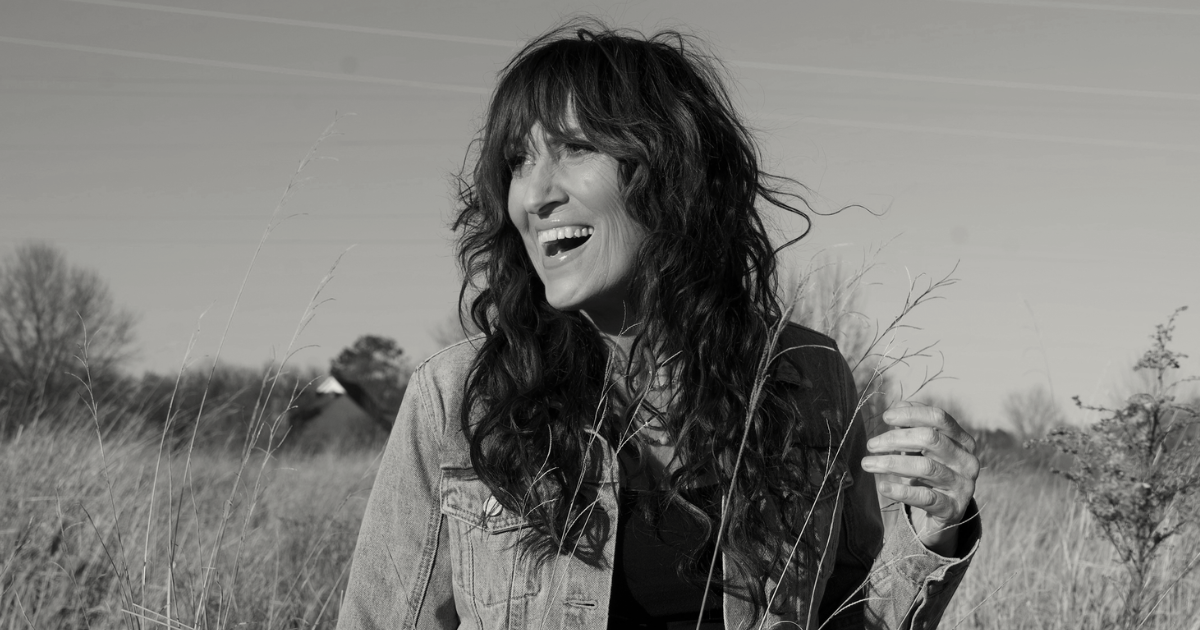
It’s been a minute since Jo Dee Messina graced us all with an album of new material.
The flame-haired singer from Framingham, Massachusetts, made an immediate splash on the country music scene with her self-titled 1996 debut. Her 1998 sophomore set, I’m Alright, was even more successful. Messina became the first female country artist to have three multiple-week, chart-topping singles from the same album. Burn, which arrived in 2000, was also a smash, delivering the popular title track and the Tim McGraw collaboration, “Bring on the Rain.”
Admittedly, Messina has been less prolific over the past 25 years or so. Her fourth studio outing, Delicious Surprise, came out in 2005. Record company challenges preceded the release of Unmistakable, which was supposed to be her next album; instead, it wound up being a series of three EPs. Her next proper studio album, which was simply called Me, did not appear until 2014.
Messina returned on June 5 with her long-awaited sixth album, Bridges, released through her own label. She has weathered a number of personal and professional ups and downs in the dozen years between the new album and Me – and some of that is reflected in the lyrics of her new songs. Bridges is Messina’s most personal disc to date, and she wrote (or cowrote) all but one of its 11 songs herself.
To coincide with the release of Bridges, and to celebrate her being our Artist of the Month, we’ve gathered 10 of Jo Dee Messina’s best songs – from her debut to the present.
“Some Bridges” (2026)
The track that inspired the title of her new album, “Some Bridges” is a slow-building statement of purpose and offers hard-won perspective. “Some bridges are meant to build,” sings Messina. “But some bridges are meant to burn.”
“Message In A Bottle” (2026)
Also from Bridges, “Message In A Bottle” is pretty catchy for a song about alcoholism. “Feeling 10 feet tall on 80 proof/ But the midnight lies, ain’t it the truth?” she sings. And you know she’s singing from experience.
“Don’t Let Them Hide Your Beautiful” (2026)
The centerpiece of her new album, “Don’t Let Them Hide Your Beautiful” is a moving, midtempo ode to being yourself. It’s a common theme across Messina’s entire career and discography.
“A Woman’s Rant” (2014)
The underrated “A Woman’s Rant” appeared on Me, Messina’s first studio album after a lengthy break. It pairs an old-time, bluegrass sound with a more modern, feminist lyric. To wit: “Husband, kids, work all day, I got PMS and PTA/ Find the thing my kid can’t find, I need a drink but there’s no time.”
“Bring On the Rain” (2000)
“Bring On the Rain,” a contemplative duet with Tim McGraw, is from Messina’s third album, Burn. It’s a true modern classic, having peaked at No. 1 on the Billboard Hot Country Songs chart, been certified Gold, and garnering tens of millions of streams. McGraw also co-produced the GRAMMY-nominated vocal event with Byron Gallimore.
“Downtime” (2000)
Another one from Burn – and a good song to listen to in the aftermath of a breakup. “I’ve been down this road a time or two/ I’ll get on my feet and over you,” Messina sings over electric guitars. “I’m just goin’ through a little downtime.”
“Because You Love Me” (1998)
From Messina’s sophomore set I’m Alright, “Because You Love Me” is a song about a love that stood the test of time. It proved that Messina could also pull off ballads. The double-platinum success of I’m Alright also helped Messina collect the 1999 CMA Horizon Award.
“Bye Bye” (1998)
The ridiculously catchy “Bye Bye,” also from I’m Alright and written by Phil Vassar and Rory Michael Bourke, scored Messina another big hit. A rollicking kiss-off to a former guy who is noncommittal, it finds her singing “Bye-bye, love, I’ll catch you later/ Got a lead foot down on my accelerator…” And suddenly we’re all singing along!
“You’re Not in Kansas Anymore” (1996)
The opening song from her debut LP, “You’re Not in Kansas Anymore” is another upbeat tune about a guy who left the Midwest for the Hollywood lights. It contains the great opening line, “He said, ‘I grew up in Wichita, in a Mayberry kind of town.’”
“Heads Carolina, Tails California” (1996)
Messina’s first single, from her self-titled debut. This upbeat jam about hitting the road reached the Top 10 on both the U.S. and Canada country charts. A definite fan favorite, it’s also the title of a 2023 greatest hits collection. Certified platinum, it’s easily landed in the 200 million-plus streams category – it’s such an iconic song, it’s birthed other country songs that reference it. Namely Cole Swindell’s 2022 track, “She Had Me at Heads Carolina.”
Explore more of our Artist of the Month content on Jo Dee Messina here.
May is Mental Health Awareness Month, but for those with lived experience, every day is about mental health awareness. During the most difficult times, many creators and listeners turn to music. It’s where we connect through lyrics and melodies that express the things we so often cannot, will not, dare not say.
The intersection of music and mental health is nothing new. Long before memes and catchphrases about “break the stigma,” Hank Williams did just that with “I’m So Lonesome I Could Cry.” Years later, Porter Wagoner exposed the ugly unspoken truth about “The Rubber Room.”
Thankfully, through incremental steps, times have changed – although not enough – in terms of media portrayal and public discourse. With great courage, more and more artists are coming forward about their struggles. Dozens of artists and musicians have spoken openly with BGS and Good Country about how mental health challenges move them to create songs and albums that make us all feel a little bit less alone. (Scroll to find our playlist of roots songs all about mental health below.)
Artists and bands like Becky Buller, Courtney Marie Andrews, Sister Sadie, and Tenille Townes give us glimpses at how mental health and self-care inform their creative processes and how they craft their songs, albums, and sets. Groups like Southern Avenue and the Band Loula – who make music built on the sonic and storytelling traditions of the South – subvert regional expectations about what’s “allowed” to be spoken about in the light of day with their approaches to infusing mental health awareness into their songs. Still more conversations with artists like Fruit Bats, Cole Chaney, Emily Scott Robinson, and Chely Wright reinforce that mental health in roots music isn’t a fad or passing trend, it’s an intentional through line. Songwriting and roots music are perfect vehicles for this sort of vulnerability and these once forbidden topics.
The proliferation of YouTube and democratization of music videos in the 2000s and 2010s opened up new dimensions for artists, giving them more formats in which to express themselves, depict their work, and consider mental health. Additionally, of course, it offers live performances that go beyond anything a studio recording can capture.
“I Think It’s Going to Rain Today” – Randy Newman
Randy Newman’s masterpiece has been covered many times, and the internet is full of those recordings – as well as his. This performance, however, at his induction into the Rock and Roll Hall of Fame, may very well surpass them all.
“God, Can You Hear Me?” – Dax
Dax is fearless in addressing the most difficult and “taboo” topics. “God, Can You Hear Me?” asks the unspoken question within the context of a subject that far too many people refuse to address: suicidal ideation. (Content warning: graphic.)
“Let the Circle Be Broken” – Sister Sadie
In genres predicated upon generational legacies and “handing down” tradition, Sister Sadie’s song of release, letting go, and stepping out from underneath the long shadow of generational traumas is more than powerful. By the same token, that it was written and is sung and performed by a band of all women makes it a truly transcendent message. Some circles are meant to remain unbroken, others must be demolished.
“Bench Seat” – Chase Rice
Chase Rice broke down walls and stereotypes and opened doors to discussions about suicide with this multiple-award-winning video. Country needed this. Country needs more of this. (Content warning: graphic.)
“Hurt” – Johnny Cash
Johnny Cash. Enough said.
“I’m Gonna Be the Wind” – Laurie Lewis
Bluegrass legend Laurie Lewis has penned many a fine song tackling issues of mental health, but this is the song for when you’re ready to stride out anew again. It’s a song of strength, resilience, of realizing that often one of the primary forces keeping us down is our own mindset. Tired of being a blade of grass, bent and bruised by the wind? Be the wind!
“Sunday Morning Coming Down” – The Highwaymen
Mickey Raphael described them as “like Mount Rushmore onstage” and called Kris Kristofferson “the Shakespeare of our time.” This is why.
“Will the Sun Ever Shine Again” – Bonnie Raitt
One of the best songs Bonnie Raitt has ever sung and released was recorded for the 2004 animated film Home on the Range. Devastating, endlessly relatable, but ultimately hopeful, the film cut of “Will the Sun Ever Shine Again” is hard to track down on streaming services and online, but it’s truly lovely. A gem of a soundtrack find from an often overlooked Disney children’s movie from the aughts.
“Alone Again (Naturally)” – Gilbert O’Sullivan
In 1971, Gilbert O’Sullivan bravely addressed loss, grief, heartbreak, loneliness, depression, suicidal thoughts, and questions of faith, wrapped them up in a lovely melody, set them to a catchy beat, and rode to the top of the charts with one of the most gutting, most accurate depictions of mental health challenges ever put to song. Decades and numerous cover versions later, stripped down to keyboard and guitar, his voice aged like fine wine, “Alone Again (Naturally)” remains poignantly accurate and relatable.
“Bad Mind” – Erin Rae
A song so perfect in its illustration of how we project and ascribe mental health, onto ourselves and others. We all may know, somewhere inside ourselves, that there is no such thing as a “Bad Mind,” but stigma and internalized expectations leave so many of us feeling broken and “incorrect.” Listening to Erin Rae sing this lovely, devastating song brings an immediate feeling of needing to reassure the singer that there really aren’t bad minds… and thereby the realization we should also apply that grace to ourselves.
Below, you’ll find our full playlist of nearly 8 hours of roots music created by the teams at BGS and Good Country that features some of the many excellent songs that address mental health. For Mental Health Awareness Month and beyond.
Photo Credit: (L to R) Cole Chaney by Anthony Simpkins; Sister Sadie courtesy of the artist; Dax by Annie Devine.
Additional curation and contributions by Shelby Williamson and Justin Hiltner.
The mandolin’s role in music has changed a lot over time and with its steady pace of change comes a constant flow of new players. Nobody plays or interprets music in the same way as anyone else, bringing plenty of new ideas and explorations.
There have been many different eras of mandolin playing in bluegrass. Ranging from the classic Bill Monroe style to David Grisman to Chris Thile – and, lately, a more string band sound is being popularized by players like Andrew Marlin. And of course, there are countless other mandolin eras beyond and in between.
The mandolin has also been used in many other genres besides bluegrass; it lends itself to genres such as Choro, jazz, classical, and pop. The mandolin even fills major arenas. There have been a lot of folks making incredible music on the instrument and though this is just a starting point, here are 12 mandolinists who you might not be familiar with, but we know you’ll love!
Jean-Baptiste “JB” Cardineau
Franco-American mandolin virtuoso Jean-Baptiste “JB” Cardineau is currently Boston-based, having graduated from Berklee College of Music. JB’s mandolin playing delves into many genres such as bluegrass, classical, old-time, and some traditional French music, too. His style is quite adventurous; he dives deep into the old-school Monroe ways, looking towards Frank Wakefield for much inspiration. JB has spent a lot of time touring with different bands, such as the Ruta Beggars, as well as his own project, JB and Cardineau Sin. As well as being an incredible instrumentalist, JB is also a gifted songwriter. Above is one of JB’s original tunes, “Si Tu Vois Ma Mandoline.” This tune blends the more traditional French style with bluegrass influences.
Ian Coury
Raised in Brazil’s capital, Brasília, Ian Coury is a masterful, well-respected 10-string mandolinist currently based in Boston. Growing up playing Choro, Ian pushes the boundaries of the genre, writing original music that has won him “Best Instrumentalist” awards from the National FM Radio Festival (2020) and second place in Brazil’s eFestival (2021). He has shared the stage with renowned musicians such as Hamilton de Holanda and Armandinho. In 2019, Coury enrolled at Berklee College of Music and later earned his master’s degree from the program. Here is Ian playing an original composition entitled “Solando no Limbo” for Mandolin Mondays.
Maddie Witler
Originally from and based in California, Maddie Witler is a phenomenal musician. Primarily known for her mandolin playing, Maddie is also an incredible guitarist and banjoist. Having also attended Berklee College of Music, Maddie was a founding member of the Boston-based bluegrass group the Lonely Heartstring Band. Maddie also used to tour with powerhouse GRAMMY-nominated band Della Mae. In 2022, Maddie released her debut solo album, Astronaut, a truly incredible compilation of all original songs and tunes from Maddie. In this video, Maddie is joined by Jacob Jolliff at Mandolin Camp North shredding on a classic bluegrass tune by Frank Wakefield, “New Camptown Races.”
Jesse Appelman
Jesse Appelman is both a gifted mandolinist and tune writer. Based in California, Jesse frequently tours with the Sam Grisman Project, as well as his own group, Jesse Appelman’s West Coast Stringband Project. His debut album, Where We Go, which was released in February, is a collection of original tunes and select cover songs and was produced by John Mailander. His tunes are mellow yet groovy, capturing anyone listening. This clip is Jesse’s rendition of “The Hills of Isle Au Haut” joined by Eli West and Patrick M’Gonigle.
Ethan Setiawan
An Indiana native who now makes his home in Maine, Ethan Setiawan is an incredible mandolinist and tunesmith. Ethan was the 2014 National Mandolin Champion, and in 2017 was the first place winner of the Rockygrass mandolin contest. He is also a graduate from Berklee College of Music, and has also done some teaching there, too. Ethan has toured with bands like the Acoustic Nomads, Corner House, and currently tours with both his duo Hildaland and his own group, Ethan Setiawan and Fine Ground. He has released a few albums of his instrumental music, Flux (2018), Gambit (2023), and Encyclopedia Mandolinnica (2025). Bringing in elements of bluegrass, classical, jazz, and Scottish music, Ethan makes his own sound and brings his listeners along for the story. Enjoy a recording of Ethan playing his original tune, “Uncrossed.”
Korey Brodsky
Originally from Connecticut and now based in Asheville, North Carolina, Korey Brodsky is both a talented mandolinist and guitarist. Yet another of our mandolinist picks who studied at Berklee College of Music, Korey has toured all over. In 2021, he joined Boston bluegrass band Mile 12 and he’s traveled and recorded with artists such as Jody Stecher, the Tray Wellington Band, Nefesh Mountain, the April Verch Band, and more. Above, Korey plays a beautiful take of a Karl Suessdorf and John Blackburn tune, “Moonlight in Vermont.”
Megan Cody
Originally from Colorado and now living in New York City, Megan Cody is a killer mandolinist as well as an incredible guitarist and singer. Fronting the band the Cody Sisters alongside her younger sister Maddie, Megan’s mandolin approach is playful and thoughtful. Megan tours year round with the Cody Sisters and frequently plays all over New York City. Here is a recording of the Cody Sisters playing a medley of a few songs and tunes.
Casey Campbell
A rare Nashville native, Casey Campbell is a fourth-generation bluegrass musician. An extraordinary mandolinist, Casey has performed with musicians like Bryan Sutton, Chris Stapleton, Vickie Vaughn, Becky Buller – and the list goes on! Casey was the 2017 winner of the IBMA’s Momentum Award for Instrumentalist of the Year. He has a duo mandolin album that was released back in 2017, Mandolin Duets: Volume One, which features Casey playing with various masters of the mandolin. In the video above, Casey is joined by Sam Bush as the two play a Jethro Burns tune in honor of Sam called “Sam’s Bush.”
Michael Prewitt
Originally from Kentucky, Michael Prewitt spent many years touring with the iconic bluegrass band Special Consensus. In 2024, he released his debut album, The Peerless Mountain Sessions, and then followed that up later that year with an incredible album of all original music, Something He Can Handle. Michael currently tours around the country with his own band, Michael Prewitt & CrunchGrass Supreme. The video above features one of Michael’s original songs, “Winnipeg” played by Prewitt with CrunchGrass Supreme.
Thomas Cassell
From Southwest Virginia, Thomas Cassell now resides in Nashville. A a founding member of the band Circus No. 9, he currently tours with the Wood Box Heroes and performs as a sideman with many other groups. Thomas has won many awards – he was the 2021 National Mandolin Champion and in 2020 he won the IBMA’s Momentum Instrumentalist of the Year Award. Thomas fronts his own band as well and has a few of his own albums out, Voyager (2018), What You Need to Prove (2022), The Never-Ending Years (2024), and he has a forthcoming album soon to be released! The video above is of Thomas’ new single, “Ramblin’ Heart,” featuring Tim Stafford. This is the first single off his upcoming album, so stay tuned.
Lauren Price Napier
Based out of Owensboro, Kentucky, Lauren Price Napier is a talented mandolinist and singer who digs deep into Monroe-style mandolin playing. Fronting the traditional bluegrass band the Price Sisters with her twin sister Leanna, Lauren has been nominated for multiple awards from the IBMA, such as Momentum Vocalist and Momentum Instrumentalist of the Year in 2019 and 2020, respectively. Lauren brings her own spin to playing traditional Monroe-style mandolin while also sticking to the roots of the genre. Above is a video of Lauren playing one of her original tunes entitled, “Tuel’s Landing.”
Tristan Scroggins
Tristan Scroggins is a GRAMMY-nominated mandolinist who also won the IBMA’s Momentum Instrumentalist Award in 2017. He spent years touring with his dad’s band, Jeff Scroggins and Colorado, but he also has a duo with violinist Alisa Rose called Scroggins & Rose and recently toured full time with Missy Raines & Allegheny. In 2019, he released an all-instrumental EP featuring his style of mandolin crosspicking called Fancy Boy. Tristan also has an ongoing, multi-volume project with fiddler George Jackson recording 100 of the most popular old-time tunes called Old Time 100. Tristan currently tours with Bronwyn Keith-Hynes. Here, Tristan is joined by fiddler Ellie Hakanson playing a bluegrass tune, “Ashland Breakdown.”
Photo Credit: Lead image (L to R), Jesse Appelman by Giant Eye Photography; Lauren Napier Price by Jay Strausser; Thomas Cassell by Scott Simontacchi.
Hating on Nashville – whether Music City, Music Row, Lower Broadway, the tourists, the industry, the traffic, or almost anything and everything else – is a trope and tradition essential to country itself. As long as this town has been a roots music mecca it’s been a curse, too. It’s a maker and breaker of dreams that’s all at once exactly what it is and what it looks like, and a figment of your imagination, too.
On the roots songwriter’s map, it might be the capital city. Flanked by Memphis and “Carolina” and Los Angeles and Malibu and the bluegrass of Kentucky and the “concrete jungle where dreams are made of,” all familiar locales to songsters of all genres referencing places and cities. Places are excellent characters in songs, and we return to our favorite destinations over and over as we relish tracks like “Dublin Blues,” “Eight More Miles to Louisville,” “Big Ball in Brooklyn,” “Take Me Home Country Roads,” and so many more.
But isn’t there just something special about songs that hate Nashville? As a motif, it stands out among songs about places or among places as a trope, in country and outside of it. Songs that hate Nashville can ooze pain or vengeance. They can be aspirational or giving up all hope. But perhaps their real unifier, besides Music City itself, is that each and every song that offers a variation on this theme is really, at its core, declaring a deep love for the town.
In March, country artist, singer, and songwriter Ashley Monroe surprise released an eight-track original album, Dear Nashville. Not quite a concept album – perhaps rather having a concept at its core, instead of as its entirety – it’s an incisive and vulnerable demonstration of Monroe’s love… and hatred of Music City. “I Hate Nashville” opens the album with gauzy pads and a forward-leaning train beat as Monroe sings words that clearly haunt her, and so many like her. Lyrics often uttered by the gatekeepers of the world, the holders of the keys to this city. “They can’t make you a star,” “somethin’ ain’t stickin’,” “pay your dues.”
The rest of the song, though, is something different. It’s exasperated and exhausted, yes. Defeated, almost. But it’s not a hate letter Monroe is writing to her hometown of decades. She sings on the chorus:
Country music Is the reason I’m alive Paul Franklin playin’ steel God knows I love Vince Gill But I hate Nashville
And wouldn’t you know it, that mournful, heart-wrenching pedal steel singing along with Monroe’s beautiful, East Tennessee voice is played by Paul Franklin himself. Because that’s what Nashville is capable of. That’s what it does best. It makes dreams reality, it makes friends of idols. It can be everything you pictured, but wouldn’t let yourself believe is possible.
Wrote a lot of songs Made a lot of friends And if I’m being honest I’d do it all again I remember the first time I saw the skyline shining Sometimes the road to the top’s A lot of downhill climbin’
Verse two captures the duality of songs that hate Nashville perfectly. Monroe is displeased with the industry, with the machinations of a community designed to reap profits and profits and profits, and that isn’t so concerned with art or country anymore. But her dreams have come true. She has paid her dues – and then some – and she’s made records and sung songs with Franklin, Vince Gill, Miranda Lambert, and so many more name-droppable peers, heroes, legends, and virtuosos. And, if she’s being honest, she’d “do it all again.” Who wouldn’t?
In each of these 35 songs, you’ll find artists just like Monroe, from across generations and from a variety of backgrounds and origin points inside and outside Music City. Each grapples with these same essential questions of this place. Of Nashville, Tennessee. Struggling with the industry, or Music Row, or the politics of each. Some demonstrate internal battles, others are so external they itch. There are songs that decry capitalism and that long for acceptance by it. There are songs of love lost and romantic haunts turned sour. You may hear someone writing on the outside looking in, or the inside looking out. It’s all compelling, the same but different.
Whatever you hear across these songs that hate Nashville, you’ll hear excellent music and a country tradition so essential to the format it belongs right next to losing your love, your truck, your dog, your house, your job, your… dream of making it in Nashville. Three chords, the truth, and hating Nashville. It’s as country as it gets.
“Heartbreak Town” – The Chicks
“Square people in a world that’s round.” That’s an indictment, for sure, written as only Darrell Scott could. Scott is well-practiced in songs that hate Nashville whether this magnificent track made even more delicious by the Chicks or “Long Time Gone,” also cut by the Chicks and included on this playlist, or even “Hopkinsville,” a Scott original inspired by longing to be done working on the Shelby Street bridge downtown. The Chicks sold the true heartbreak of Nashville on this number even before the city’s central machine turned its ire toward them. As we all know, they survived being on the receiving end of Music City’s ire more than once – and made millions doing it.
“Kay” – John Wesley Ryles
A story song for the ages, and about Nashville, to boot. “Kay” is sung from the perspective of a depressed taxi driver, “I’m living and I’m dying, staring out at Music City, from my cab.” The singer moved his love, Kay, to town to give her a shot at making it big. He’s hearing her record on the jukebox – it “don’t sound bad.” Woof. Gut punch. (At least if she’s gonna be famous, let her sound bad!) The perspective in the song is dynamic and surprising in a modern context, but reminds of how literary and poetic country story songs in the ‘60s and ‘70s could be. And how narratively dense. “Kay” peaked at No. 9 in the U.S. and is Ryles’ best-known record.
“Nashville Blues” – Billy Strings, Bryan Sutton
Out of so many versions to choose from, we chose this one. Can you blame us? Perhaps Bryan Sutton’s joke at the top is the real reason it belongs on this playlist. He introduces “Nashville Blues,” a classic in the bluegrass and old-time canon, thusly, “Here’s a song about Nashville that Billy wrote on the way here stuck in traffic.” The crowd cheers at the joke and a man can be heard responding, “That’s gonna be a long song.” Everybody at the sold-out American Legion neighboring the famous, coveted 37206 zip code laughs. Hating Nashville unites us.
“Ten Year Town” – Hailey Whitters
Speaking of dues, Ashley Monroe’s “I Hate Nashville” immediately brings to mind Hailey Whitters’ “Ten Year Town.” Released in 2020 on The Dream, it drives to the heart of the strange but usual expectations projected by others and ourselves – onto Nashville, careers, dreams, and music- and art-making. What Whitters is really singing about – and Monroe, too, to a degree – is that country music is a trade. Whitters is asking what else she could do besides this, while noting all she’s had to do besides make music in order to make music her trade. But if, like Monroe and Whitters, the trade you’ve plied your whole life or for decades can’t make you a living, what good is paying dues? In investing 12 years in a “ten year town”?
“Nashville Without You” – Tim McGraw
You know what else is country AF? Referencing country songs in a country song. If roots music is going to be one thing, it’s going to be self-referential. All songs about Nashville do this to a degree, but Tim McGraw’s “Nashville Without You” does it remarkably well. Especially for highly stylized mainstream radio country such as this. As a bonus, this is also an “I Left My Heart in San Francisco” sort of love song, where one’s relationship to a place is entirely colored by another person and your shared connection to that place. Ryles’ “Kay” in another generation!
“Nashville” – Indigo Girls
Let’s not forget the folks who have the most reason to hate Nashville – in the music industry and outside of it – have always been women, queer folks, Black and Brown folks, and disabled folks. That’s certainly part of why so many women have written such excellent songs panning Music City. There’s an added layer of truth, an extra heaping helping of grit. 70 cents on the dollar, 12 years to equal the ten-year town requirement.
As an extension of that theory then, being both women and queer as alt-country indie folk artists in the ‘90s is a huge part of what imbues the Indigo Girls’ “Nashville” with honesty and resonance. It’s artful in its lyricism and for painting as much with absence as presence, fleshing out the story by leaving it out here and there. But it’s the perfect song to leave off with, as you continue your listening to the full 35-song playlist below.
Emily Saliers and Amy Ray touch yet again on the maelstrom of mixed feelings musicians and creatives feel about this place, reminding of the central existential love/hate in Monroe’s “I Hate Nashville.” Saliers sings:
I’m leaving I’ve got all these debts to pay You know we all have our dues I’ll pay ’em some other place I never ask that you pay me back We all arrive with more I left with less than I had
The song is so seemingly over-and-done-with Nashville and yet, there’s a crack under the door. The window is not quite latched. A pathway however slight to wiggle back in. You can see it again elsewhere in the song, “I can’t place no blame/ But if you forget my face/ I’ll never call your name again.” Are they singing to a person? To the industry? To Nashville? To all of the above?
One thing we know for sure, they hate (love) Nashville. Just like Monroe. Because how does she close her album, Dear Nashville? It’s how we decided to close our playlist, too. With “Quittin’.” Another song co-written by Monroe with co-producer Luke Laird. It ends:
So much for quitting I guess I’ll stay on the ride ‘Til the day that I die
We should hope so. There are so many more songs about hating Nashville to write and to enjoy!
Below, sample many more songs that hate Nashville from artists like Marty Stuart, John Anderson, John Hartford, Margo Price, Donovan Woods, Lindi Ortega, Kacey Musgraves, Steve Earle, Kris Kristofferson, Charley Crockett, Dale Watson, Waylon Jennings, and many more.
Additional contributions and curation by Shelby Williamson.
April 6 would have been Merle Haggard’s 89th birthday – and was also the tenth anniversary of his death. So, before these anniversaries get too far in the rearview mirror, I wanted to take a moment to remember one of country music’s all-time legends – and one of the great singer-songwriters in all American popular music.
One lesson of Haggard’s career is that you best honor your musical heroes, not only by playing their records at home or talking up their influence in interviews, but by continuing to perform their songs – on stage and in the studio. Merle released tribute albums to Jimmie Rodgers, Bob Wills, and Elvis Presley, and across his catalog cut at least an album’s worth of Lefty Frizzell songs.
Since his death, it’s been nice to see how often Merle’s musical contemporaries and descendants have taken Haggard’s model to heart, recording his songs and even releasing entire Merle Haggard tribute albums.
In recognition of his ongoing legacy, I’ve chosen 12 of my favorite cover versions of songs by Merle Haggard. I shared a kind of companion piece to this list last week, at No Fences Review, pulling choices from the 20th century only. Now, for Good Country, I’m focusing my dozen picks on Hag covers from this century.
I could assemble similarly strong lists every week for months without running out of possibilities. But these dozen Hag covers are among the very favorites.
“You Don’t Have Far to Go” – Candi Staton (from His Hands, 2006)
Co-written with trucker-song specialist Red Simpson, “You Don’t Have Very Far to Go” was the earliest of Merle’s songs to have legs. Recorded more than a couple dozen times through the years (including three versions from Hag himself), it’s proven a special favorite of first-name-basis country women. Bonnie and Connie, Rosanne and Lucinda, and others all seem to sing the song directly to some toxic asshole: “If I’m not crying, you’re not satisfied.”
My favorite reading of the song in that way is by Candi Staton. She became renowned for her disco and gospel recordings, but when first establishing herself as an R&B star circa 1970, it was with striking country soul takes on hits by Tammy Wynette and Patsy Cline. Decades later, she deploys Merle’s old song to deliver a master class in soulful, thought-by-thought phrasing. Staton sounds fragile and beaten down yet, by the end, her tone hints she may finally have had enough.
“Hungry Eyes” – Leona Williams (from Leona Williams Sings Merle Haggard, 2008)
Leona Williams may be best known as Haggard’s third wife, but she’s a tremendous artist in her own right, a country music lifer who played bass behind Loretta Lynn in the 1960s, enjoyed a solo career worth tracking down, and wrote or co-wrote chart toppers “You Take Me for Granted” and “Someday When Things Are Good” for Merle in the early ‘80s.
Leona’s version of “Hungry Eyes,” from her superb 2008 Haggard tribute, always stops me in my tracks. In the verses, she sounds haunted by her parents’ long-ago struggles. At each chorus, she gulps and springs to the top of her range, once again meeting her mother’s dissatisfied gaze. “She only wanted things she really needed!”
“The Running Kind” – Marty Stuart & His Fabulous Superlatives (from The Marty Stuart Show, c. 2009 or 2010)
“The Running Kind” is both one of country music’s great declarations of independence and, for Haggard, a great self-own: Merle boasts that he’s always on the run from one thing or the other even though, “I know running’s not the answer” to anything. The sentiment can serve as a kind of thesis statement for the Hag’s own restless life and career, so it’s ironic that my favorite version of the song isn’t Merle’s but this live cut from Marty Stuart. From an episode of the singer’s television series, Stuart and his Superlatives rage noisily and headlong, while staying absolutely controlled, through Merle’s tune. The solos from Kenny Vaughan and Stuart are my idea of Telecaster heaven.
“Ramblin’ Fever” – Tanya Tucker (from My Turn, 2009)
My pick for the best-ever “Ramblin’ Fever” is this version by Tanya Tucker. Riding an outlaw thump spiked by country disco high-hat, Tucker honors a musical hero, a former paramour, and a kindred rambling spirit. To that end, she loves it when some good-lookin’ fella rubs her back, but what really turns her on comes in the a.m. when she can drink a cup of coffee before leaving. The series of guitar solos that play out the final 1:20 here sound like she’s already out the door.
“How Did You Find Me Here?” – k.d. lang (from Sweet Relief III: Pennies from Heaven, 2013)
“How Did You Find Me Here?” was among Merle’s finest new songs of this century. From 2010’s I Am What I Am, Merle sings the number like a grim but grateful gospel ballad – his savior has come for him in his grave. “Thank you, Lord,” he prays at the close.
k.d. lang’s spare, ethereal reading feels less straightforwardly religious but, if anything, more spiritual. She’s desperately alone, at her nadir, but now someone – a lover or friend, her sponsor or her community – has seen her for who she is, taken her in. Lang’s contralto sounds bleary-eyed and dumbfounded, but she gains strength as she goes, ready to move on up.
“I Think I’ll Just Stay Here and Drink” – Suzy Bogguss (from Lucky, 2014)
Back in 1989, one of Suzy Bogguss’ earliest charting singles was a cover of “Somewhere Between,” still my favorite version of that great Haggard ballad. So my expectations were unreasonably high for Lucky, a full-length Merle Haggard tribute that she released in 2014. But the album’s a gem straight through, and I especially recommend her take on “I Think I’ll Just Stay Here and Drink.”
Most versions of Merle’s boozy romantic complaint have been done by rowdy dudes who sound like they’re slamming shots while ordering their fourth pitcher ahead of passing out. Bogguss, by contrast, comes off country-jazz cool, sipping a good bourbon and commiserating with herself in some dark corner. Don’t wait up. She’s going to be here awhile.
“Shelly’s Winter Love” – Lonesome River Band (from Turn on a Dime, 2014)
Merle’s most haunting song is about depression: Shelly’s depression each winter, the narrator’s the rest of the year round when the sunshine’s lured her back to town. This Lonesome River Band rendition from 2014 is the most haunting I know. Brandon Rickman sings beautifully but frighteningly too, and LRB’s pacing, like seasonal affective disorder set to a melody, reflects the long, slow days of a long dark winter. Midway through, Sammy Shelor’s banjo plunks a drip, drip, drip, that quickly gathers to a stream. A thaw’s coming; spring is on the way. It won’t be long now…
“A Working Man Can’t Get Nowhere Today” – Rob Ickes & Trey Hensley (from Before the Sun Goes Down, 2015)
This was a savvy cover choice by Rob Ickes, 15-time winner of the IBMA’s Resophonic Guitar Player of the Year award, and Trey Hensley, the association’s pick for Guitar Player of the Year in 2023. For one thing, the song is an underappreciated gem of the Haggard songbook, recorded maybe not even half a dozen times since Merle had a hit with it in 1977. More importantly, this Hag number lets Ickes and Hensley trade elegantly exhausted solos while tapping into a perpetually frustrating and common condition: Working your ass off every day to to put food on the table yet still coming up short. Hensley moans, “I’ll still be deep in debt the day that I fall dead.”
“Some of Us Fly” – Bonnie “Prince” Billy (from Best Troubador, 2017)
Merle’s “Some of Us Fly” served as the concluding track to his underrated release Chicago Wind, from 2005, and featured a guest vocal from Toby Keith. Because both men had already experienced such heights in their career, the message of each chorus – “Some of us fly but all of us fall” – comes off a little like superstars performing their humility. But where Haggard and Keith share hard-won wisdom, Bonnie “Prince” Billy casts a spell. With his duet partner, Irish singer/flutist Nuala Kennedy, he surrenders to a mystery.
On the remarkable 2017 Haggard tribute album, Best Troubador, Billy (AKA indie songster Will Oldham) and Kennedy whisper their way through Merle’s song in cautious harmony, their hands clutched tightly. The whole performance feels so fragile a strong wind might blow it way.
“Today I Started Loving You Again” – Eli “Paperboy” Reed (from Down Every Road, 2022)
Eli Reed specializes in making over all manner of roots-adjacent material into cool, committed soul music. Down Every Road does that for the Haggard songbook with thrilling results straight through. (A duet between Eli and Sabine McCalla on Merle’s most covered song, “Today I Started Loving You Again,” was inspired by a famous, but officially unreleased, 1969 version by Buck Owens and soul singer Bettye Swann.)
I especially appreciate Reed’s take on Merle’s celebratory kiss-off “I’m Bringing Home Good News,” which he relocates from Merle’s dusty, country-rocking San Joaquin all the way down to Louisiana for some funky Tony Joe White-styled swamp.
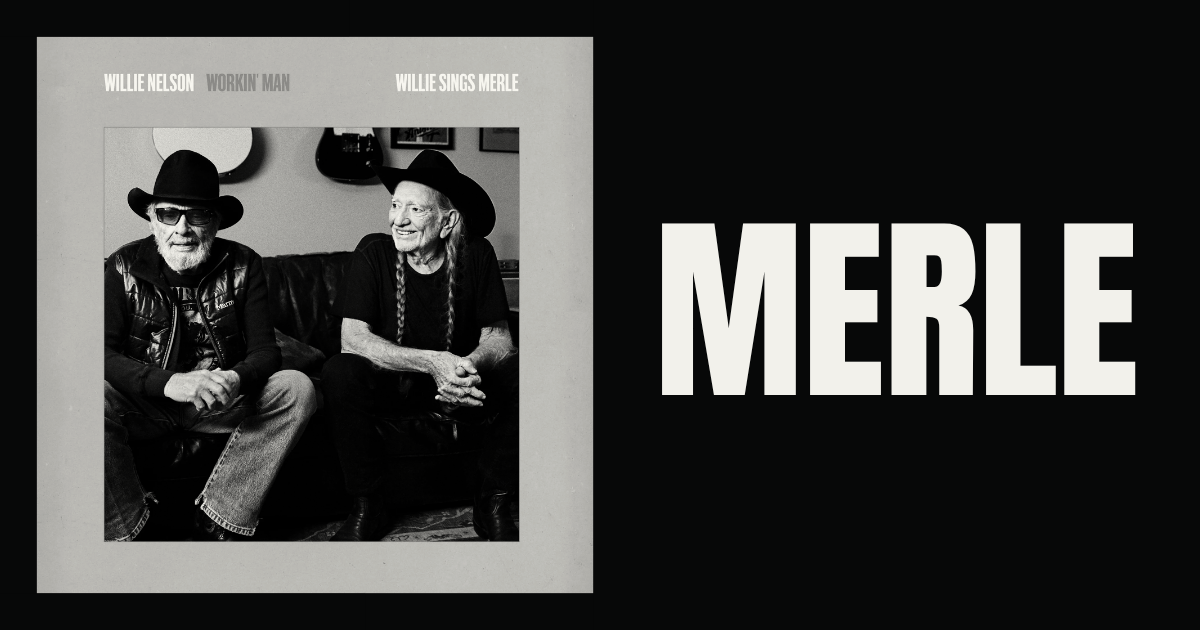
“Workin’ Man Blues” – Willie Nelson (from Workin’ Man: Willie Sings Merle, 2025)
One of Hag’s signature hits, “Workin’ Man Blues,” is usually framed as a purely blue-collar anthem, but it’s good to remember he identified the song as a blues. Having to work to survive while hoping your body holds out as long as you’ll need it is something to be cursed more than celebrated.
From last year’s Workin’ Man: Willie Sings Merle, a 92-year-old Nelson delivers his friend’s lines with a bit of a slur, weary and resigned but also grateful still to be working, to be on the road again until he runs out of road. Similarly, Willie’s arrangement sheds Merle’s Elvis-y fanfare for some hard, use-it-or-lose-it swing. “Play it, little sister,” he says, introducing one of the hot-jazziest solos in the career of the late Family band pianist Bobbie Nelson. Willie’s solos up top and midway through, meanwhile, are things of singular beauty, guitar work that sounds like play but refuses to hide the callouses and the miles. “As long as my two hands are fit to use…”
“Daddy Tried” – Jade Jackson (single, 2026)
Merle’s “Mama Tried” has been covered well over 100 times since he wrote it for the Killers Three soundtrack in 1968. But the song’s indelible ascending chorus and its universal theme – Merle sings it as if he’s as proud of defying his mom as he is remorseful for disappointing her – have encouraged people to use the song in all kinds of ways. Country comic Don Bowman parodied it as “Pappa Tried” as early as 1969 and more recently Angeleena Presley was clearly in conversation with Merle’s classic when she released “Mama I Tried” in 2017. As was Keith Urban when he sampled its lick for “Coming Home” in 2023.
Jade Jackson grew up in a small Cali town between Bakersfield and the Pacific, and her updated, gender-flipped take on Merle’s tale sounds just like that: Her voice feels a little dusty and a little sunny. Switching out Merle’s locale from “prison” to “Nashville” is funny because those two aren’t at all alike, but also because maybe they’re a little alike. For sure the ache in her voice reveals her as another singer-songwriter in a long line of kindred spirits to Merle; she’s going to go her own way, no matter her dad’s good advice.
David Cantwell is the author of The Running Kind: Listening to Merle Haggard, the co-author of Heartaches by the Number: Country Music’s 500 Greatest Singles and the co-creator of No Fences Review. His byline has appeared at Rolling Stone Country, The New Yorker, Slate, and No Depression, among other publications.
Photo Credit: Workin’ Man: Willie Sings Merle on Legacy Recordings
When it comes to fiddlers, we all know that more is more is more.
Lonesome fiddle? Great. Twin fiddle? Even better. Triple fiddle? (Who called Bob Wills?)
But with all this great fiddling, it’s hard to keep up with who is who. We are here to help. It turns out that for all the fiddlers that you may know and love, there are probably 10 more that you haven’t heard of – even if you’ve heard their playing!
Here are some fiddlers making big waves and sawin’ big figure eights who may be flying under your fiddle radar.
Ellie Hakanson
Originally from Portland, Oregon, Ellie Hakanson grew up playing music in her family band. Bluegrass fans will have heard her blazing solos as part of Jeff Scroggins & Colorado, with whom she toured and recorded for five years. She now lives in Nashville, where she plays with Missy Raines & Allegheny and Kristy Cox among many other artists.
Ellie’s fiddling is defined by its traditional bluegrass sound and deep study of the genre. The International Bluegrass Music Association agrees, as Ellie has been nominated for several IBMA Momentum Awards – in 2017 for Instrumentalist of the Year, in 2018 for Vocalist of the Year, and in 2019 for both Vocalist and Instrumentalist of the Year.
Here, she plays “Sally Goodin” with the incredible Michael Cleveland during a workshop at Cowichan Valley Bluegrass Festival in Lake Cowichan, British Columbia, in 2024.
Evan Snoey
Multi-instrumentalist Evan Snoey approaches music with a wide lens. Equally comfortable playing old-time fiddle and jazz saxophone, Snoey’s breadth of musical knowledge finds him playing with everyone from young shredders (like the Litch Brothers) to country artists (like Dylan Gossett). Originally from Seattle, Snoey’s stylistic interests include old-time, bluegrass, Scandinavian, Scottish, swing, jazz, and contemporary improvisational music.
In this video, he performs a medley of tunes – “Busta,” “Sjøvald,” and “Primrose Lass” – with Alex Wilder on piano for the Nashville Contra Dance.
Omar Ruiz-Lopez
Chapel Hill, North Carolina-based fiddler and multi-instrumentalist Omar Ruiz-Lopez may be best known for his work with folk duo Violet Bell. Ruiz-Lopez is currently making a name for himself as a sideman (playing cello, guitar, and fiddle) with artists such as the War and Treaty, Franklin Jonas, Lizzie No, and Langhorne Slim. And he has just announced a crowdfunding campaign for his first record of original music. Born in Panama and raised in Puerto Rico and Florida, Ruiz-Lopez is a bilingual singer-songwriter who brings a cross-cultural perspective to his music.
In the above video clip, Ruiz-Lopez performs “Panavueiro da Rabeca” and “Panariqueño,” an original fiddle tune, accompanied by Jamey Haddad and Clay Ross at Casey Driessen’s Blue Ridge Fiddle Camp in 2025.
Josie Toney
Soon after moving to Nashville, Josie Toney hit the road as part of Sierra Ferrell’s band, which went from a DIY van tour to a bus operation during her tenure. In 2022 she released her solo album, Extra, featuring her songwriting and guitar playing as well as extraordinary fiddle work. Originally from Olympia, Washington, Toney studied at Berklee College of Music before moving to Music City. She now tours with country star Hailey Whitters and appears often around Nashville fronting her own band and picking with others.
In 2022, she was a guest on Cameron DeWhitt’s podcast, Get Up in the Cool, performing a version of “Smith’s Reel” that perfectly shows her style.
Libby Weitnauer
Libby Weitnauer grew up in the shadows of the Great Smoky Mountains and studied classical violin in Chicago before returning to her roots in Tennessee to play old-time and country fiddle. An endlessly curious and evolving musician, she has played for Margo Price and Kelsey Waldon and has performed on Broadway in New York City, as well as founding indie band Dallas Ugly and fronting her own songwriting projects. A solo album is rumored to be on the way.
In this video, she performs “Swannanoa Waltz” for the YouTube channel The Old-Time Fiddler.
Amy Alvey
Old-time expert Amy Alvey is a fiddler from California who focuses on building community wherever she goes. In addition to recording and touring with her duo, Golden Shoals, and her indie solo project Mild Windago, she fronts the string band Hometeam Advantage, hosts a radio show on Middle Tennessee’s WMOT, and has cultivated a weekly old-time jam in Nashville. Amy is an encyclopedia of old-time tunes and sources with a wide range of stylistic ability.
Here, Hometeam Advantage includes George Guthrie (banjo), Charlie Fuertsch (guitar), and Ethan Hawkins (bass) performing “Tanner’s Farm.”
Jamie Fox
Montana-based fiddler (and pilot and aircraft mechanic) Jamie Fox grew up on the Fort Belknap Indian Reservation and is part of the Agniih and Nakoda tribes. Jamie, along with her brothers, learned Métis fiddle styles from traditional players on the reservation such as Old Fatty Morin, as well as Métis fiddlers like Jimmie LaRocque, Mike Page, and Johnny Arcand. She currently tours with her band The Fox Family Fiddlers, and as a solo performer.
This video, uploaded in 2019, showcases three reels in the Métis style performed in Denmark with Malene D. Beck accompanying on piano.
Katie McNally
Scottish fiddler Katie McNally grew up in the Boston area and was mentored by the legendary Hanneke Cassel. Her style is fierce and energetic, drawing inspiration from traditional Scottish and Cape Breton styles – as well as Scottish-American players. Katie records and tours her own music and is also a member of The Pine Tree Flyers with Emily Troll (accordion), Benjamin Foss (guitar), and Neil Pearlman (piano).
In 2024, the Pine Tree Flyers performed “Vidita” together for Seirm during Celtic Connections 2024, taped for BBC Alba. Watch above.
Austin Derryberry
As deeply rooted as they get, old-time fiddler and luthier Austin Derryberry plays with the groove of generations. Originally from Unionville, Tennessee, Derryberry’s duo album with Trenton “Tater” Caruthers focuses on the less well-known fiddling of the Middle Tennessee area. He apprenticed with legendary fiddle maker Jean Horner and now makes and plays fiddle in the region.
In this video, Derryberry is joined by his wife Courtney Derryberry and Greg Reish to perform an Ed Haley version of “Chinese Breakdown” in Ireland for the Westport Folk & Bluegrass Festival in 2023.
Connor Murray
Originally from the Chicago area, Connor Murray Ostrow polished his bluegrass chops studying with Michael Cleveland and he can currently be found gigging all over Nashville and around the country. Connor’s playing is clean and focused, with bluegrass drive and country sensibilities.
A graduate of Belmont University, for his senior recital in 2022 he performed a hot club jazz rendition of a Kenny Baker tune, “Bluegrass in the Backwoods,” illustrating the way his approach to the instrument has cross-pollinated with many styles.
Photo Credits: Lead image (L to R): Ellie Hakanson by Nico Humby; Josie Toney by Natia Cinco; Omar Ruiz-Lopez by Phyllis B Dooney, PHOTOFARM. Alternate image: Ellie Hakanson by Nico Humby.
Befitting Lucinda Williams’ stature as one of the greatest songwriters of modern times, she might be the most covered artist this side of Bob Dylan (who, as far as I can tell, might be the only major artist never to have covered one of her songs).
From “Are You Alright?” to “You Can’t Rule Me” and all points in between, Williams’ catalog is broad, deep, and multivalent, with lavish emotional content to dig into. Truly, the woman’s body of work contains multitudes.
Where she’s coming from is no mystery, because Williams has always been generous about showing off her own influences and idols. She has covered too many other artists’ songs to count, by the likes of Dylan, Nick Drake, Howlin’ Wolf, and more. She has also done multiple tribute albums in her Lu’s Jukebox series, covering the Beatles, the Rolling Stones, Tom Petty, and even Christmas songs, among others.
There’s almost too much to choose from, but here is a small sampling of what other artists have done with Williams’ songs over the years – focused more on stylistic departures than faithful readings.
“Passionate Kisses” – Saintseneca (2014)
It’s hardly surprising that a great deal of this list of covers will come from 1988’s breakthrough album Lucinda Williams, starting with this forthright statement of purpose. The obvious “Passionate Kisses” cover choice would be Mary Chapin Carpenter’s 1993 hit version, which put both women on the map. But let’s go more left-field with the sprawling, atmospheric grandeur of the cover by Ohio indie-folk band Saintseneca. It’s never sounded more wide-open cinematic, to the point that I kind of can’t believe no one has put it onscreen yet. Cue opening credits.
“Bus To Baton Rouge” – Amos Lee (2023)
This Philadelphia-born soul man thinks enough of the Williams oeuvre to have covered 12 of her songs for an album, Honeysuckle Switches: The Songs of Lucinda Williams. Williams’ original appeared as the penultimate track of her 2001 release, Essence. The lyrics yield up the title phrase of Lee’s tribute LP, and it makes a stunning album-closer here.
“Side of the Road” – Ben Folds (2005)
In Williams’ hands, “Side of the Road” conveys stoic resolve on her 1988 self-titled joint. North Carolina native virtuoso Ben Folds transposes it to winsome piano pop for his 2005 solo album Songs For Goldfish, and the transition works beautifully.
“Change the Locks” – Tom Petty (1996)
Originally titled “Changed the Locks” on her eponymous album, this is in the conversation for Williams’ greatest songs. Her version coursed with undercurrents of the sort of domestic violence that would inspire a woman to, well, change her locks. So it’s interesting that so many men have taken a crack at this song in the decades since, including Silos, Vampire Weekend, Rostam, and Elvis Costello. But maybe best of all is Tom Petty, who recorded it for the soundtrack to 1996’s She’s The One, getting the defiance just right.
“Joy” – Bettye LaVette (2005)
As good as all of Williams’ records have been, it wasn’t until 1998’s GRAMMY-winning Car Wheels on a Gravel Road that she finally got herself a gold record. “Joy” was a high point, equal parts angry and exuberant. Still, powerhouse soul woman Bettye LaVette took it to a whole new level with a swamp-blues rendition on her 2005 comeback LP, I’ve Got My Own Hell to Raise.
“Abandoned” – The Lemonheads (2019)
While The Lemonheads’ troubled leader Evan Dando is a decidedly problematic figure, there’s no denying his taste in covers. The Lemonheads have released two volumes of cover collections with good, bad, and ugly songs by everyone from Townes Van Zandt and Yo La Tengo to Florida Georgia Line and GG Allin. From 2019, Varshons 2 also features a fuzz-toned version of Williams’ very forlorn “Abandoned” (yet another Lucinda Williams song).
“Concrete And Barbed Wire” – Bella White (2022)
There has always been a stateliness to the Car Wheels on a Gravel Road track “Concrete And Barbed Wire,” which was in Canadian songbird Bella White’s onstage setlist years before she released a studio version on 2024’s Five For Silver. The song’s waltz tempo makes a perfect fit for bluegrass – recorded live at the Green Mountain Bluegrass and Roots Fest in Vermont.
“Metal Firecracker” – Mary Lou Lord (2015)
Everybody’s favorite busker, Mary Lou Lord is best-known for solo deconstructions of songs from the indie-rock canon. But on her 2015 LP Backstreet Angels, Lord goes full-band indie-rock for “Metal Firecracker” (which Williams originally cut on Car Wheelson a Gravel Road). Lord sounds dreamy to Williams’ earthiness – but both versions come down to, “All I ask, don’t tell anybody the secrets I told you.”
“People Talkin’” – Hurray For the Riff Raff (2012)
Maybe the acid test of a song’s worthiness is how well it holds up if stripped all the way down to voice and quiet strumming. As if there could be any doubt, Williams’ “People Talkin’” (from 2003’s World Without Tears) is superb in this guitar-and-fiddle version that Hurray For the Riff Raff recorded in a London kitchen for an edition of “notes from mt. pleasant.”
“Fruits of My Labor” – Waxahatchee (2021)
“Fruits of My Labor” seems like a song that’s still going to be played around campfires a century from now. Its structure and vibe bear passing resemblance to that classic spiritual, “A Change Is Gonna Come,” and it’s been covered numerous times since first appearing on Williams’ 2003 LP World Without Tears – fine, fine versions by Margaret Glaspy, Mia Dyson, and Rostam, among others. But Waxahatchee (Alabama-born Katie Crutchfield) gets closest to the song’s soul with her cover from 2021’s Saint Cloud +3 album.
“The Last Time” – Lucinda Williams (2021)
We’ll break the format here at the end and give Williams herself the last word, showing everyone how one pays proper cover homage. From her 2021 tribute LP, You Are Cordially Invited…A Tribute to the Rolling Stones, “The Last Time” is a song with a long and winding road behind it. Originated by the Blind Boys of Alabama, it was famously covered by the Staple Singers in 1961. Four years later, the Stones fit it with a snarling lead-guitar hook that took it out of church – and here Williams moves it right on over to the honky-tonk.
Continue exploring our Artist of the Month coverage of Lucinda Williams here.
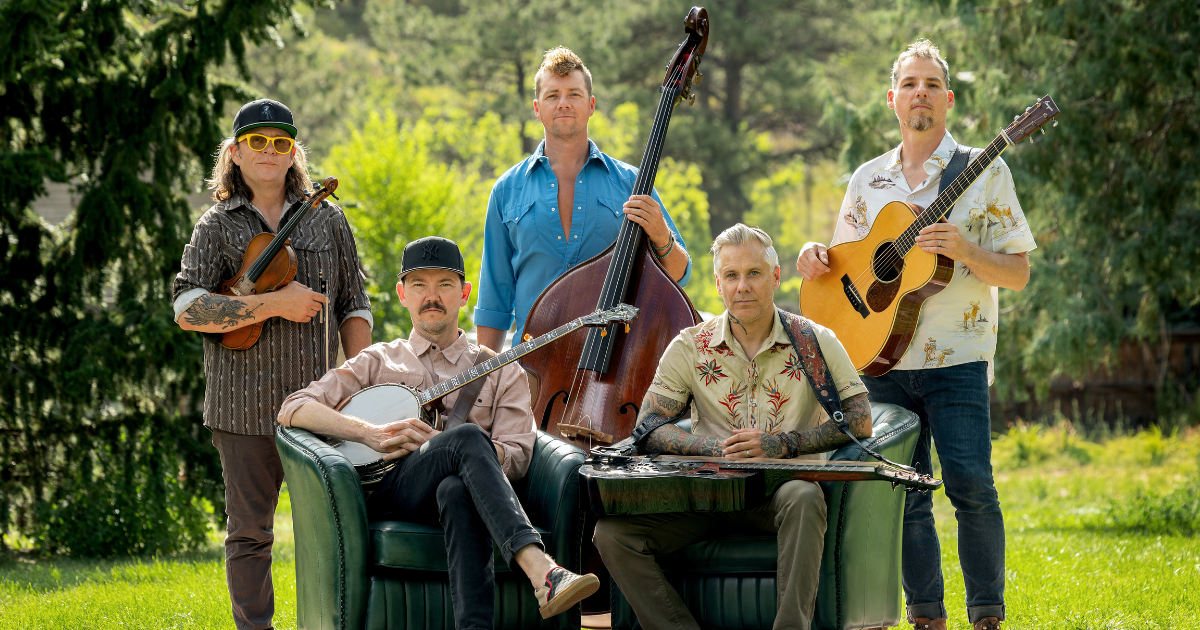
With over a dozen studio credits and even more EPs and live albums to their name, the Infamous Stringdusters have been one of the most persistent forces in bluegrass and roots music ever since staking their claim with 2007’s Fork In The Road.
Even as members changed in those early years, the band quickly found its core – Andy Hall (Dobro), Andy Falco (guitar), Jeremy Garrett (fiddle), Chris Pandolfi (banjo) and Travis Book (bass) – and rapidly began homing in on a sound that’s equal parts traditional and progressive bluegrass with a touch of country, jam, and other influences along the way. That variance has led to each of the band’s recordings having a distinctly different flavor than its predecessors, from the harmonious bluegrass symphony of Silver Sky to the feature-rich Ladies & Gentlemen, hope-fueled Laws of Gravity and Rise Sun to the somber Toward the Fray.
“Making a record that sounds like the Stringdusters isn’t the challenge,” Book told me in 2022 for No Depression. “The challenge is seeing just how deep we can get on each song in order to make it the best, most authentic version of itself it can be. This requires us all setting aside our egos, being open to suggestions, and trusting one another to create the best music as possible.”
In celebration of our Artist of the Month, we take a look back on the Stringdusters’ sonic evolution and essential tracks from their two decades in service of bluegrass and the song.
“Fork In The Road” – Fork In The Road (2007)
On their emphatic 2007 debut, Fork In The Road, the band – then comprised of eventual Punch Brother Chris Eldridge (guitar) and Jesse Cobb (mandolin) alongside Book, Garrett, Hall, and Pandolfi – quickly struck a chord with bluegrass aficionados on songs like “No More to Leave You Behind” and the album’s title track. The latter of which positions the band’s fiddle maestro front and center as his high-pitch croon carries the weight of being at a crossroads. Whether it’s a hypothetical take or one rooted in the group’s own musical experiences, it’s safe to say the path the ‘Dusters have taken since has more than paid off with a legacy 20 years strong and counting.
“Magic #9” – Things That Fly (2010)
The band show off their picking prowess on the whimsical “Magic #9,” a track that resulted in their first-ever GRAMMY nomination at the 53rd annual awards in 2011. While the ‘Dusters can thrash and sing bluegrass harmonies with the best of them, songs like this also showcase the group’s knack for crafting their own instrumental compositions. Their tunes pack just as much story and emotion – if not more – into a three-and-a-half minute burst than most of their counterparts with vocalized accompaniment. Coincidentally, the GRAMMY the song was up for was not in a bluegrass category, but rather for Best Country Instrumental Performance. Given the band’s penchant for string music, unreal levels of improvisation, and the consistently inconsistent award nominations process, it’s the least bit surprising, if not even a bit fitting.
“Rockets” – Silver Sky (2012)
The song that first unlocked my captivation for the Infamous Stringdusters (and still my favorite to this day) is “Rockets.” It was around the time the album it’s included on, Silver Sky, dropped that I began seeing the band in concert for the first time and this song was always a staple. The uplifting temperament and optimistic nature of Book’s vocals combined with the meticulous instrumental timing – from Garrett’s fiddle interjections to Pandolfi’s hard-driving banjo backbeat and Hall’s slick Dobro tones – culminate in a joyous, borderline spiritual experience every time I hear it.
Because of this and other tracks on Silver Sky like “Fire,” “Night On The River” and “Walking On The Moon” I consider the record without a doubt their most essential project to date. Although, as you’ll see, the great tunes haven’t slowed down in the years since.
The ‘Dusters’ 2016 effort Ladies & Gentlemen stood out for many reasons – most notably its more folk-leaning bluegrass numbers and star-studded list of collaborators ranging from Mary Chapin Carpenter and Lee Ann Womack to Sara Watkins and Jennifer Hartswick (Trey Anastasio Band). However, the most frequent collaborator from the record was Nicki Bluhm. Her contribution on “Still The One” blossomed into frequent support songs on the road performing not only that track, but several other cuts from the breakthrough album. It wound up taking the band’s already spectacular knack for partnering with others to another level. As for the song itself, “Still the One” is a powerful rallying cry about a love that persists even when heavy rain, or life’s difficult moments, try to get in between and tear you apart.
“Gravity” – Laws Of Gravity (2017)
After a decade of slinging bluegrass, country, and roots-adjacent bangers, the ‘Dusters finally reached the musical mountaintop with their 2017 album, Laws of Gravity, which earned them their second GRAMMY nomination and first-ever win for Best Bluegrass Album. Central to that accomplishment was the album’s de facto title track “Gravity,” an anthemic adventure.
Similar to the aforementioned “Still the One,” the song focuses on the story of two inseparable lovebirds charting out a future life of memories together, even if they don’t know exactly when, how or why it will all happen. Most important to them though is the memories being made in the current moment, whether that be together, at a Stringdusters show, or something entirely different.
“Rise Sun” – Rise Sun (2019)
With the lead and title track to their 2019 album Rise Sun, the Infamous Stringdusters make a late entry to folk music’s stomp-clap party, combining the early 2010s trend with heated string music like few 2010s contemporaries could muster. The track also features a noticeably hopeful hue set in motion by the metaphor of a rising sun not only spawning a new day, but bringing change and the opportunity for a fresh start, as well. In that sense, the band had no idea how much hope people would need the following year, when COVID shut down the world. The result of which inspired the band’s next original entry to this list. But first, the ‘Dusters pay homage to the father of bluegrass…
“My Sweet Blue Eyed Darling” – A Tribute to Bill Monroe (2021)
The bluegrass ballad in pole position on Bill Monroe’s 1977 album Sings Bluegrass, Body And Soul, was “My Sweet Blue Eyed Darling,” a track that holds the same spot on the Stringdusters’ 2021 recording, A Tribute to Bill Monroe. On it, Pandolfi leads the way with his steady, blistering banjo while Garrett and the others hit home on the signature high and lonesome harmonies that Monroe is legendary for.
Fittingly, this collective album honoring the bluegrass legend wound up earning the ‘Dusters their third GRAMMY nomination in 2022, though they came up short to Béla Fleck’s My Bluegrass Heart. Their foray into recording covers isn’t anything new for the band, who later went on to record a Flatt & Scruggs tribute along with a series of Undercover EPs (more on that later) in addition to weaving other folks’ material into their live sets on a nightly basis.
“Pearl Of Carolina” – Toward the Fray (2022)
While the Stringdusters’ members call many places home, there may not be a more appropriate individual place with which to associate the band than Western North Carolina. Touching on that connection to the Old North State, Book sings about love and longing to return home on “Pearl of Carolina.” The song’s title stems from an intro script he was crafting for his musical talk show podcast, The Travis Book Happy Hour, as a way to describe the region.
In addition to being grounded in a person or place, similar to “Gravity” or “Still the One,” “Pearl of Carolina” is also a reminder to search for the places and small things in life that bring you joy. While much of Toward the Fray takes on a darker tone, “Pearl” stands out as a burst of much-needed normalcy on a project otherwise finding inspiration in a world of disarray.
“Touch Of Grey” – Undercover, Vol. 3 EP (2024)
The band has covered a bevy of artists on their Undercover series of EPs, from Tom Petty to The Highwaymen, The Cure, and ZZ Top, but none fit the band’s style and sound (with the exception of the Monroe and Flatt & Scruggs stuff, perhaps) than their rendition of The Grateful Dead’s “Touch of Grey” on Undercover, Vol. 3. Released in 2024, the ‘Dusters’ take on the Dead’s most commercially successful hit combines the best of both groups, further adding to the song’s timeless nature – a message that, 40 years after its original release, feels just as relatable and relevant as ever.
“Working Man Blues” – 20/20 (2026)
Much of the Infamous Stringdusters’ journey over the past two decades has been inhabiting the role of blue-collar road warriors playing anywhere for anyone who would have them. With that in mind, there’s no more fitting song to kick off their next album, 20/20, than “Working Man Blues.” The band sings about a man clocking in before sunrise and doing hard labor all day before clocking out and heading to the bar in search of fun. It’s a combination of rugged, resistant, and rowdy that embodies the Stringdusters’ entire sound and ethos for 20 years now – and, if we’re lucky, will continue for another 20 more (and then some).
Continue exploring our Artist of the Month coverage of the Infamous Stringdusters here.
Few musicians have ever moved as fluidly between eras, genres, and generations as Doc Watson. From front-porch duets to grand-stage bluegrass revivals, Watson’s collaborations have a way of dissolving categories entirely.
His flatpicking precision, rhythmic calm, and vocal warmth made him the kind of performer who elevated everyone within earshot – young prodigies, genre pioneers, folk-tradition torch bearers, and musical iconoclasts alike. His reputation as a consummate accompanist was built not on showmanship or flamboyance, but on musical generosity and an intuitive sense of timing, phrasing, and expression that allowed others to shine while retaining his unmistakable voice.
Part of Watson’s power lies in the consistency of his musical identity. He never strained to fit into a new format or trend; instead, others bent gratefully toward his center of gravity. Whether playing an old-time fiddle tune, trading licks with a jazz-influenced mandolinist, or harmonizing with a younger bluegrass singer, he brought a sense of ease and groundedness that anchored every ensemble. That stability gave his collaborators the freedom to explore, improvise, and innovate – knowing Doc would be right there, steady and sure.
This sense of balance between precision and freedom made him a model collaborator for musicians across generations, and his impact can be traced through countless recordings, festival lineups, and mentorships of younger players.
Watson’s influence was not just technical but communal. He could guide a performance without overwhelming it, offering the ideal blend of authority and humility. In his guitar, listeners hear the voice of the North Carolina mountains, the pulse of Appalachian tradition, and the adaptability of a musician able to engage any genre without losing authenticity.
Today, YouTube’s patchwork archive of footage allows us to witness these collaborations anew: small moments of musical connection, sometimes real-time, sometimes reconstructed from archival sources. Below is a curated set of eight standout filmed or recorded collaborations that illustrate Watson’s reach. From storied duets with Chet Atkins or Earl Scruggs to meetings with newer-generation players.
“Roll in My Sweet Baby’s Arms” – Doc Watson, Earl Scruggs & Ricky Skaggs (The Three Pickers)
This relaxed but virtuosic performance features Watson, Scruggs, and Skaggs playing with the ease of a porch jam made public. Watson’s crisp flatpicking forms a warm foundation, while Scruggs’ banjo drives with characteristic agility and Skaggs adds mandolin flourish and bounce.
The trio exhibits mutual respect and joy, and their lines interweave with natural conversation. The recorded performance comes from the 2003 album The Three Pickers. The energy and clarity of the musicianship exemplify Watson’s ability to anchor an ensemble while remaining entirely supportive, a model of intergenerational teamwork. It is a performance that displays the combination of technical mastery and intuitive musical empathy that defined Watson’s career.
“Tennessee Stud” – Doc Watson & Nitty Gritty Dirt Band (Will the Circle Be Unbroken)
Watson’s performance of “Tennessee Stud” on the Will the Circle Be Unbroken project exemplifies his ability to blend seamlessly with both established musicians and a younger ensemble eager to learn from him. His deep, resonant vocals float over understated but fluid flatpicking, supporting the Nitty Gritty Dirt Band’s harmony vocals and rhythmic drive.
Watson’s musical sensitivity allowed for a dialogue that bridged generations, bringing traditional songs into a contemporary context while retaining their original heart and vibrancy. This track also highlights Watson’s ability to adapt to the studio environment, shaping a sound that was both authentic and polished. The 1972 studio album is well-documented, though various YouTube versions may mix studio, rehearsal, or live takes.
In this medley, Watson and Chet Atkins engage in a playful, masterful guitar dialogue. Watson’s flatpicking exhibits crisp, percussive articulation, while Atkins’ thumb picking introduces a smooth, jazz-inflected counterpoint. Both artists navigate tempo and dynamics with precision, creating a performance that is both technically dazzling and deeply musical.
The track appears on the Reflections album and while some online performances derive from live shows or reissued audio, the studio recording itself exalts the collaborative interplay. This duet demonstrates Watson’s ability to move effortlessly between folk and jazz guitar traditions, honoring both while creating something uniquely their own. The performance underscores his adaptability, an essential quality in a musician sought after by so many genres and generations.
“Black Mountain Rag” – Doc Watson & Merle Watson
The father-son dynamic between Doc and Merle Watson is in full display in this live rendition of “Black Mountain Rag.” Merle’s nimble, rhythmic energy dances atop Doc’s grounded guitar tempo, producing an interplay that is conversational, playful, and intricate. Their shared history and years of touring allow for spontaneous embellishments and musical commentary woven into the tune.
This performance captures the essence of the Watson family legacy, showing how Doc nurtured both musical skill and expressive interpretation in the next generation. The piece also serves as a lesson in ensemble sensitivity, as Doc balances his playing to give Merle ample space while maintaining rhythmic and harmonic cohesion.
“What Would You Give in Exchange for Your Soul?” – Doc Watson & Bill Monroe
Watson and Monroe’s pairing on this traditional tune combines the latter’s piercing, high-lonesome tenor with the former’s warm baritone, creating a striking emotional contrast. Watson’s guitar provides steady, unobtrusive accompaniment, allowing the vocal interplay to take center stage.
This recording exemplifies Watson’s ability to adapt to any partner, responding in real time to vocal phrasing and tempo shifts. The performance demonstrates his interpretive sensitivity, highlighting how he could honor a song’s emotional core while integrating his own stylistic voice.
“Shady Grove / Summertime” – Doc Watson & David Grisman
Watson’s collaboration with David Grisman blends Appalachian folk with progressive acoustic styling. In this rendition of “Shady Grove,” Watson’s rhythmic guitar backgrounds Grisman’s mandolin flourishes, resulting in a lively, conversational back-and-forth. Improvisation is key, as both musicians respond to each other’s phrasing, demonstrating mutual respect and spontaneity.
This collaboration underscores Watson’s versatility, showing he could navigate between traditional melodies and innovative interpretations, elevating both in the process. It is a reminder of his role in bridging traditional and progressive acoustic music for audiences and colleagues alike.
“Amazing Grace” – Doc Watson & Jean Ritchie
Watson and Jean Ritchie’s collaborations were well-established, including performances at venues like Folk City in the early 1960s. However, the specific attribution of some YouTube uploads titled “Amazing Grace” is ambiguous. The Live at Folk City album recording is the most reliable source, showing their complementary styles: Watson’s gentle, precise guitar lines support Ritchie’s clear, expressive vocals, blending Appalachian tradition with personal interpretation. They represent the transmission of Appalachian folk music to wider audiences and the seamless melding of their similar sensibilities.
“Summertime” – Doc Watson & Mark O’Connor
Watson’s influence on multi-instrumentalist Mark O’Connor is well-known; O’Connor cites him as a formative inspiration and their collaboration remains significant as a symbolic bridge between generations. Watson’s teachings and style informed O’Connor’s fiddle mastery, illustrating Watson’s mentorship and the continuity of American acoustic tradition. Indeed, their shared repertoire speaks to the passing of musical knowledge and the sustaining of tradition through personal and professional interaction.
These eight performances above collectively highlight Doc Watson’s role not only as a primary musician, but as a profoundly generous collaborator. He created space for others to excel, whether alongside legends like Bill Monroe, Earl Scruggs, and Chet Atkins or with younger rising stars such as Alison Krauss and Mark O’Connor. Watson’s approach combined technical mastery with emotional intelligence, allowing him to respond intuitively to fellow musicians in real time.
His collaborations illuminate the breadth of his influence. Watson moved with ease between old-time Appalachian tunes, rag medleys, gospel-inflected ballads, rocking hillbilly sounds, and improvised jam sessions. Across these contexts, he remained unmistakably himself: grounded, warm, and adaptable.
By mentoring younger musicians, bridging generations, and seamlessly adapting to new musical contexts, Doc Watson demonstrated that tradition is not static; it is a living, evolving practice. His legacy continues to teach musicians the art of generosity, the importance of listening, and the beauty of musical dialogue. Perhaps in every collaboration, Watson’s spirit resonates, ensuring that his contribution to music endures across time, space, and audience.
We wouldn’t ever begin to even try to define it. Good Country is a place. A feeling. A sense of knowing it when you hear it. Whatever you consider to fall under the term or qualify for the moniker, there certainly is plenty of Good Country to be found these days – and especially in 2025.
To wrap up the year in country, we asked our GC contributors not to simply select their favorite country song or album of the year, but to consider that titular question. We gave our writers no parameters or qualifiers for what their picks could be or include, leaving the prompt as open-ended as possible, asking our folks to focus in on the music that stuck with them, whatever the reason or impulse or staying power. Most selections are albums and songs, but some are artists, books, soundtracks, live shows, or other more intangible moments.
The results perfectly illustrate how much easier it is to triangulate the location of Good Country by showing, rather than telling. Spanish-language and Mariachi-infused country fall alongside twangy Mississippian working class messages over hip-hop beats and contemplative singer-songwriter mental health reckonings. Bluegrass pickers can be found beside books and motion picture soundtracks and songs sung in te reo Māori. Smash hits and household names bump up against newcomers and fresh discoveries. It’s all here. It’s all Good Country.
As you scroll, we hope you enjoy the broad, borderless, and endlessly entrancing territory we’ve come to know as Good Country. As we turn the page from 2025 to 2026, we’re proud of the community of folks who love and make Good Country – and beyond excited to hear what they’ll continue to bring to us in the very near future.
Sammy Arriaga, “Before The Next Teardrop Falls”
Freddy Fender’s masterful 1974 hit, “Before The Next Teardrop Falls,” with its Tejano guitar and half-Spanish chorus, is so cemented into the history of the place it was made that it sounds as contemporary as Willie in Austin, and older than the Carter Family, even maybe older than Nashville itself. Recording a cover of it, especially in this era of ICE raids and xenophobic facism, is to argue for a kind of double heartbreak – where the loss of a lover and the oppression of a culture work concurrently. I would have never thought that Sammy Arriaga was capable of this, his previous work was often vapid and derivative, but 2025’s Heart in Texas has an immediate, difficult tenderness.
If Fender’s work has hope that his lover will eventually need him in the same way that country music will need him, then Arriaga’s work is devastating because he knows that he will not be asked to be there at all. – Steacy Easton
William Beckmann, “Por Mujeres Como Tú”
Few things brought me more joy this year than videos of country crooner William Beckmann performing Pepe Aguilar’s “Por Mujeres Como Tú” at Floore’s Country Store in Helotes, Texas, in September. Beckmann was joined by Mariachi Campanas de America, a San Antonio-based group that’s been active in different iterations since 1978.
A native of Del Rio, Texas, Beckmann has made no secret of his bilingual roots – he sang Vicente Fernández’s “Volver, Volver” during his Opry debut in 2023 and included a cover of “Por Mujeres Como Tú” on his major-label debut, Whiskey Lies & Alibis, earlier this year. But this was clearly a special moment, as evidenced by the triumphant expressions on Beckmann’s and the mariachis’ faces and the sounds of the delighted crowd singing along. It offered proof of what many generations of Texans already know to be true: Mariachis make everything better. – Will Groff
Luke Bell, The King is Back
Luke Bell was a country music chameleon like no other. Western swing, country blues, classic country, outlaw, cowboy, trucker songs, and rowdy barroom country – he sounded at home in it all. Enigmatic and tough to pin down, Bell was a quintessential driving force in the Americana and independent country scene as it blossoms now. He also struggled with mental illness and substance abuse, and was found dead at 32, truncating his musical contributions.
Now, a posthumous double album, The King is Back, delivers both Bell’s ineffable joie de vivre and his remarkable songwriting in the most complete form yet. The King is Back’s 28 tracks range from bravado on “Rattlesnake Man,” “Long Gone Love,” and “Cold Stew,” to vernacular country with “Roofer’s Blues” and “Irrigator’s Blues,” and classic country weepers like “Seven and Steady” and the album’s spectacular, tragic closer, “Tiger’s Mouth.” Bell’s songwriting was often stunningly prescient. And on the album’s title track, it’s easy to imagine Bell’s just stepped back on stage with a wink and a grin: “I heard things just ain’t the same without me/ Hold your hats, the party’s on, the king is back,” he sings. This album is as close as it gets. – Meredith Lawrence
Cole Chaney, In The Shadow Of The Mountain
In 2023, as I was wrapping up an interview with music industry counselor JT Nolan about the mental health benefits of playing music, he asked, “Have you heard Cole Chaney? Go to YouTube and listen to ‘Spirit.’” When friends and family turn away, houses of worship slam-lock their doors, and society at large stigmatizes and ostracizes, the broken take refuge in the arts. Sometimes it’s complex work. Sometimes it’s the gentle strumming of an acoustic guitar and a high lonesome refrain: “I want to let go, I don’t want to hurt no more, I want to let go … spirit … I’m tired of holding on …”
A lot can happen in two years. Cole Chaney grew his hair, plugged in, turned up, and released In The Shadow Of The Mountain. The result owes as much to Cobain and Cornell as it does to Doc and Merle. Chaney describes it as “a little bit of a darker album.” That’s saying something, considering the emotional outpouring that is his debut, Mercy. Settled in midway on the new release is a revisited “Spirit,” somehow even more plaintive than the OurVinyl session.
Albums like In The Shadow Of The Mountain, in all its aching beauty, are reminders that while our brokenness may never truly leave us, music is the kintsugi that helps fill its deepest cracks. – Alison Richter
Tyler Childers, Snipe Hunter
Sure, Tyler Childers’ grungy Rick Rubin-produced masterpiece, Snipe Hunter, has been nominated for a GRAMMY Award in the Best Contemporary Country Album, but placing the project alongside releases by fellow nominees Miranda Lambert and Kelsea Ballerini illustrates how limiting this buzzworthy category split really is. To this listener, every single fascinating song on Snipe Hunter is built upon a centuries-old foundation of country and Appalachian tradition.
While the album has certainly had a polarizing effect among those who describe themselves as Childers fans, folks “in the know” inside and outside of the region – be it central or southern Appalachia, Kentucky, the South, or rural haunts in general – found endlessly artful complications and narrations of country (and country-ness) throughout the collection. Childers’ lyrics are all at once demonstrable and fantastic, far-fetched and absolutely grounded in reality. Over the half-year since its release, I find myself returning to Snipe Hunter over and over again to delight in new discoveries and freshly raised eyebrows and first time laughs-out-loud as I find more and more whimsical magic flowing from Childers’ true country pen. You may not see yourself reflected in this EP, but to those of us who do, the sensation is joyous – and addicting. – Justin Hiltner
Madeline Edwards, FRUIT
When Madeline Edwards started turning in songs for her 2025 album, FRUIT, an “industry leader” on her team suggested she package the project as a “grief EP” – a moment of catharsis in the wake of her younger brother’s death that would not distract her from more commercially viable musical pursuits. But the grief songs kept coming and the suits lost faith.
Edwards stuck to her guns and delivered the brilliant concept album independently. The pangs of mourning ring out throughout FRUIT, but so do hard-won determination and joy. Edwards’ range as a storyteller is on marvelous display from the instantly memorable piano ballad “Just A Dream” to the wall of guitars on “American Psycho” and gospel timelessness of “Holy Fire.”
Edwards is at home among the many different shades of contemporary country, while also dipping her toes in soul, rock, indie and her very own brand of classical pop vocals. Somebody please put this multifaceted performer on a massive headlining tour ASAP so we can watch her soar to even greater heights. – Lizzie No
Sierra Hull, A Tip Toe High Wire
With the release of her latest album, A Tip Toe High Wire, Sierra Hull has broken through a new level of national and international notoriety. With a songbird voice and soothing stage presence, the mandolin virtuoso took her deep bluegrass roots and blended it with a heady helping of Americana and indie-folk stylings.
Always cognizant of her traditional bluegrass foundation, Hull continues to use that steady footing to step over musical fences and into new realms of sonic possibilities, as seen with her appearances onstage in recent years with the likes of Slash, Cory Wong, and the Allman Betts Family Revival. If anything, A Tip Toe High Wire is, in many respects, Hull finally arriving into her own space and signature sound, something she’s chased after since she was a young kid playing alongside legends like Alison Krauss, Sam Bush, and Béla Fleck. The album itself is a testament to the unlimited possibilities she possesses and radiates with such ease and pure enthusiasm.
Not to mention, Hull also took home her seventh Mandolin Player of the Year honor at this year’s International Bluegrass Music Association Awards. – Garret K. Woodward
Nicholas Jamerson, The Narrow Way
Those plugged into Kentucky’s music scene will often put Nicholas Jamerson’s songwriting on the same level as that of Tyler Childers, Chris Stapleton, and Sturgill Simpson. With his latest record, The Narrow Way, it’s easy to see why.
On the 12-song project, the singer’s humility shines through as he tackles topics like the bond he’s built with his partner (“One With You”), remaining hopeful in life’s dim moments (“Dark In Every Day”), not taking your time for granted (“Running Out Of Daylight”) and reflecting on moments you can’t get back (“Prater Creek”).
Further recognition of Jamerson’s prowess as a writer can be found in the feature spots littering the project, which range from its producer Rachel Baiman to Ketch Secor (Old Crow Medicine Show), Tim O’Brien, Shelby Means (Molly Tuttle & Golden Highway), and his sister, Emily Jamerson (another artist to keep your eye on). Altogether, The Narrow Way follows the same formula Jamerson has rode to success for over a decade now – serving the song above everything else – and the best part is he’s showing no signs of slowing down. – Matt Wickstrom
I spend more time on TikTok than I’d like Good Country’s readers to know, and it seems like most country artists’ content sits on a continuum between “here’s a bonfire scene that cost two million dollars to produce” and “pardon my PJs, the label made me post this :(.”
Mississippi songwriter KIRBY, however, used short-form vertical video as a canvas for her Southern Gothic storyscapes to great effect all year, turning album promotion into an opportunity for site-specific performances. In July, KIRBY posted a lyric video for “The Man,” a song from her then-forthcoming album, Miss Black America. She sings straight to camera in front of the yellow Dollar General sign you see on every block in the hood. Her vocal winks at Ann Peebles and the caption explains the prevalence of food deserts in America.
This fall, clips of “Na$ty” created their own cultural moment on the Black Internet. You kinda had to be there, which is a lesson in itself. On KIRBY’s internet, everything is text and anything can be useful. Hair, thighs, grooves, intertextual comparisons, and accents are thick, and AAVE will not be translated. We are cordially invited to keep up. – Lizzie No
Olivia Ellen Lloyd, Do it Myself
West Virginia native, now New York-based songwriter Olivia Ellen Lloyd taps into a deeper sense of love, heartbreak, liberation, and resilience on her sophomore album, Do it Myself. The release features an all-star band with Dave Speranza on bass, Connor Parks on drums, Duncan Wickel on fiddle, James Woodall on pedal steel, Sarah Glades on percussion, and Mike Robinson as producer – as well as playing guitar and pedal steel.
Lloyd’s storytelling is vivid, emotional, and quite powerful. Listening to both this album as well as her first, it’s beautiful to watch her story unfold in sentimental songs, which have a country twang, but you can also hear influences from other genres. Whether punchy songs or soft ones, all of her music has a groove that makes you want to sing and dance along – while also giving you a space to experience your own feelings, as she does while singing. – Emma Turoff
Rob Miller, The Hours Are Long But The Pay Is Low: A Curious Life in Independent Music
A question anyone who pursues a creative life will ask themselves: Why do we take a vow of poverty to put art into the world? As put forth in Bloodshot Records co-founder Rob Miller’s memoir, The Hours Are Long But The Pay Is Low, it’s because not doing it is not an option.
Chicago-based Bloodshot caught the wave of mid-1990s alternative country, releasing seminal works by Old 97s, Waco Brothers, Robbie Fulks, Sarah Shook, and more. Miller comes across as an OCD character straight out of High Fidelity, and his memories of the label’s hardscrabble early days are refreshingly unpretentious.
Bloodshot’s story wasn’t entirely positive. Its original incarnation ended badly amid disputes between Miller and his business partner (the label was ultimately purchased by Exceleration Music, which operates it now under new management). But Miller summarizes the bad-vibes part only briefly, concentrating instead on telling one man’s love story for music. It’s honestly impossible to imagine him doing anything else. And as the cherry on top, Miller dedicates the book to a pair of late friends including Dex Romweber, who he writes “left this world before he could read what his music meant to me.” – David Menconi
Kristina Murray, Little Blue
Little Blue is an understatement. Kristina Murray’s sterling third LP could convincingly have been called “Huge Bummer,” which is coincidentally the mark of a great country record.
“It’s gonna get worse, just give it time,” Murray incants on “Has Been,” a cheekily dour turn-of-phrase that just may stop you in your tracks. (Surely she means it’s gonna get better, right?) Later, on the dreamy “Fool’s Gold,” Murray tries her best at seeing beyond the proverbial grey skies, only to come up short: “It’s just more clouds,” she sighs. Such moments are appropriately slathered in pedal steel, but there’s also a swampy, rock ‘n’ roll groove to tracks like the deliciously jaded “Watchin’ the World Pass Me By” that makes the whole set go down easy. – Will Groff
Drew Parker
My introduction to Drew Parker was his 2020 single “While You’re Gone,” about missing a girl and drinking a gas station PBR while waiting for her to come back. That song had the classic hallmarks of a contemporary country breakup song. Little did I expect the curveball to come five years later.
For over a month earlier this year, Parker teased a big announcement with cryptic social messages like, “Some chapters end. Some chapters begin. This one… isn’t about me. 9•15•25.” The day came and Parker revealed in a short film testimonial that he’s felt God speaking to him, culminating in Parker’s non-religious manager calling and saying Parker should record Christian (country) music. This “moment” stuck out to me not only for the unexpected manner in which Parker revealed his decision, but because it’s obvious this isn’t a creative “phase.”
I don’t see Parker putting together a “token” record about believing and then going back to just girls, beer, and his pickup. Furthermore, Parker exudes unwavering peace about it all – whether he loses fans or faces mean-spirited judgment. There’s tangible risk to this move and there’s something to be said for Parker’s resolve and frankly, his faith in making this change. – Kira Grunenberg
Nathaniel Rateliff & The Night Sweats Live at the Kia Forum
Thinking back on all the great music I saw this year, the concert topping my list is one I saw at Los Angeles’ Kia Forum in February. The amazing triple bill – a solo Sam Beam, Waxahatchee, and headliner Nathaniel Rateliff & The Night Sweats – all delivered dynamic performances. But it was the unexpected parts of the concert that really made it so memorable.
During his set, Rateliff welcomed several special guests: Lucius’ lead singers Jess Wolfe and Holly Laessig, Taylor and Griffin Goldsmith from Dawes, and Grateful Dead bassist Bob Weir. What especially impressed me, however, was how Rateliff generously let his guests take the spotlight – a gesture that conveyed his joy for making music, particularly in a “more-the-merrier” collaborative way.
The Colorado-based Rateliff and his band also made the extraordinary gesture of using the concert to raise funds for victims of Southern California’s January wildfires as well as partnering in a purchase of a mobile food pantry to assist those left homeless by the destructive fires. This night reminded me how musicians can not only create a genuine sense of community through their rousing performances, but also through their inspiring actions. – Michael Berick
Sinners (Original Motion Picture Soundtrack)
Ryan Coogler’s Sinners is the horror film of 2025. It’s been hard to ignore, and for good reason. Michael B. Jordan, who plays double duty as twin outlaws Smoke and Stake, leads the cast which also includes Hailee Steinfeld, Wunmi Mosaku, and Thomas Pang (also known by his stage name, Yao). The film ultimately raked in $367 million in worldwide box office receipts. From its unique spin on vampires to its rootsy, blues-driven music, Sinners excels in celebrating the rich history of Black music and connects the dots between African tribal music to modern day hip-hop and R&B.
Songs like “Travelin’” (a standout moment from newcomer Miles Caton as musician hopeful Sammie) and the mind-blowing time-traveling song “I Lied to You” (paired in the movie with a visual mixing all the styles of Black-made music throughout history) mark the soundtrack as one of the year’s best releases. It’s sure to give the audience a renewed sense of Black history that’s often correlated to specific moments and eras in time. The film and its soundtrack will be talked about for decades as being a vital cinematic moment. – Bee Delores
Ringo Starr, Look Up
Way back at the beginning of 2025, Ringo Starr reminded us how different the world would look today if not for his love of American roots music. Teaming up with GRAMMY-winning producer T Bone Burnett, Starr’s country album Look Up is a love letter to the sound that drove his imagination.
Over 11 new songs written mostly by Burnett for the occasion, a classic American art form got a British Invasion makeover, with modern masters like Billy Strings, Molly Tuttle, and Alison Krauss joining Starr’s fun. Yet, what made this project a year-end highlight was not just the tunes. It was what they represent. As Starr openly declared, his first musical love was American blues and country. Artists like Lightning Hopkins sparked a creative impulse that would ultimately help redefine pop forever. From releasing music as a self-contained band and writing their own songs, to making youth culture a dominant force, The Beatles would change the world – and who knows? With a different drummer behind the kit, maybe none of it happens. Look Up shows where Starr was coming from. – Chris Parton
Vandoliers, Life Behind Bars
Vandoliers’ fifth studio album, Life Behind Bars, is both joyous and contemplative as the raucous country-punk band dive deep into themes of gender, grief, and sobriety in equal measure. “Dead Canary” blasts eardrums with a Mariachi flavor that barrels full steam ahead, setting the stage for their most impressive record to date. Other essentials such as “Bible Belt” and “Thoughts and Prayers” take aim at the current social and cultural moment, addressing religious fanaticism and how it clouds any sense of empathy.
Songs like “You Can’t Party with the Lights On” and “Valencia,” another Mariachi-intoned moment, are just plain fun. These round out the album into a well-crafted snapshot of the group right now and where they fit into the ever-changing world. Additionally, Vandoliers have never sounded so in tune with one another, vocally and musically, opting for compelling and intricate choices that expand their style without sacrificing what’s made them so good. – Bee Delores
Kelsey Waldon, Every Ghost
As the editor for Good Country and BGS, I listen to hundreds of albums a year, but they rarely stop me in my tracks. That happens even more rarely when album creators are longtime close friends of mine. But despite having met Kentuckian singer-songwriter Kelsey Waldon nearly 15 years ago and adoring all of her LP releases in that time, when Every Ghost first arrived in my email inbox earlier this year, I was floored.
In a world – and industry and genre – absolutely dripping with affectations of country music in lieu of the “real deal,” Waldon’s sixth studio album is dyed in the wool, but unconcerned with meeting those expectations or checking the boxes of trends and salability. These honky-tonking songs are infused with old-time, bluegrass, outlaw, confidence, and Prine-ian philosophizing. Waldon somehow turns introspection and identity into gritty and engaging wit and metaphor, without ever needing to obscure her messages to make them feel artistic or serious or poetic.
Even listeners like myself, who have been in Waldon’s fan club for a decade and a half or who have swapped vegetable seedlings and chicken pics with her, or who have crisscrossed her Ohio river floodplain homeland dozens of times, will learn much more about Waldon, her approach, her sonic loves, and her inner machinations as she pulls back the curtain for all of us on Every Ghost. – Justin Hiltner
Marlon Williams, Te Whare Tīwekaweka
Down here at the bottom of the globe in Aotearoa and Te Waipounamu (the North and South Islands of New Zealand), 2025 has very much been the year of the Māori singer-songwriter Marlon Williams (Kāi Tahu, Ngāi Tai).
Back in April, I interviewed Williams for a Good Country cover story to celebrate his stunning fourth solo album, Te Whare Tīwekaweka (The Messy House) and director Ursula Grace Williams’s equally affecting documentary film Marlon Williams: Ngā Ao E Rua – Two Worlds. Since then, he’s brought his antipodean blend of country and western, folk, rock and roll, and mid-to-late 20th-century pop to audiences across the U.S., UK, Australia, and at home, culminating in taking home the coveted APRA Silver Scroll songwriting award for his single “Aua Atu Rā” in late October.
Written and sung entirely in te reo Māori, the indigenous language of New Zealand, Te Whare Tīwekaweka is a masterful example of how music can use mood and emotion to cross geographic borders and linguistic barriers effortlessly. Even when we don’t speak the same language, we can still find common ground. Sometimes a sense of connection is only a song or two away. – Martyn Pepperell
Photo Credit: Tyler Childers by Sam Waxman; Kelsey Waldon courtesy of the artist; Olivia Ellen Lloyd courtesy of the artist.
This website uses cookies to improve your experience. We'll assume you're ok with this, but you can opt-out if you wish.AcceptRejectRead More
Privacy & Cookies Policy
Privacy Overview
This website uses cookies to improve your experience while you navigate through the website. Out of these, the cookies that are categorized as necessary are stored on your browser as they are essential for the working of basic functionalities of the website. We also use third-party cookies that help us analyze and understand how you use this website. These cookies will be stored in your browser only with your consent. You also have the option to opt-out of these cookies. But opting out of some of these cookies may affect your browsing experience.
Necessary cookies are absolutely essential for the website to function properly. This category only includes cookies that ensures basic functionalities and security features of the website. These cookies do not store any personal information.
Any cookies that may not be particularly necessary for the website to function and is used specifically to collect user personal data via analytics, ads, other embedded contents are termed as non-necessary cookies. It is mandatory to procure user consent prior to running these cookies on your website.