12 Fantastic Merle Haggard Covers

April 6 would have been Merle Haggard’s 89th birthday – and was also the tenth anniversary of his death. So, before these anniversaries get too far in the rearview mirror, I wanted to take a moment to remember one of country music’s all-time legends – and one of the great singer-songwriters in all American popular music.

One lesson of Haggard’s career is that you best honor your musical heroes, not only by playing their records at home or talking up their influence in interviews, but by continuing to perform their songs – on stage and in the studio. Merle released tribute albums to Jimmie Rodgers, Bob Wills, and Elvis Presley, and across his catalog cut at least an album’s worth of Lefty Frizzell songs.

Since his death, it’s been nice to see how often Merle’s musical contemporaries and descendants have taken Haggard’s model to heart, recording his songs and even releasing entire Merle Haggard tribute albums.

In recognition of his ongoing legacy, I’ve chosen 12 of my favorite cover versions of songs by Merle Haggard. I shared a kind of companion piece to this list last week, at No Fences Review, pulling choices from the 20th century only. Now, for Good Country, I’m focusing my dozen picks on Hag covers from this century.

I could assemble similarly strong lists every week for months without running out of possibilities. But these dozen Hag covers are among the very favorites.

“You Don’t Have Far to Go” – Candi Staton (from His Hands, 2006)

Co-written with trucker-song specialist Red Simpson, “You Don’t Have Very Far to Go” was the earliest of Merle’s songs to have legs. Recorded more than a couple dozen times through the years (including three versions from Hag himself), it’s proven a special favorite of first-name-basis country women. Bonnie and Connie, Rosanne and Lucinda, and others all seem to sing the song directly to some toxic asshole: “If I’m not crying, you’re not satisfied.”

My favorite reading of the song in that way is by Candi Staton. She became renowned for her disco and gospel recordings, but when first establishing herself as an R&B star circa 1970, it was with striking country soul takes on hits by Tammy Wynette and Patsy Cline. Decades later, she deploys Merle’s old song to deliver a master class in soulful, thought-by-thought phrasing. Staton sounds fragile and beaten down yet, by the end, her tone hints she may finally have had enough.

“Hungry Eyes” – Leona Williams (from Leona Williams Sings Merle Haggard, 2008)

Leona Williams may be best known as Haggard’s third wife, but she’s a tremendous artist in her own right, a country music lifer who played bass behind Loretta Lynn in the 1960s, enjoyed a solo career worth tracking down, and wrote or co-wrote chart toppers “You Take Me for Granted” and “Someday When Things Are Good” for Merle in the early ‘80s.

Leona’s version of “Hungry Eyes,” from her superb 2008 Haggard tribute, always stops me in my tracks. In the verses, she sounds haunted by her parents’ long-ago struggles. At each chorus, she gulps and springs to the top of her range, once again meeting her mother’s dissatisfied gaze. “She only wanted things she really needed!”

“The Running Kind” – Marty Stuart & His Fabulous Superlatives (from The Marty Stuart Show, c. 2009 or 2010)

“The Running Kind” is both one of country music’s great declarations of independence and, for Haggard, a great self-own: Merle boasts that he’s always on the run from one thing or the other even though, “I know running’s not the answer” to anything. The sentiment can serve as a kind of thesis statement for the Hag’s own restless life and career, so it’s ironic that my favorite version of the song isn’t Merle’s but this live cut from Marty Stuart. From an episode of the singer’s television series, Stuart and his Superlatives rage noisily and headlong, while staying absolutely controlled, through Merle’s tune. The solos from Kenny Vaughan and Stuart are my idea of Telecaster heaven.

“Ramblin’ Fever” – Tanya Tucker (from My Turn, 2009)

My pick for the best-ever “Ramblin’ Fever” is this version by Tanya Tucker. Riding an outlaw thump spiked by country disco high-hat, Tucker honors a musical hero, a former paramour, and a kindred rambling spirit. To that end, she loves it when some good-lookin’ fella rubs her back, but what really turns her on comes in the a.m. when she can drink a cup of coffee before leaving. The series of guitar solos that play out the final 1:20 here sound like she’s already out the door.

“How Did You Find Me Here?” – k.d. lang (from Sweet Relief III: Pennies from Heaven, 2013)

“How Did You Find Me Here?” was among Merle’s finest new songs of this century. From 2010’s I Am What I Am, Merle sings the number like a grim but grateful gospel ballad – his savior has come for him in his grave. “Thank you, Lord,” he prays at the close.

k.d. lang’s spare, ethereal reading feels less straightforwardly religious but, if anything, more spiritual. She’s desperately alone, at her nadir, but now someone – a lover or friend, her sponsor or her community – has seen her for who she is, taken her in. Lang’s contralto sounds bleary-eyed and dumbfounded, but she gains strength as she goes, ready to move on up.

“I Think I’ll Just Stay Here and Drink” – Suzy Bogguss (from Lucky, 2014)

Back in 1989, one of Suzy Bogguss’ earliest charting singles was a cover of “Somewhere Between,” still my favorite version of that great Haggard ballad. So my expectations were unreasonably high for Lucky, a full-length Merle Haggard tribute that she released in 2014. But the album’s a gem straight through, and I especially recommend her take on “I Think I’ll Just Stay Here and Drink.”

Most versions of Merle’s boozy romantic complaint have been done by rowdy dudes who sound like they’re slamming shots while ordering their fourth pitcher ahead of passing out. Bogguss, by contrast, comes off country-jazz cool, sipping a good bourbon and commiserating with herself in some dark corner. Don’t wait up. She’s going to be here awhile.

“Shelly’s Winter Love” – Lonesome River Band (from Turn on a Dime, 2014)

Merle’s most haunting song is about depression: Shelly’s depression each winter, the narrator’s the rest of the year round when the sunshine’s lured her back to town. This Lonesome River Band rendition from 2014 is the most haunting I know. Brandon Rickman sings beautifully but frighteningly too, and LRB’s pacing, like seasonal affective disorder set to a melody, reflects the long, slow days of a long dark winter. Midway through, Sammy Shelor’s banjo plunks a drip, drip, drip, that quickly gathers to a stream. A thaw’s coming; spring is on the way. It won’t be long now…

“A Working Man Can’t Get Nowhere Today” – Rob Ickes & Trey Hensley (from Before the Sun Goes Down, 2015)

This was a savvy cover choice by Rob Ickes, 15-time winner of the IBMA’s Resophonic Guitar Player of the Year award, and Trey Hensley, the association’s pick for Guitar Player of the Year in 2023. For one thing, the song is an underappreciated gem of the Haggard songbook, recorded maybe not even half a dozen times since Merle had a hit with it in 1977. More importantly, this Hag number lets Ickes and Hensley trade elegantly exhausted solos while tapping into a perpetually frustrating and common condition: Working your ass off every day to to put food on the table yet still coming up short. Hensley moans, “I’ll still be deep in debt the day that I fall dead.”

“Some of Us Fly” – Bonnie “Prince” Billy (from Best Troubador, 2017)

Merle’s “Some of Us Fly” served as the concluding track to his underrated release Chicago Wind, from 2005, and featured a guest vocal from Toby Keith. Because both men had already experienced such heights in their career, the message of each chorus – “Some of us fly but all of us fall” – comes off a little like superstars performing their humility. But where Haggard and Keith share hard-won wisdom, Bonnie “Prince” Billy casts a spell. With his duet partner, Irish singer/flutist Nuala Kennedy, he surrenders to a mystery.

On the remarkable 2017 Haggard tribute album, Best Troubador, Billy (AKA indie songster Will Oldham) and Kennedy whisper their way through Merle’s song in cautious harmony, their hands clutched tightly. The whole performance feels so fragile a strong wind might blow it way.

“Today I Started Loving You Again” – Eli “Paperboy” Reed (from Down Every Road, 2022)

Eli Reed specializes in making over all manner of roots-adjacent material into cool, committed soul music. Down Every Road does that for the Haggard songbook with thrilling results straight through. (A duet between Eli and Sabine McCalla on Merle’s most covered song, “Today I Started Loving You Again,” was inspired by a famous, but officially unreleased, 1969 version by Buck Owens and soul singer Bettye Swann.)

I especially appreciate Reed’s take on Merle’s celebratory kiss-off “I’m Bringing Home Good News,” which he relocates from Merle’s dusty, country-rocking San Joaquin all the way down to Louisiana for some funky Tony Joe White-styled swamp.

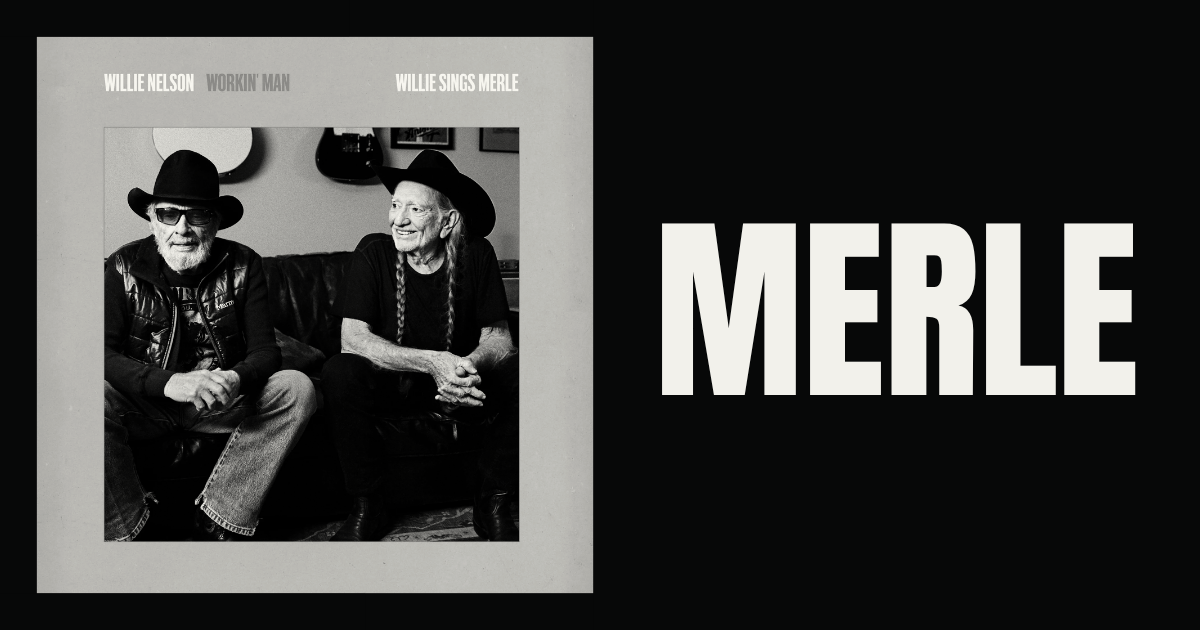
“Workin’ Man Blues” – Willie Nelson (from Workin’ Man: Willie Sings Merle, 2025)

One of Hag’s signature hits, “Workin’ Man Blues,” is usually framed as a purely blue-collar anthem, but it’s good to remember he identified the song as a blues. Having to work to survive while hoping your body holds out as long as you’ll need it is something to be cursed more than celebrated.

From last year’s Workin’ Man: Willie Sings Merle, a 92-year-old Nelson delivers his friend’s lines with a bit of a slur, weary and resigned but also grateful still to be working, to be on the road again until he runs out of road. Similarly, Willie’s arrangement sheds Merle’s Elvis-y fanfare for some hard, use-it-or-lose-it swing. “Play it, little sister,” he says, introducing one of the hot-jazziest solos in the career of the late Family band pianist Bobbie Nelson. Willie’s solos up top and midway through, meanwhile, are things of singular beauty, guitar work that sounds like play but refuses to hide the callouses and the miles. “As long as my two hands are fit to use…”

“Daddy Tried” – Jade Jackson (single, 2026)

Merle’s “Mama Tried” has been covered well over 100 times since he wrote it for the Killers Three soundtrack in 1968. But the song’s indelible ascending chorus and its universal theme – Merle sings it as if he’s as proud of defying his mom as he is remorseful for disappointing her – have encouraged people to use the song in all kinds of ways. Country comic Don Bowman parodied it as “Pappa Tried” as early as 1969 and more recently Angeleena Presley was clearly in conversation with Merle’s classic when she released “Mama I Tried” in 2017. As was Keith Urban when he sampled its lick for “Coming Home” in 2023.

Jade Jackson grew up in a small Cali town between Bakersfield and the Pacific, and her updated, gender-flipped take on Merle’s tale sounds just like that: Her voice feels a little dusty and a little sunny. Switching out Merle’s locale from “prison” to “Nashville” is funny because those two aren’t at all alike, but also because maybe they’re a little alike. For sure the ache in her voice reveals her as another singer-songwriter in a long line of kindred spirits to Merle; she’s going to go her own way, no matter her dad’s good advice.


David Cantwell is the author of The Running Kind: Listening to Merle Haggard, the co-author of Heartaches by the Number: Country Music’s 500 Greatest Singles and the co-creator of No Fences Review. His byline has appeared at Rolling Stone Country, The New Yorker, Slate, and No Depression, among other publications.

Photo Credit: Workin’ Man: Willie Sings Merle on Legacy Recordings
Planting By The Signs
Is a Way of Life

Equal parts old soul and trailblazer, Western Kentucky singer-songwriter S.G. Goodman explores rural belief systems with a forward thinking, synth-heavy, swamp rock aesthetic on Planting By The Signs.

Released June 20, the record is the first for Goodman since 2022’s critically acclaimed Teeth Marks and sees her diving into tales of love, loss, reconciliation, and grief. The ancient Appalachian concept it draws its name from subtlety influences all aspects of rural life from farming to self-grooming. According to Goodman, the idea to center her fourth album around this idea came in late 2022 after stumbling across a section about planting by the signs in Foxfire, a collection of books first published in 1972 that delve into Appalachian philosophy and ways of life.

“When I got to the passage about moon planting or planting by the signs I started having all these memories of hearing about [moon phases and zodiac signs] throughout my childhood,” Goodman tells Good Country. “My family and a lot of the people in rural areas like Western Kentucky have been taught these things but don’t think or talk about them in everyday conversation.

“For instance, my brother cuts his hair by the signs and I remember old people saying to never pull a tooth when the signs are in ‘the head’ [an area of the sky attributed to Aries]. I was weaned by my mother to the signs, potty-trained even. It’s an old belief system that I wound up immersing myself in and felt a responsibility to pass on.”

We spoke with the Americana Music Association’s 2023 Emerging Artist Of The Year ahead of the release of Planting By The Signs via Zoom. Our conversation covered the inspiration for the album’s concept, the themes of grief and reconciliation within its songs, the sonic evolution of the singer’s sound, and more.

What was it like taking the concept of Planting By The Signs and making it a reality? Did it turn out to be everything you envisioned?

S.G. Goodman: There were elements that were given over to studio magic. Sometimes the circumstances of recording force you to try different things you weren’t planning on, but for the most part I had a pretty clear vision of what I wanted this album to sound like before the songs were even written. This project leans toward a rougher sound that really hones in on the human element of the music. I also wanted to push myself sonically and add in new instruments that I normally don’t have in my music just to see what it would feel like.

In terms of trying new things, “Satellite” is a song that stands out. Is that a bunch of synths added to it or something else?

“Satellite” not so much. It sounds like synth, but it’s actually a little $150 makeshift Kent baritone guitar with a really wild, natural sound being played through a Fender Champ amp. There were a lot of synths elsewhere, but I’m just so ignorant when it comes to keys that I couldn’t tell you what they were. [Laughs] But I had [The Alabama Shakes’] Ben Tanner, a wizard on keys, come in to lay down and experiment some on organ, Wurlitzer, and other things.

For instance, because I do like an organic sound from my amps instead of using a bunch of pedals, we wound up playing along with the tremolos on the actual amps and ran the keys through that. But even with that, I’ve never had a record where there’s been keys on the majority of the songs, until now. That’s mostly been for economical reasons – I’ve been just a rock outfit with a lead guitarist, bass, drums and occasionally pedal steel, but it takes a minute before you can afford to not only have another player with you, but also a vehicle big enough to carry another person and their equipment. I was always leery to have songs focused around that, but with this album I was able to do it and shift around what kind of utility musician I wanted on the road with me and I’m really proud of it.

You mentioned working with Ben Tanner on these songs, but you also recorded down in Alabama as well. Tell me about what that experience was like?

Yeah, I was down in the Shoals, specifically the Sheffield area where Jimmy Nutt’s studio, The NuttHouse, is. It operates out of an old converted bank and felt really familiar to the small town I grew up in, where you could stand out in the middle of the road and pretty much bet a million dollars you wouldn’t get run over, because you’d never even see a car.

When you’re in the studio I’m not so big on doing destination recording, because in my opinion you should just be in a room working on music and not out seeing the sights. This was the perfect balance of not feeling like you’re missing something outside the room, but if you did walk out there it would be a calm environment.

Another sonic element on this album I wanted to touch on are the conversational audio recordings interspersed on tracks like “Heat Lightning.” What purpose were you trying to serve with those?

Going back to my mindset heading into this record and my desire to write about planting by the signs, I was really interested in the way that beliefs carry on and evolve over the years. We either accept, adapt to, or even stop telling these stories and letting them die, so [that was] one thing I wanted to showcase, either in a long narrative form or by adding elements you mentioned like the field recordings. I wanted to add those in because it’s another style we’ve used to capture stories and keep them alive. I’m a big fan of Alan Lomax’s field recordings – there’s a massive musical and oral history tied to them – so it was important for me to pay homage to that storytelling medium.

I even sought to do that through the album layout and artwork, too, by incorporating flash tattoos. Tattoos are a way that we have planted stories on ourselves and applied meaning to. Even its color scheme with red, yellow, and black – I don’t know if you’re ever heard this saying, but, “When red touches black you’re OK Jack, but when red touches yellow you’re a dead fellow.” That’s a sign from nature [about venomous snakes], so every element around this album, from allowing myself to write a nearly nine-minute song [with “Heaven Song”] while keeping this cohesive storyline to retelling a story from my youth in “Snapping Turtle.” I really wanted to showcase the history and art of passing down a story and drawing attention to that.

Someone whose memory you’ve preserved within these songs (as well as on older tunes like “Red Bird Morning”) is your longtime mentor and father figure Mike Harmon, who tragically passed away recently during a tree cutting accident. What kind of influence has he had on you, not just with this new record, but also on you as a person?

As far as Mike’s influence on my music goes, he was a huge encourager of me throughout the years going back to my days with The Savage Radley. I also played with him in a local Murray, Kentucky, band called The Kentucky Vultures. He was their bass player and we became fast friends and at one point even neighbors. He served as a father figure that I could bounce ideas off of musically, but more than anything it was his wisdom and support that impacted me most. He was such a go-getter and always an amazing person to have on the road with you.

One time I needed someone to help me get my van back from Boston, Massachusetts, to Western Kentucky, because the band and I had to fly out to Portland or Los Angeles in the middle of our tour before resuming the run a few days later in the Midwest. Mike simply asked when and where he needed to be and followed through. He was always down to help and be a part of things. It’s hard to wrap up exactly how meaningful his presence was during those early years. He was so proud of me and the boys when we were able to do this in a more professional way and regularly flew out to see our shows. In fact, in early 2023, he was supposed to be on tour with me in Austin for a sold-out show that I was particularly excited to have him at because he’d previously lived there for a time before losing his housing, only to die a week and a half later in a tree accident.

I continue to find myself thinking that Mike is still providing me with a lot of gifts and wisdom. When he passed away I was able to reconnect with my longtime friend and music collaborator of over 10 years, Matt Rowan. At that point we had a rupture in our friendship and musical relationship and hadn’t spoken in a couple years, but with Mike being the confidant, he was very aware of Matt and my falling out. [He] was always supportive around that and believed that we’d eventually reconcile with each other.

And that reconciliation is what you’re exploring on the song “Michael Told Me,” correct?

Correct. It’s a song that speaks to both Matt and Mike and kind of gives a snapshot of evolution and the processing of Mike’s death, but also the exact moment that Matt and I spoke after a few years of not.

You’re also singing with Matt on the album’s title track. What was it like getting to reunite in the studio with him for that?

Matt is also a co-producer on this album with me and Drew Vandenberg. He’s obviously been a longtime collaborator, so I thought it’d be interesting if he had an even bigger role on this album. I wasn’t wrong in my expectations of it working out really well.

Circling back to “Satellite” for a moment, lyrically the song seems to talk a lot about modern technology and human connection, or a lack thereof, in modern day society. What inspired you to explore those themes and how do you feel they fit into the record’s larger concept of planting by the signs?

I actually wrote most of the song in the studio. I didn’t start it there, but wasn’t expecting to have it on the album either. It’s something that came to me during the creative process of recording, which is not uncommon. When I was writing it I realized that one important thing for me to tie into talking about an ancient belief system was my curiosity of how that applies to our real, modern world. A lot of questions were coming up for me around that that I also tried to showcase within this album and my approach to talking about it with people. If Planting By The Signs revolves around paying attention to messages from nature, what does it mean for us as a society when we’re putting things between us and being able to see those signs?

For instance, we’re talking to each other right now through Zoom and are living in a world where more and more importance is being put on having more filters between us and nature – and even convoluting it. What are we gonna be [at] when I die, like 20G? [Laughs] How many satellites are going to need to be shot up into the universe to accomplish that?

Right now as a person, I’m in that weird land of [having been] a child in the early days of the world wide web when my parents got their first computer with dial-up internet. I didn’t start texting until I was 18. Nowadays I can pull up a waterfall on YouTube and hear the sounds of it in my living room without ever going somewhere like Cumberland Falls. Or I can go to a bar in public and not talk to a single person, because I’m just staring at my phone. I’m definitely a grandma when it comes to communicating with people.

I’ve noticed in the last 15 years that people are very hesitant to get back to a real human connection. There’s so many barriers nowadays to us having tangible connections with other people and nature. With that comes implications with AI and in the media, so it’s no wonder that a person who’s been watching the same creek bed over the course of 20 years evolve and cut differently and rise and fall may have a better idea that the weather patterns have drastically changed than a person who’s only receiving their information through technology.

Is “Nature’s Child,” which you sing with Bonnie Prince Billy, also touching on those themes?

That’s actually the one song on the album that I didn’t write. It was written by my friend Tyler Ladd. I first came across it over 10 years ago at an open mic in Murray and was floored by its lyrics. Everyone has different opinions on what makes a good song, but for me it’s really simple – a good song is one that you remember after hearing it.

Not long after that night, Tyler took off hitchhiking across the United States. Then years later I got a message from him saying that he was in Europe traveling and was writing to me from a hospital bed in Germany after getting his guitar stolen and beaten up pretty badly. I told him to get on home and about a year after that he showed up on my front porch in late 2016. I had him sit in my living room and play that song to me before asking him if I could start playing that song too and making it my own.

I’ve covered it live for years at this point, so when it came time to begin writing and thinking about this album Tyler’s lyrics and emotion he evoked in that song were a placeholder for me. He was gracious enough to let me record it. The song encapsulates everything this album is about.

Through the process of bringing Planting By The Signs to life, what is something that music taught you about yourself?

With each album you find yourself at a different place in life. I don’t necessarily have a lot of people ask me about my process of writing. It’s not linear and I’ve always held the belief, even though I’ve doubted it at times, that a story’s gonna go about its business. That was told to me years ago by a writing mentor, and a song does the same thing. Through that process one thing I’ve had to come to terms with with the fact that being an artist in 2025 is having pressure to keep churning out content and material, which has never been natural for me. I’ve never written that way, so being OK with and waiting for something to be in place where you feel you’ve said everything you need to say and not just succumbing to the pressures of putting something out while also being genuinely proud of what I created is a testament to the fact that I let this come when it was supposed to.


Photo Credit: Ryan Hartley

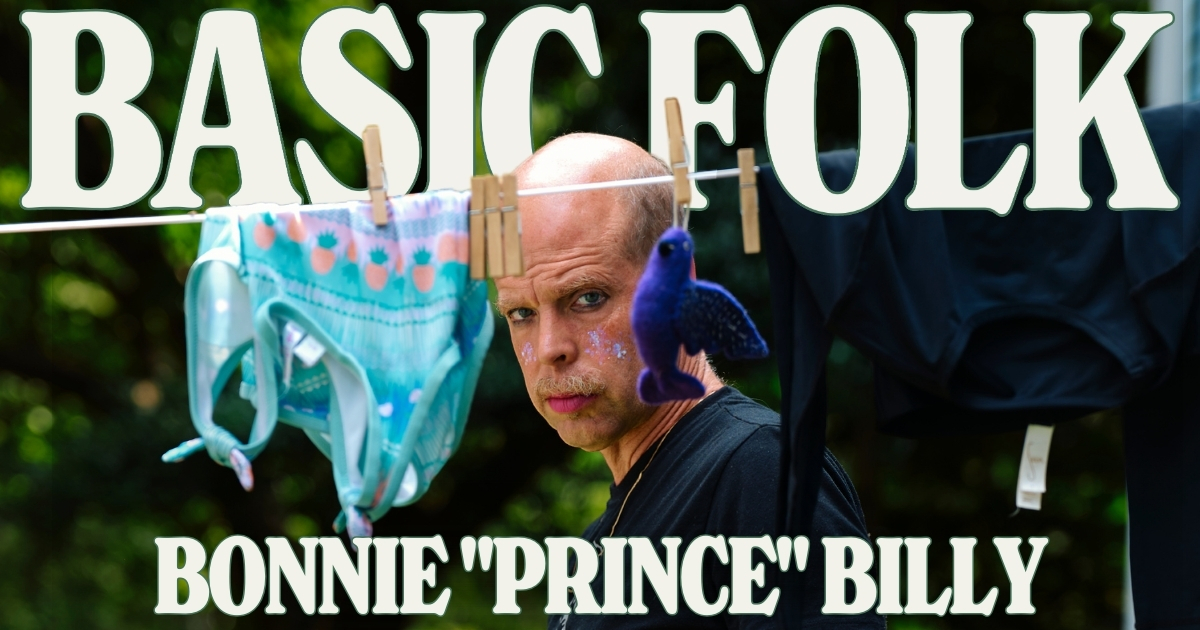
Basic Folk: Bonnie “Prince” Billy

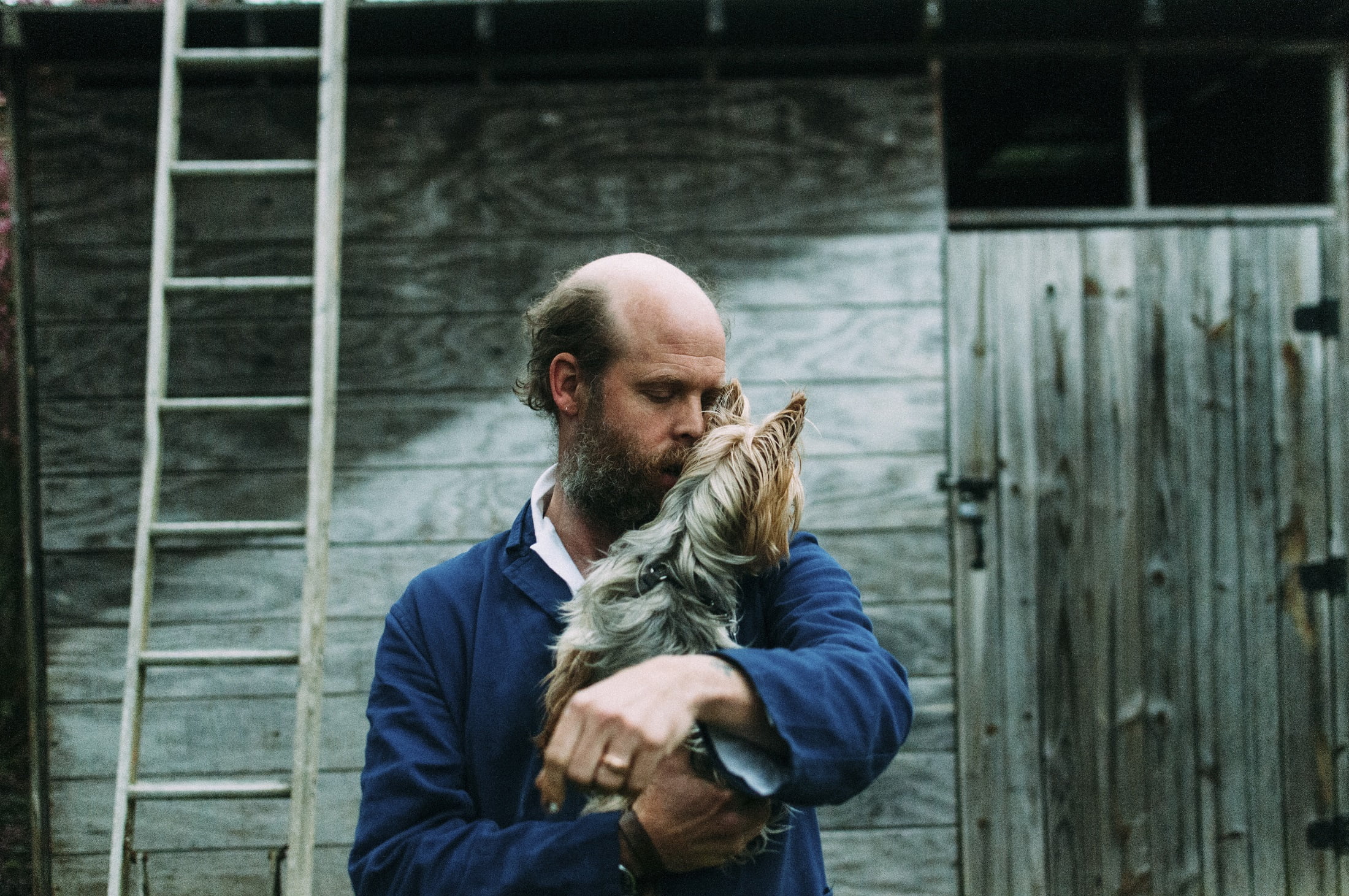
Will Oldham, also known as Bonnie “Prince” Billy, has led an illustrious, sometimes mysterious career which has spanned decades and genres. Hailing from and still living in Louisville, Kentucky, in our Basic Folk conversation Will reflects on his journey from a young artist struggling to find his place in the music world to a seasoned musician who embraces collaboration and creativity.

LISTEN: APPLE • SPOTIFY • AMAZON • MP3

We dive into his latest album, The Purple Bird, discussing the pivotal role of producer David Ferguson in Will’s artistic evolution. He reveals how working with Ferguson and a host of talented Nashville musicians transformed his songwriting process and solidified his sense of belonging in the music community. With a mix of humor and heartfelt honesty, Will describes the joy of collaboration and the unique energy that comes from working with seasoned artists, particularly those from older generations.

Throughout this episode of Basic Folk, Will also touches on the contrasting emotions evoked by his songs, especially when dealing with serious themes wrapped in upbeat melodies. He draws parallels to the works of Phil Ochs, highlighting the importance of addressing difficult subjects through art. As we wrap up, he shares personal anecdotes about his family and the influence of his daughter on his music. Thanks to Will for making a wonderful record and being so willing to get seriously deep into some of its themes!


Photo Credit: David Kasnic

BGS 5+5: The Kernal

Artist: The Kernal
Hometown: Jackson, Tennessee
Latest album: Listen to the Blood
Rejected band name: Andrew Combs’ manager (Davis Inman) talked me out of calling my band “The Kernal & His Handsome Privates”

Which artist has influenced you the most … and how?

John Hartford probably hasn’t influenced my music as much as he has inspired it (because I’m nowhere near the musician that he was), but Hartford had a way of doing things like retaining his inner 7-year-old while writing a very poignant song about society or something seemingly little but important, and doing it all at a world-class musical level. He was excellent in every aspect of the process and I just never can get enough of him. David Bowie taught me that creating music can be more multi-dimensional than the just binary relationship between singer and audience (which turned out to be really important to me) but it’s Hartford for my money.

What other art forms — literature, film, dance, painting, etc — inform your music?

I really love any form of creative output and the paths you can be led down through experiencing them. For example, I was very into a Polish filmmaker named Krzysztof Kieślowski a few years back. He did a project called The Decalogue (which I encourage everyone to watch) and he also did a color trilogy (Blue, White, Red) and I was immediately drawn in by the Red film because I had already begun this project by the time I saw it and was wearing the red suit as a theme of the project. During the movie you find out that the main character is named Joseph Kern. This freaked me out because my name is Joseph and then the whole Kern thing. I immediately felt a deeper connection with him. I love those connections you can find through dance, music, writing, any of that — they aren’t algorithmic. There’s something more real about those kinds of connections and a lot of times it seems like they find you if you’re able to see them.

What was the first moment that you knew you wanted to be a musician?

The first time I was ever mesmerized by music was when I was around 5 years old after my sister put a 45 on the record player by The Cascades and the song was “Listen to the Rhythm of the Falling Rain.” Maybe that’s not the first time I wanted to be a musician but that song put me on the map for being enraptured by it. I saw Jose Gonzalez + Cass McCombs once in Louisville before I was doing much music and I was blown away at how incredible it was — that was around the time I started trying to write on my own. I remember doing it a lot more after that — there was something magical in the room. Bonnie “Prince” Billy was in the crowd too and I shook his hand, maybe I got the bug from him.

What’s the toughest time you ever had writing a song?

On Listen to the Blood there’s a silly tune called “Super (Marijuana) Wal-Mart” about a fictitious Wal-Mart where everything is made out of cannabis and all the old folks in this small town are up in arms about it. At the very end of the song the manager of the store comes out on a loudspeaker and tries to convince these people of all the amazing products they could purchase if they just come on inside. This part took me about a year to write because I wanted him spouting off all kinds of weird products and the cadence of it had to be just right. It may not sound like something that would take a person a year to finish, but there it is.

What has been the best advice you’ve received in your career so far?

The best advice I received was actually just a story that I was told by Norbert Putnam (legendary Muscle Shoals musician) about Roy Orbison. He told me that Roy had just gotten a new motorcycle and decided to take it down on Broadway in downtown Nashville. As he pulled up to a stoplight he noticed some teenage boys on the corner making fun and pointing at the old man on the motorcycle, not realizing it was Orbison of course. As you might expect, Orbison was incensed and began revving up the engine to show those boys that he wasn’t a chump. When the light turned green he took off but shifted wrong and the bike fell over on top of him. He had to motion to the same kids to come pull the bike off of him. Sometimes I imagine Orbison saying, “Don’t rev the engine if you can’t shift the gears.”


Photo Credit: December Rain Hansen

WATCH: Matt Sweeney & Bonnie ‘Prince’ Billy, “Resist the Urge”

Artist: Matt Sweeney & Bonnie ‘Prince’ Billy
Hometown: New York, New York (Matt Sweeney); Louisville, Kentucky (Bonnie ‘Prince’ Billy, a.k.a. Will Oldham)
Song: “Resist the Urge” (music video by skateboarders Kevin “Spanky” Long and Atiba Jefferson)
Album: Superwolves
Release Date: April 30, 2021
Label: Drag City

In Their Words: “Spanky and Atiba’s video rules. We try to make the listener feel insanely at home in a musical space. Atiba and Spanky have made us feel like we own a share of the skateable world. We got David Ferguson out from behind the board to play double-bass on this one. It needed the lift that only a Ferg could deliver.” — Will Oldham

“I always wanted to see a full video part with just one skater, and once I got asked to work on a video for this record, I knew that Kevin ‘Spanky’ Long was perfect — his way of cutting out, resizing, moving and manipulating photos and videos is amazing, but also he is an amazing pro skater. I asked a lot of Spanky: I wanted him to star, direct, edit, film and do all of the artwork! It was a tall ask, but I know his love for Matt and Will would shine thru. This video was made in the pandemic so it was just me and him going out and shooting together. We shot around LA for 14 days over 4 months. It was great to work so closely with Spanky’s vision but still have him in front of the camera. This collaboration of directing together was great because we are two different generations of skateboarders, but both coming from the pro skater’s perspective.” — Atiba Jefferson

“This was just a great excuse to make a skate video with a best friend for my favorite band. I ran the high def footage and super8 film into my iPhone where I painstakingly cut frame-by-frame, with relatively low-fi digital tools, to execute the stop-motion animation and digital collage elements. It was, in the end, the only way to achieve this look we were after. And we weaved in the layers of sea and sky to meet the big themes in ‘Resist the Urge.’ COVID restrictions made things tricky to get Matt and Will in there, but we revel in limitations.” – Kevin “Spanky” Long


Photo credit: Jonah Freeman & Justin Lowe

BGS 5+5: Bug Martin

Artist name: Bug Martin
Hometown: Philadelphia, PA
Latest album: GUTTERBALL
Personal nicknames (or rejected band names): formerly known as Dead Bugs

Which artist has influenced you the most … and how?

Undoubtedly there have been a select few at different points in my life and work, but I’ll say Will Oldham has been a notable influence on me. He occupies a very specific corner of folk, or Americana — or “new weird America” or whatever you want to call it — that can be hard to pin down (as evidenced by the game of horseshoes I just played with genres there). [He] always takes on the task of exploring sound in unique ways.

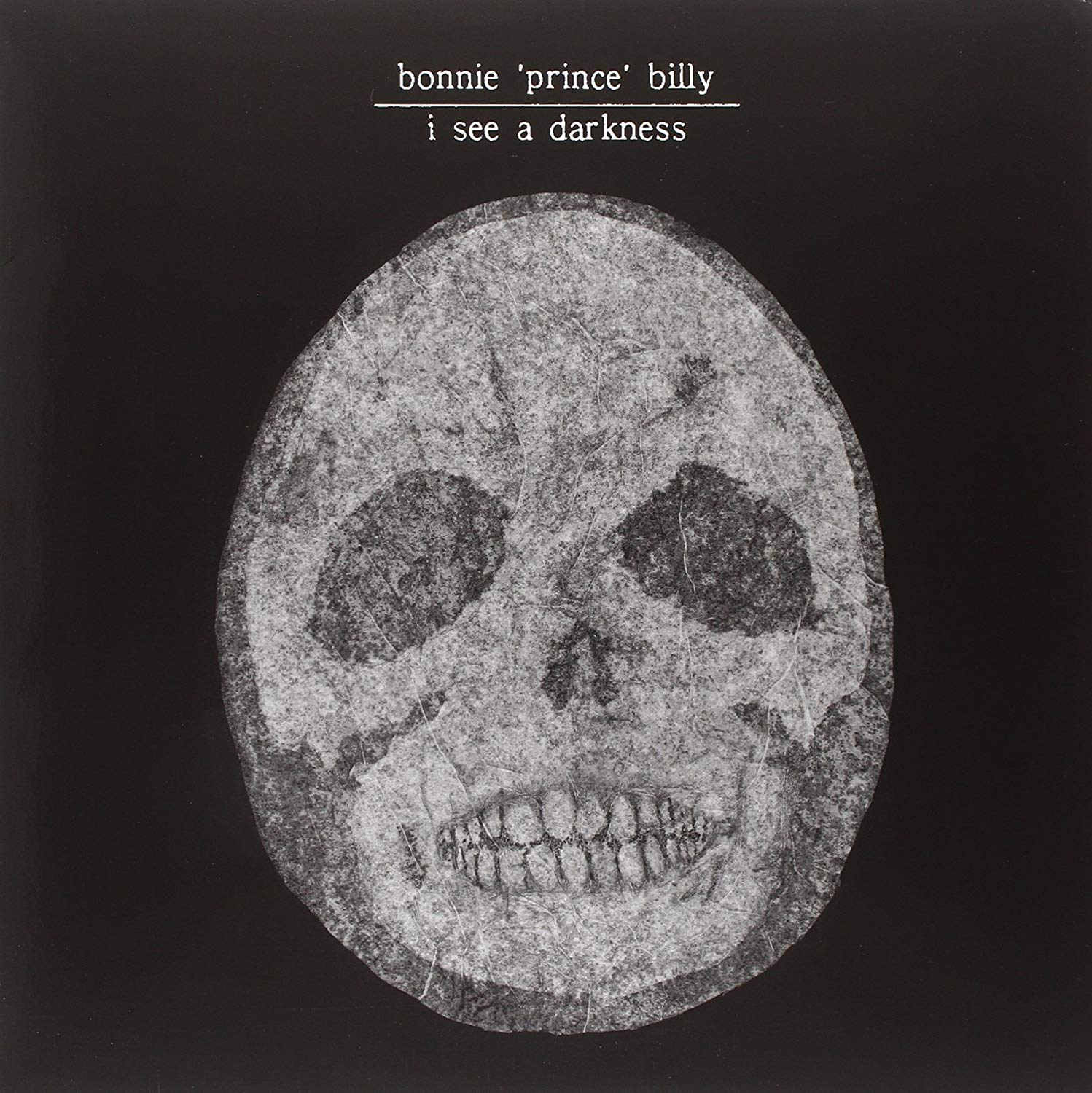
The first record of his I ever heard was I See a Darkness, the title track of which Johnny Cash later did a version of with him. I listened to I See a Darkness at the recommendation of a friend and didn’t like it for a long time. I’d walk around at work with it playing in my headphones just having an all-around bad time; but there was something about it that continued to draw me back. I’d be thinking about what that unnameable glinting thing was way too much while I was listening to it. Eventually I learned to lean back and appreciate the joy of not knowing the answer.

Years later, I got to meet Will and heard him give a lecture to a very intimate crowd, maybe only 30 people, about topics like what songs are, the songwriting/recording process, and live performance. I asked him a question I had been pondering a while and he gave me an unsatisfying answer. Brought me right back to where I’d originally found him and that initial journey of un-learning and for that I’m forever grateful.

What’s your favorite memory from being on stage?

In the town I grew up in there were lots of loud and lively bands. It’s the common plight of the up-and-coming acoustic act; show up to a bar or venue and play your heart out while folks zone out or talk over you. I always saw all these electric bands come through town that tried to command attention through volume and were also unsuccessful and it got me to thinking.

The next time I played, I brought a few power strips and as many electronics as I could fit in the car — I’m talking toasters, Christmas decorations, a TV looping a muted Looney Tunes VHS while I was playing… pretty much anything that I had in my house at the time to spare. I plugged all of it in around me and turned everything on while I was playing. It was probably the quietest that place had ever been as a room full of people collectively tried to figure out what was going on.

A thunderstorm rolled in and the whole room was pretty much dark and silent except for the glow of all these unnecessary electric props and what I was singing. After the set was over, people came up and talked to me about things they had just noticed in those same songs that I had played a dozen or so times in that same venue. I was glad they were able to be mindful of something going on in front of them and connect with live music. I was gladder still that I didn’t short out the entire fuse box mid-set.

How often do you hide behind a character in a song or use “you” when it’s actually “me”?

My job is to be a conduit for whatever stories the ghosts around us have to tell. When I’m presented with an idea from wherever it is thoughts come from, I can give my opinion on it in a song but that doesn’t mean I can claim any ownership or that the story is mine. Thoughts don’t belong to or define the thinker.

What other art forms — literature, film, dance, painting, etc — inform your music?

My partner is a very talented abstract painter, so our studio space and home are full of visual works. In the past we’ve collaborated on work where, say, the title of a song will be the inspiration for a painting or I’ll meditate on a piece of theirs and try to capture feelings that the colors or forms stir up. It’s a great exercise to shake up patterns you fall into as an artist.

Besides that, I’m a film buff and a fairly avid reader. I had the pleasure of working recently with a friend of mine who is a dancer to create choreography to a song off of GUTTERBALL. Basically I have no allegiance to any specific medium of expression and recognize that inspiration is everywhere if I have the good sense to accept it.

Since food and music go so well together, what is your dream pairing of a meal and a musician?

Living? I’d happily make brunch for Alice Gerrard any day she’d let me. All-time? I’d take the Carter Family out for ice cream.


Photo credit: Mia Fiorentino

Six of the Best: Musical Alter Egos

Before we start, let’s just get this one out of the way: no one will ever do the musical alter ego as well as David Bowie/Ziggy Stardust/The Thin White Duke. But American roots has dabbled plenty with personas, often to pretty hilarious effect.

For example, comedian Rich Hall will be taking his own Tennessee jailbird-turned-singer-songwriter Otis Lee Crenshaw on the road this summer. (You can catch Otis in September at The Long Road Festival in Leicestershire, and for a couple of dates at the National Maritime Museum and Bush Hall in London.) But for now, we think it’s time to pay tribute to all those part-time musicians living in the fantasy fringes.

Hank Wilson / Leon Russell

It was a bold leap, back in 1973, for a California rocker and bluesman like Leon Russell to record a bluegrass and country album. No wonder he didn’t do it under his own name. Hank Wilson’s Back! was a return to his roots for Russell, who had grown up playing the standards in Oklahoma. And here they are all in their glory, including Bill Monroe’s “Uncle Pen” and Jimmie Rodgers’ “In the Jailhouse Now.”

It’s an album filled with special guest appearances, from Jim Buchanan and Johnny Gimble on fiddle to Tut Taylor on dobro, and the whole project was produced at Bradley’s Barn in Tennessee by JJ Cale. Hank’s version of “Roll in My Sweet Baby’s Arms” even made it into the charts. Hank had such a great time, he returned over the ensuing decades, with no fewer than three sequel records — and a number one hit recording of “Heartbreak Hotel” with Willie Nelson.


Lester ‘Roadhog’ Moran and the Cadillac Cowboys / The Statler Brothers

If you’ve ever wanted to hear Buddy Spicher purposefully butchering “Wildwood Flower,” there’s only one place to go — the 1974 recording of “Alive at the Johnny Mack Brown High School.” The Cadillac Cowboys, fronted by Lester ‘Roadhog’ Moran, are truly one of the worst country outfits ever committed to vinyl, ploughing their way through “Little Liza Jane,” “Freight Train” and “Keep on the Sunny Side” with all the nuance and musicality of a herd of stampeding hippopotami.

They were, in fact, the Statler Brothers — with a little back up from Spicher and Bob Moore on bass — who had created the fake (dreadful) band for the B-side of their 1972 album Country Music Then and Now. Their nine minute comedy routine, based on their memories of local radio shows from their childhoods, was so popular that Roadhog Moran and the Cadillac Cowboys got their own record deal. “It won’t die,” said Don Reid later. “We can’t even drown it.”


Luke the Drifter / Hank Williams

If you’re going to have an alter ego, you might as well imbue it with all the qualities you wish you had. And that’s certainly what confirmed reprobate Hank Williams seemed to be doing with his “half brother” Luke the Drifter.

Not many would have suspected the infamous bad boy of country music of having a penchant for sermon-making. But in 1950, as the singer was reaching the peak of his popularity and his upbeat hits were being played on radios all over the country, he was also recording a series of “talking blues” records that hit an unexpectedly moralising tone.

“He had another side to him that he wanted to get out,” said his grandson Hank Williams III. “And a lot of people didn’t understand the Luke the Drifter side. That’s a dark side, man.” It was his record label who insisted on the pseudonym, worried that an unsuspecting punter might punch his dime into a jukebox and get a spoken-word dressing-down instead of “Move it On Over.”

The recordings had proverbial titles like “Careful of the Stones You Throw,” and some, like “I’ve Been Down That Road Before,” described the kind of bad behaviour and poor decision-making that Williams was known for in his own life. “I’ve learned to slow my temper down and not to pick no scraps no more,” said Luke. Sadly Hank didn’t always heed his words.


Bonnie “Prince” Billy / Will Oldham

Some will say Bonnie Prince Billy is just a stage name, but to Kentuckian Will Oldham it’s always been more than that. As someone whose career has lasted more than quarter of a century, Oldham has put out records under plenty of different names, including Palace Flophouse (named after a John Steinbeck novel), Palace Brothers, Palace Songs, and Palace.

Confirming, perhaps, that he has a thing for royalty, he picked Bonnie “Prince” Billy to differentiate his Nashville-style songwriting from his previous indie rock offerings. “The primary purpose of the pseudonym is to allow both the audience and the performer to have a relationship with the performer that is valid and unbreakable,” he said in an interview.


Red Knuckles and the Trailblazers / Hot Rize

There is arguably no more beloved sideshow in bluegrass than Red Knuckles and the Trailblazers. No Hot Rize live set is truly complete without the promise of these performers from “Wyoming, Montana,” the support act that has supposedly been travelling in the back of their bus, and occasionally emerges to play some of the ‘40s and ‘50s country tunes they learned from the jukebox at their local cafe.

One by one, Tim O’Brien, Nick Forster, and Bryan Sutton will leave the stage, only for a slightly familiar-looking Red, Wendell and Swade to reappear in the time it might take to, say, put on a cowboy shirt. Eventually, they’ll be joined by oddball Waldo on pedal steel – there’s no way that’s Pete Wernick under that accent – and the next 15 minutes will combine music and frankly wacky comedy in the vaudevillian style that was an integral part of the earliest bluegrass bands/

A comic appearance from Red Knuckles and the Trailblazers brings back the days when Bill Monroe would wear a dress and “Uncle Josh and Cousin Jake” provided laughs at Flatt & Scruggs’s shows. But then, Hot Rize have always liked to pay tribute to the old days.


Dirty Doug / Dierks Bentley

In Pennsylvania they were the Scranton Scrotum Boys. In Boston they were the Mansfield Manscapers. They’ve also been the Big Jersey Johnsons, the Michigan Mule ticks and the Bolo Boys Bluegrass Band, but while the act’s name might change, the bluegrass pickers who open for Dierks Bentley keep one thing the same — their guitar player, Dirty Doug.

Beneath his big hat and sunglasses, it normally takes even the keenest eyes in the audience a few songs before they spot the similarity. That guy acoustifying ‘90s country songs — that guy playing Dierks Bentley’s hit “Lot of Leavin’ Left to Do” to a bluegrass groove — isn’t that… Dierks Bentley? Yep.

He started opening for himself on his 2017 What the Hell tour and it just made sense. “I’m crazy about bluegrass,” says Bentley. “You get the building for the whole day so why not take advantage of the fact you’re already paying to rent this place out?”


Photo credit of Dierks Bentley: Jim Wright

Canon Fodder: Bonnie “Prince” Billy, ‘I See a Darkness’

Will Oldham stands on the stage of the Odeon in Louisville, Kentucky, dressed up like a bruise: black pants hanging low on his hips, a blue shirt barely tucked in, hints of mascara around his eyes. He is gesticulating dramatically and singing about how death will come to us all, and behind him a large band kick up a larger ruckus. It sounds like chamber klezmer, its jazzbo rhythm section squaring off against a frantic string section and a clarinet that sounds like a gremlin in the works. The song is “Death to Everyone,” which originally appeared on 1999’s I See A Darkness, the first album to bear Oldham’s odd stage name Bonnie “Prince” Billy and likely his best-selling album.

“Death to Everyone” has never sounded quite like this before. The original is a low-key, heavy-quiet dirge, Oldham’s vocals measured and steady and even menacing, as an electric guitar mimics the sound of decaying flesh. It is a rover’s song, a justification for hedonism and rootlessness, and when Oldham sings the chorus—“Death to everyone is gonna come…”—he makes it sound like a threat. But the Odeon version of the song, from August 2018, backed by a sprawling band called the Wandering All-Stars & Motor Royalty, is starkly different. The tempo is ratcheted up, the lyrics sung like there is an exclamation point after every phrase; the energy is agitated yet gregarious, and Oldham stands on the stage, his hands flailing to the audience, as though inviting us to partake in every lusty pleasure before we perish. Oldham might be Falstaff or Caliban up there on stage, a figure of uneasy company.

All artists must live with their works, and most musicians maintain intimate connections to much of their catalog, performing the same compositions night after night. Few roots artists, however, take as many liberties with their songs as Oldham. He constantly revisits and revises, reinterprets and reconsidered, less out of obligation to fans than out of curiosity: How far can these melodies and sentiments bend? What will they allow? In 2004 he released a full album of Bonnie “Prince” Billy covering songs that pre-date that pseudonym, written when he was making art under various Palace monikers: Palace, Palace Music, Palace Brothers. Later this month he’ll release Songs of Love and Horror, which collects new versions of tunes from throughout his career, including the title track to I See a Darkness.

That album may be his most revisited, a set of missives from what he calls a minor place, comprising something like an Appalachian operetta. He writes lyrics as soliloquies, as monologues by characters in transit, wanderers and loners, sinners both defiant and humbled. The characters on I See a Darkness ponder the thin membrane between life and death, being and not being, this world and the next. On the title track the narrator confesses to a friend the abyss he sees behind everything as well as his desire for “peace in our lives.” It recalls Waiting for Godot or True West in its stark setting and sparse details, but that makes it easier for him to restage it, as he did on 2012’s Now Here’s My Plan. That version was sped up considerably, almost flippantly, as though the character were retreating from the darkness, confessing his deepest fears through a sidelong joke.

The most famous version of the song, however, features Oldham in a supporting role. Johnny Cash covered the song on 2000’s American Recordings III: Solitary Man, playing up the implications of his own Man in Black mythology as well as his own waywardness earlier in his life. But it also plays as a late-in-life reverie, and it gives Cash the opportunity to face down the impending darkness with dignity: “You know I have a drive to live, I won’t let go,” he sings, his voice bowed but not broken by age and illness.

This songwriting strategy—this idea of songs as short plays—echoes Oldham’s own actorly pursuits. As a teenager he appeared in John Sayles’ Matewan, about miners in Appalachia in the 1920s, and the TV movie Everybody’s Baby: The Rescue of Jessica McClure. In the 1990s he gravitated more toward music, but occasionally appears in independent films like Junebug and Old Joy. And there is in these songs a sense of dramaturgy, of an actor slipping into a role, which creates a very squirrelly strain of roots music. But it’s an inexact and not quite satisfying metaphor, one that suggests he is only acting, that there is none of himself in these lyrics and melodies, that he is merely pretending to see a darkness.

And perhaps that more than anything else—his long relationship with indie label Drag City, his use of antiquated or skewed syntax, or his headquarters in Louisville, just a few hours but many worlds away from Nashville—is why Oldham has not embraced nor been embraced by the Americana establishment: He stands slightly apart from his music, doesn’t inhabit his songs the same way Chris Stapleton or Margo Price or Sturgill Simpson inhabit theirs. That doesn’t mean his songs are personal or don’t expose something of the person singing them, but that he has radically different relationships with his songs.

Perhaps that’s why I See a Darkness still stands out in his expansive catalog: It gets at something profound about its creator and implies a darkness too dark, too enormous, too horrible to approach directly. He needs the scrim of a character, a decoy perhaps or a shield; a larger narrative emerges of an artist confronting depression without naming it. “So I become more lively to bury all the ugly,” he sings on “Another Day Full of Dread,” whose very title implies a black unnameable feeling lurking within these songs. To reinterpret these songs is to admit that the depression remains, even twenty years later, but his relationship to it has changed. Every time he sings these songs, he prevails against it, bruised but not beaten.


Photo credit: Jessica Fay