Michael Daves Reconstructs R.E.M. Bluegrass Style

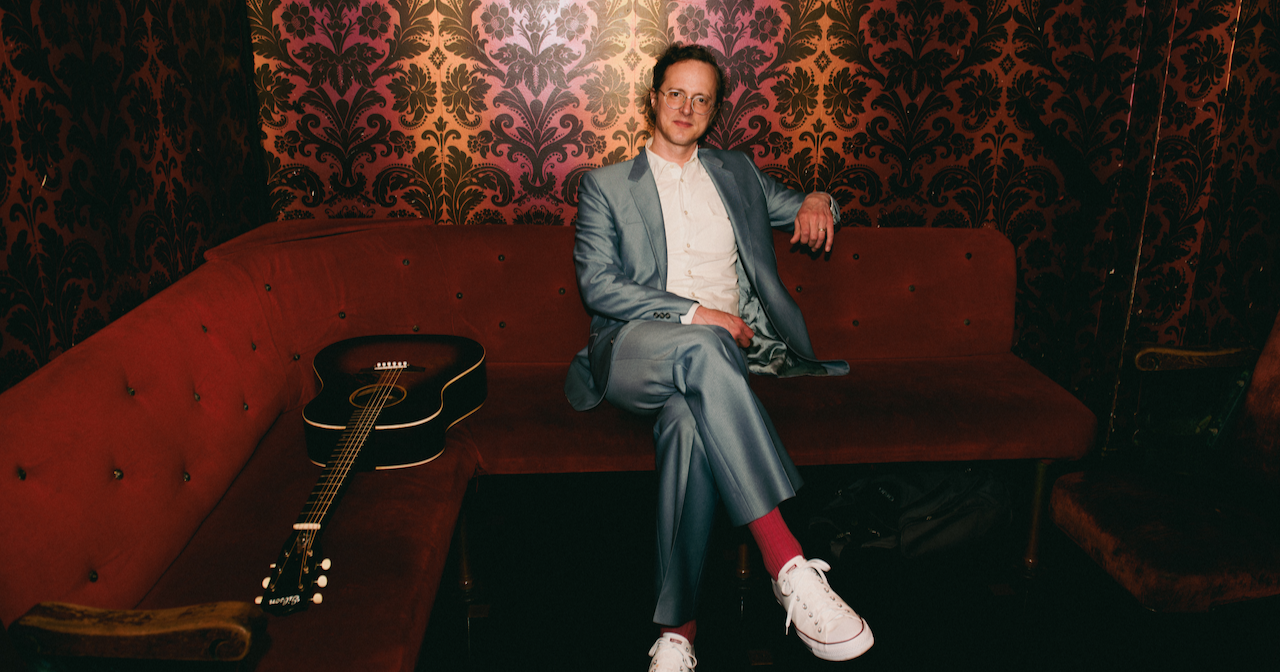
Although he lives in New York now, Michael Daves’ Southern roots permeate his music. That characteristic goes further than ever before on the newly released Fables, a six-song EP that reconstructs songs from fellow Georgia band R.E.M.’s 1985 album Fables of the Reconstruction.

In celebration of the record’s 40-year anniversary, Daves enlisted his longtime quartet bandmates – fiddler Alex Hargreaves (Billy Strings), mandolinist Jacob Jolliff (Béla Fleck, Yonder Mountain String Band) and Erik Alvar (Nefesh Mountain, Billy Strings) – and others to reinvent songs like “Green Grow The Rushes,” “Wendell Gee,” and of course, “Driver 8.” Together, they turn each track on its head, fully leaning into their bluegrass prowess while continuing to hold each song and their original formats in high regard. It’s something that Daves has plenty of experience with, having released the dual acoustic and electric bluegrass covers compilation Orchids and Violence in 2016 and Early Morning Sun – an EP of bluegrass and country standards from Ola Belle Reed, Dolly Parton and others – in August 2025.

“It was really important for me to try to make something that would stand on its own, even if people didn’t have any connection with R.E.M. or don’t even like them,” explains Daves. “I tried to make something that just works by its own logic as much as it’s paying homage to the original.”

During a Zoom call with BGS on release day in December, Daves spoke about his motivation for doing this cover EP, how he decided which songs to include on it, the plans for his label Wild Geranium Records, and more.

What motivated you to not only make an EP of R.E.M. covers, but to do it with songs from Fables of the Reconstruction?

Michael Daves: It’s an album I grew up with. R.E.M. was one of my first musical obsessions. I first discovered them in the late ‘80s at summer camp in Toccoa, Georgia, not too far from Athens where R.E.M. was from. All my camp counselors were [University of Georgia] kids, so I fully downloaded their musical tastes, which fortunately were pretty good.

As far as taking on the Fables thing now, there were a couple inspirations. For one, it’s the 40th anniversary of that record and it’s one that I don’t feel like a lot of younger people have heard or appreciated. People seem to know more of R.E.M.’s pop stuff from the ‘90s and beyond, but that ‘80s stuff was so good and weird. I also have this quartet I’ve led since about 2019 with Alex Hargreaves, Jacob Jolliff, and Erik Alvar in New York. They’re all incredible musicians who are very well versed in traditional bluegrass but also very adept at adapting music from outside the fold. We’d done some other projects over the years – like we did a whole mini set of Jimmy Webb songs one time including “MacArthur Park,” “Wichita Lineman,” and “Galveston” – and they learned that stuff in one rehearsal and just rendered it so beautifully. It made me realize that this is a quartet that really can handle a challenge.

The Fables idea came up because of the anniversary, but also because in August I had done a tribute along with Peter Rowan to the 1973 Muleskinner record that he was a part of. Initially he united with Bill Keith, Clarence White, David Grisman, Richard Greene, and Stuart Schulman to share a TV show with Bill Monroe, but Monroe never showed up. His bus broke down, so they ended up having the whole show to themselves and wound up getting an album deal out of it. Then they made this record that didn’t go anywhere because Clarence White died before it came out.

I taught a class about Clarence’s guitar playing on that record and through that became inspired to do a tribute to it with Peter at Vermont’s Green Mountain Bluegrass & Roots Festival this past August. When studying that Muleskinner record I discovered it had the same producer as R.E.M.’s Fables, Joe Boyd, who’s also worked with everyone from Nick Drake to Fairport Convention and Pink Floyd. That strange coincidence led to a Fables tribute show, which is then where the idea for this EP really came to life.

How’d you go about dwindling the original Fables of the Reconstruction down to the six tracks that are on this EP?

It was an interesting process choosing which songs to do. It was a combination of practical considerations, because when the quartet and I worked up this music for that one-off show in Brooklyn I initially picked songs that I thought were achievable on our tight constraints and would translate well to a bluegrass ensemble. There were definitely other songs on the original record that would have worked, but I’m feeling good about the song choices we made because the original record is sort of sprawling with a lot of digressions. There’s a lot of dreamer logic and a Faulknerian non-linearity in the writing, so to pare that down into what I think works as a distillation of the original recording that probably is more of an interesting statement on the original than if I just recorded the whole thing, you know. As my wife put it, we took it from a sprawling Faulknerian epic to more of a Flannery O’Connor gut punch.

Do you have any specific favorites of the six songs making up this project?

As far as song selection, I kept the first and the last songs from the record in their normal position. The record opens with “Feeling Gravity’s Pull” and ends with “Wendell Gee” so I kept those because the beginning and end of the story just felt right.

There’s something about the song “Good Advices” that just always just gets me with its meditations on mortality. It’s classic R.E.M. in the sense that it can be hard to parse the lyrics because they’re based more in dream logic than confessional writing. However, they still carry a lot of emotional weight and a sense of meaning that’s oftentimes hidden. For some reason, that song is the one that just always gets stuck in my head and gives me all the feels.

Part of this is due to the structure of the song, which is repetitive and drony. The bridge is basically four measures of the G chord and then it’s out, which I think is just brilliant how that works in the song. It was those repeated drone lines that Alex played over while the rest of the band had these repeated melody things going on. For me it’s the quintessential song off of the record. I don’t think it was a hit or anything at the time – that goes to “Driver 8” – which I almost didn’t include because it was the best known song off of that record.

The opening track, “Feeling Gravity’s Pull,” is one that was never my favorite track from the original record, but in rendering it I started liking it a lot more. I particularly like what Duncan [Wickel] brought to it on cello as well as the background vocals on it, especially at the end. That’s Jefferson Hamer from The Murphy Beds and Sean Cahill from The Next Great American Novelist. The parts they added took the song in this almost metal-like direction, which felt really good and different from the original, especially considering we’re all acoustic musicians. The whole experience with that song felt really cathartic. There’s an intensity that I always want out of bluegrass but don’t always hear, so I ended up being really happy with how that one came out.

This is the second release on your own label, Wild Geranium Records. What are your plans with that?

This is the second release on Wild Geranium. The first was my EP Early Morning Sun, which came out in August and was just a solo recording. The third one is coming out in March and is a full-length duo record with me and Jacob Jolliff where we’re paying tribute to Jim & Jesse, [who] are part of the first generation bluegrass legends. But most of what I do under Wild Geranium will be EPs and other shorter recordings.

Do you plan to record other folks on the label, or just your own projects?

It’s intended as a platform for various collaborations that I’ve had as well. All of the releases I’ve put out so far have zero original material, but some of that will be coming soon, too.

You’re also releasing Fables on cassette? What’s behind that decision?

The cassettes were part of the concept of Wild Geranium from the beginning. Cassettes first came back within the indie rock world almost 10 years ago, but to my knowledge isn’t something that’s been done much in the bluegrass world. I’ve had people joke with me and say, “Oh gosh, I’ve got to dust off my ‘78 Dodge Charger to play this!” [Laughs] In the age of streaming, I think having a physical item that is a little more affordable, easier to produce and keep in stock than vinyl is more important than ever.

The idea was to also include at least one song on each cassette release that’s not available digitally. On Fables that’s actually two bonus tracks – a duo version of “Green Grow The Rushes” with me and Jacob Jolliff and the other’s a live version of “Can’t Get There From Here,” which was from a full-band show back in August where we debuted the material. I just wanted to offer something unique and special to the listeners who care. If you get the cassette, you’re gonna have something that no one else is gonna have. It’s not bouncing around the internet, you have to have the physical thing. From a production standpoint, it’s an opportunity to tell a slightly different story than the digital release.

Do you have any other cover EP/album ideas up your sleeves?

Aside from the Jim & Jesse project, I also have some original material on the back burner. It’s fully demoed and is all music connected to Ponce de Leon Avenue in Atlanta where I grew up. It includes some stuff that I’ve written and co-written along with songs by family members and friends from that area and era. I’ve been performing music from that project for quite some time now, but haven’t made the record yet. So that’s something I’m hoping to make happen that would be another full-length, full band record.

What has bringing this R.E.M. covers EP to life taught you about yourself?

This R.E.M. stuff was among my first musical obsessions, so for years that’s just been baked into how I hear music in an uncritical way. So to actually get in there and break down what went into this record and think about how to render it in this other context was really interesting for me and fun to make a statement with that’s not based in nostalgia.

I also enjoyed getting to explore my feelings about how I want string band music to work. On my last full-length record Orchids and Violence I utilized a double-record concept where each disc had the same track list, but the first one was a very straightforward bluegrass record and the second disc is like all electric, experimental rock renderings of the thing. Fables was a little bit more like uniting both sides of Orchids and Violence into a string band expression, which is something I’d be open to doing more of in the future.


Photo Credit: Manish Gosalia

BGS 5+5: The Unfaithful Servants

Artist: The Unfaithful Servants
Hometown: Victoria, British Columbia, Canada
Latest Album: Fallen Angel (released October 17, 2025)
Personal Nicknames (or rejected band names): Quince/Quincy; Cobby; Dyl/Dilly; Cuss

(Editor’s Note: Answers supplied by mandolinist Jesse Cobb.)

Which artist has influenced you the most – and how?

Sam Bush, both solo and with New Grass Revival, Strength in Numbers, and many others. When I first started playing mandolin, I learned old-time fiddle tunes from the likes of Gus Ingo, Blind Kenny Hall, Bill Monroe, Bobby Osborne, and others all from LPs, by ear. I also had a few books around – Jack Tottle’s mandolin book, fakebooks, and some others. I recall going to the library in Superior, Wisconsin, and checking out albums/tapes of many artists.

Among the picks one time was New Grass Revival’s On The Boulevard. I was likely 10-12 years old and pretty new to playing at the time. I remember putting on the record and just being blown away by the overall intensity, sound, clarity, timing – everything seemed so leveled-up compared to the bluegrass and old-time music I’d been listening to. Sam particularly caught my ear as a mandolin player. The tone, attack, intensity, rhythm, changed my whole view of a mandolin’s role in a band. I still get this feeling every time I hear Sam’s music or get the opportunity to play with him! A real game changer for me.

What’s your favorite memory from being on stage?

My first time on the main stage at Telluride Bluegrass. I had been listening to recordings/watching videos of that stage with the house band, New Grass Revival, and others for literally my whole childhood! When I first played there with The Stringdusters, the feeling of looking over the massive crowd and up to the mountains in the distance was very special. It felt like a dream being there at that time and was a very emotional affirmation that all the time, sacrifice and hard work was worth it.

Genre is dead (long live genre!), but how would you describe the genres and styles your music inhabits?

The Unfaithful Servants draw from such a deep well of influences: old-time fiddle tunes to Vulfpeck; Doc Watson and Townes [Van Zandt] to Rush; Edgar Meyer to Jaco Pistorius; The Band to Polyphia; Bach to the Flecktones! Given our varied influences and our span of four decades in ages, we try to put this all together to inform our sound.

In my mind, the closest genre that encapsulates this is Americana. I think that we have more in common with artists like Sierra Ferrell and the Avett Brothers than with traditional bluegrass bands, although that influence/drive is incorporated as well. With the intensity of the Stanley Brothers and the technical aspirations of Punch Brothers, the groove of classic funk and lyrical depth of Neil Young, we try to create our own sound encompassing them all!

What is a genre, album, artist, musician, or song that you adore that would surprise people?

I really like ’80s rock music – think Steve Vai, Damn Yankees, Warrant, Def Leppard. I grew up listening to old-time music almost exclusively and working very hard to live up to the feel and sounds I was hearing in that. I recall being at a soundcheck at a theatre in northern Minnesota one time, probably around 13-14 years old. Walking into the venue for soundcheck, the crew was ringing out the room with the most exciting thing I’d ever heard. The song was “Peace of Mind” by Boston and I was blown away, very similar to the way Sam Bush hit me! I recall asking the crew, “What is this?” This started a long infatuation with ’80s hair bands, electric guitar shredding, and the crazy vocalists in the genre. I know a surprising amount of lyrics to ’80s hair bands and love to karaoke them when I can, for better or worse!

Does pineapple belong on pizza?

While I can confidently answer no for me, it’s kind of like asking, “What is bluegrass?” except without a point. I don’t like the flavor of pizza sauce and pineapple together, personally, but that doesn’t make it wrong for everyone! Much like trying to define genres, it’s completely up to personal taste.


Photo Credit: Syd Woodward

Mixtape: Yarn’s Songs Of and About Pop Culture

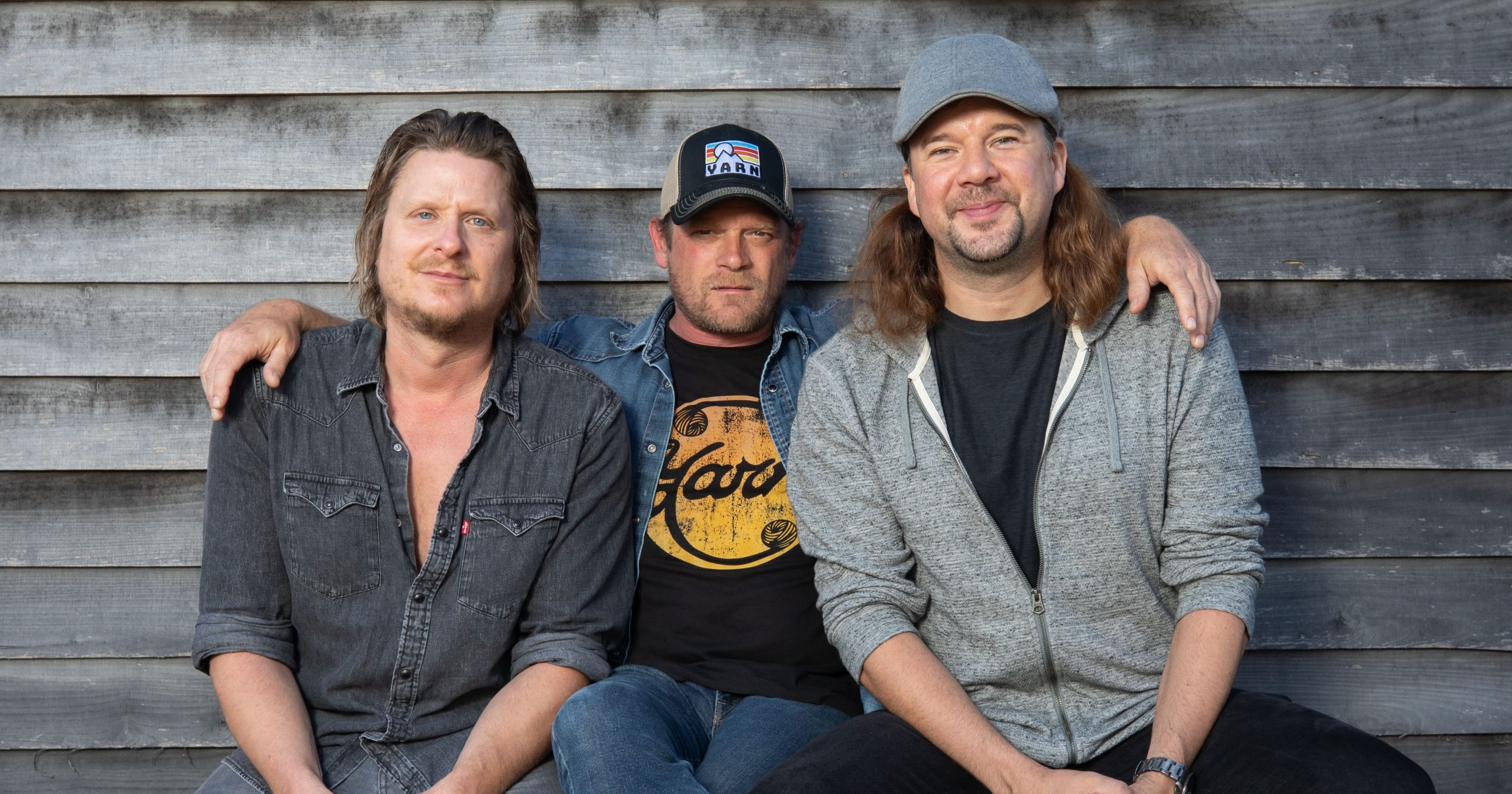
I make a lot of references in Yarn’s music about other bands, artists, movies, actors, etc… I didn’t realize how much until I started working on this Mixtape.  Just a few of the things I mention are Jim Croce, Dolly Parton, The Allman Brothers, George Burns, Bob Wills, Waylon Jennings, Velvet Underground, Rex Moroux – and the list goes on. This Mixtape will include references to other artists, food, and places famous in the world of pop culture during its given time of release. – Blake Christiana, Yarn

“Play Freebird” – Yarn

I figured I’d start and end with two of our songs from our new album, Born, Blessed, Grateful & Alive. My wife started writing this one about her father and I took it over and finished it. The entire song is based around another super famous song that Mandy’s dad used to play around the house when she was a kid. And now, if anyone yells out ‘Free Bird’ at one of our concerts, we’ve got something to give ’em.

“You Never Even Called Me By Name” – David Allen Coe

Such a perfect song for this Mixtape. Coe even impersonates the singers he references in this song as well as poking fun at the entire country music genre. Pretty brilliant. Waylon Jennings, Charley Pride, Merle Haggard, and he even references his own name.

“Calling Elvis” – Dire Straits

We could do a giant Mixtape with songs that just reference Elvis alone. I love this one, because just about every lyric is a reference to Elvis and the songs he recorded. Also, Mark Knopfler is THE MAN. More Elvis to come on this list.

“Bette Davis Eyes” – Kim Carnes

I had to include a quintessential ’80s tune on here and this is it. Great voice on Kim Carnes, the perfect sultry rasp. Of course she references the actress, Bette Davis, as well as Greta Garbo.

“Mrs. Robinson” – Simon & Garfunkel

Here’s one with a sports icon reference. Paul Simon has done a lot of these kinds of references in his songs, too, and I’ll include one of those later in the tape. Joe DiMaggio, the famous New York Yankee who married Marilyn Monroe, is mentioned here as ‘Joltin’ Joe.’

“Candle In The Wind” – Elton John

Nice little transition here from The Yankee Clipper to Marilyn Monroe. This entire song is written about Monroe.

“Man on The Moon” – R.E.M.

Lots of references here, but the main star of the song is Andy Kaufman, the brilliant comedian who starred in Taxi in the ’70s. Love Andy Kaufman and R.E.M. Great song. Other honorable pop-culture mentions in this song are 21, Checkers, Chess, and of course Elvis. Also a great Elvis impression from Michael Stipe.

“Nobody Home” – Pink Floyd

The Wall might have been my favorite album as a kid. And in this particular song off that album, Roger Waters sings ‘the obligatory Hendrix perm,’ a direct reference to Jimi Hendrix and his hair style. Glad I got to include Pink Floyd on here. Beautiful song.

“Walkin’ In Memphis” – Marc Cohn

This song just had to be on here. More Elvis for ya, along with WC Handy, Beale Street, Al Green, and more. Another fantastic song.

“Graceland” – Paul Simon

What do you know, more Elvis. I think I need to write a song about Elvis now. This song is too good, it paints a picture as good as any song ever written. Enough said.

“Dairy Queen” – Indigo Girls

I thought we needed some pop-culture food references, so I included these next two songs. Not to mention, Indigo Girls and Amy Ray are my wife’s favorites. Amy Ray’s recent solo records have all been really great and everyone should have a listen.

“Factory” – Band of Horses

I love this tune and its reference to the candy of my youth, Now and Laters. To me, Band of Horses is like a modern day Beach Boys. Great band, great songs, and great harmonies. This song reminds me how half my life is spent in a hotel room.

“I Want You” – Yarn

I reference the 1980 movie, Honeysuckle Rose, with Willie Nelson & Diane Cannon. Not sure anyone saw it, but it’s about an affair on the road between musicians Nelson and Cannon, and the song itself follows a similar plot line. I wrote this song with my longtime writing partner, Shane Spaulding.


Photo Credit: Bob Adamek

LISTEN: Matt the Electrician, “Do You Believe In Love”

Artist: Matt the Electrician
Hometown: Austin, Texas
Song: “Do You Believe In Love”
Album: Do You Believe In Love/Walking on a Thin Line
Release Date: October 6, 2023

In Their Words: “Growing up in Sonoma County in the early ’80s, Huey Lewis & The News were a really big deal, they were hometown heroes. And though the album Sports contains the bulk of their hits, and was much beloved to be sure, the first hit from the album Picture This was huge! ‘Do You Believe in Love.’

“It popped back into my head a few months back, and I couldn’t get it out. I became obsessed like I was 11 years old again. And I wanted it to be covered. And I wanted it to be a covered by a bluegrass band. But I couldn’t convince anyone I knew to do it. So I just had to do it myself. And so, purely for the fun of it, I enlisted the help of some of my favorite pickers here in Austin, Texas: Tony Kamel (guitar, vox), Trevor Smith (banjo), Noah Jeffries (fiddle), and Andrew Pressman (bass), and I went into the studio, and recorded both ‘Do You Believe In Love’ – and a version of ‘Walking on a Thin Line’ from Sports as a B side for the ‘digital 45.'” – Matt the Electrician


Photo Credit: Kathie Sever

Kristin Scott Benson Shares Her Essential ’80s Bluegrass Banjo Tracks

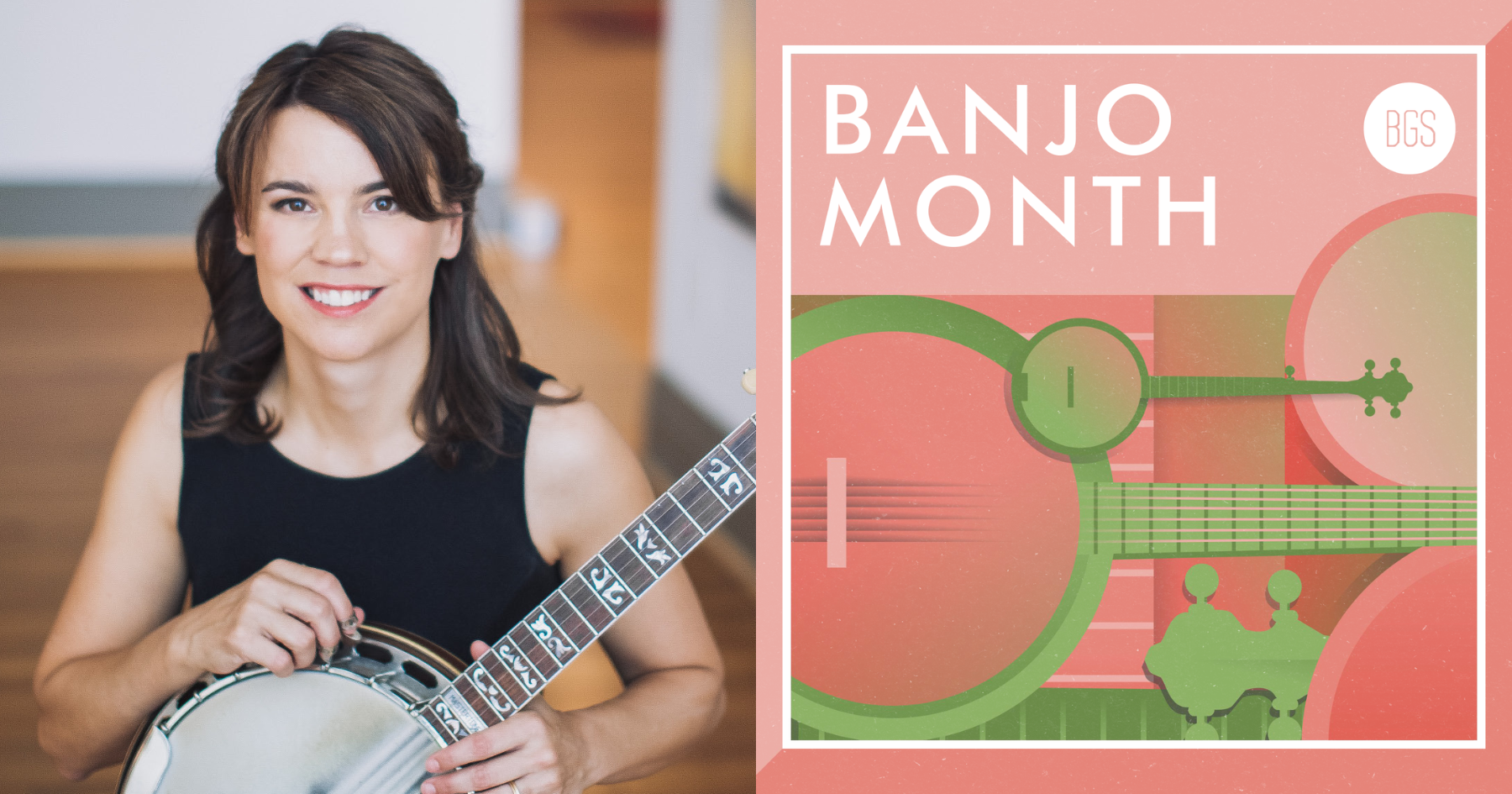
I started playing banjo in 1989 and like most people, once I was hooked, I devoured all the banjo I could find. In my quest for the latest, coolest bluegrass, I ended up covering most of the music recorded in the ’80s. It took years to discover because (brace yourself, kids) there was no streaming or internet to bring it to us. We found music by buying CDs, listening to friends’ CDs, going to shows, and trial and error. In this list, I tried to represent the successful bands and players from the decade, who were recording music just before I fell in love with banjo.

Seeing Scott Vestal with Doyle Lawson & Quicksilver is what made me want to play, so his “Up on the Blue Ridge” is of special significance. I played along with Bill Emerson’s instrumental album, Home of the Red Fox, for countless hours. Sonny’s cut on “Listening to the Rain” (sung by Paul Brewster) is still a bit mystifying. I was sure I had two of these key phrases exactly right, but Sonny never thought I did. Shocking, I know. Thing is, he wasn’t entirely sure how he played them either.

Some of my favorite current music from formative years just missed the deadline, like Alison Brown’s “Simple Pleasures,” which was released in 1990, but I tried to stick with the ’80s only. I love these banjo players, bands, and songs. To this day, if I get sleepy driving in the middle of the night, I can turn on this music and get a second wind. I hope you enjoy these 19 glimpses into the ’80s. — Kristin Scott Benson


We’re giving away a Recording King Songster Banjo in honor of Banjo Month! Enter to win your very own RK-R20 here.

Canon Fodder: k.d. lang, ‘Ingénue’

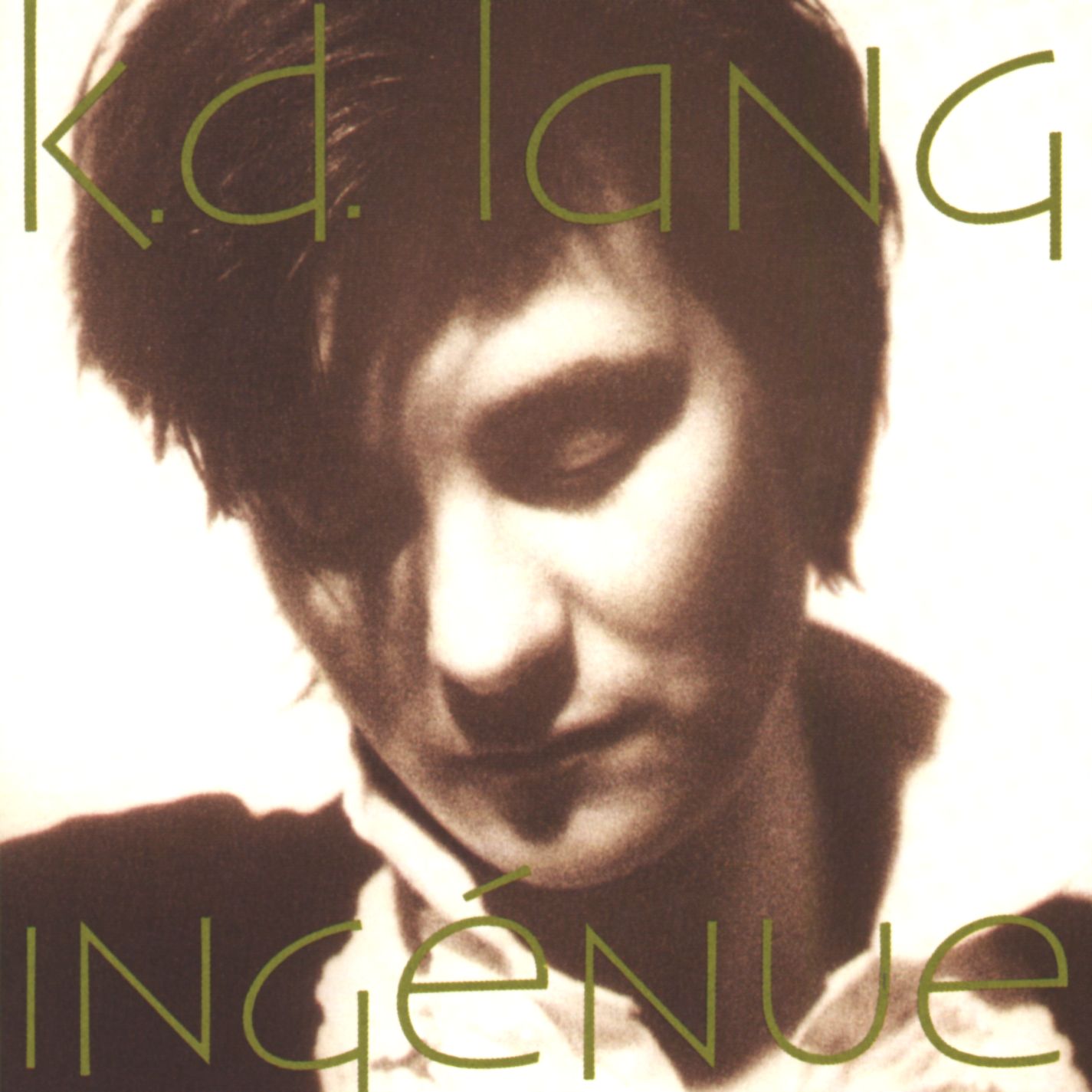
For better or for worse, k.d. lang’s 1992 breakout album Ingénue will always be associated with her coming out. Throughout the late 1980s she had established herself as an unlikely country star, a traditionalist who sang like Patsy Cline and worked with Owen Bradley but whose short punk haircut and androgynous persona branded her as an eccentric like Lyle Lovett. Also, she was Canadian—not a roadblock to country stardom (see: Anne Murray, Shania Twain), but certainly another way in which she was an outsider in Nashville. Nevertheless, she made a place for herself in the country mainstream, winning a Grammy for “Crying,” her 1989 duet with Roy Orbison, and the album Absolute Torch and Twang, released the same year, proved a more-than-modest hit, peaking at No. 12 on the country charts.

And yet, there were rumors that lang was… well, you know. She had come out to her family, but had not made that an explicit part of her public persona, despite playing a lesbian in the independent film Salmonberries. So the media pried into her personal life, posing uncomfortably direct questions to which she carefully measured her answers. lang was going to be made a spokesperson for the LGBTQ+ community whether or not she wanted that responsibility. The pressure came from within that community as well as from without. According to Newsweek, Queer Nation, an activist organization founded in 1990, put up posters around New York with photos of entertainers branded with the words Absolutely Queer. The Advocate outed a top-ranking military official at a time when gays were not welcome in the military, just prior to President Clinton’s infamous “don’t ask, don’t tell” waffle.

To preempt being forcibly outed—essentially, to take control of her own story rather than let someone else come out for her—in 1992 lang gave a lengthy, at times very tense interview to The Advocate. Her sexuality was discussed only generally throughout the exchange, with lang officially calling herself a lesbian near the end of the article. “I feel like it’s a part of my life, my sexuality, but it’s not—it certainly isn’t my cause. But I also have never denied it. I don’t try to hide it like some people in the industry do.” This was largely unexplored territory for any artist, especially one in a traditionally conservative genre and especially one who was going to so radically change her sound.

In retrospect it’s hard to convey just how chancy and therefore how pivotal Ingénue was for lang, who rejected absolute twang for torch songs rooted in jazz and pop, in chanson and klezmer, in Gershwin and Weill, Holiday and Dietrich. She described it at the time as “postnuclear cabaret.” Especially in the 1990s when changing your sound or courting a wide audience could be viewed as selling out, the album was a calculated risk, a means of shedding a long-held persona that might alienate old fans without attracting new ones. Gone were the fringed Western wear and the Stetsons; what remained was that haircut and, most crucially, a voice that sounds like a starry midnight.

The personnel didn’t change, but her approach certainly did. lang worked with co-producers and co-songwriters Greg Penny and Ben Mink, the latter a member of her backing band the Reclines. But this is not a case of treating country songs to new arrangements. The change happens at a conceptual level. Ingénue is lang’s first collection of entirely original material. She and Mink wrote songs outside the country format to find new ways to use her voice and new emotions to express. “Season of Hollow Soul” sounds like a Weimar torch song, as though the singer is playing both Annie Bowles and Cliff Bradshaw in Cabaret. “Miss Chatelaine” is an exuberant love song that cheekily references lang’s own iconography, in this case the cover of Chatelaine magazine, which in 1988 named her Woman of the Year. To contrast the photograph’s Nudie suit glory, lang toyed with her own androgynous look, even performing in a formal gown on Arsenio Hall.

Deep into the twenty-first century, of course, country music seems by nature a porous genre, one which artists drift into and out of constantly, whether it’s a pop star looking for a career renewal (Darius Rucker), a tourist taking snapshots of Music Row (Sheryl Crow), or a country star looking to broaden their audience (Taylor Swift). But perhaps no artist has made that transition with more grace and finesse—with more sense of the inevitable—than lang, whose voice was so much bigger than one genre could contain. Ingénue not only showed how artfully she bend that voice and suppress that twang, but also demonstrated how she could use it to inhabit a very different desire than the pop charts typically allowed. For that accomplishment she’ll receive the 2018 Trailblazer Award at the Americana Music Honors & Awards in September.

The album has been tied to her coming out, a vehicle for her ascension not merely as a pop star but as a gay pop star. This is, of course, not the only interpretation of the album, but it’s one that lang herself reasserted in interviews. She was forthright about the inspiration for the album, confessing that it was inspired by the end of an affair with a married lover. lang was still in love, but accepted that the relationship was impossible; that contradiction became the spark that illuminated these new songs. No names were given, but the implication was that this married lover—the subjects of the lyrics, the object of desire—was a woman. This seems even more radical than the Advocate interview, a means by which lang insisted these songs were personal, first-person, and grounded in gay desire. “Can your heart conceal what the mind of love reveals,” she sings on “Mind of Love,” and if you miss that she’s talking to herself, she calls herself by name: “Why do you fight, Kathryn? … Why hurt yourself, Kathryn?”

Yet, Ingénue is about desire, not orientation. These songs express a sexual, physical, and emotional yearning that is specific to her as an individual, specific to her as a lesbian, but she conveys it in such a way as to be universal on some level: something that might resonate with any listener, regardless of their orientation or even their opinion on orientation. In 1992 this might have had a humanizing, normalizing effect, because the risk paid off and then some: Ingénue was an immense crossover hit, anchored by the smash “Constant Craving.”

That song in particular has stuck with lang ever since: her signature tune, a mainstay of every concert she performs. “I knew it was a hit, and I was mad at it for that. I felt that it was a sellout at the time,” she told the New York Times earlier this year. But it’s not hard to see why the song would resonate with her audience, as it expresses a resilience in the face of prejudice or suspicion. “Even through the darkest phase, be it thick or thin,” lang sings in that voice, which sounds neither angry nor outraged but observant, matter-of-fact, as though a “darkest phase” was natural. “Always someone marches brave, here beneath my skin.” lang draws out those syllables in the chorus, pushing against the backing vocals, putting her words on the off-beats, drawing out those syllables—the consonants in “constant,” the long vowel and sensuous V in “craving”—to hint at possibilities: Craving for what or for whom? Constant as both heroic and burdensome, never satisfied?

Whatever it might mean to any one potential listener, it “has always been.” This craving is natural, lang insists, coded deep into all humanity, as constant in 2018 as it was in 1992.