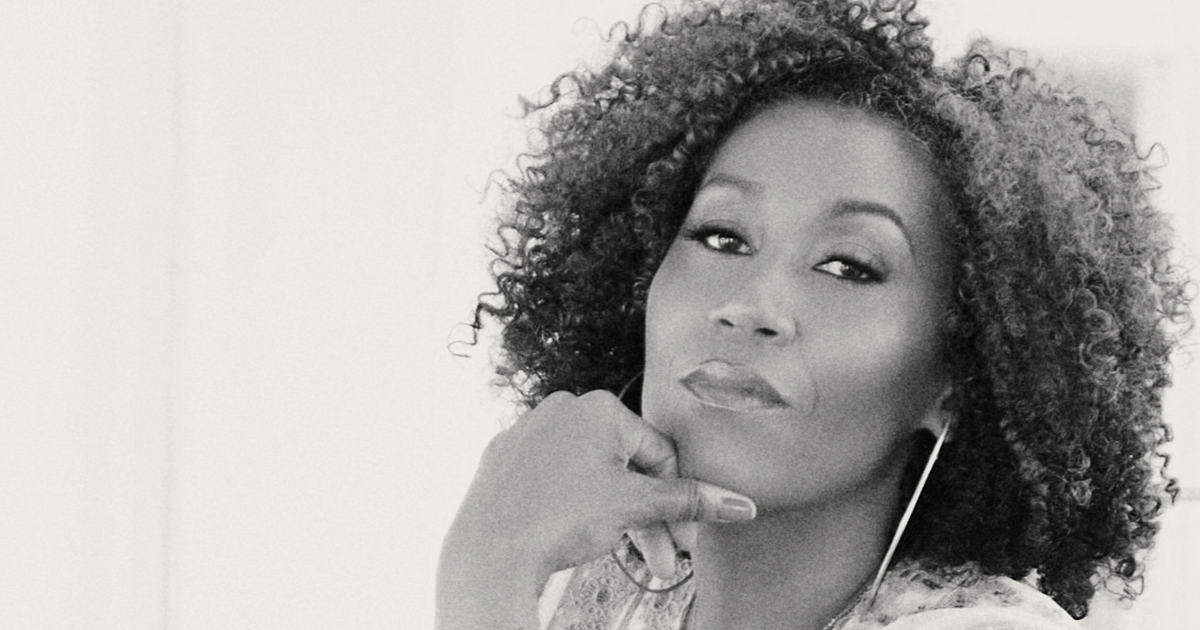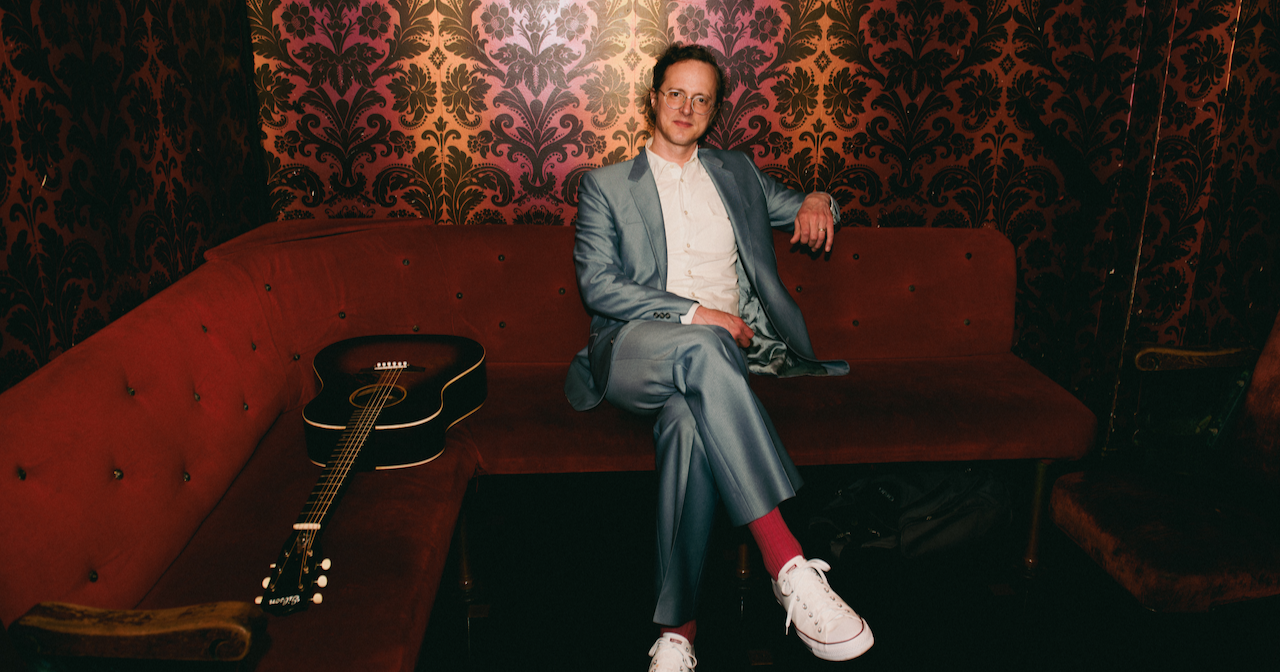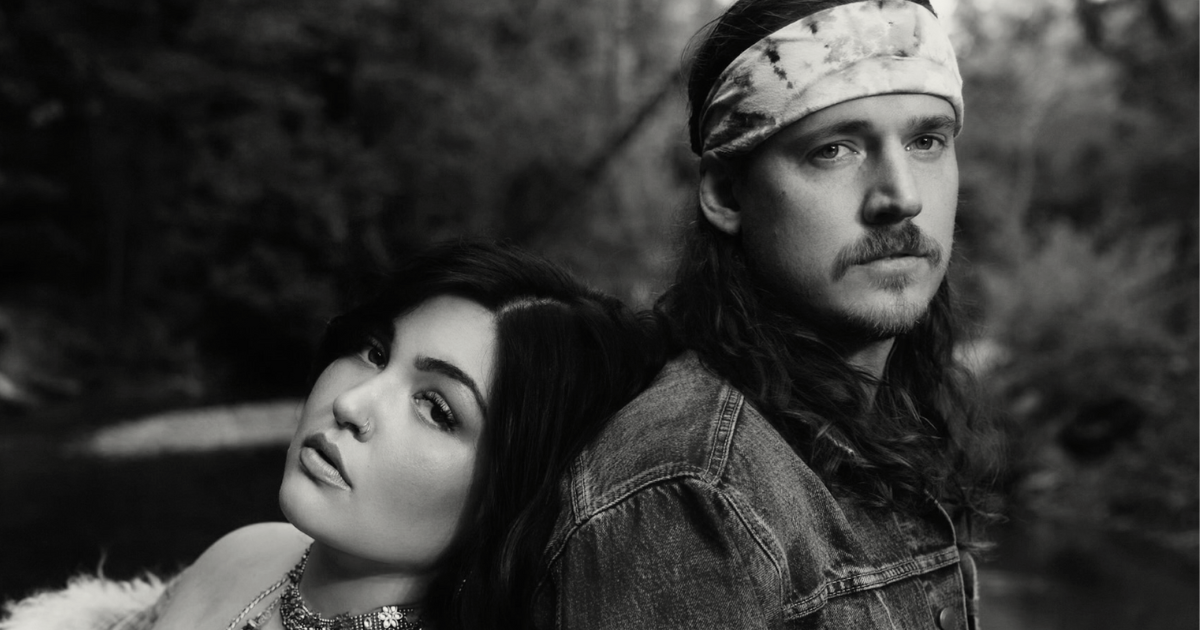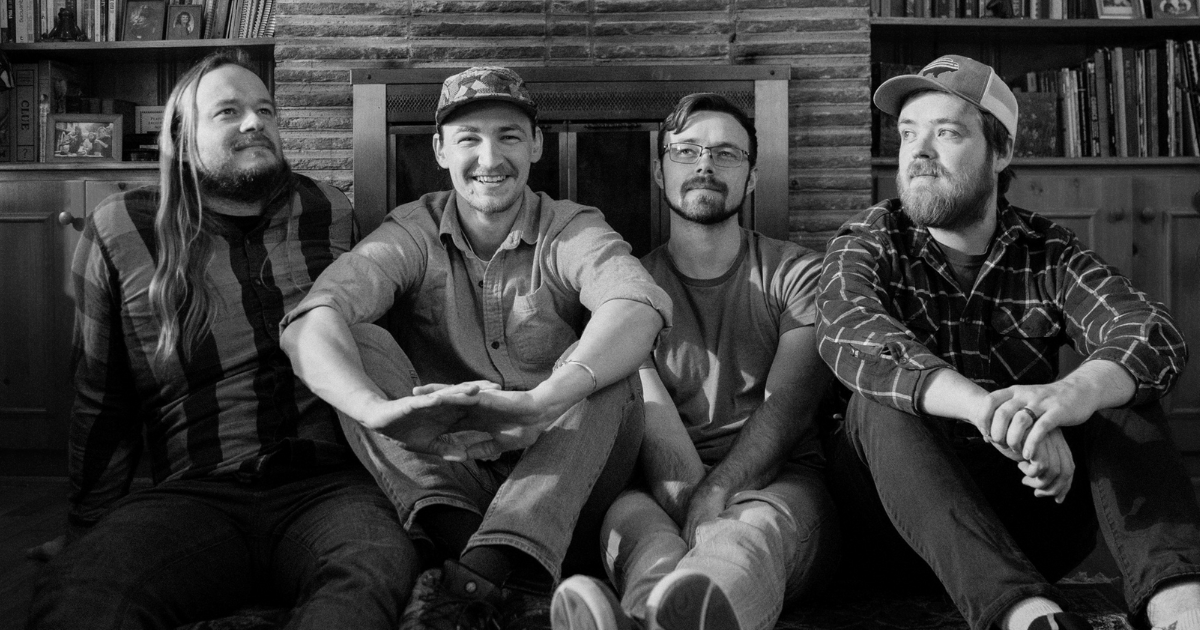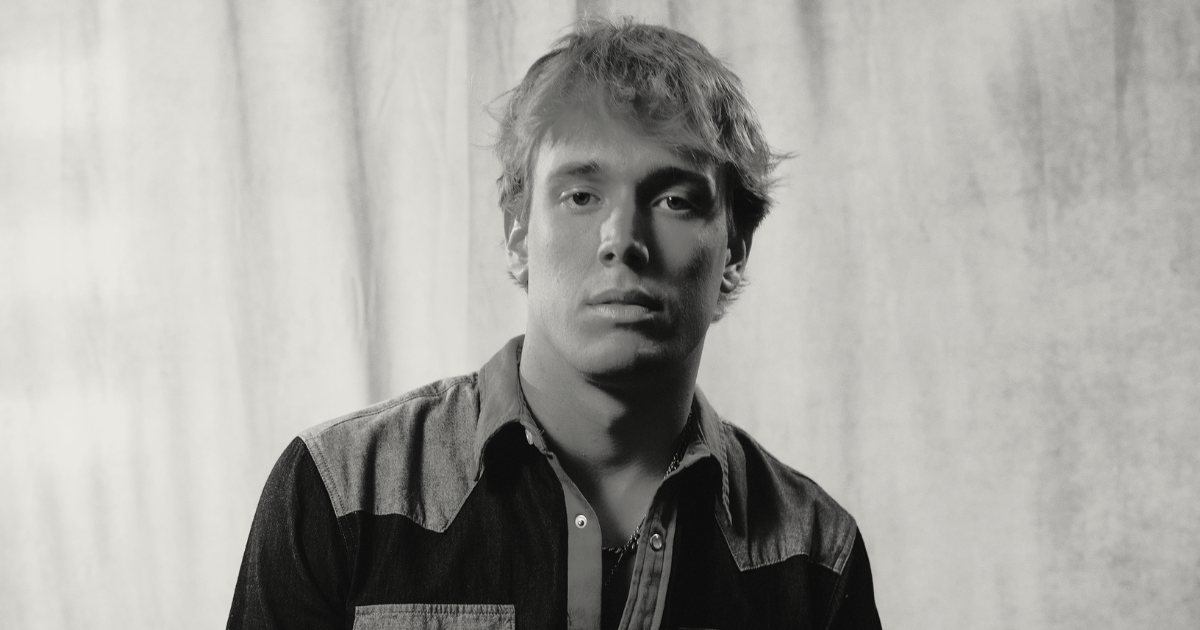
Hudson Westbrook Is Ready for What’s Next

It was not so long ago that Hudson Westbrook was in college at Texas Tech. But today, he’s one of the most promising and hard-to-pin-down young acts in country, helping pull Texan artistic independence into the mainstream.

Joining trailblazing stars like Cody Johnson and Parker McCollum, Westbrook celebrated his first Number One in February after finding a home for “House Again” on the Mediabase country radio chart. Also certified Platinum by the RIAA, it’s more evidence of a shift away from cookie-cutter tailgate anthems: an emotionally complex ballad rooted in the experience of a kid watching the fallout of their parents’ divorce.

Westbrook paired raw lyrical nerve with a soulful, tender touch, helping the newcomer tally one billion streams in 18 months, with an exponential growing profile – and then he switched things up.

His recently released Exclusive EP features five tracks awash in rootsy R&B, proving the 21-year-old won’t be held to a narrow interpretation of Red Dirt musicality. But he’s not satisfied there, either. His new radio single “Painted You Pretty” (from the debut album Texas Forever) matches country simplicity with an earnest romantic hook, and this summer he’ll tour arenas and stadiums with Bailey Zimmerman, Morgan Wallen, and one of his heroes, George Strait.

Speaking with Good Country at an East Nashville coffeeshop – just one day after meeting a pig on the podcast of his other hero, Tracy Lawrence – the fresh-faced star looks ahead to new music and shares his impression on what’s driving the Texas-and-traditional country resurgence. Barely two years into a rocket ride of a professional career, he’s still learning the ropes, and sometimes, the lingo. But Hudson Westbrook has all the artistic confidence he’ll ever need.

We last talked in 2024 and at the time you were just out of college. The only thing you had released was “Take It Slow,” and then “House Again” came out. How have things changed?

Yeah, I was working at that feed store and it wasn’t that long ago. I’d written “House Again” and then I just remember I was so confused as to what was going on. Now I look up and I’m like, “I was blowing up the whole time.” I didn’t realize how big it was getting. It’s hard to feel it. I’d be like “Hey y’all, is 5,000 tickets good here?” And they’re like, “Do you realize what you just did?” And I’m always like “… No.” [Laughs]

I’m getting bigger and bigger and bigger and bigger. I want to keep getting bigger, but I want to keep it small. So [lately] it’s just really been focusing on doing that. Not losing yourself. Focusing on grounding myself right now, making sure I’m calling my family and whatever it might be. And then also it’s celebrating it, too.

You just had the Number One [with “House Again”]. What’d you do to celebrate?

We were in Hawaii, so we drank – I don’t know – 15 margaritas? [Laughs] The coolest part about that song is it was my second co-write and I was like, “Yo, I don’t know what I’m doing.” [Co-writers Dan Alley and Neil Medley] said, “Well, what’s your hook?” I said, “What’s a hook?” And they started laughing. I’m like, “Bro, I don’t know what the hell that is, but I had this idea.” …

So it just blew up. And I was so scared, just because it’s saying goodbye to a lot of stuff, honestly. It all happened so fast. If anyone had to have someone explain to them how to deal with a fast moment, I’d say if their songs are working, slow down.

Really? What do you mean?

Because that was a song that was for me. I was like, “I’m writing these songs I love and they’re ready by the time that we need them, so throw them out there.” And, “I’m already in Nashville, so let’s film the music video.” We never really planned on dropping anything, which is kind of crazy. I wish I would’ve slowed down a little bit and then realized what was happening so I could soak it in. It’s still happening. It’s still great. But I would just tell people, maybe slow down if it’s happening that fast. I feel like a lot of times I didn’t know who Hudson Westbrook was when I put songs out. And now I’ve sat down and we recorded four songs on Monday and I’m like, “This is the vibe. This is what we’re doing.” It’s so refreshing.

You’re going to be sharing a stadium stage with George Strait [at Jones AT&T Stadium in Lubbock, Texas on April 25]. That’s a homecoming show and I know he means a lot to you, so how does that make you feel?

That’s where I went to college. I sat on the 50-yard line since I was 7 years old, watched every single football game at [Texas] Tech, watched every single concert, listened to George Strait since I was in the womb. It was “Check Yes or No.” It was “Troubadour.” It was “The Fireman.” All that was in my house from an early age. So I don’t know, it’s just crazy. It’s a little nerve-wracking, like who knows what’s going to happen? I’ve also never played a stadium yet. All my friends are going to be there. It’s just going to be weird.

I would say there are some similarities between you and George Strait and maybe that’s just because of your background. You’ve been traveling around, have you noticed a difference in country music depending on where you are?

I go to Florida and [the fans are] screaming the most Texas country song I have. And Texas country just means that production. It’s a view of writing and it’s a perspective. I use real drums. The biggest country music artists in the world don’t use real drums right now. That changes everything. And so now we got to be like, “How can we be different than everything else?” I think that’s by being natural, in a sense.

There’s definitely a moment happening for Texas country, bluegrass, and traditional roots, with Zach Top and some more of your peers. Is it just perfect timing for you?

I think we’re pushing it into that direction because I think we’re trying to get back what we wanted to hear. I know if I talk to Zach, he’d be like, “Yeah, dude, I want acoustic and drums and a shaker and I want it all to be in there.” I feel like we make country music and it sounds like the show. You could literally put a band on stage and play it with no auto tune, no tracks. And that’s what makes it unique for us, because it’s like no one’s ever going to play the same thing twice.

What’s coming next, though? The Exclusive EP is out now and it’s definitely different than Texas Forever.

To be honest, I was like, “I want to try a bigger sound, something more mainstream.” And so I chased it – but I did not give up on the songwriting. My songwriting was very intentional and it was very love story-based [on Exclusive].

I love them, but I’m going back to my Texas country sound. We just recorded a song called “Hey Dallas,” which is really cool. Then we did a song called “Backwards,” which is really cool. And then I don’t know, I’m leaning in to John Mayer production a bit – but no crazy guitar solo. [Laughs] I was like, I ain’t doing none of that.

I can say, definitely some more soul and a bit of R&B in there, for sure. It’s electric guitars driving the whole thing – and I love electrics and baritones. I want that to drive all my stuff from now on. My voice just sounds better with it to me.

So it’s going to be like a whole new fresh album?

Totally new. I have like 120 songs and a lot of them are pretty good. I’m not saying they’re all for me, but I finally did what I should have done and that was sit back, find my key, find the way I like to write, really be intentional about what I’m writing. I wrote a song called “Nowhere Bound” that is probably one of my favorite songs. It’s like, I never stop in any city and don’t ever slow down.

When are you all going to be sharing new stuff?

Next month. I’m dropping “Slow Hand” by Conway Twitty [on Gavin Adcock’s Country Never Dies project, March 13]. His voice is incredible. I ain’t going to lie. It was not easy to cover that shit. [Laughs] He’s got just some weird things and then you’re like holding this note out for 10 minutes. [Laughs]

To be honest, dude, even if none of that stuff [I wrote] is usable, my goal this year is to do something that no one’s ever done and create a freaking path so far into my own lane that’s nothing like anybody else that … it’s undeniable, because I’m going to do what I want.

I feel like right now I’m growing and I’m learning and I’m doing whatever, but now it’s like, “How do I take it to the next level?” I think the way you take it to the next level is just getting deeper into yourself and telling [the fans] more.


Photo Credit: Peyton Dollar
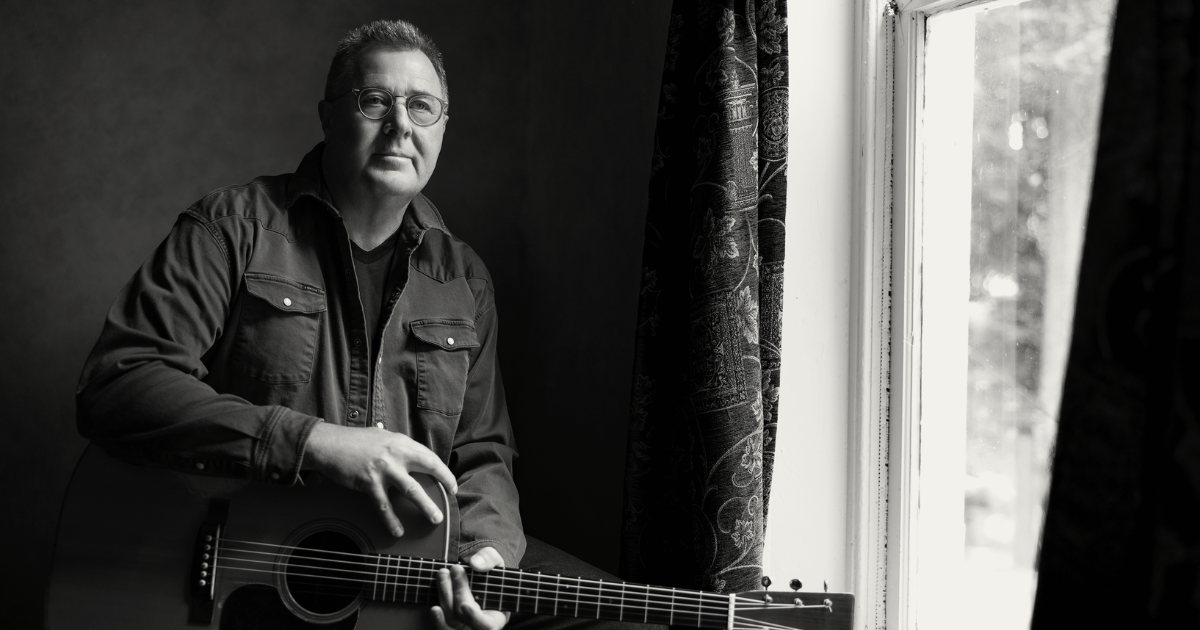
Vince Gill Has Done It All (Part 1)

Vince Gill doesn’t give interviews; he gives conversations – lengthy, engaging conversations filled with the same reflection and storytelling that make his songwriting so relatable and successful. Factor in his enviable mastery of guitar and other instruments and the result is a well-rounded artist who has won 18 CMA awards, 22 GRAMMY awards, and eight Academy of Country Music Awards.

In 2025, he was presented with the CMA Willie Nelson Lifetime Achievement Award, and this year, on May 6, he will receive the Ken Burns American Heritage Prize. He’s been a member of the Grand Ole Opry since 1991 and in 2005 was entered into the Nashville Songwriters Hall of Fame. Two years later, he was inducted into the Country Music Hall of Fame.

Over the course of 21 albums his sales exceed thirty million with 45 chart singles. Coming up is a summer tour, which will wrap with a six-night residency at the Ryman Auditorium, while continuing his ongoing schedule with the Eagles. All of this is only a cursory glance at his many accolades.

Gill’s accomplishments, and the experiences that accompany them, are at the core of his latest project, 50 Years From Home, a yearlong series of monthly EPs marking the fiftieth anniversary of his leaving home to pursue a music career. Each collection features themed new songs and revisited classics, with photos of select guitars on the covers. The EPs are introduced via detailed conversations with friend and colleague Charlie Worsham – watch all episodes on Gill’s YouTube channel.

Down At The Borderline, released February 13, is the fourth and latest EP in the series, while the next installment, Lonely’s What I Do, already arrives this Friday, March 13. A few weeks prior to the release of Down At The Borderline, Gill made himself available for more interviews and conversations, including a talk with Good Country.

At this point, it’s difficult to imagine anything Vince Gill hasn’t done. In fact, there are two key things, neither of which he cares to pursue:

“I’ve never sent a text,” he says, “because I prefer talking to people. What you find out [with texts] is how many people really don’t want to talk to you!” And, “I’ve never posted anything on the internet,” although he does have a scrolling habit, which he gladly admitted to during this discussion.

As you move through endless interviews around these EPs, is there something you’ve always wanted to talk about but have never been asked? Now’s your chance to tell the world!

Vince Gill: I wouldn’t have a clue! I never was much of a planner. I think it’s a blessing that I just live in the moment. I don’t look ahead, I don’t look back much, and there’s not a lot of regrets in my life. I figure the mistakes I made were valuable to learn something. I never planned any of this. I didn’t sit down and have a diary that I’d go, “When I’m this age, I want to have done this and this.” I just answered the phone.

You should probably give classes on that, because this is an industry of nonstop worry: What’s going to happen? Will this work? Will this not work? To move from project to project, stage to stage of your career with that mindset is impressive.

I started out with absolutely not one dollar, so money has never been the reason for any of it. I bought a guitar when I was 18 years old and I moved away from home. It was an old pre-war Martin that was perfect for bluegrass. I spent every dime I had on it and I didn’t worry. I said, “My rent’s $15 a month, I’ll make a couple hundred bucks a week when we work, so I’ll be fine.”

Amazing.

Speaking of going from stage to stage of your career, the EPs are each a chapter told with collections of songs. Tell us more.

The majority of it is fairly new. From the time I started in 1975, there was no reason to have a publishing deal for a long time. Even after I had a record deal, I didn’t see the need because I had a place for my songs to land on my own records. I never partnered up with a publisher, to give away half the money, to give a monthly draw to help pay my rent or whatever. I was able to always pay the rent somehow – my house note, whatever it was – with playing and singing.

Three or four years ago, Jody Williams, who’s a lifelong publisher in Nashville and a friend of mine for 40-something years now, called me and said, “You’ve never had a publisher. Would you consider letting me manage your songwriting for a while? I think you still have a lot to say as a songwriter.” I said, “Yeah, I’ll try that out.”

He would call great songwriters and say, “Would you like to write a song with Vince?” I was never a very good self-promoter, so I would never do that on my own. I just let it unfold with people I would meet. So it started me down this path of writing a lot of music, and over the last three or four years I’ve written twice as many songs as I’ve recorded on this new 50 Years From Home project. I think I’m writing the best songs I’ve ever written. With time you should get better, and I think I have.

I don’t want to check out someday and have all these songs lost in a desk drawer somewhere, so I’ve started recording them all. It’s a different world now, a different way. If you want to release 75 songs, you can do it. You don’t have to have one album with 10 songs on it anymore. So I started thinking about what it would be. My first conception was to release two songs a week, like an A-side and B-side of a 45. “It’s Monday, it’s time for a couple new Vince songs.” The record company came up with the idea of, “Why don’t you do a series of EPs and have six or seven songs on each one?” I said, “That sounds cool. We’ll put one out a month.”

That’s where the whole thing started. I was trying to find a way to put all this out. I realize at this point in my life, I’m almost 69, I don’t have as much time left to be creative as I’ve had to this point, obviously. How much more it matters now is palpable. It really means something to me to be creative, and if I see myself improving, I want to nurture and foster that and continue, because it’s so dear to me, being musical, being creative, coming up with an idea, coming up with a story that could potentially move somebody, touch somebody. It’s unbelievable to be able to have that gift, to be able to do that. So I’m trying to take full advantage of it.

But 68 or 69 today is not the 68 or 69 of our parents’ years. When you’re a kid, your parents turn 50 and it seems ancient.

That’s true. My mom’s a hundred years old.

See? You have many more years to go, especially if you’re still 17 in your head, which happens in this business.

Yeah, and I am. I don’t feel any different than when I pulled out of the driveway and took off. I still have the same love and I’m so drawn to playing music. It’s such a huge part of me. I tell everybody, “My mom’s a hundred and I hope I’m really her son, so I have those genes! For all I know, she might have rented me out of a yard in southern Oklahoma somewhere!” But my dad checked out early. He died at 65 – and I was afraid of being 65. There’s so many instances of people passing at the same age as their parents and whatnot.

I’ve heard from others that it’s a strange feeling when you reach the age when a parent passed.

Absolutely. But my dad drank a lot, he smoked two packs a day, and he didn’t take very good care of himself. I don’t think I have too many of those qualities. I don’t smoke and I don’t drink. I eat bad, but that’s about it.

You’ve stated many times that your goal was always to be a recording musician. With reality shows and social media, do young players have that same goal, or is a lot of it about chasing clicks and stardom? Are you concerned about the future of musicianship?

No, because there are plenty of young kids out there that can play their brains out. There’s so many of them that you don’t worry about it. I tell people all the time, “If American Idol was on in 1948, Little Jimmy Dickens would’ve been on it.” I don’t really care for those shows – and not in a bad way, because a lot of talented people go on them – but sadly, you don’t see that really bear out with a lot of artists coming from those shows that have longevity. They have that moment, but we’re so ready to slide our thumb and move on to the next scrolling thing. It’s the same way with those shows: “The season’s over. Okay, who are the new ones?” And I never like seeing creativity be a contest.

But I don’t worry too much. You see someone like Sierra Hull, who can play better than anybody in the whole world, and Michael Cleveland, and so many that come along that can completely annihilate their instruments. It’s beautiful to watch. I don’t think that’ll ever go away.

Does AI-created “music” concern you?

Of course, but when I’m asked about it, I say, “The people who create it, deep down, they know they haven’t done anything. They know they’ve done nothing.”

As a recording and performing guitarist, singer, and songwriter over a lot of years, how has your approach changed? Your technique, your picking style, your ear, your tone?

It’s a combination of all of those things. I’ve spent the latter years realizing what I don’t need, what I don’t need to do, what I don’t need to play, what I don’t need to sing, what I don’t need to say in the lyrics. To me, the beauty of it is your willingness to try to say the most with the least.

I like my singing better now than I did when I had hits. I much prefer the way I sing and play my songs today. That’s motivation enough, that I feel like I’m better now than I ever was. My ears have never lied to me, and with that, if I feel like I’m making progress, that’s all the reason in the world to keep doing it. If I start wheezing like an old woman, I probably won’t wanna go out there and sing. But, thank God, that hasn’t happened yet,

With music, the more you do it, the more you learn. The point of it is not to impress, but to move people. If you can move people with what you play and sing and write, that’s the real gift. That’s when you really get something that matters out of it, rather than a big “Woo, that was incredible! That was impressive.” That’s fleeting in a way. I like the long haul.

I could have very easily stopped working on other people’s records and being a sideman and a harmony singer and guitar player and what have you. But I love doing that so much, because I always thought it was a harder job to complement somebody and what they’re doing, more so than doing what you want and having everybody follow you. It took more talent to do that – better ears, bigger ears, that kind of stuff. So I continue to do that. I’ve worked on over a thousand artists’ records in the last 50 years. The diversity of that, the willingness to go into any kind of world of music and try, and not just be shortsighted and only do this and only do that – I love all of it. I’ll find something good in any of it. If I can play a part in making something better that’s being done, then that’s a good feeling.

Can you draw a through line from your bluegrass roots to what you’ve done and what you do now?

“When I Call Your Name” wouldn’t have sounded like it did had I not played bluegrass. That high lonesome sound was totally taken out of my love and life of bluegrass. A song on one of my new records [Secondhand Smoke, EP 2] is called “Hill People,” with [harmony vocalist] John Meador – great singer, great player, it just blows my mind how good he is. That sounds the way it does, it was written the way it was, because of my history of bluegrass.

I was never one of those guys that [would say], “I can only play bluegrass and it has to be traditional.” I loved New Grass Revival. They were different than Bill Monroe and I loved it all. If you take whatever’s great about something and cast the rest aside, then you’ve done your job. I’m not critical of young people that don’t do it the way I did it, or the way my heroes did it. That doesn’t serve anybody any good, to be critical of stuff. I remember hearing Billy Strings talk about how he would go to jam sessions and felt unwelcomed, and that killed me. I felt so bad for him.

I experienced that once when I was 17. We were playing some bluegrass festival, a hardcore traditional-minded festival. We were up there playing “Rocky Road Blues,” which is a Bill Monroe song, but we were doing it real bluesy. The promoters kicked us out of the festival and said, “You can’t be playing that kind of music!”

As they were kicking us out, Jim & Jesse were playing Chuck Berry’s “Johnny B. Goode.” I said, “Now wait a minute. We’re playing a Bill Monroe song and we’re going to get kicked out, and they’re playing ‘Johnny B. Goode’ by Chuck Berry? What’s cool about that?” They go, “Their suits match. Get outta here!”

I’ve known Sam Bush for 50-something years. The story he tells about Monroe is that he said, “What is it you call that music you play?” Sam said, “We call it New Grass.” He goes, “Yeah, I hate that.” That kills me, but it didn’t impact Sam one bit. But that hardline thing – I don’t go for it.

You’ve said that the role of the artist is to speak for others. Are there songs that speak for you, or to you, in those moments?

I like the things that are the most honest, that are not trying to be something they’re not. I’m not a fan of singers that alter the sound of their voice to make it do something it doesn’t naturally do. I heard Merle Haggard say, “Man, just tell the truth.” That’s where I’m finding the biggest inspiration in songs is being truthful. I think the truth has always been the greatest thing you can lean on.

People talk about country music, and if you could point somebody to what you think country music is, I’d say Merle Haggard’s “Mama Tried.” How it starts– “I turned 21 in prison doing life without parole.” That’s pretty dark. That’s pretty sad. And then, “No one could steer me right, but Mama tried.” There’s your hope.

One thing they’ve never taken away from me is hope. Even though they quit playing my records on radio stations and I don’t have hits anymore, I’m always hopeful that something will slide through and move people. I had hope when I made my first record at 16 or 17 years old, and lo and behold, some radio station played it and I heard it in my pickup truck. That instilled a hope in me that’s never faded. They can pass on songs, they can not play them, they can do all that, but they have never dinged my hope in my heart for what it is that I want to try to do.

Where were you in your truck when you heard yourself on the radio for the first time?

I-40, Oklahoma City. I was driving and all of a sudden they started playing “July You’re a Woman.” It’s a John Stewart song and we’d done a bluegrass version of it. I was singing lead. I think some other bluegrassers had done that same song. I’m driving and all of a sudden they started playing it on the radio station and I get on the CB radio and start screaming, “You’re not going to believe it! They’re playing our record on the radio!” Truckers were coming back saying, “Hey, you sound good, kid! Hang in there.” Wow.

The first record I ever made, I heard on the radio. It put that dose of hope in me that has never faded.


Editor’s Note: Read part two of our Good Country conversation with Vince Gill here.

Want more Good Country? Sign up to receive our monthly email newsletter – and much more music! – direct to your inbox.

Photo Credit: David McClister

The Many Perspectives of Rissi Palmer

Rissi Palmer is putting her lifelong love of country music into Perspectives, her first project in six years. With three tracks produced by Shannon Sanders and a fourth by Dan Knobler, the new EP places Palmer back in the artist spotlight after a period of time focused on personal and professional evolution.

Palmer also hosts an Apple Music country radio show, Color Me Country, which spotlights original music from artists of color. But there’s even more to the story. She’s collaborated on a children’s book titled Color Me Country: A Celebration of Black Women Who Shaped Country Music and she’s also wrapped a memorable tour called The Trailblazing Women of Country, where she performed some of the best-loved songs from Patsy Cline, Loretta Lynn, and Dolly Parton. Off the stage, she’s devoted more time to her two daughters following her divorce, while still ramping up to the release of Perspectives.

Though she’s based in Durham, North Carolina, Palmer caught up with Good Country in Belfast, Northern Ireland, during the Your Roots Are Showing conference. At the event’s opening night concert, she sang “Old Black Southern Woman,” a heartfelt ballad that touches on the loss of her mother when Palmer was just seven years old. Perspectives also offers a cover of the SteelDrivers’ “Can You Run?” as well as an original song titled “Good For Me” (about diving back into the dating pool) and a rendition of a Loretta Lynn classic, “Somebody Somewhere.”

“All these things came together, and Shannon so graciously decided to be a part of this with me,” Palmer recalls. “He said, ‘Well, two of these songs sound very bluegrassy. What if we just did the whole project like that?’ I was like, ‘That’s kind of dope,’ because I hadn’t done anything like that. And again, perspectives. Two Black musicians, making this very bluegrassy, but still very soulful, project. And I decided midway through that we’re going to call it Perspectives.”

What was on your mind as “Old Black Southern Woman” was taking shape?

Rissi Palmer: I wrote that with Kyshona, and that was our first time writing together. Kyshona has a way of getting straight to the heart of whatever it is that you’re talking about. I had the idea for the chorus, the “ooh-ooooh” thing, in my head, and I hadn’t really started writing anything. So, we sat down and we started talking. When you go to her house, she’s got all these really cool plants from her mom and her grandma. We talked about that, and I wanted to write something that paid homage to my mother but also acknowledged all the other women that came in and helped raise me.

It’s a universal thing, too. Everybody thinks of getting older as really bad, and I don’t know what I thought my 40s were going to be like, when I was in my 20s. I honestly don’t know, but I don’t feel old! [Laughs] I think I thought 40 was going to feel different, but 40 actually feels just like a creakier 25! And I see the blessing in it. I feel really lucky to be here, because I outlived [my mother] and I have babies now. I just wanted to write something that says it’s OK to get old. It’s actually really cool to be able to get old and to see the fruits of your work.

I think the title kind of throws people off because they’re like, “Oh, this is a song about some Black people.” But it’s actually about getting to be old, seeing the blessing and good in that, and making the most of it.

When you sing that song now, it gives you a chance to talk about your mom and share her memory. Is that extra special for you?

Yeah. It was hard, I’ll be honest. The first few times that I sang it were really hard and I would cry. I’m starting not to cry when I sing it. Especially when we get to the lyric, “Every curse my family claimed ends with me.” That’s always where it got hard. You don’t realize how hard it is to overcome and not repeat mistakes.

Was it a dream for you as a kid to become a singer?

I’ve always known. I don’t know how, but I’ve always known that this is what I wanted to do. In that way, I’m very lucky. It was never, “Maybe I should be…” I would say that I was gonna do other stuff, just to make my parents happy, because I figured that they were probably really scared about me wanting to be a singer. So, I was like, “I’ll be a lawyer.” They’ve got a lawyer. My brother is a lawyer, so they got one. So, we’re good. [Laughs]

Now I did not always want to be a country singer. I wanted to be a singer and I wanted to write songs. I knew the kind of songs that I wanted to do, but I didn’t call it that. That didn’t become clear to me until I met my first managers, and then that was when I realized, “Yeah, I guess that is what I want to do.”

Is bluegrass an influence for you?

I like bluegrass! I’m a Rhonda Vincent fan and I’ve always been an Alison Krauss fan. And on Jon Randall’s first record he has this really cool song with Vince Gill called “My Life.” That’s one of my favorite records, by the way. It’s called Walking Among the Living.

I’ve always been a fan. I’ve always listened. I’ve always had those things on my playlist. I just never thought of myself as that, because there’s a very distinct vocal style. There’s a very distinct cadence in which they’re singing. A lot of the people on the show last night [at Your Roots Are Showing] were just brilliant bluegrass singers, and I never thought of myself that way because I can’t do that. Like, that’s not what I do. I didn’t really think of it as something that I could do. I used to write stuff like that all the time and I tried to give it to other people. But it was Shannon – Shannon was the push. Shannon was like, “Let’s do this.”

What was the Trailblazing Women of Country tour like?

It’s one of my favorite things that I’ve ever done. It was an all-female band and it was myself and Kristina Train, who’s a brilliant singer, as the two leads. We split the show in half, usually there was an intermission between Kristina and me, and we sang two songs together. You know how it is to be a fan, but you don’t necessarily know everything by a person? Patsy, I knew. For Patsy, I didn’t even have to study, because I knew all those songs. Most of my Dolly stuff I knew, but there’s a lot of words in “Coat of Many Colors”! And then Loretta, I’ll be perfectly honest, I had not gone super deep into Loretta’s catalog, so that was fun. That was the one that I needed the most work.

And I loved it! We did mostly theaters. I played in places I never went before. I went to Alaska. We did Wyoming – and you haven’t lived until you’ve driven across Wyoming! It’s just space! It’s wild! With the audiences, it was really funny how they varied. Sometimes we would make jokes, and sometimes people would say things to me. Like, someone asked me once, “Where’s your blonde wig?” when we got to the Dolly part. And I was just like, “Did you ask Kristina that?” They didn’t say anything, and I was like, “Girl, why would I cover up my fabulous hair?” and everybody started laughing.

You know, we got some weird comments. There were some people that (gasps) when I walked out. And afterwards, people would say really kind things. I never had anything rude said to me. But I did notice the [look of surprise] at first. It was good for me. It reminded me about why I love country music. I think I needed that, because you spend so much time, like with Color Me Country, talking about what’s wrong with the industry and talking about ways that we’ve been slighted or ignored. Then you lose sight of why you even started this in the first place, and that was why. It’s because of those songs. It’s because of those women. It’s because of the connection that the audience had with that music.

I can’t tell you how many people came up and told me stories. I met one woman who actually saw Patsy Cline performing on the bed of a truck when she was a kid. And I was just like, “That’s the most amazing thing I’ve ever heard before.” That’s country music.

You’ve got a lot of things coming up. Where would you like this new music to take you?

That’s a great question. I put so much into other facets of my career for the last few years. I put a lot into my children, because of our changing family situation, and just wanting to be there for them. At the same time, I was wanting to experience the career wave that I was having and trying to balance that. So, my own music took a backseat. I started feeling like, “I think people forget that I sing.” And really what I’m saying is, “I think I forgot that I sing,”

I was still doing shows, and still doing things in between, but it was like, “I don’t want everybody to forget why I’m here.” Really I’m saying, “I don’t want to forget why I’m here.” The Trailblazing Women of Country really cemented that for me, especially the “country” part. I’ve been experimenting and trying different things – and there is a project that comes later – but I wanted to do this. I felt like this was a really important statement to make, like, “This is why she talks so much shit.” [Laughs] Because this is where I started and this is what I do.


Photo Credit: Dire Image

Michael Daves Reconstructs R.E.M. Bluegrass Style

Although he lives in New York now, Michael Daves’ Southern roots permeate his music. That characteristic goes further than ever before on the newly released Fables, a six-song EP that reconstructs songs from fellow Georgia band R.E.M.’s 1985 album Fables of the Reconstruction.

In celebration of the record’s 40-year anniversary, Daves enlisted his longtime quartet bandmates – fiddler Alex Hargreaves (Billy Strings), mandolinist Jacob Jolliff (Béla Fleck, Yonder Mountain String Band) and Erik Alvar (Nefesh Mountain, Billy Strings) – and others to reinvent songs like “Green Grow The Rushes,” “Wendell Gee,” and of course, “Driver 8.” Together, they turn each track on its head, fully leaning into their bluegrass prowess while continuing to hold each song and their original formats in high regard. It’s something that Daves has plenty of experience with, having released the dual acoustic and electric bluegrass covers compilation Orchids and Violence in 2016 and Early Morning Sun – an EP of bluegrass and country standards from Ola Belle Reed, Dolly Parton and others – in August 2025.

“It was really important for me to try to make something that would stand on its own, even if people didn’t have any connection with R.E.M. or don’t even like them,” explains Daves. “I tried to make something that just works by its own logic as much as it’s paying homage to the original.”

During a Zoom call with BGS on release day in December, Daves spoke about his motivation for doing this cover EP, how he decided which songs to include on it, the plans for his label Wild Geranium Records, and more.

What motivated you to not only make an EP of R.E.M. covers, but to do it with songs from Fables of the Reconstruction?

Michael Daves: It’s an album I grew up with. R.E.M. was one of my first musical obsessions. I first discovered them in the late ‘80s at summer camp in Toccoa, Georgia, not too far from Athens where R.E.M. was from. All my camp counselors were [University of Georgia] kids, so I fully downloaded their musical tastes, which fortunately were pretty good.

As far as taking on the Fables thing now, there were a couple inspirations. For one, it’s the 40th anniversary of that record and it’s one that I don’t feel like a lot of younger people have heard or appreciated. People seem to know more of R.E.M.’s pop stuff from the ‘90s and beyond, but that ‘80s stuff was so good and weird. I also have this quartet I’ve led since about 2019 with Alex Hargreaves, Jacob Jolliff, and Erik Alvar in New York. They’re all incredible musicians who are very well versed in traditional bluegrass but also very adept at adapting music from outside the fold. We’d done some other projects over the years – like we did a whole mini set of Jimmy Webb songs one time including “MacArthur Park,” “Wichita Lineman,” and “Galveston” – and they learned that stuff in one rehearsal and just rendered it so beautifully. It made me realize that this is a quartet that really can handle a challenge.

The Fables idea came up because of the anniversary, but also because in August I had done a tribute along with Peter Rowan to the 1973 Muleskinner record that he was a part of. Initially he united with Bill Keith, Clarence White, David Grisman, Richard Greene, and Stuart Schulman to share a TV show with Bill Monroe, but Monroe never showed up. His bus broke down, so they ended up having the whole show to themselves and wound up getting an album deal out of it. Then they made this record that didn’t go anywhere because Clarence White died before it came out.

I taught a class about Clarence’s guitar playing on that record and through that became inspired to do a tribute to it with Peter at Vermont’s Green Mountain Bluegrass & Roots Festival this past August. When studying that Muleskinner record I discovered it had the same producer as R.E.M.’s Fables, Joe Boyd, who’s also worked with everyone from Nick Drake to Fairport Convention and Pink Floyd. That strange coincidence led to a Fables tribute show, which is then where the idea for this EP really came to life.

How’d you go about dwindling the original Fables of the Reconstruction down to the six tracks that are on this EP?

It was an interesting process choosing which songs to do. It was a combination of practical considerations, because when the quartet and I worked up this music for that one-off show in Brooklyn I initially picked songs that I thought were achievable on our tight constraints and would translate well to a bluegrass ensemble. There were definitely other songs on the original record that would have worked, but I’m feeling good about the song choices we made because the original record is sort of sprawling with a lot of digressions. There’s a lot of dreamer logic and a Faulknerian non-linearity in the writing, so to pare that down into what I think works as a distillation of the original recording that probably is more of an interesting statement on the original than if I just recorded the whole thing, you know. As my wife put it, we took it from a sprawling Faulknerian epic to more of a Flannery O’Connor gut punch.

Do you have any specific favorites of the six songs making up this project?

As far as song selection, I kept the first and the last songs from the record in their normal position. The record opens with “Feeling Gravity’s Pull” and ends with “Wendell Gee” so I kept those because the beginning and end of the story just felt right.

There’s something about the song “Good Advices” that just always just gets me with its meditations on mortality. It’s classic R.E.M. in the sense that it can be hard to parse the lyrics because they’re based more in dream logic than confessional writing. However, they still carry a lot of emotional weight and a sense of meaning that’s oftentimes hidden. For some reason, that song is the one that just always gets stuck in my head and gives me all the feels.

Part of this is due to the structure of the song, which is repetitive and drony. The bridge is basically four measures of the G chord and then it’s out, which I think is just brilliant how that works in the song. It was those repeated drone lines that Alex played over while the rest of the band had these repeated melody things going on. For me it’s the quintessential song off of the record. I don’t think it was a hit or anything at the time – that goes to “Driver 8” – which I almost didn’t include because it was the best known song off of that record.

The opening track, “Feeling Gravity’s Pull,” is one that was never my favorite track from the original record, but in rendering it I started liking it a lot more. I particularly like what Duncan [Wickel] brought to it on cello as well as the background vocals on it, especially at the end. That’s Jefferson Hamer from The Murphy Beds and Sean Cahill from The Next Great American Novelist. The parts they added took the song in this almost metal-like direction, which felt really good and different from the original, especially considering we’re all acoustic musicians. The whole experience with that song felt really cathartic. There’s an intensity that I always want out of bluegrass but don’t always hear, so I ended up being really happy with how that one came out.

This is the second release on your own label, Wild Geranium Records. What are your plans with that?

This is the second release on Wild Geranium. The first was my EP Early Morning Sun, which came out in August and was just a solo recording. The third one is coming out in March and is a full-length duo record with me and Jacob Jolliff where we’re paying tribute to Jim & Jesse, [who] are part of the first generation bluegrass legends. But most of what I do under Wild Geranium will be EPs and other shorter recordings.

Do you plan to record other folks on the label, or just your own projects?

It’s intended as a platform for various collaborations that I’ve had as well. All of the releases I’ve put out so far have zero original material, but some of that will be coming soon, too.

You’re also releasing Fables on cassette? What’s behind that decision?

The cassettes were part of the concept of Wild Geranium from the beginning. Cassettes first came back within the indie rock world almost 10 years ago, but to my knowledge isn’t something that’s been done much in the bluegrass world. I’ve had people joke with me and say, “Oh gosh, I’ve got to dust off my ‘78 Dodge Charger to play this!” [Laughs] In the age of streaming, I think having a physical item that is a little more affordable, easier to produce and keep in stock than vinyl is more important than ever.

The idea was to also include at least one song on each cassette release that’s not available digitally. On Fables that’s actually two bonus tracks – a duo version of “Green Grow The Rushes” with me and Jacob Jolliff and the other’s a live version of “Can’t Get There From Here,” which was from a full-band show back in August where we debuted the material. I just wanted to offer something unique and special to the listeners who care. If you get the cassette, you’re gonna have something that no one else is gonna have. It’s not bouncing around the internet, you have to have the physical thing. From a production standpoint, it’s an opportunity to tell a slightly different story than the digital release.

Do you have any other cover EP/album ideas up your sleeves?

Aside from the Jim & Jesse project, I also have some original material on the back burner. It’s fully demoed and is all music connected to Ponce de Leon Avenue in Atlanta where I grew up. It includes some stuff that I’ve written and co-written along with songs by family members and friends from that area and era. I’ve been performing music from that project for quite some time now, but haven’t made the record yet. So that’s something I’m hoping to make happen that would be another full-length, full band record.

What has bringing this R.E.M. covers EP to life taught you about yourself?

This R.E.M. stuff was among my first musical obsessions, so for years that’s just been baked into how I hear music in an uncritical way. So to actually get in there and break down what went into this record and think about how to render it in this other context was really interesting for me and fun to make a statement with that’s not based in nostalgia.

I also enjoyed getting to explore my feelings about how I want string band music to work. On my last full-length record Orchids and Violence I utilized a double-record concept where each disc had the same track list, but the first one was a very straightforward bluegrass record and the second disc is like all electric, experimental rock renderings of the thing. Fables was a little bit more like uniting both sides of Orchids and Violence into a string band expression, which is something I’d be open to doing more of in the future.


Photo Credit: Manish Gosalia

House of Worship,
House of Pain

If you’ve spent enough time within the sacred walls of a sanctuary, chances are you’ve witnessed or experienced church hurt – the trauma foisted upon others, by others, under the guise of scripture. Logan Simmons – a woman of deep faith and former worship leader who grew up in the church and cultivated her powerhouse vocals in the sanctuary – knows this too well. Together with her best friend and musical other half, Malachi Mills, Simmons channeled her wounds into The Band Loula’s single “Running Off The Angels,” an unfiltered exposé of damage done in the name of religion. Reaction has been overwhelming, as both song and video cut deep into listeners who recognize their own stories in the song.

This isn’t the first time the songwriting team of Simmons and Mills has made a bold statement. Tackling and confronting dark subjects usually swept under rugs and stuffed away in family closets seems to be their comfort zone. “Marshall County Man” began as their take on the traditional “murder ballad.” However, with its challenging lyrics and graphic video, the song quickly pivoted to an outcry about domestic violence and generational trauma, speaking loudly to systemic treatment of victims/survivors.

All is not grim in the world of The Band Loula. Far from it, in fact, as evidenced on their debut EP, Sweet Southern Summer, which was produced by Brothers Osborne’s John Osborne, with additional production by Greg Bieck. The six songs – “Running Off The Angels” among them – are a slice of life reflecting Simmons and Mills’ experiences growing up in Gainesville, Georgia, up to the present. The two attended school and sang in church together and became best friends along the way. At one point, their paths diverged. Mills pursued music full-time, including an American Idol audition (fun fact: Luke Bryan voted him a firm “no”), a solo career, and writing for and working with other artists, while Simmons built a successful photography business.

Music, however, had the strongest hold, bolstered by their enduring friendship. They launched The Band Loula in 2020 and officially debuted as such in 2022. They independently released singles recorded at Ivy Manor Studios, where they worked with close friend, co-writer, and guitarist Gary Nichols. Universal Music Publishing Group discovered, auditioned, and signed them in 2023; Warner Music Nashville did the same the following year. They spent 2024 on the road with Brothers Osborne, Ashley McBryde, Paul Cauthen, Brent Cobb, and Elle King.

This year, The Band Loula and their band – Gary Nichols on guitar, Jamie McFarlane on bass, Justin Holder on drums, and Diana Dawydchak on fiddle – are spending the summer touring with Dierks Bentley and Zach Top. When they spoke again with Good Country, they were weeks away from a date at Madison Square Garden and from their Opry debut, and equal parts overjoyed, incredulous, and grateful for all that has happened and is yet to come.

Let’s begin by having you introduce each other to readers.

Logan Simmons: I’m Logan, I’m half of The Band Loula, and Malachi is the other half who leads us very well. He’s been writing songs and playing music since he was 16 or 17, and we’ve been friends since we were 14, so I’ve gotten to watch that whole journey. He had his own career going, added me into the mix once we found that we had some magic, and we created The Band Loula. We bring different things to the table. He is an incredible singer and guitarist, and he’s the planner of the group. He’s got all the logistics underway. He knows what everybody’s doing and at what time. I’m pretty much the opposite of that. I’m very Type B. He keeps us together. He’s definitely the glue of the band.

Malachi Mills: I’m Malachi, and as Logan mentioned, we met when we were 14 years old. When I first saw her, she was performing a skit onstage with her cheerleading squad doing a Justin Bieber dance. We were friends through high school, went to church together, and sang together in church a handful of times. I also got to watch Logan’s career as a photographer. She started when she was still in high school and now she is critically acclaimed. Along that journey she learned so much about visual arts, marketing, and things that are a major part of her role in The Band Loula. She is the brains behind our social media and she’s an absolute visionary. Big visions, big emotions, a great songwriter, and obviously an excellent singer. Half the time I’m just trying to keep up with her vocally.

Logan, is it correct that you first heard Malachi sing at a Relay For Life event?

LS: Yes. It was the same event he’s referring to. We both signed up for karaoke, essentially. I saw him first. He was onstage singing “When a Man Loves a Woman” by Percy Sledge. I did not see him when I was onstage in my Justin Bieber outfit, with Ray-Bans on, because I couldn’t see much of anything! But yeah, that was the first time I ever saw him. That’s how we met.


Universal Music Publishing Group came to see you at a gig in a Gainesville parking lot. What, exactly, is the story?

LS: In April 2023, we got an email from Ron Stuve at Universal Music Publishing Group. We had plans a few days later to play under a little pop-up tent by the lake in Gainesville. It was a Food Truck Friday event. Ron came to Georgia with his family and saw us play there for the first time. We didn’t expect this at all. At first, we thought the email was spam because we didn’t have any followers. We were a very small band. But Ron came and he believed in us.

How did he find you?

MM: Ron was on his iPad early one morning and saw an Instagram video of our song “Getting Clean.” He didn’t know how to save it, so he left his iPad open on the charger, for hours, after he had woken up, so he could step away! Thankfully, we were still there when he came back. He submitted a form on our website to email us. We only had that video at the time. It had about 10,000 views, which, when you’re a small band, is a lot. But in the grand scheme of how many views happen daily in the world, that was pretty small odds, so we definitely think it was meant to be.

It’s quite a jump from a food truck gig to Madison Square Garden. Can anything prepare you?

MM: There’s nothing we could have done to fully prepare for the mad rush that has happened over the past two years of our career. It’s been a very quick rise, a lot of opportunities that came fast, but in a weird way we’ve had peace about it the whole time. With our separate journeys, we’ve been able to build the skill sets to come together and be ready for the opportunities that have been given to us. All that to say, stepping out onstage at Madison Square Garden … you can call us back in a couple weeks and see if we feel the same!

LS: There’s nothing to prepare you for something like that except thoughts, and prayers. We’re not even halfway up the ladder. It still feels like we’re babies and a lot of what happens to us doesn’t really hit us until it’s happening or after the fact. We don’t expect anything. We just put our heads down, work, hope that what we believe in is connecting with people, and we’re really thankful when it does. We’re grateful for all the opportunities we’ve been given.

How did your separate journeys help lay the groundwork for the band?

MM: I’ve always had a strong love for songwriting. I looked at the artist side of it as supplementary to that. It’s given me an outlet. I never felt I had a place as an artist until The Band Loula, because there’s so much identity and chemistry in what we have together. All that experience came into play when we started to really commit to this, for sure. You learn what to do and not do, and I was able to bring a lot of what we probably shouldn’t do on our journey as artists, because I had lived and learned in some of those areas.

LS: It taught me a lot about life in general. I shot my first wedding when I was 14 or 15. My dad drove me. One of my cheerleader friend’s sister asked me to shoot her wedding, which is a very important thing. I couldn’t believe she asked me to do it. I learned a lot over twelve years of doing it professionally. You can’t replace the connections you make in that kind of business, where you deal with people of all ages and from all walks of life every day. At one point I was traveling every week, meeting new people, driving across the desert in a podunk car, and sleeping in the car, just to make it to the next shoot. It’s life lessons and learning about yourself.

Now that we’re in the music industry, I find myself using those tools. The photography world is a lot of people-pleasing and deadlines. It tests your strength and emotional intelligence, which is a real skill that you can use in every industry. I feel like I have mastered some corners of that, of being emotionally intelligent, reading people, making real connections, and how that can get you to the next step. Every milestone and opportunity we’ve gotten as the band has been a product of how well we treat the people around us and how we reciprocate the love that’s given to us. I’ve learned how to master that because of all the people that were put in my life during my photography years. I’ll never forget what I learned and the people I met. I [recently] had some backstage guests at a show with Dierks Bentley and it was two people I shot a wedding for in Maine a few years ago. Watching those people become our fans is irreplaceable for me.

What were your goals for Sweet Southern Summer?

MM: Our main goal was to show our listeners a different side of us. A lot of the tracks we’ve put out so far have done a great job of showing a more emotional side. Usually, people don’t come in off the bat with emotional songs. They come in with lighter or more topical songs. We came in with a pretty heavy side of us, and I think that’s why our fans appreciate us. But we wanted to show our fans that we also have songs that are a little less gothic and more bluesy and rocking and soulful.

LS: With this EP and beyond, the goal is to show a different side of us each time, so our fans feel like they are learning more about us, and the relationship gets deeper and deeper. But we also are keeping the common thread of who we are and who we’ve always been. This EP is so exciting because it’s fresh and different, but it is obviously working toward a goal of a debut album. I think these songs will maybe surprise people and keep them on the journey. We really believe in this EP and we hope it connects with folks.

You’re both very open about your faith. How does that guide you and keep you grounded?

MM: A big hinge point in faith is being grateful. Whenever you’re grateful, you’re reminded where opportunities and things in life come from. To think that we could have put all this together with our own two hands would be egotistical. We’ve worked very hard and intentionally, but we believe that if we take care of the small steps, put one foot front in front of the other, and stay grateful for the opportunities that are coming, God will continue to bless us with those opportunities and take care of the big picture.

LS: I agree. Malachi has been a really good leader in that way to point us toward the bigger picture, which is having faith and believing that God will get us where we need to be. I led worship for a long time, but I had a falling out with church and a large moment of my life that was hard to believe that something … I don’t know. It’s a lot to chew on. For the past few months it’s been lovely to watch Malachi lead our band in prayer and keep God and our faith at the center, because I was not previously doing that. I had a really hard time getting past some church hurt and realizing that God is the reason why we’re here and why we’re doing this. That is what I believe now, and that’s what I’m getting back to after a lot of trauma, a lot of hurt, and a lot of figuring things out.

Thankfully, that’s why God put us in a duo – because we’re two different people and we’re able to lead each other in different ways. I’ve continuously been watching Malachi lead in that way and help me regain faith. We like to keep that at the center of our band. I can’t walk onstage without him praying for us now. We both believe we’re not here because of us or something we’re doing with our two hands. It’s a lot more divine than that, and it’s a beautiful thing.

Church hurt is an inconvenient truth mostly swept under the rug, which speaks to the overwhelming positive response to “Running Off The Angels.” Did you also experience blowback?

MM: We don’t ever want to be divisive in any way. Our main goal, without being too specific, is to promote love first. We don’t want to promote judgment. There’s a lot of judging people before you even get to know them, and I think our songs do a good job of reminding people of that reality. I think the ones who get frustrated might be actively judging in that way, or maybe they’re coming to grips that they’re ready to change for the better.

LS: “Running Off The Angels” has been interesting for us, because we weren’t a hundred percent sure we were going to put it out when we first wrote it. It was very specific to my experience and it crosses some lines. We got a wonderful response. We went out on a limb a little bit and were like, “Let’s just post this on social media and see what happens,” and it went viral. There was a lot of blowback, too. On social media, in the Facebook world, people like to talk. They like to hide behind their keyboards. So we did get people who didn’t enjoy the song. But at the end of the day, you can write about experiences that don’t necessarily encapsulate who you will be forever.

When we wrote, “I quit church and never went back, sang my last red-covered hymn,” that isn’t necessarily completely true to me now. But the song has so many truths to it, and it’s something that needs to be said, because people are struggling every day with church hurt and trauma, and it’s not talked about enough. There are wonderful communities and people and churches out there, and I’m thankful for that. And then you have wonderful churches that have people in them with bad intentions or who don’t understand how to treat people. We hope that people always turn toward love, if they can. That’s all that song is about. But it was wonderful writing it, recording it, teasing it, releasing it, and gaining new fans from it.

One of your social media posts says, “Songwriting is an ugly truth. It makes you dig through trauma with your hands, open up an emotional filing cabinet that you locked away and somehow come out on the other side with something you’re proud to sing in front of folks.” How does music help you heal that trauma and protect your mental health?

LS: Music is everything. I’m very much an empath, so music and songs that make me feel something shape who I am and affect me in different ways. That sentiment has amplified now that I’m a songwriter, because I get to create the music that is helping heal me. It’s not just I hear a song that pertains to me and takes me to a place. Now we get to write music that is about what we are feeling and what we experience. That’s therapy. It has deeply affected who I am. It has healed me in many ways. Most of the trauma I went through was recent, in my twenties, so this career choice, leaning into this passion and into music, happened exactly when it was supposed to happen, because it has helped pull me out of some deep, dark places.

MM: I agree. Songwriting and music are very cathartic. The fact that there is a song in my heart, in my brain, inside of me, and having the ability to get it out into the world, is very healing. Also, when you’re able to say things that other people don’t feel they have the words or the song inside of them to say, that is very special, because it makes you feel like you’re really making a difference.


Photo Credit: Sara Katherine Mills

Roots Pop Quartet TopHouse Contrast ‘Theory’ With ‘Practice’ on New EP

With a self-made story spanning from their founding in Montana down to Nashville and beyond, roots pop quartet TopHouse know the difference between “theory” and “practice” all too well. But with their intriguing new two-part recording project, they might be some of the first to capture that difference in song.

Comprised of Joe Larson (lead vocals/guitar), Jesse Davis (guitar, mandolin), William Cook (violin) and Andy Lafave (piano), the band first released the hopeful, eminently uplifting Theory EP in 2024, and have now followed up with Practice, which dropped on Valentine’s Day (February 14). But what is the difference, really?

Both EPs fuse grass-roots simplicity with an experimental spirit – plus a rush of kinetic Celtic and Appalachian influence, just for good measure. With nearly 10 years behind them, the band have seen periods of unbridled optimism just to get a gritty reality check in the end; their songs live somewhere in the middle. Over 12 tracks in total, they cycle through warm, everyman vocals, spacious sounds, and live-in lyrics, and seem to conclude the concepts aren’t really opposites at all – more like two sides of the same coin

Where Theory is bold, bright and optimistic, Practice might be darker and a bit more reflective. Yet both are part of the broader truth – and both continually feed off of each other. Speaking with BGS ahead of Practice’s release, Larson and Davis explained where the new six-song set comes from and how it contrasts with its Theory companion.

This whole idea I think is pretty ambitious. Why don’t you tell me how the Theory and Practice EPs came about? Where’d that idea come to split this thing into two parts?

Joe Larson: Honestly, it was kind of an accident. I think Jesse and I were just hanging out one day. … We really wanted to do a full-length LP and we probably had, I don’t know, 14 or 15 songs and we were trying to find a common thread and get some idea of what this album might look like, what the concept of it might be. It just felt natural to split them into two lists. We’re like, “Alright, over here these songs are all about ideals and just optimistic worldview and all that. And then you’ve got these other songs about heartbreak and hardship and all that.” We just put ‘em into two lists and went back and forth for what felt like an eternity trying to decide what to do with this information. Eventually we were like, “Well, let’s just do a double thing.”

Do you see Practice as a more pessimistic kind of project? Or is it something different?

Jesse Davis: I wouldn’t say pessimistic. I’d say realistic. I think with Theory being sort of the ideals, maybe Practice is how they land in the real world, and it’s not pessimistic either in the sense that the EP ends with a tinge of hope. We’re big fans of hope here at TopHouse-the-band, LLC, and the EP ends with a little tinge of hope – in sort of a recognition of this cycle of striving for an ideal, falling a bit short, and maybe you fall quite a ways short. But then you pick yourself back up again and it’s almost like it’s a practice in itself.

I think also the two EPs are supposed to go together in the sense that it’s not like you listen to Theory and then you’re like, “All right, now I’m going to listen to what’s actually true and listen to Practice.” They’re supposed to kind of be combined in the sense, “Okay, there’s Practice, but the Theory is just as important to apply to the Practice.” It’s like, “Yeah, the realistic hard nature of the world is going to kick you in the teeth, but there’s a hope that you should bring to all of that, and ideals and standards that can be applied even in the hardest moments.”

JL: You might say that Theory is fake optimism, and Practice is real optimism. [Laughs]

How is the sound evolving on this one. Your fans really love that uplifting mix of rootsy, Celtic/Appalachian stuff. Has the vibe changed at all?

JD: I remember Joe and I had always had in the back of our minds writing a cowboy EP. We’re fans of artists like Colter Wall and I don’t know what you’d call it – maybe new country or underground country, whatever the term is. We just always had a little soft spot for that kind of a tone, I guess. So while we weren’t setting out to do that with this EP, I think it inevitably bled through a bit. It’s funny because sometimes the sound doesn’t line up with the lyrical message, if that makes sense. But when it doesn’t, I think I kind of enjoy that all the more.

Do you feel like your Montana roots still show up in the band? Maybe just in the willingness to think outside the box a little?

JD: I definitely think so, and for me, I think a lot of that has to do with what I’m visualizing. Maybe it’s not necessarily a musical thing so much as just a lyrical thing. But I think maybe the biggest factor with the Montana connection is that I just miss Montana, so a lot of songs point to this idea of going home or having a place. It kind of feels like we’re all wandering around right now, being away from our roots, which I think many people probably know that feeling.

The EP starts on “Meteor” and it’s got this simple, spacious sound. I just wonder, how does the image of a meteor fit in with the overall theme?

JD: It’s definitely metaphorical – or wait, sorry. Technically, it’s a simile, because it features “like” or “as.” [Laughs] It’s definitely the feeling of coming crashing down. It’s one I wrote, just sitting with my acoustic guitar and kind of strumming, and I remember feeling like it was pretty cheesy at the time I was writing it, because it was just catharsis. But sometimes either your tastes grow or things just develop into something a little bit more.

After that you get into a little bit more energy with tracks like “I Don’t Wanna Move On.” Where did that come from?

JD: “I Don’t Wanna Move On” and “Meteor” are almost sister songs in that those were two I wrote. They were written roughly around the same time and I was feeling some kind of way. “Meteor” is simile. There’s a picture to it. But “I Don’t Wanna Move On” is more of the incessant feeling of not wanting to move on. The chorus is not very ornate in its lyricism. It’s literally just that phrase repeated four times. And I feel like that fits the way sometimes an emotion just won’t leave you alone.

You guys mentioned finishing on a hopeful note, and “Falling” is definitely that. A really dreamy, beautiful song about being in awe over the ability to fall in love again, right?

JD: I think a lot of us struggle with periods of – maybe even if it’s not a full-on depression, just like a numbness to the world or just struggling with feeling anything at all. I mean, I know I definitely go through these phases. …“Falling” is about that. You wake up one morning and you’re like, “Oh, I feel my heartbeat again.” I think I wrote that one coming out of one of those seasons and just being just so grateful to get to feel joy or hope. It was funny because it was supposed to be a depressing song and then I finished it and I was like, “Huh, it’s hopeful.” But that’s probably a good thing. [Laughs]

With it being so uplifting, why did you include it on Practice and not Theory?

JD: That was definitely very intentional, because at least to me I think viewing the real-life things in just a doom-and-gloom view is pretty detrimental. And I don’t think that that’s realistic either. I mean, I know we said that Practice is sort of the realistic album where things go wrong, but I think that realism also includes the Theory. Realism includes the things that we strive towards because that is just as much a part of our life as the breakup or the loss or the addiction. The good things in life are just as real as the bad things.

Also, I think fits with the cyclical nature of the two EPs. If you go back to what Theory ends with, it’s a song that kind of descends into questioning things about life and maybe has a bit of a somber attitude to it. And if you were to go straight from that song into Practice, I think the feeling would continue. Then, as you get through Practice, you get to “Falling” and there’s a tinge of hope. If you go back to Theory from there, it begins with a song called “Better is the End,” which is maybe the most forward-thinking, hopeful tune in the whole collection. So maybe I’m connecting dots that aren’t necessarily there, but honestly, the song order sort of fits with the idea of it being cyclical.

JL: Yeah. We’re just trying to get people to listen to the EPs on repeat forever. [Laughs]


Don’t miss TopHouse performing on the BGS Stage at Bourbon & Beyond in Louisville, KY this September.

Photo Credit: Electric Peak Creative

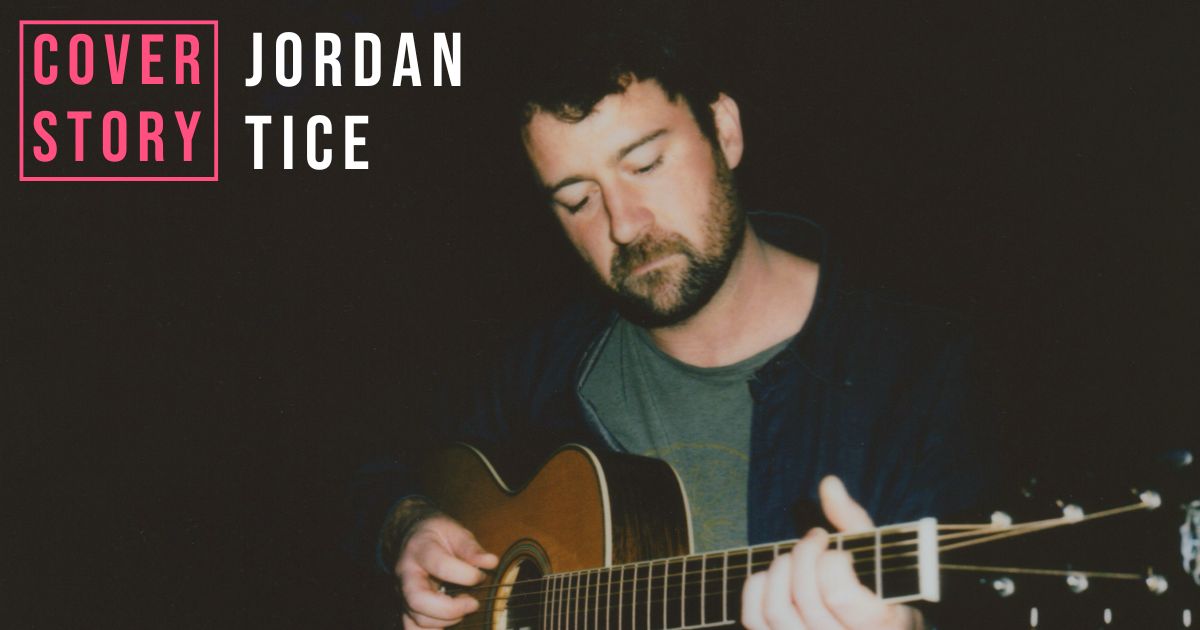
For Guitarist Jordan Tice, “Perfect” Recordings Are Never the Goal

Bluegrass. Newgrass. Chambergrass. Jamgrass. Thrashgrass. So many sub-genres, so little time. For guitarist Jordan Tice – solo artist and longtime member of Nashville-based Hawktail – there’s no time at all, because labels don’t define art and they don’t factor into his creative process.

“I don’t necessarily think about it,” he says. “I mostly do what I feel like doing and incorporate sounds that feel relevant, that I have a personal connection to and an excitement to explore, and the ability to replicate and share. I’d like to think that personality can unite disparate things if the heart is pure.”

Tice weaves a thread of musical connectivity on his new release, Badlettsville. The EP features two covers, Bob Dylan’s “Tryin’ to Get to Heaven” and Randy Newman’s “Dayton, Ohio – 1903,” as well as the originals “Mean Old World” and the instrumental title track. The four are staples of his live shows, but only now have they been committed to recordings.

“They’re all fundamental to my show and are requested as much as my other songs, but they didn’t have a place on either the last record or the next one, so they belonged in Badlettsville,” he says. “They fit together sonically as well. As soon as we got those four things down, I was like, ‘This is something.’”

Ever busy, Tice isn’t slowing down in 2025, although the emphasis is shifting somewhat. After two hectic years, Hawktail is dialing back a bit on gigging and Tice is devoting time to another solo album. “Hawktail has an EP in the can that will hopefully get out sometime soon,” he says. “We’re doing a few festival gigs but taking a much lighter year. I’m doing some dates in support of [Badlettsville], in addition to festivals with Hawktail. But I’m trying to take a little bit of a step back to focus on making this new record.”

Your website bio begins, “Jordan Tice is a musical seeker of the most dedicated sort.” What does the term “musical seeker” mean to you?

Jordan Tice: I’m always exploring my own interests and creativity, and also exploring the music that I do play, the roots of that. I want to understand myself and everything I do, and everything that came before me, better.

Part of the art of music is communicating to anybody, not particularly musicians. The more you understand about music in general, the more you understand what works and what doesn’t. The more you do it, get out there, and play and make records, the more you understand how things register and land with people – different types of thoughts and sentiments, things like that. Music is the art of sculpting sound within a given amount of time for someone who’s giving you their ear.

How has that manifested itself over the course of your solo albums and Hawktail?

With everything you do, there’s something you want to repeat about it, but there’s also things you want to do differently. I mostly grew up writing instrumental music and Hawktail is entirely instrumental. Long about 2015 or 2016, I started writing songs like crazy, just out of nowhere, and I realized I needed an outlet for that. But the instrumental stuff is still near and dear. Keeping a foot in both doors allows me to scratch this itch and this love for both of these things I do.

Did moving to Nashville have something to do with your songwriting?

I think so. I can’t provide concrete evidence, but the coincidence is too great – the fact that I started writing songs right when I moved to Nashville. So the answer is yes, but I couldn’t tell you exactly how. I also started hanging out with a lot more songwriters. My community was more instrumental-based in Boston and New York, where I lived before, so there’s definitely the influence of some new friends I made upon moving down here.

You’ve been playing guitar since you were 12. Does it sometimes feel the same today as it did then?

Yeah. I actually started taking lessons again, from a classical guitar teacher, just because I have some time off the road this winter. There’s things I wanted to improve and I decided I needed some help. I’m always trying to improve, always listening to things, and even in the music I love, there’s still the same sense of mystery of, “How did they do that?” The breadth of everything you’re aware of and assimilated expands, but at the same time it’s the same old [thing].

What led you to classical training?

We’re not doing classical music per se, I should clarify. But a lot of the things I was hoping to work on were technical-based, and classical guitar has such a codified, rigorous, technical study and a pedagogy related to technique in a way that other genres don’t necessarily have.

I’ve studied a lot of facets of music, but I’m not formally trained by any stretch. I took some jazz guitar lessons here and there, and I studied composition, but in terms of guitar I’ve never had formal technical training. I felt I was up against some roadblocks and walls with my playing and decided I needed the help of an expert, a teacher. This [teacher] came strongly recommended from my friend Chris Eldridge from Punch Brothers, and it’s been rewarding to expand the technical facility side of things.

You played a Preston Thompson Brazilian Rosewood and your main guitar, a Collings, on Badlettsville. Tell us about those guitars.

I was at Laurie Lewis’s house in Berkeley with Brittany [Haas] from Hawktail. We were in town playing and we were helping her move some furniture. She had this Preston Thompson in the corner that she was trying to sell and I was interested. It’s from 2016. She hand-selected the cut of Brazilian rosewood, a beautiful piece of wood, and had them make it with this wood that she had sourced. I absolutely love it. It’s going to be my main touring guitar for my solo stuff coming up.

The Collings is a D1A mahogany dreadnought that I bought in 2014. It’s perfectly balanced. It almost sounds like an old guitar. The overtones are exactly right. I have a relationship with Collings, but I bought this one at The Music Emporium in Boston because I liked it so much. It’s been my main axe for the last ten years. It’s what I play in Hawktail and what I recorded my last solo record on.

I brought both of those guitars to the studio, in addition to this new Yamaha FG Indian rosewood guitar that I’ve been working with them for the last couple years to promote and develop. They’re great guitars, and it was a fun process getting to work with them and help get the word out. They’re really fantastic.

How do your picking styles with Hawktail, on your solo work, and with other artists come together to create your style?

I write a lot of music, so my identity as a writer maybe puts those things in the same world. So I would say that it’s filtered through the same mind, and also the conceit is that it’s my music. Hawktail is collaborative, obviously, but it’s part of the same musical world.

I’ve always looked up to Norman Blake and Doc Watson. Norman Blake does a lot of different things, but you don’t really think about it. He plays fingerstyle, flatpicking, traditional music, writes his own music, but it all makes sense in the context of his world. I’ve always admired that as an archetype for a folk musician. He’s himself first. He’s not a historian. He picks and chooses things that work in his musical world, as opposed to something outside of himself. He’s an artist that happens to combine all these folk music techniques and sources into something that’s his own.

You’re thought of primarily as an acoustic player, but you also play electric guitar. Which ones?

I grew up playing rock and roll, in addition to bluegrass and things like that. My first music was the Allman Brothers. I got together with this guy in my church and he showed me the twin lead thing. We’d learn the two leads and then we’d switch. That music is near and dear to me – Jimi Hendrix, the Allman Brothers. So I’ve always played a little electric too. I think it’s going to work its way into the next album.

My main electric is an American Standard Telecaster that I swapped out some of the pickups and modified a little bit. I put a higher-output Seymour Duncan pickup in the neck position and I made it a four-way switch, so you have the humbucker setting in addition to the normal three settings.

Also I have a Yamaha Revstar Professional that they just sent that I’ve been having fun with as well.

What do acoustic and electric guitar each bring out in your playing?

An electric allows you the opportunity to fill up a room with less effort. You can saturate a room with sounds with less notes, with less physical effort. An acoustic is a parlor instrument. It’s meant to be played in a small room with your head right up against it. As soon as you stop making noises with your hands, the noise goes away. With electric, a lot of times less is much more, and with acoustic, a medium amount is a medium amount.

With this new record, I’m going to do it with drums, so I’ve been messing around with pickups on electrics and … I don’t want to say effects, but ways to expand the breadth of the sound, get a little bit of that electric expanse, but still treating it like it’s an acoustic. That’s been a fun and interesting pursuit.

How does collaborating with other musicians push you musically?

I have a little home studio setup, but I love going to the studio. I love there being, “This is the time that we’re making the record. What happens, happens.” I think that urgency puts you into a superpower mode. Also the camaraderie. There is truly no substitute for live chemistry. AI can try all it wants, but it will never get it. The communication and sound that happens … there’s so much subconscious and physical factors that are changing constantly. You can’t substitute it.

I love the element of not trying to perfect things, of a record being a snapshot in time. Treating it that way helps you bring your A-game because it’s, “I need to be able to do this at any given time.” It makes you focus on delivering a performance, crossing all your T’s and dotting your I’s, so that it’s all there when it’s time to push “play,” or when it’s time to play with other people, or time to get in front of people.

What snapshot does Badlettsville represent?

The tunes weren’t created or arranged with the idea that they’d be on a record, so in some ways it’s like a snapshot of the live show I’ve been doing over the last couple of years. It’s really organic in that regard.

All these arrangements came about from playing live, specifically with Paul Kowert and Patrick M’Gonigle. Patrick’s been playing a lot of shows with me, and Paul is my BFF partner in crime in Hawktail and beyond, so it represents my relationship with those two guys in a big way.

Also my interests, the fact that there’s cover songs by Randy Newman and Bob Dylan. If I had to pick my two favorite songwriters, it would be them. It’s a snapshot in time of the manner in which I’m playing and thinking about music and the people I’m doing it with right now.


Photo Credit: Cameron Knowler

Nora Brown and Stephanie Coleman Bring Old-Time to NPR’s Tiny Desk

Perhaps the most remarkable skill of New York-based old-time duo Nora Brown and Stephanie Coleman is their ability to place canonical old-time material – fiddle tunes, ballads, breakdowns, hornpipes, transatlantic lyrics, and more – firmly in the present. Aided and abetted by their youth and their now longstanding musical collaboration, the two deftly entwine together timelessness and the fleeting, effervescent moment, leaving listeners on the edges of their seats as we cling to the temporal and seemingly miraculous space that opens up between them.

Brown and Coleman thrive behind NPR’s fabled Tiny Desk, all at once broad and bold while tender and understated, simple. Unadorned, but flush and full. Their new EP together, Lady of the Lake, features two of the numbers they performed at NPR’s headquarters in D.C., the title track and “Copper Kettle.” But they open their mini concert with a set, “Across the Rocky Mountains” and “The Old Blue Bonnet,” with Brown on guitar, before switching to her signature clawhammer banjo. For being so young – she only recently dropped the “Little” from her former stage moniker, Little Nora Brown – her voice carries an ancient ache. As their vocals resonate together in close harmony, Brown and Coleman remind of so many old-time, string band, and bluegrass duos that came before them, like Hazel & Alice, Laurie Lewis & Kathy Kallick, Cathy Fink & Marcy Marxer, and many more.

We hope then, like those impactful and influential duos that came before them, that Nora Brown and Stephanie Coleman continue to gift us with gorgeous music such as this for many decades to come.


Photo courtesy of Nick Loss-Easton Media

STREAM: Claire Hawkins, ‘The Name’

Artist: Claire Hawkins
Hometown: New York City, New York
Album: The Name (EP)
Release Date: October 27, 2023

In Their Words: “The songs on this EP have been on the road with me for the past two years. I wrote in Ireland and Germany, tracked demos in Thailand, and recorded in my hometown of New York City. I’ve gotten to play them for audiences in Lisbon, Los Angeles, and London, and alongside different musicians from around the world. These songs are my souvenirs from the last two years. This EP is a scrapbook of the people, places, and sounds that have left a mark on me during this period. They’ve been around the world with me, and now they’re out in the world for everyone else to hear.” – Claire Hawkins

Credits: Written by Claire Hawkins

Produced, Mixed, and Mastered by Katie Buchanan


Photo Credit: Geraldine Smyth

WATCH: Rose Gerber, “Memories Someday”

Artist: Rose Gerber
Hometown: Portland, Oregon
Song: “Memories Someday”
Album: Memories Someday EP
Release Date: August 4, 2023 (single); September 29, 2023 (EP)

In Their Words: “There are so many great creators and recording spaces in Portland, so when I sat down to plan the video for ‘Memories Someday,’ I knew I wanted to showcase one of the many awesome studios here and make it an all-Portland project. I settled on Page St. Sound Labs, which has a beautiful all-wood live recording room built out from scratch in a warehouse with incredible acoustics. We captured my voice along with the band with an Ear Trumpet Delphina microphone (also a Portland-based company) in addition to mic-ing and tracking each instrument. Spectravision video production shot the live performance, capturing the spirit of the band and the song through editing and production. The result is a true made-in-Portland video that really captures our band’s vibe, sound, and Portland roots.” – Rose Gerber


Photo Credit: Whitney Lyons