Michael Daves Reconstructs R.E.M. Bluegrass Style

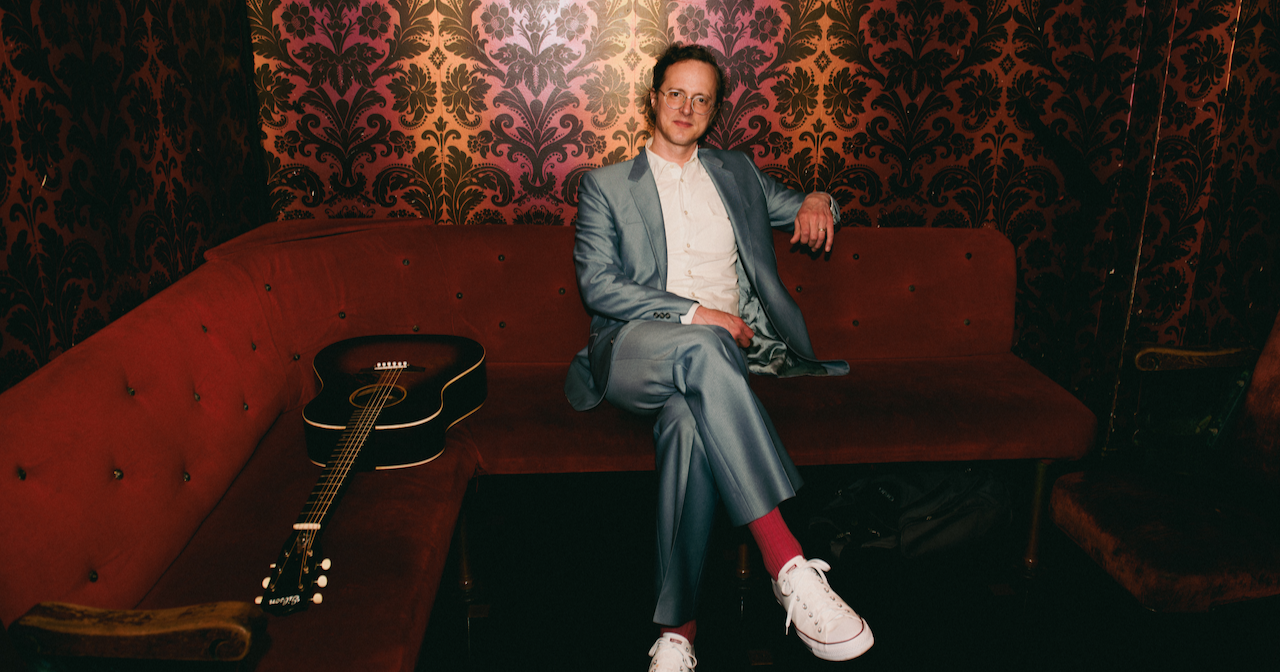
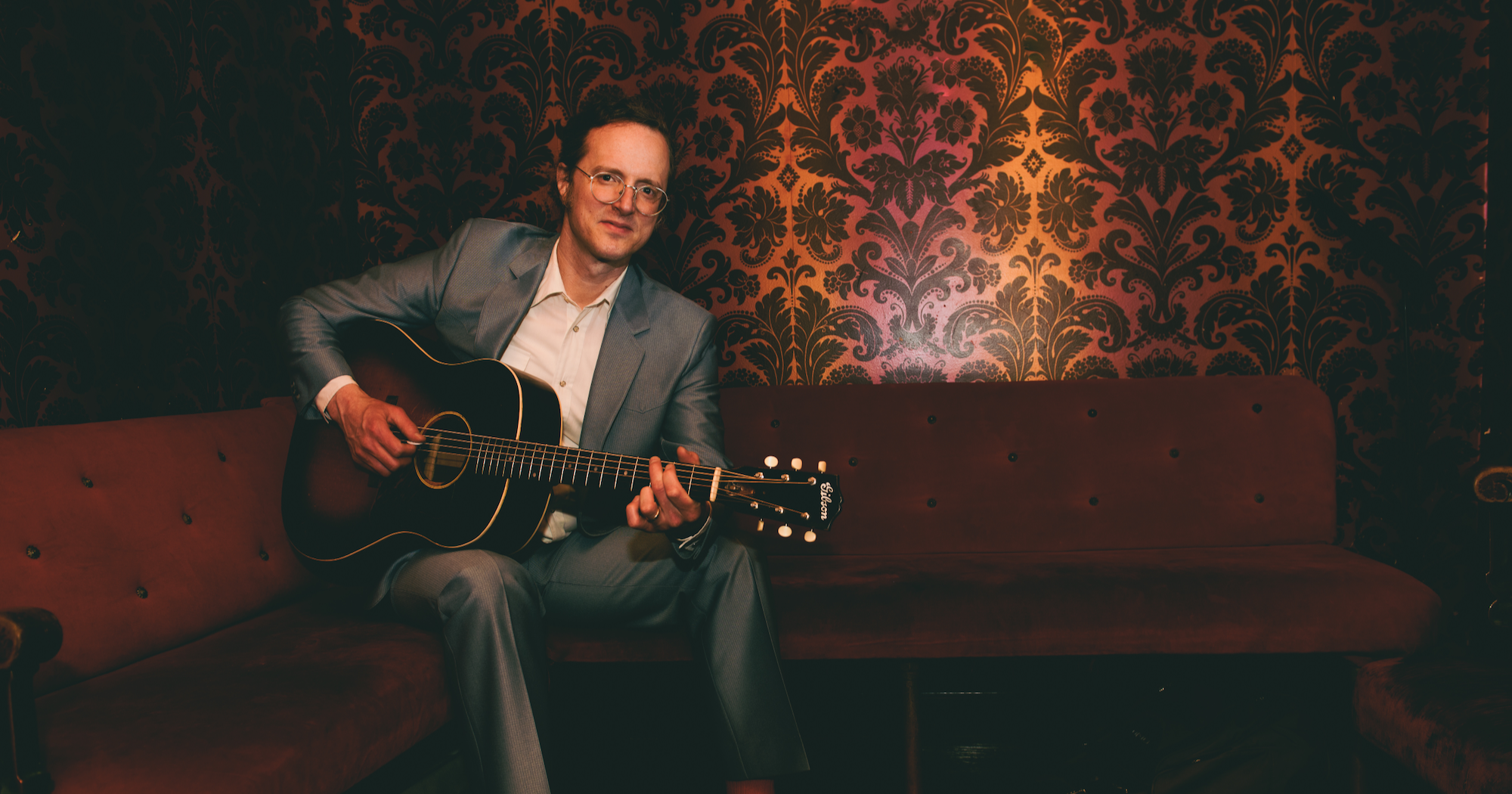
Although he lives in New York now, Michael Daves’ Southern roots permeate his music. That characteristic goes further than ever before on the newly released Fables, a six-song EP that reconstructs songs from fellow Georgia band R.E.M.’s 1985 album Fables of the Reconstruction.

In celebration of the record’s 40-year anniversary, Daves enlisted his longtime quartet bandmates – fiddler Alex Hargreaves (Billy Strings), mandolinist Jacob Jolliff (Béla Fleck, Yonder Mountain String Band) and Erik Alvar (Nefesh Mountain, Billy Strings) – and others to reinvent songs like “Green Grow The Rushes,” “Wendell Gee,” and of course, “Driver 8.” Together, they turn each track on its head, fully leaning into their bluegrass prowess while continuing to hold each song and their original formats in high regard. It’s something that Daves has plenty of experience with, having released the dual acoustic and electric bluegrass covers compilation Orchids and Violence in 2016 and Early Morning Sun – an EP of bluegrass and country standards from Ola Belle Reed, Dolly Parton and others – in August 2025.

“It was really important for me to try to make something that would stand on its own, even if people didn’t have any connection with R.E.M. or don’t even like them,” explains Daves. “I tried to make something that just works by its own logic as much as it’s paying homage to the original.”

During a Zoom call with BGS on release day in December, Daves spoke about his motivation for doing this cover EP, how he decided which songs to include on it, the plans for his label Wild Geranium Records, and more.

What motivated you to not only make an EP of R.E.M. covers, but to do it with songs from Fables of the Reconstruction?

Michael Daves: It’s an album I grew up with. R.E.M. was one of my first musical obsessions. I first discovered them in the late ‘80s at summer camp in Toccoa, Georgia, not too far from Athens where R.E.M. was from. All my camp counselors were [University of Georgia] kids, so I fully downloaded their musical tastes, which fortunately were pretty good.

As far as taking on the Fables thing now, there were a couple inspirations. For one, it’s the 40th anniversary of that record and it’s one that I don’t feel like a lot of younger people have heard or appreciated. People seem to know more of R.E.M.’s pop stuff from the ‘90s and beyond, but that ‘80s stuff was so good and weird. I also have this quartet I’ve led since about 2019 with Alex Hargreaves, Jacob Jolliff, and Erik Alvar in New York. They’re all incredible musicians who are very well versed in traditional bluegrass but also very adept at adapting music from outside the fold. We’d done some other projects over the years – like we did a whole mini set of Jimmy Webb songs one time including “MacArthur Park,” “Wichita Lineman,” and “Galveston” – and they learned that stuff in one rehearsal and just rendered it so beautifully. It made me realize that this is a quartet that really can handle a challenge.

The Fables idea came up because of the anniversary, but also because in August I had done a tribute along with Peter Rowan to the 1973 Muleskinner record that he was a part of. Initially he united with Bill Keith, Clarence White, David Grisman, Richard Greene, and Stuart Schulman to share a TV show with Bill Monroe, but Monroe never showed up. His bus broke down, so they ended up having the whole show to themselves and wound up getting an album deal out of it. Then they made this record that didn’t go anywhere because Clarence White died before it came out.

I taught a class about Clarence’s guitar playing on that record and through that became inspired to do a tribute to it with Peter at Vermont’s Green Mountain Bluegrass & Roots Festival this past August. When studying that Muleskinner record I discovered it had the same producer as R.E.M.’s Fables, Joe Boyd, who’s also worked with everyone from Nick Drake to Fairport Convention and Pink Floyd. That strange coincidence led to a Fables tribute show, which is then where the idea for this EP really came to life.

How’d you go about dwindling the original Fables of the Reconstruction down to the six tracks that are on this EP?

It was an interesting process choosing which songs to do. It was a combination of practical considerations, because when the quartet and I worked up this music for that one-off show in Brooklyn I initially picked songs that I thought were achievable on our tight constraints and would translate well to a bluegrass ensemble. There were definitely other songs on the original record that would have worked, but I’m feeling good about the song choices we made because the original record is sort of sprawling with a lot of digressions. There’s a lot of dreamer logic and a Faulknerian non-linearity in the writing, so to pare that down into what I think works as a distillation of the original recording that probably is more of an interesting statement on the original than if I just recorded the whole thing, you know. As my wife put it, we took it from a sprawling Faulknerian epic to more of a Flannery O’Connor gut punch.

Do you have any specific favorites of the six songs making up this project?

As far as song selection, I kept the first and the last songs from the record in their normal position. The record opens with “Feeling Gravity’s Pull” and ends with “Wendell Gee” so I kept those because the beginning and end of the story just felt right.

There’s something about the song “Good Advices” that just always just gets me with its meditations on mortality. It’s classic R.E.M. in the sense that it can be hard to parse the lyrics because they’re based more in dream logic than confessional writing. However, they still carry a lot of emotional weight and a sense of meaning that’s oftentimes hidden. For some reason, that song is the one that just always gets stuck in my head and gives me all the feels.

Part of this is due to the structure of the song, which is repetitive and drony. The bridge is basically four measures of the G chord and then it’s out, which I think is just brilliant how that works in the song. It was those repeated drone lines that Alex played over while the rest of the band had these repeated melody things going on. For me it’s the quintessential song off of the record. I don’t think it was a hit or anything at the time – that goes to “Driver 8” – which I almost didn’t include because it was the best known song off of that record.

The opening track, “Feeling Gravity’s Pull,” is one that was never my favorite track from the original record, but in rendering it I started liking it a lot more. I particularly like what Duncan [Wickel] brought to it on cello as well as the background vocals on it, especially at the end. That’s Jefferson Hamer from The Murphy Beds and Sean Cahill from The Next Great American Novelist. The parts they added took the song in this almost metal-like direction, which felt really good and different from the original, especially considering we’re all acoustic musicians. The whole experience with that song felt really cathartic. There’s an intensity that I always want out of bluegrass but don’t always hear, so I ended up being really happy with how that one came out.

This is the second release on your own label, Wild Geranium Records. What are your plans with that?

This is the second release on Wild Geranium. The first was my EP Early Morning Sun, which came out in August and was just a solo recording. The third one is coming out in March and is a full-length duo record with me and Jacob Jolliff where we’re paying tribute to Jim & Jesse, [who] are part of the first generation bluegrass legends. But most of what I do under Wild Geranium will be EPs and other shorter recordings.

Do you plan to record other folks on the label, or just your own projects?

It’s intended as a platform for various collaborations that I’ve had as well. All of the releases I’ve put out so far have zero original material, but some of that will be coming soon, too.

You’re also releasing Fables on cassette? What’s behind that decision?

The cassettes were part of the concept of Wild Geranium from the beginning. Cassettes first came back within the indie rock world almost 10 years ago, but to my knowledge isn’t something that’s been done much in the bluegrass world. I’ve had people joke with me and say, “Oh gosh, I’ve got to dust off my ‘78 Dodge Charger to play this!” [Laughs] In the age of streaming, I think having a physical item that is a little more affordable, easier to produce and keep in stock than vinyl is more important than ever.

The idea was to also include at least one song on each cassette release that’s not available digitally. On Fables that’s actually two bonus tracks – a duo version of “Green Grow The Rushes” with me and Jacob Jolliff and the other’s a live version of “Can’t Get There From Here,” which was from a full-band show back in August where we debuted the material. I just wanted to offer something unique and special to the listeners who care. If you get the cassette, you’re gonna have something that no one else is gonna have. It’s not bouncing around the internet, you have to have the physical thing. From a production standpoint, it’s an opportunity to tell a slightly different story than the digital release.

Do you have any other cover EP/album ideas up your sleeves?

Aside from the Jim & Jesse project, I also have some original material on the back burner. It’s fully demoed and is all music connected to Ponce de Leon Avenue in Atlanta where I grew up. It includes some stuff that I’ve written and co-written along with songs by family members and friends from that area and era. I’ve been performing music from that project for quite some time now, but haven’t made the record yet. So that’s something I’m hoping to make happen that would be another full-length, full band record.

What has bringing this R.E.M. covers EP to life taught you about yourself?

This R.E.M. stuff was among my first musical obsessions, so for years that’s just been baked into how I hear music in an uncritical way. So to actually get in there and break down what went into this record and think about how to render it in this other context was really interesting for me and fun to make a statement with that’s not based in nostalgia.

I also enjoyed getting to explore my feelings about how I want string band music to work. On my last full-length record Orchids and Violence I utilized a double-record concept where each disc had the same track list, but the first one was a very straightforward bluegrass record and the second disc is like all electric, experimental rock renderings of the thing. Fables was a little bit more like uniting both sides of Orchids and Violence into a string band expression, which is something I’d be open to doing more of in the future.


Photo Credit: Manish Gosalia
LISTEN: Michael Daves, “Can’t Get There From Here” (R.E.M. Cover)

Artist: Michael Daves
Hometown: Atlanta, Georgia (originally); New York, New York and Adams, Massachusetts (currently)
Song: Can’t Get There From Here
Album: Fables (EP)
Release Date: December 19, 2025
Label: Wild Geranium Records

In Their Words: “As a Georgia boy growing up in 1980s, R.E.M. was my first musical obsession and I still love those early albums. The dream logic, the obscure references to Southern culture, the addictive hooks, the ghostly background vocals. I thought it would be interesting to adapt one of them to bluegrass and it happens that Fables of the Reconstruction is celebrating its 40th anniversary this year. It’s an arty rock album, but there’s a lot of droney stuff in there that sounds like it came from mountain dulcimer, banjo, and mandolin. The quartet I lead with Hargreaves, Jolliff, and Alvar has proven very adept at interpreting music from non-bluegrass sources and though they had no prior knowledge of this music, they were open to it and knocked it out of the park.” – Michael Daves

Track Credits:
Michael Daves – Guitar, vocals
Alex Hargreaves – Fiddle
Jacob Jolliff – Mandolin
Erik Alvar – Bass
Duncan Wickel – Cello
Sean Cahill – Background vocals
Jefferson Hamer – Background vocals

Video Credit: Jason Zucker


Photo Credit: Manish Gosalia

Mixtape: Yarn’s Songs Of and About Pop Culture

I make a lot of references in Yarn’s music about other bands, artists, movies, actors, etc… I didn’t realize how much until I started working on this Mixtape.  Just a few of the things I mention are Jim Croce, Dolly Parton, The Allman Brothers, George Burns, Bob Wills, Waylon Jennings, Velvet Underground, Rex Moroux – and the list goes on. This Mixtape will include references to other artists, food, and places famous in the world of pop culture during its given time of release. – Blake Christiana, Yarn

“Play Freebird” – Yarn

I figured I’d start and end with two of our songs from our new album, Born, Blessed, Grateful & Alive. My wife started writing this one about her father and I took it over and finished it. The entire song is based around another super famous song that Mandy’s dad used to play around the house when she was a kid. And now, if anyone yells out ‘Free Bird’ at one of our concerts, we’ve got something to give ’em.

“You Never Even Called Me By Name” – David Allen Coe

Such a perfect song for this Mixtape. Coe even impersonates the singers he references in this song as well as poking fun at the entire country music genre. Pretty brilliant. Waylon Jennings, Charley Pride, Merle Haggard, and he even references his own name.

“Calling Elvis” – Dire Straits

We could do a giant Mixtape with songs that just reference Elvis alone. I love this one, because just about every lyric is a reference to Elvis and the songs he recorded. Also, Mark Knopfler is THE MAN. More Elvis to come on this list.

“Bette Davis Eyes” – Kim Carnes

I had to include a quintessential ’80s tune on here and this is it. Great voice on Kim Carnes, the perfect sultry rasp. Of course she references the actress, Bette Davis, as well as Greta Garbo.

“Mrs. Robinson” – Simon & Garfunkel

Here’s one with a sports icon reference. Paul Simon has done a lot of these kinds of references in his songs, too, and I’ll include one of those later in the tape. Joe DiMaggio, the famous New York Yankee who married Marilyn Monroe, is mentioned here as ‘Joltin’ Joe.’

“Candle In The Wind” – Elton John

Nice little transition here from The Yankee Clipper to Marilyn Monroe. This entire song is written about Monroe.

“Man on The Moon” – R.E.M.

Lots of references here, but the main star of the song is Andy Kaufman, the brilliant comedian who starred in Taxi in the ’70s. Love Andy Kaufman and R.E.M. Great song. Other honorable pop-culture mentions in this song are 21, Checkers, Chess, and of course Elvis. Also a great Elvis impression from Michael Stipe.

“Nobody Home” – Pink Floyd

The Wall might have been my favorite album as a kid. And in this particular song off that album, Roger Waters sings ‘the obligatory Hendrix perm,’ a direct reference to Jimi Hendrix and his hair style. Glad I got to include Pink Floyd on here. Beautiful song.

“Walkin’ In Memphis” – Marc Cohn

This song just had to be on here. More Elvis for ya, along with WC Handy, Beale Street, Al Green, and more. Another fantastic song.

“Graceland” – Paul Simon

What do you know, more Elvis. I think I need to write a song about Elvis now. This song is too good, it paints a picture as good as any song ever written. Enough said.

“Dairy Queen” – Indigo Girls

I thought we needed some pop-culture food references, so I included these next two songs. Not to mention, Indigo Girls and Amy Ray are my wife’s favorites. Amy Ray’s recent solo records have all been really great and everyone should have a listen.

“Factory” – Band of Horses

I love this tune and its reference to the candy of my youth, Now and Laters. To me, Band of Horses is like a modern day Beach Boys. Great band, great songs, and great harmonies. This song reminds me how half my life is spent in a hotel room.

“I Want You” – Yarn

I reference the 1980 movie, Honeysuckle Rose, with Willie Nelson & Diane Cannon. Not sure anyone saw it, but it’s about an affair on the road between musicians Nelson and Cannon, and the song itself follows a similar plot line. I wrote this song with my longtime writing partner, Shane Spaulding.


Photo Credit: Bob Adamek

BGS 5+5: Blitzen Trapper

Artist: Blitzen Trapper
Hometown: Portland, Oregon
Latest album: Holy Smokes Future Jokes
Release Date: September 25, 2020

Answers provided by Eric Earley

Which artist has influenced you the most … and how?

Michael Stipe was my favorite songwriter as a kid, his lyrics were so strange and uncanny. I’m thinking of Reckoning and Murmur, some of the most anachronistic lyrical content ever. There were no lyric sheets or online lookups back then so I was always trying to figure out what he was saying. His songs always had the feeling of a riddle or a magical text, the imagery was dreamlike and over the years I’ve tried to emulate that in certain ways. Tom Waits was a large influence later in my twenties, his bizarre comical lyrical storytelling and character voices were inspiring, I’m thinking of Rain Dogs in particular.

What’s your favorite memory from being on stage?

There isn’t any favorite, lots of weird amazing ones for sure, playing “Heard It Thru the Grapevine” with Stephen Malkmus trading weird, collapsing solos with Stephen as he made up the words because we were too lazy to learn the lyrics. I think we were in Cleveland, but I could be wrong. Playing Big Star’s “Feel” with Jody Stephens on drums and Mike Mills on backing vocals in Austin, Texas, that was surreal.

What other art forms — literature, film, dance, painting, etc — inform your music?

Most of my favorite songs have literary origins, whether it’s a particular Cormac McCarthy novel like Blood Meridian (“Black River Killer”) or a general religious text like the Bardo Thodol (the new record is based largely on this book). Biblical imagery has made its way into countless songs I’ve written as a result of childhood influences and pervasive cultural resonances. I’ve also started writing a lot of songs from reading specific poets, using their wordplay to inspire different turns of phrase. Seamus Heaney, Mary Oliver, to name a couple, I’ve also used Finnegan’s Wake and Gravity’s Rainbow to generate wordplay and imagery.

What was the first moment that you knew you wanted to be a musician?

I’ve been playing music since I was a child, so being a musician was never really a choice. I didn’t think of it as a career for a long time. I went to college for physics and math, studied painting, learned classical fingerstyle, became a sous chef. Finally in my late twenties I decided to drop everything and play music, mostly because all the songs I was writing were keeping me up at night, but I didn’t have any vision for the business part of it. Spent seven years playing unattended shows in Portland. Got a record deal off a random song on Myspace and suddenly was touring and making money.

If you had to write a mission statement for your career, what would it be?

Experimentation is the only way to realize the vision of reality you want to hear, so never grow static in style or voice, always move forward, never sit still sonically. Don’t write angry, only from a place of emptiness without sentimentality, nostalgia without regret. Don’t try to please anyone, only follow your instincts.


Photo credit: Jason Quigley

The Gibson Brothers Still Call It Music, Just Not Bluegrass

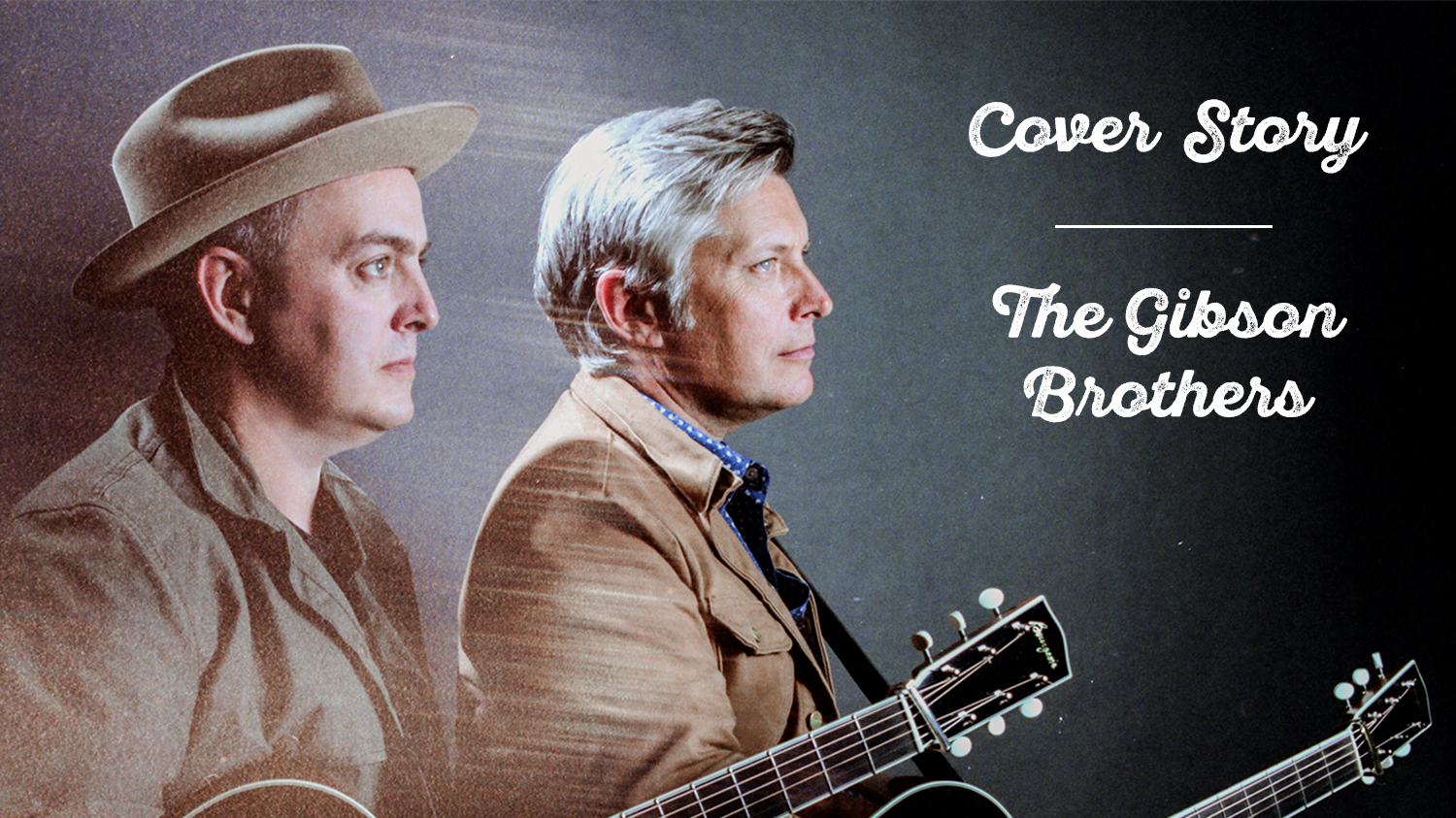
Featuring the stunning blood harmonies of days gone by and an abiding love for classic sounds, The Gibson Brothers long ago earned the respect of the bluegrass establishment – even scoring back-to-back wins as the International Bluegrass Music Association’s (IBMA) Entertainer of the Year in 2012 and 2013. Even so, they’ve always cultivated an adventurous spirit.

Having grown up on a dairy farm in the far north of New York State, sandwiched between the Adirondack Mountains and Quebec’s provincial border, their musical appetite was as varied as their home was removed from the bluegrass heartland – from Flatt & Scruggs to Celtic traditionals, and from Tom Petty and The Eagles to French-Canadian fiddle tunes. Throughout their two-decade recording career, The Gibson Brothers have subtly mixed bluegrass reverence with a hint of rock refreshment, but with their new album, Mockingbird, Eric and Leigh Gibson have taken a bold creative departure – at least for the time being.

Mockingbird’s 11 tracks still feature their celebrated close harmonies, but also pull heavily from the countrified world of late 60s/early 70s rock, all masterminded by producers Dan Auerbach (of The Black Keys) and David Ferguson (Johnny Cash’s American Recordings series). Freewheeling and fun, but also rooted in the crisp refinement of their past success, the boisterous rural funk of tracks like “Sweet Lucinda” stands alongside breezy Laurel-Canyon rock in “Cool Drink of Water,” while “Travelin’ Day” explores a trad-country template and R.E.M.’s seminal 90s hit “Everybody Hurts” becomes a swaying example of country R&B.

“The impetus behind the music was that we had done bluegrass our whole career, and when we got talking about the next record, we really just decided we didn’t want to do the same old thing again,” he explains. “It’s not because we were ashamed of what we were doing. We love what we do. There was no intention of anything. This all really happened naturally.”

“I think people love a band where they found them,” banjo-playing lead singer Eric Gibson adds. “But it was so exciting that we didn’t have time to think about ‘Oh, is this gonna upset people who are used to what we’ve done in the past?’ We just dove into the process and had a ball.”

Speaking with The Bluegrass Situation by phone, The Gibson Brothers dug into the inspiration for Mockingbird – and the creative avalanche that followed.

The obvious question here is “What made you want to get away from bluegrass?” But I feel like being from upstate New York might have had something to do with it. Is your approach to bluegrass a little different?

Leigh: We started learning how to play bluegrass when we were 11 and 12, and the guy who taught lessons at our local store played five-string banjo and guitar, among other things. Our father just happened to have both of those instruments, but he didn’t have a banjo because he was into Celtic music. So the guy we took lessons from taught Eric out of the Earl Scruggs method book, and I think that’s what pointed us in the direction of bluegrass.

Eric: Yeah, and once we heard Flatt & Scruggs it really drew us in, but if we hadn’t gotten into the Scruggs handbook, we probably would have played something else.

So what was the idea behind Mockingbird? Do you think of it as a rock and roll album?

Eric: There are definitely elements of rock and roll, but I hear country in it, too. I don’t know where it neatly fits. I’ve heard some people call it an Americana record, but on top of it all I hear the brother harmony. I think it’s that, weaving through a variety of styles.

Leigh: We wanted to do something different, and originally we had some tunes that didn’t fit neatly into the box of a bluegrass band. But we didn’t know we were gonna make a whole album. We were just looking to record some tracks.

Eric: And we ended up not recording any of the songs we were thinking about. We just wrote a bunch of new ones! … When we went to Nashville and started working with Dan Auerbach and David Ferguson, they asked us, “Do you wanna make a country record?” And we said, “Let’s just write songs and see what they need.” They handled the producing chores and did a beautiful job, and came up with sounds that I know I couldn’t have come up with.

You reached out to Ferguson to produce Mockingbird first, and I know he also engineered your first Nashville bluegrass album, Another Night of Waiting. Why was he at the top of the list for this project?

Leigh: [Laughs] Because he’s fun.

Eric: He’s a character and once you meet him you don’t forget him. We’d see him here or there and he’s been doing all kinds of big things in the last 20 years. He’s the one who engineered all those late-career Johnny Cash albums with Rick Rubin. He’s worked with U2, and lately he’s been working with Sturgill Simpson and Tyler Childers. We’d see him and he’d say, “Why don’t you come record some music with ol’ Ferg?”

Leigh: And I’d say “I don’t think we can afford you, Ferg.” And he’d be like, “You’re right, you can’t.” [Laughs]

Eric: But we were riding around DelFest on a golf cart with him in 2017 and he brought it up again, and by fall we were feeling a little restless. We kept listening to records that he worked on in the van, and I think Leigh was the one who said “Maybe we should call Ferg.” I said, “Why do you think I’ve been playing all these albums over and over again!”

So then Ferguson suggests bringing in Dan Auerbach from The Black Keys. Was that a surprise?

Leigh: I was floored, to be honest. Our manager called me and said, “Well, Ferg’s first action as your producer is to bring on another producer, and it’s Dan Auerbach.” [Laughs] So I called Eric and I couldn’t believe it.

Eric: What was funny was Leigh said, “Is this something you’d be interested in?” And I was like, “Duh!” This is the kind of thing that falls out of the sky and you have to go for it.

I read that the whole album was written and recorded in just a few days. Is that unusual for you?

Eric: Yeah, we’ve never worked like that before. … Every day it would be Leigh and Dan and me, plus one other writer. We didn’t go in with any melodies. I had a couple of lines jotted down but we hardly used any of those. A lot of it just came out of conversations we were having at Dan’s studio kitchen table, like “Travelin’ Day.” Dan said, “You know, Ferg lost his stepdad a few days ago,” and we got to talking about that. Ferg said, “He really showed us how it’s done. He was brave at the end.” We said, “Our dad was the same way.”

It’s interesting that you started off with something so heavy, because the album doesn’t come across heavy at all.

Eric: It’s not. That first song is pretty heavy, but there’s a lot of love songs on there, and we hadn’t written a lot of love songs in the past.

Leigh: Dan and Ferg showed us how to love. [Laughs]

“Love the Land” seems like a reference back to you roots on the farm. Where did that come from?

Eric: That was written with Joe Allen.

Leigh: With that song, obviously Eric and I have a background of shared memories, so we’re probably thinking about the same thing as we’re writing it. But Joe’s from Oklahoma and Dan’s from Ohio, so they’re thinking about different things. I remember talking to Dan and he said, “Man, I need to get outside more. I miss it.” It’s kind of funny that it’s wherever your head is at the time. If we sat down with the same guys tomorrow, something totally different would come out.

Eric: Dan loved that we kept showing up early. I’d apologize and Dan would say, “No, no, make yourselves at home.” So we’d go back to that kitchen area and he has this beautiful vinyl collection. We’d put on different records and I think sometimes they would influence the direction of the day. Like, that one has a very Don Williams feel, and I think we were listening to Don Williams that morning.

Why did you pull Mockingbird out of that song as the album title?

Eric: Just because that kept jumping out of my head. Joe came up with the line, something like “Mockingbird, if you haven’t heard / Never been a sound so sweet.” I loved that, so I actually Googled “mockingbird.” [Laughs] It turns out they can sing a variety of songs. They don’t just sing the same thing every day, and I thought “Wow, that’s kind of what we’re doing here.”

I’m sure you’ve been asked a million times, but did the cover of R.E.M.’s “Everybody Hurts” come out of left field?

Eric: Totally out of left field.

Leigh: Just before the last day of tracking, Dan said, “Think of a song from the 80s or 90s that everybody knows but no one would think of you doing.” So Eric and I talked about it on the way back to the hotel and came up with something by a female artist, and we got to the studio the next day and Ferg is like, “So what song did you choose?” We told him and he’s like, “Oh, I hate that song.” Allen Parker, who is Dan’s in-house engineer, said “Hey, how about ‘Everybody Hurts’?” I had heard the song – you couldn’t miss it if you’re a person my age – but I never in a million years would have thought about doing it. Those guys went and charted it, and it had such a comfortable, funky feel, that we were compelled to learn it.

Do you think your fans saw this album coming?

Eric: No. I mean, it’s a hard question. If they’ve really been paying attention to us over the years, it shouldn’t come as a big surprise because we’ve recorded stuff by Tom Petty and The Band and The Rolling Stones and Mark Knopfler. We have a variety of tastes.

Leigh: I think there are certain fans who see you as one thing, and if you do something else it can be upsetting, but no one twisted our arm to do this. It’s absolutely what we wanted to do and we’re proud of it, but we didn’t do this to offend anybody. If somebody is offended, there’s nothing we can really do about that except say, “Look at our track record and all this other stuff we’ve done that you really love. Why not give this a chance?”


Photo by Alysse Gafkjen

Hangin’ & Sangin’: Grant-Lee Phillips

From the Bluegrass Situation and WMOT Roots Radio, it’s Hangin’ & Sangin’ with your host, BGS editor Kelly McCartney. Every week Hangin’ & Sangin’ offers up casual conversation and acoustic performances by some of your favorite roots artists. From bluegrass to folk, country, blues, and Americana, we stand at the intersection of modern roots music and old time traditions bringing you roots culture — redefined.

With me today in the Writers’ Rooms at the Hutton … Grant-Lee Phillips!

Hey, how ya doin’?

Hey, welcome!

Good to be here! This is a nice little cozy shack you got here.


You’ve got a brand new record, Widdershins.

Yeah, out a week now.

Tell me if I’m getting this right: To me, this record is you reflecting back your experience of the current sociopolitical times in song form.

That’s pretty close, yeah. Sociopathic political maelstrom. [Laughs] Yeah, that’s it. This album was written pretty quickly — maybe November of 2016 into the early month of January 2017. Really encapsulates that time period especially.

Yeah, it just kind of barreled out of you.

Yeah, I mean sometimes I take my time, but sometimes you have to just get out of the way.

Well, the album opens with “Walk in Circles” and, in that tune, you sort of tick off all the people you’d rather … not make them mad, but …

Maybe you’re right, though, unintentional double entendre. [Laughs]

[Laughs] I’m sometimes smarter than I know! But you sort of list all these people that you’d rather be hangin’ with than the “righteous goons” which aren’t actually righteous — they’re self-righteous and greedy.

That’s right, yeah.

And then you proclaim that “You’d rather go down fighting for the water than start another war for oil.” Does that sort of sum up this moment for you, where you are in your life?

I think that’s a big part of it. It’s kind of like we’ve built our house on these sticks on the side of a hill and now the earth is shaking, and we ask ourselves “How do we deal with this? Do we add more sticks? Or maybe we have to rethink a whole lot of things in our life,” you know? Yeah, that’s the idea. I’d rather side with nature and those who move in accordance with nature. Maybe they walk counter-clockwise. Sometimes some of the old ways have their wisdom.

Oh, more often than not.

Yeah, when folks had no choice but to live in accordance with the earth and the stars and the animals.

There was an article circulating last year about how you can’t teach empathy. That’s something that you kind of have to have. And it seems like there’s a whole population of people who just don’t have that in them, and I don’t know how you teach somebody to care?

I’m not certain. I’ve seen such ugliness in the last week or so, in the wake of this horrible tragedy in Florida, and the ideas that have been floated out there, trying to take the wind out of the sails of these kids who have been through hell. And that’s a hard thing to understand, really, where one would come from. But I don’t know. I suspect that a lot of times, if we could sit down face-to-face, maybe we would have a different kind of discourse than we do online, where we’re just sort of hurling these Molotov cocktails at one another.

With some level of anonymity.

Right, we can run back and Google and get our stats together, and hurl another one.

You mentioned the shooting in Florida, and I do feel like this all-too-common experience that we’re having lately … your song “Totally You Gunslinger,” my interpretation of that song is you shining a light on what’s underneath someone’s need to be armed, whether it’s an ICE agent with a Rambo complex or a teen with social anxiety or whatever it is. And maybe I’m reading too much into it, but I’m gonna give you credit for this. I do feel that what’s underneath that is the toxic masculinity idea that is at the core of the violence, whether it’s rape culture or gun culture or whatever.

Yeah, I think you’re hitting it on the head there. Maybe this is a symptom of a culture where people feel fearful and powerless, you know? Where maybe your masculinity itself isn’t enough, you know?

Or what your idea of masculinity is.

Yeah, all of that. And these things are so easily exploited — our fear of the other, where we’re turned against one another so easily. We find ourselves scapegoating the immigrant or some branch of government, maybe they’re to blame. We’re always looking for the blame.

Do you feel like it’s enough to simply shine a light on those darker corners? Do we need to transform them, even a matter of degrees, and can a song do that?

I think what the role of a song is and the role of a songwriter, it’s like a tea kettle. When the conditions are such where the water comes to a rolling boil, and things are really intensified, then we whistle, we sing. We’re a symptom of that. “Wake up, you’ve got a fire on the stove!” [Laughs] But sometimes it’s the kind of thing where it will play its role in affecting change. I don’t think by itself it can. It’s just part of the human mechanism, you know? Shout out, sing out.

And serve as a connecting point.

Yeah, that’s right. I would hope that you would listen to some of these songs and maybe you see yourself or hear your own questions. You don’t feel so alone, maybe, that you’re the only person who has these crazy thoughts. There’s two of us. [Laughs]

One of the things that I think is a major part of this record, both in the writing and the making of it, is being fully present, in and to the moment, right? Do you feel like part of what we’re being tasked with right now is being fully present to history unfolding in a bigger way than we’re used to? A much more dangerous way?

More dangerous?

Well, they’re perilous times right now. I read that you were saying this [era], to you, echoes the early ‘90s and that time — in your career but also in the world. There was a war going on, and all sorts of stuff.

I think for me maybe the age I was — I was in my later 20s then — and waking up to, kind of late really, everything that was going on and wanting to express it and make sense of it. That’s the stuff that was on my mind more than anything. There have been artists that have really inspired me for years — Billy Bragg, for instance, R.E.M., as well — artists who can talk about the moment but also reflect the feeling of that moment, as well. It’s not a diatribe. It’s presenting this whole basket of parts that you can put together yourself.

I feel like you’ve done that with this record.

That’s what I’m hoping for.

Watch all the episodes on YouTube, or download and subscribe to the Hangin’ & Sangin’ podcast and other BGS programs every week via iTunes, SpotifyPodbean, or your favorite podcast platform.

SHIFT LIST: Chef John Currence Shares the Soundtrack of his Rock ‘n’ Roll Life

Long before John Currence won a James Beard Award for his forward-thinking Southern cooking at City Grocery in Oxford, Mississippi, and earned the nickname the Big Bad Chef, he was pursuing a far more rock ‘n’ roll career. It all started when he attended a Beatles concert in New Orleans’ City Park in 1964. “Well, I was in utero, but technically I was there,” he clarifies. “I blame that for my lifelong fascination with music.”

As a kid, he devoured an impressively diverse swath of music –- from The White Album and Johnny’s Cash’s At San Quentin to Mozart and John Philip Sousa. When he fell hard for an artist, an album, or a song, he obsessed over it. “My brother and I listened to ‘Benny and the Jets’ over and over on a five-hour trip to the beach with my mom and dad,” he says. “The cassette player was smashed before the trip was over.”

Currence played drums in high school in New Orleans, but when he attended Hampden-Sydney College in central Virginia, he picked up the mic to front a band he and three friends dubbed Chapter Two. “It was the stupidest, most flaccid name,” he says. Their first gig was all covers, including Elvis Costello’s “Welcome to the Working Week,” “I’ll Be There” by the Spinners, the Beatles’ “Paperback Writer,” a punked-up version of Louis Armstrong’s “What a Wonderful World,” and the theme song from The Mary Tyler Moore Show. Friends urged them to write original material, which culminated in an indie record deal in the mid-'80s and endless touring. It turned into “six years of riding around the country in a broken down van and sleeping on pool tables,” says Currence.

The band relocated to Chapel Hill, North Carolina, where they wound up recording with legendary producer Mitch Easter, who had helmed R.E.M.’s earliest recordings. Easter’s relationship with the indie pioneers led to a surreal moment at one of Chapter Two’s own sessions. The band was at his house one day, trying to get a sound effect down on tape in his driveway, when a car pulled up. “We were in the middle of a take and we were like, ‘Who is this asshole?’” says Currence. “And then Mike Mills [of R.E.M.] gets out of the car, so our tune changed a bit.” The bassist stuck around and even helped with the session, creating a rhythm component for a song by hitting a baseball mitt with a ping-pong paddle.

Chapter Two ultimately released two now long-out-of-print albums, though copies sometimes pop up on eBay. During his time with the band, Currence worked a series of kitchen jobs. In the late '80s, his longtime friend, Larkin Selman, offered him a job as a sous chef at Gautreau’s, a restaurant he was opening back in their hometown of New Orleans. “I felt like, if I didn’t take it, I’d never leave Chapel Hill,” says Currence. From there, he helped opened Ralph Brennan’s Bacco before moving to Oxford, Mississippi, to make his own mark with City Grocery and its sister restaurants, including Big Bad Breakfast, Nacho Mama’s, and Bouré.

His musical past still echoes through his work. In his 2013 cookbook, Pickles, Pigs & Whiskey, he paired every recipe with a song. “I was always bothered by cookbooks that paired wine with the food,” he says. “Who is actually going to go out and find these esoteric wines to go along with cooking a dish? It seems stupid to me.”

When picking his Shift List playlist, he thought about the songs that hit him the hardest. “This is the soundtrack to my life, though it’s missing the Pixies and the Sex Pistols,” he says. “The best music is about honest life experience. It’s about heartbreak, vice, angst and agony. I’ve been through it all.”