The Five Pillars of Doc Watson’s Legacy

What a difference a Doc made.

Lots of people would like to think their lives have made a difference – whether through their family life, or work, or some sort of creative endeavor.

However, even to approach the enduring heritage of the great musician Arthel “Doc” Watson, a person would have to achieve lifetime landmarks as imposing as the North Carolina Appalachian mountains that were his home. During a lifespan from his birth in 1923 until his death in 2012, Watson created a legacy of music, folklore, and goodwill that no one has entirely equaled.

First a little background: Arthel Lane Watson was born March 3, 1923, near Deep Gap – he is not from Asheville – in Western North Carolina. An audience member suggested the nickname “Doc” when his given name was found less than compelling for an entertainer.

His life story before and after becoming an admired folk musician has been often told, notably in Doc Watson: A Life in Music, a 2025 biography by Eddie Huffman published by the University of North Carolina Press.

Blind since infancy, Watson started to develop life skills and musical ability from an early age. He learned both formal and popular styles when sent to the state’s school for the blind in Raleigh at about age 10.

The boy was consumed by music and persistent in getting better at it. Watson had learned both the rudiments of harmonica and a few banjo tunes from his father, General Watson, before he went off to Raleigh. While living within the strict environment of the school for the blind, Watson learned braille and grew familiar with classical and church styles of music taught there. Perhaps as strong an influence as that education was fellow student Paul Montgomery, the talented friend from whom he learned guitar chords. Young Watson and Montgomery, later a well-known Raleigh pianist and children’s show host, shared enthusiasm for the popular music of the day, including jazz and big-band sounds.

His parents, Annie and General Watson, taught the boy skills of growing crops and basic carpentry, and he contributed to the family despite his blindness.

After years of mostly local performances back in Western North Carolina, it wasn’t until the early 1960s, when East Coast musician and historian Ralph Rinzler tuned into and promoted his far-reaching ability as a singer and picker, that Watson’s name gained national, then international attention.

According to an account at the Blue Ridge Heritage Area website Watson recorded over 50 albums and was honored with “the National Medal of Arts, a National Heritage Fellowship, the North Carolina Folk Heritage Award, seven GRAMMY Awards, and a GRAMMY Lifetime Achievement Award.”

As fans know, Doc Watson contained multitudes of skills, a breadth of ability that inspired this list of the five pillars of his musical and artistic legacy.

The King Flatpicker

Watson largely created the challenging fiddle-inspired guitar style that led many followers along a flatpicking trail.

It was during the 1950s, when playing an electric Gibson Les Paul in the local Jack Williams Band, that Watson developed a style that would transform the way the guitar was played in folk and bluegrass music.

Generally, earlier acoustic guitarists in roots-derived styles used a flatpick to create basic “boom-chuck” back up, perhaps throwing in some fills and Jimmie-Rodgers-style bass runs.

But when dancers at Williams’s gigs wanted music for square-dancing, Watson worked up single-note versions of fast fiddle tunes such as “June Apple” and “Bill Cheatham” on his Les Paul. This approach enables lead guitar pickers to achieve the same flowing, rapid attack that fiddlers used for tunes, many of which had come over from the British Isles in past generations.

It’s not possible to say that Doc Watson was the first guitarist to flatpick fiddle tunes. After all, it wasn’t until Watson emerged as a folk artist in the 1960s that the broader music scene caught on to his musicianship. And high achievers such as Arthur Smith on “Guitar Boogie,” Don Reno on “Country Boy Rock ‘n’ Roll,” and Bill Napier on the Stanley Brothers’ “Mountain Dew” – along with some jazz and blues players – all recorded hot-licks acoustic soloing before Watson did. Joe Maphis was also cranking out ultra-fast flatpicking numbers in the 1950s.

But it was Watson’s 1960s performances that created a precedent for a wave of guitarists who had to muscle up to the speed and dexterity he displayed.

A long line of guitarists at the top of the field – from Clarence White to Tony Rice, from Bryan Sutton to Billy Strings – all show Watson’s clear influence not just in recreating fiddle tunes, but also in rapid-fire picking and clean sound on a broad range of material.

Player and educator Alan Barnosky wrote in “An Exploration of Doc Watson’s Innovative and Joyful Guitar Stylings” for Acoustic Guitar in 2023 about the spread of this kind of playing.

“Watson amazed folk fans in the early 1960s by taking tunes typically reserved for the fiddle and reworking them for the acoustic with speed, clarity, and flash,” he wrote. “He never claimed to be the first to play fiddle tunes on a guitar, but for the majority of listeners at the time it was an entirely novel and groundbreaking approach.”

Another world-class, tradition-based player, Earl Scruggs, praised Watson’s adaptation of fiddle tunes as the two were joined by Ricky Skaggs for the 2003 The Three Pickers performance and album.

“He was the first man I ever heard on the guitar that was fooling with tunes like that,” Scruggs said in a Three Pickers introduction. “You had all these good G-C-D pickers – that’s chord positions – but I had never heard anybody that actually took over a lead like a banjo or a fiddle or a mandolin and do those tunes. He could do it.

“And what amazed me about Doc Watson’s picking, and still does, is he’s got that – I call it ‘mountain sound’ to his picking, and he’s one of the best to keep it in that mode of sound.”

New generations of players have immersed themselves in Watson’s style. When I interviewed him for a Bluegrass Unlimited article, leading guitar picker and multi-instrumentalist Bryan Sutton talked about being captivated by Watson’s playing during Sutton’s youth on Western North Carolina.

“Doc and Dan Crary were the first great influences on me,” he said. “Doc Watson was one of the first professional musicians/guitar players that I ever saw. He doesn’t live too far from Asheville, so I saw him play some different festivals and at Maggie Valley. So, he was the first one to really catch my ear as far as what you could do with the flatpick.

“My right hand – it may not as much anymore – but I remember at one time it was kind of like Doc’s. It’s kind of like the way Sam Bush plays, using the whole forearm and wrist involved in the playing, whereas with jazz players or Tony Rice it’s more of a wrist thing. I think I’ve got a little bit of both now.”

Billy Strings, the artist who’s likely doing the most to promote Watson’s legacy in the 21st century, sounded almost evangelical during a September 2025 interview for NPR’s Fresh Air.

“He’s like the ground upon which I stand, you know?” Strings said. “My dad played his music all around the house growing up. And by the time I could play guitar, you know, 5, 6 years old, I was learning those tunes, too. I might’ve been able to play some of them before I knew how to tie my shoes or something, you know?

“It was like, I was learning how to speak and talk and walk, and I was learning all these Doc Watson tunes at the same time. And it was just, like, a religion in my house, you know? His music is just – it’s the best.”

To see some of the top pickers in the field paying tribute, check out this video shot at the Merle Watson Memorial Festival – what would become MerleFest – in Wilkesboro, North Carolina, in 1992.

A Model Fingerpicker

From his first albums on, Watson regularly also played guitar with a thumbpick and index finger. As he noted with his customary self-deprecating humor in the DVD “Doc’s Guitar: Fingerpicking & Flatpicking,” “See, I just play with one finger and a thumb. I don’t use the sensible three-finger method that you should use on finger-style guitar.” (Watch below.)

Watson sounded great with that approach, making finger-picked tunes such as “Deep River Blues,” “Nashville Blues,” “Omie Wise,” and “Doc’s Guitar” fan favorites and objects of long study. For every striving guitarist who practiced hard on his fiddle-tune adaptations, plenty of pickers also worked on showcases such as “Windy and Warm,” with its alternating bass, pull-offs, note bending, and a jazzy minor sixth chord at its conclusion.

Watson’s fingerpicking often showed off his acquaintance with diverse approaches, as in “Deep River Blues,” with an E diminished as its second chord. It also illustrates the way he put his touch on existing pieces such as 1933’s “Big River Blues” by the Delmore Brothers, who played with flatpicks.

“There were two guitars, a tenor – a little four-string, and the regular flattop, and I never could get my guitar to sound like both of theirs did,” Watson said. “Then I began to hear brother Merle Travis, the late Merle Travis, on the radio. And I thought, Now, wait a minute. If I can steal me a lick off brother Travis, maybe I can learn ‘Deep River Blues.’”

Multi-talented Kentuckian Merle Travis (1917-1983) popularized a style in which the thumb plays an alternating bass on the guitar’s lower strings while picking the melody on treble strings. Watson also studied the work of the great guitarist Chet Atkins. The picking buddies released the album Reflections in 1980.

The centuries-old, transatlantic ballad “Georgie” would have once been sung unaccompanied, leaving Watson and others free to craft a brand new style of guitar back up. With no clear precedent on guitar, he might employ the flowing, almost classical patterns that became popular among folk revivalists.

And fingerpicking became the tool Watson used to play the blues that he loved and drew on so deeply, music he followed from the time he heard Mississippi John Hurt on the family’s disc player in childhood.

In the end, there’s no easy way to pin down the many elements Watson brought to his picking, musical points of view that enriched his listeners along the way.

A Standout Singer

Doc Watson’s vocal abilities don’t generally get as much attention as his top-drawer chops as an instrumentalist. However, he was also a tuneful singer with a natural, angelic mountain baritone.

Watson came along during an era when rougher-voiced vocalists such as Hobart Smith, Dock Boggs, and his picking buddy Clarence Ashley represented mountain singing to a growing audience. And Watson’s less mannered style likely contributed to acceptance among listeners less familiar with the high lonesome sound. His direct vocal approach was often heard in performances with no instrumental backing.

It’s useful to remember that Watson also enjoyed the smooth country vocalist Eddy Arnold so much that his son Merle Eddy Arnold was named not just after fingerpicker Merle Travis, but also for Arnold.

Tunes from the Tennessee Plowboy’s repertoire such as “Tennessee Stud,” “I Couldn’t Believe It Was True,” and “Anytime” also showed up in Watson’s repertoire. These were only a few examples of the eclectic side of Watson’s vocal approach, with emphasis on great material over genre labels.

Given his broad taste, Watson at times put some extra grit into his singing on a number such as “Blue Suede Shoes” from his Jack Williams days of the 1950s, later a concert favorite. But more often he sang songs straight, even on one like “Nights in White Satin,” a 1967 pop hit by British rockers the Moody Blues. With waltz-time guitar and plain singing, Watson makes the song come across as relevant to himself and listeners as songs by the Delmore Brothers and Jimmie Rodgers.

Watson’s first memories of vocal music came in church, and he prized the straightforward, no-vibrato sounds that carved such songs in his memory.

“If you love music, you have to listen from the time you’re big enough to notice music,” he told me when recording his 1991 GRAMMY-winning CD On Praying Ground.

“If you’re looking for old-time material in songs, those old songs that you heard when you were young were the easiest to put down.”

From his first commercial recordings on, Watson featured gospel numbers such as the a cappella version of “Talk About Suffering” from 1964 and “Down in the Valley to Pray” from 1966. Both radiate belief and unornamented clarity.

More recent listeners may know the latter song as “Down in the River to Pray,” as it was opportunistically relabeled to match a scene in the 2000 hit film, O Brother, Where Art Thou?.

Always A Song Man

Doc Watson had an impressively broad range of musical interests, perhaps markedly so, given the period in which he came along.

Country or folk music didn’t start appearing on commercial records until Watson was about two years old. In childhood he listened to down-home picking as well as church and gospel songs. It wasn’t until the 1930s that the family owned a radio that let them hear music beyond their 78-rpm record collection.

Virtually every great musician is a song collector at heart. And like Bob Dylan, Watson took on songs from tradition and added new elements. Take the mournful ballad “Omie Wise,” based on a North Carolina murder from the early 19th century.

In the 1920s notable old-time artists G.B. Grayson and Clarence Ashley recorded it with modal accompaniment that was neither truly major nor minor. When Watson recorded in the 1960s, he ventured into folky, arpeggiated picking that put it squarely into minor-chord territory, opening up the song to young folkies who couldn’t play fiddle like Grayson or banjo like Ashley.

In fact, Watson’s playing on “Omie Wise” occupied the same guitar realm as folk star Joan Baez’s playing on “East Virginia” and other traditional songs.


He also tuned into compositions by folk musicians Bob Dylan (“Don’t Think Twice It’s All Right), Tom Paxton (“The Last Thing on My Mind,” “Leavin’ London,” and “Bottle of Wine”), and Townes Van Zandt (“If I Needed You”).

Watson isn’t chiefly known as a songwriter, but he enjoyed notable success with “Your Lone Journey,” which he wrote with wife Rosa Lee. The starry duo of Led Zeppelin frontman Robert Plant and bluegrass’s own Alison Krauss released it as “Your Long Journey,” leading to what biographer Huffman called significant royalties for the family.

Watson’s greatest legacy in songs may have come with the wealth of lasting favorites – just a few are “Deep River Blues,” “I Am a Pilgrim,” “Banks of the Ohio,” “House Carpenter,” and “Shady Grove” – that made their way into the folk, old-time and bluegrass repertoire and could otherwise have been forgotten.

Ambassador for the Old-Time Way

This role for Watson may be the hardest to pin down, as it overlaps with almost all the others. By cleaving to his Appalachian heritage while also making the most of decades of change, Doc Watson was able to introduce countless fans to a rich, living culture.

“I don’t live in the past,” Watson told me in 1991. “I still burn wood in a furnace at the house, but I have heat ducts and a blower on it just like an oil furnace.

“I love to burn wood and I love to split wood. There’s a few of the old-timey things I love to do. I like good dried-apple pie and I like ‘leather britches’ beans.

“And I like to be at home, dadburn it. I hate the road.”

Watson’s long career of traveling to take his music to listeners, often in the company of his beloved son, Merle, nourished their taste for music that he built upon sold timbers of musical tradition.

Wade Smith, a legendary Tar Heel lawyer, told me once about his first experience of hearing Watson, at a small coffeehouse in downtown Raleigh in 1965.

“What word would I choose to describe how I felt?” Smith said for a later Raleigh News & Observer story. “Electrified, stunned at the speed of his fingers and the way he played single strings, and the clarity of the sound. Each note was like a piece of gold, so amazing.

“We stayed to the last note. When we left, I remember thinking that I had never heard anything like it and that in some way I had been changed by it, that I was in an altered state of existence.”

Watson’s national and international impact becomes more impressive given that he wasn’t heard outside his North Carolina stomping grounds until his late 30s. That’s when he honed his broad range of expertise into a mountain-based style that captivated and often amazed listeners at first hearing.

When the Society for American Music, a distinguished non-profit scholarly and educational organization, made Watson an honorary member in 2012, musicologist and musician Greg Reish paid tribute to Watson’s broad impact.

“As I discovered more of America’s traditional musical styles through my teenage years, Doc Watson always seemed to be at the core, an entrée into both older and newer styles,” Reish wrote. “Through Doc’s music I found my way to the pre-war music of the Carter Family, Jimmie Rodgers, and the Skillet Lickers; to the first-generation bluegrass of Bill Monroe and Flatt & Scruggs; to the classic country of Merle Travis, Chet Atkins, and Eddy Arnold; to the country blues of John Hurt and Frank Hutchison; and to the contemporary and progressive flatpicking of Clarence White, Norman Blake, and Tony Rice.”

Huffman’s book quotes the great bluegrass musician Roland White as he talked about the way his guitarist brother Clarence was caught up in Watson’s flatpicking after hearing him at California’s Ash Grove club.

“After seeing Doc, his picking became an obsession, an everyday part of everyday life. To play music and practice every day. Whether we played gigs or not, he was always playing music.”

Sixty years after White’s epiphany, Doc Watson’s music continues to gain and inspire new followers, whether through the picking and testimony of contemporary players such as Sutton and Springs, or through his own dozens of albums and videos. His legacy of tradition and innovation still flows like one of the ancient streams that nourish his cherished mountainsides.


Thomas Goldsmith is an award-winning journalist based in Tennessee and North Carolina. In addition to producing many hundreds of articles for newspapers and magazines, he edited The Bluegrass Reader and authored Earl Scruggs and Foggy Mountain Breakdown: The Making of an American Classic, both for the University of Illinois Press.

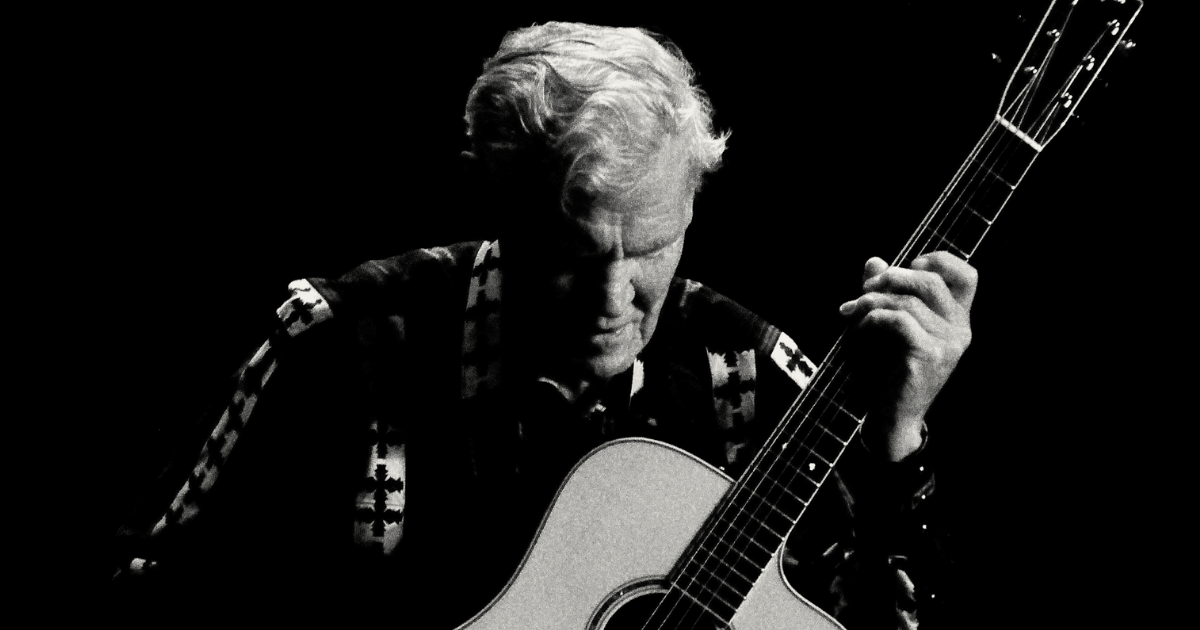
Lead image courtesy of MerleFest.

Explore more of our Doc in December Artist of the Month series here.

Reissued Recordings Highlight the Final Years of the Original Kentucky Colonels

Bob Warford remembers a lot about the vibrant Southern California bluegrass and old-timey scene of the 1960s. But he doesn’t remember exactly how he came to be a member of what proved to be the final lineup of the Kentucky Colonels, the near-mythic group anchored by brothers Roland White on mandolin, Eric White Jr. on bass and, at times, guitar magician Clarence White.

“My life was getting complicated at that time,” Warford, a banjo player, recalls. “I knew Clarence slightly. Roland slightly. I knew Eric. Maybe it was Eric who suggested me for it.”

He had grown up in the college town of Claremont, about half an hour east of Los Angeles, where he fell into bands — the Reorganized Dry City Players and the Mad Mountain Ramblers among them — with such future notables as David Lindley and Chris Darrow. After starting college further east at the University of California Riverside, he was in a band that played festivals and on the popular “Cal’s Corral” TV show (hosted by flashy Western-fashioned car dealer, Cal Worthington), appearing on the latter alongside the Gosdin Brothers, the Hillmen (featuring future Byrds star Chris Hillman) and others.

In any case, at the end of ’66 or beginning of ’67, in the home stretch of his undergraduate work and with plans for grad school on his way to becoming an attorney, Warford was asked to join the Colonels for a series of gigs at the famed Ash Grove club in Hollywood over the course of a few months. And in that February, in the midst of the Ash Grove run, the band was recruited to go in the studio for sessions to be featured on the pilot of a radio show titled “American Music Time,” hosted by and featuring  married couple Dave and Lu Spencer and with crowd sounds added to give the impression that it was done in front of an audience.

It seems to have aired that March, though Warford can’t confirm that. It was, however, released on an album in the late 1970s — without the Spencers’ parts or the crowd noise — with the title 1966. On June 30 of this year it was reissued by label Sundazed and doubled in length with previously unreleased recordings of the Country Boys, the pre-Colonels band the White brothers had in the late ’50s and early ’60s.

“These were not done with any high-tech situation,” Warford recalls of the two (or maybe three) sessions held for the radio show. “Everything was played live. We didn’t do a large number of songs.”

There are some bluegrass regulars (“Soldier’s Joy,” in short versions bookending the original release, Earl Scruggs’ “Earl’s Breakdown,” two Osborne Brothers tunes), some adaptations from country (Merle Haggard’s “The Fugitive”) and such. The performances are strong and lively, especially so considering that this was a reconstituted lineup of the band which had not played together a lot. In fact, before this run of gigs, the last official gig had been in October, 1965. Three of the five members were now new. Roland White was still there, and Eric was back, too, after having split from the ensemble some years before. Founding dobro player Leroy (Mack) McNees and banjoist Billy Ray Latham had moved on, as was ace fiddler Scotty Stoneman, who had played with the band in ’65.

“One thing this shows is that with or without Clarence, the Colonels was a good bluegrass band,” says folk music journalist and historian Jon Hartley Fox, who wrote the liner notes for the new 1966 release. “It’s sort of looked back on now maybe as the vehicle for Clarence. But they were a really good band in their own right. I think Roland White has historically been undervalued. Roland was a really good band leader. When it’s just Roland and Eric from the original band it’s still got the spirit and the same feel. The band was way more than Clarence and four other guys.”

As for Clarence, he’d begun his shift to a focus on electric guitar, picking up some major session work, which would lead to him playing on the Byrds’ country landmark Sweetheart of the Rodeo album and then later joining the band. But at that point, he was around some of the time, too. The band Warford joined now was filled out by fellow newcomers Dennis Morris on guitar and Bobby Crane on fiddle — though Morris’ last name might have been Morse and Crane’s first name may have been Jimmy. There’s a lot of uncertainty around this time, not least the status of the band itself, which was fine by Warford.

“I was still in college and was going to start grad school,” he says from his home in Riverside, where he settled into a successful law career. “For me, I wasn’t looking at anything long-term. I was thinking, ‘This is fun and these guys are really good players and we can do this while we do it.’ I didn’t have a view that it was about to end or that it could continue.”

As it turned out, it was about to end. The radio sessions would prove to be the last official recordings by the band. It also, in some ways, captures the last glimmer of that vibrant Southern California roots-music scene.

“If people think it’s tough to make a living playing bluegrass now, which it is, in 1967, especially in California, it was impossible,” says Fox. “If you look around the rest of the country, it was lean times for bluegrass.” Still, the Colonels had earned status.

“Even without Clarence in the band, they would’ve been the leading bluegrass band in California,” Fox says, crediting Roland White for keeping the Colonels alive as a band. “And in the national consciousness they were still one of the biggest things going. They really showed a kind of drive and ambition that a lot of people admired.”

But as time went on, that meant less and less — big fish, shrinking pond. Even at its peak a few years earlier, the scene in the area was not a way for musicians to get big paydays. But once the Beatles arrived and Dylan had gone electric, it was a different world. Locally, nothing captured the change more than Chris Hillman turning in his mandolin for an electric bass and co-founding the Byrds. Bluegrass just didn’t have much of a draw.

In 1961, the band, still known as the Country Boys, had what could have been a big break when it was hired to appear twice on The Andy Griffith Show. Unfortunately, it turned out to be an opportunity that fizzled. The producers wanted to have them back, “But the family moved and they couldn’t find them,” Fox says. “So they put an ad in the paper.”

And answering the ad was, yes, the Dillards, who auditioned and were hired, playing members of the mountain family the Darlings, ultimately performing 13 songs over the course of six episodes from 1963 to 1966 and gaining a national profile.

“In retrospect, I think the Dillards were much better suited to that show,” Fox says, citing again the Dillards’ bigger flair for showmanship. “The Colonels never had a show really,” he says. “They got up and played music.”

“The Dillards were such a mowing-down machine,” says Grammy Award-nominated reissue producer and annotator Mary Katherine Aldin, who worked at the Ash Grove starting in 1960. Through that latter role, she worked closely with the Colonels and later won the 1991 NAIRD Indie Award for producing and annotating the collection The Kentucky Colonels, Long Journey Home and wrote the liner notes for The New Kentucky Colonels Live in Holland 1973. Getting festival bookings became increasingly difficult, she says.

“It was, ‘We already have a bluegrass band, don’t need more,’” she says of the frustrations, and of course the one they already had was the Dillards, more often than not.

An exception was the Newport Folk Festival, and the Colonels did play there in 1964. But any momentum from that appearance was hard to sustain. By the time Warford joined, options had become fewer and fewer, not just on the festival level but on the local circuit that had been at least a steady, if unglamorous, platform.

“Now that I think about it, other than the Ash Grove, which was always a venue for folk and blues and old-timey stuff, there used to be pizza parlors and stuff with bluegrass bands on the weekends,” Warford says. “I don’t recall any still around then.”

The Ash Grove did remain the prime location for the music, regardless, with such future stars as Ry Cooder, Jackson Browne, and Taj Mahal citing it as a place where they could meet and learn from their heroes. The Colonels’ and the club’s legacies were very much entwined, right from the start. The White brothers, with their family having moved from Maine to Burbank on the Eastern part of L.A.’s San Fernando Valley, started playing the Ash Grove shortly after it opened on Melrose Ave. in Hollywood in 1958 with folk and blues fanatic Ed Pearl at the helm.

A year before that, the band was known as the Three Little Country Boys, with Roland on mandolin, Eric on banjo, Clarence — barely in his teens — on guitar, and sister Joanne sometimes on bass. Soon they won a radio station competition and changed the name simply to the Country Boys, with Eric taking over the bass and banjoist Billy Ray Latham and dobro player Leroy “Mack” McNees added to fill out the lineup, though that would change, too, when Eric left and Roger Bush was recruited.

“It was 1959 when I joined them,” Bush says now. “Got a phone call one day from Leroy Mack, said he was playing with Billy Ray and Roland, and the brother Eric played bass fiddle. That is it. The whole little band. They were working, played a radio show and TV show with the car salesman who had live music. Playing at the Ash Grove, had a deal with the owner, if he could call us when somebody didn’t show up and we could come fill some time, we would have the full run of the building during the day to rehearse with the full sound system. Then [we played] every Saturday morning.”

The family dynamic had its tensions, it seems, and the breaking point that led to Bush’s entry was sartorial.

“Roland tried to put everyone in white bucks,” Bush says. “They got up one morning at home, the White family, there was a note hung on the bass fiddle from Eric that said, ‘I quit.’ They opened the back door and there was his white bucks that had been on fire. Leroy called me up, I said, ‘You know, I’ve never played the bass fiddle, but wouldn’t mind giving it a whirl. We did a show, a school or college. That was my first show. I hadn’t gotten together with them but one time. We did the first song, nobody stepped to the microphone. They looked at me and said, ‘Go talk to them.’ That was the beginning of me being the talker in the band. They didn’t call me Flutter-Lip for nothing. I was always the talker.”

This is the time period represented in the album’s expanded tracks. The recordings, raw but lively, show an exuberant, youthful ensemble with vibrant performances of mostly traditional material (“Head Over Heels In Love With You,” “Shady Grove,” “I’ll Go Steppin’ Too,” “Flint Hill Special”) and a modicum of hokum to boot (“Polka on the Banjo,” “Shuckin’ the Corn,” “Mad Banjo”).
Fox stresses that these early recordings were before Clarence broke out as a star attraction.

“He wasn’t playing lead yet,” he says. “He didn’t really start playing any lead until Roland went into the army in 1962.”

For the older brother, that produced something of a crossroads-level shock on return. “Roland talked about how surprised he was coming home from Germany, and here was Clarence playing fiddle tunes [on guitar],” Fox says. “But his rhythm playing on the old stuff is great.”

It was around this time that they recorded an album and, at the urging of mentor Joe Maphis, took on the name the Kentucky Colonels, regardless of the geographical disconnect. The album, The New Sound of Bluegrass America, came out in 1963. Clarence’s flat-picking shined, making him, for many, the band’s star attraction – even more so with the instrumental album, Appalachian Swing!, with fiddler Bobby Slone added to the lineup, released by prominent LA jazz, world, and folk label World Pacific Records.

Katherine Aldin witnessed this transformation and Clarence’s emerging stardom up close at the Ash Grove: “One thing about them – Clarence, even in those days, overshadowed everyone in the band,” she says. “So you’d get a whole flock of people who would come in and sit at the foot of the stage. There was a long metal bar with single seats in a V shape around the stage. The Clarence fanatics would get there early and sit there and glue their eyes on Clarence’s hands for 45 minutes and when they were done, just go away. He would suck the air out of the room. The other guys were really good too and wonderful human beings. But Clarence was head and shoulders above the rest of the world.”

His presence went beyond his skills. “Clarence would sit in the front room — there was a concert room and front room,” Aldin explains. “And he would sit in the front room between sets and any kid who came up to him, he would show them anything. And there were a lot of kids. He would show them a lick, or let them play his guitar, or if they brought a guitar he would play with them.”

But momentum was hard to sustain. Mack left the group in ’64 (he’s only on a few of the Swing! tracks) to work in his dad’s construction business, then Slone left and fiddle star Stoneman came in and for all intents by the end of ’65 the band was inactive until that short, final ’67 stretch.

“I think the band just kinda ran out of work to do,” Bush says.

The members went on to other jobs, in and out of music. Clarence famously became an in-demand session player with his switch to electric guitar and supported by James Burton, one of the top guitarists on the scene and a veteran of Ricky Nelson’s band (and later the leader of Elvis Presley’s TCB ensemble).

“James Burton had heard Clarence and started offering him session work — ‘I’ve got more work than I can do.’” says Diane Bouska, who married Roland White in the 1980s and performed with him until his death in April 2022 at age 83. “So Clarence started doing electric guitar session work.”

Clarence found himself working on Nelson sessions, as well as the Monkees and as lead guitarist on the album Gene Clark with the Gosdin Brothers, the first project for Clark after leaving the Byrds. Then Chris Hillman, still in the Byrds, brought him in to play on a couple of songs for the band’s Younger Than Yesterday album, which led to more work with the group (including on Sweetheart of the Rodeo) and ultimately full membership in the last version of the band.

As such, Clarence wasn’t around much for the 1967 Ash Grove shows or the radio sessions captured for this reissued album, though Fox says that he seems to be on at least one of the songs. Shortly after that, Roland was hired by Bill Monroe and moved to Nashville. He and Bush did reconnect in the early ‘70s in the proto-newgrass band Country Gazette, which also featured fiddler Byron Berline, an LA mainstay who had played a handful of dates with the Colonels.

Clarence made his place with the Byrds, showcasing his dazzling skills on a B-bender — a Fender Telecaster modified by him and Gene Parsons, the band’s then-drummer, with a lever attached to the strap allowing him to bend the namesake string to simulate the sound of a pedal steel. He also continued doing sessions for Joe Cocker, Randy Newman, the Everly Brothers, Linda Ronstadt, Jackson Browne, and Rita Coolidge, among others, as well as returning to his acoustic roots in Muleskinner, a progressive bluegrass-swing group with mandolinist David Grisman, fiddler Peter Greene, banjoist Bill Keith, and guitarist Peter Rowan, a precursor of the groundbreaking David Grisman Quintet.

Then in 1973, Clarence, Roland, and Eric came back together as the White Brothers (sometimes billed as the New Kentucky Colonels) for shows in the U.S. and Europe. Following a show in Palmdale in the Southern California, Clarence was hit and killed by a drunk driver as he and Roland were loading equipment into their car. He was just 29.

It is hard to extricate the Colonels’ legacy from that of Clarence.

“The main thing was Clarence White’s guitar playing,” says country star Marty Stuart in an email. Stuart is arguably the leading authority on all things Clarence White, not to mention the owner of the original B-bender, which he played alongside Byrds founders Hillman and Roger McGuinn on the 2018 tour marking the 50th anniversary of the Sweethearts album.

“To me they are still influential because of the level of musicianship and they remain as the beloved founding fathers of the Southern California bluegrass scene. I had dinner with Gene Autry one time and he said, ‘I didn’t say I was the best singing cowboy, but I was about the first and the rest don’t matter.’ I would place the Colonels as field correspondents, national ambassadors for the world of bluegrass music in Southern California when barely anyone else was there to help out. They also introduced bluegrass music to an entirely new generation of listeners that old timers might not have gotten to.”

But there’s more to it than just Clarence. McNees, who wrote several of the few original songs the band did in the early days, found that out when he learned that modern country-rock band Blackberry Smoke had done a version of one of them, “Memphis Special,” on the 2003 album Bad Luck Ain’t No Crime.

“I didn’t know anything about it,” he says from his home in Thousand Oaks, north of Los Angeles. “I got a phone call [a while later] from an accounting firm to make sure I was the writer. Lo and behold, a couple weeks later I got a real nice check for royalties not being paid and after that another. After that I became an acquaintance of the singer [Charlie Starr]. Then they were coming to Los Angeles to play the House of Blues. I couldn’t go so my son went for me. I said, ‘Ask where they got the song.’ He came back and told me, ‘Well, he said that when he was nine years old he was watching The Andy Griffith Show and saw these guys playing bluegrass and asked his father to buy our album for him. Glad he did.”

And glad it wasn’t one of the Dillards’ episodes.

Is it any surprise that there is still enough interest in the Kentucky Colonels to merit this new release? Marty Stuart has one crisp, pointed word to answer that question.

“No.”


Album cover illustration by Olaf Jens, courtesy of Sundazed.

Leyla McCalla in Conversation with Singer-Activist Barbara Dane

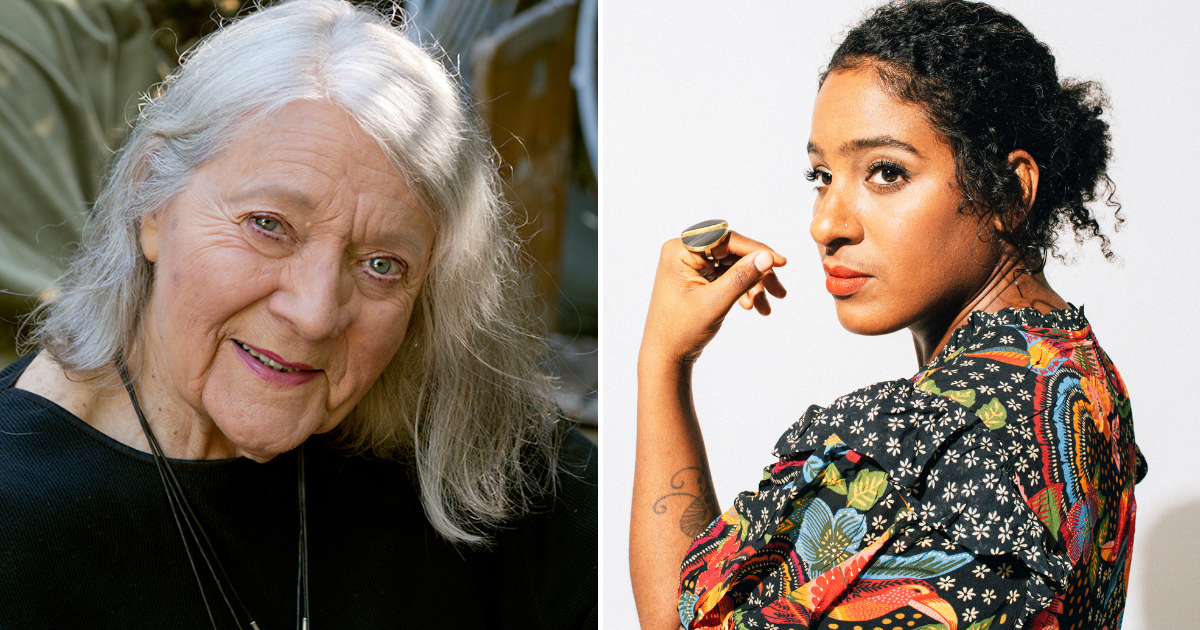
(Editor’s Note: Cellist, composer, and creator Leyla McCalla brings us a conversation as guest contributor with singer and community activist Barbara Dane – in celebration of her 96th birthday on May 12.)

I felt an immediate connection to Barbara Dane when I heard her voice. I first learned of Dane while developing music for a FreshScore – a commissioned piece written to a film in the public domain to be performed at the Freshgrass festival back in 2018. I had just given birth to my twins and I found myself researching songs to use in my score. During that time, I came across a civil rights era song called “Freedom Is a Constant Struggle” that Dane had released with a group called the Chambers Brothers in 1966. I fell in love with the recording – the performance was powerful and poignant; the message was so direct. 

Some songs just make you want to learn them. Freedom is a constant struggle. A perfect and ever true statement. It inspired me to write a song I called “Trying to Be Free” that became one of the songs in my FreshScore. I dug further into Barbara Dane’s catalogue and found a song that she had written called “I Hate the Capitalist System.” This felt very in line with the themes in my (at that time) yet-to-be-released third album, The Capitalist Blues. This is the epitome of the “folk process,” a phrase I jokingly use when talking about songwriting. You think you’ve found a unique idea, only to find that the idea has existed since time immemorial. The road that is paved with gold keeps on getting mined, refilled, and recycled and on and on. 

Years ago, a friend suggested that I check out the song “Dodinin” by Atis Indepandan – a group of Haitian artists living in exile in New York City from the brutal Duvalier dictatorship in Haiti. The album is considered a classic within the Haitian diasporic community.  When I was doing research for Breaking the Thermometer – the album I made inspired by Radio Haiti and the legacy of its journalists – I found myself more deeply exploring the songs. I’ve never been more grateful that Smithsonian Folkways has downloadable liner notes on their website! And beyond that, I was grateful that the liner notes were so thorough; it included essays on the political context of the music as well as Kreyol and English Translations of the songs. The songs spoke to the struggles of the times and longing for home of Haitians in exile. It is hands down one of my favorite pieces of art ever made. I knew I had to include Dodinin on the record.  

Fast forward to the release of the album, Barbara Dane’s son, Pablo Menendez, emailed me. He was curious about whether I was aware of his mother’s legacy and if I knew that the album was originally released on Paredon Records, the label that Dane cofounded with her husband, Irwin Silber. Paredon Records was not a typical label; all of their releases highlighted the political struggles of people from all over the world with a mission to uplift movements and voices of opposition to oppression. He also mentioned that I should read her newly released autobiography, This Bell Still Rings, and I immediately ordered it and began to read her fascinating life story. I was even more amazed when I looked at the inner flap of the hardcover and saw that my name was mentioned as one of the inheritors of her legacy! It was a very life affirming surprise. How did I not know?!

I worry that we are living in a time of tragic disconnection. As musicians, we are constantly being pushed towards releasing a steady stream of “content” to get more views and more likes, more money, and more recognition. But, often times that comes at the expense of our health. I mention this because I feel that more people in our musical community should be aware of the music, ideas, and ethos of Barbara Dane. She is someone who has always centered the needs of the community, locally and globally. She doggedly worked to understand the causes behind the stratification of our society and gracefully occupied so many roles to be able to use her creativity for the greatest good for herself, her family, and others. As a mother of three myself, I was very curious about how she did it! Whether you realize it or not, we need Barbara Dane right now – if nothing else, to remind us of our essential power when we center community care.

Reading her memoir and seeing that Dane’s 96th birthday was coming up (it was May 12, 2023), I felt inspired to do something to mark her birthday. I remember thinking to myself, “Let’s celebrate our heroes while they are still here!” I released a cover of her song “Freedom Is a Constant Struggle” alongside a cohort of collaborators from my adopted home of New Orleans. My manager suggested that perhaps we could arrange an email interview and I was ecstatic when Dane graciously replied with a yes. 

I am incredibly pleased to share the interview with you here on BGS and I hope it will inspire you all to think more about the potential we all have to take better care of each other. This bell still rings!

Leyla McCalla: I have been reading your new autobiography, This Bell Still Rings. What does this title mean to you and what do you want readers to understand from it?

Barbara Dane: The title is taken from a lyric by Leonard Cohen which I will quote for you:

Ring the bell that still can ring
Forget your perfect offering
There’s a crack in everything
That’s how the light gets in

What I’d like readers to take from that is that the imperfections in things are what offer possibilities for learning and growth.

How did your early experiences of blending music and activism shape your career? Was there any particular moment where you felt that this would be your life’s work?

I never thought of myself as having a “career,” I guess my professional work grew out of the need to put food on the table. As far as blending music and activism, early on it became clear that my voice was a valuable tool for my community work. I was lucky enough to be exposed to movements like People’s Songs that allowed me to see the possibilities at a young age. The artists that influenced me the most in this regard during my formative years were Paul Robeson and Pete Seeger.

Who do you cite as some of your earliest teachers and/or influences to your musical approach?

Early on I was exposed to the music of Billie Holiday and Louis Jordon and of course the big bands so popular in the 1940s, like Ellington, Basie, and Glenn Miller. Earl Robinson’s famous “Ballad for Americans” was foundational. And definitely such giants as Paul Robeson, Leadbelly, Pete Seeger, and Malvina Reynolds, and later, the blues women of the 1920s and 30s: Bessie Smith, Ida Cox, Ma Rainey, and Sippie Wallace. And of course there was my beloved Mama Yancey.

Your vocal phrasing is incomparably gorgeous; it feels both so natural and so intentional. When did you realize that you had a natural gift and was your craft something that you worked on intentionally, or something that came naturally, or both?

Listening to Louis and Billie taught me that you don’t have to stick to the bar lines. I was more comfortable with the conversational feel of their phrasing. Once you understood the structure of the piece, you can be free within it. So no, I never worked on it and none of it was intentional. My intention has always been to be completely in the song and let its emotions and meanings lead me.

 You opened a music venue in 1961 called Sugar Hill. It sounds awfully stressful to run a music venue while raising small children! Can you share more about how that came to be and that time in your life?

Actually, on the contrary, the whole idea of opening the club in our hometown, was it that it would allow me to spend more time with my family instead of always being out on tour. Running the club was a joy and gave me the opportunity to introduce some of the old timers who had more to give to a new audience that was just beginning to become interested in the blues.

Who were the Chambers Brothers and how did you come to collaborate with them?

They were four talented brothers, recently migrated from Mississippi to LA, who had formed a gospel group and were looking for ways to broaden their audience. I first met them in 1960 when I invited them up to the stage at the Ash Grove to join me in singing some of the songs that were emerging from the civil rights movement.

You were the first U.S. artist to tour in Cuba after its revolution. What was the impact of that experience on your life?

Going to Cuba in 1966 changed my life. I was energized by the optimism of the Cuban people as they engaged in building a new and more equitable way of life. For the first time I felt identified with the direction society was moving in, whereas at home I was always in the opposition.

Paredon Records is the label you founded with your husband Irwin Silber in 1969. What made you want to start a record label and produce albums?

In 1967, I attended Cuba’s Encuentro de Canción Protesta where I met singers from all over the world who were deeply committed to struggles for peace and justice. When I returned home, I felt the urgent need to expose the U.S. public to the significant and timely music I heard there. First I experimented with translating and singing some of the songs myself, but I soon realized it would make more sense to present the original voices. So I decided to launch a record label. Irwin had skills to bring to the table from his years of experience in publishing, and with his support, I produced and curated over 50 LPs of liberation music from the U.S. and around the world. Eventually, to ensure the collection’s availability in perpetuity, we donated it to Smithsonian Folkways.

You’ve toured internationally, including Franco-era Spain, Marcos’ Philippines under martial law, and North Vietnam under the threat of American bombs. What inspired these tours and why did you feel they were important places to bring your music?

With my international work I carried a message of peace and anti-imperialism, representing the sentiments of peace-loving Americans.

I’m also a mother of three and I find myself in awe of how much you were able to accomplish in your life while also raising your three children. How did you balance your musical life, activism and child rearing? Do you have advice for artist parents on how to navigate it all?

Be sure to include your children in all aspects of your life and help them learn to be independent. Trust and respect them. Make sure your partner is willing and able to actively do their share of the parenting.

Sometimes it seems that peace and justice are impossible to achieve. What would you say to people who feel that they do not have the power to make a difference?

As expressed in Beverly Grant’s moving song, “Together, we can move mountains. Alone, we can’t move at all!”


Photos courtesy of Leyla McCalla (by Laura E. Partain) and Barbara Dane.