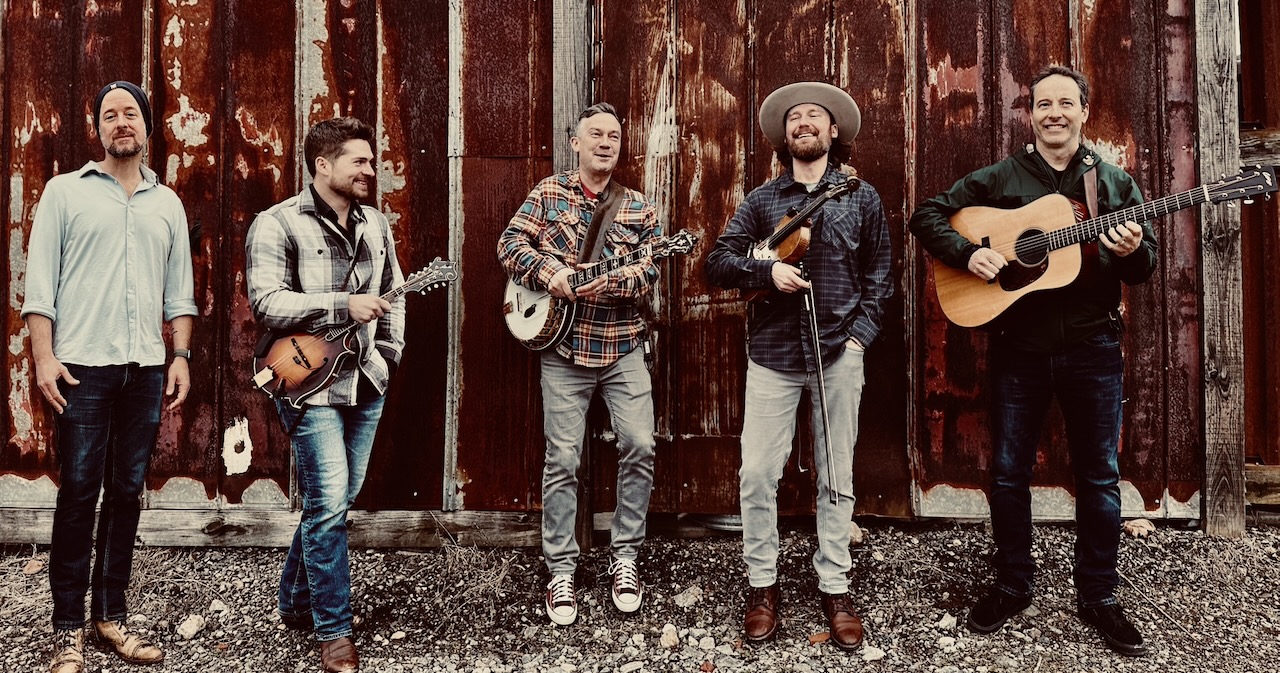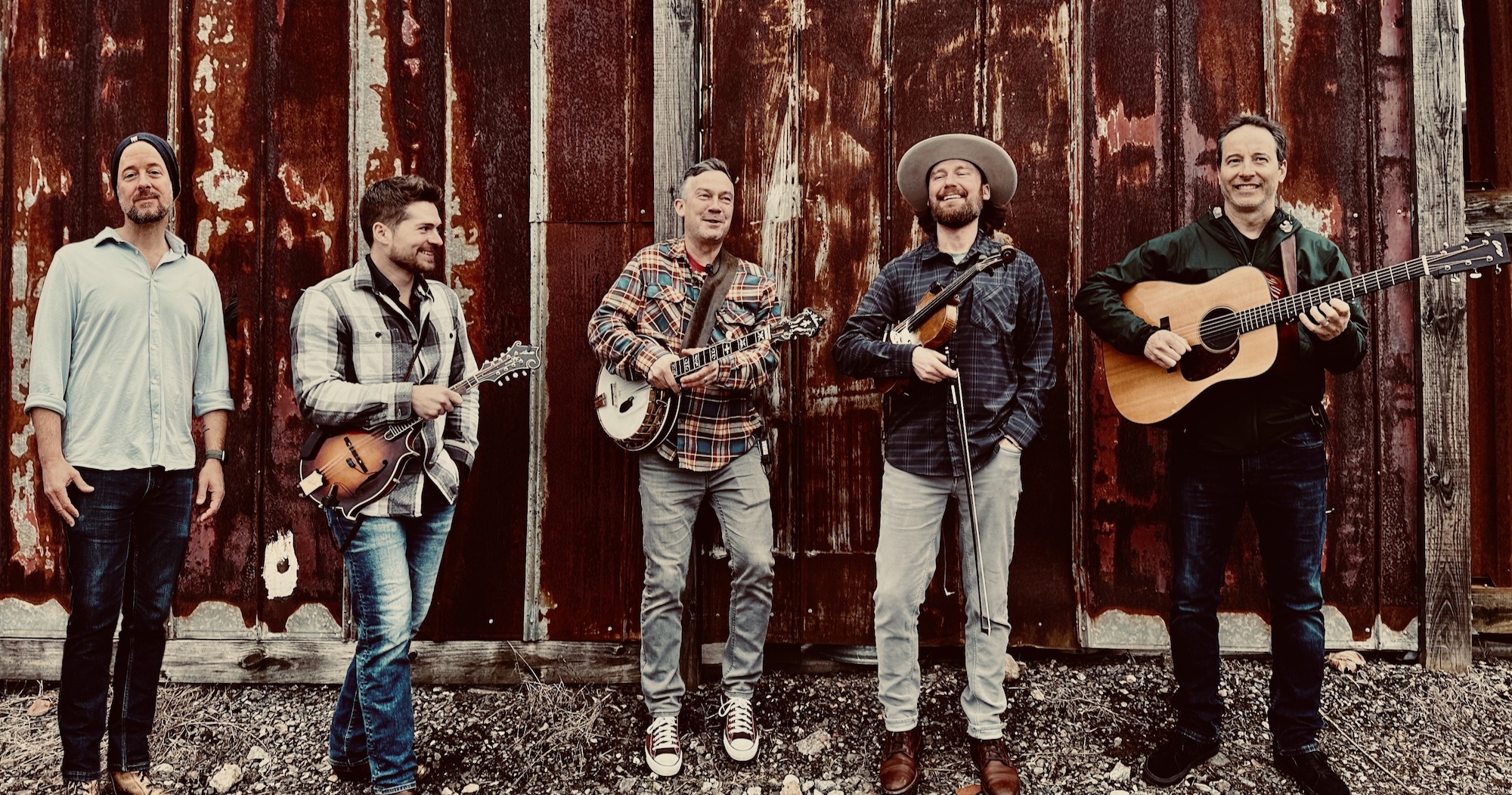
Following instructions for listeners to Get Yourself Outside in 2022 and declaring they’re heading Nowhere Next in in 2024, jamgrass torchbearers Yonder Mountain String Band have reached their zenith on Good As True.
Released March 27, the collection finds the band embracing the skill sets of its newest members Nick Piccininni (mandolin, vocals) and Coleman Smith (fiddle) more than ever, as they dissect the human condition through nine tracks highlighting everything from falling in and out of love (“Brand New Heartache”), to confronting regret (“Blind”), and frustrations with today’s political climate (“The Lie”).
During a recent phone call, bassist Ben Kaufmann spoke with BGS about working Piccininni into the writer’s room, lessons learned from touring, how former band member Jeff Austin’s spirit sticks with him, and more.
This is your third album having Nick in the writer’s room with you, Adam [Aijala], and Dave [Johnston]. What has that evolution of bringing him into the fold there been like?
Ben Kaufmann: Yonder has always had its own special sound. There’s a very specific energy and communal taste with the music that we’ve been tapping into collectively for so long. Nick had already been writing for a while before coming aboard [for 2022’s Get Yourself Outside], so once we got him up to speed with our style we realized how intuitive he is. He has his own understanding of what a Yonder Mountain song is, which has made it fun when it comes to overhearing him workshopping songs or when we swap ideas backstage and on the bus.
We also knew, with recording time on the calendar, that we’d need more material. For most of Yonder’s lifespan we’ve had four writers – going all the way back to the days with Jeff, so it only made sense to give Nick the same opportunity when we saw what he could do. After putting songs from all of us “through committee,” a bunch of his wound up being cut [recorded] these last handful of years.
It’s especially important because Nick is such a wonderful singer. He’s great at everything he does, which is really inspiring to be around. He’s really stepped into his own as a featured vocalist and as a mandolin player. It’s been fun encouraging him to cultivate his own voice while also hearing him take the reins on some of Yonder’s oldest, most beloved songs.
What’s most satisfying for me with this band is writing my own songs, playing them with the band, and having people who are ostensibly there to hear the music enjoying it. There’s no better feeling than that and we wanted Nick to feel it too, since he’s currently in what seems to be a really prolific time of his life for songwriting. He’s the perfect fit for what we do. I’m so grateful he came into our lives and continues to enjoy making music with us. Being in a touring band isn’t for everyone, but everything with Nick has felt very natural from the start.

You just mentioned touring life, which I know the band touches upon with the song “Long Ride.” Do you have any good tips or wisdom you’ve picked up from your 28 years on the road with this band?
It’s like two hours of the greatest time of your life, every day, followed by 22 hours sitting in an airplane. [Laughs] In all seriousness, it’s been very different depending on the time in my life we’re talking about. I’ve handled it really well, but I’ve also handled it terribly. I’ve made mistakes and overcome them, but I’m sure I’ll make even more. When I was young I felt invincible. I’d drink too much and do all the drugs – not to the point of turning disastrous, but I lived that life. Doing that ages you so much faster than otherwise, and touring in general is already not easy.
Because of that I’ve spent so much time, energy, and money working on my personal growth through therapy and reading about ways I am deficient and could improve, to realize my full potential. A massively important part of my life is having a deep curiosity for how to be a better person, which is something I’d like to think I’d still be doing even if I worked in an office or at a place like FedEx. I don’t even know what else I’m qualified to do at this point except survive on the road.
What’s helped me through it all is paying attention to the people around me, investing in myself, and embracing the group dynamic so we can create the highest possible energy state and vibe. Essentially, don’t be a dick! [Laughs]
Lyrically, this record deals a lot with relationships, communication, and the fallout that can occur when those two things break down. With songs like “The Lie” and “One To One Another” this seems to deal partly with politics, but were there any other factors that motivated this direction on the record?
Not in the sense that we spoke about it ahead of time. We didn’t say, “Hey, we’re going to do a record so let’s write about A, B, and C.” A lot of our songwriting is done individually, but there still are some collaborative opportunities for us to get together, as well. As we got closer and closer to our recording dates and the song started being developed, [that] was when we first noticed those common themes. At the same time, I’m not surprised when common themes like this do emerge due to being on the road together and living the same life a lot of the time. When you’re seeing, doing, and talking about the same things regularly it’s easy to have a lot of synchronicity between what we’re writing about and creating.
Ultimately, we’re at our best when we’re writing about our own experiences and what we know. With “The Lie,” I like to think about Jesus, [and] all the bad actors in our world, many of which wield immense power. It makes me feel helpless at times as a bass player and musician – like, what am I supposed to do? It’s an overwhelming predicament, and that song for me speaks to that feeling of, “How did we get here?” It’s also very empowering to sing a song that speaks truth to something like that.
“The Lie” was also one of the songs that got my explicit vote when it came to making the cut for the record. When it came to sequencing, I also wanted that to be one of the first songs you hear when you put the needle down on your vinyl or press play.
“Blind” seems to be a song about regret, mental health, and realizing too late how much someone truly mattered. Have you ever thought about how that tune and what it’s describing relates to your fallout over a decade ago with the late Jeff Austin?
To this point I hadn’t connected that song with how I engage with Jeff’s spirit, but maybe I will now. His spirit and my thinking about him happens at every show. As time has passed, I’ve found that the thoughts I have about him that stick out are all the good times we had together, which wasn’t always the case for us. It was a deeply challenging and complicated relationship we had together and it wasn’t wonderful at the end, which is ultimately why we stopped playing together.
But as time passed, and with his passing – which remains one of the most tragic things I’ve experienced in my life – I became more and more crushed that he didn’t get the help that he needed. I don’t think he knew how important he was to so many people. I think more and more fondly of his spirit, energy, and memory with each passing day.
That original version of the band really changed bluegrass music by building a bridge between it and the jam world. What it did was really powerful, so it’s very interesting trying to think back and conceptualize what it was that we accomplished because we didn’t mean to do anything – we were just trying to play music the best we could.
As I look at it – especially as far down the road as we are now – I see the scene that’s developed from it and all the people doing amazing things with the music as a result. It’s all very humbling, and Jeff was a huge part of that. There’s never going to be anybody else like him, good and bad. We had a pretty complicated relationship – we were the best of friends for a while until we weren’t – but I always have and will love him.
One of my favorite moments on the record is the 17-minute jam on “Barroom Feather.” How did it come about?
One of the things that’s always interested us once we were able to start accessing the data is what our most-streamed song is, for better or worse. [Laughs] What we found is our most-streamed song is a cover of “Dancing In The Moonlight,” which is a good song, but not an original like I wish it was. Then our second most-streamed song is a tune called “Midwest Gospel Radio” that’s an instrumental from our self-titled record. On the album, when we first released it, the song was only two and a half or three minutes long, but along the way someone else released a nine-minute version that’s gotten millions of streams and is now second on our list of top songs.
It got me reflecting on our version and how comfortable we all were in the studio recording it, so when Dave brought us this song we pivoted from doing a shorter, “radio edit” version [that you also hear on Good As True] to something much longer. We recorded a couple takes that way, allowing ourselves to exist in that space and jam a bit, and I couldn’t be happier with the spaces and textures we came up with. It has this time-travel, hypnotic space-time warp thing about it that we were really psyched about. It works really well as both a more streamlined song and as a long jam like what we end the album on, so I’m excited to see how people listen to and engage with it.
You’ve been touring with Yonder for 28 years now. What continues to motivate you nearly three decades in?
First and foremost, I love music. That will never change. I also have a 14-year-old son that I love more than anything in the world. Music is part of the fabric of my flesh, blood, and spirit – I simply don’t know what else I’d be doing if not for it. I’m so blessed that this weird little music project called Yonder Mountain String Band happened, because looking back it doesn’t make much sense. Going from that to seeing what bluegrass music has become, having schools and colleges now devoted to bluegrass music, to [the] elevation of the music’s degree of technicality and musicianship, has been mind-blowing. None of that was the case when we were starting out in the ‘90s. We loved bluegrass music but were a lot more beholden to the spirit of the Grateful Dead than we were Bill Monroe, but we still wanted to play it.
I look at it in the sense of me being good at what I do, but by no means am I the best bass player around. None of us were the best at what we did and when you put it all together it goes against all the laws of physics, mathematics, and common sense. But two plus two equaled five for that one moment in time. I can’t tell you why, but it did and here we are now.
As a result, I get to live this extraordinary musical life that’s navigated some big ebbs and flows. That, along with all the fans who’ve embraced our music through the years and found us in different ways, is what keeps us going.
Photo Credit: Lead image by Robin Vega; alternate images by Mountain Trout Photography, Trent Grogan
Our Jamgrass column is brought to you in partnership with Preston Thompson Guitars.