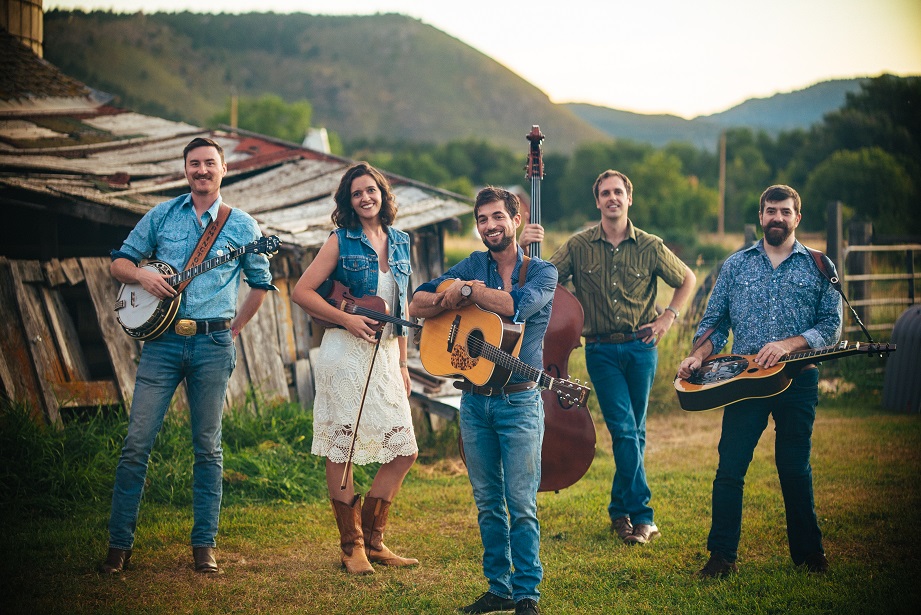
WATCH: Unspoken Tradition, “Cold Mountain Town”

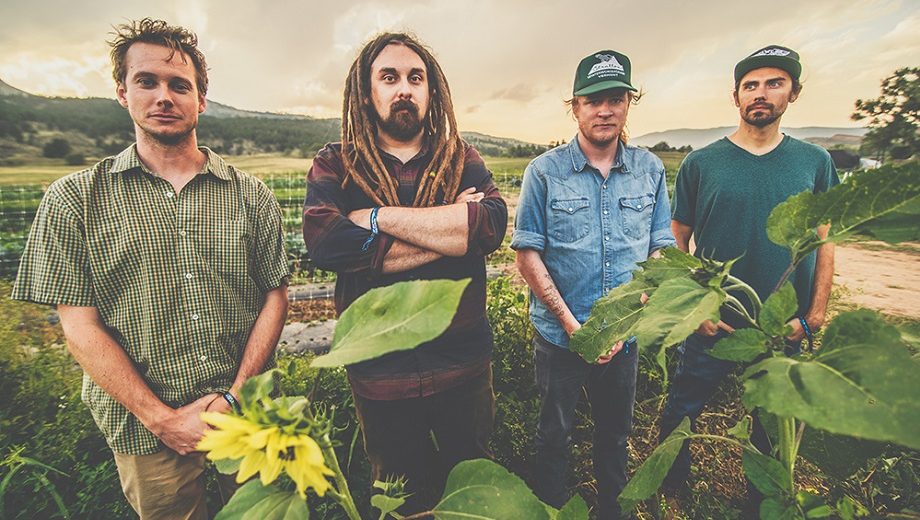
Artist: Unspoken Tradition
Hometown: Western North Carolina
Song: “Cold Mountain Town”
Album: Myths We Tell Our Young
Label: Mountain Home Music Company

In Their Words: “For the album Myths We Tell Our Young, we explore themes of mountain culture and how it is evolving. There is no better example than Asheville, North Carolina. I’ve lived and played music in this city for over 25 years and watched it change and grow while still holding strong to its rich Appalachian music culture. This song is dedicated to artists that continue to struggle and survive in this ‘Cold Mountain Town.'” — Ty Gilpin, Unspoken Tradition songwriter, mandolin player, and vocalist


Photo credit: Sandlin Gaither

WATCH: Darrell Scott Reminds “It’s A Great Day To Be Alive”

Song sorcerer and musical mage Darrell Scott is celebrating autumn with a refreshed rendition of his ever-popular song, “It’s A Great Day To Be Alive.” In a nod to his acoustic roots, Scott recorded a bluegrass version of the hit, which has been covered by many artists in country, Americana, and bluegrass. In October, he released the official music video — depicting fall festivities like hay rides, a corn maze, and other images of the season — which, as he tells it, was actually inspired by a surprising collaboration.

“I found that a local Nashville corn maze (Honeysuckle Hill Farms) wanted to put my image and song ‘It’s a Great Day to be Alive’ into its corn maze design this fall,” he explains. “And since I had never made a video for the song, and since the song’s message is as needed as ever, we decided to make a video with great help from family and friends. I love the result.”

Feel the warmth of autumn through this music video; watch right here on BGS.


Photo courtesy of the artist.

Joan Shelley’s Love of Kentucky, Captured in Iceland

Singer/songwriter Joan Shelley’s voice has a warmth and purity that can still the choppiest minds. Her fifth album, Like the River Loves the Sea, is a calm offering in noisy times. She says she didn’t set out to make an album with any kind of theme or message, but she found herself writing songs that often reflected her love of her native Kentucky.

For many years, Shelley chased the idea of leaving Kentucky, maybe relocating to someplace in Europe or a big city on one of the coasts. She grew up on a small farm outside of Louisville, a swarm of animals, siblings, and step-siblings to play with, a creek and woods to play in.

On her song, “The Fading,” Shelley borrows a phrase often attributed to Mark Twain about Kentucky’s sluggish pace of life: “And, oh, Kentucky stays on my mind/ It’s sweet to be five years behind/ That’s where I’ll be when the seas rise/ Holding my dear friends and drinking wine.” And yet when the time came to record this album, Shelley travelled far from Kentucky to Iceland, with frequent collaborators, guitarist, Nathan Salsburg, and producer and guitarist, Jim Elkington.

BGS: How did you end up in Iceland?

Shelley: I have a friend who’s a complete fan of Iceland. It just started to simmer in my imagination. This could be poetically in between Europe and the U.S., this ancient musical tie on the newest earth that’s in the ocean. I was, like, I want to go essentially to a different planet and make a record and see how that air feels and how that environment works.

When you go someplace like that to record, are you bringing all your instruments with you? Or are you letting the place influence the music?

We each brought a guitar. I was like: I’ll use their banjo; I’ll use their drums; we’ll use their tambourines, everything. In Iceland, there was no banjo. We couldn’t find a banjo. So someone had a resonator guitar and I had to retune that to a banjo tuning that I was using for the song, “Coming Down for You.” You know, funny limits that you encounter like that, even though it’s frustrating at the time and you’re kind of panicked, then you feel for the next step. I love that.

So were you running around Iceland looking for a banjo?

We asked musicians who had been there and musicians know musicians. It’s a pretty creative community. There are a lot of artists and songwriters. And a lot of synthesizers and not a lot of banjos. When you talk about a Kentucky-to-Iceland record, like, you’re in this black hole where you cannot find a banjo.

You became interested in music later in your childhood, but you’ve always had a strong connection to the outdoors that’s apparent in a lot of your songs.

Music came later but when I think about my time in nature as a kid, I would always wander off on my own. I remember distinctly sitting under trees and singing to the day, kind of being a little kid and making up melodies.

Were you singing with an instrument?

No, just singing. Like, bird education. Melodies only. No one had instruments. My mom used to and that’s how I found the guitar. It was in the attic.

Tell me about that.

I was a freshman in high school and I wandered up to the attic which had all the good stuff in it and I kind of dusted off my mom’s guitar that she had up there. And there was a chord chart up on the wall too. She was one of those people who would say, “I just want to get better at this someday.” But it was always someday. So I taught myself from the chord chart on the wall.

Do you have a certain go-to guitar when you’re in the process of writing songs? 

I have a Collings guitar which is a pretty fancy bluegrass guitar. It’s good for fingerpicking. I got it from my cousin who passed away. She died really young of cancer. At first I wasn’t taking it anywhere because I didn’t want it to break but then it hit me — no, she’d want to go everywhere! It’s good to be reminded of how lucky I am to have gotten this far and seen what I’ve seen. It’s amazing.

Do you remember when you first heard mountain music or when you first felt like it spoke to you? 

I would say the first song that ripped my stomach out and onto the ground below me was a Dillard Chandler song, a ballad. All his unaccompanied ballads on that Dark Holler record are just gorgeous.

Nathan Salsburg, your collaborator, is also curator of the Alan Lomax archives. Did he help lead you down that well of old-time music?

He exposed me to Dillard Chandler. I wanted to hear the female singers. I was hungry because I know they just don’t get represented in the recordings of the great musicians. When you look at old-time music, and bluegrass too, it’s male-dominated. So I was like, give me everything you got. And he collected some for me to listen to, like Aunt Molly Jackson, Little Jean Ritchie.

What do you hope people take away from this record?

Once I was done editing the songs that would go on the record, I almost called it Haven, because it’s the first song on the record. We need that calm, that haven, whether it’s in terms of relationships or the environment or political noise. I have to remember how to be quiet and lead my thoughts back to being quiet.

Even when I’m talking about love in the songs, there’s a deeper level we can agree on. Let’s get back to the deeper level. At this point in my life, and at this point in our country, this was the record that I was like: I’m going to stop telling myself I’m going to move somewhere. I’m going to be here. I’m making that choice to bring what I love about the rest of the world to Kentucky.


Photo credit: Amber Estes Thieneman

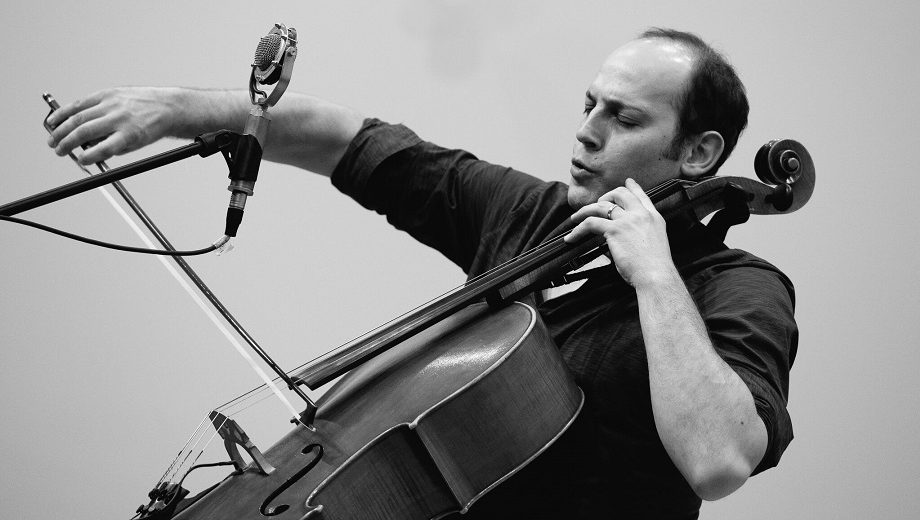
LISTEN: Mike Block, “Walls of Time”

Artist: Mike Block
Hometown: Overland Park, Kansas.
Song: “Walls of Time & Glory in the Meeting House”
Album: Walls of Time
Release Date: November 8, 2019
Label: Bright Shiny Things

In Their Words: “I really enjoyed mashing this bluegrass song up with an old-time fiddle tune. We used sections of the fiddle tune to replace the improvisational breaks in the bluegrass song, and Bruce Molsky even used a special instrument with sympathetic strings to capture an otherworldly sound. He also detuned to play in a different key than usual. My favorite aspect of the arrangement was getting the harmony vocals to toggle back-and-forth between major and minor in the choruses. We tried to give it a dramatic arc by massively re-harmonizing the final chorus before kicking up the tempo for the final fuddle tune break. I hope everyone enjoys this unique approach!” — Mike Block


Photo credit: Michelle Gendreau

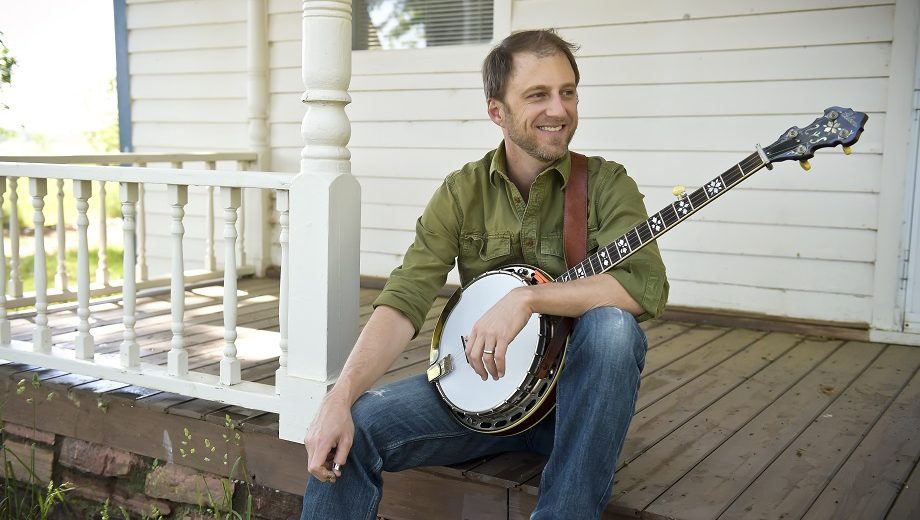
LISTEN: Chandler Holt, “Cover More Ground”

Artist: Chandler Holt
Hometown: Longmont, Colorado
Song: “Cover More Ground”
Album: Cover More Ground
Release Date: November 9, 2019
Label: Robust Records

In Their Words: “This tune just fell into my lap one day. I was messing around with the melody on the guitar and the chorus lyric just popped out of thin air. It took me a while to get the recurring melody to fit for the banjo but once it did the song really started to take shape. Singing while playing banjo and making it cohesive is always a challenge. There’s a reason you don’t see it a whole lot. I love going down that rabbit hole and I’m always surprised where I end up.” — Chandler Holt


Photo credit: Lewis Geyer

The String – The Bluegrass Episode 2019

Host Craig Havighurst browsed World of Bluegrass in Raleigh in September and caught up with four artists who make for a pretty good cross section of the genre circa 2019: Tim Stafford of Blue Highway, an iconic band celebrating its 25th anniversary, Irene Kelley, a veteran songwriter who’s on top of the bluegrass charts, Appalachian Road Show, a new supergroup with a cultural mission, and The Dead South, a young band of Canadian folk rockers who represent the adventuresome edge of bluegrass music.

LISTEN: APPLE PODCASTS

Notes and full versions of these edited interviews can be found at WMOT.org.

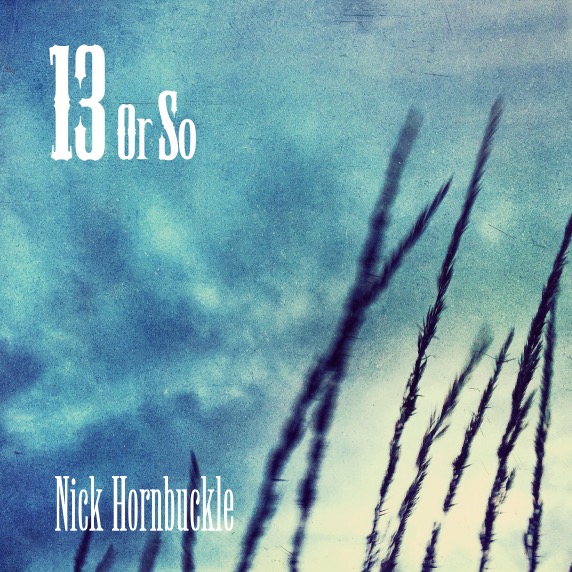
Nick Hornbuckle, “Cleo Belle”

There’s a sort of primitive beauty within the patchwork techniques that have informed and filtered into each individual instrumentalist’s approach to the five-string banjo. Styles rapidly morph and change, aided by the instrument’s relative youth (when compared, in roots music, to all but perhaps the resonator guitar) and its absolute refusal to nestle into any one distinct vein of pedagogy. Scruggs-style, clawhammer and broader frailing, ragtime, picking (i.e. with plectrum), strumming, and even more avant garde approaches such as Greg Liszt’s four-finger banjo all lend themselves to the machine in their own alluring ways. 

Enter Nick Hornbuckle, banjoist at large and member of John Reischman’s Jaybirds, who’s just released his second solo album, 13 or So. Hornbuckle’s right hand method defies categorization even by the rule-eschewing standards mentioned above. His two-finger style is decidedly distinct from the eponymous Appalachian, old-time frailing approach, combining aspects of clawhammer, Scruggs-style, and the ethereal, impossible-to-replicate quirkiness of just making your hands do what the music requires without being exactly sure how that works. I.e., playing the banjo. 

The resulting aesthetic, which anchors each of the twelve original tunes on 13 or So, falls somewhere within an equilateral triangle whose vertices would be Mark Johnson (of clawgrass fame), Steve Martin, and Noam Pikelny (if he had one finger tied behind his back). “Cleo Belle,” as all of Hornbuckle’s compositions, confounds with its combination of sheer musical athleticism and acrobatics — while remaining absolutely intuitive and organic. With his crew — on “Cleo Belle” that would be Trent Freeman (fiddle), John Reischman (mandolin), Darryl Poulsen (guitar), and Patrick Metzger (bass) — Hornbuckle wholly incorporates vernacular musical vocabularies while still pushing string band boundaries into more art music or chamber music spaces. The arrangement reminds that the western-most communities of bluegrass and old-time acolytes in this country have truly, effortlessly combined the best parts of each, while retaining that rustic, back-porch timelessness that makes the banjo beguiling to all of us.

LISTEN: Kitchen Dwellers, “Driftwood”

Artist: Kitchen Dwellers
Hometown: Bozeman, Montana
Song: “Driftwood”
Album: Muir Maid
Release Date: November 8, 2019

In Their Words: “I wrote ‘Driftwood’ after living out of a kayak in Alaska one summer. The trip changed my life in many ways, but one was just appreciating what you have at any given moment in time. Life isn’t perfect and comfortable and sometimes curveballs get thrown your way, but ultimately how you come out the other end is based on your perspective and resilience. We were so fortunate to have Jason Carter add a fiddle track and he did some amazing work. Once we heard it we knew it had to be the last song on the album.” — Max Davies, guitar/vocals


Photo credit: Silky Shots

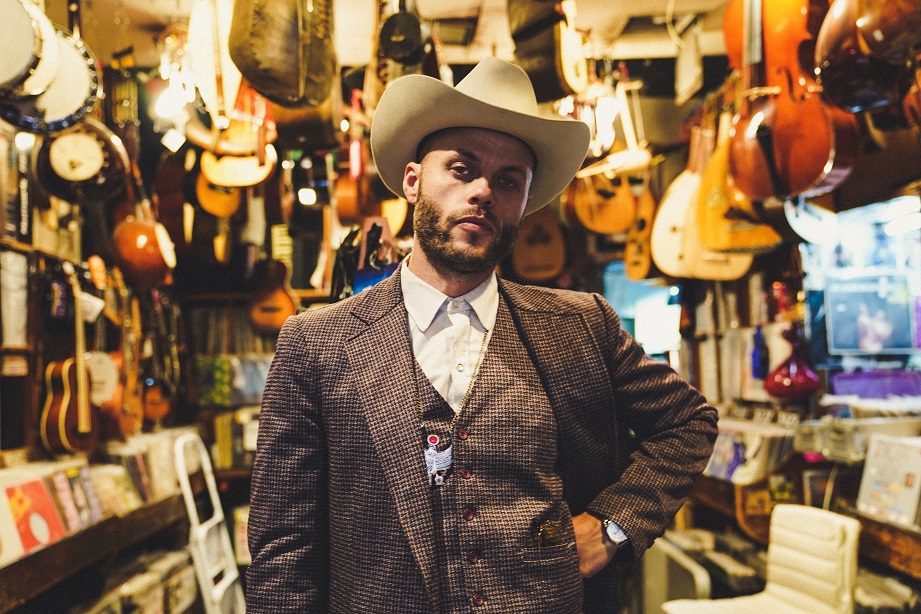
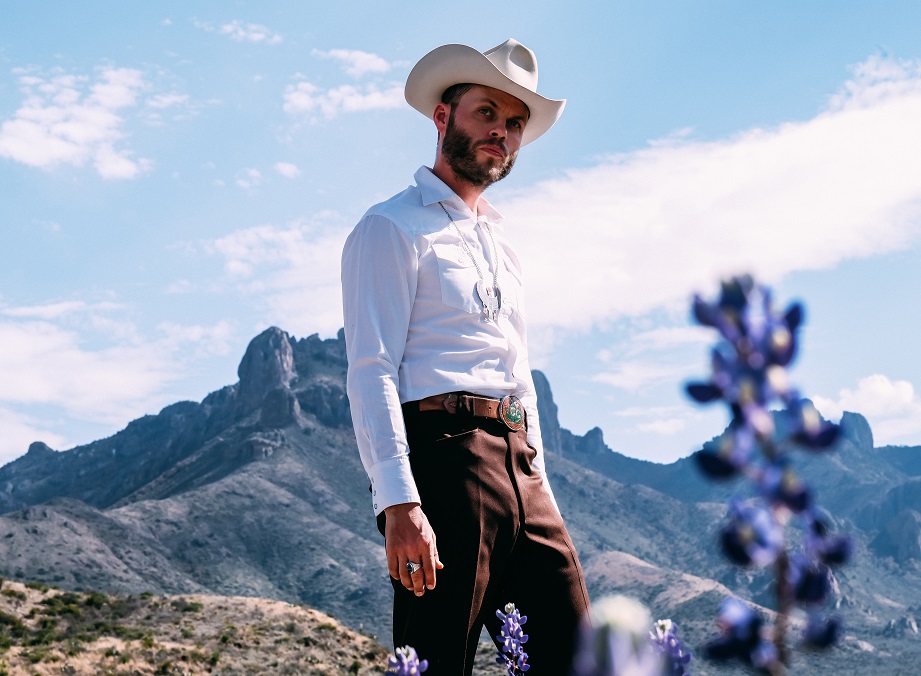
From Texas to the World, Charley Crockett Spreads Traditional Music of ‘The Valley’

“I’m from San Benito, Texas…”

That’s the first line of “The Valley,” the autobiographical title track of Charley Crockett’s newest album and perhaps the best entry point into his true-to-life twist on traditional music. Not only do those lyrics reference the rougher times of his story so far, the jaunty arrangement underscores his fascination with blues and classic country music — but without treading the same fertile ground as everybody else. BGS caught up with Crockett by phone on his way to the Pacific Northwest.

BGS: At the end of the song “The Valley,” your closing line is, “May your curse become a blessing. There ain’t nothing else to do.” Tell me about the message you were trying to convey with that line.

CC: Man, I think people are born into struggles that we don’t have a lot of control over. I know for me, I dealt with different adverse situations that I never saw them coming and got forced into at a young age. Just with my own story I had a lot of issues over the years with getting in trouble and family stuff, siblings going to prison and losing my sister to some of the vices of the modern world. My mother was struggling, working 80 hours a week, to take care of me, and that whole deal.

I parlayed all of those hardships together into making music, so quite personally I’m saying, hey, you can take those really hard things and turn them into something, because if you don’t, what’s the alternative? I had a guy tell me years ago on the street, I asked him how he was doing, and he said, “I’m doing great today. I have to be doing great ‘cause what’s the alternative?” That stuck with me for my whole life.

I thought, man, it really is all about how you see it. That line before it is, “And now you know my story, I bet you got one like it too.” I never really run across very many people that didn’t feel like they were fighting some kind of adversity. I feel like you got to take the lemons and make it into lemonade.

Do you consider yourself an optimist?

Oh, I’d say so, most definitely. I met a guy in Denmark, when I was over there recently, who had an Indian curry joint there in Copenhagen. We ended up going two days in a row. The first day I went in there and we had cowboy hats on, and he knew real quick we were doing music and the whole loud-mouthed Texan thing or whatever. We played up and had a good time in there, and he got my name and stuff, and we left.

We ended up going in the next day to eat again because we liked his curry so much. I come in there and he said, “Charley, man, I want to apologize to you. I looked you up and I read about your story.” He’s like, “I really judged you as being somebody that maybe hadn’t been through much, because you seem like you were so happy-go-lucky and so optimistic.”

I thought that was so strange, that because of my positivity, he thought that maybe I was privileged or something. I guess he read my circus of a biography and realized that I was a lot different than that. And that really struck me. It was sad to me in a way. I thought if everybody in this life wore their hardship on their sleeve and let it get the best of them, it would be really sad. But what’s really amazing about people, overall, is the resiliency in people.

Who were some of your early champions when you decided to take this music path?

Well, in the beginning, my mother was the one who got me this old Hohner guitar out of a pawn shop when I was 17, and told me that I could do this. Even when I sounded terrible. I remember saying, “Mama, I tried to write these songs. Am I any good?” Then she said, “Well, son, people will believe you when you sing.” [Laughs] She wasn’t going to lie to me and tell me I was good. She told me what I needed to hear and I understood what she was saying. She was talking about honesty. She was talking about integrity. She was talking about sincerity. That’s what I believe in.

On “The Way I’m Living (Santa Rosa),” you’re singing about Mendocino County, and that it’s taught you a few things. Was there a specific moment in California where you had an epiphany, or that something really struck you?

Yeah, man. I hitchhiked and rode trains and hoboed around for a really long time. I had hitched out there to Northern California when I was 22 or 23. I ran into cool people up there that would pick me up on the side of the road and let me sleep in their barns or in their pastures, and do work trade and all kinds of stuff. Even my record, A Stolen Jewel — my first one that I ever put out on myself — those people gave me the money to make that record and print 5000 copies of it.

I got them printed up in San Francisco, just a couple of hours south, and I drove in a truck that I’d gotten from those farmers up there that let me work their land. Then I drove back down to Texas and I handed them out on the street in DFW and Austin. That was how I first started getting my first publicity. I got written up in the Dallas Observer and the Fort Worth Star-Telegram, and I got a local guy to start booking me at Texas bars.

So yeah, the line is “Mendocino County bring me lots of joy. It’s opened up the eyes of this wanderin’ Texas boy.” And that’s exactly what happened. It was the first place that I’d ever been in my life where people said, “Man, all you got to do is help out on this farm and play music for us and you can live here in exchange. And we’ll feed you too! And we’ll take you out to the open mics at the brew pubs.”

I’d go to a gathering on people’s farm where you’d play music around the campfire and I’d never known anything like that, besides being down and out on the side of the highway in more shady situations. But then in Northern California, it was the first place where somebody in my position, my modest, kind of undeveloped artistic abandon, that people were like, “Hey, I see you as an artist and I respect you and your music. There’s something about you.” That’s why I have so much love for Mendocino County and continue to be a part-time member of that community there. Those people have always treated me like I had value.

Do you like bluegrass music?

Big time, man. Jimmy Martin, Ralph Stanley, I wear that stuff out. Actually I packed a banjo and brought it into my show. We have a bluegrass section in the show, right in the middle of the set, where we do a five-song bluegrass deal around the one mic. It’s just a lot of fun!

What do you hope people take away from the experience of coming to see you play?

I hope the people that have come out before to see me will see that I’m true to what I promised — that I’m getting better every year. I’m really about the classic stuff and I think when you’re really rooted in the tradition, you’re never going to stop growing.

When I was playing in San Antonio the other night, I played “Nine Pound Hammer” on the banjo for these kids. … This mother had her two young children at the very front of the stage and they were hollering for “Nine Pound Hammer” as I got off stage after the encore, and I ended up playing it for them sidestage, because they were so sweet. These kids were young. The little girl was probably 8 and the boy was probably 10 or 11 at the oldest, and they knew every word to “Nine Pound Hammer.” That was really cool to me to see these young kids, who had no context of how old that dang song is, excited about something out of the nineteenth century like that.

I guess that’s one thing you could say, but for me it’s like I wear tradition on my sleeve and I think what’s radical in music today is to bring tradition up front. I think that’s what people like about me. Not that I’m some kind of preservationist, but that I’m doing tradition as a man of my times. I think that people can hear the tradition and they can also hear something new in what I’m doing. I hope that’s what people hear when they come out to see me.


Photo credit: Lyza Renee
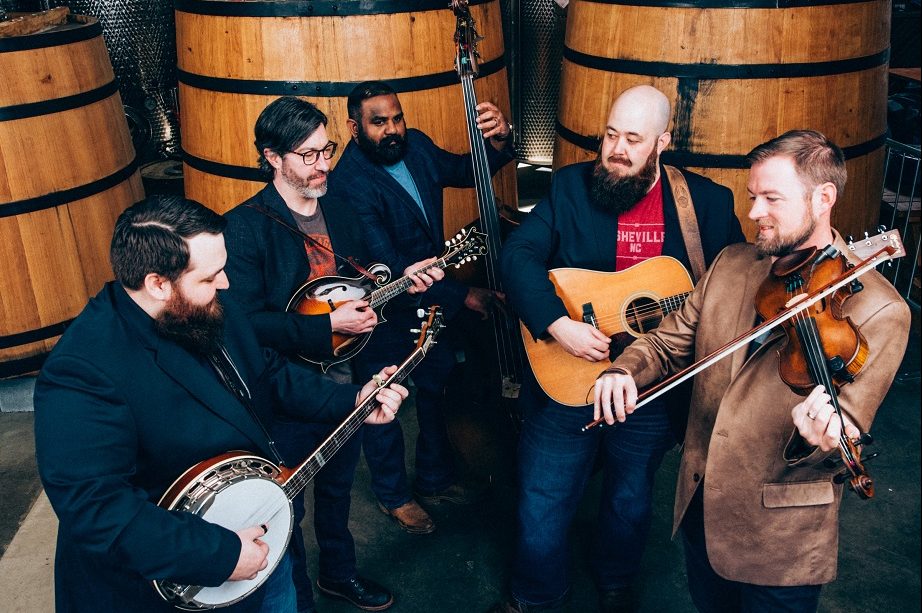
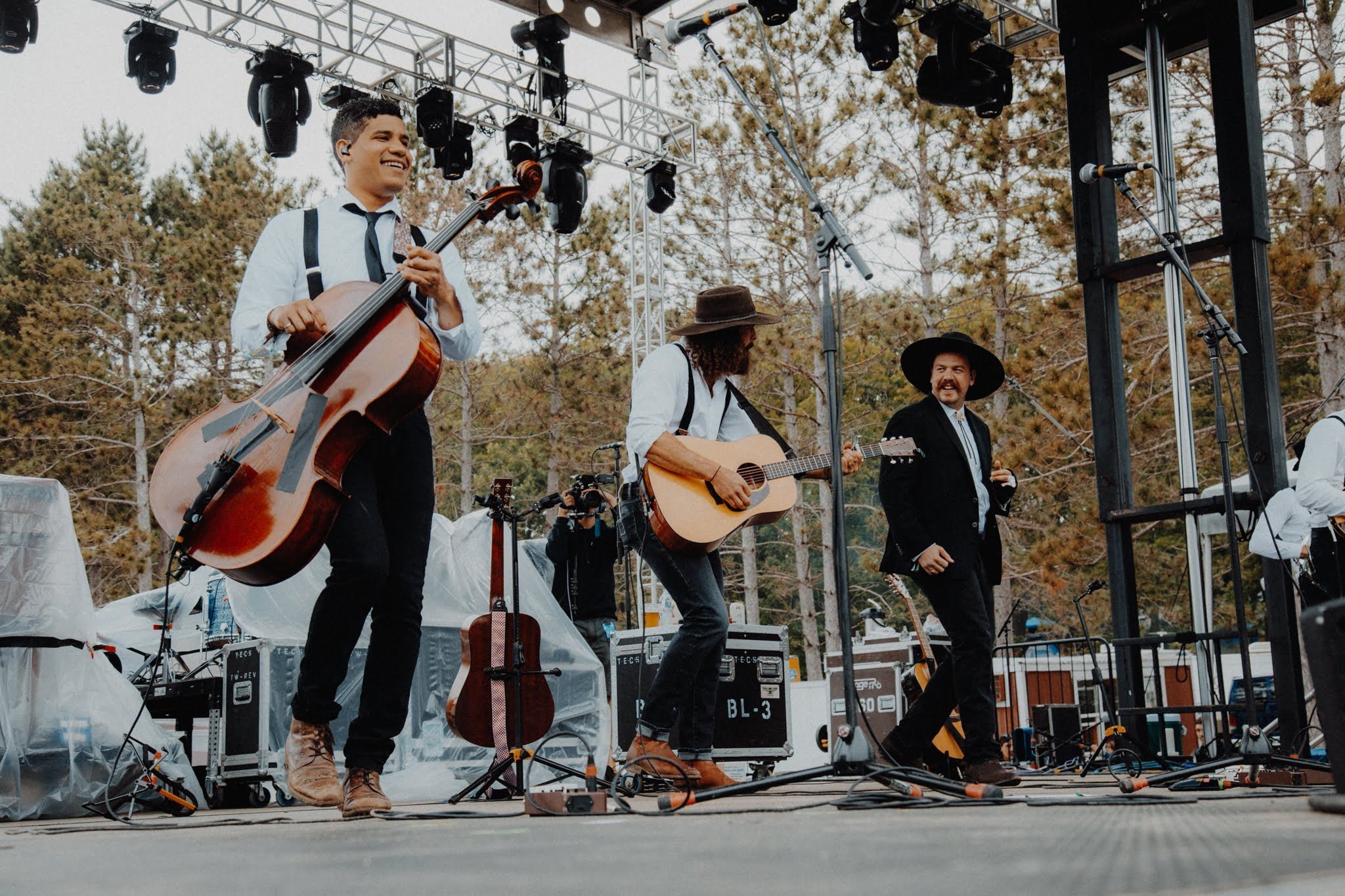
WATCH: Bowregard, “The Henrys”

Artist: Bowregard
Hometown: Boulder, Colorado
Song: “The Henrys”
Album: Debut to be released early 2020

In Their Words: “‘The Henrys’ is the tale of a desperate outlaw attempting to escape his fate in the Henry Mountains of Utah. Written by Bowregard guitarist and vocalist Max Kabat and led by a driving dobro and fiddle melody, ‘The Henrys’ is a barnburner that has become a staple of our live set ever since its debut at the 2019 Telluride Bluegrass Festival band contest, which we were honored to win.

“The video was recorded by Mineral Sound in Lyons, Colorado, live in one take around a stereo pair of mics with no edits or overdubs. We’re currently in the studio working with producer Nick Forster (of Hot Rize fame) on our debut album, which we plan to release in early 2020 and can’t wait to share with the world.” — Bowregard


Photo credit: Daniel Herman