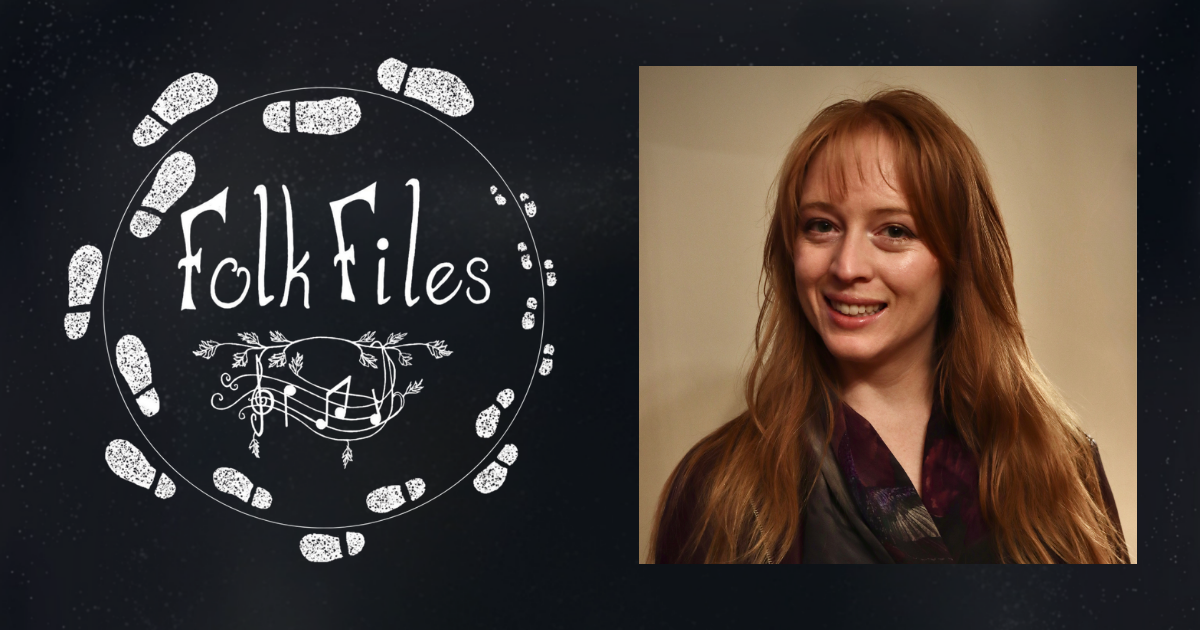
The BGS team is excited to announce yet another addition to the BGS Podcast Network lineup for 2026, after both The Other 22 Hours and the Working Songwriter came on board earlier this year. On June 19, 2026 beloved folk music podcast Folk Files, hosted and created by Olivia Harding, will begin a new season as part of the BGS family. This makes the third new podcast to join BGS in 2026 and the 15th show to partner with or be produced or distributed by the BGS Podcast Network.
Founded in 2023, Harding began Folk Files as a podcast seeking to uncover “the mysteries of folk music through the ages.” Each episode dives deep into the tangled history of murder ballads, sea shanties, rebel songs, and other music that has withstood the test of time. Folk Files provides context, history, and insight into songs we all know and love – and fresh discoveries and deep cuts, too. Episodes will be released once a month on every third Friday beginning on June 19, 2026, with an episode examining a child ballad, “Two Brothers,” and stories of fratricide from around the world. The episode will also discuss the importance of nomadic communities when it comes to the folk process and song collecting. (Find where to listen and subscribe here.)
“When I first started Folk Files, the Bluegrass Situation was an amazing resource full of interviews, articles, and audio that proved invaluable while I was researching my earliest episodes,” Harding says about the announcement. “I never would have guessed that within a couple years, BGS would become my podcast’s new home. I am so excited and grateful to have joined a network of such passionate, supportive people.”
Cindy Howes, director of the BGS Podcast Network and host of Basic Folk, also gushed about the new partnership: “We have been quietly freaking out over Folk Files for some time now. The way Olivia presents and untangles the mysteries and backstories of folk music had us hooked from the jump. We are overjoyed to welcome this wonderful show to our network.”
With BGS’s longtime focus on roots music, culture, and traditions, Folk Files will certainly feel right at home on the BGS Podcast Network. Before the show resumes with BGS on June 19, Harding shared with us five recommended episodes from the Folk Files archives so readers and subscribers can catch up on the show in preparation. Subscribe now so you don’t miss a thing and dive into the full show archive (above) or Harding’s five recommended episodes (below) to celebrate the addition of Folk Files to the BGS Podcast Network.
The Music of Temple Bar (Episode #3.3)
In 2026’s St. Patrick’s Day episode, Folk Files asks the question: Is it actually Irish? Explore over thirty songs that are performed in Irish contexts and see if they actually come from Irish sources. Along the way, we’ll discuss the Rising of 1798, the history of Dublin, the Great Famine, and the Irish diaspora.
Stand and Deliver (Episode #2.8)
Robbers, bandits, highwaymen – there are a lot of English folk songs about outlaws. In this episode of Folk Files, we look at why there are so many songs about criminals and what patterns exist in these ballads. Then, we look at “Robbers’ Retreat” in an attempt to figure out why the song (also known as “Cadgwith Anthem”) doesn’t seem to follow any of those patterns.
Peaches in the Summertime (Episode #8)
“Shady Grove” is an Appalachian folk song that is often linked to the English ballad “Matty Groves.” But what is the actual relationship between them? This episode of Folk Files discusses the meaning and history of “Shady Grove” and untangles the origins of the two iconic songs.
Haul Away (Episode #4)
This episode of Folk Files traces the roots of popular sea shanties to Black work songs and African folk traditions.
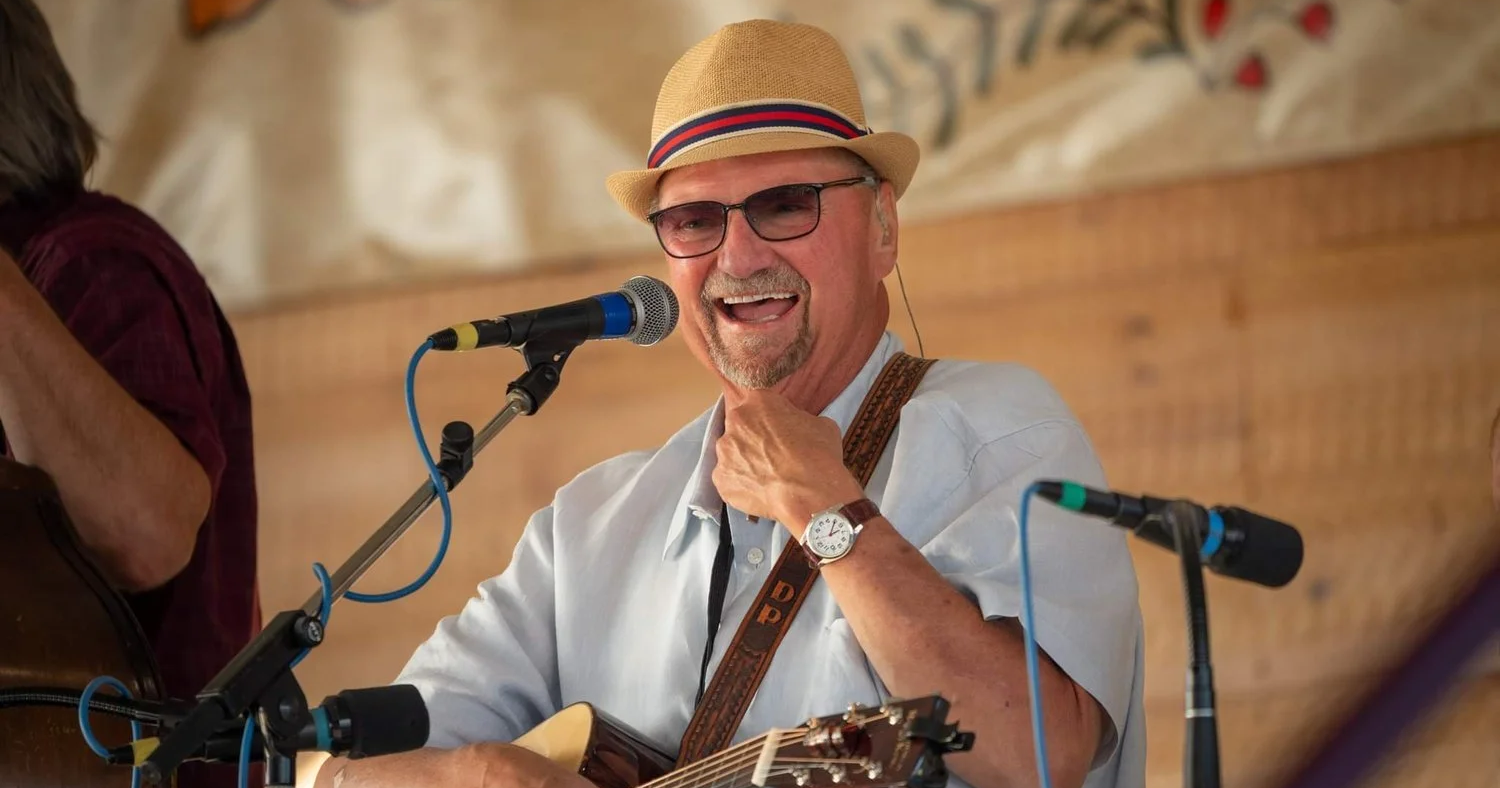
Danny Paisley is a quintessential bluegrass tradesman. He began playing music around the age of 10 and soon after was sneaking into bars and clubs with his dad Bob Paisley, Ted Lundy, and their band, the Southern Grass. Danny was already gigging and touring at the age of 13, and now, five decades later, he’s enjoyed 21 years at the helm of the Southern Grass – with the next generation of Lundys, T.J. and Bobby, and the next generation of Paisleys, his son Ryan, in tow.
Danny learned the bluegrass ropes from his father, crafting and carrying on a traditional sound that draws directly from Bob’s musical foundation but also sounds distinct and personal. When Bob passed away in 2004, Danny had already taken over some of the leadership roles in the band while the elder Paisley had been battling cancer. Danny was determined to continue the group’s legacy, and over the last two decades he’s honored that legacy while consciously expanding it. Along the way, he’s earned four IBMA Awards for Male Vocalist of the Year, while he and the Southern Grass were awarded Song of the Year in 2009 for “Don’t Throw Mama’s Flowers Away.”
His 2025 album, released in May on Pinecastle Records, finds Paisley continuing that expansion, looking for new challenges and focusing in on a fresh sonic sparkle. Bluegrass State of Mind would sound like a straight-ahead traditional bluegrass album to a layperson, but to devoted fans of the Southern Grass, it’s a much more Americana-steeped and forward-looking endeavor. The usual five-piece lineup is augmented by Dobro, snare drum (gasp!), and a healthy dose of “what if we tried… this?” all across the project.
The result is charming, engaging, and downright excellent – it’s one of the finest bluegrass albums of the year, to be sure – showcasing how Paisley’s longevity is built upon a keystone of innovation and looking to the future, rather than being entrenched in the past. For someone who sounds entirely dyed in the wool and is held up by chair-snapping traditionalists as well as jamgrassy rebels, any level of “coloring outside the lines” of the genre would be remarkable. But Paisley isn’t stopping at new challenges and fresh sparkles; he wants to take his Bluegrass State of Mind to as many brand new audiences as he can find.
Fifty years into his career, Paisley is not resting on the assumption that he can keep performing and plying his trade by doing the same ol’ same ol’. No, Danny Paisley & the Southern Grass are still committed to bringing the bluegrass they love and hold dear to anyone and everyone who may enjoy it, by showing folks this kind of music can be for everyone. All the while, he’ll be turning over plenty of new leaves and passing along the family business in real time, too.
We caught up with Paisley at the Industrial Strength Bluegrass Festival in Wilmington, Ohio, between sets, when he and his son Ryan sat down with BGS to chat about his most recent album, what he wants to accomplish next, and the absolute unforgivable sacrilege of including drums on Bluegrass State of Mind.
Right on the album cover for your latest project it says, “Celebrating 50 years of bluegrass music.” To me, you’re a bluegrass tradesman. It’s very clearly your trade, it’s what you’ve done your whole life, and it runs in the family. It began with your father, Bob, and is continuing in the next generation with your son, Ryan. Can you talk a little bit about the meaning that you’re holding right now at 50 years, as you put together this record and were thinking about that anniversary, and that longevity?
Danny Paisley: I didn’t want to do a record rehashing old favorites. I kept hearing different songs and I kept saying, “I want to try this,” just for me to try this new approach. A “new challenge.” We recorded it and some of ’em were not standard Danny Paisley-type songs, but I felt they were awful good songs and I wanted to try it.
So Ryan and I worked it out, and he come up with a different approach for some of the tenor lines I would’ve sang previously. Now Ryan is singing them, so that added a different flavor. We just tried to sparkle the music, just to tweak it.
We added a Dobro for the first time, only ’cause I kept hearing it through so many of the songs. I’m more of a fan of the newer approach to Dobro than the older school. Mike Auldridge was the one that turned me [onto it], the way he was getting tones out of a Dobro.
You’re 50 years into doing this and have such an established sound as your own frontman, your own bandleader. People see you as so solidly traditional, but for you, five decades in, it’s clearly still important for you to turn over new leaves, to find that sparkle you’re describing.
Because I was feeling… maybe I was [feeling] stale, and after my health issues, I felt I really need to do this – for maybe a couple years, now. I regret that I didn’t try it [sooner]. So I tried it and I loved it. Had a great time, had a great producer [Greg Cole] and great help with Ryan and his influence and I think it’s a great CD. Different approach.
You’re still looking for new challenges and you’re looking forward. Obviously, with this record, with the way that you operate as a musician and a creative, you aren’t just somebody that’s like a lot of bluegrass people, with one foot in the past, one foot in the future.
Right.
Looking ahead – ’cause it seems like you’re looking ahead right now – what are the goals you haven’t done yet? Or the bucket list items you haven’t checked off yet?
I want to take our band – and this is a real goal – to reach other audiences. I think there’s a real audience and a real needing, almost, at some of the more jammy festivals. And we’ve done ’em and I’ve realized it really works well, presenting a straight-out, hardcore bluegrass band. We pick out songs that sort of go to that crowd, but we just play ’em in our style and we try to keep it upbeat, just to draw people in for a new audience.
I know the music has gotta move on. I’m a firm believer of it. We revere the past, but we look to the future – and I’m in that category. I look to the future, but I love the past. I don’t want to dishonor it, ’cause it’s the music I love and feel. It’s what’s inside of me. That’s the music I love.
So that’s my goal. I want to bring it out [to new audiences], and I really feel in today’s world, you’ll have to adapt things, but I really wanna make it traditional bluegrass. There’s a real audience for sincere, true bluegrass.
It makes me think of how we have Molly Tuttle, Billy Strings, and Sierra Ferrell–
Exactly.
All who are, at their core, traditionalists. So they’re shining a light on the folks who sound like you. I definitely think there’s space for a band like you in that constellation.
And Billy loves hardcore bluegrass! But he made it an event. People will pay money for an event. He puts it right down in their faces with some straight-out bluegrass, and it’s great.
Our mutual friend Jon Weisberger always talks about how one of the most valuable things you can do as a bluegrass band is to be the most traditional bluegrass band in a non-traditional space. The music can stand out for what it really is and doesn’t fade into the grayness of it all being the same.
There’s so many traditionalists who don’t want any variation, which I respect. We all do. I wanna revere that. But we also gotta realize these people, young folks today, are not coming into the music. With all the outside influences and modern day [stuff], Facebook and all the different Instagrams. [Laughs] They’re not coming into the music the same way. We need to respect that and bring it to them and bring them in.
We can’t expect some young person that’s just getting into music, that’s 18 or 19, to be really drawn in by singing another cabin song. We sing cabin songs, but we can’t [only do that]. And we’ve all had heartbroke and there’s a world of songs about heartbroke. Your lover has passed or left you, boohoo! We have to present it in a fresh way. And meet people where they’re at, for sure. That’s the best line, that’s truly it. And I’m a firm believer in that.
I fully believe in the intrinsic charm of bluegrass. I think everybody’s a fan, they just don’t know it yet. So if you can reach them with music that doesn’t show them or tell them that they’re not allowed to like bluegrass, it happens. Bluegrass can feel exclusive. Or it can feel like, “Oh, that’s music for other people, not for me.”
“Not me,” yeah! Or, “I’m afraid.” “I’m not sure that’s good enough, or that I would be accepted.” Or, “I hear it, but I don’t really want people to know I like it.” Because that stereotype has to go! It has to move on. It’s music for everyone. I don’t care what kind of music you’re in, music is for everyone. And you have to accept that or live in your little corner of the world and think everybody else is wrong.
I’ll probably get in trouble for that. [Laughs]
No, no! But speaking of traditionalism and traditionalists… so, bluegrass drums, huh? [Laughs]
Uh huh! [Laughs]
You’ve got bluegrass drums on the album. And what a lot of people don’t know – maybe our audience on BGS will know – but a lot of people don’t know that bluegrass drums are a traditional bluegrass instrument. I hear the “sparkle” and the difference in these songs, but I also still hear you. It sounds like your personality.
What my approach and my thought is, is I want it to still be me. I’ve had some people criticize it and say they didn’t appreciate that drum. Why? ‘Cause it was listed? [Laughs] It’s there to add some rhythm. And it was only there for a little sparkle, a little snap. And a little rhythm. If you didn’t really know it was there and we didn’t tell you, you probably wouldn’t know it. There’s nothing wrong with that, no. Drums are in a lot of bluegrass.
Exactly. We could list the folks who’ve had drums: Bill Monroe, Jimmy Martin, the Osborne Brothers, J.D. Crowe – the list goes on and on and on.
For you, as a traditionalist, straight-down-the-middle bluegrasser, this album is a few clicks towards Americana. But if you played this album for an Americana audience, it would just sound like traditional bluegrass.
It would be traditional bluegrass, yeah. I’m gonna draw those people in. That’s my goal.
The album sounds so warm and live. You know how bluegrass records nowadays, especially the ones made especially for satellite radio, all sound really compressed. They sound canned and sometimes stale. This album feels really warm and live and fresh.
I think ’cause they all want radio airplay. They have a certain– I don’t know the technical way [to describe it], but sometimes you start compressing the music too tightly. You miss guys like Jimmy Martin who threw his voice real up there and really stood out on a certain line. He popped –I call it popping – he’d pop his voice and stuff. It might have been there, but then they compress it with the recording or the engineering. I try to not let that get too overtaken in the music, even in straight bluegrass, ’cause that adds energy and life.
I do wanna talk about some of the songs on the album. I love these three in the middle: “Diagnosis Broken Heart,” “Two Old Church Pews,” and “Cream in My Coffee.” Let’s start with “Diagnosis Broken Heart,” ’cause that one, I think the sparkle and the challenge you’ve been talking about is there.
We had it recorded and I didn’t really like it. I felt it didn’t really work. So we redid it after we had it all done and mastered, we redid it. That’s a different approach for me. I said, “Let that sink in.” And after it sunk into me, I go, “No, I don’t wanna do it that way. I’m gonna go back and just sing it my way.” And that’s what I did. Then that one, we added the snare. I wanted a little pop – and the groove on that one is great. We brought the tempo up and that one worked.
The most challenging song was “Cream in My Coffee.” David Stewart wrote it along with some other gentlemen and David kept saying, “I want you to do this. I hear this.” And I kept saying, “I do too, but I don’t know if I can.” And so there’s your challenge!
So I did it and it wasn’t right. We’re in the studio and David Stewart’s there and he’s telling me how to do it and I’m not doing it the way I hear it. I’m listening to the way he’s singing it and I go, “I can’t really do it that way.” I’m listening back and forth. Finally, David comes in the studio and he says, “Think of a marching band.” We did a take and next thing I know he’s standing in the [control] room while I’m doing the vocal and he’s in there marching. [Laughs]
More people come and say, “I never thought you would record the song like that,” but I love it. I said that was a challenge, but it was a good challenge.
I also wanted to talk about “Two Old Church Pews.” Can you tell me about where that song came from? That line about how a church is wherever you are, that really resonated.
That was the major part of that song that grabbed me! That song was pitched to me by Brink Brinkman and Daryl Mosley. They sent it and I immediately said, “This is beautiful.” I said, “This wraps up basically how I feel.” You can talk to your deity wherever you are. Some people need to go to church. Some people just go out, have a quiet moment, and sit in the yard or a quiet spot in the house. That’s how I believe. And the two old church pews were [the singer’s] church. He took ’em home and he sat there and he would talk to the Lord in that way.
That’s how I feel and it’s a beautiful song. It rings thanks to Ryan and Greg. It come out excellent. And that’s probably the most traditional feeling, one of the new songs on that CD.
I love the text painting of it. It really feels like you’re seeing the imagery.
That’s what I tried with my singing. Tried to present that way. And the wording of it was excellent. That’s a once in a lifetime song.
Photo Credit: Shot by Rob Wasilewski, courtesy of the artist.
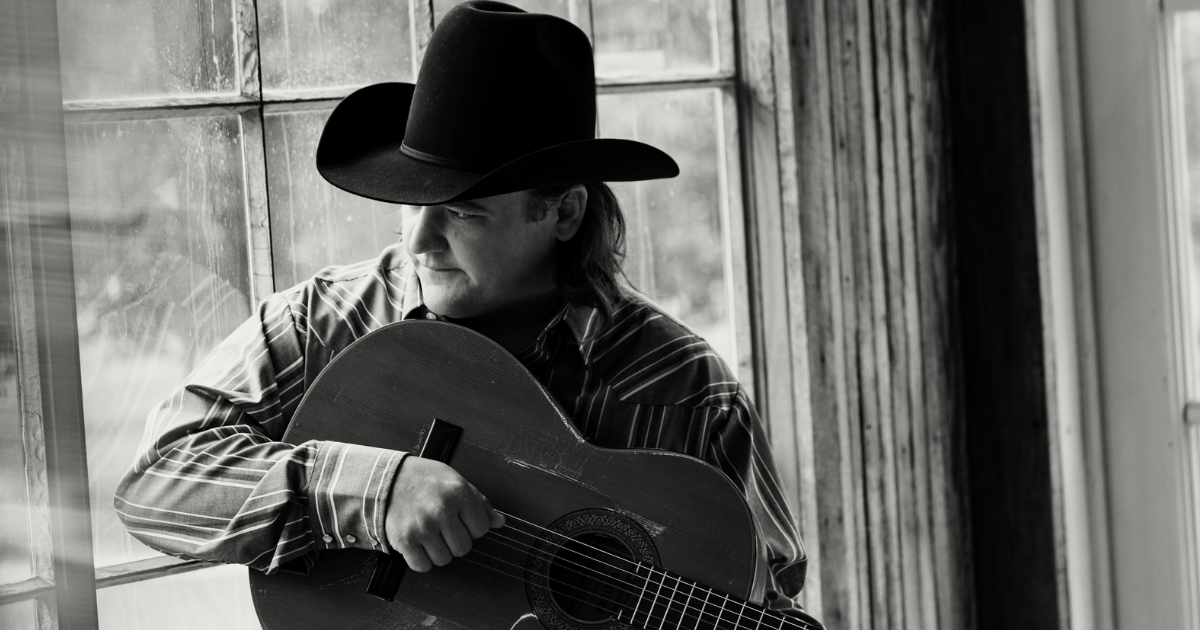
With a new generation boasting unapologetic traditional influence, there’s more classic-sounding country in the mainstream today than in many years before. With his second album, When I Write the Song, Jake Worthington captures one specific aspect of honky-tonk history better than the rest – its sense of humor.
That’s definitely not to say Worthington’s new album is a joke. Far from it. Over 14 songs, the Texas native sinks down into the depths of sorrow and lets his heart believe in miracles all the same. His love of the classic country form is just as authentic as his barrel-chested vocal twang, and with producers Jon Randall and Chuck Ainley joining his team, it gets highlighted with more sincerity than ever. But right from the opening track, Worthington walks in the footsteps of artists like Johnny Paycheck or Jerry Reed; his down-home demeanor is as country as it gets.
Meanwhile, the solo-written title track is almost alarmingly personal and Worthington welcomes Miranda Lambert, Marty Stuart, and Mae Estes as special guests on other tracks. When I Write the Song arrived on September 12 and by touring through the end of the year with both Jon Pardi and Zach Top, Worthington adds even more evidence of an ongoing trad renaissance.
Good Country spoke with Worthington about writing the way he lives and chasing honky-tonk inspiration farther than ever. Plus, he reveals a secret appreciation fans might not suspect.
For fans who don’t necessarily know, you have always been a proud purveyor of the classic country arts. I think that’s pretty fair to say. Are fans going to get more of that on this record or what?
Jake Worthington: Damn right. Yes, sir. I guess that whole narrative don’t ever really change for me. I don’t ever want to make any other kind of music. When somebody listens to a record that I am a part of or put together, I hope they can have a definitive direction to point to and say “That’s what country music sounds like.”
I think that comes across for sure. Now, it’s good timing because there’s kind of a little traditional renaissance going on in the mainstream. Do you agree with that?
Damn right. Absolutely. I’ve never been more inspired in terms of our genre than I am right now. I think a lot of people are writing and singing and recording great country music and I think that folks of all ages are wanting to hear it. Another thing, too, is I don’t think it’s a fad of any sort. I find it interesting – you hear terms like “traditional” or the whole “’90s” deal or whatever. To me, it’s just country music getting made in 2025. I think that’s really exciting, to know that’s the case. It wasn’t like that just a couple years ago.
So you don’t think it’s people cosplaying country?
I know it’s genuine for me. I can’t control what other people do, but hey, if they want to play dress up, that don’t bother me none. I think it’s good for country music. I’m glad that they’re wanting to dress like a grownup.
One thing that I’ve always loved about classic country itself, and something that you do well on this record, is to have a touch of humor. That’s not around as much anymore, but you do that well.
Well, I think it’s funny. I have always struggled with the idea that I never wanted to not be taken serious as a singer or songwriter, but I still like to have fun. I still cut up and it ain’t all rain and storms all the time. I think country music allows room for all of that. There’s definitely a couple songs on this record that is lighthearted, and I guess I was all right with that.
There’s definitely some hardcore heartbreak in here, but the reason I ask is because of the opening track, “It Ain’t the Whiskey.” There are not many songs about getting pulled over and accused of a DUI these days – even fewer that are fun.
Well, some of us write from the research department, I guess. Unfortunately, I was just trying to make light of what was a really shitty situation for me at one point in time in my life. I’ve made some dumb decisions in my adolescence, I guess. That was a good way to look back and laugh at it.
How about “Two First Names”? This one reminds me of a little bit of Joe Diffie and the way he was able to merge classic country and a funny line.
Well, shoot man, thanks. That’s just about a country girl. I’ve got a handful of women I know and love in my life that got two first names and I love that we got away with writing it without ever saying an actual name. … There wasn’t one of us that wrote that song who ain’t from the country, and we’ve all got women we love and know that got two first names. We all love a country girl.
Hell yeah. Now, one thing about this record, you definitely got to work with some big names. You got Jon Randall and Chuck Ainley helping out on production, along with Joey Moi. I wonder with those two guys specifically, Jon and Chuck, did they help you move your sound or your style forward?
Definitely I think. There’s four tracks that I recorded top to bottom with Chuck and Jon … there’s a lot of really awesome things that I got to do through working with Joey. But I think for me, I wasn’t ever totally happy with the way things were ending up sonically. That was my biggest change that I was after, was just kind of where it landed sonically.
Really?
Especially with the vocal. I’m a very imperfect singer. I’m not a perfect singer. I want that to be heard. I don’t want to be masked.
Joey’s amazing, but he definitely comes from a different world sonically, right?
Yeah, and I wanted to work with guys that were making country records that inspired me. But again, I tracked nine of them songs with Joey and man, I love all of it. Chuck wound up mixing the record and Jon come in when we went to track the last four songs and it’s been a dream come true. I get to work with my heroes, man.
You also got to work with Miranda Lambert [plus Marty Stuart and Mae Estes]. Tell me about doing “Hello Shitty Day” with Miranda, it’s a cool broken-hearted waltz. Did you guys get to know each other?
Sure. I mean, I know it sounds a little simple, but she had texted me the song and I asked if I could cut it. She said yes and I said, “Would you sing on it?” And she said, “Hell yes,” so by God, that’s what we did. I don’t know, man. I wasn’t trying to get on the radio with that song. I just thought it was brilliant. I love that song.
One thing I’ve got to ask you, since this is BGS. Do you have any ties to bluegrass, or was that ever a part of what you listened to?
Where I’m from, oddly enough down there in Southeast Texas, we had to go find that stuff. There’s nooks and crannies in East Texas where these cats kinda start out in bluegrass and I think they find it through gospel music and stuff like that. But I wasn’t in the church or nothing – I was baptized in beer and I’m here to testify, you hear me?
Ha!
The great words of Kevin Fowler. But a lot of the stuff I loved the most was coming out of Ohio. When I discovered Dave Evans, that shit knocked me out.
Really?
Oh gosh. There’s something called “99 Years [Is Almost for Life].” One day I’d like to record it, but I understand that bluegrass is just as sacred as country music, so if you’re going to do it, you got to do it right and I think it starts with putting your heart and soul in it.
But I always loved Ralph Stanley. I’ve always loved Flatt & Scruggs and Bill Monroe. I mean, that might sound a little standard, but I love that stuff. Harley Allen’s one of my favorite songwriters and his daddy, Red Allen, I love the records he done. Ronnie Bowman and Lonesome River Band. I like that stuff.
Short answer – yes, sir. Hell yes. I love bluegrass.
That’s amazing. It sounds like you’re deep into it. I mean, maybe it doesn’t show up too much in what you’re doing right now, but maybe one day you ought to do a bluegrass record.
Oh, man. We’ll see, but right now all I want to do is what sounds like country music to me. I think it’s a matter of if you got electrics on it or not. It’s just soul music. It’s gotta come from the heart.
That’s a good segue because I wanted to ask you about the title track, “When I Write the Song,” and writing that solo. You were able to share your pain quite a bit. Where did that come from?
I don’t always wind up writing by myself. I think a lot of us writers sit down and try, and if we could, we would write a lot by ourselves. But that one just kind of fell out. I’d been six, seven years in [to my career] and I don’t know, I think I was a little hurt and kind of angry. I got a whole lot of, “You can’t sing that kind of music. That ain’t never going to work.” Sad songs and waltzes and whatnot. I don’t know why it’s so easy to write about the hard things or the bad things. It seems to be easier than it is to write about the good things sometimes. That’s just kind of where I was at with it.
When I wrote it, I was headed home from some gig and at the time I had been staying at my parents’. They had just got one of them push button door locks to the house with a code on it and I did not remember the damn code. There wasn’t no way I was getting in the house, so I had a guitar and a six pack of beer, a back porch, and plenty of time.
You’re kidding.
That’s what come out of that. I sat on that song for a long time. I was kind of scared of it. I wasn’t sure if it was for anybody. I wasn’t sure if it was any good. But I’m a songwriter and I think that’s just my way of showing it.
That’s real country music to me, so thank you for sharing the story. It’s funny that you got locked out – almost feels meant to be.
I’ve been locked out of a lot of things, hoss.
You’re going to be out on the road with Zach Top and Jon Pardi, right? In their own way, they both definitely inject some classic country into the mainstream, too. Are those tours a good fit for you?
Damn right, man. You tell me anywhere else, you’re going to see three steel guitars and three fiddle players in one stage. … I’m a fan of both of them guys and they know it, and I revere and respect the hell out of them. I’m grateful to get to go work with ‘em. That’s going to be a lot of band, buddy.
All right, Jake, thanks for the time, man. Let me leave you with the big picture. Just tell me what you hope people get from this record.
Well, take away a little piece of my heart while I’m giving it to you. Country music’s here to stay and I don’t think it ever left. I’m just grateful to be a little spoke in the wheels and I hope that when they hear this record, it’s something that they can go to and say, “This is what country music sounds like.”
Few words stir up conflict in country music circles the way “authenticity” does. While debates over authenticity rage within every corner of the arts, the tension is especially potent in country, whose unofficial tagline is, after all, a commitment to honest simplicity: “Three chords and the truth.” While “truth” can be a broad umbrella to work under, within country music it tends to encompass a longstanding commitment to sharing the stories and experiences of everyday people, in particular those of the rural working class.
Accordingly, an adherence to and celebration of the very concept of authenticity – nebulous as it may be – is as baked into country music culture as an anti-establishment sentiment is inherent to punk music. Listen to country radio, though, and you might have a hard time finding it, particularly as the bro country of the mid-teens, though finally waning in popularity, still dominates the majority of terrestrial country airwaves.
It’s 2024, though, and it’s way past time to declare that country radio is irrelevant. Glance at Billboard’s Hot Country Songs chart, which includes sales and streaming data alongside airplay, and you’ll see the top spot isn’t occupied by one of the usual radio favorites like Luke Bryan, Morgan Wallen, or even Luke Combs, the latter of whom has notably found a way to straddle the line between commercial success and critical acclaim.
Rather, at the time of this writing the number one country song in America is “I Remember Everything,” a duet between the relatively new artist Zach Bryan and one of the genre’s more adventurous stars, Kacey Musgraves. As a song, “I Remember Everything” isn’t necessarily groundbreaking. Bryan’s and Musgraves’ voices play nicely off one another, with his achy grit contrasting sweetly with her smooth twang. The production is simple, underdone even, and lyrically the track travels well-trod territory: romantic heartbreak.
So, what, then, has kept “I Remember Everything” firmly situated in that top spot for 14 straight weeks (and counting)?
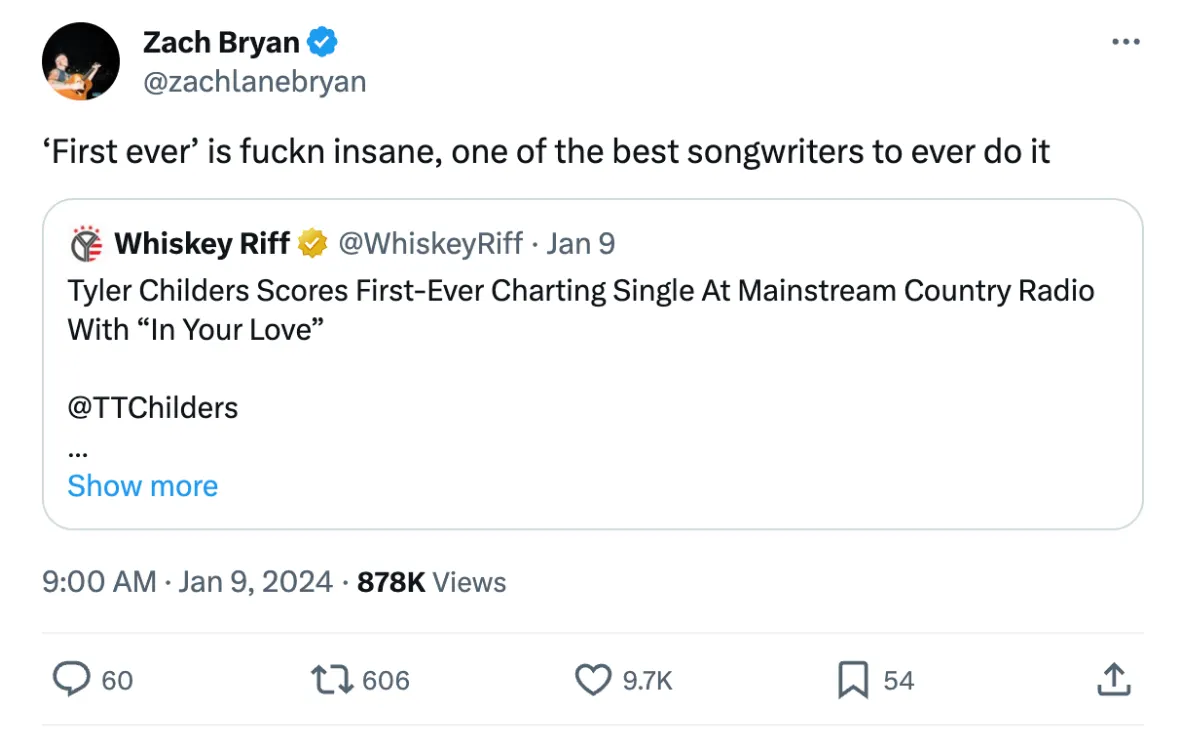
If you’ve paid even the least bit of attention to country music in the last couple of years, you’ve no doubt encountered Zach Bryan and his genuinely singular approach to the genre. With his raw sound, confessional lyrics, and decidedly DIY approach to business, Bryan radiates the kind of authenticity that fans crave. He joins a host of other recently established and emerging artists – including but not limited to Tyler Childers, Lainey Wilson, Colter Wall, and Billy Strings – who found success by foregoing the traditional route to country stardom, one that typically involves following an out-of-date formula honed over time by profit-driven record labels.
Zach Bryan debuted with DeAnn in 2019, finding an audience online thanks to the viral success of “Heading South” on DeAnn’s follow-up Elisabeth. He quickly built a fanbase on TikTok and YouTube before releasing his 2022 breakout LP, American Heartbreak, which had more opening week streams than any other country album that year. In the lead-up to American Heartbreak, Bryan, who served as an active-duty member of the U.S. Navy for eight years, was honorably discharged in 2021 so he could pursue music in earnest.
In addition to topping charts, American Heartbreak set itself apart from the rest of the year’s crop with its unadorned production, heavily narrative songwriting, and sheer ambition – the record clocks in at a lofty 34 tracks, with less filler than one would anticipate. The album’s biggest single, “Something in the Orange,” earned Bryan a Grammy nomination for Best Country Solo Performance and, for a time, landed him atop Billboard’s Top Songwriters chart.
That record, along with a handful of EPs and loosies released in between, teed Bryan up for his 2023 self-titled LP, a much more focused effort (a mere 16 tracks!) that found Bryan firmly situated as a real-deal country star, one who can tap the likes of Musgraves, the War and Treaty, Sierra Ferrell, and the Lumineers to come join the proceedings. While it no doubt shows the depth of his rolodex, that guest roster also points at the breadth of Bryan’s influence, as each artist comes from a different part of the broader country/Americana ecosystem.
And while he considers himself a country artist, Bryan’s roots are more indebted to the folk-rock revival of the late-aughts and early teens, when acoustic acts like Mumford & Sons and the Lumineers grew so big as to cross over into Top 40, eventually helping spur an explosion in popularity for Americana and roots-adjacent music. It’s fitting, then, that the Lumineers feature on Zach Bryan, joining on the track “Spotless” so seamlessly it isn’t always easy to tell who is singing: Bryan or Lumineers frontman Jeremiah Fraites.
It’s on these collaborations, in particular, that you can hear Bryan’s joy at being able to do what he loves. His vocals are raw, but never phoned in; in fact, sometimes he seems to be straining so hard to communicate a particular emotion that you worry his voice will give out. It never does.
In other words, Bryan is a fan’s musician, one who geeks out about his favorite artists the way his own fans do about him. In a post about the duo the War and Treaty, who joined Bryan on the standout Zach Bryan cut “Hey Driver,” he writes, “I can tell you the first time I heard War and Treaty live and I looked to the person next to me and said, ‘Are you hearing this?’ I talked to them later that night and they were the kindest couple I’d ever met.” In the same post, he says of the Lumineers, “I can tell you about how when my Mom went on home I got the Lumineers tattoo on my tricep after hearing ‘Long Way From Home’ for the first time and how Wes [Schultz] and Jeremiah are some of the most welcoming humans I’ve ever met.”
This post points to a major piece of both Bryan’s appeal and the air of authenticity that surrounds him: His direct line of communication with his fans. He manages his social media accounts himself and is no stranger to getting vulnerable in his messaging, often posting progress updates on new songs he’s working on or taking a moment to express gratitude for his success. For fans, it’s almost like there are no barriers between them and Bryan, which reinforces the relatability at the core of his music.
The beating heart of Zach Bryan, for me, is “East Side of Sorrow,” a song that grapples with hope and religious faith by connecting the grief Bryan felt after losing his mother to his time being shipped overseas while serving in the Navy. Despite – or perhaps because of – these vivid references to specific experiences, like being “shipped… off in a motorcade” and losing his mother “in a waiting room after sleeping there for a week or two,” the song is deeply emotional and relatable, a wrenching but empowering anthem encouraging the hopeless to try to keep it moving. These days, you’d be hard-pressed to find someone who couldn’t use such a message, this writer included – Apple Music tells me it was my most-played song of 2023.
It would be – and for a lot of folks, already is – easy to accept Bryan’s every word, to believe that his hardscrabble songs about “rot-gut whiskey” and manual labor are honest reflections of the life he’s lived and the person he is. Then there’s the cynical interpretation, that Bryan’s anti-marketing is, actually, still marketing, that a young musician could only know so much of the realities of the struggle of the working class, that it’s the same twang to a different tune. Bryan has, after all, had a few bumps along his road to fame, including some less than flattering encounters with police that negate his humble personal.
But the truth, as it so often is, is likely somewhere in the middle. With such personal material, it’s easy to trace one of Bryan’s songs to its point of inspiration – “East Side of Sorrow,” for example, is undoubtedly ripped right out of his lived experience. And Bryan isn’t afraid to admit the gaps in his experience, like when on “Tradesman” he sings, “The only callous I’ve grown is in my mind.” Compare that to, say, the sheer tone deafness of a song like Blake Shelton’s “Minimum Wage” and Bryan’s instances of stretching the truth feel trivial.
Bryan is only the latest in a long line of country artists for whom authenticity is both a blessing and a curse. Genre giants like Johnny Cash and Waylon Jennings are often held up as unimpeachably authentic pillars of the genre, despite weathering their own brushes with the authenticity police earlier in their careers. And these debates, which tend to center white, straight, cisgender men, aren’t nearly as hostile in their scrutiny as they are for marginalized artists, against whom the idea of authenticity is typically wielded as a gatekeeping weapon.
Wherever you fall on Zach Bryan, it’s hard to deny that the gravel-voiced, baby-faced boy from Oklahoma has changed the very fabric of contemporary country music. What he does with that power moving forward could break the genre open for good, making space for artists with unusual paths, atypical backgrounds and a disregard for the flavor of the week. If Zach Bryan is who he says he is, he may very well do it.
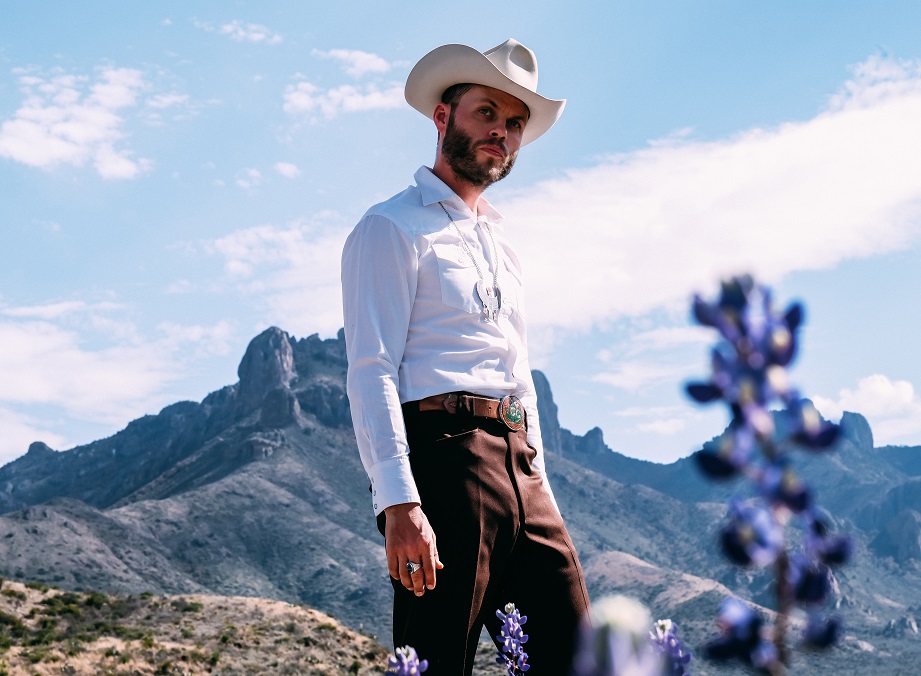
That’s the first line of “The Valley,” the autobiographical title track of Charley Crockett’s newest album and perhaps the best entry point into his true-to-life twist on traditional music. Not only do those lyrics reference the rougher times of his story so far, the jaunty arrangement underscores his fascination with blues and classic country music — but without treading the same fertile ground as everybody else. BGS caught up with Crockett by phone on his way to the Pacific Northwest.
BGS: At the end of the song “The Valley,” your closing line is, “May your curse become a blessing. There ain’t nothing else to do.” Tell me about the message you were trying to convey with that line.
CC: Man, I think people are born into struggles that we don’t have a lot of control over. I know for me, I dealt with different adverse situations that I never saw them coming and got forced into at a young age. Just with my own story I had a lot of issues over the years with getting in trouble and family stuff, siblings going to prison and losing my sister to some of the vices of the modern world. My mother was struggling, working 80 hours a week, to take care of me, and that whole deal.
I parlayed all of those hardships together into making music, so quite personally I’m saying, hey, you can take those really hard things and turn them into something, because if you don’t, what’s the alternative? I had a guy tell me years ago on the street, I asked him how he was doing, and he said, “I’m doing great today. I have to be doing great ‘cause what’s the alternative?” That stuck with me for my whole life.
I thought, man, it really is all about how you see it. That line before it is, “And now you know my story, I bet you got one like it too.” I never really run across very many people that didn’t feel like they were fighting some kind of adversity. I feel like you got to take the lemons and make it into lemonade.
Do you consider yourself an optimist?
Oh, I’d say so, most definitely. I met a guy in Denmark, when I was over there recently, who had an Indian curry joint there in Copenhagen. We ended up going two days in a row. The first day I went in there and we had cowboy hats on, and he knew real quick we were doing music and the whole loud-mouthed Texan thing or whatever. We played up and had a good time in there, and he got my name and stuff, and we left.
We ended up going in the next day to eat again because we liked his curry so much. I come in there and he said, “Charley, man, I want to apologize to you. I looked you up and I read about your story.” He’s like, “I really judged you as being somebody that maybe hadn’t been through much, because you seem like you were so happy-go-lucky and so optimistic.”
I thought that was so strange, that because of my positivity, he thought that maybe I was privileged or something. I guess he read my circus of a biography and realized that I was a lot different than that. And that really struck me. It was sad to me in a way. I thought if everybody in this life wore their hardship on their sleeve and let it get the best of them, it would be really sad. But what’s really amazing about people, overall, is the resiliency in people.
Who were some of your early champions when you decided to take this music path?
Well, in the beginning, my mother was the one who got me this old Hohner guitar out of a pawn shop when I was 17, and told me that I could do this. Even when I sounded terrible. I remember saying, “Mama, I tried to write these songs. Am I any good?” Then she said, “Well, son, people will believe you when you sing.” [Laughs] She wasn’t going to lie to me and tell me I was good. She told me what I needed to hear and I understood what she was saying. She was talking about honesty. She was talking about integrity. She was talking about sincerity. That’s what I believe in.
On “The Way I’m Living (Santa Rosa),” you’re singing about Mendocino County, and that it’s taught you a few things. Was there a specific moment in California where you had an epiphany, or that something really struck you?
Yeah, man. I hitchhiked and rode trains and hoboed around for a really long time. I had hitched out there to Northern California when I was 22 or 23. I ran into cool people up there that would pick me up on the side of the road and let me sleep in their barns or in their pastures, and do work trade and all kinds of stuff. Even my record, A Stolen Jewel — my first one that I ever put out on myself — those people gave me the money to make that record and print 5000 copies of it.
I got them printed up in San Francisco, just a couple of hours south, and I drove in a truck that I’d gotten from those farmers up there that let me work their land. Then I drove back down to Texas and I handed them out on the street in DFW and Austin. That was how I first started getting my first publicity. I got written up in the Dallas Observer and the Fort Worth Star-Telegram, and I got a local guy to start booking me at Texas bars.
So yeah, the line is “Mendocino County bring me lots of joy. It’s opened up the eyes of this wanderin’ Texas boy.” And that’s exactly what happened. It was the first place that I’d ever been in my life where people said, “Man, all you got to do is help out on this farm and play music for us and you can live here in exchange. And we’ll feed you too! And we’ll take you out to the open mics at the brew pubs.”
I’d go to a gathering on people’s farm where you’d play music around the campfire and I’d never known anything like that, besides being down and out on the side of the highway in more shady situations. But then in Northern California, it was the first place where somebody in my position, my modest, kind of undeveloped artistic abandon, that people were like, “Hey, I see you as an artist and I respect you and your music. There’s something about you.” That’s why I have so much love for Mendocino County and continue to be a part-time member of that community there. Those people have always treated me like I had value.
Do you like bluegrass music?
Big time, man. Jimmy Martin, Ralph Stanley, I wear that stuff out. Actually I packed a banjo and brought it into my show. We have a bluegrass section in the show, right in the middle of the set, where we do a five-song bluegrass deal around the one mic. It’s just a lot of fun!
What do you hope people take away from the experience of coming to see you play?
I hope the people that have come out before to see me will see that I’m true to what I promised — that I’m getting better every year. I’m really about the classic stuff and I think when you’re really rooted in the tradition, you’re never going to stop growing.
When I was playing in San Antonio the other night, I played “Nine Pound Hammer” on the banjo for these kids. … This mother had her two young children at the very front of the stage and they were hollering for “Nine Pound Hammer” as I got off stage after the encore, and I ended up playing it for them sidestage, because they were so sweet. These kids were young. The little girl was probably 8 and the boy was probably 10 or 11 at the oldest, and they knew every word to “Nine Pound Hammer.” That was really cool to me to see these young kids, who had no context of how old that dang song is, excited about something out of the nineteenth century like that.
I guess that’s one thing you could say, but for me it’s like I wear tradition on my sleeve and I think what’s radical in music today is to bring tradition up front. I think that’s what people like about me. Not that I’m some kind of preservationist, but that I’m doing tradition as a man of my times. I think that people can hear the tradition and they can also hear something new in what I’m doing. I hope that’s what people hear when they come out to see me.
Photo credit: Lyza Renee
This website uses cookies to improve your experience. We'll assume you're ok with this, but you can opt-out if you wish.AcceptRejectRead More
Privacy & Cookies Policy
Privacy Overview
This website uses cookies to improve your experience while you navigate through the website. Out of these, the cookies that are categorized as necessary are stored on your browser as they are essential for the working of basic functionalities of the website. We also use third-party cookies that help us analyze and understand how you use this website. These cookies will be stored in your browser only with your consent. You also have the option to opt-out of these cookies. But opting out of some of these cookies may affect your browsing experience.
Necessary cookies are absolutely essential for the website to function properly. This category only includes cookies that ensures basic functionalities and security features of the website. These cookies do not store any personal information.
Any cookies that may not be particularly necessary for the website to function and is used specifically to collect user personal data via analytics, ads, other embedded contents are termed as non-necessary cookies. It is mandatory to procure user consent prior to running these cookies on your website.