If you haven’t heard by now, Apple released a host of new emojis — 398 to be exact! — with the rollout of iOS 13.2 earlier this week. Among them are soon-to-be-favorites such as an otter, a sloth, a yawning face, a bulb of garlic, and oh so many more. To take you into the weekend we thought we’d poll the BGS staff and list our favorites here. Which new additions are you most excited for? Comment below!
The Banjo
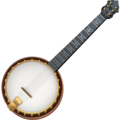
I mean, DUH!! We finally get a banjo emoji! Props to Apple for getting it right with the fifth string peg and the armrest. It’s clearly a beginner model (the tuning pegs parallel to the headstock, for instance), but this machine can clearly get the job done. An obvious fav.
The Banjo
Can you blame us? A BANJO EMOJI IS HERE, Y’ALL!!
The Banjo
No, seriously. This isn’t a “paddle faster” situation. This is a “the quintessential American instrument is finally given its due alongside a violin, stratocaster, trumpet, saxophone, and a Shure SM58” situation. Or perhaps, a Bluegrass Situation?
The Banjo (Samsung version)
Are those… are those ugly tuners!? Unfortunately, no. If you peer really closely you’ll see it’s actually a six-string banjo, which is just as important a part of American vernacular music as the five-string, to be sure. Good job, though, Samsung. The detail is spot on, even if six-string banjos don’t have headstocks like this.
The Banjo (Facebook version)
Facebook isn’t getting much of anything right these days, but damn if their banjo emoji doesn’t just almost cover a world of sin. Another six-string (forgivable), yes, and the inlays and gold plating are a nice touch.
The Banjo
We just missed it, okay? TAKE IN ITS RESPLENDENT GLORY!!
The Banjo (Google version)
Another budget model, given the flange styling, and they certainly phoned in the details — is it four-string? Five-string? Six-string? NO-STRING!? But hey, it’s a banjo. Banjomoji. (Still testing out that term. You can use it if you like.)
The Banjo
If you scrolled down this far to see if we’ve chosen any others… Nope! Still banjo.
The Banjo (Microsoft version)
It kinda feels like this one should be cut out and promptly slung around a paper doll’s neck, right? Cute as can be. But really, did any of y’all know Microsoft has their own versions of emojis? Who knew??? [Windows phone users, don’t @ us.]
The participation trophy of banjo emojis. The “nobody else in the group project turned in their work” of banjo emojis. The Nickelback of banjo emojis. Four tuners, two strings, six brackets — is this a functional instrument or a toy, Twitter? Oh right. Neither. It’s an emoji. Still a banjo, though!
The Hatchet
The only other AXE to be released in this round of emojis. Lololol. Get it?
The Banjo
You see what we’re doing here, right?
The Banjo
If only Earl Scruggs could see the magnificence he hath wrought.
The Banjo
Whether you got here the long way or scrolled right down after reading the intro, yes, this is a real thing you just read. We just love the banjo emoji, okay? We’ve waited a while. Let us have this moment.
Now to begin lobbying for a mandolin emoji! Who’s with us!?
Photo credit: Foter.com Emojis: Apple designs / Emojipedia
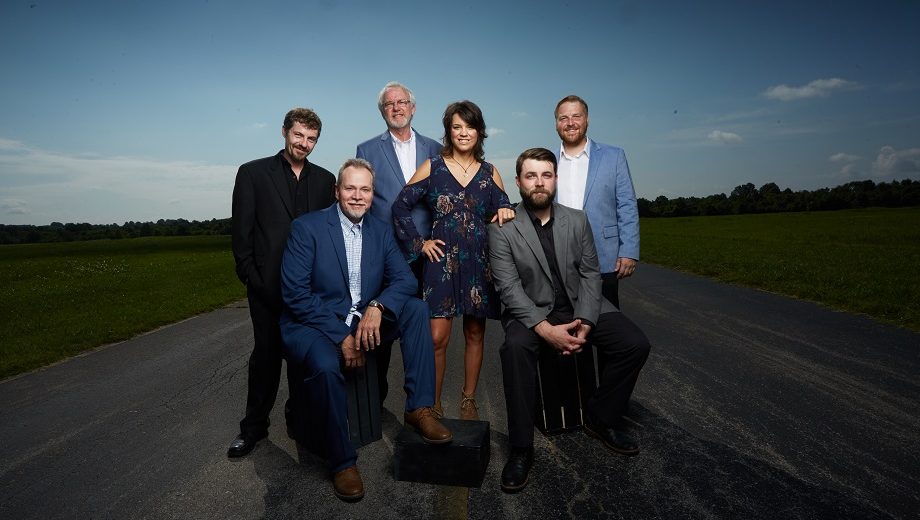
If you haven’t gotten your fix of straight up bluegrass today, stop what you’re doing and check out new music from bluegrass pillars The Grascals. In late August the band released their most recent album, Straighten the Curves, on Mountain Home Music Company.
No stranger to the bluegrass limelight, the Grascals have now released eleven full-length albums, building a reputation of excellence on their tight vocal sound and traditional writing style. Accompanying the album is the music video for “Callin’ Your Name,” a catchy number led by newcomer-to-the-band Chris Davis, who proves himself as a strong vocalist and stout lead guitar player, injecting some fine flatpicking into the Grascals’ refreshed but classic sound.
The Dead South is actually from up north, but the Canadian band has cultivated a following in stateside circles too. With a raucous approach to roots music, they’ve been guests of SiriusXM’s Bluegrass Junction, showcased at IBMA’s World of Bluegrass, and recorded their newest album, Sugar & Joy, in Muscle Shoals, Alabama. Upon its release, they debuted at No. 1 on Billboard’s top bluegrass albums chart.
That grand entrance is setting the stage for significant touring over the winter, with West Coast dates starting in November, followed by Midwest gigs in December. They’ve already confirmed European dates for February through May 2020.
Formed in 2012, the band is back in its original lineup of Nate Hilts (vocals, guitar, mandolin), Scott Pringle (guitar, mandolin, vocals), Danny Kenyon (cello, vocals) and Colton Crawford (banjo). Maybe it’s important to note that there’s neither a fiddle player nor a drummer in this band — or you know, maybe it doesn’t matter one bit. Hilts and Crawford chatted with BGS during some downtime at IBMA’s World of Bluegrass business conference.
BGS: “Diamond Ring” but doesn’t end well for one of the characters, which is common in bluegrass. What story were you trying to tell in this song?
Nate Hilts: It’s a story of a man who’s trying to appease his partner. She finds that a diamond ring would make her happy and so he is going to do whatever he can to make sure that he gets that diamond ring for her. And it turns out to be a tragic ending, of course. Just like all of the songs I write. [Laughs]
Did you know it would end so gruesome?
NH: You know what, no! But when you’re doing a video it’s like, yeah, we need a body count!
Videos have been a crucial part of your career. Do you find that that’s been a good way to be introduced to new fans?
Colton Crawford: Yeah, I think so. We had our first big splash with the “In Hell I’ll Be In Good Company” video. So I think a lot of our fans discover us through YouTube. I think like our songs work well with music videos, too. They’re cinematic and “soundtrack-y.” We’re definitely inspired by film soundtracks and Tarantino and Spaghetti Westerns.
Are there filmmakers that inspire you or that really resonate with you?
CC: Clint Eastwood for sure. Tarantino for sure. Even those old B horror films, Wes Craven and that kind of stuff.
NH: You could give us an array of movies and we’ll find stuff that we like about it. Who did Drive?
CC: That was Nicholas Winding Refn. That movie is all about the atmosphere. I think our songs are kind of like that too.
Was there a certain encounter that triggered you to write “Blue Trash”?
CC: Lyrically, yes. [Laughs]. This one was a lot of fun for me because the verses and the chorus are the same banjo part. It’s just the choruses are played in halftime with that shuffle feel, but it’s the same thing. I do a couple of different bends and stuff like that. I came up with that slow part first and wanted to “Scruggs-ify” that slow part, so it was a lot of fun.
NH: But lyrically that song was triggered by listening to a purist group on Bluegrass Junction [that was dismissing] bands like us, who aren’t quite pure. You know, we stem from bluegrass, but we do our own thing with it. And this song we heard was basically telling us to go away.
CC: “Blue Trash” is sort of like a cheeky love letter to bluegrass. It’s a bit of a response to that.
NH: It’s not a hateful or hurtful response. It’s more like, you know what, we’re here and we love bluegrass music.
So what’s your response when someone’s like, “Well, they don’t play bluegrass…”?
NH: “Yes, you’re absolutely right, but what do you want us to do?” We’re not saying that we’re playing bluegrass. We love bluegrass. The reason that this band was started was bluegrass. And here’s what we do with bluegrass. We take our parts of it. Colton on the banjo, he’s playing better than half the folks you hear on Bluegrass Junction, and [it’s] fantastic that we can have those elements, but we’re not claiming to be the best, or to be stealing it. We’re just trying to be a part of the community and play music.
Tell me about what you mean when you say the band started because of bluegrass.
NH: Oh, when I first met Colton, I was listening to a lot of Old Crow Medicine Show and Trampled By Turtles and listening to some older bluegrass. Colton had just got a banjo, started playing.
CC: Steve Martin was the first actual banjo player that I listened to. Actually there were indie bands that I was into in high school and university, like Modest Mouse — their one record Good News For People Who Love Bad News, there’s a lot of banjo on that. I always just loved the sound of it. And then I discovered that Steve Martin was a world class picker.
I was always a metal guitarist. So there was actually a lot of crossover. I just love that fast picking style… Growing up, my guitar lessons were all classical fingerstyle guitar, but then I played in metal bands in high school. So the banjo is like the perfect middle ground between an acoustic fingerstyle guitar and metal guitar.
Colton, did you take some time off?
CC: I did, yeah. When we first started the band, we just hit the ground running with the touring and we were making no money. So we’d be on the road for a month and a half to two months at a time in a minivan, playing every single day. … I’ve always had this tough time sleeping, but I had a year of really, really bad insomnia. I think the worst part about insomnia is that you’d think at a certain point you get so exhausted that your body would just pass out and you’d have a great sleep. But the thing with insomnia is the more tired you get, the less likely you are to sleep. It’s the worst, it’s just hell.
I went through a year of that and I just said, OK, I’ve got to step away from this. And of course, like two weeks after I left, “In Hell I’ll Be In Good Company” got posted to Reddit and everything started to blow up. But I was still really good friends with Nate, kept in touch with the guys all the time, always figured that’d be part of writing the next record regardless. And then I got some help and figured it out a little bit. Then sort of approaching it a couple of years later, I just said, you know, I want to take another swing. Thankfully these guys, they could’ve told me to fuck off, but they didn’t. So I’m grateful for that.
NH: Yeah, Colton wouldn’t even look me in the eyes when he sat down with me. He was doing a lot of this [looking down]… “I’ve been thinking…” and just staring at the table and I’m like, “What’s he going to say? What’s coming?”
CC: I had no idea how you guys were going to react at all.
NH: He said, “Hey, we should go for a beer, I want to talk about something.” I was like, “I think he’s going to come back.” [Laughs]. In our minds I was like, he’s probably never coming back because we travel a lot and that was a big, big part of it. So what do you do? Unless we stop traveling as much as we focus just on writing or something.
CC: It’s not realistic.
NH: Yeah, for what we do, besides YouTube content, the way that we’re able to function so well is by touring.
CC: Yeah. Our main product is our live show. I love our records but definitely our show is what we do.
Tell me about when you’re off stage. What is your dynamic like?
CC: It’s pretty much just like this. Just hanging out and everyone gets along pretty well for the most part, which is really nice. We’ve been a band for almost seven years now and we still like being around each other, so that’s good. Yeah, it’s a lot of fun. We always say we’re friends first, a band second, and a business third, so we try and keep that in mind.
What do you hope people will take away from that experience of seeing you guys play live?
CC: I think most people show up for a really, really good time, and that’s what we’re trying to do. We’re not a political band. We don’t really have any kind of message. I think our main focus with the live show is just fun. It’s a weird thing because it’s almost frowned upon in the arts. You know, [the perception is that] if something’s fun, it can’t really be true art. We don’t agree with that at all. I don’t think there’s enough fun these days. Everything’s so serious all the time, so we just want people to come and enjoy themselves and have some fun.
It stands out when a band’s having fun, because there’s a lot of serious songwriting and sadness out there.
NH: We write tragically, but a lot of times we have humorous spins on stuff, or the song sounds super cheery but it’s actually quite sad. But we still have fun with it. We don’t take ourselves too seriously.
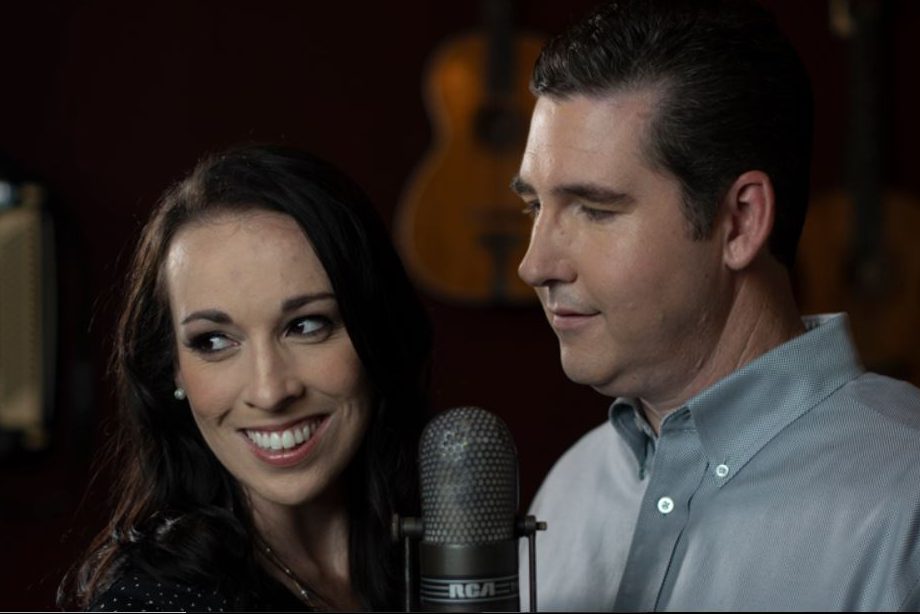
The first time they ever sang together, Darin and Brooke Aldridge harmonized on “The Prettiest Flower,” an old hymn familiar to any Baptist church. They’ve scarcely stopped since then, with their latest album Inner Journey placing their stunning musical blend at its center on classics like “Teach Your Children Well” as well as songs written by the likes of Kasey Chambers, First Aid Kit, and Nanci Griffith.
“Brooke and I have always been trying to develop our sound. On this one, we stayed true to our bluegrass roots in some of the material,” Darin says. “We’re more of a vocal band. We can base things around Brooke’s singing and our duet style and harmonies, and we want our songs to send a message out that speaks to us.”
Versatile enough to sing a Louvin Brothers song one minute and a Bryan Adams song the next, the married couple commands a musical vocabulary that nonetheless lends itself to bluegrass. Darin Aldridge co-produced the project — their first for Rounder Records and sixth overall — with Mark Fain. And on the afternoon following this interview, Brooke Aldridge picked up her third consecutive IBMA female vocalist trophy, indicating that their audience is on this journey too.
BGS: This album begins with “I Found Love,” which has a tie to Earl Scruggs, right?
Darin: It does. I listened to that on a plane ride back from somewhere in New England and I had my iPod with me and the Earl Scruggs and Friends record was on there, with Vince Gill and Rosanne Cash singing it. I just thought, “Man, that would be a good grass-up number right there for us.” It’s a pretty good tempo and a duet and it speaks to what I was just saying – about what I want to get out there, in our life and in our history, and what we want to go forward with. Then I got to looking at the writing credits and it was Earl and Randy Scruggs and our buddy Vince. That was perfect. That’s all we needed.
Brooke: It’s one of those positive songs that we set out to do a long time ago when we first started making records. We talked about how we wanted to have a positive and uplifting message in most everything that we ever recorded. Some people have told us down through the years that we weren’t going to do very well doing that kind of thing. But I think that’s not the case at all! We’ve done very well sticking true to what we love and what we believe in, in each other.
But when you hear a good heartbreak song like “Every Time You Leave,” how do you respond?
Brooke: Oh, gosh, you just realize how true those words are. Because just like “Every Time You Leave,” we’ve all been through hard relationships or hard times in our families where we’ve lost loved ones or things haven’t worked out quite the way we wanted. I think that really speaks measures to me when we’re listening to songs like that and trying to decide what’s going to affect somebody out there listening.
Darin: The harmony speaks to us as well. We got to do that song with our buddy Jimmy Fortune. We got to tour a lot with Jimmy in the last couple of years and wanted to get a good song that represented that out there on the road for our singing together, and it just comes perfectly.
I want to ask you about “Your Lone Journey.” I learned that from a Doc Watson record.
Darin: Yeah, we did, too.
Why did you choose to include that song on here?
Darin: We got to visit Doc and become friends with him through MerleFest, through him being in North Carolina. A friend of mine took me up to visit him at his house about a year before he died. We’d been featured in Bluegrass Unlimited maybe a couple months before, and Rosa Lee brought the magazine to us when we got there. She said, “I’ve been reading about you all and glad that you all are here.”
She got to telling us the story of how she wrote that song. She was just sweeping in her kitchen, wasn’t she, Brooke?
Brooke: Yeah. And I think the words just came to her. She was sweeping and her and Doc arranged it, I guess, and made it theirs. What a great-sounding song.
Darin: Yeah, we sat there with them in the living room and talked about that, and he got to talking about Merle, and when he couldn’t wait to see him in heaven with his own eyes again. It is powerful, man. We just wanted to include that and it’s got an old-timey feel to it. Brooke’s got a really good mountain voice as well. It really fits.
Brooke: What Doc and Rosa Lee had brought to the music over the years and what they mean to us — we definitely wanted to include one by them. And it was funny because Doc kept saying that a lot of people title this song, “Your Long Journey.” And he’s like, “That’s not how Rosa Lee wrote it. It’s ‘Your Lone Journey.’” We made sure to get that right on this record.
Darin, have you been playing guitar your whole life?
Darin: I started probably 12, 13, something like that.
Never put it down?
Darin: Nah, I picked up the mandolin when I was 15 or 16. My brother and his baseball buddies had a little basement band. They’d all get around — he was a drummer – and pick on rock music and stuff like that, so I slowly learned that. I’d listen to the tunes after they’d quit playing and I’d start figuring them out, so I could sit in with them. Then the next week or two, I’d learned the tunes better than they had. Then their guitar player would ask me, “How’s that really go?”
Brooke: A little Van Halen? (laughs)
Darin: Yeah, all that stuff — ‘80s hair band stuff, I was big on [that]! Then I got to singing more in church as I grew and got into a gospel band through some buddies in the marching band. They went to church somewhere and said, “You play and sing — you got a banjo?” I actually had a banjo at the time but really hadn’t learned how to play it. I was like, “Oh, yeah, I can play banjo.” So I learned real quick, just so I could be in the band and start picking and singing. And I quickly moved to the mandolin after that. One of the guys could just play in a certain amount of keys, A and D maybe.
Ricky Skaggs has always been a huge influence and I wanted to do something I saw him do on the Opry, which was a quartet with a mandolin and guitar. Since we were singing in churches a lot, I wanted to do some of that material like Bill Monroe did. I recorded [the Opry] on a VHS tape, so I went upstairs with the mandolin and watched it. This song was in G, so I sat down and figured out the notes on the mandolin. I come down there to show it to him so he could play it, because I was the guitar player in the band. He said, “No, man, you just play mandolin.” [All laugh] So I just started playing mandolin from then on.
Brooke, did you start singing when you were around 12 or 13, too?
Brooke: Probably from the time I could talk, I started singing. My mom, my sisters and I used to sing in church. As I was getting a little bit older, my parents realized at an early age that I could pick up lyrics to a song just by hearing at one time. They started putting me in singing competitions. The school system where I was, in Avery County, used to have a yearly talent show. It would start out in the elementary schools, and if you placed first, second, or third you went onto the county-wide talent show and got to showcase your talent in front of everybody.
Those kinds of things, and doing community events and competitions all throughout my childhood, really prepared me for loving this more so when I got to adulthood. And so it’s been a neat journey. After Darin and I met, I had goals and dreams, of course, just like everybody in the music business does. We still talk about how we never imagined we’d get to do some of this stuff we’ve gotten to do. It’s been really cool to see those things become reality.
What are you looking forward to the most with this record coming out?
Darin: It’s been a few years since we put one out. I think we’ve grown a lot in those two years, and everything that’s followed, with what we’ve been doing, recording, trying to say as artists. We have grown maturely, too, in our music. And I think this record reflects that.
Brooke: I think that’s why we chose the title that we did, Inner Journey, because as kids, you imagine or dream about things that you can be when you grow up. And then, when you come into adulthood, you stop and think about where you came from, and what you’ve gotten to do, and if your heart really followed that path from a child to now. And I feel like ours definitely has. It’s been our inner journey. God has put us exactly where we needed to be at that exact moment.
Artist:Sideline Hometown: Raleigh, North Carolina Song: “Return to Windy Mountain” Label: Mountain Home Music Company
In Their Words: “‘Return To Windy Mountain’ has a story that any full-time entertainer can relate to. Based on the life of [Kentucky Music and West Virginia Music] Hall-of-Famer Melvin Goins, it talks of a musician that got sucked into the lifestyle at an early age. He left home and everything he’d known to follow his dream. He travels the world, propelled by his love for music, but finds that his mind keeps drifting back to his homeland and all that he loved and left. Knowing that he is destined to spend the rest of his life on the road, he still makes his goal to finally return home for his final rest.
“While we love what we do, we all sacrifice so much for this life and we couldn’t do it without the support of our families. This song definitely hits home, and I feel like it comes out in the music and the arrangement.” — Skip Cherryholmes, Sideline
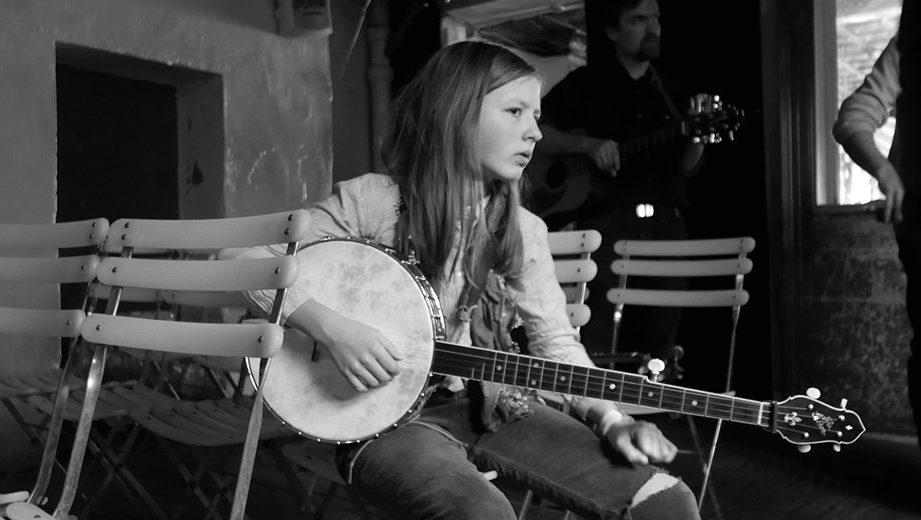
Artist:Nora Brown Hometown: Brooklyn, New York Song: “Buck Creek Girls” Album:Cinnamon Tree Release Date: October 25, 2019 Label: Jalopy Records
In Their Words: “‘Buck Creek Girls’ is a square dance tune from Kentucky that goes by different names depending on the source you get it from. Though [it doesn’t have] many words, the tune has a driving tempo and surprises the listener with each turn of the A to the B part. I learned this tune from the late John Cohen in his living room, from his interpretation of his recording of Banjo Bill Cornett. It’s exciting to listen to this tune because it seems like every time I hear it there is some note or emphasis I missed. For me, the tune never gets old because there’s always something new about it.” — Nora Brown
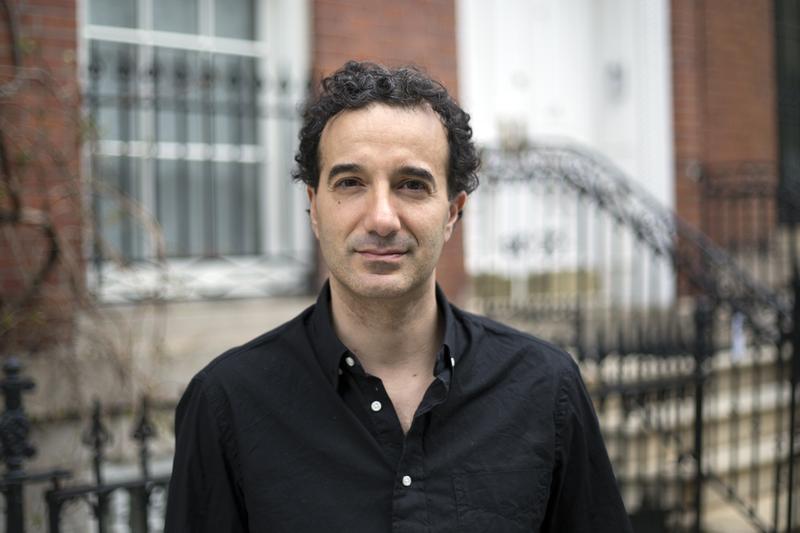
In public radio and podcast fandom Jad Abumrad’s voice is not only immediately recognizable, it’s iconic. As a host of WNYC’s hit show, Radiolab, Abumrad has explored myriad topics ranging from secret World War II missions to the social and cultural impacts of contagious diseases. He has a knack for storytelling, uncovering and contextualizing minute details that many other writers and journalists may have simply shrugged at or glossed over.
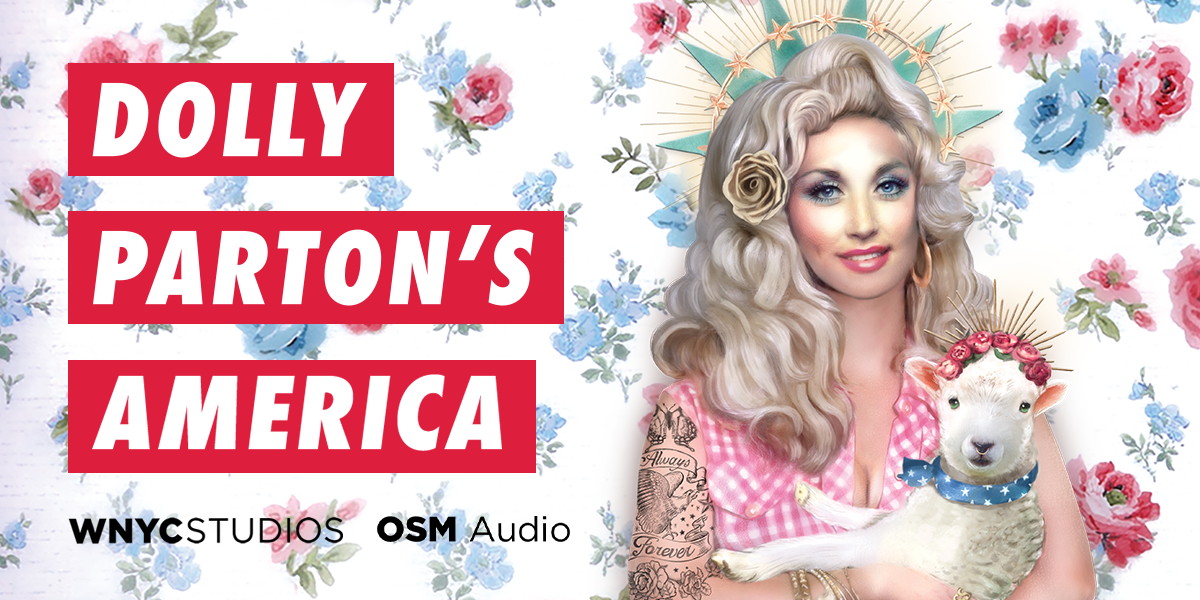
This instinct, a sixth sense that guides him to these subtle nuances that often rest undisturbed just below the surface or hide in plain sight, is focused on a new subject in his brand-new podcast (also produced and distributed by WNYC), Dolly Parton’s America. The nine-part series lives up to the oft-invoked, seldom accurate characterization of “a deep dive,” covering ground that even the most ardent Dolly experts and fans may have never trod.
A self-described “new initiate” of country music, Abumrad grew up in Nashville, but given Dolly’s standing as an almost omnipresent cultural touchstone he realized much later that during those Tennessee years he almost couldn’t see the Dolly Parton forest for the Dolly Parton trees. “I knew her music, in terms of the crossover stuff — ‘9 to 5’ and ‘Islands in the Stream,’” he admits. “But the first place I started was going back to ‘60s Dolly and ‘70s Dolly. That’s a very different Dolly.”
Though what he found in those early decades of her career was often unexpected, it was never truly shocking or surprising, especially given the pop culture monolith that Parton has become since those years. A monolith that Abumrad describes as being able to bring people together across all manner of divides — something particularly remarkable in this current global moment.
“You see these stories emerge of not only her changing over time, but what was happening around her in the south, in Appalachia, and in America,” he continues. “The early Dolly music and lyrics became almost like a portal that I could step through to talk about history, to talk about politics, to talk about culture, to talk about feminism. It’s all there in her music.”
And so, it’s all in the podcast. In the two already released episodes Abumrad et. al. cover topics as broad and varied as Dolly’s constantly being undervalued as a songwriter, her being “typecast” as a secondary character (a “dumb blonde”), her shift from the sad, forlorn songs of her early career to her jubilant, encouraging anthems later on, and even her own struggles with suicidal ideation.
With such an entity as Parton, a bystander might assume that any approach to unspooling the many tendrils of her vastly variable and dynamic career would be insufficient, myopic, and/or excruciatingly intimidating. Abumrad faces this daunting task with aplomb, acknowledging the many ways such a project can go awry, but not allowing that acknowledgment to dissuade him. Rather than shy away from storytelling that might open him and the podcast up to criticism about omissions or oversights or missteps, he leans into the humanity that allows for those scenarios. “This is a project where I was trying to see Dolly through other people’s eyes, so that I could understand them and understand their lives and their experiences… I wanted to understand Dolly not simply as a performer and an icon, but as somebody who’s created all this culture… Why do they love it? What do they see in it? What is it about it that calls them? I felt like that was a way to understand the country at this moment.”
BGS editor and contributor Justin Hiltner spoke to Abumrad on the phone about Dolly Parton’s America; the two took turns picking their favorite Dolly tracks, as if standing in front of a Dolly-only jukebox in a Dolly-themed dive bar.
JH: If you and I were standing in front of a jukebox full of Dolly Parton songs what would be your “pick” if you were asked to play Dolly Parton for a room full of people? What would be the first song you would think of?
JA: I think [with] any jukebox selection you have to disclaim: There’s no way to be comprehensive, so any selection you make is going to be one tiny sliver of a tremendous catalog of thousands and thousands of songs.
But, I think the first one I’m going to have to pick is “Muleskinner Blues.” I think it was 1970? I think that’s right. 1970. I would play this one because that song is just… it is pure fire. The rhythm section is so badass and her on top of it, you just cannot — you have to move when you hear it. And I say this as somebody who didn’t grow up with this genre. I grew up in a house full of opera and bad hair metal. Country music was not my jam. But this is one of the first songs that when I heard it I was like, “Oh my god. This SONG.”
The moment that she ad-libs, “I’m a lady muleskinner–”
Oh my god, it’s so good.
It’s so good! And I think about it all the time. When we talk about bluegrass, [people like to say,] “Oh, you know, we don’t have that many women forebears, we don’t have many [women] to point to.” I hear that [ad-lib] and I hear her telling the history of women in roots music and American music. “I’m a lady muleskinner” is like, “I’m not just singing this song that’s always been sung by men, this song is MINE now.” I love that.
Let me follow that inspiration, because one of the things that I think about that song is where it falls in her history. She was on the Porter Wagoner show, right? She’s this crazy prolific songwriter, but she’s kind of under the thumb of this guy, who’s a legend and an amazing hitmaker in his own right, but he was kind of holding her back. At that point she’s starting to bristle. We talked to a bunch of people… I think of them as “Dolly-ologists,” these new academics who think about Dolly a lot, before this song it was a lot of sad songs, often sung from the perspectives of little girls, about something that had been done wrong to them. This is the first song that she grabs her power, in some way.
When she holds that first note she holds it as long as she wants and the band has to follow her. So she’s like, “Y’all gonna follow me.” Then as soon as she lets go the band follows her. It’s literally her taking charge of the band. You feel that power, you feel that energy. It’s such a good song. I’ve been listening to it non-stop.
I think my first jukebox pick, what might be my favorite Dolly cut ever, is “Do I Ever Cross Your Mind” with Chet Atkins. Have you heard this?
Yeah!
It’s just two guitars, it’s just them. They’re kind of conversing while they play. There’s this subtle moment where Chet makes a joke like, “Why don’t you pick one, Dolly?” Then he continues to pick a solo and Dolly laughs like, “That’s not me, that’s not me!” But there’s this sort of respect in his voice, where he’s telling the listeners that she’s a picker. Like, “Don’t forget, don’t sleep on Dolly Parton. She can play guitar!” She’s the real deal.
They mix up the words at one point, they aren’t singing the right harmonies together. Then at the end, they’re just laughing together, and Dolly sighs, “Oh, I love you Chet.” He’s like, “Oh, I love you Dolly.” I think it’s my all-time favorite Dolly Parton recording ever. And for a song that she’s re-recorded so many times, to hear it pared down like that — definitely my number one pick.
Wow. That’s awesome.
What’s another one for you?
Let’s see, I’m really zoned in on ‘70s Dolly right now. I hope you don’t mind that most of my picks are going to be in that era.
Nothing wrong with that!
I just love the moment that her songs go kinda funky and percussive. I’ve always been less of a lyric guy and more of a music/tambour kind of guy. I love from “Jolene” on when she starts adding different instrumentations to her songs.
I have a couple of picks here… let’s go with “Joshua.” Again, it’s a song she did right after “Muleskinner” and I feel like that’s the moment when she truly becomes [a star] — if you want to look at her ascent to global superstardom, I think it begins in those few years and “Joshua” was her first number one. I just love the production of the song, I love how her voice was recorded, it’s a little bit distorted. I love how all the instruments are panned hard left or right. The rhythm guitar is over on the right and Dolly’s voice is on the left — or maybe it’s vice versa. I love the whole ‘70s production of it.
It’s such a weird story! It’s [about] an orphan girl meeting a crazy old man living by himself in the woods and they fall in love. There’s something kind of offbeat and oddball, but also kind of poetic about it. When it modulates, it goes up a semitone, like somewhere in the middle. It’s just cookin’. I love it.
My next pick, and really this is hard, I would probably pick something off of The Grass is Blue. And I think that my favorite one is “Train, Train.” I mean, you can’t be upset at a bluegrass song about a train, for one, but also that album means so much to me. You have this woman who has conquered every genre, has hits on so many different charts, and for her to come back to bluegrass — and I always make sure to emphasize the “back” to bluegrass because she’s been based in this. Her music since day one has been bluegrass music, the mountain music, as she calls it.
And the band on that record, the band that she toured with doing promo for that record, they were ridiculous! Chris Thile was in the band, if Chris Thile wasn’t, Sam Bush was. Jim Mills — it’s everybody. Jerry Douglas. This stacked roster of bluegrass pickers and then she takes that band to like, the CMA awards. To see bluegrass in primetime, in the mainstream like that always means so much to those of us who have always loved bluegrass first and foremost. I keep beating the drum of, “Induct Dolly Parton into the Bluegrass Hall of Fame! Induct Dolly Parton into the Bluegrass Hall of Fame!” I think it’s a no-brainer, and “Train, Train” is the perfect distillation of that for me.
Totally! You know, it’s interesting, what I remember is being in the UK — we went to the UK to shadow her for the premiere of 9 to 5 the musical — and on the way to the show I had to be in the car [with her] posse from the Dollywood Foundation and the Imagination Library, like David Dotson and some of these folks. They all were echoing basically what you just said. That album, more than any other album of hers, is most meaningful to the people around her. I think a lot of people feel like you feel. I don’t want to say it was one of her less successful [records], but it didn’t have the crazy crossover [appeal.] That album meant a lot to a lot of people.
Do you have another one? Maybe to close us out? One more for you, one more for me.
Sure, let’s see. I’ll give you a choice and you can tell me which one will be more interesting. “Love is Like a Butterfly” or “He’s Alive.”
Oh shoot, do both.
Okay, I’ll do both in one shot. So, “He’s Alive” is not the kind of song I’d ordinarily choose to put on, as a — I’ll be completely transparent — godless liberal. I come from a country that was torn apart by religion and my parents are scientists, so when we came from Lebanon my parents were like, “Don’t you damn set foot in a church!” [Laughs]
The first time I heard “He’s Alive” I got goosebumps. I hadn’t been that moved by a song in a long time. We were driving from Knoxville to Dollywood, actually, with one of Dolly’s biggest fans, and she put that song on for us. It was crazy, driving through the hills seeing signs like “Jesus saves you” and “Jesus loves you.” Then that song comes on and, as you know, the first few minutes are kind of a little bit overblown and orchestral and there’s this bombast going on, but when the chorus and the gospel chorus come in? Oh my god. That is more intense than any techno DJ drop. We were all just pinned to our seats for that. It feels like she’s alive, right? [Laughs]
I played it for my wife and my family the other day and they were like, “You like this?” But when it gets to the chorus they were like, “Oh, I get it.”
I’ll throw in “Love is Like a Butterfly” because when she had a string of number ones going from Dolly the “girl singer” to being Dolly the superstar, that was one [important song.] I don’t know, there’s something about her voice on that song. She’s describing this almost trance of love, she’s in love with someone and she’s weightless and entranced the way a butterfly is in the wind. The song isn’t as poetic as some of her others, but there’s something in the way she sings it that I just feel what she’s describing without even hearing the words. Something about her voice that is so… it literally flies. It’s like a butterfly. Her voice captures that. I’m so mystified by her voice on that recording.
I think my last choice would be, “Why’d You Come in Here Lookin’ Like That,” not only because it’s just a really good jukebox song — it is a perfect rollicking country song for a night at the dive bar. But also I realized — I’m openly gay, I’m a career banjo player who happens to moonlight (during the day) as a music writer, and so I went through this whole dynamic [when I was younger] of discovering my sexuality after I had already been in this music for my whole life. I realized, “Oh wait, I don’t think I belong here. I don’t think this space is for me. I play banjo, I love bluegrass.”
Something that I really appreciate about Dolly, from long ago, before I even knew she was a queer icon — and rightly so! — I could project my queerness onto and into her art and see myself in it. There’s something about “Why’d You Come in Here Lookin’ Like That” that’s just like, “Why does this straight man have to come up in my business and remind me that he’s unavailable to me?” That’s what I hear listening to that song, and it’s funny that I could go down a list of like ten other Dolly songs that feel like that to me. That feel like the queer experience realized through Dolly’s lens.
That’s really interesting… how so many of her songs create that space, so you can read it that way. I love that you have a list that goes beyond that. I might have to call you back and ask you to elaborate on that. [Laughs]
It was something that I really didn’t want to have this conversation happen without mentioning. I mean, even if you don’t count the rhinestones and the false nails and the big boobs, and everything. Boiled down to just nuts and bolts, and thinking of her as just a songwriter, she’s still allowing space for people to see their own experiences in her music. That’s not a very common thing in country. It is because heartbreak is all through country and everybody’s heart gets broken all the time, but other than that it really takes that sort of [approach] — well, what you’re talking about through this whole entire project. She touches on all of these issues that are sort of endemic to our culture, in a way that’s so organic that we ingest them almost without realizing it until now, in retrospect, I look back thinking, “Well of course she’s a queer icon, she’s creating space for us to relate to her music.” Even if it’s coming from such a specific place.
She, as a songwriter like you say, has created that space. Even without having to look at the persona in any way.
She still has not gotten her due as a songwriter, and it’s painful at times. To see that be such a big part of what you’re doing [is important.]
Yeah, I appreciate that, that’s where we start the series is taking her seriously as a songwriter, cause I agree. Robert Oermann said in one of our episodes that if she had been born two hundred years ago she’d be Mozart. (I think maybe he means more than two hundred.) Because she’s that touched by that creative spirit. That’s never been acknowledged. Bob Dylan gets it, Johnny Cash gets it, but she hasn’t.
Photo of Jad Abumrad: Bo Jacober Illustration: Christine de Carvalho
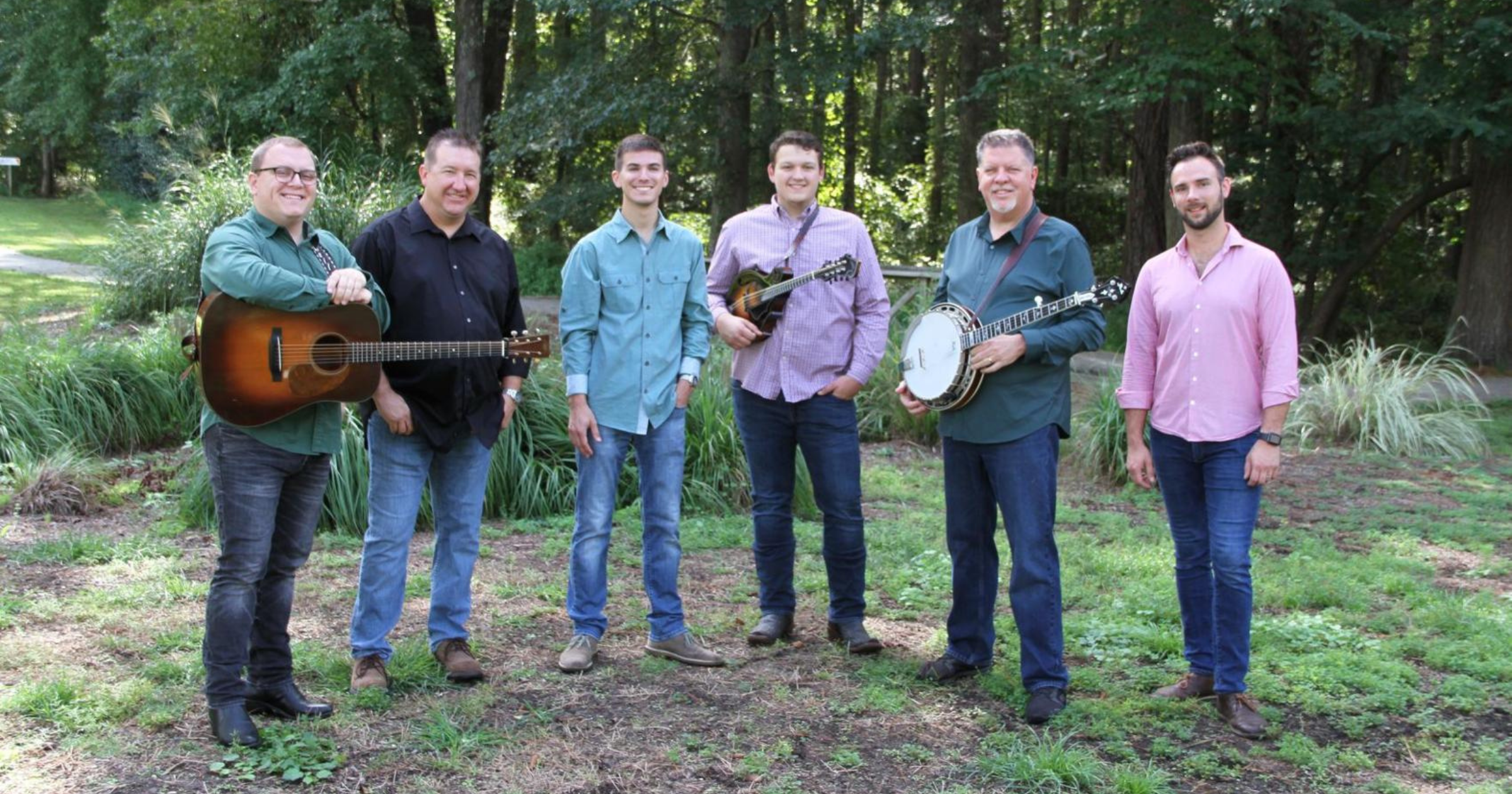
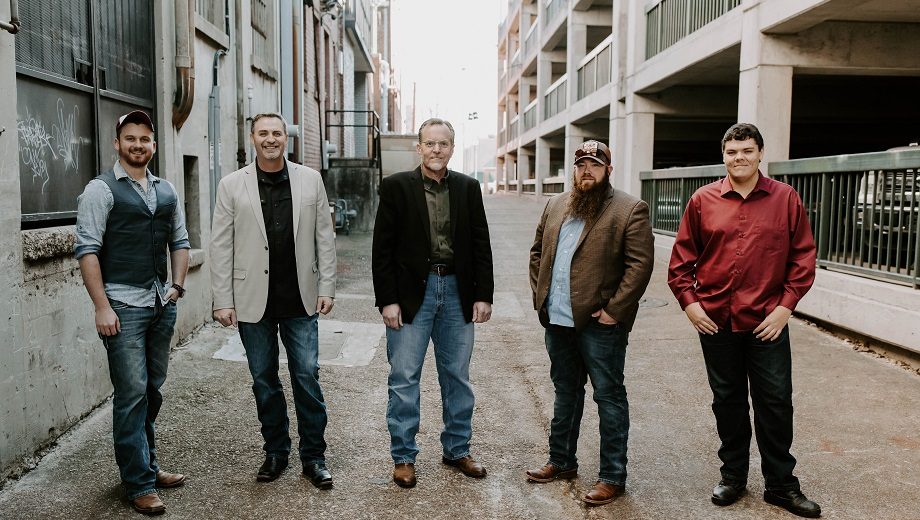
Artist:Volume Five Hometown: Boonville, Mississippi Song: “Somewhere” Album:For Those Who Care to Listen Release Date: October 25, 2019 Label: Mountain Fever Records
From the Artist: “Each week on stage I am surrounded by the best of the best in the music business. All of the guys in Volume Five are really talented, and I always love to feature them as much as possible. The song ‘Somewhere’ was written by our bass player, Jeff Partin. Jeff is a multi-talented guy. He’s not only a great musician, but he’s an extraordinary songwriter and singer as well. As a band, we love what we do, and we want to bring the very best music we can to our fans and bluegrass listeners around the world.” – Glen Harrell, Volume Five
In Ken Burns’ documentary opus Country Music, a weaving path from the hollers of Appalachia to Garth Brooks’ theatrical stadium concerts was laid out for all to see. But mapping that trail has always been a complicated, cumbersome task.
The sheer number of influences at play required 16 hours of footage for Burns to tell the story – and lots of help from the artists themselves. One of those artists was Old Crow Medicine Show’s Ketch Secor, who gladly jumped in to tackle the unwieldy narrative of his favorite subject.
Secor had a two important roles to play in the series. Most obviously, he related a lifetime’s study of country’s earliest touchstones and how they combined into something uniquely American. But the outspoken frontman was also tapped in the beginning of Burns’ process as a behind-the-scenes consultant, helping guide the project’s tone and ultimately delivering one of its final and most powerful lines.
“It’s almost like [country music] needs to be exhumed, and new life breathed into it,” Secor proclaimed. “The part that is the songs of the people, the hopes and aspirations of the people — the pain and suffering of the people — that needs to remain embedded in country music. If it isn’t there, I’m out.”
Backstage at the Grand Ole Opry House on the night the series premiered, Secor explained what the project meant to a history buff like himself, and how Burns unwittingly played a role in Old Crow’s founding.
BGS: Old Crow Medicine Show’s music has always shined a light on the past. What made you interested in that to begin with?
Secor: I was always interested in history, and I really attribute that to Ken Burns – I saw The Civil War when I was 11 years old. I lived in the Shenandoah Valley, and I wondered why the kids went to Robert E. Lee High School and why we played Stonewall Jackson, why the name of the shopping mall and the subdivision and the motel was what it was — it was all the war. It was everywhere, and we took some field trips but I didn’t really understand it. I could feel this echo, though. Seeing that movie on PBS really helped me to take this tour of my own backyard and see how history was alive. I credit that to him.
Knowing how deeply you care about country music’s history, what did you think when you found out Burns was going to present it?
I thought immediately, “Thank God. Finally somebody is going to tell our story and get it right.” I don’t trust any of these people to our story [gestures to photos Opry stars dotting the dressing room walls] because they’re all right in the middle of it. Everyone here has a very, very different story, and everybody has “The True Story” — but only their truth. Country music is richer than any one truth, so it takes an outsider’s perspective because of Nashville’s tendency toward this clan-ishness, the good ol’ boys network and these sorts of forces.
I mean, we’re the genre that has told its own history ever since it started. The radio charts today are full of songs about the good old days — and they’re talking about the ‘90s. That’s the good old days now. But it doesn’t matter, whatever the good old days were, the ethos here is that times ain’t like they used to be, they used to be better. That’s what they’ve been selling from the start, but they can’t tell our history without making it a commodity. So it takes this outsider, and you can’t ask for a better outsider than America’s most beloved documentarian, because he was the outsider who told us how jazz was born and flourished, how baseball was created, the Roosevelts, the National Parks, the Brooklyn Bridge. Country music is just as important as all that.
What did they actually ask of you?
I talked about slavery and the plantation system, the penal system — because incarceration was a great cultural conversationalist. It kept people locked up in isolation, which is one of the keys to making country music so rich. How long did the Scotch-Irish people live in Appalachia before being disturbed? Well, the great disturbance comes in Bristol in 1927. The record companies came in and said “Whaddya got?” And what they had was so specific to one region that it might sound different one holler over.
Then I talked about the Opry, and then I tried to talk about more New Age-y hip-fangled things, but they didn’t use any of that [laughs]. The other way I’ve been involved is by being an advisor to the film, so I read all the early scripts for the past eight years. But it was great, they just asked me, “How would you tell the story? Where was the birth? Who was important to mention?”
This has been in the works for eight years?
Yeah, he conducted like 140 interviews, and of that maybe 50 or 60 of his interviewees have died. See, the other thing about Ken is he knows when it’s time to tell a story, and by doing the story when he did, he was able to get Little Jimmy Dickens, Merle Haggard, numerous artists who wouldn’t be here — George Jones is in this film.
Did you get surprised by anything?
Oh yeah, a trove of knowledge is in this documentary, I learned a ton. And lots of things made me cry. What I learned primarily was a real self-reflective thought of, “Oh my God, this is my life.” I think almost all of these folks on the wall are in the movie, and when they watch they’ll be crying, too, because they’ll see themselves in the Bristol Sessions. They’ll see themselves at the earliest days of the Grand Ole Opry, they’ll compare themselves to the Outlaw movement and the traditional movement of the ‘80s, the development of the star system, and contextualize their own career.
You talked about isolation. We’re in this weird moment where country is more popular than ever, but rural life is changing fast. It’s easy to connect with people all over the world. How does the film address that?
One of the things that’s great about the film is that it stops around 1996, because Ken Burns isn’t a journalist, he’s a documentarian. He’s not making a movie about today, and here’s why: Historians say you’ve gotta have a generation pass before you can tell what happened. I just think it’s gonna go a lot deeper than anybody could say right now.
Like if you told the story of why Randy Travis mattered in 1986, it would be a lot different. And also the forces that are at play in country music, they need time to gestate for us to understand what they’re saying. Who’s gonna last? Who are we going to be talking about in 25 years? Blanco Brown? Chris Stapleton? Who’s gonna have their picture on this wall in 25 years? I don’t know.
If you haven’t been paying close enough attention you may have missed the fact that the absolute cutting edge of American roots music these days — some of the most exciting art to be born out of this latest renaissance in Americana, bluegrass, and folk — is old-time. Artists like Rhiannon Giddens, Allison de Groot & Tatiana Hargreaves, Victor Furtado, Amythyst Kiah, Jontavious Willis, Dom Flemons, and so many more are utilizing this moment to demonstrate that old-time music is expansive. It has relatively low barriers to entry, it’s representative, it’s queer, it’s Black, it’s Indigenous, it demands egalitarianism, it’s woven into the fabric of all genres downstream of it, and most importantly, it’s ceaselessly relevant. In our attention economy, which requires all of this and more from any pastime worth its merit, old-time delivers.
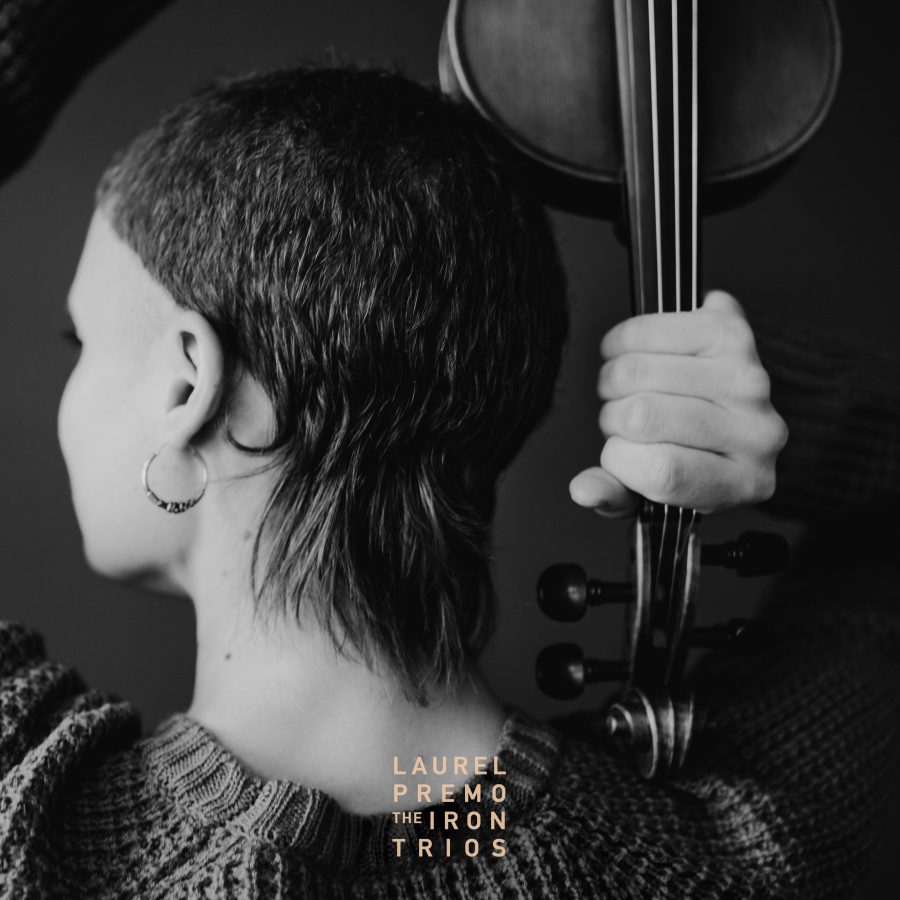
A new album from fiddler, composer, and multi-instrumentalist Laurel Premo perfectly reinforces these points, in content, intention, and certainly execution. The Iron Trios is a collection of nine more or less traditional old-time fiddle tunes and two Premo originals, the majority of which are played by a trio: fiddle, upright bass, and electric guitar. For an album demonstrably unconcerned with even the basic premise of the construct of “authenticity,” it accomplishes that squishy term impeccably and effortlessly.
Yes, with electric guitar. Tunes such as “Old Time Sally Goodin” and “The Original Grey Eagle” nod to string band settings that beg us to play these games surrounding legitimacy and “authenticity” while turning them all on their ears. With bassist Evan Premo, guitarists Owen Marshall and Joshua Davis, and an appearance here and there by fiddler Aaron Jonah Lewis, Premo takes old-time fiddle, melodies, and rhythms into spaces usually dominated by electronics.
It’s trance, it’s dreamscape, it’s meditative, it code switches with ease, sometimes sounding like a film score, or a square dance, or public radio at one in the morning (“Echoes” with John Diliberto, anyone?), or modern chamber strings, or the soundbed for an abandoned-warehouse-turned-cooperative-art-space. At the same time, it refuses to be any more complicated than good, old-time fiddle music. And that simple fact is another compelling reason why old-time is truly the most exciting space in the Americana, folk, and bluegrass realms today.
This website uses cookies to improve your experience. We'll assume you're ok with this, but you can opt-out if you wish.AcceptRejectRead More
Privacy & Cookies Policy
Privacy Overview
This website uses cookies to improve your experience while you navigate through the website. Out of these, the cookies that are categorized as necessary are stored on your browser as they are essential for the working of basic functionalities of the website. We also use third-party cookies that help us analyze and understand how you use this website. These cookies will be stored in your browser only with your consent. You also have the option to opt-out of these cookies. But opting out of some of these cookies may affect your browsing experience.
Necessary cookies are absolutely essential for the website to function properly. This category only includes cookies that ensures basic functionalities and security features of the website. These cookies do not store any personal information.
Any cookies that may not be particularly necessary for the website to function and is used specifically to collect user personal data via analytics, ads, other embedded contents are termed as non-necessary cookies. It is mandatory to procure user consent prior to running these cookies on your website.